An Opera in Yiddish by Henekh Kon, Libretto by Moishe Broderzon August 31, September 1, September 2
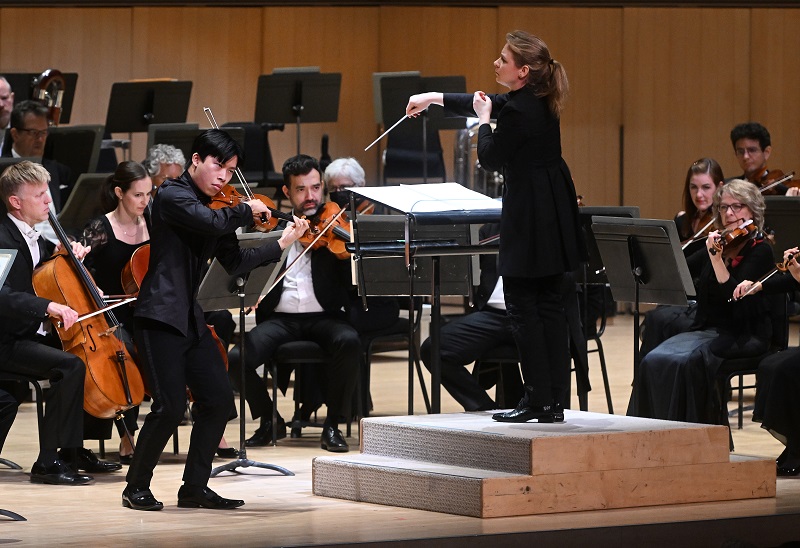
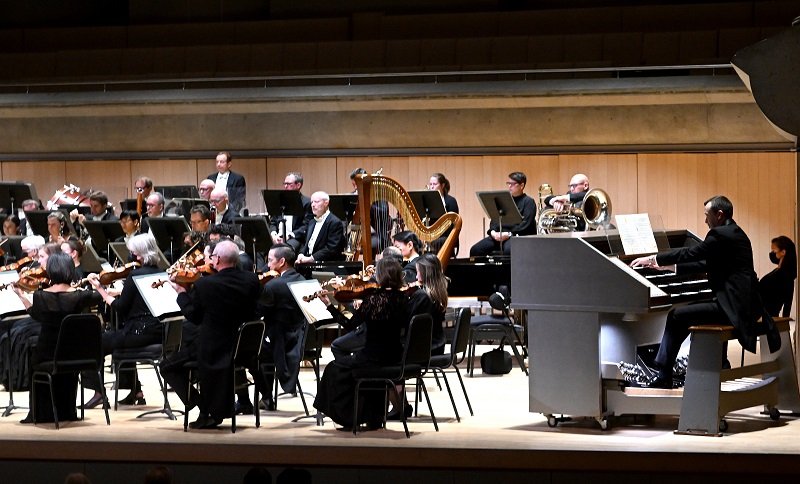
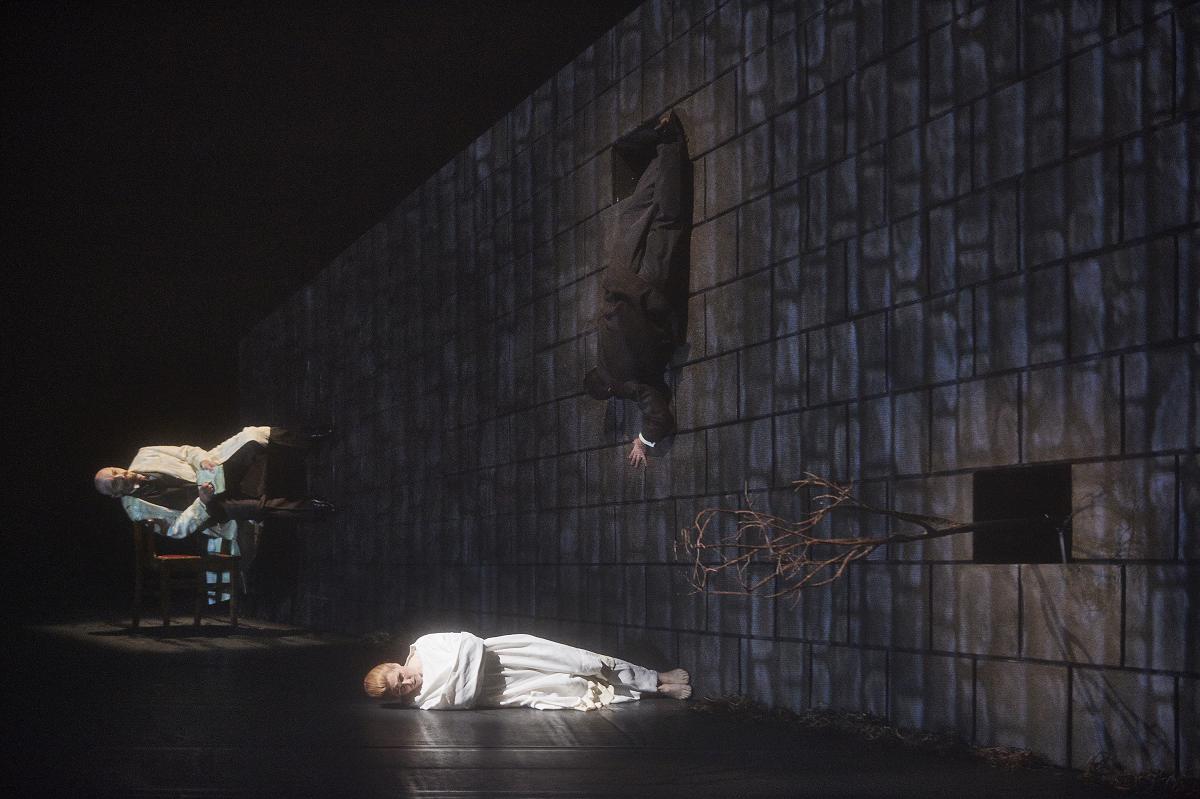
Ashkenaz 2022 will feature the North American premiere of Henekh Kon’s “Bas-Sheve,” the only known pre-Holocaust Yiddish opera. Never performed after its 1924 premiere in Warsaw, and then only with piano accompaniment, the work was forgotten for decades before the only known existing manuscript of the piece was unearthed by German musicologist Dr. Diana Matut in 2017. The rediscovered work was also missing a number of pages from the climactic portion of the story. Matut enlisted renowned Toronto-based Yiddishist, Michael Wex, to complete the libretto with additional Yiddish texts. American klezmer musician and composer Joshua Horowitz was simultaneously engaged to orchestrate the entire piece and fill in the missing musical portions. Six new movements were eventually inserted into the score, along with additional transitions and choral parts, in order to complete it as a seamless opera. The newly re-constructed work was premiered to great acclaim in August 2019 as part of Germany’s Yiddish Summer Weimar festival.
Now, Ashkenaz will present a brand new concert production of Bas Sheve, directed by Neal Stulberg and featuring the UCLA Philharmonia, with soloists Jaclyn Grossman, Jonah Spungin, Marcel d’Entremont and Geoffrey Schellenberg. Produced through a tri-national partnership between Ashkenaz, Yiddish Summer Weimar and the UCLA Lowell Milken Center for Music of American Jewish Experience, with the support of the Canada Council for the Arts, Azrieli Foundation, Toronto Workmen’s Circle Foundation, Glenn Gould School at RCM, and the UJA Committee for Yiddish.
Discount code: YIDDSH10 for a 10% discount on Sept 1 or 2.
Co-presented with:
Lowell Milken Center For Music Of American Jewish Experience At UCLA Yiddish Summer Weimar
Sponsored by:
Canada Council For The Arts Azrieli Foundation Toronto Workmen’s Circle Foundation Glenn Gould School At RCM Mickey Katz Endowed Chair In Jewish Music At The UCLA Herb Alpert School Of Music
The title Who’s Afraid of Titus? has at least three meanings I can see.
1: Performers who fear that audiences won’t come see an unfamiliar play.
2: Professors (Shakespeare theorists) confused by a play that doesn’t fit the usual template.
Sky Gilbert embraces the weirdly different as an affirmation of humanity. As a drama professor and queer activist exploring Shakespeare’s identity: NO he’s not afraid of Titus.
3: Who’s afraid in the usual sense: a violent scary story to make the audience cringe in fear.
Sky is the playwright, the performer, the professor, the activist. Read his Guelph university bio here …where they list him as an expert in Canadian theatre, Creative writing, Drag queens and kings, Gay, lesbian, and transgender politics, Noel Coward, Poetry, Queer theatre, Queer theory.
Sky might be the most prolific writer I’ve ever encountered.
For example (and I don’t pretend that this list is complete): 2019: Shakespeare’s Criminal (opera libretto) my review 2020: Nice Day in the Park (play) my review 2020 Shakespeare Beyond Science: When Poetry Was the World (book) my review
2022 Pat and Skee (play) I missed it because it was done in Hamilton and I couldn’t get there.
Who’s Afraid of Titus? (Sky’s adaptation of Titus Andronicus) opens at the end of August in Toronto. I had to ask him about it.
Barczablog: You’ve chosen to present your show at “the uncanny Red Sandcastle Theatre” (your words not mine). I’m a huge fan of Eric Woolfe & the usual type of show we get at this venue. Is it a deliberate choice on your part to present Who’s Afraid of Titus in a space who promote themselves with the slogan “where anything is possible” and present lots of magic, horror / gothic shows?
Sky: It was a happy fate of circumstance that the show ended up here. I had been following Red Sandcastle all through COVID and I know Rosemary, and I have been keeping my eye out for post-Covid performance venues. Finally we are post-Covid (I hope) and I reached out to Red Sandcastle and discovered that Eric Woolfe was running it. I remember Eric from Buddies, I definitely read some of his scripts there, and I think he did something connected with Buddies, but it’s all so long ago — however the takeaway is that I have a lot of respect for Eric and his writing and his aesthetic.
Front door of Red Sandcastle Theatre
But it really was chance — as we started working on this Titus way back during Covid (when we could work, briefly, one summer, outdoors) but I was so happy not only to work in Eric’s space as he is so smart and so talented (I saw his latest show) but we share similar sensibilities.
Barczablog: Please talk for a moment about genre. Some academics dread the word, others build courses around the concept. (parenthetical question: Are you afraid of the word?) So could we talk about things like “tragedy”, “horror” and “gothic”? they may be most useful in directing customers to the right channel / product when purchasing content (I used to say “the right part of the store” but there are no more stores).
Is genre useful or do we spend too much time tripping over it (especially as students)?
Sky: At the present time genre is a marketing technique. I’ve been writing about action movies on my blog recently (I loved BULLET TRAIN) and that is because — as the Mega Entertainment Conglomerates use genre as a marketing tool, smart directors realize that if they follow the rules of a specific genre, and as in the case of Bullet Train — take them a little bit too literally, (i.e., with wit) they can come up with art. In other words, every movie you see now has to be a ‘genre’ movie (Am I into romcom? Well of course yes, if I’m old-fashioned enough to call myself female…. Am I into horror flics — well of course if I’m a teenager and want my girlfriend to grab onto me when when she’s scared etc). When you go to see a movie in a theatre the trailers are all of that genre — in fact if you go to see a movie with black actors they show you other trailers with black characters, only then do you get those ads —- it’s all about how marketing divides us and keeps us entrenched in our own comfy entertainments — and it is essentially racist and sexist and homophobic to boot. Anyway, enough of that rant. What David Leitch does in Bullet Train is use the tropes of the ‘action flick’ to make fun of action flicks and incidentally of wokeism. It’s hilarious — and he can get away with it (the worst thing that happens is the politically correct critics hate him on rotten tomatoes) because he is being true to genre but…not.
It would be wrong of me not to take the opportunity to mention that one of Shakespeare’s major innovations was his irreverence for genre (see the drunken doorkeep in Macbeth) so much so that his plays were sometimes incomprehensible and offensive to early modern audiences (but keep in mind some of them grew up with medieval passion plays that were anarchic in their own way). Shakespeare is constantly mixing genres, his comedies are sometimes very sad and his tragedies very funny. This comes from his readings of Hermogenes and his obsession with the rhetorical technique of mixing styles — unheard of in his time in the earliest examples of Renaissance drama. Everyone else wrote in one style at a time (the tragic style, or the comic style) Shakespeare mixed them all up. This still confuses us, and is very much the situation with Titus — one reason why it’s so important to see the play. Titus is somewhat of a farce tragedy. There’s only so much violence you can see, after all, without wishing it was all a cartoon.
Barczablog: I bring up genre for “who’s afraid of Titus” in case you might want to mention your approach, where you’re situating your adaptation re: genre. Will you cue us (spooky music, etc) or do you prefer to surprise your audience?
Sky: My concept of Titus is that it was written as an attack on didacticism, and as a manual on how NOT to read Ovid (this isn’t my idea, I read this interpretation somewhere, but since this is not an academic essay, I don’t have to tell you where!) . The characters in the play try to live their lives like characters in Ovid poems, which means they end up cooking people into pies, and raping them, and chopping off their hands and tongues.
Shakespeare’s message here is that theatre should not have a message (paradoxically) and that those who go to art to learn how to live are going to ruin their lives. I do not hint at my approach in the play, instead I try and hit the audience over the head with it. There is a narrator who constantly asks the audience to think about theatre as ‘harm.’ The audience is asked to think about how they perceive theatre, and how they have learned to process pain through their practices in the digital world (i.e social media and YouTube). Do we learn how to suffer from seeing microphones shoved into COVID-19 patients on TV? But I will say that Titus, and my production of it, are so alien to the present aesthetic and moral zeitgeist (these days we think we should only watch movies and plays that ‘improve’ us) that I have had to be somewhat explanatory about what I am doing in the play itself, because it’s just, well, new….(even though it’s as old as Shakespeare)
Barczablog: When I used to teach film music courses, we talked a lot about genre, something I spoke of as chicken & egg, because signifiers such as music are both drivers of genre and respond to it: -producers/directors hire composer to make it recognizably “horror” or sci-fi. -it’s how we recognize a genre (eg spooky music for horror, sci-fi music for sci-fi) Do you come at this wanting to meet our horror expectations, or to surprise us? Will this be possibly scarier as a result?
Sky: I talked about genre a lot above so let me just say that the production will be both horrifying and funny. At least I think it will be. My work is almost always funny, I rarely have to work at that (if the actors are funny) but, when it comes to horrifying, the problem with me of course is that things that I find quite normal horrify other people. For instance promiscuous sex horrifies some people, sex without romance or ‘love’ (although I think all consensual sex is love) horrifies some people.
So I never know what horrifies them. I want the violence to be real, which means that I try and not put it in front of your face but instead incite your imagination. We’ll see if that works. On the one hand the play will not be like that one in London awhile ago (sorry can’t remember who did it) where they had buckets of blood spilling on the audience — they went high camp with this stuff. Not here. My adaptation centres on the rape of Lavinia (the play was sometimes called that, in its day, I think) and that I take very seriously and have a very radical take on it. Shakespeare took rape very seriously. Though occasionally male characters joke about it in his plays, you only have to read Lucrece to know how seriously Shakespeare took rape as a crime against women, and how important he felt it was to give a voice to women’s suffering. Lavinia is paradoxically silent through half of the play — but that is a Shakespearean paradox.
Barczablog: A play like Hamlet comes with baggage, namely zillions of interpreters & versions, crowding in on your desire to interpret. Does Titus offer you more freedom, given how much more space you have to play with the story, to make your own adaptation?
Sky: First of all Shakespeare has been rewritten since time immemorial. That’s what we do with Shakespeare. There are three versions of Hamlet around, and directors and editors mix and match (one of our favourite lines — ‘There is nothing either good or bad, but thinking makes it so’ — is from a bastard version of Hamlet — the first — bad— quarto — and co-incidentally my version of Titus resembles this first bad quarto of Hamlet — which people do perform occasionally — it’s ‘only the facts ma’am’ it cuts to the action, and the plot comes at you at a hurtling speed). One of the reasons we must adapt Shakespeare is because we are no longer rhetoricians, whereas every student in grammar school in England was a rhetorician, had access to Latin, and believed that language shaped reality. We reject the notion of language as powerful — although ‘stop the steal’ is a little poem with lots of power! — and we ignore the new rhetoric, which is digital media, mainly visual, not verbal, which however controls our lives to a frightening degree. But we don’t listen to words anymore — we don’t read poetry — and most importantly we don’t think that poetry can create another reality to rival ours, which is what Shakespeare believed, and what rhetoric taught him. But the genius of Shakespeare is that his plays are not didactic and cannot be boiled down to any moral idea. The anti-didactic ‘theme’ of Titus is actually just a ruse— the play, like all Shakespeare’s plays is about nothing at all but human beings, and human emotion, passion, love, hate, you know, all that stuff. Harold Bloom (God, I hate him!) said only one good thing really, that Shakespeare taught us how to feel. But Shakespeare also teaches us how to think, by not giving us answers to the questions he raises, and after all ,metaphor itself is a form of thought.
Barczablog: Shakespeare’s theatre contains some moments of unparalleled violence, thinking of King Lear, Macbeth, Hamlet (there are more of course). Do you believe that modern staging–more representational /real than in Shakespeare’s time—aids or defeats horror? And how might that inform your approach? (Would being less representational and relying more on an oral approach force us to use our imaginations)..?
Sky: I’ve sort of addressed this already. I would say that trying to bring on a bloody severed head or hand is just not going to work these days, not with Star Wars and with SAW 1.2.3 etc. So you just can’t do that. All horror is psychological anyway, really. Check out the shower scene in Psycho (no nudity, no actual violence) or the movie Midsommar. Let’s face it we don’t want to be moved in any way anymore, everything we watch on Netflix and at Mirvish Productions is designed to comfort us and make us feel more secure in who we are and the choices that we have made, and confirm that we are good people. People go to horror movies these days to laugh, to see ‘camp’ entertainment (but it isn’t truly camp, true camp is very serious and sad deep down) to make fun of how bad the movie is and anyhow it doesn’t really scare them. No one wants to be really scared or horrified anymore. We want comfort food and comfort entertainment and we are getting dangerously fat on all that. I’ve always been interested in work that challenges, unsettles and even horrifies.
Barczablog: Your promotional press speaks of “poeticised violence”. Please unpack that, explaining what you mean, how that applies to Titus. Do you mean this for any version of the play or yours in particular?
Sky: I mean that, as I have said right above, coincidentally (great minds think alike!) the only true horror and violence in art is poetic. It plays on our imagination and stimulates it. I remember when I was doing my play The Dressing Gown (long ago) and one woman who saw it said “Oh that scene where the one man brutally beat the boy and then had sex with him was so horrifying.” I told her that no beating took place. A whip was revealed and so were bare buttocks. That’s it. She filled in the rest with her imagination and it was a nightmare for her. I will say I have a pretty active imagination, which is why I don’t take hard drugs. A friend of mine (it was Christopher Newton) once said “I don’t take hard drugs. Someone said to me that people love taking chemicals because it turns people on the subway into monsters. Well the people on the subway already look like monsters to me, I don’t need drugs!”
Barczablog: Is this your first time doing / adapting Titus Andronicus?
Sky: It is my first time directing Shakespeare with professional actors, and even though this is a workshop presentation it’s incredibly scary.
If it doesn’t go well – I.e. if I think it’s ultimately no good — I won’t ever do it again. But I want to give it a try because of all my recent research into Shakespeare.
Barczablog: What’s the connection between Titus & your book? Is it because you’re investigating the Bard’s identity…?
Sky: I think I mentioned that I have a new book about Shakespeare coming out (not right away but eventually) with Guernica called Shakespeare Lied. I wanted to make sure that I mentioned that here. But I would say that after the reading I’ve done and the work I’ve done — one important revelation I’ve had, is that it makes no sense to ignore Shakespeare’s ‘difficult’ (inconvenient, incomprehensible works) — or claim they are written by someone else when he clearly had a hand in them. I am fascinated by Loves Labours Lost and Venus and Adonis, for instance, they are both works which are often ignored because there is something difficult and unpalatable about them. The same can be said about Titus. But if we can get our minds around Shakespeare’s most ‘quirky’ work, work that is distinctly his, we will understand better who he is and what he is about. I love Midsummer Nights Dream and Hamlet but they are more accessible, and that’s not where you learn the most about Shakespeare. Both Titus and Love’s Labours Lost are excessively and somewhat frighteningly about rhetoric (Hamlet and Midsummer Nights Dream are too — but there is a lot of other stuff going on to distract us, Shakespeare always wrote ABOUT rhetoric but in many different ways). So if we can tackle Titus and LLL we might ‘get Shakespeare.’
Brian Smegal — who plays Titus in my production— has gotten me interested in Timon of Athens (he’s such a bastard for doing that!) And I am fascinated by Timon — because it is so strange, but therefore so ‘Shakespearean.’
Barczablog: How does presenting Titus “as a queer play” work? Do you alter genders or behaviour of any characters, recalling the absence of female actors on Shakespeare’s stage.
Sky: There is a woman who plays a man and a man who plays a woman. And there are two biological women on stage having sex together at one point. I think that’s all pretty gay. (But ideas about what is gay have certainly changed over the years, this play is not about getting married and adopting twins, so maybe so people might think it’s not gay at all!) I also think it’s gay, because there is lots of sex in the play and at times I hope the play will be camp, both funny and sad at the same time.
Barczablog: Would you / could you argue that your version (ignoring the questions of length in your adaptation) is in some respect authentic, for that reason (that there were no women on Shakespeare’s stage): OR am I being too reductive?
Sky: There is no such thing as an ‘authentic’ Shakespeare production. First of all the plays were produced outdoors at The Globe with no lighting (at the Blackfriars there were candles) and there was very little in the way of costumes and sets. Most importantly all the women’s roles were played by boys age 10-17. This tells us that the plays were about the words. People listened to words and stories back then as there was an oral tradition. And that is not the least of it. At any rate we know very little (to quote my theatre history teacher at grad school at U of T) about theatre production in Shakespeare’s time, but we know it was severely representational — and not realistic — in the sense of method acting, so it would probably seem very strange to us today. But anyone who claims to be doing an accurate production is lying — we simply do not have enough information about what it was like to live and think and love in early modern times to offer authentic Shakespeare today.
Barczablog: Is the core of the story HORROR? (apt for Red Sandcastle theatre)?
Sky: I would say it’s pretty apt for Red Sandcastle folk. (Nothing can quite measure up to Eric Woolfe’s portrayal of Kafka’s Metamorphosis with stuffed animals, but I am doing my best!)
Eric Woolfe in mid-Metamorphosis
Barczablog: Did you involve Eric Woolfe in any of your preparation / adaptation?
Sky: No but we have talked a lot and he is a great inspiration to me and I know his work. It’s a pleasure to have the privilege to work in such an atmosphere of support and frankly intelligence and wit.
Barczablog: Suspense aids our engagement and catharsis. Please talk about violence (whether contemplated or genuine) and the role it plays in gaining our engagement with a story and its role in possible catharsis (fear, relief etc).
Sky: I have talked about this a lot above, but basically I would have to say that I really don’t know what is horrible. What’s horrible to me is the nuclear family. What’s horrible to me is human hypocrisy. It terrifies me. So I never know what’s going to horrify anyone else.
Barczablog: In your promotion of the play, you ask two fascinating questions namely “Does art harm us? Should it?” So, as a professor perhaps disillusioned by plagiarism, illiteracy and smartphones in class, do you ever observe (and even identify with) the sadism implicit in some texts as a response to the vulnerability of the performer, exposed on stage? As a lecturer do you have comparable sensations of vulnerability fueling your desire to avenge yourself upon a classroom or an audience?
Sky: Hm. The best I can say is that I think that if we are never ‘harmed’ as children, we grow up as very warped neurotic people. Of course I don’t think anyone should be abused, and I don’t want children to suffer. But we live in such a ‘sheltered’ ‘correct’ ‘sensitive’ society nowadays, that is all about hurt feelings. Whatever happened to ‘sticks and stones can break my bones but names can never hurt me’? I know of this personally because I led a very sheltered childhood, and was much loved by a mother who made me feel that I was too fragile for this world (this is not true, by the way. I loved my mother dearly and my play Pat and Skee is about her) But really, though we want to protect our children from illness and death and accidents, they must and should have ‘bad experiences.’ I don’t know how to tell you this but sometimes life seems like one bloody thing after another, and we need to be resilient , not protected always, and art can be a part of creating that resilience.
Barczablog: Do you want to thank / acknowledge any influences, assistance on the project?
Sky: I’m kinda doing it on my own but the actors have to some degree been accomplices, especially Brian Smegal. Also the Shakespeare Oxford fellowship — Mark Anderson, Alexander Waugh, Roger Stritmatter and Lynn Kositsky.
*******
Eldritch Theatre presents a Titus-on-the-Run Productions Workshop Presentation, WHO’S AFRAID OF TITUS? Who was Shakespeare? Does it matter? Well Sky Gilbert thinks he was an aesthete — a poet whose plays are about poetry and its effect on us.
In tackling Titus Andronicus, perhaps Shakespeare’s most baffling play — Gilbert is drawing on his research for his new book Shakespeare Beyond Science: When Poetry Was the World (released in 2020 by Guernica Editions). Gilbert has now adapted Titus Andronicus for a post-Covid era, asking the question on all our minds Who’s Afraid of Titus Andronicus?. Gilbert reduces Titus Andronicus to one hour and 18 concise scenes; the language is there, the story is there — and yes, there is a reason for doing this play now. Gilbert presents Titus as a queer play about poeticised violence, and asks (but does not answer) the question. Does art harm us? Should it?
Titus features a stellar cast including Brian Smegal (Stratford Festival) as Titus, Ellen-Ray Hennessy (Canada’s Queen of Voice and Animation) as Tamora, Sandy Crawley (movies galore; Green Party candidate) as Marcus, Veronika Hurnik (paula and karl, DNA Theatre/Six Stages) as the Narrator, and Augusta Monet as Lavinia. The production also features Ray Jacildo, George Alevizos, Max Ackerman and John Humeniuk.
Sky Gilbert
WHO’S AFRAID OF TITUS? Shakespeare’s Titus Andronicus
Adapted & Directed by Sky Gilbert
August 31 to September 3rd, 2022 at the uncanny Red Sandcastle Theatre 922 Queen St East, Toronto
$15 Arts Worker/$25 Advance/$35 Door 6:30PM Doors/7:00 Evening Showtime 2:30PM Doors/3:00 Saturday Matinee approximately 1 hour, no intermission Click for tickets & information
It’s a branding exercise to give a building a name. Roy Thomson has his hall. Both Rogers and Four Seasons have Centres.
They already have The Glenn Gould School in the Royal Conservatory of Music. So why not also give him a wall?
Or so I’m thinking since seeing Gould’s Wall, a site specific opera Tapestry Opera premiered for the Royal Conservatory on Bloor Street West with music composed by Brian Current and a libretto by Liza Balkan.
At the most literal level it would seem to christen the inner Atrium wall. After seeing this show will we ever look upon that bumpy old surface again without thinking it’s in some sense Gould’s wall?
Although come to think of it, for me it will be Lauren Pearl’s Wall. She’s the one risking her life flying up and down on wires. I hope that isn’t heresy.
Lauren Pearl as Louise in Gould’s Wall (photo: Dahlia Katz)
To be truthful, I’m aware that it’s an illusion that she was truly risking her life. Yes it seems dangerous, indeed that perception of danger is a goal. But the reason you have careful rehearsals is to ensure that the aerialist is not truly in danger.
There was a magic moment when Lauren seemed to “whoops” and everyone leaned forward in terror, reminded of the danger she faced, hanging above the floor so far below. I’d have to think this was a contrived moment, not a genuine slip with real danger. We watch stage-fights where actors seem to die, we see all sorts of things simulated that are not real. Creating that illusion of danger is a big deal.
I recall hearing an anecdote from a friend, telling me of a time when safety personnel watching her practice (aerials using silks), who decided that she must be in danger. But that is what practice is for, to ensure that what seems dangerous is not truly life-threatening.
As if that weren’t enough Lauren faces additional challenges singers don’t usually encounter. Ever notice how singers will carefully plant their feet, set themselves up to sing? It’s rare for example to see someone sing while lying down or while walking or while moving. That’s because the act of singing is already a physical activity involving our muscles, especially the diaphragm. To sing while also moving about throws things into flux, undoing the careful foundation of support that singers usually want to establish for their vocal production.
I remember a workshop (I wish I could recall the singer who led it) at the Festival of Original Theatre (aka FOOT) in 2005 at the University of Toronto. We were rolling round on the floor in a rehearsal room while trying to sing. For those of us who thought we knew how to sing? It was humbling, a shock to discover that wow it’s so much harder to sing steadily when the tumbling action screws up your support, your vocal production, as though suddenly you’re a beginner. The workshop leader could do it. I suppose with practice we also might have learned how to do it, to practice this new discipline.
Clearly Lauren Pearl knew how, singing Brian Current’s score including some remarkably high notes while flying around on the end of a wire.
As I was thinking about the space I remembered another powerful presence from musical history whose spirit informs the downstairs corridors of the RCM, not far from the site to be used for the performance of Gould’s Wall.
There’s a seven foot tall sculpture of Franz Liszt, aka Liszt Ferenc as we Magyars might like to say it.
Statue of Franz Liszt by Géza Stremeny, donated by Tamás Fekete,
It’s common for Hungarians to adapt. It was never Solti György, but rather Georg Solti. I suppose in the music business it has always been a better career move to use the German version of a name. For Solti and Liszt that seemed to work better.
Liszt is an artist who might seem to signify the direct opposite sort of persona to Gould, which is why I spoke of “competing icons”, at least in my mind.
In an article from 2014 Hungarian Free Press by György Lázár reports as follows:
A whole-figure statue of Ferenc Liszt has been inaugurated at the Royal Conservatory of Music in Toronto. Jeff Embleton the Manager of Public Relations mailed me the photo of the 7 feet (2.25m) tall sculpture which was generously donated by Mr. Tamás Fekete, a Canadian with Hungarian roots, who arrived to Canada after 1956… The sculptor is also Hungarian, Géza Stremeny. (link to report )
At this point no one is nominating Liszt to compete with Gould as the spirit of the RCM. I’m simply a huge fan, and believe Liszt is under-rated. If you only know him from his most famous pieces (the Mephisto Waltz, the 2nd Hungarian Rhapsody, the well-known Liebestraum melody) you’d probably roll your eyes at my assertion. Liszt championed Berlioz & Wagner (to name but two composers) who would have had a much more difficult time without the piano transcriptions that helped popularize their music.
I couldn’t help noticing that while these two will share the same space inside the RCM, Gould and Liszt are opposites. Gould refused to perform in public, while Lisztomania (his reception by the public) was the prototype for the modern media frenzy of super-stardom.
Speaking of that wall, I think Current’s music resembles the architecture.
Brian Current
The RCM buildings combine old and new styles into a whole, in a style we might call “post-modern”. I doubt that Current was consciously imitating the eclectic mix, but his musical choices vary broadly, at times offering us a romantic sound-world, at times dissonant. There’s a moment when the libretto speaks of dodecaphony (if I recall correctly), a word I would assume means the twelve-tone approach to music we know from composers such as Schoenberg: but I couldn’t be sure whether that’s reflected precisely in what Current composed. My understanding of po-mo is a refusal or even a repudiation of modernism, including a willingness to recycle and repurpose the old, to combine and mix, to be pluralistic and eclectic rather than adhering to a single objective.
Opera by Wagner or Richard Strauss would be the modernist prototypes, with unified styles supporting the aim of Gesamtkuntswerk, or total art. The post-modern would turn from their ideal indeed Gould’s Wall is not at all like something from Wagner or Strauss. It’s more meditation than story, what Pirandello might have titled “a series of scenes in search of an ideal”. This is a pragmatic score, the music serving its purposes much like the different parts of the RCM building.
I was very grateful that Tapestry offered us a printed copy of the libretto.
The last page of the libretto. Notice that it says “PLEASE RETURN ON YOUR WAY OUT”
Being a nerd I followed along dutifully, as I wanted to be sure I knew what was going on.
Is that crazy? Greg Finney, who was seated beside me, seemed to be watching the action: which is arguably the sane thing to do especially when a performer seems to be risking their life in front of you.
Greg would be the first person to tell you: he knows how to enjoy himself. Indeed he’s the life of the party.
Three writers, namely Greg Finney, moi and Lydia Perović
I wanted to be sure I knew what they were singing, especially if I was going to presume to offer comments on Current’s and Balkan’s opera. I wish I could see the score.
I am going to repeat something I keep saying over and over. Projected titles are a huge asset. RUR (in May) worked really well because we knew what they were singing, thanks to the projected titles. Perhaps there was no place to project titles at the RCM so that we could all see them (recalling the very wide but narrow audience). Too bad, as the ideal would be to watch the aerialist instead of staring at the printed libretto.
Tapestry Opera have premiered Brian Current’s new site-specific work Gould’s Wall, an event that adds another layer to the association between the Royal Conservatory of Music and one of their most distinguished alumni Glenn Gould.
Ruth Abernethy’s statue of Glenn Gould.
I like it more than I expected. We knew the visual component –especially Lauren Pearl climbing the wall of the RCM on a wire—would be electrifying.
For years now we’ve been watching various sorts of aerial performance, usually decorative eye candy rather than an expressive choice essential to the material being presented. What a wonderful novelty to watch this kind of movement when it’s inseparable from the story.
Some of the scenes work better than others. Liza Balkan’s libretto assembles the abstract materials for Brian Current’s score. Less story than meditation, the mature Glenn Gould onstage portrayed by Roger Honeywell is the avatar of quirky creativity resisting structure. It’s the cranky middle-aged genius rather than the young prodigy, although perhaps this is to be understood as Glenn’s immortal essence. Louise might be any of us striving to be better. Her climb is a suitable metaphor for the process of learning, complete with the fear of falling, the genuine sense of risk.
Speaking of which it’s fascinating to observe the audience reactions to Lauren’s apparent danger, as she seems to be on the verge of falling. The extreme narrowness of the audience and stage heighten the drama.
The show is a spectacle not unlike a circus –given that we do see aerial performances in a circus—even as Louise and Glenn revolt against that aspect of live performance.
It’s been a crazy year for Tapestry, two big shows delayed due to COVID, both hugely successful. Both RUR (opened in May) and now Gould’s Wall were years in the making. Artistic Director Michael Mori is on a winning streak, the most important creator of new opera in town. After Michael brought Nicky Lizée and Nicolas Billon together for RUR, carefully nurturing their collaboration over several years, now he’s done it again with Gould’s Wall, this time employing composer Brian Current and librettist Liza Balkan, with stage direction by Philip Akin.
Michael Hidetoshi Mori, Tapestry Opera’s General Director
We were given copies of the libretto, likely because the text is difficult to discern without projected titles; I wonder whether the option of printing the libretto was perhaps cheaper than figuring out how to project titles on the many surfaces of the venue. At times I wanted to look up at the performers, especially Lauren moving about on the wire.
Current’s score is mostly tonal and quite stunning. The last pages were especially compelling, the opera captured by its own big ideas. On the last pages of the score we’re hearing about the “futility of living by the advice of others”, about the “past and future on the vertical and horizontal plane”, or that “it’s all about the climb.” Current’s music matched the poetry of those last images from Balkan.
The score for an ensemble of 18 (seven winds, five string players and five pianos plus a percussionist) is often played on one or more piano, but punctuated by several larger eruptions from the ensemble at the base of the wall. The acoustic of the space must have been daunting (I understood fewer than half the words during the obligatory opening speeches), especially for the conductor. Tonight’s show was led tightly by Jennifer Tung.
Balkan’s libretto features some clever solutions to the challenges she faced, dramatizing abstractions and ideas. There are places in her libretto where she makes a kind of music out of short phrases, many only one word long.
I’m always wondering with new operas whether anyone might want to stage them again. Gould’s Wall may be site specific, but I think it would be worth doing somewhere else, if the right space were found. Glenn Gould is a well-known figure, purveyor of original ideas known far beyond this city. While I’ve joked that Toronto is Gould’s Burg that doesn’t mean we’re the only ones who would enjoy this opera.
The audience erupted with satisfaction, the piece not overly long, totally engaging and irresistible.
While I believe the run is sold out I’m hopeful that the run might be extended. Further info click here.
I want to write something about Glenn Gould. Who is he, what is his legacy in 2022?
I’m thinking about what GG means to me as I anticipate Tapestry Opera’s premiere of Gould’s Wall, a new site-specific opera opening August 4th, that would seem to dramatize the ongoing influence of the great pianist based on what I surmise from the program.
Louise is “A young, extraordinarily talented artist and musician on a quest to uncover her own voice.”
Glenn is “The presence of Mr. Gould. He is Inspiration. Consciousness. Sub-consciousness. Support. The Artist. The Icon. The Man. One might call him a ghost, but he is 100% real and present: an inhabitant of the wall and the building”
The third and arguably most important character in the opera is the site namely The Wall. As composer Brian Current tells us in his program note: “Since the beautiful new Royal Conservatory building was completed in 2009, the inner Atrium wall has been crying out to become the setting of a vertical opera. Huge thanks to librettist Liza Balkan and Tapestry’s Artistic Director Michael Mori for creating such a wonderful theatrical premise to fit the site.”
I’m reminded of the 1984 appearance of Sankai Juku in Toronto, performing butoh suspended from the sides of buildings in Toronto. Whatever the aesthetic, when the art transcends our experience and our expectation we move into the realm of “the happening.”
Here’s what I think of when I contemplate Glenn Gould.
He grew up in the east end of town. There’s a plaque somewhere (Victoria Park I think) attesting to this fact.
He was a great talent, but unique in his choice to give up live performance, offering his work exclusively through various media such as recordings, television, or radio.
He had a special relationship with the CBC, seemingly understanding the impact of media at least as well as Marshall McLuhan. It’s perfect that his likeness sits on a bench in front of the CBC building on Front St, sculpted by Ruth Abernethy.
Sculptor Ruth Abernethy with her statue of Glenn Gould. (Laurie Allen/CBC)
His choice to stop live performance made sense given that he seemed to be someone who was more introverted than extroverted, a quirky genius. I say that without ever meeting him or knowing him. But he made the transition to cultural icon partly through rumours and stories. His piano was supposedly prepared differently; he sat lower to the keyboard than what we’re usually taught (or so said my teacher).
He died too young. Gould was born on September 25 1932, and died October 4 1982. I can’t help noticing he was born and he died in the sign of libra (the scales… not the kind of scales we play at the piano but rather the sort we use to weigh things), a classical symmetry also seen in his name (five letters in both the first and last names).
Yes, we’re coming up on his 90th birthday.
Gould seems especially relevant in this post-pandemic era of virtual work, dating, meeting, concertizing and living. He was ahead of his time. It’s funny that Gould’s Wall is in a sense celebrating him as an icon in live performance even though he could be the avatar for Zoom and the online concert experience.
The premiere of Gould’s Wall was delayed by the pandemic, postponed until its arrival next week. While that might be understood as a logistical disaster—particularly for Michael Mori and his team at Tapestry Opera—it might be a good thing. What was brand new received extra rehearsal for its second coming, making it just a bit more sure-handed, the music more secure.
Gould is associated with the music of JS Bach, especially a pair of recordings of the Goldberg Variations that bracket his life (one in his youth, one much later) like bookends. Apt for a libra.
I have been most interested in Gould’s relationship to three pieces. While none of them are by Bach, old JS lurks in the background for these three like a ghost. Originally we encountered these three in a recording of piano transcriptions of the music of Richard Wagner: the prelude to Die Meistersinger, the Dawn & Rhine-Journey from Gotterdammerung, and the Siegfried Idyll. I can’t decide whether Gould’s approach points at the influence of Bach on Wagner or simply shows us Gould’s own fascination with counterpoint, bringing out something in Wagner that I’d never noticed.
Later Gould published the transcriptions. Two of them are oxymorons in the sense that they aren’t really playable by a single person in live performance, but require either a second pianist or –as in Gould’s case—the overdubbing of a second pianist into a recording.
“5” is the Siegfried-Idyll, “6” the Meistersinger Prelude while the page is open to an unplayable passage in Siegfried’s Rhine Journey. Buddha had nothing to say.
It’s arguably a practical joke he was playing on those who would insist on live performance.
The cover picture is a disturbing metaphor for its subject.
In 1992 Andrew and Janise were married.
This poem “What Once Was”, is by Andrew Smith, posted in July 2022 on Facebook.
what once was; is so long ago. two fools, insanely naïve; i pinch myself; it’s not a dream.
what once was, left many clues. there are pictures and videos, people’s memories, of that time & all that was seen.
what once was, is our foundation. keeps us solid & built to last. standing strong; despite life’s storms.
what once was, a gift we share. has brought us to our life; here. & now a feeling that is so blessed & now a love that is so strong.
Tomorrow, July 25th, is their 30th anniversary. By coincidence today July 24th is the 35th anniversary of when Erika and I started living together. It’s fun to post this book review today, with the coincidental anniversaries.
I know Andrew Smith as my accountant, the man I see once a year at tax time. Through social media I discovered that he wrote a book: “Rebuilding Janise: A Family’s First Year After A Stroke”
The subtitle gives you a perfect synopsis, but there’s a lot more to it.
Janise Smith had a stroke March 18, 2019. The event impacted the whole family, meaning Janise, Andrew and their sons.
Andrew explains in his introduction that “before Janise’s stroke we were an affluent Black Canadian family with Caribbean roots. Janise managed the family and was always in the midst of organizing events to support the female movers and shakers of the Scarborough area of Toronto Ontario. ”
That was before.
He tells us that “after her stroke everything in our lives changed. Our family dynamics and our individual and our collective roles were impacted beyond our imagination. Starting with the crisis of finding Janise unconscious, the frenzied drive to the hospital, and then the uncertainty of whether she would live, as a family, we faced what it truly means to love and back each other through adversity.”
In a way this book makes perfect sense, given what we know of Andrew. Every year when Erika and I visit with our assorted notes, he makes order out of our chaos, the receipts, T4s and T4-As, our muttered pleas for mercy & understanding.
Save us from the CRA Andrew! Okay I may be exaggerating. But our visits are full of laughter and joy. Andrew is the most fun we’ve ever had with an accountant, by far.
Given his usual meticulous attention to the details of our lives, his patience with our stories, his ability to drill down to find the rules we need to know, he would be the ideal helper. Andrew was always very kind & gentle examining our various documents and patiently hearing our anecdotes. At times he feels less like an accountant and more like a father confessor or a psychotherapist.
He’s good at what he does.
Of course there’s also the matter of his relationship to Janise. This might be the most romantic enterprise I’ve ever encountered. I remember asking him whether he had seen the film 50 First Dates, which is a very romantic movie that reminds me of the challenges they face, with some parallels to the patient daily structure Andrew brings to his family life.
The book reports the day by day progress of Janise with her loving partner & caregiver Andrew resembling a journal in some respects.
I think the discipline has been also been good for him, getting him to meditate, to write, to exercise. He has the soul of a poet, nurtured by his routine and his discipline.
There is an ongoing positive vibe to the book, gratitude for what they have as a loving family, dodging the more serious outcomes while looking ahead with hope to better days.
Andrew Smith
Andrew has an unusual sense of humour, self-deprecating, making fun at the darkest moments. I feel privileged to be taken into the presence of these feelings he shares with us, not papering over the messier aspects of rehabilitation.
It’s personal for me having seen something similar in my mother’s rehab at Bridgepoint Hospital. While my mom is much older, what she faced is simple compared to the aftermath of Janise’s stroke. I wonder if I connect better with this account of Andrew and Janise because I had my own look at rehab. As I ponder my relationship with my mom & her ongoing challenges I’m aware that the story has two sides to it, as much the drama of the healthy caregiver as a portrayal of a person doing rehab.
There’s a lot to it, as you may discover in your turn.
Andrew Smith’s Rebuilding Janise is available from Amazon in both in e-version & paperback editions. To find him click here.
Andrew posted this useful chart concerning stroke.
I saw Will King’s darkly comic Dead Broke today at the Toronto Fringe.
I was blown away by King’s first play From the Water in December 2018, amazingly good for a first play. This one is better, unfolding in a remarkably economical 60 minutes.
(L to R): Claire Shenstone-Harris, Gordon Harper, Will King, Courtney Keir, Elle Reimer (photo by Calvin Petersen & Will King)
I often see operas, dance works or spoken theatre creations running 70 to 80 minutes where I swear they’re padded to seem more substantial, when they could have told their story in an hour or less. Yes a Hamlet or a Parsifal take longer.
King packs a great deal into his 60 minutes. Every word counts.
King also portrays his gormless protagonist Oliver alongside Courtney Keir, Claire Shenstone-Harris, Gordon Harper and Elle Reimer, a strong and believable cast creating suspense, directed by Calvin Petersen.
Here’s the promotional blurb from The Fringe website:
Oliver, a university student, is in trouble. After switching majors and losing all financial support, he begins squatting in an abandoned home to reduce costs and save his relationship. But when the house is revealed to have a sinister past, and someone goes missing, Oliver’s life spirals desperately out of control. This surreal thriller, and dark ensemble comedy, asks us what we do when we are at a point of identity crisis. What’s the cost of living for nothing?
The life of a 20-something artist can be pretty scary even without a father cutting off financial support, unexpected plot twists, romance & mysterious sounds in the night. When you add the possibility of drugs to alter consciousness, reality itself becomes more & more tenuous.
I really love the existential ambiguities created in King’s text. I’m not exactly sure what I saw in the hour of Dead Broke, which is totally enjoyable, very cool.
There are four more performances of Dead Broke, July 13, 14, 16 and 17 @ Tarragon’s Extraspace. Click for further info.
A good performance can change how you understand a piece. I stumbled upon a YouTube recording that I keep listening to over and over, a piece I thought I knew.
There are two contrasting tenor arias in Mendelssohn’s oratorio Elijah. I’ve sung them both in church a number of times, so of course I’ve memorized them inside out. Even so I didn’t really understand them.
The one near the beginning is a probing exploration of faith, including an admission of doubt. “Oh if I knew where I might find him, that I may even come before his presence.”
The one near the end is the opposite, its confident prophecy like an answer to the doubts in the first, an affirmation using text from Matthew 13:43 and Isaiah 51:11
Then shall the righteous shine forth as the sun in their heavenly Father’s realm. Joy on their head shall be for everlasting, and all sorrow and mourning shall flee away forever.
Sure, I understood this in terms of how to sing it, and where it comes in the narrative of the oratorio.
My new perspective might be better aligned with what the composer was trying for.
A few weeks ago I wrote about how I am sometimes troubled about singing some religious texts, that I am at least a bit conflicted about reconciling performance, especially foregrounded virtuosity, and the notion of prayer and worship. They seem like a contradiction.
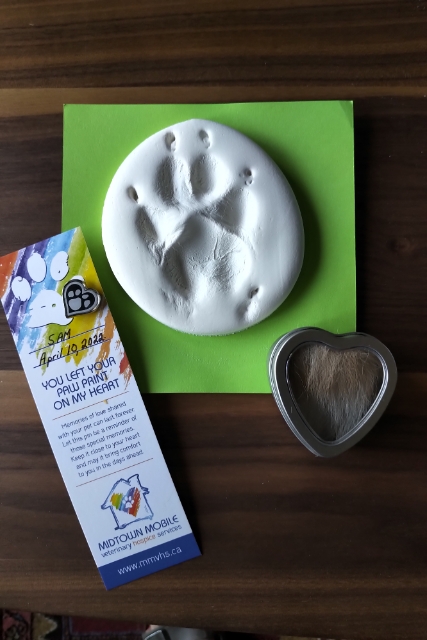
Meanwhile, I’ve been singing this piece over and over, feeling no contradiction in this confident prophecy. For whatever reason it’s been a comfort to me, the only piece that seems to work as something touching upon our physical manifestation in a way that doesn’t contradict science. In the weeks before and after our dog Sam was put down, I’ve enjoyed the spiritual overtones of this text. It’s almost pagan in the simplicity of its suggestion that when we die we become pure energy: “the righteous shining forth as the sun in their heavenly Father’s realm.” Never mind doctrines or complexities, this is simple.
We have eternal life as the radiant sun.
Mortality is my troubled subtext. We may try to live as though we will live forever but truth stares back at us. My mom is coming up on her 101st birthday. My dog is now gone. I cannot help thinking about what follows life.
I’ve wondered sometimes whether one should sing this Mendelssohn piece gently and softly or passionately with energy. Good music usually offers alternatives, more than one way to make a score work.
But when I stumbled on this version, my doubts were gone.
For the 1979 funeral of John Diefenbaker (a former Conservative Prime Minister of Canada, strongly associated with the province of Saskatchewan) they brought in a tenor born in Saskatchewan, namely Jon Vickers, who sings this with heroic intensity.
I believe this is how the piece should be sung. Vickers’ high notes are explosive, brightly shining like what they would sing of.
I recall when I mentioned I was a big fan of Vickers back in my days at UTS, my friend Richard Outerbridge happily said “he’s my uncle”.
Richard passed away earlier this year. Vickers died July 10th 2015.
This aria proclaims that they live on, that we all live on.
This week the Toronto Symphony under their pops conductor Steven Reineke presented three concerts of the music of ABBA featuring Rajaton, the Finnish vocal ensemble. While they describe themselves as an a cappella ensemble –singing their vocals accompanied—it was electrifying to see them team up with the TSO today. Most of their songs were accompanied by orchestra.
As you can see the audience were ecstatic in response, coming to their feet to sing and dance along for the final encores.
Everyone was on their feet at the end
ABBA have four members in their band (Agnetha Fältskog, Björn Ulvaeus, Benny Andersson, & Anni-Frid Lyngstad, where the initials of their first names give the band its name).
Rajaton have six members (Essi Wuorela, Aili Ikonen, Soila Sariola, Hannu Lepola, Ahti Paunu & Jussi Chydenius).
While I love the TSO, the best performances today were Rajaton’s a capella songs, brilliant arrangements getting maximum impact from the members of Rajaton. Bass Jussi Chydenius anchors these songs while the others offer clever percussion effects into their microphones. Baritone Ahti Paunu has the most lovely tone, reminiscent of Johnny Mathis, soaring above, as do all three women.
The TSO are sometimes subtle in their support, sometimes over the top in the exuberance of “Waterloo” or “Dancing Queen (performed a second time as one of the encores).”
It’s fun to watch Reineke with his physical conducting style, at times like another dancer, inspiring the orchestra.
Conductor Steven Reineke (photo: Michael Tammaro)
Rajaton singing ABBA songs with the TSO make a good fit. ABBA are soft rock, very tuneful and musical in their compositions, which suit TSO pops audiences. The singers of ABBA make music that’s almost like music-theatre, between the melodrama of “The Winner Takes it all” or the silliness of “Mamma Mia”.
Of course my perspective may be distorted. Hindsight is 20-20, right? You must know they’ve made a musical titled Mamma Mia out of ABBA songs. The point is, I suppose, I’m obviously not the first person to notice how well-suited these “rock tunes” are for a music-theatre treatment.
The ABBA concerts are presented by the TSO as a Pride- related event, the third & final concert tonight. I took Erika as part of her birthday celebration this week, but couldn’t help remembering dancing to them when these songs first appeared: many birthdays ago.
It was like a celebration including dinner afterwards, our first time back at Elephant & Castle across the street from Roy Thomson Hall in over two years. Yes I ate too much. Dessert was outrageous.
Is she smiling because I have lettuce stuck in my teeth?
And no joke, there really is a Mel Brooks Songbook. When I picked it up from the shelf in the Indigo bookstore I was a bit disbelieving myself.
Mel Brooks, songwriter? The subtitle is “23 Songs from Movies and Shows”.
Even before Brooks wrote the songs for The Producers, his huge Broadway hit musical, we already had ample evidence of something verging on a gift.
In the film of The Producers there were two remarkable songs. I’m sure you’re already hearing one in your head at the mention of the film. “Springtime for Hitler” wasn’t just a song, it was Brooks’ original title for the piece, back when it wasn’t clear whether it would be a play or a film. The other great tune is “Prisoners of Love”.
In his next film, The Twelve Chairs, there’s another brilliant song. Brooks’ preface is very entertaining when he talks about stealing “Hope for the Best, Expect the Worst” from Johannes Brahms: a tune that Brahms himself appropriated for his Hungarian Dance #4.
“If it was good enough for Brahms to steal, it was good enough for me”.
According to a post from Cinema Shorthand Society—the source where I was alerted to Brooks’ birthday today– he doesn’t read music. Apparently Brooks hums into a tape recorder and then gets someone to transcribe it. That was the method for those first two songs, and everything else thereafter.
Lest you think I might believe this makes him incompetent: far from it. I am also an admirer of Luciano Pavarotti, one of the greatest voices I ever heard: another talent who couldn’t read music.
There are three great songs from Blazing Saddles namely the main theme, the song from the uproar near the end of the film “The French Mistake” and “I’m Tired.” With those two words I am instantly reminded of the great Madeleine Kahn, who made so much of the piece.
Arkady Spivak of TIFT
There are also four songs from a musical I’m dying to see, namely Young Frankenstein, adapted from the film. While it was produced in the USA, revised and then produced in the UK it hasn’t yet made it to Canada.
(Are you listening, Arkady Spivak?)
Let me encourage you to check out the book, especially if you’re a fan of musicals. In addition to what I’ve mentioned there are also songs from High Anxiety, History of the World Part 1, To Be or Not to Be, Robin Hood: Men in Tights, and Spaceballs.
Brooks is one of the funniest people I have ever encountered, a gifted writer who not only gives us brilliant stories & lyrics but also seems to know how to compose the music for songs too.