In childhood I heard musicians and performers protesting the Vietnam War or advocating as part of the Civil Rights Movement. Ever since I’ve admired activist artists. Music, film, satire, humour, painting, can all be powerful voices advocating change, moving emotions, touching hearts, influencing and shaping culture.
The emotional landscape for current artists is especially fraught in 2022. Two years into a pandemic, almost two months into the Russian invasion of Ukraine, as prices are sky-rocketing, the ongoing question of climate change and our exploitation of the Earth might be getting lost in the shuffle of horrors.
No wonder there are protests in Paris, seeking to call attention to the issue in the days before their crucial run-off vote this coming week.
If not now, when?
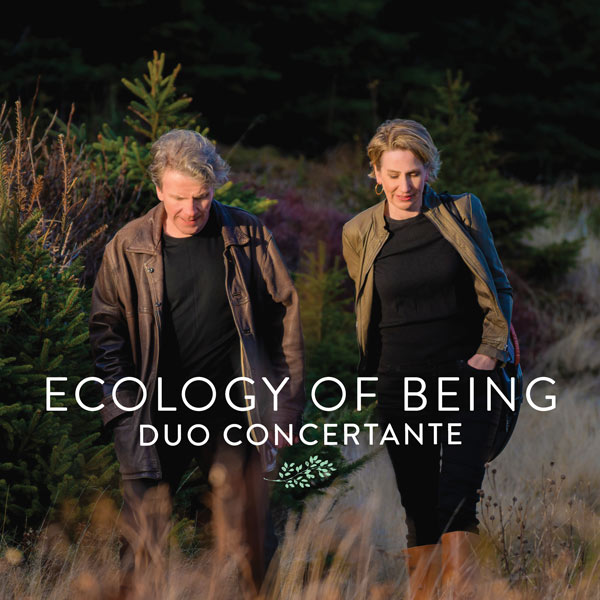
That’s background for Ecology of Being, a new project from Duo Concertante (Nancy Dahn violin and Timothy Steeves piano), including a new recording on the Marquis Classics label, stage performances throughout Canada, an innovative online school program (presented with The Tuckamore Festival) that includes videos, links and live performances, and further performances in Europe. The concerts in the Toronto area are likely to come in summer or fall. So far I’ve listened to the CD and watched some video.
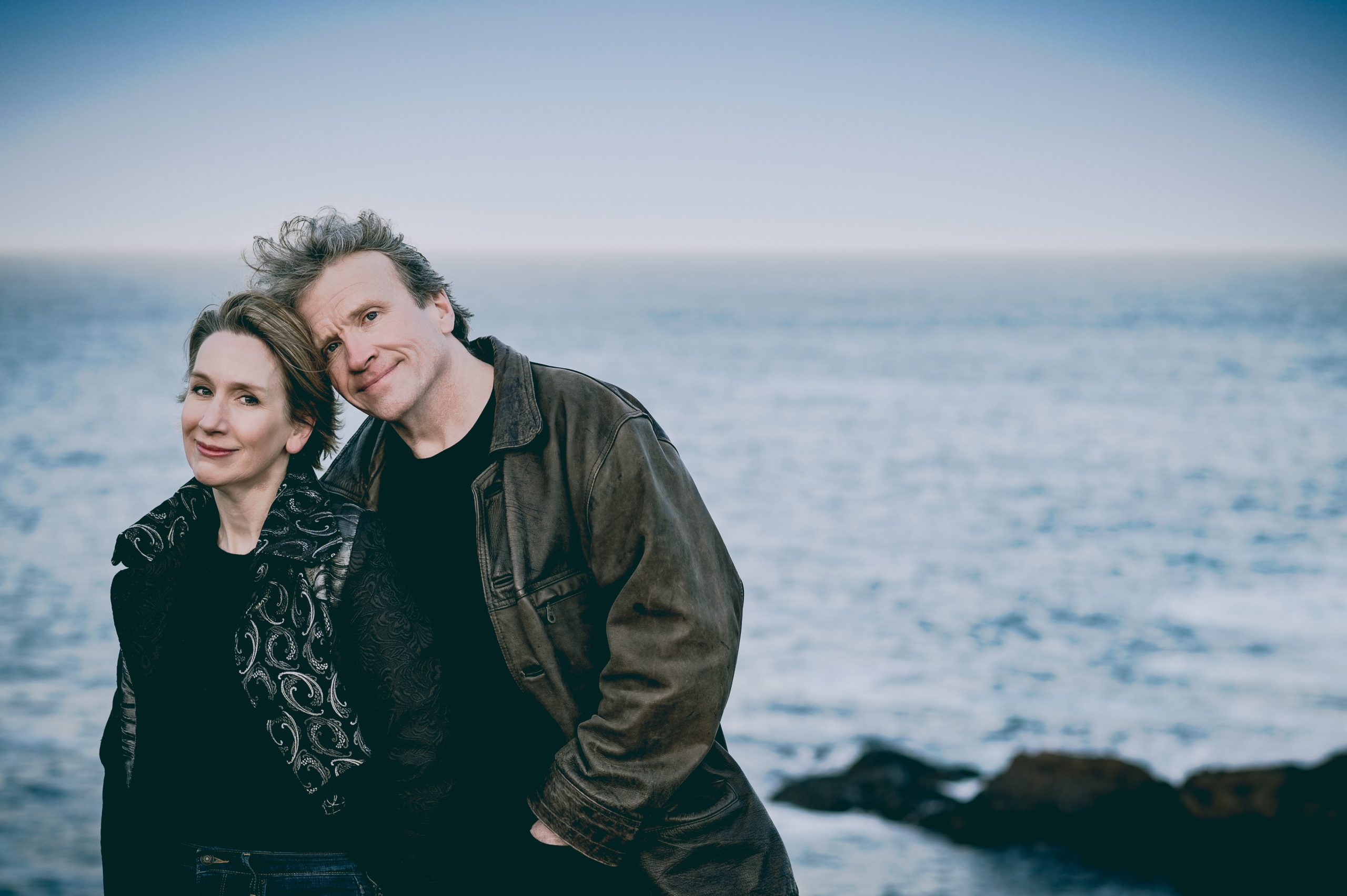
Duo Concertante: Nancy Dahn and Timothy Steeves (Photo: Rich Blenkinsopp)
Their CD takes its name from one of the series of newly commissioned musical compositions inspired by nature and the climate emergency: Ian Cusson – The Garden of Earthly Delight Carmen Braden – The Seed Knows Randoph Peters – Frisson Dawn Avery – Onekha’shòn:a, Ya’kòn:kwe (The Waters, the Women) Melissa Hui – Ecology of Being with Clara Steeves, actor Bekah Sims – shedding, as if sloughed
“We are parents of two children and it makes us incredibly sad that they and the younger generations face huge climate-related challenges,” comment Nancy and Tim. “We hope this project will encourage people to reflect more on their own relationship to nature and the precarious state of the environment.”
Ian Cusson
I’ve been listening to the compositions. Cusson’s Garden of Earthly Delights is not your usual pastoral, because the title comes from a painting of Hieronymus Bosch, suggesting something dark and apocalyptic. Braden’s “seed” is deftly captured as if in a miniature picture, narrow yet perfect. Peters’ “frisson” is deliberately aiming to induce shivers: and succeeds admirably.
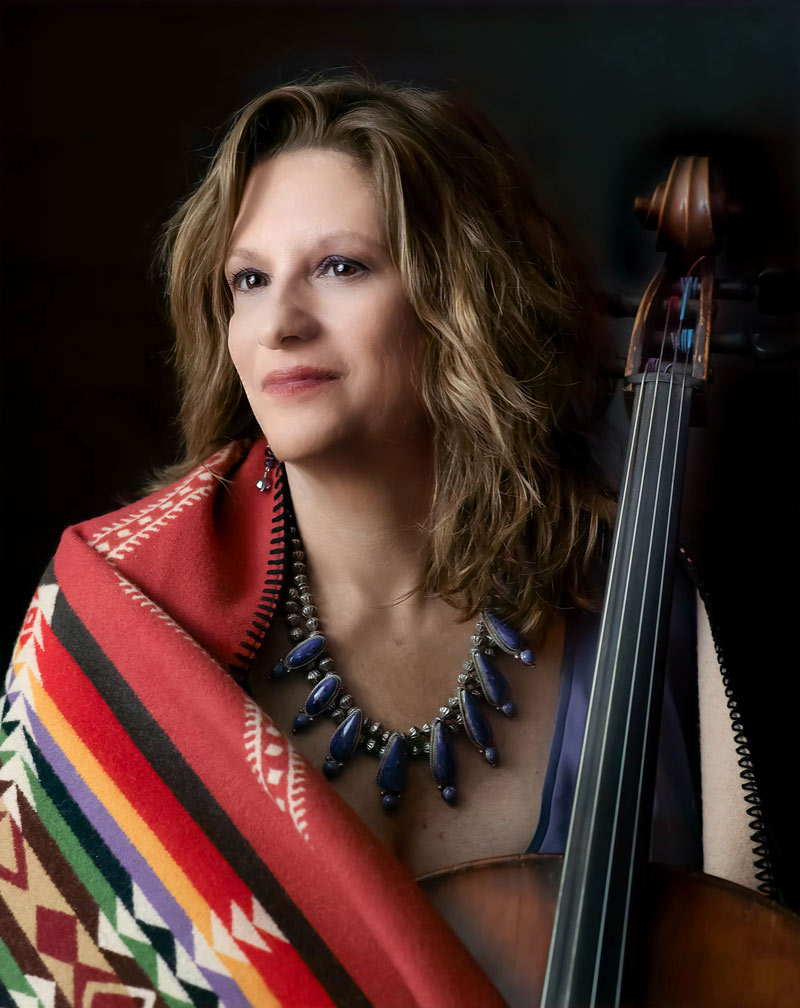
Dawn Avery
I listened to Avery’s piece several times before reading her composer’s notes. The music takes us in a completely different direction, suggesting solemnity, ritual, prayer, and seems apt for the weekend of Passover or Easter. As Avery explains in her composer’s notes, the compositions Onekha’shòn:a, Ya’kòn:kwe (The Waters, the Women) are
“dedicated to the Murdered and Missing Indigenous Women and Girls, Onekha’shòn:a, Yakòn:kwe explores the symbiotic relationship between the well-being of our water and our women. “
The works titled Ecology of Being by Hui incorporate poetry by Shannon Webb-Campbell, who says
“These poems chart questions of belonging, a reciprocal relationship to the land and water, as well as love, longing, and Indigenous resurgence. The poems provoke the personal and are deeply ancestral.”
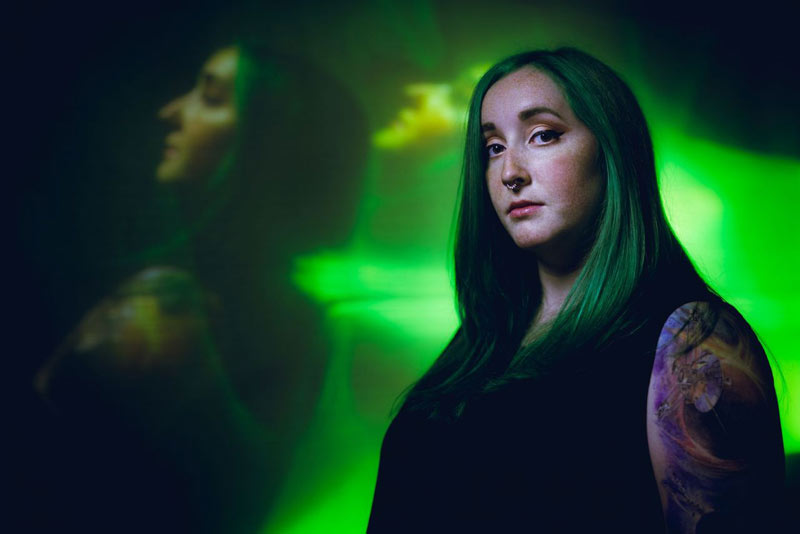
Bekah Simms
Bekah Simms explains the context for her concluding piece shedding, as if sloughed, with program notes that add an essential layer. She invokes the grotesque image of an animal shedding skin “which fall off “as easy as if sloughed like boiled tomatoes,… “
It begins to make sense if we remember how precarious life may be in the days and years ahead, an ordeal that may be survivable but will be harrowing.
She adds:
“I also wanted to consider a strange balance between wonder and beauty, strangeness, and unease/discomfort. This is partially achieved through types of psychoacoustic phenomenon and tuning systems that use ratios and natural properties of sound, even though they can sound “out of tune” on the concert stage. A blend of acoustic and electronic, tempered and non-tempered, slow/simple and hurried and complex… it all boils down to a conflicted, strange, desperate shedding of all that has gotten us to this point.”
I realize listening to this CD that the conversation is no longer a debate between those who resist climate change and those like myself who recognize that we’re living in the Anthropocene, the era of human-caused transformation of the world. The agnostics / disbelievers are in a separate silo, muttering heresies that no longer interest me.
A better question at this point is how do we feel about the Earth, and what are we going to do about it? That’s what this CD addresses.
Melissa Hui
Here is Ecology of Being, a short film featuring the music of Canadian composer Melissa Hui and the poems of Shannon Webb-Campbell with actor Clara Steeves.
I need to properly acknowledge a beautiful moment in my life, even as I struggle to find the words.
As I glance at the time, I immediately think about Sam’s schedule. At 5:28 my viscera know automatically whether she should be getting her dinner, or going out for a walk before sunset.
But no, that’s gone. I am a bit like a boat that has lost its anchor, drifting for the moment.
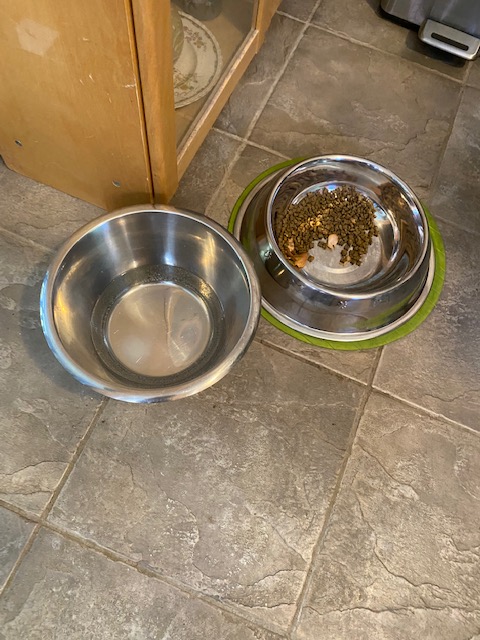
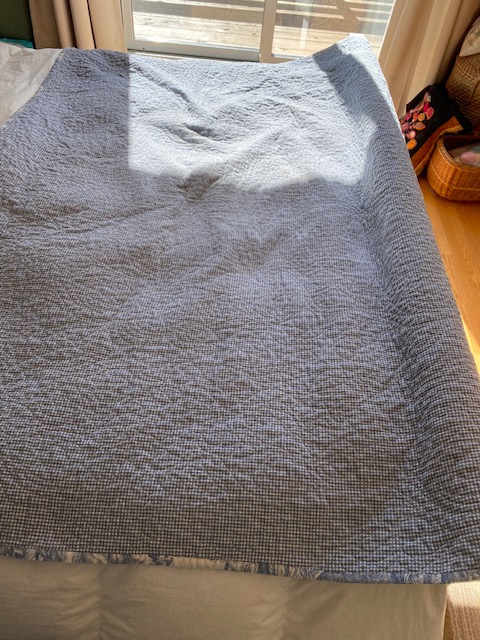
I look at her food and water dishes, not wanting to put them away yet, looking at her blanket on my bed (yes she used to sleep with us).
The blanket
Our dog Sam is gone, with the help of Midtown Mobile veterinary hospice services. They offer advice and also come to you to perform euthanasia if it’s called for. Their website can be found here (click).
Earlier we had looked at their Quality of Life scale, something I’ve mentioned previously. As a pet ages, this gives you a way to help decide whether palliative care should be implemented or if humane euthanasia should be considered.
You can also download a QoL scale on their website. With each passing month, Sam’s scores were getting lower and lower, as we faced the reality of her condition.
We have previously had a dog and a cat euthanized, in both cases at moments of medical crisis, which means not just pain but emotional stress for the poor animal. While it was beautiful to finally see the animals at peace, the journey was in some ways horrific.
This time was very different.
Instead of stress we had reassurance. Instead of fear for the animal, it was a most peaceful journey across the rainbow bridge. Sam was lying with her head against my leg, as I rubbed her, seeking to help keep her calm.
We actually had an appointment for that final visit last week, but at the last minute we backed out, changing our minds because Sam had seemed more alive than ever. We couldn’t bear to go through with it. That moment of reprieve was joyful for us yet we knew we were delaying the inevitable, that she was not going to really recover, not at her advanced age, not with all the ailments tormenting her.
We knew what eventually lay ahead.
And the past week was another painful one for Sam, who has been panting, limping, gasping, slipping & falling. The past few nights we tried to settle her down to sleep, wondering if she would even make it through the night.
Today’s appointment was a model of compassionate care. I’m struggling to write this, finding solace in reporting concrete facts.
Dr Ellis was more like a psycho-therapist than a vet, talking to us about Sam’s issues, holding out possible remedies and hopeful options. There was no pressure to decide one way or the other. If we had changed our mind –as we did last weekend—we were fully supported.
I have been blubbering like a big baby at various times over the past couple of weeks. Yesterday and today it was especially emotional as I took her outside for her last walks in the yard, her last meals, offering her treats and rubbing her.
In due course, I was the one needing comfort, feeling her fur and rubbing her while I still could.
Gradually she became quieter, stiller.
Midtown are more than vets, they’re like psychologists, caring for the pet-owner at their moment of greatest pain. Whatever you decide, you will find them supportive and helpful.
I’m grateful for the excellence of their care, looking after Sam but also extremely compassionate to Erika and me.
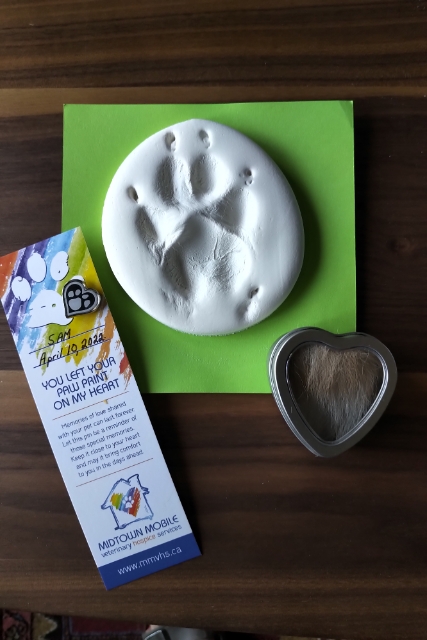
Sam’s pawprint and a lock of hair inside the heart-shaped container
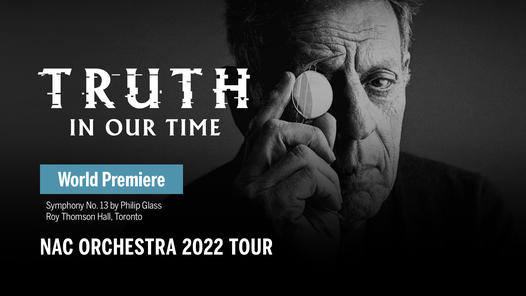
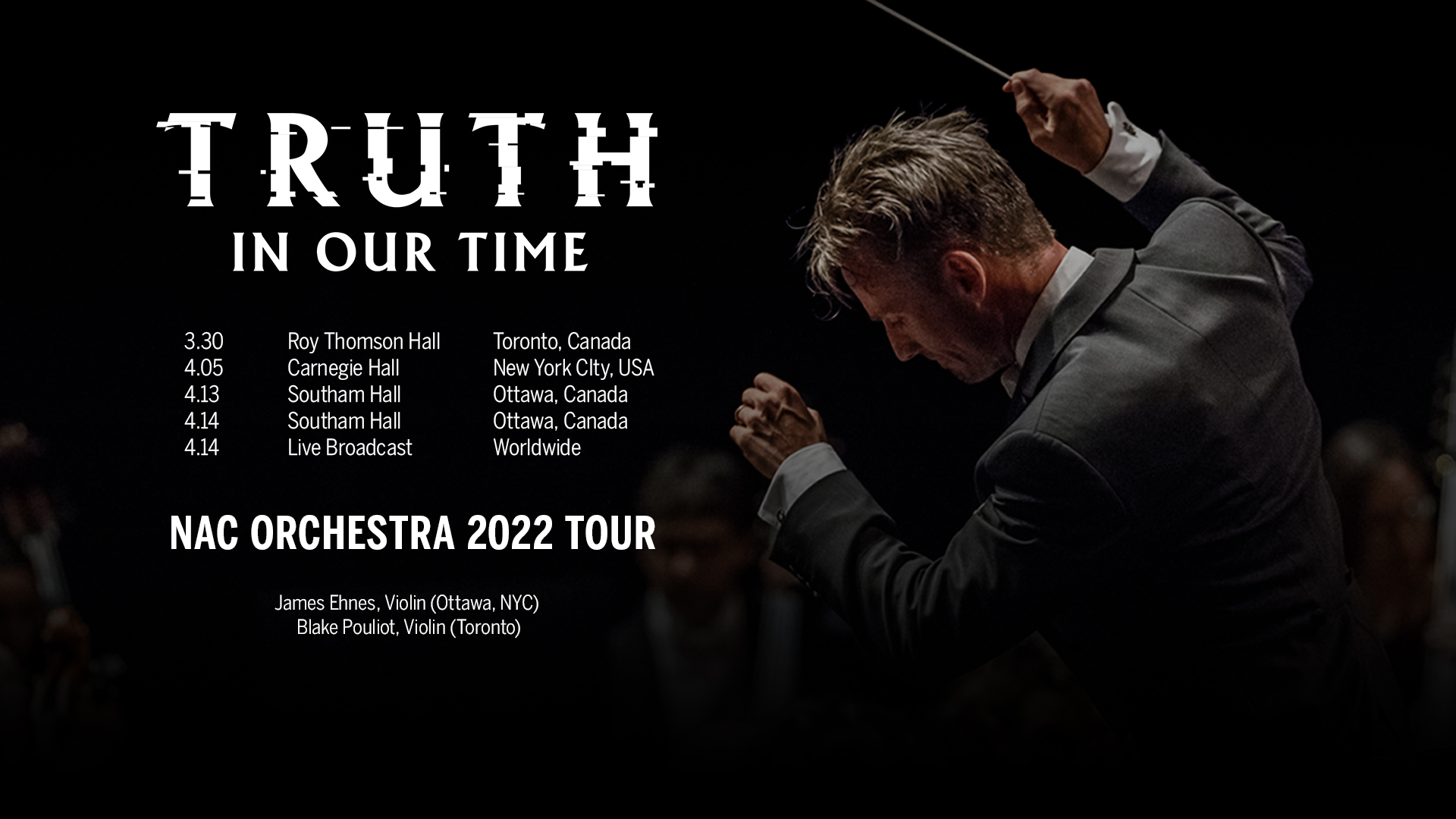
It’s an ambitious package, this National Arts Centre Orchestra Tour. There’s a world premiere of a Philip Glass symphony, commissioned by the family of newsman Peter Jennings, and three other works collected around the idea of “truth in our time”, as a reflection of a great Canadian journalist.
• Nicole Lizée’s brief Zeiss After Dark • Dimitri Shostakovich’s Symphony #9 Intermission • Erich Wolfgang Korngold’s violin concerto • Philip Glass’s symphony #13.
They played to a mostly full Roy Thomson Hall in Toronto tonight (it’s great to see such a big audience) before they go to Carnegie Hall in April. They’re coming home for a pair of concerts in Southam Hall. Tours serve many purposes, building community, confidence, perhaps serving notice abroad and at home that in some sense they’ve arrived at a new level, the best yet.
Almost everything was played with great polish and precision. While there was one moment when every soul in the orchestra cringed for the unfortunate fluff by the soloist, no worries, Toronto is the practice concert. Presumably they’ll get it right at Carnegie Hall.
In every other respect it was an impressive outing.
Shelley led a crystal clear reading of Zeiss After Dark, especially compared to the version I heard in Toronto.
Blake Pouliot was soloist in the Korngold Violin Concerto, undertaken with panache and energy. It was almost as much fun watching him listen to the orchestra when he wasn’t playing, a thoroughly committed performance. His cadenzas were edgy, yet when he needed it the young soloist effortlessly soared over the ensemble. Shelley helped keep the orchestra out of Pouliot’s way, offering support and a luscious sound from the strings, using softness to slowly build to real climaxes, extorting us into an eruption of applause with the final phrases in the opening movement of the concerto.
Shostakovich’s 9th Symphony is a relatively short but demanding piece full of solos. It’s like a Mahler Symphony turned inside out, with its wacky opening and closing movement, with the tender feelings in the inner movements: in other words, the opposite of what Mahler does in his 9th Symphony. I’ve heard several explanations for what the composer was doing. I think I hear him showing us the blunt power-structure that commands artists to perform like trained monkeys, as in that strange sequence of the trombones playing a kind of fanfare with the percussion (suggesting the military to me), followed by what might be the chained artists dancing at the end of their chains, taking up that darkly merry tune.
In 1945 the Korngold concerto was composed, and the Shostakovich 9th Symphony premiered. Korngold was a refugee from Nazi Germany, coming to USA in 1935, while Shostakovich endured Stalin’s oppressive regime, including periods when some of his music—such as this symphony—were banned.
After the concerto, Pouliot played an encore, a short piece accompanied by the orchestra that was announced as a piece by Yuri Shevchenko, based on the Ukrainian anthem; if you search on YouTube for Yuri Shevchenko you’ll find two versions of the piece. It’s a beautiful melody and timely.
I admit that I am not sure I understood the Glass Symphony. It does several things that seem original, unlike other music. While we have some of his usual tendencies, such as the patterns of quavers, the repetition, the stable peaceful groups of notes, the abrupt endings, this composition does things I haven’t encountered before in Glass: although –who knows—these tendencies may be typical of other symphonies. There are some passages that are hard to anticipate, places where the brass seems to conflict with what the strings are doing: yet without the usual understanding of the word “dissonance”.
For what it’s worth, the audience went wild for Glass’s piece, as he likely will be a big draw throughout the tour.
It didn’t move me, speaking as someone who admires much of Glass’s output. I would qualify this by mentioning that Glass is known especially for his operas and his film & theatre music. I’m a big fan of those compositions, although in this case, I find his music admirable in the abstract sense –where I can hear that the players executed it well. I want to hear it again.
That being said, it’s an impressive concert. In any performance, there is a simpler path doing reliable repertoire or the more challenging and adventurous route. Doing a new piece of music is risky, even if the work is brilliant. Some will not understand, some may resist. Without ambition the arts would be impoverished, reduced to the banal and the predictable.
I’m glad to encounter programming that pushes the boundaries, as in this concert.
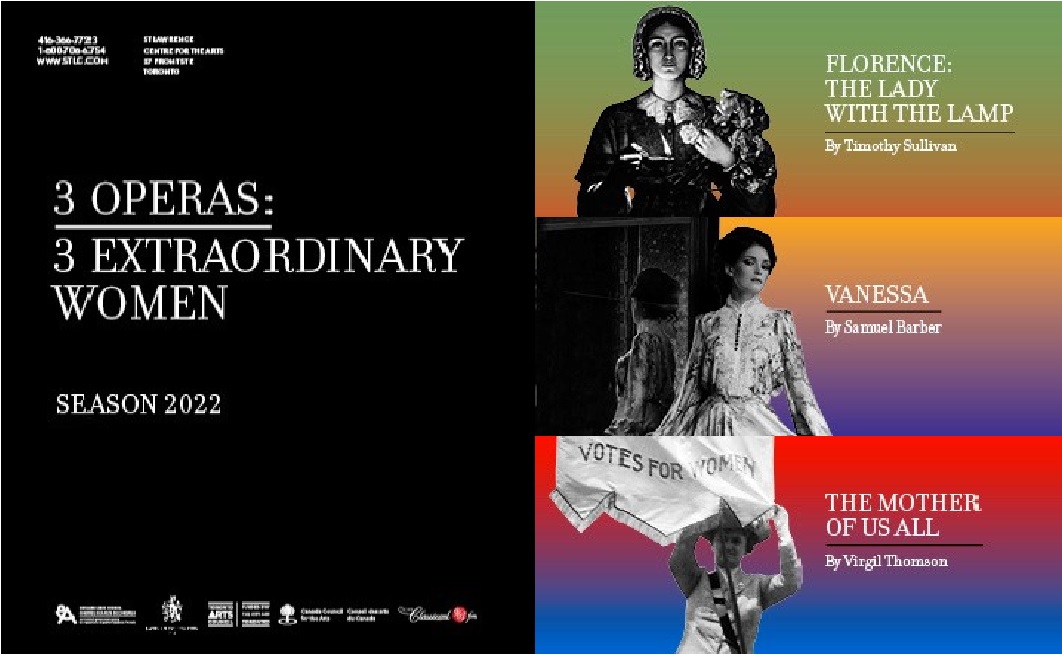
Opera in Concert resumed live performance Sunday afternoon with their first of Three Extraordinary Women, namely Florence: the Lady with the Lamp, composed by Timothy Sullivan and with libretto by Anne Mcpherson, an interesting balance between the contemporary and the historical.
It’s contemporary in its echoes of the horrors in the news, what with a war in Crimea and the challenges in the profession of nursing, while giving us some historical background about the figure of Florence Nightingale. There’s also Opera in Concert’s own history, who selected Florence as their first Canadian work ever to be presented.
Florence premiered at the Elora Festival in 1992, which makes a lot of sense when you listen to Sullivan’s score. Elora is practically synonymous with choral singing. Maybe Sullivan’s original commission stipulated that he needed to make good use of the Elora Singers. Or at the very least he realized he was in the right place to create a challenging piece. I’m just speculating. But as you can tell the opera’s score foregrounds choral music. The two most dramatic parts of the work remind me a bit of West Side Story for their dramatic tension, syncopated orchestration and subtle use of choral colours. Sullivan earned his fee with his wonderful ensembles.
The remainder of the opera also contains some beautiful music, although it’s rarely as dramatic. We watch a group of nurses sadly singing of the war, even though (if I didn’t mess up in my comprehension of the text they sang) they haven’t yet arrived. Moments thereafter comes their brilliant encounter with male personnel who disrespect them & their profession while insisting that they don’t belong there: leading to one of Sullivan’s wonderful choral scenes I alluded to. I loved that scene, but wonder: wouldn’t it have been even better if these would-be nurses were idealists, singing happily the moment before? Musically and dramatically it needs some contrast, not so much unrelenting sadness. I’m recalling the foolish optimism we see from the boys going to war at the beginning of All Quiet on the Western Front. And while we’re speaking of mood, why does the announcement that the Crimean War is over seem to elicit such a blasé sadness? Surely there should be cheers or drunken revelry, especially if they have been miserable. Okay maybe I’m too susceptible to cliché ideas of war and soldiers. Sullivan offered us some lovely melodies, especially from the sad soldiers singing offstage (a lovely chorus again).
Full marks to Conductor Sandra Horst and Chorus Director Robert Cooper for their sparkling work. Horst led an eight-member orchestra who never overpowered the singers but usually gave us plenty of colour.
Lauren Pearl was our Florence, a role taking her to the edges of her range, even if the character seems more saintly than human, a likeable person who is maybe too good to be true. Danlie Rae Acebuque had an appropriately abstract way of singing as the missionary John Smithurst, aided by Guillermo Silva-Marin’s staging, making him seem almost like a spiritual personage remote from real life, situated far outside the story, or at his pulpit. Whenever he appeared, the story seemed to come back to its roots. Ryan Downey’s provocative appearance in the 2nd Act was like a shot of adrenaline for everyone in the show, between his lovely voice and his fearless manner onstage.
Opera in Concert’s season of three operas (compressed into a shorter period than usual due to the pandemic) features “3 extraordinary women”. They continue with Samuel Barber’s Vanessa April 10th followed by Virgil Thomson’s The Mother of us All May 22nd.
Before there were convoys and honking horns, it used to be said that living in Ottawa gave you advantages, because of your proximity to the seats of power.
Yet maybe there’s still some truth to it when we look at the National Arts Centre Orchestra and their Music Director Alexander Shelley.
Last year the NACO enlisted CBC to make four short music films that can still be seen on GEM.
A tiny sample of Lizée’s brilliant creation. The Copyist (missing in action) still hasn’t been found…
Part 2: Ana Sokolovic: Iskra, a 30-minute symphony dedramatizes the COVID-19 pandemic by contextualizing it in the history of humanity.
Part 3: Nicole Lizée: A Guide to The Orchestra Composer and film-maker Nicole Lizée wrote the music, screenplay and directed her episode, which features NAC Orchestra in a magic realist documentary.
Part 4: Shawnee Kish: Music Is My Medicine, as The Mohawk and Two-Spirit singer-songwriter collaborates with young Indigenous artists who have never performed on a stage before.
Yet come to think of it, it’s not fair to say that this project happened only because Shelley and the NACO are in Ottawa. Back in 2017 I recall that Luminato presented Life Reflected, also a work from the NACO and Shelley, produced and directed by Donna Feore who also collaborated on the UNDISRUPTED projects on CBC- GEM.
Who is this Alexander Shelley, you may wonder. That question was partially answered today as Shelley hosted This Is My Music on CBC radio. Now if there were ever a case where we might want someone to go on the radio to tell us of their musical influences, it might be Shelley, who is a genuine curator of music. Sometimes he speaks of the music he heard in childhood, even if it becomes music he makes as an adult professional.
The immediate reason for Shelley’s presence on CBC was the impending Truth in Our Time tour of the NACO that begins with a concert Wednesday night at Roy Thomson Hall in Toronto, featuring a world premiere of a symphony by Philip Glass, the Korngold violin concerto, and Shostakovich Symphony #9.
In April they’ll be playing at Carnegie Hall and then back to home base aka Southam Hall.
Shelley is a fine conductor and a bold curator who clearly makes things happen. I’m looking forward to hearing him lead the NACO at Roy Thomson Hall Wednesday night.
Earlier today I commented on John Gilks’ post about The Lion Heart a new opera by Corey Arnold and Kyle McDonald that received its world premiere in a semi-staged production this past weekend.
Near the end of his review John said “I might suggest that dismissing “modern opera” is not a great starting point for creating one.” In reply, I commented at the bottom of his page. “And yet there’s a long tradition of composers dissing one another even if it’s not terribly nice.“
I had two particular precedents in mind, although there are lots more.
Exhibit A: When Richard Wagner was in exile he wrote several essays and pamphlets, venting his frustration as he could no longer show the world what he could do as a composer or conductor.
His Das Judenthum in der Musik (1850) attacks Felix Mendelssohn and Giacomo Meyerbeer, even though the latter had been one of the most generous & supportive to the German composer during his disastrous first visit to Paris. Talk about ungrateful.
Opera and Drama (1851) is in effect a defense or promotion of Wagner’s own future work even before he had shown us what he might be able to do. Wagner said that opera made a fundamental error, in confusing means and ends; the means (Music) becomes the end, while the supposed end(drama) has been reduced to its means. In other words, instead of music being employed to make drama and theatre, opera is using theatre and drama in the creation of something musical. Wagner in effect disrespects every opera ever written, in the process throwing down the gauntlet.
Lohengrin had premiered in 1850 in Weimar thanks to Wagner’s friend Liszt. In the 1850s –after the big essay was written—Wagner set to work on his Ring operas, composing Das Rheingold and Die Walküre, almost as if to show us how an opera could fulfill the precepts laid out in the essay. And amazingly he did a fair job of creating something that justified his critique of opera, although one might well point at the “arias” and scenes in his music dramas that still seem to fall into the old trap of making music the end goal, rather than drama. Yet even so he is a genuine reformer. We might point at second generation Wagnerian operas such as Pelléas et Mélisande or Elektra as better examples of works that employ musical means to create drama.
Exhibit B: Thomas Adès came on the scene more recently, a composer of operas that arguably stand among the most important of the last quarter century. But in addition to his musical activities Adès also tried his hand at the game of disparagement. In April 2013 I wrote twice about Conversations with Tom Service, a book that seems to echo Wagner in its disparagement of earlier composers, although this time Wagner is the target.
Adès sets himself up as a peer to Wagner. It’s a brilliant way to promote himself and his music.
And now Kyle McDonald & Corey Arnold are possibly within that tradition. So far we’ve heard the first part, where they issue critiques (in a recent interview). Kyle said the following:
To the “layperson,” much of opera can seem like speaking coding to a person who just wants to play the video game. We’ve had a nasty habit in the last 50 or so years of increasingly pushing the “coding” in fine arts, deconstructing beauty until it becomes mere atoms. Highly specialized people with certain personalities enjoy this, but the majority of the rest of the species do not.
To save opera, we have to make it for humans again, which means i) making it a gateway to feeling and not to thinking (i.e., in a language we speak, with humane runtimes, and bending the score to accommodate acting, and not the other way around), ii) ignoring Twitter entirely, and iii) letting go of the past.
I can relate to this critique. When Kyle says “bending the score to accommodate acting, and not the other way around” he reminds me of what Wagner said.
The question is: will the new operas they create live up to such a critique?
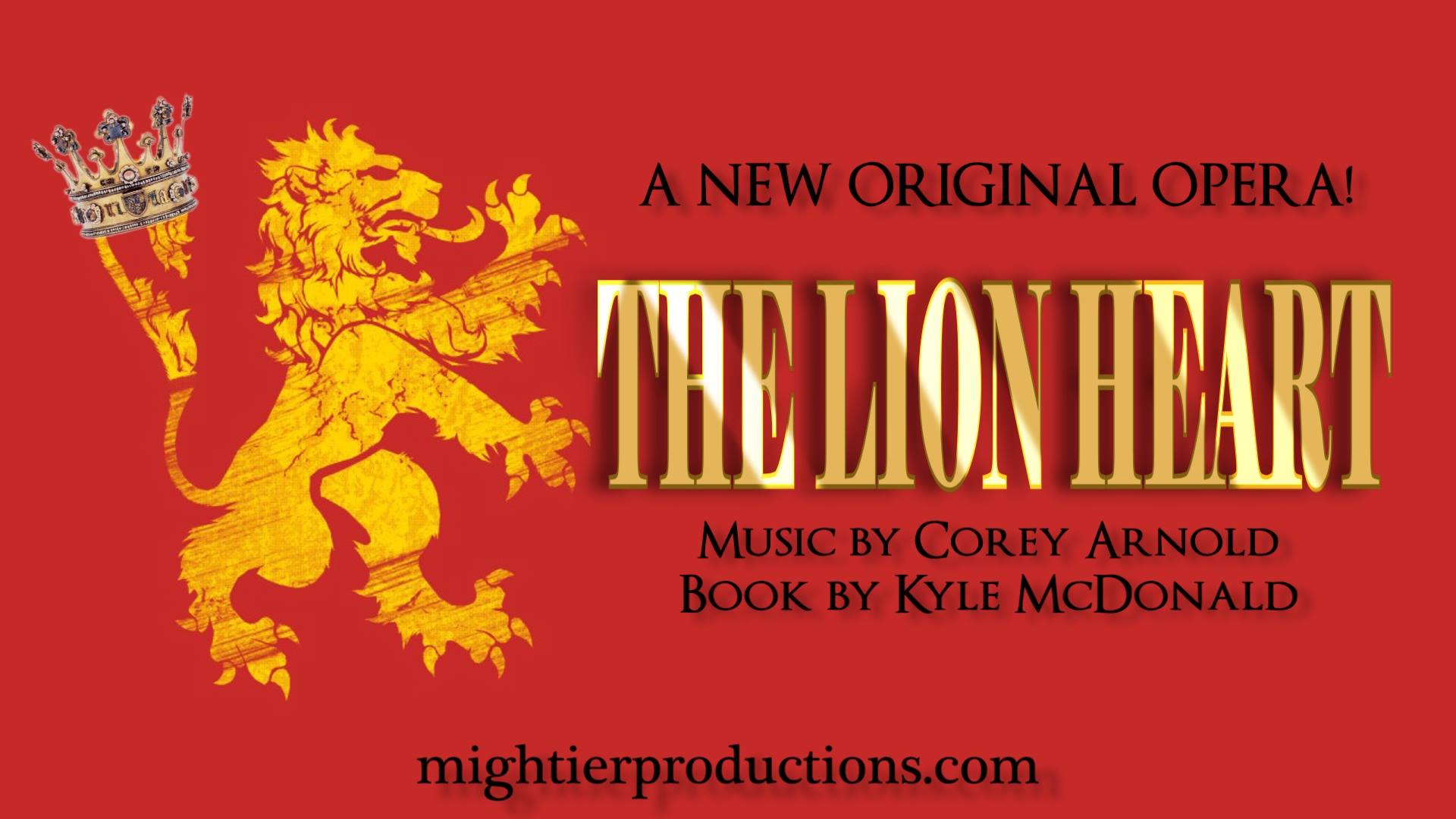
I watched the live-stream of The Lion Heart, the premiere of a new opera from Corey Arnold (composer & conductor) and Kyle McDonald (librettist and singer of the lead role).
Or at least part of it. Alas connection issues prevented me from seeing Act I and part of Act II, missing the first 40 minutes. I think I saw more than half of the work, which ended at 9:40 pm, after beginning at 7:30 (or so I assume).
First off, let me mention some important subtext for me and hopefully for you. Any first opera should be permitted to fail, to contain bad choices, from which the composer and librettist learn and grow. Verdi and Wagner each wrote several operas before they had any real success. What we witnessed was a first opera, and as such it was quite good.
I try never to judge, I seek to understand, but please note that I had no program, no synopsis and no titles for an opera sung in English that was often unintelligible due to the reverberant space at College St United Church, especially when two or more were singing at once. I wonder if this is what all the virtual customers face in which case I’d say they need to fix that. I had a comp ticket, facing the additional puzzle of coming into the show half-way through.
Yes that’s a humongous preamble. Even so there’s lots one can say.
I believe it’s more or less the same story as that of Richard Coeur de Lion by Gretry (courtesy of opera-arias.com):
On his way home from the Third Crusade, King Richard has been imprisoned by Leopold, Archduke of Austria. The king’s faithful squire Blondel seeks him out disguised as a blind troubadour. He arrives in Linz where he meets the English exile Sir Williams and his daughter Laurette, who tell him of an unknown prisoner in the nearby castle. Laurette is in love with the prison governor, Florestan. Countess Marguerite, who is in love with King Richard, arrives and offers Blondel her help. Blondel goes to the castle where he sings the song Une fièvre brûlante (“A burning fever”). Richard recognises the music and tries to communicate with Blondel, who is seized by the guards. But he is freed when he tells Florestan of an assignation Laurette wants with him the following night. Blondel reveals the truth to Williams and the countess and they plan to free the king. Marguerite holds a party, during which Florestan, who had come to meet Laurette, is held captive. The countess’s troops besiege the castle and rescue Richard.
I’m one of the few people around here with some experience of that opera, produced long ago in Europe, for which I had the fun of playing through the score as my brother learned the role of Richard. And I think Opera Atelier spoke of doing it somewhere in Europe, although I don’t know if that ever came to fruition. Otherwise it’s rarely mentioned although it deserves to be better known, one of the earliest of the genre known as “rescue opera”.
For the new opera The Lion Heart the characters are partly the same. We again have Leopold and Blondel and Richard. Once again we have Leopold imprisoning Richard while he was presumably on a crusade (I suspect that’s something we hear about in the first act). The ending seems to be a successful rescue, although not as triumphant as I would have wished. Perhaps that’s something to be enlarged in a future revision, with additional choral & orchestral firepower in support.
And once again we have an opera where almost everyone is male. I mention that because we have seen some young companies started in the Toronto area who seemed to have the gender question as part of their raison d’etre, producing new operas that might offer women roles, when they are otherwise starving for opportunity.
We heard a fourteen-piece orchestra led by the composer. It’s a melodic score, diatonic for the most part, with ventures into chromatic harmonies and occasional dissonance. Arnold was successful at generating suspense in the scene where Richard earns his nickname, battling a lion. For my money that’s one of the greatest things you can have in an opera, namely music that paints a picture and sets a mood.
I didn’t notice anything like an aria or a conventional operatic set piece, as the arioso (singing with orchestra in other words) was more or less continuous, the singers zipping through the text at a faster rate than what one usually sees in opera. That’s a mixed blessing. It’s good because the story is advanced, but problematic if singers don’t enunciate. Titles (which can be a lot of work and/or expense) would be ideal. It may be that the production team didn’t realize how this was going to sound in the performance venue, which is likely more reverberant than their rehearsal spaces.
The presentation was semi-staged, the singers attired as for a concert performance.
There are times when the orchestration shows subtlety, as for instance in a lovely cello solo during one of Richard’s solos in Act III. I found the libretto a bit verbose at times. As the characters stand there in the semi-staged version it makes sense that they tell us so much, but ideally we’d have action as in cinema. Verdi’s Otello is an ideal macho creation through his terseness, a man of few words; I wish Richard were more like that, especially when he is alone. Without subtitles I’d wish the text were delivered slower, to enable me to hear every syllable clearly, which wasn’t possible tonight.
There were some scenes that were better than others, possibly as a reflection of the composer’s commitment & inspiration. The scene in the last act between Richard and Mirella (sung by Nicole Dubinsky) was very sensitively scored, the orchestra very unobtrusive, the vocal lines soaring easily and intelligibly. The scene between Richard and the Captain of the Guard (Andrew Tees) was a great pleasure; for all the testosterone in the scene, the singing was beautiful and sensitive.
The scenes including Blondel (Tonatiuh Abrego) and the sadistic Leopold (passionately delivered by Andrew Derynck) called for lots of high notes, splendidly sung. Speaking as a tenor, I wonder if composer Arnold –himself a splendid tenor—might reconsider the demands he makes on these two, in the interest of getting the work produced. You shoot yourself in the foot if you make the piece so difficult to sing that no company dares to undertake it. Rossini’s William Tell, for instance, features so much spectacular singing that the work is almost impossible to produce, because of the challenge in finding enough talent. I don’t mind the music, but am speaking now about the challenges the composer imposes upon the company who would produce the work.
I don’t dare say much more, indeed maybe i’ve already over-stepped, as I didn’t properly see the work. Watching from home, and missing the first half, working without a synopsis or program, I’m hardly in a position to say anything. Had I been able to attend I might have a different perspective, and might have heard the text more clearly.
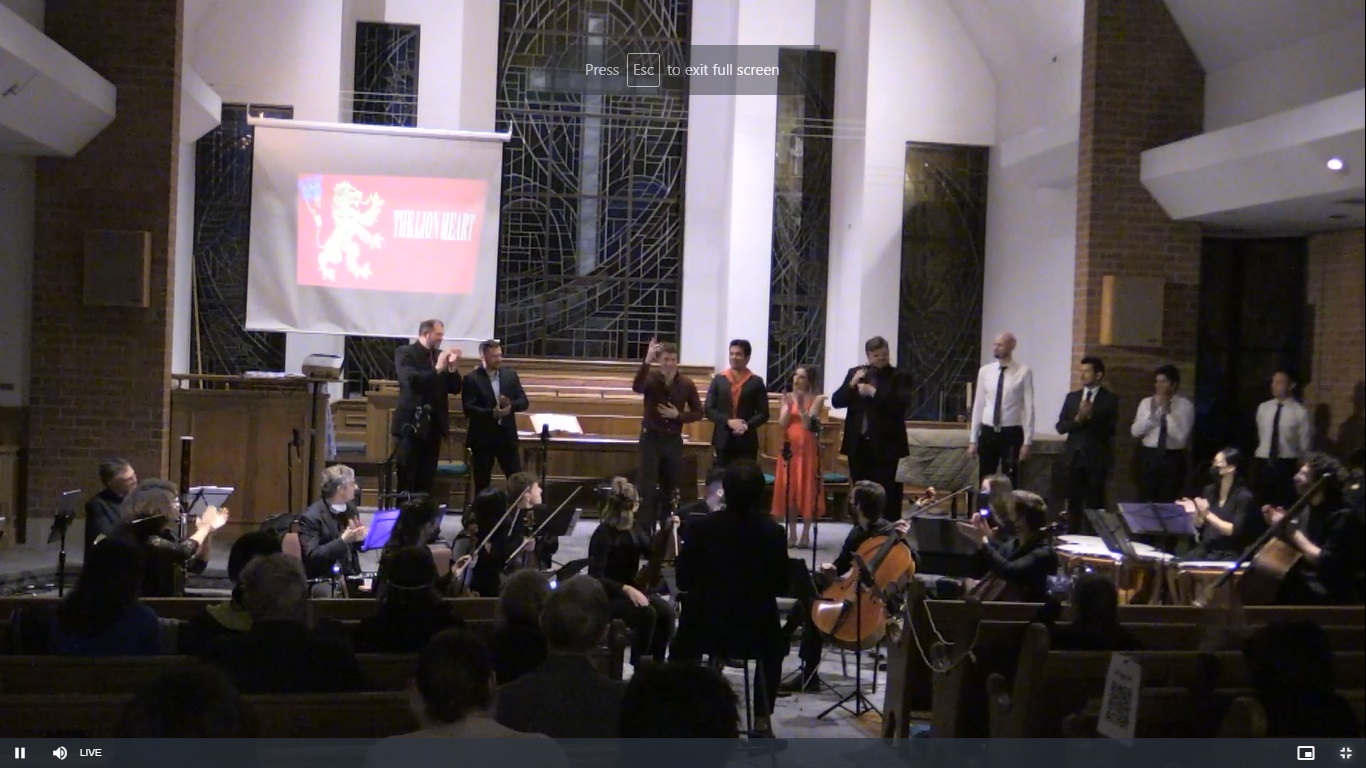
I did see that the work was well-received. I have a screen capture of the applause, wishing my own bravo could be added for all cast, crew and especially the creators.
Librettist & star Kyle McDonald takes his bow at the end.
But I do look forward to more from Kyle and Corey, two young creators who have just begun. Of course if you look at their website you can see that they’ve got lots of irons in the fire, projects upcoming. They’ll be back soon.
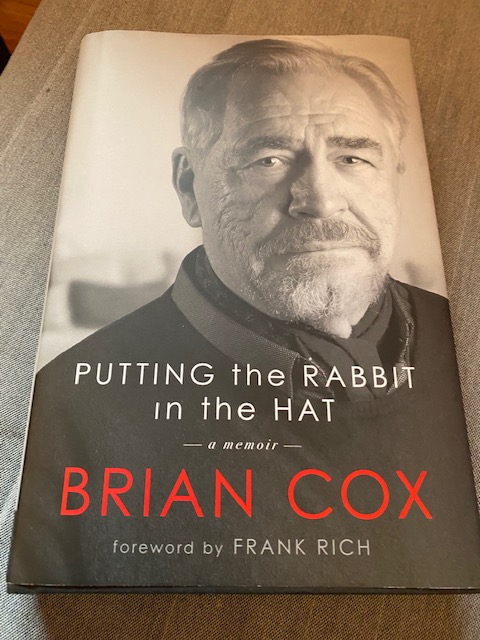
Power’s interviews often signal the books I need to get. Harvey Fierstein’s memoir, for instance, was promoted in the Q interview more recently, a book I’ve just begun to read. And a couple of episodes earlier in March came Power’s interview with Brian Cox, whose memoir is subtitled “Putting the Rabbit in the Hat”.
I didn’t understand the excitement about Succession, so I’ve started catching up on that too, which I’ll have to discuss another time.
But now I’ve read Cox’s book.
The greatest artists don’t necessarily make the best books or conversely, we might say that the best books don’t necessarily come from the best actor. Yet I was swallowed up in the entertaining prose of Brian Cox’s memoir. No I don’t immediately think of him as a brilliant actor. But he’s written a terrific memoir, full of anecdotes and also many observations on acting.
I might sum it up in the story he tells about Troy (2004), a favorite film I’ve seen many times. In this version of the story, Priam comes to Achilles begging for the body of his son Hector, dishonoured in the battle with Achilles. It’s funny because this moment in the Iliad is the stirring opening image of a recent powerful TED talk about wakes (meaning the poetry of Homer’s Illiad not the film adaptation). You can find that here, and excuse me if I seem to be digressing. Please bear with me, I’m making an elaborate metaphor.
It’s the very first thing we hear, the first two minutes of poet Kevin Toolis’s talk.
I want to cite this discussion of poetry and honour alongside the scene between Brian Cox and Peter O’Toole in the film, admittedly the outcome of a script and a director, not the specific choice of Brian Cox naturally.
First though, let’s set it up with a scene between Priam and Achilles. It’s intriguing because it juxtaposes a fine actor of a previous generation with an under-rated actor of our own, namely O’Toole and Brad Pitt. Cox goes into some detail about the efforts of a young actor seeking to transcend his physical gift (his beautiful body) in his quest to become a genuine actor. You see that in this clip, as Pitt holds his own alongside O’Toole.
And then, towards the end of the film in a clip that I must caution you about –it’s violent & horrible—Priam is brought down by Agamemnon. It’s a bit of poetic justice I suppose, that the two leaders should meet, even if there’s no poetry in this justice. Agamemnon stabs the honourable King Priam in the back, and further disrespecting him in denying him any sympathy for the innocents in the war.
You can watch it.
Or you may prefer to read this paraphrase of their last lines in their exchange.
PRIAM: (shouting at the Greek soldiers, watching them despoil the temple) Have you no honour?! Have you no honour!?
(a spear stabs into him and through from behind; Priam collapses, and we see it’s Agamemnon’s spear)
AGAMEMNON: I wanted you alive. I wanted you to watch your city burn. PRIAM: Please… the children. Spare the innocents… (fading as he is dying) AGAMEMNON: Nobody is innocent. Nobody. (walks away)
Watching the TED talk I was struck by the poetry of honour, alongside the conspicuous lack of poetry in the modern world.
Watching episodes of Succession this week (a dark show full of nasty selfish people rarely illuminated by empathy or love) a series I contrast with Ted Lasso (a glimmer of light for many of us, as gentle and kind as Succession is brutal and cruel), I’m thinking that Brian Cox is in many ways come of age, the actor for and of our time. Or our time has caught up with him.
Perhaps he wouldn’t want to be typecast as a backstabber? Yet the slaying in this clip could just as easily be the younger pragmatic generation of actors (plug in Viggo Mortensen or Ed Norton) sweeping aside the poetic previous generation of stage actors (O’Toole or Gielgud or Olivier).
Cox is just right for Succession, even if he’s striding through a world without poetry or kindness, just as he did in Troy.
Thank goodness Cox’s memoir contains something essential, missing from many memoirs and thank goodness is also found in Fierstein’s memoir. When you’ve finished a book and recall an episode such as the scene I described from Troy between Peter O’Toole and Brian Cox, the index is indispensable.
Cox is not just telling us stories about celebrities & stars. The title is apt. Magic is pulling the rabbit out of the hat, right? Cox truly addresses the craft and the art of acting in cinema and onstage: to propose how we might first put the rabbit into the hat. If you were just starting to explore this question you could do worse than to read Cox’s ideas, reminding us of famous stories such as the encounter between two styles in the film Marathon Man, where Laurence Olivier famously told Dustin Hoffmann (whose method acting was exhausting him) “My dear boy why don’t you just try acting?” It’s such a delicious rejoinder, I’ve always wondered if it was a real moment or not. But it doesn’t matter, as it has become like a parable.
Yet perhaps Cox isn’t quite on one side or the other, not just because his career is largely among American film-makers. I’m devoutly against the notion of “stars” and the foregrounding of virtuoso acting chops, particularly at this time of year: when the Oscars seem to regularly get it wrong. Cox is more of a character actor than a star, reflecting my preference. That you probably know Cox for something he’s done in a supporting role is for me a positive sign of a real actor. Being a star is a dubious honour. Cox has worked with every famous name in the business, often in the OTHER version that wasn’t seen. Before Anthony Hopkins got rich playing Hannibal Lector, Cox played the same character in Manhunter, a film nobody saw. He played Winston Churchill the same year that Gary Oldman won an Oscar playing the same historical figure. You could have seen him in the Bourne films, a Scot playing in Braveheart and Rob Roy, but not likely the star you remember.
And now suddenly his role in Succession is one we remember even if it’s much the same anti-heroic character as his Agamemnon, the back-stabber without honour. But perhaps that’s the way business and plutocracy works.
After decades of playing roles without quite breaking through, he seems to have a hit with Succession, a television series that’s finished its third season. As I watch that trailer for season one, from the vantage point of partway through season two, I’m staggered by the simple fact: Cox is at the centre of the family dynamic that drives the series.
Cox tells us that according to the original plan Cox was hired to do the first season as the patriarch of the family and then was supposed to die. Ha, as if..! Impossible. And that factoid is itself as much a matter of big money as it is about the mechanics of the drama.
But it reminds me a bit of Scheherazade, who avoided being killed off by telling entertaining stories. It’s apt, because if nothing else, Cox himself is a superb story-teller. His book overflows with his tales.
Index or not, I’ll be re-reading it soon, because it was so much fun to read.
It’s subtitled “Opera in Pasticcio“, a form where Kyle combined existing music from opera with his comical lyrics to tell his spy story. For example he takes the tune of “Non più andrai” from Nozze di Figaro, with the lines “The name is Bond, James Bond, don’t be nervous” rhymed with “I’m in her Majesty’s Secret Service”.
Today I heard about something in a different style, namely The Lion Heart. This original opera gets two semi—staged performances this weekend: 7:30 pm Saturday March 19 and 5:00 pm Sunday March 20.
Kyle wrote the words. Instead of the pasticcio approach, he is teaming up with composer Corey Arnold.
You can find out more, including booking tickets for in person or virtual at their website.
I wanted to find out more.
Barczablog: Corey, is this your first opera?
COREY I’ve composed a couple of art songs recently, arrangements for jazz combos and jazz orchestra on and off throughout my 20s, and a couple of musicals in my early 20s This is my first opera.
Barczablog Gentlemen, how long have you been talking about a collaboration, and how long did this work take to bring to fruition…?
KYLE:: We met while singing in Ottawa around 2016/2017 (Corey’s dating on this is more reliable).
COREY Kyle and I met in Ottawa in 2016 during a production of Rigoletto with Pellegrini Opera. A year later, we did Tosca with the same company where I was singing Spoletta and understudying Mario. The first weekend we lost the rehearsal pianist due to a personal issue so I stepped in to play for a day. It was my first time playing piano for an opera and I was quite nervous, but I had been accompanying myself while learning the role. Then they asked me to finish the production as the pianist but I wanted to show the conductor I could sing Mario… so one rehearsal, I sang Mario for Act I from the piano while the tenor went through the staging.
The next day Kyle and I were chatting backstage. He said something like “You’re a bit of a music freak eh? Want to write music for an opera?” The imposter syndrome I had as the rehearsal pianist was nothing compared to that which I experienced at the thought of writing an opera, so it took some persistent prodding from him, but by 2019 I was really getting into it. It was complete a month before the pandemic started and it took many grant applications before we had the budget for the orchestra, never mind the many delays due to the pandemic.
KYLE: I approached Corey with a libretto I had written many years before. I had written it somewhere in the period of 2005-2008. So, let’s say this work has taken since 2005 and to bear fruit! So…17 years? Our collaboration has worked out so well on The Lion Heart that we’ve gone ahead and started another original opera, which will ideally be finished in 2023. We have to be tight lipped about it for now, but let’s just say it will both horrify and arouse…
Barczablog: You’re working in the world of opera, meaning singers with particular skillsets. Maybe you don’t expect subtle method acting, but that’s not usually relevant in opera. Please identify your favorite operas, (when you look at what operas work best in your experience) , and then speak to what you’re aiming for in this piece.
COREY For me, I think historically in terms of the number of times that a movement has emerged in opera for more realism. Verismatic opera comes to mind but there were earlier movements as well. We need another similar movement today, which looks at the pacing of drama in the most popular forms of film and television media, at the intensity of the drama in those moments, and at the musical language that we are using to communicate all of this. My favourite opera for dramatic pacing as well as really accessible musical moments mixed with more tonally chaotic moments, is Gianni Schicchi. I don’t think another opera exists that has the same quality of musical timing, beautiful melodies, and action packed orchestral textures. Unfortunately the brilliance of the timing of the libretto is almost entirely lost in translation to English, or to audience members having to read subtitles…
KYLE Interestingly, when you get singers singing in their mother tongue, the acting tends to take care of itself…
My favourite operas… Turandot by Puccini (though there isn’t really an amazing role for me to sing in here, but overall, it’s just spectacular), Mefistofele by Boito, and The Barber of Seville, by Rossini -> which is probably the best first opera for someone to see IMO.
There are so many good operas it’s hard to choose, but these are the ones that have captured me. Mefistofele is largely because I want to sing Mefistofele, so I cop to bias there (though, one of the themes from this opera was used as inspiration for Richard’s recounting of the Crusades in The Lion Heart).
In The Lion Heart I wanted to convey both glorious hope, and intimate nuance, and I think Corey has done a magnificent job of both. Opera must be grand, otherwise, it would be something else – why have an orchestra? But feeling must never be general and must rarely be loud – specificity is what triggers mirroring responses in other human beings – thus, there must be intimacy.
So much of everything being made now is dystopian and hopeless. I’m tired of this. The Lion Heart is meant to awake the lion of hope in everyone – no matter how dormant. Whether it’s fighting a lion or offering an encouraging word, acts of bravery both large and small are in all of us.
And of course, I want music that delights and burrows. I think we’ve achieved that, and, it’s my hope that, sometime around the beginning of April, you find yourself humming one of our themes in the shower, and you curse our names because you can’t get it out of your head.
Barczablog: My wife loves to point out the rip-offs in pop culture, for instance the way the Batman theme (Elfman / Burton in 1989) is so similar to the way Richard Strauss begins the first of the 4 last songs, “Fruhling”. But Elfman was being pragmatic. For centuries church organists, kapellmeisters and music-directors have been lifting the music from other sources. JS Bach did it. So did lots of other composers. Could you talk for a second about how you see opera being saved / revived with your approach.
COREY: I don’t know what the future holds for me. But at 19 I wrote in my journal that I wanted to write an opera. And the reason I wrote it is because some operas give me delight and full-bodied satisfaction like nothing else in life, and I wanted to share that feeling with people. At 28, as my career as a singer started to get really frustrating, I sat there asking myself, how can this operatic industry be shrinking endlessly, with most of our professionals desperate for the tiniest career, while:
Orchestral film scores from Zimmer, Williams, Glass, etc… are so popular and omnipresent in the biggest budget films globally,
Modern Musical theatre has a following significantly larger than ours… and we can massively outdo musicals in melodrama with our voices, orchestras, and production size,
and every time I used to sing opera in this tiny restaurant in Ottawa where I worked washing dishes, the phones came out, the energy would shift higher, moods would shift more friendly… operatic voices are a wonder…
Within this context… how are we not able to create truly meaningful and influential new works? We need to let our drama evolve with the times, integrate all of our experimental music effectively and EXPRESSIVELY with contemporary musical idioms so that our new works are not just lost on 99.99% of the population, and then trust our artists (singers, orchestral players, etc…) to use their instincts to interpret the music through the lens of their contemporary lives.
It’s amazing to see singers sing a new, “friendly music” opera in English, because you see more of the operatic artist shine through than you’ve ever seen before! And in the end, if our artists and audience are so burdened with performance practice, avant-garde musical language, singing in foreign languages, or “musical language barriers” from older genres, they can’t bring themselves fully to the table, and EVERY SINGLE other entertainment medium that is succeeding today knows that if we don’t have performers that are free to expose themselves to an audience, it just rings inauthentic and audiences disengage.
Our goal is that through these works, we can remove the burdens we’ve placed on the artists and the audience by creating something that just connects. We’re only interested in changing you… so that you walk out feeling exhilarated, wonderful, and alive.
KYLE: As for ripping off existing opera, personally, I’ve begun to make a career of it in my pasticcios. Who wouldn’t want to hear their favourite song again for the first time?
However, Corey and I are in the business of trying to make new favourite songs.
With regards to orchestral nods, Corey is in a much better position to comment on that, but I’ll say The Lion Heart has at least 4 incredible “hit” themes – which is pretty impressive considering most pop albums only have 1 or 2.
Saving opera: there is much to say, and I don’t want to black hole your time, so I’ll just offer some quick sketches:
Whenever the topic of opera or orchestral music comes up with someone involved in the industry, I ask people to tell me about the first time they realized they were in love with it. The majority of the stories are similar in the respect that the person was changed. My “awakening” was very much the same – it changed me.
I didn’t start out training to be a singer or a musician – I’ve been hands on, learning as I go, not institutionally educated – so my journey has been guided solely by the love of it, and not by academic standards: this, I believe, is the position of the regular person.
To the “layperson,” much of opera can seem like speaking coding to a person who just wants to play the video game. We’ve had a nasty habit in the last 50 or so years of increasingly pushing the “coding” in fine arts, deconstructing beauty until it becomes mere atoms. Highly specialized people with certain personalities enjoy this, but the majority of the rest of the species do not.
To save opera, we have to make it for humans again, which means i) making it a gateway to feeling and not to thinking (i.e., in a language we speak, with humane runtimes, and bending the score to accommodate acting, and not the other way around), ii) ignoring Twitter entirely, and iii) letting go of the past.
And just to put a regional spin on this – companies in France and Germany have expressed interest in The Lion Heart, but they want it in French and German. Why don’t we do the same here?
Barczablog: We must talk again. But first I am looking forward to seeing The Lion Heart.
KYLE: Oh, and my next opera in pasticcio will be premiering in May,
…But first, The Lion Heart this weekend at the College St United Church 452 College St. W. in Toronto. For further information or tickets go to their website.
The other night when I saw Cyrano at my local Scarborough CINEPLEX, I made it a double feature, because they had only one showing that was to begin at 10:45 p.m. I filled the time before Cyrano watching The Batman, latest incarnation of the comic book hero.
Size matters, we’re told.
I had the option to watch it in IMAX, meaning a big beautiful image and sound to match. I inserted balled-up Kleenex into my ears, a trick I learned from a music critic back in the 1970s, at an Elvis Costello concert, while standing at the urinals. When I recall Peter Townsend and other musicians who have had their hearing damaged by music, I insert the Kleenex without hesitation.
And writing days later I can say that my ears survived the ordeal.
I think I’ve seen every previous Batman film. I remember them more by thinking of the directors as much as the person playing the title character.
Director Tim Burton is the emphatic creator of the modern obsession with comic book superheroes and villains, beginning with Batman (1989), and a sequel Batman Returns(1992). Although Danny Elfman scored both, I think of the first as much via Prince’s songs as in its score. The second film is even more extremely quirky, which translates onto the screen as something operatic. The clearest examples are in the endings for the villains. First there is the grotesque ritual Elfman and Burton give The Penguin…
And here’s the whimsical cat-music Elfman gave Catwoman.
For Batman Forever (1995) Burton stepped into a different role, as producer alongside the director Joel Schumacher. I wish I knew the truth about the dynamics behind the scenes, but I felt that commercial pressures were tampering with the artistic impulses we’d seen from Burton, with the result drifting away from art, pulled back to the original two-dimensional quality of a cartoon. Schumacher’s next opus Batman & Robin (1997) went further in that direction, which is to say, lots of action but nothing I would call art.
I find it pretty hard to watch.
After a break of nearly a decade the franchise was reborn in Christopher Nolan’s trilogy of Batman Begins (2005), The Dark Knight (2008) and The Dark Knight Rises (2012) taking Burton’s gothic vision into even darker realms, and not mitigated or relieved by much in the way of art or beauty. Given the way Nolan harnesses suspense & horror to hold our attention, it should be no surprise where we end up in 2022.
Even without IMAX The Batman (2022) is a loud nasty film. As I watched the last hour I wondered if the producers had decided to pay writer / director Matt Reeves by the body-count; how many dollars is each death worth, I wonder. I say this as someone who has been triggered by the news over the past few weeks, as someone with family in Eastern Europe. If you’re likely to be sensitive don’t see this film. It pushes several of my buttons, both in its violence and the echoes of recent news events such as the suggestion of the January 6th DC insurrection. I don’t think this is a spoiler, not when the film should carry a disclaimer at the beginning for the faint-hearted.
It’s a well-made commercial product.
I am reminded of the course I used to teach on the most popular operas, when we would ponder the meaning of “popularity”. I recall something simple yet profound in the documentary Zappa that came out at the end of 2020. Zappa said “This is the dawning of the dark ages again. Never have the arts been in such bad shape in the United States… The business of music is all about this fake list of who sold what. The whole idea of selling large numbers of items in order to determine quality is what’s really repulsive about it”. Commercial pressure is also the difference between the artist starving in the attic or finding success. I believe that pressure is what led from the fascinating films of Tim Burton to the more commercial mediocrities we got from Schumacher. Nolan commercialized is Matt Reeves, every film delivering more explosions and jolts to your nervous system.
Perhaps this time the product will continue to make the studios money, without falling down the way Schumacher’s films did. Is the solution louder explosions and a bigger body-count?