I was talking to my mother about the Meindls, namely Rolf & Elfriede. Reverend Rolf passed back in 2012, while Elfriede left us a just a few days ago. Although I know very little about them, they were a part of my family’s history. I’m grateful to my mom for her excellent memory.
You meet nice people in church.
When my father was getting sick with the leukemia that was to kill him, he took my mom on a last honeymoon to Bermuda for ten days or so. This wouldn’t have been possible if it weren’t for the Meindls. Although Elfriede and Rolf already had a couple of children of their own, they volunteered to take care of me & my siblings too: four kids on top of the two they had. My mom was telling me how Elfriede waved goodbye while holding my little sister in her arms.
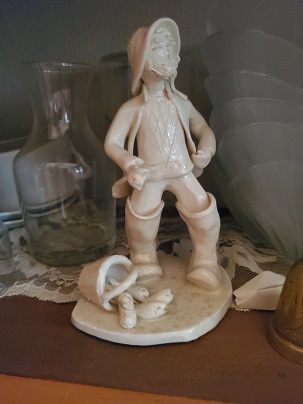
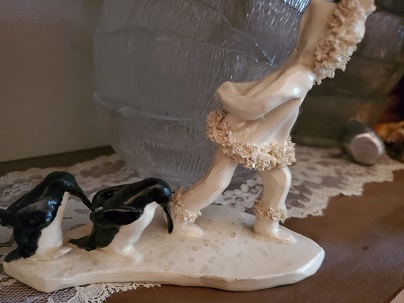
Elfriede Meindl and one of her creations
The church was Emmanuel Lutheran Church in Scarborough. And though Rolf & Elfriede would move to Waterloo while Rolf studied at the seminary to become a minister, they stayed in touch. My mom used to visit regularly.
The Meindls made my mom Godmother to their youngest.
Rolf, would have a congregation in Nova Scotia where the family settled.
He was the minister, while she was the artist, maker of delightful ceramic figures.
Looking at the figurines my mom still has, I thought to photograph them to share them here. Although Elfriede may have passed, her wit lives on in these delightful creations.
We’re helpless in the face of a mystery virus. It seems that everywhere you turn in the media, conspiracies are all around us. The gentler word is “hoax”, that stops short of the kind of thing one sees with ideas of a “Deep State”. But the conservative population don’t have a monopoly on conspiracy theories. I’ve been seeing a ton of flak directed at Louis DeJoy, the Postmaster General of the United States, who is allegedly working to help the GOP steal an election. Is it true? Is DeJoy helping Trump win re-election? I don’t know. I simply want to think about the question from my own experience in the postal world, via my daytime job at the University of Toronto, and with an eye to our own upcoming election.
I first heard the word “paperless” back in the 1990s, when it was presumed that postal mail was a dinosaur, doomed to extinction. Canada Post Corporation (aka CPC) were caught in a perfect storm, where their service territories were growing while their revenues were expected to decline.
I will never forget a presentation from CPC in the 1990s when they articulated their corporate strategy, arguably the usual tactics of any big company of the time.
identify your customers
rank them by revenues (in other words who spends the most or the least?)
treat the biggest customers best
In other words if you were a big bank or a major company CPC wanted to be your friend, to make a kind of partnership. We see that now with Amazon, where CPC ships enormous volumes of parcels for CPC. If you’re a person wanting to send the occasional letter? You can still go to a postal outlet, but your dollars are not understood as crucial to the profits of the corporation. Clearly what CPC were doing was making profits their priority, rather than service. It’s no different in the USA, as the postal service struggles to stay afloat. Indeed I think Canada Post, the crown corporation, are further down the road to being corporate & less oriented towards service than the USPS.
Is it the same for culture? Well let’s see.
The Toronto Symphony Orchestra have their Star Wars presentations of film with live orchestra, selling every ticket over four nights.
The National Ballet have The Nutcracker.
CBC has Schitt’s Creek & hockey.
You might say that without money-makers culture would be in trouble. OR you might also say that culture has already sold its soul. It’s a matter for discussion & debate. Your take on the question is likely political, an indication not just of what party you support but where you sit as far as artistic questions go.
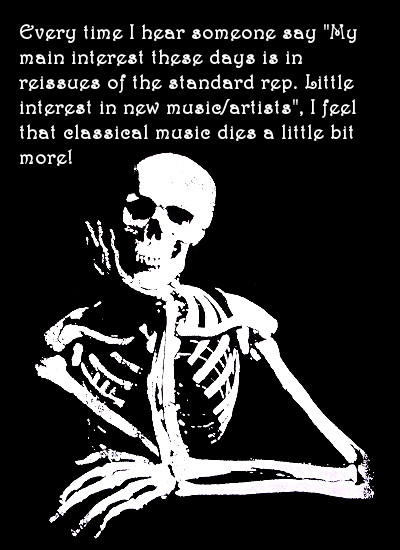
For instance, there’s an image I saw on Facebook a few weeks ago.
Government agencies are always understood and interpreted via politics. Each party has a platform that’s a bit different, with their own ideas about funding healthcare, the importance of the CBC, of the necessity to support the arts, maybe even postal services (although that likely isn’t in the platform, not in 2020). Sometimes these questions get aired as part of the political discourse, sometimes they’re under the radar.
But in every case it’s really a question of money & service delivery. The question is ultimately a simple one that I’d reduce to a choice.
Is this activity (whatever we’re discussing, railways, television, healthcare, protecting the environment, or even postal regulations) to be understood as a public service, where its objectives are framed according to the good of people & a community? Do I as a little old dude who wants to send a few Christmas cards matter a whit compared to Amazon or CIBC, who send out enormous volumes of correspondence, parcels, letters.
Or am I irrelevant because this is business, where the only consideration, the only purpose, the chief objective: is to make money? Ultimately most activities are a combination, so the question is one of reconciling the two, where to place the emphasis. Canada Post Corporation will happily take my money, every dollar helps after all. But I’ll probably pay more per letter than CIBC because I’m not offering CPC enough incentive. I’m not their friend, just a stranger without any loyalty.
That’s part of the context for the creation of superboxes, serving newly built subdivisions without having to go door to door, thereby helping CPC reduce their service level while still fulfilling their legally mandated responsibilities. The phrase “service level” is highly useful to articulate comparisons in terms of a sliding scale, depending on available revenue. If it’s merely a business seeking to make a profit, the market will be a key driver. As a service we might understand things differently, especially if there are complex connections to other services & industries.
And all of those different services are competing for a limited pot of $, seeking to place themselves somehow at the centre of society’s sense of priorities. Will we spend money on opera if people don’t have enough COVID tests? This kind of question will likely move to the forefront if, as expected, we get a federal election in the next year, and have the opportunity to contemplate and compare what each of the major parties offers us as a platform.
Let’s think about this question as it might be posed for the Canadian Broadcasting Corporation & other cultural industries, in the sharp focus of an election campaign.
Does it provide a vital service to the community?
Will the country pay for this service, can we afford the service even during financial downturns? OR is it something understood as a luxury?
Can it sustain itself somehow on sales revenues?
What happens to the service mission if sales revenue becomes the primary concern?
If we import our culture, buying rather than making content: who are we?
Have we properly identified the dollar value implicit in the byproducts of cultural industries (for instance, the way the Stratford or Shaw Festivals drive tourism)
We can see the same conversation in every sector, sometimes connected to politics, sometimes under the radar. Healthcare will always be an election issue, because it’s much clearer that our well-being depends upon our doctors, research, facilities etc. Yes they can also be offered for profit, as in the USA, but it seems clear in this country that the for-profit approach is fraught with concerns as we’ve seen in the high mortality rate in retirement homes. There are still gaping holes in our network, whether that’s drugs or dentistry or care for older citizens. It’s not yet proven conclusively at least in the public conversation as to whether the for-profit approach may help or ultimately leave us weaker, especially in emergencies such as the current pandemic, although that may come up soon, especially as we look at the aftermath of COVID19.
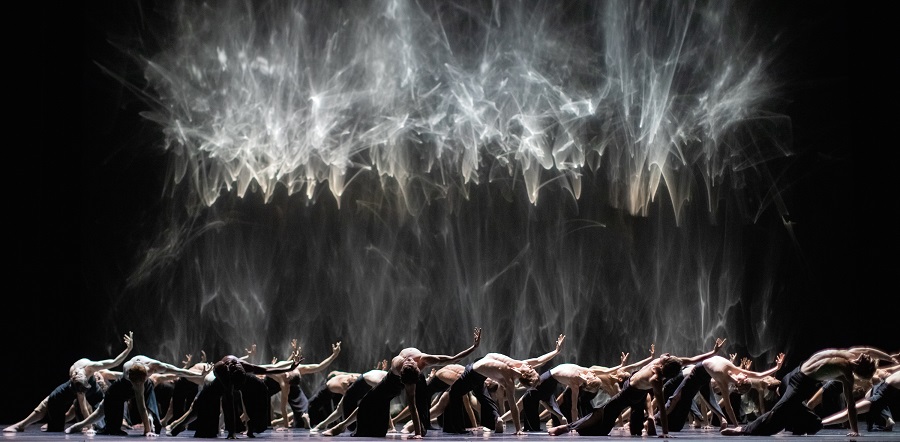
I’m recalling the wonderful Angels Atlas, part of a program I saw just before the lockdowns & cancellations began earlier this year, having heard that it is scheduled for the National Ballet’s return in 2021. I can’t help comparing two performing arts companies, both on the cusp of changing their leadership at this delicate time for the arts. One is inspiring me while the other is scaring me.
Artists of the Ballet in Angels’ Atlas. (Photo: Karolina Kuras)
The National Ballet of Canada have been led brilliantly by Karen Kain, robust in their finances & Canadian talent pool. Who leads after KK?
We’re waiting to see who the Canadian Opera Company select to follow Alexander Neef, who is leaving.
One might ask whether the funding landscape has changed in 2020, whether there will be any quid pro quo from funding agencies watching the COC import so much expensive foreign talent, while often ignoring cheaper Canadians whose careers are hanging by a thread. Just as the artistic landscape may have been altered by the pandemic, so too perhaps with funding.
And speaking of “hanging by a thread” I’ve heard that the COC itself might be in a precarious position financially. I just renewed my COC subscription, as I wonder how they will cope with so many cancelled productions. Imagine the money spent on those shows, when they can’t recover even a dollar via ticket sales.
We live in interesting times, and there’s likely going to be an election soon. Erin O’Toole has said he will stop funding the CBC. Will Canada have any money left to continue the same level of support for the arts (thinking of funding agencies, but also indirectly via the CBC) as we try to recover from the financial downturn associated with the pandemic?
If you consider culture an election issue: get involved. Speak up.
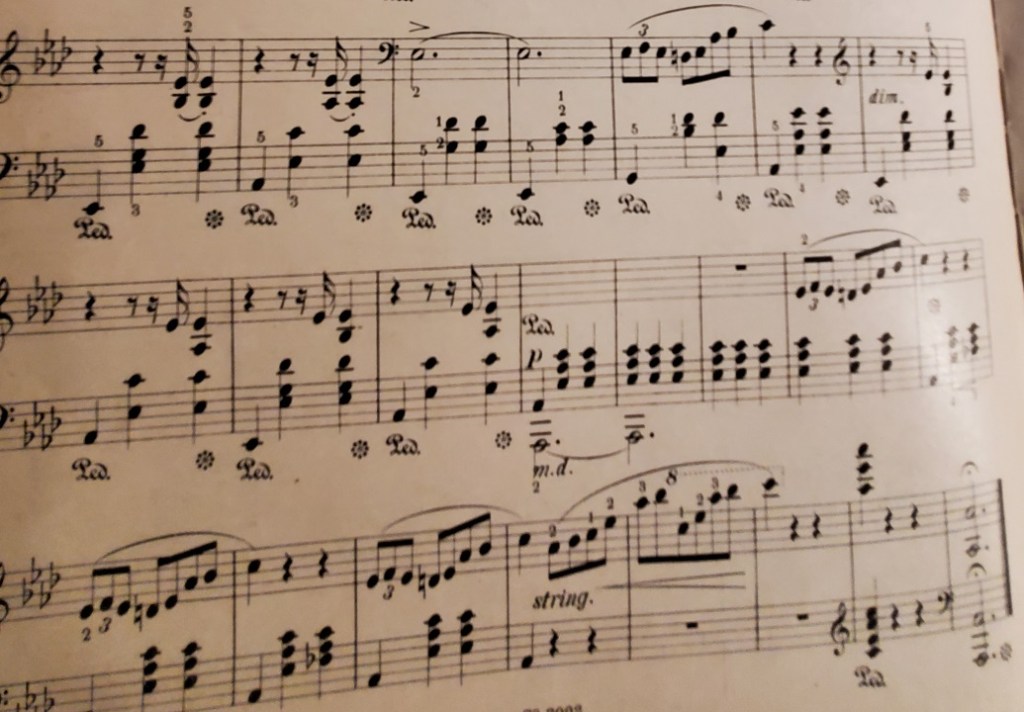
I was listening to a Chopin Waltz played on the radio as it came to its brilliant conclusion. The host said something under her breath, not entirely complimentary.
“Why” she asked “does it build to that big loud bang at the end?”
Why indeed.
The thing is, every piano piece, whether we’re talking about a Ligeti Etude or Twinkle Twinkle Little Star is a kind of puzzle, to be solved in the interpretation. And if the performance raises questions like the one posed by our host? Then they’re not playing it right. You should be solving the puzzle, not making new ones that you impose on your audience.
Yes this is the same one the host was asking about.
Chopin has this lovely thing he does on the last page. Notice how it gets quieter and quieter, subtly in the lower part of the instrument, making you lean forward in your seat out of sheer curiosity. It’s implicitly crying out for the release that comes: in the big climactic note at the top of the instrument.
It builds inexorably, or should seem to do so. But it needs to feel necessary, inevitable. If the climax isn’t organic, isn’t grown naturally from what came before? instead of satisfying release, we will find that loud note awkward, painful, unpleasant.
…very much as the radio host did. She was right btw.
That’s the funny thing. You know you’re playing it right if it sounds good, feels organic.
The version you see here doesn’t say “ff”, but does demand that you get louder.
I’m no geologist. But I can’t help connecting two phenomena.
The first one is simply the Scarborough Bluffs. They’re a beautiful formation, a tourist attraction. They’re made of sand.
Are they strong? Yes and no. Sometimes big chunks of the Bluffs collapse. For example this past weekend there was a report of a part of the sand cliffs collapsing. It makes for dramatic moments as you can see in this video.
There is another thing that is going on that you may not be aware of.
In this summer of the pandemic, people have not been able to have their usual forms of recreation & fun. For one reason or another, we’re seeing a transformation of my beloved Bluffs neighbourhood, at the bottom of Brimley Road.
This is where I live and I love living here.
But this summer with the pandemic it’s different. We’re seeing huge crowds. Huge? Imagine every street jammed full of cars, lines of hundreds of people, meaning mom, dad, and the kids, walking down to the water. Every weekend the number of people flocking down to the lake seems to grow bigger & bigger. And no wonder, when it’s such a beautiful place.
More people in cars & buses, enormous amounts of traffic, means more vibration. In any other part of the city that wouldn’t matter. But this isn’t a normal landscape, not at all. Our bluffs are made of sand.
Is it a coincidence that in this busy summer, when large numbers of people in their vehicles might be causing vibrations, that there are incidents of collapsing sand in the Bluffs? Maybe the incidents are nothing out of the ordinary, perhaps normal.
But perhaps someone –an expert, an authority– should investigate this.
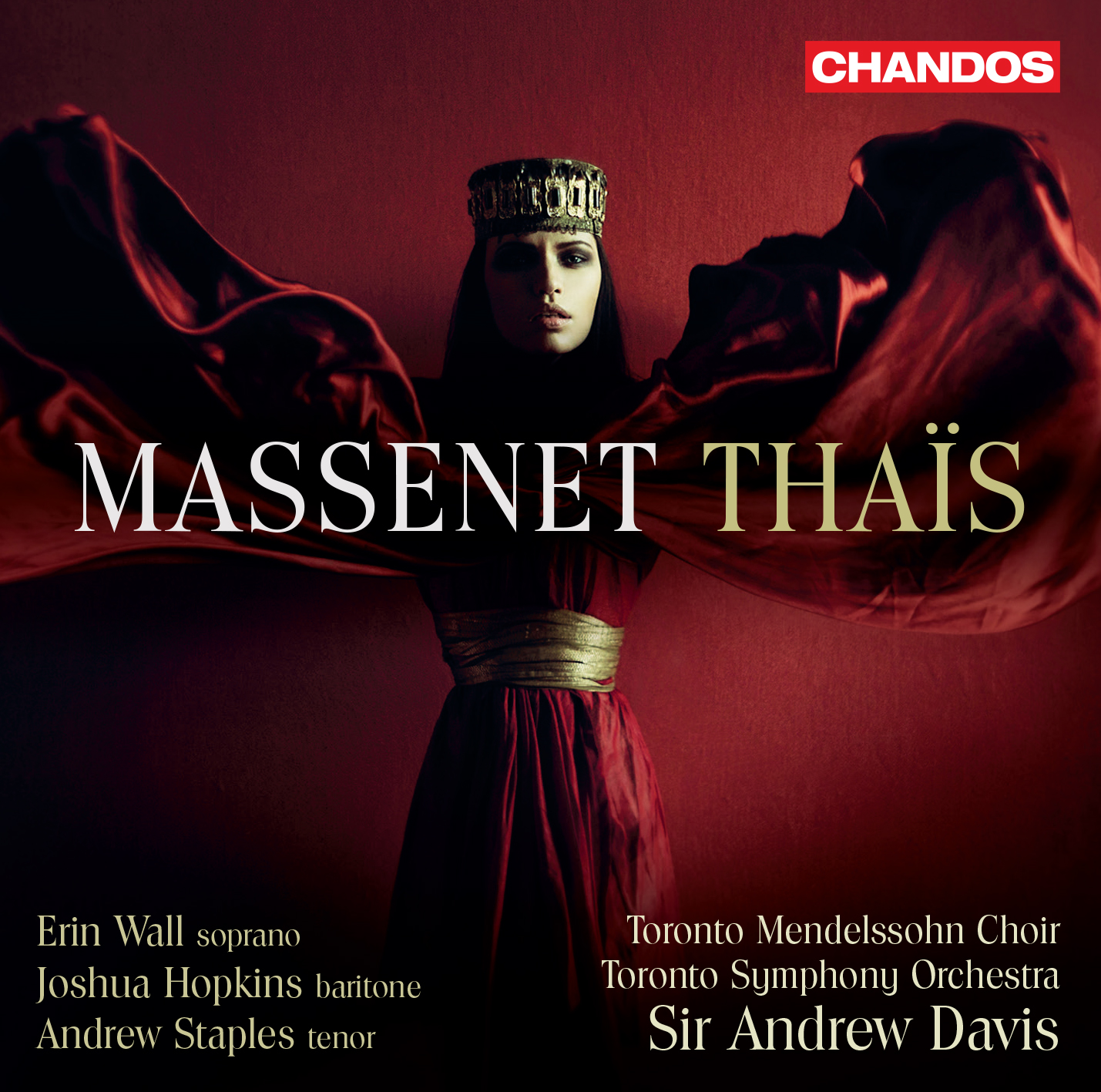
The Toronto Symphony concert performance of Thaïs, recently released on Chandos, has me wishing we could see & hear more from Jules Massenet, the opera’s composer. I begin to understand why the late Stuart Hamilton in his time with Opera in Concert produced a dozen operas by Massenet for Toronto audiences: including this one by the way. He would have said that Massenet is under-rated, his operas deserving to be heard & staged more often.
There are elements to the story that may remind you of other operas. A man seeks to resist the temptations of the flesh. A woman embodies those temptations. Onstage or in the score we encounter communities embodying diametrically opposite approaches to life & to pleasure. Unlike Tannhaüser or Salome, there is a great deal more ambiguity to the text, some balance to this opera that doesn’t demand that you take sides or change your beliefs.
I’ve been having a great time exploring this opera from two sides:
Listening to the TSO recording
Reading the Anatole France novel (1889) that is the source for the opera (1894), in its libretto adapted by Louis Gallet
This is a pleasure I discovered in grad school, when teachers wanted a comparison between operatic adaptations and the original. Sometimes the source is so similar as to be mistaken for a libretto, as we see with Pelléas et Mélisande. Maeterlinck was not amused that he was identified as a librettist. Sometimes the divergence is significant, the tone altered, variances among characters & in the way the piece is assembled as we see in Merimée’s Carmen.
I mention this because I stumbled upon a complete version of Anatole France’s novel Thaïs online in an English translation that you can download here. It’s wonderful to read it while listening to the TSO recording of Massenet’s opera.
When you turn a novel into an opera, inevitably you have to omit some of it. There’s no way to include everything in the two or three hours onstage. And so when one of the characters engages in lengthy philosophical discussions somehow you have to capture that essence instantaneously. Nobody wants to hear all that philosophy onstage. It’s one of the qualities of opera that anticipates film, the necessity for economy. We see it for instance in Verdi’s Otello, when he skips a big part of Shakespeare’s original play, grabbing us from the first nasty note of the storm.
There was no way Massenet & Gallet could capture the subtleties of France’s novel. The enormous exposition that tells us who Thaïs was before she became a courtesan & an actress –including her baptism—is missing from the opera. Does it matter? I’m not sure. I think it would make the opera far more interesting, far deeper, if they had somehow managed to get this into the story, that the eventual Saint Thaïs of Egypt was baptized, at a time when Christians were secretive, hiding from persecution. The opera instead keeps its focus on her as an object of obsession, both in her community & in the eyes of Athanaël, the monk who would save her. Given that choice perhaps her internal adventure is expendable.
A producer of Thaïs can have their cake & eat it too, because the work offers one opportunities to put beautiful bodies onstage dancing & or posing in varying degrees of undress, even as the story includes protagonists who reject that philosophy. One can come to the opera as a Christian or a committed sensualist, considering the games the opera plays with its audience, inviting our gaze and exploiting our interest while trying to have it both ways with characters who deny their sensuality. With some operas you lose a great deal in making it a virtual performance,… But I’m not sure that Thais is one of those operas. The drama is largely in the head already, a conflict between different philosophies, different visions of how to live a life.
The composer created two large parts at the centre of the work. Thaïs is a soprano, a courtesan of Venus, eventually a saint. Athanaël, the baritone, is a monk from a religious order. Athanaël is warned by his friend Nicias not to offend Venus, one of the places where the libretto follows the novel closely. In the opera Nicias says “Crains d’offenser Vénus, la puissante Déesse! Elle se vengera!” (or “Beware of offending Venus, the powerful goddess! She will avenge herself”) His cautionary prophecy tells all you need to know about how this story will unfold. Thaïs and Athanaël move in precisely opposite directions. She is the courtesan who gives up her riches & her life of pleasure (celebrating Venus), persuaded by the monk to choose instead a life of poverty & self-denial, eventually canonized as a saint. The monk Athanaël who lures her away from her hedonistic life to become a nun, becomes progressively more obsessed with her as a sensual object of contemplation. And of course with an audio recording as with a concert performance all of that is left to the imagination. Massenet’s score has exotic touches, a subtle delicacy & sweetness to inspire your imagination without being especially lurid or obvious.
You may have already heard a little bit of this recording played on the radio, namely the well –known violin solo known as the “Meditation”. I heard it the other day played by concertmaster Jonathan Crow, both because the TSO’s recording of Thaïs has already become a best-seller, and of course because it sounds so beautiful.
Sir Andrew Davis is a bit of a wysiwig conductor. What you see is what you get. Davis gets a wonderful committed sound from the TSO, big & bold when necessary but often with a child-like simplicity that makes me admire Massenet more and more. The textures are as transparent as the clothing covering the dancing girls. We can always hear the singers, the climactic moments are powerful, but never overdone. Davis makes a wonderful case for the opera & the composer. At times Massenet’s dramaturgy is subtle, at other times? you can see the wheels turning & the gears shifting. Davis pushes his soloists to the limit, to be dramatic & encouraged to compete with the orchestra. In the big moments that works well, and so what if it’s not terribly subtle.
The principals? Joshua Hopkins as Athanaël sings beautifully. He has a lovely line, a lyric voice that’s very smooth in the middle, not totally convincing at the top, as the highest notes don’t quite blossom & grow as one would hope. The way it quiets & tightens at the very top suggests he isn’t quite right for this role, perhaps better off in lighter roles such as Figaro. But this sound is apt for the obsessive monk. I think Erin Wall’s Thaïs is perfect the way the opera is written, given that all the amazing subtext I’m finding in the France novel is missing from the score. She seems to give up her life almost on a whim, won over by the passionate energy of a stranger who demands that she abandon herself to his guidance, like a spiritual Svengali. Wall is up to the challenges of the role, hitting all the notes. Anthony Staples as Athanaël’s friend Nicias has a lovely direct sound, perhaps a bit lighter than what the role requires in an opera house, but a perfect match for the TSO.
David Fallis makes his contribution in getting a wonderfully ethereal sound from the chorus (members of the Toronto Mendelssohn Choir) in the first part of the opera and again towards the end.
You can find out more about the TSO recording of Thaïs on Chandos here.
I couldn’t put it down, and no that’s not just a figure of speech. I confess it did take me past midnight, reading 200+ pages, skipping nothing, re-reading a few key passages. We bought the book because we expect to pass it around in the family, knowing there’s interest.
Her uncle Donald & his supporters can’t be too happy with this book.
It’s a bit of a literary train—wreck. You can’t take your eyes off the unfolding disaster, and there it was this morning on CNN. I found myself looking at the players a bit differently, watching AG Barr answering questions. I think I understand the subtexts, as though this 42 month horror show were a psychological thriller. Alfred Hitchcock couldn’t be reached for comment.
Having a psychologist write about her own family might be interesting to begin with, if you didn’t already know the principals. Let me review the dramatis personae. Frederick Trump (“Fred” in the book) & Mary had five children, namely Maryanne (born 1937), Frederick or “Freddy” in the book (died in 1981) to distinguish him from ”Fred”, Elizabeth (born 1942), Donald (born 1946) and Robert (born 1949). Mary Trump was one of Freddy’s children, making her niece to Donald & grand-daughter of Fred Trump.
I heard an interviewer asking her why, why now, why this way.
If you’ve read the book you’ll know. Freddy is the older brother, who might have been expected to be the heir & logical leader of the family business. In the story we read, Fred and Freddy can’t seem to connect, although I suspect Fred’s version of this story would be different than Mary’s take. I find it very persuasive, given that Mary is relatively dispassionate in her prose, aiming to be factual. She’s a psychologist, and one of the few people in her family with real rather than fake credentials. I found it easy to roar through the book in one day, because it doesn’t disgress or go off on tangents. Of course we can hardly be surprised that Freddy’s daughter would seek to vindicate her dad, who opted out, first in a brief career flying jets for TWA, but gradually sinking deeper & deeper into alcoholism.
The pressure Freddy lived with is palpable in Mary’s account. She doesn’t sentimentalize.
Fred and Donald, meanwhile, seem to be on the same page of their dysfunctional story. From Mary’s perspective Donald is a complete liar & fake, whose image was a fabrication of the father. It’s then no shock to see on CNN this morning that everyone in the current administration are performers & fakers. Their chief skills are their ability to answer critiques. AG Barr’s reply to interrogation are consistent with what we read in the book.
The book is not a happy read, even if it does seem reasonable. But it lays everything bare, makes the news lucid rather than incomprehensible. I think any American reading this book will be voting Democrat. It’s compelling even if it is also profoundly disgusting.
I was thinking after reading this that getting Biden as a president would be like resetting a computer to defaults. Even if you lose a lot you restore the default settings because your machine is messed up, and the alternative is unthinkable. It’s especially ironic considering Trump’s 2016 slogan “Make America Great Again”. I think that’s very much what Biden wants, even if a red MAGA hat signifies an entirely different kind of “greatness” than what Biden & his supporters seek.
On my visit today my mother asked me to bring her a book from another room, which she was going to read later. And then she pulled out something else and started to read to me in Hungarian, asking me if I understood.
I answered “parts”. I was listening to a poem in Hungarian. I wasn’t picking up all the allusions or meanings. When she starts remembering & storytelling I do my best to just listen, and try not to interrupt the flow.
She told me the story of the book.
During the siege of Budapest (at the end of 1944), my father used to visit her daily. She described the adventure, how he’d shelter close to each building, methodical, carefully finding his way over to visit her.
There was a bookstore that had been hit.
She described how he looked at the damage, books scattered about everywhere. Perhaps inside? Or outside. I don’t know whether this was a bombed out store or a place that was largely intact but with its windows destroyed.
As I sat listening to the tale, I realize I was like a 5 year old, my mouth agape, spellbound.
She held up a book for me.
He had looked at the books scattered about. And had picked up this one.
I saw the title, “Orosz Költök Antológiája”. This is the book she had quoted to me, a brief verse.
“Orosz” means Russian.
I confirmed: “so these poems were originally in Russian but translated into Hungarian”…?
She nodded.
At this time when Russians and Nazis were fighting over the city, perhaps it was a good omen, to find this? Yes, in time the truth would emerge, that the Russians could be every bit as rapacious as the Nazis. But at this point? no one knew that yet.
And so he brought it to her…
He’s been gone a long time.
But there it is, a prized possession, a memory that’s very much alive in her hands.
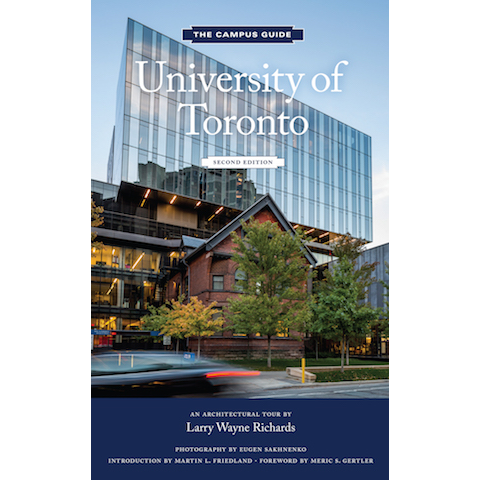
I shouldn’t have needed a book to wake me up to the nuances & subtleties of my many connections to the University of Toronto. But it’s a bit like a family album, these beautiful pictures of loved ones to remind me of who I was, where I came from and ultimately who I really am. This shiny volume is a most unexpected source of inspiration.
I’m speaking of Larry Wayne Richards’ campus guide to University of Toronto, from the Princeton Architectural Press. The recent second edition was given to me as a gift, something I left on a shelf for awhile but am only now properly appreciating.
Can a book featuring architecture make you healthier? It can if you start doing daily walks around your community. My gym has been closed for months due to the pandemic. But never fear, there’s still this beautiful neighbourhood to walk through.
This is a book with a series of walking tours on an enclosed series of maps.
And so I’ve been going across the campus, walking up Spadina Avenue or down Huron St, across Hoskin, down Philosopher’s Walk usually in the early part of the day, before it gets too warm and when there’s plenty of shade to allow me to hide from the sun. The campus is especially quiet right now with the current lockdown, stilled but alive & expectant, awaiting rebirth. In some ways it’s the perfect time to sample views of these buildings from front, back, sideways, contemplating the meaning of it all.
Richards’ book is very comprehensive as it touches on every single building, each and every place on the different campuses, a good chunk of our city in fact. It’s a lot like a travel guide. That may be its strength but must also be its chief weakness. It can’t supply the meaning that goes with each part of the institution. That ultimately comes from each of us in our lived relationship to each part. I remember where I was when I saw Northrop Frye speak or Jon Vickers sing, the gallery where I was struck dumb by Kent Monkman’s paintings. The University of Toronto has shaped & shaken me many times over the years.
Is the updating of a book like this one a bit like painting a bridge, where you have to immediately start over again as soon as you’re done? Perhaps they can’t cover everything, as the book omits the George Ignatieff Theatre that was added to the Gerald Larkin Building sometime around 1980, nor is there any mention of Lu Massey’s name on the Studio Theatre behind Robarts on Glen Morris. I saw an error, as the lovely little house I know as 123 St George St was identified only as #23, an address that doesn’t exist, likely due to a simple typo that, alas, gets replicated in the caption to the photo of the building & on the walking tour map (but shown in its correct location next door to 121 St George St). But oh my there must be an enormous number of details to track in every department or discipline, and lots of fussy people like me each with our own version of history & quibbles about what is or is not considered a priority. There are over 150 buildings even without the little ones that are under the radar. And I can see how there is a political subtext to what is or is not included in a book like this one, as though Professor Richards has to somehow decide which of the clamoring children like me in the crowd will get his attention. The stories recounted here are of the official variety, the tales etched into the building’s stones, to identify the founders & builders.
A book like this is an ambitious undertaking, a handsome reminder & a keepsake. I will keep walking and staring from the outside, while using the book as a reference guide when I want to look up the details and the history, peering at the map for variations on my daily walking tours. I look forward to the day when we are once again permitted to go inside these wonderful places. In the meantime I won’t be lost. Not only do I have the guide but I carry my memories inside my head.
When we speak of old films we’re usually looking at images of performers who died long ago. Some died young like Marilyn Monroe or James Dean. Some had long full lives like Jimmy Stewart or Ginger Rogers.
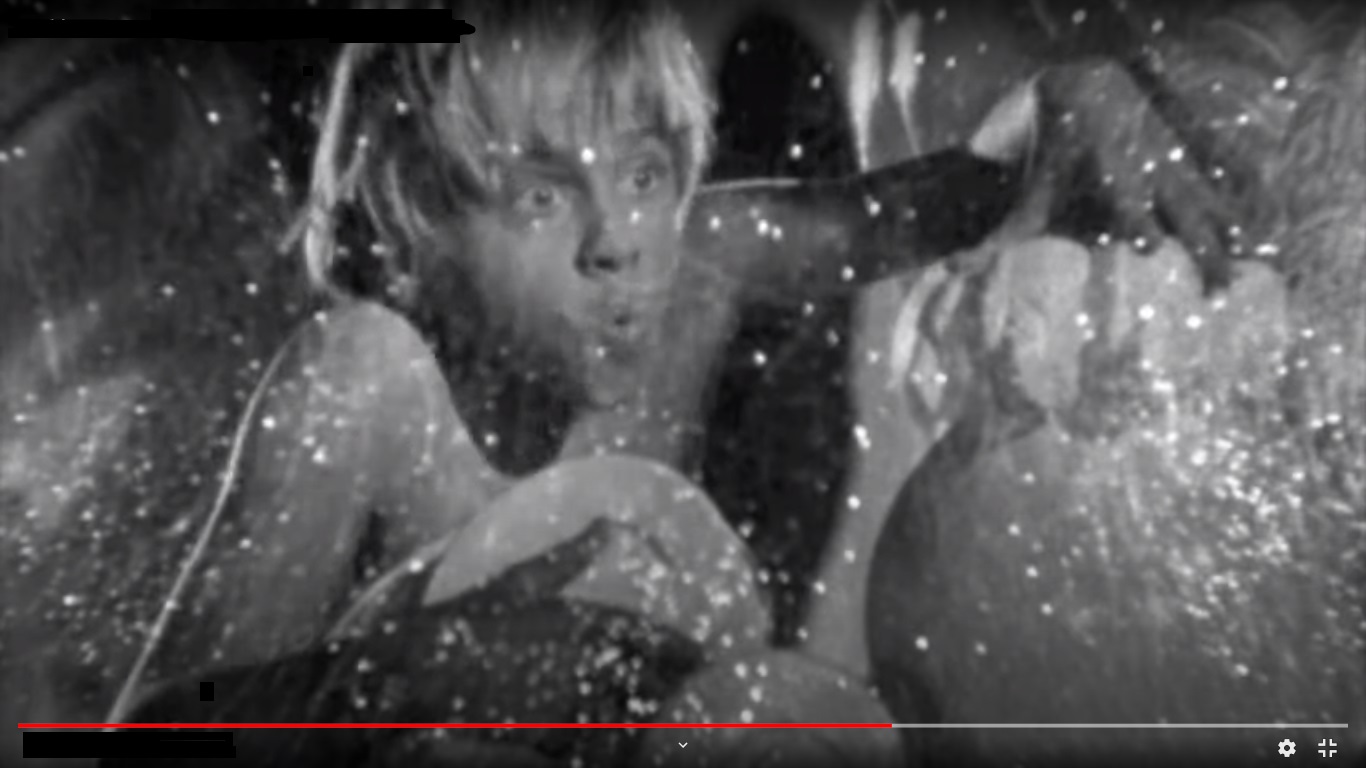
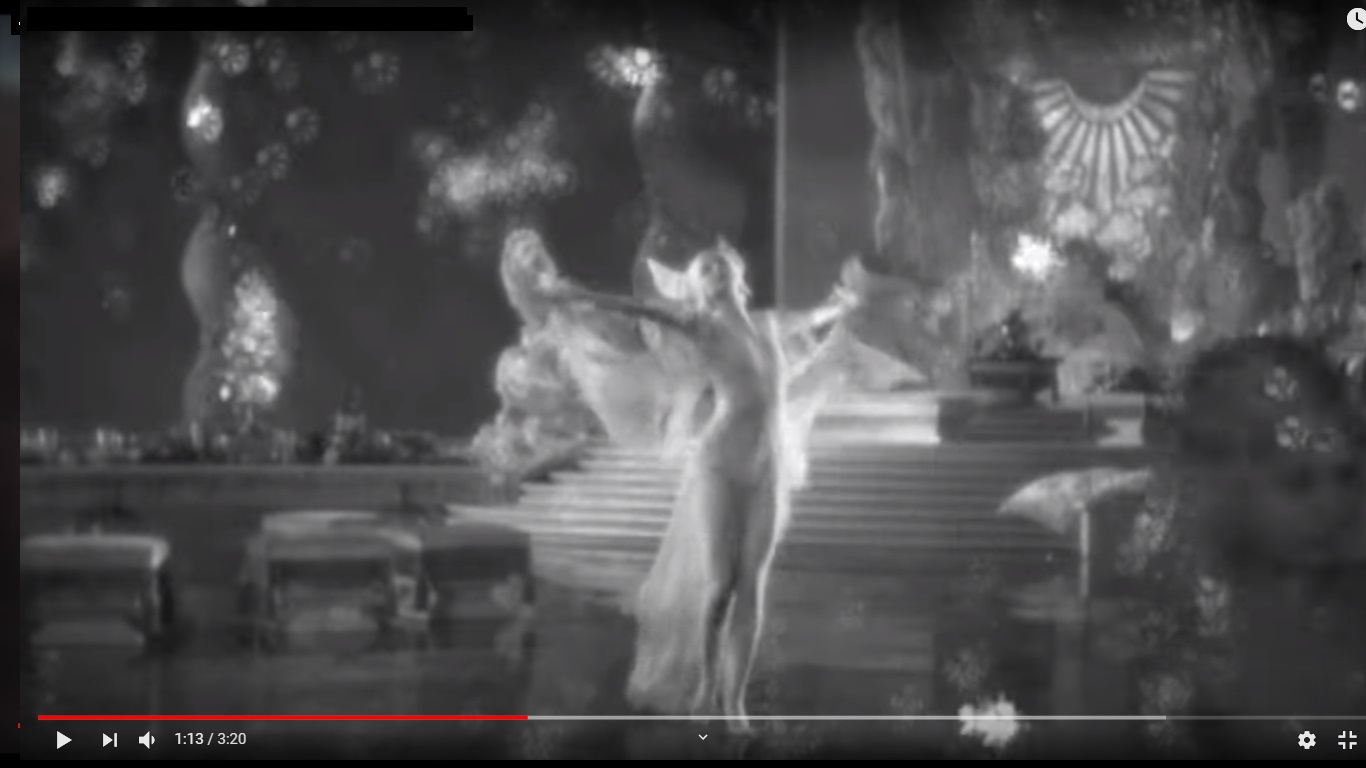
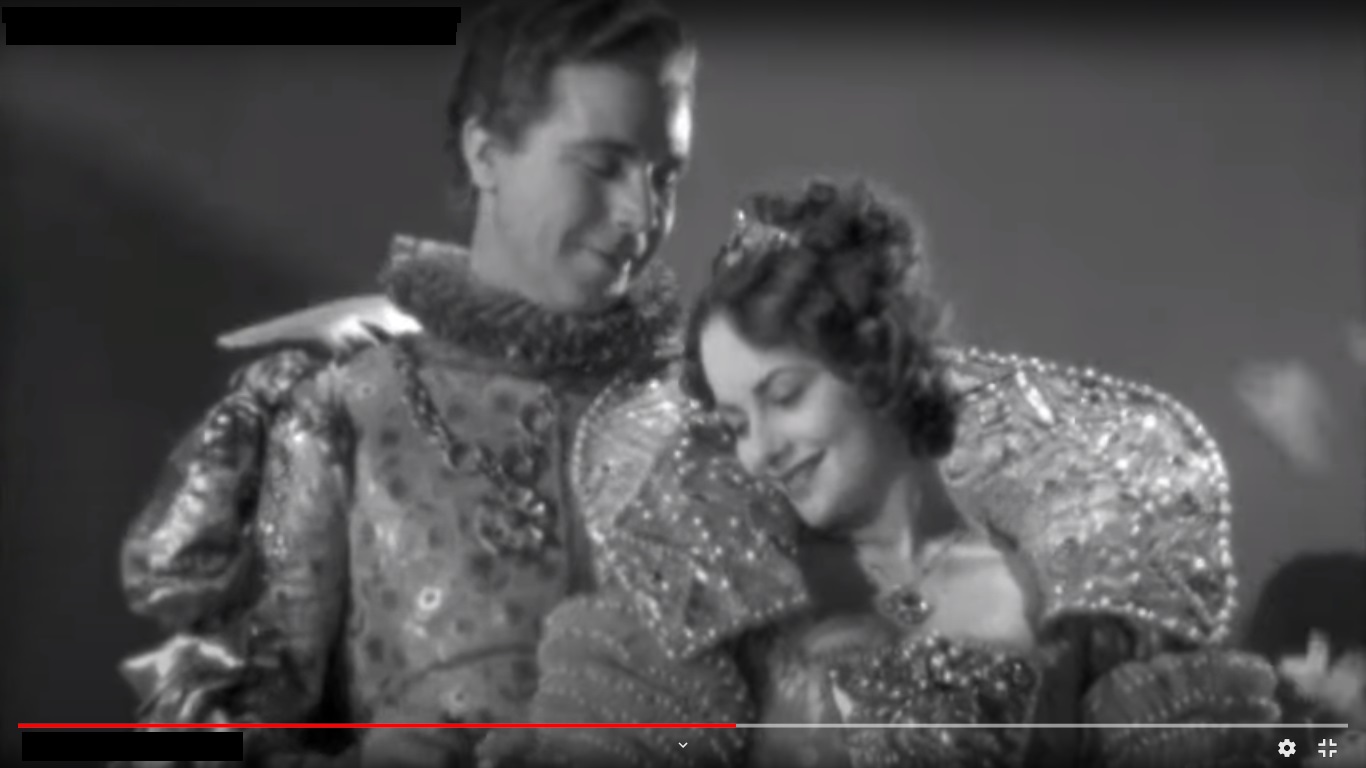
There was a bit of an anomaly for awhile, in a film I treasure as a personal favorite. It might shock you to think that until recently three different stars of the 1935 Midsummernight’s Dream directed by Max Reinhardt with music by Erich Wolfgang Korngold were still alive: until recently that is.
Mickey Rooney was alive until 2014, the first to leave us & youngest of the three stars I have in mind, passing at the age of 94.
Dancer & choreographer Nini Theilade lived past her 102nd birthday, passing in 2018.
And today Olivia de Havilland departed us in her sleep. She just had her 104th birthday at the beginning of July.
Dick Powell & Olivia De Havilland
Rooney was Puck.
Theilade was the principal female dancer in two extended ballet sequences, with one or two lines delivered in her accented English.
De Havilland was Hermia.
The film feels like a relic not just because this isn’t how we do Shakespeare anymore. I find it to be one of the most beautiful black & white films I’ve ever seen, and it sounds every bit as remarkable. Korngold adapted his score from Mendelssohn’s music composed in the middle of the 19th century.
I’m framing this analysis around Sam my dog. She’s a 13+ year old rescue, and in my opinion amazingly well-behaved.
Sometimes she’ll occupy the ottoman beside the piano, allowing her to read along with me if she so desires (no I don’t think she knows how to read music). Or I’ll be playing, and she’ll go to her den under the body of the piano especially with one of the big loud pieces, like the 8th of Dvorak’s Op 46 Slavonic Dances, or when I’m playing & singing something from a Wagner opera.
I take it as a compliment.
Lately I’ve been playing a lot of Beethoven.
Since encountering Stewart Goodyear’s Beethoven Marathon back in 2012 I have been in the habit of going through multiple compositions, intrigued by what I think I see in the sequence. It started with multiple sonatas, but lately –since Goodyear’s recording of the concertos—I’ll play from a lovely book I have, collecting the concerti, with big readable pages that are easy to turn.
So there I was on a quiet afternoon with Sam under the piano in her den. I didn’t want to be too loud. And so I thought to play a series of softer pieces.
What if…? Yes it was a preposterous idea. Instead of playing sonata after sonata or concerto after concerto, what if I were to play each of the slow movements from the concertos in turn?And that’s how I stumbled on the pattern.
Now of course in the world of Beethoven scholarship I doubt this is news to anyone. You might think I chose to bring Sam along on my voyage of discovery to blunt the edge of possible criticism, either to soften the critics’ hearts (as people tend to be nicer when there’s a cute dog in the picture) OR perhaps when they’re afraid of the snarly beast.
She is both (that is, cute but sometimes snarly…). I have a neighbour who nicknamed her “Cujo” for the way she barks at him.
Be that as it may, this is exactly as it happened. As I’m playing super gently–the first concerto slow movement, then the second concerto slow movement, and then the third’s slow movement– I wonder. Has anyone every pointed out that they’re very similar? No it’s not an earth-shaking revelation. But they all begin with a very similar chord (at least that’s whats you hear when you reduce it for the piano), with a melody beginning on the mediant, the third note of the scale. What was weird was how the 4th concerto –which is the one that’s exceptional in its shape—seemed to confirm the pattern. For the 4th concerto it’s the opening movement with its slow piano introduction: again starting with that chord. And when we get to the 5th concerto, that’s more conventional in shape (faster louder outer movements, with a slower softer movement in the middle: like the first three concerti), ….and there it is again! The same chord to begin.
You think maybe Beethoven likes that chord? Sam wasn’t complaining of course.
That chord turns up a whole lot of other places, so much so that one might be tempted to call it his favorite.
I don’t deny –indeed I confess it proudly and without hesitation—that this is a literal-minded approach to the anthology, playing through from beginning to end as though the composer sat down and wrote it like a story with episodes. With some composers their readiness to return again and again to the same idea is front & centre. Mahler’s symphonies are in some respects like drafts for one piece of music, revised and reshaped over and over. At times I see something of this in Beethoven too.
I suddenly remembered a melody in Beethoven’s opera Fidelio. We hear it in the overtures to the earlier versions of the opera, signaling that yes this is an important theme. We will hear it in the 2nd act when we meet Florestan the imprisoned hero. In a soliloquy he tells us about his predicament. After a recitative introduction (crying out about the darkness of his prison cell), he begins to sing about his life.
In des Lebens Frühlingstagen ist das Glück von mir gefloh’n; Wahrheit wagt’ ich kühn zu sagen, und die Ketten sind mein Lohn. Willig duld’ ich alle Schmerzen, ende schmählich meine Bahn; süßer Trost in meinem Herzen: meine Pflicht hab’ ich getan! In the springtime of my life, happiness has fled from me; I dare to tell the truth boldly, and the chains are my reward. I willingly tolerate all pain, shamefully end my path; sweet consolation in my heart: I have done my duty!
What follows is faster & more intense as you might expect from the stage-directions:
(in einer an Wahnsinn grenzenden, jedoch ruhigen Begeisterung)
(In a fit of madness but peacefully… )
Und spür’ ich nicht linde, sanft säuselnde Luft? und ist nicht mein Grab mir erhellet? Ich seh’, wie ein Engel im rosigen Duft sich tröstend zur Seite mir stellet, – ein Engel, Leonoren, der Gattin so gleich, der führt mich zur Freiheit in’s himmlische Reich. And don’t I feel gentle, softly whispering air? and isn’t my grave lit up for me? I see how an angel in a perfumed cloud stands comfortably at my side – an angel, Leonore, the wife who leads me to freedom in the heavenly realm. (Er sinkt erschöpft von der letzten Gemütsbewegung auf den Felsensitz nieder, seine Hände verhüllen sein Gesicht.) (He sinks exhausted down on the rock, his hands cover his face.)
As Beethoven shows us Florestan despairing in prison how intriguing that he chose to begin with that same melodic pattern, as in the chord that I have been talking about. I am tempted to think of Florestan’s predicament as Beethoven’s own (and wouldn’t it sound apt, for Beethoven to say “In the springtime of my life, happiness has fled from me“), alone & despairing. Does he identify with his hero? I think he does. The romantic artist is ultimately about empathy taken to its extreme, namely identification. No wonder that the composer expresses it this way.
And he goes on to build to a great exultant climax, an ecstatic vision of rescue by his angel Leonore: his wife. As it turns out in the story she will indeed be the agent of his rescue.





 barczablog