Yes we’re all doing our part doing the elbows up thing, shopping local as a way to support Canadian business.
Right?
But here’s another huge reason.
Google “amazon injury rate”.
You will see a series of concerns raised. In 2023 A senate investigation showed a 30% higher rate of injury.
I noticed this reading a post from Dan Price on Twitter/X.
On Prime Day, the rate is even higher.
Alas Amazon doesn’t seem to be doing enough to prevent injury, particularly when their volume goes up on Prime Day.
Amazon Management can protect workers, if they choose to do so. I have a bit of experience with this, having been a Mail Services manager from 1990-2020 at the University of Toronto. We worked to protect our staff with regulations. Customers adjusted their behaviours, understanding that they needed to call us when there were larger than usual pickups. People are really nice when you give them a good reason, when you explain your concerns.
We set up runs so that workers did the heaviest deliveries earlier in the day, when they were fresh. And when necessary staff had assistance, a second person ready to assist.
But the bottom line has to be a concern for staff, rather than a concern for the financial bottom line. If profits are a higher priority than health & safety of staff, workers will get hurt.
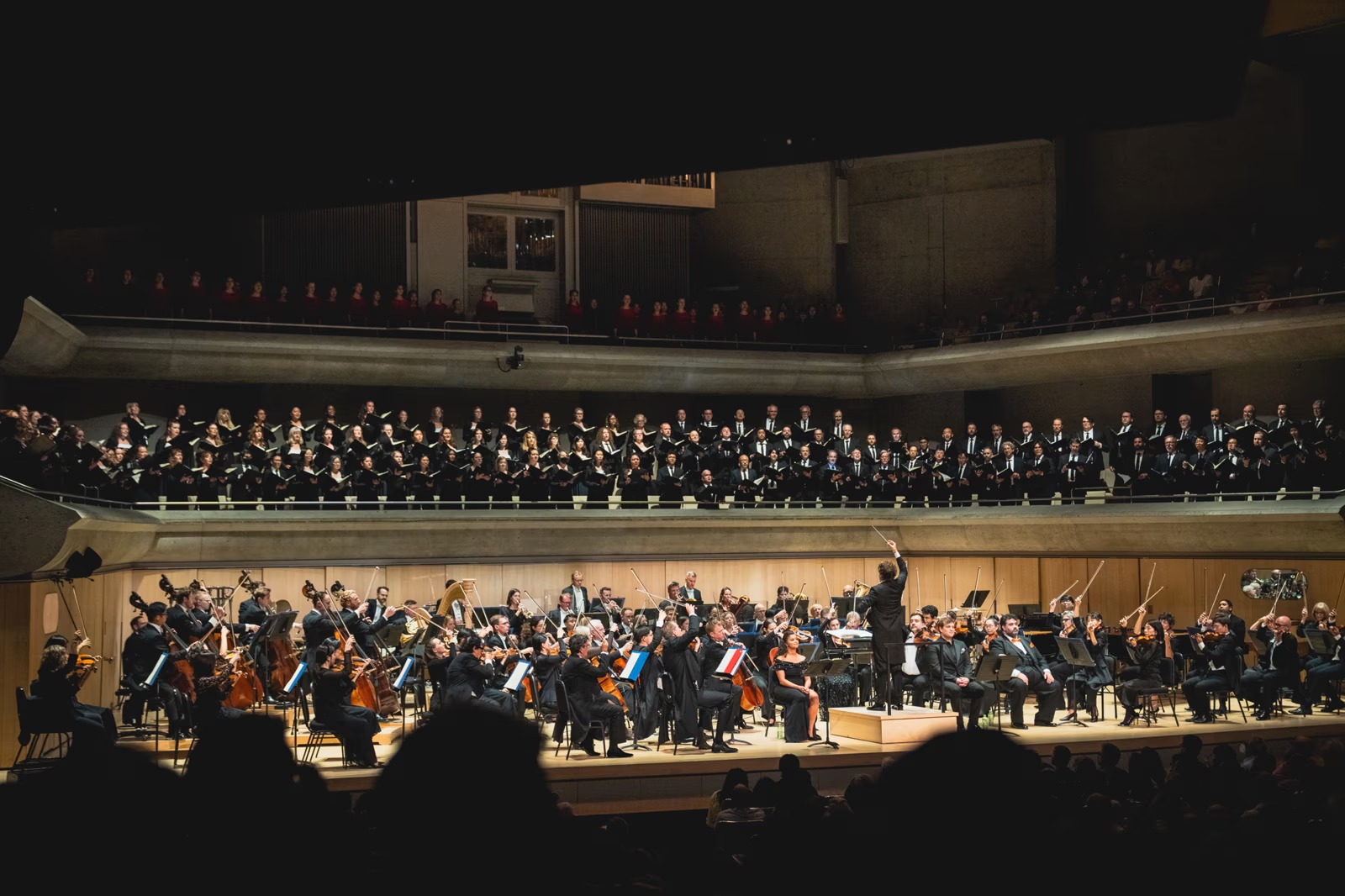
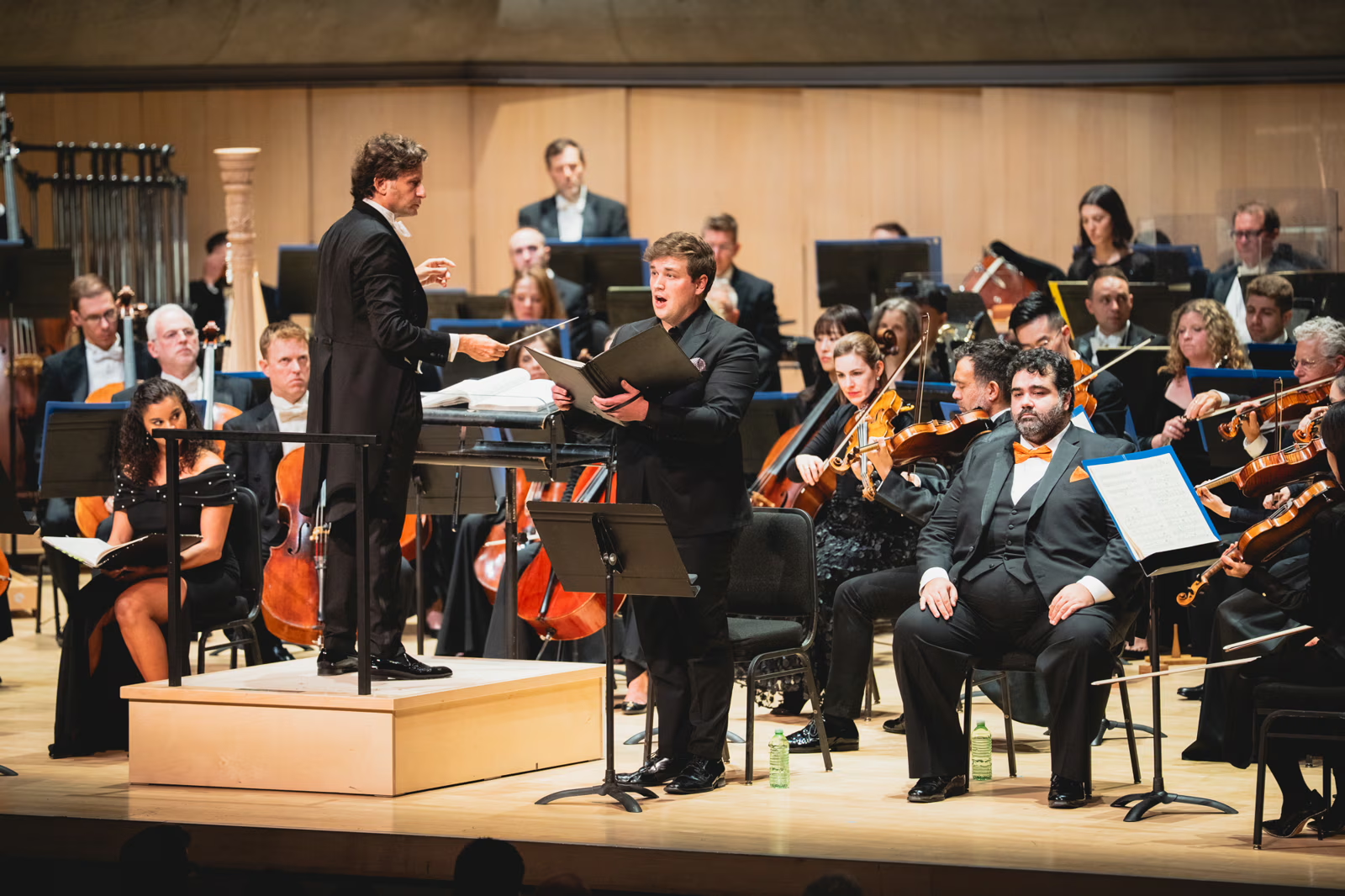
I’ve been watching the passionate responses to the concert at Roy Thomson Hall last week when Mandle Cheung conducted the Toronto Symphony in Mahler’s 2nd Symphony.
The Globe & Mail contacted me the day before, asking me if I’d be willing to review the concert.
I was aware of controversy, having seen the piece in the Globe by Josh O’Kane titled “Amateur conductor pays Toronto Symphony Orchestra to lead Mahler performance, shocking some musicians.”
I wanted to sit as close as possible. If any TSO players were resisting their new conductor I wanted to see facial expressions, although even then I would be guessing. And I wanted to have a good close-up look at Mireille Lebel, a singer I admire, who was singing Urlicht. I found a single seat in the front row, allowing me a good view of players and soloists.
The Toronto Symphony Orchestra, alto Mireille Lebel (left) conductor Mandle Cheung, soprano Kirsten LeBlanc (photo: Allan Cabral)
In the hours before the concert I did two things in preparation: 1) I pulled out my Gilbert Kaplan recording of Mahler’s 2nd, 2) I went to YouTube to see whether I could hear Mandle conducting.
We’ve been treating Kaplan as the precedent for Mandle, the wealthy man who paid an orchestra to play and record Mahler’s 2nd. But Kaplan only knew the one piece, conducting Mahler’s 2nd several times with different orchestras.
Kaplan’s recording is conventional, nothing unorthodox. And it has amazing liner notes concerning the creation of Mahler’s 2nd. Re-reading them I remembered an offertory rendition of Urlicht (the same song we hear as the fourth movement of Mahler’s 2nd) that I accompanied in church, as we adjusted to a partially disabled singer who was forced to sing from an awkward location in the choir pews, blocked by her physical limitations. I had a revelation about the piece. As I said on Facebook two days ago, “In this symphony an officious Angel tries to block the path to heaven (Urlicht). Whether youโre a Jew being told you must Christianize to be permitted to conduct (as Mahler was), or a Chinese tech mogul (Mandle), mocked even as he paid for the privilege, it shocked me how the drama was re-enacted in Toronto complete with officious angels blocking the path. When Mireille Lebel sang her song I was ugly crying. The tears were also for a TSO sounding wonderful. Iโm sad for those who donโt get it.”
At the TSO concert reviewing Mandle for the Globe I had two purposes, listening to his interpretation while looking for evidence of the alleged conflict behind the scenes. I wonder if we can address that indirectly in this blog via the Mandle Philharmonic channel on YouTube.
They describe themselves this way on YouTube: “๐๐๐ง๐๐ฅ๐ ๐๐ก๐ข๐ฅ๐ก๐๐ซ๐ฆ๐จ๐ง๐ข๐, Canadaโs newest orchestra, is the initiative of ๐๐๐ง๐๐ฅ๐ ๐๐ก๐๐ฎ๐ง๐ , a tech entrepreneur who took up the baton. The self-taught conductor, leading an orchestra of world-class musicians, has created an upstart ensemble that forges a new space in orchestral music, through which he can express his lifelong enthusiasm, passion and support of music.โฃ”
I have so far listened to a couple of live symphonic performances on YouTube that suggest Mandle is at least a talented amateur.
I only had time last Wednesday to listen to portions of the first thing I found, namely a live video recording of Beethoven’s 9th Symphony. Here’s what the page says: “A performance of Beethoven’s Symphony No. 9 by the Mandle Philharmonic Orchestra on Nov 29, 2024 at Koerner Hall in Toronto.“
There are a couple of traits or habits we see in Mandle’s reading of the Beethoven that I also saw in the Mahler 2nd with the TSO. Perhaps I should think of it as a tendency to maximize the moments of drama in the music. In the last moments of the trio in the Beethoven’s 9th scherzo, as Beethoven is teasing us for a moment before the recapitulation, Mandle maximizes that teasing-torture. I can’t decide if it’s brilliant or silly, but it’s unique. He did precisely the same thing with those agonized moments before the recapitulation in the first movement of the Mahler 2nd, drawing out that climactic discord maximizing the suspenseful agony. It’s very stagey, very theatrical. Whether you like it or not, and whether or not anyone else does this, you have to admit: this is an interpretation. It’s unique. It’s musical, it’s dramatic, and he’s no mere copy-cat: which is what I felt when I encountered Gilbert Kaplan’s Mahler. Kaplan is not terribly unique, he’s conservative, he’s safe.
Not so with Mandle.
There’s another characteristic he sometimes displays. At times he encourages the orchestra to go fast, playing up tempo contrasts. It’s not so evident in the Beethoven as in the other video I encountered, namely Mahler’s 4th Symphony. I wish I had heard it before hearing him lead the TSO.
It’s described this way: “Mandle Cheung directs the Mandle Philharmonic at Koerner Hall, Toronto, September 20, 2024.” The video was posted in May of 2025.
When I wrote about the Mahler 2nd with TSO I said something in the Globe review that might sound disparaging: “Iโm not sure if what I heard was entirely Cheungโs interpretation, as there were times that the orchestra seemed to take over, going so fast that I wondered whether Cheung was more like a rider trying to stay on his horse rather than the controlling force behind the piece.“
Mandle Cheung leading the Mandle Philharmonic
Now of course had I heard the Mahler 4th I would have recognized this as a regular trait of Mandle’s interpretations, a flamboyant enjoyment of the drama built into the composition. Sometimes he speeds the orchestra up, going very fast, sometimes allowing the schmaltz to slow things right down, as in the 2nd movement of the Mahler 4th. I think it’s a bit over the top, full of excitement, and perhaps the TSO players were following his direction when they went so fast as to seem to be controlling the piece. But again, this is evidence that Mandle is an original interpreter. Whether you share his taste or not, he’s very musical. This orchestra plays very well, a talented and capable group.
The fact that the TSO concert was almost totally sold out, and given a rapturous reception by the audience? Yes the TSO and the soloists were brilliant. Maybe the tickets were sold largely out of love of Mahler. But maybe the “amateur” has a following.
I will have to hear more of Mandle’s interpretations. Mandle Philharmonic are back October 2nd at Koerner Hall playing Brahms’ 1st and Beethoven’s 7th symphonies. For further information or tickets, click here.
I have just seen Jesse Eisenberg’s film A Real Pain (2024). I call it his, in the sense that Eisenberg wrote & directed and also stars as David opposite Kieran Culkin who is David’s cousin Benji. They are on a modern-day trip to Poland exploring their family background, especially their grandmother who survived the camps & the war, and who just passed away in the past year.
While I’ve heard lots about Culkin, who won the Oscar in the “supporting actor” category, I have heard next to nothing about the soundtrack for the film. Erick Eiser has the Music Supervisor credit for the film. For most of the film we are listening to solo piano pieces by Frederic Chopin coming from the soundtrack, as we watch the travels of David & Benji. I’m trying to understand whether that means anything more than just pretty background music for a film that flits back and forth between glib joy and concealed pain bursting forth into the open. Maybe it’s a Holocaust film, maybe it’s a road movie, maybe it’s absurd to think it fits into any recognizable genre.
A Real Pain is very different from the last movie I saw that combined a story about Poland with Chopin’s music, namely The Pianist (2002), Adrien Brody’s portrayal of Wladyslaw Szpilman.
While the Pianist takes place in the wartime period, showing us more brutality & cruel violence than any film I can recall, don’t let the title of A Real Pain fool you, as this film is precisely the opposite of the Pianist, with pain as a remote topic for discussion and reflection. We hear of a famous slap from years ago, when Benji was struck by the grandmother who has deceased and is remembered fondly for this moment of direct commentary on her grandson. David will also strike Benji (it’s in the trailer so I hope I can be forgiven for this tiny spoiler), one of the few moments when there is pain in this film: and Benji laughs it off. The title is provocative in positioning pain in the foreground of a film where we are mostly remote from the Holocaust horror being remembered by the members of the tour-group.
It’s not just my obsession with film music that makes me want to locate the difference between the two movies in the way they use piano music.
For me the most magical moment in The Pianist comes when Szpilman comes upon a piano and begins to play, silently.
I wasn’t kidding when I said The Pianist seems to be the opposite to A Real Pain, a film featuring the gentle tinkling of Chopin coming from the soundtrack for almost its entirety. For this scene of The Pianist suddenly we’re getting something like that as Adrien Brody as Szpilman mimes playing without touching the keys, while we hear the music as though in his head. Near the end of the film balance is restored as Szpilman gets to play again on Polish Radio, rather than being forced to deny himself. When we see that the pianist actually plays the instrument (or at least simulates it in a film) we are reconciled to reality, not forced to hide anymore.
Let’s compare that to a powerful moment in A Real Pain, that I would consider the heart of the film. Almost exactly halfway through the film, we hear and see diegetic piano music: meaning that we actually see the hands of the player and hear their music, the first time in the film that we don’t just get the remote sounds of the soundtrack. It’s not Chopin by the way, but the song Hava Nagila from a piano in a restaurant, in the scene after the trip to an ancient grave-yard. While I don’t want to disparage Chopin let’s be clear that his piano music is art music, quite different from a folk song that people might dance to, that is strongly associated with a race & their culture.
There is an awkward moment, when David tells a story quoting the words of his grandmother.
David: “First generation immigrants work some menial job, like they drive cabs, they deliver food,… Second generation they go to good schools, like they become a doctor or lawyer or whatever… Third generation lives in their mother’s basement and smokes pot all day.”
There’s laughter around the table, but Benji looks intently at David and asks “she said that?”
David looks a bit abashed realizing what he’s implied. “I think she was just speaking generally about the immigrant experience.”
Benji is already interrupting before he finishes, saying “I lived in my mom’s basement.” And we know he smokes pot and has arranged to get marijuana to Poland. We will see Benji and David smoke joints a couple of times in the film.
David nods, now a bit less reticent, saying “she was just talking about immigrants, that’s all.”
But Benji is visibly upset, finishes his beer, slams his empty beer glass down, burps hugely, propels his fork across the room and abruptly leaves the table, trying to play it cool, while clearly everyone around the table is disturbed by the exchange. David apologizes, not for the first time in the film that he’s apologizing for Benji or for himself.
For the next three and a half minutes we hear David talk about pain, including Benji’s failed suicide attempt, apologizing again for what he calls “over-sharing”, while the others in the group comment.
And then we hear piano playing of a different sort, “Tea for Two” coming from the piano. It’s an American popular tune that’s a century old and accident or not, is a song lyric composed by Irving Caesar: meaning it’s again Jewish music but with a familiar American sound.
Irving Caesar (1895-1996), born on the 4th of July(!)
I was pretty sure it would be Jewish recalling Making Americans, a beautiful 2004 book from U of T professor Andrea Most exploring the ways Broadway musicals shaped Jewish identity in America.
And we discover that now it’s Benji who is playing as we see his back, while he plays the piano. Not for the first time, we see Benji bounce back and forth between emotional extremes, where his strategy for balance takes us by surprise, even as it seems to bother and even infuriate David. David explains that both he and Benji took lessons as children, and then it’s his turn to leave. As he goes out of the restaurant we hear the piano music in our heads long after it should be audible, right up to the moment David closes the door en route to bed.
The pain of the title is not just Benji’s or David’s.
I want to call attention to something that could be funny, could be disturbing. Take it the way I offer it, recognizing that cinema is a business at least as much as it is an art-form.
I have spoken only a little bit about the pain of the title. Let me share one of the trailers for the film, as I ask you to notice the music for this trailer, that sounds nothing like the film.
Notice how cheerful and upbeat this sounds for its entire two minutes and twenty seconds. Okay maybe I’m wrong, but I think some people, watching this trailer, might be surprised at what they will get when they go see A Real Pain in the theatre.
This other trailer includes the one painful Chopin piece we hear in the film, the Op 10 #4 (and note, it’s at the very end of the film). This trailer seems like better advertising because it felt much closer to the experience I had. It’s shorter and very powerful.
Either way (with either trailer) , I think this is a fascinating film.
I can’t decide how to reconcile the film to Chopin, who was after all, not Jewish, only half Polish, and himself a composer who wrote some very painful music: that is not heard in this film. We’re listening to the charming parlour music throughout the film, as though Chopin is the musical equivalent of the Poland that lives with the cognitive dissonance only briefly alluded to in the film, when on the visit to a death camp we’re told that the town was only a short distance away. How can one be so close to these murderous camps, we’re asked? We see showers, ovens, piles of shoes. And the music will continue to tinkle happily, melodious and so so very polite. It is ultimately disturbing, but credits the viewer with sufficient intelligence to process this. We don’t get the Wagnerian load of pain in the sound-track. We get something calmer, reflective and from a distance of decades.
Stephen Bell is an award winning filmmaker and visual designer based in Toronto. Videographer by day and opera singer by night, Stephen is the Founder of Coffeeshop Film & Creative.
Stephen Bell
And on May 25th Stephen posted on Facebook that after 19 seasons performing as a Canadian Opera Company Chorus tenor, along with understudies and supporting roles that he would “step away to focus on family.”
It seemed the perfect time for an interview, looking back and looking ahead.
*******
Barczablog: Are you more like your father or mother?ย ย ย ย ย
Stephen Bell: This is a hard one to answer. I believe all of us are a combination of the love, time and memories each family member has touched us with. Mother, father, grandfather, grandmother, cousin aunt or uncle each of them has given us a part of the talents and personalities. Many of my family are no longer here and I would like to say I have the love of music my grandfather who played on the guitars he used to build. The voice of my grandmother who used to sing along with me to Lawrence Welk, the love of the stage and screen of my cousin who was Miss Canada in 67 and tv host for decades, the dedication to family of both my Mother and Father, and the stubborn determination of my uncles.
BB: What is the best or worst thing about what you do?ย ย ย ย ย ย ย ย ย ย
Stephen Bell:The best thing about what I do is having the chance to make a living story telling on stage or behind the camera with loved ones, friends, colleagues and industry leaders. Working in opera has influenced how I create visual storytelling in video production, and subsequently working in media capture has altered how I looked at work on the stage. The rush of energy of the stage or the excitement of capturing a moment in video both have their unique highs.
Worst thing about I do is having to say goodbye to a project when itโs done. There is always something I want to perfect after watching a past show or video. Knowing that unique moment in time is over and canโt be recreated is sometimes hard to accept.
BB: Who do you like to listen to or watch?ย ย ย ย ย ย ย
Stephen Bell:Maybe I am getting old, but American and Canadian rock/folk music, America, Crosby Stills & Nash, Joan Baez, Gordon Lightfoot, Don McLean, Joni Mitchell, Johnny Cash. Itโs the first thing I turn on Saturday mornings with Angie and Isla as we wake up. There is something magical about playing โIn the Early morning Rainโ as your daughter munches Cheerios. The simple beauty of a voice and guitar combined has a power that the mightiest of orchestras and voices canโt match.
Watching? I love to watch and absorb the cinematography of Roger Deakins, Wes Anderson, Ridley Scott and Benicio Del Toro. Incredible story telling, and incredible visuals. Each film is a masterclass in framing the narrative through their work of lighting/framing and choice of film/digital/lens styling and composition.
BB: When youโre just relaxing and not working, what is your favourite thing to do?ย ย ย
Stephen Bell:Spending time with my wife Angie and our daughter Isla and seeing dear friends. Hiking, road tripping, antique store browsing, dinner making. One thing about working in media and the arts is you cherish the time you have with family, as scheduling can be very demanding. Softball is another love of mine, and I have played in a local Toronto league for almost 10 years as an outfielder/first baseman and a poor replacement at Third base.
Although itโs working(ish) I love creating narratives or film projects. From features, music videos to short films – I have been lucky to create film with my wife in a couple of occasions. Creating a film and entering into festivals and seeing it screened is a real thrill. I am lucky as I own a studio of gear, but passion projects allow you to practice your craft and apply skills to working scenarios.
BB:ย What was your first experience of music ?
Stephen Bell:I remember I used to fall asleep to Pachelbel’s Canon. My parents used to play this at bed time. It still hits me now when I hear it.ย
BB: Who/what was your first experience with a camera, and how did you feel?
Stephen Bell:My grandmotherโs brother, Alex Saarejarv used to bring a super 8 camcorder over to my parents house when he visited me. He would film everything. I was mystified by this magical box that captured pictures. Instead of just using it and putting it away, he would show me how it worked, and also how to pull the image from the tapes to transfer to cassette and show on the TV. I guess you could say at 8 or 9, my fascination with cameras began. I am forever grateful to him for showing me and teaching this tool. The art of passing on a skill to a child is priceless to inspire a love of a craft.
BB: What is your favourite opera?ย
Stephen Bell:Eugene Onegin – I have sung Lensky on tour with companies in the Czech Republic and Poland, and I have sung the opera twice at the COC in chorus. All of the characters in this opera feel close to me. From Filipyevna to Lensky and Olga, Onegin, Tatiana, Larina, the bumbling lines of Triquet and yes even to the long winded nostalgic aria of Gremin. Each character is real, and the story is timeless. Itโs like a cinematic narrative, and Pushkinโs novella/libretto is timeless. The opera is long, but always feels fresh. There is something about the opening chords of the work which send a shiver down my spine.ย
A close second would be Nixon in China. I studied this while completing my masters at UBC. Adamโs composition is almost cinematic in its style. For a film lover the setting gives a unique perspective into a recent timeline of political missteps. โNews has a kind of mysteryโ sung by Nixon always hit, night after night. We performed this at the COC back in 2011, and I will never forget the opening staging of the chorus walking onto stage performing Tai Chi as the audience took their places. It was powerful, grounding and different. One by one, each chorus member entered the stage to begin the movement long before the orchestra warmed up and the lights came down. Finding peace on stage is something all artists look for to settle stage nerves, centre their breathing and alignment and this show gave us a unique warm up each night.ย
BB: Do choristers need to know how to act?
Stephen Bell:Answering a blunt question with a blunt answer. Of course. If you step on a professional stage, you need to know to act, move, react and emote, otherwise you shouldnโt be on the stage.
Stephen Bell
The audience doesnโt just watch the leads, their attention goes to multiple points on stage. They should see story telling both adding to and supporting the narrative.
Each chorister I have had the privilege of working with at the COC are, or have been professional soloists at some point in their careers, and subsequently each know to emote. I can recall at numerous receptions at the COC, patrons and supporters of the opera coming up to me and saying how much they enjoyed โmyโ performance, and look forward to seeing me in the next show. In many cases audiences become attached to the chorus.
Stephen Bell, in Costume for Verdiโs Rigoletto
We are the life blood of the scene. We are the village, court, army, family etc that completes scene.
COC Chorus (photo: Michael Cooper)
A scene from Canadian Opera Companyโs presentation of La Reine-Garรงon (photo: Michael Cooper)
Lucas Meachem as Escamillo among his admirers, in the COC’s 2022 production of Carmen (photo: Michael Cooper)
The chorus needs to know how to lead in acting just as much as they lead with their collective voices.
BB: What directors did you enjoy most?
Stephen Bell:For the operatic stage I would have to say Robert Carsen, Atom Egoyan, and Christopher Alden. Their productions have been innovative, exciting but also all different, They have shown care to working with each artist (each member of the chorus) in rehearsal something that goes so far in creating lasting impressions.
Joel Ivany
One dear friend I have had the joy to collaborate with both on stage as well as behind the camera is Joel Ivany.
Working with Joel on projects like Messiah Complex, Toronto Symphony Orchestra features and the CBC Governor Generals performing arts awards has opened doors to other projects I never thought possible. Working as Joelโs DP on these projects during the pandemic was a joy, and I look forward to working again with him in the future.
BB: Please talk about your best experiences as a performer.
Stephen Bell: 1.ย I was blessed to collaborate and record with a dear friend and mentor, the late Estonian Pianist and conductor Charles Kipper. We toured Estonian art song in recital in Canada/US and in Europe also in collaboration with mezzo soprano Kristina Agur, who now sings as a full time chorister at Vienna State Opera.
2. Stepping onto a professional opera stage after school, and making my main stage role debut as Spoletta at Calgary Opera. Touring as Lensky/Tamino/Don Ottavio and Ferrando in Czech Republic and Poland.
3. The first opening night I did with the COC in 2007 – Don Carlos. The lighting of the stage illuminated the theatre and seeing the 4 rings full and the swell of the music is something I will never forget.
Looking out from the stage at the Four Seasons Centre
I remember the chorus had to run on stage and I was young guard along side fellow singer Marcus Wilson who had to lead the 60+ singers on. We had to run down the full length upstage to edge of pit and break off on either side, running straight at the conductor singing with a mighty Verdi orchestra. I remember saying to myself โwow I am here!โ Even 19 years later, on opening nights, the rush was always there.ย
4. Meeting my wife Angela on stage who was acting in the 2012 production of the Tales Of Hoffmann.
5. Singing the role of Giuseppe in Verdiโs La Traviata at the COC in 2023. Although a small role, the opening line he sings rushing from offstage is one of the most challenging and exciting to time with the orchestra for a fast stage entrance.ย
Filming Catherine O’Hara
6. In film having the chance to lead camera and session directing Catherine OโHaraor steady cam operating walking around the string and wind sections of the Toronto Symphony as Gustavo Gimeno leads Beethovenโs 7th symphony after the pandemic restrictions lifted.
Filming Gustavo Gimeno in downtown Toronto
BB: Tell us your history with the Canadian Opera Company.
Stephen Bell: From the thrill of the audience response in sharing the stage with Sondra Radvanovsky as a tenor chorus member during one of her encore arias in Roberto Devereux, or hearing the crowd erupt into endless applause at Lawrence Brownlee in La Cenerentola, to the quiet peace of performing Tai Chi in Nixon in China at the COC or hearing the faint echos of humming chorus in butterfly bounce off the walls of the backstage at the Four Seasons Centre. I have sung in 124 productions over 19 seasons. Over a thousand nights of show. I have understudied 14 times. Sung 5 supporting roles.
I first auditioned for the COC in 2007, and never would have guessed it gave me everything I have today. My wife, my daughter, friends and family members. Iโll never forget walking into that audition at the Imperial Oil Theatre at 227 Front street to sing for a panel of Sandra Horst, Sandra Gavinchuk, Philip Boswell and Wayne Vogan. I remember it was a very snowy day and the taxi had a hard time getting to the building with me humming along to an early iPod. The first face I saw was the smile of dear friend Karen Olinyk, who must have had a smile as she saw this nervous young tenor arrive. I remember her saying, and what do you want to start with today? The opening line of Il Mio Tesoro started on the piano, and the rest is history, I guess.
So many memories – from being painted at the foot of the stage in blood in Verdiโs Aida, to stage solo sword fighting with tenor Eric Cutler in Maria Stuarda. There have been horses, dogs and donkeys and eagles onstage, costume mishaps, early and missed stage entrances. We have had celebrities and dignitaries both in the house and back stage. Chatting with Angelina Jolie while dropping off music at the stage office, or bumping into Meryl Streep and Christoff Waltz walking the halls by the green room. So many stories. It is live theatre after all. As I mentioned in a post on Facebook, I could write a book. Another note about the chorus, is that each of us have unique stories different from the rest. Although the production is the same, each route on stage and back stage is unique and the interactions, roles, and stories are all individual.
Over the 19 years, there have been incredible productions. There have been major political moments, a pandemic, industry shifts, administration changes, but the one thing that remained the same was the shot of adrenaline you get when a new show opens and the audience leans in to the first chords. Another feeling which is hard to describe is the sound of the reverb of 60+ operatic voices supported by our incredible COC orchestra when an ensemble finishes.
The sound floats up and is suspended for a brief second in the fly areas only those on stage can hear. Itโs like a moment in time we will never get back, almost like sending up a prayer.
BB: What singers impressed most?
Stephen Bell:Sondra Radvanovsky, Lawrence Brownlee, Amina Edris,ย Evan LeRoy Johnson, Ambur Braid, Wallis Giunta, Russell Braun, Pene Pati, Quinn Kelsey. Adrianne Pieczonka
BB: do you think the COC should try to employ more Canadians?ย
Stephen Bell:I think the right person should always be hired for the right role regardless of nationality.
BB: Your work as a chorister meant you were at times observing complex action onstage, both as a singing participant & actor. Talk about how this work trained you for what you do as a videographer.
Stephen Bell:Working on stage and having a chance to observe the directors, lighting technicians, set designers, costume department, hair and makeup, talent and administration has all given me invaluable experience to how I work in film and media.
Chorus Men backstage during COC’s 2019 production of Turandot
For my media company Coffeeshop Film Creative, it gave me insight in creating production teams, working to employ the right people, and ultimately creating shows from a perspective where each department is fundamental to the success of the production. In many cases I have employed artisans and support team from the opera for my film projects. Everything from the opera budget and pre production planning, to production and post production work flow, edit and marketing has influenced my filmmaking and running a media company into creating Coffeeshop.
From my role now as a digital content director – I direct a content department of 12 and utilize all aspects of my opera experience. From creative story board design to shot listing and production design, I will always return to my stage routes for a guideline to success.
Soap box moment: I am a passionate advocate for digital arts in opera. The Pandemic gave us an opportunity to create digital story telling of operatic stories. We had a renaissance where artists and companies could add digital offerings to their seasons. Amazing works were being created around the world. Now, opera companies no longer put priority on digital offerings. They lean into the model of ticket sales and productions as the sole direction for their seasons. It would be exciting if companies could do one digital offering per year. Work with local production companies (large or small) to create work. Give their artists and staff film experience and vice versa. Sadly this time seems to be in the rear view mirror, as most grants for this support have long since ended. I hope in future funds become more available for opera companies to start this again.
BB: Please talk about your life with Coffee Shop Collective, and how that started.
Stephen Bell: Coffeeshop began as an idea for creating artist websites (online portfolios) I started this with a good friend of mine, full stack developer, Bardia Doust. We created 14 sites together and then we began to grow the company. Next operatic bass and also coding friend, Michael Uloth came aboard and we grew to 40 clients quickly both in the arts and in other sectors. As our sites became more and more advanced we started to explore video for web effects. Coffeeshop started to capture social media feature video for real estate companies/ construction companies and orchestras, music videos, corporate features. In 2019 we moved into a studio in liberty village. I partnered with friend and fellow videographer Eric Moniz. From 2019-2023 Coffeeshop shot all over Canada, the US and Europe both for online, film and television. Now in 2025 Coffeeshop is still quite active in creating productions, with a sub contracted team of over 10 depending on the required project.
BB: youโre an award-winning videographer, known for projects such as Messiah / Complex with Against the Grain Theatre.ย
Through the pandemic AtG have established a significant online presence. Occasionally the COC (who received significant funding from the government) offer high def broadcasts as well. Do you believe the COC can change their business model, to offer more virtual & video content?
Stephen Bell: I would hope all companies continue to diversify their seasons and offer digital programming – see soap box moment above. They donโt need to change the full season, just add one digital offering per year.
Production Broadcasts are incredibly expensive and the modelling is difficult with different union outlines. The COC is the premiere flag ship opera company of the country and one of the largest in North America, and maybe one day streaming services and or broadcast of audio or potentially archival footage may be a potential tool we could use to encourage the next generation of audience to discover opera.
BB:What opera has the best choruses, and do you have a wish-list of operas you would like to see?ย
Stephen Bell:Each opera with a chorus is special. Whether itโs a small ensemble in Entfรผhrung aus dem Serail or a grand Verdi Don Carlo Chorus- there are countless chorus numbers, or supporting ensembles. Depending on my taste or mood at the time, itโs hard to pick. From the energetic tempos of La Cenerentola, the heavily characterized chorus of Peter Grimes to the modern touch of Adams of Nixon in China, its hard to pick just one, as each fits a time and an emotion.
One opera I would love to see which I have sung in Europe but not here in Canada is Manon by Massenet. Combining ballet, acting arias, action and story, Manon is a beautiful piece which can appeal to many audiences. It could bring in audience from the National Ballet to see the many dance numbers featured in this grand French style, to the characterized scenes of the choruses, similar to the audience favourite La Traviata. I have a love of French grand opera, and I would also like to see Les Troyens. Another opera I would love to see is Billy Budd or Weberโs Der Freischutz.
It might sound a bit light hearted, but I do think there is a potential to discover Gilbert and Sullivan at the opera in Canada. Its timeless, often 2 hours or less (opera can be long) has broad appeal, does have challenging music in its own right and can be adapted into multiple themes or styles of staging both traditional and in modern political stature. Itโs also a fun breath of fresh air during these troubled times.
BB: A breath of fresh air. And G & S would surely be a great way to sell tickets. Did you ever go back for further lessons / adjustments to your voiceOR for other skill-sets?
Stephen Bell: A singer in the chorus has to produce at the same level as the leads in a show. In many cases, as I have had, the chorus of the COC performs covers and small roles. You need to maintain your voice. To be able to switch gears in the voice (chorus to lead) you need to maintain the instrument. On contract the chorus sings almost every day and in same cases on the weekend may rehearse two separate shows on the same day. Tenors for example often have some of the most challenging singing to perform as many composers write the line in the passagio or opera range for prolonged periods. If you donโt have a solid technique, your voice will tire.
Brahm Goldhamer at the piano with tenor Stephen Bell (photo: Karen Runge)
To keep this in top form I have worked regularly with my coach Brahm Goldhamer. Brahm is a master coach to give not only styling and performance practice, but also has a seasoned ear to help in suggestion. There is always a debate about going to a teacher and coach, or going to a coach. I agree a teacher is paramount, but having a coach know your voice inside and out is key. Brahm has been both a coach/teacher and dear friend and is someone who KNOWS my voice. He understands the shape it is in after 6 months of singing every night in the chorus. He can tell the condition of my vocal line, the support status of the breathing and also can observe ideas on how to exercise the sound. Itโs not always about singing the aria, itโs also about singing the art song or lieder that can massage the voice and align it after the demands of singing on the stage. Having this invaluable coaching has allowed me to maintain my vocal health and has grown my voice to be stronger, year after year. A dear friend and past teacher, conductor Bruce Pullan once said, if you can sing healthy at 40, you can sing for the rest of your life. I often laugh, the voice I have now at 43, I wish I had as a young artist auditioning around at 28-30. With what I have learned, who knows where else I may have sung.
Yoga has also been a key form of vocal conditioning, in addition to working with Candace Cox and Alexander Technique in the past. Also running, rowing, cycling and even softball are all forms or excercise where the mind can relax, the body can recharge and your voice and breathing can rest and reset.ย
BB: If you could advise young students going into a career in opera /theatre / film: what advice might you give?
Stephen Bell:There are many ways one can answer this, and everyone has different invaluable advice. As I have had a second career I have fostered in addition to music My advice would beย To diversify yourself and study how you can be your own business. Singers today must learn the fundamentals of business practice. Investing and financial planning, tax preparation, marketing, social media and current trends, portfolio creation, schedule and planning, networking. As a singer you are a business. Being an efficient business that invests in itself will prove to be an incredible asset that will both allow you more time to focus being on that stage rather than worrying about the day to day of just getting the opportunity to get to the stage.ย
Having a second vocation is also key. The arts industry today is tough, regardless if you are in Europe or North America. Company budgets are tighter, productions are more and more streamlined both at home and abroad and opportunities are growing more challenging. The industry I was singing in when I left UBC opera in 2006, is very different today. Knowing you have secondary skill is key to allow for supporting the drive to be an artist. As a faculty member of Manitobaโs digital young artist program I always support the young artists with advice in learning skills that support the art of singing. Studying marketing and marketing strategies, learning computer development (a fantastic skill to have when you are on the road singing as you can work remotely) learning project management, after all you are a business. All of these are potential options that allow a singer to invest in themselves to succeed.ย
BB: Do you want to mention any particular mentors or teachers, whotaught you / influenced you the most?
Stephen Bell:There are many people who I owe so much and have been mentors to me and have helped me along my journey as an artist. From my teachers at UBC Opera, Roelof Oostwoud, Bruce Pullan and Nancy Hermiston to the Mel Kirby and Bob McPhee at Calgary Opera, to my coaches Brahm Goldhamer and Charles Kipper and of course, Sandra Horst.
Jason Nedecky, Vanya Abrahams, Stephen Bell, Jan Vaculik, – past and present chorus members: Sandra Horstย
Sandra has been both a mentor, leader and also teacher. What many donโt know is that not only is Sandra our chorus master, but she is also an invaluable teacher while we are in rehearsal. She conducts the chorus in music direction and also in styling and singing methodology. Across each section, from 4 part to 16 part and more, Sandraโs ear has shaped each section year after year. She knows every single voice in her chorus and how it elevates the music from baroque to modern operas. She knows how to move the sound and styling of ensembles, from diction and vocal colouring to movement in multiple positions in the theatre to get the best sound. Her tireless dedication to consistently refining and elevating the world class chorus of the COC has enabled our ensemble to be one of the best in the industry. Countless conductors have mentioned in show and rehearsal how impressed they are when they work with us. It might sound a bit silly and film themed, but I look at the chorus like a group of spartan or roman warriors. We are combined a powerful voice. We move as one. We form the line as one. We are often the first on stage and the front line. We can adapt to any opera.
Sandra Horst: COC Chorus Master
I have learned so much from Sandra and through her leadership, she has also enabled my voice to be stronger, year after year allowing my instrument to perform and always be ready regardless if we are acting/moving/dancing or stage fighting.ย
BB: And for the future?
Although I am stepping away from the stage for a bit, I hope in the future I will come back for a COC production. In the meantime, there is much on the horizon. I will be working to film some opera in the fall. The Coffeeshop Film & Creative team is filming the Canadian and Ontario Arts Council granted opera film โLa Maupinโ for OperaQ in September.
We had the pleasure of filming Medusaโs Children with them during the Pandemic which was nominated for a 2024 Opera America Digital Award. I am also on faculty with Manitoba Opera for their Digital Young Artist Program. Working with incredible talent such as Tracy Dahl, Marion Newman, Monica Huisman, John Tessier, and Anne Hodges. I look forward to the 2026 season!
Currently I work as a digital content director for Dalstrong, a culinary tools company. We have numerous product launches and collaborations with some very exciting brands such as Game of Thrones, DC Comics, Beetlejuice and couple of other film and TV series I canโt quite reveal yet. We are also creating numerous chef documentaries featuring Michelin starred and recommended locations both in Canada, the US and abroad in our Dalstrong – Heart of a Chef Series. Recently we were the sponsor of team Canada who competed at the culinary Olympics in Lyon France, Bocuse DโOr. The styles and tools I have learned in opera have been incredibly helpful in working in the culinary space.
Stephen Bell backstage with wife Angela Bell in Donizettiโs Roberto Devereux
Aside from work, I am also looking forward to being a Dad and sharing this incredible journey with my wife Angela. Although she is only 18 months old, we are finding our daughter Isla has a love of music, particularly percussion. She loves drumming, especially Scottish bag pipe bands. She also loves singing. Who knows, maybe one day she might join the CCOC and we can watch her in a production on the same stage where Angie and I first met, and all of this began.
There are so many memories, the more I look over this, the more I think I should write that book.ย
BB: Please do so! And thank you for answering my questions.
Some relaxed COC Choristers, ready for their next undertaking
I would not dispute the title of tonight’s Toronto Symphony concert: “Gimeno Conducts the Best of Brahms”. Among the many wonderful pieces Johannes Brahms composed, his first piano concerto and fourth symphony are not just popular but arguably among his greatest creations.
And it was very exciting listening to how Gustavo Gimeno inspired his orchestra in their season finale with their Music Director.
This series of Brahms concerts also includes brief pieces by the NextGen composers, a trio of early-career composers. The TSO explains the NextGen series this way: “As part of his commitment to supporting and developing Canadian talent, Gustavo Gimeno will work with TSO RBC Affiliate Composerย Liam Ritzย to mentor three early-career composers. Each will have a new work performed by the TSO within the season.“
Amy Brandon
Tonight it was Amy Brandon’s qililliil, a world premiere/ TSO commission, while Saturday June 14 it’s Andrew James Clark’s Roy and Sunday June 15 it will be Sonny-Ray Day Rider’s Celestiaga, Daughter of the Cosmos.
While I have no idea what Roy or Celestiaga sound like, I was intrigued by Amy’s work, whose sound world made a really nice preparation for the opening of the Brahms concerto. You may recall that the first thing we hear in that Brahms concerto is the loud sound of the timpani with a low D in the brass, followed by a dramatic entry by the strings. Brahms will take us from something wildly passionate yet undefined and ambiguous to something softer, and ever more clearly articulated, especially once the piano comes in. Clark explains that qililliil is a god of the underworld. As with Brahms Clark took us from something indistinct, in the big sounds of brass and strings, as a backdrop within a few moments for a delicious cello line, and then a more restrained flute entry. It was all over in five minutes (and has me wishing to hear more from this young composer): but served to prepare the ear and whet the appetite for what was to follow.
I recall hearing pianist Vรญkingur รlafsson almost exactly two years ago, playing a Mozart concerto with the TSO.
Pianist Vรญkingur รlafsson
Vรญkingur gave us a romantic interpretation. By that I mean he was at times fast, at times slow, and responding passionately to the requirements of the concerto. So as Brahms begins the first movement with something rather mechanical, we heard it played softly, almost sounding like the Mozart I heard him play two years ago. When we came to the entry of the second subject, a stunning melody in F (first time) or D (in the recapitulation), it was played very thoughtfully, one of the slower readings of this passage that I recall hearing. Yet before too long we were flying along, particularly in the octave passages in the development. It was fearless Brahms, at times hair-raising in its intensity.
When the audience applauded the conclusion of the first movement, the soloist made an adorable acknowledgement of our faux pas (even if applause was once a normal audience behaviour, if you go back enough decades). While he wears the straight face of James Bond while he is playing, at this moment he cracked a big smile, before resuming his tranquil poker-face. Tranquility was the essential colour of the middle movement, whether in the softness of his opening, or in the waves of arpeggiated notes towards the end of the movement, this time undisturbed by any audience applause.
And he dove directly into that opening solo to begin the last movement, faster than I’ve ever heard it played and with terrific precision. Thank goodness Vikingur & Gustavo were on the same page, the orchestra flying along in hot pursuit. Vรญkingur seems to play with a wonderfully clean technique, which isn’t absolutely clear because he’s playing Brahms and the orchestra makes big sounds at the same time.
After our rapturous response to the concerto Vรญkingur smiled again, favouring us with a pair of encores, allowing us to hear that amazing technique unencumbered by orchestra (no offense Gustavo!), beginning with a piece that I believe was Rameau’s Le Rappel des Oiseaux. I found a YouTube example that sounds very much like what we heard, except hearing this in Roy Thomson Hall was even more magical.
I’m sorry I don’t know what the second encore was, except that I think I heard him say “contemporary”, likely meaning a contemporary of Rameau not Brahms, as the piece sounded somewhat baroque. This took us to intermission.
After intermission we heard a most unique reading of Brahms’ Fourth Symphony. I was mindful of the concert we heard back in May when Gustavo conducted a very fast Tchaikovsky 6th Symphony, and I was comparing it in my head to what Speranza Scapucci gave us in Eugene Onegin at the Canadian Opera Company. I mention these because I heard a couple of people complain that Scapucci went too fast, whereas I felt her tempi were a revelation: because to do this music too slowly might be wrong. I say “might be” seeking to be respectful of those who don’t like it that way. I feel certain that the composer would be interested to hear the music done this way, as an orchestra played with great virtuosity, the fast tempo requiring spectacular playing to work. As on that occasion, the playing from the TSO was breath-taking in its intensity, skilled beyond what I expected.
There’s a trade-off that happens when you go slower. There is the possibility of gravitas, of extra meaning if you go slow, while going faster heightens the contrasts, increasing the drama, provided that it is played correctly. Sometimes orchestras have no choice but to go slower. Gustavo and his TSO however go quickly while playing with precision and skill. I am especially a sucker for brass that plays so well, as with the horns (fluff-free both in their lovely solos in the piano concerto and again in their entry for the second movement of the 4th symphony) or the trombone choir felt so meaningful in the last movement, emerging with great dignity. The first movement began gently, not as fast as it would get, while the intensity built up relentlessly.
I return to the title of the concert, mindful of the “best of Brahms” that was truly heard tonight. If you’re a fan of Brahms you’d do well to get to this concert. If you don’t know the composer you would likely love it. The concerts this weekend offer you a last chance to hear Gustavo Gimeno leading the TSO.
The invitation sought uncommon music to be performed. I proposed to play a piano transcription of an orchestral piece.
Alex Cappellazzo, Artistic Director of Apocryphonia encouraged me to participate for their Cabinet of Curiosities2 in the Heliconian Hall Sunday June 8th. For once he was just a master of ceremonies, but not singing himself.
Alexander Cappellazzo
In the background as I write this I can hear an acceptance speech at the Tony Awards from a tearful artist speaking about not believing you belong, who could be reading my mind, given that I felt I was lucky to be there.
I call myself “embedded” in the spirit of the embedded journalists of the Iraq War, riding alongside the troops: but there are no guns, just violins, a guitar, a theorbo, a Steinway and great singing voices. It’s been so long since I did my last show at Ryerson gulp they don’t even call it Ryerson anymore. Yes I still do the occasional gig from a keyboard in church or at a party, but this was a bit different, as I was playing a wee bit but also there as an observer, honoured to be in this group.
Here is what the program showed before the program was randomly selected.
That last sentence is key, speaking about a concert order “Decided Randomly By The Audience”. Our pieces were put onto small pieces of paper to be chosen by the audience and then stuck to another page, with a new sequence, that looked like this (I took a picture):
When we began nobody knew when they would perform. Alex had this page hidden, but allowed me to photograph it at intermission (when I ate popcorn).
Yes it was fun.
The usual assumption in calling someone a critic: that they’re playing for the other team, in an adversarial game especially if critics evaluate. I aim to help the audience discover and understand what they are seeing, hoping to help artists promote their work by appreciating rather than evaluating.
The evening was very informal, relaxed.
The artists we saw & heard tonight:
Guitarist Daniel Ramjattan played the three movements of Echoes from the Sea by Naoko Tsujita.
Guitarist Daniel Ramjattan
Daniel explained the subtext of the work, concerning hidden Christians in Japan. During this period, many of the Christians in Japan were executed for their beliefs. I’m no guitarist but watching Daniel he seemed to display great virtuosity in playing complex music, sometimes two different parts of the instrument sounding at once, and with great subtlety.
Pianist Narmina Afandiyeva had a busy night, both as collaborative artist and soloist. She played Six of the Preludes by Qara Qarayev, including a couple that were surely very challenging, getting tremendous sound out of the Steinway.
Pianist Narmina Afandiyeva
Narmina also played for two singers.
Soprano Maeve Palmer sang two songs from Donnacha Dennehy’s That the Night Come, articulated clearly in English, sometimes showing fabulous dynamics from the softest tones to a brilliant sound at the top of her range.
Soprano Maeve Palmer (photo: Brenden Friesen)
She made a strong case for this music, making impressive interpretive choices.
Tenor Cameron Mazzei sang three songs from Ottorino Respighi’s Deita silvane cycle in Italian. I will have to find these lovely pieces that I had never heard before, sung with sensitivity by Cameron.
Tenor Cameron Mazzei
Violinist Rezan Onen-Lapointe played the Anonymous six movement Sonata for solo violin on “Nighean donn an araidh”.
Violinist Rezan Onen-Lapointe
Rezan also teamed up with theorbist Benjamin Stein (reminding me again that the theorbo looks like a fiendishly difficult instrument: and Benjamin played beautifully). So many strings…(!).
Ben Stein playing his theorbo
They played Johann Schop’s Lachrimae Pavane, and Robert Brenner’s Variations on “Hit her on the Bum”, the latter as playful as the title might suggest. I resisted the urge to tap my foot a number of times. When I say resisted I mean, because I was at a “classical concert” and also, a participant unsure about the rules of decorum. As an audience member? I would have had no hesitation to start clapping in time because the music had a really strong insistent dance-rhythm, especially the last two (a gavotte & a gigue).
Alex will soon communicate on social media concerning Apocryphonia’s upcoming season, likely to include another Cabinet of Curiosities program. Follow Apocryphonia here.
Lynn Isnar is a soprano with a wonderful voice and stage presence who appears regularly in the Toronto, area. Lynn will be singing with the Toronto Concert Orchestra in July in a program titled “Romeo & Juliet” both as Gounod’s operatic Juliette and Maria in Leonard Bernstein’s adaptation of Shakespeare, West Side Story.
Lynn is a versatile crossover artist, as comfortable in something modern as in classics.
I was delighted to discover more about her thoughts about life and art in this interview.
BB: Are you more like your father or mother?
Lynn Isnar: I would say Iโm a good mix of both. I definitely act more like my father. We are both stubborn, out-of-the-box creative thinkers and always believe anything and everything is possible as long as you put your mind to it. I have my motherโs patience, maternal nature and grace. People always say I remind them of my mother when Iโm on stage, and my father when Iโm talking business. Neither of them are musicians, however huge supporters of the career path Iโve chosen.
Soprano Lynn Isnar
BB: What is the best or worst thing about what you do?
Lynn Isnar: There are so many amazing things about what I do. I get to share music and connect with an audience on such a personal level. Iโm constantly learning through music, whether itโs about history, languages, compositional techniques and the list goes on. I meet so many interesting people from all walks of the world, such as new artists, composers, directors, writers, anyone and everyone involved in a concert or show. Itโs never a dull moment.
The most challenging part is how sensitive singing is to both your physical and mental state. It can be something small, like a cold or stomach bug, which can make breathing low and sustaining notes difficult, or bigger challenges like recovering from a car accident or pregnancy. I gave birth in the last year and singing during and after that journey was incredibly difficultโnausea, breath control, rebuilding core musclesโit all affected my voice. Of course, everyoneโs experience is different, but thereโs so much behind-the-scenes work that goes into making singing look effortless.
Mentally, you have to be present 100% of the time, which can be hard if youโre having an โoffโ day or going through something traumatic in your personal life. Singers juggle so muchโnotes, phrasing, lyrics, acting, staging, even tricky costumes or shoes. The voice is so exposed and emotionally driven.
Lynn Isnar
BB: Who do you like to listen to or watch?
Lynn Isnar: I grew up listening to a little bit of everything. When Iโm learning something classical, I usually listen to Anna Moffo or Elisabeth Schwarzkopf. Diana Damrau is another powerhouse I love to study. I often fall into rabbit holes when researching a piece, discovering new voices and interpretationsโso I donโt really have one go-to favourite.
I adore Ella Fitzgerald and Louis Armstrong – theyโre a fabulous duo. They’ve really inspired some of my recent performances. I also love Latin American musicโit lifts my mood instantly. The rhythms, melodies, and language make me want to dance 99% of the time.
Lynn Isnar
BB: What ability or skill do you wish you had, that you donโt have?
Lynn Isnar: I wish I were a better cook. Thankfully, I married someone who is a semi-competent chef (his words, not mine). Our fridge is empty, just wine.
BB: Haha, sounds like fun! So when youโre just relaxing and not working, what is your favourite thing to do?
Lynn Isnar: Spending time with my family, painting, and browsing auction sites.
BB: What was your first experience of music?
Lynn Isnar:My mom enrolled me in group classes at the Royal Conservatory of Music when I was about 4 or 5, and that led to piano lessons. I joined the Canadian Childrenโs Opera Company and also sang in my church choir (Holy Trinity Armenian Church).
The CCOC would give us dress rehearsal tickets at the Canadian Opera Company, and I vividly remember falling in love with opera during a performance of Carmen. I was also completely mesmerized by Die Walkรผre, which is nearly five hours long. I was only 10, and my mom was amazed I sat through the entire opera, totally captivated.
My decision to pursue music came after my final performance with the CCOC. I played Mrs. Cratchit in A Dickens of a Christmas. I remember thinking, this is itโthis is what I want to do forever.
My love for music and teaching all stems from those early experiences and my incredible parents.
BB: The CCOC can be such an important experience, I’m not surprised you’re an alumna. So tell me, what’s your favourite song?
Lynn Isnar: Currently, my favourite song is โLove Me Tenderโ by Elvis, because itโs the first song that I used to soothe my daughter to sleep when she was born. Here we are, 10 months later, and we’re still singing and loving the song. I wonder if it will ever get oldโฆ
BB: In July Toronto Concert Orchestra presents a program titled Romeo & Juliet. What will you perform in the concert?
Lynn Isnar: Iโll be singing โJe veux vivreโ from Romeo and Juliet (Gounod), โQuando mโen voโ from La Boheme (Puccini) and “Reaching for the Moon” (Irving Berlin) as solos. I will sing a few duets with Colin Ainsworth including โTonightโ West Side Story (Bernstein), โTornami a dir che m’amiโ Don Pasquale (Donizetti) and โParigi o caraโ La Traviata (Verdi).
Je veux vivre is an aria Iโve been singing for over 10 years. Itโs joyful and youthful, but technically demanding with some vocal โbooby trapsโโtricky passages that take years to master. I love its lighthearted energy in contrast to the confident flair of Quando mโen vo, and the sultry elegance of Reaching for the Moon.
Other pieces in the program include Freddie Mercury: Bohemian Rhapsody, Jules Massenet: โPourquoi me rรฉveillerโ (Werther), Tchaikovsky: Romeo and Juliet, Taylor Swift and Post Malone: Fortnight, Leonard Bernstein: โMariaโ West Side Story, Lyn: My Destiny, from My Love from the Star, Desโree: Iโm Kissing You, from Romeo + Juliet, and The Cardigans: Lovefool, from Romeo + Juliet.
What makes this program so unique is the variety of genres presented. Youโre going from classical and opera to pop to jazz to musical theatre. Thereโs something in this concert for everyone!
BB: Could you comment on the light music in Toronto Concert Orchestra’s popular programming?
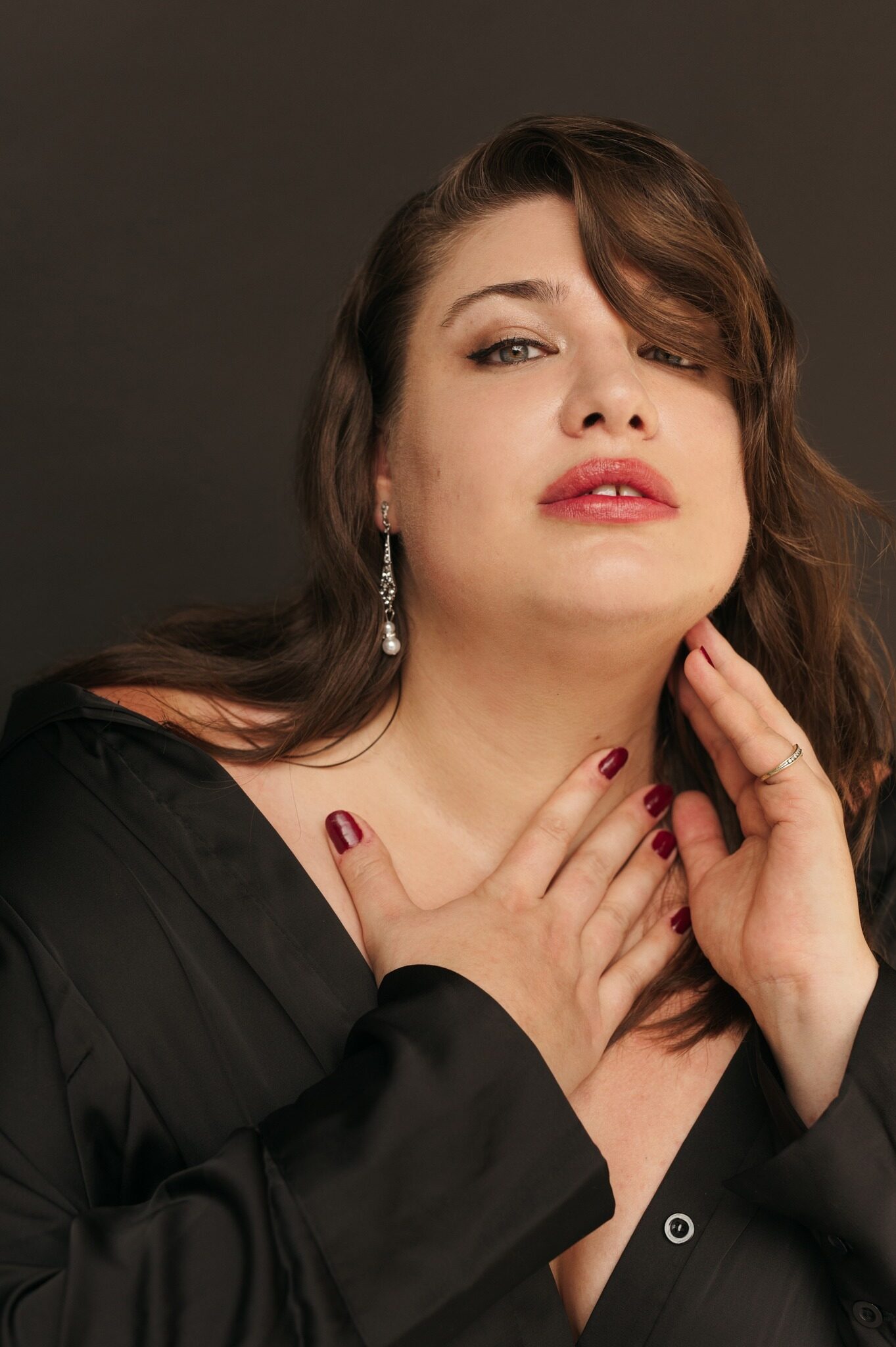
Lynn Isnar: The Toronto Concert Orchestra has a large variety of programming in this summer concert series. They do an amazing job of making their events so versatile and inclusive. They start off each event by inviting guests to a beautiful cocktail hour, filled with drinks and appetizers right on the water at the Palais Royale. Followed by a close and personal interactive experience with the orchestra and singers.
The TCOโs programming is curated in a very tasteful manner. There is a new showcase every week for 5 weeks on Tuesday evenings and each show has a variety of genres, filled with something different and interesting for the public. For example, they have one concert that is filled with Canadian female artists including Joni Mitchell, Alanis Morissette, and Sarah McLachlan. Then another filled with pieces sung by Edith Piaf alongside pieces by Satie, Poulenc, Ravel and Saint-Saรซns. Additionally, each week has a suggested dress-up theme, which can make it very fun for the audience and orchestra members. The fourth concert in the series is called โBeethovenโs Secretsโ and promises to spill the tea on Ludwig, with a suggested costume theme of โtea party bestโ.
BB: Do you have any ideas about reforming/modernizing classical music culture to better align with modern audiences?
Lynn Isnar: We can continue to adapt to social media and digital platforms while promoting our work. We can modernize how we present and perform: by incorporating visuals, technology, and storytelling. Artists now also need to be content creators. Social media, videos, live streamsโthese are essential for visibility. If an artist doesnโt have a presence on Instagram, Facebook, YouTube, or Spotify, people may not be inclined to buy tickets. Itโs exhausting, but itโs the reality. The job now includes marketing, content creation, and constant online engagementโin addition to practicing, performing, and managing.
Can you describe your most recent concert โRรชves Divinsโ in Montreal?
Lynn Isnar: โRรชves Divinsโ, also known as โDivine Dreamsโ is a concert program I curated alongside my husband, Garbis Gary Sahsuvar, who is a jazz musician and plays tenor saxophone and dear friend and phenomenal pianist, Artun Miskciyan.
Garbis Gary Sahsuvar, Lynn Isnar and Artun Miskciyan
We first performed this concert in November 2023 at the Aga Khan Theatre. We created a unique program filled with pieces made up of different languages and genres, centred around the theme of dreaming specifically for voice, tenor saxophone and piano. There is a mix of jazz, pop, musical theatre, classical, Armenian, Spanish, songs sung by Edith Piaf, and more. All arrangements are made by Garbis and Artun, unless otherwise stated, and have been curated to fit our little trio. They have even created arrangements for solo piano and saxophone works, such as La Boheme (Aznavour), Elegy (Babajanian), and more – which hasnโt been done before. It is a unique blend of everything and has given us the opportunity to explore different repertoire. This is the third time weโve presented the program and hope that with each time, there will be new improvements and song selections added to this concert.
I encourage any artist to take control and create art that brings them happiness.
BB: Your words of advice are so brilliant.
Lynn Isnar: Donโt wait for the opportunities to find you – make them. Have fun, be yourself, perform pieces that inspire you, and share the inspiration with others. Do what makes you happy. Audiences appreciate authenticity and can feel when something comes from the heart. Whether you are performing in a theatre, a pub, a church or busking on the street, allow your creativity to flow and blossom. Itโs a lot of work, but itโs very rewarding.
BB: You appear to be part of the vibrant Armenian musical community, a relationship that seems to nurture your work.
Lynn Isnar: Yes! I grew up in the Armenian community here in Toronto, and the support Iโve received from this beautiful community has been amazing. It has shaped who I am as a performer, as I started performing at various events within the different Armenian Community Centres and churches when I was in high school. It helped me build confidence, and gain experience and flexibility as a performer.
I do feel a special connection to Armenian pieces and composers. I love to include these works in my recitals and concert programs and have always received positive feedback from all audiences. It is a part of who I am and I am proud to share my heritage.
My next performance within the Armenian Community is this upcoming weekend at the Hamazkayin Theatre. Iโll be performing a couple of pieces with the Kousan Choir.
BB: Do you have any influences / teachers you want to acknowledge
Lynn Isnar: Iโd like to acknowledge Jean MacPhail, Jennifer Tung, Rachel Andrist, Joan Dornamann, Mignon Dunn and Ruth Falcon. Iโm also incredibly grateful to all of my professors and teachers at the University of Toronto and the Glenn Gould School. Their support, encouragement and wisdom have played an integral role in who I am as a musician today.
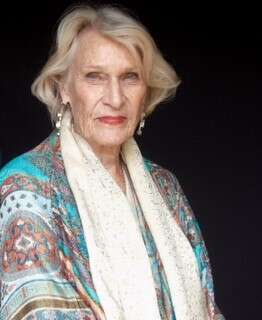
Thank you so much! Iโm filled with gratitude for the people, communities, and experiences that have made this life in music possible. Here’s to more music, connection, and creation.
On July 29th atย 8:00PM in a program titled Romeo and Juliet Lynn Isnar will be making her debut with the Toronto Concert Orchestra in their summer concert series, singing various genres including classical, opera, musical theatre and jazz at this intimate event at the Palais Royale.ย Tickets
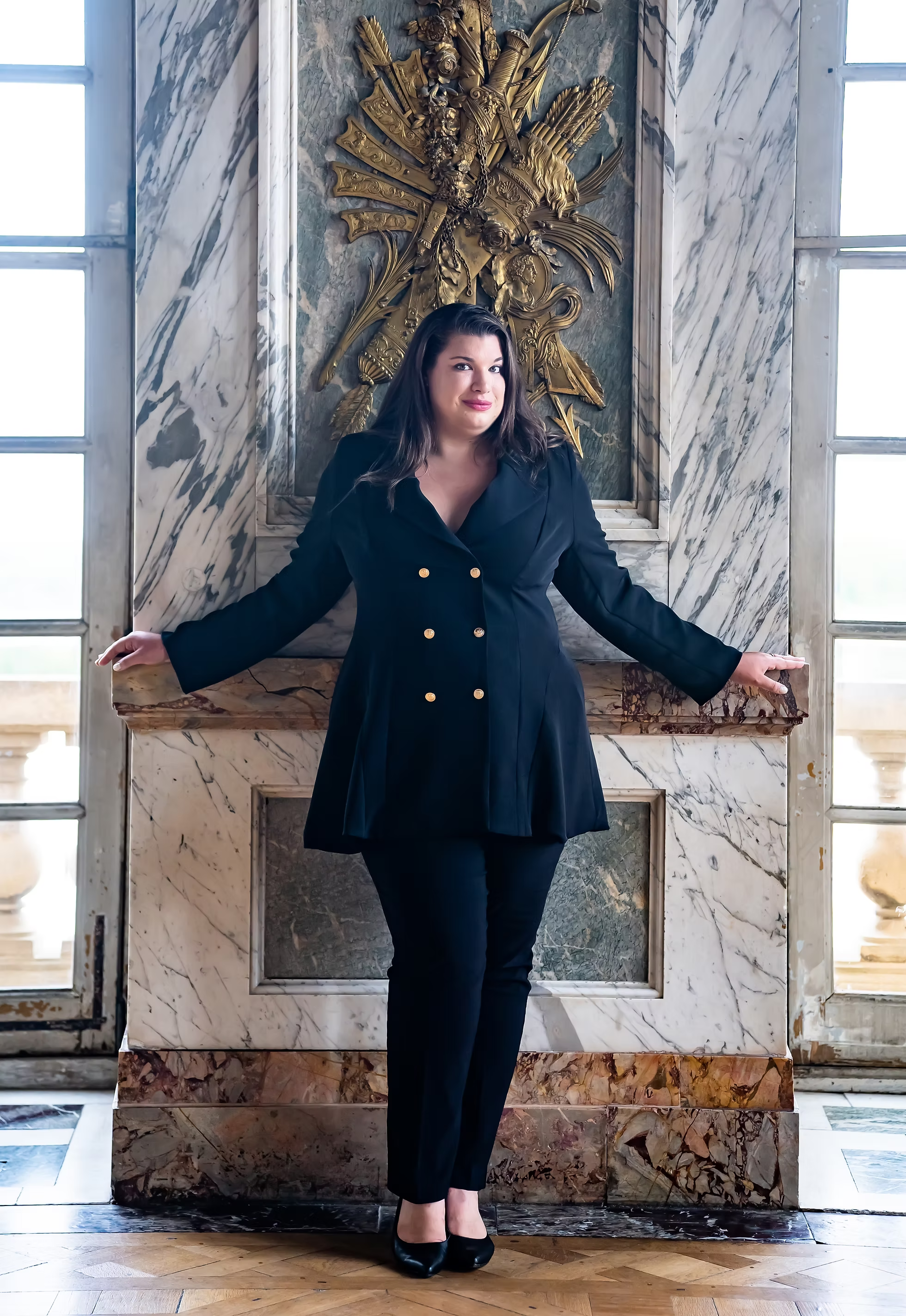
Sometimes I’m a little compulsive about dates and details. Sunday I attended the 3:00 pm performance of the St John Passion, to close the 2025 Bach Festival at Eastminster United Church.
Maybe it doesn’t matter which version they present when the performance is as excellent as what I heard (more about the artists who blew me away in a moment, first let me ride the insanity of my OCD poking my head into the score at home).
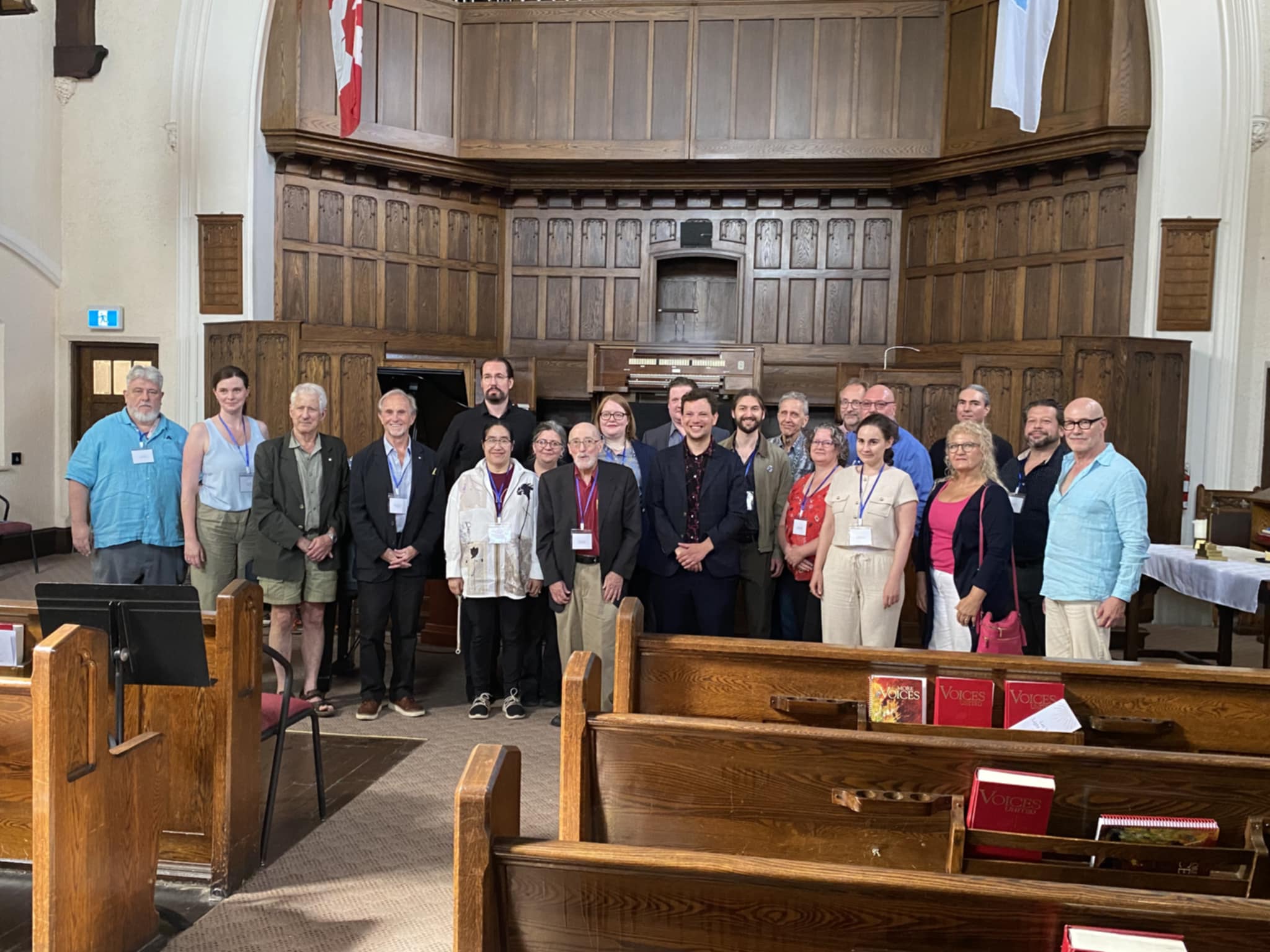

Even so I wish I had heard the noon-hour lecture from John Butt, who directed the performance. The promotional blurb for the lecture that I missed says… “In addition to directing the St. John Passion, John Butt will also present the annual lecture to examine and illuminate Bachโs creative process as he revised this great work, which survives in no fewer than four distinct versions.“
I love anniversaries, whether it’s the centennial of Dietrich Fischer-Dieskau (earlier this week) or as in this case, that it’s three hundred years since this variant was premiered, on Good Friday 1725.
When I got home Sunday after the concert, I pulled out my Edition Peters score (BWV 245 premiered Good Friday 1723) to compare to the textual handout, corresponding to BWV 245.2 (1725, three centuries ago), or at least I think so. There are –as they announced– four versions. There are some interesting divergences between the versions.
The toughest tenor aria in the earlier version is missing, namely “Ach, mein Sinn”. Not only is it a tremendously difficult aria but it upstages the story in some respects. Do we really need to hear about emotional torment for three minutes of vocal torment? It’s problematic, that this stunning piece of music interrupts the flow of the story.
Yes JS Bach torments the singer with the difficult aria, which is maybe the point, showing us a suffering guilty person by giving them a tough aria. Such exquisite agony. Maybe it’s no wonder JS chose to omit it from the later version.
There are other changes. The opening is different. I’m not sure that matters tremendously, but there is again a slight shift of focus. The 1723 begins with “Herr herr”, a humbly Lutheran opening, while the 1725 chooses to focus on us, “O Mensch” (Oh mankind). That’s an improvement in my book and in the performance I was experiencing beyond stunning. I was in tears within the first dozen bars of music, sitting at the rear of the church overwhelmed by the beauty and the vulnerability of this music.
In the vicinity of the omitted aria, there’s a wonderful addition, the gorgeous bass aria with chorus “Himmel reise, Welt erbebe”, a piece of astonishing depth, the juxtaposition of the soloist’s troubled world (himmel reise Welt erbebe can be translated as “crack open heaven tremble world”) and a chorus of enlightenment in pain. The contrast suggests something Berlioz might have written in a druggy haze. The version of the piece on youtube I found allows the disquiet of the soloist to overwhelm the peace of the chorus, whereas what we heard Sunday from the orchestra, chorus, under the leadership of Butt & from bass soloist Jonathan Woody took us more fully into the contradictions without so much torment as heard in this video. You’ll notice it’s called “appendix” perhaps because it doesn’t fit easily into BWV 245 and is not normally included, but clearly Butt found a great place to have this miniature volcano erupt.
Especially on this day in this performance it didn’t feel so much like a baroque piece but as modern as my own qualms and fears.
There was excellence in every little detail, if I don’t mention everyone it’s not because they were lesser contributors. The small complement of players and singers filled the church space. Sitting at the back I took in the visual reminders of worship, liturgy, community & fellowship while immersing myself in something genuinely festive, a happening with real electricity in the air.
Charles Daniels continues to display one of the most remarkable tenor voices. On this day his Evangelist was sometimes soft and soothing, something harshly challenging, sometimes pausing to let us all breathe in the moment, sometimes picking up the cue to goad us onwards with the story. When I saw he would be participating I was eager to come listen. His role is enormous and he never disappoints.
Tenor Charles Daniels (photo: Annelies van der Vegt)
I mentioned Jonathan Woody’s bass voice, a wonderful addition. I have never heard a bass voice that so happily reconciled that sometimes irreconcilable challenge of having either agility or a deep resonant colour. He manages to have both, a portrayal that was strong yet understated and dignified.
Bass Jonathan Woody
Ellen McAteer was also irresistible, her soprano singing “Verfliesse, mein Herze, in Fluten der Zahren” (dissolve my heart in floods of tears) prescient. Of course I complied. That stunning voice is perfection.
Soprano Ellen McAteer (Gaetz Photography)
At the end of the interval between the two parts, Festival Artistic Director John Abberger said a few words. I remember meeting him once at the Toronto Airport, energetic when everyone else dragging themselves off the plane were tired. Each year he brings the best of the best together in a labour of love.
John Abberger
Sometimes concerts have such perfect timing as to suggest that somebody up there (like the guy at the centre of the story) is pulling strings. As the performance ended, golden sunlight began to flood into the sanctuary as if to suggest celestial approval. Of course.
Everyone glows as the sun suddenly comes out for the applause at the end. That’s John Butt in the foreground.
Tonight the Toronto Symphony continue their winning streak, another wonderful program of diverse musical compositions, played brilliantly.
A key contributor to our enjoyment was guest conductor Kristiina Poska.
Conductor Kristiina Poska
We heard three pieces tonight after the obligatory Oh Canada performance. Speaking of displays of patriotism, our Estonian conductor started us off with a minimalist work from her countryman Arvo Pรคrt, Cantus in Memoriam Benjamin Britten, a short piece clearly articulated.
The big work in the first part of the concert was composed and performed by pianist Stewart Goodyear. It’s a Carnival-inspired suite for piano and orchestra, named Callaloo in honour of his Trinidadian roots, accompanied by a big brash orchestral sound from the TSO. In his program notes Stewart alludes to Rhapsody in Blue, comparing the orchestration. I think it’s a worthwhile allusion, considering that just as Gershwin’s work combines pianistic virtuosity with a jazzy sound that fearlessly defies the stuffy barriers to popular music being heard in the cold halls of classical music, so too for Stewart’s composition, every bit as exciting.
Instead of jazz we’re in the presence of something Caribbean and also something very personal for the composer – pianist.
I am a huge admirer of Stewart, indeed when I met him awhile back I was completely star-struck, in awe of his remarkable talent, as he keeps ascending to greater heights. I first encountered him as the interpreter of Beethoven piano sonatas, daring to play all 32 in one spectacular day. He recorded them, and Beethoven’s concerti, and much more besides. Indeed his insight into Beethoven had me thinking he probably could make a great account of the Eroica himself, either in a piano transcription or conducting the TSO. Perhaps we’ll find out someday. But let me repeat, Stewart is a remarkable artist .
Pianist & composer Stewart Goodyear
Then I discovered that the pianist is also a composer. In 2019 Sewart played the premiere of Ur, a work of dazzling virtuosity. I remember wondering whether this kind of composition would be picked up by other artists. And I noticed that another pianist has recorded Stewart’s intricate Introduction & Rondo Capriccioso, although this pianist doesn’t play it as quickly or with as much energy as the version by Stewart on YouTube. Tonight Stewart played the piece in the Roy Thomson Hall lobby (I didn’t arrive in time to hear it, but saw it listed in the program). I’m sharing this video to show that on top of his brilliance as an interpreter at the piano, Stewart appears to be making an impact as a composer.
And it’s exciting even before we come to the piece we heard Stewart play tonight with the TSO, conducted by Kristiina Poska. Stewart explains in his program note about the cultural subtexts for the piece, a celebration of Caribbean culture in five movements. And like the Gershwin Rhapsody in Blue, we’re hearing challenging piano music incorporated into a dense orchestral texture of rhythms & bright timbres.
I wish I had a better sense of how difficult the music is, as Stewart plays so brilliantly it’s hard to tell. But we’re in a realm of syncopation rhythms, calypso allusions sometimes dazzling in intensity & speed, sometimes slower and more thoughtful. Here’s a sample.
If he did nothing but play Beethoven or Rachmaninoff, or write his analyses in the program he’d be a force to be reckoned with. I’m looking forward to hearing more of Stewart’s compositions in the years ahead. He is an important Canadian artist.
Stewart Goodyear (photo: Andrew Garn)
After intermission we came to a brisk reading of Beethoven’s 3rd symphony, conducted by Kristiina. When I googled her, (an artist I have never heard before), I saw that she is currently the chief conductor of the Flanders Symphony, and is recording a cycle of the Beethoven symphonies with them, having already released a recording including this very symphony.
It’s always exciting to encounter a conductor with clear ideas about a piece, especially one that is as well known as Beethoven’s Eroica. Based on what we heard I believe Kristiina is a talent to be reckoned with. When I say “brisk” I mean quite literally the fastest reading of all four movements that I have ever encountered: and accomplished with precision, including the repeats and with great clarity of the inner voices.
Conductor Kristiina Poska
I think perhaps Kristiina has been influenced by the movement of historically informed performance, given that her reading is as fast as theirs but employing the modern instruments of the TSO. I was mindful of the version I listened to most as a teen, conducted by Herbert von Karajan leading the Berlin Philharmonic, that seems so slow in comparison. With some interpreters the “Eroica” and its associations with Napoleon and heroism encourages macho bombast, loudness that is bravado and empty rhetoric. How ironic that a woman conductor shows us what real heroism can sound like. The TSO was never harsh sounding even when loud, but many of the passages I’ve known as loud were more delicate in Kristiina’s interpretation, so that the climactic section of the development –leading to the loud dissonances– seemed especially powerful. At other times the quick triple time of the opening movement was confident and effortless, dancing rather than stomping, the blitzkrieg completely absent, and shown to be unnecessary. Thank goodness. Kristiina was able to inspire the orchestra to play for her, not just quickly but cleanly. I love the sense that she knew exactly what she wanted and was able to get the TSO to do it.
The funeral march of the second movement also was faster than usual, but still with sufficient gravitas to be meaningful, particularly in the last part of the movement. The scherzo was delightfully energized, the trio featuring the most impressive playing from the horns. And as we continued the quick tempo in the final movement, the logic of this approach is confirmed in the final bars, when the seemingly endless passage Beethoven writes to finish the symphony finally works: when done at this speed. It was truly fabulous and well received.
The TSO, Stewart, Kristiina, Arvo, and Ludwig will be back with the same program Friday and Saturday night.
June 8th Apocryphonia will present a concert at Heliconian Hall titled “A Cabinet Full of Curiosities 2”.
As the program says “an eclectic mix of classical music from around the world performed entirely at random!”
Alex Cappellazzo, and his Apocryphonia team are following up on a concert that I reviewed roughly two years ago, on Friday May 24th 2023. You will see the magic adjective near the bottom right of the poster when it declares that the music was to be “presented entirely in a random order by the audience.”
I’m going to quote from my 2023 review, when I explain how that random order was accomplished:
Instead of giving us the usual series all by one composer, we accomplished a kind of shuffle, as you might get from your electronic device. We were asked upon entry to pick from a jar, and then our picks would be constructed into a set list. I cheated because of whom I wanted to hear (Eisler), although that likely had no impact. Alexander joked that this made us complicit, that we helped create the program.
I also took a picture of our “curator”, the person who assembled our picks, gluing them onto a page.
he magic jar in the foreground only had a few pieces left when I took this picture. Notice how the program is being assembled on the page.
I don’t know how the magic of the random picks will be accomplished this time.
I should explain that when I said “Inside the Cabinet” in the headline I meant that I’m literally inside that cabinet. Alex asked for musicians to volunteer as participants back on May 3rd: and I did so. Here’s what it looked like on Facebook.
CALLING ALL GTA CLASSICAL MUSICIANS!
Want to take part in the most fun vocal/chamber concert this June 2025? Here’s your chance!
It is an entirely randomized setlist with an entirely randomized set of musicians. I relinquish all control over the curation process and leave it up to fate.
Please spread the word and share this call; this is a really chill and fun way to network with other musicians, to show off your music to your friends and family, to workshop pieces you’re practicing, or victory lap pieces you’ve mastered!
And I cheated. I went to the form, which asked for a video. I pondered whether I should create a youtube channel, which might be fun. When I contacted Alex to ask him whether I needed to bother sending him a video he decided to take it on faith that I can play. In fact I think he’s taking a safe route in having me play a single item rather than a series (as I proposed to him), but he thought it’s uncommon for a critic to play at a concert he’ll write about.
I joked that I’m like an embedded journalist, except there’s no war.
My idea of rare classical music? Orchestral music in transcription, which is a bit of an obsession of mine. My piano has quite a few such scores sitting on it right now. Some came from the Edward Johnson Bldg Library such as transcriptions of Richard Strauss tone poems (Till Eulenspiegel, Also Sprach Zarathustra & Ein Heldenleben), Mahler’s 5th Symphony, Debussy’s Orchestral Nocturnes. Some are scores I own that I’ve had for a long time such as Debussy’s Prelude to the Afternoon of a Faun. While this is a piece that’s played frequently by orchestras it becomes rare & unfamiliar when transcribed.
It’s exciting to play something at the piano that otherwise requires an orchestra. Indeed this is how music used to be popularized before the era of recordings. Franz Liszt played piano paraphrases (sometimes going off on tangents) that helped promote the music of Berlioz or Wagner and of course, promoted himself in the process.
And I enjoy playing extracts from opera scores, particularly famous passages from Wagner operas such as the Liebestod or Siegfried’s Rhine- Journey.
What I proposed to Alex was Debussy’s first Nocturne, Nuages (or “Clouds”), and the Liebestod, although Alex figured the Debussy would suffice. I will bring the Wagner and the other Debussy along just in case somebody can’t perform for some reason (flat tire? snow storm? okay maybe not in June).
Nuages is an extraordinary piece, suggestive of clouds & a moody atmosphere, one of the works Debussy composed that have me thinking of him as one of the godfathers of minimalism. There’s such a small amount of music there, but I feel it’s very influential. It’s very cool to be able to play an orchestral piece in a reduced form at the piano.
I heard a piece tonight by Arvo Pรคrt that is one of many works that Debussy seems to have influenced. If you watch the film Psycho, the music we hear at the beginning after the credits as the camera gradually pans across buildings to find the first scene, across a kind of dry cloudless skyscape, you’ll hear composer Bernard Herrmann making something that is like a twisted version of Debussy’s Nuages, as this sky is not a happy one perhaps because the characters we’re about to meet are not happy.
I’m intrigued to find out how Alex will get the randomized order this time. Perhaps the attendees will again select a piece that is glued to a page. Or maybe it will be something entirely different.
And I’ll be one of the performers 7:30 pm on Sunday June 8th at the Heliconian Hall. Please don’t let this poster throw you, I’m the least significant of the performers, feeling privileged to be there. Alex made one of these posters for each participant to employ in promoting the event.