Yes it’s a humongous headline but it’s a perfect description of the concert I witnessed Saturday night at the Heliconian Hall, and the first time I’ve seen a performance by Diapente Renaissance Vocal Quintet.
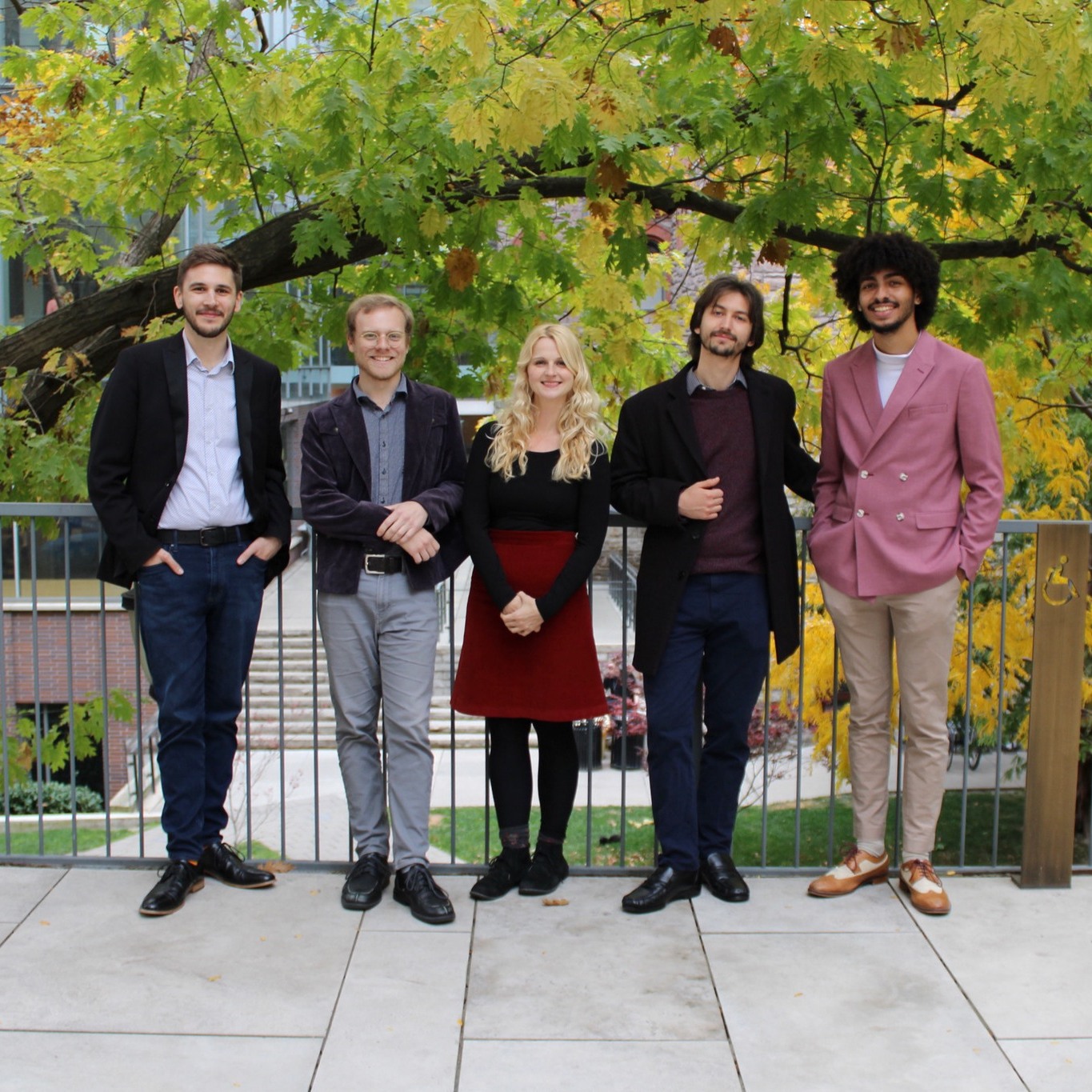
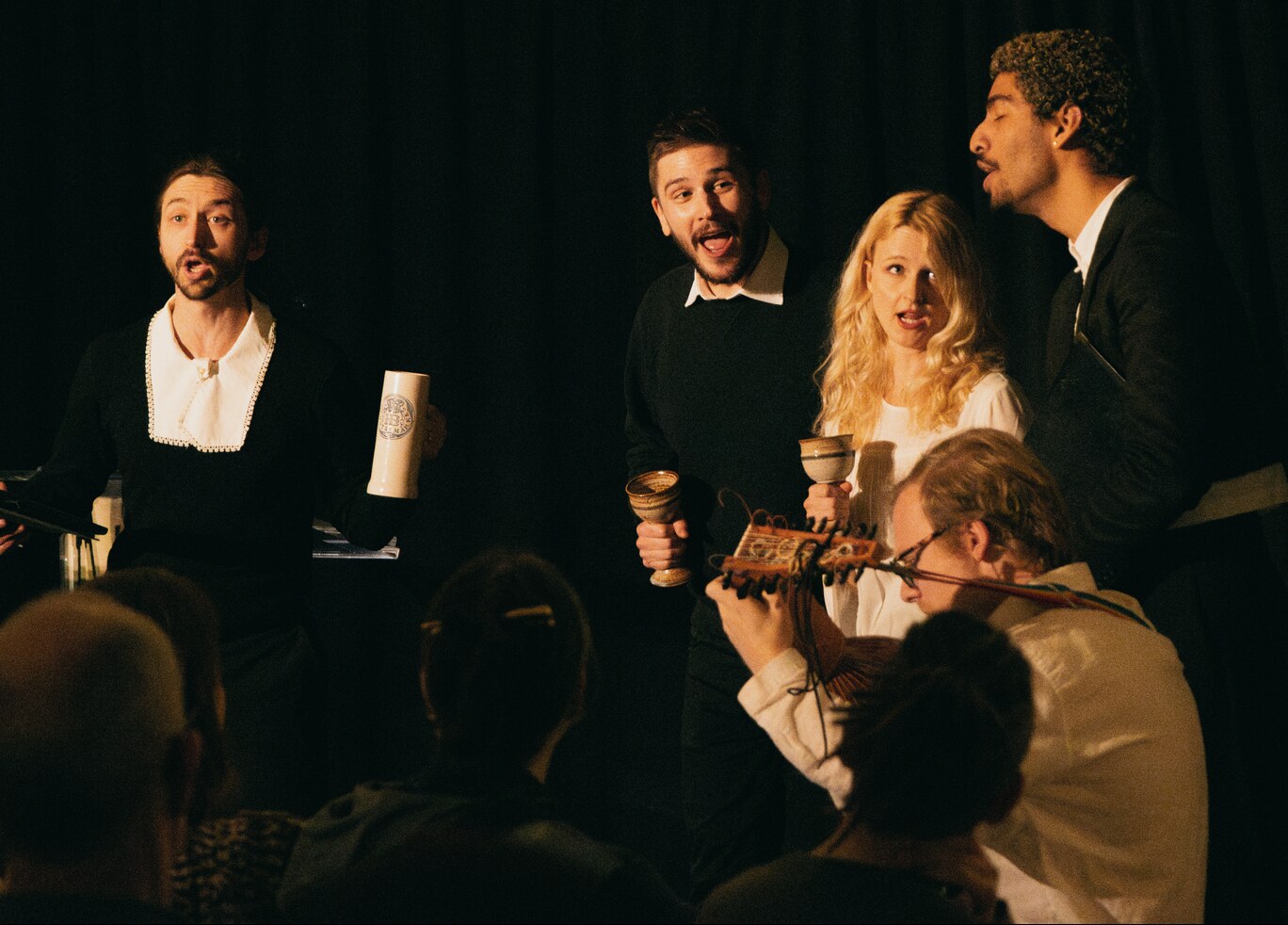
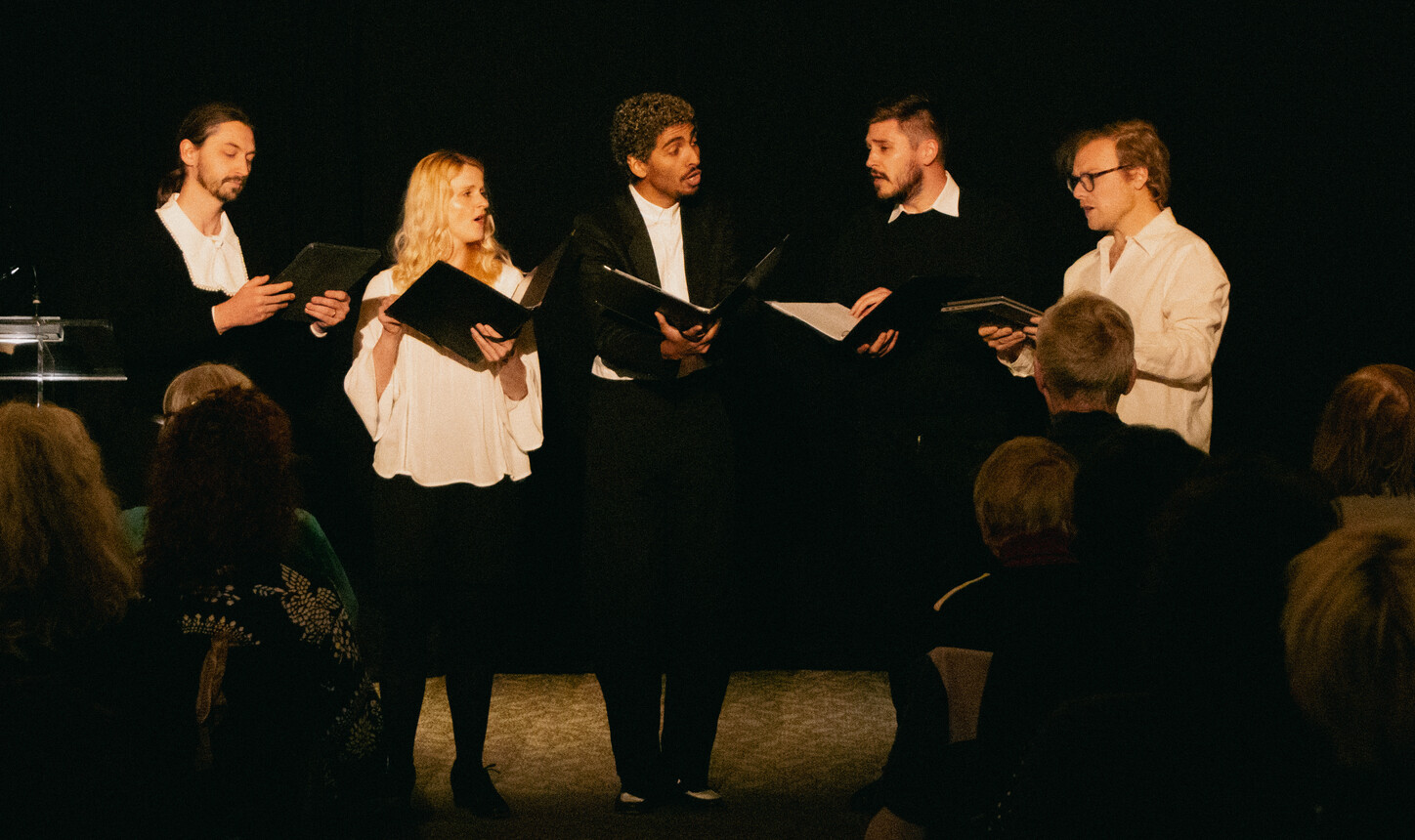
L-R Peter Koniers–Countertenor, Jonathan Stuchbery–Tenor & Lute, Jane Fingler–Soprano, Alexander Cappellazzo-Tenor, Martin Gomes-Bass
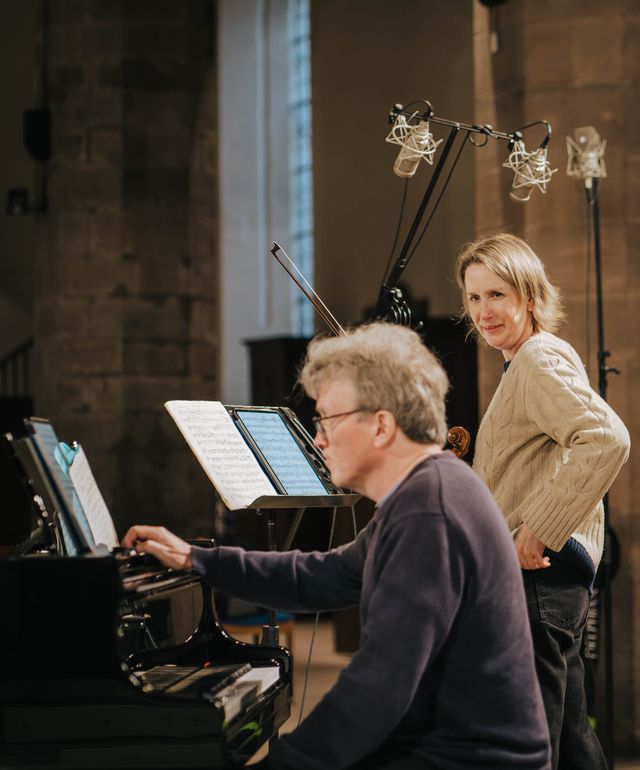
Felix Deak joined Diapente for the event on Viola da Gamba.
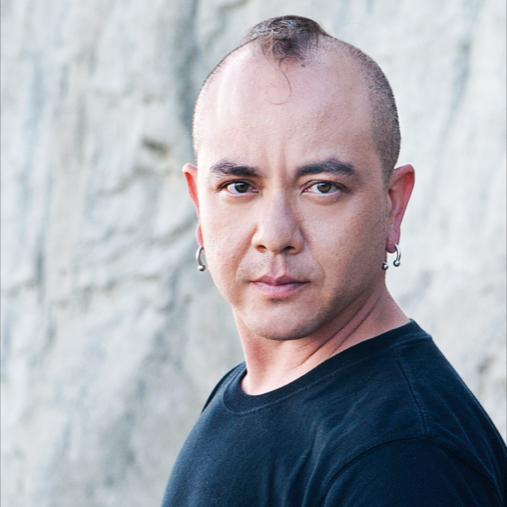
Baroque cellist and gambist Felix Deak
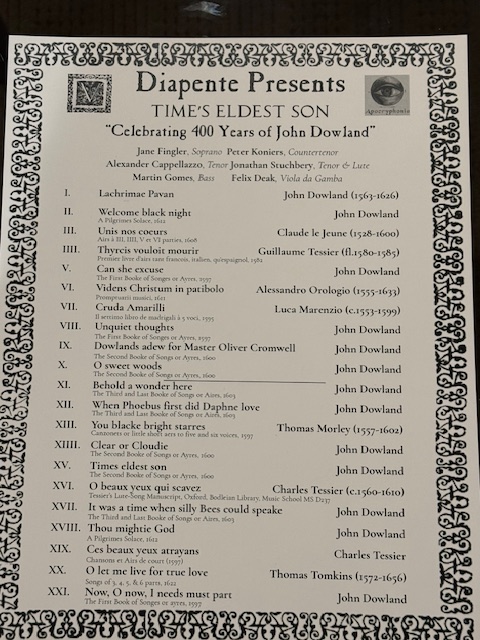
It was truly a celebration of life right down to a beautiful program printed on a thicker card stock, that feels like a souvenir (and one I will keep for awhile).
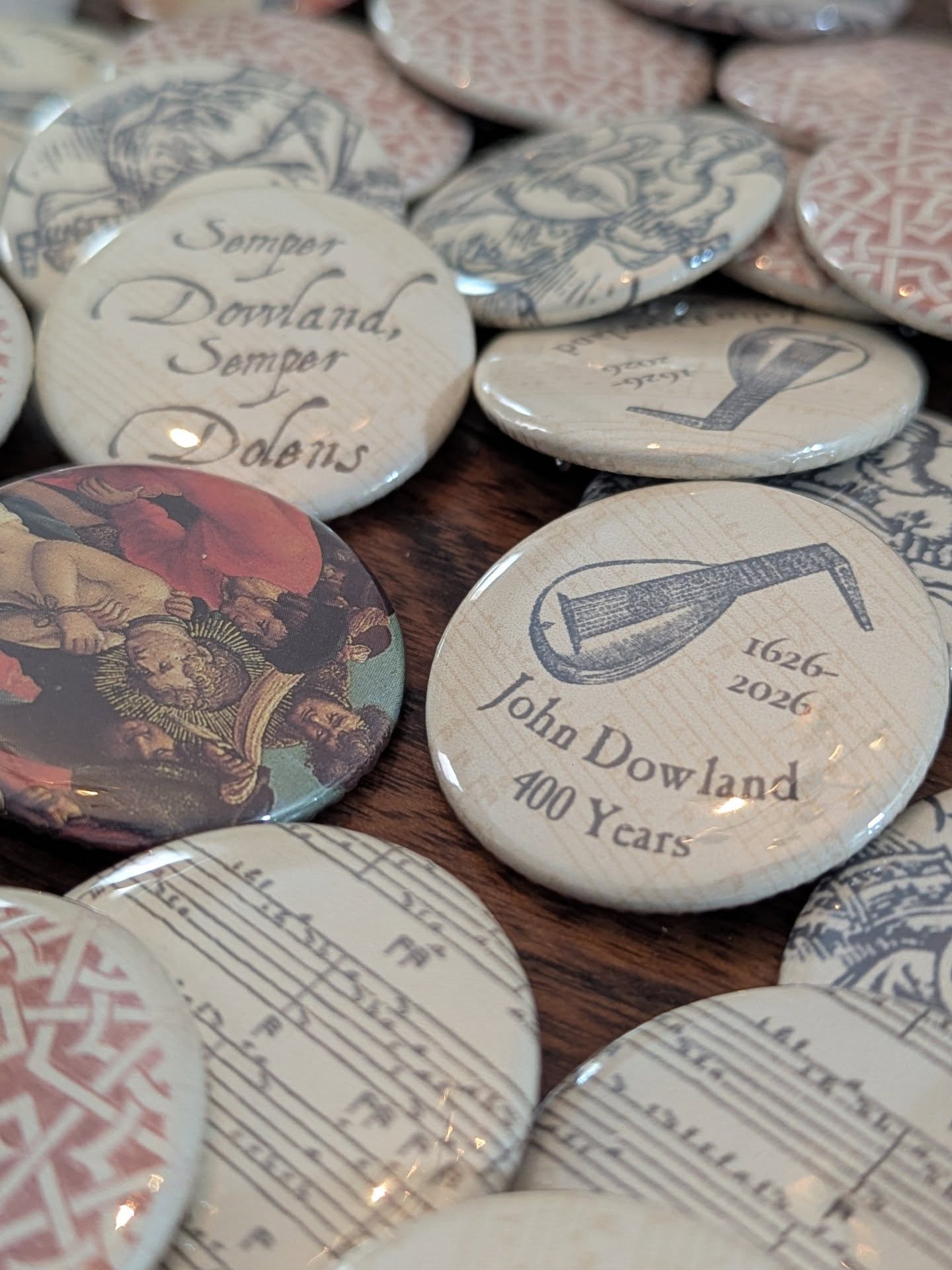
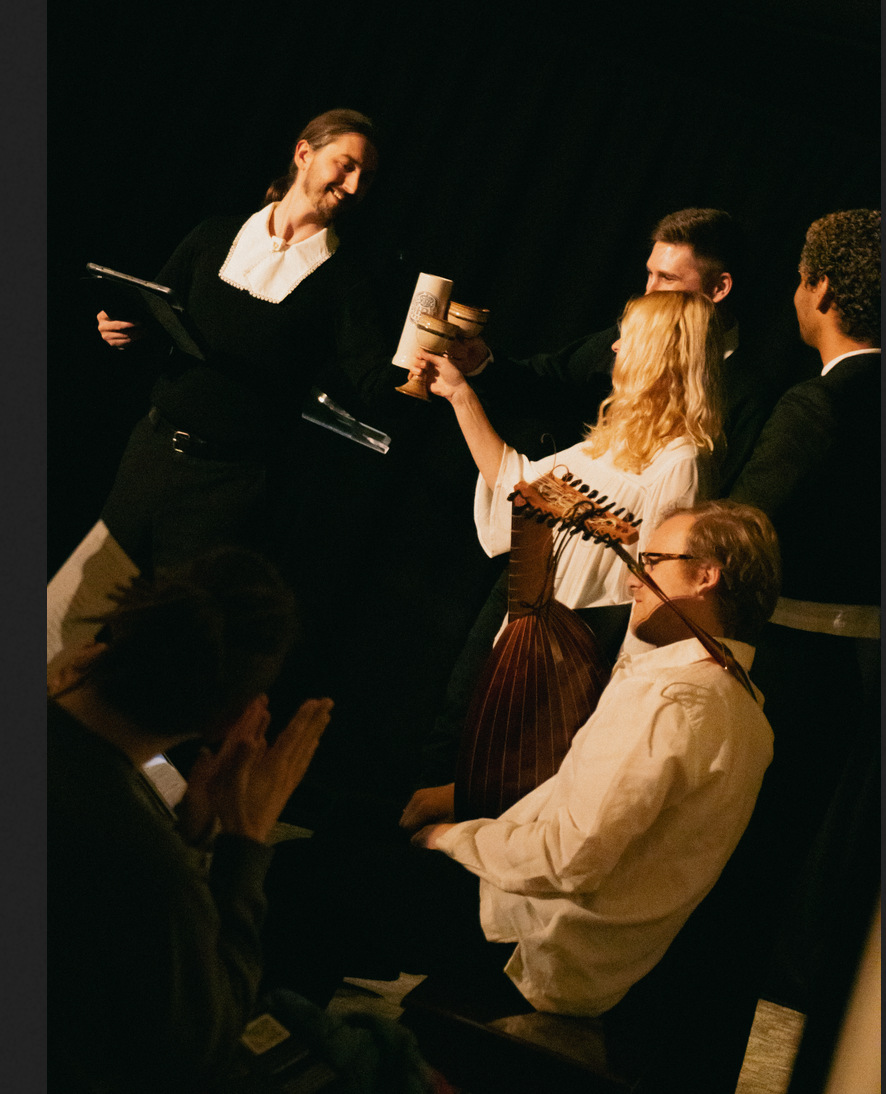
The space was packed with an enthusiastic crowd. It felt like a happening, complete with buttons for the occasion.
This group knows how to have fun. We heard lots of beautiful music, one of the best concerts so far in 2026 as we were taught about John Dowland, a composer who died exactly 400 years ago.
Jonathan Stuchbery was our teacher & master of ceremonies, sometimes offering us background historical details about Dowland, his travels, the court of Elizabeth before seguing into performance as vocalist or in the occasional instrumentals.
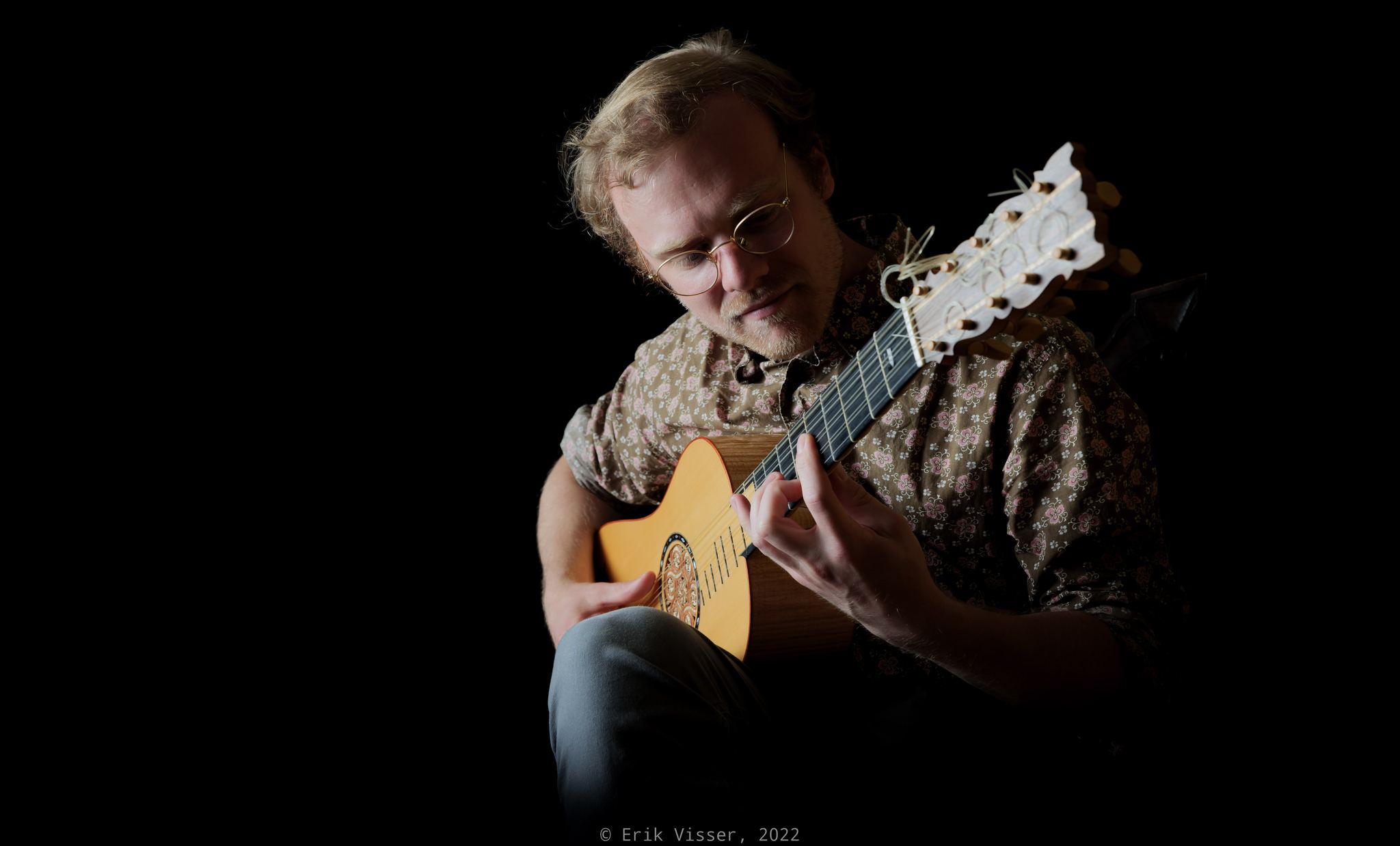
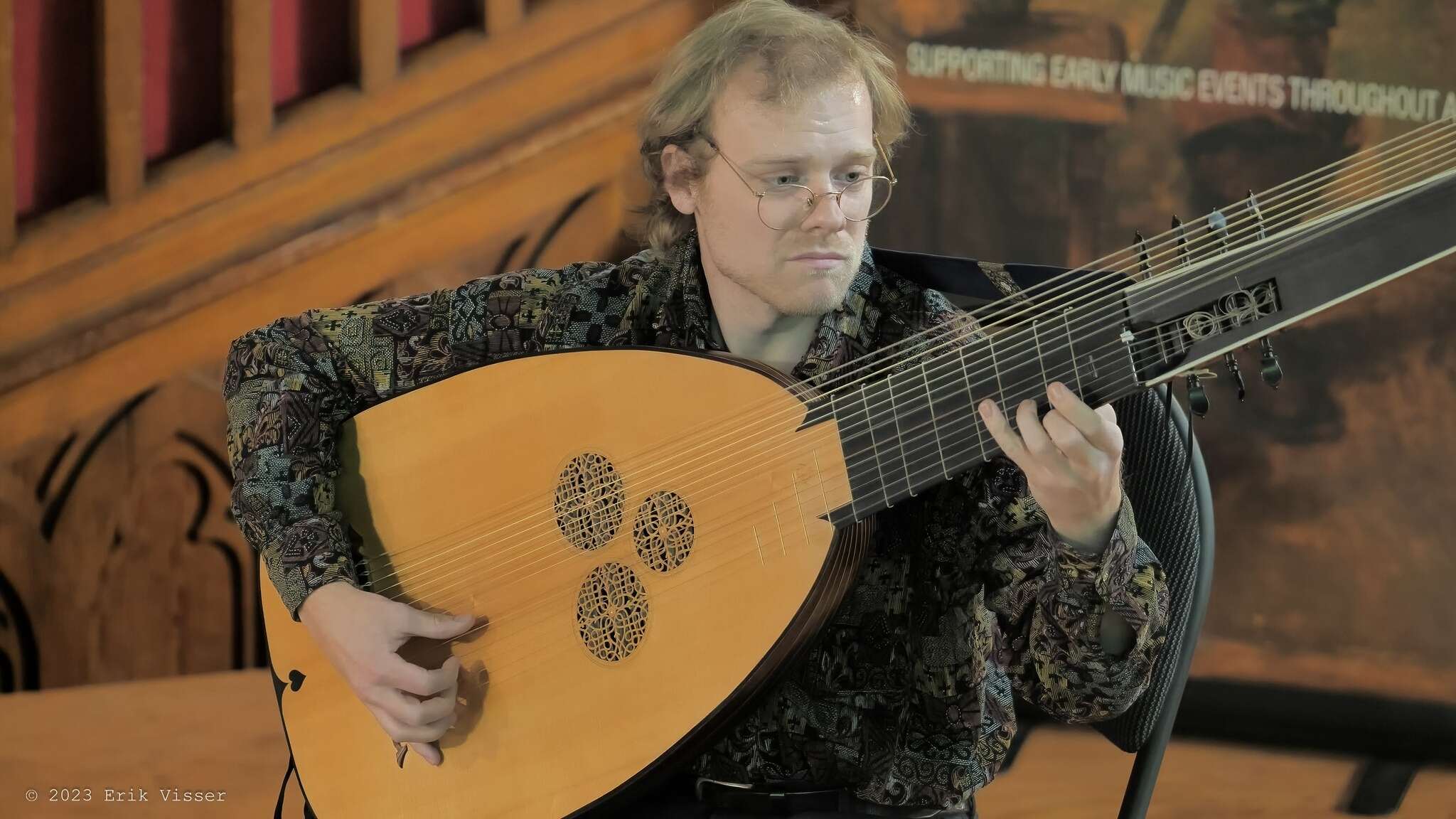
Jonathan Stuchbery (photo: Erik Visser)
Jonathan took us through Dowland’s life. We heard music that influenced him from abroad such as Claude le Jeune and Guillaume Tessier (the 3rd & 4th items) and then Italians Alessandro Orologio & Luca Marenzio (6th & 7th).
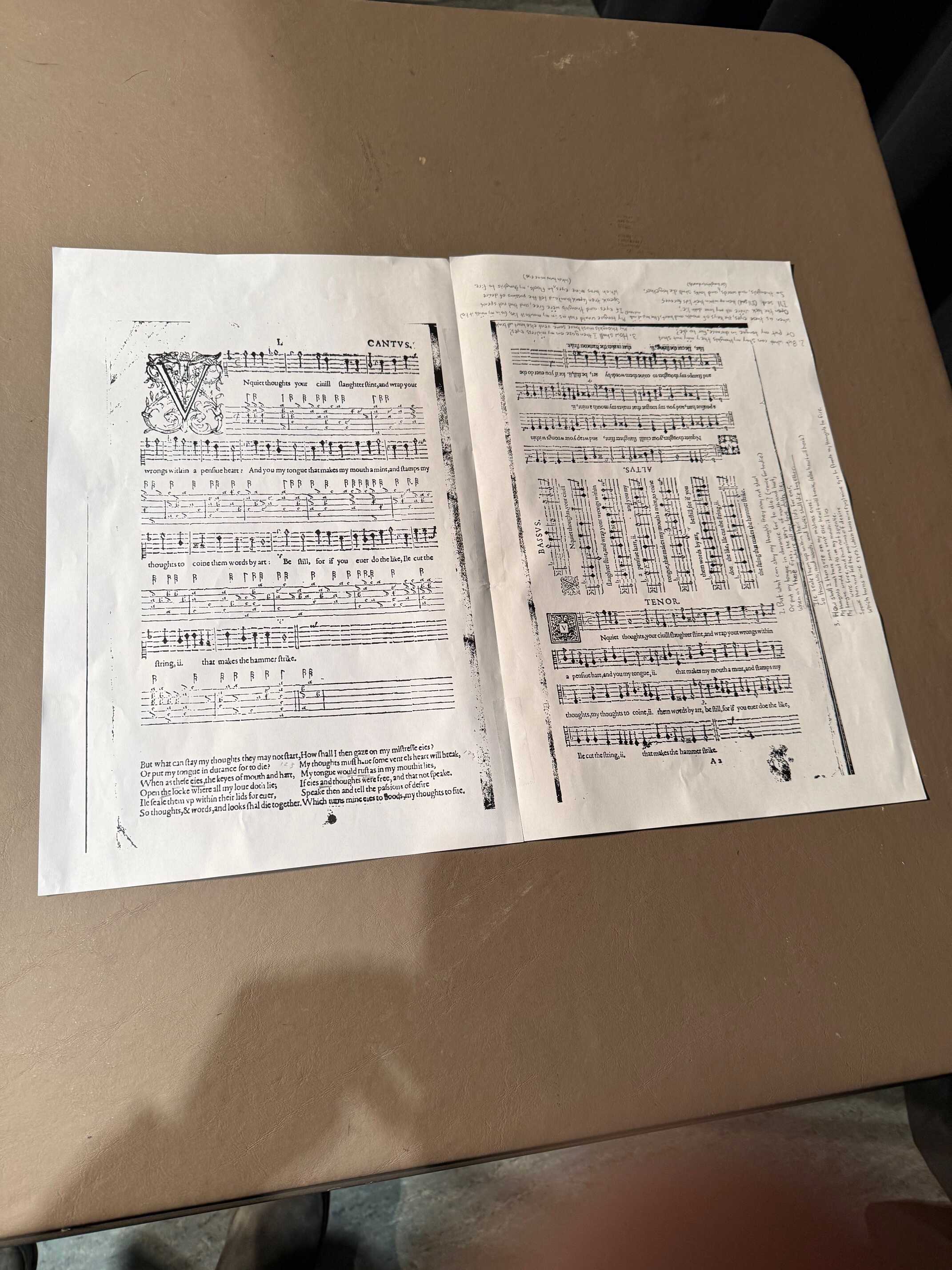
We were treated to a demonstration of a table book whereby four voices could all look on as they sang from the same page. Afterwards I asked to take a picture so that I could illustrate what they performed for us, around the table.
Notice that the alto is upside down and the bass sideways. In other words, the tenor and soprano would be on one side, opposite the alto and beside the bass.
In modern English, the piece is “Unquiet thoughts” rather than the “Nquiet thoughts” we see printed in this reproduction of the First Book of Songs or Ayres (1597).
Each of the members of the quintet had their moment to sing a solo. I was especially pleased by the ensemble singing of the quintet who blend wonderfully, staying in tune whether accompanied or not.
Towards the end we heard examples of Dowland’s influence, in pieces by Charles Tessier and Thomas Tomkins, before “Now O now I needs must part” as finale, with the well known “Come again” as their encore.
I was excited to hear that in November there is to be a further festival celebration of Dowland’s life to include other artists and a repeat of this concert “Time’s Eldest Son”. When I hear more I will share the details.
Here I am posting something that at first glance will look like gossip. Norman Lebrecht thrives on gossip in Slipped Disc but karma seems to be slapping him right in his lumbar region.
Speaking of which I have a bone to pick (if you can excuse the choice of words) with Lebrecht & those of his ilk, but I need a bit of a preamble first.
Katherine Needleman today said that “The Guardian reports that BBC Radio 3 will no longer be working with “writer, critic, and Radio 3 presenter” Norman Lebrecht after Yuja Wang published an email he sent her.”
The accusation of “misogynistic bullying” appears to be the concern. I wonder if a white male pianist would face the same treatment. But I don’t want to be a gossip. You can find more if you need to easily enough.
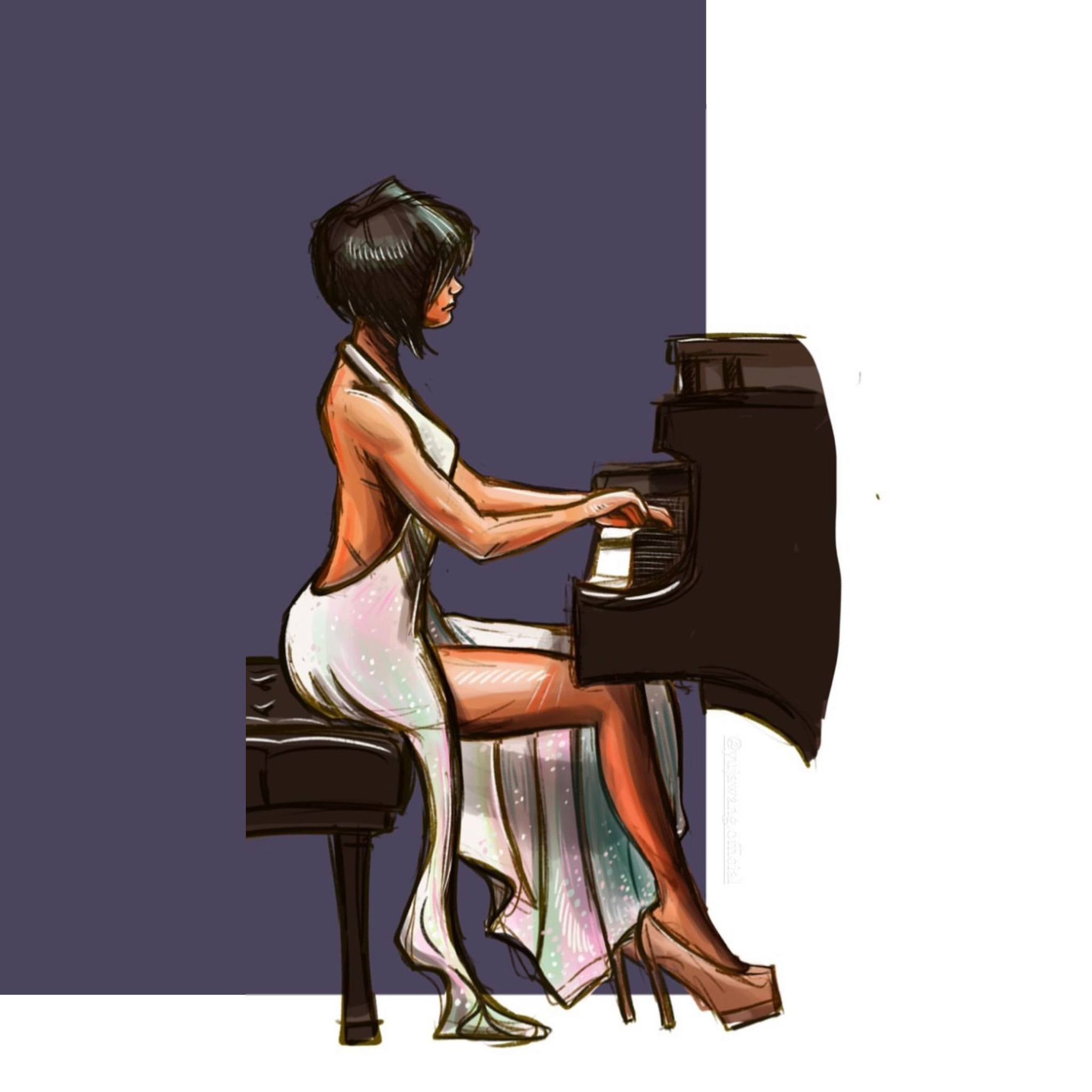
I have gushed about my admiration for Yuja often in this space. Here’s a cartoon I posted a few years ago accompanying one of her performances.
Cartoon by Jessica Mariko @caffeinatedkeyboardist
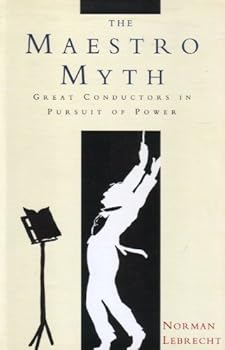
By a funny coincidence I recently quoted Lebrecht’s book The Maestro Myth.
It’s funny that I am about to use his words as a segue, to talk about my own beliefs. In my recent interview with Mandle Cheung, I quoted from Lebrecht’s book about conductors, when he quotes Carl Flesch, who says “There is no profession which an imposter could enter more easily.”
I disagree. Never mind conductors.
You want a profession full of imposters? Criticism, and critics. I recall my outrage for example at the recent COC production of Fidelio where the tenor sang his entire first aria a semitone sharp, yet was treated by critics as the second coming of Jon Vickers. Excuse me that’s just one example, there are others I could mention. The funny thing is, nobody really cares. Critics may or may not know what they are talking about. But we are in a vicarious position, hardly a profession at all, observing from the sidelines trying not to be ignored. Ha!
But pardon me I want to change the subject slightly. George Bernard Shaw famously said that he never laid an egg but was a better judge of omelette than any chicken, a clever little axiom to illustrate his critical brilliance. You see the logic? While Shaw may not have known how to sing the role of Siegfried or Brunnhilde (the equivalents to the chicken in the analogy) Shaw wrote a great deal about opera, singers & musician. Yes I have long admired his essay The Perfect Wagnerite.
But I have a problem with criticism that aims to put the critic on a higher level than those engaging in the art-form. Shaw was a brilliant man of the theatre, to be sure, but he trucks out that analogy because he also used to complain about musicians and singers, aka artists with skill-sets he lacked.
No I will never play the Rachmaninoff 3rd piano concerto properly, although I have tried, but recognize that Yuja is far beyond me. I’m not saying a critic needs to be able to play the thing or do the thing they critique. Far from it,
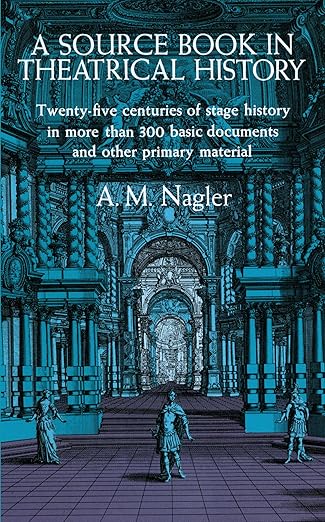
But my idea of criticism comes from mentors such as Ron Bryden or Lise Marker (and excuse me if my name-dropping seems lame). This book by AM Nagler, that I recall from the Theatre History course, was a great starting point.
Theatre history is written by witnesses. Judgment is less important than careful observation, testimony. A performance is a process. To describe how something works is a challenge especially when you’re watching and/or hearing something new. Judgment gets in the way, the language of dismissal is particularly unhelpful.
As you will have noticed long ago, I do not like to dismiss or judge, I prefer to be positive, to testify. That can be challenging, for instance when listening to an artist everyone admires such as Yuja Wang, trying to identify what she does that is different.
Mean words, class distinctions, judgment, dismissal? they can all work the same as clickbait, valorizing a harsh tongue & cruelty.
Your tickets to the opera really are a case of “location location location”.
When I saw the Canadian Opera Company’s Barber of Seville two weeks ago seated in the middle of the downstairs at the Four Seasons Centre, yes I liked the music, writing a review fit for a grumpy-puss, not fully surrendering to the comedy until the second act.
Today I laughed my ass off from the first note, as I watched the closing performance from my subscription seat in the second row. That’s why I want to talk location. The reason I have this ticket is because when seen from up close opera is completely different, especially a comedy.
There are trade offs, to be sure. As the person sitting beside me observed, the singers are harder to hear because the orchestra is so loud from up close. I loved the pace and the tightness of the ensemble led by Daniela Candillari. And yes I love the immersive experience of the orchestra even if it’s true that the singers fare better if you sit further back.
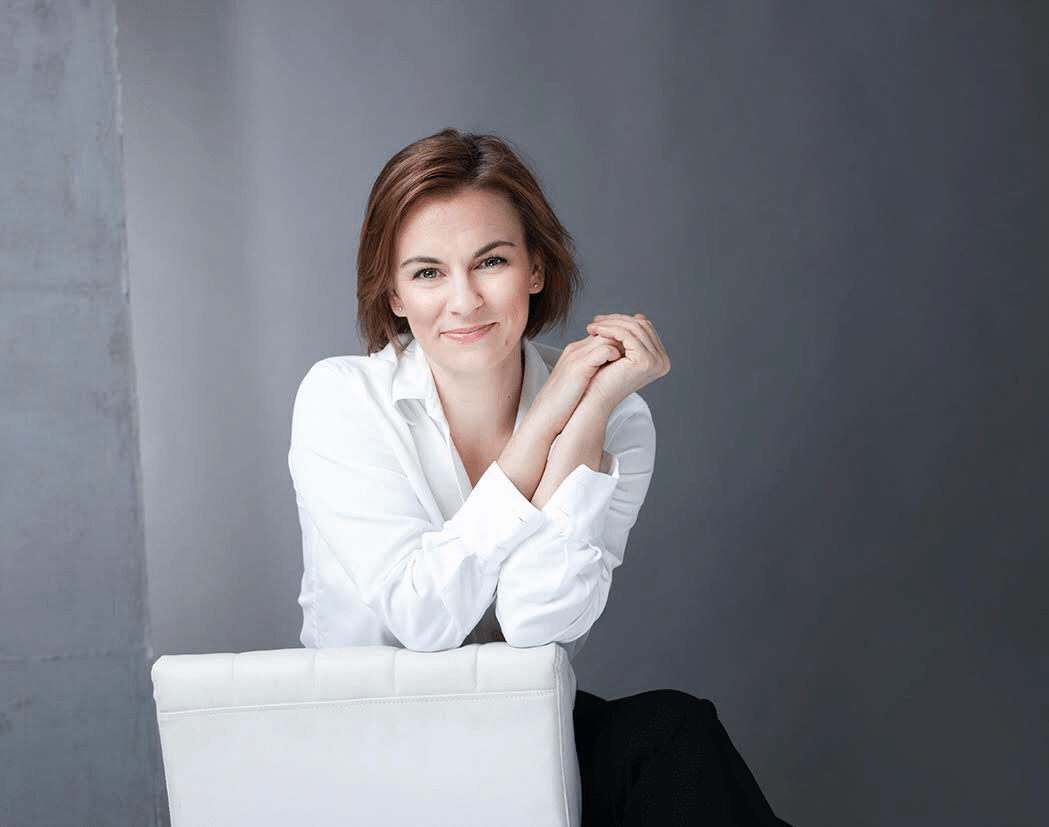
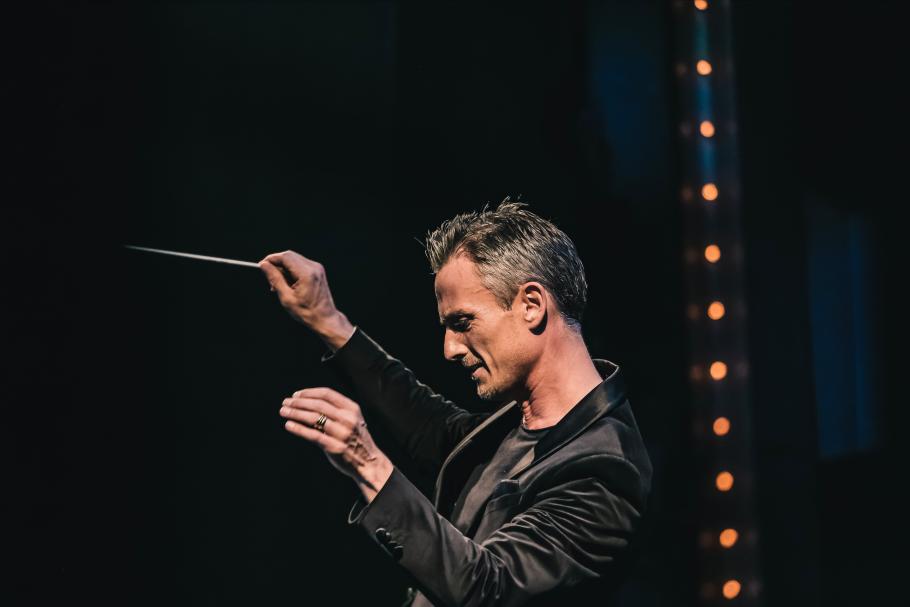
Conductor Daniela Candillari
I felt I should properly admit how much I laughed at a production that I was seeing for the seventh time (three times in 2015, twice in 2020 and two weeks ago with a different tenor in the lead role). So in other words even though I know the jokes and the sight-gags by heart at this point, yet I laughed harder this time than any time since the first time I saw it.
Credit where credit’s due. Mezzo-soprano Deepa Johnny is very sympathetic, totally relatable as Rosina. Up close the subtleties of her facial expressions were hysterical to watch, even as she again sang a superb performance.
She matched up well with tenor Pietro Adaini, the Count Almaviva in today’s show, a slight difference from Dave Monaco who I saw the first time. They were both excellent, although I found Pietro funnier: perhaps because I was sitting closer this time. I can’t be objective. His voice had a lot of squillo even if I’m not sure that’s what we expect in bel canto. Pietro sang a lot of beautiful high notes, perhaps three high Cs in the first act alone: although that’s probably not as important as the way he played comedy. His eye contact with Deepa and his servants Fiorello & Figaro, set up wonderful comic bits.
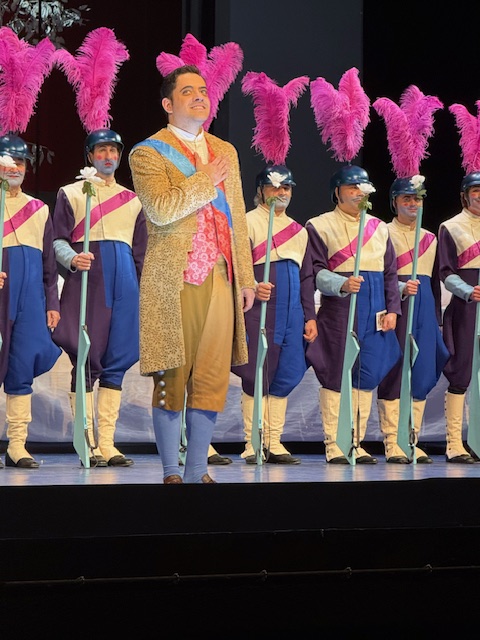
Pietro Adaini accepting applause afterwards
Or maybe it’s just that sitting close I was able to see subtleties that are lost when you sit further back.
Speaking of the servants, that means Nathan Keoughan as Fiorello and Luke Sutliff as Figaro. I’ve wondered about Fiorello, a character who makes an impression in the first scene, and then is more or less shoved aside when a pushier, more charismatic servant arrives: namely Figaro. Sorry Nathan, you were great but unfortunately Rossini erases you with the arrival of the title role.
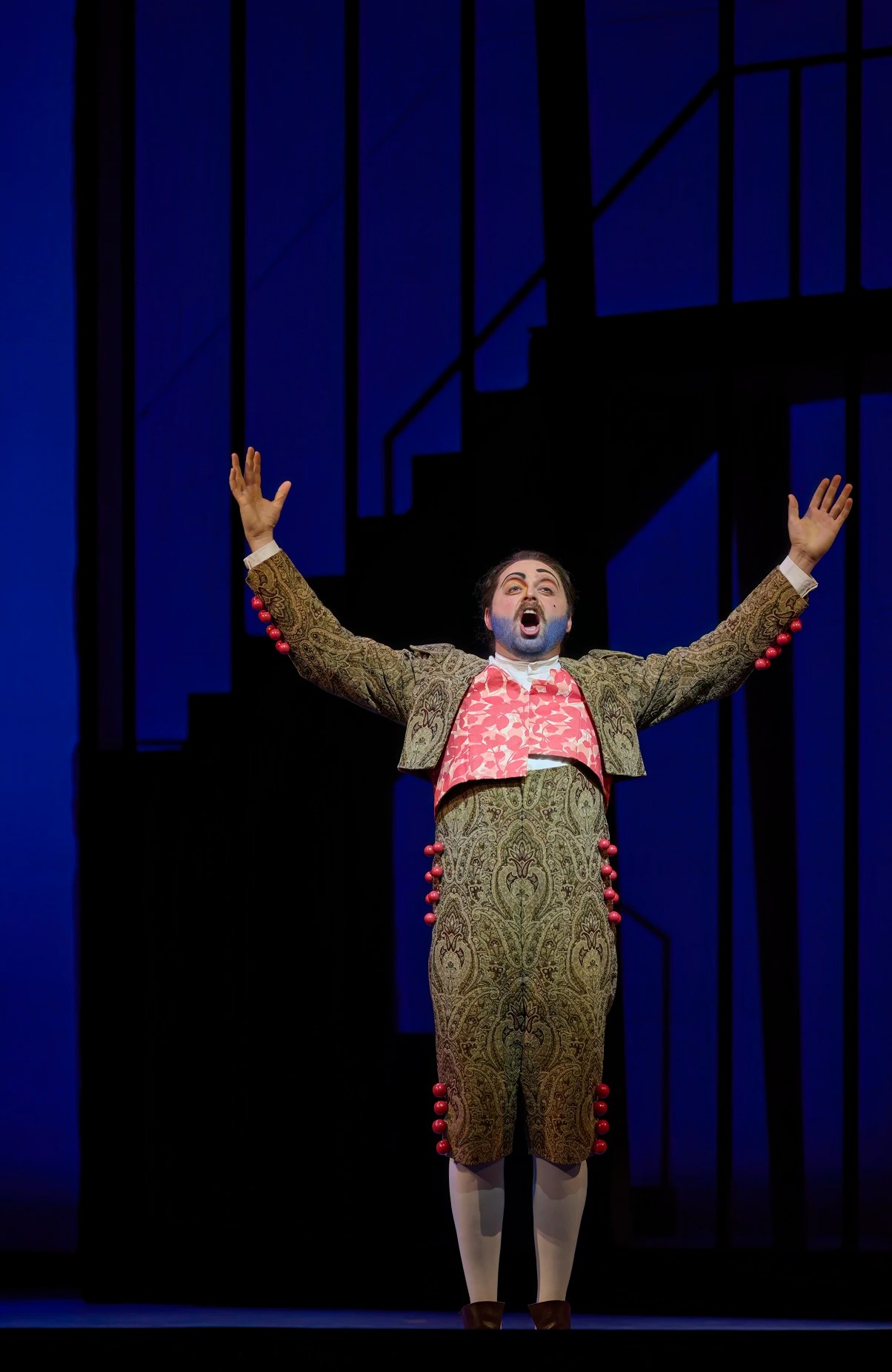
Figaro (Luke Sutliff; photo: Michael Cooper)
I was again taken by the work of Luke, impressive in his big aria at the beginning of the show, and very much a take charge comedian, unlike the three previous Figaros I’ve seen in this production. In some respects Luke is more of a conventional Figaro who doesn’t need the extra theatricality of this production to make us love him & his shenanigans, as he’s doing it with his voice and his acting ability, aka the usual toolkit of an opera singer.
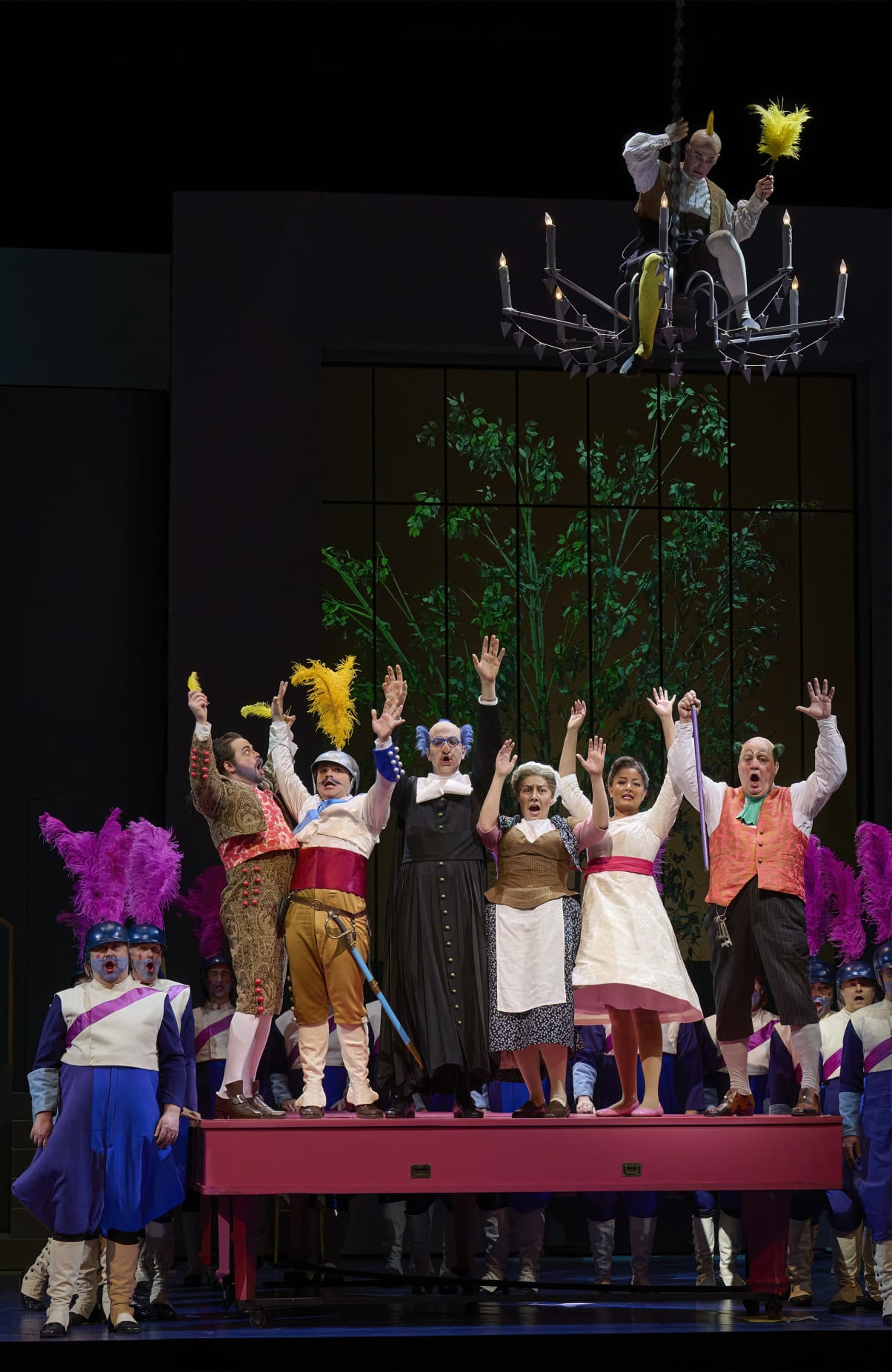
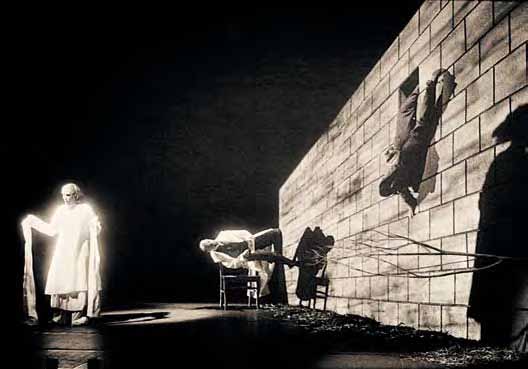
Joan Font’s direction is very vivid, putting actors on stage to unpack key moments in case you’re not able to figure things out for yourself. Don’t get me wrong, I love directors’ theatre when it illuminates, and that is certainly the case with this interpretation. For that opening aria I spoke of, Figaro’s Largo al factotum, not only does the baritone tell us of the many things he does, we get them enacted for us. Similarly when Berta sings an aria (gorgeous singing by Ariana Maubach) that in effect speaks of the opera’s core story-line, of the older man competing with the younger for a beautiful young woman, we see that acted out upstage. When Don Basilio sings of slander, we see a man effectively trapped in a kind of web, that leaves him half-naked at the end, as though he were slandered. While I may have complained previously about directors who seem unready to challenge their audience’s intelligence, I don’t want that charge directed at Font, whose imaginative theatre games invite us to engage with the illusion, thinking harder. Font gets a lot of mileage out of the flamboyant set & costume designs from Joan Guillen.
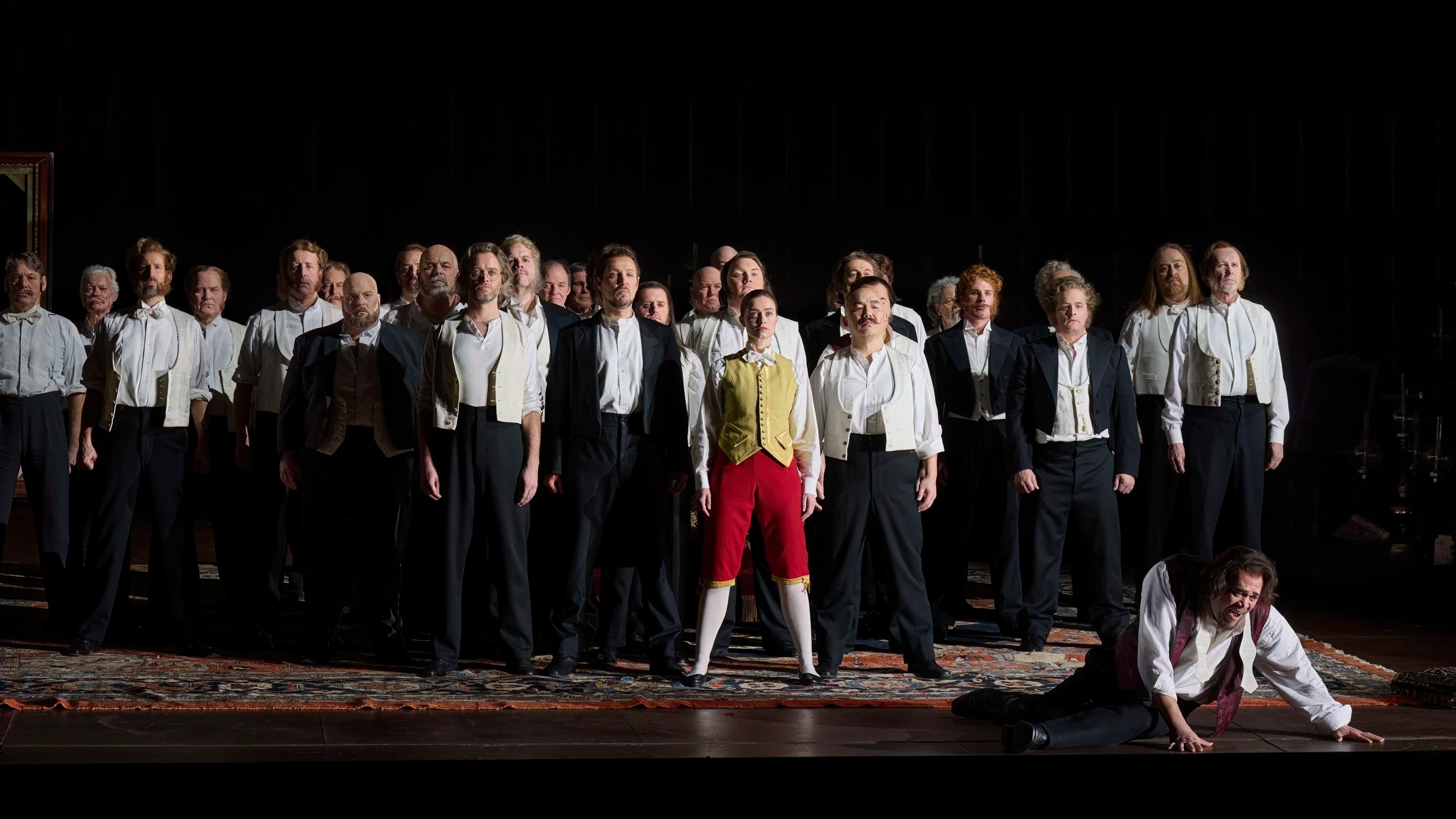
The Barber cast (photo : Michael Cooper)
Up close I was especially taken with Luca Pisaroni as Don Basilio, and by that I am less concerned with his singing –which was good–than his comic chops, which were remarkable. At least three times I guffawed like a drunk, surprised by a physical move or a bit of mugging from Luca. This is the same guy I saw two weeks ago, who I didn’t mention because from afar it may have gone over my head, not so easy to see. And up close I was again fascinated by Renato Girolami as Dr Bartolo, a portrayal that felt a bit two-dimensional from the second row. But of course when I sat far away his character played really well, the big effects visible from a distance. Luca and Deepa and Pietro were acting in ways that seem almost cinematic, ready for their close-ups, while Luke & Renato played in a more conventionally operatic style that can fill a big space and works well from a distance. I feel fortunate that I got to see it multiple times, to observe the different approaches, which each have their advantages.
We are at the end of the COC’s winter season, just days after they announced the operas for next season. While I may have felt a bit perturbed that the choices for this season included four revivals for the six programs, I still renewed. But whatever misgiving I had, at least those careful & conservatives choices kept the COC in business in a year that has seen the Metropolitan Opera (for an obvious comparison) laying off staff. And so, in addition to the new Romeo et Juliette last fall and the upcoming Werther, we were to be content with productions seen multiple times, namely Rigoletto & the Barber, Orfeo revived last autumn and the Erwartung-BlueBeard double bill coming back in April (although the latter from Robert Lepage is a perennial favourite).
Robert Lepage’s design & direction of Erwartung.
When I look at the upcoming season it’s easy to be enthusiastic, with no hesitation about renewing for next year. There are three revivals, namely La Traviata, Cosi fan tutte, and Elixir of Love, with three exciting new productions, namely a new production of Ariadne auf Naxos last seen in 2011, Britten’s Turn of the Screw, which has never been staged by the COC plus the world premiere of Empire of Wild by the team of composer Ian Cusson & librettist Cherie Dimaline.
Composer Ian Cusson
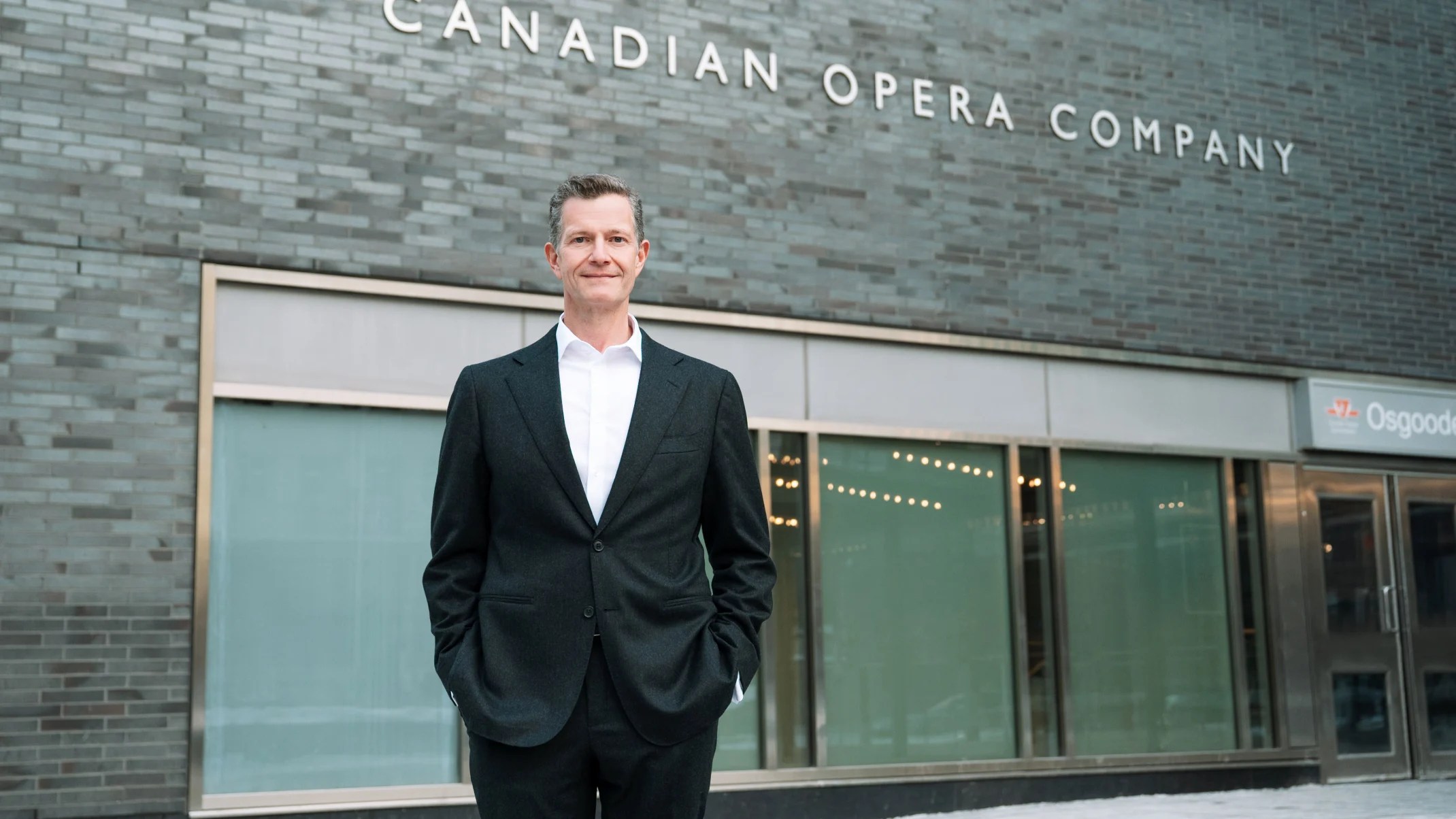
As I mentioned in what I wrote last week, COC General Director David Ferguson has been interim General Director since 2024, after the abrupt departure of Perryn Leech, and continues in his role until July, when the new General Director Ian Derrer takes over.
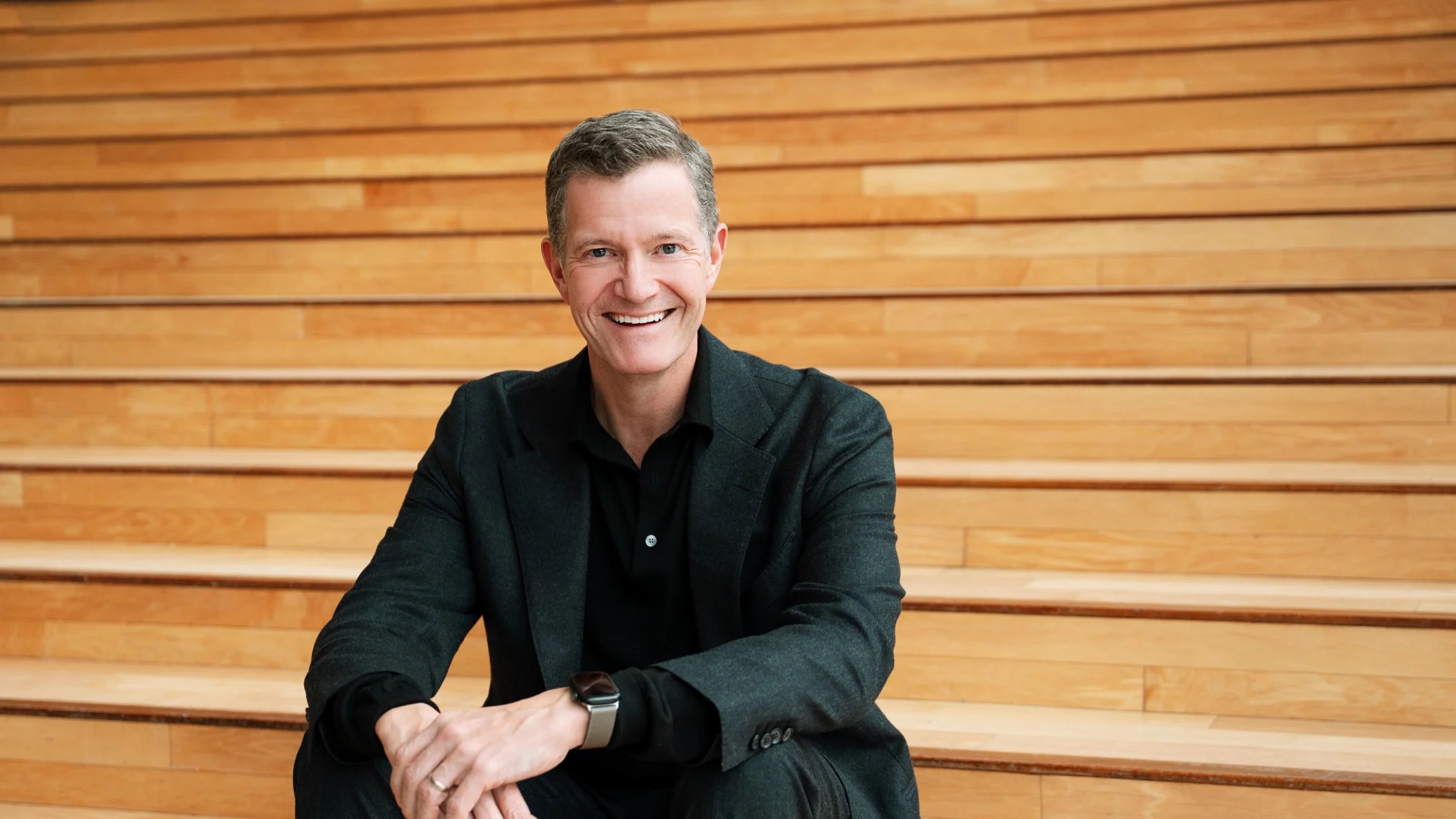
Incoming COC General Director – Ian Derrer (photo: Gaetz Photography)
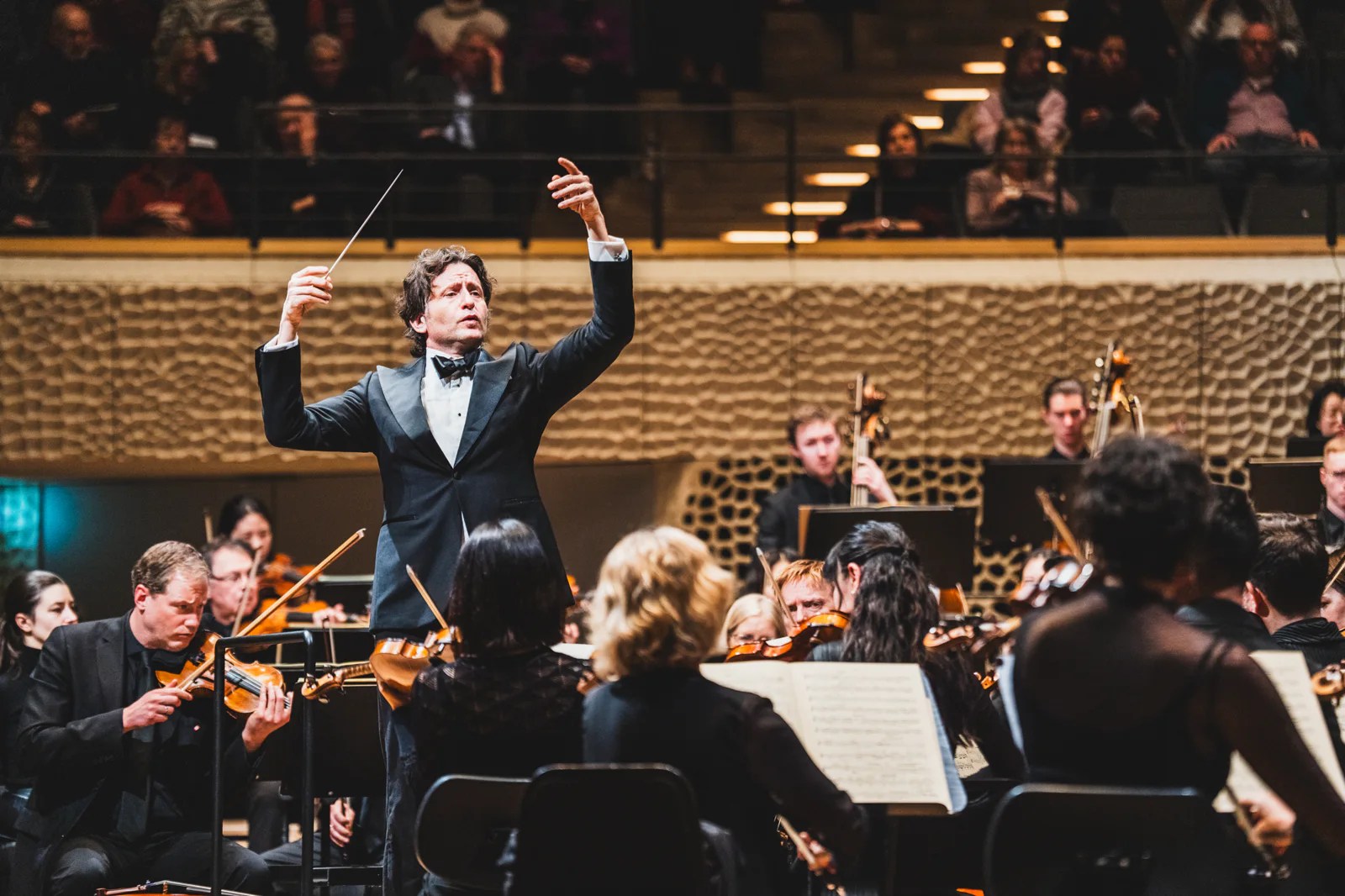
I’ve had a wonderful experience tonight at Roy Thomson Hall watching and listening to Gustavo Gimeno leading the Toronto Symphony in Mahler’s 9th Symphony.
Gustavo Gimeno leading the Toronto Symphony on tour in Europe (photos: Allan Cabral)
Ten years ago I had the privilege of accompanying the TSO on a tour of Florida, watching them play while observing the magical way tours pull an ensemble together, teaching them to trust one another. No wonder that tonight Gustavo had such remarkable control over the orchestra in this special piece.
I want to mention Gustavo’s introductory talk. While he still has a bit of an accent wow we heard a short dissertation tonight before the concert. I’m reminded that i heard it said that all art is a proposition (and if you think of the word as what we use in romance, a romantic proposition? then yes, that works too). When I present you with a poem, when I sing a song or draw a picture, I am inviting you to respond to what I present to you, to join me in sharing my imaginings. We are romanced, presented with a way of seeing or understanding, that we accept or refuse, depending on how much we open ourselves and how persuasive the proposition. Tonight the TSO were well nigh irresistible, advocating on behalf of Gustavo and his ideas about his namesake.
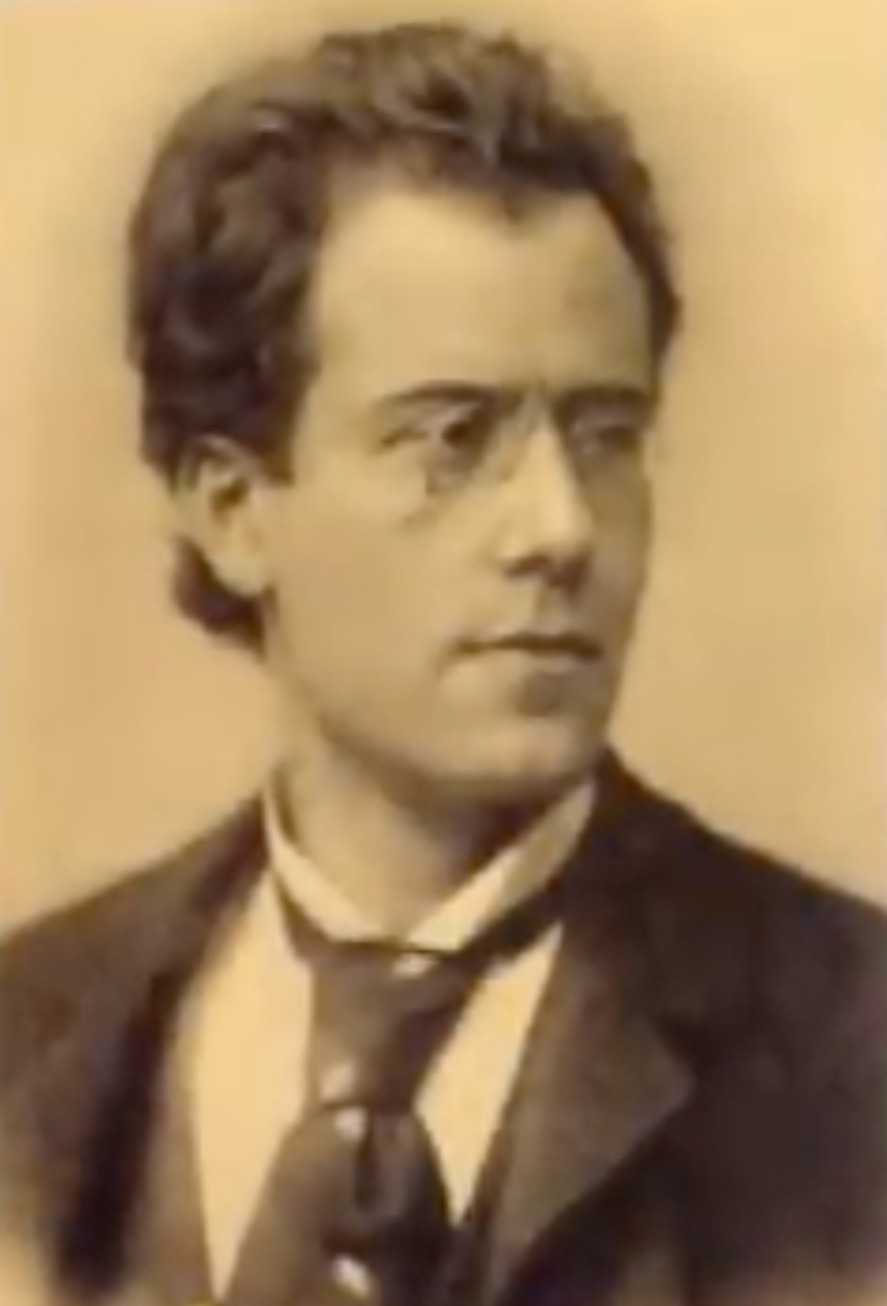
(it’s Gustav Mahler after all).
I hope the TSO will publish Gustavo’s ideas about Mahler’s 9th, a fascinating way of understanding a piece written near the end of the composer’s life. The orchestra made a strong case in their performance, and no wonder. They’ve spent the last little while becoming closer during their travels.
Like Beethoven, Schubert and a few others, Mahler’s 9th would be his last completed symphony. I wonder to what degree Mahler was composing while thinking of dying. Or, as Gustavo asks: maybe the symphony is more about living than dying. However you understand the relationship between the symphony & the composer’s life, it makes for an amazing performance, especially when the players are so ready to follow their maestro, while exploring this hypothesis.
There are four movements, each one featuring some big climaxes for the whole orchestra as well as delightful solo passages for a number of soloists, particularly Concertmaster Jonathan Crow, who had a stunning solo in every movement. In places, thinking especially of the first movement, there are passages that remind me of an old-style symphony concertante, the big orchestra sometimes there, sometimes dropping back to let a few soloists take over. Mahler’s mastery of colour is as usual evident, although –as Gustavo explained– this symphony is unique, because the composer did not get a chance to fine tune, after hearing it in performance: because he died. I found myself wondering what if anything he might have changed, especially in the first movement, which I am accustomed to thinking of as perfect.
Would Mahler have changed it? But he couldn’t be reached for comment…
The second movement was perhaps the most blatant display of a conductor’s interpretive input, as the tempo had two contrasting speeds. For the opening theme it was slow and so mechanical as to seem like an exaggeration, calling attention to the simplicity of the tune. When we went off into the second theme suddenly Gustavo put the pedal to the metal as it were. It felt as though we were to see that first theme as a costume or a role-play, and then when we came to the second theme it was as explosive as a new role or a new persona. The contrast was wild.
The third movement burlesque was much more of a full-out display of bravura playing especially from the winds, powerful at times, but sometimes like quicksilver in their fast delivery of softer phrases. We came to the latter part of the movement, suggesting something more reflective or sentimental, but every bit as committed.
The last movement was again as deep and thoughtful as the first, a careful study. The mocking ironic themes we’ve heard earlier are now done so slowly as to acquire a new gravitas, a weight requiring our attention. Gustavo in the final moments took the TSO gradually to a place of pathos, delicacy at the conclusion, very quiet and transparent.
The TSO and Gustavo Gimeno will be back with Gustav Mahler’s 9th Symphony Saturday night & Sunday afternoon at Roy Thomson Hall.
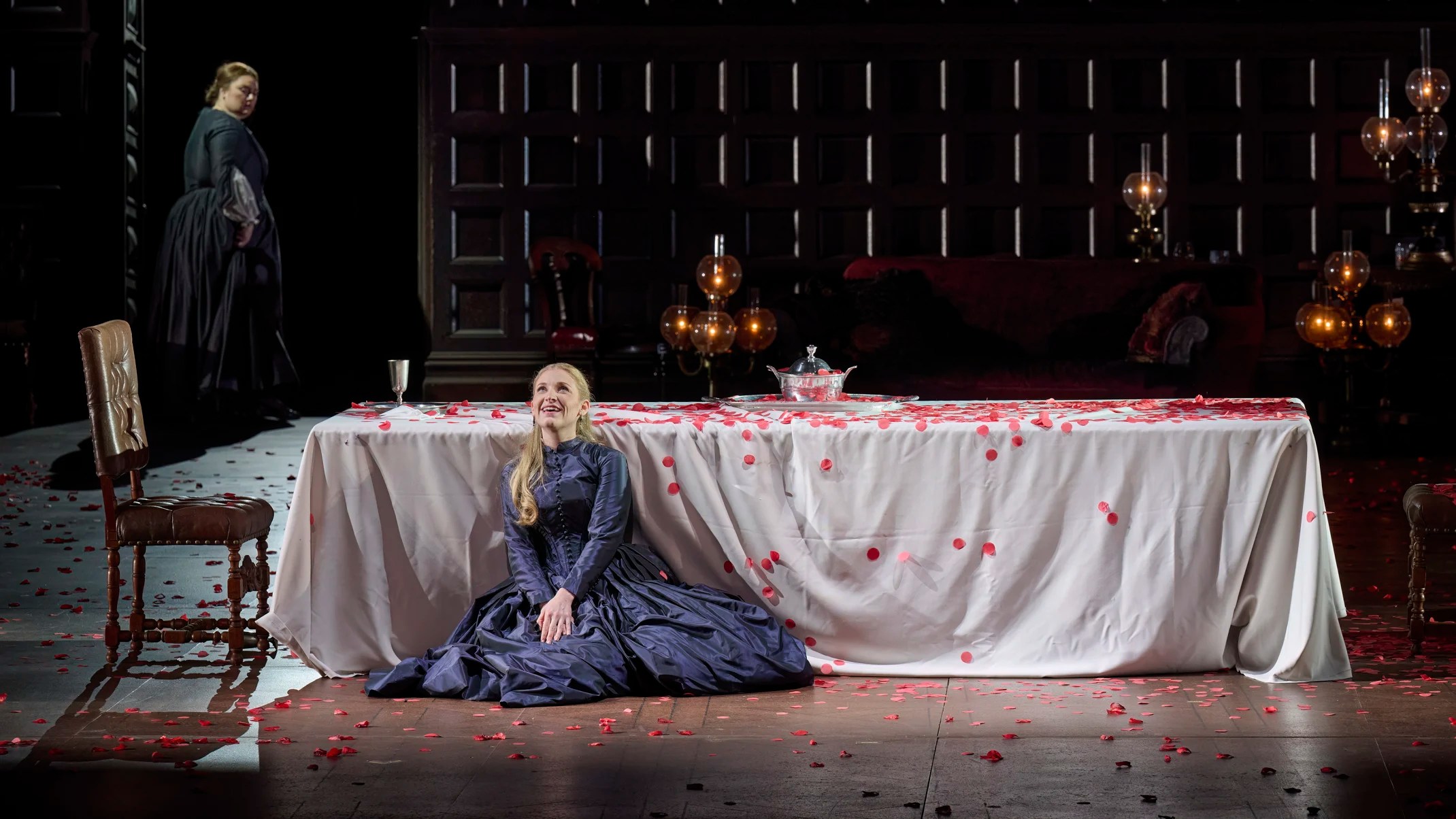
For Valentine’s Day 2026 this subscriber attended the Canadian Opera Company’s last performance of Rigoletto in their winter season at the Four Seasons Centre, in Christopher Alden’s rather un-romantic production. The rose petals fall from above as the young girl is seduced by a duke in disguise.
Giovanna (Simona Genga) observes Gilda (Sarah Dufresne) among the falling flower petals (photo: Michael Cooper).
I may be a tad compulsive about dates, observing how Monday’s Family Day holiday falls alongside this celebration of romance, just as we hit the Lunar New Year on Tuesday. The end of the Year of the Snake can also be understood as rebirth & transformation, a time of new beginnings.
The outgoing management of the COC can say “mission accomplished” as they look in the mirror, David Ferguson & his team having avoided the kind of backstage drama seen at the Metropolitan Opera, who were forced to lay off staff and cut some salaries. Speaking as a subscriber, I understood, accepted the revivals of Rigoletto & Barber as prudent measures, and as far as I can tell they made the right choice.
David Ferguson
In spring we get the new Canadian co-production of Werther (comparable to last year’s Canadian co-pro of La Reine-Garçon) alongside the much loved pair from Robert Lepage of Bluebeard’s Castle & Erwartung. That balance of new & old got us through. Ferguson has been interim General Director since 2024, after the abrupt departure of Perryn Leech, and continues in his role until July.
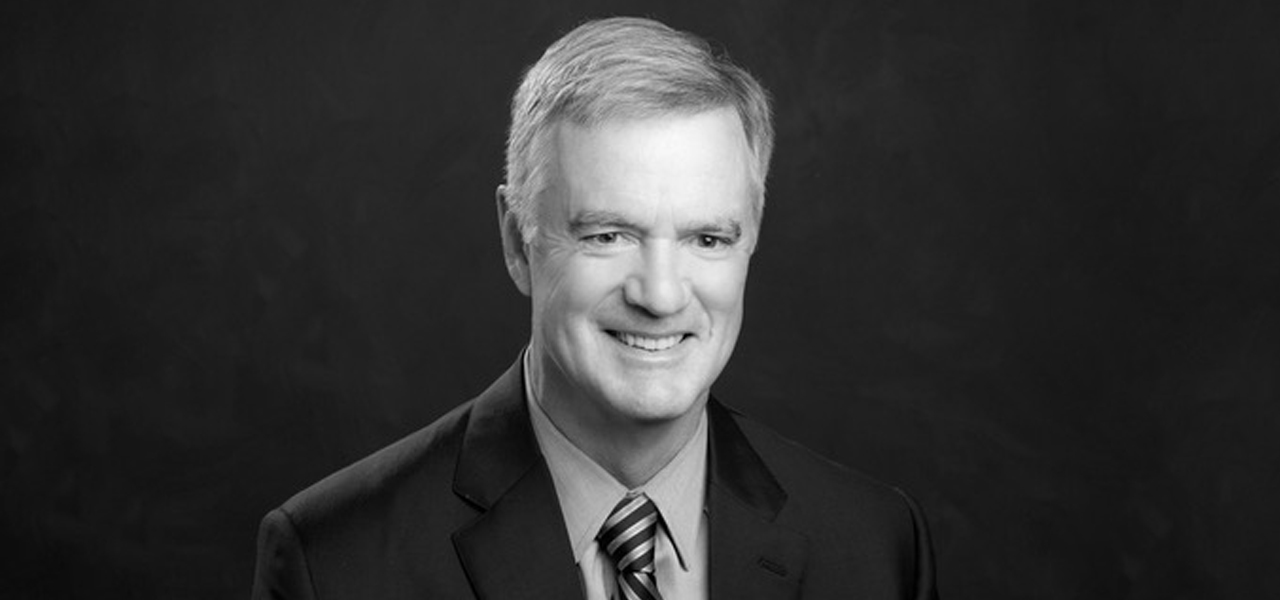
And there’s a new General Director on the horizon, namely Ian Derrer, who takes over in July.
Incoming COC General Director – Ian Derrer (photo: Gaetz Photography)
I wonder how much input he will have for his first season at the helm (2026-27), that will have largely been planned already I would think. Ian’s first real season will be 2027-28. And excuse me maybe it’s my age talking: as I’ve barely managed to adjust to a year called “2026”. Those numbers feel remote.
My subscription seat in the second row is a treat for the way it surrounds me with orchestral sounds & closeup views of the action.
Andriana Chuchman was our Gilda for the closing performances.
Soprano Andriana Chuchman
Andriana was at times reflective, as in her approach to “Caro nome”, looking less like the teenager and more like a thoughtful young woman, which made the opera less triggering for me than what I experienced watching Sarah Dufresne earlier in the run (who looked so young & vulnerable).
It was fascinating to watch Ben Bliss up close, as he manoeuvres one of his conquests from off his lap even while singing “questa o quella”: and still made it sound like easy singing. That’s two full performances I saw without a note sung flat. To pull that off in February surrounded by a cast likely running the gauntlet of colds & flu is doubly impressive.
As always I’m torn, conflicted by the two sides of Verdi during this period. Gilda & the Duke are still largely bel canto creations, the voices seducing us with their coloratura & their high notes. And then there are the newer subtler creations, dramatic hybrids such as Rigoletto or Sparafucile. Peixin Chen as Sparafucile gave us a grotesquely comical killer, complete with one of the best sustained low Fs I have ever heard, the role underplayed for maximum effect.
For the last performance Quinn Kelsey as Rigoletto held nothing back, and it was perfection. I was again stunned by how effortless Quinn’s voice is sounding, in a role we heard from him before. But he’s not forcing, he’s letting the sound out and at climactic moments making clear glorious sounds. The Alden production in some ways thwarts some of the usual things one sees from a Rigoletto. Instead of the prancing jester implicit in the music Verdi wrote for the scene with Monterone, Alden sits his baritone on a couch to imitate the Duke himself: an alteration that’s especially fascinating seen up close. Similarly the usual drama of the scene where Rigoletto comes looking for Gilda, the jester teasing his tormenters, is especially dark when Gilda is concealed onstage behind the implacable courtiers.
Rigoletto (Quinn Kelsey) stonewalled by the Duke’s courtiers (photo: Michael Cooper)
The great thing about this location is the chance to watch Johannes Debus conducting, while we’re immersed in the full COC Orchestra sound. I was delighted to notice the differences in interpretation, the more thoughtful reading with Andriana than with Sarah, as I wondered at the mysteries of Johannes’ process, pleased with the results either way.
Next week the Saturday 4:30 subscribers get Barber of Seville, in another closing performance to end the COC’s winter season.
And come July, incoming COC General Director Ian Derrer takes over.
Incoming COC General Director – Ian Derrer (photo: Gaetz Photography)
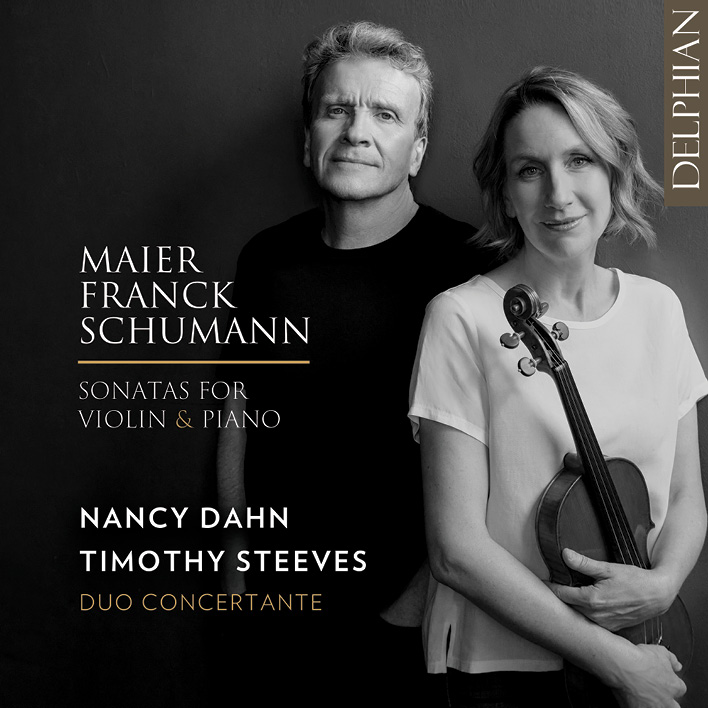
Add Nancy Dahn’s violin to the pianism of Timothy Steeves and you get Duo Concertante. I’m a fan who enjoyed their previous outings playing Beethoven and the edgier pieces on their Ecology of Being recording from 3 years ago.
Their latest creation features three violin sonatas by a trio of composers.
The recording is a reminder of the many ways we understand that word “romantic”. Guillermo Silva-Marin reminded me in his introductions at the Opera Salon of the breadth of that word, now having become so inclusive as to have almost lost its original meanings, that were shaped back in the time of the first of the Duo’s composers.
That would be Robert Schumann (1810-1856) who composed his first violin sonata in an impulsive burst over the span of four days in 1851. I am reminded of one of the attributes we find in some of those early romantics such as Schubert or Chopin, making compositions with the feeling of spontaneity, impromptu, feelings seemingly close to the surface. While there may still be structural elements of the classical period such as sonata form, that becomes the departure point for explorations, enlarged possibilities and pushing the limits of what was understood to be allowed. Romantic music grew louder than classical, the limits of the virtuoso always being revised in pieces that were more difficult to play than the previous generation. Schumann is remembered as a troubled figure, tormented & suicidal, disfiguring his own hand in hopes of increasing his own reach & strength. But while his music can be played with passion one can and must transcend pain in seeking the beauty in his melodies & his unique pianism.
The opening phrase of the violin sonata in A minor leads ambiguously away from its beginning key, as the duo build to a series of climaxes, the violin & piano surging together then pausing on a discord that brings us back to the beginning key. The second movement has an improvisational quality, spontaneous as the moment the next phrase appears, seeming brand new in the dialogue between Nancy & Timothy, delightfully bouncing off one another like a romantic conversation.
The finale is powered by a softly pulsing piano that is answered by the violin, leading to the end of the statement and then flying off into another key, very much like discourse with its resemblance to question and answer, back and forth building to bigger and bigger questions being tossed between them, until a soft lyrical passage in triple time allows a rest from the agitation. And then when we get to the cadence it starts up again with another version of that pulsing piano thing, but softly.
Duo Concertante: Nancy Dahn and Timothy Steeves
They are so musical together it really feels like a couple who finish sentences for each other, softly doing it in phrases that resemble a single thought shared between two people.
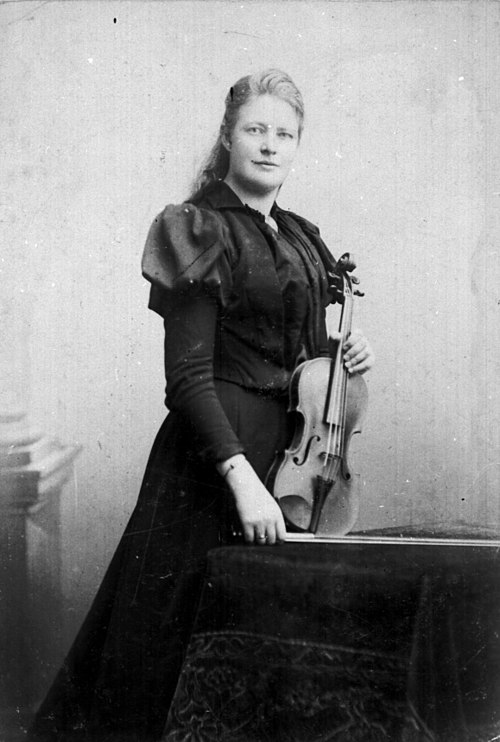
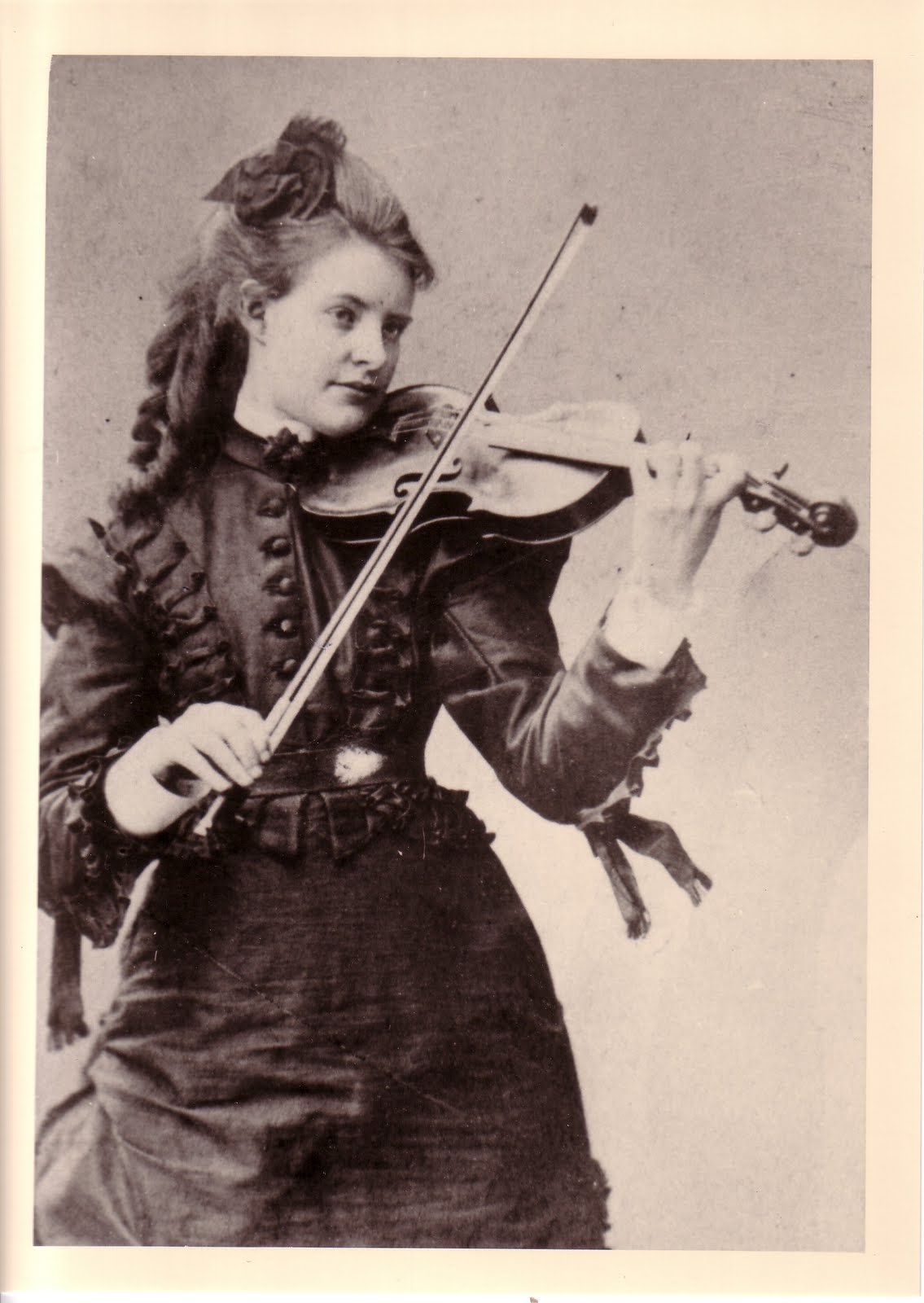
And next among the three composers on this CD, Amanda Maier (1853-1894), a name that’s new to me, a woman composer, herself a violinist among male violinists and composers. I read that she was the first female graduate in music direction from Stockholm’s Royal College of Music.
Amanda Maier
Maier died even younger than Schumann. Her sonata seems to be a contrast to that of Schumann, not a spontaneous eruption but a deliberate & carefully built work composed over the course of 1874 & ’75, a vessel to contain simple but powerful emotions, each movement’s opening phrase seemingly linked. Her sonata stands tall between two giants, a worthy peer to the famous composers on either side of her on the recording. You can read more about her in a 2009 essay I found titled “Unjustly neglected composers: Amanda Maier.”
Amanda Maier
Her B minor sonata opens with a simple phrase that becomes a building block for the first movement. The phrase is like a thought upon looking outward, that enlarges its scope, widening with every reiteration of the little idea that started it. Nancy and Timothy are together as usual, the questioning of this movement like eyes glancing left, right, wondering. The second movement’s lyricism is song-like, moving gently in triple time like a slow dance, the minor third of B-D that seats us in B minor for the first movement takes us this time into a gentle song when we’re in the key of G major, using the B-D not as tonic to mediant but mediant to dominant. The third movement to conclude has us back in B minor, including a minor third to declare the theme and our return to the opening key.
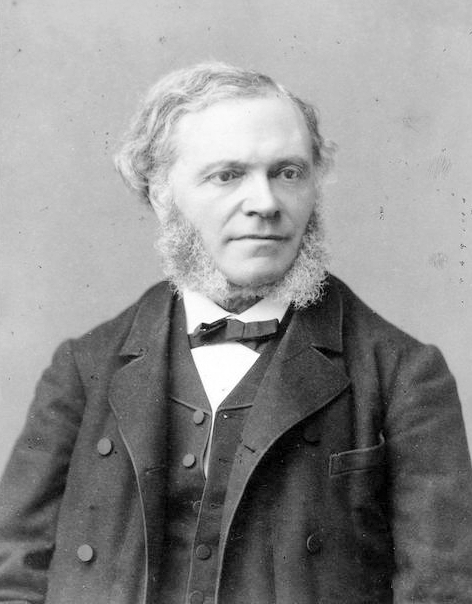
When we come to the third romantic exponent, Cesar Franck (1822-1890), we are in the presence of a sophisticated exploration of the relationship between violin & piano, their chromatic harmonies taking us further, deeper, in a four movement work.
Franck’s great work was composed for the wedding of virtuoso Eugène Ysaÿe in December 1886. The manuscript was given to Ysaÿe on the morning of the wedding by a mutual friend, Charles Bordes. Eugène practiced the work with pianist Marie-Léontine Bordes-Pène, Bordes’ sister-in-law. They premiered the work for the wedding guests, giving the public debut months later. The sonata has been understood in the most romantic terms ever since. For example Franck’s sonata was one of the last works Amanda Meier performed in concert with her husband.
César Franck
The first movement is a fantasy, a gently tentative enquiry expanding gradually into broader and bigger prospects as though opening a window or a door, looking out upon and then visiting a landscape. There’s a back and forth between violin and piano, not so much call and response as statement and echo, the replies sometimes darker. The piano for that first movement is like a foundation holding up the upward reaching violin, sometimes becoming energized.
The second movement is agitated, a powerful allegro that involves us in some ambiguities harmonically, and slowing down for passages resembling recitative, as though pondering deep questions. The piano is now driving us onward in challenging quick passages, no longer in the background. We go back and forth between darker harmonies and gentler melodies, the work building to a radiant climax, the two instruments matched finally.
For the third we are again pulling back, a series of cadenza- impromptu moments to suggest contemplation. We are hearing a simpler texture from both instruments, the piano and violin confronting the world in the gentlest terms, the questions presented tenderly, with a kind of vulnerability, even affection between the two voices.
And then we come to the final movement, surely one of the move beautiful creations for violin & piano, one voice after another answering, surmounting, complementing. While I have been listening to this piece since I was young, it sounds especially beautiful in its setting here on the recording by Duo Concertante, set up by the other two earlier sonatas. I find I play through the CD and then start over, that it’s a natural organic journey.
Duo Concertante Nancy Dahn and Timothy Steeves
I have been listening to their performances on CD for literally weeks, as I thought about the best way to write, hoping to capture my enjoyment. When I started listening the perception was different, orienting myself movement by movement, but as the CD became more familiar it turned into one continuous meditation, each composer adding their own perspective, their own unique answers to the questions we would understand as fundamental to romanticism.
Duo Concertante: Nancy Dahn and Timothy Steeves (Photo: Rich Blenkinsopp)
Saturday night the National Arts Centre Orchestra played their annual Toronto concert to an enthusiastic Roy Thomson Hall audience. As 2025-26 is the final season as music director for Alexander Shelley, this was his last visit at the helm of the orchestra.
There were three works on the program: Jocelyn Morlock: My Name is Amanda Todd Camille Saint-Saens: Piano Concerto #5 –intermission– Ludwig van Beethoven: Symphony #3
In his remarks beforehand Maestro Shelley spoke of the untimely passing of Jocelyn Morlock, who composed the opening piece about 10 years ago, but who died suddenly in 2023.
Composer Jocelyn Morlock
This is the third time I have heard this composition, that seemed more lyrical & elegiac for its last few minutes. Was it Shelley’s reading? or maybe it’s just that I listened more closely, thinking about the work’s creator. While the first time I heard it, there seemed to be more discord & dissonance, this time it struck me as a beautiful piece, choirs of instruments sometimes jarring against one another (as I try perhaps to find the subtexts of the piece in the music) before finally settling into something more agreeable with each other.
Jean-Yves Thibaudet was soloist in the concerto, a delightful and entertaining composition, particularly when tossed off as clearly as tonight, Shelley keeping the orchestra discreetly out of the way, and only cutting loose at the end of the last movement.
Pianist Jean-Yves Thibaudet
In response to our enthusiastic applause Thibaudet played Ravel’s Pavane pour une infante defunte as his encore, matching the plaintive tone of the first piece.
After the intermission we were treated to a remarkable reading of the Eroica Symphony, a work that’s very familiar. I was struck by how responsive this orchestra is to their music director, taking the first movement at a very quick tempo, but articulating every phrase with precise attention to the shape of the phrase. Similarly the second movement funeral march had more drama than I have ever encountered in a lifetime of hearing this piece, a true eye-opener. For the last two movements we were again listening to an orchestra willing to follow their leader exactly as he requested. I was a bit confused by something in the coda to the last movement, an unexpectedly slow pace after the whole symphony had been taken at such a quick tempo, making for a majestic conclusion. But it was beautiful all the same.
I wish Shelley all the best in his future projects, wherever he may go. He built an amazing orchestra who will have a new music director next season, and hopefully we’ll see that new person and the ensemble back next year.
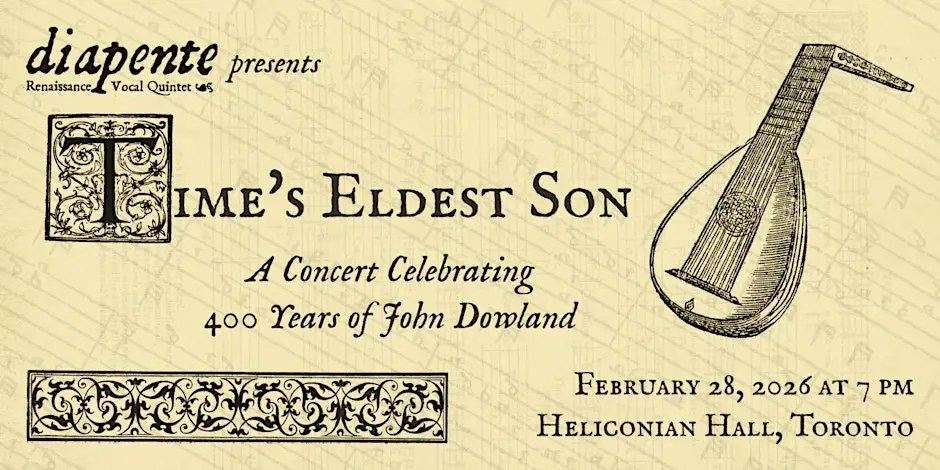
On February 20th, 1626 English lutenist and composer John Dowland died in London, leaving behind a legacy that brought him fame across Europe, and left him as one of the most recognizable names in renaissance music to this day.
Jonathan Stuchbery is a founding member of Diapente Renaissance Vocal Quintet since 2023.
Diapente Renaissance Vocal Quintet: L-R: Alexander Cappellazzo-Tenor, Jane Fingler–Soprano, Martin Gomes-Bass, Peter Koniers–Countertenor, Jonathan Stuchbery–Tenor & Lute
Diapente will commemorate the 400th Anniversary of Dowland’s passing with “Time’s Eldest Son”, a Concert to be presented on Saturday, February 28 — 7:00pm at Heliconian Hall — 35 Hazelton Avenue.
I had to interview Jonathan to learn more.
Jonathan Stuchbery (photo: Erik Visser)
Barczablog: Are you more like your father or mother?
Jonathan Stuchbery: That’s a hard question off the top! There are so many things I get from my parents. My mom is a musician, and I watched her as a pianist, teacher, music director, and choral conductor throughout my years growing up, so in the trajectory of my career I am a lot like her. That said, while my dad didn’t pursue music as a job, it was listening to him sing and play the guitar, and writing songs when I was a kid that inspired and motivated me to take up the guitar myself. That instrument has taken me down so many paths, from heavy metal and jazz, to classical music and the lutes and early instruments that I principally play today.
BB: What is the best or worst thing about what you do?
Jonathan Stuchbery: I love the dual aspect of being a performer and a researcher in being an early music musician. I get such a kick out of learning interesting facts and continually developing a deeper understanding of the world around me. The experience of discovering something new is exciting to me, and the performer in me wants to take that feeling and share it, and the fact that I can do that while also creating a sensory experience for others through the medium of performance or recording is a joy to me. In my ideal scenario a performance is a question; here’s what I think, feel, what I learned about this, and what about you? I love it when I speak to someone after a concert and they share how the music made them feel, or what was really interesting to them that they learned from experiencing it. Now, since the learning and sharing are so rewarding to me, some of the intermediary steps drive me crazy! Let’s just say I am not a passionate administrator
BB: Who do you like to listen to or watch?
Jonathan Stuchbery: I listen to a lot of different artists and styles of music. A few who are always near the top of my listening list are my teacher Xavier Díaz-Latorre, bluegrass guitarist Bryan Sutton, the ever-inspiring Jeremy Dutcher, Tuvan group Huun-Huur-Tu, and Swedish metal band Opeth. I like content that will teach me about history, and I’m currently enjoying Kevin Stroud’s ‘History of English Podcast’ about the long and fascinating history of the English language. I don’t regularly watch sports, but I do get excited when world cup rugby comes around (how about Canada’s women’s team taking second last fall!?). If that’s not enough variety, I’m also a fan of sci-fi and fantasy, my wife and I are a few years in and almost caught up with rewatching all the seasons of Doctor Who!
BB: What ability or skill do you wish you had, that you don’t have?
Jonathan Stuchbery: I wish I were better at making and building things. One summer as a kid (I think I was twelve years old) my cousin taught me how to woodcarve, and I made this wooden loon. I still have that carving sitting on my bookshelf and I’m very proud of it, but I haven’t kept up any skill at crafting like that. I always love seeing the way others can see materials and deduce how to make them into something beautiful or practical like home repairs and furniture! Maybe one day when I have more time…
BB: When you’re just relaxing and not working, what is your favourite thing to do?
Jonathan Stuchbery: I take my tea very seriously, and that’s a favourite way to pass the time. As a teenager I got interested in gong fu cha, a Chinese method of drinking tea, drinking many short infusions over an extended period of time, and taking your time to carefully taste and experience the tea. My collection of teas and tea vessels keeps growing, and I enjoy the way it slows down life for an hour or so as you focus on the drink, ideally with a companion or two! I also love being outdoors, nothing is quite so grounding to me than taking in nature. In the city I’ll go to the parks with my dog Satie, and when I can I want to get out to hike in Ontario’s amazing provincial parks and conservation areas. A few years ago I lived for a short time in Peterborough, and during my off-time I would just hop on my bike and take the trans-Canada trail east or west until I couldn’t go any further. Those were some of the most refreshing days off in recent memory!
BB: What was your first experience of music ?
Jonathan Stuchbery: That’s a hard question to answer concretely since there was always lots of music in my house growing up, whether it was my mom’s piano playing, my dad’s guitar playing, or the CDs and records that my parents listened to. Perhaps I can share a couple distinct memories. I loved to sing in the car when I was very little, and the song I co-wrote with my brother, ‘Cars and Trucks’, I’m sure would have been a #1 hit if we had the right promoter. I remember later on writing out our lyrics with him on the floor at home. My first music classes were piano lessons, but the earliest activity that really excited me was starting to sing in the St. John’s Children’s Chorus that my mom directed when I was seven years old.
BB: What is your favourite melody / piece of music?
Jonathan Stuchbery: There are so many outstanding and timeless tunes out there, but the one I’ll never be able to stop listening to is the ‘Si ambulem’ from Johannes Ockeghem’s Requiem.
BB: do you have any ideas about reforming / modernizing classical music culture to better align with modern audiences
Jonathan Stuchbery: Classical music is such a hard term to grapple with, because it is really a multiplicity of genres, and in modern day I suppose they are all more connected by a shared culture of conservatory training and concert traditions that are really barely two hundred years old than by anything else. This variety however is pretty much unknown to the general public. When people ask what I do and I tell them I play the lute, I often get, “Oh, like in DnD?”, or “Like in The Witcher?”, which well, isn’t really what I do, but saying I play classical music doesn’t really help them understand either. But if I tell them I play music from the 1400s, the 1500s, or the 1600s on reconstructions of historical instruments, it starts to make a little more sense. And I don’t mean to disparage the image of the lute in popular media like DnD or The Witcher, I love both of those entities too, and in fact because I’m been keen to play my instruments in non-traditional settings like playing in evening series at bars, I’ve met enthusiastic fans of popular media who discover a love for the living historical music as well. The enduring presence of cultural artifacts like the lute in popular media shows that the life of these traditions continues to influence our imaginations today, and evolves with society. Thinking about this has been a huge part of my initiating collaborations with modern poets and composers in creating new music for my historical instruments, music that draws inspiration from the past and today. I perform historical music because I love it, and I create new music because I love the world of today – it doesn’t have to be one or the other, and the majority of the public want to experience an artist simply doing what they love. The classical music world could perhaps rely more on personal integrity, which I believe would build more charismatic performances.
Jonathan Stuchbery (photo: Erik Visser)
BB: Talk a bit about your background training, and how you got here.
Jonathan Stuchbery: As I referred to in an earlier question, I really started to love learning music in earnest while singing in a children’s choir. A couple years later I started guitar lessons, and eventually found myself taking classical guitar lessons after some years focused on the electric guitar. Hearing the sound of classical guitar totally shifted my trajectory in music. I was completely enthralled by the sound and the wonder of hearing so many different voices coming out with such clarity on just one instrument. Though I did keep up my electric guitar playing with rock, metal and jazz bands throughout high-school, and I credit a lot of my creativity and drive to make things happen to the songwriting, socializing, and gig-seeking focus of those groups. I ended up doing a Bachelor’s degree at the Schulich School of Music at McGill in classical guitar, which is where I discovered lute playing, and the early music world. Though the guitar program at the university did not have much focus on chamber music, I was always eager to play with others and sought out as many opportunities to do that as I could. I had a trio with my brother on flute, and my (then soon-to-be) sister-in-law on violin, and we sought out every small concert series we could find to perform together, and ended up organizing a couple summer tours, including the recording of an album entirely made of music commissioned and written for us (Amalgam). This enthusiasm to make chamber music drew me to sign up for a basso continuo class part-way through my undergraduate, and through that course was introduced to Sylvain Bergeron, who teaches lute at McGill, and through him historical lutes and guitars. Suddenly it felt like I was playing with everyone all the time. Singers, instrumentalists, orchestras, you name it! After McGill I moved to Toronto for a year before starting a master’s in early music performance in Barcelona at the Escola Superior de Musica de Catalunya. That year in Toronto taught me so much as I started getting my legs as a professional musician. I learned a lot from meeting and playing with older musicians who I’m now honoured to call colleagues, and I started taking on more paid work as a choral singer in church choirs in the city. The following year in Barcelona honed my research and specialized training in this field, and introduced me to another amazing community of musical colleagues and mentors.
BB: Who is Dowland and why does he matter?
Jonathan Stuchbery: John Dowland was an English lutenist and composer born in the early years of Queen Elizabeth’s reign whose instrumental and vocal music became extremely popular throughout Europe during his lifetime and which is perhaps some of the best loved and well known music from the period in today’s musical world. While he was alive, he was the #1 bestselling composer of secular songs, and still today musicians, from world class lutenists to popular artists like Sting, record and perform his music.
Despite his popularity, Dowland’s ambitions were not always realized, and his life is a fascinating story of journeys through continental Europe, of meaningful, widespread, and powerful friendships, and near misses of being entangled in political schemes. Wherever he went he seems to have impressed with his skill on the lute and as a composer, earning generous patronages in Germany, employment from the King of Denmark, and even papal support in Rome in the form of and offer of “a large pension of the pope” (which very nearly got him in grave trouble back home in England). He left a legacy in the form of his substantial contribution to the solo lute repertoire, music for viol consort, and his beloved books of ayres. His lute music has also become standard repertoire for classical guitarists and even inspired later compositions like Benjamin Britten’s immense ‘Nocturnal’.
The richness of the poetry that Dowland chose for his songs gives us a wonderful snapshot of English literature of the time, and his frequent emphasis on intense melancholy and dramatic darkness in songs like ‘In Darkness let me dwell’ and ‘Flow my teares’ remains captivating to listeners today.
BB: What will you play at the upcoming concert.
Jonathan Stuchbery: In Diapente’s ‘Time’s Eldest Son’ concert we have selected music that helps tell the story of Dowland’s life, that demonstrates the breadth of his compositional versatility and his influence in the wider musical world.
Diapente Renaissance Vocal Quintet: L-R: Alexander Cappellazzo-Tenor, Peter Koniers–Countertenor, Jane Fingler–Soprano, Martin Gomes-Bass; foreground: Jonathan Stuchbery–Tenor & Lute
You will hear songs from the three books of songs and from ‘A Pilgrim’s Solace’ including some all time favourites like ‘Can she excuse’ and ‘Now, O now I needs must part’, alongside lesser known works like his dramatically chromatic ‘Thou mightie God’ and ‘It was a time when silly bees could speak’. The nature of how Dowland published his songs allows for many arrangements of performers, which lets us present a real variety show, from solo songs with lute, duets, lute solos, a cappella singing, and five voices with lute and viola da gamba.
This concert will show off the versatility of each individual member of Diapente, and our guest viol player Felix Déak.
Baroque cellist and gambist Felix Deak
Also included in the program are pieces by Dowland’s contemporaries, people who inspired him, and who imitated him, including Luca Marenzio, Charles Tessier, Thomas Morley, and Thomas Tomkins.
BB: How does your ensemble approach such texts?
Jonathan Stuchbery: Diapente wants to bring the art of the renaissance to life for modern day audiences, so we care about understanding and performing the music using what we have learned about the practices of these musicians who lived 400+ years ago.
Diapente Renaissance Vocal Quintet
In practice that means many things, from how we use our voices, to how the words are pronounced to bring life to the poetry, to what instruments we choose to use. Our favourite programs also tell a story, and selecting pieces that draw you into the musical world of the past, we hope, will transport you to another time.
BB: What was your first encounter with Dowland?
Jonathan Stuchbery: The first Dowland piece I encountered was a transcription for guitar of his Alman ‘My Lady Hunsdon’s Puffe’ which I learned for a regional music festival when I was 15. I loved it and asked my guitar teacher if we could work on more renaissance music. That same year we worked on one of Dowland’s Fantasias together.
BB: Do you ever feel conflicted, reconciling the business side and the art?
Jonathan Stuchbery: I often do. It’s a reality that to be able to spend as much time as needed to create the programs, learn the music, write the pieces, and rehearse, I need a steady income from doing it. But I became an artist to share with others, and I don’t think anyone is less deserving of receiving it than others. Business to me sometimes feels like taking, and art as giving, so there’s conflict in that.
BB: What if anything can classical music learn from the way popular musicians play & market their music?
Jonathan Stuchbery: Be yourself! I love artists in other popular genres through how they express their personality in performance and their media. Sometimes we as classical musicians hide behind the formality of recital traditions, but I think it is so much easier to connect and build an audience when your fans get a sense of your personality, it builds community.
BB: Since the pandemic a great many artists are working virtually, both as teachers and as performers. Do you have a preference between live or recorded performance and when you record how do you make it seem live?
Jonathan Stuchbery: I did a fair amount online over the pandemic years, teaching and performing, but have done less more recently. Interacting with others in person is more of an exchange of energy to me, whether it’s rehearsing, teaching, performing, the people I share the room with animate the space in a way that is hard to sense in a virtual setting. That lack of being energized makes it hard for me to be motivated to do things online, and I’ve certainly distanced myself from it intentionally. I would find myself in situations of recording solo recitals alone, or laying down instrumental tracks for asynchronous recordings where I just had to give attention and effort constantly, and it could be exhausting!
BB: If you could tell the institutions how to train future artists, what would you change?
Jonathan Stuchbery: I had very different experiences between my undergraduate studies and masters, which to a certain extent should be expected, and perhaps also the differing cultural expectations between a Canadian music conservatory and a Spanish institution contributed to this as well. My versatility as a performer today, being able to play in ensemble contexts on many different instruments, from duos, and smaller chamber groups, to orchestras come from accumulated experience of working with others. You need to learn your notes, and hone your technique, absolutely, but you also need to know how to rehearse, and to learn to inhabit the social scenario of working in a group. This was really not emphasized as a student in classical guitar, where the program didn’t make it easy to explore ensemble playing. Special permission was required to form a chamber group if you wanted credit and coaching, and this doesn’t even touch on my practice as a vocalist. In ‘Time’s Eldest Son’ you’ll be hearing me singing, playing, and doing both at the same time, something I was never allowed to do as an undergrad. What I experienced with my teacher as a master’s student was quite different. First of all, private classes (which were extremely demanding) were attended by the whole studio, and worked on solo repertoire, but also spent time learning techniques for ensemble playing, *and* learning how to sing improvised counterpoint (no requirements to sound good!). I think this holistic approach was so helpful in encouraging students’ creativity, curiosity, and core musical skills that would serve them in what is really an extremely multifaceted career path. I certainly learned a lot from my teachers throughout all of my studies, but the grounding I had growing up singing in choirs at church and with a teacher in high school who played guitar duets with me provided me the essential groundwork to do what I do today. So institutions, don’t silo your students! Provide them with rigorous training, yes, but the artificial homogeneity of any given program doesn’t necessarily benefit young musicians trying to figure out how to make a career out of their music after school.
L-R Peter Koniers–Countertenor, Jonathan Stuchbery–Tenor & Lute, Jane Fingler–Soprano, Alexander Cappellazzo-Tenor, Martin Gomes-Bass
BB: What influences / teachers were most influential on your development?
Jonathan Stuchbery: I have had so many amazing mentors throughout my life. I owe so much to my first classical guitar teacher Selwyn Redivo, who not only introduced me to the instrument that really jumpstarted my musical journey, but also inspired in me so much love for the repertoire, for composing, and for playing with others. Jérôme Ducharme was my private teacher during my undergrad, and my playing developed enormously under his guidance. I also learned so much singing with the choir of Christ Church Cathedral in Montréal with Patrick Wedd. Only a few months after I moved to Montréal as an 18 year old, I approached him about singing in the choir, to which he said ‘We have a concert next week, why don’t you come for the dress rehearsal’. He was generous in offering opportunities to participate with the choir and to perform my guitar music, and I learned so much amazing repertoire in the years I sang there.
Sylvain Bergeron (photo by Didier Bertrand)
The list is long, but a few others who have been strong influences and have supported me in my career include lutenists Sylvain Bergeron, Lucas Harris, and Xavier Díaz-Latorre, and harpsichordist and head of the early music department at McGill while I was there, Hank Knox.
*******
Time’s Eldest Son will commemorate the 400th Anniversary of Dowland’s passing, a concert to be presented by Diapente Renaissance Vocal Quintet and guests artists Saturday, February 28, 7:00pm at Heliconian Hall, 35 Hazelton Ave. For tickets click here.
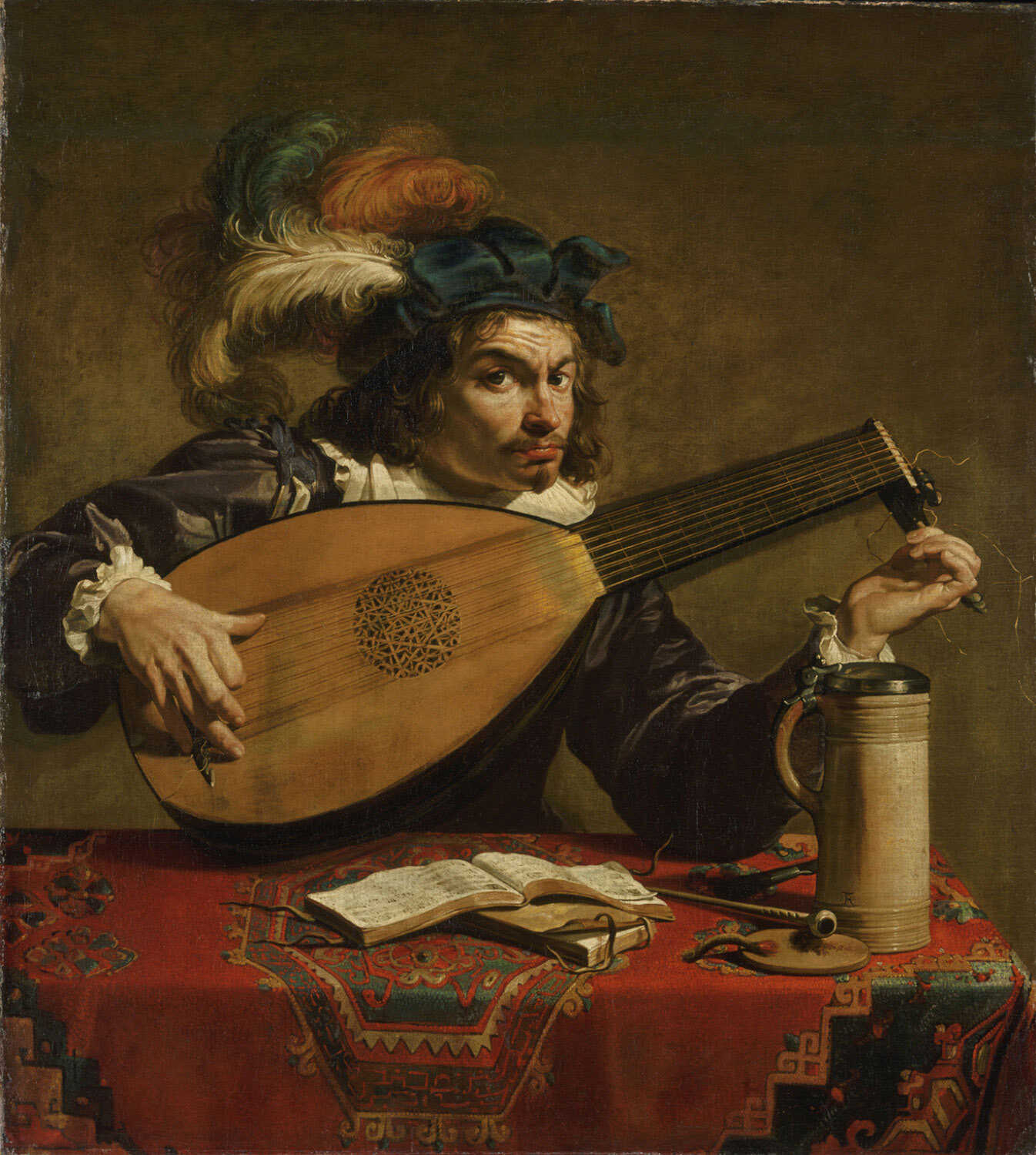
Joueur du luth, by Flemish painter Theodoor Rombouts
At first glance the two operas being presented by the Canadian Opera Company represent a contrasting pair. Last week I reviewed the dark Christopher Alden Rigoletto, being offered in a revival with a strong cast. Tonight I saw the COC’s revival of the flamboyant Els Comediants take on Barber of Seville, directed by Joan Font, with set & costumes designed by Joan Guillén staged previously by the COC in 2020 and 2015, a co-production with Houston Grand Opera, Opéra National de Bordeaux and Opera Australia.
As with Rigoletto I got lost in the beautiful music, the melodies, and unlike the Verdi opera we also had the benefit of a happy ending.
The COC’s Barber is a triumphant musical performance led by conductor Daniela Candillari at a breath-taking tempo.
The Barber cast in one of the numbers where they resemble automatons (photo : Michael Cooper)
The energetic pace is especially helpful in the numbers where the ensembles reduce the humans to automatons, robotic mechanical behaviours that are hysterically funny, especially if the conductor can keep the singers together while speeding along so briskly: as she did repeatedly.
Conductor Daniela Candillari
We were treated to stylish bel canto singing.
Rosina (Deepa Johnny) meeting a disguised Count Almaviva (Dave Monaco; photo: Michael Cooper)
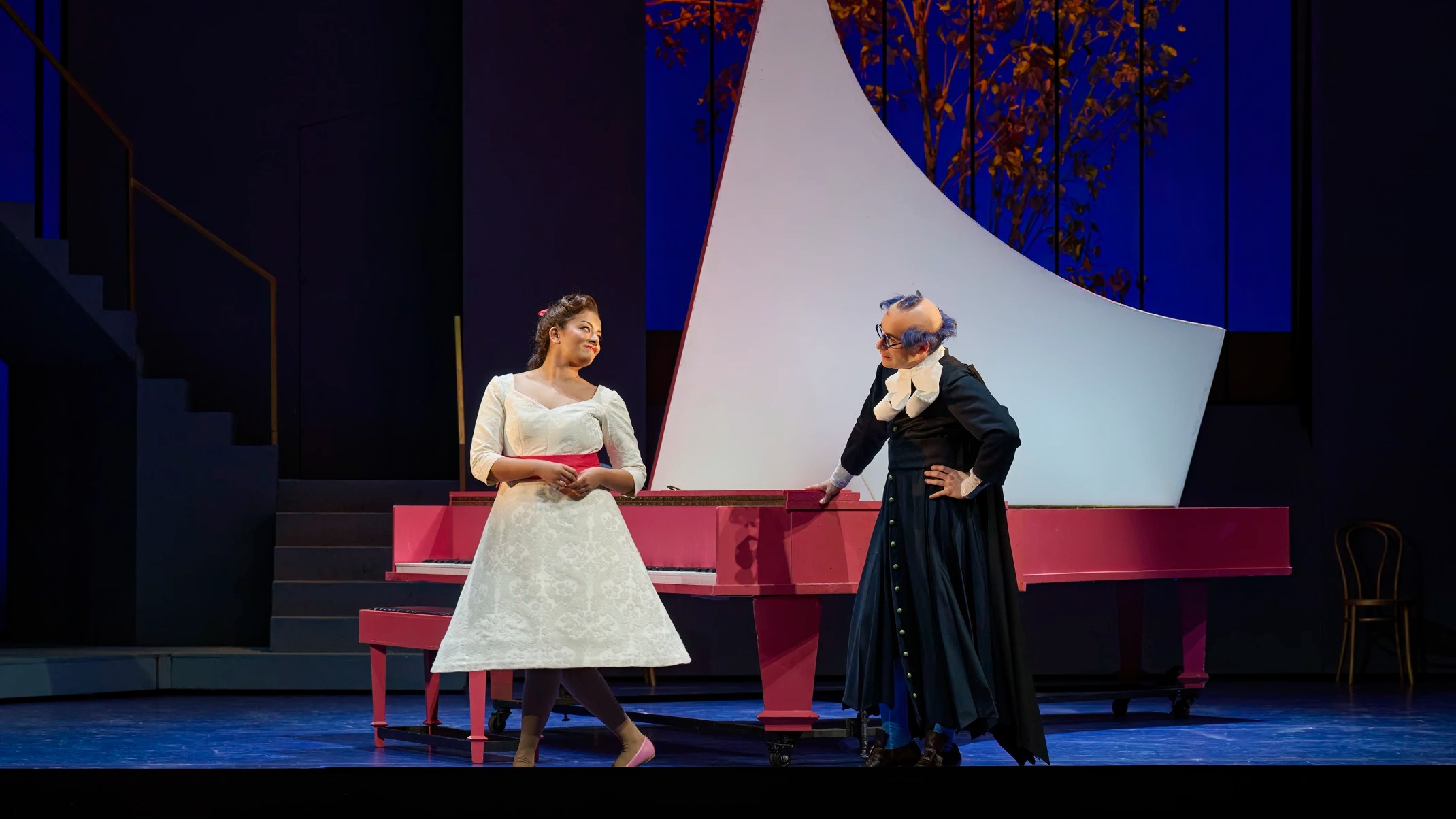
Deepa Johnny as Rosina was thoroughly compelling as the beautiful object of romantic pursuit by the men in the story and wonderful in her coloratura throughout.
Tenor Dave Monaco made Count Almaviva more purely fun than what was seen in the two previous versions (in 2020 and 2015), playing up the physical comedy particularly after intermission, maybe because his solid technique and effortless high notes permitted him to surrender to the situations. His was a genuine bel canto, seemingly fearless because he knew he could sing the role so well, complete with at least one ringing high C in each act.
Figaro (Luke Sutliff; photo: Michael Cooper)
Luke Sutciff was his partner in hijinks as Figaro the barber, a fuller voiced baritone than what we’d heard in the previous two productions.
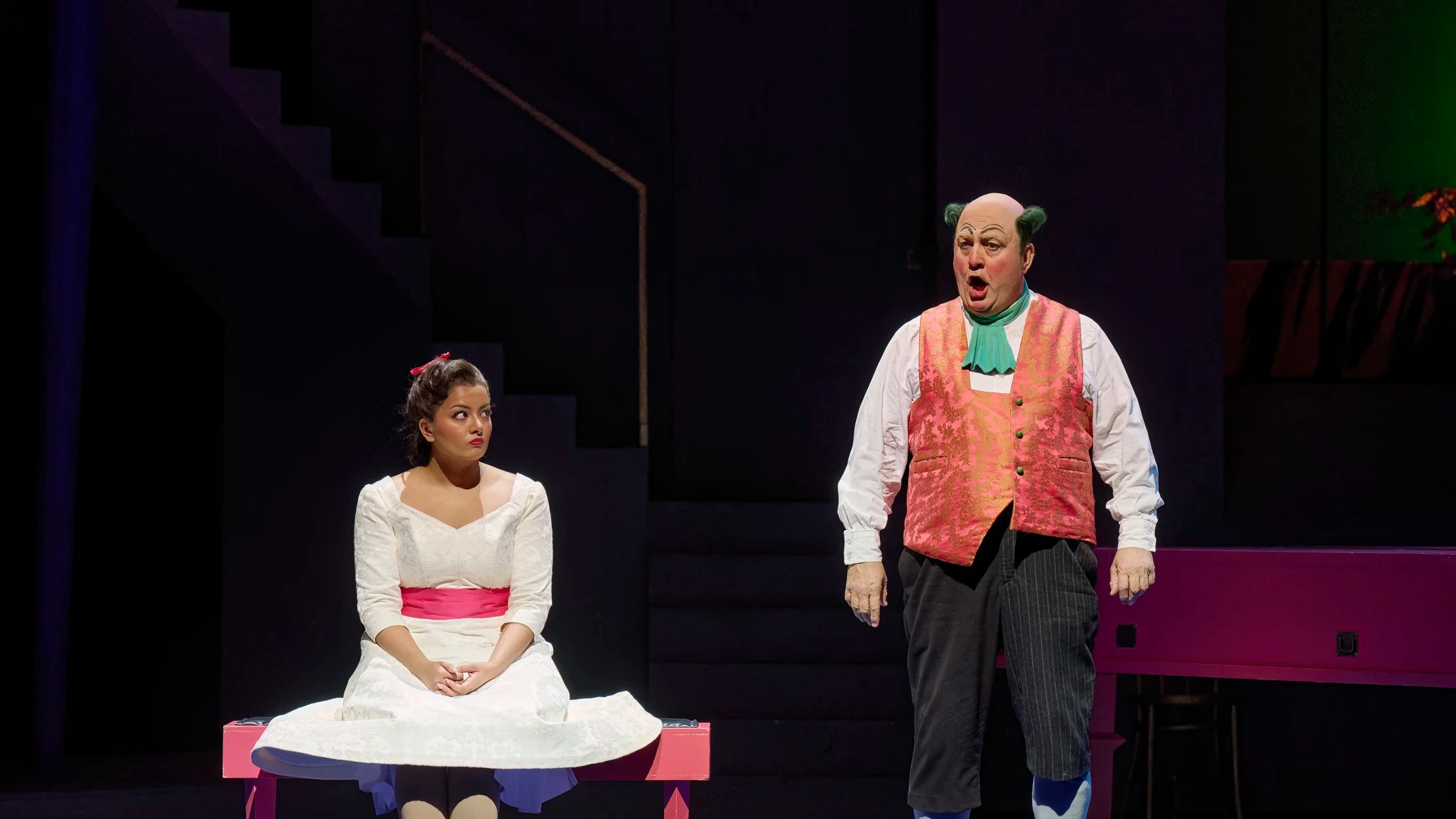
Rosina (Deepa Johnny) & Dr Bartolo (Renato Girolami; photo: Michael Cooper)
Renato Girolami is back again, having been the key exponent of the buffo style in both the 2020 & 2015 productions here in Toronto with the COC, still funny although his patter in his huge “A un dottor della mia sorte” aria (when we get to the crazy “Signorina,un’altra volta”, threatening to lock her up) is getting quieter, not as audible as before. Okay so he’s older, big deal. He’s a great exception to the usual agist trend, that has singers sidelined when they still have lots of voice left. It’s always good to have a singer who offers genuine gravitas to their portrayal.
So excuse me if I take a moment to look at the two operas offered as the COC’s winter season. Perhaps nobody noticed a troubling overlap between the two operas. Barber of Seville is a quintessential bel canto comedy of Gioachino Rossini (1792–1868), while Rigoletto is understood to be tragic, a melodramatic story from the middle period of Giuseppe Verdi (1813-1901) when he transitioned away from purely bel canto operas towards something deeper. Thanks to its placement this month alongside Rigoletto in the COC’s winter season, I see so much darkness in the comedy of the Barber, noticing that the stories are like the flip-side of one another.
The Duke of Mantua desires & pursues Gilda, who is 15 or 16 years old, presented in a brutal world where she is merely the latest in a series of conquests without any consequence for his insatiable libido.
The Count Almaviva pursues Rosina, who is marriageable age, likely late teens or early 20s (okay not quite so extreme), protected by Dr Bartolo from the men who might want to meet her, locked up inside her home for the entire opera.
The Duke pretends to be a poor student when wooing Gilda, singing a serenade as “Lindoro”. Oh no wait that’s the poor student alias taken by the Count in the Barber of Seville. The Duke pretends to be a different poor student named Gualtier Maldè. It’s not the first time I watched the Barber, wondering if Verdi was in a sense sending up Rossini’s world.
There’s a storm in the last act of each opera. In Rigoletto that signals that we are in a world of melodrama, forces beyond our control where no one has agency. The Duke gets lucky, saved by Maddalena from a possible murder. While the storm in Barber is perhaps also a reminder of forces beyond anyone’s control, the outcome is a happy one, as we’re in a comic world.
When I googled “does verdi’s rigoletto make ironic comment on barber of seville” I saw some interesting comparisons that you might want to search yourself, including reference to a Jean-Pierre Ponnelle film of Rigoletto framing the Duke as a sinister version of Count Almaviva (and now I have to find that video!). We can compare over-protective Bartolo to over-protective Rigoletto, the romantic Count to the libertine Duke (and the ploys they use as mentioned above). While it makes for a fascinating juxtaposition, I wonder if the COC were mindful in their choice of operas. I know that I was troubled through the first act of the Barber, watching a woman who is locked up, being courted by a man pretending to be poor student, using exactly the same ploy as the last sneaky fake I saw in Rigoletto. I had come to the theatre needing a laugh and was in dire need of diversion. While I have loved the Barber all my life, have played the score since I was a teen (and my brother first sang the role of Figaro in Hamilton), I’ve never felt so cynical about romantic opera plots as I did on this occasion.
And here’s the thing. As Erika remarked, how is it appropriate in a comedy we watch in 2026 for a young woman to be locked in, held prisoner, as Rosina is confined? Yes such things are always relative, that what’s funny & light-hearted in one century may become troubling in another era. It felt weird in context with Rigoletto especially the Alden production that reminds me so much of the Epstein saga unfolding in the press. I suppose no one at the COC noticed the overlap, programming these two for the winter season, and maybe my grouchy mood left me out of step with the enjoyment everyone else felt, watching this brilliant show.
I will shut up with the endless questions. Yes I was eventually seduced by Rossini in the last hour, especially the exemplary presentation of the musical side of the equation and a phenomenal reading by the COC Orchestra under Daniela Candillari. Thank goodness.
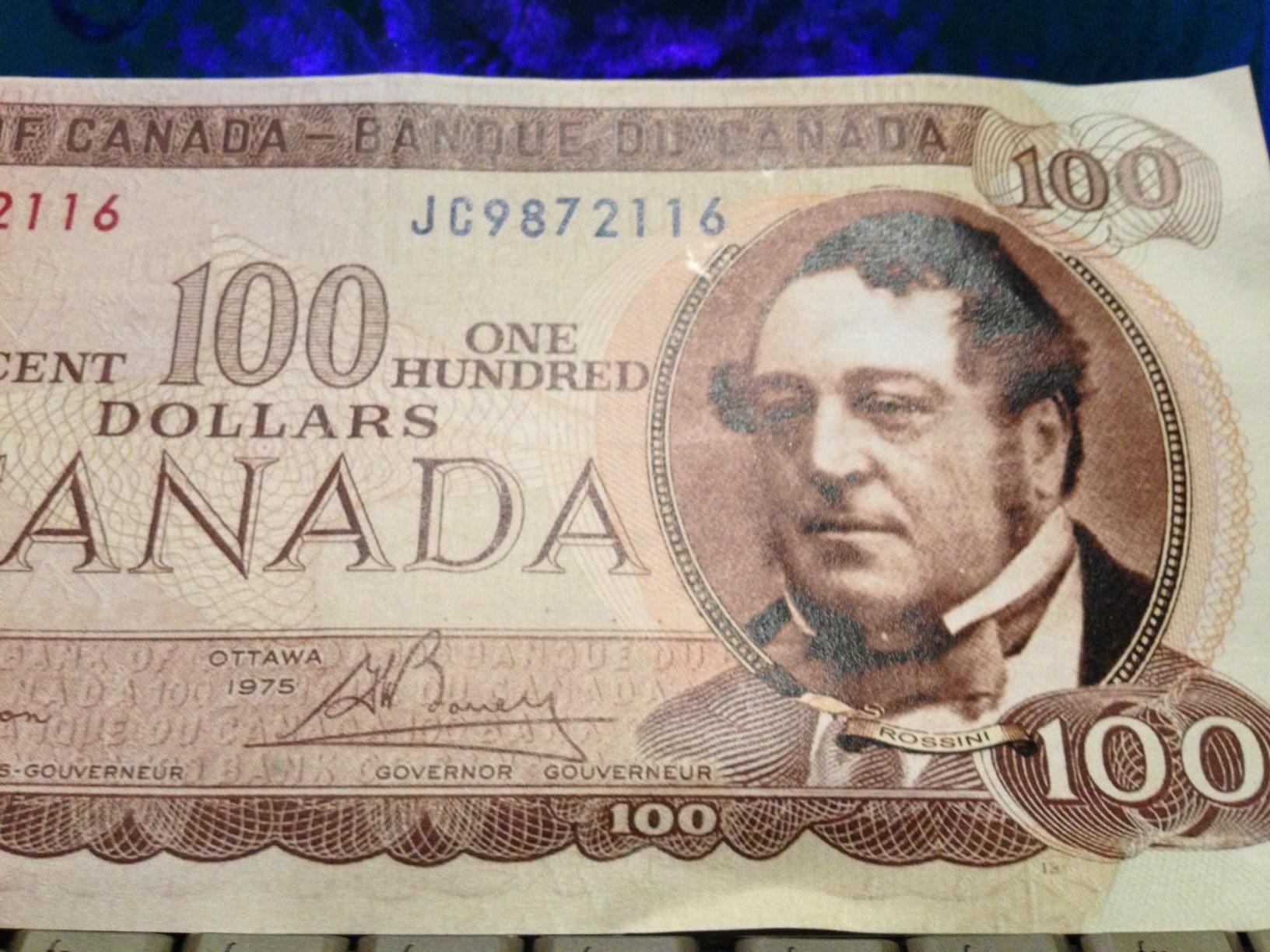
If Rossini wasn’t one of the Fathers of Confederation, maybe he should have been. SPOILER ALERT this is a photo of the fake bills dropped on the audience at the end of the opera.
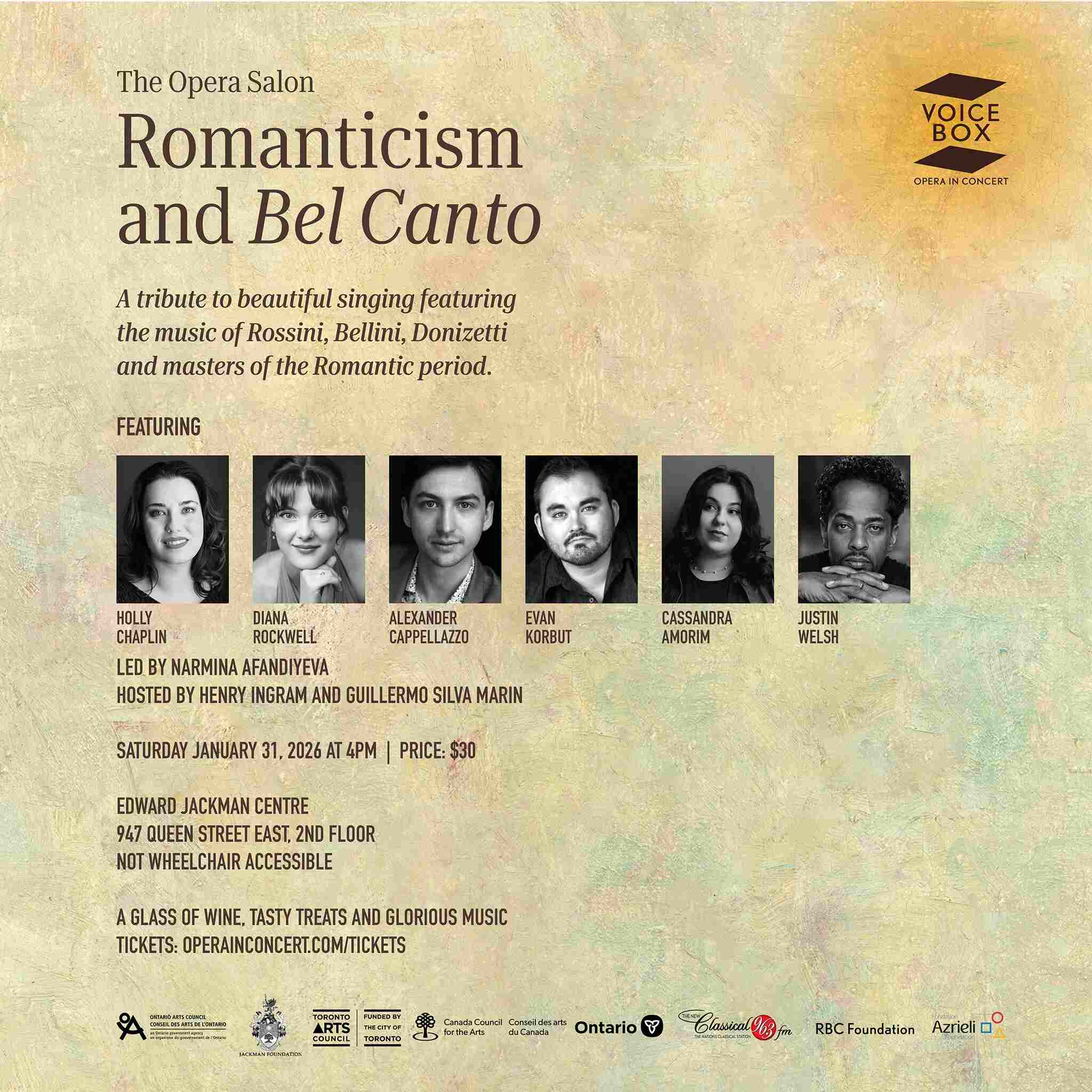
Today I attended a Voicebox: Opera in Concert Opera Salon, highlighting Romanticism & Bel Canto.
I want to see any concert or presentation that offers us a new way to offer opera and to find an audience. We’ve seen arias in bars & restaurants, this was something a little different. And I thought it works really well.
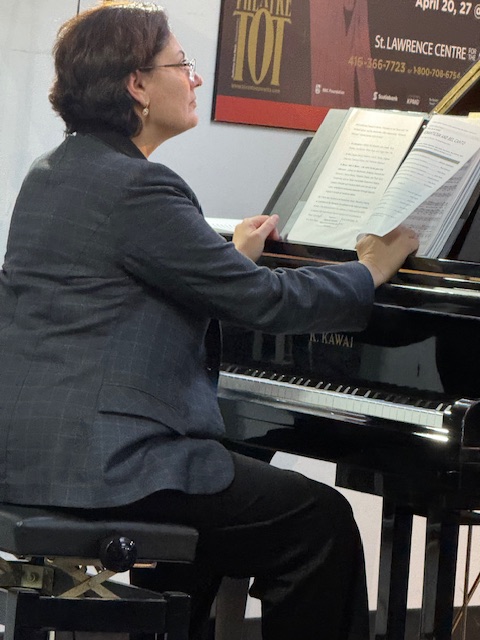
We heard solos from six artists, accompanied by Narmina Afandiyeva at the piano, organized around a unifying theme.
Narmina Afandiyeva at the piano
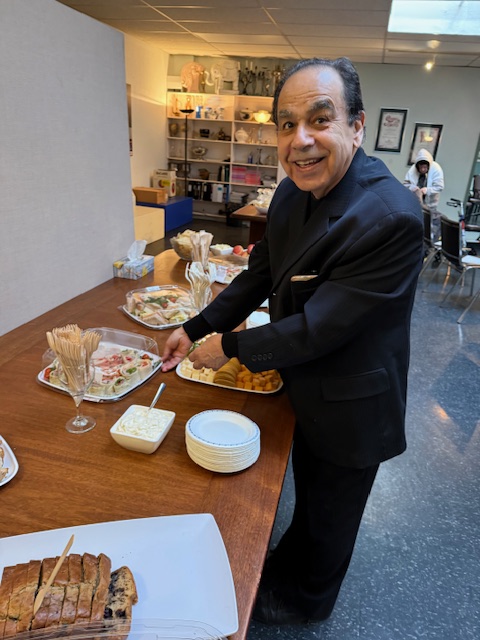
Although Henry Ingram is mentioned on that poster I shared above, he was in Puerto Rico, dodging our snow & chill (smart guy!), which meant that Guillermo Silva-Marin was our host all by himself, even arranging the delicious treats they offered to us as you see in the picture below. He was also our Master of Ceremonies, introducing the artists, telling anecdotes about artists of Opera in Concert and speaking about the history of bel canto & romanticism.
Guillermo Silva-Marin
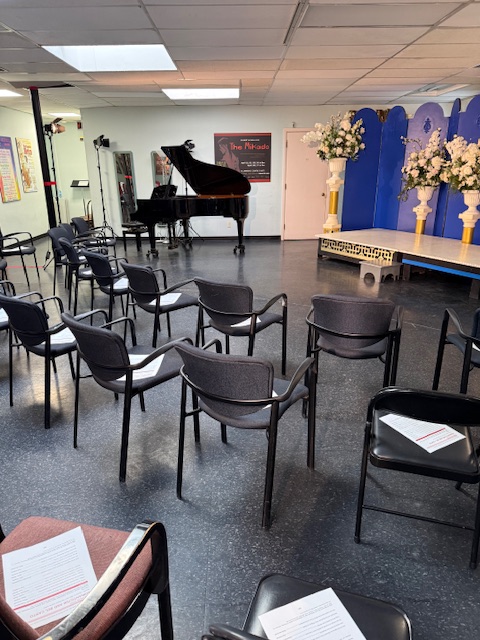
This was my first time seeing the space, an intimate venue on Queen St East near Carlaw Ave. On this occasion I think there was seating for perhaps fifty people (although I didn’t count).
The performance space for the Opera Salon at the Edward Jackman Centre
I think it has been used as a rehearsal space, but it was more than adequate for our purposes.
Here’s a list of the artists and what they sang:
Alexander Cappellazzo: “When other lips” from The Bohemian Girl and “Una furtiva lagrima” from L’elisir d’amore
Diana Rockwell: “Adieu notre petite table from Manon and “Ah non credea mirarti” from La Sonnambula
Holly Chaplin: “Regnava nel silenzio” from Lucia di Lammermoor and “Caro nome” from Rigoletto
Justin Welsh: “Cruda funesta smania from Lucia di Lammermoor and “Ah per sempre io ti perdei” from I Puritani
Cassandra Amorim: “Eccomi… O quante volte” from “I Capuleti e i Montecchi” and “Casta Diva” from Norma
Evan Korbut: “Pierrot’s Tanzlied” from Die tote Stadt and Bertrand’s aria from Robert le Diable
And to end, both before intermission and again at the end of the concert we heard “Libiamo, ne’ lieti calici” from La Traviata, sung by the entire company.
I think it’s a really good concept. I find the chance to hear an operatic voice up close a powerful experience that I highly recommend to anyone who hasn’t tried it. This isn’t to be confused with hearing opera in a big place like the Four Seasons Centre, where you’re sharing sound with roughly 2000 people, admittedly a superb acoustic considering that we get sets & orchestra. But when Holly or Diana or Cassandra hit their high notes or tossed off their coloratura, it was a fabulous intimate sound. Evan softly crooned the high note in the Korngold as though we were in a cabaret, a lovely effect. Justin gave us big notes, Alexander swooped up high to end his aria. I hope the experience helps persuade more people to investigate operas.
And we had great things to eat and the chance to drink wine (which i didn’t do, given that I live in Scarborough and had to drive home). The fact that the venue is east is something I really love, given that so many of our Toronto performance venues are west of Yonge St.
Voicebox – Opera in Concert return two weeks from today with Bellini’s La Sonnambula at Trinity-St Paul’s Centre, February 14th at 3 pm.





 barczablog