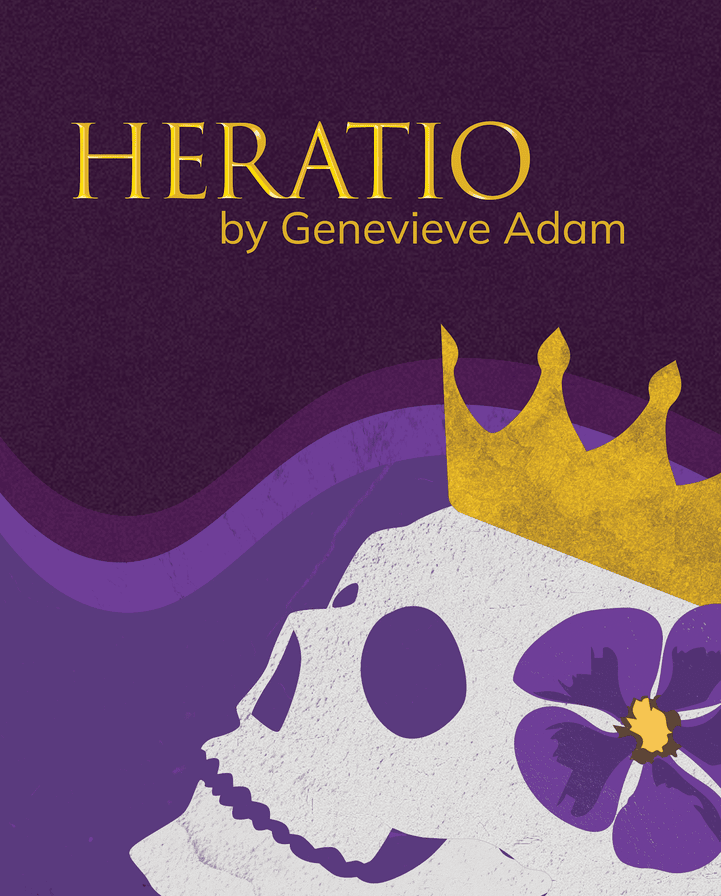
Kenzia Dalie explains Clowns Reading Shakespeare

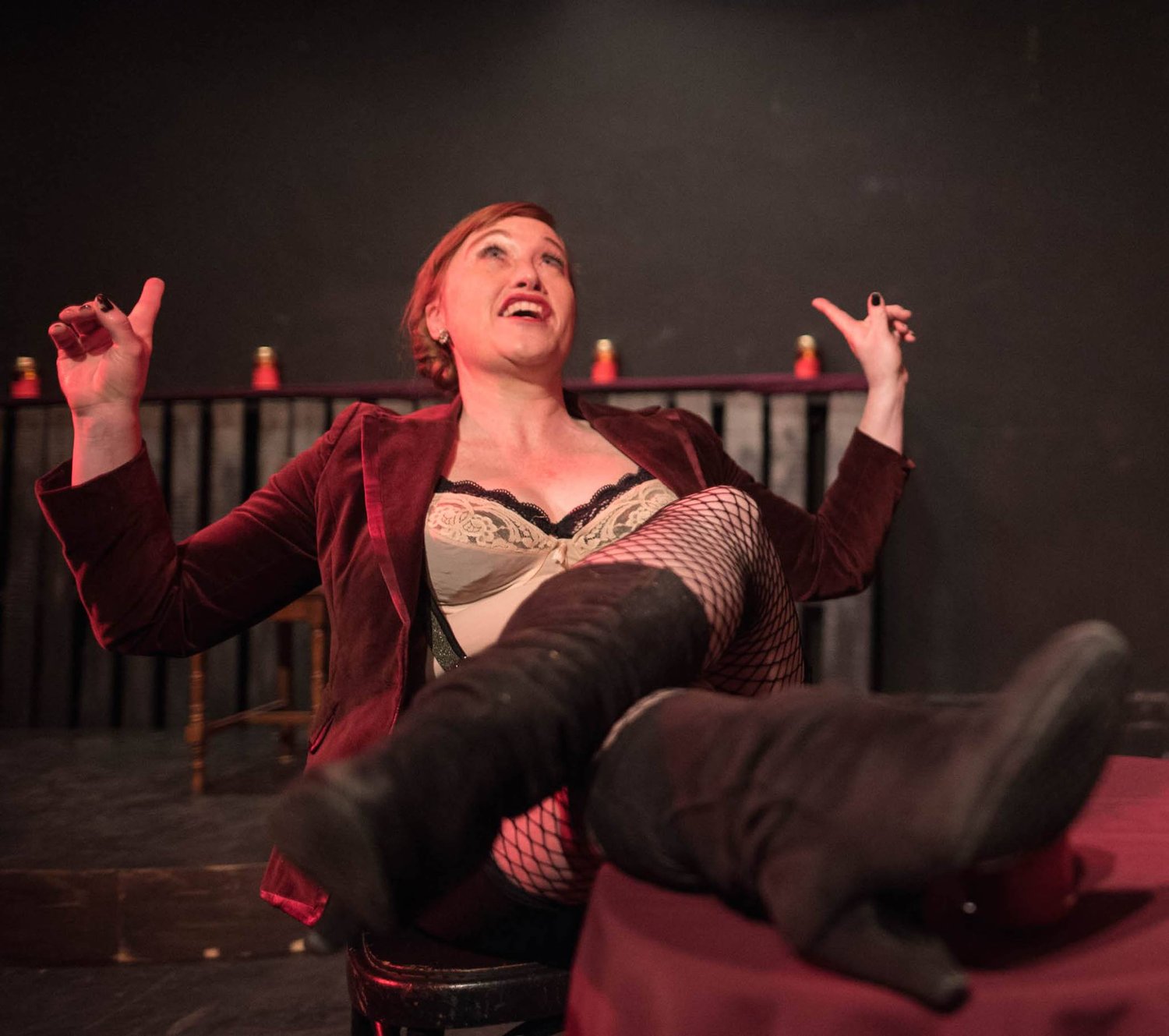
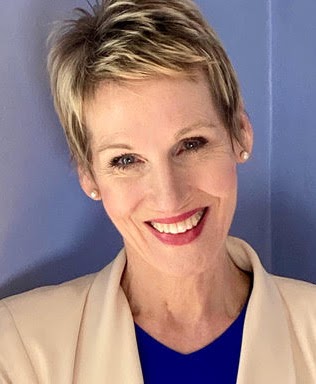
After a couple years of development (and many laughs), Kenzia Dalie is ready to share the full version of Clowns Reading Shakespeare, a show coming to parks east (Kew Gardens) and west (Memorial Park) in Toronto in June.

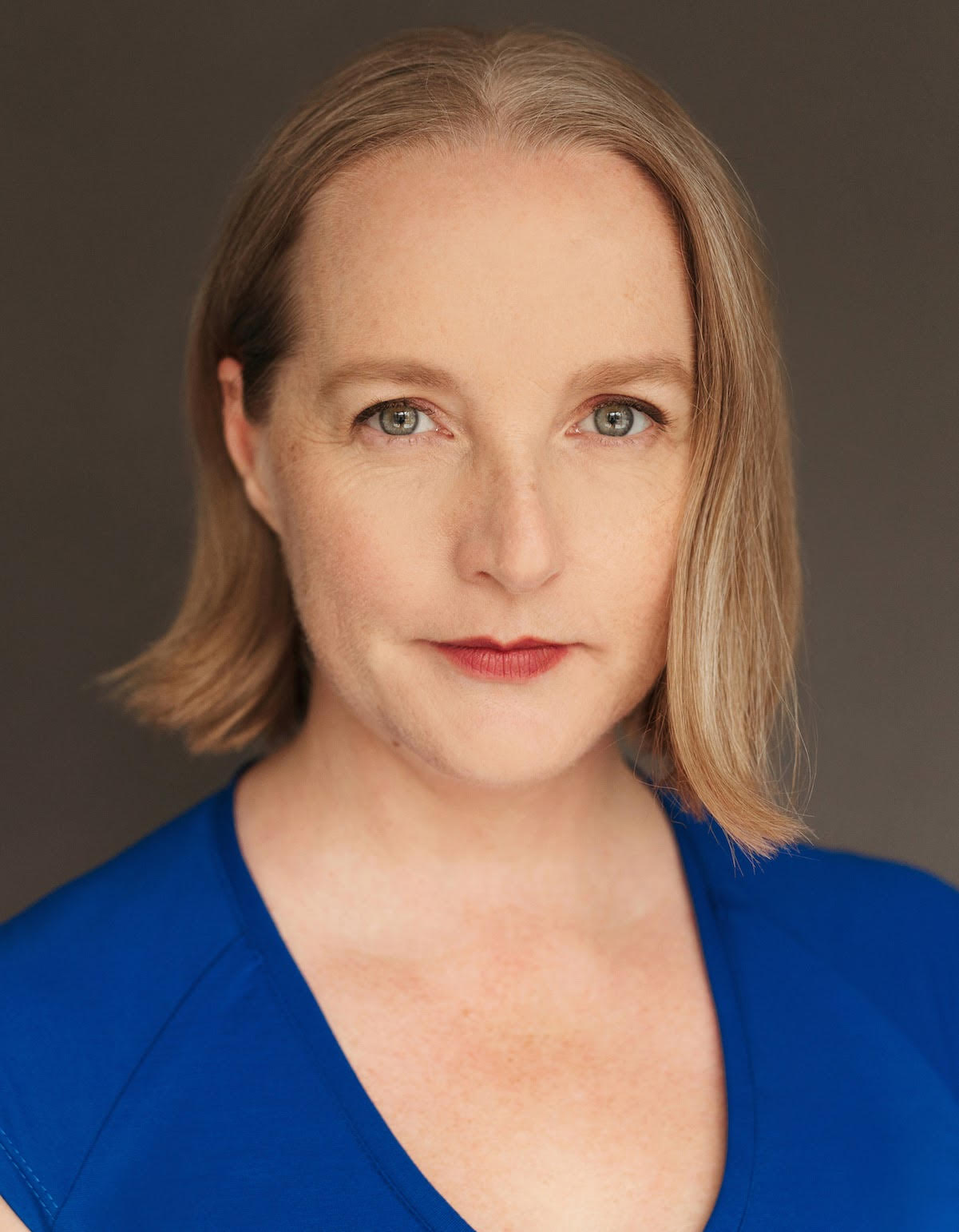
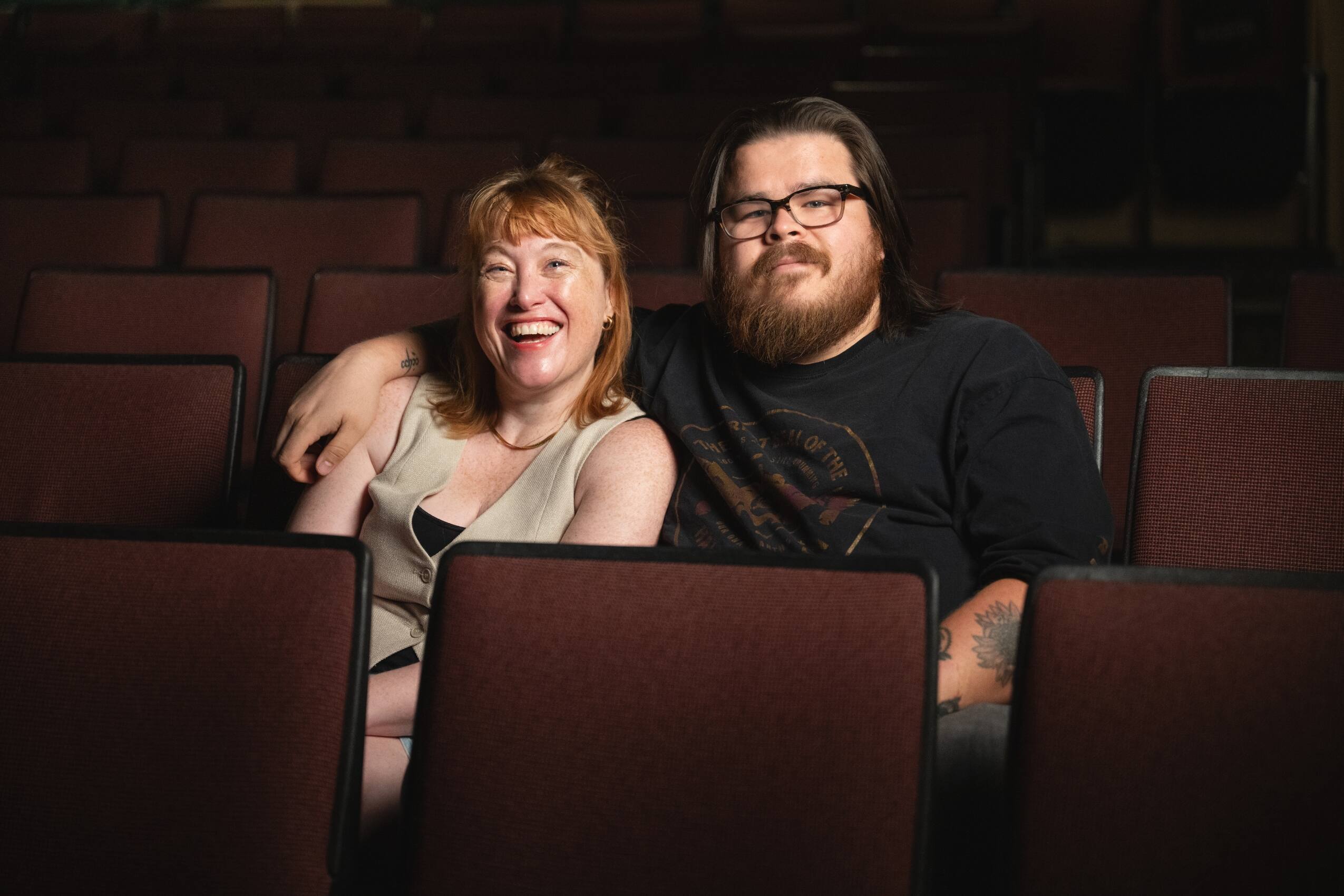
A multidisciplinary artist, designer, theatre director, and producer currently based in Tkaronto Kenzia is the co-founder of Full Haus Productions, a company dedicated to archival filming of new Canadian theatre, producing films highlighting the experiences of women and queer people, and creating events that uplift emerging independent artists. Kenzia gravitates towards stories that are silly, absurd and thought provoking.

When I heard about Clowns Reading Shakespeare I had to ask her some questions.

*******

Barczablog: Are you more like your father or mother?

Kenzia Dalie: What an interesting question! A village raised me, I am quite the amalgamation of my parents and their siblings, and their parents and their siblings too. My mother is a strong willed project manager and athlete. My father is a jokester, loves to draw and is a business owner. My grandfather is a chef and my great-grandfather was a poet and carpenter. My grandmother is a world traveler with an intuition that’ll genuinely amaze you. My aunt is a dancer and seamstress. My uncle was an inventor and musician. Just to name a few. I’m proud to say that because of them, I am all these things and more.

I come from a family of dreamers, creatives and stubborn immigrants. I learned from them to enjoy the simple pleasures in life, to take my time, to be in nature, to be silly and unapologetically myself. I come from cultures that are colourful and delicious, so of course they encouraged me to live my life the same way. I can strongly say my family is the reason I love theatre and the arts so much, despite none of them pursuing the arts professionally or knowing much about the industry. I think that’s how we differ. Though we share a strong creative philosophy, they didn’t have the opportunity to explore it. Instead, they built a foundation, so that I could. I hope that answers the question! Haha, I am a lot like both of them.

Kenzia Dalie

BB: What is the best or worst thing about what you do?      

Kenzia Dalie: The best and worst thing about what I do is definitely time management! It is simultaneously a blessing and a curse to be in control of my schedule. Having the flexibility to work my own hours, take meetings, schedule rehearsals and take days off when I want is so empowering.

However, with family and friends who are not all in the industry, it becomes difficult sometimes to schedule social gatherings or to commit to anything long or short term. In the event that something urgent can come up and needs immediate attention or needing to jump on those last minute work opportunities can throw a wrench into my calendar. Though, I imagine that finding that balance is something I will be juggling as long as I’m working in theatre and film. And I do love to juggle. 

But honestly, the best part of what I do is the freedom and ability to play, to be curious and creative with other artists. I love that I can say, “At work today, we colour walked outside for an hour and made silly shapes with our bodies!” This kind of play is the work and it is so important to creating and sharing stories. It’s an honour knowing that for many of our young audiences, our show could be their first exposure to Shakespeare. I have to remind myself that playing is the work and that’s always the best part! 
BB: Who do you like to listen to or watch? 

Kenzia Dalie: I love a podcast about human psychology! I find it interesting to hear from various scientists, psychologists or economists and their perspectives on the world as it is. I will eat up anything that tells me why we let our emotions get the best of us, our constant need for validation and understanding the self through others’ perception. For similar reasons, I’m a sucker for a good reality tv game show. But not any of those dating shows about finding “the one”. I’m more curious about shows that put strangers in a similar situation all fighting with and against each other for the same thing. It’s fun to observe the real relationships created but how the layer of a televised competition changes people. 

My go-to movies tend to be either light hearted animation, 80s to early 2000s action/comedy, or psychological thrillers accompanied by video essays breaking down filmmaking moments. I will also literally watch any animated short or cooking competition you put in front of me. 

BB: What ability or skill do you wish you had, that you don’t have?    

Kenzia Dalie: I wish I could walk on my hands or walk on stilts. Fortunately, I do have stilts and the capacity to learn. Fear keeps getting my way! I hope to stop that soon. 

BB: When you’re just relaxing and not working, what is your favourite thing to do?             

Kenzia Dalie: In my downtime, you can find me either painting, cooking or in the garden. All of these activities are quite similar and have a relaxing effect on me. They all involve getting my hands dirty, I get to make or grow something new out of nothing and then I end up with an enjoyable treat that I can either look at and enjoy or eat!

BB: Who/what was your first clown experience, and how did you feel?

Kenzia Dalie: I actually started clowning when I was 14. However, it wasn’t the theatrical clown that I practice today. I was an entertainment clown for children’s parties and holiday events. So I was making balloon animals, simple magic and card tricks, face painting and overall being a silly entertainer for kids. It was a great and easy job as a teenager, but after doing this for many years, I actually started to hate it. I didn’t like that I had to always present pure happiness and try to cheer kids up that clearly didn’t want to be there, or were just scared of clowns. Not to be dramatic, but I swore to myself that I’d never do it again.

Professor Myrna Wyatt Selkirk

Funny enough, years later in university, I took a class on Clown and learned about it as its own theatrical school of thought.

My professor at the time, Myrna Wyatt Selkirk led her classes with so much focus on innocence, colour, play, drawing from our own experiences and the beauty in failure. I instantly fell in love with it! 

While practicing the same entertainment tricks I knew, I ended up learning about my clown that I am always just a little bit grumpy, dissatisfied and easily disgusted. My clown doesn’t really like to laugh, and I am actually quite funny when I play pitiful. My clown loves to make others laugh, but it’s rarely through her happiness or enjoyment. This was very different from what I had known about clowning and it was the style of acting and improv that I felt most comfortable with because it was honest. I was able to draw on my earlier experiences and reconnect to something that was already a part of me but in a completely different way. It feels good to be clowning again, this time for myself.

BB: Who is your favourite clown

Kenzia Dalie: I don’t think I actually have a favourite clown. I think the best clowns are the ones who trust themselves and rely on their unique personalities. What I love about clown is the moment when something is going ‘wrong’ or that something is ‘failing’, you can see it on their face, and they share that with you and while being in a headspace of innocence and curiosity, they let you in on the fear of the complete unknown of what they are going to do next. That’s my favourite part! It’s watching the clown learn, grow and react to a situation in a way that only that clown could from their own experiences or knowledge of the world and immediate surroundings.

However, I did grow up watching an immense amount of Mr. Bean reruns that probably shaped a lot of my understanding and appreciation for physical comedy. I think Mr. Bean is a brilliant clown. 

BB: What’s your favourite Shakespeare film adaptation?

Kenzia Dalie: Joel Cohen’s Tragedy of Macbeth. I thought it was an incredible film, but remained so theatrical. I genuinely was blown away by the balance of film and theatre techniques and how it honoured the story through both mediums. Kathryn Hunter’s depiction of the witches was also just otherworldly, haunting and so beautiful.

Kathryn Hunter in Macbeth

Kenneth Branagh’s Much Ado About Nothing is a close second though! Both films had Denzel Washington… Maybe that says something! 

BB: I love both of your choices. Awesome. So, what Shakespeare will your clowns read?

Kenzia Dalie: Our clown troupe will be tackling selected moments from three of Shakespeare’s most famous tragedies: Hamlet, Romeo & Juliet and Macbeth! Our clowns are bringing their best foot, hand, elbow and nose forward to audition for our illustrious Director. Unfortunately, the Director has not chosen the play yet, so it’s best the clowns just audition for them all! We’ll see the clowns read iconic scenes such as Romeo and Juliet locking eyes for the first time and the lovers on the balcony. The clowns will also read and interpret heart wrenching moments from characters such as Banquo and Lady Macbeth in a way that audiences have never seen before. 

BB: Help me picture Clowns Reading Shakespeare.
Kenzia Dalie: Imagine yourself at auditions, a little nervous, excited, wanting to stand out and show the best of what you got, maybe you make some friends along the way. Everyone there wants it to be the best that it can be. Everyone is free to bring in their own interpretations, their own spin and that’s exactly what our clowns do. Clowns Reading Shakespeare is a silly and interactive window into what it feels like to be in an audition room.

You’ll learn quickly that some of our clowns have been acting for years and take the craft very seriously. They are the ones bringing in prepared monologues, skills and scenes to impress our director. For others, this is their first ever audition and they’re just happy to be considered, willing to yes-and anything thrown their way.

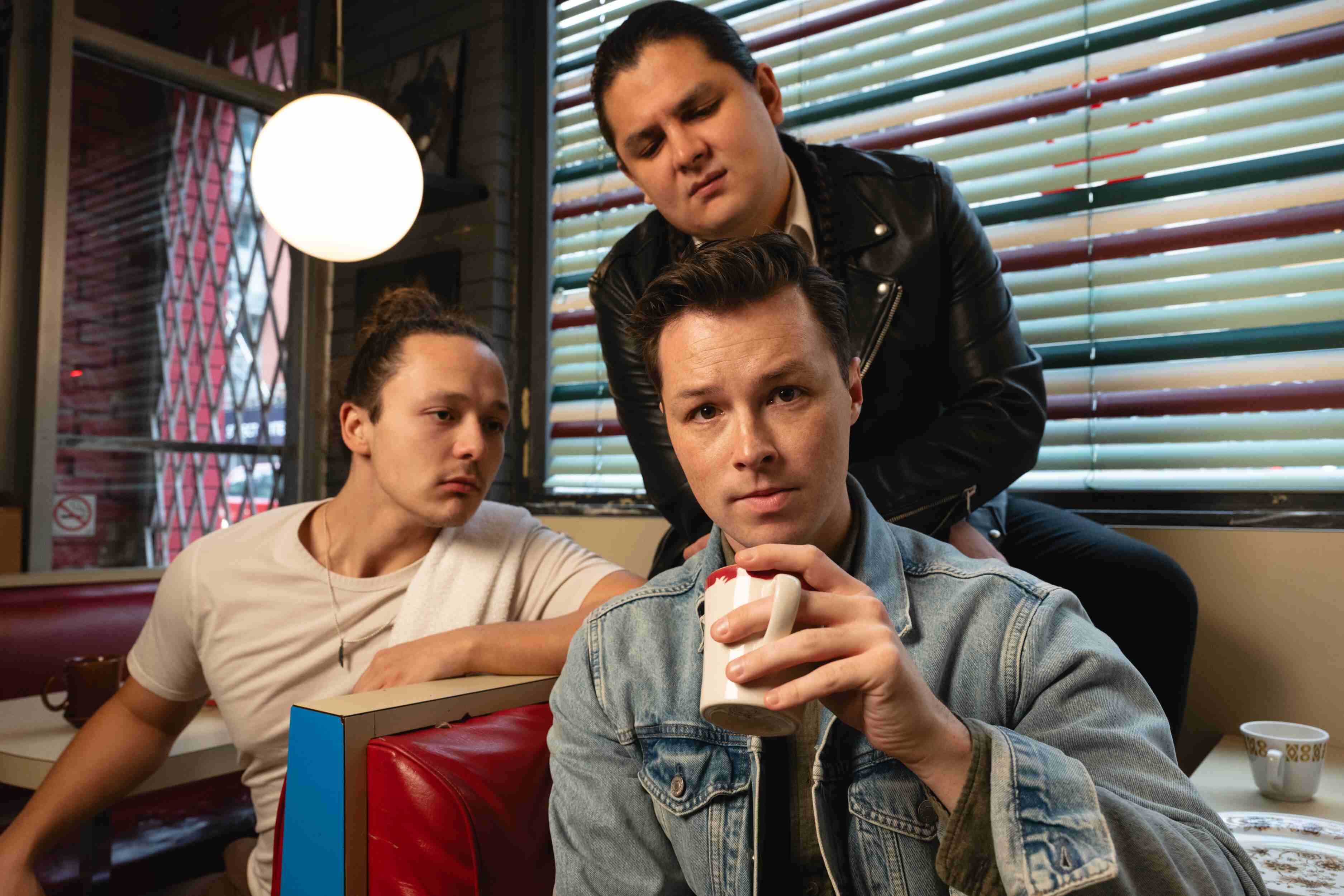
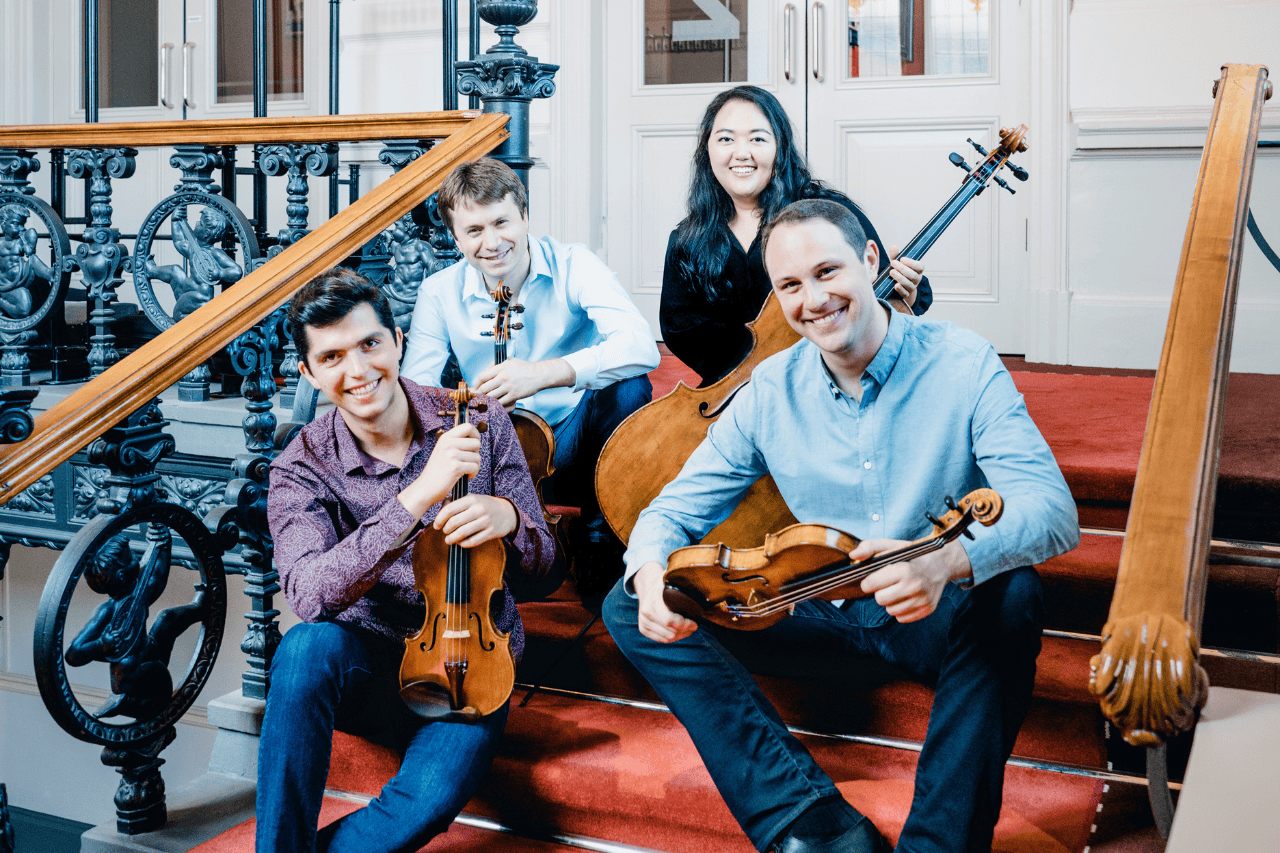
Brendon Kinnon, Callan Forrester, Sienna Singh and Alyssa Pothier (Photo: Elisabeth Bragale, FullHaus Productions)

BB: Am I correct to assume Clowns Reading Shakespeare is a family-friendly show?

Kenzia Dalie: Yes, this is definitely a family-friendly show! I really think it’s great for all audiences, as young as 4 and as old as 90+. Whether or not you are familiar with the Bard or not, there’s something to enjoy in this production.

While we are exploring tragedies and themes of death, it is all from the perspective of a clown! Death comes in the form of juice boxes and escaping imaginary daggers.

I will say that this is also an interactive show! Don’t worry– no one will pull you up onto stage unless you explicitly volunteer. The clowns will have you clapping, laughing, singing and exclaiming alongside them. But it’s possible they may ask for some help conquering the King of Scotland.

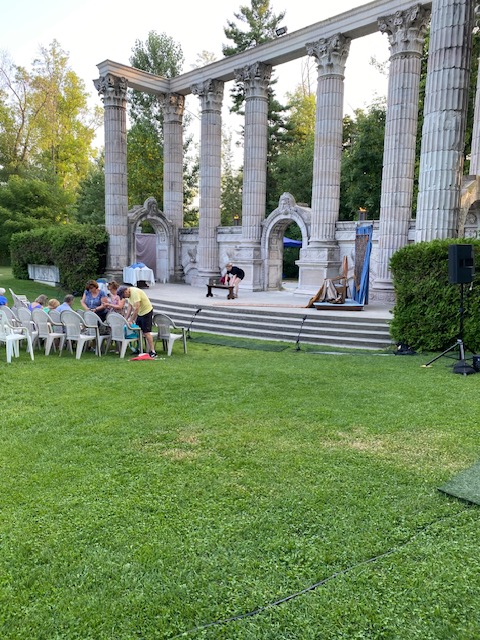
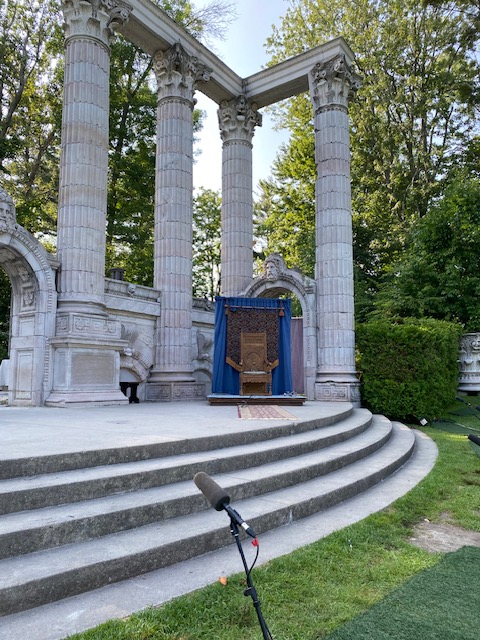
Clowns Reading Shakespeare is free, it’s outdoors, and we have a mix of matinee and evening performances. We encourage folks to bring a blanket, some comfy chairs, bug spray and some snacks to enjoy this comedy in the park! 

BBI’ve just seen a totally disrupted Macbeth done with puppets by Eldritch Theatre.  Clowns reading Shakespeare also seems like a kind of disruption, doing the unexpected. What do we get wrong about The Bard that you repair with your disruption?

Kenzia Dalie: I think all adaptation is disruption and repair in some capacity, but not necessarily because I think anyone is getting it wrong. I think using Shakespeare is a good template to explore the format of adaptation, and you’re not always going to please everyone with your interpretation. I’ve seen my fair share of bad adaptations, but I appreciate that people keep trying! It’s when we start thinking there’s a right or wrong way to perform classics that we move away from the heart of theatre which is to explore and create.

I think the main thing I wanted to do with this piece was take the tragedies and completely flip them into comedies. I wanted to create a funny show with tragic characters. I thought to myself what happens when we put these two extremes together: Shakespearean tragedy and a simple clown? What perspective can these silly beings bring to poetry and literature that we’re required to study growing up?

When we break down Shakespeare’s tragic characters to their base human parts, we have heroes and anti heroes that are consumed with feelings of guilt, remorse, deep love, unwavering loyalty, revenge, debilitating regret and their stories hurt, and it makes for incredible theatre. Similarly, when we break down clowns, we find creatures with simple desires fueled by basic emotion, but they come from a place of innocence and wonder.

I hope to repair and remind audiences of the joy that comes from being silly with that material we take seriously. To encourage play, to be motivated by failure rather than get stuck by it, to reconnect with the innocent parts of ourselves especially when things feel heavy. I think more often than not, especially as adults, we find ourselves easily consumed and made stagnant by our emotions and shortcomings like Shakespearean flaws and not as often propelled forward by it with the playful logic of a clown. 

BB: You’re working with Panoply Theatre Collective.  Tell us about the Collective and how that worked.

Callan Forrester (photo: Elisabeth Bragale)

Kenzia Dalie: I love working with this company! It has been such a joy to work with them on a number of productions in various capacities and call them my colleagues and friends. This is my fourth year working with Panoply Theatre Collective; I have been a production designer for them on a number of shows and Clowns Reading Shakespeare is the first that I’ve directed with them.

Brendan Kinnon (photo: Elisabeth Bragale)

They are dedicated to adapting classical narratives with a feminist, inclusive and modern perspective, and genuinely committed to re-centering iconic stories to feature queer folks, people of colour and people of different abilities so earnestly in their work.

Paige Madsen (photo: Elisabeth Bragale)

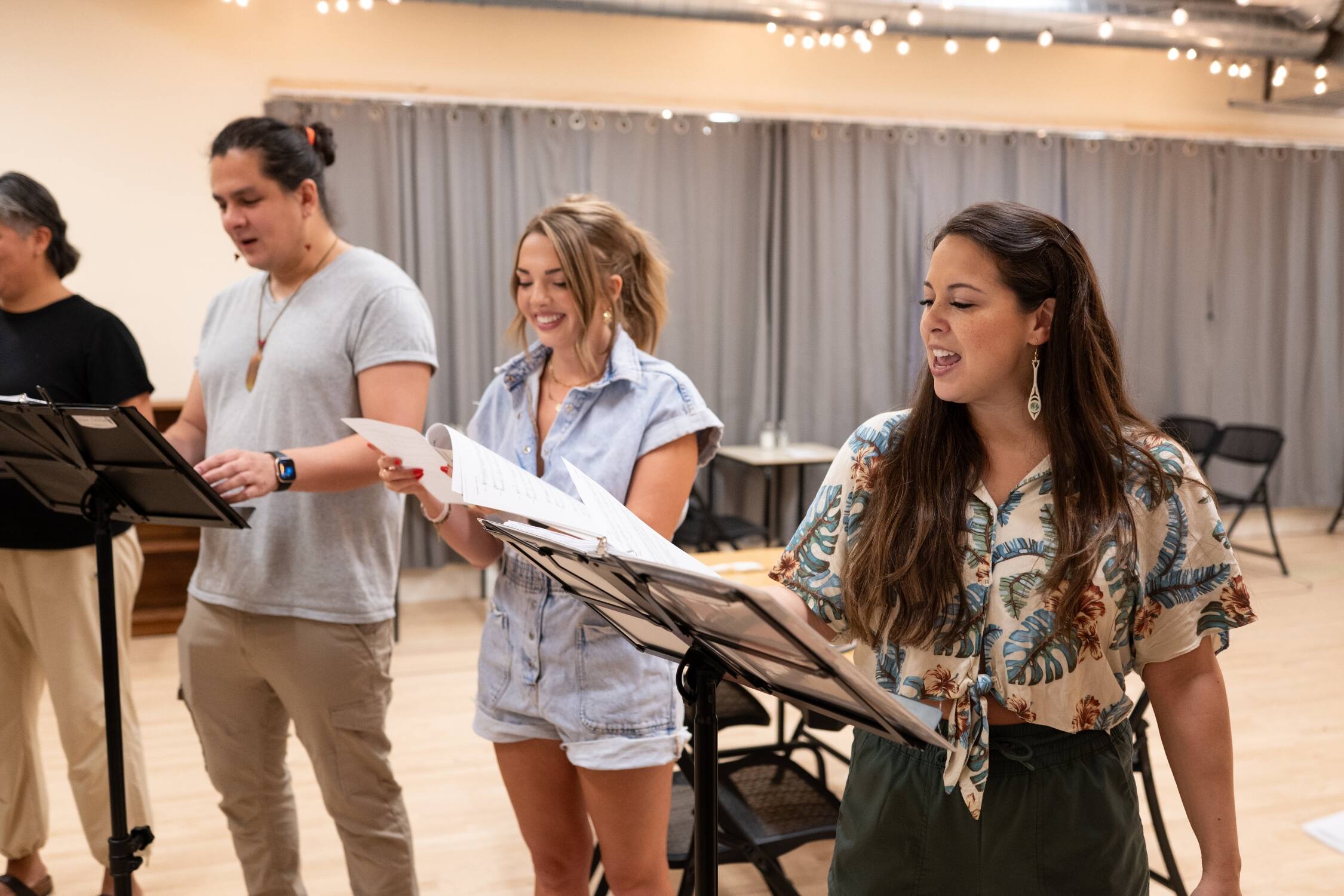
The intelligent creatives behind this organization are Paige Madsen, Sienna Singh and Alyssa Pothier; all of whom are performing in this summer’s production of Clowns Reading Shakespeare.

Alyssa Pothier (photo: Elisabeth Bragale)

In 2022, they asked me if I’d be interested in directing a show for them. At the time I told them that I wasn’t ready to take on a full Shakespearean play but I did have a budding adaptation concept that had to do with clowns. I had written a clown bit for an audition that was Romeo reading his own play for the first time and discovering his own story as it unfolds. I knew I wanted to expand the concept further and offered the idea to the Panoply Theatre Collective. They asked if I was interested in workshopping it with them and offered the opportunity to work on it with a troupe of clowns. How could I say no?

Sienna Singh (photo: Elisabeth Bragale)

So in 2023, as a pre-show for their production of A Midsummer Night’s Dream, I directed a 30-minute workshop performance with nine clowns and we explored the play Macbeth. Since it was a workshop, Panoply organized gathering feedback from the audiences and actors so that I could develop it further into a larger show. It was a success! I received a lot of great feedback and was able to remount the show a few more times that summer as pop-up performances with half the amount of clowns.

I used the summer of 2024 to rewrite the show, restructure the format, cut some characters and recontextualize the clowns outside of the world of the play and into the world of a theater maker: an actor, a director, a stage manager! I realized the initial workshop was more about Shakespeare than it was about the clowns. I didn’t want that. I wanted audiences to get to know the clowns, so we expanded it to a 50 min piece that explores 4 clowns and a director, through some of Shakespeare’s shows. This way we have time to see more of their personalities and relationships!

Panoply has been incredibly supportive during this process. They are always offering me resources and opportunities to continue to work the show and pushing me creatively. Throughout the entire process they have offered insightful dramaturgical questions, performance suggestions and script edits that have heavily impacted where the show lands today. I’m also incredibly appreciative that they continue to look into ways for us to remount the show for more audiences.

I learned through this collective that we have created a show that truly is continuously evolving and there is so much room for play. Working with Panoply Theatre Collective helped me bring a show to life that I had no idea was waiting somewhere in a silly little pocket of my brain. I’m excited to see how this summer’s Clowns Reading Shakespeare lands in audiences and to see where it goes next! 

*******

Panoply Theatre Collective present Clowns Reading Shakespeare outside on the following dates in the following locations:

Presented at Memorial Park (22 Little Avenue) June 19-22 and Kew Gardens (2075 Queen St. East) June 25-29

June 19, 7PM (Memorial Park)
June 20, 7PM (Memorial Park)
June 21, 2PM & 7PM (Memorial Park)
June 22, 2PM & 7PM (Memorial Park)

June 25, 7PM (Kew Gardens)
June 26, 7PM (Kew Gardens)
June 27, 7PM (Kew Gardens)
June 28, 2PM & 7PM (Kew Gardens)
June 29, 2PM (Kew Gardens)

Created by Panoply Theatre Collective and Kenzia Dalie
Directed and Designed by Kenzia Dalie
Featuring Alyssa Pothier, Brendan Kinnon, Callan Forrester, Paige Madsen and Sienna Singh
Associate Producer Bonnie Duff

Panoply Theatre Collective is a Canadian charitable non-profit theatre company that prioritizes collaborative creation of new and adapted works. 

Posted in Dance, theatre & musicals, Interviews | Tagged , , , , , , , , , , , , , , , | Leave a comment

Tales of an Urban Indian in Toronto

I’m a bit late to the party, as far as Tales of an Urban Indian, by Darrell Dennis. I was aware of the show awhile ago, speaking as a regular at Talk is Free Theatre, a company that has done a great deal of good work in Barrie, and occasionally ventured beyond that city. I think the play and its title went over my head when it first appeared. I wasn’t sensitive to its importance in 2009, nor for a long time after that.

Here’s a brief account of the show’s history in the TIFT press release:
With nearly 800 performances, TIFT’s production of Tales of An Urban Indian has
been touring internationally since it premiered in 2009, having played in cities and smaller communities across Canada, the US, Australia, New Zealand, Chile, Argentina, Suriname & Japan

Lucky for me that TIFT have now brought the show to Toronto, allowing me to get a chance to see it. It does get around as you can see on this flyer.

Windsor, then Kyoto, before coming to Hope United Church in Toronto. Maybe the reason the play travels effortlessly is because it’s light, unlike the shows I’ve seen recently such as the Kentridge Wozzeck from the COC or even Comfort Food at Crow’s Theatre. No complex set, no video projection. That’s because…
Tales of an Urban Indian is the story of Simon Douglas, a contemporary Indigenous man who grew up on both the reserve and in the “big city”. This dark comedy conjures up many characters that appear in Simon’s life, all played by one actor, Nolan Moberly.

Nolan was all alone on the stage before us telling the epic tale of Simon Douglas and all the other characters in his life.

Nolan Moberly as Simon Douglas in Tales of an Urban Indian (photo: Dahlia Katz)

The space at Hope United is intimate. There’s nowhere for Nolan to hide, but come to think of it, that goes for those of us in the audience, so close to Nolan that we see him sweat, hear him breathing hard, whichever voice he’s using. For 90 minutes he’s giving a virtuoso performance, the story of Simon sweeping us away in its life and death passions.
They call it a dark comedy, which is accurate. Directed by Herbie Barnes, designed by Kathleen Black, Nolan is athletic, bouncing around the stage, sometimes frenetic, sometimes gently vulnerable, sometimes volcanic, sometimes simulating exhaustion (he’s acting after all) before his next explosion of emotion. Is he really exhausted? Maybe.

But wow it’s a huge number of lines. Nolan has been TIFT’s Simon for the past few years, the eighth actor to undertake this mammoth endurance test, a genuine marathon, certainly more lines than one has in a role such as Hamlet. I lost count of how many different personages Nolan assumes in addition to Simon, some male some female and at least one metaphysical being. If you were only a student of drama, going for the purpose of admiring the actor and his chops, you’d love to be swept away by Nolan’s Tales. If you are coming from outside the culture, hoping to understand the complexity of Indigenous sensibility, a subject of endless depths & nuances, you should see this play. There are places where some people laugh while others wince. I wonder how it plays to someone who identifies as Indigenous, but as a Canadian I think it is essential viewing. It’s doing some of the important work demanded by the Truth & Reconciliation Report, at least in helping us understand the contradictions & challenges of being an Urban Indian.

Nolan Moberly as Simon Douglas in Tales of an Urban Indian (photo: Dahlia Katz)

The wide ranging travels of Tales of an Urban Indian are another sample of the creativity of TIFT’s artistic producer Arkady Spivak, the best thing to happen to Barrie. Of course it regularly drives me nuts when I miss one of their shows. When I think of the range of shows they produce, I have to admit that they punch far above their weight, some of the best theatre I saw in the past decade, such as their Candide, Bulgakov’s Moliere, their co-productions of Assassins or The Wedding Party. They’re worth the drive to Barrie, and thank goodness this time they’ve brought their brilliant production to Toronto.

Let me add a personal note, about Arkady whom I was fortunate to meet back in student days around the turn of the millennium (aiieee a quarter of a century ago). As I explained Erika’s indisposition, unable to attend and use my other comp, Arkady brought me to sit beside someone I knew only via social media. Don’t let the serious deadpan photo fool you, he is a social butterfly with terrific instincts. As a result I enjoyed the play far more, and learned a few things in the process. This is how to be true impresario, an artistic entrepreneur. He makes things happen by bringing people together, a nice guy first & foremost.

Arkady Spivak (phooto: Scott Cooper)

If you hope to see Tales of an Urban Indian you have a few more chances here in Toronto, as it runs until May 31st. Here’s the link for tickets.

Posted in Dance, theatre & musicals, Reviews | Tagged , , , , , , , , , | Leave a comment

Satisfying Comfort Food

I’ve just seen Comfort Food, Zorana Sadiq’s second play. It’s another creation supported by Crow’s Theatre, and quite different from MixTape (2021), her one-woman debut show. Zorana is a woman of many talents, a classical singer & actor whose reflections on music and recordings made MixTape seem like the most natural thing in the world.

For her next work she is, pardon the choice of words, expanding her comfort zone, writing a far more complex work while undertaking the detailed portrayal of a personage of great vulnerability. I can’t decide if I’m more impressed by her writing or her acting, but both are remarkable.

I am very happy to see Crow’s Theatre making an investment in Canadian talent, director & dramaturg Mitchell Cushman helping to bring the script to the stage.

Zorana Sadiq (photo: Paula Wilson)

Zorana plays Bette, a television food show host who makes comfort food in front of her studio audience (who we seem to be), to be broadcast to the folks at home watching her show. Different food choices will be a big part of the play’s discourse, and not just for the tv show. Food can be political, in the way it expresses ethnicity, speaks for cultures & generations, attitudes about sustainability. The richness of the associations in the text accumulate & grow like rising bread-dough, even as we stay anchored in food & family.

We meet Bette’s teenaged son Kitkat played by Noah Grittani.

Zorana Sadiq and Noah Grittani in Comfort Food- (photo: Dahlia Katz)

I’m glad I was on the phone last night with my daughter in USA, for a sort of reality check. The dialogue between Bette and Kit, between a mother and her son, felt totally authentic. I can’t calibrate ages anymore, but their dialogue is universal. And believable.

Of course things heat up between them, as you might expect. Kit is 15 and Bette is a single mom. Food is the most natural topic for a mom and her son to discuss, and to fight over. Zorana & Noah are superb as Bette & Kit.

We come in to a theatre space set up as if we’re going to watch Bette’s show, invited to put suggestions into the jar. Our “suggestions” seem to supply some of Zorana’s text, a bit of audience participation even if the ones she reads are 100% from her script and not truly spontaneous. But it’s a cool effect.

We fill in the suggestions using pencils (left chair) putting them into the cookie jar

The stage is used with great economy, as we see Kit’s online life shown projected on the wall upstage. The design team deserve credit, including Sim Suzer (sets & props), Echo Zhou (lighting), Tori Morrison (video), the tiny studio theatre space feeling like a television studio.

Noah Grittani in Comfort Food (photo: Dahlia Katz)

Except for the last 3 minutes the play held me firmly, the conflicts so absorbing I was (speaking of food) swallowed up by the play and its drama.

When we came to the end I was impressed we were able to find a pathway that was not a tidy ending, but completely believable. For this part of the play I saw we were confronting ideas that were so big they couldn’t readily be concluded. And I’m glad Zorana chose not to tie up the loose ends in a typical theatrical “ending”, but instead left things in a much more realistic place, equivocal and ambiguous.

Comfort Food is a superb achievement from Zorana, whose writing takes us into a fully developed world that holds our attention, all while playing the lead part as perfectly as if she were a real tv host.

I’m looking forward to seeing what Zorana cooks up next with her dramatic voice. But for now she’s starring in Comfort Food, a full meal at Crow’s Theatre continuing at least until June 8th.

Posted in Dance, theatre & musicals, Reviews | Tagged , , , , , , , | 1 Comment

Genre defying Macbeth

I have been a fan of Eric Woolfe for a long time. My first encounter with his genius was Madhouse Variations, more than ten years ago. I remember sitting in a theatre laughing so hard that I couldn’t stop, my throat sore from laughter. Yet there was an ambiguity about it, as there was a layer of horror with the laughter.

In 2025 Eric and Eldritch Theatre are at their home at 922 Queen St East, Red Sandcastle Theatre. Eric is remounting his Macbeth: A Tale Told by an Idiot. Eric plays all the parts, sometimes using puppets, sometimes playing them himself.

How good is it?

Eric Woolfe in Macbeth: A Tale Told by an Idiot
Photo by Adrianna Prosser

I saw it tonight between performances of Wozzeck at the Canadian Opera Company. Saturday was my second Wozzeck, Friday May 16 will be Wozzeck #3. I planned this entrely by accident, although with the benefit of hindsight I feel very lucky. Why? Because William Kentridge’s scheme for Wozzeck is based on Tadeusz Kantor the Polish symbolist who was heavily into puppets. His style has been summarized by epithets such as “theatre of death”, or “object theatre”.

In a week when I’m pondering the meaning of memory, I am remembering Milija Gluhovic, a classmate who was fluent in Polish and therefore able to engage with Kantor in a far more direct way than the rest of us.

Professor Milija Gluhovic


Google tells me
“Milija Gluhovic is Professor in Theatre and Performance at the University of Warwick.”

Milija was crazy for Kantor. I didn’t really understand until ha ha ha Kentridge brought Kantor to us in his operatic stagings.

I am trying to contain a mind that is boggling seriously from what I saw tonight, excited in ways that I think Milija would likely appreciate. I recall his enthusiasm. Somehow I wish I could get Milija out to Red Sandcastle Theatre, because I think he’d go a little crazy watching Eric in Macbeth.

But first let me get back to Kentridge again. He came up in my interview last year with Adam Klein.

Adam was in The Nose at the Met.

As we see in his Wozzeck, he uses a variety of methods to tell his story. We get projected images, animation, puppets. Ditto when we come to Wozzeck, the COC’s brilliant production of a work that straddles boundaries thanks to Kentridge’s stunning design concept employing puppets like the one in this picture.

Image from Salzburg production of Wozzeck showing puppet wearing gas mask

Okay I probably can’t get Milija to come to Toronto from Warwick where he’s a professor (that is if he even remembers me). But I want the cast of the COC’s Wozzeck to go see Macbeth. I will send messages to Ambur Braid and Michael Schade, because I think they will love this show. If anything it may give them a perspective helping them appreciate their own excellent work at the Four Seasons Centre.

Eric Woolfe working all by himself onstage gives us something to make you ask: did Shakespeare understand tragedy the way we do now? He has so many moments in his plays that are comical. Maybe we got it wrong, with all those definitions we memorized in our high-school English classes.

The hubris in the assumptions plays like a practical joke, when we hear that
Macbeth shall never vanquished be until
Great Birnam Wood to high Dunsinane Hill
Shall come against him
“.

Because of course we know what’s going to happen.

Eric Woolfe in Macbeth: A Tale Told by an Idiot
Photo by Adrianna Prosser

The gore, the killing, the horror: all play differently when the puppetry pushes us in the direction of a symbolist theatre. I saw Psycho just last week, a film that plays like a very dark comedy. Symbolist theatre is not as straight-forward as naturalism. The puppets make it harder.

Eric Woolfe in Macbeth: A Tale Told by an Idiot
Photo by Adrianna Prosser

Yes. Harder in the sense that when a man plays MacDuff, we can see expressions and body language, whereas seeing MacDuff enacted by a puppet held on the hands of the man playing Macbeth: it’s harder. Much harder. Or maybe it’s simply a different kind of theatre, requiring our imaginative engagement. We have to suspend disbelief. That extra work is a good thing. The entire theatre space rocks with the energy required, sometimes rapt in our silence, sometimes laughing our asses off.

When I speak of Eric’s Macbeth as genre-defying it’s because I think maybe we’ve been far too literal-minded in our thinking, an approach that’s disrupted by designers like Kantor or Kentridge, who make you think a bit harder. Wozzeck includes moments that are comical, even if the audience members who expect a certain reverent gravitas will be sorely upset. The overtones of the commedia dell’arte stock characters mess us up, even as Wozzeck is mocked & abused by them as though he were Pagliaccio, another clown-figure whose world implodes on him.

Eric is every bit as disruptive, turning Macbeth upside down. And it’s absolutely brilliant. While we see one person onstage, namely Eric, his team of director Dylan Trowbridge, designer Melanie McNeil, lighting by Gareth Crew and producer Emma Mackenzie Hillier have given us a Macbeth that every student of Shakespeare needs to see, to help us unlearn and rethink the playwright. Wow.

I’m hoping the run will be extended beyond this coming weekend when I believe it’s scheduled to close. But OMG you need to go see it if at all possible.

Further information and tickets.

Posted in Dance, theatre & musicals | Tagged , , , , , , , | 2 Comments

Adam Sherkin investigates the queer canon in upcoming Piano Lunaire concert COMPOSERS IN PLAY XVI.

Thursday night at 7:30 pm May 15th, at the Arts and Letters Club, Piano Lunaire will present COMPOSERS IN PLAY XVI, a concert subtitled “Sounding the Queer Canon”.

I asked Piano Lunaire founder Adam Sherkin a few questions about the program and its objectives.

*******

Adam Sherkin: This program grew out of discussions between myself and baritone Nathaniel Sullivan, at least initially.

Adam Sherkin (photo: Evan Bergstra)

Nathaniel is one of those unique artists who brings care, intent and expertise to everything he touches. I was struck by his willingness to curate a program in collaboration that could be dynamic, compelling and enigmatic, all at the same time.

Nathaniel Sullivan at Carnegie Hall (photo: Tim Dwight)

We especially set out to find a musical space for celebrating queer composers of our time and not-too-distant past that didn’t have to answer EVERY question nor provide a definitive “take” on the meaning of, or the content within, such a queer musical canon. From the outset, Nathaniel and I were comfortable fashioning this recital from a neutral, investigative zone of origin, armed with the conviction that this could turn into a long-term project, spanning multiple song recital programmes, engaging several new composers and years of collaboration.

Michael Genese

It was Nathaniel who recommended mezzo-soprano Claire McCahan come on board to plan for COMPOSERS IN PLAY XVI, (originally slated to be presented in NYC).

Claire McCahan (photo: Maundy Mitchell)

In order to do justice to Michael Genese’s, A Boy with Baleen for Teeth for mezzo-soprano and baritone, a voice like Claire’s was an important piece of this project. Claire immediately took to task with enthusiasm and spirit: she has now expressly contributed to the crafting of the recital that we present on May 15th in Toronto.

Composer Caroline Shaw (photo: Kait Moreno)

Her particular recommendations include “How do I find you?” by Caroline Shaw, and the touching, intimate setting from Annika Socolofsky, “loves don’t /go.”

Annika Socolofsky (photo: Nadine Dyskant-Miller)

Claire is a good friend and colleague of Socolofsky.

Adam Sherkin: The reclamation of the term “queer” that has evolved since the 1980’s by activists and members of the community proves inclusive, hopeful and empowering. As older generations will recall the pejorative context of the label “queer,” the LGBTQ+ community of today embraces the terminology and moves forward in vigilant efforts to include those historically marginalized. This has become part of the and fight for equality and human rights, not just in North America but throughout the globe’s countries that continue to criminalize queerness. As to how an audience at a contemporary classical song recital might understand the meaning of “queer,” each person will bring their own context (even one of unfamiliarity) as they take in new sounds. Culturally significant queer work is what we are seeking to share at this performance. We wish to present high quality music from the western classical tradition that is undeniably queer in its origin, its content, and its mode of being/mode of sounding. This is the spark — the initialization — of a larger discussion and experience of queer culture and, specifically, queer classical music as a sampling from the last thirty years in North America.

Adam Sherkin:  This is such an interesting question, and strikes at the very heart of what we are attempting to share and prompt here. The honest truth is: we don’t (yet) have a full understanding of the Queer Canon, at least not in classical music. The queer canon of, say, literature or visual art is more readily identifiable. The practice of music, for all sorts of reasons, remains aloof, abstract and somehow less quantifiable. Nevertheless, that should not deter one from exploring such possibilities, such riches. Let us begin with simple queries such as: what musical content makes a work queer? Extra musical content is more obvious to profile but how might queer text, for example, interact with a queer sense of harmony or line? Of the major five musical parameters (ie. melody, harmony, rhythm, dynamic spectrum and texture/sonority), which of these could be accurately identified as born of or integrated into a queer musical aesthetic? Indeed, what constitutes the queer musical aesthetic? 

If we infer that, through performance practice and audience feedback, academic research and sonic dissemination, that a canon of music can develop, then where and what is the queer musical canon? Arguably, composers such as Tchaikovsky or Schubert would never have identified in such a way. More than an anachronistic rub, their origin point for their creativity could not benefit from flourishing in a society that openly celebrated, let alone, accepted queerness on a wider stage. Benjamin Britten was out in private but existed, yet again in a different time. However, composers such as he could be singled in tracing a contemporary queer canon pursuing investigations into the nature of Britten’s craft and musical voice from a queer vantage point. 

A final consideration here (a mere graze of the surface on this vast ocean-topic), is trauma and suffering in a given community or self-identifying group. While the ravages of HIV/AIDS continue to affect parts of the world here in the 21st century, in the west it was the queer community in the 1980s that first confronted what was then a fatal disease and had to find a way to survive it and make sense of such cataclysm. These experiences – in a shared context – might also affect the canonic nature of art made by artists who lived or died in such punishing times.

The song opens:
IN THE FINAL MOMENTS
when the station wagon
pulled away, I shivered
and was thankful to feel something
Blood glued my eyes
I thought: the last thing
I want to remember
is not the look of hatred
in their eyes.

Excerpt from “Matthew Shepard”
From “Blood and Tears, Poems for Matthew Shepard”
Copyright by Jaime Manrique
Published by Painted Leaf Press

For DeBlasio, the exquisite poetry by Perry Brass led him to this powerful yet intimate set, All the Way Through Evening (Five nocturnes for Baritone and Piano) about an all-too-common experience of losing young healthy men to HIV/AIDS and the unfair and seemingly indiscriminate nature of that fatal illness. In DeBlasio’s setting, we perceive the loss of a friend or lover, companion or family member with intimacy and the weight of personal tragedy. And yet such experience of death of HIV/AIDS in the queer community of the late 1980’s and 1990’s were so widespread and similar in its unjustness, that this cycle of Deblasio’s transcends the individual experience and speaks to an entire community in their grief, as a record of what happened during that terrible time period.

Acclaimed American poetry Perry Brass has had an impressive career and continues to write today. His work has been part of the AIDS Quilt Songbook and the five poems DeBlasio set from Brass have been an integral part to the poignancy of All the Way Through Evening. From the fifth (and final) song of the cycle:

Walt Whitman in 1989
by Perry Brass

Walt Whitman has come down
today to the hospital room;
he rocks back and forth in the crisis;

he says it’s good we haven’t lost
our closeness, and cries
as each one is taken

He has writen many lines
about these years: the disfigurement
of young men and the wars

of hard tongues and closed minds.
The body in pain will bear such nobility,
but words have the edge

of poison when spoken bitterly.
Now he takes a dying man
in his arms and tells him

how deeply flows the River
that takes the old man and his friends
this evening. It is the River

of dusk and lamentation.
“Flow.” Walt says. “dear River,
I will carry this young man

to your bank. I’ll put him myself
on one of your strong, flat boats,
and we’ll sail together all the way
through evening.”

The third significant item on this programme, one by a young, living composer is the lucid and stirring setting from Michael Genese, “A Boy with Baleen for Teeth.”

Michael Genese

This coming-of-age narrative unfolds over nearly ten minutes making expert use of both voices and piano textures. Genese takes much direction and inspiration from the wondrous text by Rajiv Mohabir:

Mohabir describes the main character as “a falling star into the abyss” as they leave their family in the middle of the poem. The piece concludes with them trembling mid-air, “stars shone through the holes of my body,” almost a beacon of light for those who later struggle with community and identity as they have. The long-lasting damage done to queer people by western colonization’s ever-encroaching philosophies of binary gender, nuclear family structure, and societal respectability has policed and estranged us from communities in this way for centuries. This harm extends at several intersections to the struggles of Indigenous people, Black people, and all who threaten what James Baldwin called the “stupendous delusion” of whiteness in America, queer or not.

Adam Sherkin: As he self-proclaims, Nathaniel Sullivan, “is a musician, theatre artist, and writer devoted to holding space for reflection, understanding, and creative projects that champion change.” He is currently based in NYC and in demand both in the northeast and midwest where he grew up. Many highlights to note from his 2024-25 concert season. Check out his website (not to mention personal reading list!) and read his thoughtful and beautifully written blog.

Claire McCahan (note her social media “the wild mezzo”) seems to sing it all! Based in New Hampshire, her singing career continues to thrill and evolve: spanning baroque, recital, opera, and contemporary repertoire. She has a knack for narrative style and story-telling; she also composes and arranges songs herself! 

We are thrilled to have Michael Genese able to join us in person. Two of their works will be featured on this programme, including the solo piano piece with electronics, Meditation on Sphere of Influence, presented by Piano Lunaire in February of 2024 in New York. Michael is not just a composer – but a singer and multi-instrumentalist as well. They are also an Artist Ambassador with the New York Civil Liberties Union (NYCLU) and continue to pursue important justice work. 

Adam Sherkin: Very much a first outing for this repertoire. Piano Lunaire presented one of these songs in June of 2019 in Toronto: David Del Tredici’s “Matthew Shepard” at a fundraising event for Rainbow Railroad. Otherwise, this is an evening comprised of firsts, including several Canadian premieres. Composer Michael Genese (who has two works being featured on the program) will be heard for the first time by Canadian audiences: a true northern debut! We had hoped to perform this in NYC as well but we are sticking to Toronto only for the moment. With any luck, other presenters might pick it up and offer us further opportunity. There are more ideas where these came from and lots more repertoire from the canon to sound.

Adam Sherkin: This programme is likely educational in nature, insofar as all new work can enlighten, challenge and surprise us; it should edify if we allow it. But there is nothing particularly activist about what we are doing. Simply put, we are story-telling: seeking for more historical context, more weight to music we believe is deserving of repeated listening and of occupying a rightful place in a larger musical canon. Importantly, any performer –  LGBTQ or otherwise – might like to take up this music and present it. Reciprocally, any listener, LGBTQ+ identifying or otherwise may find it compelling and worthy to listen to. This explicit framing of queer music is not a new thing. It’s been well considered and exceedingly well presented by various organizations and artists for decades now. Some of these presenters solely offer queer-based music at their events.If the very content of this programme moves the listener enough to take action – to leave the hall and want to know more, understand better and act in the interests of human rights and justice for marginalized members of the queer community, then one could term what we are doing here as activism. But really, any good art or music should compel and inspire, aspiring to change people’s lives for the better.

Adam Sherkin: The encouragement here for reconsideration is perhaps an urging for renewed and unprejudiced listening: try, if you will, to listen afresh to (well, new!) music by composers you might know something about already. Why not perceive them in an immediate context of our world today with as little bias as we can muster as individuals? This is, of course, very challenging for us all, as we all bring our biases – political, musical and otherwise – with us into the concert hall experience. But finding a way to objectify (in the best sense) the work of queer musicians and attempt to discern the value – the currency, if you will – in their art might prove meaningful and even illuminating. This act of reconsideration then could create interest in our next PL program and begin to fulfill the vital role of critical mass/attentive listenership in the contribution to, and the (re)consideration of, a queer musical canon.

Adam Sherkin: One must admit that Toronto is a far safer place than any major American city right now, even the traditionally LGBTQ+ friendly metropolises. This is, of course, due to the current federal government in Washington and its increasingly public battle against queer rights; what they term “gender ideology.” Members of the trans community have already been expressly targeted with an executive order recently upheld by the Supreme Court baring trans people from military service and restricting transgender care for minors. 

Towards travellers to Toronto, the queer community remains welcoming and evolved in its acceptance and integration. While we still have much work to do here in Canada, we can offer safety and inclusivity to those folks visiting from other countries. Piano Lunaire has endeavoured to be an increasingly active and contributory member of the Toronto LGBTQI+ network. Indeed, singers Nathaniel Sullivan, Claire McCahan and Michael Genese are each American nationals who relish the opportunity to present their artistry to a Toronto audience. 

(This program was originally conceived for Piano Lunaire’s NYC series, especially given the prevalence of New York-based composers on the programme. Due to the unraveling political situation in the US, we have opted to present the recital here in Toronto instead, at least for the time being, as some of the personnel felt unsafe being in the United States under the current administration.)

Adam Sherkin: Our donors and patrons at Piano Lunaire have long supported such curatorial visions and continually encourage us to keep innovating in many realms of new music, including the realm explored here in COMPOSERS IN PLAY XVI.

The Arts & Letters Club, being an historic and long-standing Toronto institution founded by journalist Augustus Bridle as a gathering place for artists, writers, musicians, and performers, today increasingly looks to the future, welcoming younger generations through their doors. 

They have been most generous in partnering with us on all programmes, including this one. Piano Lunaire has been happy to support the work of Rainbow Railroad in the past and continues to do so. This Canadian-born, global non-profit organization remains a beacon of inspiration and hope, especially those members of the international LGBTQI+ community being persecuted and punished in their home countries and in urgent need of safe haven.

ChamberQueer in Brooklyn has been a great inspiration to our work on this programme, as has the Queer Poetry Collective, The NYC Gay’s Guys Book Club (under the exception stewardship of Jon Tomlinson), Counterpoint Community Orchestra, The Toronto Gay Men’s Literary and Arts Salon (led by the intrepid David Hallman), The ArQuives (Toronto), The 519, The Center (NYC), NYC LGBT Sites Project and OperaQ here in Toronto. (Be sure to check out their upcoming collaboration with New Music Concerts on June 11th, “Glimmer: a personal and shared exploration of Queerness. )

PROGRAMME:

CAROLINE SHAW – How do I find you? (2018) for mezzo-soprano and piano
DAVID Del TREDICI – Three Baritone Songs (1999): No. 3, “Matthew Sheperd; text by Jaime Manrique
EVE BEGLARIAN – Farther from the Heart (2018) for voice and piano
CHRIS DeBLASIO – All the way through the Evening (1990) for baritone and piano; text by Perry Brass
~ ~ ~
ANNIKA SOKOLOFKSY – loves don’t / go (2016) for mezzo and piano
SHERKIN – CARETAKEROFDREAMS* for baritone and piano; text by Fan Wu
MICHAEL GENESE – MeditatIon for Sphere of influence** (2022) for solo piano/electronics
GENESE – A Boy with Baleen for Teeth** (2023) for mezzo, baritone and piano; text by Rajiv Mohabir

* WORLD PREMIERE; Piano Lunaire commission
** CANADIAN PREMIERE

Thursday, May 15, 2025 at 7:30pm: The Arts & Letters Club. Doors open at 7:00 PM; performance at 7:30pm. $25 General admission; $30 Seniors and art workers; FREE for students. Cash Bar and refreshments available throughout the performance.

Direct link for tickets.

Posted in Interviews, Music and musicology, Press Releases and Announcements | Tagged , , , , , , , , , , , , , , , , , , | Leave a comment

First Mother’s Day since my mother passed away

I played the organ at Hillcrest Church Sunday, substituting for David Warrack. It was Mother’s Day, the first Mother’s Day since my mom passed away.

I played one of her favourite melodies as the Offertory. Ack Värmeland du sköna is a song we heard Jussi Björling sing, and a tune she sang the last time I saw her (she sang the melody, not the Swedish lyrics).

My version was simply an instrumental played on the organ. I remember being impressed that she heard the resemblance between this folk tune and the melody of Smetana’s tone poem about the Moldau.

I’ve been looking at old photos and books. I found an album with pictures from the 1990s reminding me of trips Zoe and I took to Ottawa, taking my mother along to visit her old friend Norma Freitag in Eganville Ontario (no wait…I realize it was at a cottage on Mink Lake, not actually in Eganville).

Norma Freitag, my mother Katherine Barcza and a dog whose name I’ve forgotten

Norma had helped my mom in the difficult period after my dad passed away in 1960, a fellow member of the Lutheran congregation in Toronto. The album of printed snapshots that my mom assembled includes Norma’s obituary from 2001.

I realize now that motherhood takes many forms. My mother was a single mom in 1960 with four children. Thank goodness for the help she received from people like Norma. This picture from the 1990s is long after the fact (I’m grown up with my own daughter), and my mom is the one taking most of the pictures, from a time when we printed pictures and kept them in albums.

Norma, me and Zoe at 9 or 10 years of age.

It all feels so remote from the present day.

Norma had a nephew (I think) who was at the opera school at the same time as Peter. George Reinke was in that same Ariadne that I wrote about a few months ago. I think his part (Officer) may have been as tiny as my brother’s (wig-maker), but please note I’m digging into my memory, fascinated by how little I can remember.

George Reinke was in the tv broadcast of Louis Riel. He’s one of the soldiers we see at the very beginning. If I recall correctly he gets the second or third line of the opera, as the soldiers encounter the fortifications of the rebels. He says/sings “it’s laced with wire”, and I think it was delivered in the same sprechstimme –a mix of speech and singing– that we encounter in the current COC production of Wozzeck that I saw again on Saturday. While I have lost touch with George (and can’t find him anywhere online) it’s very cool to think he has immortality in the CBC broadcast of Harry Somers’ centennial year opera.

I am going to quote something my friend Carol said a few days ago that rang true (I almost said “wrung true”, but that gives the sentence and the metaphor a different direction). Carol said “Emmett’s kids aren’t going to know me.” Emmett is her grandson.

Lately my mind boggles as I contemplate history and the passage of time. My father died in 1960, and I have almost zero memory of him. I vaguely recall his voice from one thing he said, a very kind statement. Over the past five years I spent a lot of time with my mom, as a caregiver taking meals to her, transcribing her rhymes, watching films & tv with her, listening to her thoughts. And I feel already that she’s slipping away from me, even though she only passed away in December 2024.

It is in that spirit that I try to recall those visits to Norma in Eganville, peering at the pictures. Norma made us a dinner one night with deer that was road-kill. I recall her giggling about it, something about the Lord providing. And I remember she made the venison taste quite wonderful.

My mom’s photo of the view of Mink Lake from the cottage

The drives up to Eganville were a fun time with Zoe, when she and I drove my mom to visit Norma. We’re both so much older. I think it was roughly 30 years ago.

I looked at the photos, seeing my mom, Zoe, myself, Norma and her sister Elaine. I am humbled by the remoteness of the memories, so much more recent than what I recall of my father 65 years ago. I was reminded of my mom’s sports-car, a Datsun 240Z (or was it a 260?) by my friend David Wright in a recent email exchange. David was in the boys chorus in The Luck of Ginger Coffey, an opera presented in 1967. It was the other opera that nobody every talks about from Centennial Year, given that Louis Riel (that I mentioned) was revived for the Sesquicentennial, in 2017, while Ginger Coffee seems to have been forgotten. I vaguely recall the sound of Mignon Dunn singing the name “Ginger” to her operatic husband Harry Theyard in the opera. That’s all I recall. I remember even at the age of 12 thinking that Mignon Dunn was stunningly beautiful in the way a 12 year old boy notices such things. I think I also saw her sing Carmen. But while I recall that voice, until David mentioned the sports-car, I had forgotten about it. Music seems to stay with us, thinking of my mom’s Swedish tune, George Reinke’s or Mignon Dunn’s voices in my head.

How much else have I forgotten?

This morning as I was preparing for the church service I had an impulse, a kind of inspiration. I couldn’t figure out what to play for the postlude, and then thought of the song “Let it be”. It was 8:30 am, when I searched for the lyrics, printed them, practiced them. I went with the key of A major so it wouldn’t be too high for me to sing. The congregation seemed to enjoy it. My own private experience is irrelevant, I suppose, given that the song speaks to motherhood and reconciliation, universal themes appropriate for Mother’s Day. I feel so lucky to connect with the Hillcrest community.

I write these little blogs to help my memory. Whether it’s Speranza Scappucci or Yuja Wang or the COC, taking the time to analyze the experience and then to write about it makes it a deeper experience for me. My mom had a different relationship with each of her kids, as each of us brought out something different in her, so each of us has slightly different memories.

Erika and I had dinner today with Peter & Connie, including lots of conversation about opera and song cycles, and then we went downstairs where I coaxed Peter to sing a bit, including some of the Pagliacci Prologue and some of Siegmund from Act I of Die Walkuere. Peter wasn’t feeling great, perhaps getting over some sort of throat infection, but ha the piano lured him into singing, hitting the high A as Siegmund and the A-flat as Tonio. While he was a superb Silvio (a higher lyric baritone) in his day with the COC he’s much older now, with a sound that would work as Tonio: although I don’t think he’s planning to sing the role.

Too bad. He sounded really good.

And funnily enough while I have been harping on things we forget, Peter remembered the Italian & German lines and the notes really well, while I scrambled around at the piano. Fun.

I wondered if the reason I had the idea to sing Let it be was inspiration from my mom, whose presence I feel a lot lately. And I wondered too if Tonio was also her idea. What in heavens name led me to start playing those C-major chords that begin the Pagliacci prologue? But I feel my mother’s presence.

It was a really good day, and we were glad to have the visitors.

Posted in My mother, Opera, Personal ruminations & essays | Tagged , , , , , , , , , , , , , | 4 Comments

Asking Ardra Shephard about her Fallosophy

I dashed through Ardra Shephard’s memoir Fallosophy in a day, unable to put it down and laughing out loud regularly, the most entertaining book I have read in a long time. I am such a lucky guy that I get to write a review of something so wonderful, so inspiring, so full of laughter.

May is MS Awareness month. Author, former opera singer, podcaster, Ardra is also an MS activist, seeking to raise awareness.

I cannot lie. I pride myself on vulnerability, sharing the moments when I am excited, moved, teary- eyed. From time to time I encounter an artist who impresses me so much I am unsure how to proceed. I may be star-struck, or intimidated. Of course the problem with being so impressed with someone? when I had the chance to interview Ardra I was a bit too cautious, tongue-tied, over-thinking.

Slow.

But the interview is about her, not me. My job is to get out of the way, hoping you get a better perspective on Ardra and her work.

Voila.

*******

Ardra Shephard: I have qualities in common with both but I’m probably more like my mom – I share her can-do attitude, love of fashion and gossip. I have my dad’s green eyes and sardonic sense of humour. We can both make my mom laugh but no one cuts her up the way my dad does.

Ardra Shephard: The best thing about the kind of work I do (writing, podcasting, consulting, speaking) is getting to be creative and self-expressive. I’m my own boss and have the luxury of only committing to projects that interest and excite me. I make my own hours which feels essential when trying to accommodate the whims of chronic illness. The worst part is probably the math. I have income from multiple sources that comes in unreliable dribs and drabs. Accounting is a drag. I hate doing taxes, keeping receipts and navigating Quickbooks. Every year I decide it might actually be nice to get audited just so that someone who knows what they’re doing could sort things out for me.

Ardra Shephard: I love TV but I am not a fan of having TV on in the background. I can only focus on one thing at a time. I tend to prefer smart comedies like Arrested Development, The Mindy Project and Veep. I loved Derry Girls. I recently watched CBC’s Small Achievable Goals and it’s the kind of story telling I’m passionate about. The way the show uses humour to disarm the audience is an unexpected education. There’s some intersection with disability in this show which features peri-menopausal and menopausal characters who remind us of how absurd our bodies are and the lengths we go to to hide what we’re going through just to get through the day, whether professionally or socially.

Like everyone, I just finished bingeing White Lotus. I am about to enter a period of
mourning because Righteous Gemstones is ending.

In terms of YouTube, Bliss Foster’s fashion journalism channel has filled the Jeanne
Beker-sized hole in my heart.

As for music, I appreciate lots of genres. Choral music, opera and 90s alternative are
my nostalgia jams. But I like to have fun with my playlists. If we’re having Chinese
takeout I’ll look for Chinese pop music on Spotify. Once we were having pierogies and I
discovered a truly awful song about borscht. I’m often looking for something I’ve never
heard before.

Ardra Shephard: I feel like I’m supposed to say accounting, but I don’t want to waste a wish on something so boring. I really love languages. The French I learned growing up isn’t going anywhere, but as an adult I got fairly proficient in Italian and Spanish. Those languages are slipping away from me now from lack of practice, but I expect to work on them again when the timing is right.

Lots of people “wish” they could play the piano or paint or sing or whatever without having to put in the work. But I enjoy the learning process. I’m often taking some kind of class. That said, I don’t stick with things I suck at. I took all of one knitting lesson then quit because knitting somehow gave me back pain. That is how athletic I am.

Ardra Shephard:The belief that disability is a fate worse than death. I certainly thought all my best days were behind me when I was diagnosed. MS sucks. Zero stars. Do not recommend. But it was a surprise for me to learn that a difficult life doesn’t have to be a joyless one.

As Canadians, we’re proud of our efforts toward diversity and inclusion but we often forget that diversity includes disability. We have a high tolerance for lack of accessibility in this country, whether in housing, public spaces, workplace accommodations, transportation…the list goes on. We’re more ignorant about inaccessibility than we are properly outraged.

Attitudes that reinforce the narrative that people are only worth what they can contribute financially or physically tend to get me fired up. I bristle about our cultural understanding of concepts like dignity and independence, but maybe these are things to explore in another book.

In terms of what we get right? Change is slow but we are making progress.

Ardra Shephard: Selma Blair (who was diagnosed with MS a few years ago), said something like
MS is easier that I thought it would be. It’s also way worse,”
and I think that’s the absolute truth about MS, and possibly life in general. I don’t think anyone can really know what MS is like unless you have it. And thank God. It would be exhausting if we all had first-hand experience of everyone else’s pain. Giving people the benefit of the doubt, providing people with what they tell us they need is, I think, a more reasonable goal.

Rolling my eyes is an essential communication skill that I am unwilling to abandon (John Fanning once called it my most distinctive characteristic). But I would hate for my bad attitude to make anyone feel intimidated or worried they might say the wrong thing. I am a reasonable person with plenty of grace for putting one’s foot in one’s mouth. I do it too! It’s almost always better to ask questions than to assume.

Ardra Shephard: I’m in the middle of recording the audiobook (which will be out in July) and from a technical standpoint my vocal training is definitely helping me cope with fatigue and the dysarthria (an MS symptom) that sometimes shows up in my voice.

Ardra Shephard: Wow, time flies. Messiah feels like a lifetime ago. It is remarkable and wonderful that you’ve been reviewing Toronto’s arts scene for so long!

I don’t consider myself a singer anymore and I’m actually surprised at how I’ve been able to make peace with this fact. Singing had a time and a place in my life and I’m so grateful I got to do it in any capacity but that chapter ended when singing started to cause me more grief and frustration than joy.

I have an awful lot of scores and sheet music if anyone wants it.

Ardra Shephard: I think I’ve grieved singing sufficiently so that it’s not painful to discuss, but I did get a bit sucky last Christmas when I struggled to sing the hymns at church. In a past life I would have been belting out the descants. Now I’m one of those curmudgeons who refuses to sing Happy Birthday. I can let myself feel sad from time to time, but it’s generally easier to focus on what I have and can do. Plus, I feel lucky to live in Toronto where there is so much opportunity to participate in the arts from the comfort of the audience. It helps a lot that I am a better writer than I ever was a singer.

Ardra Shephard: I see your threat to cry and raise you this pop ballad I recorded for my husband’s 40th birthday. It’s called Through Your Eyes and it’s about, well, have a listen.
(My friend Mike, who we meet in the book, produced this and sings backup vocals.)

Ardra Shephard: My ability to sing was first impacted by my reduced stamina. Singing is so physical and even early in my diagnosis I could get breathless pretty quickly, though I do think that for a number of years singing was excellent physiotherapy. Gradually my core strength and balance deteriorated. When I started to need a cane about ten years ago, that was kind of the beginning of the end of singing for me.

In 2020 I had an MS relapse that impacted the quality of my voice and caused dysarthria (think Marge Simpson meets RFK). I had to do speech therapy just to be able to communicate. It took a couple of years for things to settle down. The dysarthria still shows up if I’m really tired, and I was worried it might impact my ability to work (on my podcast and as a host of AMI-TV’s Fashion Dis), but rehab helped and I’ve mostly been able to work around it. Phew. My book is literally about my voice (in various capacities), so I would have been heartbroken if we’d needed to get a voice actor for the audiobook.

Ardra Shephard: I was never the class-clown. I’m not really silly and I was kind of a serious, if somewhat sarcastic kid, but laughter has always been part of my life. I was raised on Monty Python and Fawlty Towers. The comedy of my teen years was SNL, Norm McDonald, Kids in the Hall, The Simpsons at their peak. My friends and I used to write our own irreverent, Letterman-style Top Ten Lists and draw cartoons to make each other laugh during choir practice. I remember making up ridiculous unrepeatably inappropriate operas with my cousins.

Ardra Shephard: I’ve always been driven by my own determination to build a full life for myself, even before I was diagnosed with MS. My parents never needed to tell me to study or do my homework. Anyone who’s ever told me to quit or slow down might have led me to feel frustrated or misunderstood, or even occasionally like I have permission to rest and not put so much pressure on myself. But I don’t think I’ve ever set out to prove anything to anyone other than myself. My goals have always been self-imposed.

Ardra Shephard: Coping well with anything means allowing yourself to feel whatever you’re feeling. I never use humour to deny what I’m going through. I believe in laughter, but I also believe in freaking out as necessary. Grieve and get on with it is kind of my MO. A comic sensibility can help make sense of the absurd, it can help you process suffering. It doesn’t prevent suffering, though it may take the edge off.

Ardra Shephard: My physiotherapy routine includes a tedious series of toe curls, tiny movements, stretching, light weights and 3 squats if there’s time. The goal is to preserve function and increase balance and strength. Realistically though, it’s about getting worse slower than I would without an exercise routine, which sometimes makes it hard to stay motivated.

Fortunately I am also a rider at Toronto’s CARD (Community Association For Riders With Disabilities). If you saw me walk you’d never believe I could ride a horse, but equine therapy is fantastic for people with all kinds of disabilities. A horse’s gait mimics a healthy human gait, so when I’m riding my hips think I’m walking the way nature intended. Riding supports posture, cognition and mood. I love interacting with the volunteers. CARD has what they call their “mini-royal” coming up on June 14th where you can see rider demonstrations and learn about the organization. I will also be there signing books!

My day generally includes some reading, writing, and journaling. I’m a fan of the New York Times games. MS has taught me that wellness is holistic and so if I’m feeling like my legs are letting me down I can focus on, and feel good about, the other ways I’m supporting my health. Martin Short’s memoir helped me figure this out. Social capital, decent sleep, lots of water and ‘little treat culture’ all contribute to my overall conviction that life is worth living. I firmly believe that an MS diagnosis should come with a prescription for a puppy. Travelling as much as possible nourishes my soul.

Ardra Shephard: I’m not a recreational drug user, unless you count alcohol, in which case I most certainly am. But as much as I like a glass of wine or a gin-based cocktail, MS means I’m almost always two drinks ahead. An ounce of tequila can tame the spasticity in my legs, but two ounces means my shaky balance and wobbly gait will be negatively impacted, so I don’t drink nearly as much as I’d like to.

Cannabis helps many people with MS but it is not the substance for me. I tried to manage pain with CBD oil and ended up flat on the floor. My baseline blood pressure is quite low and certain drugs and medications make me incredibly dizzy. Anything that puts me at risk of falls is not a good fit for me.

Ardra Shephard: If you’re only as old as you feel, then my early 100s are off to a great start (though the calendar says I’m still in my 40s). I lost vision in my 20s, mobility in my 30s. I joke that I’m aging in dog years because loss of function has been part of my entire adult life. I’ve gotten good at adapting. Disability forces me to be creative and resourceful. You learn to find different ways of participating. It’s important not to have an all-or-nothing mentality or you will end up missing out on life.

Aging also brings wisdom, and so it must come with a positive impact on how we consume and interpret art.
(I really appreciate Julia Louis Dreyfus’ brilliant podcast Wiser Than Me for reminding me of this.)

Ardra Shephard: Thank you. I was nervous to do a podcast because writing gives you time to say exactly what you want and a podcast is so off the cuff.

Ardra Shephard: Even within the disability community where limited stories are told, there seems to be a hierarchy of whose stories are shared. I too feel the pressure of maintaining a degree of youth and beauty and ironically, even physical function. I recognize the privileges that have made it easier for me to have a voice. Change is slow and I believe that social media is helping to level the playing field. Pride in identity is critical to advocating for inclusion and rights, and social media is a place where communities are forming and this is happening.

Ardra Shephard: I have tended to think of invisible illness in terms of the frustration that comes with having non-apparent symptoms not taken seriously as well as the challenges in advocating for accessibility and accommodations for conditions that are poorly understood.

But you’re right, there are more layers here and often invisibility is self-imposed–a defense mechanism, or attempt to avoid othering and discrimination. I write in the book about my own experience “passing” for non-disabled during the years when my MS symptoms were non-apparent. And even now that I am using mobility aids and am obviously disabled there is implicit pressure to blend-in and be low maintenance.

Stigma is a factor. Disability is often perceived as deficient (as opposed to different), and in a world where there are not enough opportunities for the most talented among us, any perceived lack of competence can be catastrophic. Disabled artists (disabled people in any profession, really) learn to blend into environments where it might otherwise be beneficial to stand out. We mask pain, fatigue and other symptoms as a response to a culture and workplace that punish vulnerability. (Nevermind that vulnerability is an asset to artistry.)

We’re getting better at creating structurally accessible spaces, particularly for audiences (ramps, captions, designated seating etc), but inclusion isn’t just about presence, it’s also about perspective. Disabled stories are often portrayed by non-disabled actors who go on to win awards, reinforcing the narrative that disability is something to imitate, not embody.

The cost to the arts is steep and stagnating when we fail to consider who is telling the story? Is disability a prop or a point of view?

There’s safety in numbers and we must resist invisibility in order to affect meaningful change. It’s not easy and advocacy doesn’t come without risk. Especially in under-resourced institutions. But just like with other marginalized communities, when disabled artists take up space on stage and behind the scenes, we expand not only who gets to perform but what performance means. Disability challenges the form. It encourages novel thinking and creativity. Accommodations can become artistic choices and isn’t that exciting? Audiences get to participate in something more raw, human, and honest.

Ardra Shephard: You’re overthinking it. We are more the same than we are different. Just be normal.

Ardra Shephard: I’ll be signing books at Indigo (Yorkdale Mall, Toronto) on May 24th from 12-3.

And doing a reading/signing/Q&A at TYPE Books Junction on May 25th at 6:30 as part of the
Junction Reads Festival. You can also attend this event virtually (register here).

I’ll be at the Saskatchewan Festival of Words in July, the Sunshine Coast festival in
August, in Whistler in October and I’ll be speaking for the Canadian Club of Halton in
November. You can follow me on Instagram for updates as events and appearances
are scheduled at @ms_trippingonair and on my website trippingonair.com.

The audiobook will be available in mid-July!

You can find my podcast on YouTube and stream Fashion Dis on AMI-plus.

Posted in Books & Literature, Interviews | Tagged , , , , , , , | 1 Comment

Tchaikovsky’s Pathétique from the Toronto Symphony

Tonight was entirely an orchestral night for the Toronto Symphony. No concerti, no soloists, just the virtuoso players of the TSO in two big works, one a world premiere.

As Gustavo Gimeno suggested in his program note, tonight’s pieces “examine what it means to be human.”

Gastavo Gimeno leading the Toronto Symphony

And while they both offer a chance to showcase the orchestra, they contrast one from the other.

It was a large audience at Roy Thomson Hall, receptive to the exuberant new work by Daníel Bjarnason and totally ecstatic in response to Tchaikovsky’s valedictory symphony.

The world premiere before intermission I Want to Be Alive is a Trilogy for Orchestra. I remember hearing the opening segment in June of 2023, but it made much more sense now in the full context with the other two parts.

1-Echo (Man needs man)
2-Narcissus (We need mirrors)
3-Pandora’s Box

The program notes explained that Bjarnason was inspired by Stanislav Lem’s book Solaris as far as the first two titles, although artificial intelligence is a big part of the subtext. That being said, I simply listened to the music played by the TSO. The first two are similar ideas although not in the music we heard. Bjarnason assembled a huge orchestra with a big percussion contingent, provocatively erupting from the rear of the ensemble in the first segment. The second was much more soulful, softer, lyrical in its introspection. I was intrigued that at a time when the pathology associated with Narcissus is so frequently discussed in social media, that what I heard was something more sympathetic than I might have expected.

Gustavo with his eyes on the percussionists at the back of the TSO (Photo: Allan Cabral)

And then we came to the third impressive movement, very much what you’d expect from the title. Although Bjarnason tells us that the one thing left in the box is “hope”, for most of this movement he presents us with what we would expect. The first word that came to mind is “disorder”, or more accurately, complex rhythms to challenge the percussionists and the conductor. Pandora unleashes chaos on the world, and especially upon the conductor and his percussion section. I was reminded of Stravinsky’s Firebird, as the buildup to full orchestral tutti was polytonal, and remarkably flamboyant. Eventually things settle down, perhaps in the sense of the hope the composer sought to suggest, although in the wildest passages I was not afraid, but stimulated. It’s exciting stuff. Once again I wonder if Gustavo might someday record this with the TSO, showing off the excellent players.

Composer Daniel Bjarnason (photo: ©Saga Sig)

It was especially exciting to be able to applaud the composer on the occasion of the World Premiere.

Daniel Bjarnason and Gustavo Gimeno, before the Toronto Symphony (Photo: Allan Cabral)

After intermission it was time for the Pathétique.

I can’t help thinking of the Canadian Opera Company’s Tchaikovsky, Eugene Onegin conducted by Speranza Scappucci that opened last weekend, taking tempi faster, making dramatic climaxes bigger than I have ever heard them.

Ditto Gustavo Gimeno. I bring this up, mindful of Gustav Mahler: who was largely misunderstood for decades but only figured out much later. I wonder if maybe we are only starting to really understand Tchaikovsky a century later, after so much time when critics condescended to a composer, disparaged for seemingly wearing his heart on his sleeve. If your goal as an interpreter is to play up the cantabile, exploiting the melodic schmaltz without pushing the orchestra to its limit? perhaps you miss the point, captive of an obsolete tradition.

Gustavo gave us the most dramatic reading of this work that I have ever encountered. For most of the first movement that meant softer phrases, mezzo-forte or softer, until the big climactic passages near the end of the movement. The 5-4 second movement was done with great subtlety, very fast and very understated until climactic passages when Gustavo encouraged the brass to open up a bit more. Yes maybe this is a pattern, and it’s one I like.

The Allegro molto vivace was true to its name, faster than I’ve ever heard it. When it’s done a bit slower, it’s easier to play, but Gustavo is never looking for the easy path. I’m surprised at how clearly they articulated the inner voices. While there’s a positive energy to the movement it is followed immediately by one of the saddest things Tchaikovsky ever wrote, especially when the conductor makes no pause but presses forward. We go from a kind of manic macho exultation to sighs of despair in the closing movement.

It was Tchaikovsky’s birthday last night (also Brahms). I think Gustavo and the TSO gave us a proper celebration honouring a composer who continues to inspire amazing performances. The concert program is to be repeated Saturday night.

“Photos by Allan Cabral/Courtesy of the Toronto Symphony Orchestra.”

Posted in Music and musicology, Reviews | Tagged , , , , , , , , , , | Leave a comment

COC gets Eugene Onegin

It seems like Tchaikovsky season in Toronto.

Yuja Wang played his 1st piano concerto with the Toronto Symphony a couple of weeks ago, and the TSO play his 6th Symphony later this week. This weekend the Canadian Opera Company have revived the production of Tchaikovsky’s opera Eugene Onegin seen here in 2018. Opening night was last Friday and I attended the second performance on Sunday afternoon.

Onegin is better in 2025, as my headline should suggest. Much better. In a show originally directed by Robert Carsen and designed by Michael Levine, with revival Director Peter McClintock, assisted by Marilyn Gronsdal, surely the most valuable participant is Speranza Scappucci, who conducted the COC orchestra and chorus.

Conductor Speranza Scappucci

The COC orchestra could sound as soft as silk or build to a genuine ferocity when necessary. She found a level of passion in the Polonaise, the Cotillion or the Ecossaise, each a backdrop of the drama unfolding before us onstage.

At times Speranza dispensed with the baton, as in the aria that comes just before the duel between Lensky and Onegin, “kuda kuda”.

Zaretsky (Duncan Stenhouse), Eugene Onegin (Andrii Kymach) Lensky,
(Evan LeRoy Johnson; photo: Michael Cooper)

Speaking of kuda kuda, I was especially impressed with the singing of our Lensky this afternoon.

Evan LeRoy Johnson showed us a voice with remarkable capabilities that reminded me of the 20th century tenor Jussi Björling, with the ability to sing so gently that it verged on falsetto even as he properly supported the sound, or gradually making a crescendo to a big sound. He was very musical, wonderfully expressive.

Olga (Megan Marino), Lensky (Evan LeRoy Johnson; photo: Michael Cooper)

As I consider Jussi to be one of the greatest singers of all time, please assume that my comparison is meant as the highest praise.

Andrii Kymach in the title role had a very Russian sounding delivery, in the sense that I hear him making his voice darker than sounds entirely natural, even as he managed all the vocal challenges of the role. I wonder how the voice will sound in a decade as I worry that his darkening is not a choice conducive to longevity. Right now he sounds powerful. And his acting was a key to the success of the production.

Tatyana (Lauren Fagan) & Eugene Onegin (Andrii Kymach; photo: Michael Cooper)

Lauren Fagan as Tatyana is so much at the centre of the opera at the beginning that one might question the title of the work. I think it’s normal though, indeed we come to the end of the opera named for the man, but the woman is the one with our sympathies, every time. Tatyana is one of those roles that should be “can’t miss”, should be the one we care about at the end, especially if we saw youthful vulnerability in the letter scene, alongside dignified maturity in the passions she gives us in the last scene. I think Lauren’s Tatyana is more sympathetic than most, even as we admit that in this opera we always will like or love Tatyana.

Carsen addressed it in his director’s note: “When we first began to work on our production, we noticed that sometimes Tatyana tends to dominate the narrative.

The first three scenes are really all about Tatyana and her response to Onegin (1-meeting him, 2-writing the letter to him and 3-humiliated by his polite words of rejection).

Carsen continues:
But ultimately it is Eugene Onegin’s story, so we thought it would be interesting to tell it as much as possible from his point of view. To that end we shaped the production as a memory piece, with the action of the opening musical prelude beginning at the end, at the very moment in which Tatyana rejects and leaves Onegin.

And so the first scene before the opera begins and after intermission give us a brief glimpses of Onegin miserably alone: as we shall see him at the conclusion of the opera.

Onegin is the classic Byronic figure, bored by his surroundings and distant from everyone around him. In this version Onegin is more objectionable, more blatantly misanthropic in his behaviour. Whether it’s due to directorial input or the singer’s idea, Andrii played the role in such a way as to emphasize the insincere mind-games in the party scene that lead up to his duel with his best friend. I find this choice makes him and the ensuing catastrophe more completely believable even as Onegin is made far less sympathetic as a result. I remember in the 2018 version Lensky seemed to be over-reacting to Onegin and indeed that is usually how I perceive him. This time I was intrigued to find myself sympathizing more fully with Lensky because Onegin seemed to be that much more of a deliberate jerk. I think too this means we are even more torn at the end, the outcome hitting extra hard because Onegin’s fall seems so totally self-inflicted.

Or maybe it’s just that the conducting and musical performances overwhelmed me so totally. And the audience seemed more fully persuaded than any performance I saw either in 2018 or before when I saw this production on the High Definition broadcast from the Metropolitan Opera. The blatancy of Andrii’s portrayal shifts the balance for me. I have always felt Tchaikovsky loves Tatyana and Lensky, the two whose music seems the most convincing, but past productions often felt false, not fully getting me there. I think between Speranza’s committed conducting and the darker reading of Onegin, that we were won over fully.

I found myself asking questions after.

When Prince Gremin sang about the blessings of age, having found and married Tatyana, it seemed astonishingly apt that someone sitting just in front of me had their telephone go off, ringing at least four times, while the owner (a senior like myself) was too ashamed to admit it, too inept to shut it off. As a senior I’m compulsive about my smartphone, believing that if I ever get too old to silence my own phone I’ve resigned from the community of live performance, having violated the social contract.

Eugene Onegin (Andrii Kymach) Prince Gremin (Dimitry Ivashchenko, photo: Michael Cooper)

Michael Colvin showed us his remarkable range singing the role of Monsieur Triquet. I don’t mean range in the usual operatic sense of how high or low they can sing, so much as dramatic capabilities. Michael is also seen in a few electrifying moments as the Fool in Wozzeck, having previously blown me away with his brilliance as Thomas Scott in Louis Riel. It’s great to see him having a good time onstage.

Monsieur Triquet (Michael Colvin; photo: Michael Cooper)

The choral set pieces were crisp and energetic, especially the delightful scene where a female chorus clear leaves from the centre of the stage.

What do the leaves signify? In the scene a few moments before Onegin comes to respond to Tatyana’s letter, the women sweep leaves to make a space on the stage. While these are surely dead they do suggest life. It’s a balletic scene that may not mean anything but is wonderful to watch.

COC Chorus (photo: Michael Cooper)

The opera does not carry the generic designation of “Literaturoper” as I mentioned in the Wozzeck review last week (a genre of literary text set to music without intervention of a librettist), but there are times when the absence of a real librettist is evident. As Carsen noticed, the opera seems to be about Tatyana at first, as the story only shifts focus to Onegin in the later scenes. Emily Treigle as Filipyevna and Krisztina Szabó as Madame Larina ground the opera in a calm normalcy, that sets up what’s to come. I love these opening scenes even if they’re not as fraught, not as Byronic, just pastoral and Russian. Olga (Megan Marino) is in the opening scenes, and comes to play a big part in the development of the conflict that leads to the opera’s catastrophe, although she is mostly on the sidelines once things get really serious.

Filipyevna (Emily Treigle) Madame Larina (Krisztina Szabó; photo: Michael Cooper)

Eugene Onegin continues with performances May 7, 9, 15, 17 & 24.

Posted in Opera, Reviews | Tagged , , , , , , , , , , , , , , , , | 2 Comments

Scarborough Philharmonic season finale

Tonight’s concluding concert of Scarborough Philharmonic Orchestra’s 2024-25 season is like a perfect mirror, as I reflect on questions of nationalism, artistic leadership and approaches to programming.

This concert was the concluding evening of Linda Rogers’ tenure as the Executive Director, a period of remarkable success for the SPO. She joked that “I think this is the 4th time I have retired,” a reflection of how indispensable she has been.

Dr. Paul Tichauer (SPO Chair & cellist), Linda Rogers, and Conductor Ron Royer

This time perhaps it will be different as Linda’s successor Helen Nestor has been officially announced.

Helen Nestor

The concert demonstrated again how brilliant Linda can be. Although Danielle MacMillan’s beautiful picture graced the cover of the program she was unwell, unable to perform tonight. And so Linda got on the phone to find a replacement at the last minute. Mezzo-soprano Hillary Tufford was called sometime between 11:00 am and noon, agreeing to undertake Mahler’s Songs of a Wayfarer with very little rehearsal on the day of the concert!

Mezzo-soprano Hillary Tufford

Yes Hillary was excellent, the SPO wonderfully attentive as conductor Ron Royer led a careful interpretation that was the highlight of the evening. Everyone seemed to be listening to one other. The cycle can sometimes sound a bit savage in places if an orchestra gets carried away: but Ron kept them in check.

But I wanted to just frame this around the evidence of organization and culture. We even had a visit from David Smith, the MPP for this Scarborough riding, a reminder of the superb support the SPO receives from multiple levels of government.

David Smith, MPP for Scarborough Centre

That’s Linda again, because she’s been the one filling out and sending in the grant applications.

As I think back on the concert we heard tonight, rebuilt slightly due to Danielle’s unfortunate illness, it’s clear that the SPO are superbly well-organized.

After we sang Oh Canada and heard from the MPP, we saw the short film originally meant for the second half of the evening, namely All Things Serve the Earth. I discovered that AI isn’t just plagiarism software but can sometimes do amazing creative things. In the film Brueghel’s paintings come to life, accompanied by the music of Bruno Degazio. Bruno’s music and the film were but the first original composition of the night.

The unfortunate casualty in the program was a performance of “Walk with me” from the Songs of Hope project, composed by Shreya Jha. Here’s a video showing what we lost.

So while we didn’t get to hear Danielle’s live performance of “Walk with me awhile”, we heard a bit of her singing in the video of Bruno’s song.

Before Hillary sang the Mahler cycle, we heard from the SPO playing the first of Ravel’s Valses nobles et sentimentales, and after they gave us the world premiere of Rachel MacFarlane’s La Danza Nocturna, an SPO commission. Rachel composed a fun piece reminding me of Rossini in its strong dramatic statements, its energy and melodic invention, larger than life in its playfulness.

After the intermission we heard Borodin’s 2nd Symphony, featuring a great many impressive solos from the wind players, particularly horn, oboe, flute & clarinet in the Andante movement.

I was thinking about Sol Hurok, a man who influenced the way entertainment was promoted in the 20th Century. I remember hearing from an architect that the big halls built around North America were meant for star attractions, based on assumptions and business models that may be now out of date. Bigger is not necessarily better. A small local venue such as the Salvation Army Scarborough Citadel might be ideal for some things, as we saw tonight. I am again bathed in the intense sounds of this orchestra, a richness of sound I can’t get in a bigger hall, able to see facial expressions and the emotions of the artists. The community of Scarborough is a big part of the experience.

We are hearing a lot about buying Canadian. Especially at a time like this one it’s good to feel that our tax dollars are truly supporting Canadian culture.

Posted in Music and musicology, Reviews | Tagged , , , , , , , , , , , , , , , , , | 1 Comment