Circa Humans

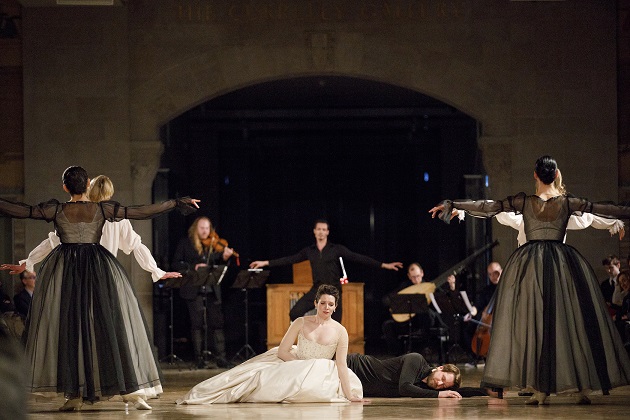
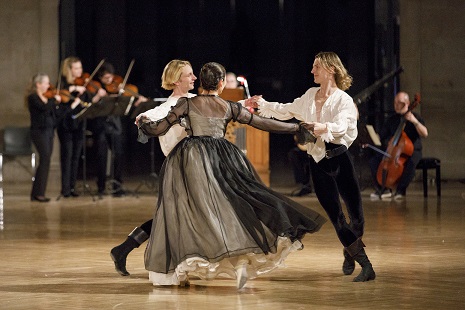
Tonight I saw Humans by the Circa Ensemble a visiting troupe from Australia. I read the following brief preamble from Yaron Lifschitz, the Artistic Director of Circa.  While it was poignant before the show, it was positively illuminating to re-read it afterwards, and to reproduce it now.

“We humans are a fairly weak, unimpressive species. Anything we can achieve physically can be easily surpassed by a well-trained monkey. An injured pigeon can fly higher and longer than the best acrobat in the world. A snake can bend infinitely more than the most flexible of contortionists. But it is precisely because we are human that our physical achievements acquire dignity, meaning and poetry. It is in connection to our vulnerability that our strength find its true articulation. In our limitations are out possibilities.

In humans I have asked our ensemble of artists “what does it mean to be human”? How do you express the very essence of this experience with your body, with the group and with the audience? Where are your limits, what extraordinary things can you achieve and how can you find grace in your inevitable defeat?

The creation is the result of this investigation—a report on what it means to be human.”  (Yaron Lifschitz)

YARON

Yaron Lifschitz, artistic director of Circa

I was impressed by what I saw of Circa in their last appearance in Toronto 18 months ago. I’m hungry for a synthesis of media, a new language that’s a blend of procedures from disciplines we might identify with labels such as “circus” and “dance” or “theatre”.   Humans, the piece we saw tonight, takes us further in offering a fulfillment of that heady whiff of something new & original that I caught last year.

It was a delight to be surrounded by people much younger than myself at the Sony Centre tonight.

I’d like to take a stab at expanding on Yaron’s “report on what it means to be human,” at least from what I could see.

Displays of virtuosity have often been geared towards showing us superman or superwoman, the gap between what they can do and what we can do. Whether we mean singing or dancing or circus performance, humanity can get lost when one is too busy showing off.

And that is the key difference with Yaron’s report.

We watch remarkable specimens move and tumble, displaying their skills but often falling, often showing vulnerabilities as well as strengths. We see frailty and pain alongside the more typical displays of procedures with bodies & floors & aerial apparatus. We see reminders of the arbitrariness of our society and what it deems competence or incompetence, through a series of social actions among the bodies onstage, imitating one another absurdly. At times the pace is frenetic, while in other places we are given something softer & more reflective, the music taking us inward, or at times to something blatantly comical. There is some pathos in watching a body that is as passive as a puppet, controlled and moved by the actions of another person. It’s a largely abstract exploration, as the performers make few sounds, tell us little except what we assume from watching them move and their expressions as they interact. Sometimes they’re alone, sometimes in pairs, sometimes a big crowd sculpted into fascinating aggregations of limbs and bodies.

Tonight thrilled as an inter-disciplinary work that isn’t quite dance or circus or theatre: or any single discipline, something really new and a fertile ground for exploration and development.  I’m certain there’s much more to be seen & heard from Yaron & Circa in the years to come. While there were moments when we were clearly watching something recognizably circus, procedures we’d seen before, yet there were many more moments where the movement vocabulary had combined elements or even given us new & unrecognizable ones, taking us into unfamiliar territory.  The disorientation was electrifying. Time flew by, the 75 minutes of the show feeling like perhaps 15 or 20 jam-packed minutes.

I am reminded of a paper I gave years ago concerning improvisation, that used aerial work as a departure point. I heard a story of firemen coming into a space where aerials were being done, and their perception of the risks.  It was hugely ironic that these professionals who themselves take risks that we might find daunting, perceived a risk in others. But perceived risk is not the same as a real risk, whether one is watching someone doing a floor exercise, listening to a jazz solo, or an aria with a cadenza.  I’ll set aside the work of a fireman, which is genuinely risky. A performer may seek to create drama from the illusion of risk, when they’re actually confident of their ability to sing coloratura, hit a high note on the instrument, or execute a flip with their body. It was especially shocking to watch skillful falls executed. It sometimes looked painful.

I’m grateful for the serendipity of seeing this the very day after the Tafelmusik concert, when I speculated about applause. Tonight I watched an enthusiastic group bursting into cheers –clapping and sometimes hooting & hollering—in the midst of routines as well as respectfully applauding at the end of segments. Applause seems to be socialized, although I’m not sure exactly how it works. Tonight I was in the land of the ‘woot’ rather than the ‘bravo’. A woot doesn’t seem designed to be especially loud so much as to signal a kind of peer thing, something that sounds like “I appreciate you and want you to know you’re cool”, and not to be confused with a wilder howl or cry as one makes in pure appreciation, cries that wouldn’t be out of place at a hockey game. The applause could erupt at any time, reminding me of the newness we were discovering in the concert last night. When something is really new the applause is different than when we’re giving applause that is in some sense contracted or promised due to an existing relationship (for instance when we come to the end of a jazz solo or when we see an aerialist descend at the end of a routine: and we’re expected to offer applause).

I’ll be watching for future creations from Circa, to see where they take their new procedures & vocabulary.  And I’ll be reflecting on what I saw tonight, the most stimulating show I’ve seen in awhile.

Here’s a tiny sample.

Posted in Dance, theatre & musicals, Personal ruminations & essays, Psychology and perception, Reviews | Tagged , , , | 1 Comment

Steffani: more devotion than drama

I am grateful for the gift of a new voice, a new composer introduced to me by Tafelmusik, Ivars Taurins, and Krisztina Szabo. It’s truly a magical thing.

I was pondering the experience of classical music, how so much of what we’re doing is really listening to familiar melodies, whether they’re Beethoven or Puccini or Handel. We live in a kind of golden age, when music is so ubiquitous, so available through various media, that you can find just about anything: and usually for free. So much of what we’re doing when we attend a classical concert is a bit like listening to oldies, melodies we know backwards, rather than anything strange or unfamiliar.

It’s a remarkable thing to encounter something new.

That’s the miracle of this week’s programme at Tafelmusik, titled “Steffani: Drama & Devotion”. There’s so much to this composer,  Agostino Steffani, (1654-1728) that they gave two radically different halves that correspond to the parts of the title. In the first half we heard two Christian texts in Steffani’s settings, namely Beatus vir from relatively early in his career followed by his Stabat Mater, a mature masterpiece. That was the “devotion” part, for which soloist Krisztina Szabo wore a beautiful but relatively sombre gown. Tafelmusik Orchestra & chorus were superb throughout.

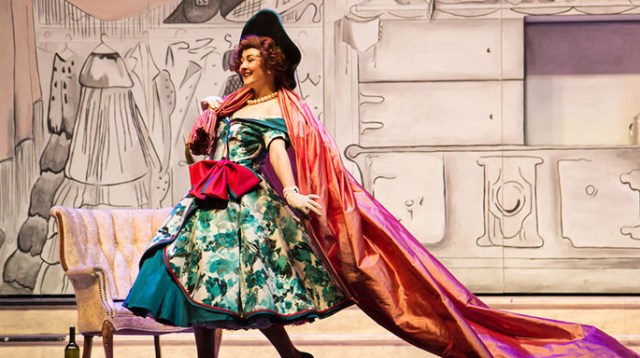
In the second half, containing a series of operatic pieces, Szabo was in a stunning fuchsia gown, certainly portending drama.

KRISZTINA_bohuang_f-e1516829663513

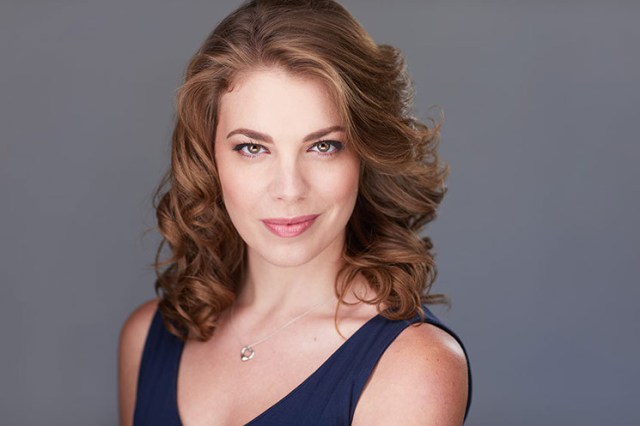
Mezzo-soprano Krisztina Szabo (photo: Bo Huang)

While she will sing the Messiah later this year for Tafelmusik, Szabo is someone who is known for taking on the new and the adventurous. She sang alongside Barbara Hannigan in the world premiere production of Lessons in Love and Violence by George Benjamin (I think it was earlier this year). We have seen her in such edgy pieces as Pyramus & ThisbeErwartung and Harawi here in Toronto. In a real sense, the Steffani too is new, repertoire that’s not known to the audience or artists. And she brought a wonderful sense of adventure to the performances.

And yet I am frustrated. I need to explain and offer context.

The first half took two pieces, and saw us applaud at the end of each. In the second half, we went from aria to interlude to chorus: and in the process, stifled the drama. Each of those numbers was part of a story: but was presented without preamble and severed from any connection to anything else. I was leaning forward in my seat prepared to holler for the first aria I had heard, even though it was offered without much in the way of context. But there was a polite silence instead. Perhaps it will be different tomorrow.

Forgive me if I offer as my context, the concert I saw this afternoon: where Atis Bankas introduced each piece. We not only had loads of applause, we had clapping between the movements of a sonata. No that’s not considered good form, but it’s a sign of enthusiasm in an audience who weren’t asking anyone’s leave to show their love and affection for the artists & their work.

I  was disappointed to see these opera excerpts presented as though they were parts of a single unit, with no applause nor any encouragement of applause after each one. Call me weird if you will, but I love to applaud. I think it’s one of the components of number-opera, and also a lot of fun. In presenting these arias this way among other operatic excerpts tightly organized without any encouragement of applause: it was as though Szabo were a butterfly, so tightly crowded that she couldn’t spread her wings. Now of course she’d never agree with this assessment because she’s a trouper, indeed a total warrior in showing up, memorizing these new pieces and tossing them off perfectly.

Please note that normally at an opera aria recital we get no explanations. I can surrender to a performance without knowing what’s going on. But please don’t whisk the diva off the stage so quickly. Let us scream our approval first?

Some of these orchestral pieces were amazing, a marvelous smorgasbord of delights. I suppose from a musicological perspective it was wonderful, getting all those performances without any of that irritating applause: except that music is only one part of opera, not its sum total.  Opera is theatre, and when you only have music, you’ve removed part of its essence, a necessary part of opera. Doing it this way felt a bit repressed, bottled up, and unnatural. It was pretty, yes. But it was not operatic.

I yelled my head off at the end of course. They deserved it, because they were all wonderful.  The concert will be repeated Friday & Saturday at 8 pm, and Sunday afternoon at 3:30 at Jeanne Lamon Hall.

Posted in Music and musicology, Opera, Reviews | Tagged , , , | 3 Comments

Remembering Kristallnacht

Today’s concert at the Richard Bradshaw Amphitheatre as part of the Canadian Opera Company’s noon-hour series was a special program titled “Remembering Kristallnacht”,  presented in partnership with the German Consulate of Toronto and the Neuberger’s 2018 Holocaust Education Week.

It’s the season for remembrances. November 11th happens to be the centennial of the Armistice ending the First World War. And it’s Holocaust Education Week. Today is also the 80th anniversary of Kristallnacht, a collective explosion of violence often understood as the beginning of the Holocaust in Germany.

bankas_atis

Violinist Atis Bankas

I remember meeting Atis Bankas in the early 1980s (no way he’d remember me), a new arrival proudly introduced to me at the Lithuanian House by my father-in-law Walter Dresher as a brilliant young violinist.

Today I had a reminder of that brilliance in his collaboration with pianist Constanze Beckmann.

Bankas introduced six segments to us, explaining connections:

  • Connections to Lithuania
  • Connections to the Holocaust
  • Connections making the program especially personal
Constanze

Pianist Constanze Beckmann

Some of those links were relatively obvious ones, such as Ravel’s “Kaddish” to open. But one of the keys to the event were these explanations from Bankas, who brings not just his virtuosity but the history, the sense of the ways in which all these composers were inter-connected. In his gentle explanations we were party to a kind of act of remembrance as moving as anything we’d see or hear on November 11th. Culture is so much more than just the famous texts or the performances, but the web of relationships alluded to in Bankas’ explanations, and the fond hopes of these artists seeking to escape a murderous time.

Edwin Geist had tried to escape Germany, and his choice to go to Lithuania seemed like a good choice: but no, it was not far enough, as it turned out.

Polish born Szymon Laks lived for a time in Auschwitz but was somehow able to survive, passing away in the 1980s at a ripe age.

Leo Smit finished his sonata for flute & piano in February 1943, but by April had been deported & murdered. Bankas arranged this intriguing work for violin instead.

Yes we heard stories, but also marvelous music-making. In the latter part of the concert, particularly Joseph Yulyevich Achron’s “Hebrew Melody”, Bankas unleashed the most impressive display of lightning fast passage- work, but always soulful and idiomatic, and sometimes super-soft even while going so quickly. Beckmann was every bit his equal, supportive and strong but always balanced with the violin. The regular eye contact between the players was a big part of the event, and a pleasure to watch.

It was great to see a big enthusiastic crowd at the event including our host COC artistic director Alexander Neef.

SONY DSC

Atis Bankas and Constanze Beckmann performing in the Canadian Opera Company’s Free Concert Series in the Richard Bradshaw Amphitheatre, (photo: Karen E. Reeves)

Posted in Music and musicology, Personal ruminations & essays, Politics | Tagged , , , , | 2 Comments

Closing matinée for Onegin

This afternoon’s late matinée at 4:30 pm was the final performance for Eugene Onegin in the Canadian Opera Company’s fall season. Weekend audiences can be a bit of a challenge especially in the afternoon. Oh sure, we’re all relaxed in our seats, meditative, lost in thought.

And so quiet.

Yawn.

That can make it a daunting task to excite such a crowd, leaning back half-asleep in their seats. No wonder they gave us (the Saturday at 4:30 pm subscribers) the closing performance and not opening night, when the COC would want a wildly excited group.

While the soloists were certainly competent, the stars of the show for me were the chorus.

18-19-01-MC-D-1089

(l-r, foreground) Oleg Tsibulko as Prince Gremin and Gordon Bintner as Eugene Onegin with the COC chorus ( photo: Michael Cooper)

It’s fitting that I saw COC chorus-master Sandra Horst during intermission, and went up to her to tell her what a wonderful job her charges were doing.  And then I asked her if –now that the run is over– I could get those beautiful, energetic leaf-sweepers to come over to my house: because my yard is full of leaves. Sigh that would be lovely indeed whether or not they were singing.

A

In this scene from Tchaikovsky’s “Eugene Onegin,” the women of the Lyric Opera chorus play Russian peasants sweeping away the autumn leaves. (Photo: Todd Rosenberg)

I realized today that Robert Carsen’s production (whether we’re speaking of its Toronto incarnation in 2018, its earlier visits to Chicago Lyric Opera, as in the above photo or the Met) all employ the chorus cleverly to help tell the story. They are the rustics in the opening act, laying the groundwork for the story, but also the most energetic people on the stage for the first hour.

When it’s time for Onegin to make Lensky jealous, it’s against a backdrop of the cotillion. We don’t ever see it danced. Instead we are tantalized by the chorus, going pair by pair, enthused and excited by the romance that is this dance, one that poor Lensky won’t get to do, as Onegin grabbed Olga first. With every passing pair of choristers, we see the growing resentment of a jealous lover.

Let’s be honest here. If it weren’t for Carsen, this might look really stupid. Lensky more or less blows a gasket, becoming jealous and fighting a duel with Onegin over very little in the score, next to nothing. Ah but Carsen makes a whole lot more out of it, by using the chorus in this way.  He not only makes the opera more intelligible, he makes it better.  The COC chorus are wonderful singers but at moments like this contribute wonderful theatre.

This was my second look at the production, a week after seeing the closing performance of Hadrian, and it struck me how many parallels there are between the two operas.

Both Hadrian and Eugene Onegin are baritones in the title roles.

A soprano gets the meatiest singing in both operas, rejected by the baritone (Sabina in
Hadrian, Tatyana in Onegin).

A tenor dies a kind of sacrificial death, that leaves the baritone mourning for the rest of the opera.

Both operas bring us to a scene at the end where we’re remembering & agonizing over a romantic encounter from years before.

Need I mention the most obvious parallel? both composers were male homosexuals.

Rufus Wainwright lives in a time when this is not a big deal, at least on this side of the Atlantic. When I googled I saw something suggesting that in Russia this is still problematic for Tchaikovsky. But never mind that. The point is, Rufus Wainwright & Pyotr Ilyich Tchaikovsky were both in some sense gay.

A big difference is that RW’s sexuality is not something hidden or repressed, whereas PT was living the normal life of the time, seeking to be assimilated into normal polite society and unable to freely declare his feelings. This means he concealed his sexuality, as many still do to this day in many parts of the world. Russia too? (sigh)

It makes me wonder about the composer’s reading of Pushkin’s poem that inspired the opera. There are critics who say he didn’t get Pushkin’s poem, whereas I think he simply put a different spin on the characters, because of his sexuality.

The difference in the opera is how much more sympathetic we find Tatyana & Lensky: not so different from the way Sabina & Antinous are more likeable and more musical to sing than the music for Onegin or Hadrian. Is it a mere coincidence?

Part of it is simply the fact that baritones fight the orchestra (thinking of where their notes sit on the musical staff, sometimes competing with heavier orchestration and less prominent) more than tenors and sopranos. So they often end up in roles with villainous undertones –Alberich, Amonasro, Macbeth, Iago—or at the very least, complexity for the audience—thinking of Germont pere, Rigoletto, Falstaff, Wotan and Amfortas for example. When a baritone gets to be a hero it’s uncommon. For example we do have Rossini’s Figaro, who must be differentiated from the romantic hero, Almaviva. So in other words, whatever Tchaikovsky or Wainwright chose to do, by letting their main hero be a baritone, they signaled to the audience that at the very least they were conflicted about Hadrian and Onegin.

In a recent conversation with my friend Celine Papazewska, we picked up on a theme begun in social media, perhaps by Christine Goerke. They spoke of cross-gender casting in Wagner. I may have sounded like a party pooper when I asked her “what would it sound like” and she replied “fantastic!” But while I love her enthusiasm, the fact is, it takes someone years if not decades to figure out how to sing a role like Isolde or Tristan or Tannhaüser or Turandot. Flipping the gender might make it easier, if you approach it the way Aretha Franklin approached “nessun dorma”: as an occasion for a jazzy improvisation. But if sung with attention to the notes as written, it’s no simple matter. Some rep is easier than others.

I say this having played around this week with Onegin, an opera that makes fewer challenges on its singers than a lot I could name. I sang all the big solos (“kuda kuda” is one of the easiest tenor arias, not going as high as many of the others), only stumbling over the low note that conclude Gremin’s aria. And it’s not interpolated, the composer actually wrote that low G-flat. If one wanted to give Tatyana’s music to a guy or to flip Lensky over to a soprano, it could work just fine. Celine thought Gremin could be a contralto for example.  But really, there are so many possibilities, especially when many operas are very fluid in the way they approach gender signification.

Mozart screams out for this kind of treatment. The best example I can think of is the one we saw here in Toronto, when Teiya Kasahara gave us a gay woman as Cherubino instead of the usual ambiguous male of indeterminate age. And ever notice that Mozart’s women’s parts are more macho than what the men sing? Listen to Donna Anna’s “orsai chi l’onore”, the most stirring aria I can name, and imagine a guy singing it. No Mozart wasn’t signalling that Donna Anna should be a man.  He gave this music to this brave woman who has been sexually assaulted, and wants to make us admire her rather than see her as a victim. And I think he succceeds. Or listen to the first arrival by Donna Elvira when she sings “ah chi mi dice mai”, and in the heroic key of E-flat no less.

Don Ottavio’s “Dalla sua pace” in contrast is soft & sweet. How would it read, I wonder if a man said “beat me beat me” to his lover (whether male or female), the way Zerlina says to Masetto? Imagine this sung by a guy.  I think it’s an intriguing idea, whose time has come.

I’m going to keep playing around with the scores. I’m hoping someone will try this for real –meaning the experiments with gender switching –in a theatre.

Posted in Opera, Personal ruminations & essays, Politics | Tagged , , , , , , , | 3 Comments

Sixth Annual Elizabeth Krehm Memorial Concert November 10th

Elizabeth Memorial concert announcement 2018-final

Posted in Press Releases and Announcements | Tagged | Leave a comment

Centre Stage 2018: a Night of Voices

There are several ways to watch the annual Centre Stage competition, when young singers vie for a series of awards while seeking places in the Canadian Opera Company’s Ensemble Studio.

You can watch & listen to the competitors, eight young singers from across Canada.

You can watch & listen to the audience, sometimes including friends & supporters. What kind of applause are they offering? Who excited them the most? If you’re paying attention you can usually tell who will be the audience’s favorite, winning the Audience Choice award.

You can watch the judges. It’s easier if you’re fortunate to be invited to the opening segment, when one has a clear view. You might notice how unexpectedly vulnerable Alexander Neef is, moving his arms to conduct. He reminded me of myself when I was a child conducting Beethoven on the record player.

neefLR_SamGaetz

Alexander Neef (Photo: Gaetz Photography)

You see a softer conducting motion from Liz Upchurch but not for every singer. She sometimes leans forward, sometimes back, listening. Wendy Nielsen is back in her chair, attentive. But of course they’re all listening, sometimes making notes, sometimes peering at one another.

There are several different dramas being enacted, in a competition that can be understood in more than one way:

  • Who is the best singer?
  • Who is the best singing-actor? (who may or may not be the best singer)
  • Who is singing the hardest repertoire?
  • Who sounds best? (and is that accomplished by choosing something easy or difficult?)
  • Will my choice match that of the panel of judges?
  • Is my choice the same as that of the audience?
  • And of course, there’s the pleasure of listening to all those arias, all those talented young singers putting it all on the line.

To begin, Alexander Neef said hello, then handed things to the witty Ben Heppner for most of the evening.  We had a recent winner in Emily D’Angelo as the guest, performing while the votes were tallied & the judges discussed their choices backstage.   Then Neef came back near the end to announce winners.

Every singer had something to offer, something of value to contribute to the evening, although in a competition there can only be a few winners. I’m grateful that in addition to the 1st, 2nd and 3rd place prizes, plus the audience choice prize, CBC added a prize of a recorded concert to be broadcast on the network, which is surely a wonderful showcase for any singer lucky enough to get such an opportunity.  That prize turned into two prizes, meaning that there were six awards up for grabs.

One wonders, when the COC make their selections: are they primarily seeking the best singer, the best actor, or perhaps seeking the person who best fills their expectations for future casting needs? Because when the dust settles and we get into future seasons, the Ensemble Studio members play key roles.  For example, in a little video with which we began the evening, we met soprano Anna-Sophie Neher: who made a big impression on me in Hadrian. It’s possible that the winners are at least partly meant to fill spots in the company, irrespective of who might be the “best” in the competition.

For the COC’s competition first prize went to tenor Matthew Cairns, second to bass-baritone Vartan Gabrielian, and third to mezzo-soprano Jamie Groote.

The two CBC prizes went to soprano Andrea Lett and tenor Matthew Cairns.

Heppner_Lett_Cairns

Centre Stage Host Ben Heppner, Audience Choice Award and CBC Music Young Artist Development Prize winner Andrea Lett, and First Prize and CBC Music Young Artist Development Prize winner Matthew Cairns, Centre Stage 2018. (Photo: Michael Cooper)

The audience favorite –that we voted on from devices attached to our seats—was Andrea Lett.

The COC Orchestra led by Johannes Debus sounded quite wonderful in their support of nine soloists (counting the guest) in a pair of arias, also including a performance of Bernstein’s Candide Overture to start us off.

The COC’s fall season concludes Saturday with Eugene Onegin, starring Gordon Bintner: a recent Ensemble Studio graduate and winner of the competition in November 2012.

Gordon_Joyce_SHE_kneels_resized

Gordon Bintner as Eugene Onegin and Joyce El-Khoury as Tatyana in the Canadian Opera Company’s new production of Eugene Onegin, 2018, (photo: Michael Cooper)

Posted in Music and musicology, Opera | Tagged , , , , , , , , , , , , , , | Leave a comment

Maria by Callas at TIFF

Tonight I saw Tom Volf’s 2017 documentary Maria by Callas at TIFF. With the exception of a brief interview with her singing teacher Elvira de Hidalgo, the film is entirely an account of Maria Callas in her own words, that might change your understanding of the great diva.

poster-maria-by-callas

While I thought I knew her, from having read a couple of biographies and having listened to so many performances, there is much here that’s new to me. It’s stunning to encounter that singing voice so directly and so clearly, the larger than life personality, the beautiful expressions & of course the acting: especially on a big screen. Nobody uses modern terms like “PTSD” but after watching the film I think she was more upset by the big cancellation in Rome that damaged her reputation than has been previously admitted.  I don’t pretend that I understand what’s real and what’s artifice in the ongoing struggle between the real person and the diva persona: but I did see a great deal of vulnerability, more than I had ever suspected. Her choice to absent herself from the stage for a period of years makes a curious kind of sense, even if it may have been a huge error. And when one can watch the arc of her life in under two hours, it’s eloquent testimony.

There are a few performances of complete arias, several sung excerpts, but mostly we’re dealing with the story of a life.  We encounter her in a series of interviews, including one with David Frost that had been presumed lost until recently.  What’s missing happily is the editorializing, interpretation or commentary: except from Maria herself, which is precisely what the film’s title promises. This is her story in her own words, which doesn’t mean it’s in any way obvious.  There are enigmas, puzzling moments, and perhaps some lying going on. She is in front of the cameras over and over, being confronted, being pursued by cameras, being recorded at every moment of her life, except of course when she escaped with Aristotle Onassis. The film is refreshingly dry considering the melodrama being enacted, the images speaking for themselves, for instance when we segue quickly from the breakup with Onassis in 1968 to Medea¸ Pasolini’s 1969 film starring Maria as the avatar of jealous femininity.  While we see a friendly camaraderie  between the star and the director it’s clear to me for the first time what the public perception must have been.

In places the music serves as wonderful underscoring. When we see tabloids declaring that Onassis is sneaking out behind Jackie’s back, that he’s returned to Maria? Volf underscores with the Humming Chorus, a poignant melody of false hope. For most of the last half hour, the music takes us on her downward spiral.

I think I need to buy this when it becomes available on video. It’s such a pleasure just watching her and listening to her.  It’s especially enjoyable to hear her without anyone else proposing to tell us the meaning of her life. Her own words, often poignant and heart-breaking, are more than enough.

mariabycallas_01

Against the Grain Theatre (soprano Natalya Gennadi Matyusheva with pianist David Eliakis) began our evening with a live performance of “Casta diva” from Norma followed by “Ah fors’e lui” & “Sempre libera” from La traviata: music often associated with Maria Callas. If you consider that we were about to watch images of dead people in a dry space designed to suck up any extra reverberation, they were most certainly going against the grain in giving us a reminder of what live people making live music can be.

Posted in Cinema, video & DVDs, Opera | Tagged , , , , , , , , , | Leave a comment

A Recipe for Resilience: Yiddish Glory

Do you have any DVDs or books or CDs that you use to cheer yourself up or chase away the blues? I’ve had several I relied upon over the years. And I’ve discovered a special new one.

I’m very lucky, getting invitations & exhortations constantly, especially when I stumble upon something by pure dumb luck. Two months ago I had the good fortune to go to a concert that moved me much more than expected.  More than expected? I was very hesitant.

The concert “Yiddish Glory” was a series of musical hors d’oeuvres enclosed in scholarly pastry. It was disorienting, as though I’d stumbled into a historical colloquium and a concert broke out in the middle. That’s the funny thing. The reason I was hesitant about this concert was very simple. With a series of songs in Yiddish, would I understand the words let alone the context?

Ah but they understood this all too well, that anyone might be hesitant and couldn’t be expected to understand the context and the humour of such songs without supplying a framework. As I explained in my review of the evening, it was a crash course, like a TED talk about the resistance songs of WW II but better. I thank my lucky stars that I didn’t listen to the negative murmurs inside my head and checked out the concert anyway.

yiddish_glory_CD_coverAnd then I repeated the doubts afterwards when I obtained the CD of the concert. Where we’d been immersed for the concert in the culture complete with short lecture-explanations and titles translating the songs, I wondered how that would work playing the CD in my car.  To look at a translation while driving? impossible.

Yet I’ve been playing the songs in my car, and it’s a very different experience than live. As I listen to them over and over, they’ve acquired symbolic meaning. The disc is now my talisman of resilience, a reminder of people struggling against all odds in the face of tyranny and war. A story of a fierce struggle is sometimes the best reminder that one must resist, and that there is always hope.

This weekend, I pulled the CD out again after a week of madness & horror in America. After listening to the songs several times over the past few weeks I’m starting to know the texts, same as with operas I’ve heard over and over. Some Yiddish words sound a lot like German of course.

Sophie Milman does some of the songs. Now I understand the regret that was expressed, when she had to miss the August concert due to illness. What a voice!

Perhaps this is how Wonder Woman sounds (the role was played by an Israeli woman in the film after all) when she’s unwinding in a bar after a hard day fighting the fascists. It’s a powerful instrument, a rich but sensitive sound, and one of the reasons to listen to the CD over and over.

And I do.

I am very grateful to the collaborative wisdom of violinist & arranger Psoy Korolenko and Professor Anna Shternshis, who, through their mixture of vision & sheer nerve bring a fading language and a moment in history vividly back to life in these reconstructed songs.

We go back and forth between satirical edgy songs, more romantic tunes and a few wonderful instrumentals. When I put it on in the car it plays over and over, a brief escape from the modern world.

Here is where you can get the recording for yourself.

Posted in Music and musicology, Politics, Popular music & culture, Reviews, Spirituality & Religion | Tagged , , , , | 1 Comment

Opera Atelier: Actéon and Pygmalion

I saw two baroque operas on the same bill, plus something brand new added. Opera Atelier are presenting Charpentier’s Actéon and Rameau’s Pygmalion at the Elgin Theatre in a program exploring Ovidian tales of transformation, tenor Colin Ainsworth starring in both.

Actéon is the darker piece before intermission, a cautionary tale with erotic overtones: the hunter who catches a glimpse of the Goddess Diana.  When he is caught in the act, he is turned into a stag who is devoured by his own hounds. While it sounds deadly serious, there are moments when one glimpses a hint of mischief from the voyeuristic hunter peeking out of the bushes at the beautiful nymphs & the goddess.

BRUCE_ZINGER_Acteon_company

The Actéon Company (photo: Bruce Zinger)

After intermission the something new was Inception, featuring an original solo violin score composed by Edwin Huizinga, danced by Tyler Gledhill. Inception functions as a kind of prologue to Pygmalion, introducing us to the god Eros.

Tyler_Gledhill_Edwin_Huizinga_Inception_Bruce_Zinger

Tyler Gledhill (dancing) with Edwin Huizinga (violin) in Inception (photo: Bruce Zinger)

Pygmalion is in a different style from Actéon, but again starring Colin Ainsworth, who seems to sing more notes than everyone else put together(!), a remarkable amount of flawless coloratura. Where he roamed into haute-contre territory for the role of Actéon the Rameau score seems to require more voice, a great deal of impressive singing.

The dramatic highlight occurs when Meghan Lindsay as the statue comes to life. No CGI required, just good acting. Her first halting steps are charmingly awkward, as she gradually comes to life.

Tyler_Gledhill_Meghan_Lindsay_Colin_Ainsworth_Pygmalion_Bruce_Zinger

Tyler Gledhill (winged), Meghan Lindsay and Colin Ainsworth in Pygmalion (photo: Bruce Zinger)

The magic of dance rules the entire program. When Actéon changes, dance is the indispensable effect to persuade us of the metamorphosis while supplying a wonderful release of tension in the physical movement & the music. For the second part of the program, Opera Atelier are really in the promised land, giving us more dancing than anything else, a light-hearted celebration of love.  The creative team of choreographer Jeannette Lajeunesse Zingg & director Marshall Pynkoski blend thoughtful movement throughout the program.

The Opera Atelier double bill including Huizinga’s original music continues until November 3rd at the Elgin Theatre

Posted in Music and musicology, Opera, Reviews | Tagged , , , , , , , , | 4 Comments

A closer look at Hadrian

Today was the closing performance of Hadrian, the new opera by Rufus Wainwright and Daniel MacIvor, presented by the Canadian Opera Company at the Four Seasons Centre.
After tonight’s display of healthy nearly-naked male bodies in a homosexual love story, tomorrow I’m off to see Opera Atelier’s display of nearly-naked bodies of both genders in their pair of love stories.

resized_IsaiahBell_Antinous_ThomasHampsondancers_photo_Gaetz_Photography

Isaiah Bell (centre) Thomas Hampson (foreground) and dancers (photo: Gaetz Photography) from the Canadian Opera Company production of Hadrian

Tonight was my second trip through Wainwright’s score, a closer look because I was sitting in the second row. This vantage point is a mixed blessing. One can’t easily see the surtitles (not necessary in Hadrian which is mostly in English), at times the orchestra can be so over-powering as to drown out soloists, and if you want to be taken in by the illusion, you can often see how the magic is accomplished from these seats.

But at this distance one is more susceptible to a good performance, unable to resist the magic. I was again captivated by Ambur Braid’s acting, subtle nuances I couldn’t see from afar. Thomas Hampson was even more persuasive. Karita Mattila enacted a version of a singer’s nightmare; imagine you’re in a foreign country, your words sung in the language of the audience complete with surtitles of what you’re supposed to be singing (oh terror!).

I was very impressed with a lot of the singing, even if I’m not 100% confident that I’m identifying the parts correctly. Anna-Sophie Neher as Lavia (if I’ve identified the right role & person) was wonderful in her singing, and often the most interesting person to watch onstage, in a somewhat thankless role, always making something happen. Ditto for Ben Heppner as Dinarchus, who is such an honest singer, never taking a short-cut but giving his all. David Leigh as the aptly named Turbo was even better up close, the voice strong, the intonation perfect, and his macho presence always a force to be reckoned with.  Alas with a new opera, one may not be as clear as to what is being accomplished by the singers who I want to appreciate for their strong work throughout, even if I’m not mentioning them all by name.

I can’t tell if Isaiah Bell was over-parted in the role of Antinous or it was simply the location of my seat, within a few feet of the conductor. Was the role cast based on visuals and the chemistry between the principals? Bell looks the part, but perhaps Wainwright didn’t expect that he’d written for a heavier voice, perhaps requiring a heavier body as well to cope with the heavy orchestration.

Speaking of Antinous, it’s something I noticed on opening night and ignored, but mention now on closing night. There were at least three people in the cast who pronounced “Antinous” as a four-syllable name, while the chorus and most everyone else made it a three-syllable name. There is presumably a right way to pronounce it, and whatever that is should be decided upon by someone in the production, and then it must be adhered to as a guiding principle by all.

Up close I liked most of the opera much better. But the last five minutes still had me squirming, astonished that they would let it reach the stage. I am frankly astonished that so much of the opera is good, and then it ends on such a weak over-blown sequence. I wondered if it was maybe politics, especially on a day like today, when the frequent references to “The Jews” gave me the shivers, in consideration of the unfolding news story from Pittsburgh. Was the ending left in this bizarre shape due to politics, some kind of pressure or interference? I can’t help thinking maybe that’s what happened, although it’s funny that the whole gay eroticism of the piece –which is so much stronger up close—still hit me as wonderful, beautiful, perhaps the best thing about the production. Choreographer Denise Clarke created something quite wonderful for her dancers.  I’m very happy to live in a city so relaxed about eroticism in opera that this is almost an after-thought.

After a second hearing, part of me wonders if the key was simply knowing how to listen. I think it’s mostly operatic especially now that the cast seems so much more confident in the material, so much more familiar with the music & the text. No question, they were better today than they were two weeks ago. The highlights this time were very much the same as last time, namely

  • Two arias from Braid as Sabina
  • The two dance numbers in each of Act I and II
  • The sextet drinking scene in Act III

I am curious to see what they make of this opera. I hope the weakness at the end is truly the result of politics and not the actual intention of Wainwright and/or MacIvor. (I could be wrong of course!)

At the same time, I am very conflicted about the music. While sometimes RW showed a melodic gift, we often encountered scenes where one or more personages onstage sang the same note over and over, so much so that the repeated note could almost be a leit-motiv. But what might it signify? For someone reputed to have a melodic gift it was odd that so often the melody was in the orchestra while the singer was pinned to the same note over and over.

I will be interested to see what he writes for his next opera. In the meantime, Opera Atelier continue Actéon and Pygmalion until next weekend, and the COC continues Eugene Onegin, also running until next weekend.

Posted in Music and musicology, Opera, Politics, Reviews | Tagged , , , , , , , , , , | 1 Comment