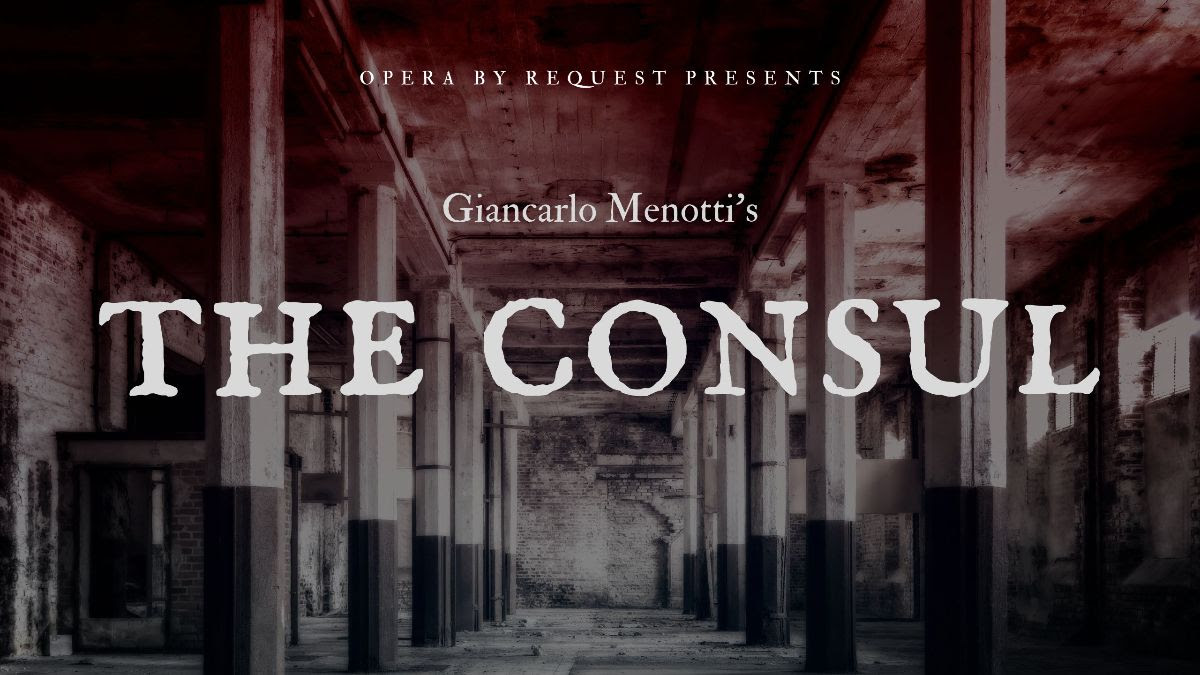
Opera by Request will be presenting Giancarlo Menotti’s The Consul, an opera premiered in 1950 during the Red Scare, a time with significant parallels to our own.
I asked William (Bill) Shookhoff, the Artistic Director of OBR, about the project.
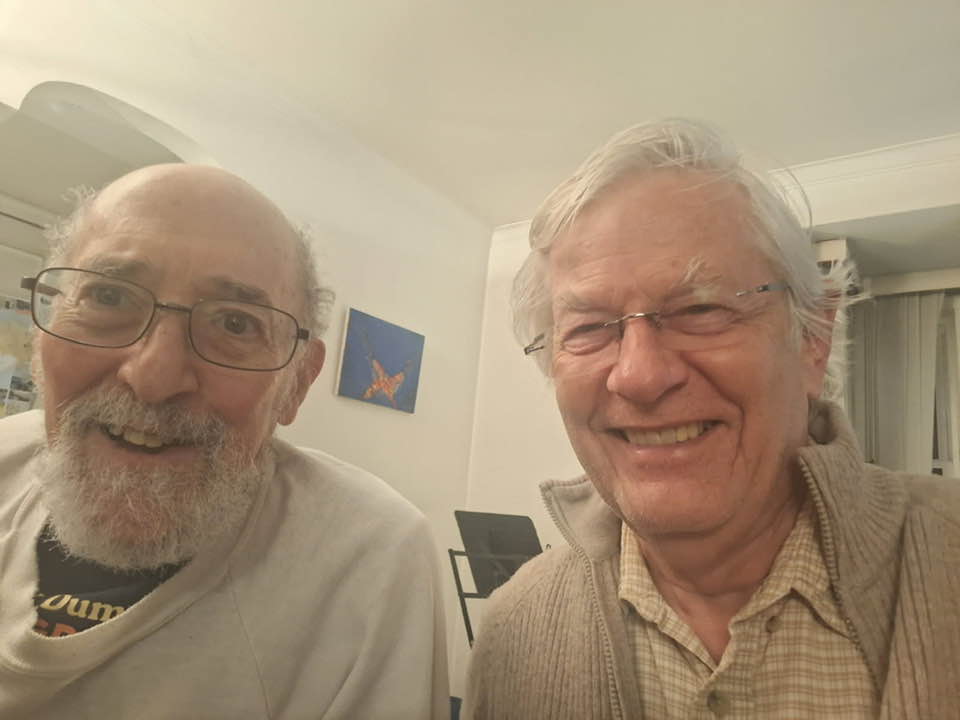
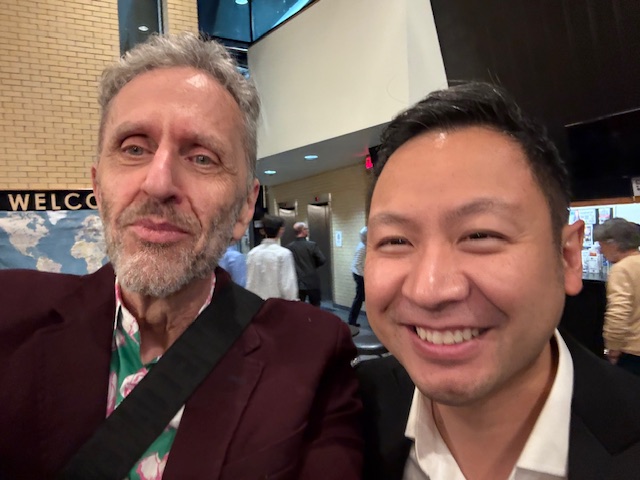
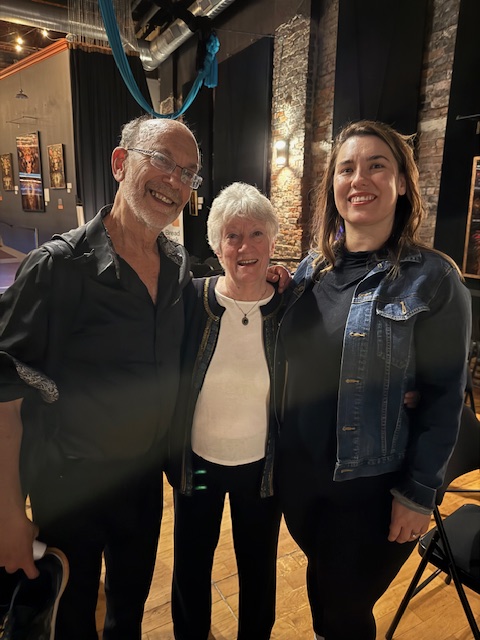
William (Bill) Shookhoff and Ken Baker, in a recent image from Facebook
Here’s the caption Bill put on a picture he posted on Facebook of himself with Ken Baker: “Reviewing the role of Mr. Kofner with Ken Baker, who last sang it a mere 47 years ago. Preparation for OBR’s performance of The Consul on Saturday, October 25th, College St United Church. Without changing a note of the score (only the language of the Foreign Woman), our concert performance will be clearly set in the present, in a country just to the south of ours. Proceeds will go to human rights organizations.”
*******
Barczablog: How would you summarize the basic conflict of The Consul?
Bill Shookhoff: The hounding, by the authorities, of John, the revolutionary, and the pressure brought on his family. The constant attempts by his wife, Magda, to find safe haven in another country, and the constant bureaucratic obstacles encountered at the Consulate. Magda is definitely the central focus.
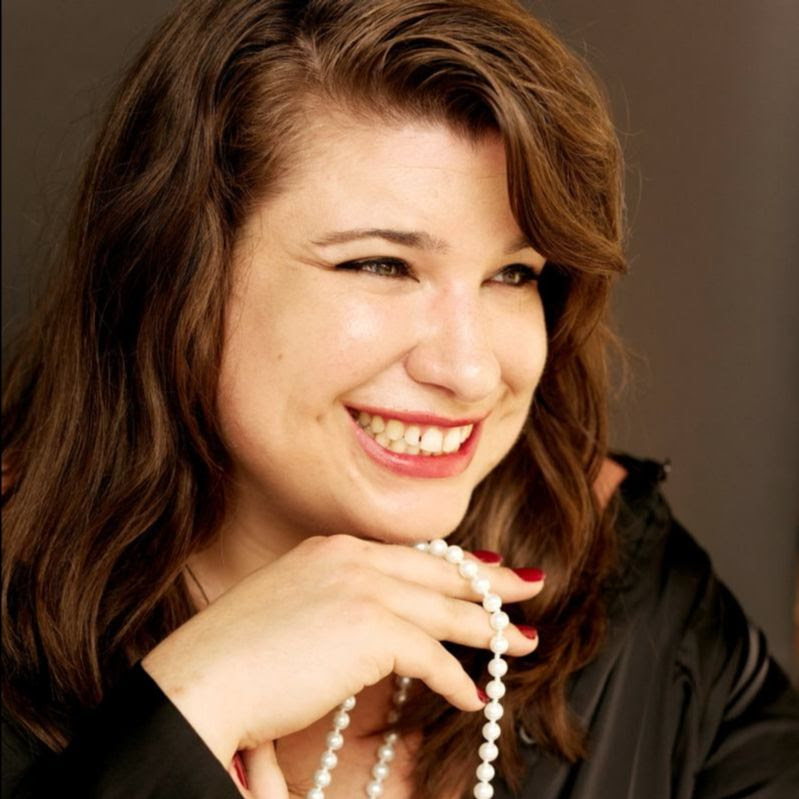
Brigitte Bogar, Soprano as Magda Sorel
BB: Why is that of interest to you ?
Bill Shookhoff: Menotti wrote this during the Cold War and the parallel Red Scare in the US. By keeping the references to specific locales ambiguous, he allows his audience to fill in whatever gaps seem appropriate. The piece has always struck me as extremely powerful, and in today’s world, it resonates even more powerfully.
BB: Remind me, what’s your background .
Bill Shookhoff: I was born in the US and my family and most of my childhood friends still live there. Fortunately, today’s technology allows us to stay connected, but the reluctance to cross the border (from both sides) is a definite heartache.
BB: Who will be singing in OBR’s production .
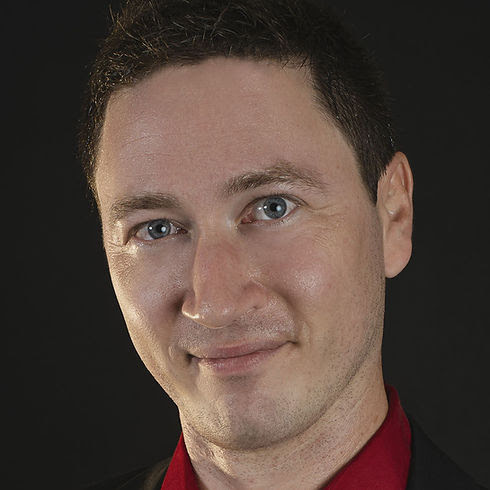
Sebastien Belcourt, Baritone as John Sorel
Bill Shookhoff: It’s a large cast: Brigitte Bogar, Sebastien Belcourt, Karina Bray, Zoe Clarke, Brittany Stewart, Lucas Kuipers, Julia MacVicar, Monica Zerbe, Kenneth Baker, Taylor Gibbs, Joshua Read.
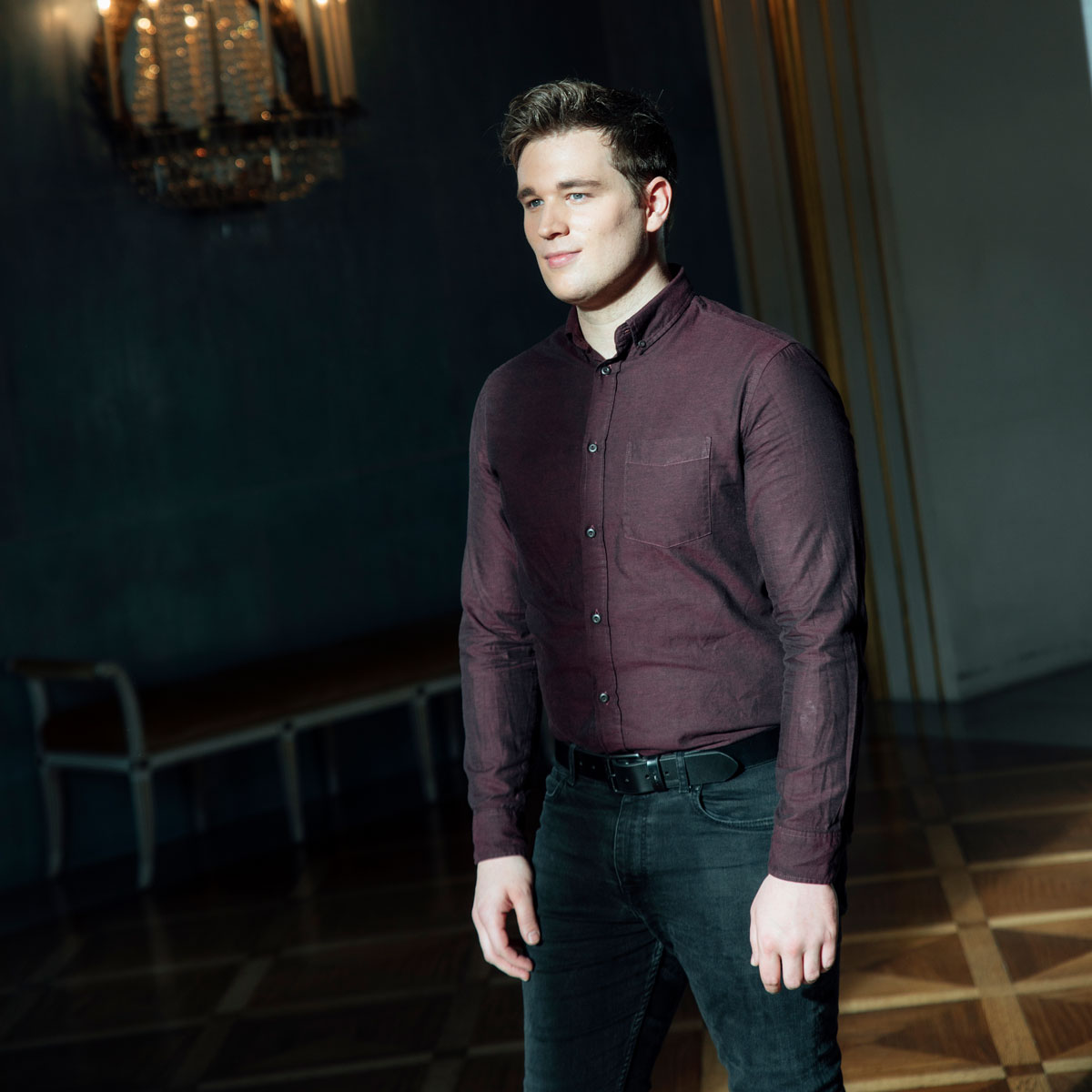
Taylor Gibbs, Baritone as Chief of Police
BB: Does this feel like an elbows up moment?
Bill Shookhoff: Definitely. It was actually a Facebook post suggesting how appropriate this opera is today that prompted me to remount it. Without detracting from the original piece, we will be adding some contemporary references via supernumeraries and projections.
Karina Bray, Mezzo-Soprano as Mother
BB: Do you have any favourite political operas/ works?
Bill Shookhoff: There are a few: Fidelio, The Crucible, Death of Klinghoffer, Andrea Chenier.
Several others, while still operatic masterpieces, unfortunately lose the political power of the historical events and/or dramas upon which they’re based (Tosca, Maria Stuarda, Un Ballo in Maschera, William Tell). Don Carlo, Luisa Miller, undoubtedly others, manage a bit of both: operatic romantic drama with historical/political overtones.
BB: If you get the right signal in response, do you think you might do other operas with political overtones?
Bill Shookhoff: Definitely. Perhaps will explore the contemporary layering of this production, depending on the reaction.
BB: What’s next for Opera by Request after this?
Bill Shookhoff: Salome and Cendrillon are definitely on the books for this season. A couple of bigger projects, still dependent on funding, are in the works. A new commissioned work, for OBR’s 20th Anniversary in 2027, is currently in development.
*******
OPERA BY REQUEST presents Giancarlo Menotti’s THE CONSUL College Street United Church, 452 Bathurst St (College), Saturday, October 25th, 7:30pm. Admission is by donation at the door. All proceeds will go to Human Rights organizations.
It might be the best-known of all Shakespeare stories, the star-crossed lovers, dying young for love. Romeo and Juliet becomes Roméo et Juliette when a French composer such as Charles Gounod (1867) is telling the story in music.
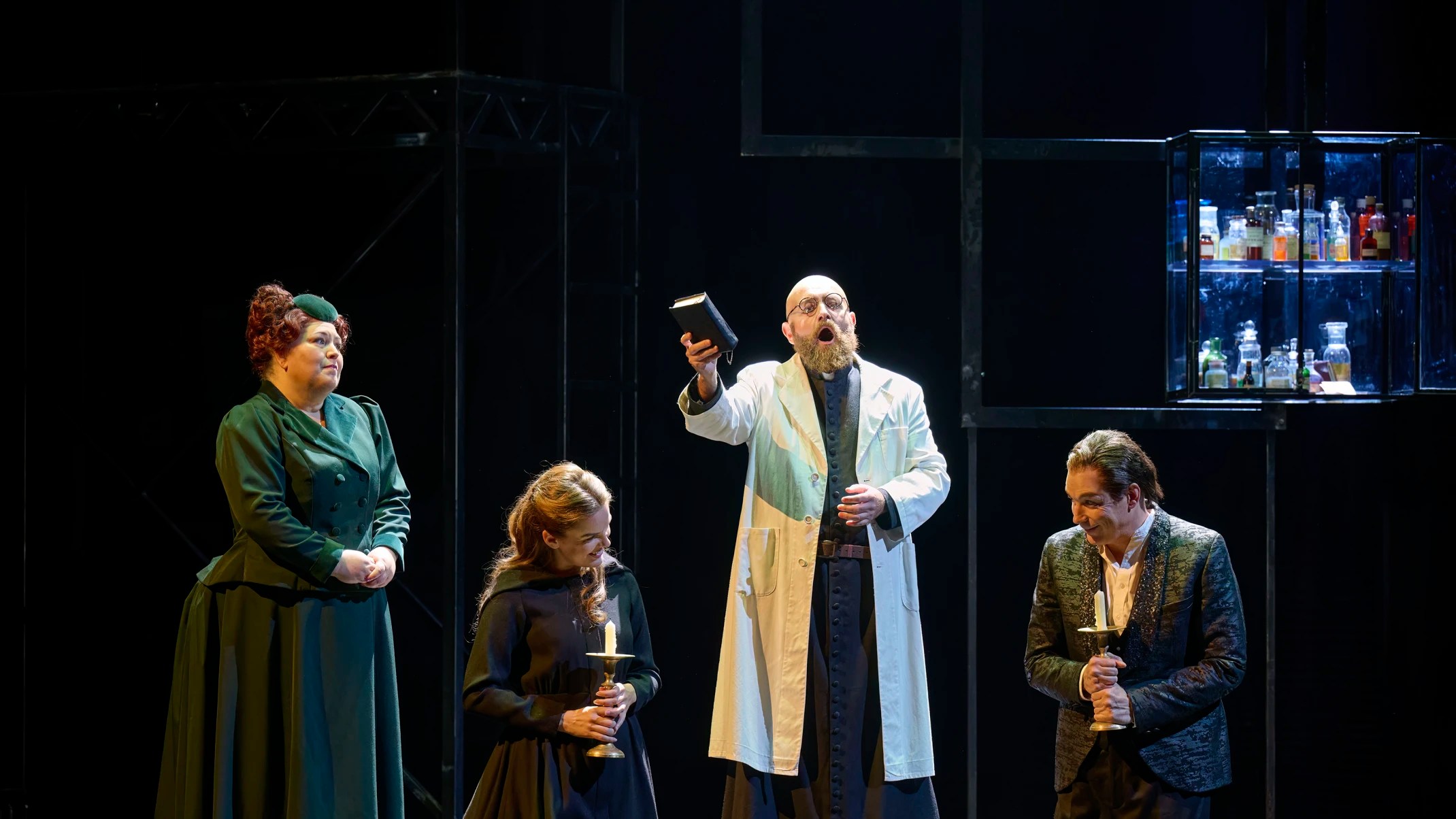
The rental production of Gounod’s opera from Malmo Opera being presented by the Canadian Opera Company, is directed by Amy Lane, who created the complex and edgy style seen in the production of Gounod’s Faust from the COC almost exactly a year ago.
The musical side of this production comes from conductor Yves Abel and the COC’s Chorus Master Sandra Horst, between them creating a beautiful reading of Gounod’s opera.
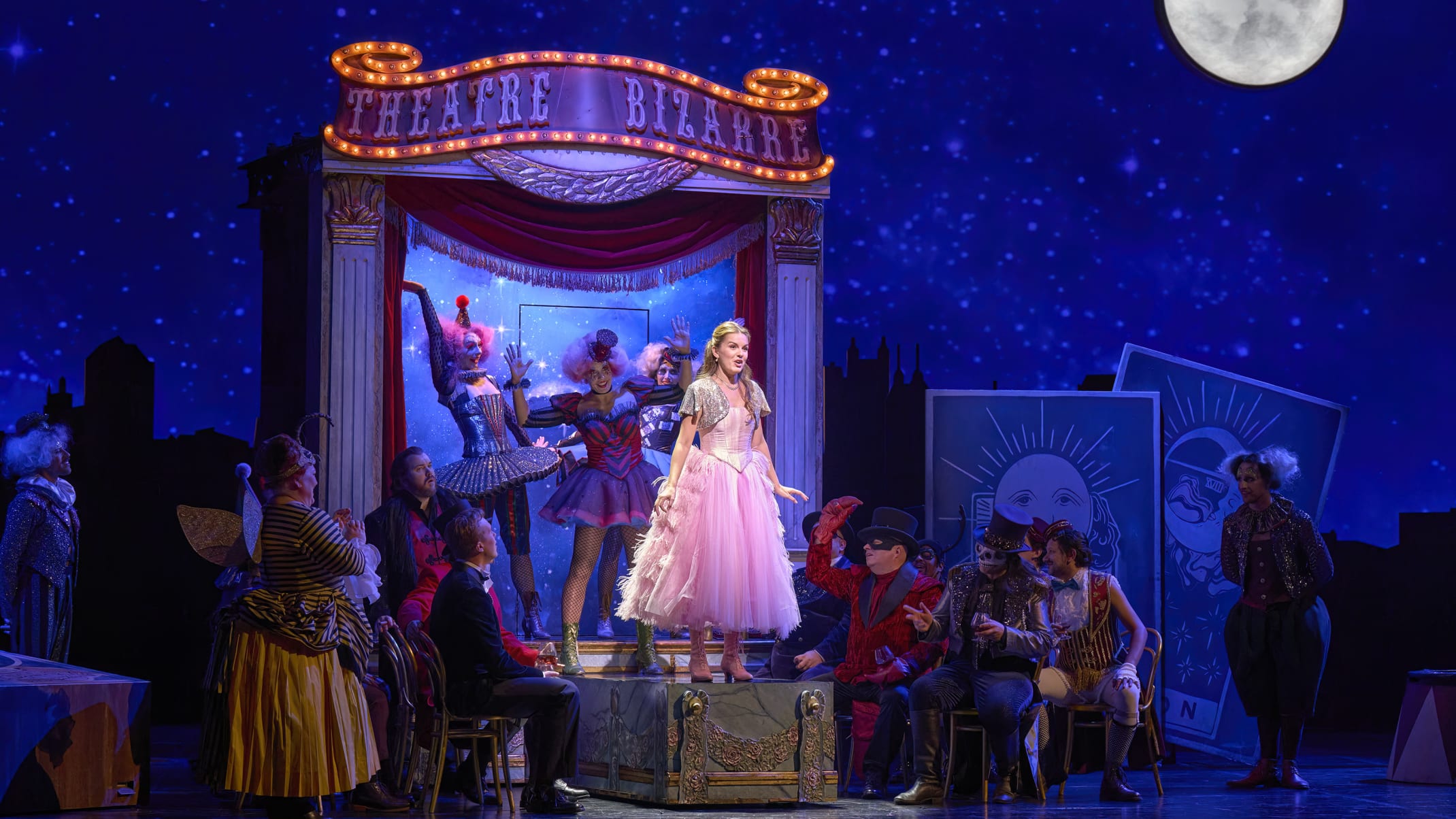
The singing is a strength of the show, led by Stephen Costello throughout, and Kseniia Proshina, who seemed to get stronger as the opera went on. It occurs to me (as i add this the morning after) that this maybe reflects the shape of the original play. Romeo is foregrounded at first with his Rosaline obsession, with his entourage (especially Mercutio), while the story shifts to focus more on Juliet with her “gallop apace you firey footed steeds” and her machinations to be married or escape marriage with Friar Laurence’s help. And with that shift, she is less the girl and more the woman, her feelings so much deeper at the end than what we see at the start, especially if we look at her through Gounod’s lens, aka her cheery aria, that the director seems to deconstruct (see photo below). I must have another look at this show as there may be something seriously feministic at work in her trajectory. I will see the opera again from up close.
Tybalt & Mercutio, antagonists who both end up dead on the stage, were especially well sung by Canadians Owen McCausland and Gordon Bintner, and who were in my opinion the dramatic standouts in the show, and vocally gorgeous to hear. Megan Latham was a pleasure to watch and to hear as Juliette’s nurse. Alex Hetherington made a superb appearance in her big scene singing a stunning rendition of her aria. Robert Pomakov portrayed a trusty Frère Laurent.
Lane has chosen to underline many moments of the opera with dance, even more so than what we saw in Faust.
Juliette (Kseniia Proshina) singing her first big aria (photo: Michael Cooper)
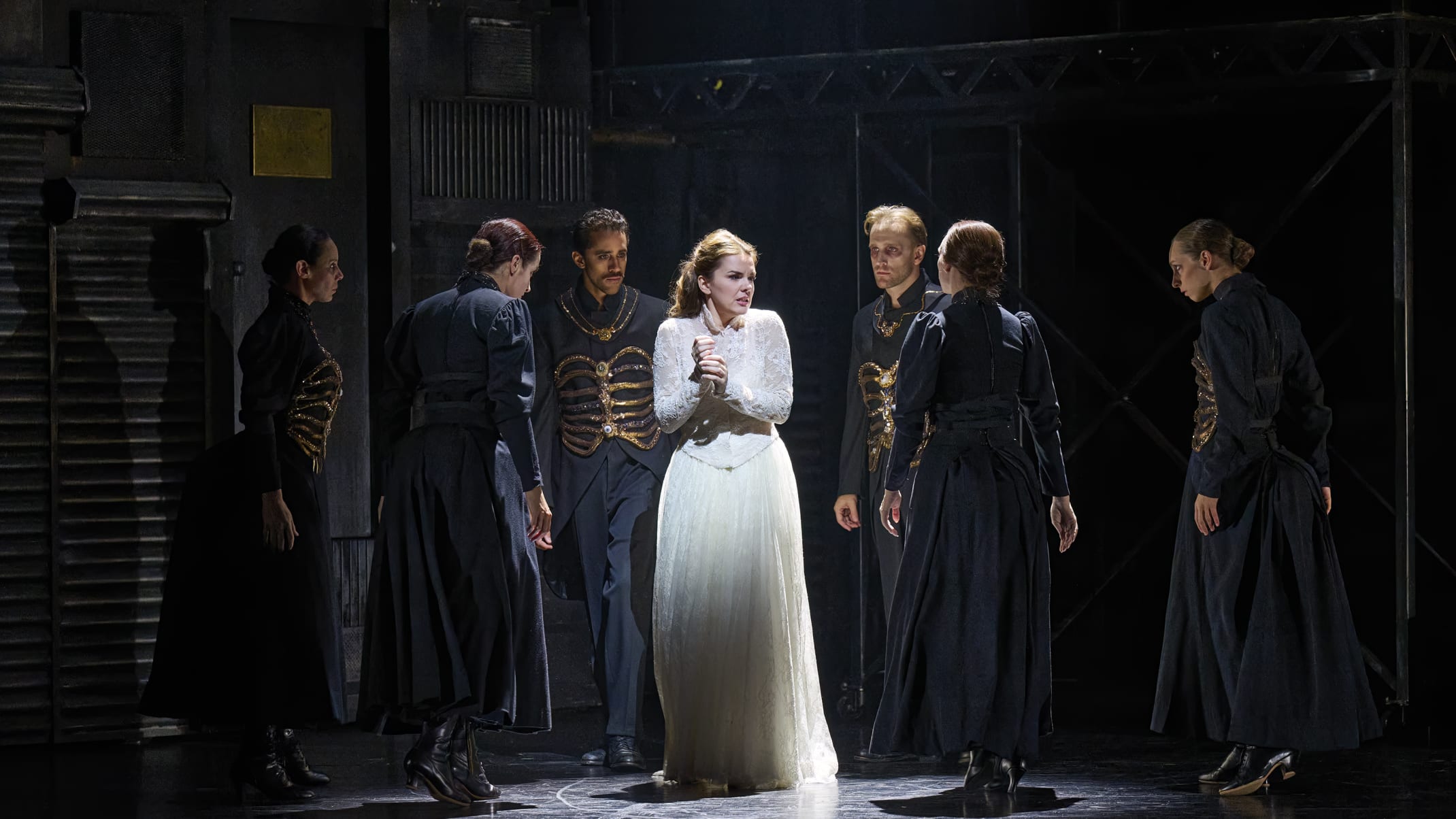
The dancers added something especially meaningful when it came time for Juliette to take her potion to simulate death, a fascinating bit of theatricality suggesting how difficult that experience must have been for Juliette. It’s completely simple, a highly original staging.
Juliette (Kseniia Proshina) and dancers (photo: Michael Cooper)
Lane has updated the story to New York City, on New Year’s Eve, 1889. Her program note explains some of her thinking. Before anyone objects to the updating, I want to repeat what I said about Robert Lepage’s MacBeth that I saw last month in Stratford, that it’s no more strange to hear Shakespeare’s iambic pentameter delivered by people in togas or kilts, than to watch men on motorbikes & wearing leather jackets speaking the poetry of the Scottish Play. The opening chorus number is a big waltz tune that sounds kind of Slavic actually, and doesn’t suggest Verona to me.
When we’re taking Shakespeare and having people sing opera it’s somewhat absurd to get all fundamentalist about what can or cannot be done in a director’s interpretation. So in other words taking the feuding families to a new place (NY City), when they’re also singing arias & choruses in French, surely is no big deal. We still see the lovers, the duels, the deaths. What matters is a chance to get a new perspective, to see the story in a new way. I enjoyed that. Mercutio, Tybalt & Roméo fight with knives rather than swords, but (spoiler alert) they all still die. The lovers still do what lovers do.
I was very moved.
I also came close to giggling aloud seeing the last line of the opera in the titles, as the lovers sing “Seigneur, Seigneur, pardonnez-nous !” (Lord Lord forgive us), recalling that suicide is a sin. Shakespeare didn’t have a problem with it but oh well that’s something the librettists (Jules Barbier and Michel Carré) likely felt they had to include for their bourgeois Catholic audience. I wonder, when they asked Gounod to set that as the last line of the opera, whether either of them thought to say a little parenthetical prayer to the spirit of Shakespeare, asking him to forgive them for what they did to his text. Oh well.
Speaking of text & libretto I wanted to call attention to the greater effort made by the COC in putting up surtitles in both French & English. It’s terrific until you come to the da capo repeat of an aria or a chorus, when for some reason the titles aren’t there. I would ask the people who created the titles: if you don’t need to translate the last lines of (say) “ah leve toi soleil” why translate the first part, indeed why have titles at all?
Yes the COC surtitles are a terrific step forward, invented in the 1980s and changing the world of opera. That doesn’t mean the innovation is already perfect anymore than Monteverdi’s dramaturgy represented an operatic ideal in 1600 that could not be improved. Perhaps things can be done better? But I don’t know that I have ever seen anyone discuss the titles. It was possible to look up at the text in French as sung and to see something beside it in English that was sometimes different from what the French text said. Should the translation represent a precise translation? Or should they aim for something poetic, Shakespearean? I am not proposing to answer the question, but to my knowledge this question has never been posed, at least not here in Toronto. I’d love to hear your thoughts.
The production of Roméo et Juliette continues at the Four Seasons Centre with performances October 8, 10, 14, 16 and 18.
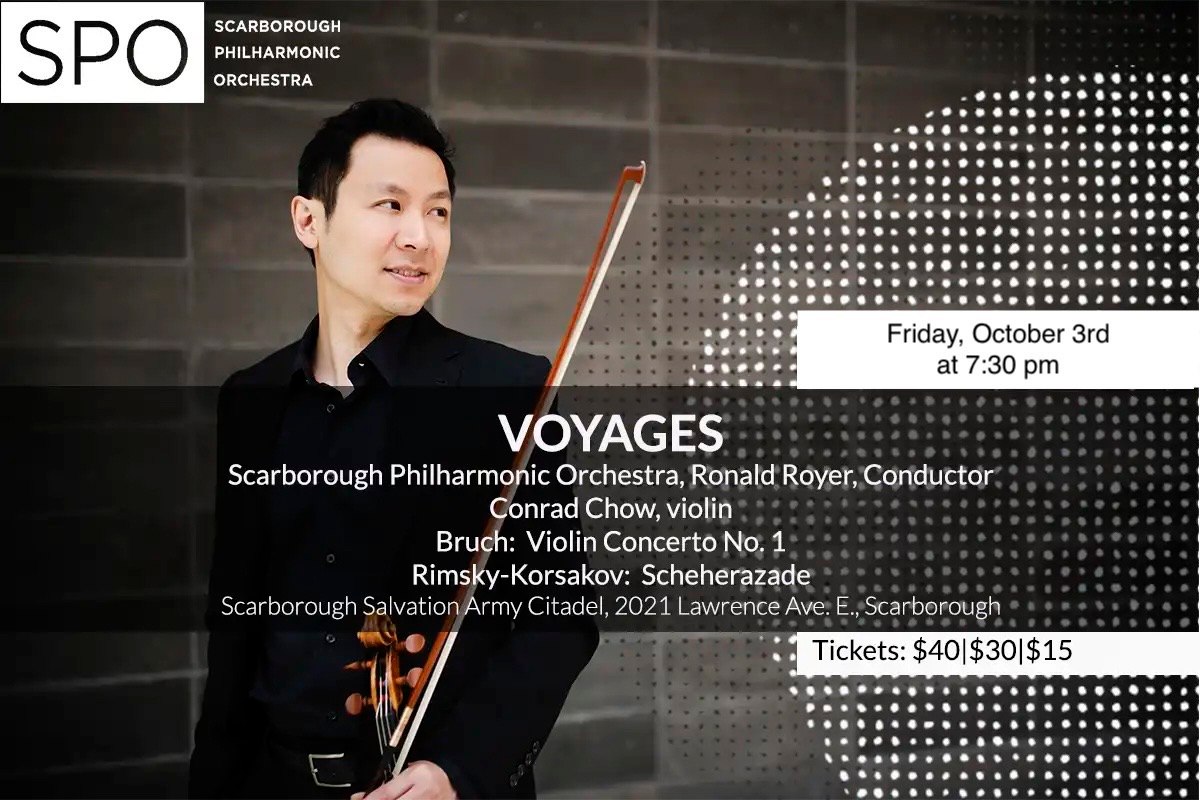
For a little while I was able to go far away from the world, as Scarborough Philharmonic Orchestra helped me & the enthusiastic audience escape at their Friday October 3rd season opener, a concert titled “Voyages”.
Escapism works for me, voyages into the imagination via the exotic and flamboyant orchestral sounds from Nicolai Rimsky-Korsakov, the Tall Ships from Halifax Harbour by Elizabeth Raum and then the pure emotional schmaltz of Max Bruch’s 1st violin concerto, particularly the virtuosity of violinist Conrad Chow.
Conductor Ronald Royer was a music teacher at University of Toronto Schools before his retirement, the school where young Conrad was a student under Ron’s direction. Now Conrad has gone on to an exciting career as soloist and as a teacher himself. I also went to UTS in another century, very proud whenever I feel the connection. It helps that both Ron & Conrad are such friendly approachable people. Conrad allowed me to corner him for a selfie before he got into his formal concert attire.
Conrad smiles while I juggle my camera
Ron continues to be a passionate educator, both in the programs he curates as the SPO Artistic Director, and as a music director helping his orchestra play better. And his sparkling little talks that he gives before the performances aren’t just witty, they help us to understand the music we’re hearing, taking us deeper into each piece. I am thankful for a good teacher who can show me something and help me experience the music in new ways.
We began with Scheherazade. I’ve been listening to this piece since I was a little kid, always intrigued by the exotic colours suggesting the 1001 Nights. Ron reminded us that the story was about a king who is heart-broken by a faithless wife, who vows to kill a new wife each night: but Scheherazade’s storytelling night after night seduces and finally wins him over. Ron explained that the violin soloist is portraying that storyteller, Scheherazade. Alex Toskov, the SPO Concertmaster, is featured throughout the piece.
Alex Toskov, SPO Concertmaster
Alex’s thoughtful solos were often accompanied by harpist Liliana Dimitrijevic, a stunning pair setting up the story-telling scenarios. The big theme from the lower brass in the orchestra represents the domineering husband. Rimsky-Korsakov gives colourful solos to almost every section of the orchestra, from top to bottom, including several gorgeous cello solos, the piccolo, flute, oboe, English horn, bassoon, trumpet, trombone, french horns & tuba, as well as percussion. I mention instruments rather than people because I’m not sure which player in the section had the solo, but the level of playing was gorgeous, everyone stepping up for their big moment in the spotlight.
I was struck by the bonus we enjoy sitting in the relatively small Scarborough Salvation Army Citadel, seating perhaps 400 people in a lively acoustic without excessive reverberation, basking in the richness of the sound from the soloists, and thrilled by the gorgeous intensity of the sound in the climactic passages. It’s such a simple thing, really, that instead of sharing the sound with over 2000 people as we do at Roy Thomson Hall, or 1100 people at Koerner Hall, there is so much sound, so much detail when it’s so intimate, hearing the timbre of each instrument so clearly. I am not exaggerating when I invoke that overused phrase, to call it an immersive experience. We hear and feel the music so much better. And it helps that Ron led a really dynamic reading of the piece, playing up the big climaxes, holding nothing back, reminding me again of Ron’s background in film music. The SPO were positively cinematic, sounding better than ever.
After the interval we heard from composer Elizabeth Raum describing her suite Halifax Harbour, and Tall Ships, the piece we heard that’s an excerpt from the longer piece.
Composer Elizabeth Raum
In contrast to the exotic glimpses of Sinbad & the 1001 Nights, we were in a Canadian sensibility, the energetic sound of the orchestra painting pictures that feel much closer to home, and apt for this year of “elbows up”, even if we were again encouraged to think of travel, this time voyaging out into the Atlantic Ocean. But it wasn’t nationalism on our part that we embraced the SPO’s enjoyable performance.
Next came the Bruch violin concerto and Conrad’s turn. I spoke of schmaltz because I find that Bruch invokes a certain kind of sensitive soulfulness, even if he wasn’t Jewish (and has been mistaken for Jewish because of the way he composes), just sympathetic to cultural associations, especially in his pieces for violin. I find that the first movement suggests an intense internal meditation, underscored by orchestral writing that features a rhythmic pulse that reminds me of a beating heart. The violin part flies high above the lower instruments, Conrad’s luscious tone filling the Citadel space.
We segue to Bruch’s slower second movement, a melody that soars in the simplest most direct expression, breath-taking beauty. And then the last movement allegro energico hits us with the extroverted melody from the violin soloist, a tune with suggestions of celebration and dance that I always find stays in my head for days afterwards. It was so beautiful, so uplifting. Speaking of lifting up, we were jumping up on our feet afterwards, thanking Conrad and the SPO for the excitement of this concerto and their performances.
At the beginning of the concert we had the opportunity to meet Michael Jones, the new Executive Director of the SPO, who gave one of the most interesting & heart-felt Land Acknowledgements I have ever heard.
Michael Jones, the new Executive Director of the SPO
I’m looking forward to seeing & hearing where Michael and Ron lead the SPO in the years to come.
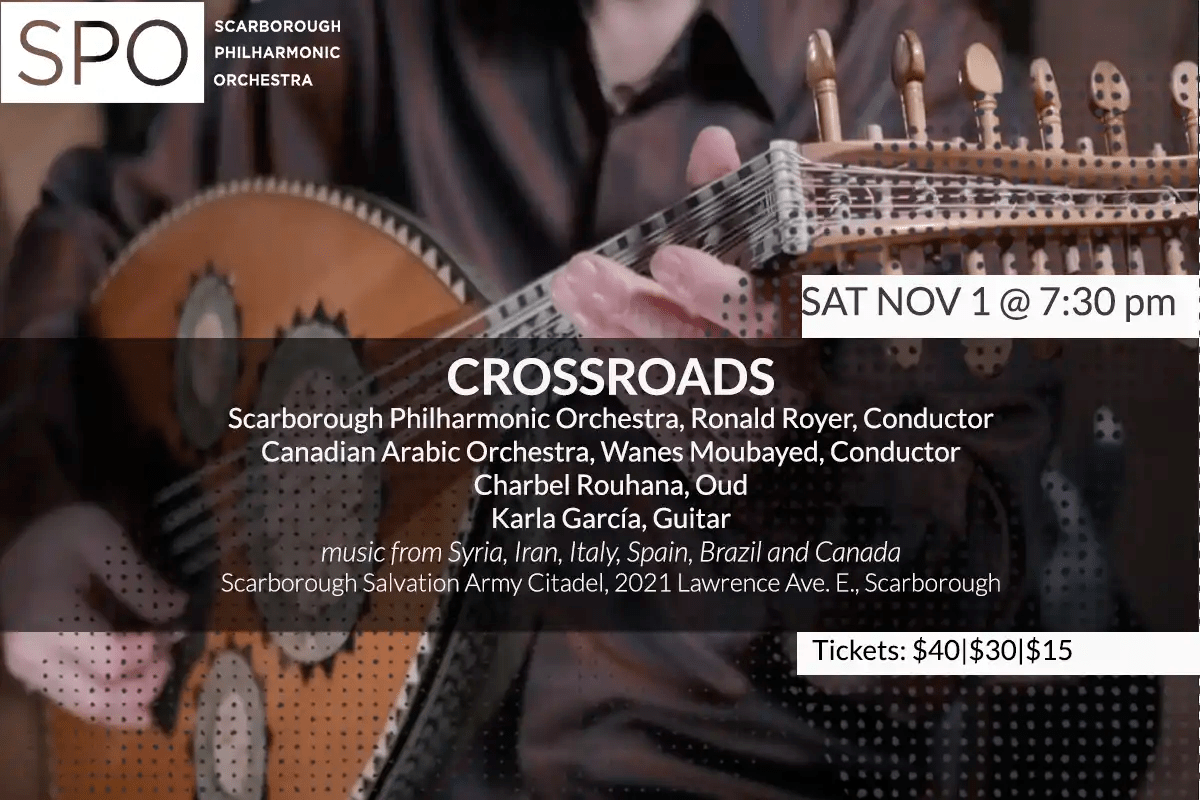
The Scarborough Philharmonic will be back November 1st in a varied program titled “Crossroads”. To find out more about the program or to get tickets click here.
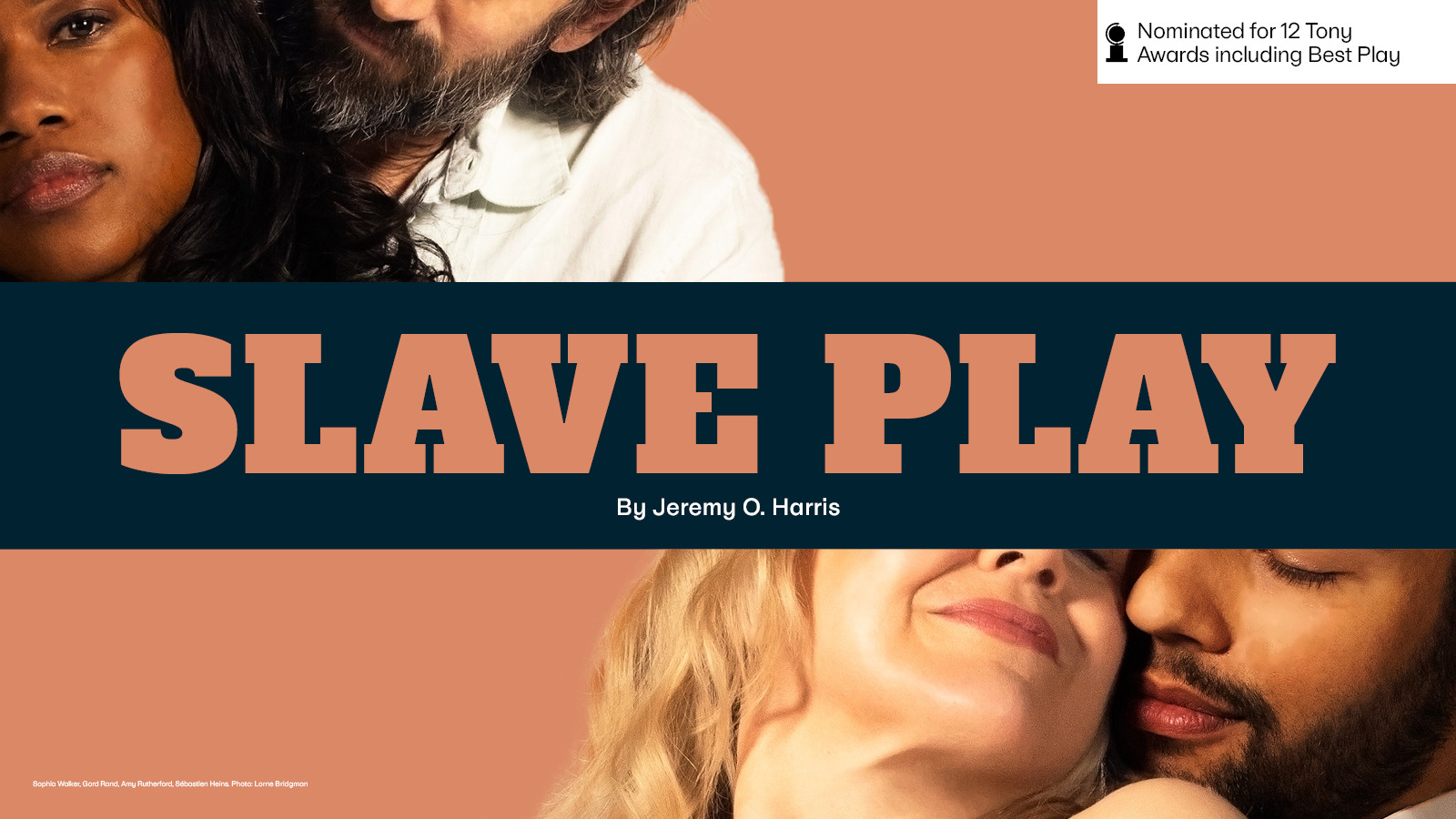
Wednesday October 1st was the opening night of Canadian Stage’s production of Slave Play, by Jeremy O. Harris, a very original work getting its Canadian premiere at the Berkeley St Theatre, directed by Jordan Laffrenier.
The premise is only part of what makes Slave Play so good, a series of inter-racial couples undergoing a kind of therapy via psychodrama role-play, what they call Antebellum Sexual Performance Therapy. You’ll recall that “antebellum” is another way of speaking of the period before the American Civil War and emancipation. We find that out in the 2nd Act, when the therapists take charge of a series of analytical conversations, explaining to us what we’ve seen in the 1st Act.
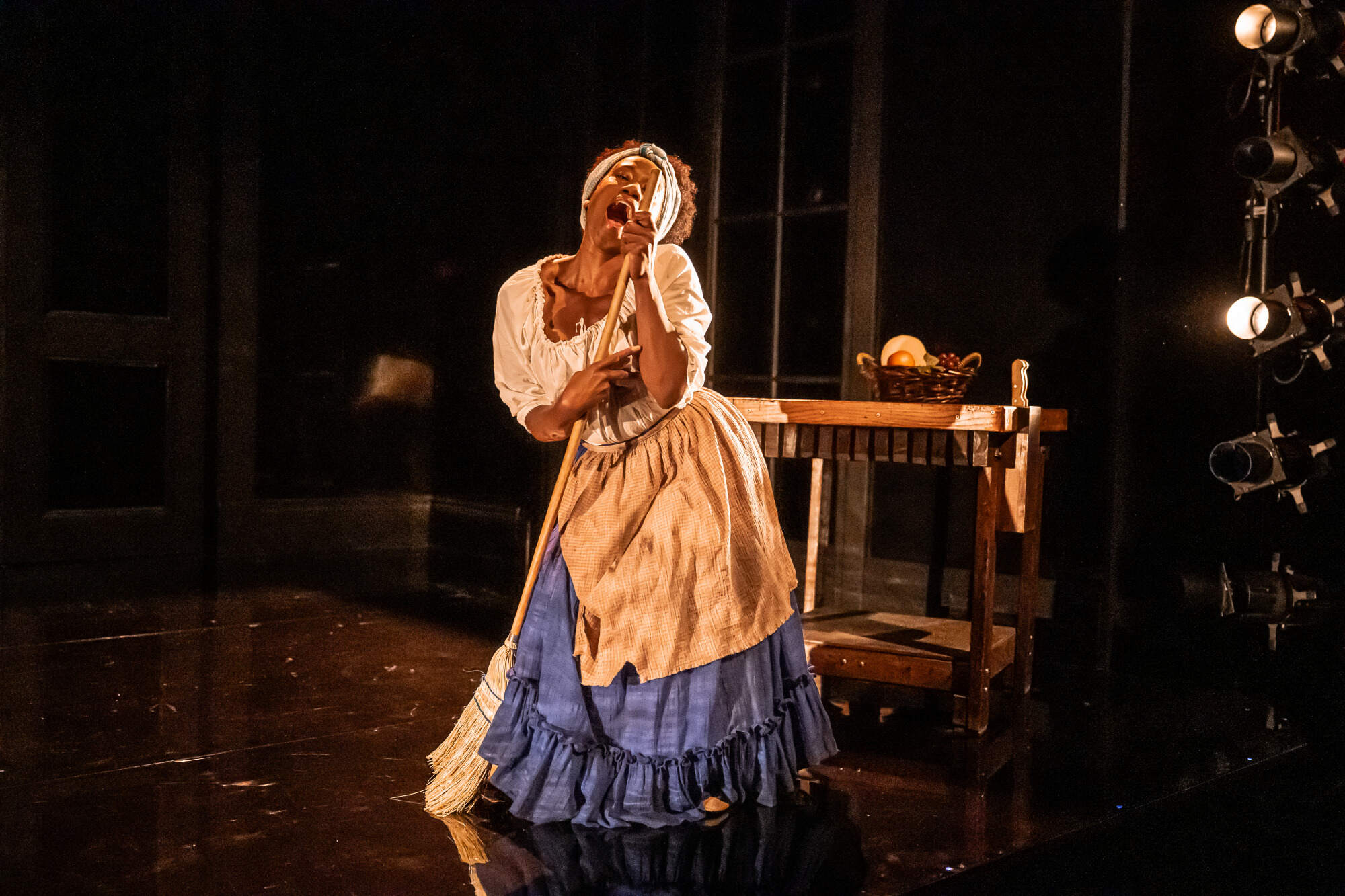
But OMG to begin? it’s not at all clear what we are seeing. I love the ambiguity and perplexing mystery of what we see to begin. It’s not at all clear what we are seeing. First we meet Kaneisha (Sophia Walker) sweeping the floor, but inspired by modern music to twerk as she works.
Kaneisha (Sophia Walker) , photo: Dahlia Katz
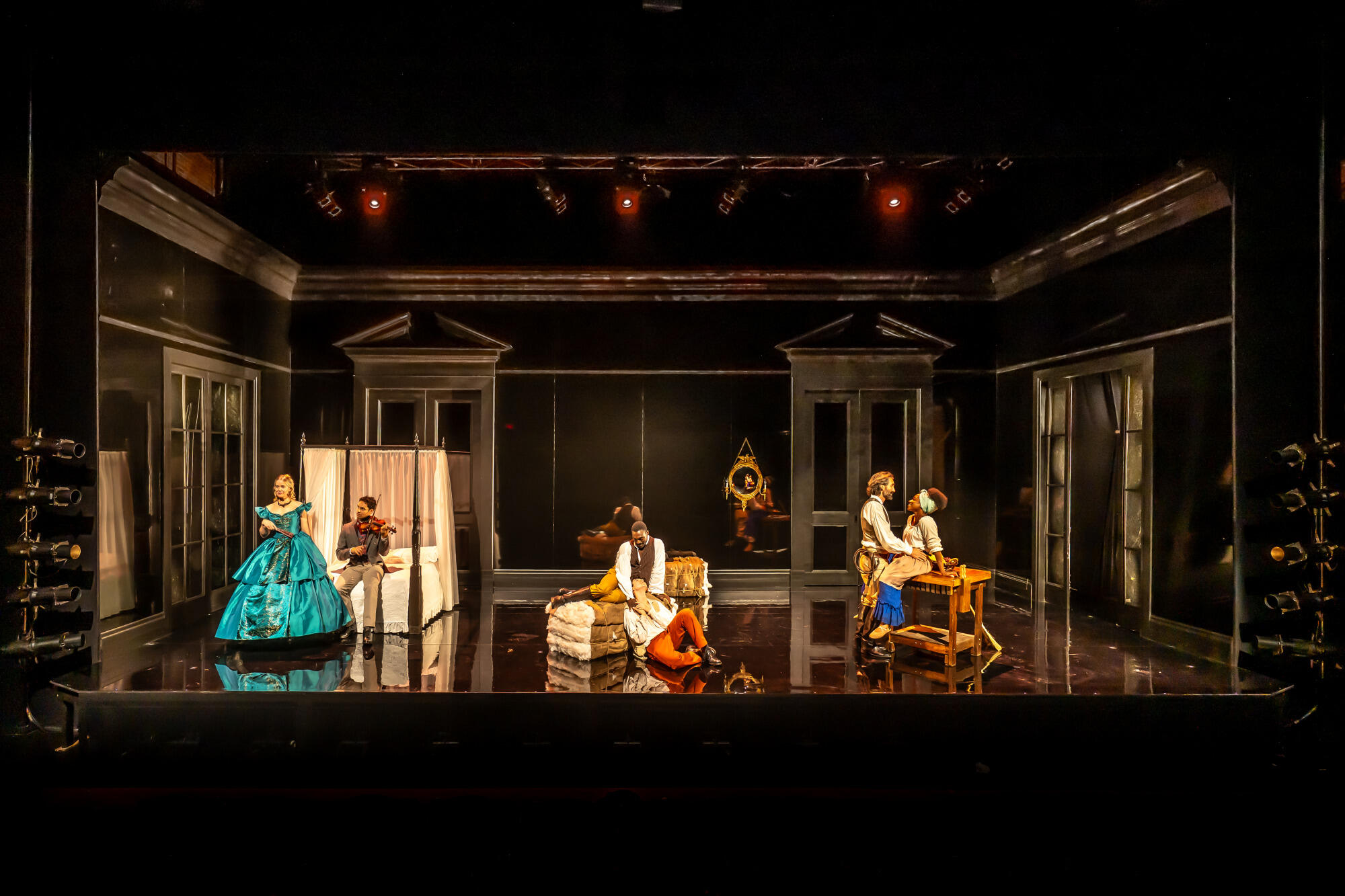
Jim (Gord Rand) comes in, speaking in a southern drawl as Kaneisha’s white overseer, a scenario that becomes progressively more sexual. Hm we’re not watching something from the true antebellum South, not when a woman who is working as a slave is twerking to modern music.
Next we encounter Alana (Amy Rutherford), a well-dressed white woman who might be the wife of the plantation owner, who calls out to Phillip (Sébastien Heine), a well-dressed mulatto who is instructed to serenade her on his violin, that is before things again heat up between them. The sex-toy she has in her hands again functions as a bit of an anachronism, making it crystal clear that no we’re not in antebellum Kansas anymore.
The third couple we meet is first Gary (Kwaku Okyere) the overseer of Dustin (Justin Eddy), a slightly confusing visual given that the overseer in this case appears to be darker than the slave. But again things become physical, first with a struggle between the two men that then leads to intimacy.
(L-r) Alana (Amy Rutherford) & Phillip (Sébastien Heine); Gary (Kwaku Okyere) & Dustin (Justin Eddy); Kaneisha (Sophia Walker) & Jim (Gord Rand), photo: Dahlia Katz
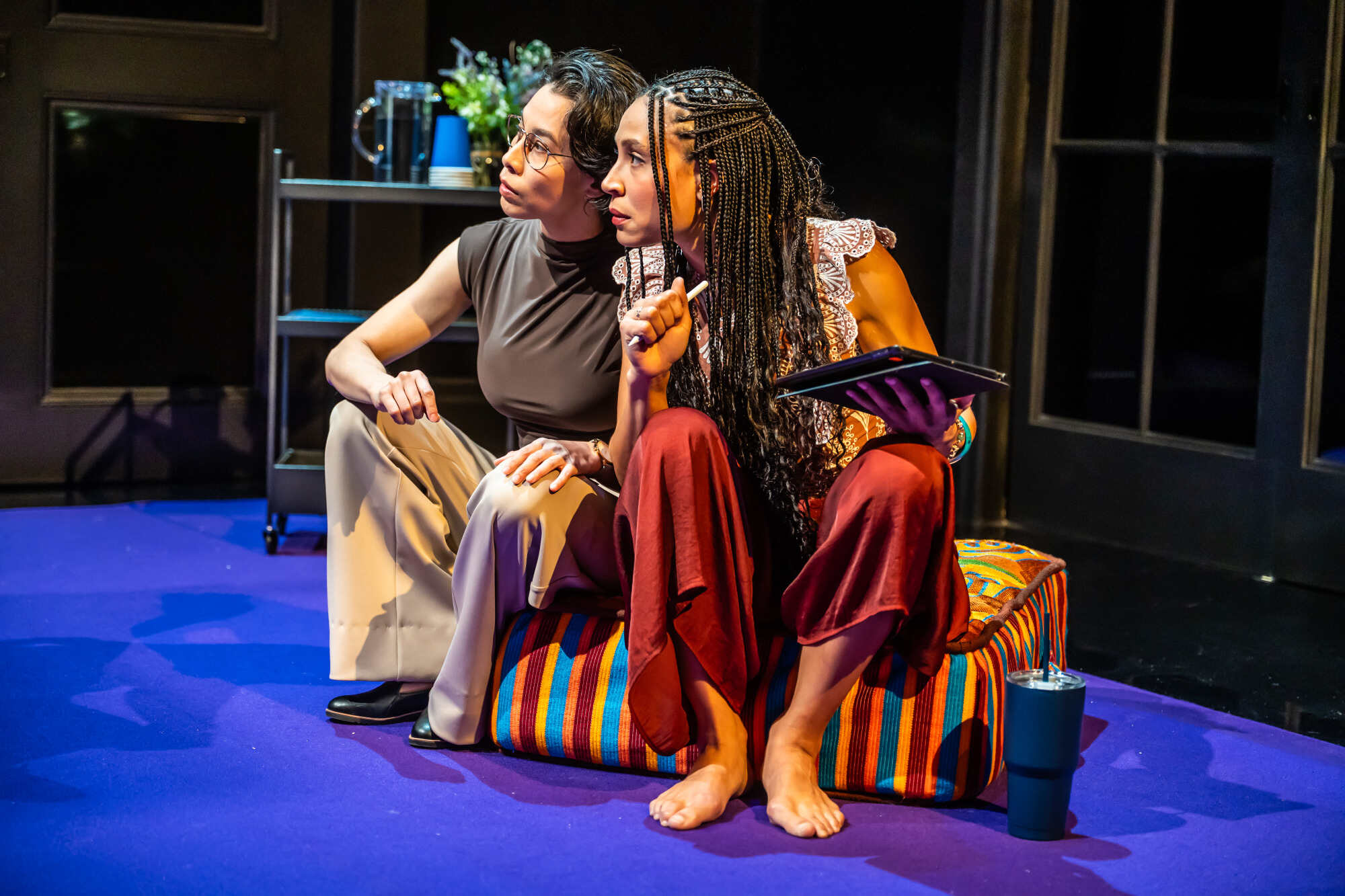
It becomes much clearer in the Second Act with the arrival of Patricia (Rebecca Applebaum) & Tea (Beck Lloyd), who are two young psychotherapists, trying out their new experimental therapy.
I find the structure remarkable, inverting the usual. In the plays of Shaw you might see exposition in Act I, development & complication in Act II and a kind of discussion or debate for Act III. What’s provocative & profound in Harris’ dramaturgy is how we get something mysterious that is only explained/ debated for us in the Second Act, with discussions from the participants, some unpacking their feelings, some expressing their profound doubts about the new therapy. If this were opera it would be as if we had arias in the first act with the recitative explaining the drama only coming later. Because we’re watching role-play in the first act, artificial use of costumes & accents yet anachronistic (for instance in modern twerking music) we are in a kind of metatheatre, artificial performances. Unless you have read the play it’s a bit perplexing, and in the best way. There’s so much richness, so much depth I am dying to see it again.
The last act is in some respects the punchline, and I’d rather not give it away. except to suggest that Slave Play sits neatly on the knife edge, managing to be both a satire full of laughter and a social commentary with moments of genuine pathos.
When I looked for and found the play online I discovered that each Act has a title. Act 1 is “WORK”, Act 2 is “PROCESS” and Act 3 is “EXORCISE.”
Slave Play reminds me strongly of the group therapy and psychodrama I experienced back in the 1980s, complete with the mixture of committed believers and skeptical agnostics. We balance on the edge between a kind of sex comedy and a serious social satire, and I suspect the key might be right in the set design of Gillian Gallow, as we see the show enacted in front of a mirror. You will likely see yourself in this play, but of course it will reflect what you bring. Skeptics will see reason to be skeptical, believers something to believe. The jargon of the therapists is way over the top at times, but they’re not the only ones generating humour.
At a time when white supremacy seems to be making a comeback, thinking especially of our neighbors to the south of us, this is a timely play affording total escapism. I did not expect to be swept away in the complexities of the interactions of the three couples. I found Sophia Walker’s Kaneisha especially sympathetic, Kwaku Okyere’s Gary full of raw vulnerability. Speaking as someone who read most of the play beforehand, I still found so much complexity that I’m dying to see it again. If you haven’t read it the text is likely to be even more absorbing, the ambiguities likely even more challenging. There are some moments that might be triggering especially for persons of colour. But I believe this is ultimately a safe treatment of explosive issues of race dynamics & sexuality.
Seen live, the music adds a remarkable dimension, as though something unconscious is released, something Patricia & Tea (the therapists) call “musical-obsession disorder”, that they say with a straight face (and the audience didn’t laugh although I did softly). There are a few music credits for the show, plus the subtleties of the sound design from Thomas Ryder Paine, and honestly I don’t know whom to credit except to say that this adds another dimension to the play.
Patricia & Tea also describe Racialized Inhibiting Disorder” or RID for short. That’s more serious in my view, although depending on the way it’s presented, there’s a ton of possible comedy buried in this text. Laffrenier manages to balance the comical & serious, the agnostics doubting the value of the new therapy with those who believe. It’s quite exciting.
Slave Play runs until at least October 26th. I strongly recommend you see it.
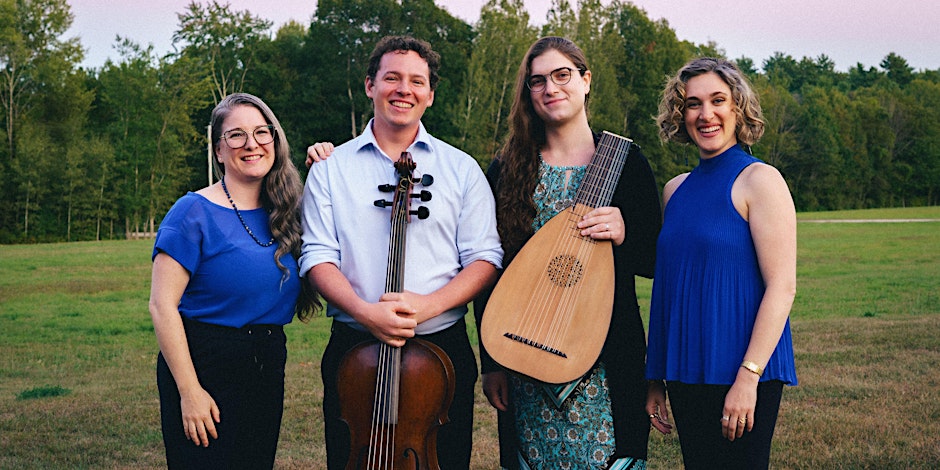
Lazzuli Baroque is proud to present their latest show, Music & Medicine. Featuring music from early 17th century Italy and Spain, soprano Roseline Lambert and mezzo-soprano Rocky Duval are joined by lute and theorbo player Luce Burrell and five string baroque cello player Keiran Campbell. Music & Medicine will take place on October 3rd at 7:30 pm at St. Thomas’s Anglican Church. Tickets are available on Eventbrite, or at the door.
Music & Medicine is a musical meditation on what it means to heal the body, mind, and spirit. Weaving together 17th century masterpieces, the five elements of Traditional Chinese Medicine, and poetry from great healers throughout the centuries, Lazzuli Baroque presents a program that fills the heart, and soothes the soul. Featuring works by Monteverdi, Strozzi, Merula, Stefani, Galán, Fontei, and more.
About Lazzuli Baroque: Lazzuli Baroque was born as a love letter to tight soprano harmonies and raucously fun music making. Founded by soprano Roseline Lambert and mezzo-soprano Rocky Duval, the band is a delightful amalgam of sensual baroque technique and virtuosic prowess. Here to make you smile, laugh, cry, and above all, enjoy the delicious beauty of baroque music, they are joined by some of the finest early music musicians: cello player Keiran Campbell, and lute & theorbo player Luce Burrell.
About Luce Burrell: Luce Burrell (they/them) is a lutenist originally from the Rocky Mountains of Wyoming. They have performed with ensembles such as Clarion Music Society, Lazzuli Baroque, Silentwoods Collective, Theotokos Ensemble, Mannes Opera and they have appeared in concert series for Gotham Early Music Scene, SoHip Boston, and the Bloomington Early Music Festival. They are passionate about making early music accessible and have appeared as a guest artist in lectures at Harvard and Indiana Universities discussing music of the Baroque and middle ages. Luce also works as a historical keyboard technician and has prepared instruments for productions at The Metropolitan Opera and Carnegie Hall, among other venues. Luce holds a bachelor’s degree from the New England Conservatory of Music and a master’s degree from the the Jacobs School of Music where they were a Historical Performance Fellow in the studio of Nigel North.
About Keiran Campbell Described as “a delightful performer… playing with the ease of a pub fiddler,” (The WholeNote), Keiran Campbell (he/him) has performed with ensembles including The English Concert, NYBI, Philharmonia Baroque, The Boston Early Music Festival Orchestra, Four Nations Ensemble, and Les Violons du Roy. He recently performed with Le Concert Des Nations under Jordi Savall, touring Europe performing Beethoven Symphonies before recording them on Savall’s new Beethoven CD. He is also on faculty at the recently formed, UC Berkeley-based, Chamber Music Collective. Recent performance highlights include concerto appearances with Tafelmusik and Philharmonia Baroque Orchestra, and performances of Handel’s Saul and Solomon with English Concert at the BBC Proms and Edinburgh Festival. https://keirancampbellcellist.com/
About Rocky Duval: American singer, performance poet, and writer Rocky Duval (she/her) has been performing professionally since the age of 11 and has appeared in opera, television, stage, concert, off-Broadway, and the TEDx stage. Hailed as “deeply moving” (NYPL-LPA), and “extravagant” (NY Times), Ms. Duval specializes in singing baroque and contemporary classical music, and has performed with many companies, including: The Metropolitan Opera Guild, Seattle Opera, The Glimmerglass Festival, Festival Bach Montreal, Frequent Flyers Aerial Dance, The Colorado Music Festival, The Seattle Symphony, Opera Steamboat, Tafelmusik Baroque Summer Institute, among many others. Her first play, Hildegard, Reborn, premiered at Lincoln Center with sponsorship from the NYPL-Library for the Performing Arts in 2024. She has been a resident artist at 2B&2C Gallery NYC, Avaloch Farm Music Institute, The Guggenheim’s Works and Process, and the Art in Odd Places Festival. https://rockyduval.com/
About Roseline Lambert: Originally from Quebec City, soprano Roseline Lambert (she/her) quickly made her way into the baroque scene of Toronto. She regularly sings with professional ensembles such as Trinity Bach Project, and is a core member of the Tafelmusik Chamber Choir. In April 2025, she made her solo debut with Opera Atelier in Charpentier’s David et Jonathas. While her repertoire is mainly baroque, she has been invited to sing in contemporary choirs such as Soundstreams Choir 21. Before moving to Toronto, Roseline was in high demand in Montreal. Her repertoire as a soloist includes Haydn’s Creation, Orff’s Carmina Burana, Buxtehude’s Membra Jesu Nostri, Bach’s Wedding Cantata, among others. She also took part of Donizetti’s Don Pasquale tour with Jeunesses Musicales Canada, and was soloist with the Orchestre symphonique de Montréal, and the Choeur Classique de Montréal. Roseline is also a registered acupuncturist practicing in Toronto. When she isn’t singing or poking people, she is out and about salsa dancing, swing dancing, or riding her bike Marcello. https://www.roselinelambert.com/
Listing information: Lazzuli Baroque presents: Music & Medicine Featuring: Luce Burrell, lute & theorbo Keiran Campbell, baroque cello Rocky Duval, mezzo-soprano Roseline Lambert, soprano October 3rd, 7:30 pm – St. Thomas’s Anglican Church General seating $40. Sliding scale tickets available. Buy at the door or on Eventbrite. Website: https://www.roselinelambert.com/lazzulibaroque Social Media: Join the conversation on facebook | instagram For more information about us: https://linktr.ee/lazzulibaroque
*******
“Press releases and announcements” are presented verbatim without comment
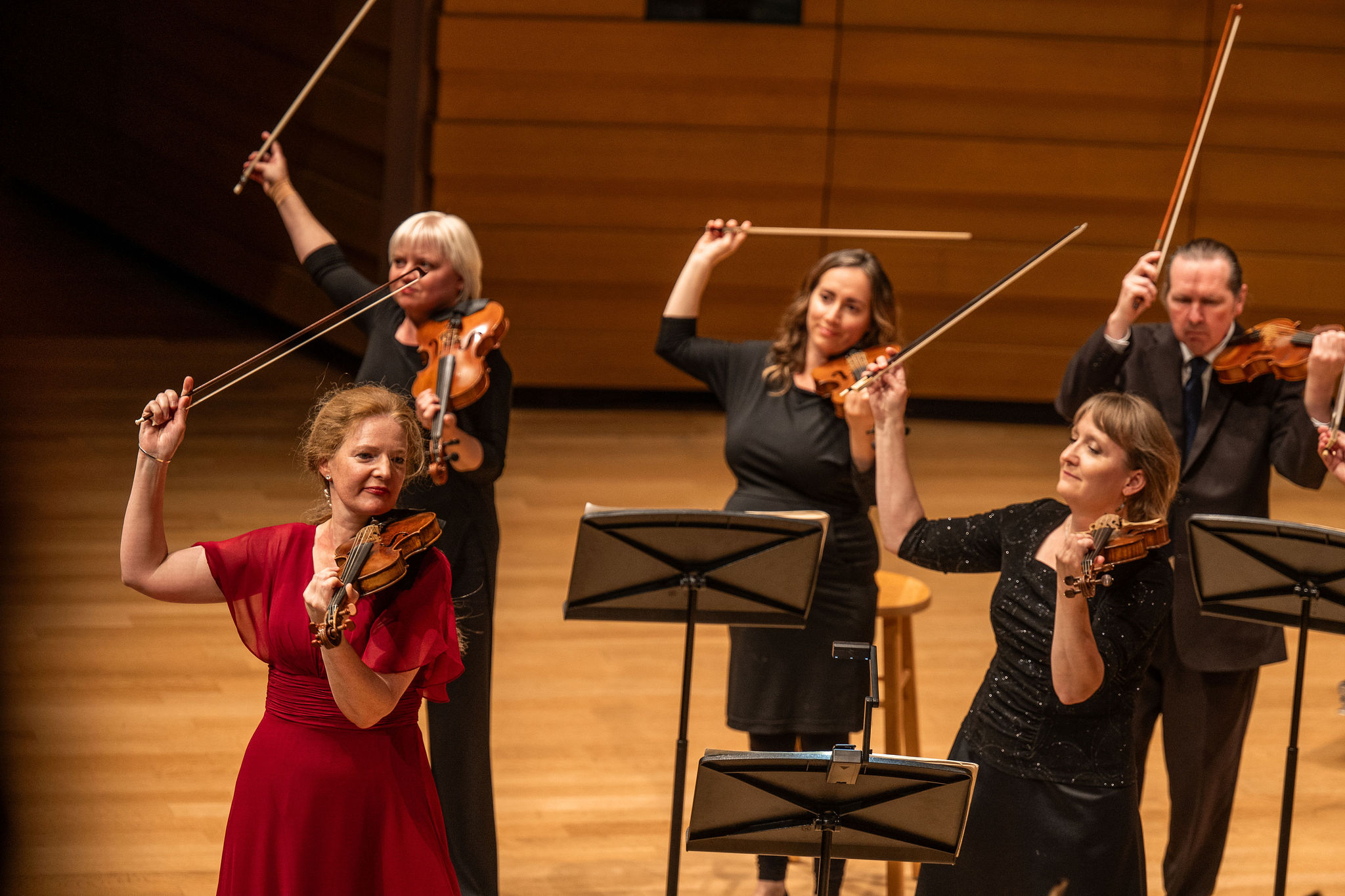
Friday night was an exciting beginning to the Tafelmusik concert season led by their charismatic Principal Guest Director Rachel Podger featuring works of Mozart & Schubert, a concert to be repeated Saturday & Sunday at Koerner Hall.
The spectacular performances of a pair of familiar works (Mozart’s Symphony #40 and Schubert’s Symphony #5) showed the music in a new light, while displaying the remarkable chemistry we saw last year between Tafelmusik and Podger. Once again the orchestra played with the kind of tight ensemble we see in chamber music, evident not just in the precision of the music but in the eye contact & smiles of everyone onstage, clearly enjoying themselves. Whenever Podger appears with Tafelmusik the music-making is special.
Rachel Podger & members of Tafelmusik (photo: Dahlia Katz)
Tafelmusik seem to be intent on helping us to learn as we discover new ways of hearing music, often by unlearning the assumptions of the past. Charlotte Nediger’s program note includes a smoking gun from Schubert’s diary, describing the admiration with which Schubert experienced Mozart, and would emulate him at least in his choice of instruments, if not in the actual sound. What a terrific opportunity, to hear these works one after the other, blowing away the cobwebs we inherit of the retrospective thinking we get from musicology, the wisdom of hindsight that may distort the performance. I’m grateful for a new way of understanding them, that is less about musicology and influence than the practical experience of hearing the music.
Their mutual similarities are not as clear when Schubert is seen through the lens of Beethoven & subsequent romantic composers. And the view is further distorted by matters of size, when a chamber orchestra of 40-plus members or more can’t offer the subtleties we heard from the 26 playing for Tafelmusik last night, their careful musicianship reminding me of the way we understand a string quartet: their unanimity like the effect of a single instrument rather than an orchestra, the music emerging as a single thought.
And I returned again to a question I have recently found myself asking over and over, particularly since seeing the Toronto Symphony led by Mandle Cheung. How much of what we hear is via the conductor, and how much is an orchestra managing itself? We saw the kind of instantaneous response between players that one expects in chamber music. Size matters, as this cohesion becomes impossible, the bigger the band gets.
We were treated to high drama in the Mozart G minor symphony. The pace in the outer movements was fast as quicksilver, stormy, stressful, given to abrupt explosions of emotion amid passages of lyrical beauty. We think of Mozart as a paragon of the youthful genius but here we see glimpses of a darker side. He may have died at 35 but had already been a famous musician for decades, perhaps world-weary by the time he came to this his penultimate symphony. The second movement offered depths of feeling worthy of a romantic.
Between the two famous symphonies we watched and heard the theatrical dialogue of Mozart’s Rondo in B-flat for violin & orchestra. Besides aligning us with the key we’d be in for the concluding Schubert, we watched and heard the back & forth game playing of the young Mozart, a work of joyous innocence to contrast the darkness of the symphony we had heard. Not only is this a work where the music seems to play games, but Podger seemed to be toying with us, playing with our expectations in the audience. Podger was spectacular on the violin but perhaps more importantly drew something remarkable and rare from Tafelmusik, who played with passionate commitment.
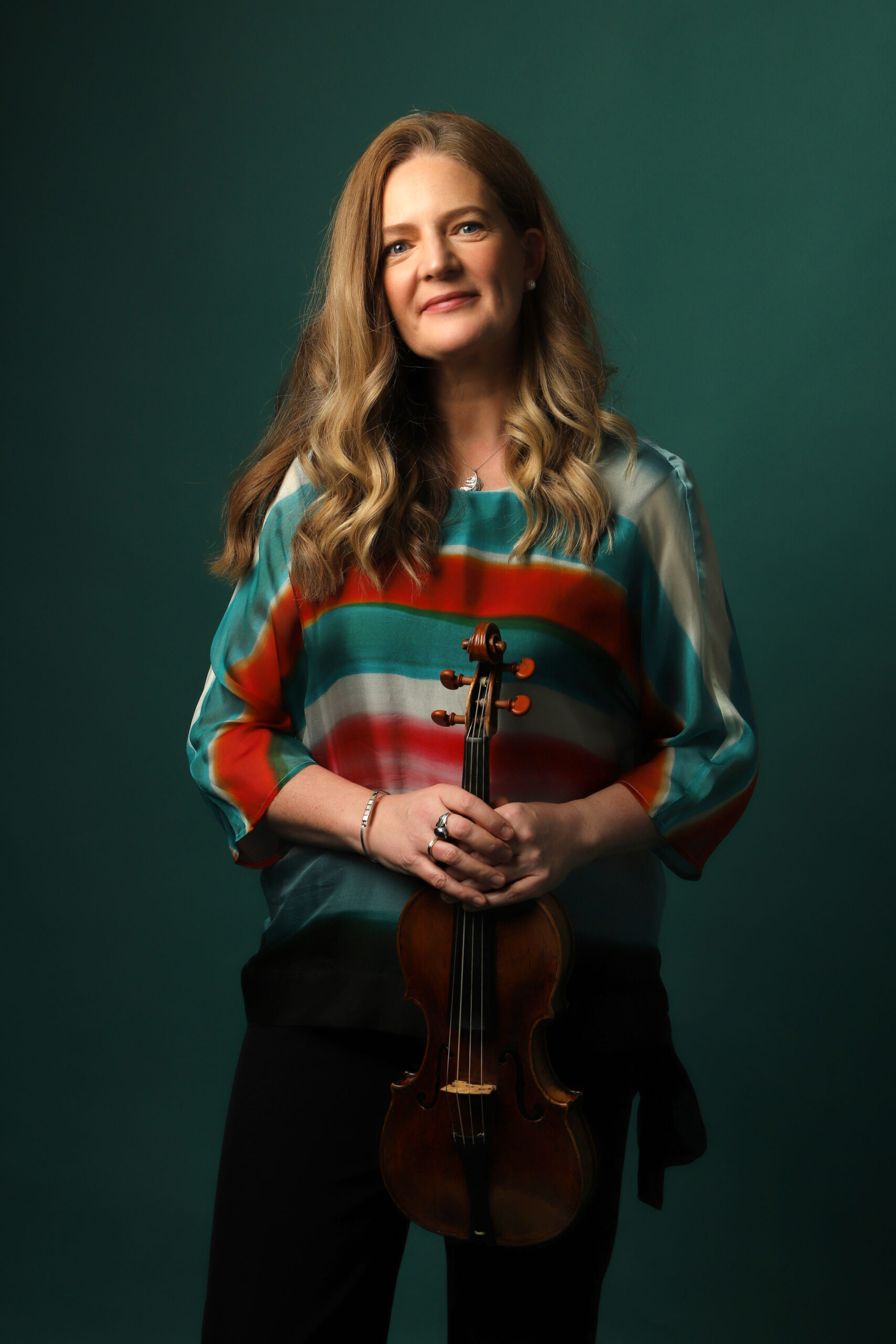
Violinist Rachel Podger (Photo: Broadway Studios)
The concluding reading of the Schubert #5 reminded me a bit of the old recording I have of London Classical Players led by Roger Norrington who passed away recently. Decades later I still wish Tafelmusik would undertake more of the romantic works Norrington & the LCP recorded back in the 1980s, and believe there would be interest. Considering the wonderful job they did with the Beethoven Symphonies or works such as Weber’s Der Freischütz, I know the orchestra is more than up to it, as they showed us again Friday night. I can’t tell if I am out of step in making such a suggestion, when I see Tafelmusik promoting this concert on Facebook with a video of Rachel Podger under the heading “Baroque Music Excellence.” Yes their Bach & Handel are amazing. But I am sure they could also play Berlioz or Schumann. For now, I am grateful to hear them play Schubert and how wonderful they sound playing this music.
This splendid concert repeats Saturday & Sunday nights, and then Tafelmusik will be right back to Mozart for Opera Atelier’s Magic Flute opening October 15th at the Elgin Theatre.
I have a new perspective on Puccini’s opera since attending La Boheme On Tap last night at the Redwood Theatre, although watching Moonstruck last week while interviewing a couple of the participants highlighted the contrast.
Yes Mimi lives in poverty, dying surrounded by her impoverished friends, a sad ending to be sure.
But I’m not so different from Ronnie (Nicholas Cage). He took Loretta(Cher) to see the opera at the Met, having previously watched this funny romantic story with the tragic conclusion many times, while it was her first time seeing the story. Impoverished as the bohemians may be, it’s a bit of escapism for those of us who actually have enough money to go to the opera. The characters in boheme may be poor but the ones in Moonstruck are mostly wealthy, boheme a lovely romance to entertain & help teach some misguided folk (Loretta & Ronnie are both messed up when the film opens) how to properly open their hearts to love.
However I may have experienced boheme in the past, I watched through a new lens last night, thanks to Ryan Hofman the co-producer of La Boheme On Tap, who brought in Daily Bread Food Bank for a fundraising auction, a natural partnership given the storyline of boheme.
I heard that they raised enough for over 800 meals.
The audience included members of Toronto’s opera community. I was too busy talking and buying raffle tickets (and I even won a prize) to photograph everyone. I ran into Kyle Derek McDonald whose operatic adaptation of Richard the Lionheart’s adventures will be presented in concert in Ottawa in November.
I talked to Opera in Concert / SOLT / Toronto Operetta Theatre artistic director Guillermo Silva-Marin and Henry Ingram. Henry spoke to me about my Toronto Symphony concert review I posted yesterday, mentioning that he had heard another less enthusiastic opinion of Marsalis’s Concerto for Orchestra. I suggested he listen to the piece, using the YouTube performance of the new work that’s in my review.
I first met Henry in 1970 when he was known as Barney rather than Henry, singing Tom Rakewell in a Rake’s Progress production with my brother Peter Barcza singing Nick Shadow, when I hazarded playing some of that score at home.
I was sitting beside Ann Cooper Gay, who was Ann Truelove in that 1970 Rake’s Progress. It was very cool to see Henry aka Barney chat with Ann his Truelove of more than a half century ago.
Ann has a remarkable history, as a music teacher, as an organist (she played at my 1st wedding), as the Artistic Director of the CCOC, mentoring many young singers. Ann seems to know everyone in Toronto and had a great time chatting with members of the audience.
I heard a great story from Ann a few days ago, when we chatted about Holly Chaplin, who played Mimi tonight in la Boheme.
Ann told me the story of hearing a small child singing Non so piu, Cherubino’s Act 1 aria from Marriage of Figaro. I’m including the video because it’s my favourite aria from this opera and to give you some idea of why it might be remarkable to hear a little child singing this.
Now imagine you’re hearing this sung by a little child. Sung correctly. And discovering that the child was only 8 years old.
That child was Holly Chaplin.
She’s all grown up now, singing roles in operas like boheme or an upcoming Lucia di Lammermoor she will be singing in a few months time.
I joked with her that she’s singing two different Lucias, if we recall that as Mimi tells us in her aria: “Mi chiamano Mimì ma il mio nome è Lucia.” (they call me Mimi but my name is Lucia).
It was great to see Ann & Holly talking & reminiscing after the show, alongside Brahm Goldhamer, the music director & pianist last night.
Brahm Goldhamer, Ann Cooper Gay & Holly Chaplin
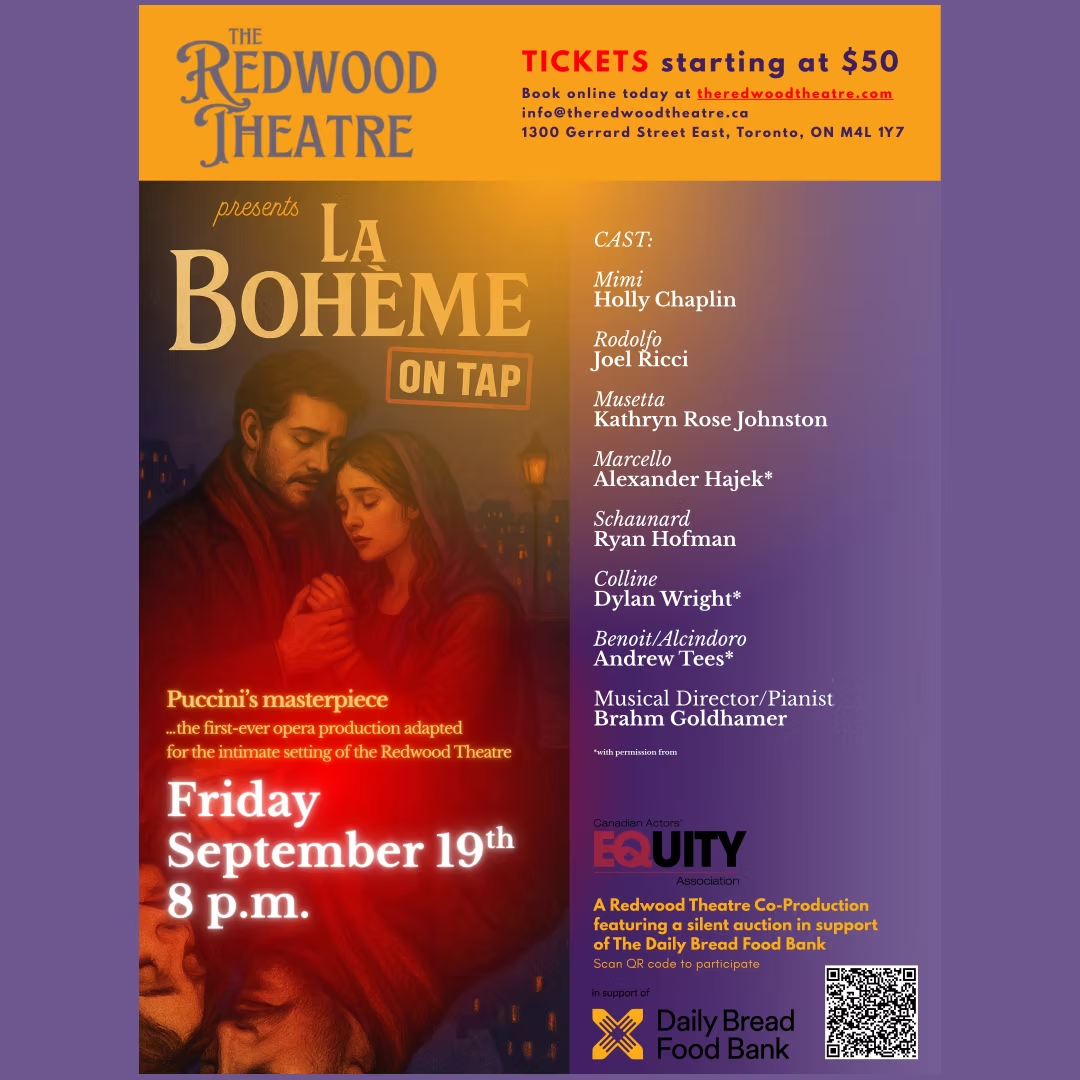
La Boheme On Tap gave us what we came for, an escape from a troubled world into romance, comedy & a realm of great beauty. Holly was Mimi. Joel Ricci was our poet Rodolfo, Alex Hajek Marcello the painter, Kathryn Rose Johnston the flirtatious Musetta, Dylan Wright the philosopher Colline, Andrew Tees Benoit the landlord & later Alcindoro the ATM for the feast in Act II. And our producer Ryan Hofman also sang Schaunard the musician. While there was no chorus, the story was told clearly with the help of projected titles. I couldn’t begin to count how many times I’ve seen this indestructible opera, last night with a few unique moments and the unavoidable tears at the end. I understand that they had only a few rehearsals this past week, making their successful performance something of a miracle, perhaps testimony to the skills of Brahm their music director. I understand he’s off to Ottawa today for another gig.
This is the first time an opera has been presented at the Redwood Theatre. The acoustic is very friendly, the voices heard clearly without too much reverberation. I think it’s an ideal space in many ways. Some of us were drinking beer or wine. I suspect the ways to properly exploit the space are still to be discovered. I say that enviously, to be honest, thinking it will be great fun for the Opera Revue team to explore the possibilities of different configurations & set ups.
Forgive me that my headline sounds like a prayer to the Goddess Fortuna. But so far she seems to be smiling upon our fair city and our Toronto Symphony. I feel lucky to live in this city.
Toronto Symphony started the new season with a strong program that might be their formula for the coming season, a mix of a familiar piece with something new.
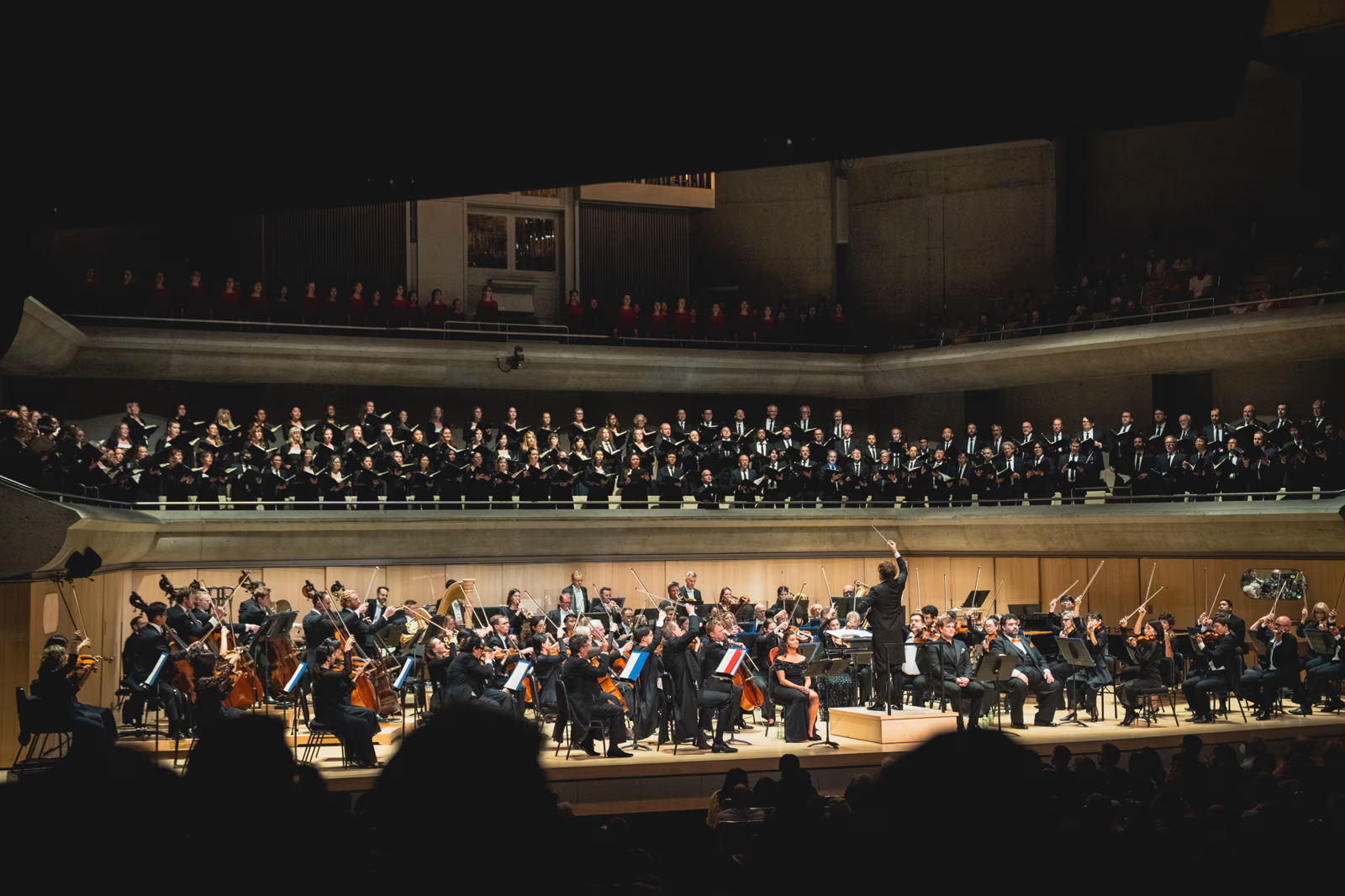
Roy Thomson Hall can sometimes seem like a big cavern, but occasionally the planets align (thank you Fortuna), as the combination of the work being presented and the massed forces make that big place seem intimate, even small. Between the full house and the full stage magic can happen.
First we heard the Canadian premiere of Wynton Marsalis’s Concerto for Orchestra, followed by Carl Orff’s Carmina Burana including soloists, the Toronto Mendelssohn Choir and the Toronto Children’s Chorus.
The two works hit me as a beautiful contrast, even though Music Director Gustavo Gimeno drew some interesting parallels between the two works in his pre-concert talk. At first glance the two pieces couldn’t be more different, so the opportunity to see similarities is exciting.
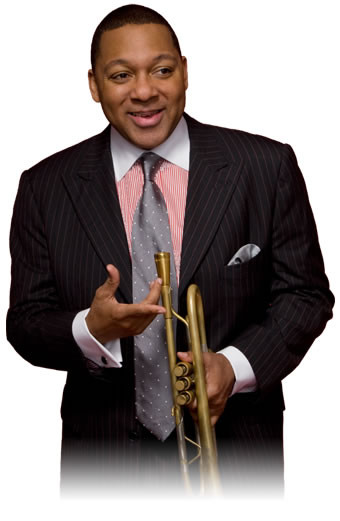
At one point while speaking of Marsalis’s Concerto Gimeno spoke of jazz. It’s perhaps unavoidable given Marsalis’ history as a great jazz player. He’s a genius with his trumpet.
Composer & trumpeter Wynton Marsalis
Let me add, that I remember the excitement when Marsalis first appeared on the scene back around 1980 or so. He was perhaps unique, unprecedented because he was both a jazz trumpeter and also as a classical trumpeter playing sparkling performances of concerti by Haydn and Hummel. I’m reminded of Leonard Bernstein, a similarly versatile artist, challenging us to figure him out. Is he popular or classical?
Maybe both.
So yes, Marsalis is a jazz musician & a composer. I wonder if the adjective “jazz” really fits, to label this composition in any way as “jazz”.
In fairness I want to remember that Gimeno’s goal was not musicology or analysis, but simply meant to make the music approachable, to describe the piece in a way to offer an entry point, to bring listeners in even if the work is a daring composition that is at times quite dissonant, with a driving pulsing beat such as you hear in Stravinsky’s Rite of Spring with just a hint of something jazzy. I think Gimeno sought to make the piece less daunting, less forbidding, more approachable. Given the way the audience ate it up, I would say he succeeded although full marks to the TSO for brilliant playing.
The music is fun, playful, astonishingly creative.
Marsalis gave us six movements in his Concerto, with a series of allusive titles to further bemuse us: I: Who Struck John? II: Group Speak III: Testimonials IV: It Comes in Waves V: A Love Feeling VI: Say What?
I wish I had had the titles available as I was listening to each piece. I’m not sure I understand the intention, but that’s why I need to listen again. As I try to unpack the Concerto the next morning especially for those who might consider attending one of the concerts in this series (Saturday at 7:30 & Sunday at 3:00 pm), I am going to share the YouTube I found of an earlier performance of this piece, that so far has only been performed in Los Angeles & Germany. Is it jazz? you be the judge.
I am reminded of the reception of Gustav Mahler in the 20th century, a composer who didn’t really become popular right away, at least not until people had the opportunity to hear his pieces multiple times, through the magic of recording technology. After experiencing a single performance of Marsalis’s concerto, a bit like a Mahler Symphony, I think it deserves multiple hearings, if we are to properly appreciate the depths of this music. I am in awe and insist that this is a superb piece of music.
I found myself obsessing a bit about that word jazz and its cousins in popular music, the harmonic language of blues, wondering if the idiom & the orchestral colours employed by Marsalis might be analogous to the use of a national folk music by a Dvorak or a Ralph Vaughan Williams. I think too Marsalis is aiming for a kind of sophistication, rather than something hummable, generations removed from the romantic composers I mentioned. Perhaps the dense textures of Marsalis’s writing can be understood as a kind of second or third generation elaboration upon his jazz- blues roots (perhaps with the earlier generations being Bernstein & Gershwin), the way Berg is a twist on Mahler or Stravinsky can be understood as the enlarged & distorted image first seen in earlier composers building on their slavic folk music roots.
I wonder if we should think of this as a sort of modernist or even post-modernist orchestral writing, building on certain tropes and regular figures that in isolation are recognizably “jazzy” but without necessarily being assembled into the usual structures that build to a conclusion, instead compiled as a series of fragments, a series of tiny segments without the simple goal you achieve in a Gershwin concerto. Yes there are lots of jazzy moments, melodic gestures: but rarely much of a melody, the foregrounded solos passed around through the orchestra. Similarly the chords we might have in a jazz piece are only hinted at, without letting the regular predictable structure of a jazz piece ever invade the much looser structures employed by Marsalis. For that it seems even more of an achievement for dodging the usual to build something more irregular, at times resembling a pointillist texture of momentary effects & timbres.
I have to listen again, and suggest you do so as well. I submit the YouTube performance for your consideration, to show what a brilliantly original work we heard tonight at Roy Thomson Hall, every solo by the TSO spectacular in its execution from brass, woodwinds, percussion, and even concertmaster Jonathan Crow & principal cello Joseph Johnson, in the foreground.
After intermission we heard Orff’s most famous composition, Carmina Burana.
I was swept up in reveries of long ago times, listening to this piece while getting stoned during my undergradaute years. I had forgotten that the powerful simplicity of Orff’s chorus & orchestra have a following across cultural boundaries, as beloved as Led Zeppelin or Pink Floyd as stoner music, and perhaps under the radar when we consider the composers such as Berlioz usually associated with hallucinations & drugs. Have you ever listened to Carmina Burana while stoned? Marijuana is legal now, so it’s not the forbidden idea that it was back in the 1970s, when I first encountered this music as we passed joints furtively. The TSO performance with the Mendelssohn Choir, Toronto Children’s Choir and soloists was a trip. Our choruses shoulder a huge load, enunciating with stunning clarity, often understated, building gradually to climaxes at least partially thanks to TMC Music Director Jean-Sébastien Vallée.
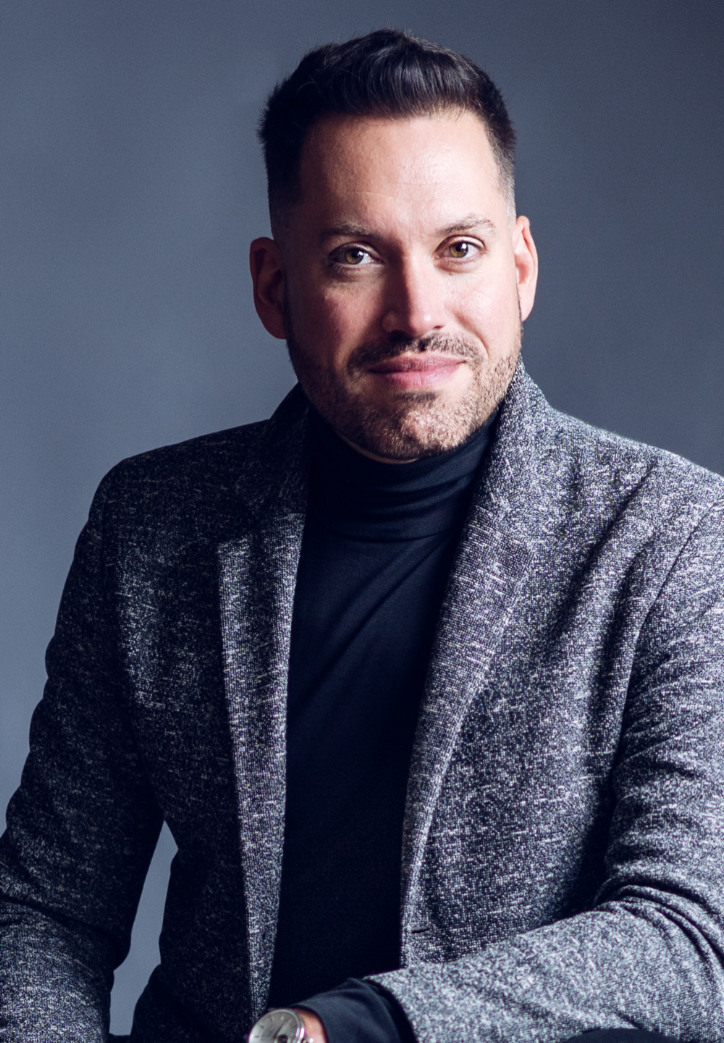
Jean-Sébastien Vallée, Artistic Director of the Toronto Mendelssohn Choir
The interpretation is a team effort, between conductor Gimeno, TMC leader Vallée as well as Zemfira Poloz preparing the Children’s Choir.
Gustavo Gimeno leading the combined forces of the Toronto Symphony, the Toronto Mendelssohn Choir & the Toronto Children’s Choir (photo: Allan Cabral)
Orff gives the lion’s share of the solos to the baritone, tonight sung by the remarkable Sean Michael Plumb.
Baritone Sean Michael Plumb (photo: Bayerische Staatsoper)
The timbre of the voice is immediately noticeable, such a pretty sound! His rich baritone has flexibility and thank goodness is always precisely in tune. Gimeno’s tempi, which were sometimes the fastest I have ever heard, challenged the soloists but nonetheless Plumb sparkled throughout.
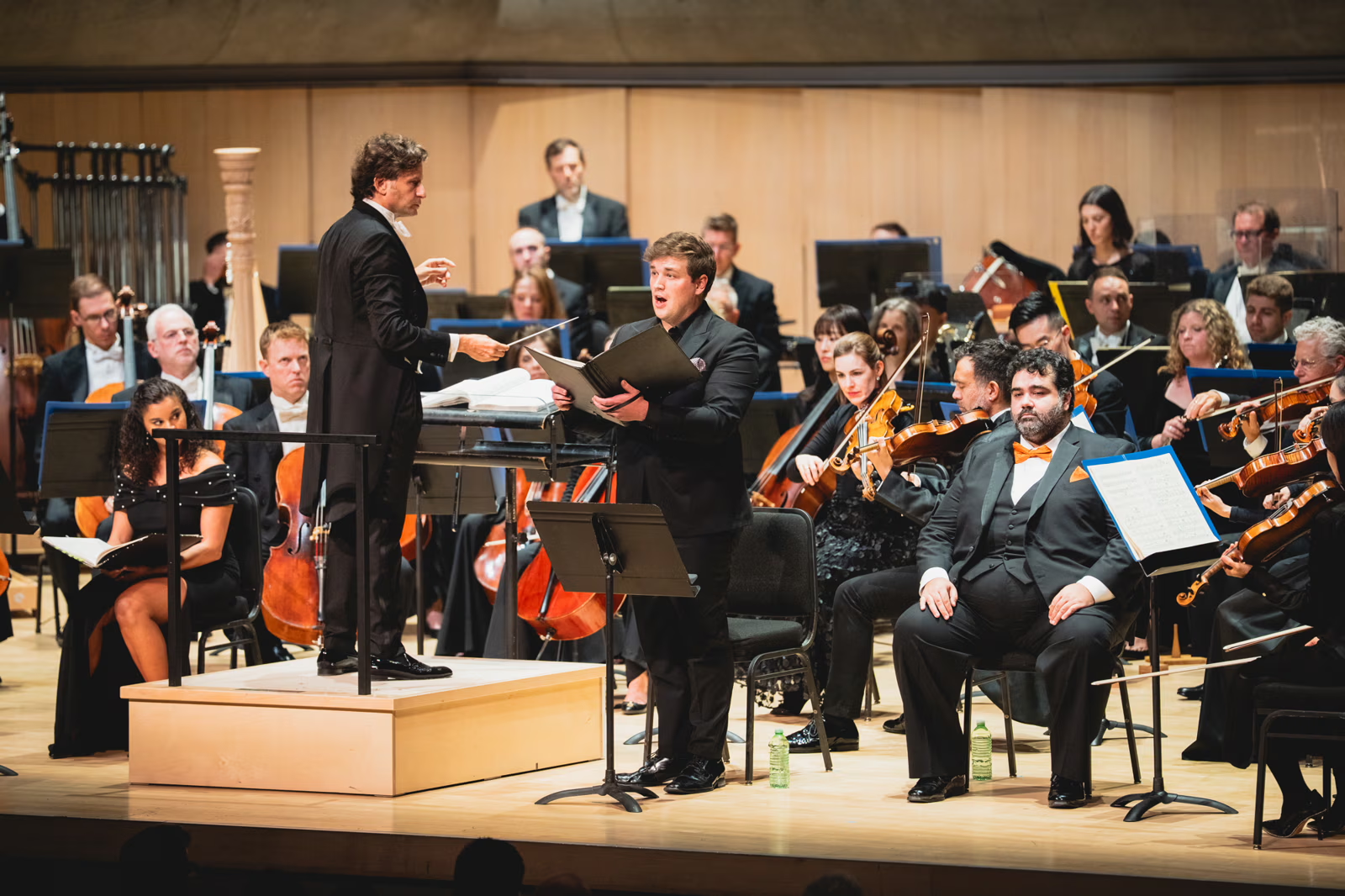
Foreground: soprano Julie Roset, conductor Gustavo Gimeno, baritone Sean Michael Plumb, and Andrew Haji, plus the TSO (photo: Allan Cabral)
Soprano Julie Roset and tenor Andrew Haji both sounded great, Haji playing up the comedy of his song.
Tenor Andrew Haji
Gimeno had the choruses & soloists sailing through Orff’s big climaxes, a near perfect performance all round.
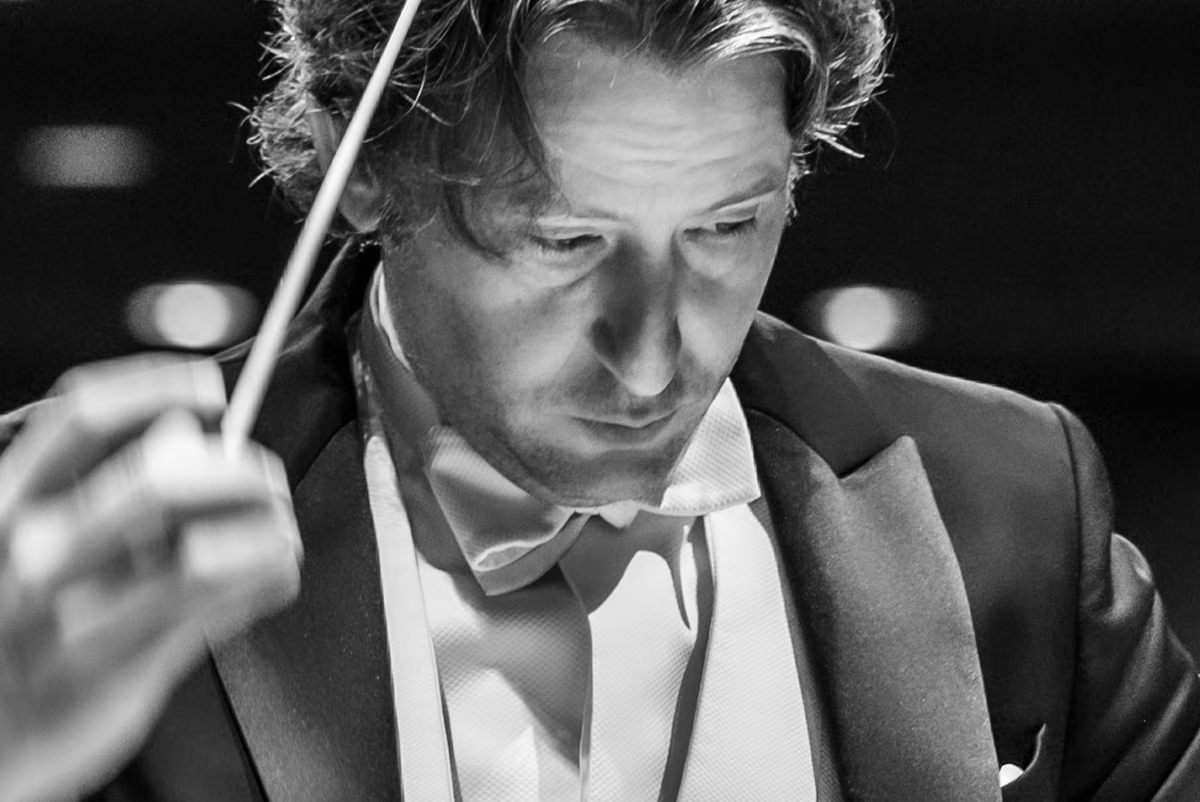
TSO Music Director Gustavo Gimeno (photo: Allan Cabral)
As perfect as the performances were, I watched the woman sitting beside me struggling repeatedly to see the text of the Carmina Burana in her program in the darkened hall. The exquisite drama Andrew acted out (the swan being roasted) would have been even better had his words been projected in translation. I feel we honour the performers when we project the text in translation, to fully grasp the meaning of what they are singing. In the old days this nerd prepared for operas & concerts by reading & memorizing the whole thing, to know what they were enacting & dramatizing. Maybe I’m spoiled now that titles are a normal feature of live performance. I think we would all have enjoyed the show that much more if we had been able to see the translation of the text projected. Friday night I will see La boheme at the tiny Redwood Theatre in a performance that will feature projected surtitles for a work I know really well. While it may be the same for the Orff, (that many of us in the audience know the text), I still believe the performance would be enhanced by the projection of the translation on a surface in Roy Thomson Hall, enhancing the experience for everyone. Excuse me that I keep making this observation whenever I see a concert with text at Roy Thomson Hall. But any piece of music with words being sung deserves to be properly understood. We don’t watch foreign films without subtitles, right? I think maybe that’s why I was suddenly having a flashback, remembering times from long ago, when I used to listen to Orff with my friends , the music washing over us as we were stoned on marijuana with little idea of what the Latin words meant: except maybe “O Fortuna”. But the memory is a good one, the music a stunning experience.
Thank you TSO, and thank you Fortuna, we are blessed indeed.
The concert will be repeated Saturday at 7:30 & Sunday at 3:00 pm.
La Boheme is being presented at the Redwood Theatre on Friday September19th 8:00 p.m., a co-production with The Redwood Theatre including a silent auction in support of Daily Bread Food Bank.
I talked to Holly Chaplin who sings the starring role of Mimi and Ryan Hofman who will sing the role of Schaunard the musician. Ryan Hofman is also co-producer.
*******
Barczablog: La Bohème is often spoken of as a comedy with a tragic ending. Do you think of Bohème as more comic or more tragic?
Holly Chaplin:There are definitely comedic aspects, but I wouldn’t call it a comedy. Maybe dramma giocoso at best. I once heard a colleague sum up the plot of La Bohème like this: “A bunch of dudes try to skip out on their rent and some girl dies.” Factually, not wrong. But what makes La Bohème so moving is the way it pushes past that cold description. It doesn’t dismiss the hardships of poverty, disease, or death like my colleague’s summary—it humanizes them. Rodolfo knows he can’t provide the care Mimi needs, and shows you his fear of her demise. Mimi is so sweet and loving. She has found the love of her life, and what does she get? A terminal illness. Yes, there are lighthearted moments when the guys are clowning around with their drinks, or Musetta is being a brat, but beneath that is a story about people who fall through the cracks of society.
Ryan Hofman: I actually think of La Boheme as more of a tragic romance with comic relief. The love story of Mimi and Rodolfo is such an epic love story, only to be thwarted by death (spoiler, this is opera!). Who doesn’t want that great love story! The comic relief comes from several moments of the opera: 1) the bromance between Rodolfo, Marcello, Schaunard and Colline 2) Musetta and Alcindoro 3) Musetta and her jilted loved Marcello
Ryan Hofman, co-producer and baritone
Holly Chaplin: I think La Bohème is a rite of passage for every artist, because it hits so close to home. Directors often say, “You’ll need to imagine what this kind of poverty feels like.” But for artists, there’s no need to imagine—we live it. Loving music enough to pursue it often means sacrifice. Rodolfo burns his writing for warmth; I’ve done the singer’s version of that—reusing old recordings instead of investing in new ones, cancelling coachings or lessons just to pay the bills. It hurts, because it feels like your art is suffering, but it also forces you to be resourceful and resilient.
So, is it comedy or tragedy? To me, it’s neither. It’s just life.
BB: Do we maybe need to dispense with genres, when they confuse us?
Holly Chaplin:Everything gets its own annoying box. Mostly it’s capitalism, but in a world where people have little time and even less money, they want to have an idea of whether they can expect to spend their afternoon crying or not.
BB: Does genre matter? or do you sing the same whatever the genre, for comedies vs tragedies?
Holly Chaplin:The short answer is yes. You’re not going to sing Gilbert & Sullivan the same way you’d sing Verdi. The longer answer is that it depends on the palette you have and what you need to create within the piece. With Mimi, for example, there are massive legato lines but also delicate pianissimos—and those have to shift depending on whether she’s crying, in pain, or simply living in the tenderness of love. Every genre demands its own colors, but all of them rely on solid technique to be presented well.
BB: Imagine you’re Musetta tormenting Marcello in Act II (comedy) or Schaunard observing Mimi’s illness (tragic). You may want to react (to laugh or cry) but have to stay in character, to make the comedy or tragedy work. What strategies do you use to stay in character, to keep your focus?
Holly Chaplin:I think the key is to remember that your character is experiencing the world for the first time. Most people in real life aren’t hyper-aware of others, so many “funny” situations don’t feel funny to those actually living them. Have you ever watched a sitcom without the laugh track? It feels bizarre. Comedy works the same way: after enough rehearsals, the joke just becomes another part of the day. Of course, I’m not immune—when I sang HMS Pinafore with Ryan Downey, I completely cracked during Ralph’s speech where he called himself “a living ganglion of irreconcilable antagonisms.”
Ryan Hofman: I find the best strategies to stay in character are not only eye contact with your colleague on stage but asking yourself what story is your colleague trying to tell on stage? What can I add to this scene? What would Schaunard do? Who is Schaunard in this scenerio and does can I do with the text to add to the character onstage (through body language, facial expression, etc).
A glimpse of the lighter side of Ryan Hofman
Holly Chaplin:For me, tragedies are harder. I try to pace them by pulling from my own life experiences or those of people I know. The situations may be imaginary, but the emotions are real. I save the high-intensity feelings for dress rehearsals and performances, and in early rehearsals I focus on the moving parts—staging, technique, and play with my colleagues. That balance helps me stay grounded without losing the emotional truth.
Soprano Holly Chaplin
BB: The public perception of roles will usually focus on a big aria. When you’re learning how to sing, especially the arias are a great starting point. But they aren’t necessarily the toughest parts of your role either vocally or dramatically. What part of your role is toughest?
Holly Chaplin:For me, the dramatic arc is the most challenging. Every singer learns arias before they’re ever cast—those pieces are audition staples, and the choices you make there are often “turned up to 11” to show your range. But once you step into a full production, the real challenge is pacing. In a role like Mimi, you can’t give everything away too early.
Ryan Hofman: I really believe the toughest part of any role is the interjections that take place with other characters. You have to be so focused on what the other characters are saying in order to be able to have the most authentic reaction.
Ryan Hofman
Holly Chaplin: What I find hardest is her sweetness in the face of her circumstances. In the practice room, she breaks me. She’s a simple woman who loves with her whole heart, and through no fault of her own, she just has to fade away. That reality exists for so many people, and it makes me want to scream. I spend a lot of time searching for the version of myself who could meet that fate with grace instead of fury. I suppose Mimi finds strength in surrender—and that’s what makes her so devastating to portray.
BB: Using La Boheme as a fundraiser for the food bank seems like a natural. Are there any particular lines of your role or of anyone else onstage, where you are reacting to the challenges of life (as Marcello or Mimi) that you would highlight, that we should notice?
Holly Chaplin:I appreciate the focus on the simple things that our Bohemians want; shelter, heat, crema, or a pink bonnet! These are basic joys and necessities, not luxuries. It reminds me of how people living on the margins of society are often misunderstood or turned into political fodder.Those who rely on support programs live with immense shame and are too often painted as greedy or taking advantage, when in reality most are just hardworking people struggling to afford food and rent. La Bohème captures that humanity—the way survival and dignity can hinge on the smallest comforts.
Ryan Hofman: I think Colline’s Coat aria and Musetta in Act 4 are the perfect examples. They are both willing to sell their prized possessions in order to help their friend, Mimi. This showcases the reality in their time and what they were willing to sacrifice for their loved ones.
BB: I understand that in addition to the opera, there have been some cool gifts that have been donated to be part of the silent auction. What can one expect?
Ryan Hofman: Here’s a preliminary list.
Elmwood Spa $200 gift card. Canadian Opera Company Orchestra Seats Toronto Symphony Orchestra 2 tickets to 1 of 3 possible concerts Opera Revue Tickets 3 Separate Redwood Theatre Shows GOOD THINGS:An Evening with Samin Nisrat @ Massey Hall 2 Tickets to SOLO’s upcoming performance of TOSCA on Saturday, October 4th National Ballet-Signed Pair of Pointe Shoes
BB: Wow! So La boheme is one of the most popular operas of all, a great first opera, a terrific opera for people who don’t know opera. Why do you think that’s the case?
Ryan Hofman: I think La Boheme is timeless and has stood the test of time because of the music and the message. The romance, whether it is a tragedy or comedy, opera most of all is an escape where it allows us to be transported from everyday life.
Holly Chaplin:The music is simply beautiful. I love the intensity of verismo, and I think right now we all crave the chance to “feel fully.” Audiences are drawn to the chemistry of the four lovers in the first two acts—falling in love and being in love, especially in those early stages, is thrilling. Pair that universal experience with Puccini’s lush, emotional score, and it’s no wonder La Bohème is such a perfect first opera.
Soprano Holly Chaplin
Ryan Hofman: La Boheme has it all! Comedic moments, romance, tragedy! It has the recognizable classics, such as “Quando m’en vo” and “Che gelida manina”: having the familiarity of this classics, allows for the audience to be taken into the bohemian world time and time again.
BB: Is there anyone out there who hasn’t seen Moonstruck (one of my favourite films)?
BB: …complete with a Toronto connection. Do you have any acknowledgements you’d like to make?
Holly Chaplin: I’d like to thank you, Leslie! Also, my parents and entire family for raising me, my neighbors for putting up with all my practicing these past couple of months, my fiancé, my colleagues and friends, and Frederique Vézina.
BB: What do you have coming up?
Holly Chaplin:I have a few things. Obviously La Boheme, then I sing a Mozart Requiem in November in Brantford. In the new year I am excited to join the Cambridge Symphony Orchestra for New Years Day concert, and on Valentines Day I will be singing with the Georgian Bay Symphony Orchestra. After that I get to sing Lucia in Lucia Di Lammermoor with Opera York, which I am so happy to explore the role again after its success with Southern Ontario Lyric Opera last season.
Ryan Hofman: After this, I am still in the thick of it. Returning to the SOLO stage as Sacristan/Sciarrone (more Puccini, this time in Tosca) and pulling double duty, working behind-the-scenes as Artistic Consultant and Outreach Officer.
After, Tosca, it slows down briefly before a busy November with concert work (Brahms, Duruflé Requiem and Dvorak Te Deum in Ottawa and Vaughan Williams’ Dona Nobis Pacem with RESOUND Choir in Oshawa).
*******
But first, Holly sings Mimi and Ryan sings Schaunard as part of La Boheme On Tap Friday 8 pm September 19th at the Redwood Theatre, 1300 Gerrard St East.
La Boheme is being presented at the Redwood Theatre on Friday September19th 8:00 p.m., a co-production with The Redwood Theatre in Support of Daily Bread Food Bank.
I talked to Alexander Hajek who sings the role of Marcello the painter.
*******
Barczablog: La boheme is often spoken of as a comedy with a tragic ending. Do you think of boheme as more comic or more tragic?
Alexander Hajek: Well it certainly ends tragically ( not to spoil things of course ) but I’m not sure I’d classify it as either. It’s really the perfect opera because it has such high and low brow moments woven throughout. Some of the funny lines are quite tragic and even the cutest moments have a tinge of foreshadowed tragedy.
BB: Do we maybe need to dispense with genres, when they confuse us?
Alexander Hajek: No, it’s nice to give opera newbies a little heads up. No one wants to be locked in their seat for 3 hours waiting for a laugh that never comes.
To quote Peter Griffin:
“For the love of god, someone throw a pie already!”
BB: Do you sing the same whatever the genre?
Alexander Hajek: Genres should influence the colour of your sound a tad. If it’s a joke, usually the text is more important and should be more emphasized, but if it’s a swelling romantic moment where multiple people are singing, different text over one another, maybe go for a richer fuller sound to get “the vibe” across.
BB: Imagine you’re Marcello tormenting Benoit in Act I (comedy) or watching Mimi dying, reacting to her situation (tragic). You may want to react, laughing at the joke or even crying at the tragedy: but have to stay in character, to make the comedy or tragedy work. What strategies do you use to stay in character, to keep your focus?
Alexander Hajek: This I find easy, just stay in the moment by pretending you’re hearing Benoit demand the rent for the very first time. And. In turn. Feel as if the text and music you respond to then is something that just popped in your head as a quick witted response on why you shouldn’t have to pay. It’s remarkably effective.
The trap is waiting to just sing your line after they’re finished. It deadens the drama. Keep it fresh.
BB: The public perception of roles will usually focus on a big aria. When you’re learning how to sing especially the arias are a great starting point. But they aren’t necessarily the toughest parts of your role either vocally or dramatically. What part of your role is toughest?
Alexander Hajek: As Marcello uniquely does NOT have an aria. I had to find the most dramatic moment for him and make one out of it. This is either his second act showdown with Musetta or his third act duets with Mimi. They have some of his most gorgeous music and I try and make a meal out of them.
The toughest part of the role is not letting my simmering anger ( either as a jealous lover, or highly annoyed roommate ) not constrict the voice. It’s easy to get carried away by the heightened drama of a Puccini score and forget to keep the instrument fluid and free.
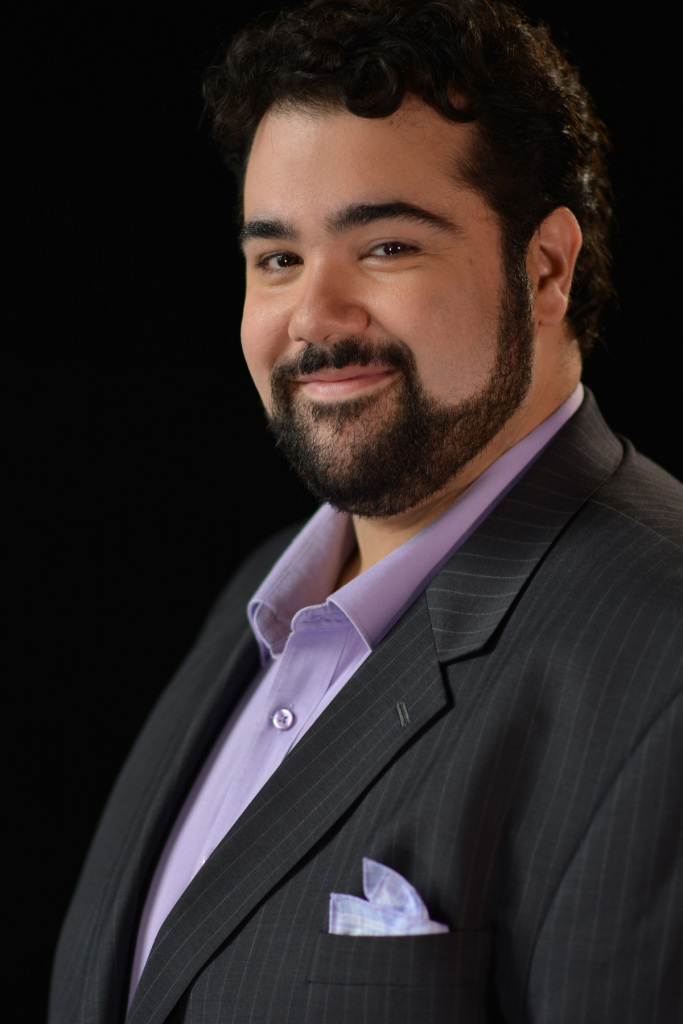
Baritone Alexander Hajek
BB: Using La Boheme as a fundraiser for the food bank seems like a natural. Are there any particular lines of your role or of anyone else onstage, where you are reacting to the challenges of life (as Marcello or Mimi) that you would highlight, that we should notice?
Alexander Hajek: The “starving artist” bohemian lifestyle is absolutely front and center. It informs everything the characters do and ultimately causes the death of Mimi. If they had funds then the tragedy of the opera wouldn’t happen. So every little joke is really foreshadowing how poverty can kill you. If their apartment had adequate fuel for heat, or if any of them had a steady job then they could buy medicine or afford a trip to the doctor. But they don’t.
I guess my favorite lines are in the 4th act when the gents are pretending the few pieces of stinky fish and stale bread for dinner are actually “tongue of penguin” and “the finest champagne in France.” They are wonderfully optimistic and a cheerful bunch.
BB: La boheme is one of the most popular operas of all a great first opera, a terrific opera for people who don’t know opera. Why do you think that’s the case?
Alexander Hajek: It’s not too long and there are no wasted moments. Each scene feels full and captivating but doesn’t drag on forever. The 4th act is only about 30 min and has about 4 sections in it with rapid shift in mood. It’s kindda perfect for peoples’ attention spans these days. And the music is perfect. Everyone gets a leit motif and is immediately accessible. It’s not a score you need to study before hand or hear 20 times to get the subtle nuances. It just bathes you in beautiful western melodies all night.
BB: What do you have coming up?
Alexander Hajek: My most ambitious project is coming up Nov 26th. Opera Revue is having their 4th gala and they have hired some professional wrestlers to help put on another unforgettable show. It was hard to top last years circus themed night with highflying trapeze and dogs jumping through flaming hoops. But we’ve added Queen Hezumuryango as our special guest as well. It’ll be at the Great Hall and will not be something you want to miss.
Danie Friesen, Claire Elise Harris and Alexander Hajek of Opera Revue
In addition Opera Revue with be performing at the Four Seasons Centre for the first time on Oct 14th. And it’s free to attend.
My first Carmina Burana will be with the Toronto Beach Chorale in April 26. (Click for tickets & info)
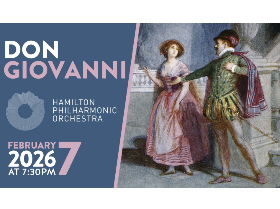
And I will have my first Don Giovanni in a while with the Hamilton Philharmonic, Ancaster Memorial Arts Centre 357 Wilson St E.
Saturday, February 7, 2026 – 7:30 PM in partnership with COSA Canada James Kahane is Conductor (tickets & information)
*******
But first, Alexander Hajek will sing Marcello as part of La Boheme On Tap Friday 8 pm September 19th at the Redwood Theatre, 1300 Gerrard St East. Tickets start at $50.00. Click for info & tickets. Use code BOHEMEONTAP for $10 off.









 barczablog