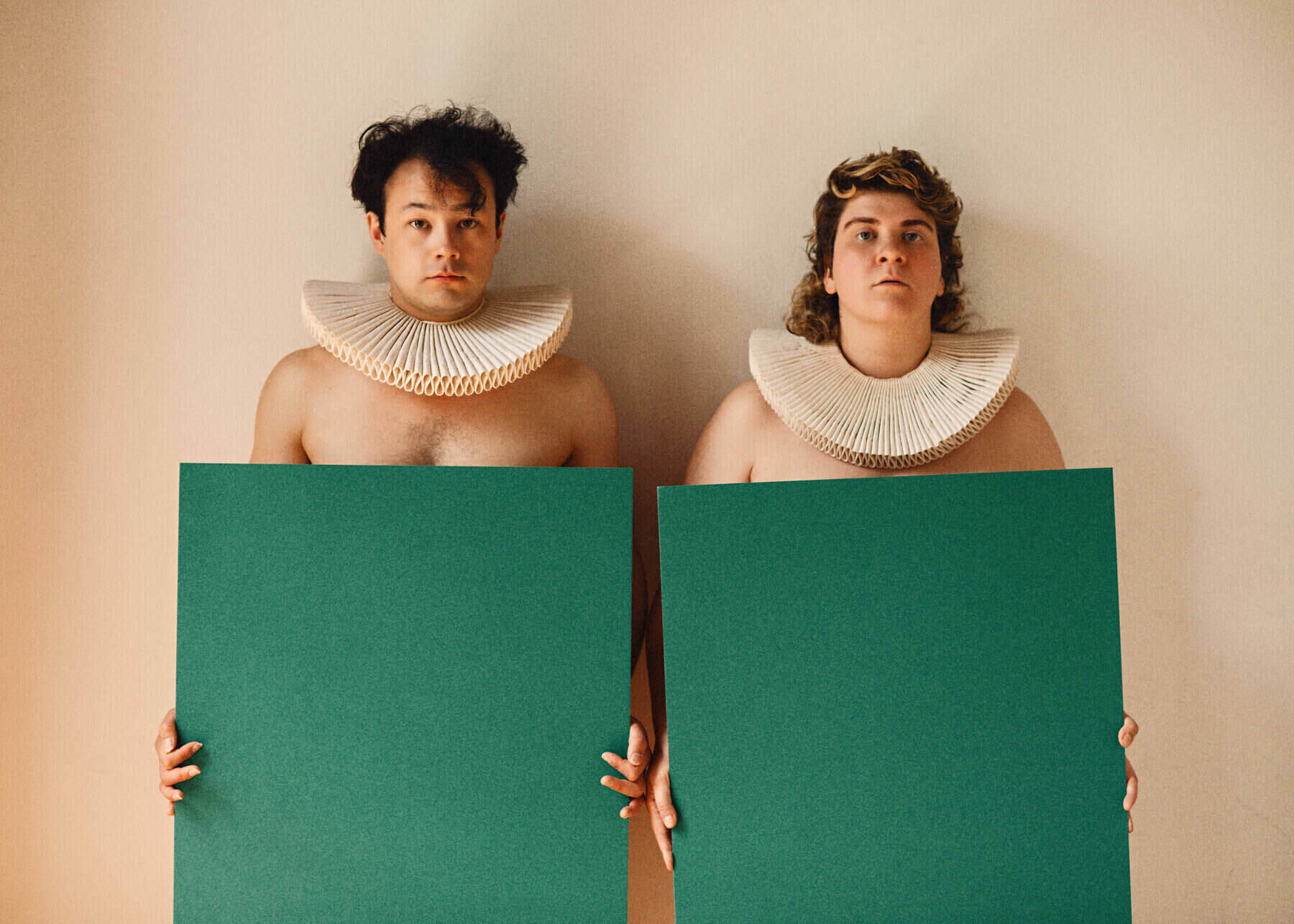
A good concert program is an invitation, encouraging you to think and feel in response to the combination of materials & performances. That’s what I felt when I heard about Orlando: Ema Nikolovska with Sean Shibe, this Thursday, October 29, 2026 at Koerner Hall. Please note, the concert starts at 7:00 pm.
The riveting and eclectic concert that weaves together music across Schubert, John Dowland, Bob Dylan, Laurie Anderson, and others, alongside newly commissioned music by Sasha Scott, Cassandra Miller, Linda Catlin-Smith and Nahre Sol.
Orlando is a riff primarily on the character and energy of Virginia Woolf’s groundbreaking 1928 novel, as well as subtle echoes of the medieval Chanson de Roland and Ludovico Ariosto’s epic poem Orlando Furioso. The duo explores love, darkness/conflict, and identity through the old and new, electric and acoustic.
I was glad for the opportunity to interview Ema.
*******
Barczablog: Are you more like your father or your mother?
Ema Nikolovska: I am a bit of both – I have my father’s intense temperament, which is balanced by my mother’s sense of evenness and peace I think. My father is the person who fostered my love of music the most in my life and he’s always had immense hunger and curiosity for the possibilities of sound and imagination. Like him, I am also verbose and boisterous, but I also have a quieter, shyer side which most people don’t get to see, and this inward character I find resembles my mother more. I do believe all of us have multiple selves within us, even beyond our parental influences, and it is stimulating to meet those selves and be open to their appearances and surprises.
BB – What is the best or worst thing about what you do?
Ema Nikolovska: Some of the best parts of my work are the vocal and psychological challenges of sound worlds, the discoveries in the growth of my instrument, and the opportunities to always be learning from my colleagues and mentors, making music together, to be inspired by what people are creating around me and to dare to imagine my path in ever expansive ways. Learning how to sing (a lifelong learning) is a process of daily confrontation, understanding your psychology and encouraging more curiosity than fear to drive your daily life – it is a spiritual practice for which I am very grateful.
What seem to me to be the most challenging parts of my work are all the things outside of making music: learning to manage my life as a freelancer, figuring out taxes and administrative matters and immigration in Germany, sticking to certain ‘necessary’ routines and schedules. I wear many hats creatively and simultaneously, so it is challenging to learn how to manage my energy, toggle between tasks and also understand when it is time to rest. My mind often travels in hundreds of directions at once so each day is a quest in learning how to live with this hurricane.
BB –When you’re just relaxing and not working, what is your favourite thing to do?
Ema Nikolovska: I love reading, writing for myself, and visiting book shops. I’m fascinated by the new fiction, poetry or essays that are coming into the world, and to see how different bookstores choose to organise their shelves/displays. Words are a medium that resonates with me more than the visual, and they are an anchor in my life. A well-written passage can genuinely change the tone of my day or week.
BB: What was your first performance that you remember?
Ema Nikolovska: Watching my dad play violin in Balkan ‘kafana’ restaurants in Toronto, with his bandmates; my own first performances took place at the RCM in Toronto as a little violinist.
BB: what was the last tune you heard?
Ema Nikolovska: I have been listening to Cecile McLorin Salvant’s album ‘Oh Snap’ on repeat – every song is an adventure, and I highly recommend this album – go listen to it now!
BB: Musicology loves to classify & name styles & periods, but do we even need a name for a musician’s style: or is it just marketing, like knowing what flavour ice cream you prefer?
Ema Nikolovska: All people/artists contain multitudes, so I think the labels of aesthetics or eras in music are fictions. Sure, certain ‘styles’ share some patterns, but I think labelling these perceived musical ‘divides’ limits our perceptions of sound, and how open we are when we listen generally.
BB: Please tell us more about the program for the concert October 29th and the relevance of the title “Orlando“
Ema Nikolovska: Our programme with Sean is inspired by the spirit of a novel we both love – Virginia Woolf’s ‘Orlando’.
It’s the story of a 16th-century nobleman working in the court of Elizabeth I, who is immortal, aspires to be a poet, and halfway through the story becomes a woman. This person may be one of the most optimistic and curious characters in literature, someone who wears their heart on their sleeve and who is interested in the connections between art, nature and spirituality, and who is constantly asking questions.
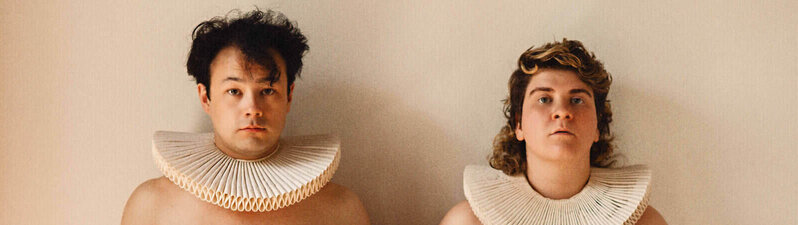
The novel exists because of the love affair between Virginia Woolf and Vita Sackville-West, and Woolf treated it as a sort of ‘writers’ holiday’, trying out a more poetic and stream of consciousness approach to her words.
The freer, more episodic form of the novel and its spirit of jumping through centuries is what inspired our own curation of this project. We have created a stream of consciousness programming approach, and it is meant to be an aural collage which leaves a lot of space for the listeners to let their minds wander, to come up with their own questions and not have an experience imposed on them.
We’ve enlisted 6 composers with the tasks of writing Orlando-inspired songs, and we have also introduced electronic elements as a result. This evening is not something that must be ‘understood’ but rather an encouragement for the audience to experiment with how openly they can approach their own listening, to ask ‘what is a live concert, really?’, and to blur the lines between styles and centuries.
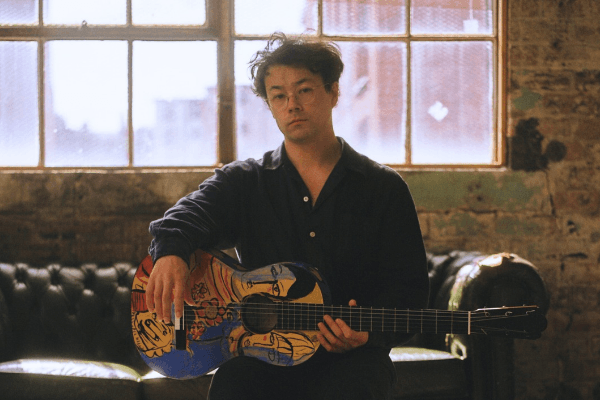
BB: Tell us about collaborating with Sean Shibe.
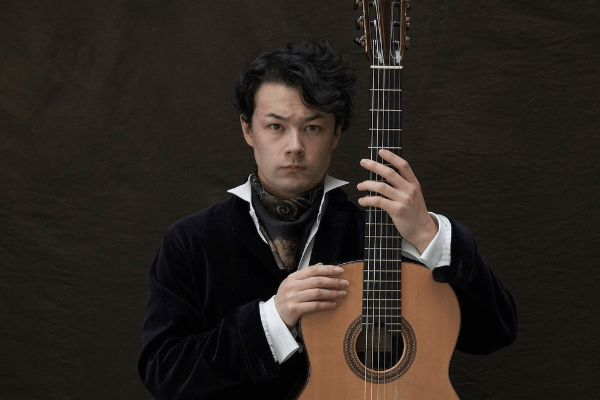
Ema Nikolovska: Sean is one of my favourite artists in the universe. I was a big fan before we started working together – his imagination is like no other, and I am inspired by how he is constantly challenging the sounds and possibilities of his instrument. He has a beautiful mind, rigorous work ethic, and a playfulness, humour and gentleness that bring me so much joy with each day that we work together. He also has an expansive and generous spirit and I feel that within his guitar playing as much as in our everyday exchanges.
BB: Have you ever felt a challenge reconciling the business side with the art of music?
Ema Nikolovska: Absolutely, I think all of us are bewildered by how quickly the industry is changing from the internet and social media information onslaughts. Sometimes all you want to do is go into your metaphorical work shed and practice, but due to our fast age, artists are additionally needing to take on the work of at least five extra people in order to meet the increasingly complex demands of media exposure and people having access to your work/portfolio in an easy and appealing way.
One feels a tug between a monastic approach and succumbing to the maximalism inherent in daily life in this century – this may be a defining energy with which we must contend and the creative part is finding solutions to the overwhelm, ways to embrace it and troubleshoot playfully with your colleagues.
BB: If you could tell the institutions how to train future artists, what would you change?
Ema Nikolovska: I honestly plan to write an essay about this one day, but for now, to be brief I would focus on one thing: even more opportunities for playing/singing chamber music, and lots of it. In many institutions, there is much focus on the logistics of becoming an employed musician, understandably, but I find a valuable practice to ground yourself in the ‘why’ of what you do, and to keep up with your own values, imagination and playfulness, is to frequently make music in an intimate capacity. Research and read through as much repertoire as you can for your instrument, figure out what matters to you through this process of familiarisation, and make opportunities to be performing often. In the vocal world, singing songs with piano is always in context: you don’t work with a hypothetical set or hypothetical costumes; there isn’t someone with a broader vision on the outside who guides you, rather you become your own director within songs, and you have the possibility to decide however you’d like to programme rather than being beholden to the large team dynamics of opera. This smaller scale work teaches one how to lead, how to rehearse, and to choose repertoire that explores more colours, languages, aesthetics and tastes that may be more available to you than the roles you are most often portraying in opera contexts. Chamber music is a playground, more of a self-led laboratory and I think its portability and ‘simpler’ properties allow it to be a space where one can come ‘home’, and where one can engage in musical friendship in ways that are not only connected to the theatre. I would also love to see more infrastructures that cultivate skills in creative programming and curation, which could encourage the development of more complex projects and their processes (hosting something like a ‘work in progress’ format which stand-up comedians often explore for example), but like I said, this is a larger conversation for another time – it is something I think about often and plan to write about.
BB: Is there a teacher or an influence you’d care to name that you especially admire or wish to thank?
Ema Nikolovska: One of the most important teachers/mentors in my life is Helga Tucker, my first voice teacher. I believe she is a national treasure, and I still work with her to this day. She taught me so much about the role of playfulness, self-love and compassion in learning how to sing, and also humility before the craft and the music. She also taught me how the quality of your presence, tenderness, attention and empathy shape your sound and capacity to connect with others – these are the important features of vocal technique, not ‘accomplishing’ the feats of singing high, fast, loud or other virtuosities. She also instilled in me a philosophy of programming a wide spectrum of repertoire and languages, and nurtured my love of chamber music through giving me mostly songs. To me, song and its intimacy are the bedrock of all other ‘larger’ forms such as opera.
Helga dared me to be all of who I am, to embrace myself, my interests and the flights of my imagination, and I am grateful to her always for how she changed my life.
Some other significant mentors who have shaped my sound and whom I honour through my work include Paul Kantor, Barry Shiffman, Barbara Hannigan, Brigitte Fassbaender, Thomas Hampson, Edith Wiens and András Schiff, among many others.
They all live through my sound and it is my goal to continue to share what I learned from them through my practices in performing, programming, researching and teaching.
*******
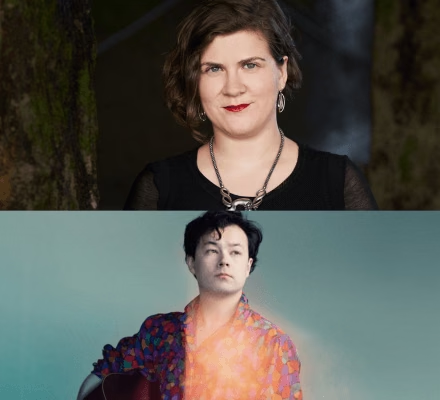
Orlando: Ema Nikolovska with Sean Shibe, this Thursday, October 29, 2026 at Koerner Hall. Please note, the concert starts at 7:00 pm.
Ema Nikolovska describes the program: “Courtly love, conflict, identity, adventures traversing time and space, and the role of song, the life of the troubadour in the middle of it all – the fascinating, gallivanting, and almost science-fiction characters of Orlando from Ariosto’s Orlando Furioso and Virginia Woolf’s Orlando are at the heart of this program.”
Jules Massenet: O Souverin
John Dowland: Praeludium
John Dowland: Come Again, Sweet Love
John Dowland: Come Heavy Sleep
John Dowland: Think’st Thou Then by thy Feigning
Sasha Scott: 1000 Parts of You
Linda Catlin Smith: Dark Light
Thomas Adès: Blanca
Detlev Glanert: Hexensabbat
Franz Schubert: Einsamkeit, D 620
Detlev Glanert: Lied der Wehmut
Thomas Adès: “Habanera” from The Exterminating Angel
Nahre Sol: This Other Here
Maddie Ashman: Split
Cassandra Miller: Dream Memorandum (It Reminded Me of the Truth)
Hans Abrahamsen: See the Small, Limpid Well-Spring
Franz Schubert: “So laßt mich scheinen” from 4 Gesänge aus “Wilhelm Meister”, D.877
Ken Paxton: Be Kind
John Dowland: Orlando Sleepeth
Pauline Viardot: Aimez-moi
Bob Dylan: Masters of War
Laurie Anderson: O Superman