Thursday night I experienced Orlando: Ema Nikolovska with Sean Shibe.
A good concert shows us how and why. How to curate, assemble, share, perform. And why we do this at all, the community of listeners & watchers observing.
I felt validated that we’re not here to judge. I want to testify and if that reminds you of some sort of religious thing that’s okay, there’s something genuinely sacred in theatre.
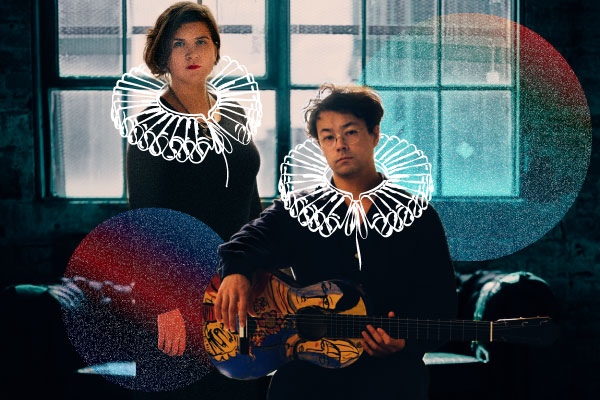
For the first part of the evening Ema & Sean disoriented & confused me. Although we had an elaborate program of texts in our handouts, I couldn’t follow it with the lights off. Did that matter? maybe not. I had a bit of an advantage, having done an interview earlier with Ema that described the concert and its objectives, underscored in the text with its multiple allusions to Orlando.
I found myself thinking of who might have enjoyed the concert. I thought of Gustavo Gimeno, program notes speaking of contrast. Re-reading his words, I’m sure he would have been entranced.
“The creation of contrast is at the heart of what I believe about concert programming—the coming together of past and future, masterworks side by side with new commissions, old friends and new faces on the concert stage: all manner of refreshing or startling juxtapositions.”
Pulling us from place to place, era to era, and without the reassuring orientation offered by a program that acts like a roadmap: we were thrown into the deep end. When I stopped trying to orient myself and surrendered, getting lost in the performances, I had a great time.
We were not seeing a story told so much as teasing out the persona and the subjective experience through a series of hints that remind me of the story the way I saw it in the Sally Potter film Orlando based on Virginia Woolf’s novel.
No I didn’t read the book.
I found myself doing a bit of free-association, as I thought of Tilda Swinton & the film of Orlando, thinking about a person living multiple lives, multiple apprehensions of reality. We are privileged in the 21st century to live a lot like Orlando, opening books and watching films and hearing music that transports us across centuries on the wings of song. We may not all be like Tilda Swinton or Ema Nikolovska performing so many different sorts of role in different genres & styles, but like Orlando we are exposed to enough to be able to identify as we re-orient ourselves again and again to a world that’s changing.
I think it’s helpful, maybe even a bit intoxicating to think of Orlando as a kind of Everyman. We watch & hear Ema & Sean sing & play songs & music in so many different styles. At times it was Schubert done sensitively, at times Bob Dylan bringing us closer to our own time. They played guitar (acoustic or electric), wind instruments, percussion, or sang, with a flexibility suitable for Orlando, music from different times to suggest our immersion in other times. We began in the world of El Cid (Ô Souverain, Massenet’s prayer from the Middle Ages) and of Dowland, coming forward through centuries, eventually closing with a cover of Laurie Anderson’s O Superman.
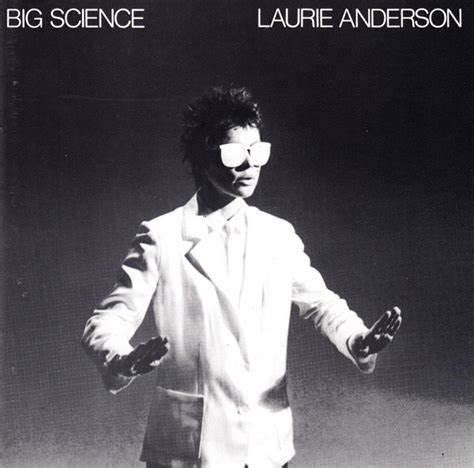
When I look at the images from the time that Big Science was released in 1982, recalling the excitement with which friends shared it with me (and I resisted its pull), it’s a nostalgic glimpse of a future that’s almost as quaint as Jules Verne, when we were all much younger.
I was glad that in Ema’s cover the words weren’t as crystal clear as what we get on the original recording, Laurie Anderson’s voice sounding almost like a satirist in its banal clarity. And I see on youtube something I never guessed before now (on the weekend after the concert), that there’s an alternate title to the song “Oh Superman (For Massenet)”. Closing the concert, we’re brought back to the opening prayer from El Cid “Ô Souverain, ô Juge, ô Pere.” Anderson opens with “O superman. O judge. O mom and dad.” I don’t mind being a bit perplexed by the possibilities & associations. Poetry must be above all mysterious, when it’s too clear it ceases to be poetic.
Maybe this is what concerts should do, maybe as a critic privileged to observe and to comment, my role shouldn’t be to judge but to witness and testify, to share my feelings. The best thing I can do –excuse me if this seems like a digression– is to share this video, that seems to capture what we experienced by analogy, something like Orlando’s experience in multiple centuries.

