Opera Atelier’s 2017-2018 Season

Announcing Opera Atelier’s 2017-2018 Season:

Mozart’s The Marriage of Figaroand Monteverdi’s The Return of Ulysses

FOR IMMEDIATE RELEASE (January 25, 2017): Toronto, ON – Opera Atelier’s founding co-artistic directors Marshall Pynkoski and Jeannette Lajeunesse Zingg today announced the company’s 2017-2018 season, which opens with Mozart’s The Marriage of Figaro (Oct. 26-Nov. 4, 2017), followed by Monteverdi’s The Return of Ulysses (Apr. 19-28, 2018). Subscriptions to the two-opera season are available now at operaatelier.com or 416-703-3767 x222. Individual tickets go on sale August 8 through Ticketmaster.

figaro

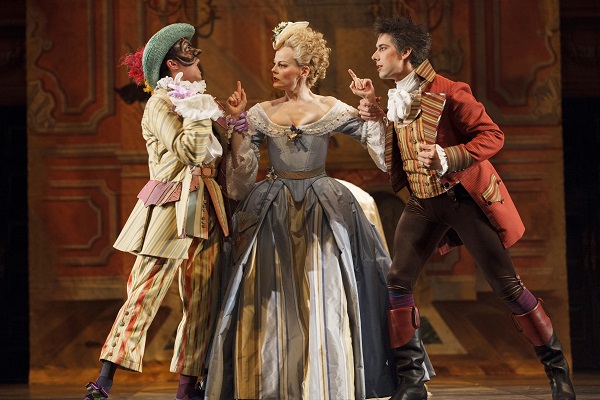
Patrick Jang, Carla Huhtanen, and Phillip Addis in “The Marriage of Figaro” (2010). Photo by Bruce Zinger.

“We are thrilled to present a 2017-2018 season celebrating Love as the driving force that controls our destinies,” say Pynkoski and Zingg. “Comedy and tragedy, laughter and heartache are seamlessly blended in each of our season’s masterpieces, making them a timeless reflection on the role Love plays in all of our lives.”

The Marriage of Figaro, Mozart’s racy commedia dell’arte opera, had its premiere in 1786 and was a run-away success. Based on the shocking Beaumarchais play of the same name, Figaro is Mozart’s hilarious take on a tale of love, betrayal and forgiveness in a world on the brink of revolution.

The Marriage of Figaro features Douglas Williams making his Opera Atelier debut in the title role, with Mireille Asselin (Susanna), Stephen Hegedus (Count Almaviva),Peggy Kriha Dye (Countess Almaviva), Mireille Lebel (Cherubino), Laura Pudwell (Marcellina), Gustav Andreassen (Bartolo), Christopher Enns (Basilio/Don Curzio), Olivier Laquerre (Antonio), and Grace Lee (Barbarina). Opera Atelier’s Dora Award-winning production of The Marriage of Figaro runs October 26 (media night), 28, 29 (3:00pm), 31, November 3, and 4 (4:30pm). Time is 7:30pm except as noted. Figaro is sung in English with English surtitles.

Opera Atelier’s 2017-2018 season continues in April with Monteverdi’s The Return of Ulysses, based on the Greek myth immortalized by Homer in The Odyssey. Monteverdi’s deeply moving opera centres on Ulysses’ return to his homeland and his reunion with his heroic wife Penelope and his son Telemachus after a twenty-year absence fighting in the Trojan War. This production abounds with gods, goddesses, flying machines and magical transformations, and celebrates the 450th anniversary of Monteverdi’s birth.  

Opera Atelier is thrilled to present dramatic tenor Krešimir Špicer in the title role. Špicer is internationally recognized as the world’s greatest interpreter of this role. His definitive performances have received superlative reviews in major theatres and festivals throughout Europe and the US, including BAM (New York), the Barbican (London), the Théâtre des Champs-Élysées (Paris) and the Berlin State Opera. At Aix-en-Provence, his performance with William Christie and Les Arts Florissants created a sensation and was recorded for DVD by Virgin Classics.

Špicer is joined in this production by Mireille Lebel (Penelope), Carla Huhtanen(Fortuna/Melanto), Christopher Enns (Telemaco), Isaiah Bell (Eurimaco), Aaron Sheehan (Eumete), Douglas Williams (Suitor), Kevin Skelton (Suitor/Jupiter), Michael Taylor (Suitor), Laura Pudwell (Nurse), Stephen Hegedus (Neptune/Time), and Meghan Lindsay (Minerva/Cupid). The Return of Ulysses runs April 19 (media night), 21, 22 (3:00pm), 24, 27, 28 (4:30pm). Time is 7:30pm except as noted.Ulysses is sung in Italian with English surtitles.

The Marriage of Figaro and The Return of Ulysses will be directed by Marshall Pynkoski and choreographed by Jeannette Lajeunesse Zingg, with set design byGerard Gauci and lighting design by Michelle Ramsay. Both productions will feature the full corps of Artists of Atelier Ballet, and Tafelmusik Baroque Orchestra under the baton of David Fallis.

Performances in Opera Atelier’s 2017-2018 season take place at the Elgin Theatre (189 Yonge Street) in Toronto. Subscriptions start at $95 and are on sale now by calling 416-703-3767 x222 or visting operaatelier.com/subscriptions. Single tickets go on sale on August 8, 2017. For more information visit Opera Atelier’s website:www.operaatelier.com. 

2017-2018 Major Sponsors

Season Presenting Sponsor: BMO Financial Group

Season Underwriter: El Mocambo Productions

Opera Atelier gratefully acknowledges the ongoing support of The Canada Council for the Arts, the Ontario Arts Council, and the City of Toronto through the Toronto Arts Council.

Opera Atelier is North America’s premier period opera/ballet company, producing the opera, ballet and drama of the 17th, 18th, and 19th centuries. While drawing upon the aesthetics and ideals of the period, Opera Atelier goes beyond “reconstruction” and infuses each production with an inventive theatricality that resonates with modern audiences. Led by founding artistic directors Marshall Pynkoski and Jeannette Lajeunesse Zingg since 1985, Opera Atelier has garnered acclaim for its performances at home as well as in the United States, Europe and Asia. Opera Atelier is committed to the development of young Canadian artists and offers innovative education programs for youth, as well as $15 tickets for ages 15 to 30.

~~~~~~~

“Press releases and announcements” are presented verbatim without comment.

Posted in Opera, Press Releases and Announcements | Leave a comment

Toronto Symphony: 2017/18 and Peter Oundjian’s final season

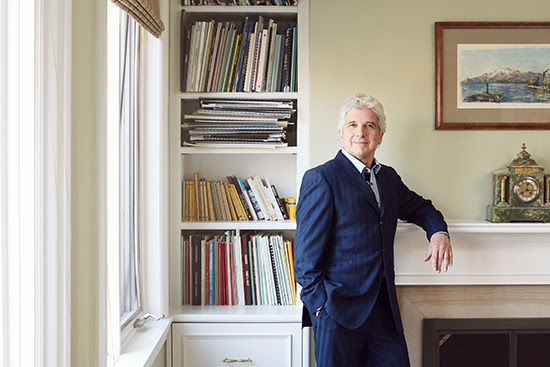
TSO Music Director Peter Oundjian

TSO Music Director Peter Oundjian (Photo: Jaime Hogge)

The TSO unveils 2017/18 programming and celebrates Peter Oundjian’s final season

“Being Music Director of the TSO will always be the most incredible highlight and privilege of my life.” —Peter Oundjian

January 25, 2017: Today, the Toronto Symphony Orchestra (TSO) proudly unveils its 96th performance season. From awe-inspiring music by legendary composers to dance-all-night Pops, and bold and experimental works to educational concerts and Hollywood films with live orchestra, the TSO has something for everyone. As 2017/18 will be Peter Oundjian’s 14th and final season as Music Director, the programming is an extended celebration of his extraordinary contributions to the TSO, and to the City of Toronto. The spotlight is on the Maestro throughout an exceptional season that features several special events, and many joyful performances curated and conducted by Peter Oundjian himself.

“There is so much I’m looking forward to next season,” says Peter Oundjian. “It has been a pleasure for us to work together to create a season that is truly celebratory. I have many great friends coming to play.”

The TSO season culminates in June 2018 with an abundance of momentous concerts conducted by Peter Oundjian, featuring special appearances by pianists Jean-Yves Thibaudet (Brahms Symphony 1 on June 13 &14), Daniil Trifonov (Rachmaninoff Piano Concerto 3 on June 16), and Emanuel Ax (Mahler Symphony 9June 20–23). Revered Canadian actor Christopher Plummer also brings his magic to the TSO stage for an evening of Shakespeare and enchanting music (Bravo, Peter! on June 26).

With a rousing event, Peter Oundjian concludes his 14-year term as Music Director, by taking the podium to lead a quintessential work from the repertoire: Beethoven’s Ninth Symphony (June 28 & 29, 2018). A cast of brilliant soloists and a large chorus join forces with the Orchestra and Peter Oundjian for this stirring testament to joy and brotherhood—a fitting finale for the dynamic and esteemed artistic leader.

Canada Mosaic continues

As Canada Mosaic—a Signature Project of Canada 150, funded by the Government of Canada—continues, 2017/18 is punctuated with numerous TSO Commissions and World Premières, beginning with Opening Night: Life of Pi, on September 19. Canadian composer Mychael Danna’s Academy Award–winning score for the film Life of Pi, based on the novel of the same title by Canadian author Yann Martel, makes its World Première on the TSO stage as a new orchestral suite. Peter Oundjian leads the Orchestra, and Canadian violin sensation James Ehnes also makes an appearance.

Other Canada Mosaic highlights include:

  • A Tribute to Glenn Gould (September 22 & 23), which stars Canadian pianist Jan Lisiecki, and features a new work—inspired by Gould—by Kelly-Marie Murphy;
  • Performances of Alexina Louie’s new Triple Concerto featuring concertmasters Andrew Wan of l’Orchestre symphonique de Montréal, Yosuke Kawasaki of the National Arts Centre Orchestra, and Jonathan Crow of the TSO—co-commissioned by the three ensembles (September 27 & 28);
  • Adizokan, a potent mix of dance, video, electroacoustic, and orchestra by Canadian composer Eliot Britton, curated and stage directed by Sandra Laronde of Red Sky Performance, with Gary Kulesha on the podium (October 7);
  • With Glowing Hearts, an all-Canadian program curated by the legendary Victor Feldbrill, featuring Canadian pianist Christina Petrowska Quilico (October 21 & 22);
  • A Tribute to Maureen Forrester, an homage to the iconic Canadian singer spotlighting Canadian mezzo-soprano Susan Platts in the World Première of Toronto-born Howard Shore’s new song cycle, commissioned by the TSO for the occasion (October 19 & 20);
  • Afghanistan: Requiem for a Generation, a soul-searching work by Canadian composer Jeffrey Ryan and poet Suzanne Steele (November 9 & 11), which features a brilliant cast of soloists including soprano Measha Bruggergosman.
  • Many concerts in 2017 will also feature Sesquies (two-minute orchestral pieces) as part of Canada Mosaic.

A star-studded season

The glittering season brings many radiant musical stars to the TSO stage, including pianist Lang Lang (March 1, 2018), violinist James Ehnes (September 19, 2017 & May 26, 2018), pianist Jan Lisiecki (September 22 & 23), tenor Michael Schade (October 19 & 20), pianist Marc-André Hamelin (October 25 & 26) , pianist/leader Angela Hewitt (November 18 & 19), soprano Karina Gauvin (December 18–23), pianist Ingrid Fliter (January 31–February 2, 2018); violinist—and well-known actor—Blake Pouliot (April 14 & 15, 2018); pianists Yefim Bronfman (May 23 & 24, 2018) and Leon Fleisher (May 2 & 3, 2018); violinist Vadim Gluzman (June 8 & 9, 2018), and more.

Grand symphonic events

Outstanding events are sprinkled throughout the season, including Brahms’s German Requiem (September 27–30) with Canadian singers Erin Wall and Russell Braun; Oundjian Conducts Vaughan Williams, featuring Canadian pianist Louis Lortie (November 15 & 16); and Bernstein’s Candide—presented in a concert version to mark the centenary of the great American composer—conducted by Bramwell Tovey and starring Canadian singers Tracy Dahl and Judith Forst (April 26 & 28, 2018).

Festivals and films

The 2017/18 season brings back two festivals that were created by Peter Oundjian, and have now become audience favourites: the Mozart Festival (January 10–21, 2018)—marking the anticipated return of Montreal piano phenomenon Charles Richard-Hamelin—and the New Creations Festival (March 3–10, 2018), which includes the North American Première of Little Mass by Sir James MacMillan (March 7, 2018). The TSO remains in the limelight with the much sought-after Films with Live Orchestra presentations such as Home Alone (December 1 & 2), The Wizard of Oz with Live Orchestra (February 17 & 18, 2018), and Jaws in Concert (March 21–23, 2018).

Pops, education, and family events

TSO Principal Pops Conductor Steven Reineke leads a dazzling series of Pops concerts: Music of John Williams (October 3–5); On Broadway (April 10 & 11, 2018); and Love, Lust, and Rock & Roll—starring vocalist Storm Large (May 29 & 30, 2018). Rob Kapilow returns as host & conductor of the popular Exposed series. Families will enjoy the Young People’s Concerts, which include Wall-to-Wall Percussion, starring Canadian percussionist Vern Griffiths, led by RBC Resident Conductor Earl Lee (November 4); The Year of the Dog: A Chinese New Year Celebration (February 24, 2018), featuring pipa player Wen Zhao and conductor Carolyn Kuan; Classical Kids: Gershwin’s Magic Key, led by conductor Michelle Merrill (March 24, 2018); and The Animated Orchestra, led by conductor Dina Gilbert (April 21, 2018). Sparkling holiday concerts include Best of Tchaikovsky with Keri-Lynn Wilson (December 6 & 7); Messiah (December 18–23), and more family-friendly events such as The Snowman (December 10) and Canadian Brass Christmas (December 12 & 13).

Masterworks and guest conductors

2017/18 also brings blockbuster programs featuring celebrated guest conductors: Mahler Symphony 6 with Donald Runnicles (November 23–25), Mozart@262 Festival with conductor/co-curator Bernard Labadie (January 10, 13, 17 & 18), Holst The Planets with John Storgårds (January 25–27, 2018), Prokofiev Romeo & Juliet (February 14 & 15, 2018) and Sibelius Symphony 5 (April 5–8, 2018) with TSO Conductor Laureate Sir Andrew Davis, Brahms & Rachmaninoff with Stéphane Denève (March 28 & 29), Beethoven & Shostakovich with Osmo Vänskä (May 23 & 24, 2018), Schubert Symphony 9 with Juanjo Mena (October 25 & 26), Dvořák & Beethoven with Gustavo Gimeno (February 21 & 22, 2018), and Tchaikovsky Violin Concerto with Thomas Dausgaard (June 8 & 9, 2018).

Guest orchestras

2017/18 includes appearances by four guest orchestras, beginning with a highly anticipated performance by the Israel Philharmonic Orchestra with Zubin Mehta (October 28). The TSO also welcomes the National Arts Centre Orchestra with Alexander Shelley (March 24, 2018), Orchestre symphonique de Montréal with Kent Nagano (April 13, 2018), and Vancouver Symphony Orchestra with Bramwell Tovey (May 26, 2018).

TSO musicians step into the spotlight

Throughout the season, audiences also get to applaud soloists from within the ranks of the Orchestra: Concertmaster Jonathan Crow, Principal Viola Teng Li, Principal Cello Joseph Johnson, Principal Clarinet Joaquin Valdepeñas, Principal Trumpet Andrew McCandless, Principal Harp Heidi Van Hoesen Gorton, and Principal Oboe Sarah Jeffrey all step into the spotlight.

The TSO Chamber Soloists also bring back their popular series of pre-concert performances, curated by TSO Concertmaster Jonathan Crow.

The TSO’s 2017/18 season is orchestrated as an ongoing celebration of Peter Oundjian—an Ode to Joy.

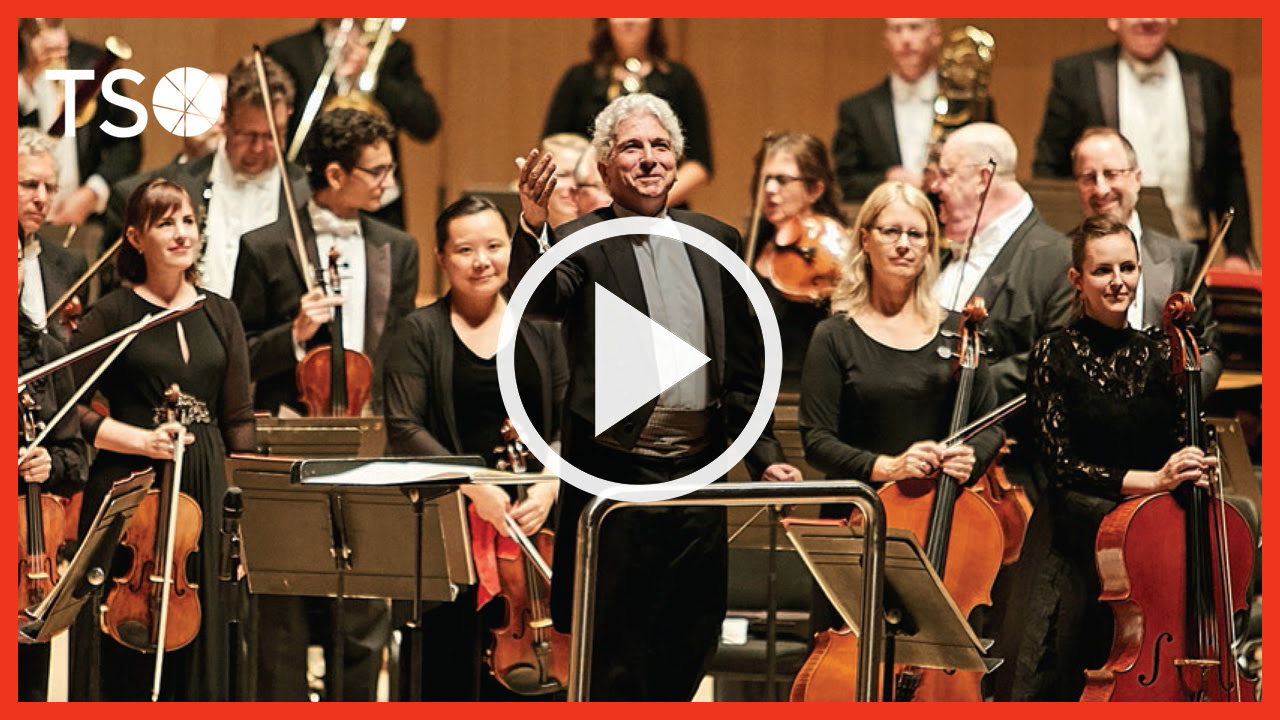
Image of Peter Oundjian and the TSO linking to a YouTube video previewing the 17-18 season

TSO 2017/18 SEASON SUBSCRIPTIONS ON SALE NOW!
Online: TSO.CA
Call: 416.598.3375
In person: TSO Patron Services Centre, 212 King Street West, 1st Floor, Toronto

All concerts at Roy Thomson Hall, 60 Simcoe St., unless otherwise noted.
All artists, programs, dates, prices, and chats are subject to change without notice.


Canada Mosaic is funded in part by the Government of Canada.

The TSO’s 2016/17 Season Presenting Sponsor is BMO Financial Group.
The 2016/17 season is dedicated to H. Thomas Beck in recognition of his vital and long-standing support of the TSO.

Twitter: @TorontoSymphony
Facebook: facebook.com/torontosymphonyorchestra
YouTube: youtube.com/torontosymphony
Instagram: instagram.com/torontosymphony

About the TSO: Founded in 1922, the Toronto Symphony Orchestra is one of Canada’s most important cultural institutions, recognized internationally. Music Director Peter Oundjian leads the TSO with a commitment to innovative programming and audience development through a broad range of performances that showcase the exceptional talents of the Orchestra along with a roster of distinguished guest artists and conductors. The TSO also serves the larger community with TSOUNDCHECK, the original under-35 ticket program; the Toronto Symphony Youth Orchestra; and music-education programs that reach tens of thousands of students each year.

~~~~~~~

“Press releases and announcements” are presented verbatim without comment.

Posted in Press Releases and Announcements | Leave a comment

Brahm Goldhamer plays Schubert Sunday January 29th

Last year around this time Brahm Goldhamer played a recital of Schubert at the Royal Conservatory of Music in Toronto.  At the end he promised that he would do it again.

Lo and behold, he is as good as his word.

Brahm will be playing Sunday January 29th at 7:30 in the Temerty Theatre of the Royal Conservatory of Music.

His programme includes:

  • Moments Musicaux
  • Fantasie in F minor for four hands with Todd Yaniw
  • Sonata in G major opus 78
Brahm - Maritime Opera - photo  Karen Runge

Brahm Goldhamer (photo: Karen Runge)

Posted in Music and musicology, Press Releases and Announcements | Leave a comment

Canadian Panorama: World Premiere Recordings CD launch

I am such a lucky guy. I live in this country where we can march in protest without fear. Today and always I am so happy to be a Canadian. And while it’s rumor rather than fact at this point, we’re hearing that the new American President will be cutting support to the NEA, a mere $146 million dollars in a country of 318 million persons. In Canada we have the Canada Council, that offers over $180 million in a country roughly one tenth the size of the USA: and on the verge of hugely increasing rather than slashing funding.

Among my many blessings are the unsolicited packages I get in the mail, usually opportunities to review new creations for the blog. I’ve been listening to one such treasure, a CD called Canadian Panorama. I need to write about this now because the CD launch concert is two weeks from tonight.

cd-front-cover-300x300

The Winds of the Scarborough Philharmonic Orchestra, conducted by Ronald Royer, commissioned the seven Canadian composers on this CD, who will be heard in the concert, notably including Royer himself.

Here’s a list of the composers & the tracks on the CD:

  • Chris Meyer
    • Fundy: A Poem of Wind and Waves (7:08)
  • Ronald Royer
    • Rhapsody for Oboe, Horn and Wind Ensemble (5:26 & 5:17)
    • Travels with Mozart: Variations on a Theme from The Magic Flute (6:46 & 8:50)
  • Alex Eddington
    • Saturday Night at Fort Chambly (8:21)
  • John S Gray
    • Allemande for Eleven Instruments (4:56)
  • Jim McGrath
    • Serenade for Clarinet and Wind Ensemble (5:23)
  • Alexander Rapoport
    • Whirligig for Ten Instruments (6:22)
  • Howard Cable
    • McIntyre Ranch Country (7:52)

I’ve been playing the CD in my car.

The piece that stands out for me is precisely the one Royer might have known would catch the ear, namely his set of variations on a theme from The Magic Flute, especially when I’ve just seen the COC’s new production of that opera earlier this week. The tune is the duet between Pamina & Papageno in E-flat, already a great key for winds and a melody of great simplicity. Royer calls his composition “Travels with Mozart”, taking us—and this tune—through some of the foreign cultural influences that the composer must have experienced as a perpetual traveler. It’s a fun piece that bears repeated listening.

It’s apt that a new composition from the prolific Howard Cable closes the CD, a great Canadian composer and arranger who passed away just this past year in his 90s.

It’s a tuneful recording, a natural way to celebrate Canada’s 150th anniversary. Some seem more blatantly Canadian than others, as in the compositions that have a connection to a specific Canadian place: Eddington’s (Quebec), Cable’s (Alberta) and Meyer’s (the Maritimes), but these are all Canadian composers, performed by Canadian musicians.

The CD launch is Saturday February 4th Salvation Army Scarborough Citadel, 2021 Lawrence Avenue East (at Warden), starting at 8 p.m.. After listening buy the CD.

launch_image

Posted in Music and musicology, Press Releases and Announcements | Leave a comment

Busy Labadie

As I mentioned in my review of Magic Flute from last night, Bernard Labadie is a busy guy. He’s been alternating between the COC’s Magic Flute (dress rehearsal Tuesday and opening night Thursday) and the Toronto Symphony’s Mozart @261 festival (concert Wednesday, concert tonight – Friday).

I had a look & a listen.

Sometimes I may be a bit reductive, a bit too scientific in how I want to approach a concert. But wow isn’t it remarkable to have the chance to make direct comparisons:

  • Mozart last night and tonight
  • The Canadian Opera Company orchestra (and their production of Magic Flute) and the Toronto Symphony
  • The Four Seasons Centre and Koerner Hall

…because in both cases they were led by Bernard Labadie.

In fairness, it’s apples to oranges, as an opera performance isn’t the same as a symphony concert, an opera house isn’t the same as a concert hall, even if the conductor is the same.

No question about it, Labadie challenges the artists with whom he works. And so there were times when the singers weren’t in time. The three spirits in the quartet (with Pamina) in the latter portion of the opera, came decidedly apart from their conductor, who was driving his orchestra quickly, seemingly insensitive to the fact he was leading a performance featuring three children: who were off by about a beat for a good eight bars or more of messed up music. The children weren’t the only ones being pushed out of their comfort zone. I like it when an artist challenges their collaborators, but it has to be said: there are trade-offs. Sometimes the horn fluffed, especially with the COC orchestra. At times the strings sounded astringent and lifeless, especially the COC orchestra. At times the tempi were simply so quick as to make the music seem rushed and almost unintelligible.

The thing about this comparison is to notice what one can really say with confidence.

The COC orchestra sound so much better because of their venue, the acoustics of the Four Seasons Centre. It was really clear in this comparison that the COC orchestra are not as good as the TSO but we can’t usually hear that due to the mediocre acoustics at the Roy Thomson Hall. When you put the TSO into Koerner Hall suddenly you hear everything, and that means excellence.

And yet I wonder.  Okay, the TSO sounded better than the COC orchestra. But both orchestras (plus the soloists) had mishaps, fluffs.  Is it the style? Or was Mr Labadie given too much to do this week? Once the TSO came to the last item on the program, wow did they hit their stride: perhaps because they had enough rehearsal, and because this was the one piece everyone loves?

But I wish they’d play something else. Playing Mozart led by Labadie, it’s weird to say that it was like watching Tafelmusik or another historically informed band. Last week I heard the TSO play Mozart led by Peter Oundjian conducting them in the old way, which is to say, without the strictures & rigor of the historically informed approach. But tonight –comparing what I heard tonight to what I heard last week—I simply think Oundjian let them play as they are wont to play, with vibrato and passion, whereas Labadie seemed to take them out of their comfort zone. And where they know Oundjian’s beat really well, they’re still getting to know Labadie. It wasn’t until Symphony #38 that closed the program that they seemed fully comfortable playing Mozart, meaning his version of Mozart, that’s super fast, super taut & exposed: and were fully responding to Labadie. Koerner Hall exposes every wrinkle and fingerprint, and I have to say that it makes me want to hear them play Beethoven, Haydn, Schubert, Brahms, Mendelssohn, or Schumann, which is to say, the great romantics using a chamber orchestra. This is an amazing orchestra but we can’t hear it in Roy Thomson Hall the way we can in Koerner Hall, so what a perverse thing, to then have them twisting themselves into knots in response to Labadie. In the Prague Symphony that closed the program we heard them really cut loose, the winds sparkling, the strings crisp and suddenly perfectly attuned to Labadie. I’m sure this was a great development opportunity, the challenge a new conductor posed with his different approach.

isabelle-faust-bernard-labadie-jag-gundu-1

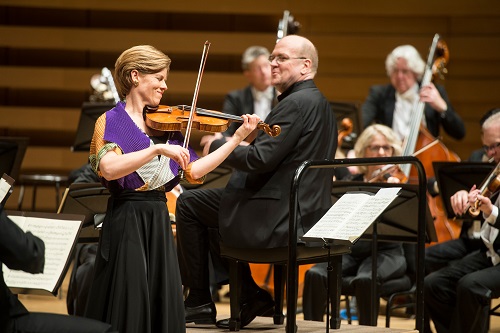
Isabelle Faust, violin, and conductor Bernard Labadie (photo: Jag Gundu)

The program featured a pair of violin concerti, played by violinist Isabelle Faust on either side of the intermission. She opened with concerto #3. I was especially thrilled with the slow movement, both the sensuous accompaniment from the orchestra and the full tone from her violin. After intermission we heard concerto #1, including a wonderful cadenza to finish the concerto, a witty and extroverted eruption from the violin as Faust made us forget all our troubles, lost in the beauty of her sound.

Posted in Music and musicology | 4 Comments

Feminist Flute Opens

The Canadian Opera Company opened their revival of Diane Paulus’s interpretation of Mozart’s Magic Flute tonight directed for this incarnation by Ashlie Corcoran.

Forgive me for a simplistic headline, but if I had to find one word for Paulus’s reading, “feminist” works for me. As in its first visit in February 2011, we see

  • a framework story concerning the princess Pamina shifts the emphasis somewhat away from its usual misogynistic story ( that can seem like a war between the genders with a clear win for one side over the other), creating more balance
  • an ending featuring a lovely dance of reconciliation entirely in the spirit of the music we hear in that final number, and giving us a framing epilogue similar to what we get from Mozart & Da Ponte in Figaro and Don Giovanni (although Da Ponte’s nowhere to be found this time)
  • lines changed in the surtitles, so that we don’t have to read phrases that seem to be a direct attack on womanhood (I understand it was a collaborative effort between Gunta Dreifelds, who does the surtitles, and the rest of the team, perhaps Paulus and others as well)
  • And the racist elements in the character of Monostatos are deconstructed as well

When you look at this concept, its flamboyant design,  plus the integrity of the music, it’s absolutely first rate and something you shouldn’t miss.

Bernard Labadie is having a busy week. How busy?

He’s splitting his time this week between the Toronto Symphony’s Mozart @ 261 festival at Koerner Hall, and the COC.

  • Tuesday (I think?):  COC dress rehearsal,
  • Wednesday:  first Mozart concert,
  • tonight (Thursday): opening night of Flute
    then
  • second concert tomorrow (Friday) at Koerner Hall.

His life gets easier (!) as he only has to focus on the rest of his run with the COC, meaning another ELEVEN performances between now and February 24th.

And while we’re speaking of being busy, the tempi of his conducting seem to match, as his pace was electric, often the fastest versions I’ve ever heard. The chorus under Sandra Horst’s leadership offered wonderfully clean attacks and diction, perfectly in time. The orchestra seemed to be aiming for a historically informed sound, the strings playing with little or no vibrato.

And there was lots of electricity in the performances.

Ambur Braid as the Queen of the Night in the Canadian Opera Comp

Ambur Braid as the Queen of the Night in the Canadian Opera Company’s production of The Magic Flute, 2017 (photo: Gary Beechey)

I have to mention first & foremost a role that’s really like a cameo, namely Ambur Braid as the Queen of the Night. I wasn’t sure if I could mention her misadventure in her first aria, until she admitted it in social media. Instead of a wardrobe malfunction this was outright rebellion, her colossal dress tripping her up. But Braid is such a complete theatre animal that she turned it into business, crawling on her knees at Tamino. I swear nobody in the theatre noticed, although it did seem like an unconventional approach to the aria. In the second aria, she put the damnedest pause at the end, in full partnership with Labadie (his idea or hers?), holding us in that agonized theatrical moment before she ended the aria. It’s such a tiny part, yet she’s the one everyone remembered, including that last dance with Sarastro.

Andrew Haji was wonderful, his voice and manner a delightful exponent of the role of Tamino. His romantic partner, Elena Tsallagova has a heavier voice than what we usually hear in the role of Pamina, but she brought a passionate urgency to the role. Joshua Hopkins was an energetic Papageno with his heart on his sleeve in quest for a million laughs (and he got them), and a lovely warm baritone that was a joy throughout.

It’s a thrill to see so many Canadians onstage, the company showing its commitment to the development of talent, from director Ashlie Corcoran (who was in the Ensemble Studio herself years ago), Michael Colvin’s charmingly grotesque Monostatos and so many others I could name.

I’m looking forward to checking out the alternate cast. I suggest you go see this celebration of Canadian singing.  Both genders.

Posted in Opera, Reviews | 2 Comments

Questions for Birgit Schreyer Duarte: translator of Liv Stein

I was fortunate to encounter the work of Birgit Schreyer Duarte while she was still a student at the University of Toronto, over a decade ago. While one may sometimes see remarkable talents among a student population, she was at another level entirely, already a significent ambassador for German culture in her directing & translating. She directed Mein Kampf by George Tabori, translated Schimmelpfennig’s Auf der Greifswalder strasse, and more, all while simultaneously working on her PhD.

birgit-schreyer-duarte

Birgit Schreyer Duarte: translator, director, dramaturg, cultural ambassador

Fast forward to her busy life as a dramaturg, director, and translator, often with Canadian Stage. You can see her portfolio, including pictures and more at her website. Last winter Canadian Stage presented Das Ding, directed by Ashlie Corcoran in Schreyer Duarte’s new translation, and this past summer she directed Hamlet for the Dream in High Park. Her latest translation is Liv Stein, opening on January 26th for Canadian Stage directed by their Artistic Director Matthew Jocelyn. I had the delightful opportunity to ask her questions in anticipation of Liv Stein.

1-Are you more like your father or your mother?

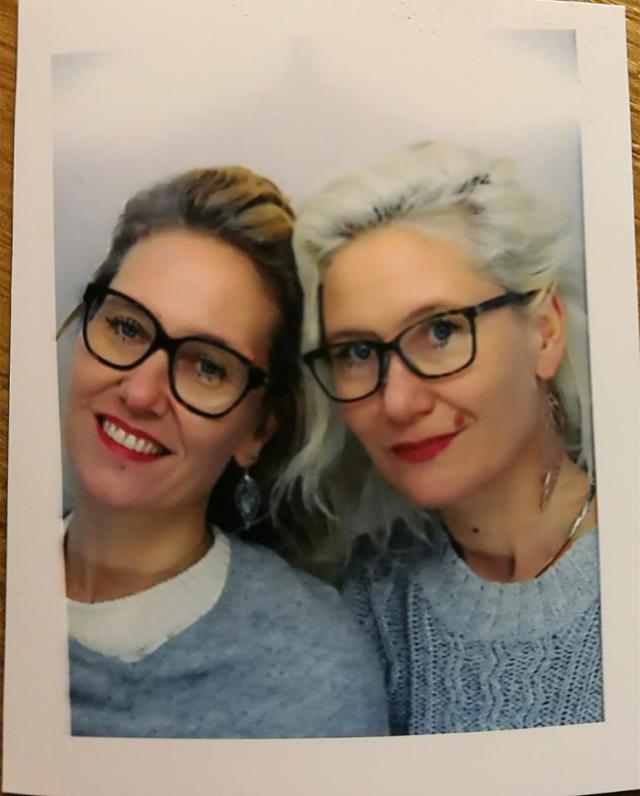
I have an identical twin sister, so being compared is something that has happened to us all our lives. The question of who resembles which parent more has been put to us many times as well. Funnily enough, visually, I resemble my mother a bit more than my father, while my sister has more of my father’s visual traits. Sounds unlikely, I know, but it’s true—there are some pictures where it’s totally obvious, but when people hear this they always think we make this up! But in terms of other influences, I am really a mix of both my parents I think. I get my musicality from my dad who’s a musician, for sure, and my affinity for the imagistic/visual arts from my mom, who taught us kids photography. Both are interested and talented in languages, both are well travelled, and extremely loyal people. A healthy portion of pragmatism, as well as empathy—that’s what I probably get from my mother. It’s my dad who is more comfortable approaching new people and speaking in public. He can be very detail-oriented in fulfilling tasks, but it’s my mother who’s extremely perceptive of her surroundings.
ab-jan17-passbild

The twins: (l-r) Annette and Birgit

2-What is the best thing or worst thing about what you do?

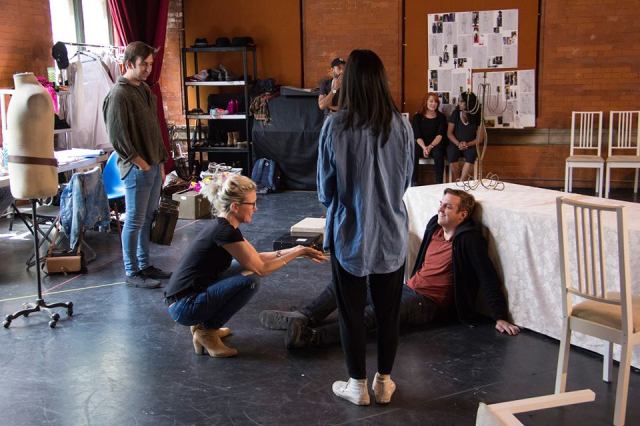
It never gets boring, since I have the great fortune that I get to work in a number of capacities throughout the year—both at Canadian Stage where I work part-time and as a freelancer. In my happiest years, as 2016 was, I get a healthy balance of my three favourite occupations: I work continuously in season planning with Artistic and General Director Matthew Jocelyn and Executive Producer Sherrie Johnson; I translate plays from German to English and see them staged (Ashlie Corcoran’s production of Das Ding (The Thing) by Philipp Löhle was seen at the Berkeley Street Theatre as part of Canadian Stage’s and Theatre Smash’s season, as well as at the Thousand Islands Playhouse); and I get to direct plays I love (an indie production of Taking Care of Baby by Dennis Kelly and Hamlet Shakespeare in High Park). I truly believe practicing each of these professions make me better in the other two.
hamlet-2016-rehearsal-shot-2

Rehearsing Hamlet in 2016

The “worst” thing about being a dramaturg, or, more specifically in my case, of working in season planning, is that one is virtually never done working. You could always read more, research more, go see more, make a greater effort to be the one to discover the next great voice in play-writing. I had to learn over time to set myself limits, when to close my laptop, to plan a weekend without reading yet another script, etc.

3-Who do you like to listen to or watch?

At this very moment I’m listening to Sia’s current album “This is Acting” (no idea where this falls in terms of a “cool factor” these days!). On other days, it could be anything from Handel arias, Monteverdi operas, danceable music like Rihanna and Lady Gaga, to my father’s Bavarian folk music recordings, Top 40 hits, or sacred choral music. The last album I actually bought was Canadian singer-songwriter Lisa LeBlanc’s, after I saw her live in concert.

I have been sucked into the Netflix binge watching craze only fairly recently, but if I am hooked, I am hooked hard-core: anything mainstream from 24, Breaking Bad, Downton Abbey, House of Cards, to The Good Wife—I reluctantly admire these shows’ ability to create this perfect bubble for the viewer where nothing else exists and the characters become more real than the people around you (Spoiler Alert: I took days to recover from the untimely death of the male protagonist in Good Wife!). I also find them somewhat educational, to be honest: their milieus are so specific that I always feel like I learned something about their particular period in time and their worlds. Otherwise, I love German artsy films, Atom Egoyan’s work and epic, sophisticated actor-driven mainstream movies (Tree of Life or Manchester by the Sea come to my mind immediately); but I was also crazy about the Bridget Jones movies and was genuinely excited to see the “grown-up” version of Bridget recently in “Bridget Jones’ Baby”! More and more, I’ve come to appreciate a good comedy—perhaps because the plays I get to watch or read are more often than not problematic or tragic and it’s very, very hard to find good comedies.

4-What ability or skill do you wish you had, that you don’t have?

Beaming myself to any place I want and back. I still haven’t given up hope that humanity will master this skill during my lifetime! I would go back and forth between the places I love and where I have family and good friends much more often and with more ease

5-When you’re just relaxing and not working what is your favourite thing to do?

I have a few! Hanging out with my sister: just talking non-stop, or shopping for shoes, or going to the opera, or reading novels side by side. Biking around the Bavarian countryside with my husband. Spending the day in a swimming pool-spa with my best friends in Germany. Philosophizing with my theatre friends in a Toronto coffee shop.

*******

More questions about translating Liv Stein

1-Please talk about Nino Haratischwili.

Nino is from Tiflis, Georgia, but now lives in Hamburg, and I haven’t yet met her in person.

However, the theatre world is a small village, as we know, and my good friend Maria Milisavljevic from Germany, the former Tarragon Theatre writer-in-residence of Abyss and Peace River Country, got to know her several years ago in a professional context in Germany, plus I am now Facebook friends with her, and we’ve communicated several times about Liv Stein (I just finished translating my interview with her that will be published in our Canadian Stage’s programme book for Liv Stein).
nino_playwright

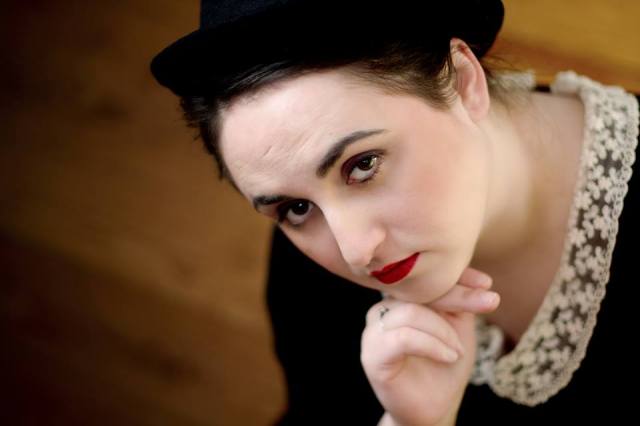
Novelist & playwright Nino Haratischwili

So it feels a bit like we do know each other. She’s in her early 30s and has written no less than 20 plays and several novels, the last of which is a 1000 page epic family history in Georgia, called Das Achte Leben (The Eighth Life). I just ordered it for myself. I am curious how her writing style comes out in her fiction. In her plays, I particularly enjoy her directness—the characters say out loud what they think, they are much more unmediated than many Canadian playwrights’ characters I know. In that way she reminds me of another favourite playwright of mine, Simon Stephens from the UK, although she is of course less of a veteran than he is, and he’s extremely economic as a writer, maybe more than anyone I know at this point. But I also love Nino’s pathos and the boldness in her images and themes; they are pretty operatic. She has a great love for Greek mythology and that’s clearly present in Liv Stein. She wrote Liv Stein at the age of 25 or 26, and most people’s first reaction to the piece is to think she must have been a mature woman to be able to write so insightfully about the extreme situations her characters find themselves in, and to create a couple in their mid-fifties as her protagonists. Her latest play, Schönheit (Beauty), just opened last month in Nuremberg, Germany. She has received a total of 11 prizes for her writing.

2-Tell us about the Canadian Stage Production of Liv Stein that you’ve translated for its premiere in English.

The script of Liv Stein came to Canadian Stage through a trusted fellow artist, actor Alon Nashman. He had seen the play in Tiflis at the Georgian Theatre Showcase, and was quite taken by its poetical force, so he sent it to Matthew in a preliminary English translation from the UK that he had acquired, as something he thought we might consider for Canadian Stage’s future programming. Matthew shared it with me, as I normally have more time to read through the piles of scripts that land on our virtual desks. We had never heard of Nino as a writer.
geraint-wyn-davies-sheila-ingabire-isaro

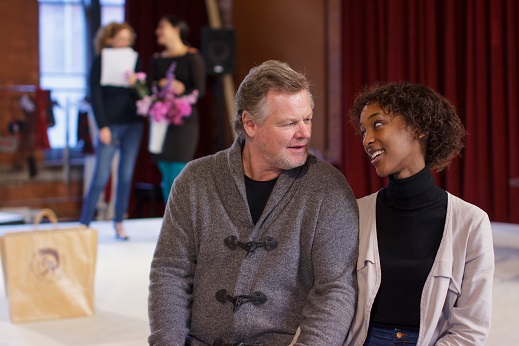
Liv Stein: Geraint Wyn Davies & Sheila Ingabire-Isaro

When I eventually got to it—this was probably about two and a half years ago—I was immediately intrigued: by its setting in the world of a musical virtuoso, its crime thriller-like feel, its heightened, larger-than-life characters, and by its core issues: the effects of obsession (artistic and otherwise), the question of whether our quest for “truth” should trump our need for happiness, the value of success in art vs. success in leading a fulfilled life.

The play stood out to me in so many ways, so I urged Matthew, and later the rest of our artistic team, to read it too. In our internal reading rounds it soon became a priority play that we hoped to find a spot for in the coming seasons. We all loved the strong, complex female protagonist who would make a fabulous role for a strong middle-aged actress.
caroline-gillis-leslie-hope

Liv Stein: Caroline Gillis & Leslie Hope

However, we all found that some aspects of the English version didn’t sit well with our Canadian ears. Some phrases sounded belaboured or even a little dated to us, or simply too British, so that we suspected the translation risked making the already pathos-laden script even more artificial and precious. That’s when I realized I should read the German original next to see if the problems for our sensibilities as Canadian theatre-makers (and -goers) lay in the play or in the translation. I remember being even more enthusiastic about the play after reading it in German, the language Nino had first written it in. Her language was direct, witty, poignant, and atmospherically dense and full of surprises. We decided to give it a try and create our own English version of the text.

3-Please talk about the art of translation, and your experience as a translator and what’s involved.

The process of translating for the stage is really ongoing; the work will literally be “done” only at the moment of its premiere. I take about four weeks off and on to translate a full-length play in its first draft. Then the many discussions (with the director, the original writer, actors, designers) begin, and the many rewrites. That continues throughout the rehearsal process, at least in my experience. It gets more complicated when another writer is part of the project, a playwright who was commissioned to adapt the play further after the translation is done. Such was the case in my translation of Friedrich Dürrenmatt’s The Physicists, which was staged in 2015 at Stratford by Miles Potter, for which Michael Healey was hired to write an updated Canadian adaptation. With Michael, the collaboration went very smoothly. We had a number of in-person and online conversations about the tone and style of the play, especially its dark humor, and the biographical and socio-political context of Dürrenmatt. I was invited to the rehearsals in Stratford. If this kind of collaboration isn’t working well and the adaptor has no interest in consulting with the person who has access to the original text, it can be frustrating and ultimately artistically unsatisfying. I’ve only had a couple of experiences like that. Most of the time the directors and writers, if there are any involved, are very happy to have the foreign-language speaker by their side in the process.

I started translating for the stage when I was still in University and realized quickly that there aren’t too many German-English translators in Toronto who are also trained in theatre-making. I enjoyed the process immensely and excitedly took on any translation job I could, and also started choosing German plays I wanted to direct that needed to be translated first. So I almost learned how to translate plays for the stage simultaneously with directing them. I did that with Roland Schimmelpfennig’s post-dramatic extravaganza Boulevard of the Brave (Auf der GreifswalderStraβe), Pascal Mercier’s novel The Piano Tuner (Der Klavierstimmer, which I adapted into a stage play), Felicia Zeller’s social worker drama Kaspar & the Sea of Houses (KasparHäuser Meer), and Marie luise Fleiβer’s seminal early 20th century drama Purgatory in Ingleton (Fegefeuer in Ingolstadt). In other cases, I proposed plays to directors and was commissioned to translate them for their productions, such as for Das Ding (The Thing), or I was approached by directors who had read a play in an older translation or another language and wanted a new English translation for their own productions, as was the case for Brecht’s Life of Galileo (Leben des Galileo) for Jacob Zimmer’s Small Wooden Shoe company or Lukas Bärfuss’s The Test (Die Probe) for Philip Riccio’s Company Theatre production. Occasionally, I also translate a play on my own time that I personally am drawn to, in the hopes it will get a staging someday…

Overall, every translation, whether of literature or for the stage, exists somewhere on the continuum between these two demands: literary quality vs. functionality. There’s an image I like that helps explain the dilemma of the translator’s task (something I heard at a translation conference once): that of the “unfaithful beauty”. Some translators compare their struggle of choosing between a faithful and an unfaithful translation to choosing between a faithful and an unfaithful lover, of which, unfortunately, the unfaithful one often turns out to be the more beautiful one… As a translator we frequently get caught between our desire for each of the two: the desire to create the most theatrically rich and evocative translation of the original text (the beautiful but unfaithful translation) and, at the same time, to retain as much as possible of the original text’s “vision” (i.e., going with the faithful, but maybe “duller” translation). On top of creating something “beautiful”, a translator’s task is to remain “invisible” to the target audience—after all, the translated play should never sound like a translation, but just like a foreign play in a language we understand. Also, as a translator of a play from a language that’s foreign within the receiving culture, one is almost automatically taking on the tasks of the dramaturg: that is, researching the cultural context of the source text, verifying facts and meanings of specific expressions and terms, searching for historical context that might explain vocabulary and determine your translation choices.
nicola-correia-damude-caroline-gillis-leslie-hope

Liv Stein: Nicola Correia Damude, Caroline Gillis, Leslie Hope

I have found that there are two sets of challenges in translating plays for a foreign audience: first, conveying the stylistic/linguistic qualities of the original language, and second, communicating the cultural specificities of the world of the play. Another great image I have heard translators use is that of the iceberg: the visible tip of the iceberg is the textual translation of a play; what’s underneath the surface is the “cultural underbelly” that needs to be moved as well—moved into the target culture in this case. To get even more specific, I would define the different levels of translating for the stage as the following six categories: grammatical specificities; tone; puns, idioms, neologisms; sound and rhythm (which mostly comes down to the ratio between vowels, consonants and syllables); performative solutions; and social/cultural connotations.

You have to investigate: Are the characters speaking in an ironic tone, with dry humor, very colloquial, or very flowery? To what effect, dramaturgically? How do they differ amongst each other? How important is that for the storytelling? Since a lot of the syntax and rhythm is different in German and English a translator has to find different tools in the English language to recreate the original’s tone and emotional impact. Often, a sentence, even a whole speech, have to be re-organized and in part re-written in English to aim at the original’s effect, or to recreate the qualities the characters display in their original language.

Similarly, the world of a play is in part constructed by the specific cultural markers of the play’s origin: those might be places, names of public personalities, historical references, idioms, even certain foods, musical references or architectural details. In a German play, these may have meaning for a German audience but may be largely unknown to a Canadian audience. In such cases, it is up to both translator and director to decide which of these references are necessary for an understanding of the play. Those that are necessary should therefore either be replaced by equivalents found in Canadian culture, or explained by additional information inserted in the translation. If it is essential to keep the geographic and cultural world of the play intact, the translator retains the original’s “exoticisms” but runs the risk of having some audiences guessing about the meaning of certain details in the play—which could potentially make us lose the audience’s attention.

4- Please speak about your objectives with your translation of Liv Stein.

The world of Liv Stein is contemporary. To premiere it in Toronto, our overall goal was to make the play accessible in its language (as mentioned before, we wanted the hint of artificiality in the characters to be kept at a minimum) so that audiences are intrigued but willing to follow the slightly eccentric story and its larger-than-life personnel and take their issues seriously. We also decided to keep the geographical and cultural context vague; this was possible without changing any specific names or places or other markers of culture and place (which is rather rare, in my experience). In other words: The setting in the original is a large urban centre in Germany, we assumed it was Berlin, but only once the name of a concrete address is mentioned, in the very last scene. The conservatory is mentioned and concert venues but none of them needs to be in a specific city, nor even necessarily in Germany. What’s important in the play is that the characters move with ease within an old, Western culture, an upper middle class world where classical music is part of the fabric of their upbringing and education, and where boarding schools are the elite’s option of the school system. We didn’t employ any dialects or local coloring at all—it’s like we’re watching characters in an unspecified Western city speaking in a Canadian English. I do believe the European roots of this story are pretty obvious, partly because of the natural relationship with the classical music genre that the characters demonstrate. But we don’t point them out in any design or language details.

The process of finalizing the translation contained many steps: I first delivered my own first draft to Matthew several months ago, based on my own understanding of Nino’s original text, in terms of humor, style, rhythm, atmosphere. Then we sat down together over several sessions and discussed anything Matthew challenged me on, and tried to find out what it was that suited both our perceptions of a given scene or moment best. That way a large part of dramaturgical investigation gets done as well—the digging for meaning and motivation, the analysis of dramatic tension and structure, etc. We also had a few questions for Nino to make sure we understood some details correctly.
With this preliminary “final” draft we then started the rehearsal process. During the following weeks, many little changes and edits and refinements were made in collaboration with the cast, while on their feet. There are things that only become clear once you see the story played out live in front of you. You really have to let go of the claim that it’s “your” work, your words—the translation quite literally becomes the work of the cast once they speak the words.

5–Is there a teacher or an influence you’d care to name that you especially admire?

Yes, there are several. Curiously, as a translator I have worked and practiced mostly on my own and have no direct role models to refer to. But I was very lucky and had almost exclusively bright, dedicated professors during my formal education, both at Munich University,where I studied Dramaturgy, and at the University of Toronto. I think very fondly of these formative first years in Toronto as a PhD student in Drama; I was given a lot of freedom to follow my interests, both academically and practically. That’s where I also tried out directing and translating for the first time; I haven’t undergone formal training in either. Then I continued to learn from theatre-makers across the country and abroad: Electric Company’s Kim Collier, as well as Stockholm’s Riksteatern’s Josette Bushell-Mingo, both brilliant creators, were the two first female directors whose work encouraged me to think truly big and bold, who love imagistic theatre and don’t shy away from technical challenges. Josette is also a gifted dramaturg and a political force, at home in many cultures, innovative and fierce. Peter Hinton’s views on directing, especially on directing Shakespeare, have also strongly shaped my thinking about the craft. He’s someone I can listen to for hours on end and be inspired and learn from. And of course, Stratford Festival’s Antoni Cimolino and Canadian Stage’s Matthew Jocelyn, both of whom I have worked withover the past six or so years, are artists and leaders I highly respect as colleagues, and who I’ve regarded as mentors for years now.
matthew-jocelyn

Matthew Jocelyn

*******

Canadian Stage presents Liv Stein by Nino Haratischwili, from January 26 – February 12.

Posted in Dance, theatre & musicals, Interviews | Leave a comment

#coc1718

Tonight the Canadian Opera Company announced their 2017-2018 season aka #coc1718, an event hosted by Brent Bambury in conversation with Johannes Debus & Alexander Neef.  How novel to be permitted –nay encouraged– to tweet during the show about #coc1718.

That’s just one of several innovations.

operaenlevementauserail35_copyrightstofleth

Jane Archibald as Konstanze, in the Opéra de Lyon/COC co-production of Abduction from the Seraglio, 2016 copyright ©Stofleth

As the shows were announced and we kept hearing Jane Archibald’s name announced in show after show, I wondered. And so the COC will now have an “Artist in Residence” for 2017-18, namely soprano Jane Archibald, coming on the heels of several wonderful recent portrayals with the COC, most recently in Ariodante.  As this is the first time the COC undertakes this kind of thing, I suppose it begins with a season organized around her portrayals of several powerful roles:

  • As Konstanze in Mozart’s Abduction from the Seraglio, a new translation & production by Wajdi Mouawad, a co-production with Opera de Lyon
  • As Zdenka in Richard Strauss’s Arabella, a COC premiere, a co-production with Santa Fe & Minnesota Operas,
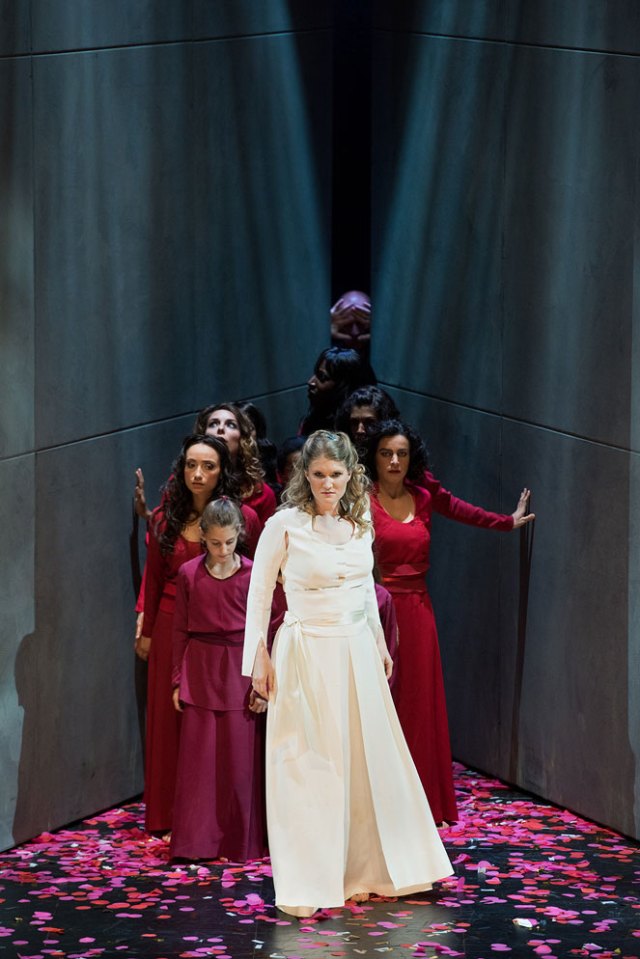
  • As the Nightingale in a revival of Robert Lepage’s The Nightingale and other short fables

But I can see other ways that an artist in residence might be put to use, mentoring the ensemble while contributing to the company as well as the community.  We’re told that Archibald will do more than just these roles, including a concert in RBA, and who knows what other intriguing responsibilities might develop from this appointment.

It’s a wonderful idea!

Three other shows fill out the season:

  • Rigoletto, in the revival of the Christopher Alden production, this time starring Roland Wood Anna Christy, and Stephen Costello alternating with Joshua Guerrero as the Duke, conducted by Stephen Lord.
  • The Elixir of Love in a new production with a Canadian focus, both in its cast –Simone Osborne, Andrew Haji and Gordon Bintner—and its design concept, which we were told would be Canadian as well.
  • Anna Bolena, as we’ll see a revival of one of the Stephen Lawless productions of Donizetti’s Elizabethan trilogy, starring Sondra Radvanovsky in the title role.

The event was truly celebratory, from the opening number –a chorus from Abduction from the Seraglio—to three solo performances by former ensemble studio member Andrew Haji, plus current members  Danika Lorèn and Emily D’Angelo, each singing an aria from one of the operas to be presented.

_mg_3876

Members of the 2016/2017 COC Ensemble Studio. (back row, l-r) intern coach and pianist Stéphane Mayer, mezzo-soprano Megan Quick, mezzo-soprano Emily D’Angelo, soprano Samatha Pickett, baritone Bruno Roy, tenor Aaron Sheppard. (front row, l-r) soprano Danika Lorèn, mezzo-soprano Lauren Eberwein, intern coach and pianist Hyejin Kwon, tenor Charles Sy. Photo: Bronwen Sharp

Posted in Press Releases and Announcements | Leave a comment

Mozart Forever Young @261

To hear and see the Toronto Symphony Concert tonight was to be confronted with some ageless questions about age.

Mozart, that avatar of youthful brilliance, is indestructible, no matter how he’s played.
Don’t miss this opportunity to hear what the TSO really sound like. When they’re playing in gigantic Roy Thomson Hall (seating 2630) they’re impressive with fortissimos played with a big orchestra, but some of the subtleties of Mozart may tend to get lost in such a big space. It’s simple physics. If the same amount of sonic energy is being shared by 2600+ as well as all those walls and all that air, there’s no way it can be as loud as what you get, for example, hearing Mozart at the Four Seasons Centre (where we’ll have The Magic Flute later this month, shared among a mere 2071 patrons). Now imagine what you get when the TSO pump that same Mozartian sound out in Koerner Hall –their home away from home during the Mozart @261 Festival—for a mere 1135 patrons. That’s fewer than half the number you have at RTH.

No wonder they sound so good there, although the fabulous acoustic doesn’t hurt either. Don’t miss the opportunity to hear the TSO playing Mozart at this festival.

As we’re in the twilight of Peter Oundjian’s career with the TSO, it’s a good time to appreciate what he brings to the table.

He again acted the role of mentor, introducing a pair of young soloists to kick off a festival celebrating Mozart: the quintessential child prodigy.

First it was Kerson Leong, who has appeared with the TSO before, back to play the familiar C major Rondo for violin & orchestra K373.

violin

Violinist Kerson Leong, conductor Peter Oundjian and the Toronto Symphony  (photo: Jag Gundu)

I enjoyed watching the eye contact between soloist and conductor-mentor, Oundjian’s joy unmistakeable.

nediak

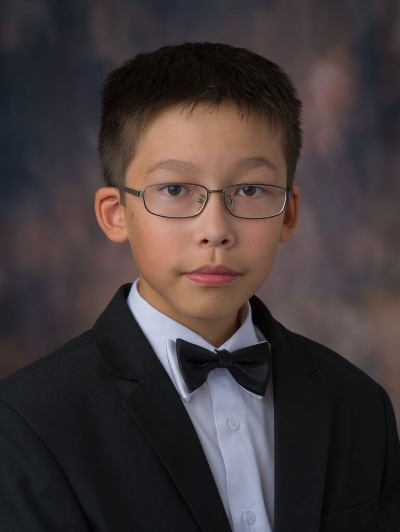
Pianist Leonid Nediak

Then we met young Leonid Nediak, who has one of the most unique set of mannerisms I can recall in a soloist, apparently very humble. He comes across as a brilliant nerd, leading me to wonder if Mozart had been born in our century whether he too would be a whiz at computer science & math: as Nediak is.

His playing is quite delightful, accurate, fluid, and with a deep well of charisma under the surface. Where his body language is understated, the playing is powerful and mature.
After the intermission we heard the TSO with Oundjian, showing us what the orchestra really sounds like in this lovely little hall. Oundjian used a baton for the two outer movements, a choice I’m guessing that has to do with his approach to the tempi. Whereas he’s consistent in the inner movements –the second languid, the third, very quick—and so prefers to conduct using his bare hands, in the outer movements, he needed the extra control that the baton affords. This was especially clear in the last movement, where the first subject was breath-takingly fast, while the second subject (either in its first utterance in major, or its last one in minor) was more wistful, and even introspective: but requiring a quick return to the faster tempo for the concluding bars. This alternation of tempi is a more romantic approach that’s possibly a bit out of fashion, but still quite beautiful to hear, and consistent with what I grew up with on records, thinking for example of conductors such as Karl Bohm or Herbert von Karajan.

For an encore Oundjian led the TSO in a slow reading of “Ave verum corpus” arranged for strings, which I quite loved, both because it reminds me of the fun I’ve had singing this with my church choir, and because for a moment I was put in mind of Stokowski and his arrangements. In so doing it was curious that we were looking both ahead – to the bright future of the talented young prodigies we heard—and back, to the earlier style of playing Mozart.

But it all works.  Magnificent Mozart rules.

This program repeats Thursday January 12th while the festival continues with two other programs:

  • Emmanuel Ax plays concertos # 14 & 23, coupled with Symphony #33, conducted by Michael Francis, January 13 & 14
  • Conductor Bernard Labadie is joined by violinist Isabelle Faust for Mozart’s violin concerti #1 & 3, coupled with Symphony #38 on January 18 & 20

For tickets click here 

Posted in Music and musicology, Reviews | Leave a comment

Danny and that question

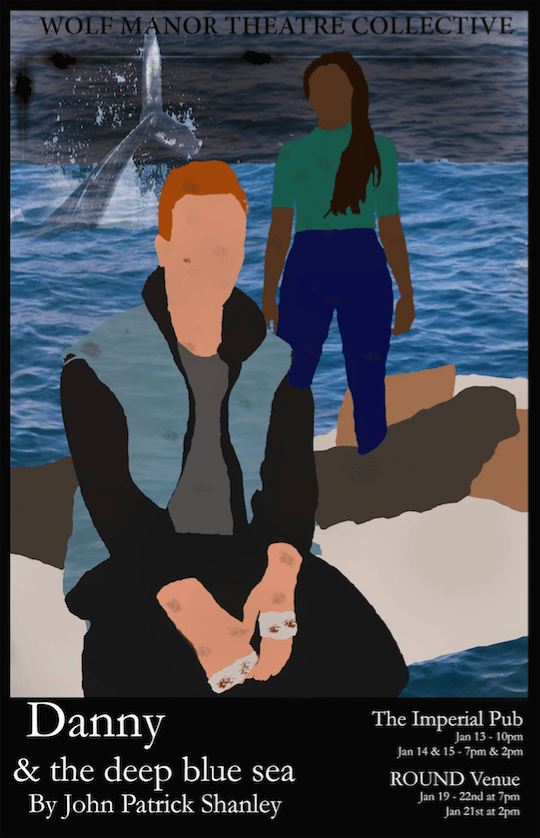
I’m viewing Danny and the Deep Blue Sea, the live show I saw previewed tonight, through the same lens through which I stared at La La Land last night. Yesterday was a big movie house full of people. Tonight was an immersive presentation of John Patrick Shanley’s play in a small room in a bar in downtown Toronto. Where LLL asked us whether art should care whether we reach the faces in the crowd, DDBS is right in those faces, who wouldn’t be there if they didn’t care. It’s very intimate.

And yet the big question I asked last night is the same one I’m asking today. Are happy endings possible?  The heart sometimes opens up to the possibility, sometimes closes off, recoiling from our own dream.

The question carries different weight in this utterance. I am finding myself noticing that maybe everything artistic is a kind of proposition, a hypothesis. Sure, you thought Star Trek or Twilight or the Magic Flute were attempts to tell a story. But before any of that, they inoculate you, jabbing something into you that infects you with the possibility of something other than what is literally so. Yes we see spaceships or vampires or singers in these three examples, and if we stay with the story it’s because we buy its hypothesis, that those characters can hold our attention because they persuade us to see more than just actors or singers.

I went into a small room, then after I’d removed my coat, briefly retreated to the washroom to relieve myself. Upon my return, while I was still in the room, I wasn’t alone, because Bria McLaughlin was sitting in the middle of the room.

Where should I sit, I wondered? Bria is a lovely person of course, but no, this was not really Bria, but “Roberta” her character in Danny & the Deep Blue Sea. I was tempted for a moment to sit right in front of her. She’s very beautiful and I enjoy looking at beautiful people (don’t you?). But I also knew that I didn’t want to in any way make this immersive thing any harder by making eye contact with her. Every seat in this charming little room was a front-row seat, so I chose to sit behind her, which might make things easier. So I pulled out my phone and took some pictures. Because the show hadn’t started yet this was permitted, whereas it wouldn’t be once they were underway.

bria_show

The place started to fill up somewhat.

And then Dylan Brenton came in: but no it wasn’t Dylan, it was “Danny”, his character. I glanced his way and again stayed away from eye contact, not sure exactly what the unspoken contract was about the show. I knew Danny to be a violent character from what I’ve read. If I made eye contact would I be in danger?

Yes I know that sounds silly. I asked this question only partly in jest. There’s something slightly dangerous and illicit about sitting in the front row and interacting with a show. I find it intoxicating, that sense of breaking the rules. I do it all the time when I can get away with it. It’s a great way to meet people you admire. But I wasn’t yet sure what our ground-rules were so I kept quiet and distant.

The show begins very quietly, gently. Danny talks to Roberta. At one point a guy sitting a bit to my left seems to get a rise out of Danny, who sounds as though he wants to hit him (hm… stronger language than that come to think of it. Hit him? Or smash his face in? something like that).

We’re in the cage with the lions. And need to be careful of getting scratched.

The play unfolds, and I’m struck as usual by questions of age. In opera we accept that the ages are miles away from what the storytelling requires. Juliette is supposed to be 12, Butterfly 15, and at the very least, Mimi is young enough to move a young man by her beauty: when she’s unconscious, so it’s not just for her ears and therefore it must be his true thought.  Live spoken theatre doesn’t have the musical element to stylize and invite a huge imaginative leap.  Dylan told me he’s 24 in his recent interview. I suspect Bria is roughly the same age because I think they were in the same year at Ryerson.

They are both younger than my kids (who are in their 30s). And they’re telling a story that must be told by people in their 20s. As I’ve noticed before –when thinking about my life, when talking to anyone about their life—the 20s is surely the toughest decade of a person’s life. Suddenly you have adult bodies and hormones and capabilities to procreate and fight and get drunk and kill yourself, but also, with the urgent need to figure out what you’re going to do with your life. Some do, some don’t. And that’s why being in your 20s is so hard. To portray this when you’re older so much is missing, lost in translation. Before a word is spoken their bodies make it 100% authentic.

Shanley’s language is very direct. I read the program note by director Tony Perpuse, which nails one of the keys of this play, both as an objective he aimed for, and as a reality brought home by Bria and Dylan in their performances: that we’re watching theatre representing the working class. I remember when I used to do construction, I dreamed of writing something authentic to capture work and workers, and it’s still a dream I haven’t managed. It’s tough enough if this writing is a novel, but in a theatre people will listen and critique actors, questioning the authenticity of that voice. And even if this feat is achieved, unless the listeners themselves are workers, it may be an unrecognizable idiom to the ear of those listeners.

And to add insult to injury actors need to turn off their powerful apparatus, namely their instrument. Actors build their bodies and especially their voices for Shakespeare or Sondheim: which doesn’t sound like the guy punching the clock or the lady on the assembly line.

There we were with Bria and Dylan, who started so softly. I leaned forward because my space was not being invaded, because the soft delivery invited me to pay attention, to hear them. They spoke to one another with the delicacy of any bar proposition, man and woman feeling each other out. Yes it builds, but it’s always scaled to the room.

But it’s a highly unlikely thing in some ways. Danny & Roberta, the two people who come together in this story are in their way just like the couple I saw in La la Land last night. We watch romance as they attempt to leap across a gap, to make contact and find a common language. It’s a painful story, but one of redemption and humanity. We are teased again and again, and it’s that same romantic question that is the feather tickling you, as we dare to ask and perhaps believe in the impossible dream of romance, a pair of abrasive people who rub and scratch against each other.

This was a preview.  Danny & the Deep Blue Sea will be presented by Wolf Manor Collective in at least a couple of venues around Toronto over the next couple of weeks. For more information have a look at their website. For tickets click.

dabby_poster

Posted in Dance, theatre & musicals, Reviews | Leave a comment