The mysterious politics of the TSO

Why a series of pieces with the word “mystery”?

Sometimes a person may feel clueless. There are times when I feel satisfied with myself and my abilities. I go to a concert or watch a production in a theatre, and come out bursting with things to say. I know, that sounds obnoxious. If you’ve sat with me, I apologize!

But there are times when that free flow dries up. I don’t mean a writer’s block. I can always write, even when it’s about not wanting to write. I guess that’s what this sounds like.

But this concerns my ability to know, questioning anyone’s ability to know.  Some things simply are hidden, secret.

Case in point, there’s a story in the Globe and Mail under the headline “TSO board chair replaced, others out in abrupt leadership change”. It’s full of factual statements. And I come away from it, wondering what’s going on, and I know I’m not the only one.

This is only one in a series of dramatic news stories involving the TSO. Let me remind you of two others:

  • In April 2015 the Toronto Symphony cancelled the appearance of pianist Valentina Lisitsa.
  • In March 2016 TSO’s CEO Jeff Melanson resigned in the face of allegations and rumours.

It’s funny to notice the common element between all three stories. The current board resignations, Melanson’s resignation earlier this year and the Lisitsa affair, all represent decisions that took place in response to some kind of secret decision making. I could be wrong, but it appears to me that pressure was brought to bear in each case. It’s simplistic to suggest that the three are the same, I am only noticing a pattern, that all three stories revolve around a secret process, around pressure being brought to bear, and people being removed or departing:

  • Lisitsa
  • Melanson (yes he resigned)
  • Members of the board (yes they resigned)

I have no idea what’s going on behind all this! Mysteries, right?

Whereas I come out of the exposition of a first movement sonata, confident that I can handle the disorder of the development section, this kind of mystery makes me feel that I am out of my depth. I don’t understand what’s going on behind the closed doors. And why should I after all, I’m not one of the privileged few who are custodians / stewards of the TSO.

All arts organizations have boards and there are decisions made that will be private. I wonder, why is the TSO letting us see any of this?

But the TSO seems to be facing in the right direction. They have their Sunday night radio show that helps them build public interest. They’re doing more and more films with live accompaniment, usually selling every ticket. I can’t help thinking that there’s been a power struggle behind the scenes, that the board of the TSO has been conflicted or perhaps even opposed to the initiatives of those in charge.

I don’t know.

Let’s talk about a few more mysterious things, connected to the TSO.

Peter_O_after

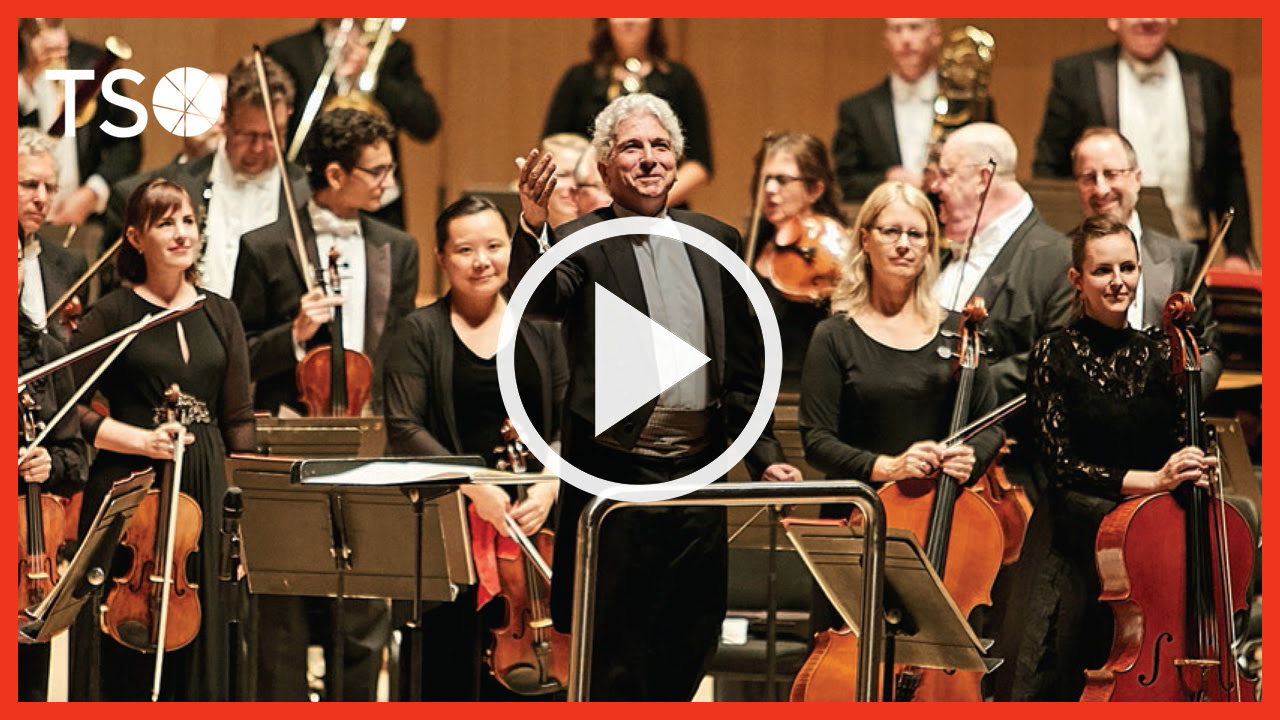
Peter Oundjian with the Toronto Symphony (Photo: Michael Morreale)

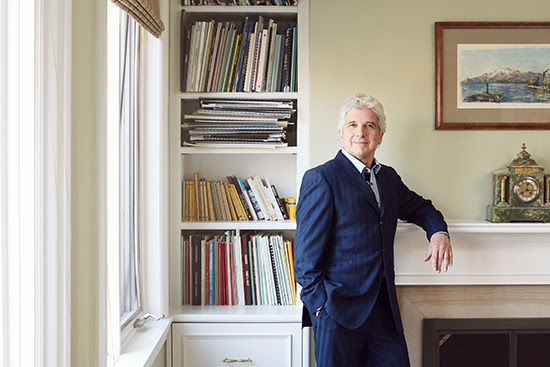
They are about to get a new conductor. It’s funny, I sense that for much of his tenure Peter Oundjian did not have full unanimous support from the TSO, that at times his orchestra resisted his control. Over the past five years, however, there has been a gradual change in the orchestra with the arrival of some new & talented players. One of the truisms in management is the habit of bosses to bring in their own people, to ensure loyalty & compliance, while getting rid of those who are opposed.   It’s difficult if not impossible to do that as the leader of a unionized orchestra. It takes time. I believe Oundjian’s recruiting over the past few years has changed the orchestra’s attitude by the creation of a new consensus, a critical mass of superb young players brought in under Oundjian’s guidance & mentorship. There’s a sense of commitment & attention that wasn’t there five years ago. How ironic that in 2016 as the orchestra feels more like Oundjian’s orchestra than ever before: that he’s already got one foot out the door. But then again, it may be because the pressure’s off, and he’s able to relax and enjoy the music-making.

Who’s next as TSO Music Director? we shall see.

And one other mystery to me is why every rinky-dink concert performance in Toronto that has text sung in another language can manage to project translations / subtitles, but the TSO can’t. While they can manage to project state-of-the art high definition films on huge screens, they can’t give us the English translation for the words being sung in another language.  I suppose it’s Roy Thomson Hall, not the TSO, who’s letting us down.  But is the TSO asking for this? They should insist.

Posted in Music and musicology, Personal ruminations & essays | Leave a comment

Mysteries

As we come to the latter part of the year, a festive time when we hoist drinks, hug our loved ones and count our blessings, I’m playing a bit of a game, partly inspired by my friend Ian Henderson. Perhaps in echo of “The 12 days of Christmas”, Ian has been sharing a delightful Christmas treasure each day on Facebook.

I’m a sucker for conceptual shenanigans, and so I’m putting an umbrella over the next few pieces I publish, framing them as “mysteries”. I like the word because it’s one with many meanings, some that might be apt for the season.

I should add that the period at the end of the year has always been a time of melancholy reflection for me. My father passed away between Christmas & New Year’s when I was a five-year old boy. And every year we watched my Mother light a candle. Whatever her thoughts may have been as she remembered every year, it was her private experience. We would respect her space and her need to contemplate what had been, and what would be.

One important thought to add is that some mysteries can be solved.  I would like to invoke the symbolist poets and artists (for example Maurice Denis), who sought to pose questions of such depth as to bemuse you with the insoluble.  These are not to be mistaken for puzzles with a solution.

As the end of the year disappears into the darkness of the shortest day, it seems apt to retreat, to contemplate, and then begin anew in January.  Merry Christmas and Happy Holidays.

lechelledanslefeuillage

“L’Echelle Dans Le Feuillage” by Maurice Denis, via ArtNet. NB There is at least one similar image in the current AGO show.

Posted in Personal ruminations & essays | Leave a comment

Metaphysical Sausage Party

Imagine you were having a spiritual crisis. There you are, wondering, asking yourself about God and the meaning of life.

And then you stumble upon a film on pay TV that seems to offer answers, precisely at the moment of your crisis. You might think, “wow, this is heaven –sent. Thank you God!”

Of course, it’s a bit of an oxymoron, if heaven sent you a film that gets into an intense religious debate, concerning the nature of religion and God, via allegory of course, leaving you to say nope there’s no God.

While I found it a bit heavy-handed, I love ambition. You never reach the sky if you don’t aim high, and Sausage Party is a lot more than its title would suggest, a film that can be taken on many levels. That title for example has sexual connotations.

sausage

Or in other words, while Sausage Party is an animated film, a full-length cartoon, it is decidedly not for children. No!!

It’s full of violence, more gore than anything I’ve seen in a long time. It makes you cringe a fair bit.

It’s got more swear words than a Tarentino movie.

And yes, it’s full of sensual imagery throughout.

Need I add: that the animation is spectacular? imaginative?

If you go by the first half-hour, you might find Sausage Party a bit too intense, trying way too hard. It’s hitting you over the head with its quest for meaning, possibly because it takes itself a little too seriously as a stoner picture. I felt I was having déjà vu, watching a food-based remake of Fritz The Cat.

Normally I avoid spoilers, but I have to make an exception in this case. While I got the impression that it didn’t do well at the box office—perhaps because it disappeared before I had a chance to see it: although google tells me it did quite well, easily making back its investment in its first week of release, and making several times that amount before too long.

YES it’s clear that the participants had a wonderful time making it. I don’t like it when I watch a play or opera, where the cast seem to be certain that what they’re doing is profound, even though the only thing that gets across the footlights is the reek of pompous self-importance, where you envy them their awesome project and wish you could have been involved. Okay so maybe Sausage Party is similarly guilty. Why not, when the voices are the work of the usual suspects, as in, the current cool stoner kids in Hollywood: Jonah hill, James Franco, Kristen Wiig, Bill Hader, Seth Rogen, plus more serious artists such as Salma Hayek and Ed Norton.

They’re self-infatuated, and who could blame them, as they likely made each other laugh during recording sessions, and likely only 20% of that wit made it into the film. Even so, there’s quite a bit of eye-candy, quite a bit of conceptual shenanigans to excite you. No it’s not for everyone. But I confess it hit the spot in a year when I needed something imaginative, subversive, passionate.  This is an adult cartoon at a time when nobody seems to behave like an adult anymore.

If it’s the end of the world, grab someone and have fun.  Carpe diem? or carpe bosom.

And the party goes on, because I get to see it again tomorrow.

Posted in Spirituality & Religion | Leave a comment

All’s Well in Messiahville

Toronto is known for a few things. We’re a very knowledgeable hockey town, even if that’s often been a special kind of torture. We’re possibly the most genuinely multi-cultural city in the world, embracing all colours of the rainbow, including that LGBTQ rainbow as well. It’s known as a clean city, as a polite city notwithstanding some outrageous displays of rudeness during the recent baseball playoffs.

While Toronto’s downtown is full of churches, many of them have been re-purposed as condos, divorced from their original religious roots, in an era when attendance in protestant congregations is apparently in freefall.

And yet there’s a reason I jokingly call this city “Messiahville”, because Handel is probably the most popular most programmed composer. There are many flavours of Messiah, whether the larger than life versions presented by the Toronto Symphony, the alternative electric version from Soundstreams the past two years, the historically informed performances one gets from Tafelmusik Orchestra & Choir, or the many local versions & excerpts found in churches all over town.

Tonight was the Tafelmusik Koerner Hall experience. While it may have been a night of inclement weather that didn’t stop most of us, as the hall was pretty full. I proclaim that “all’s well” in Messiahville because the shows keep getting better. They have to, given such a discerning community of listeners.

Ivars Taurins, who portrays “Herr Handel” in the annual singalong, isn’t merely affecting a role. On the other nights, when we’re listening rather than joining in, Taurins is every bit as invested in channeling the composer, in finding a pathway to the essence of this marvelous oratorio. Every time he seems to get deeper into the role, because he’s getting deeper into the work.

1617-ivars-taurins-portrait-bysianrichards_50

Ivars Taurins (photo: Sian Richards)

Taurins is a remarkably physical conductor, but not in the sense of someone who is merely balletic, as the movements are all intimately wedded to the music. When there’s a big line he gives us –and the choir—a big gesture, to punctuate that moment. And he brings the same ear to his leadership of the orchestra, treating them as another group of voices integrated into the whole. It’s an enactment whose playfulness drills deeper into something genuine & true. Nowhere was this more evident than in the attacks Taurins coaxed from the timpanist. Taurins often prolongs climaxes, making a great deal of drama out of the last bars of some of these numbers. We’re accustomed by now to predictable cadences in the classical world, and why should that be? Taurins gives us something delightfully different.

The Tafelmusik Orchestra and Chamber Choir respond to Taurins sinuous movements, as though extensions of that fluid body, voices entering and answering as clearly as if you were inside the composer’s head.  At times the Choir are pushed to the limit, as in “And He shall purify,” taken at a breathless pace yet sung with the precise clarity of flames flickering in the light.  At other times they’re part of Taurins’ drama, as in a Hallelujah Chorus that builds oh so gradually, teasing us with mini-climaxes, and only fully opening up on the last pages.  They’re in a groove right now, matching this hall’s acoustic perfectly, every syllable crisp & clear.  I’m in awe of the choral story-telling, whether in the debating in “Lift Up Your Heads”, the passion agonies of Part Two, or a courtroom summation direct from Revelation, as we’re told: “Worthy Is the Lamb”.  Taurins and Tafelmusik Orchestra & Choir are one of Toronto’s treasures, and should perhaps be included in guidebooks as a must-see / must-hear event each December for any visitor.

I think this is the most impressive quartet of soloists I’ve ever encountered in a Messiah performance. Each one had at least one amazing moment of authenticity, blowing the lid off the usual way that music is done.

Krisztina Szabo has been ubiquitous in this town of late, often in modernist works on the opera stage. How refreshing, then, to see her not in a new opera, not in something atonal or dissonant, but something well-known. Yet her “He was despised” was fresh, especially in the taut drama of the middle section. Every few moments in “he gave his back to the smiters” she seemed to take on a different emotion, sometimes seeming furious, sometimes sad, sometimes compassionate. The da capo of “He was despised” was especially rich, sung in a softer sound, as though completely heart-broken.

amanda-forsythe-highres

Soprano Amanda Forsythe

Amanda Forsythe is the best soprano soloist I’ve heard in Messiah in quite awhile. The soprano gets some of the best music –for instance channeling an angel in the narration of Christmas Eve—and will usually be memorable so long as they’re more or less in tune. Forsythe sang with great restraint, impeccable taste, and an irrepressible friendliness manifested in eye contact with others onstage. I’ve probably mentioned my pickiness with respect to “I know the My Redeemer liveth”, a number that is sometimes undermined by too much enthusiasm; if you try to persuade us that you know that your redeemer liveth, you will sound as though you don’t really believe. The simplicity of Forsythe’s delivery persuaded me, particularly on several high notes attacked with delicacy rather than boldness.

This was my second experience of Colin Balzer, and I feel he and Taurins have deepened their reading substantially since last time. Improvisation seemed possible in almost every number, particularly “thou shalt break them”, an aria that was like an eruption of energy.  His tone is achingly lovely throughout.

tyler4

Baritone Tyler Duncan

I was particularly pleased on my first encounter with baritone Tyler Duncan, speaking as a younger brother of a baritone who grew up craving brilliance from everyone and being frustrated more often than not. I heard something new in several numbers.  In “the trumpet shall sound” we were in the presence of testimony, as he shared a mystery with us. At times in this big bold aria he seemed to be whispering, spilling the beans of something intensely personal and internal even as the orchestra played loudly. It was truly magical. Yet when he wanted to celebrate in this same aria he gave us the feeling of jubilation, something extemporaneous and unpredictable.

I have to think that Taurins is the key, as he seems to be inviting his soloists to explore and probe, as each of them finds an intriguing place in their approach to the music and text, that is never an operatic portrayal but instead a kind of testimony or confession.

Tafelmusik Orchestra & Choir present Handel’s Messiah at Koerner Hall Friday and Saturday, with the singalong Sunday at Massey Hall. Information.

Posted in Music and musicology, Reviews | 3 Comments

Two different takes on Bach: Busoni vs Brahms

Anthologies tend to be a mixed bag. I’m quite partial to a Schirmer collection of 26 Bach piano transcriptions by an assortment of great composers.schimer

It has its strengths and weaknesses. I am not particularly inspired by what Saint-Saëns did with the Gavotte from Violin Sonata #2, and I don’t bother with the Rachmaninoff Prelude to the violin Partita in E: that is, not when I have the three movements of the Partita in a wonderful Rachmaninoff book of transcriptions, also including his lovely paraphrase of Schubert’s “Wohin” and the Scherzo from Mendelssohn’s music for A Midsummernight’s Dream.

This Bach transcription anthology includes some very different approaches, perhaps best understood in the divergent personalities of the five key composers in the book:

  • Franz Liszt, usually big and powerful in the version of Bach that he’s channeling
  • Ferruccio Busoni, even bigger and more powerful than Liszt, and roughly half a century later, in a ferociously virtuosic re-invention of Bach
  • Harold Bauer & Wilhelm Kempff, understated in their careful replicas of the original. I find these most impressive in the famous tunes such as “Jesu Joy of Man’s Desiring” (Kempff) or “Komm süsser Tod” (Bauer).
  • Johannes Brahms, who is somewhere in the middle, between the extravagant flamboyance of Liszt & Busoni on the one hand, and the Lutheran economy found in the transcriptions of Kempff & Bauer.

Busoni had always been my favourite in this book, both in the challenges he makes to any pianist, and in the sounds one hears coming out of the piano. And yet I am re-thinking one particular transcription, after a book I read yesterday.

leonfleisher_138

Pianist, teacher and conductor Leon Fleisher

I was completely absorbed with Leon Fleisher’s 2010 book My Nine Lives over the past weekend. Knowing the central drama of Fleisher’s adult life – his loss of movement in his right hand (plus his eventual recovery & rehabilitation) and its impact on both his pianism and his pedagogy—I should have expected to bump into one particular composition. The Schirmer Collected Transcriptions offers a few juxtapositions when there are two different versions of a well-known piece.

Best among these –and representing a mind-boggling divergence of approach—are the two different approaches to the D minor Chaconne from Bach’s Sonata for Violin No 4. Busoni has been my hero from the first moment I brought this book home. The first piece I devoured was Busoni’s massive paraphrase of the St Anne Prelude and Fugue, perhaps because it’s the most impressive organ piece I know. Busoni manages to orchestrate his piece to sound larger than life, or at least, larger than just a piano. That’s what i always loved in a piano piece, whether in a loud piano sonata such as Beethoven’s big sonatas such as the Waldstein or Hammerklavier, or in Liszt’s B Minor Sonata. They push any piano–and pianist– to the limit, the way a good orchestral composition challenges a stereo system.

Similarly, Busoni takes a piece for solo violin –the aforementioned Chaconne—and makes it sound like something Stokowski would be conducting with a full orchestra. I’m not saying I play it perfectly. But it’s an invitation to make your piano sound massive, and even when you play softly –as you often do in this big long piece—that too has gravitas and weight.

I think the other version went over my head when I first saw it. It’s Johannes Brahms, arranged for the left hand, and doing something completely different from anything Busoni did.  I’d like to think Busoni could respect this composition, but he’d never write with such economy or self-effacement.  For the longest time, I never gave the Brahms a second thought, only noticing it as a kind of witty tour de force, both for the tightness of Brahms’s paraphrase of the Bach piece, but also requiring brilliant technique in the execution.

In time I found that I started to play the two in succession, impressed in spite of myself with Brahms’ refusal to be a show-off, as a kind of point-counterpoint exercise (except Busoni never did say “Johannes you ignorant slut” or the Italian equivalant).

Reading Fleisher, however, has given me an entirely different perspective.  I’m embarrassed that I never really connected with him as a disabled artist even as a person who has had my own issues with disability.  I blush at the thought, but maybe i was thrown off because my first impression was simply that Fleisher was one of the most impressive players I’d ever heard. And he never let his infirmity beat him, seguing into several other careers – other lives as the book suggests—without being stifled or silenced. In looking now at the Brahms, I am so much clearer about this, and honestly, ashamed that I didn’t fully grasp the horror of what this artist was going through.

When you play the Brahms with one hand, and follow it with the Busoni, it’s a bit of a critique, if not an actual mirror being held up. I’m not sure, as I look at my response, if it’s entirely flattering. My whole strategy in playing operas or paraphrases on the piano since I was a child was to reproduce an orchestra, both in colours and especially in the sense of breadth. I think I was disappointed listening to some transcriptions –for example Glenn Gould’s take on the Siegfried Idyll of Wagner – that made something genuinely pianistic rather than trying to imitate an orchestra.

The best commentary – and censure of my own views, I suppose—is in Fleisher’s lovely description of the Brahms.

“Probably the single greatest work for solo left hand is by Brahms, who was looking for a way to capture the sparseness, in a piano transcription, of the unaccompanied violin line of Bach’s wondrous D minor Chaconne. Writing for only one hand allowed Brahms both to echo the limitations of the solo instrument and the ways that Bach miraculously transcends them. Brahms wrote the piece for Clara Schumann, who particularly adored the Bach Chaconne, and who happened to be sidelined, at the time, with right-handed tendinitis. (Fleisher 247)”

I’ve heard of Europeans who claimed that Shakespeare in translation (whether French or German) was superior to the original. While I laughed at this, I can’t deny that I far prefer Bach’s Partita in Rachmaninoff’s transcription to the original: echoing the philistinism I mock in the previous sentence.  And ditto in my love for Busoni’s Chaconne, although i am developing more and more admiration for what Brahms did.

Do I lack taste? All I can say in my own defense is Chaconne a son gout.

I close with a performance of the Busoni version.

Posted in Music and musicology, Personal ruminations & essays, Psychology and perception | Leave a comment

Leon Fleisher: My Nine Lives

I escaped into another world, a place populated by famous musicians.

You may remember Leon Fleisher as an American pianist. I recall him for performances that were usually my favourite versions of piano concerti, usually paired with Conductor George Szell and the Cleveland Symphony Orchestra.

And then something went wrong.

Fleisher was having problems with his right hand in the 1960s. Two fingers lagged behind, tending to curl when they were urgently needed to play complex music. At the height of a promising career, the pianist was forced to consider alternatives. He started conducting, continued playing –but with a focus on the relatively small body of work meant for the left hand—and teaching. Eventually treatments restored the use of his hand.

This can all be discovered in great detail through the magic of My Nine Lives, Fleisher’s memoir, written with the assistance of Anne Midgette.

myninelives_cover

It’s quite a life that Fleisher has had, as he now comes up to his 90th birthday in 2018, making the title more than just a metaphor.

His was a privileged childhood, not because he came from a wealthy family, but because his talent was recognized and encouraged by family sacrifices.

For example Fleisher studied with Artur Schnabel, a problematic statement for at least two reasons:

  • To study with Schnabel you had to get to him in Europe
  • To study with Schnabel you had to be admitted as a student: but Schnabel refused to work with anyone under the age of sixteen, and Fleisher at this point was 9 years old

The hard part was persuading Schnabel, by cleverly ambushing him to get an audition. Apparently he was a much kinder man than his reputation would suggest.

My Nine Lives is a very enjoyable read, a kind of rabbit-hole I fell into this weekend, populated with famous musicians and great compositions. Yes there’s name-dropping, but it’s very welcome, capturing some wonderful moments in the history of American musical culture.

We begin with the young Fleisher in San Francisco, hearing about the different strategies of teachers working with prodigies. Along the way as we observe Fleisher’s growth, we’re being presented with questions about music and pedagogy.  Here’s the very first sentence of the book for example:

“For Mr Schorr it wasn’t a good lesson until he made me cry.”

Fleisher’s life is structured around a series of lovely discussions that he calls master classes. His first concerns a work that was an occasion for an important premiere in his teens, namely the Brahms D minor concerto, telling us about the work and how to play it. Similarly, when disaster struck and we’d heard about the problem with his right hand, the next master-class concerns the Ravel Concerto for the Left Hand. Because of the way they’re written these aren’t digressions but a natural, organic part of his story.

There’s a lot of Fleisher’s real life in this book, and it’s unflinching. If anything Fleisher is hard on himself, refusing to conceal his weaknesses, tossing out painful suggestions that his affliction might be psychological or (as his first wife said) karma. But in his late 80s Fleisher has the use of his fingers back, apparently through a combination of treatments including botox, and continues to play, teach and mentor.  You may recall him as one of the 2007 Kennedy Center Honourees, alongside Steve Martin, Diana Ross, Brian Wilson and Martin Scorcese.

As I begin to approach the end of the book that consumed my Saturday, I don’t want it to end. I think it would make a wonderful Christmas gift for anyone in your life.

Posted in Books & Literature, Music and musicology | Leave a comment

Shore’s Fellowship

The Toronto Symphony, the Toronto Mendelssohn Choir, The Canadian Children’s Opera Company in partnership with tiff presented a concert performance of Howard Shore’s score for The Fellowship of the Ring, the first of Peter Jackson’s Tolkien films. If you think that sounds like a lot of people, you’d be right, and that’s not even including the big-screen presentation of the film, with its cast of thousands of humans, orcs, elves, dwarves, hobbits, uruk-hai, and assorted birds. Considering that I consider the first film to be the weakest of the three, I did not expect such an overwhelming experience, and am a little gaga imagining what the other two might be like, in a live concert version.

It’s not at all the same experience as the films we’ve seen in the theatres or at home on DVD or Blue-Ray. We have subtitles for the dialogue, which was often drowned out by the powerful musical forces arrayed around and behind the screen.

I’ve made analogies to try to describe this experience after seeing several other tiff—TSO co-productions, and I realize that my words fail to adequately capture the true magic of the experience. It needs to be said that

  • Each one of these concert presentations is sold-out
  • The TSO now has seen some competition in town from other promoters offering films with live accompaniment
  • The reception at the end was overwhelming, suggesting that anyone there on a lark will be back again if they get the chance.
  • And the TSO brought their A-game. For some previous films they’ve not used all their big-name soloists, but tonight, there was Jonathan Crow, Joseph Johnson, and Neil Deland.

I think of Shore as a film music composer with a background in rock or popular music, one of many now composing for film, such as

  • Danny Elfman
  • Michael Kamen
  • Mark Mothersbaugh
  • Mark Knopfler
  • Tangerine Dream
  • David Byrne
    …and there are lots of others.

But it’s a simplistic thought and hardly a new development, especially considering the composers who could write jazz—such as David Raksin or Elmer Bernstein– from more than half a century ago who changed the sound of film scores.

The Hobbit scoring sessions - Howard Shore / Abbey Road 9&10 Sep

Composer Howard Shore

Shore has a particular sound that he employs in the Tolkien trilogy that doesn’t necessarily stand on its own, so much as work in partnership with the films. While I am a great admirer of Bernard Herrmann –to name one obvious example—I didn’t have nearly such a powerful experience seeing his films live (last year the TSO and tiff partnered to offer us Psycho and Vertigo), as I had tonight, and i confess it took me by surprise.

I think part of it is Shore’s counter-intuitive choices. In the sequence where Boromir dies–to give the most obvious example in the film– we get a very plaintive sound from the chorus, something you might call sentimental, but that I’d simply call beautiful, effective, powerful.

These moments are distant cousins of moments in Elfman scores where he uses wordless chorus.  For some reason these compositions have a a particularly powerful  impact live. I have no doubt that my favourite moment in The Two Towers –the sunrise sequence in the battle of Helm’s Deep, where Gandalf re-appears on a horse—would become overpowering done live.

I may be overthinking this, but where Herrmann’s scores are mostly cool surfaces applied to overpowering images in the Hitchcock films, Shore’s scores are more purely romantic.
And yes I’m hoping that the TSO & tiff offer us the other two Jackson Tolkien films.

In passing I must mention that Shore created an operatic version of The Fly¸ from one of several Cronenberg films scored by Shore.

As the Canadian Opera Company looks for possible scores, here’s one by a Canadian composer that has already been staged in France, USA and Germany.

But I digress.

There’s no question there’s a big market for this. I mentioned not long ago that Danny Elfman participated in a live performance of Nightmare Before Christmas with Paul Rubens & Catherine O’Hara in the Hollywood Bowl.

I wonder just how big the potential market is for this kind of film showing. Make no mistake, it’s a very special thrill, and the TSO seem to recognize that fact. I am expecting that next season they will have even more films with live accompaniment.

And I’ll be there if at all possible.

Posted in Music and musicology, Reviews | 2 Comments

Filament Incubator – Paradise Comics

It sounds challenging, this objective of Filament Incubator to produce eight plays in eight months and as far as I can tell they pulled it off.

219665_3106cd82a4e443ee874ddfab8fd2e253-mv2

Playwright Caitie Graham

How difficult is it? To put it in context, you’d have to look at how many new plays get produced by each of the theatre companies in this city. They likely have more resources & funding. And perhaps key is that the playwrights are knocking on their doors, sending them proposals and scripts and asking to be admitted to workshops and programs.
If the other Filament Incubations –that is, the raw creations brought to fruition by Filament Incubator—were anything like Caitie Graham’s Paradise Comics, that I saw tonight, it’s quite a marvelous achievement.

Without giving it all away, I will say that Paradise Comics flies by, a ninety minute show that felt like it must have been less than an hour. It’s remarkably accurate in its portrayal of the issues we’ve encountered in my own family, such as incipient sexuality, depression, the enabling of bad behaviour and the power struggles between parents trying to cope.

But don’t get the wrong idea. I was laughing loudly throughout, the writing bouncing back and forth between a few serious moments and a great many comical ones.

It wouldn’t work without a tight ensemble picking up cues but genuinely listening to one another.

all_four

(l-r) David Ross, Sherman Tsang, Sarah Naomi Campbell and Maddie Bautista

Sherman Tsang is Beans, the nerdy child who is perhaps the most adult person on the stage even though she’s only 13. She’s angry and we won’t find out what fuels her fire until later. For now she’s the straight-person in many comic scenes, while the others play off her fury. Maddie Bautista is her partner in presentations & self-discovery, gleefully setting up the best laughs of the night without tipping anything off (but how could she keep from laughing?).

The adult world is the axis between Sarah Naomi Campbell as Janie and David Ross first as her partner George and later as Marvin. Director Darwin Lyons makes every relationship valid & alive.

I never felt any sense that this was a new and untested play, but instead fell deeply into the world of Caitie Graham’s story. Graham has a gift for dialogue, particularly between the children.

Paradise Comics continues each night this week at 8 pm, Kensington Hall until Saturday December 3rd.  Click here for tickets
poster

Posted in Dance, theatre & musicals, Reviews | Leave a comment

10 Questions for Tyler Duncan: Handel’s Messiah

Canadian baritone Tyler Duncan has performed at the Metropolitan Opera, the Spoleto Festival, Boston Early Music Festival, Pacific Opera Victoria; and Princeton Festival.

Duncan’s concerts include Mahler’s 8th Symphony with the American Symphony Orchestra and the Toronto Symphony, Berlioz L’enfance du Christ with the Montreal Symphony; both Bach and Mendessohn’s Magnificat with the New York Philharmonic; Bach’s St Matthew Passion with the Munich Bach Choir, Montreal Symphony, and the Oregon Bach Festival; Haydn’s The Creation with the Québec, Montreal, and Winnipeg symphony orchestras; Beethoven’s Ninth Symphony with the Calgary Philharmonic and Philharmonie der Nationen in Munich, Berlin, Stuttgart, and Frankfurt; Haydn’s The Seasons with the Calgary Philharmonic; Handel’s Messiah with Tafelmusik, the Montreal and Toronto Symphony Orchestras, Handel and Haydn Society, San Francisco’s Philharmonia Baroque, and Portland Baroque; Mozart’s Requiem with the Montreal, Toronto, and Salt Lake City Symphony Orchestras. He has also performed at Germany’s Halle Händel Festival, Verbier Festival, Vancouver Early Music Festival, Montreal Bach Festival, Oregon Bach Festival, Lanaudière Festival, Stratford Festival, Berkshire Choral Festival, and New York’s Carnegie Hall.

Duncan’s recordings include Bach’s St. John Passion with Portland Baroque and a DVD of Handel’s Messiah with Kent Nagano and the Montreal Symphony from CBC Television. On the ATMA label are works by Purcell and Carissimi’s Jepthe with Les Voix Baroque.  Issued on the CPO label is his Boston Early Music Festival recording of the title role in John Blow’s Venus and Adonis.

As he prepares to sing the Messiah in Toronto with Tafelmusik, I was delighted to have the opportunity to ask Tyler Duncan ten questions.

tyler-duncan-highres

Baritone Tyler Duncan

1) Are you more like your father or your mother?

I would hope that I am a good mix of both, I sure try to be. My Parents have no musical background whatsoever, yet I have wound up singing for my family’s supper so to speak. My parents have always been loving and supportive of my decision to pursue music, and I grew up in smaller places like Prince George and Port Alberni BC where music was a big part of the community. My parents are amazing individuals and an amazing pair, their optimism and kindness through thick and thin have helped me to keep a cool head and positive outlook.

2) What is the best thing about what you do?

To be able to love what you do is amazing, and I love what I do. Trying to figure out what that is exactly can be difficult. There are all of these labels that tend to be attached to who we are as singers. “Opera singer” “Concert singer” “Baroque singer” “Terrible Singer”. Each person is different, each voice is unique, and the craziest thing of all is that we don’t get to choose which one we are given, the divine slurry moulds itself into you and these teensy little vocal chords that have very limited infinite possibilities.

I sometimes jokingly call myself a light lyric coloratura helden bassbaritenor, because I don’t necessarily fit easily into any of the classical voice categories. What I love to do is a very wide range of repertoire. I love premiering new works, there are so many composers out there, especially in Canada, that need to be heard. I also love art song (lieder) and modern opera, and traditional opera, and baroque music and romantic music and jazz and folk songs and and and.

If I am asked to sing it, and think that I can somewhat pull it off, I will give it a try.

3) Who do you like to listen to or watch?

I really love listening to Podcasts, if you have any suggestions, please let me know. My guilty TV addiction is Poldark, plus I love anything to do with superheroes.

4) What ability or skill do you wish you had that you don’t have?

Because we now own a house, I really (and I mean really) wish I was more handy. I haven’t severed a limb yet and have only mildly electrocuted myself, but I could use a wee bit more skill in that department.

5) When you’re just relaxing and not working what is your favourite thing to do?

As singers we spend a LOT of time on our own, in hotel rooms, airports, stuck in traffic, because of this my favorite thing to do is spend time with my cute little toddler son and my amazing wife Erika.

tyler4

Baritone Tyler Duncan

More questions about singing in Messiah.

1) Please talk for a moment about the challenges of Messiah for the baritone.

The challenges of the Messiah for baritone is the range. If it says “baritone” in the program then some people will wish to hear more of the low bass notes, if it says “bass-baritone” or “bass” in the program then people wish to hear more of a clear high register in an aria like “The Trumpet Shall Sound”. You really can’t win… Other than that, keeping the music fresh after performing the work for over 2 decades is a challenge well worth accepting. The baritone arias are extremely varied in approach and register, showing a very large range vocally emotionally and technically.

2) Please tell us about working with Ivars Taurins as Herr Handel, and how he is in rehearsal and in preparation.

ivars_taurins_handel1

Ivars Taurins as Herr Handel (photo by Gary Beechey)

Ivars loves this music deeply. I respect so much that he removes his ego from the process and tries to just give you Handel’s music. He is highly detailed in rehearsal, but has a great ear and listens carefully.

His alter ego, Herr Handel is a huge surprise the first time you witness it, and gets better each reincarnation.

3) What is your favourite part of Messiah?

It is very difficult to pick a favorite part of Messiah, I first performed it singing bass in the choir with the Vancouver Cantata Singers under James Fankhauser (Colin Balzer was also in the choir). I remember the excitement of singing with the orchestra and soloists, and I was hooked. It is very difficult not to sing along with the choir the whole time. I love the fugue writing in “He Trusted in God” and the “Amen.” I also love the call and response between soprano and strings in “Rejoice,” and the ridiculous coloratura in “For Unto Us a Child is Born”

4) Messiah can be seen as theatre, as music, and for some so religiously inspired as to be genuinely sacred. Where do you place the emphasis among those three (drama, music & spirit) in preparation & in performance?

Heart, mind and body are all needed to sing this amazing music. No matter what your beliefs are and how strongly you feel them, this music demands, needs you to go all in. When you sing “I know that my redeemer liveth” If you don’t know it, the audience will know it, you know? Every single time that I perform this work it uplifts my spirit. It is not just tradition that keeps Messiah a relevant and lasting work, it is the fact that there is something bigger than all of us that Handel has channeled through these little dots on the music stand, something that leaves both the audience and performers with a sense of connection that goes beyond religion. We all need a message of hope and love, reflection on those we have lost, and those we are bringing into the world.

5) Is there a teacher or influence you’d like to acknowledge?

cropped-jamesfankhauser1

Conductor & pedagogue James Fankhauser

The aforementioned James Fankhauser (or “Fank” as we called him) was not only our choir director at the University of British Columbia, and with the Vancouver Cantata Singers, but he was also my voice teacher during undergrad. He set the bar very high, especially with works like Messiah, or song cycles like Schubert’s great “Die Schöne Müllerin.” I still try to emulate his musicality in everything I do. His approach to phrasing, so focused, subtle and beautiful, and his use of language remain my foundation.

*******

Tafelmusik Baroque Orchestra and Chamber Choir present Messiah
Directed by Ivars Taurins
Amanda Forsythe, soprano
Krisztina Szabó, mezzo-soprano
Colin Balzer, tenor
Tyler Duncan, baritone

Wed Dec 14 – Sat Dec 17 at 7:30 pm, Koerner Hall; and their annual singalong Messiah conducted by Herr Handel himself on Sunday Dec 18th at 2 pm in Massey Hall.

Posted in Interviews, Music and musicology | Leave a comment

Sir Andrew Davis’s big beautiful Messiah: on Chandos

Last year the Toronto Symphony revived a new concert edition of Handel’s Messiah, first heard in 2010, created by their conductor laureate Sir Andrew Davis. At the time of the December 2015 concerts I declared that I wanted to hear it again.

And I’ve got my wish unexpectedly, as Chandos have released a new recording based on the TSO’s performances from last year. Excuse me for sounding uncertain. I don’t hear any audience noise so I don’t believe they were captured from those December concerts at Roy Thomson Hall although the Chandos website says it was “recorded live”.

I pored over the liner notes but saw no explicit clarification other than a cryptic picture of technicians with the caption “in the control room during rehearsals”. But were those rehearsals for the live performances or rehearsals for a recording without a paying audience?

They didn’t say, and come to think of it, I don’t care.  I love what they’ve recorded.

ch5176

Must we be limited to only one?  Great works are routinely interpreted and paraphrased, given to us in many guises, and Messiah is no exception.  For those of the historically informed persuasion –a group with whom I sometimes align myself–this recording may be a transgressive pleasure, a high-calorie feast you mustn’t permit yourself if you’re on a strict diet.  But that’s just it, why can’t I sometimes hear this approach?  We have Beecham’s quaint sound that seems older than baroque in its obsolete ambition to knock your socks off during the Hallelujah chorus.  Davis gives us something with many of the same muscular impulses, but in pristine 21st century high-def sound.

It’s more or less the same as what we heard in December 2015 –with John Relyea, Andrew Staples, Erin Wall and Elizabeth DeShong—and the same cuts I observed at the time. The one I miss most is the middle section of “He was despised”(i.e. “He gave his back to the smiters”), especially considering the richness of DeShong’s voice.

Davis’s orchestration is like a witty commentary upon Handel, a gloss, a self-aware adaptation that sometimes positions itself in the tradition of Beecham’s big muscular sound with brass and percussion to underline key climaxes & phrases.

And sometimes it’s at least encompassing if not entirely following historically informed performance practice; for example in the Overture Davis first gives us something elaborated, then in the repeat offers us the stripped down version to which we’re accustomed. In places he’s playing with us, those listeners who know this work inside out, who have craved something without knowing exactly what we wanted. In “All we like sheep” and again in “Thou shalt break them” there are unmistakable touches of whimsy, an understated humour, an innocent playfulness.  But the precise descriptor eludes me. And so as I struggle to put this into words, I’m borrowing from a friend.

Whimsy is a lost love that the world has tossed into the bottom of the toy chest of forgotten treasures of youth. The world is too full of itself and drowning in ego to rediscover the magic of whimsy. Perhaps one day it will open the chest and rediscover what has been lost.

If you can let go of your ego, you’ll enjoy the pure beauty of this recording, along with its witty touches.  There’s nothing odd about it even though we’re sometimes hearing marimba, snare drum, and combinations of instruments as you haven’t heard before in a Messiah. 

The difference between seeing this in Roy Thomson Hall and on CD? In the hall it was clear, although at times the solo voices were partly covered by the big orchestra. On the CD it has high-definition clarity, a crystalline and edgy sound to match the clarity of Davis’ new edition.

Sometimes when I’m listening to a historically informed performance, I’m flying on the wings of historicity, high on the druggy aura of accuracy, as my disbelief is suspended. My modern ear has to sometimes be checked at the door, making allowances, the same way we ignore infelicities in a staging or some other aspect of a performance that collides with the exigencies of what’s required by a modern audience. The trumpet we hear in period-instrument versions of “The trumpet shall sound” are often the most problematic perhaps due to my romantic idea (and i know i am totally wrong as far as the baroque understanding of the piece): that if this is God’s trumpeter (perhaps an archangel?), surely God would find someone who can play the instrument in tune? But alas I’ve heard period versions where you could see an entire audience wince together. Heresy or not, Davis gives us a trumpet that sounds properly divine, not merely competent but stunningly beautiful.

Is Toronto Messiahville? One can have so many diverse Messiah experiences, between the period one from Tafelmusik, the modernized versions such as the Against the Grain choreographed Messiah or the Electric Messiah from Soundstreams to be offered again this year. And to this group we can add the Davis’ orchestration that underlines all the key phrases and punctuates all the most dramatic sections with extra brass & drums. It’s as though the Beecham version has been updated for modern ears & recording technology.   I think you’d find it compelling, as it’s not hindered by some quest for authenticity, indeed it’s going in another direction altogether. Instead it aims for more basic goals: beauty and spirituality.  You’ll get no arguments from me. It’s now a permanent resident in my car, uplifting the saddest traffic jam.

TSO Messiah 2015_Sir Andrew Davis

The Toronto Symphony and Sir Andrew Davis, conductor laureate (photo: Malcolm Cook)

Posted in Music and musicology, Reviews | 3 Comments