Tafelmusik Messiah

There is a trinity of Messiahs this week in different venues running until the weekend. Although there are two others—Toronto Symphony in Andrew Davis’s re-orchestration employing the Mendelssohn Choir and Against the Grain’s choreographed version — I went to see Tafelmusik Orchestra & Chorus at Koerner Hall. The three are completely distinct:

  • TSO offers the big fat sound
  • AtG is the smallest ensemble and physically mobile
  • Tafemusik’s is arguably the most authentic presentation of Handel’s sacred oratorio

Messiah is one of those works that stands alongside Hamlet or Beethoven’s 9th, works one encounters again and again in a lifetime. I had the additional pleasure of taking along a friend who hasn’t seen the work in awhile: a pleasure I heartily recommend. Seeing and hearing Messiah through the eyes & ears of the person beside you who’s revisiting their old friend, you get a fresh perspective. Or as an act of outreach you might consider taking someone to Messiah who has never seen it before: that is, if you’re able to find tickets to something so beloved by Torontonians. Some brave souls want to take in three Messiahs in one day later this week; check the hashtag #MessiahCrawl for further information. Clearly some people can handle a lot of Handel. And I can’t deny that I’ll be hearing this music again before the week is out.

To see Tafelmusik Orchestra & Chorus under Ivars Taurins performing for a knowledgeable crowd is to penetrate deeply into the work. As I look back on the evening, it’s a bit like a workshop, recalling lessons learned, insights offered by conductor, chorus, orchestra and four wonderful soloists: soprano Joanne Lunn, mezzo-soprano Mary-Ellen Nesi, tenor Rufus Müller and baritone Nathaniel Watson.

Tafelmusik Chamber Choir, directed by Ivars Taurins (left foreground). Photo by Cylla von Tiedemann

Authenticity –a word I used earlier –can be a bit of a can of worms, and wasn’t something I brought up in the interest of any sort of deep analysis, but rather to distinguish this experience from the other two on offer. The historically informed style mostly helps make the singing intelligible, brisk tempi that help soloists, although the chorus are at times pushed. When Tafelmusik sing “And He Shall Purify” –the chorus immediately following the lines “for He is like a refiner’s fire”—it is as though the singers themselves are undergoing a kind of purification trial-by-fire, in their unerring precision. Or at least that’s what I imagine, not wanting to attempt this myself. They make it sound easy. 

My favourite chorus is one that seems to enact a kind of dialogue, one found in the original text of ”Lift Up Your Heads”. It’s a thrill watching the physical eloquence of Taurins leading the sections of the chorus, as he gets a genuine back and forth conversation happening before us, a miniature drama enacted within a few minutes.

Each soloist has opportunities to shine. Müller starts us off with two of the most visceral words in the entire work, provided one seizes that opportunity. When he sings “Comfort Ye” it’s truly an exhortation to take comfort, to relax, to feel better. The beauty of the voice is a great start, but there’s a gentleness in the way he seizes the moment, stopping us and the oratorio in our collective tracks, making us breathe and feel calmness. Nesi’s eloquence in the opening of Part II was especially welcome. I found myself especially attracted to the lower notes she sang, a wonderful rich colour that never impaired the clarity of her delivery in so many important lines, such as “behold your God”, and the entirety of “He was despised”. Watson did not thunder when he gave us the voice of God telling us he “will shake the heavens and the earth, the sea and the dry land,” but rather a calm authority, clear & strong. Lunn employs a beautiful tone that grabs you every time she begins to sing, her unmistakeable sincerity adding an additional layer to the performance.

My head resounds with so many wonderful moments, I’m glad I’ll be hearing this music again before too long. How about you?
Posted in Music and musicology, Reviews | 2 Comments

10 Questions for Joanne Lunn

Joanne Lunn is one of Britain’s leading Baroque sopranos, in great demand around the world.  

Fortunately Toronto’s Tafelmusik Baroque Orchestra is among the important ensembles with whom she collaborates.  Lunn rejoins Tafelmusik this week for Handel’s Messiah Dec 16-19 at Koerner Hall plus the Singalong Dec 20th at Massey Hall. I asked her ten questions: five about herself and five more about singing Messiah.

1-Are you more like your father or your mother?

I have been blessed with the most wonderful parents.

I’m so grateful to them for their unswerving, unconditional love, care and laughter throughout life and for keeping my feet firmly on the ground.

They have been a fount of encouragement and grounding as I decided to become a musician, trained and live it out with all the up’s and down’s that that entails.

I hope that I might be likened to them in their characteristics, for they are best of folk and I love them dearly!

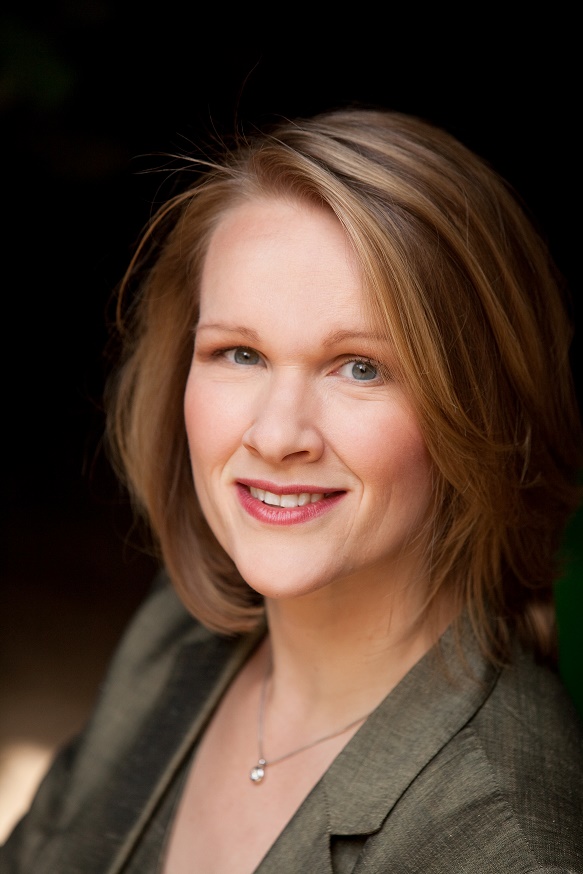
Soprano Joanne Lunn (photo: Andrew Redpath)

Soprano Joanne Lunn (photo: Andrew Redpath)

2-What is the best thing or worst thing about being a singer?

The best thing is simply making music that gives joy to many.

The worst is probably getting or fearing getting a cold.

The travelling can be tough sometimes, it all sounds very glamorous zooming off to far flung places and is often fun but on a long, busy tour you spend a lot of time away from your family, and much of that is spent waiting and travelling. Often you see little more of a place than the airport, your hotel and the concert venue!

However, that said, not all trips are like that and to spend this entire week in Toronto for these performances of Messiah is a real luxury! I love it here and Tafelmusik are fantastic. You can be rightly proud to have such an amazing orchestra in your city.

3-Who do you like to listen to or watch?

My absolute favourite album of all time is one of Jerome Kern songs called “Sure thing”.
Sylvia McNair is accompanied by Andre Previn.The easy style of music combined with their amazing level of musicianship is wonderful and you’ll find me on many a long flight/bus journey being soothed by this album!

4-What ability or skill do you wish you had, that you don’t have?

Hmmm, sounds a bit random, but to be able to ice a cake with fondant icing! This completely baffles me for some reason. I love baking and can turn out a half decent cake. I have all sorts of great and wonderful ideas for how I’ll decorate said cake, then I attempt to get a flat piece of icing smoothed down and round the sides of a cake…..well, I end up stressed and it looks like a dogs dinner!

I decided to leave our Christmas cake un-iced this year to save ruining a perfectly delicious cake.

I’m sure that a short YouTube clip and a couple of basic tools would probably solve my problem but so far for some reason (maybe laziness?!) I’ve resisted that solution to my fondant icing dilemma! Nevermind, the world will keep turning 🙂

5-When you’re just relaxing and not working what is your favourite thing to do?

Spending time with my family. I’m married with 2 young children and because I am away quite a lot there is nothing better to do than to spend time to them when I’m at home.

Baking is a real pleasure for me too (without the icing stress!) and taking walks in the beautiful Chiltern’s where we live.

Sorry, that’s 3 favourite things.

*****

Five more about singing the soprano part in Messiah with Tafelmusik

1- How does singing the soprano part in Messiah challenge you?

Despite having sung Messiah many times, it still remains my favourite Oratorio. Keeping fresh in each and every performance is therefore vital. This is a challenge to any performer when they return time and again to a familiar work.

Therefore, I aim to sing and listen along as if it’s the first time I am able to hear, declare and wonder at these great Biblical truths.

2- Is there an interpretation the Messiah that you especially admire (whether it’s a historically informed version or not, whether encountered live or recorded)?

I love it when the chorus is really involved in the drama of the piece – the Tafelmusik Chamber Choir did this particularly well the last time I sang it with them I remember.

The chorus numbers portray so many different dramatic persona that it’s great when a chorus, as a body, take on that character and sweep us all along.

Tafelmusik Chamber Choir, directed by Ivars Taurins (left foreground). Photo by Cylla von Tiedemann

3-Do you have a favourite number in the Messiah: something that you’re looking forward to hearing?

As a Christian, I particularly love singing “I know that my Redeemer Liveth” as that is the cornerstone of what I believe. Handel uses radiant E major and the simplicity of the melodic line shared between the violins and soprano reinforces the amazing declaration that Jesus Christ died and is now risen from the dead so that we may all be forgiven and have eternal life.

My “goose bumps guaranteed” moment is in the final 12 or so bars of the entire piece in the Amen. Wonderful!

4-Messiah combines theatre, music, and sacred texts. Please reflect for a moment, on where you place the emphasis among those three (drama, music & spirit) and how this informs your preparation & your performance.

I feel the emphasis must be on all three!

Jennings knitted together text from Scriptures that takes us on a Bible overview from the Old Testament prophesies to Jesus’s fulfilling them in his birth, trial, death and resurrection. Then we get the opportunity to consider our current trust in Him and future hope of His return.

Handel of course was adept to writing both oratorio and opera and could gauge the dramatic pace of a piece exceedingly well. This work is no exception.  He reports that he was so inspired and transported on reading the text Jennings delivered to him, that he sat down and wrote Messiah in just a matter of days – barely stopping to eat or drink! Imagine that.

The end result has certainly stood the test of time with performances still filling churches and concert halls around the globe. The music stands in it’s elegance and beauty, as music always does, as a servant to the words – lifting them from the page and giving them an enhanced expression than if they were merely spoken.

5-  Is there a teacher or an influence you’d care to name that you especially admire?

There is always a special respect and friendship that grows with every teacher one has and I am grateful to them all. From my first infant school music teacher, lovely Mrs Clements who fostered and nurtured my innate love of music, through to the 4 voice teachers I’ve had so far.

My current teacher is Julie Kennard and she is totally brilliant. Her lessons are encouraging on a human level, for she takes time to be interested in you and inspiring vocally as she teaches solid technique so clearly and encourages musicality that one finds something new in ones own voice pretty much each lesson.

click for further information

I’d certainly recommend her to anyone who is hoping to study in England!

*****

Joanne Lunn joins conductor Ivars Taurins, Tafelmusik Baroque Orchestra & Chorus, and soloists Mary-Ellen Nesi, Rufus Müller, and Nathaniel Watson for performances of Handel’s Messiah Dec 16-20.

Posted in Interviews, Music and musicology | Tagged , , , | 1 Comment

2 Natural experiments with audience

Every performance is an experiment, or so said Joyce Wilkinson, a wonderful professor I encountered at OISE a number of years ago.  Performance is a kind of proposition (and you can take that both ways). When you think about that, you recognize that the discourse of art is not the clear language of safety equipment. Everything before you is hypothetical, as in a series of thoughts that depend on a hypothesis. “If this, then that”.

And yet many of the premises of our experiments are unexamined by and large. There are assumptions that can be challenged because they are not automatic, oh no.

Two recent hypothetical encounters –that is, performance situations – remind me of this with wonderful clarity.

Instance #1 was written up a couple of days ago, namely Electric Messiah. At the time I remarked about the ambiguities of their performance vis a vis the distinction between performer and audience, in their replication of a flash mob. We’ve seen this on youtube, where a bunch of people are suddenly in the midst of something resembling a crowd, but in fact the spontaneity we see is scripted. And so, while people walked about the space, singing snatches from the Hallelujah Chorus –muttering or whispering or even barking “Hallelujah” at people around them—it was not what it resembled. In a perfect world people would express their joy spontaneously, would suddenly shout hallelujah or hosanna or WOW GOD YOU’re COOL, because of course they might also say “wow God you piss me off” or “why are you allowing kids to get cancer, allowing the bombs to fall from the sky…etc” Who knows what a real spontaneous display of spirit might look like. But I guess I resent the imitation of something spontaneous when it’s actually fake. Does it break my heart or am i confronted with a kind of mirror that makes me suddenly more agnostic, less willing to make the kinds of professions of faith i wish i were capable of making. No offense to Soundstreams, but i think it’s a kind of critique if a performance makes someone (ME!) more agnostic and less capable of being spiritual.

Or maybe it’s the Drake that hits me that way, the manifest equity and clever investment weighing down the west end of the city..?  I find myself gagging on the fakeness in this part of town, so maybe i shouldn’t hold it against Soundstreams.

As I stood there in the Electric Messiah space, with these people circling around playing spontaneous I was sorely tempted to bark back, to do a real spontaneous unrehearsed hallelujah in their faces, to throw a handelian monkey-wrench into their pseudo-authentic performance. Am I mad or insane to think that a flashmob resembles something madly real and beautiful? It’s a fantasy that people really step forward out of their banal lives and begin to sing.

But it happens, as instance #2 might illustrate, although actually it’s there in #1, in my response. The artificial segregation between audience and performer is at least part of it. We are conditioned to be silent between movements even though this is counter-intuitive and lately a tendency being resisted and countervailed (for instance, at the Toronto Symphony lately).

We learn to be quiet. Before we were conditioned to be such sleep-walkers, such docile sheep, humans were more in touch with their impulses. They would cry out during performance, as Dr Johnson famously reported, although we’re now better trained to stifle our voices.

Tonight I was playing the piano at a Christmas Party, a fun occasion. At one point a young child approached the piano. Although his dad would have stopped him I encouraged him to come play, and play he did.child_italiandept

We get trapped by our sophistication. No one wants to show that they aren’t competent. But before we discover and internalize all those criteria for conformity, before we are taught to be paralyzed in fear, we are more likely to emulate this charming young fellow.

There’s an ideal response described by Nietzsche at one point in The Birth of Tragedy when he talks about the chorus as a kind of extension of the crowd. I think that the Maenads are the ideal in a sense, and not one that most performers would care to invoke, given the way that one ended up. If we think of some of these impulses as continua, as polarities, one extreme might be enlightenment (Apollonian) , the other, embracing our animalistic nature (Dionysian). The lad is a gentler form of the anarchy lying in wait. This is an element in art that rarely rears its head in the realm of high art: and that’s too bad. As I alluded previously in writing about Tap: EX, rock music has at times been a channel for something genuine via the human id.

And excuse the pun, it remains largely untapped. Where is the nasty fearful dark side of opera? Nobody seems to want to go there.

At least not yet.

Posted in Music and musicology, Opera, Personal ruminations & essays, Psychology and perception | Leave a comment

An Electric Messiah comes to Messiahville

carla_light

Carla Huhtanen

We may as well be living in Messiahville. There are so many performances of this work in Toronto, it’s amazing that they don’t play excerpts on the organ at hockey games (but then again, there’s been so little cause for celebration maybe that’s the problem).  Is it because in a city full of churches and dwindling congregations, that there are loads of people whose slender connection to Christianity is through Charlton Heston movies and Handel?  All I know is that there are so many year after year that there’s  an implicit demand to change it up.

  • Tafelmusik offer their historically informed version next week at Koerner Hall, as well as their singalong performance led by Herr Handel, aka Ivars Taurins.
  • In 2010 the Toronto Symphony turned to Sir Andrew Davis, Conductor Laureate, for a new orchestration of the work, a version that’s to be offered again next week at Roy Thomson Hall
  • In 2013 Against The Grain (aka “AtG”) offered a version in a rock venue that was choreographed by Jennifer Nichols, and will be offered again next week at Harbourfront Centre Theatre.

So in other words next week there will be three different approaches front and centre in Toronto, to say nothing of performances in local churches.

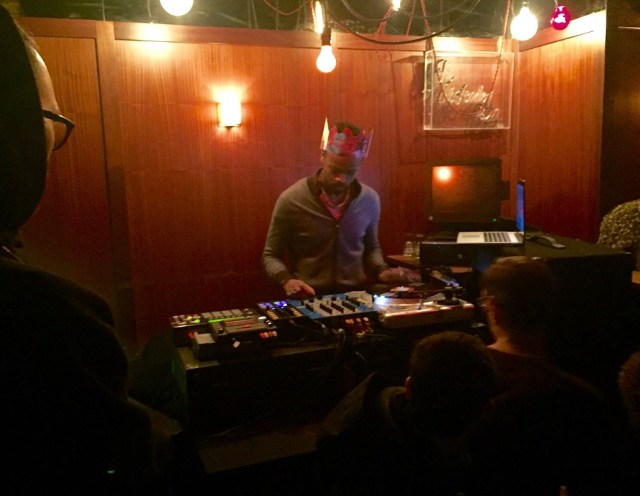
SlowPitch Sound, resident DJ at the Drake Hotel Underground

SlowPitch Sound, Ear Candy resident DJ

Tonight I saw what might be understood as an adaptation of Messiah from Soundstreams, presented as part of their “Ear Candy” series.  They used the Drake Hotel Underground for “Electric Messiah” to make the furthest departure yet from the original, at least on the local scene.   I couldn’t help seeing it as part of the Toronto ecology, likely influenced by what’s come before.

Before speaking of other Messiahs, I would simply like to contextualize it with the other piece I kept thinking of tonight, namely Tapestry’s Tap EX: Metallurgy, when a modern opera company had invited a rock band to create something new.  I had been somewhat disappointed that when handed the opportunity, members of a punk band opted for a very tame & calm sound.   Tonight, playing an adaptation of Handel, we experienced something far edgier, precisely because it was an adaptation, a kind of crossover performance incorporating some intriguing parts into a new sort of hybrid combining the old (Messiah) and new (synth, DJ, electronic… you name it!).  When crossover works you get the wisdom from the old form informing the new one.  And so we had a magical moment of a DJ playing with a vinyl chunk of Handel, sampled and teased into a totally new shape.  We had a vocalist singing “Comfort Ye” in a new language even while staying within hailing distance of the original.

Linda Hutcheon’s Theory of Adaptation

Handel served as a kind of backbone as so often happens in good adaptations.  To paraphrase Linda Hutcheon, an adaptation can work like a palimpsest (a metaphor she uses), where we see meaning through several layers.  I could experience some of the original Handel even as the new layers were painted over the old piece, that still showed through.  The two (old and new) interact delightfully.

You could see that it’s an experiment, and so there were places where they were very respectful of the Handel / biblical text, other places where their playfulness went a bit further.  I think I prefer those places where they really went to town, deconstructing Handel into bits; but after all this IS Messiahville, and so I have to think that the team preparing this adaptation were mindful that some might be offended if they went too far.  We were played with –the audience– as far as the whole classical paradigm, because you really didn’t know who was a performer and who was audience, as they imitated some of that flashmob dynamic we’ve seen before on youtube.  It recoils on itself a bit, because when you have someone walking thru the crowd saying ‘HALLELUJAH’ into people’s faces, you thereby call much of the formality into question, making those places (see photo) where the four soloists sing in concert seem repressed.  At times we had something organic, at other times it bounced back to something closer to a typical Messiah.  But it’s an experiment right?  Overall, lots of fun and many moments of great beauty.  I recall sharing a quiet giggle with the person beside me, recognizing how the opening was being modified.  It’s one of the pleasures of the palimpsest, whereby we glimpse the original through the overlaid layers of new creation, moments of delight in the recognition, which is a great experience so long as one isn’t arriving with too many stipulations.  I know I didn’t have any.

The four soloists: Gabriel Dharmoo, Christine Duncan, Jeremy Dutcher, Carla Huhtanen

The four soloists: Gabriel Dharmoo, Christine Duncan, Jeremy Dutcher, Carla Huhtanen

As with AtG’s version, we had gone to a more popular space, had added movement (although the choreography was a relatively small part compared to what AtG gave us).  But whereas AtG gave a more or less faithful performance musically while playing with the mise-en-scene and adding movement, Soundstreams made big changes in the text and the dramaturgy.  This is really a series of fragments paraphrasing many of the best-known solos and a few of the key choruses.  Many of my favourite numbers are missing, because one can only cover so much in the hour of this very elaborate deconstruction; no ‘Glory to God’ with the angelic soprano, no ‘Lift up your heads’,  and no Part III! Perhaps the biggest change they made was in handing Handel to a very different sort of orchestra.   We had guitars and synths and even so Handel was still discernible.  At times the vocalists – Gabriel Dharmoo, Christine Duncan, Jeremy Dutcher, and Carla Huhtanen –sang alone, sometimes together.  There were passages of varying fidelity to the original, and I have to say that I worry that my usage sounds pejorative, when I really don’t mean to imply that there’s anything wrong with a broad divergence from the text.  We had some mysterious moves from dancer Lybido.  It was a collaborative effort, although some, such as SlowPitch Sound, Ear Candy’s resident DJ, were at times front and centre in that process, while others were more self-effacing.  John Gzowski’s guitar was a prominent contributor at times, although I must also acknowledge Doug Van Nort’s electronics, the Electroacoustic Orchestra of York University, the aforementioned SlowPitch Sound (DJ) and curator Kyle Brenders.  I wonder who did what in this “mix” (the word has at least 2 meanings), not forgetting also the input from dramaturg Ashlie Corcoran, who –in such a new creation—might have functioned as a kind of director.

Jeremy Dutcher sings "Ev'ry Valley" under the watchful eye of Kyle Brenders at the controls.

Jeremy Dutcher sings “Ev’ry Valley” under the watchful eye of Kyle Brenders at the controls.

Suffice it to say that I will say what I always say, as I did after most Tapestry shows, as I did after Bicycle Opera shows, or after most AtG shows: that this is another of those experiments that must continue, and hopefully go further next time.

Next week?  Choose your Messiah..!

Posted in Music and musicology, Opera, Popular music & culture, Reviews | Tagged , , , , , | 4 Comments

All Tchaikovsky TSO: cause for celebration

Tonight the Toronto Symphony played an all-Tchaikovsky program to a full house at Roy Thomson Hall, and the TSO make it feel like a genuine occasion. The audience loved the performances, first a concerto, then a symphony. And afterwards we were treated to cake & coffee to celebrate Peter Oundjian’s upcoming 60th birthday. The orchestra played happy birthday (and some of us sang along) to the conductor who quipped that now he won’t have to dye his hair.

Who knew?

cake_coffee_TSO

As yummy as it looks (thanks TSO!!)

The internet tells me his real birthday is on the 21st, which makes him a Sagitarrius, a great sign for a leader. Tonight Oundjian was his usual fascinating self. In addition to conducting, he gave a talk about audience behaviour, giving us a verbal entr’acte ostensibly to fill the time while the ensemble’s seating was radically reconfigured between the two works on the program, but keeping us spellbound the whole time.

Why are audiences now expected to keep silent between movements of a symphony or concerto? At one time people did everything but keep quiet, whether talking or clapping or calling for encores, or transacting business. And this crowd seemed to inspire Oundjian’s brief discourse on the topic, erupting between movements of the concerto and the symphony, as they sometimes do. And it was okay, because the TSO is far less pretentious than it was, letting their hair down. Jeff Melanson came out at the beginning –as he often does—to introduce the concert, informally riffing off an error on the PA (who had announced Melanson, only to have the acting concert-master appear instead), introducing himself as the acting concert-master. The TSO–meaning Melanson & Oundjian in particular– are doing a masterful job of breaking down barriers to popular acceptance such as those strictures on audience behaviour.

And then there was the concert, which was the actual reason for my headline. I had expected to like Jonathan Crow’s performance of the Tchaikovsky violin concerto, and he didn’t disappoint, but I had not expected to be so completely bowled over by the symphony that followed.

There’s great value in putting a concertmaster into the role of soloist. You get to know the sound & style of your concertmaster. Your orchestra’s relationship to their concertmaster is grown & enhanced by such opportunities to hear his distinctive sound and by working with him in this way. And of course there’s also his good performance which might be the best reason of all. The fact Oundjian is a violinist likely helped in this big powerful work, the orchestra often entering into a dialogue with the soloist, seemingly without any distress. Crow negotiated the challenges of the concerto with ease, his singing tone filling the hall, giving us an exuberant performance. I am hoping to see more solos from the TSO concertmaster in years to come.

The other big item on the program is a work that the TSO will be taking with them on their upcoming tour in the USA, and that they played three times this week, namely the 6th Symphony of Tchaikovsky. I have to think that Oundjian sees this as the TSO’s calling card, which might explain why they sounded so good. While I love this symphony very much, the performance exceeded expectations.

The first three movements were taken at a bold pace, all three faster than what I’d consider usual, but this is what I prefer for anything that might be called romantic (thinking of composers such as Wagner or Mahler). The challenge when you go faster of course, is that it becomes harder for the instrumentalists to play some parts, harder to keep the ensemble together, and harder to be as expressive. That they pulled it off –brisk, clean, precise, and well articulated—led me to feel exhilarated after the third movement. Entering the last movement I was spontaneously tearing up all through the last movement, overwhelmed by what they’d played, by how much they had achieved. No I wasn’t thinking about the tour, just caught up in Tchaikovsky’s music and lost in thoughts about the composer’s life story, and what this symphony might mean, coming as it did at the end of his life. The TSO were particularly eloquent in the last movement, Oundjian offering a more expansive reading at this point, as though reflecting back on what came before (in the symphony, or in the composer’s life).

It’s very exciting to see how tight they’re playing right now, with a good combination of commitment yet relaxation. This wonderful performance –the best I’ve heard from the TSO in literally decades—is a great omen, and at the very least a lovely birthday present from the TSO to their leader.

Posted in Music and musicology, Reviews | Tagged , , , | 1 Comment

Sondra Radvanovsky: Beneath The Lights Of Home

There’s a song Deanna Durbin once sang that seemed particularly apt tonight as one of the encores coming after Sondra Radvanovsky’s recital at Koerner Hall with Anthony Manoli piano.

I can see the lights of home
Shining brightly o’er the foam,
Beckon to me while I roam
Away from lights of home.

I can see somebody there,
Loving eyes and silver hair,
I can see her kneel in prayer
Beneath the lights of home.

In that little old sleepy town,
Nothing happens when the sun goes down,
Not a thing but moonbeams run around,
In a starry dome.

Turn the hands of time for me,
Let me live my memory,
Once again I long to be
Beneath the lights of home

Whether or not there was anyone in the audience with silver hair, the song sums up the experience for me, of a big star who ventures abroad, and then comes back to her quieter resting place between engagements.   The Greater Toronto Area is now her home.  Sondra was completely in her element from the beginning, seeming very much at ease at Koerner Hall, and apparently here in Toronto.

As an intelligent artist seeking to create meaning in her recitals rather than arbitrarily picking songs or arias to sing, there’s a logic to this program, a new one that was given its first outing in the recital tonight.

  • Vivaldi: “Sposa son disprezzata”
  • Three Bellini songs
  • Four Richard Strauss songs
    (intermission)
  • Three Liszt songs
  • Six Barber songs
  • Giordano: “La Mamma Morta”

I don’t know the logic for the opening aria other than its excellence, a great beginning.  The Bellini songs connect us to a composer Sondra sings –Norma at least—and with whom she seems very comfortable.  The Strauss songs, we were told, were a first venture into such rep (other than a performance of the “Four Last Songs”) at the instigation of Manoli her collaborator, although one wonders if this signals a new direction vocally (a Chrysothemis or a Marschallin in her future?).  After intermission we heard three songs in French that Sondra would associate with Canada –a country where some people speak French—followed by a set of songs by Samuel Barber to honour her American roots.  There’s a deeper link, we were told –and you must understand how relaxed Sondra felt to tell such a story—as she described her first meeting with Leontyne Price, the woman for whom these songs were written, even as she calmly took up the mantle as Price’s successor.   The closing aria raised the stakes for the four encores to follow, namely The Song to the Moon from Rusalka, the aforementioned Deanna Durbin song, “Pace, pace mio Dio” from La Forza del Destino and finally “Oh mio babbino caro” from Gianni Schicchi. 

I am sketching the basic facts, rather than reviewing an event that’s one of the highlights of my year.   I am reminded of Sondra’s recital for Toronto Summer Music in August 2014, that seems to be an earlier stage in this burgeoning love affair with her local fans, evidently settling in for awhile here in Southern Ontario.  At that time we had a similar structure, including a part of the concert alluding to her father, who died in 2011.

Soprano Sondra Radvanovsky

The emotions on this occasion were at times every bit as transparent.  The reason the song I mention above epitomizes the event is because Koerner Hall seemed transformed into a colossal living room.  Sondra was as vulnerable with us as if she knew each of us personally.  And yet it was still a performance, her deportment and vocalism carefully matched to the material.  The Vivaldi aria included remarkable elaborations in the da capo, in a piece I wish I knew better.  The Bellini songs were given a flamboyant reading.  In short order, the audience began to applaud after every song, and why not after all?

Richard Strauss supposedly represents a new direction for Sondra (who took these songs on “at gunpoint” Manoli quipped), and I think it was evident, as she began the first song (“Allerseelen”) quite carefully, compared to the remainder of the program.  It may be that the songs are still new to her, that she’s still finding her way –as she admitted she has been swamped with a huge workload and so apologized that she had not memorized the songs—but it was only in that first one that there was anything seemingly tentative.  I’m not sure that there’s any real difference in Strauss’s writing or if it’s a perception (and therefore in the singer’s head), but the last three Strauss songs showed off her instrument gloriously, particularly when she floated notes using her upper register, something she does better than anyone in the world.  Her pianissimos are magical, whether in German, French, Italian or English.  There is something fresh in her approach that put me in mind of Placido Domingo, thinking of the sense of an adventurous crossover, as when he first sang Wagner, the wisdom of someone versed in another style trying something different. I believe that’s because Sondra is singing this without reference to how anyone else does it.

The Liszt songs that followed intermission – in her second and even more revealing gown—were for me one of the highlights of the evening.  I couldn’t help noticing a kind of connection to bel canto, recalling that theorists have observed Chopin’s admiration & emulation of bel canto arias.  Here too we were mostly in the presence of accompaniments staying mostly on the same harmony (although the second, “Enfant, si j’etais roi” included challenging octave passages Manoli executed impressively) allowing vocalization resembling cadenzas flying up and down the singer’s range.  Sondra’s body language at this point was stunningly relaxed, her face wearing a smile for much of this delightful set.

The arias in the last part of the program & encores took us to another version of Sondra’s voice. This is a bright artist who knows how to act & sing, meaning that every time she undertakes one of these arias, she has the wherewithal to make something slightly different of it.  I recall that last year, her encores also included the Forza & Schicchi arias, done quite differently from tonight, even as I have to admit they were glorious on both occasions.  For the Andrea Chenier aria “la mamma morta” I couldn’t help thinking that suddenly Sondra was sounding like Maria Callas: as she sometimes does.  But meaning no disrespect, she’s got everything Callas had and more.  The high notes in all the arias were big, precisely on pitch, and athletic.  I believe the evening’s singing warms her up for the fireworks at the end (and i put that in the present tense because this is the first time through this program, one that hopefully will set up many encores all over the world).

I’m glad Sondra seems to be so comfortable here at ”home”. I hope that wherever she may wander, she always finds her way back.

Posted in Music and musicology, Opera, Reviews | 4 Comments

10 Questions for John Relyea

John Relyea?  I remember hearing that one of Canada’s great singers, Gary Relyea, had a son who was making a name for himself in the USA, first at the Merola program of the San Francisco Opera and inevitably at the Metropolitan Opera.  He was still young in my mind when he stole the show in the 2008 High Definition broadcast of Berlioz’s Damnation de Faust as Mephistopheles, when it became abundantly clear that the man can sing and act. 

He came to Toronto to sing the villains – a varied series of roles —in Tales of Hoffmann c/o the Canadian Opera Company a few years ago, stunning singing and acting.  And last season he gave us another dark portrayal for the COC as Bartok’s Bluebeard.

John Relyea as Duke Bluebeard and Ekaterina Gubanova as Judith in the Canadian Opera Company production of Bluebeard’s Castle, 2015. director Robert Lepage, set and costume designer Michael Levine (Photo: Michael Cooper)

John Relyea as Duke Bluebeard and Ekaterina Gubanova as Judith in the Canadian Opera Company production of Bluebeard’s Castle, 2015. director Robert Lepage, set and costume designer Michael Levine (Photo: Michael Cooper)

Relyea is now recognized as one of the great basses in the world.  And we’re fortunate to have him back in town to share his gifts, this time in the Toronto Symphony’s Messiah later this month.  I had to ask him ten questions: five about himself and five more concerning singing about good & evil.

1) Are you more like your father or your mother?

Very tough question. I guess a bit like both. I know I definitely inherited my dad’s off the wall sense of humor. My mother and father are extremely unique, and pretty hard to duplicate!

2) What is the best thing about being a singer?

I think the best moments are those when you get into ‘the zone’ on stage.. being in the moment, living the role, while the voice finds its most natural sound without having to look for it. These are moments that always stay with me.

3) Who do you like to listen to or watch?

I will watch just about any great musician – singer or otherwise.. Since I tend to get my fair share of opera.

I tend to listen to other types of music in my free time. I was just rediscovering David Bowie last night. He is one of the most original artists out there. His projects have always been strong pieces of theater, music, and art all in one.

I also love the singer Cassandra Wilson. Reminds me of Nina Simone -smooth, dusky sounding voice. I also love the band the National.

4) What ability or skill do you wish you had, that you don’t have?

I wish I could write screenplays!

5) When you’re just relaxing and not working what is your favourite thing to do?

Usually something pretty mindless, in order to escape. The latest news is I have fallen for the zombie phenomenon, and am addicted to ‘The Walking Dead’ miniseries. Perhaps I will eventually move towards something a little more sophisticated…

John Relyea (photo: Shirley Suarez)

John Relyea (photo: Shirley Suarez)

*******

Five (or six?) more about the upcoming TSO Messiah.

1)   In a work such as Messiah that is informed by religious text and spirituality, please talk about how you reconcile those different aspects in your interpretation.

Looking at words in biblical text can often be cryptic, to say the least, especially for singers without a religious upbringing. It is always useful to revisit the stories in the Bible which these texts occur, to the point where we can have some strong imagination of those events, to bring the drama into the text and in turn before the audience.

John Relyea performing Messiah with the TSO in the Toronto premiere of Sir Andrew Davis's orchestration in 2010 (Photo: John Loper) Francine

John Relyea performing Messiah with the TSO in the Toronto premiere of Sir Andrew Davis’s orchestration in 2010 (Photo: John Loper)

2) You often sing of abstractions when you portray Mephistopheles, Bluebeard, the villains in Tales of Hoffmann or the bass parts in Beethoven’s 9th or Messiah. What if anything is the difference between singing about good and evil, as opposed to a real life person such as Figaro or Escamillo?

I think the best, and for me perhaps the only approach in portraying any of these parts of my repertoire consists of just being the part, playing the text. For instance, there is often ample irony within a comic libretto. Such moments are best presented with minimal affect. It’s better leave it to the audience to do the reflecting and interpretation. Usually the result is much stronger, especially in comedy. So I suppose whether playing good or evil, the process of performing remains the same, so that something meaningful can happen.

3)    What is your favourite moment in Messiah?

And He Shall Feed His Flock. I think this has to be one of the most beautiful pieces of music ever written. I wouldn’t be surprised if Handel had his strongest spiritual moment writing this part.

4)  What is your next big gig?

I will be singing Zaccaria in Nabucco with the Royal Opera at Covent Garden.

5)    Do you have a favourite recorded version of Messiah?

The Neville Mariner recording.

6) Is there a teacher or an influence you’d care to name that you especially admire?

George London. To me, this was a voice and dramatic presence of the greatest level. A beautiful voice of soul-piercing blackness, and a truly visceral performer.

*******

click for further information

Let John have the last word concerning the TSO Messiah, to be presented the evenings of Tuesday through Saturday December 15-19, plus a 3:00 pm matinee Sunday December 20th.

You will love Andrew Davis’ new, bold and playful edition of Handel’s Messiah. It is a great evening, and will reopen your eyes to this legendary work.

I am really excited to share the stage with some truly great singers, the outstanding players of the TSO, and the Mendelssohn Choir!

Posted in Interviews, Music and musicology, Opera | Tagged , , | 2 Comments

L’Homme et le Ciel: worth the wait

I attended the opening of Adam Scime’s opera L’Homme et le Ciel at the Music Gallery, produced by FAWN Opera, directed by Amanda Smith and conducted by the composer. While I’ve seen two other presentations of portions from Scime’s opera –one from FAWN in April 2014, another from Bicycle Opera in their 2014 summer tour—and although there was another presentation of parts of the opera in Kitchener, also in 2014, this is the first complete presentation of the work.

Composer Adam Scime

There are several inter-woven storylines leading to this great moment for composer Scime and for Amanda Smith, FAWN’s artistic director. I say this as I try to keep it all clear in this attempt to capture a series of impressions about the event, fearing that I’ll omit something.

I want to properly acknowledge Scime’s work. His score for l’Homme is a combination of electro-acoustic music generated invisibly, and a live score for three singers and at least six players; while the program mentions piano, violin, flute/piccolo, cello and clarinet/bass clarinet there was also percussion (or was that produced when the piano wasn’t playing? I wasn’t watching closely enough to be sure). We begin very softly, with a repeated pattern that suggests we might be in minimalist territory, which is where we stay for awhile, the music soft with occasional silences to ground us in the here and now. For a piece concerned with matters of spirituality, this is not surprising, as Scime created a genuine sense of immanence with the voices & gentle sounds from his ensemble, at times very carefully rooting us in the moment.

Yet at other times the sonic space was saturated, voices coming strongly at us at the same time as complex textures overlaid one another, an effect calling to mind layers of fabric or splattered paint (thinking of Jackson Pollock), the layers transparent rather than opaque, but the complexity wonderfully significant. This is not a modernist complexity, even if at times we seemed to be in an atonal world, whereas at other times I heard extended chords suggesting something late-romantic, coherent and harmonic.

Scime is setting a libretto by Ian Koiter, that is in French based on a 2nd century story. While I understand French, the effect of the opera in another language creates some distance, some additional artificiality. We are moving away from realism and in the direction of something more symbolic, more purely abstract than what one usually sees on stage or screen.

Is the story as complex as the music that we hear? Most certainly.

Or to put it another way, the score is an eloquent answer to the most fundamental question to put to any of the composers whose operas I’ve encountered recently, namely “why tell this story via opera”? Often I can’t help thinking that composers are attracted to opera because it’s a big money prestigious field, a place to wield power and influence. At a certain point in their careers it’s inevitable that they’ll try to write an opera. As a person raised on opera as though it were mother’s milk, I’ve always distinguished between opera composers and those who don’t really get opera, especially when one senses that there’s no sense of attachment (let alone love & respect) to (for) the form. Scime’s score can’t be told any other way than in the operatic medium, and as such makes everyone –singers, musicians, director—look good in the process. A good opera should be like an argument advocating for the medium, making you want to hear more operas, and that’s exactly what I felt watching Scime’s opera.

This is not an opera about clarity but rather about unanswerable questions. I felt confusion, and by that I don’t mean an alienation from the work, but rather a purposeful fog created in the mind of the protagonist Hermas. This is an opera about a spiritual journey, as Hermas ponders and shows us his attempts to make sense of what he has experienced.

The one question I might have for Scime is to wonder myself whether his own journey and that of Hermas is over. The work ends with questions left in the air. Even though the spiritual text Scime has set is old, the setting is quite modern in its willingness to portray the psychology of Hermas’ struggle, to avoid the simple closure one gets from romantic works such as Parsifal or Lohengrin, where the allegorical is trumped by the need to tell a story with a clear ending even if such closure violates the higher purpose. Scime and Smith make no such surrender to a simplistic impulse. While I don’t think it becomes better if you make it easier for the audience –by supplying a bit more closure at the end—I couldn’t help wondering if there’s more here, more to the scenario and more music that Scime might yet bring to light.

Alex Dobson is the latest incarnation of Hermas, a portrayal showing us layers of wonderment & discovery, while employing that luscious instrument that we’ve grown to love & admire over the years. Larissa Koniuk, who is the only person I’ve seen undertake the role of Rhoda, seems very comfortable with Scime’s demands. Like Dobson, Koniuk has some big singing, at times competing with the ensemble’s fortissimo. The dense layers of sound & meaning cohere beautifully, both voices soaring through clearly. Adanya Dunn in the smaller role of The Messenger contributed to the sense of mystery, both in Hermas’s journey and in our own experience of the opera.

There have been several small opera companies in the Toronto area employing a variety of strategies to grow, to find repertoire, to make themselves stand out.  FAWN, through the vision of Amanda Smith their artistic director, have taken a very singular path, building this opera even though it has taken the past couple of years.  It was worth the wait.

L’Homme et le Ciel will be presented again Friday Dec 4th at the Music Gallery. I hope to hear it again someday.

Previously:

Posted in Music and musicology, Opera, Reviews | Tagged , , , , | Leave a comment

Puppetmongers presents Cinderella in Muddy York

Puppetmongers presents Cinderella in Muddy York
December 26, 2015 –January 1, 2016 at Tarragon Extraspace
Created and performed by Ann Powell and David Powell, Directed by Sue Miner

Toronto, November 30, 2015- Puppetmongers celebrates its 26th anniversary of delightful winter holiday performances this season with the return of its twice Dora-nominated family favourite, Cinderella in Muddy York, created by Puppetmongers’ Co-Artistic Directors (and brother and sister) Ann and David Powell, with the direction of Sue Miner.  Cinderella in Muddy York runs at Tarragon Theatre’s Extraspace with daily matinees from December 26, 2015 to January 1, 2016, for those aged 5 to 105.

A whimsical version of Toronto history that will tickle the funny bones of adults and children alike, Cinderella in Muddy York is the classic tale reset in 1834 Upper Canada.  Puppetmongers’ Cinderella is the tale of young Ella, a kind and capable young woman born and raised in Muddy York, whose good nature is imposed upon by her new step-family who have come from England with ideas about their own privilege, and haven’t a clue how to cope in this new environment.  When an invitation arrives from Government House, inviting them all to a ball in honour of the city’s renaming to Toronto, hopes are high of meeting the eligible bachelor son of the Lieutenant-Governor.   True to the classic fairytale, with a little magic Cinderella gets to the Ball, where she and Mr. Princely Charming are drawn to each other through their shared curiosity and excitement about life in this “new” land.

This witty and acclaimed work is ingeniously staged with rod-marionettes, inventive special effects and, and a traditional marionette theatre that is transformed to create scenes evoking the wilderness, settler life and early Canadian society.  This is a delightful way to learn about Canadian history, and at the end, children often ask, “Did this really happen here?”  An added pleasure for children after a Puppetmongers performance in the intimate setting of the Extraspace, is the opportunity to meet the puppet characters onstage and their puppeteers, Ann and David.

“…true masters of the art of puppetry.  Their work is elegant, detailed, loving and lovely.  It’s all done with wit and economy, and adults enjoy it every bit as much as younger audience members.” – Richard Ouzounian, Toronto Star

“Go to it immediately!” – Lynn Slotkin, CBC Radio

The winter holiday performances by the Puppetmongers’ brother and sister team Ann and David Powell have become a delightful tradition for families and theatre-goers in Toronto these last two and a half decades, although Puppetmongers Theatre has been bewitching audiences for 41 years with their extraordinary and innovative creations.  At the forefront of puppetry arts in Canada, Puppetmongers have won numerous awards including four UNIMA-USA Citations for Excellence in the Art of Puppetry, the Presidents Award from the Puppeteers of America, and many Dora and Chalmers nominations.  They have toured extensively in North America, Europe and the Middle East.

Director Sue Miner is the co-artistic director of Pea Green Theatre Group with Mark Brownell for which she has received numerous Dora Award nominations. She has thrice been nominated for the Pauline McGibbon Award for Direction. Some of her recent credits include The Tempest (Canadian Stage) and Celine Speaks (Toronto Fringe).

Puppetmongers presents Cinderella in Muddy York More info: http://www.puppetmongers.com or 416 469 3555
Created and performed by Ann Powell and David Powell, Directed by Sue Miner.

Tarragon Theatre Extraspace, 30 Bridgman Ave., Dec 26, 2015 – Jan 1, 2016; Suitable for ages 5 to 105
Performances: Daily matinees at 2:30pm
Tickets: $25 adults; $20 child/senior/student.  Special Family 4 Pack for $75.  Group rates are also available.
Tarragon Theatre Box Office: 416 531 1827
https://tickets.tarragontheatre.com/TheatreManager/1/tmEvent/tmEvent439.html
More info: http://www.puppetmongers.com or 416 469 3555

 “Press releases and announcements” are presented verbatim without comment

Posted in Press Releases and Announcements | Leave a comment

Vocalis 2 in the Great Hall

click logo for more info

There are so many opportunities to hear great music in this city that the one I chose tonight could easily have slipped under the radar.  There’s so much going on at the Faculty of Music, check out their schedule (click the logo at the right), where –alongside the talented students—you might discover a Sondra Radvanovsky master class or a Barbara Hannigan concert.  The calibre they offer is extraordinary.

“Vocalis” is a new series at the University of Toronto. Although i didn’t see her name in the programme, the series is the brainchild of Wendy Nielsen, who is head of voice at the U of T’s Faculty of Music. Tonight I heard the second in the series, Masters and DMA singers & collaborative pianists, plus a guest from the Opera Programme. The next concert in the series will take these talented young artists to the Tranzac Club to sing something more like cabaret rather than pure classical music. While I didn’t hear anyone use this word I shall invoke it all the same, namely “multi-disciplinary”. It’s a key concept for the past decade or more in the humanities, as everyone ventures beyond their own narrow turf in the interest of learning, breadth and authenticity.

But tonight was operatic, a series of semi-staged excerpts by Mozart, Britten, Tchaikovsky, Richard Strauss and Rossini. The singing was mostly good and occasionally great.

One reason I couldn’t miss this evening’s performances was evident after the intermission, as Margarete von Vaight sang most of the role of Ariadne, including both big arias and with very little rest time in between, a performance sounding astonishingly polished & professional for a free concert (lucky us!).   I’m partial to this opera so I wouldn’t miss a chance to hear even part of it. Max van Wyck’s Harlequin, and the trio of Arianna Ervin, Anna Sharpe and Stephanie Higgins as respectively, Naiad, Dryad and Echo were quite stylish musically, in collaboration with pianist Narmina Efendiyeva.

After the Straussian intensity with Ariadne, Alyssa DiMarco and Clarisse Tonigussi gave us something lighter in Rossini’s cat duet, complete with tails & ears.

Before intermission it was mostly Mozart although we enjoyed brief interludes, beginning with Britten, Rebecca Genge singing Tytania’s “Come now a roundel” with pianist Holly Kroeker and Dann Mitton singing Gremin’s aria with Efendiyeva. The Figaro excerpts featured “Sull’aria” with June Ekker blending beautifully with Claudianne Moreau as Countess & Susanna, with pianist Andrea Van Pelt, and an energetic bit of the Act II finale with Sonya Harper Nybe’s Countess, Janelle Lapalme’s Susanna, Peter Warren’s Count, with Melisande Sinsoulier moving things nicely from the piano.

We also heard two excerpts from La Clemenza di Tito, beginning with “Come ti piace imponi” featuring Kari Abraham as Vitellia opposite Meghan Symon’s Sesto, with pianist Braden Young. The tuneful “ah perdona al primo affetto” followed, featuring Kristina Alexander’s Annio, Maeve Palmer’s Serilia, with pianist Amy Seulky Lee.

SSorry i can't indentify the singers & pianists (who are named in the piece above), except for Wendy Nielsen who is in the foreground at the left, proud of her students at the end of a successful concert.

Sorry i can’t indentify the singers & pianists (who are named above), except for Wendy Nielsen who is in the foreground at the left, proud of her students at the end of a successful concert.

Posted in Music and musicology, Opera, University life | 1 Comment