10 Questions for Brett Polegato

Baritone Brett Polegato as Rossini’s Figaro

Brett Polegato is a baritone with a beautiful voice.

He’s a capable interpreter of songs, for example, in the recent Canadian Art Song Project concert:

I was more delighted by Brett Polegato’s loveliness of tone –one of the nicest baritones to be found in this country—than the actual songs. “ (from March 2014)

But the voice is always at the service of dramatic intelligence, for example as Don Giovanni with the Canadian Opera Company:

We get a Don for baby boomers: an aging lover, visibly past it, possibly close to the end. Instead of the usual visit from the Stone Guest, come to take the Don to hell for his crimes, his various victims gang up on him. Masetto is disguised as the slain Commendatore. We never see the death certificate, so we don’t know the cause of death, but this Don likely dies from a combination of fright, guilt, and perhaps sexual exhaustion (reminiscent of Strauss’s orchestral Don). This Don, portrayed by Brett Polegato, transgresses Da Ponte’s libretto from the very first glimpse. As with the Eugene Onegin he gave us last season, this is a thoughtful and world-weary lover.” (autumn 2008)

And more recently we saw that in a star-turn in the COC’s Cenerentola:

While prettier of voice than DiStefano, Brett Polegato’s Dandini gave DiStefano a run for the money. Polegato had a voice that’s apt for bel canto while being one of the comic stars of the performance.” (April 2011)

There’s a comprehensive bio on his website that gives you some idea of his range, including such highlights as Dmitri Tcherniakov’s Bolshoi Wozzeck or Pelléas at the Paris Opera. While we’ve heard him in Toronto singing Messiah with the Toronto Symphony, this time he’ll be singing with Tafelmusik under Ivars Taurins in Koerner Hall. After this engagement, Polegato is headed to England to sing Mahler’s “Lieder eines fahrenden gesellen” in the New Year.

But first, Handel in Toronto. In anticipation of this Christmas treat, I ask Polegato ten questions: five about himself, and five more about the project.
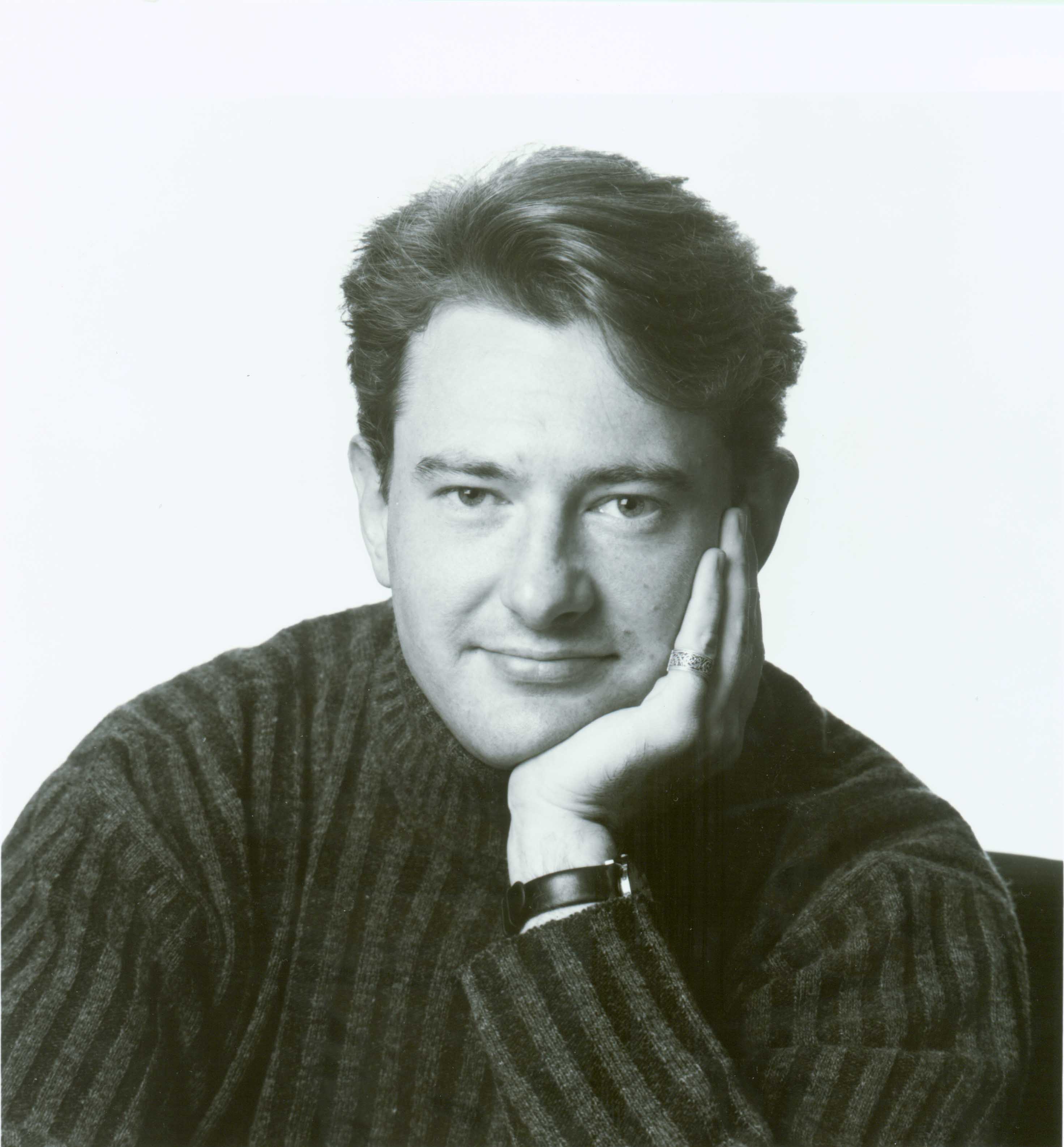
Baritone Brett Polegato

Baritone Brett Polegato

1-Are you more like your father or your mother?

I think I’m pretty evenly split between the two. Although, to be honest, I can only go on what people say about my mother as I was 10 when she passed away. I think I have her sense of humour and her desire for creativity. But I definitely have my father’s temper (which I try to control!) and his bravado (after all, he was Italian through and through).

2-What is the best thing or worst thing about being a singer?

For me the greatest thing about being a singer is that you never entirely figure things out – not your technique, not the music, not the poetry. You can spend your entire career / life striving to understand all three things, but at the end of the day, there is always more to discover about you and about the art form. The worst thing about being a singer is, hands down, the time away from family and friends. Fortunately, you learn to make lasting friendships wherever you go and that helps to see you through the times you are on the road.

3-Who do you like to listen to or watch?

To be honest, I never listen to music when I’m at home. For me, music is not a passive event so I find it hard to have it as background music – I always get caught up in it, regardless of what it is! This is why I hate music in cafes, shops and restaurants. And while I like to watch TV, I am much more of a reader. I have well over 2,000 books in my TBR pile (to be read) and nothing relaxes me more than sitting by the fireplace at home, in a quite house, with a book.

4-What ability or skill do you wish you had, that you don’t have?

I wish I could write. While I am rarely intimidated by people, I confess to getting tongue-tied around authors. To be able to create worlds and populate them with interesting characters is, for me, an unbelievable gift. There is great joy than being moved by words.

5-When you’re just relaxing and not working what is your favourite thing to do?

See above.
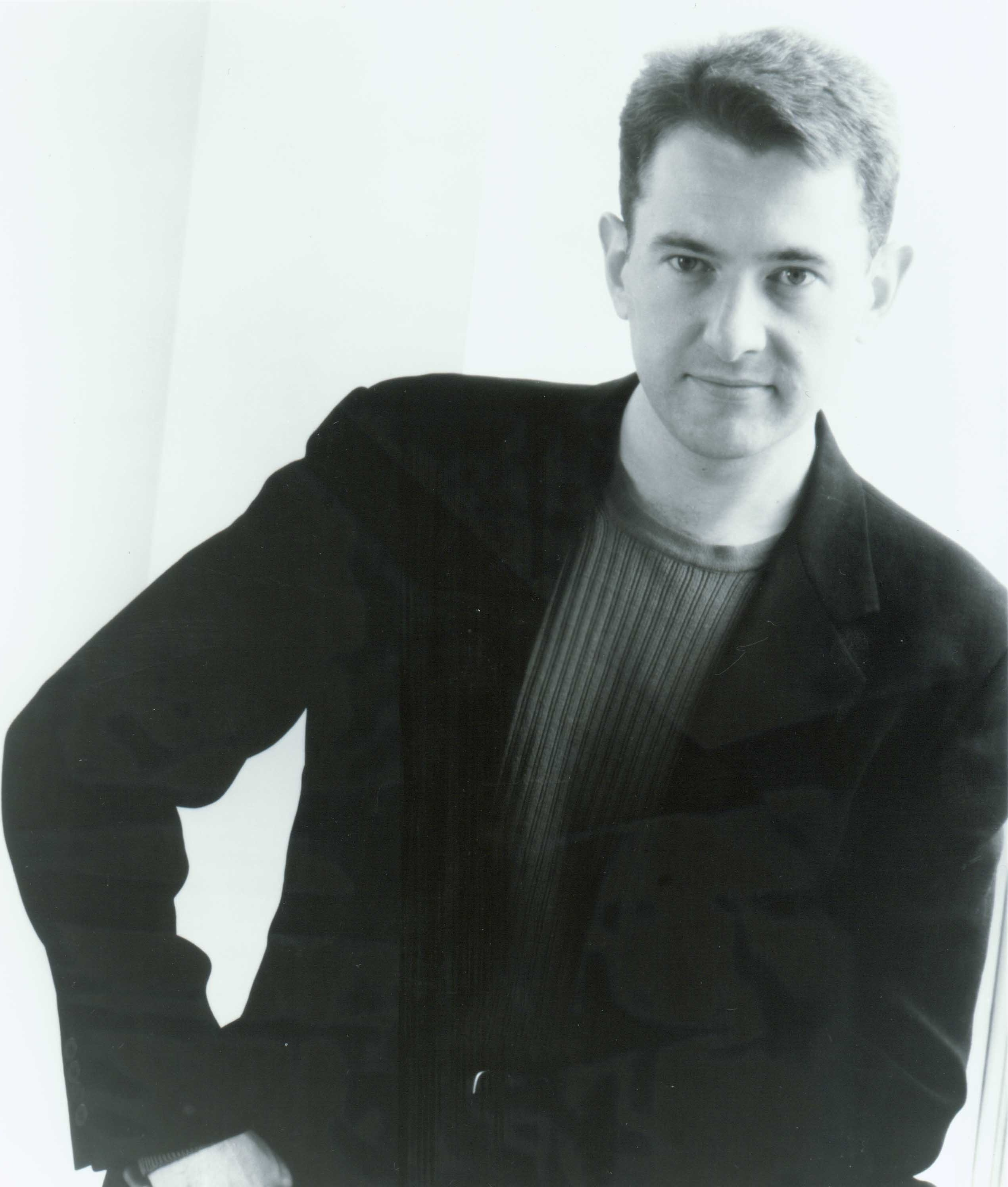
Baritone Brett Polegato

Baritone Brett Polegato

*******

Five more about undertaking Messiah with Tafelmusik

1-Talk for a moment about the challenges of Handel’s Messiah, especially for the baritone.

Messiah is, hands down, the piece I have lived with the most in my career – a career which now spans 22 years. I have sung every version of every aria – include the Mozart transcription – and have recorded the work three times. Especially for the baritone, I think the work makes exceptional demands. Clearly, the arias were not written for the same singer! But for me, it is so word-driven that it helps inform my technique. It has a phenomenal range – two octaves alone in “The Trumpet Shall Sound” – and requires the singer to be both declamatory and reflective; to execute dazzling runs and beautifully sustained and lyrical passages. I have sung well over 100 performances in my lifetime and I never get tired of singing it. While this is true of all pieces I perform, I remind myself at each performance of this piece ESPECIALLY that there is someone who is hearing the work for the first time. And someone who is hearing it for the last. And in both cases, I want them to remember it and be moved by what I do.

2-Please tell us about working with Ivars Taurins as Handel, and how he is in rehearsal and in preparation.

Ivars brings such passion and commitment to this piece that he is a joy to work with. I have never seen him go on autopilot in a performance; he gives his all and inspires us to do the same. As a soloist, I feel he respectfully gives me room to be myself and to experiment. And he does all of this with joy and a sense of humour. But make no mistake: he has the utmost respect for Messiah and expects all involved to share that respect.

3-What’s your favourite moment in Messiah?

Hands down, my favourite moment is the final “Amen.” I love how it starts as this lone voice after the extroverted praise of the section before, and then builds to this tremendous climax at the end. It always has me grinning from ear to ear.

4-Messiah can be seen as theatre, as music, and for some so religiously inspired as to be genuinely sacred. Where do you place the emphasis among those three (drama, music & spirit) in preparation & in performance?

While I always try to find the drama and the music in every piece I sing, when I sing concert works I am keenly aware of the spiritual force inherent in so many of them. And when performed at Christmas, Messiah carries a special message for many concert goers. I strive to keep that at the forefront of my performance. The words are incredibly uplifting and – especially in something like “The Trumpet Shall Sound” – impart a sense of hope and peace especially in these troubled times. I have been given a great opportunity and responsibility as a performer and I try to make them count! 

5- Is there a teacher or an influence you’d care to name that you especially admire?

There have been so many people who have helped and guided me along the way that there is no way to name them all. But – even 36 years later – I still think of my mother, especially at Christmas, who was the greatest woman I’ve ever known. Her life on this earth was too brief, and I’ve never stopped missing her. I try to live each day in a way that would make her proud.

*******

Tafelmusik present Handel’s Messiah December 17-20, 7:30 pm at Koerner Hall, followed by the Singalong at Massey Hall December 21st at 2 pm:
Directed by Ivars Taurins, with
Lydia Teuscher, soprano
James Laing, countertenor
Colin Balzer, tenor
Brett Polegato, baritone

Posted in Interviews, Music and musicology | 4 Comments

COC Centre Stage 2014

Tonight was the fourth public competition for membership in the Canadian Opera Company’s Studio Ensemble.

I missed the first one in 2011.

The second was held in November 2012, in the Richard Bradshaw Amphitheatre, aka the space in the upper lobby of the Four Seasons Centre, where free noon-hour concerts are held with piano.

Almost exactly a year ago tonight we come to the third such contest, christened “Centre Stage”. The event was clearly growing, upgraded to the R. Fraser Elliott Hall accompanied by the COC orchestra led by Music Director Johannes Debus, rather than piano. Where the second was a fairly serious singing contest –think opera meets American Idol—the feel of Centre Stage (2013) was decidedly gala & glitz, complete with a rendition of “That’s Entertainment” from the orchestra and Rufus Wainwright as host. The event now had an important fund-raising dimension added (although maybe it was there in year 2 but I didn’t notice).

For 2014 the COC have taken a slightly serious turn, de-emphasizing the glitz and returning to more operatic values.  Oh it’s still a fund-raiser as well as a gala competition. But instead of Rufus’s singing we had three solos from someone only announced as a special guest, namely Adrianne Pieczonka, while the judges were off comparing score-cards.

Governor General Michaëlle Jean invests Ben Heppner as a Companion of the Order of Canada at Rideau Hall in Ottawa in 2010. (Fred Chartrand/Canadian Press)

Ben Heppner was a very warm & witty host. His quip “now that’s how it’s done” after Pieczonka’s solos brought the house down. He anchored the presentation in the COC & its history, given his credibility as

  1. one of the biggest stars Canada has ever produced,
  2. coincidentally one of the greatest graduates of the Ensemble Studio and
  3. the current voice of opera on CBC radio.

I don’t see how they can improve on Heppner next year.   If they ask him to host again i don’t think anyone would be disappointed.  Nobody minded that Johnny Carson was a perennial host of the Academy Awards.

For 2014 the competition was even more concentrated, with seven finalists on the stage at the Four Seasons Centre, instead of the nine we heard last year and the ten in 2012:

  • Michelle Siemens mezzo-soprano with arias from Roberto Devereux and Le nozze di Figaro
  • Nathan Keoughan bass-baritone with arias from Il barbiere di Siviglia and Le nozze di Figaro
  • Zoe Band mezzo-soprano with arias from La clemenza di Tito and Vanessa
  • (first place) Charles Sy tenor with arias from Die Zauberflöte and L’elisir d’amore
  • (second place) Dimitri Katotakis baritone with arias from Le nozze di Figaro and Roméo et Juliette
  • (third place) Aaron Sheppard tenor with arias from Le roi d’Ys and Cosi fan tutte
  • Eliza Johnson soprano with arias from Idomeneo and Roméo et Juliette

Charles Sy was a popular winner, capturing the Audience Choice Award to go with his first prize.

Sy offers an answer to a question implicit in this competition, namely “what should i sing if i want to win?”  Some in the competition showed us their broad range, their versatility, challenging themselves in the process. My first impression of Sy, though, was simply “what a beautiful voice“.  Sy’s two arias show us what he can do, pure and simple, and what he does he does very well.  If there’s a lesson for anyone musing about what to sing at a future competition, first and foremost, figure out what repertoire shows off your voice to best advantage. This is not like one of those diving competitions where you get extra marks for “degree of difficulty”. If you’re singing something simple but singing it beautifully? I think you have a better chance of winning than if you select something off-beat or clever, no matter how brilliantly you sing it.

While I think Sy was a worthy winner, I have words of consolation to those who didn’t win, including some wonderful performances from people who came up empty. Centre Stage is a contest to select spots in the Ensemble Studio, and that means that you’re partly at the mercy of the luck of the draw. Some years there are holes in the ensemble needing to be filled, due to impending graduations from the existing Ensemble Studio. All seven singers had moments of excellence; they should all hold their heads high whatever the outcome.

Posted in Opera | 5 Comments

Maleficent’s traumas

Spoiler alert: this discussion requires me to give away a bunch of plot points, so if you haven’t seen this film & want to, don’t read this OR don’t complain if I give it all away.  

(OH AND YOU MIGHT LIKE IT A LOT)

One of the roles I play is the concerned parent figure for the kids in my life, watching children’s films to ensure they’re safely watchable.  The violence in Maleficent is a bit beyond the current little ones for whom I’m caring, so they’re not going to be allowed to see it anytime soon.  Yet someday I do hope they’re able to watch this.

There are aspects of this story that are way beyond what you’d expect in a Disney film. The brand seems to be in another reinvention, given the upcoming Star Wars installment, likely to give them a colossal boost at the box office, if not also in credibility.

This time? we revisit a story known from fairy-tales, indeed from Disney’s own canon. Sleeping Beauty was adapted in the 1950s, including a remarkable step-mother I remember fearfully from my own childhood. In that version there was no mistaking her as anything but the villainess.

But in revisiting this tale Disney give us a fairly sophisticated second look at the circumstances of the story, a rationale for the nastiness that seems so inexplicable in the story. How can we reconcile ourselves with the cruelty of Maleficent? Perhaps if there’s more to her than meets the eye, a back story and a history to justify a nasty curse.

The main character is portrayed by Angelina Jolie, a role with disturbing resonances with her real life persona. See if you see any similarities.

Maleficent is a mother figure. And Jolie is a mother figure, indeed possibly the most remarkable mother figure in the popular imagination, both as the mother of her own offspring and as an adoptive parent.

Maleficent is violated, as she is betrayed by her lover, left crippled by an act of shocking cruelty, waking up with her two wings cut off. Is it just a coincidence that Jolie endured a double mastectomy? I was devastated watching the horror of her violation in the film, and thinking about the horrible parallel to her life. I can’t help wondering if the film-makers were aware of this. We watch Maleficent cope with her emotions, and then see someone who is virtually disabled, arising from her injuries and remaking her life thereafter. I don’t believe I’ve ever seen anyone go through something like this in a children’s film.

I had to confirm for myself that I wasn’t saying something horrible that would upset people, so I googled “maleficent jolie mastectomy”, finding that Melissa Kort in Ms Magazine saw the same thing I saw. Yes of course, this is a violation, but it’s also an epic recapitulation of Jolie’s mastectomy. I know that when the parallel hit me I started crying uncontrollably. I never expected the plot of a film that is so superficially beautiful might take me to such a deep place.

And of course there’s a kind of miracle in the relationship of Aurora and Maleficent that reminds me of the comparable relationship we see in Frozen, another tale from Disney where it’s not the boy-girl pair but an unexpected relationship that is offered up as the example of true love.

This is no kids film, though, given the profound violence onscreen. I’m not comfortable letting a child see so much killing and violation. It will have to be later, when they’re a bit older.  A happy ending doesn’t compensate for so much trauma, although I feel healed by the end.

Posted in Cinema, video & DVDs, Psychology and perception | Tagged , , | Leave a comment

A fit of Christmas musick against Christmas music: Toronto Consort’s The Little Barley-Corne

Come for the rant, stay for the review.

If you’re like me, you’re conflicted about Advent, a period before Christmas. While the season of Advent isn’t quite here yet (meaning the four Sundays before Christmas, ergo, Sundays Nov 30 + Dec 7, 14 and 21) that hasn’t stopped the commercial machinery that puts Christmas music out there into stores. Perhaps you’re not yet overwhelmed, but then again maybe you haven’t been shopping. I saw crazy behaviour today on the streets, cars already packing their way into places of commerce.

Music was once for me the most innocent aspect of the season, the most direct appeal to the child in all of us, meaning, the part of me that perversely managed to remain innocent when all else around me persuaded me to be cynical and lose hope. The carols & songs of this season –both Advent & Christmas—were a direct pathway to my heart.
And of course there was a year awhile ago when something stopped clicking. It used to be that each year I could listen to each song afresh and be rejuvenated in my attitude, as though the new church year (that begins on that first Sunday of Advent) also represented my own rebirth. Like the baby Jesus I would be reborn each year with the new music.

Except that one year: something changed.

Does it happen to all of us? One year I noticed that some of the songs –even hearing them for the first time that year—didn’t quite move me as well as they had in past years. The endless cycle seemed to be broken, somehow. And so I was aware that I my capacity for magic and faith had been drained if not completely burnt out. It’s the moment when the songs stop rejuvenating you, when they’re just songs, chords, harmonies, words, angels and shepherds and sentiment that is just an attitude and no longer something genuine.

So of course when I walk into a store and hear the tunes that once were pious I am particularly enraged.  If I could do it without getting arrested, I’d start pelting merchandise at the speakers, because i find the music in stores to be something evil, something that’s stealing our innocence and perverting our children.  There’s nothing angelic about music that’s meant to stir your will to spend money, something to make even George Orwell blanch.

It’s as though my tender feelings that had once inspired me were now being mocked by the annual orgy of greed. From time to time I find a tune in the hymnal or a performance by a colleague in church or at one of the annual Messiahs will pull me out of my torpor and revivify something that’s almost gone: faith in Christmas as something more than an annual boost to the retail industry.

coming soon

And so I am especially excited to report that I just listened to something extraordinary! Toronto Consort’s The Little Barley-Corne is a CD subtitled “Christmas Revels from the Renaissance”. The music is sufficiently unfamiliar that it doesn’t sound like a Christmas CD at all. There are a couple of tunes we know from Christmas, but none of them are done in that insufferably pious way you used to find on TV Christmas specials (sorry if that dates me).

The only one I ever liked was the one where the Swedish Chef sings with Big Bird, whom he mistook for the Christmas Törkey (or something like that), and then starts to cry sentimentally when the big yellow guy gives him chocolate covered birdseed. How can you kill a bird that’s so thoughtful?

Time to change the menu!

I hope that doesn’t make you cry into your iphone (although my Swedish friends will be excused if they want to hurl abuse at me…oh well!)

But let me back up. That CD from Toronto Consort?  It transported me to another time, both historically and personally: to the time before my connection to Christmas got messed up by commercialization of the season. Can one turn back the clock? I think so. The performances are remarkable, sounding simultaneously unpretentious, yet meticulous. This doesn’t sound like the accuracy of hard-nosed scholars; there’s too much fun being had for that. It’s often syncopated and danceable, but with so much variety that you can’t stop listening. The accents are all remarkable in several languages yet these sound like people celebrating in their own tongue, a true Christmas celebration.  For now I have this music endlessly on the car CD player. It will be a long time before I can even associate the infectious rhythms with Christmas, let alone lose my sense of joy in these tunes.

And if you want to check this out in person, The Toronto Consort will be presenting a live version Dec 12-14.

Here’s the PR for the concerts:

“David Greenberg, who has been called “one of the most impassioned folk fiddlers you’ll ever hear” joins forces with the Toronto Consort to throw a fabulous Christmas party of rollicking English ballads, infectious country dances and enchanting French noels.”

Dec 12-14 at Jeanne Lamon Hall in the Trinity St –Paul’s Centre, 427 Bloor St W. Box office 416-964-6337, torontoconsort.org

They say the CD will be available at the concerts, although I think you will be able to get it –or download tracks—on the website soon.  For now, there are samples there (click the image below).

Posted in Music and musicology, Reviews, Spirituality & Religion | Tagged | 2 Comments

Beethoven, Nielsen and Mozart: TSO & Jan Lisiecki

Tonight was the last of the mini-festival of three programs / five concerts from the Toronto Symphony ostensibly featuring the music of Carl Nielsen & two of his big influences, namely Mozart & Beethoven.

It’s as though there were two parallel festivals:

  • Nielsen compositions conducted by Danish conductor Thomas Dausgaard to commemorate his 150th birthday “this season” (the anniversary falling in 2015)
  • The last three Beethoven piano concerti played by Canadian prodigy Jan Lisiecki.

Hype notwithstanding, many in the audience were clearly there to hear Lisiecki ‘s Beethoven, judging by the size of the exodus at intermission. The huge ovation afterwards encouraged an encore, and it was a Chopin nocturne.

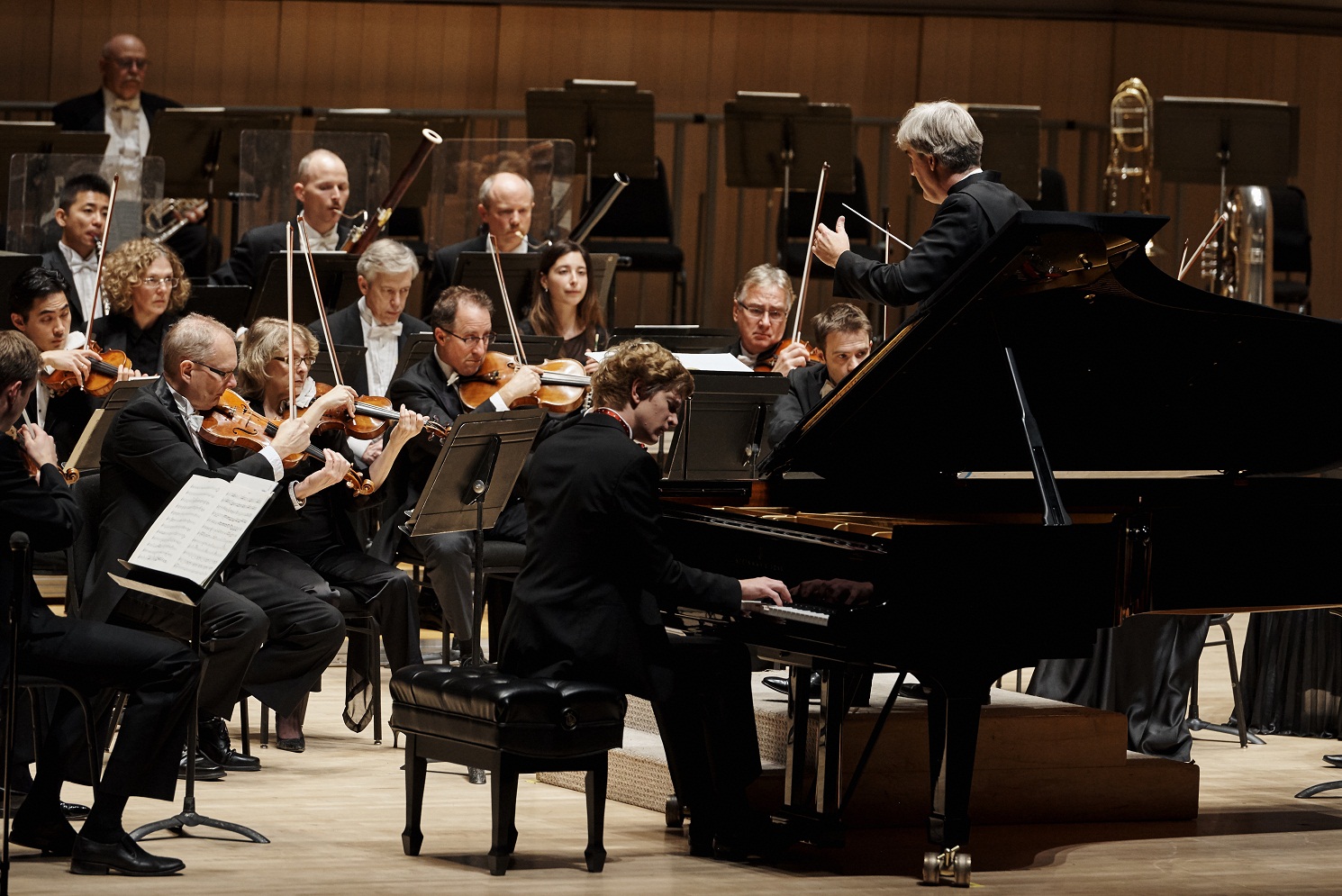
It’s funny but I was already thinking of Chopin during the concerto, namely the 5th aka the “Emperor”. Lisiecki gave us a very romantic Emperor, enlarging the dynamic range; while it’s usually from pp to ff, the quiet passages were more like three p’s (whatever that would be called), if not four. In the slow movement the tempi changed a few times, leading conductor Dausgaard a merry chase, because the solos were at times so soft that they were almost impossible to hear. I was reminded of rubati such as you’d find in the Chopin 1st concerto. With this performance I couldn’t help noticing large parallels between the two works, separated by only about twenty years in the year of composition. It’s only problematic to those who are fundamentalists (those who wouldn’t abide tampering with their precious Beethoven), as the delicacy of the reading was revelatory. I had to remind myself that Lisiecki is still very young (is he even 20 yet?), as this was a very mature, even profound probing of the depths in the Beethoven, and a legitimate approach.

Lisiecki sounded wonderfully original at the end of the second movement, in the transition leading into the last movement. The slow first utterance of the theme for the third movement is written “pp” (as I just discovered, looking it up). And I guess this is the first time I’ve ever heard it played as written(!). All those notes usually come out quite a bit louder from soloists, perhaps a mezzo-piano, and never as delicate as a true pianissimo: which is what Lisiecki gave us.

And so when the third movement began we had a true and overpowering contrast in the fortissimo solo statement of the theme that follows. And I was surprised at how quickly it was played, possibly the fastest I’ve ever heard in a live performance. When the orchestra made their entry they were ready to give pursuit, and so the whole movement was at that quick pace, light and infectiously rhythmic, up to and including a breath-taking reading of the last quicksilver runs from Lisiecki leading to the last note.

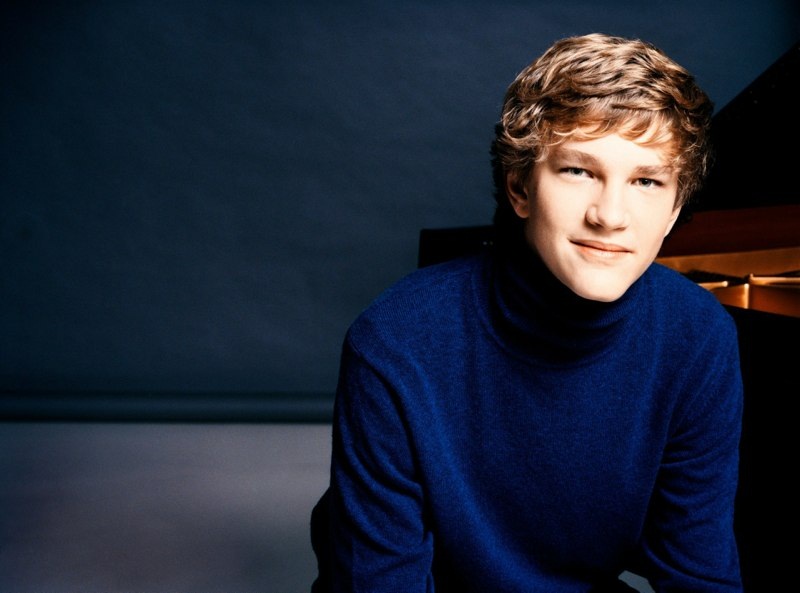
Pianist Jan Lisiecki (photo: Mathias Bothor-- DG)

Pianist Jan Lisiecki (photo: Mathias Bothor– DG)

Lisiecki is fascinating to watch, his growing maturity already in evidence. He’s not exactly a veteran but he’s been a prodigy for awhile now, as the 2009 CBC documentary “The Reluctant Prodigy” would suggest (part one | part two).

He has remarkable posture, sitting very tall with no visible effort except in a few big passages. He sits straight up even when playing and seems to have enormous strength and stamina. There are times when you can’t see that he’s playing, because he is so effortless, so relaxed at the keyboard.

Works such as the Nielsen are precisely what I want to hear from the Toronto Symphony. I recognize that the audience probably want to hear Beethoven and Mozart, but those are composers one hears all over town (ie from Tafelmusik as well), whereas Nielsen can’t be heard anywhere else. This big sound requires a huge orchestra of modern instruments. With Dausgaard they had a champion of Nielsen, someone possibly pushing the players to another level. No, Nielsen will never be the draw that Beethoven can be, but that’s why this festival was an example of brilliant programming.

Nielsen in this instance sounds like the missing link between Mahler and Shostakovich, an exponent of huge orchestral sounds. The first movement begins with a kind of chaotic blur of repeated notes not so very different from the way Beethoven’s 9th opens (speaking of Beethoven’s influence). Like Shostakovich’s Fifth, a military mood in the brass & percussion seems to invade the piece, literally disrupting something that was peaceful up to that point.  The explosive sounds coming from the orchestra are very enjoyable, sometimes sounding like a big debate between the sections.  The final moments came together in a kind of perfect and clear statement of the theme, bringing the audience to their feet.

To open we heard a reading of the Don Giovanni overture, beginning with the most misterioso reading I’ve ever heard ot the first subject, creating a wonderful sense of drama before the boisterous allegro began.

This was the last concert in the series.

TSO Nov 20, 2014 Thomas Dausgaard, conductor and Jan Lisiecki, piano (photograph: Malcolm Cook)

TSO Nov 20, 2014 Thomas Dausgaard, conductor and Jan Lisiecki, piano (photograph: Malcolm Cook)

Posted in Music and musicology, Reviews | Leave a comment

Maghan McPhee: Portrait

I missed seeing Carmen on Tap last summer, a version of Bizet’s masterpiece seen around the province (including Toronto) last summer. If I’d known that Maghan McPhee was in the show I would have made more of an effort to see it. I knew her when she was a young student –we sang at the same church—and recall a clear powerful soprano and a terrific sense of humour. Nowadays she seems to be mostly in Ottawa where she teaches voice at Carleton U and sang recently at the National Arts Centre.  As luck would have it our paths haven’t crossed since then. I didn’t read the cast list for Carmen on Tap until just now as I was googling to see what she’s been up to: playing Micaela, the soprano who’s the natural foil to Carmen. 

I’ve been listening to McPhee’s new CD Portrait, a collection of songs from a broad assortment of composers, namely Massenet, Mozart, Schubert, Ravel and Menotti. McPhee is well matched by Parvaneh Eshghi piano, each of the five composers requiring a different sound at the piano. This is no longer a student’s voice but a mature singer with full command of her instrument, precise in her attacks, and stylish in her approach to the songs. The collaboration between Eshghi & McPhee makes a very different sort of music for each composer.

If one uses such diverse styles in a “Portrait” this must be a person of multiple dimensions.

The Massenet shines with the warmth of a summer morning, a happy celebration of life & love. Massenet rewards the good singer by offering wonderful expressive phrases, not for the faint of heart but delicious if sung with enough accuracy yet not so much as to be overly controlled.  If one can find a true sense of abandon, you’re in heaven, which is very much how McPhee lets her notes fly. McPhee truly lets go in the passionate phrases floating upwards without any difficulty.

The Mozart group are more restrained: or at least the first ones are.  The fourth is “Abendempfindung” , a song I’ve never encountered before, with a dark sense of gravitas suggestive of romanticism, or perhaps more accurately “sturm und drang”. It doesn’t sound like Mozart, but rather like a bold step beyond what he’d done before. McPhee gives it a noble urgency appropriate to the text.

With the Ravel set things click especially well. McPhee sounds (again) totally fluid in French, floating the notes without any noticeable sense of effort. The music sounds playful & fun. When she comes to “Tout gai!“ the concluding number in the set, she’s hit her stride, and everything really is joyful.

There are two more ambitious sections on the CD.

The Menotti songs? It’s ironic that the songs in English require more effort. The ones in German & French seduce whether one understand the text or not, simply with the wonders of a lovely melody soaring on a good voice. The five Menotti songs include a range from light-hearted and playful to more ironic and serious sentiments. I don’t love them although McPhee gives them a good account. I think part of the problem is that I’ve been listening to these songs in the car, where I can be swept up in the vocalism even when I’m not paying attention, but the Menotti simply requires more attention to be properly heard. They’re not as compelling as the Massenet, the Ravel, the Mozart…

click image to preview or download

Or the Schubert! I left mention of that until last, because it’s the most impressive. “Der Hirt auf dem Felsen” is an ambitious piece from Schubert intended to show off a virtuoso voice accompanied by piano and clarinet. Eshghi and McPhee are joined by Shauna McDonald clarinet. The vocal line soars as if through the wild mountainous terrain, arpeggiating and jumping full octaves and more. There’s an old recording by Elly Ameling that I admired, which she sings with great accuracy even if she sings everything –including the high B—very lightly.  But I believe the song was meant to be sung by a powerful voice, in other words by a voice like McPhee’s, and she delivers. I can’t get it out of my head but then again, I don’t want to get it out of my head. I’ve listened to it four or five times in the past day or two. I’d call it the highlight of the album, although the Mozart & the Ravel and the Massenet are all pretty good too.

And in case you had any doubts, next time she’s in town I’ll make more of an effort to get out to hear her sing.

Posted in Music and musicology, Reviews | Tagged , , , , , , | 3 Comments

Social media and performance: bane or boon?

To tweet or not to tweet: that is the question.

Saturday night at the Tapestry Briefs performance, Artistic Director Michael Mori invited the audience to employ social media, to post to Facebook or to tweet.  He even gave us the appropriate hashtags to use (although I used the wrong ones).

I know people who detest any signs of a smartphone in a theatre.  To go into a theatre and tweet during the performance felt like a transgressive act, a violation of the usual rules.

I didn’t see any stipulations, such as “wait until each 5 minute play is over,” or “if you’re going to post remarks to Facebook please sit where your screen won’t bother your neighbours”.  Nobody said that.  We were as far as I know, free to be where we wanted, to tweet or post as we wished.  I was grateful because it meant I didn’t need to bring pen & paper to make notes, that I could use my smartphone for that purpose.  But I was only comfortable hiding myself and my glowing screen in the back row.  As Tapestry Briefs gets us to move around from space to space, I chose the back row each time.  Those of you who know my preferences will know this is also against my personal grain.  I always try to sit in the front row whenever possible, and love getting into it if possible with the performers.

But this time I chose the back row.

And so I tweeted a couple of banal comments, beginning before the show.

  • #tapestryopera #boostershots seems like a good idea tweet tweet sip sip
  • #tapestryopera whiskey envy: living in Scarborough need to drive home. Can I get that scotch in a takeout cup?? Please?
  • Green tea! #tapestrybriefs has something for all even the teetotaller mmmm not bad
  • #tapestrybriefs full house tonight in a show true to the distillery district’s roots

The operas began.  It’s impossible to tweet during a 5 minute show, you’d miss it if you put your head down. There’s a tiny gap between each.

Hm, in that brief pause between tweeting makes sense (for once). There’s no time for more than about 50 characters.

And then I came into another space and got a bit too cocky I suppose.  No one stipulated where I should sit, but this time I sat as I usually did: in the front row.  And of course that’s when I was told to put my phone away and to stop by one of the officials of Tapestry.

I felt toyed with.  And tweets –even banal stupid ones like the ones i made– are free advertising. There I am puffing their show and they tell me to stop?

My review used an analogy that may seem wrong.

As I drove home I was thinking that Michael’s invitation might be a bit like the Emancipation Proclamation, a decree only as meaningful as the functionaries & bureaucrats who could make it real. All I can say –and I think Michael likely agrees with me—is that while most in the theatre probably still hate the smartphone, there are probably ways to make it work. I sat for part of the show in the very back row, so as to avoid upsetting anyone with my glowing screen.

But in that analogy where I invoke the Emancipation Proclamation, is the tweeter like a slave seeking freedom?  Or are the audience members –the ones forced to endure that glowing little phone—more like the ones oppressed at every turn by social media morons like myself, seeking liberation from the glow and the tap tap tap?

I wonder if tweeting put some noses out of joint?  I wasn’t really looking of course, so i can’t say, beyond my misadventure with the person who shut me down.  I wonder if Michael’s invitation was upsetting the purists: those who believe opera should be done in the dark among silent rapt listeners.

How ironic.  What is the ideal audience configuration for new opera, or older operas for that matter?  I can only point to history, plus a few experiences.

History tells us that until Wagner, the theatre’s lights weren’t dimmed but actually illuminated.  Go back a century or more from Wagner and you have a noisy theatre full of people doing their business, even having dinner in their boxes.  Alcina, for example, would have been presented in a light theatre full of patrons whose silence was intermittent rather than continuous.  We do Handel no favours when we expect his music to hold our interest in a big dark silent theatre for all that time.  He never expected us to behave like that.  I sometimes wonder if Marshall Pynkoski could be persuaded to try an experiment with his audience, getting us to watch with lights up, going in and out whenever we wish, following our libretti and perhaps also using our smartphones to tweet and take photos (but no flash of course).

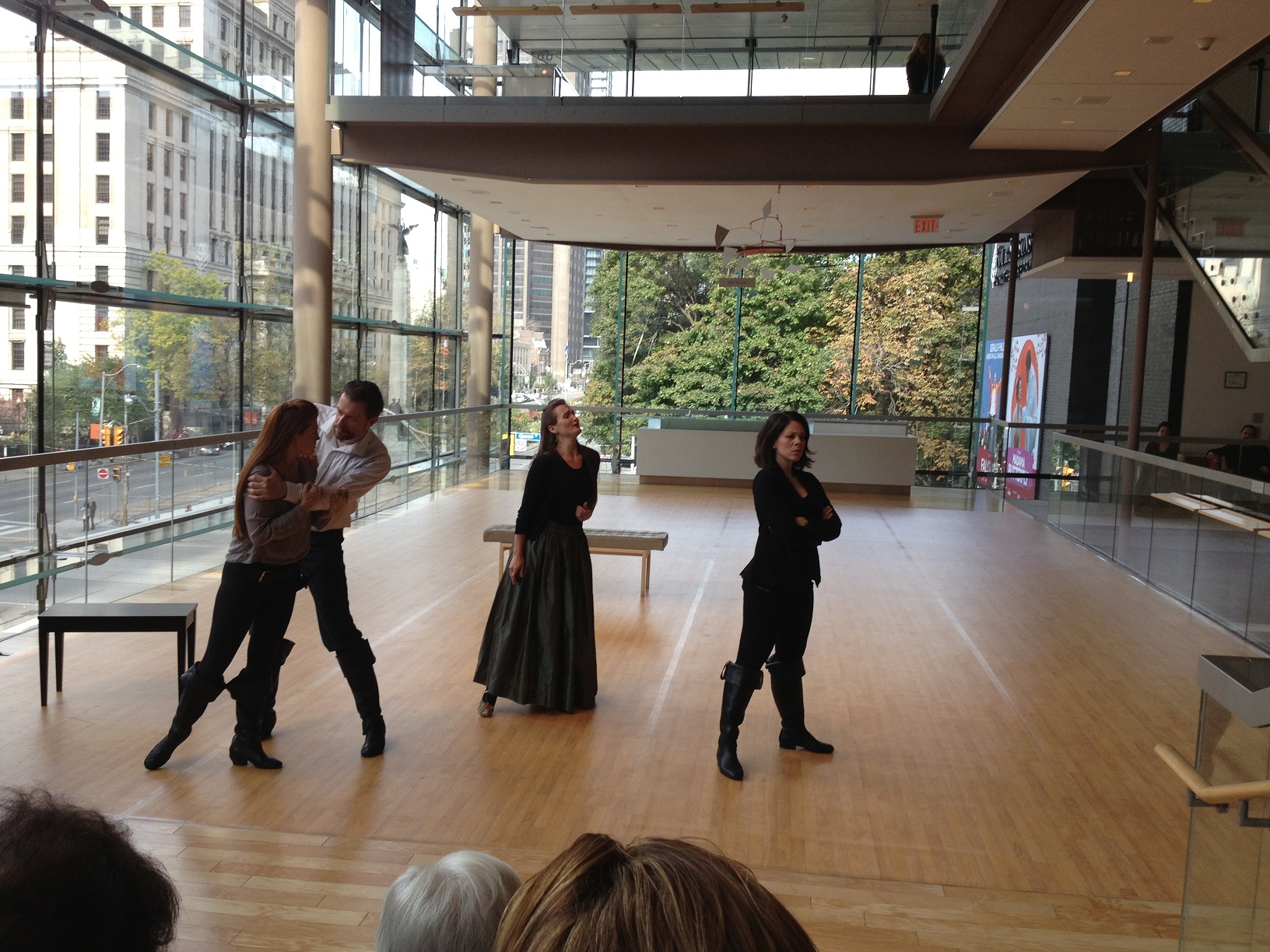
L-R Wallis Giunta, Olivier Laquerre, Meghan LIndsay and Allyson McHardy.

L-R Wallis Giunta, Olivier Laquerre, Meghan LIndsay and Allyson McHardy.

The closest thing I’ve had to this fantasy was in the Opera Atelier noon-hour preview to Alcina at the Richard Bradshaw Amphitheatre, where I was photographing non-stop (with their blessing & permission please note).  I posted a review with a few of my photos.  So long as there’s no flash, I believe this would take us closer to the kind of audience Handel had in his time.

In the summer I had a comparable experience with the visit of the Bicycle Opera Project to Stratford’s Revel Caffé.

Sirett & soprano Larissa Koniuk, L'Homme et l'Ange qui a venu du Ciel

Sirett & soprano Larissa Koniuk, L’Homme et l’Ange qui a venu du Ciel

I had fun taking my smartphone into the opera.  Is this something to be encouraged? So long as you make special arrangements for the seating (that is, if visible smartphones are going to make some people seethe with anger) why not?

The counter-argument goes something like this: that anyone who needs to tweet during an opera isn’t an audience member you want, that if opera needs to chase this kind of audience, the art-form is dead.

Maybe.

I can’t argue for one side or the other.  I felt weird tweeting at an opera, and felt weirder still when –after accepting the invitation—I was stopped in mid tweet, like a bird having his beak closed.

But I think any baroque opera making claims of historical accuracy should be presented with lights up in a theatre allowing us to go in and out. Social media could be a part of this.  As for contemporary opera –that is, anything written in the past 30 years—I don’t know that there’s any one right way to do it.  Purism in the presentation of something new feels odd.

But in future if there are any invitations to tweet I am always going to hide in the back row.  Or keep my beak shut until the show is over.

Posted in Opera, Popular music & culture | 8 Comments

Cinematic Music- How We Hear Film: a course at the Royal Conservatory

I’m teaching a course at the Royal Conservatory of Music called “Cinematic Music- How We Hear Film” (register here).

There are many ways to teach the history of film.

Do you see directors as the key to understanding cinema? Then perhaps you go from DW Griffith to DeMille to Hitchcock & Cronenberg.

Film as an actor’s medium? Whether you start in the silent era with Fairbanks & Pickford, or later with Bogart, Gable … there’s a great deal you can learn about the medium watching the ways actors approach the medium.

Or perhaps following through a particular genre:

  • gangster pictures?
  • Monsters?
  • Westerns?
  • Science fiction?
  • Screwball comedy, or perhaps more recently romantic comedy?

Any one of these (directors – actors – genres) can be a pathway to better understand & appreciate your film experience.

And so too with film music. 

For me it’s a natural pathway.  I’ve written music for film. I have always loved watching and listening to any film, to examine how the music in the film works, to understand how the film works.

It’s been a subject I write about on the blog, sometimes coming up when I encounter a new film, other times front and centre in the topic.  This will give you an idea of some of the films I really enjoy, and what you might find in the class.

Cinematic Music: How We Hear Film begins on February 18th, 2015. For further info click here.


Posted in Music and musicology | Leave a comment

Tapestry Briefs: Booster Shots

I took in Tapestry Opera’s latest experimental workshop “Tapestry Briefs: Booster Shots”.

click for more info about Tapestry Opera

The title plays on a few influences:

  • Because Tapestry lives in the so-called “Distillery District” we’re in a realm of booze, so it makes sense to be thinking about whiskey
  • Tapestry Briefs is understood to be a series of samplings of the short operatic experiments from the laboratory work combining librettists & composers, so it was a natural to take the metaphor a step further, offering samplings of delectables such as whiskey and ice cream and sake and herbal tea. Yes I know, that latter seems like an oddball, but for this Scarberian, it was welcome, as I can’t very well drink and then drive home.
  • One of the operas in development –that was disproportionately represented with three rather than one taste—is even called “The Whisky Opera”. Was that one also influenced by being conceived in the Distillery District?
  • I suppose a booster shot is only peripherally about alcohol (via a pun), and so the program cover showed both shot glasses & a hypodermic needle.

New opera is very much on my mind. Driving home to Scarborough means a right turn out of that Distillery District, right past the front door of The Extension Room, where I took in something experimental Thursday night. Last night I watched my new DVD of Boesmans’ Julie, and so I am thinking very positive thoughts about what opera can be. In the opera course I teach, the last class usually addresses the question “is opera dead?” While its health seems very precarious right now when done on the grand scale of the Metropolitan Opera or the COC, smaller companies using young talent keep bursting onto the scene. Tapestry are having their 35th anniversary season, although they’re a long-established incubator, and hardly an institution that feels old in any sense. They’re feeling especially vibrant with their new artistic director Michael Mori.

Tapestry Artistic Director Michael Mori

I had a brief chat with him after the show tonight, when I may have seemed to be complaining. In his pre-show talk Michael invited us to engage in social media, facebooking and tweeting merrily through the opera. I took him up on the invitation repeatedly.  Sure, my tweets were pretty banal (dull little jibes about drink & distillery).

And so I was a bit disconcerted when one of his minions leaned close to me at one point and told me to stop.

WTF?

After the show I told Michael about this without naming names, thinking that our smartphones (ha… an Orwellian phrase quite apt for a night in which we saw a small portion of 1984 adapted) are passionately hated by many in the theatre world. As I drove home I was thinking that Michael’s invitation might be a bit like the Emancipation Proclamation, a decree only as meaningful as the functionaries & bureaucrats who could make it real. All I can say –and I think Michael likely agrees with me—is that while most in the theatre probably still hate the smartphone, there are probably ways to make it work. I sat for part of the show in the very back row, so as to avoid upsetting anyone with my glowing screen.

And what of the operatic tasting, the samples of new work?

It’s as it always is. Some work better than others. And audiences aren’t monolithic, but contain all sorts of people with different responses. There was one piece –not the deepest thing I ever saw please note—that made me guffaw loudly in a theatre where I was the only person laughing. As a result I worked hard not to laugh even harder (which is inevitable when people turn around and stare at you as if you’re from Mars), but of course I was frustrated at what I saw as a conservative response, because surely the composer / librettist aimed for this kind of response. There were other pieces –at least 3—that were received with loud laughter from others in the audience, that didn’t make me laugh nearly so much. But overall, much hilarity ensued, much fun was had by all.

There were two pieces that stood head and shoulders above the rest of the program, and when I say this I know that my response wouldn’t necessarily correspond to that of the majority.

R.U.R.,  based on the Czech Karel Capek’s play from the early 20th century play (RUR =Rossum’s Universal Robots), has long struck me as an ideal vehicle for an opera. I gave it some thought awhile ago, although had no idea really how to adapt it. Imagine my delight that Nicolas Billon and Nicole Lizée not only took this on, but –in the short excerpt—showed a truly inspired idiom for their adaptation.  They created the most impressive interaction between music & text, singers & performers that I’ve seen in any of the Tapestry Briefs exercises I have witnessed. As we watch the two scientists freaking out about their robot creations, we hear music that is on the boundary between electronic & acoustic, between human and mechanical, with repetition that is sometimes human-made and other times seems automated. At times the fade of the music resembles something asymptotic, as if the music and voices fade mathematically, as a function of something profound and inhuman. This interface between words & music, between performer and performance is very problematic and troubling: but in all the right ways.

Please Tapestry, have Billon & Lizée continue their work on this piece! The five minutes we heard are already masterful.

The other opera is really three, namely the triptych of excerpts from The Whisky Opera that with its prominence in the program clearly has the full attention of Tapestry’s braintrust.  All three excerpts seem to enact one of the wet dreams of opera composers: to find a language that is relevant to context of the story (historically & culturally), especially if it can incorporate popular musical idioms. That the story is also darkly humourous, totally Canadian in its focus and almost irresistibly lurid makes this a project that seems to be a can’t-miss proposition. I am sure that Tapestry will hear a lot of voices in support of this project, and not just from those lured by the whisky they were offering us to taste. The Whisky Opera comes from Hannah Moscovitch and Benton Roark.

There were two others that I liked:
1984—“The Note” reminded me that Orwell’s novel never gets old even if the children born in 1984 do: amazingly they turned 30 years old this year. It wasn’t profound but it worked.
Damnation was like a joke on the minimalist composers such as Glass or Reich, the repetition being like the torments of hell. I was reminded of that scene in the film Beetlejuice when we’re told that people who commit suicide end up as bureaucrats in the afterlife. And apparently they’re tormented by repeated patterns of notes.

As usual the performances were superb. Carla Huhtanen and Krisztina Szabo are two of the most important singers in Toronto, irreplaceable when it comes to contemporary rep. Alongside them, Alex Dobson & Keith Klassen are a very musical pair.  The different operas employed varying constellations of the four throughout the evening. Christopher Foley & Jennifer Tung offered solid support from the piano (although there were other musical sources, for instance in RUR), and Mori’s direction was tight and transparent throughout.

It was great to see so many segments that were funny, although I don’t believe any of them (except the four I spoke of) are really sustainable beyond roughly five minutes in length; the fact that i am typing this up in the shadow of Saturday Night Live (which begins at 11:30 pm) might be in the back of my mind, another medium where nothing really deserves to be longer than about 5 minutes.

Tapestry are in their 35th anniversary season, and will be back in January for a party of sorts, although I suspect it will also be a benefit too.   Click here for more information.

Posted in Music and musicology, Opera, Reviews | 2 Comments

Soundstreams and Canadian Stage collaborating on Philippe Boesmans’ Julie

Canadian Stage have already shown a willingness to venture into different disciplines, bringing great artists such as Crystal Pite and Robert Lepage to Toronto to broaden the experience of the CanStage audience under Matthew Jocelyn’s leadership.

Soundstreams and Canadian Stage have announced a collaboration for next season.  Julie is  Belgian composer Philippe Boesmans’ operatic adaptation of August Strindberg’s naturalist play Miss Julie.   The libretto is adapted by Luc Bondy.

click for purchase information

I just watched a DVD of the 2005 La Monnaie production.  It’s 74 minutes long, which is remarkable considering that when i googled the length of the original, i found a production claiming that Strindberg’s play is 75 minutes long.  Operas are normally much longer, sung text usually taking lots more time than the same words spoken.  Boesmans’ score moves along at an astonishing clip, and requiring performances of remarkable intensity: because this powerhouse story that’s being told also requires singing as well.

I’ll talk about the DVD another time.  But I’m happy to say that this is a worthy project, one of the finest scores i’ve heard in a long time.

Almost exactly a year from now –on November 19th 2015– the Toronto production will open, Directed by Matthew Jocelyn, with Music Direction by Les Dala in the 850 seat Bluma Appel Theatre.

Posted in Dance, theatre & musicals, Opera, Press Releases and Announcements | 2 Comments