Ten Questions for Tatiana Jennings

Tatiana Jennings is a Russian born and trained actor, director, dancer and choreographer. She studied theatre and film at the Russian Academy of Theatre Arts and was a star of the Moscow experimental theatre scene. Her solo performance Madame Marguerite played to sold-out Moscow audiences for three years. Since coming to Canada, Tatiana has taught theatre at York University and Humber College. In 2005 Tatiana, with a group of Humber College Graduates, formed an experimental theatre company “Kadozüké Kollektif” to develop and produce multidisciplinary original work, which explores subjects of consciousness, mind-body interactions and perceptions of reality. 

With the company (as their artistic director) she directed and produced The Gulliver Project Figaro, his Marriage and the Fine Art of Dressmaking, The Sandman and Codex Nocturno.

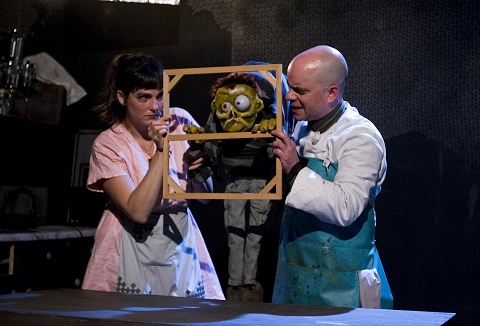
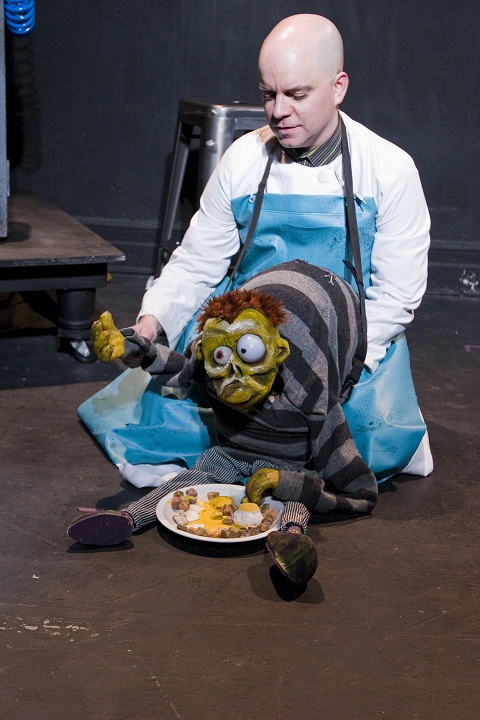
Tatiana and Kadozüké Kollektif have been developing Richard III, The Pleasures of Violence since 2012, an original production inspired by Richard III to open September 10th in partnership with Bad New Days performing arts. This intimate performance combines Kadozüké’s signature visual aesthetic with a stunning set designed by renowned Russian stage designer Vladimir Kovalchuk in collaboration with Tatiana Jennings along with cutting edge 3D projection mapping designed by Montgomery Martin. They are still fundraising.

On the occasion of The Kadozüké Kollektif’s 10th Anniversary, and the opening next week of Richard III, The Pleasures of Violence (their most ambitious project to date), I ask Tatiana Jennings 10 questions: five about herself and five more about the show.

1-Are you more like your father or your mother?

I think I inherited certain traits from both of my parents but I am also quite unlike them. At least that’s what I think they often felt when I was growing up or would’ve thought if they would know me now. My parents were absolutely lovely people and I was very close to them. My mother passed away when I was quite young and it had been more than 10 years since my father died. I often catch myself having a facial expression, which is very much like my father’s. I also think a lot about my mother. I am actually older now than she was when she died, which I find disturbing.

I am an only child. I grew up in downtown Moscow, across the Moscow zoo. My parents were busy working and I was mostly left to my own devices, being looked after by the various neighbours and friends of the family. As a child I had no real interests or passions except for reading. I started reading very early and spent most of my childhood and adolescence going through full editions of classics one after another. I probably read something like 20 toms of Balzac by the age of 14. My parents had an extensive library and nobody paid any attention to what my reading choices were. I read it all, novels, letters, essays. Dickens, Zola, Galsworthy, Chekov, Tolstoy. Whatever I could find. My parents didn’t really have any children’s books. I was obsessed with the Forsyte Saga. I used to read it when I felt sad or aggravated.

At some point I joined zoological society and worked at the zoo. My mother was a geneticist so it felt somehow appropriate, as well as us living so close to the Moscow zoo. I don’t think I was really interested in biology but I liked animals and socially it was a lot of fun. A kind of a social alternative to the high school.

I was a disinterested and lazy student. I don’t think I ever did any homework and I had problems with authority. However, thanks to the ability to read very fast and think on my feet I always managed to squeeze by. I never was considered to be artistic. I don’t think I ever read anything aloud in public. By the end of high school I had absolutely no idea what to do with myself. Then, just a couple of month before graduation I went along with a friend of mine to a private audition with a professor of GITIS, which is our Theatre Academy. My grandmother helped to arrange it and I was there for moral support. In Russia acting is a most coveted profession and it is almost impossible to get into it. There are thousands of people auditioning every year and the competition is quite ridiculous. The professor was very old and frail and she knew my great-grandmother. She also used to be a student of Stanislavski when she was young. After my friend left, I stayed and had tea with her and she asked me if I know anything by heart. I only managed to remember a part of a poem, which to my own surprise I agreed to read to her. When I left she called my grandmother and offered to coach me for the entrance exams. My parents thought it was a joke. It took 3 attempts to get accepted. I never looked back. It was like I was asleep and then I woke up.

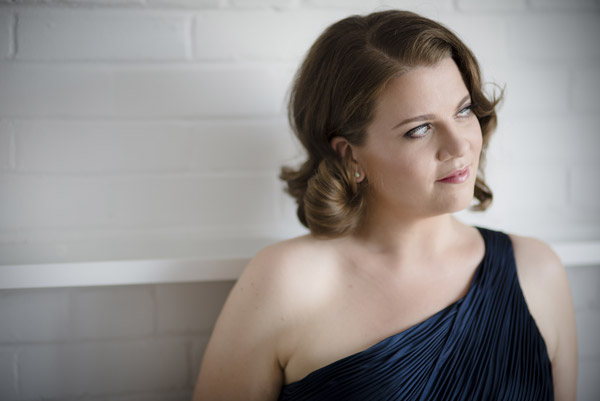
Tatiana Jennings, Artistic Director of Kadozüké Kollektif

Tatiana Jennings, Artistic Director of Kadozüké Kollektif

2) What is the best thing or worst thing about being artistic director of a company such as Kadozuke Kollectif?

For me theatre is a family business. So my company is an extension of my family. I am very Russian in this respect. We are not really raised in individualistic western tradition. We are collective beings. Being a part of the company is a big part and attraction of working in the theatre. When I came to Canada I left back home my company, which was very much my family. So with Kadozuke I tried to recreate that model. The Canadian system is very different from the way we were brought up (theatrically). People rarely can afford to keep working together with the same people over long periods of time. The time it takes to produce a show depends on the amount of grant money, which is usually not much. So independent shows often have a small cast and not very long rehearsal time.

We work as long as we consider necessary and choose any material or subject matter we happen to be interested in. At a cost of course. We are not paid. Although all of us are professionals and our shows are very ambitious we treat our work as a collective artistic pursuit rather than a job. We meet 3 times a week for 10 years and we improvise, train, invent, rehearse, talk. It’s a life choice and a community as much as a professional pursuit.

We were supported by Toronto and Ontario Arts Councils a few times but we don’t rely on it. Our shows are too off the wall to be picked up for grants. We do make an effort and apply of course. It’s a lot of work. We always first start working on a project and then start applying for money. But we don’t stop working to wait if we got it. So by the end of all this grant applying and waiting we usually will have the show. In the 2,5 years we spent rehearsing Richard we applied for grants 9 times (if you count all the applications) But we were not able to get any support. So we did it anyway. We always end up doing it anyway. But, to tell you the truth, it would be fantastic to get some support. And actually have the money to do things on the scale we want.

[here’s the indiegogo link, fundraising for this project]

3) Who do you like to listen to or watch?

I almost never listen to music in my free time. I use a lot of music in my work and I like it to be quiet in my off time. I listen to a lot of radio. It became my favourite medium lately.

I listen to NPR, CBC and all kinds of other things. I listen to programs about politics, technology, science and interviews with writers.

4) What ability or skill do you wish you had, that you don’t have?

I would like to be able to draw and sing opera.

5) When you’re just relaxing and not working what is your favourite thing to do?

I don’t really have any hobbies or interests outside of my work. I read, I watch tv sometimes. In fact usually, after I finish the show I binge watch tv.

*******

Five more about Richard III, the Pleasures of Violence, coming September 10th.resized lacey sefton

1-Please talk about the challenges of Richard III, the Pleasures of Violence in the context of the growing body of work created by Kadozuke Kollectif.

Usually I choose projects randomly. I have a stable of random or not so random subjects, which are stored somewhere in my head for the future use. Literary material, which had some impact on me, design ideas, images,.

When I have to choose a subject for a new work I go over the bits and pieces I have in my head and wait till something resonates. However, if I am honest with myself I am always exploring the same subject. Or a couple of subjects. The material is just a vehicle. I drive different cars along the same road, sort of speak.

But it doesn’t matter how many times I drive along this road – I still know nothing about it. And it looks different every time.  I am not sure driving is a right metaphor – wondering on foot, with a bunch of friends will be more appropriate.

The subjects I gravitate to are loss, fate, death, beauty, and the invisible connections in-between everything.

I look for invisible and unsolvable. Things we feel but can’t express.

Choosing Richard as a subject of exploration was somehow different. Or may be not that different, as it seems. I was thinking about attempting a Shakespeare play for a while. Mostly because I find myself completely untouched by the productions of Shakespeare I have seen over the years. May be because I’m Russian. We are quite fond of Shakespeare, but we work with contemporary translations done by well known contemporary poets. So it’s not really Shakespeare. As much as Chekov translated into English is not quite Chekov. The plot is there but the language is gone. It’s a different thing.

So for me to attempt an interpretation of Shakespeare in English was a challenge. And I like challengers. It is interesting to work with material where the audience has a feeling that they are familiar with the story. And then it will probably end up being a very different story from the one they expect. Mostly because of the approach we take. Which, I guess is unorthodox.

When I started my search for the right Shakespearian play I anticipated that it would be one of the magical comedies, like Midsummer night dream or may be something like the Tempest, since much of my work with my company had to do with the subjects of dream, transcendent and absurd, odd.

So my actors and me started reading the plays. We went through a few and nothing felt right. We almost dropped that whole idea all together but than I decided as a last effort to try something different. a historical play. Richard was somewhere on the back of my mind, probably because of the scene with Lady Anne, which I always found very sexually provocative. So we started reading it and Bingo! It felt perfect right away.

The play is almost comically violent; it’s a propaganda play. All historical events are distorted; there is hardly a word of truth in it.

Shakespeare plays with the reality and the meaning of violence and we play with his play.
We add layers of meanings, scenes, which are not there but could’ve been there, we reinterpret relationships and events. But we don’t change the text, just the context. We add life between the lines. It worked out to be quite funny

2-What do you love about Kadozuke Kollectif?

ladder_verticalI love my actors unconditionally. They bring their amazing talents and passion to our work, they are true collaborators. We work on our projects in two distinctive stages. First one, which might last for months, is centered on actors improvising collectively within a set of established rules. Each improvisation can last for a couple of hours and has it’s own theme, story and visual aesthetics. Nothing is discussed ahead of time. Each improvisation evolves from nothing into a complex layered piece.

At the end I, as an outside observer respond to what I have seen. We talk about what worked and what didn’t and try again. With Richard we had Shakespeare’s text running on a large tv monitor throughout the improvisations allowing actors to use it outside the context of a play. They would invent their own set of events and use the text of Richard in a totally different set of circumstances. The lines will acquire a different meaning and quality. The text opens up and begins to breathe and to shine. It is quite amazing to see.

During this period I only watch and take part in conversations. I wait till my sense of the project becomes strong enough that I am able to see the shapes and feel an emotional pull of the material. My actors inspire me. I don’t invent the shows in my head – I create them with actors and for actors. Without this first period I’m unable to work in an organic way.

When I am ready to step in and do my part of the work, actors are completely free within our chosen subject, so they can easily accommodate whatever I come up with. My choices are not based on the improvisations I’ve seen, they are inspired by the actors whom I have been watching. When I direct – it’s my time to improvise and to create.

3-Do you have a favourite moment in Richard III, the Pleasures of Violence?
…But it’s tech week, and Tatiana did not answer this question (yet) so we’ll leave that one up to those of us who go see the show. I’ll get back to you.

4-As a teacher who has been helping in the development of talented artists, please talk about the relevance of Kadozuke Kollectif in today’s world.

I don’t try to change my audience or to propagate my views through my work. I, myself exist in a permanent state of change and I explore the world through my artistic practice. The audience is invited to watch.

I can’t tell what kind of mentor and teacher I am. I don’t have any answers or any special knowledge. All I have are questions.

5-Is there a teacher or an influence you’d care to name that you especially admire?

I have quite a few people who inspired me. Anatoly Vasiliev, a Russian director with his forward thinking and innovative theatre practice. Bill Viola, an American video artist and Vladimir Kovalchuk, my designer and long time collaborator both of whom know a secret or two about how to turn visual into visceral; My friend, colleague and my director Klim who knows how to play in the space between human and transcendent. My parents with their sense of humour and kindness.

*******

Richard III, The Pleasures of Violence opens at Zuke Studios / Imagefoundry, 1581 Dupont St. Toronto, and will be running September 10 – 14, 18-21, 25 – 28. Tickets are available at www.zuke.ca.

Posted in Dance, theatre & musicals, Interviews | Tagged , , | 1 Comment

The Coffee Mill and old Yorkville: multiculturalism & a changing city

When I saw the piece earlier this week in the Toronto Star about the impending closure of The Coffee Mill, I knew I had to go one last time.

There really was a coffee mill in the Coffee Mill. The coffee was amazing.

There really was a coffee mill in the Coffee Mill. The coffee was amazing.

Tonight four of us went for a last nostalgic whiff, even if the context is long gone. It wasn’t really about the food. There had always been other places where you’d go for the best Hungarian Food, whether on Bloor St West (such as Country Style, Tarogato, L’Europe including the Blue Cellar Room, a favourite student hang-out with cheap beer) or earlier on Spadina (Patria). Only Country Style remains in a district that is still full of students & decent restaurants.

It’s cliché to speak of Toronto’s diverse mosaic, but not so long ago this was a completely white Anglican town with no decent restaurants or culture. The difference between Toronto & Montreal (where my family had lived for a time) was at one time quite startling. They had history, we didn’t, they had food & culture, we didn’t. Or that’s how it was seen in Montreal, and at some level (shame-faced), in Toronto. That’s all so so different now, of course, as we’re much later in several inter-connected narratives for and from a hundred different communities & languages.

There are several different stories that weave together, and this is just one tiny part of one of those stories.  While there were Hungarians in Canada before the revolution of 1956, thereafter? A small flood of refugees came to this country, welcomed—so I heard it—by the wisdom of a minister of the Liberal Government, Jack Pickersgill. I looked for this online, but couldn’t find anything. Perhaps it’s just family mythology, which is not really odd  considering that my family is one of the ones who were already here, having come to Canada (first having gone to Sweden in the 1940s, then Montreal, and eventually to Ontario).  If we’d been struggling to get out of Europe –as so many did– we would have had no conception of the political battles going on here.  But in any case it was the Liberals who were the ones who welcomed the immigrants: or so went the family myth. Much later, fellow Liberal Pierre Elliott Trudeau would enunciate the principles of multi-culturalism that are now fundamental tenets in this country.  While it’s no longer quite so clear, for the longest time, the Liberals were the party of multi-culturalism.

But when The Coffee Mill opened in the 1960s, it was a very different Toronto. Whereas the Hungarian restaurants on Spadina & Bloor West represented one sort of venture–usually with a built in following among other Hungarians– the territory for the Coffee Mill was Yorkville, a neighbourhood that was one of the first instances of gentrification in this city. The edgy cool of the beginnings gradually wore off. Tonight, I was amazed that the neighbourhood was looking every bit as old as we were.

Older actually.

Tonight what struck me was how at one time, the urbanity & sophistication of The Coffee Mill was the leading edge of Toronto’s best & brightest, the place where people came to be seen. The Festival of Festivals –later TIFF—didn’t begin on Queen St West, which is the new de facto coolest place in town, oh no. Their gentrification is a more recent phenomenon, a neighbourhood that is still recent enough to be cool & edgy. No, if you believe the stories I heard –from people who claimed to know Bill Marshall intimately at the time—it all started in Yorkville.

Tonight? The schnitzels were actually really good. The prize, though, was the dessert + coffee, in the form of chestnut purée –riced into light strands—and covered in whipped cream.

The dent is where the marascino cherry used to be.   I ate this faster than expected: because it was so unbelievably good.

The dent is where the marascino cherry used to be. I ate this faster than expected: because it was so unbelievably good.

There’s another week left to savour the place & its atmosphere. But Yorkville is no longer the centre of our universe, and all those other old Hungarian places –save one, namely Country Style—will be gone when The Coffee Mill goes. I’m not saying you can’t go home again. After dinner by coincidence I walked past the apartment where I lost my virginity. When you’re older, home, or the cool places of various rites of passage don’t mean what they used to mean. We’d walked past the site of the legendary Riverboat. We heard a remarkable anecdote which I am probably misquoting . Gord Lightfoot actually picked up the phone (without identifying himself). Whoever was on the phone– when asked the question “is Gord Lightfoot singing tonight”– replied “yeah because they never give me a night off”. That was before the huge career.

Fast forward to 2014.  We’re in the car on the way home, and I dig up that cool clip of Burton Cummings imitating Gordon Lightfoot singing Rod Stewart. It seemed apt, considering the way our adulation fades with time.

The Coffee Mill could be another opera or play because —unthinkably–they’ll be closing in a few days. But that’s it.  They’ll be at 99 Yorkville for another week, closing the weekend after Labour Day.  Good bye Coffee Mill and köszönöm szépen.

( “thank you”)!

Posted in Art, Architecture & Design, Food, Health and Nutrition, Popular music & culture, Reviews | 2 Comments

Alex Colville: love and menace

The new show at the Art Gallery of Ontario is called “Alex Colville”. Other shows have had epithets attached.

  • Frida Kahlo and Diego Rivera was titled “Frida & Diego: Passion, Politics and Painting”
  • Francis Bacon and Henry Moore was titled “Francis Bacon Henry Moore Terror and Beauty”
  • The early Renaissance show too had a descriptive phrase attached: “Revealing the Early Renaissance: Stories and Secrets in Florentine Art”

Not so for Alex Colville, who is presented here without qualifying epithets. That’s a good thing, I believe, even if I seem unable to resist the urge to supply one myself.  Yes, I took the liberty of adding my own in my headline above, a couple of nouns to further mystify your experience. But I promise to explain myself, and to suggest that I’m on the same page with the AGO.

You add adjectives at your peril, I suppose. Going through the show, curated by Andrew Hunter (the AGO’s curator of Canadian art), I felt very much in touch with the inscrutability of this art. I was struck by a certain Pinteresque quality to some of these paintings. Previously? I’d merely thought “I don’t get Colville”, but now I recognize something about his ambiguities, his openness (in the sense of Eco’s “open work”), and refusal to declare himself or make our experience easy by signalling how we should respond. No, he keeps us poised on the edge, sometimes wondering what we’re looking at. Now of course this is hardly unique in modern art.

My respect for this artist has gone up 100 fold, even as I am –again—impressed by the job the AGO does in selecting shows & presenting them. But what’s especially intriguing about this one is how we’re looking at a Canadian artist treated with the love & gravitas usually accorded the great masters.  It’s a marvelous thing to experience.

As my wife and I discussed while walking through, this is especially powerful on the heels of the Bacon & Moore show from earlier this year. We are again confronted with an artist traumatized by war, changed forever by what he’d seen. It’s a brilliant stroke if AGO deliberately put Colville on to follow Bacon & Moore, and if it’s inadvertent then it’s simply our good fortune.

Here we are again confronting human bodies, sometimes lovingly presented, sometimes from afar and as if the viewer were alienated or traumatized. The bodies are sometimes alive, sometimes: not.

Alex Colville, Bodies in a grave, Belsen, 1946. Oil on canvas 76.3 x 101.6 cm. Beaverbrook Collection of War Art, Canadian War Museum (19710261-2033) © A.C. Fine Art Inc

The small part of the show that takes you through Colville’s experience of Bergen-Belsen stays with you, and for me at least, forever changes how I see those chilly Canadian icons. I now understand them in a whole different way. Colville was born in 1920, which means he was, if anything, at a far more impressionable age during the war than Bacon (born in 1909 and thirty years old during the London blitz) or Moore (born in 1898 was already in his 40s when the war started).

The exhibition showcases several ambiguous images that can be taken as menacing images. That’s the thing: that they’re ambiguous. I am hesitant, even if the possibility of danger is impossible to avoid, especially in images of dead bodies or people holding handguns.

But I want to balance this with something that, to my knowledge, hasn’t been remarked upon in Colville’s works. It’s the most obvious thing, really, even if it’s impenetrable in its equivocality. Colville paints or draws images of his wife year after year, and without romanticizing. Let me be clear. When I say “without romanticizing” I don’t mean he doesn’t love her. Oh no, I mean, he sees her exactly as she is, but then again he saw—and portrayed—himself with just as much honesty.

In one of the videos that the exhibit includes, Colville alludes to the love he had for his wife, but very obliquely. This is not a man who made bold statements, neither in his romantic life nor in his paintings.

Or to put it differently: he and Robin were married in 1942, during the war. Robin died Dec 29th 2012. Alex Colville died roughly half a year later, July 16 2013.  That cryptic little fact is itself a lot like his paintings.  The truth is there but it’s very understated.

I found the images in this show were occasionally legible as images with menace, but prefer to see them as inscrutable images, that Pinteresque quality I spoke of. We can only decode these pictures indirectly.

Alex Colville, Dog and Priest 1978 Acrylic polymer emulsion on hardboard 52 × 90 cm Collection of Jean and Bill Teron © A.C. Fine Art Inc

We see a dog whose head blocks our view of a priest; as so often happens in Colville’s work, the animals are perfect, while the humans are merely trying to get there.

The show includes some wonderful juxtapositions of images, showing influences both upon Colville, and influences of Colville upon others. JFK’s funeral is the subtext for Church and Horse, a painting that I never understood until this encounter. We watch that big black riderless horse in the funeral procession (in an overpoweringly large video display), then meet him again, galloping madly through Colville’s painting.

Alex Colville Church and Horse, 1964 acrylic on hardboard 55.5 x 68.7 cm 55.5 x 68.7 cm The Montreal Museum of Fine Arts, Purchase, Horsley and Annie Townsend Bequest and anonymous donor. Photo MMFA, Christine Guest. © A.C.Fine Art Inc

I am not going to claim there’s no menace here.  But it’s calm, hard to decode, and absurdly understated. And life seems to go on.

Alex Colville at the AGO runs until January 4 2015.

Posted in Art, Architecture & Design, Reviews | Tagged , , , | 3 Comments

Equinox: Day vs Night

equinox_poster

Opera Five have a fundraiser coming up on September 9
starting at 6 pm at Atelier Rosemarie Umetsu
198A Davenport Rd.

The theme is Equinox: Day vs. Night.

Two teams of singers, team Day and team Night fight for the title of Ruler of the Sky.

Food, beer and wine are sponsored by Fionn MacCool’s and Sleeman’s.
Tickets are $25.

Posted in Press Releases and Announcements | 1 Comment

Fading Gigolo

When is a Woody Allen movie not a Woody Allen movie? Maybe when you cast him in someone else’s film.

Fading Gigolo (2013) is a dark quirky romantic comedy that has superficial resemblances to a Woody Allen film.

  • It’s a comedy of manners
  • It’s classically structured
  • It’s a New York story
  • It features great performances from a small cast
  • The jazzy score creates subtle moods

But upon closer inspection there are a few interesting differences.

For starters, there’s the performance by Woody Allen. For once he seems relatively well-adjusted. Or in other words he simply delivers his lines because we’re not really meant to focus on him, Murray, the owner of a failed specialty bookstore.

Nope, this is someone else’s story and that someone else is John Turturro, as writer of the story, director and playing the protagonist, who may have the gorgeous name of Fioravante (because he also has a few other aliases).  But this name suits him well, given that he’s an expert flower arranger, among so many skills you just know he’d make an ideal friend & companion.

As usual I’ll avoid giving it all away, but I do have to say a few things about Turturro’s remarkable film.

Within sixty seconds Turturro has immersed us in the plot and justified the film’s title, as Murray casually tells the younger man with the gorgeous name that his doctor (an attractive woman) needs to find someone to participate in a threesome: and you can guess who’s going to be that someone.  Murray is a deus ex machina, a cross between an old-fashioned Jewish matchmaker and a pimp.

Is Turturro teasing us?

Maybe film-makers really are pimps, as capable of making dreams come true as Bergman or Fellini. I don’t think it’s a coincidence that the one who sets this all in motion, enabling the fulfillment of dreams –whether we mean the dreams of the lonely doctor or of his middle-aged male friend – is a film director.

And is Turturro perhaps saying that everyone in film (actors and collaborators) are the director’s  ho? Maybe all of the above.

We have the weirdest mix of characters in this film. Sophia Vergara & Sharon Stone give us a very upscale version of sexiness, women who can afford to pay for their pleasure even if you’d never expect such remarkable women to need to avail themselves of a professional companion. We’re certainly in a magical place of wish-fulfillment and forgiveness, not least because we get to see Sharon Stone.

I am again impressed by Liev Schreiber’s range, his ability to get deep inside a character, to thoroughly surprise you, and all the while speak in one of the most musical speaking voices I’ve ever heard. Between Schreiber and Vanessa Paradis, as well as a few gorgeous moments from Stone, we get to hear subtly nuanced voices, teased out in delicious clarity by a director with an ear for detail.

I won’t tell you anything further, for fear of giving it all away. But Turturro does offer us several moments of pure lyrical stillness. As with any well-executed classic, Fading Gigolo bears repeated watchings –although as an opera fan and lover of great film music I’m inclined to call them “hearings”– leading you to more and more nuances in subsequent viewings. I’ve only seen it twice in 24 hours, but look forward to seeing it again.

Now if only Turturro would make more films.

Posted in Cinema, video & DVDs, Reviews | Leave a comment

Autocorrected

Tonight I saw Love in the Age of AutoCorrect, a Loose TEA Music Theatre adaptation of Stravinsky’s Mavra and Mozart’s Bastien and Bastienne on the Terrace of Atelier Rosemarie Umetsu.

I’m trying to catch up (the world is changing, right?  That’s not news).  I joined Twitter a few days ago.  (old people bewildered by technology? That’s not news).

An audience note made it clear we’re not in Kansas anymore:

please talk, text, take photos, Instagram, Facebook and most of all Share@! Use #Autocorrectoperas or tweet to @LooseTeaOpera to talk to us@ Just try not to check your email, cause you’re supposed to be having fun.

couple_texting

Gregory Finney and Morgan Strickland as the modern couple.

Why not?  In these operas, the characters onstage were texting etc, why shouldn’t we in the audience?

I embraced the opportunity to boldly tweet / post / click, etc.

Justin Stolz leaning forward to dust my iPhone lens

Justin Stolz leaning forward to dust my iPhone lens

The photos on this page are mine, including one magic moment when Justin Stolz as Mavra agreed to dust the lens of my camera (i have an out of focus shot of him gamely controlling his laughter a moment after his bold ad lib).

I also have a shot of Andrew’s screen –held up to me by Keenan Viau—showing that the romantic tit for tat he was engaging was literally tit (even though I didn’t see any tats: see for yourself).

"Boobstagram"?

“Boobstagram”?

The story-lines of both operas have been reframed as modern rom-com, heavy on the techno-speak.  Texting and sexting become key plot points, even though we’re still listening to Stravinsky and Mozart.  The English adaptations by Alaina Viau and Markus Kopp jar with the modern references, all the while in operatic singing: which might explain some of the explosive hilarity in the room.  Imagine operatic voices singing “I love you more than my Xbox.”  I found it easier to take in the Stravinsky than the Mozart, but there are huge laughs to be had in both.

There was certainly no fear that a purist could reject the modernization, given that neither opera is particularly well-known.

Gregory Finney, Parent in Mavra, and Mark Z (a modern computer magician) in Andrew and Andrea was remarkable to watch, often hysterically funny even in the close proximity of the intimate presentation.  Morgan Strickland was two very different characters, a determined romantic as Parasha and then a very contemporary innocent as Andrea, every word enunciated with crystal clarity.   Stolz had some of the biggest laughs in drag as Mavra, at least until he realizes (s)he needs a shave (“Holy Shit I need to shave”), and is caught in the act: of shaving. Viau too, was two very different characters, between the more staid neighbour in the Stravinsky and his edgy Andrew; he has a genuine gift for physical comedy and a very likeable smile.

Jennifer Tung was solid at the piano.  Meanwhile, Alaina Viau wears several hats with Loose TEA (listed in the program as director, conductor and adapter), including having had the extra drama this month of having her original venue cancelled.  Atelier Rosemarie Umetsu came to their rescue, in a surprisingly congenial space, both visually & acoustically.

Love in the Age of AutoCorrect will be presented again Saturday night at 7:30 and Sunday at 2:30 pm.

Posted in Opera, Popular music & culture, Reviews | 1 Comment

The Most Popular Operas

I teach a course at the University of Toronto’s School of Continuing Studies called “The Most Popular Operas”, a great excuse to watch and listen to some of the most wonderful music ever composed.

“Popular operas”? While the first video you get on Youtube when you search “Justin Bieber” has over 93 million views, when i typed “Three Tenors” I found a link exceeding 4 million: not too shabby.   Yes opera singers can be stars.

But “popular” is still sometimes a bad word. Cinematic excellence is sometimes ignored by the Academy Awards, even though worthy of consideration. Robin Williams made us laugh, but at Oscar time? A more serious film such as The Fisher King (for which Williams was nominated), or Good Will Hunting (including the role for which Williams finally won honours) earned him more respect.

Similarly, operas can be tear-jerkers or comedies that sell every ticket.  Or opera  can be serious art that earns critical respect without selling all the tickets.   You may not realize just how popular opera has been: in past centuries, and even now in some parts of the world.  I use Operabase.com—an international website capturing box office statistics—as my authority on popularity.

The objective of this course is a pain-free introduction to opera, using popular operas as a natural lead-in, the same way that we’d study drama via Shakespeare or the symphony via Beethoven. I avoid needless jargon because i want you to understand.  We engage in each work on its own terms, exploring the cultural background. The word “opera” has meant something different in every century, and continues to evolve with changing styles & tastes.

In the process of being introduced to the form of opera, meeting the stars who you can find on DVDs & recordings, you’ll also be introduced to the operas being presented in the coming season by Toronto companies:
• Handel’s Alcina (Opera Atelier—October).
• Gluck’s Orpheus and Eurydice (OA—April)
• Mozart’s Don Giovanni (Canadian Opera Company—January/February)
• Rossini’s Barber of Seville (COC—April/May)
• Verdi’s Falstaff (COC—October-November)
• Puccini’s Madama Butterfly (COC—October-November)
• Wagner’s Die Walküre (COC—January/February)
A double bill of Schoenberg’s Erwartung and Bartók’s Bluebeard’s Castle (COC—May)

Some of these operas are nothing more than vehicles for brilliant singing, some are intense psychological explorations through music, but they’re all magic, opportunities to lose yourself. There’s no right way to enjoy opera, but my aim is to help you find your own favourites while exposing you to beauty & pleasure.

Don’t blame me if you develop a new habit: going to the opera. I believe it’s contagious.

A scene from the Canadian Opera Company/Opéra National de Bordeaux (ONB)/Houston Grand Opera co-production of The Barber of Seville, 2012, ONB. (Photo: Guillaume Bonnaud). Click on picture for more information.

Posted in Music and musicology, Opera | 2 Comments

Forbidden Music

Although my luggage for the trip to the cottage included a pile of books on diverse subjects –popular culture, a novel, psychology, and a few musicology books—the one that seized my imagination was the darkest of the group. How could it be otherwise, in a week already coloured by Israel vs Hamas, and Russia continuing in this centennial year of the First World War to remind many of the aggressive stance of the Nazis in the run up to the Second, a week when we lost Robin Williams, Lauren Bacall, conductor Franz Bruggen, and soprano Licia Albanese.

click for link to purchase book from Yale University Press

No wonder I was drawn to Michael Haas’s Forbidden Music: the Jewish Composers Banned by the Nazis.  Lady Gaga et al would perhaps have been more suitable in a sunnier week (am I talking about the weather or the headlines?). Haas’s study is more than I bargained for. When I alluded to it in my recent blog post about the books I was taking with me, I cited Viktor Ullmann & Der Kaiser von Atlantis. I assumed I’d be reading about the 1930s.

I did not expect to be reading about the 1814 Congress of Vienna.

The multi-disciplinarity of current scholarship keeps surprising me. Yes I know, this is what we’re to expect: that for example, any good book about a musical phenomenon must address its context, the culture from which it springs.

But I didn’t anticipate this. Music is only one part of this book.  I did not expect to have so much insight into anti-Semitism, into the heart & soul of central Europe over the past two centuries.  These insights are presented without judgment, but dispassionately, with a scientist’s clarity and lack of bias.  We’re given insights into the Jewish soul, the bourgeois population seeking to assimilate in every aspect: and that includes the consumers & creators of music.

And we see the resistance to that assimilation of those in Germany & Austria (that is, the various incarnations of each country).

In passing you can’t help noticing how many others share the anti-Semitic views of Richard Wagner, but who’ve been largely given a free pass by history. Hanslick & Brahms have a rather intriguing place in this story, considering that

  • While Brahms is usually seen as the anti-thesis of Wagner, he too was anti-Semitic (although he didn’t publish treatises, just cried out his bigotry at people across crowded restaurants)
  • Hanslick, the apologist for Brahms, and Wagner’s great enemy, epitomizes the troubling question, a man who was probably partly Jewish but concealed his race. I squirmed reading about him, as i squirmed for Schreker and Schoenberg

Maybe this isn’t news to anyone –that racism was endemic—but Haas’s treatment is spectacular for its insight & clarity. I’ve written before about the Mendelssohn family (having seen a wonderful DVD) and the mystery of the European Jews who stayed put, apparently incapable of seeing the disaster that was coming. What I especially admire about Haas’s study is how well he frames 20th century events as a natural development from the psychology of 19th century culture, which furnishes the inescapable context. Reading the story of the Jews’ quest for assimilation and acceptance helps explain a great deal.

I found myself unable to put the book down, dark as it is, because it seemed to open up this nasty world for the first time. Monstrous as Wagner was, he no longer seems as inexplicable as before. Mahler, Korngold, Schreker and Schoenberg are placed into a kind of history that’s much more than musicology.

I’m not finished this book that I only started a few days ago, but even so I’m comfortable recommending Haas’s book to anyone intrigued by the music of Germans (meaning the broader Germany that includes Austria-Hungary) in the last century or two.

Posted in Books & Literature, Music and musicology, Opera, Reviews | Tagged , | 2 Comments

My eyes are bigger than my stomach

I have reading to do.

Do you ever go to a bookstore and get carried away with what you see? Of course with a bookstore there’s no time-limit. You can buy books that you read this week, or this year, or: much later.  I find that money is what stops me: that is, running out of money.

If you take books from a library, there’s no monetary concern –so long as you return the books and avoid the fines– bur there’s some expectation that you’ll read them, because they have to be returned.  It’s anti-social to take out too many books, and makes no sense when one can only do so many things at once. One can only read so many books at a time. Indeed, some would say you can’t read more than one book at a time. I’m funny, I usually have a few going at a time, but books of different sorts.

But right now, I am in the literary equivalent to that place where someone might say “your eyes are bigger than your stomach!” Too ambitious, too hungry. I’ve taken out more than I can possibly read.

I am going to take a bit of a break from the blog world.  This will be the last thing i post here for a few days.

Is this similar to what they do on a farm? You can’t just keep harvesting crops from the ground without exhausting the nourishment in the soil. Sometimes you have to give it a break. I believe it’s called leaving the land “fallow”.

But it’s probably a bad analogy. If I were to leave my mind to go fallow I’d be hanging out, window-shopping. staring at the garden, playing the piano, walking around enjoying the summer. I wouldn’t worry about my brain, but, oh well, I have this hunger for books, and am intent on reading. I can’t possibly read them all, at least not this week. But they’re inspiring just to look at.

What books are inspiring me?

1) Wagner Kino: Spuren und Wirkungen Richard Wagners in der Filmkunst by Kristina Jaspers, Steffen Vogt and Jan Drehmel, is eye candy that seduced me today in the library. As with Martin Geck’s Wagner book, this one exhibits structural features that could in some ways be influenced by Wagner’s operas. Where Geck had digressive episodes examining other figures from Wagner’s life, this book features a back and forth between essays and interviews, including Werner Herzog and Hans Jürgen Syberberg. But I’m not going to read these essays in German, not this week anyway, as I don’t have the patience it would take, although when motivated I’ve done this before with the help of a dictionary. This week I’m more interested in mining the book for its images.

What a beautiful book!

2) Richard Wagner: New Light on a Musical Life by Lohn Louis Digaetani looks promising, with a flamboyant cover illustration. The author says we might wonder “why another biography”, but explains that there’s new correspondence & new documents that make a new book potentially interesting.

Hm… I’ll look at this eventually. This won’t be the first thing I read.

3) Forbidden Music: The Jewish Composers Banned by the Nazis by Michael Haas is a book I’m intrigued by, having seen a review (NY Times I think). The topic is endlessly fascinating to me, layers of pain & angst that reveal themselves wonderfully both in the histories and in the musical texts. It’s been over a year since I’ve mentioned Kaiser von Atlantis, a work that changes how you listen to “A Mighty Fortress Is Our God” forever. We’ll be hearing Gerald Finley here in Toronto soon, so why not this clip again: that puts the music into its context…? Finley’s singing of these chromatic passages is some of the most impressive singing i have ever encountered.  
4) Lady Gaga and Popular Music: Performing Gender, Fashion, and Culture (a collection of essays by several authors) is another book with a few exotic visuals, although this one doesn’t require a dictionary. I picked it up because I like Lady Gaga and wanted to see what contemporary academics are writing about her. Given the reception of her latest album (unfriendly and hostile as I recall) I’m worried that her career may be in its twilight. I think of her as a very talented artist, not least because she’s funny… 
5) The premise for the novel Orfeo by Richard Powers is so intriguing, I have to check it out. Is this a spoiler? I encountered this, and it enticed me to take out the book. When you start inter-connecting music and microbiology, writing music in microbes, with a thriller subtext, the inter-disciplinary challenge grabs me on principle. I want to see if he can do it (or if i mis-read what i thought i saw in the review). The reviews I have seen suggest that the writing is virtuosic, but I want to see if it moves me, or merely impresses me.  As with the composition of music, sometimes we’re overly pre-occupied with questions of competence & showing that you actually belong, rather than composing something (music or text) that’s enjoyable or beautiful or in some sense meaningful. I suppose I am not interested in writing that’s meant to impress others who can follow your complex games, rather than a genuine expression of something. But now I am curious, and must see for myself.

And so it’s not totally crazy, as they’re from different food-groups. I have 1-a picture book, 2-a biography, 3-history, 4-contemporary culture and 5-a novel, hmm yet all very narrow in their focus on music.

Or will I simply stare at the sky?

Posted in Books & Literature, Cinema, video & DVDs, Music and musicology, Opera, Popular music & culture, Reviews | Tagged , , , , | 1 Comment

Angriest Man

When I was a child the word was “mad”. I get mad. You get mad.

Later I decided I was mis-using “mad” because there was a better word: “anger”. It’s a subtler thing, a more adult thing, or so my seven-year old self must have thought. Mad is this other thing, because mad is crazy, mad is insane, mad is put-him-in-a-straitjacket. Angry, on the other hand? It’s something you choose. You make me angry. Ah so it’s not even my fault, or so I thought as a child.

Of course I’ve changed my tune at least a few times since then, even before I saw The Angriest Man in Brooklyn (2014), tonight’s occasion to contemplate the nature of anger.

Robin Williams plays Henry Altmann, the aforementioned angriest man. It must be hard being trapped in a stereotype, even harder when you have multiple stereotypes. This is not the frenetic comedian we first encounter early in Williams’ career (as in Mork and Mindy or Good Morning Viet Nam), nor the over-the-top cartoon voice Williams (as in Aladdin or Happy Feet) but spiritual break-through Williams, as in Dead Poets Society, Hook, Fisher King, or Good Will Hunting (and there are plenty more I could name). In fairness, Williams is a chameleon of huge range, who likely has added life & legs to any script he’s ever seen.  He could play all the parts if they’d let him.

And he’s remarkable, when angry. Anger is the river that runs through this film, erupting from the circumstances of the story, and Williams’ Altmann could be Huck Finn, given his eagerness to pole his way down the angry river. Williams is physically in the film, and he also narrates what’s inside his head, so we have his emotions framed for us.

There’s another parallel tale, of Doctor Sheila Gill, Altmann’s doctor played by Mila Kunis, and also having her own nutty voyage complete with pills, rages, a dead pet and yes, also narrating her story from her own side.

Speaking as someone who sees anger as madness and something to be overcome, I enjoyed the ride through this film, an amusing study in emotions and miscommunication. This is the most believable Williams portrayal I’ve seen in a long time, possibly because he’s no longer the big star terrorizing directors, possibly because he’s older and wiser.  I am afraid of older Hollywood actors who bray at the camera like a cautionary tale about too much cocaine and not enough directorial restraint (are you listening, Al?)

At times this is a slow, ponderous film, yet in many places it’s delightful, unpredictable, and genuinely deep. I can’t help noticing that the director is Phil Alden Robinson, a man who’s directed fewer than ten films in the past 25 years, including Field of Dreams, one of my absolute favourites.

Yes Field of Dreams can be glacial at times, yet ultimately rewarding. It also includes a marvellous performance from James Earl Jones, who is one of the best things about The Angriest Man in Brooklyn.

Will you like the film? I don’t know. It may have too much content, too much philosophy, and not enough comedy or drama. At times it’s like a parable, but tonight this is precisely what i needed.  I’ve had more than enough anger lately.

Let me close with a series of quotes I found on the internet concerning anger. Just google “quotes anger” and you’ll find zillions more. These are my favourites. I think you’ll have to decide for yourself whether anger is something you can work with or not.

  • Horace:
    Anger is a momentary madness
  • Buddha:
    Holding on to anger is like grasping a hot coal with the intent of throwing it at someone else; you are the one who gets burned.
  • Seneca:
    Anger is acid that does more harm to the vessel in which it is kept than to anything onto which it is poured.
  • Achebe: An angry man is always a stupid man.
  • And someone I can’t identify said:
    Anger is like a poison you take, expecting someone else to die.
Posted in Cinema, video & DVDs, Psychology and perception, Reviews, Spirituality & Religion | Leave a comment