10 Questions for Kelly Kaduce

I had the good luck to see Rusalka in Montreal in November 2011, starring Kelly Kaduce. In my review I said

First and foremost, the production leans happily on soprano Kelly Kaduce, whose voice is always pleasant & in tune, and sometimes astonishingly expressive. The demands of the role are somewhat daunting if you consider that Rusalka is a mermaid who is transformed into human form, for a time bereft of her voice, and betrayed by the prince who prefers the heat of a high-maintenance princess to the unconditional love of Rusalka: a mute beauty who is as cold as the princess is hot. Kaduce’s physical beauty not only mirrored the innocent loveliness of the natural world from which she comes, but made this challenging story far more believable and absorbing.

Kaduce has a voice, a sensitivity to language & words, and acting ability. Her physical attractiveness adds an important dimension to her portrayals. And her range of roles is remarkable, as I discovered when I googled a bit further.

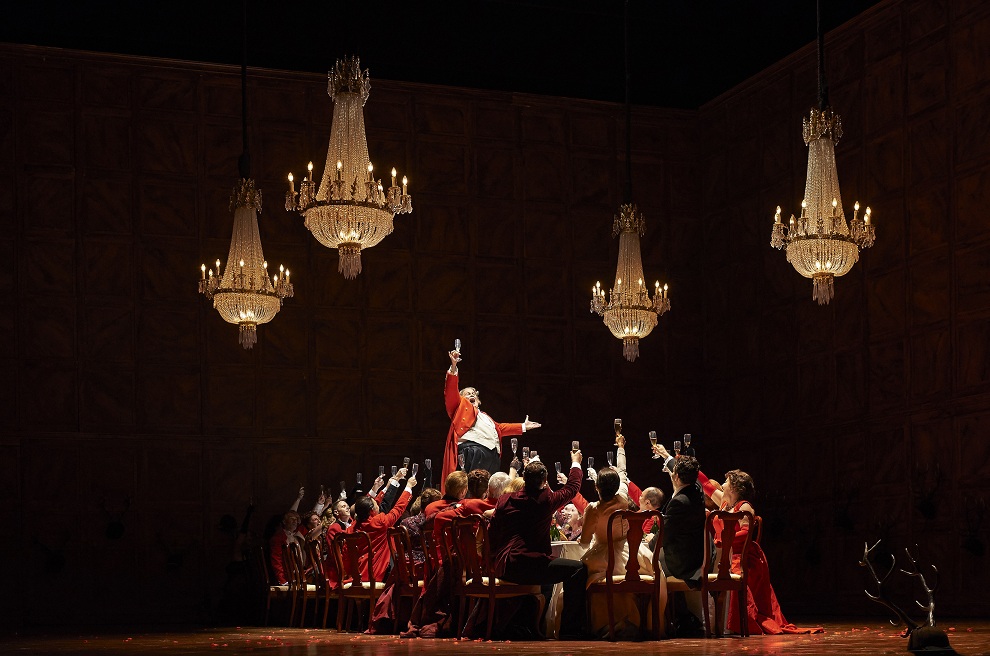
Anna Karenina (Kelly Kaduce) with her lover, Vronsky (Robert Gierlach). (photo: Deborah Gray Mitchell ). Click image for NY Times review

For her creation of the title role in Anna Karenina, Opera News proclaimed her “an exceptional actress whose performance was as finely modulated dramatically as it was musically… and her dark, focused sound was lusty and lyrical one moment, tender and floating the next.” For her Boston Lyric Opera debut in the title role of Thaïs, Opera News observed, “Kaduce sings with bell-like purity and silvery sweetness, and she suspends her legato with an effortless, sensual spin. A born actress, Kaduce is also a masterful illuminator of text.

Kaduce seems to have done an amazing amount considering her youth. She created new roles in original operas such as Anna Karenina, Michael Berkeley’s Jane Eyre (another title role) , Kevin Puts’s Silent Night, Bright Sheng’s Madame Mao and Ricky Ian Gordon’s The Grapes of Wrath. She’s done Donna Elvira, Pamina & the Countess in Marriage of Figaro, Desdemona & Violetta, Rusalka, Mimi & Cio-cio san, Susannah, Juliette, Marguerite, Salome, …and she turns 40 this year.

Does cutting it off like that make you want to hear more? Me too.

Kaduce is married to baritone Lee Gregory with a three-year old son. As she prepares for the title role in the Canadian Opera Company revival of Brian Macdonald’s production of Madama Butterfly in October, I ask Kaduce 10 questions: five about herself, and five about singing the part.

1) Are you more like your father or your mother?
I would say I have taken traits from both of them. My mother was a big influence in music for me. She plays the piano and is the local church organist in my hometown of Winnebago, Minnesota. I loved singing in the children’s church choir and had my first solo at 4 years of age in front of the congregation. “This little light of mine” A favorite of mine since it had fun hand actions that went along with the song! As you can guess I was certainly the loudest child in the group. My mother was the first to get me interested in playing the piano as well. On top of all that, she also was the pianist for the local theater group. I had my first role debut as Annie in 4th grade in the Winnebago Community Theater. A lot of my interest in music was initiated by her. I get my silly, playful side from my father along with my interest in home improvement projects. My father owns his own plumbing business and has a side hobby of renovating houses. That’s been with me from childhood. I enjoy doing hands on projects. He’s happy to be my phone consultant.

Another interesting side bar, I am adopted and have recently connected with my birth mother. Music has been a part of her life too. It seems I have had music in my genetics and in my environment!

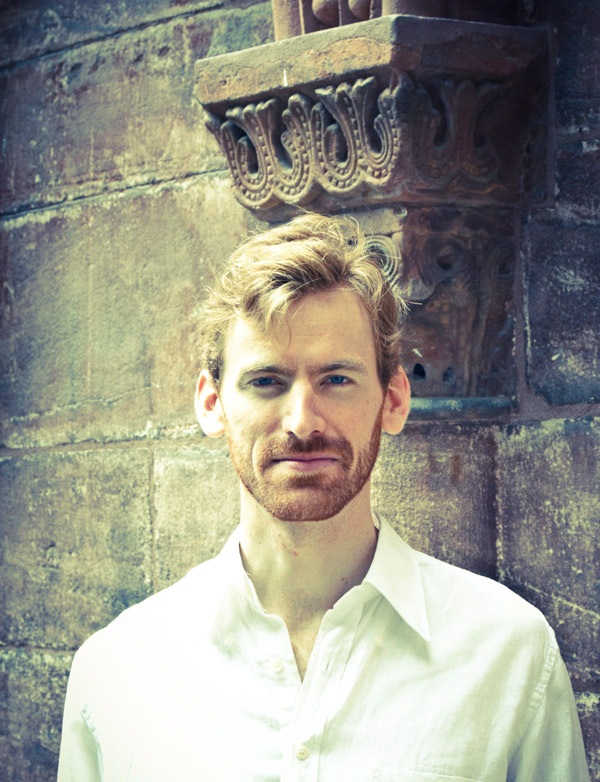
Soprano Kelly Kaduce (photo by Devon Cass)

Soprano Kelly Kaduce (photo by Devon Cass)

2) What is the best thing or worst thing about being an opera singer?

In the “Best” category it is hard to list them all! The act of singing itself is one of the biggest rewards. There is a very zen-like zone you get into. Some may call it spiritual or meditative. Not many people have a job that allows them to feel this state on a regular basis. Another perk is the many interesting and creative people involved in the field of opera. The last I will mention is simply the music! I love ALL kinds of music. Being a singer allows you to be SMACK in the middle of it. When you are required to learn a role and perform it over and over, you have the opportunity to learn pieces inside and out.

The worst things…well, one is the same as the best: The act of singing itself. There are days when you cannot find the zone, or you are under the weather, or just plain tired. On those days the act of singing can feel painful and frustrating, but you are required because it is your job. Another thing I have come to dislike is the act of travel. Not seeing new places mind you, but the packing, airports, trying to figure out how to travel with a toddler! I have a 3 year old.

3) Who do you like to listen to or watch?

I do enjoy unwinding with all of the fascinating TV series that are out now. Game of Thrones, the Bridge, Nurse Jackie, Broadchurch, Wilfred, I could go on and on. Probably the standards that a lot of people watch. As for music, I have ALL kinds: Pop, Rap, Blue Grass, Jazz, etc. I enjoy running and listen to mixes while I run. Sometimes I will download talk radio from the National Public Radio station in the US and catch up on the news while I run. In truth, I rarely listen to opera or classical music outside of work. My husband and I will go to the opera or symphony on a date if we have the opportunity.

4) What ability or skill do you wish you had, that you don’t have?

So many to choose from! I wish I had the skill and knowledge to build a house from scratch with my own two hands. I think I would find that very rewarding.

5) When you’re just relaxing and not working what is your favorite thing to do?

My ideal day of relaxation looks like this: Lay around the house, read and drink plenty of coffee. Plan and cook some delicious meals with fresh ingredients. Go for an easy jog or a yoga class. Wrestle with Colin, my 3 year old, on the bed. His favorite is “tickle toes airplane ride”. He has the BEST laugh. Then end the day with some tv watching with my husband.

Kelly Kaduce (photo by Devon Cass)

Kelly Kaduce (photo by Devon Cass)

~~~~~~~

Five more about preparing to sing Madama Butterfly.

1) Please talk about the challenges in Butterfly.

I do think Butterfly is more difficult than Salome or Rusalka. Salome technically requires more volume to cut the thick orchestra, but it is compact and the bulk of the pumping out of sound comes toward the end. Rusalka has more periods of rest built in. For the first half of Act 2, she is on stage but mute. One of the main difficulties of Butterfly is the amount of music she is required to sing with minimal time to simply be quiet. Also in most current productions, the intermission between Act 2 and 3 is removed which means even less time to rest. Another factor is her youth. Young people have A LOT of energy. Part of portraying her youth is the underlying energy. One of the vocal difficulties of Butterfly are the moments that require a lot of volume in the middle voice. It is a natural part of the lyric soprano voice to be able to create a lot of sound in the upper register, but not necessarily in the lower middle register. It can be quite tiring and requires a lot of concentration.

You asked about “big arias”. In fact there are 4 big arias and they are all quite different. Each aria gets progressively heavier and lower. The entrance aria sits the highest and has an optional high d flat at the end. The second aria is the most recognized, “un be di”. The third aria, “che tua madre” shortly follows un bel di and requires quite a lot of middle voice and dramatic use of the voice. The final aria, “tu, tu, tu” is considered the most dramatic and only goes to a high a. They are each challenging in their own right but this is an example of the very wide range of vocal colors a Butterfly needs to access each evening.

2) What’s your favourite moment in the opera?

I think my favorite moment in the opera is in Act 2. There is a light-hearted moment when Sharpless comes for an unexpected visit along with Goro and Yamadori. I love the contrast Butterfly gets to show here with her humor, sassiness and wit. My favorite characters to play are those that display a wide arch of emotions on stage that you get to share with the audience. This is one of those moments that is unexpected and a welcome shift from the seriousness of the drama.

3) How do you relate to the character and her plight as a modern woman and mother?

I get asked this question a lot regarding the characters I play and I’m afraid I always answer the same! It isn’t difficult to relate to any of the characters I play. It simply takes your imagination. It requires cultural and historical research so that you can create a clear idea of the situation in your own mind. Then the time to think and imagine their specific situation. You use this information to inform how you imagine the character may respond to a situation created by the text. But my secret is you do it “as yourself”, not as the character. How would YOU respond given the situation and circumstances. One of the privileges of acting is that it opens your mind to others. It fosters an understanding that although we may all look different and be living in many different situations, the basic emotions we all feel are the same and that commonality connects us all.

4) After taking on Rusalka, Butterfly and Salome, what’s your next big challenge?

My next big challenge is Tosca! I have seen many performances and sung a number of Puccini roles so I am looking forward to taking on this one! I have collected many ideas from other sopranos that I plan to incorporate and some unique ideas that have been brewing in my head as well.

5) Is there a teacher or influence you’d care to name that you especially admire?

Baritone & voice teacher Lee Gregory

I’ve only had three voice teachers in my life. My first teacher, Anna Mooy laid the ground work for my interest in operatic singing. My second teacher, Penelope Bitzas, taught me how to sing and manage my voice. I currently get lessons with my husband, Lee Gregory. He is a baritone and voice teacher. Learning to sing is a life long endeavor and takes many years of study. I find it is difficult to go without an outside source to help listen and refine. As anyone has probably experienced, when you hear your own voice on a recording, it is not what you hear as you are producing the sound. That’s why I feel it is important to have outside input from someone knowledgable that knows your voice well. The voice is not a “set” instrument like a trumpet or piano. It resides in your body that is constantly changing and feeling different sensations. Therefore you need to constantly adjust and respond to it.

~~~~~~

Kelly Kaduce sings Madama Butterfly beginning October 11th at the Four Seasons Centre. For further information click.

Posted in Interviews, Opera | Tagged , , , , | 5 Comments

Waverley’s Aura and the Romance of Scotland

It’s the morning after.  The world is waking up from something. Was it a nightmare or a fantasy?  Scotland will not separate from the United Kingdom after all.

This morning –knocked a bit senseless by a cold, sniff sniff cough cough, and so confined to quarters for a bit—I went to youtube, to see if there was anything that seemed to properly capture the moment.

There are so many pieces of music –some classical, some, not—that in various ways conjure up Scotland.  Please note, too, that I am speaking not as a Scot but as a Canadian, a Hungarian-Canadian come to think of it.  I’d noticed parallels long ago between Hungary & Scotland, and also between Canada & Scotland.  Hungary was the wilder gamier yin to Austria’s yang, the place with spicier cuisine & dance-rhythms, a bit darker in the face.  Scotland seemed to also represent a comparable part of the British imagination (although I suppose Ireland & Wales would fight with Scotland out for that title, such as it is).  French-Canada offers another version of this dichotomy, in its relationship to English-Canada.

I glanced at Bruch’s Scottish Fantasy, a piece I’ve played on piano with a violinist I know (her part is much harder of course), and said a quiet “no” to myself, a piece that if anything is a kind of exploration of Scottish music rather than the country or its soul.

I spent a bit longer on Mendelssohn.  I was struck suddenly that the Jewish sensibility too seems like an echo of the Scots, as I think of his music, his characteristic attitude of sadness.  There’s the opening theme to the Hebrides Overture (contrasted with a lovely melody in the major: but ending with the re-affirmation of that tragic minor),…. and the first movement of his Scottish Symphony (#3).     I suppose I am projecting, especially given what I’ve understood of Mendelssohn & his sensibility, who self-identified not as “Jewish” but “Christian”.

And then I remembered Berlioz, who led me to the key influence on the foreign perceptions of Scotland, namely Walter Scott and his novel Waverley.  Nowadays we immerse ourselves in films & books and even video games taking us away from our mundane world.  It’s hard to properly imagine what it felt like, reading Waverley when it appeared.  It may not have been  the first historical novel, but Scott’s romance suddenly made Scotland the coolest, most romantic place in the world (excuse the pun) .  Of course that doesn’t mean that anyone really understood the place or its people.  The idea of Scotland though is what we’re talking about, not the reality.

Waverley seems the perfect image for September 2014, and the results of the referendum.

Young Edward Waverley is a perfect every-man, or every-Scot if you will.  He fights on both sides.  While he pursues a beautiful highland woman named Flora (and is rejected by her) he marries Rose, who represents someone comparatively safe.  That outcome –a flirtation with a high-spirited beauty, but a marriage into the conservative land-owning family reminds me of the referendum itself.  Safety prevailed over romance.

It seems fitting that Berlioz’s Waverley overture is so unexciting.  But perhaps that has more to do with the composer’s development than with the subject.  The introduction is a long preamble reminding me of someone afraid to commit, a good six minutes (in this version) before anything really “happens”.  Was it Waverley or Berlioz having qualms?

It’s so different from the way Berlioz begins his Rob Roy overture.   Of course this piece is about romance without doubts or fears.  We’re galloping into harm’s way in the first minute.

I am glad Scotland did as Canada (or Québec) did, deciding in the end that after sowing some wild oats, we must settle down.  Will there be any regrets, fond looks over the shoulder?  From afar –that is, via the music, novels & art– i have no idea.  It’s all very romantic, and that’s more to do with what i dreamed last night than the morning after.

Posted in Music and musicology, Personal ruminations & essays | Tagged , , | Leave a comment

Ten questions for Eric Woolfe

While I sometimes aim to write the bio that goes into an interview, sometimes I can’t top the brilliance of what I’m given to work with.

For instance, the origins of Eldritch Theatre are explained this way on their website:

Eldritch Theatre was formed in 1886 after an impertinent Ouija board informed Randolph Pomeranski that his soul would be devoured by the Great Old Ones That Were And Shall Be Again unless he produced a series of puppets plays exploring the dark and foreboding mysteries of the Dread Necronomicon of Abdul-Alhazred. Unfortunately, none of these plays were ever performed, because when it came time to write grant applications, the Ouija Board would only spell gibberish.

And here’s the bio of Eric Woolfe, who bears the title “Director of the Uncanny”:

Eric Woolfe was born the bastard child of an itinerant sideshow contortionist, and a door-to-door alienist. He began his career at the age of eight and three quarters, when a national famine forced him to follow his mother’s twisted feet into show business. Following failed careers as a learned pig tamer, flea circus promoter, and gaffed armless calligrapher, he formed Eldritch Theatre after losing a bar bet. He is now an actor, writer and puppeteer, as well as being a noted spiritualist huckster. He is often visited by the ghost of his beloved miniature schnauzer, Schubert, who offers Mister Woolfe valuable career advice, such as “You should chase more squirrels”, and “You better hide in the basement when there is thunder outside.”

Eldritch Theatre are back, presenting Frankenstein’s Boy, written by Eric Woolfe, with puppets by Eric Woolfe and starring Kimwun Perehinec & Eric Woolfe, at the Red Sandcastle Theatre 922 Queen Street East October 23th – November 8th. Having heard about this momentous event I had to ask Woolfe ten questions: five about himself and five more about his work with Eldritch Theatre.

1-Are you more like your father or your mother?

Eric Woolfe’s Facebook photo.

I used to think I was more like my mother, who is energetic, creative and engaged with the world. However, as I age, I realize that I am very much a product of my father. I am astoundingly irritated by lego bricks left on the floor. Nothing seems more heavenly than falling asleep while watching a movie. And I often forgo regular modes of communication in favour of short, surly grunts. Like my father, I look forward to my boys becoming teenagers so I can scare their friends with my wild eyebrows, curmudgeonly scowls, and wry, ironic mockery of their choice of clothes and poor taste in music. When I was younger, these habits of my father used to drive me crazy. And now I cultivate and nurture them in myself.

Also, it was my dad who introduced me to horror movies, and nurtured my love for them. He was the one who encouraged me to watch the Saturday afternoon horror shows like Super Host, and Sir Graves Ghastly when I was little, which fostered my love for both the classic Universal and Hammer films, but also taught me the virtues of good schlock.

And in my teen years, when I’d come home, often at one or two in the morning, on weekends, he’d be half asleep on the couch, waiting to watch some slasher video nasty he’d rented to watch together. That’s what we did instead of playing catch.

2) What is the best thing or worst thing about your work, building, writing and producing for Eldritch Theatre ?

The lack of financial stability is certainly the worst thing… Well, at least one of the worst things. On one hand, it’s wonderful to be able to make a living- however meagre- by playing with puppets, and magic tricks and telling spooky stories. These are all things I love and am interested in. On the other hand, there is a constant pressure to keep up with deadlines and create to a schedule in order to keep the Eldritch Theatre balloon afloat. It takes a lot of hot air to keep this basket aloft.

That said, it isn’t many people who get to run their own flea circus, or haunted medicine show, or whatever. We fill a unique niche in the Toronto Theatre scene and I am happy about that. I mean, there are a lot of wonderful companies re-discovering Shakespeare or the American classics, or producing hard hitting political work, or challenging cultural boundaries, but, to my knowledge, we are the only company producing dark horror comedies with live actors, puppets and parlour magic, relying heavily on motifs from genre movies, sideshow traditions, and gothic literature.

3) Who do you like to listen to or watch?

I really love the film Re-Animator. Anything by George Romero, even the darkhorse films like Bruiser or Knightriders. Books: I’m a big fan of Lovecraft and Raymond Chandler, chiefly—and I guess this is what I love about Romero too—because of their ability to use trash to tell stories of depth and deep sophistication, without losing their sense of fun, or, well, trashiness.

4) What ability or skill do you wish you had, that you don’t have?

I tried to learn the banjo. But I was terrible at it.

I’d also really love to be able to write a kitchen sink play. Something really Canadian about, say, someone on a farm, or with a terminal illness struggling with something middle-life-crisisy that summer theatres would program. A play without monsters in it. It would be nice to be able to do that. But I lose interest too quickly.

And I wish I made better pancakes.

5) When you’re just relaxing and not working what is your favourite thing to do?

I like to make bread. And eat potato chips. Rye whisky is fun too.

click for tickets / info

*******

Five more about Frankenstein’s Boy, coming October 23rd.

1-Please talk about the challenges of Frankenstein’s Boy in the context of the growing body of work created by Eldritch Theatre.

Kimwun Perehinec, appearing alongside Eric Woolfe in Frankenstein’s Boy (click for bios of Eldritch Theatre’s team)

Frankenstein’s Boy is a play I have been trying to write since Sideshow of the Damned in 2001. I wanted a vehicle for Kimwun Perehinec that would show off her many talents, as well as her fearlessness.

But for many different reasons the various versions of the script were never quite up to snuff. In the last few years we’ve started incorporating parlour and stage magic into a plays, in much the same way songs are used in musicals. And that seemed to do the trick. It provided a spectacular element of Mad Science that the previous incarnations were always lacking.

There are only two actors in the play, who not only perform human parts, but manipulate and interact with about 30 other puppet characters. This is the first time we are having single characters performed by either actor, which requires a daunting level of both virtuosity, and trust in your fellow performer.

The play itself is based on an extensive mishmash of sources: The Hammer and Universal Frankenstein films, the original novel, a large portion of the Hunchback of Notre Dame, a spattering of the Ilsa, She Wolf of the SS, and some unexpected sources of inspiration, like early Frank Capra and Preston Sturges movies, and the works of John Steinbeck .

2-What do you love about Eldritch Theatre?

I think we have a really nifty website.

Also, I get to work with some wonderful, creative people, who get to work on subject matter that doesn’t usually get covered in Toronto Theatre.

We tend to use the same team over and over, so we build up a relationship, an understanding of each other’s strengths and weaknesses, as well as a short hand. It’s our second or third outing with Marjorie Chan and Kaitlin Hickey. Kimwun has acted in, a think, a bazillion Eldritch Shows. I forget the exact number. And our designer Melanie McNeill has worked on everything we’ve done since 1892, or something.

I also love that our audience has grown steadily in the last six or so years, with the same people coming back over and over, sometimes even to repeated viewings of the same show. I am very grateful for that, especially when many other theatres are complaining of dwindling numbers.

3-In a world that includes Muppets & Disney, but where some artists employ puppets for profound works of art, how do you feel about the way puppets and marionettes are understood in our culture?

Ronnie Burkett's Schnitzel (photo by Alejandro Santiago)

Ronnie Burkett’s Schnitzel (photo by Alejandro Santiago)

I am almost embarrassed to say this, but I never really pay too much attention to puppetry’s place in history. There are some wonderful companies in town, like Ronnie Burkett and the Puppetmongers who are deeply knowledgeable about all the different forms and styles, and the great masters of the art form through out the ages. But to me, the importance of the puppets is what they provide for a horror story, and the way they invade an audience member’s imagination and leave them open to otherwise difficult emotions to reach, like terror, dread, wonder and awe. The reality of the puppet exists only in the imagination of the observer, and so they act on people’s psychology in a way that humans can’t.

For example, our play Dear Boss opened with Jack the Ripper’s final victim having a nightmare in which she faced off with the Caterpillar from Alice in Wonderland. The Caterpillar was a fifteen foot tall rod puppet with multiple operators. It could be scary one moment, funny the next, graceful, threatening, sexy, and coarse. It could be all those things and more in close concert, some times more than one thing at a time. However, if that character were played by an actor in a caterpillar suit, it could only be on thing: stupid looking.

4-As an artist whose work regularly visits the realms of mystery and terror of a writer such as Edgar Allan Poe –one of the writers who influenced everyone from the French Symbolists right up to more recent artists such as Alfred Hitchcock and Tim Burton—please reflect for a moment on the value of fear and suspense in works of art, as evidenced by the work of Eldritch Theatre.

I think fear, and it’s cousin wonder, are grossly neglected in modern theatre. I suppose, in part, it is because they are difficult feelings to arouse in an audience. Like humour, fear is largely subjective. Also like humour, fear requires great understanding of timing and technical skill from the performer in order to be evoked successfully. Both Comedy and Horror tend to be dismissed as lesser art forms, as well. I can’t really understand why this is so.

I believe that the purpose of entertainment is to provide for society what dreams provide for individuals. They are a collective outpouring of our subconscious yearnings and trials. To neglect to provide nightmare entertainment along side the other more accepted forms of art, I believe, results in profound societal neurosis.

Also, and more importantly, way more importantly, scary stories are really, really fun.

5-Is there a teacher you’d care to name that you especially admire?

My Theatre Arts teacher, Art Fidler, when I was in highschool in London Ontario, over 25ish years ago, was hugely influential. He let us run the drama club as if it were a small theatre company. And I learned as much about show business doing that as I have in a lifetime of working professionally.

*******

Eldritch Theatre present Frankenstein’s Boy, written by Eric Woolfe, with puppets by Eric Woolfe and starring Kimwun Perehinec & Eric Woolfe, at the Red Sandcastle Theatre 922 Queen Street East October 23th – November 8th.  For tickets click here.

Perehinec & Woolfe + creations in Madhouse Variations (2010)

Posted in Dance, theatre & musicals, Interviews | Tagged , , , | 1 Comment

Baby Kintyre and some thoughts on popular operas

A few weeks ago, John Gilks shared some thoughts about “that elusive new audience”,  in response to assertions by some that the “ small innovative companies create a significant audience for the larger companies”.  It may be so, although John’s essay looked at subtleties behind the hypothesis.

Pardon me, as I look at the question a bit differently.

I’m fascinated by the question of popularity, and so I’m coming at the question from the other side, both as curator (or programmer) and composer.  Some works get programmed more often, possibly because they’re popular, possibly because they have other advantages such as lower cost or easier to sing.  And some works are difficult to produce, less likely to fill seats.  The last century has seen many operas that challenge the audience, not unlike what we’ve seen in other media (from orchestral music to visual art to theatre).

What motivates a composer?  I don’t pretend to know but some composers have no fear of being intelligible or mainstream, while others would be offended at the thought, so clearly do they aim for something elusive, subtle or difficult.

Click for info about obtaining the CD

I am launching into this essay partly in response to Dean Burry’s new CD of his opera Baby Kintyre from Canadian Music Centre, partly in response to two other operas I encountered in the past year.  But I am also mindful of these three new operas in the context of popularity as I launch the latest session of my course “The Most Popular Operas” at the School of Continuing Studies, at University of Toronto.   What motivates a composer to choose a subject that’s not comfortably mainstream, or that might be called “difficult”?

Perhaps I should give examples.  The three topics each succeeded in making someone cringe at the description.

  • All it took was to say the title Written on Skin to freak out one person I was talking to. I wish the work were a celebration of the tattoo but no, that’s not the case.  I wrote a review.
  • I chose not to attend the premiere of Airline Icarus, an opera about a plane crash, because it was the night before I got on a plane to take my longest ever journey. I don’t think of myself as afraid of flying, but when a missile takes off a wing (as in this Korean Airlines crash) and the plane spirals to earth for minutes? Not sure I want to see that enacted, even though I’ve been told by someone who was there that it was very beautiful, a kind of requiem.  If I get the chance of course I’ll go see it (and enjoyed the small snippet I saw presented by Bicycle Opera Project).
  • The premise for Baby Kintyre is a kind of radio serial, which is very organic considering that this begins as a true story, about a dead baby found by a renovator on the site. Again, I couldn’t help thinking that at least one motivation was to redeem a grotesque news item, to seek something beautiful in the horror of our daily dose of media poison.

I should, however, put this into some context.  Operas are often full of gory death.  Salome, or Carmen or Madama Butterfly, to name three popular operas, all feature the death of the title role in the final minutes, enacted in horrific fashion.  Opera seems to love death, especially when it’s a woman who’s dying, preferably after a long eloquent swan song.  La Boheme? Tosca? More death.

Perhaps, then, the puzzle is in how to get from the shockingly new tale, to the older ones that are so popular.   But let me set that question aside, particularly because I don’t have an answer.

Let’s look at Burry.  The Brothers Grimm is spectacularly successful, Burry having written the libretto before he composed the music.  I have to say I have a special fascination for composers who do their own libretto, possibly because I’ve tried it myself, possibly because it’s how Wagner & Debussy worked.  I saw a small excerpt this summer presented by The Bicycle Opera Project (who also gave us some of Airline Icarus by the way).  I looked the work up online, to try to get some sense of it.  While the intended audience may be children, there’s no infantilizing, nothing that underestimates the listener / viewer.  I was struck by the wit of Burry’s libretto, the many moments when I was laughing out loud.  Comedy is perhaps the rarest thing in operas of the last century.  Dark topics abound.  One of the two operas I saw on Friday by Gian Carlo Menotti was The Telephone, a comical romp.  But such works are rare.  I’ve seen a couple of Lee Hoiby’s monologues, including Bon Appetit (where the singer portrays Julia Child) and The Italian Lesson (a snapshot of Ruth Draper).  It’s another pathway, a lighter idiom that offers a different sort of reward than one of the dark works I spoke of.  I wonder if Burry finds the style of Brothers Grimm relatively easy? He seems to do it so well that it sounds effortless. In going in a direction that’s difficult for his audience, is he also venturing into territory that’s harder for him as a composer & librettist?

And so maybe I’m biased.  When I waded into the CD, I felt Baby Kintyre does not sound dark enough for what it portrays, even as its idiom is astonishingly original, those segments like a radio serial.  I don’t listen to radio serials so I can’t really comment on that, except that what I understand was that radio plays were often melodramas.  Burry’s idiom is again light as quicksilver, and very accomplished. One of the things I find most jarring about modern media is how we juxtapose smiling announcers with tales of doom and death, one moment announcing horrors in the Middle East, the next minute smiling as we hear of something trivial involving a movie star or a bathroom product.  The arbitrariness of these juxtapositions is heartless, and the opposite of what we’re accustomed to in the Wagnerian world of opera and (don’t forget) conventional film music of the last century.  Reality is capricious, whereas opera and melodrama structures our emotions, building to climaxes and seeking to punch us in the gut.  Nothing, however, hits you in the gut like the arbitrariness of reality, perhaps best captured in opera by the blankness of the repeated “hop hop” that ends Wozzeck.

Burry has created a tour de force, precisely because it defies our expectations.  But I am still struggling with it.  The opera feels too light to me, not possessing the gravitas that such a  story should have, or so say my viscera.  I believe Burry set out to redeem the story with his tale, and in doing so, while we are given a kind of redemption, it’s not Mahler or Wagner, and indeed, I doubt they or anyone else could create something sufficiently magnificent for the news story.  There’s no redeeming such an unfortunate nasty factoid.  Did we really need to go there?

But I need to listen some more, perhaps to open my mind somewhat.  I didn’t like what happened to Cio-cio san, or to Mimi either.  I adjusted.  And along the way, the nastiness of those stories, the kick in the gut, becomes a necessary experience, helping us cry.  Can one cry for Baby Kintyre, and should one?

I don’t know.  I am reminded of those fans of Khatchaturian who hollered for his “Sabre Dance” when he wanted to program something new he’d written instead.  Is popularity—and the money that can be made—ultimately something negative that holds back the inventiveness of brave artists seeking to transform their audience?  Is popularity sometimes a trap or a worthwhile goal?

Again, I don’t know.  But the brave new works and the brave new interpretations of old works will keep coming, and sometimes the audience catches up to what was brave & daring generations ago.  Popularity is relative; the best opera can aspire to is perhaps like the litter on the floor after a hockey game or a rock concert, so much smaller.  In such a world why not aim high: as Burry clearly has?

Posted in Opera, Reviews | Tagged , , , | 1 Comment

Two from Menotti: The Telephone and The Medium

Coming home, the gibbous moon in front of me on Gerrard St scared the crap out of me.

Oh sure, I know all about this scientific phenomenon, where the moon looks over-sized when close to the horizon, surprising us sometimes.

Tell that to my viscera.

I’d been to see a pair of operas, and had even had a chance to congratulate a cast member. Even so, something in the illusions & emotions they stirred up must have lingered. There I was having an experience to mirror the melodrama of the heroine, like her, trying to deconstruct the magic into something explicable.

Please don’t mistake me, I don’t denigrate the work by alluding to “melodrama”: an apt description of Gian Carlo Menotti’s The Medium, the second of the two works I saw staged tonight. I’m sitting here, still pulsing with the emotions stirred by this production, thanks to music director William Shookhoff’s playing, and especially Karen Bojti as that Medium.

Menotti doesn’t offer us anything musically that hadn’t been done half a century before—and better—by Debussy, except for one thing.  Much as I admire Pelléas et Mélisande, it gets produced every now and then in big opera houses. Menotti? He’s the third most produced composer in the USA according to operabase.com, a site that crunches the numbers for the big companies of the world. Meanwhile Menotti’s Amahl and the Night Visitors–originally presented on TV–keeps getting staged in churches all over North America (if not the world), that opera alone likely making him the real #1 composer in America. Similarly, for companies such as Loose Tea, Essential Opera or tonight with Opera By Request (to name the three most recent companies I’ve written about in Toronto), who are small enough to be under operabase’s radar, operas such as Menotti’s The Medium or The Telephone can be a lifeline, and essential to survival. I’m also thinking about this because I’ve been listening to Dean Burry’s Baby Kintyre, his new opera CD. Burry too has been hugely successful because of taking the compositional road less traveled, in his ubiquitous The Brothers Grimm, supposedly the opera that’s been produced most of any opera ever composed by a Canadian. I need to ask Mr Burry if Menotti was his model, another composer whose small-is-beautiful aesthetic might have served him well as a template.

Okay, I suppose my nervousness has subsided finally, possibly dissipated by all the hyper analytic energy I used in the previous two paragraphs (an avoidance?). But I was moved a great deal by what I saw and heard.

Karen Bojti (click for bio)

It was the team of Shookhoff & Bojti who are especially to be thanked. Menotti’s opera is a very simple work, so long as you surrender to it and perform it with conviction.  Don’t be fancy, just sing and play what’s written. While I enjoyed the other performances, they were still largely operatic, which is to say, with a kind of self-consciousness about singing and voice, the ostentation of singers who are trying to be their roles and aren’t quite there. Bojti? she came from another place, fully channelling –excuse the pun—the emotions of her character, without any sense that she was doing what opera singers often do: worry about this high note (careful inhale, telegraphing what’s coming next) or that entry (glance at the conductor). At times she sounded ferocious, not always pretty in her attacks.  This is some of the best operatic acting I’ve ever seen, precisely because I didn’t feel trapped in the usual approach to singing & acting.

I must also credit Director Stephanie Ferracane, for a progression of suspense that built inexorably to the final scene. Light moments and the occasional moment of dark comedy (when you’re not sure if you should laugh or not) offered some relief before the climax, all balanced to perfection. Mener Pavri’s Monica and Enzo Voci as the mute Toby were totally sympathetic, balancing Bojti, who dared to be really nasty at times, undaunted by the ugliness lurking in her character (and please note, this was really hard to type about someone who is a good friend…!).

Director & soprano Stephanie Ferracane

The other half of this double bill was a total contrast, namely The Telephone. Stephanie Ferracane (the director) portrayed a dizzily irritating Lucy (the name seems apt doesn’t it?  But she reminded me of –gulp – myself when I spend too much time blogging, when I should be paying attention to the family at home), opposite the golden tones of Andrey Andreychik as Ben: one of the nicest voices I’ve heard in awhile. I believe Ferracane, Andreychik & Shookhoff gave Menotti a fair hearing, although compared to the other work it’s a bit of fluff.

Shookhoff & Opera By Request will be back September 27th for Lucia di Lammermoor.

Posted in Opera, Reviews | 1 Comment

10 questions for Erin Bardua and Maureen Batt

There was a time long ago in the history of opera, when the singer/virtuoso was the boss.  And that meant a world of divas competing against one another.  Wanting the better aria.  Seeking to upstage one another.  (I wish I were making this up but for example )  Each one sought to be the bigger star.

-Flash forward to the 21st Century- 

click picture for more information

Essential Opera is a company that features two divas, Maureen Batt and Erin Bardua.  They are not in a competition, as they’re a genuine team. These two talented women work together, not just singing, but building a company and a following.  They’re celebrating their fifth anniversary with an opera production presented on September 27th in Toronto and October 1st in Kitchener. The opera is Paride ed Elena by Christoph Willibald Gluck, a composer whose 300th birthday is being celebrated in 2014.    

And now, as Paride ed Elena help commemorate Gluck’s 300th and Essential Opera’s fifth, I ask Maureen Batt and Erin Bardua ten questions: five about the collaborating pair of divas, and five more about Essential Opera’s season opener.

1) Are you more like your father or your mother?

Maureen: My mother. Well, actually, I’d say I’m an even split between the two. But, I suspect most people would say I’m more like my mother. My mother was an English teacher, and when I was in junior high (at her same school), teachers would stop me in the hall and call me Mrs. Batt, mistaking me for her. (I suspect this would only happen when I wasnt lugging around my massive LLBean bookbag). I get a lot of my mannerisms (and my red hair) from my mother. Mom’s side is Irish-Canadian, and Dad’s background is British and Canadian. Mom sang in choirs and played piano and violin (I took lessons on her violin, too). We always say that Dad plays the spoons.

Erin: I definitely look like my mother too, so when you see Maureen and me onstage, you’re seeing what it would’ve looked like if our mothers had started an opera company. Which is about the weirdest image I’ve thought of all week, and in a week that includes preparing for an opera based on Greek mythology, that’s counting a lot of weird imagery. 🙂 (Maureen: I’ll tell Mom she’d better pack an extra outfit for her interpretation of Amore). My father is more musical – he played the violin when he was young, and I think a lot of the recordings of classical music I heard as a kid were his selections.


Left to right, Erin Bardua and Maureen Batt   (Katie Cross Photography)

Left to right, Erin Bardua and Maureen Batt (Katie Cross Photography)

2) What is the best thing or worst thing about running a company such as Essential Opera?

Both: The best thing has to be the opportunity to put works out there that might not otherwise get an outing, and to interpret what we perform as we choose – both musically and dramatically. There’s a lot of freedom, and at the same time we always want to stay aware of our audience and of providing something enriching and enjoyable.

3) Who do you like to listen to or watch?

Maureen: This is a tough one–there’s not much I don’t listen to. These days, if I’m not listening to a particular classical work (for business and pleasure!), I might have on Songza’s Blog50 or Ron Burgundy’s Bachelor Pad playlist. This very moment I’m listening to Patricia O’Callaghan.

When I’m preparing for a gig, I like to listen to that music while I’m working out. Sometimes I’ll listen to pre-existing recordings, or I might just listen to a voice memo recording that I’ve made of myself (this helps me with memorization and channeling energy for later when I’m in rehearsal). I love listening to classical music while I’m at the gym; there’s a meditative quality to running on a treadmill and listening to, say, Massenet or Mozart.

I grew up making mix tapes from the radio, listening to the Solid Gold Collection tapes, and listening to CBC. I can’t remember if my first CD was Celine or Mariah. But my musical background included the Top 40 of various decades, classic rock, female pop icons, local East Coast music, a lot of musical theatre, and a lot of jazz–my husband, then-boyfriend, was a jazz bassist; one of my favourite gifts from him was Michel Donato and Karen Young’s Second Time Around (I wore that tape out).

It might be cliché, but if I had to pick four favourite female artists to span the genres, I’d go with Ella, Madonna, Renee and Audra (McDonald).

Erin: I like Maureen’s choices, at the end there, a LOT – I’d have swapped Cyndi Lauper in for Madonna because that’s just me, but those are some powerhouse performing vocalists. (Maureen: LOVE Cyndi!)

Listening-wise, when I started studying singing I went through a phase of absolute obsession with mid-20th-century divas and bel canto in particular, now reflected by my CD collection – many compilation and recital discs of Callas, Sutherland, Sills, Tebaldi, Price, Freni, Scotto, de los Angeles… Then as I got to know my own voice better, I added Schwarzkopf, Janowitz, Popp… then I discovered La Renee and Barbara Bonney, Harolyn Blackwell, Dawn Upshaw. A couple of current artists who I think have it all going on vocally, musically, and dramatically are Diana Damrau and Sondra Radvanovsky. I’m a soprano geek! (Maureen: Your entire list just made me drool!) Lots of those artists did wonderful cabaret and crossover work (especially Upshaw, who led me to Audra McDonald) and that’s when I realized I could still hang onto my musical-theatre dork roots and love classical vocal music too. In the car, you’ll find me doing all the parts along with any Sondheim cast recording, or things like the musical [title of show] (Maureen: The BEST) or The Last Five Years.

When it comes to preparation, Maureen and I very similar; I like to get hold of as many recordings as are available and change up my listening to avoid getting stuck on one interpretation. Eventually, I might prefer one recording for its dramatic or musical interpretation, and another for the quality of the voices. I also use my own practice recordings a lot – it really helps me to make the piece my own.

4) What ability or skill do you wish you had, that you don’t have?

Both: We would both love to be fundraising whizzes and therefore dealing with larger budgets. We actually have skillsets that are similar, yet our working styles and preferences are quite complementary. So that’s really our only major gap where we have to seek advice from others, or where the tasks just seem a little more grueling than otherwise.

5) When you’re just relaxing and not working what is your favorite thing to do?

Erin: I like to go for long walks with my iPod – you’ll find me wandering the streets or on transit giggling to myself a bit like a maniac, because my preferred non-work listening is mostly comedy podcasts. I also read a ton of nearly anything – classics, current fiction, fantasy/sci-fi, nonfiction – especially if it has a bit of humour to it.

Maureen: I’m equally in love with curling up on my couch and watching a movie and going out for a good glass of wine/beer with friends/family. I also spend a lot of my free time divided among the gym, FaceTime-ing long-distance friends/family, and dancing while no one is looking (that’s a thing, I promise).

*******

Five more about Essential Opera’s presentation of Paride ed Elena on September 27th.

1)Tell us about Gluck’s Paride ed Elena and why you want to present this opera to start your fifth season.

Both: This is the 300th anniversary of Gluck’s birthday–so we took this opportunity to celebrate! Paride ed Elena is a perfect show for Essential Opera’s Season 5 opener: it’s intimate, it’s about relationships, and it focuses on realism and emotions. The storyline, while about the epic romance story of Paris and Helen, is easily accessible for any audience.

The music of Paride ed Elena is a really exciting example of Gluck’s “reform” operas. It was written at a time when Gluck and librettist Calzabigi were revolutionizing opera, so that the drama of the story would take centre stage. The music is constantly illustrating characters’ feelings and changes and pushing the action forward.

One of our unofficial mandates is to find shows with many roles for women–based on our auditions, women artists are underworked and we’re always thrilled to be able to provide opportunities to deserving artists. This show casts 5 women and features tons of gorgeous ensemble music!

2) what do you love about programming and organizing seasons with Essential Opera?

Both: We both truly love the behind-the-scenes, research side of our art as well as the performing side. Programming shows for Essential Opera gives us so many chances to learn new scores and delve into works we haven’t been exposed to before, as well as really explore better-known classics.

We’re lucky in that we both work really well together collaborating online and by phone – especially now that we’re living in separate cities and presenting in multiple locations! We’d die without cloud-based tools.

For each show, we choose a music director who specializes in that repertoire. We’ve been very fortunate to be able to hire Kate Carver (Figaro, Deserted Island), David Eliakis (Cherubin), Cathy Nosaty (Threepenny), Michael Rose (Schicchi and Campanello), and Cheryl Duvall (Canadian triple-bill). For this production, we’ve invited Dr. Vicki St. Pierre to return in her role as Music Director (she was MD of our Alcina shows in Season 2) along with Wesley Shen as Associate Music Director. Vicki’s a valuable resource to us, with her depth of understanding of classical and earlier music, and its context; and she’s also a fantastic vocal coach. (Full disclosure, Vicki is Erin’s wife, and we might be biased, but we love to take advantage of her brilliance when we can!)

3)Out of the complex planning and development cycle, what’s your favourite moment when you mount an opera?

Maureen: I think my favourite moment from the perspective of the artistic director, is the curtain call. At that moment, the show has successfully happened, and I feel an enormous sense of pride. It’s a very different sense of pride than the one you might feel as a solo singer. Being an AD means you get two performance highs–a singer high and an administrator high.

Erin: I agree – that’s an amazing sense of accomplishment. I also love the sense of infinite possibility when we’re first considering a piece for EO.  

Left to right, Fabian Arciniegas, Erin Bardua, James Levesque in Essential Opera's 2013 program "Two Weddings and a Funeral"

Left to right, Fabian Arciniegas, Erin Bardua, James Levesque in Essential Opera’s 2013 program “Two Weddings and a Funeral”

4) Please put Essential Opera into context for us, why your work is important to you.

Both: Essential Opera started out with an idea to do a single performance that would give us and some favourite colleagues a chance to do a favourite work. It has expanded into a much bigger endeavour, and of course, we’re happy with that! There are so, so many singers with terrific training and lots of experience, as well as younger artists coming up all the time, and with the industry the way it is, there’s so little work for us all. With smaller-scale presentations (we’re not bringing in any elephants!), we also have the opportunity to put on a huge variety of works in intimate circumstances – so we feel like we have something special happening for the artists as well as the audiences.

5) Is there anyone out there who you particularly admire, and who has influenced you?

Both: We really admire and are grateful to our colleagues who are also presenting classical and contemporary-classical music. For instance, we’ve had a lot of advice and support from Monica Pearce and the Toy Piano Composers on logistical and funding planning as we got started. That has been a terrific collaboration.

Maureen: It’s hard to see this question and not think of my family and my husband. Being a singer would be nearly impossible without my support system. I admire my entire family—immediate, extended, and in-laws!!—for standing by me on this extremely long journey (no one tells you it takes this long!). When I’m feeling like I need a little inspiration to practice more/harder/better, I think of my husband who used to hide out in the practice rooms at his music school until security had locked the doors. Then, he’d emerge from his bass locker and keep practicing into all hours of the night. While I am definitely a night owl, I don’t imagine that any of my neighbours would appreciate operatic singing at 4 AM. (I might try it anyway).

I’ve had four wonderful voice teachers who have supported me and inspired me in different ways: in my earlier days I studied with Maureen Steeves and David Mitchell, both in New Brunswick. And I’ve studied for many years with the remarkable mezzos Marcia Swanston and Jean MacPhail. I need to do a little shout-out to the amazing music education I experienced through school—playing in bands and orchestras, singing in choirs, and taking private music lessons was crucial to me realizing how much I loved music and how I needed it to be a part of my life.

Erin: I’ve been lucky to have many really wonderful coaches and teachers who have been very encouraging throughout my development and now as a professional. When I started singing, I was studying to be a flautist, and my flute teacher Lanny Pollet was very encouraging… of my singing career. 🙂 What’s especially lovely is the overwhelmingly positive response to Essential Opera from all the mentors and the colleagues I look up to – it gives me the energy to keep it up!

*******

Essential Opera present Gluck’s Paride ed Elena, sung in Italian, with English translation

  • Saturday, September 27, 2014, 8:00 p.m.
    Trinity St. Paul’s Centre, Toronto
  • Wednesday, October 1, 2014, 7:30 p.m.
    The Registry Theatre, Kitchener

For tickets click here

Posted in Interviews, Opera | 1 Comment

Kadozuke’s Richard III: right out of today’s headlines

Tatiana Jennings seems prescient. I understand that she and her collaborators in Kadozuke Kollektif and Bad New Days have been working on their adaptation of Shakespeare’s Richard III for awhile, a piece titled Richard III: the pleasures of violence. How did they know that this week everyone would show up at the theatre, primed and ready for a tale such as this one?

There’s Ray Rice, caught on video physically abusing his fiancé. There’s Rob Ford sharing the spotlight with ex-boxer Mike Tyson, glamourizing violence without apology.  And let’s not forget Vladimir Putin, rattling his sabres & giving us cold-war nightmares. This is not a good week for speaking truth to power.

Of all Shakespeare’s history plays, Richard III might be the least accurate in its historical details.  No wonder it was popular, a star vehicle for the actor portraying the monstrous tyrant. It’s outdated so of course one can’t blame Jennings for modernizing, as we saw in that 1995 film adaptation with Ian McKellan. Its fascist overtones fit the larger-than-life story very well.

Jennings & company up the ante, bringing it that much closer to the present in the behaviour of the characters (reminding me of Mr & Mrs Rice for example) even while resisting the impulse to be in any way commercial or easy on the audience. It’s very long, and I don’t say that as a criticism, speaking as a big fan of Wagner opera; but be prepared for a four hour night at the theatre, unless some time gets shaved off as complexities of set-changes are simplified. But in this reading Jennings explore depths of emotion, implications and after-effects, very much as she said she would in her recent interview.

We explore the sensations of many moments in the drama, taking us far beyond mere words. Sometimes Jennings encourages pure enactment of tableau, venturing into a realm something like dance or masque. Dylan Stavenjord’s sound design is at times like a film-score, gently supporting without being obtrusive.

Vladimir Kovalchuk's set design  was configured & reconfigured endlessly

Vladimir Kovalchuk’s set design was configured & reconfigured endlessly

In some respects Vladimir Kovalchuk’s set is the star of the show, not least because the many brilliant configurations of the pieces requires everyone onstage to move pieces in an unending variety of shapes. I was reminded of Robert Lepage’s Ring Cycle design, both being an assembly of rectangular shapes, except that this one was spartan, whereas Lepage’s was humongous and very expensive. As with the Met’s “Machine”, the shapes served as backdrop, partition, floor, and even a kind of jungle-gym.

Lee McDonald does, however, live up to the challenges of this role, managing to be as likeable as a Iago (which is to say, a persuasive phony), but becoming more menacing with every appearance.

 Lee McDougall and Lacey Creighton (Photographer: Tatiana Jennings)

Lee McDonald and Lacey Creighton (Photographer: Tatiana Jennings)

The Kollektif draws upon many diverse skills, even while demonstrating an expressive vocabulary that I recognize from the last show I saw, Codex Nocturno, even though it’s more than three years ago. Jennings is a choreographer, employing a cast that is mostly comprised of physiques capable of amazing movement, and stunning to watch even if they’re just eating a grape or staring off into space. For whatever reason, Jennings gives her women much more interesting movement from what I can see. Barbara Amponsah (especially powerful as the Queen Elizabeth), Caitlin Morris-Cornfield (a quirky old Queen Margaret and a boisterous child as Richard) and particularly Lacey Creighton (Lady Anne) seemed to be the ones the director regularly relied upon for the most powerful effects. Forgive me if I don’t mention everyone in the company of nine, who were sometimes as fluid and co-ordinated as a corps de ballet, even while staying in character.

For all the modern elements in Zuke’s Richard III, this production does have some aspects that seem very true to Shakespeare & the original practice movement. The children are played by adults, and one of the women is played by a man. The doubling of parts approaches the proportions I’ve read of as the ideal (it’s somewhere around a dozen according to Shakespeare scholar John Meagher). The set is never very representational, but hints at corridors, prison cells, space & enclosure, the actors boldly occupying the same space as the small audience rather than being inside some sort of proscenium arch.

I can’t help noticing how much better live theatre handles interpretive adventurers like Jennings than in the operatic world. While opera seems to be going through a kind of crisis centred on Regietheater (or “director’s theatre”), there’s no such problem once you’re dealing with a play script. At the Stratford Festival, for example, Peter Sellars was turned loose to fearlessly re-imagine A Midsummernight’s Dream as a kind of chamber Regietheater: which is to say, precisely the sort of thing he regularly does in opera (and has done recently with the Canadian Opera Company, such as his re-think of Hercules last year as a tale of the modern era, or his collaboration with Bill Viola in Tristan und Isolde). For all the divergences from Shakespeare, I was riveted four hours later, a bit sad when it ended and hoping that I’ll get a chance to see it once more.

Kadozüké Kollektif and Bad New Days co-present Richard III, The Pleasures of Violence at Zuke Studios / Imagefoundry, 1581 Dupont St. Toronto, and will be running September 10 – 14, 18-21, 25 – 28. Tickets are available at www.zuke.ca.

Posted in Dance, theatre & musicals, Opera | Tagged , | Leave a comment

Canadian Premiere of Dvorak’s JAKOBIN Oct 24

CANADIAN PREMIERE OF DVORAK’S JAKOBIN SET FOR OCTOBER 24, 2014.

The Canadian Institute for Czech Music, in collaboration with Opera by Request, will present the Canadian premiere of Dvorak’s semi-comic opera Jakobin on Friday, October 24, 2014, 7:30 pm, at Trinity St. Paul’s Church, 427 Bloor St. West, Toronto.  The opera will be semi-staged and will be accompanied by chamber orchestra.

This project, partially funded by the Ontario Arts Council, includes the participation of the University of Toronto Scarborough Concert Choir, Lenard Whiting, director; and Music Moves Kids, Erin Armstrong, director.  William Shookhoff is music director and conductor.

Cast is as follows:

Benda, the village music teacher……………..Lenard Whiting, tenor

Terinka, his daughter………………………………Danielle Dudycha, soprano

Jiri, Terinka’s beloved……………………………..Ryan Harper, tenor

Filip, the Burgrave, in love with Terinka…….John Holland, bass-baritone

Count Vilem…………………………………………..Andrew Tees, baritone

Bohus, his exiled son………………………………Michael Robert-Broder, baritone

Julie, Bohus’ wife……………………………………Michele Cusson, soprano

Adolf, the Count’s nephew……………………… Domenico Sanfilippo, bass-baritone

Lotinka, the Count’s housekeeper……………..Jenny Cohen, mezzo-soprano

This opera, which is extremely popular in the Czech Republic, and has been performed frequently in England and other European centres, is virtually unknown in North America, even though it was extremely well-received at its premiere and is generally regarded as Dvorak’s finest operatic work alongside his Rusalka.

As 2014 has been officially designated as The Year of Czech Music, it is fitting that the opera should receive its Canadian premiere at this time.

For information, please visit:

www.canczechmusic.ca

or call 647-969-3498

“Press releases and announcements” are presented verbatim without comment 

Posted in Music and musicology, Opera, Press Releases and Announcements | Leave a comment

Robin Williams trailers

Our cable provider’s pay-per-view offers trailers for many of the films that are available to watch.  For the last few weeks there’s been a category called “Robin Williams”.  It’s a broad assortment of films even if it really only scrapes the surface of a large body of work, from the man whose passing started a huge outpouring of grief in social media.  Maybe it’s just the people I know (because after all we’re all stuck in our own little groups of shared interest), but I’ve never seen anything like it, at least not since I fell down the wormhole of social media:

  • There was this little tidbit that re-surfaced, from CBC and This Hour Has 22 Minutes.
  • Norm Macdonald –another Canadian—gave it all a slightly different spin.
  • Russell Brand, another very complex comedian, offered this.
  • And then there’s also Michael Moore, a man –don’t forget—who calls himself a comedian.

The others who passed away that week had enjoyed long full careers.  I was quite upset about the death of Franz Bruggen, whose passing August 13th came just before his 80th birthday.  But like Lauren Bacall (who was roughly a month short of her 90th birthday when she died August 12th ) or Licia Albanese (who was over 105 when she passed August 15th ), I felt Bruggen left behind a complete body of work, even if 80 is not necessarily the end for conductors (recalling several who worked well into their 90s, such as Klemperer).  An untimely death is so much more than just the loss.  We’ve also witnessed discussions about depression and how to respond.  That’s probably a good thing, even if Williams would have been the first to mock his own re-framing as the poster-boy for an illness.  And on top of that, he’d just discovered that he was developing Parkinsons.

But that’s not how we have to remember him.

The assortment of films I alluded to earlier often come with a trailer.  The funny thing about trailers is how often they totally underestimate or misread the actual nature of the film.  Hindsight is 20-20 of course.  It’s wonderful to see the occasional trailer that actually shows you what the film looks like, rather than what the studio thought would be the best way to get you into the theatre, often totally distorting the film in the process.

This trailer for Adventures of Baron Munchausen has little to do with the film.  No wonder that the film performed so poorly at the box office, considering how they promoted it.  I’ve long wondered why Williams is credited as “Ray D Tutto”, not himself.  I wonder if the studio wanted the film to fail, and so –given that  Williams’ real name would have helped sell the film—they removed his name.   Or maybe it was that they expected Terry Gilliam to be funny because he’s from Monty Python and they’re comedians (hm…reminds me of Robin Williams).      

There’s a funny error, too, in the inclusion of A Prairie Home Companion among the films of Robin Williams.  Why?  Because there’s a bluegrass performer in the film who happens to be named Robin Williams, and he’s no comedian.     Hmm well his name IS Robin Williams. I don’t think he’s dead though (and thank goodness).

Okay, we’ll set those two aside.

But there are also trailers that are time capsules, such as the one for Dead Poets Society, including that corny phrase “you’ll stand up and cheer”.  Remember when trailers addressed you that way?

And there’s also the trailer for World According to Garp, a film that seems to come from quite another world than this one.   But of course Irving’s novel and the film were prescient

My favourite trailers are the ones that seem to capture some of the magic of their films & their times.

  • Hook 
  • Fisher King 
  • Jumanji 
  • Good Will Hunting, a very understated & humble piece of work, from the time before Matt Damon & Ben Affleck were household names.

There’s so much more out there, whether we mean freebies on youtube or the actual films themselves.  While Williams died an untimely death he still had a huge career, and leaves a colossal body of work.  The man may be gone but my God there is so much left for us to see & to celebrate (as with Bacall, Albanese & Bruggen come to think of it).

Posted in Cinema, video & DVDs, Personal ruminations & essays | Tagged | Leave a comment

Ten questions for Aria Umezawa

Aria Umezawa is Artistic Director and a founding partner in Opera Five, an opera company that has been producing live opera & video. They’re (in)famous for their unpretentious sendups known as “Opera Cheats”, a relatively painless pathway to classics such as Madama Butterfly.

You may not be quite so infatuated with Puccini (or Pinkerton… but who is come to think of it) after this kind of intro, but hey, what did you want, reverence? Opera Cheats is but one of several fun directions being pursued by Opera Five, fronted by Aria Umezawa.  

Opera Five kick off the new season with two September events. First up is their fundraiser “Equinox: Day vs Night”, celebrating/bemoaning the autumnal arrival of darkness (alas!) as an epic battle between voices light and dark on Tuesday September 9th at Atelier Rosemarie Umetsu. The following week they’re presenting Reynaldo Hahn’s L’île du rêve and Jacques Offenbach’s Ba-ta-clan at the Alliance Française de Toronto – Centre cultural Theatre 24 Spadina Rd (North of Bloor), on successive evenings September 19th – 21st.  I interview their artistic director Aria Umezawa, asking her 10 questions: five about her and five more about the French double bill coming Sept 19th.

1) Are you more like your father or your mother?

Aria Umezawa

Aria Umezawa

This may be a bit of a cop-out, but I am a pretty even split between both my parents. I’m half-Japanese, and half-Irish-Italian, but I look like neither ethnicity. I’m a comic book nerd like my father, and endlessly enthusiastic like my mother. If anything, I’d say I’m most like my grandmother on my father’s side. Even though we don’t speak the same language (she is Japanese), and I didn’t have a lot of contact with her growing up, there are some incredible parallels in our interests and lives. Our love of music and food, our ability to laugh at ourselves, our good-natured clumsiness, and our tendency to view the world through rose-tinted glasses. Every so often another common trait will pop up, and I find myself marvelling at how similar we are.

2) What is the best thing or worst thing about being artistic director of an opera company?

There are two really awesome things that come to mind about being the Artistic Director of an opera company like Opera 5. The first is getting to research and uncover all these hidden gems in the world of opera. To date we’ve done rarely performed Spanish operas, contemporary American, obscure Rachmaninov, Canadian premieres, and unfinished Debussy. As an opera geek it’s pretty exciting to dive into a piece you’ve never heard or seen before. The second is having the opportunity to collaborate with such amazing artists across the board. Not only has Opera 5 worked with amazing singers, but we’ve seen some mind-blowing instrumentalists, conductors, composers, designers, stage managers, and stage directors. I get to learn and grow from all these people, and help them put their amazing talent on stage. It’s always inspiring to witness the endless creativity of these young artists.

The worst thing about being an Artistic Director for a company like Opera 5 is having more dreams than can realistically be accomplished. We’re never lacking for ideas, but trying to figure out when the best time is to launch projects relative to our resources is always tricky, and sometimes incredibly disappointing. Guess you’ll have to wait for the ten-course tasting menu served alongside Don Giovanni just a little bit longer!

3) Who do you like to listen to or watch?

This is really embarrassing, but I love action movies, Star Trek, and movies based on comic books – anything with explosions really. Yes, yes, I love opera, classical music, musical theatre, straight theatre, world music, blah, blah, blah… but sometimes I just need to see something blow up spectacularly. This need for explosions extends to my love of pyrotechnics in stadium pop concerts like Britney Spears’ Circus Tour. It’s horrible, I know. Someone once told me I simultaneously have the best and worst taste in music of anyone they’ve ever met. I like to think I am just honest about my tastes.

4) What ability or skill do you wish you had, that you don’t have?

I don’t even have to think about this question: I wish I could survive in the wilderness. I wish I could start a fire, fish, hunt, tell the difference between edible and poisonous plants, make shelter, and fashion helpful tools out of rocks and wood. The whole nine-yards. I imagine I would not be horrible at the aforementioned tasks as I am right now, but I have not had the opportunity to test my theories of survival. Fingers crossed in the event of a natural disaster!

5) When you’re just relaxing and not working what is your favorite thing to do?

I love to cook and feed people. Swing by my place on a day off and you can expect I’ve cooked something in large quantity, and am looking for someone to share it with. Just today I made a stuffed salmon, homemade popovers, and wild rice pilaf. Luckily Rachel Krehm, Opera 5’s General Director was over to help me eat it all (she brought watermelon, my favourite thing to eat at any time of the day).

The Opera Five team, (left to right) Aria Umezawa, Artistic Director, Mai Nash Music Director, and Rachel Krehm General Director

*******

Five more about preparing Opera Five’s production of Offenbach and Hahn, beginning September 19th.

1- Could you give a quick synopsis of the action of the two operas?

L’Île du Rêve is a gloriously Romantic opera that follows your standard soldier meets girl, soldier gets called to war, girl commits suicide plot synopsis. Think Lakmé or Madame Butterfly.

In Offenbach’s Ba-ta-clan two ex-patriots wash up on the shore of a land they assume is China, and attempt to assimilate into the local culture. Hilarity ensures.

2- Please talk about the challenges in these two operas.

Both these operas are examples of French Orientalism – an aesthetic that draws influence from Asian cultures. As a result they don’t particularly age well – they can seem insensitive. In a city like Toronto, which prides itself on its cultural diversity, it’s sometimes difficult to draw the line between cultural exchange and cultural appropriation. Can a French composer truly write to the experience of a Chinese culture? In an attempt to reclaim the racial elements of this opera, Opera 5 is joined by Chinese-Canadian director, Jasmine Chen, who will direct the Offenbach. She is bringing a fresh take to this work, and turning the spotlight back on the French culture. It is going to be a special treat.

Jasmine Chen (photograph by Pierre Gautreau)

Jasmine Chen (photograph by Pierre Gautreau)

Sometimes we find these operas and think to ourselves, “This piece is incredible! Why isn’t it performed more often?” Then we realize one show requires a tenor who can sing a high F (a woman’s high F – not the Queen of the Night one, but still…). This was the case in Ba-ta-clan, so casting was a significant challenge. Luckily we just happened upon a man for whom that note is not difficult. Other times we’ll say to ourselves “Wow, this music is so beautiful!” and program it on the strength of its glorious harmonies, only to come to the conclusion that it has virtually no plot. L’Île du Rêve can certainly be accused of lacking in the dramatic department, but I believe our cast is up to the challenge.

Above anything else, I think the greatest challenge in any operatic performance is giving the audience something they can identify, and connect with. Opera is an overwhelming art form. A lot is happening all at once. Performances teeter on the edge of melodrama and the absurd. So how to you harness the dramatic potential of opera, and create a profound experience for the people who are watching? It seems absurd to any rational human being that a girl would decide to commit suicide after a three-day romance with a man who is destined to leave her, but how can we tap into that profound sorrow and passion and make that the focus of the piece instead? Therein lies the challenge and, for me, the appeal of opera.

3-What’s your favourite moment in the operas?

I don’t want to give anything away so I’ll just say this: the finale of the Hahn is spectacular, and the opening of the Offenbach is hilarious.

4-Talk about how you want to make us feel (even a few words) in these two operas.

I hope the audience feels engaged, and begins to think about this difference between cultural exchange, and cultural appropriation. What is the difference? How do we comment on race in art? How do we borrow from other cultures? Can we borrow from other cultures? What does it mean to live in a multi-cultural city? These are the interesting questions that I think are brought up with this kind of performance.
Beyond that, we span the spectrum of emotional possibilities with this performance. The Offenbach is fun, upbeat, ridiculous, and even offensive at times. The Hahn is tender, beautiful, glorious, expansive, tragic and all the great emotions you would attribute to opera. I hope the audience leaves feeling engaged!

5- Is there a teacher or influence you’d care to name that you especially admire?

Two teachers stand out in my mind: my High School music teacher, Mrs. Janes. This is a woman who instilled a love of vocal music in so many of her students. Many of my peers are pursuing careers in opera both in Toronto and abroad, or have themselves become music teachers. To impact so many people so profoundly, and to impart such passion, is something that I think is extremely admirable, and a testament to her abilities as an educator.

The second person is Patrick Hansen – the Head of Opera Studies at the Schulich School of Music (McGill University). I don’t think I’ve ever met someone who invests so heavily into his students. He is never more than a phone call away, and he is an amazing resource and support. His depth of knowledge, his vision, and his relentless gaze to the future of the art form is something I hope to emulate in my own work.

*******

Opera Five present “Equinox: Day vs Night” Tuesday September 9th at Atelier Rosemarie Umetsu, and “Offenbach & Hahn” (Reynaldo Hahn’s L’île du rêve and Jacques Offenbach’s Ba-ta-clan) at the Alliance Française de Toronto – Centre cultural Theatre 24 Spadina Rd (North of Bloor) September 19th – 21st. For further information about these Opera Five events click image

Posted in Interviews, Opera | Tagged , , , , , , , | Leave a comment