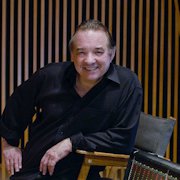
10 Questions for Stuart Hamilton

In the review I posted in March of Stuart Hamilton’s memoir Open Windows, I said that no one has been involved in more aspects of Canadian operatic performance than Stuart Hamilton.

Stuart Hamilton

Born in Regina, Hamilton, the young pianist chose to focus on accompanying singers. The list of the artists he accompanied is more or less the list of the best & brightest in this country. Sometimes Hamilton recognized the talent before anyone else, so that he was also a conduit whereby singers came to be discovered.

Hamilton is associated with two artistic enterprises:

  • Opera in Concert, begun in 1974
  • The Opera Quiz on Saturday Afternoon at the Opera

In one role he was self-effacing and humble, while in the other his personality propelled him to fame.  Yet there’s no contradiction, both aspects are true to who Stuart Hamilton really is, a kind & generous artist who is not just full of fun, but a gifted raconteur who has seen a lot in his time, and generously shares his experiences.

Hamilton is a Member of the Order of Canada, recipient of the Governor General’s Award and a Toronto Arts Award.  Although he no longer hosts the Opera Quiz or plays for Opera in Concert, Hamilton is still a teacher & coach, a man of vast experience & expertise in the vocal realm.

I ask Hamilton ten questions: five about himself, and five about coaching and teaching.

1) Are you more like your father or your mother?

I don’t think I resemble either of my parents. They were good people , but they didn’t have an artistic bone between them. I was never close emotionally with them. 

2) What is the best thing or worst thing about being a coach & accompanist?

The best thing about being a vocal coach is the repertoire one deals with. Who could complain about having Bach, Mozart, Verdi, Wagner and Debussy to work for? These people were the very best people in their field and to work with them is a superb privilege.

I can’t think of anything bad about my work. I adore it.

3) Who do you like to listen to or watch?

Stuart Hamilton (shown among several Honorary Degree recipients)

I don’t have a record player and the only thing I listen to on the radio are the broadcasts from the Metropolitan Opera. I don’t have a TV set. I don’t listen to records or watch films, as I’m only interested in the performing aspect of music and I don’t like to listen to the same performance more than once.

4) What ability or skill do you wish you had, that you don’t have?

It would have been useful in my career if I had been able to transpose at sight which I’ve never been able to do. I also wish that I had had hands which were more suited for playing the piano.

5) When you’re just relaxing and not working what is your favourite
thing to do? 

I enjoy reading. Right now I’m re-reading Stendhal-La Chartreuse de Parme and Le Rouge et le Noir en français—superb ! and I’m about to retackle Flaubert with Madame Bovary and L’Education Sentimental.

~~~~~~~

Five more about Stuart Hamilton’s ongoing commitment to coaching & accompanying singers

1)Having formerly given yourself to a busy career including Opera in Concert, the CBC, and other coaching & teaching activities, how does your “new” life challenge you? 

Mary Morrison, a colleague & friend

I’m enjoying having time to practise the piano and I’ve fallen in love with Bach which I never had time to work on before. I’m studying the piano with Boris Zarankin and enjoying it immensely. When I told Mary Morrison at the Faculty of Music that I was taking piano lessons , she said “It’s about time ! “

2) what do you love about coaching / accompanying? 

This seems to me to be a repeat of question 2 in the first part.

(true enough…)

3) Do you have a favourite work or composer ?

Pelléas is still for me, one of the supreme musical achievements. I still love Montemezzi’s “L’amore dei Tre Re and Chabrier’s Le Roi Malgré Lui. I adore Wagner and Verdi but also Mozart and Schubert. Actually, I don’t know of any so-called Classical music that I don’t like.

My favorite scene in the Debussy opera is in act four where Mélisande gets dragged around by the hair after which Arkel says “If I were God, I’d have pity on the hearts of men.”

4) How do you relate to the operatic world as a modern man?

I’m something of a Philistine when it comes to regie. When the curtain goes up, I look and then forget about the décor and concentrate on the music and the performance.

5) Is there anyone out there who you particularly admire, and who has influenced you?

Click to find out about Opening Windows

Most of the people who I admire in the music business are dead. Guerrero, my piano teacher in the fifties was a great influence as were Lois Marshall and Maureen Forrester. Actually, I’ve been most influenced by all the singers with whom I’ve had the privilege of working.

~~~~~~~

Stuart Hamilton continues as teacher & coach.  His memoir Opening Windows can be obtained in bookstores, or by following the link if you click the image to the right.

Posted in Interviews | Tagged , , , , | 1 Comment

Late Mozart 1: The Good

Toronto is a great town for musical connections.  If you go to enough concerts you’ll have a chance to explore inter-connected compositions & composers, to discover relationships and references.

Not so long ago I had the pleasure of hearing Tafelmusik’s scholarly take on Mozart’s Requiem the same month that I was obsessing over the COC production of La Clemenza di Tito.  Both works carry the caveat “some assembly required”, as they were finished with assistance (or perhaps more accurately “assistants”) rather than being 100% music by Mozart.  As such I have to be careful I am actually talking about Mozart and not something written by one of his associates.

And now this week we get the trifecta with Opera Atelier’s The Magic Flute.  While this work has been presented many times locally and abroad, it’s especially valuable to listen to it with the late Mozart in our ears.  Forgive me if I am going against the grain in this essay, given that Opera Atelier seem to be aiming for a popular reaction to this work, judging from the publicity I’ve seen.  And who could blame them?  The Metropolitan Opera, for example, have a short version of the opera designed for children, and I’ve seen other abbreviated versions of the work with family viewing in mind.  If Tchaikowsky’s Nutcracker can help line the cashbox why shouldn’t opera companies consider the same sort of thing, especially when times are tough…?  The two obvious candidates for this sort of family-oriented fund-raising would be Humperdinck’s Hansel and Gretel and of course, Mozart’s Magic Flute.

But pardon me, that’s not what this is about.  Accessible as Magic Flute may be, I’d like to consider it with the other two works from 1791, Mozart’s last year.

I already observed similarities between Clemenza and the Requiem in the review I wrote a few weeks ago, the echoes of “Parto, parto” in the “tuba mirum”. What else can we observe?  Ask me again when I’ve actually SEEN Magic Flute.  This is just the product of a few moments’ reflection on Easter weekend.

When Ingmar Bergman made his film of Magic Flute his Brechtian reading called attention to something in the writing from Mozart & his librettist Schikaneder (who was also the first Papageno).  At times in the film, the principals stand facing the camera while holding cards with text on them.  This is especially likely when the text ceases to be dramatic and instead begins to preach or moralize.  Whenever Schickaneder wants to teach us an important lesson, the music is sometimes of a pristine clarity, allowing the text to shine through like sunshine.  But what do you know, this isn’t the only opera where this can be seen.

In fact La Clemenza di Tito, an opera that premiered the same month as Magic Flute has a pre-existing libretto by Pietro Metastasio, that was modified by Caterino Tommaso Mazzolà.  I realize now –long after the fact of the COC production—that it would have been fun (and prudent) to compare Mazzolà’s libretto with that of Metastasio.  Oh well… another time.  But I can’t help wondering what motivates the divergences from Metastasio, and if they were driven by requests Mozart made.  These transgressions would likely be pathways that could have been reforms, had opera seria not been a dying form.  I can’t help wondering whether the numbers musing upon morality were already in Metastasio or recent additions.  This is a fascinating common thread between the two operas.

Would you like examples?

In Magic Flute you have the following:

  • In the “hm hm hm” quintet, when the five observes music’s power to change people’s emotions & dispositions.  Whenever Bergman uses signage (roughly one minute into the clip), it’s no longer drama, but a kind of moral instruction
  • The lovely duet between Papageno & Pamina concerning the nature of love
  • Tamino’s second aria –where the animals appear in response to his flute-playing—is like a demonstration of the power of music
  • After Papageno’s bells free him and Pamina from Monostatos & his slaves, the two sing a paean to music’s powers (again with signage).  

…and that’s all in Act I

In Clemenza di Tito—admittedly an operatic meditation on the nature of virtue & the form of the good—there are several instances where the story of the opera seems to stop regularly not just to juxtapose betrayals with loyalty, but for the contemplation of the nature of the good:

  • “Deh, prendi un dolce amplesso” is a duet between friends, who speak of faithfulness
  • “Ah, se fosse intorno al trono”, an aria where Tito muses on the honesty Servilia has shown
  • “Torna di Tiro a lato”, where Annio implores Sesto to do the right thing: to go back to Tito and to turn himself in.  Don’t you wish you had friends like this? Oh my God…
  • “Tardi s’avvde” is Publio’s commentary on Tito, that someone who has always been honest and trusting as Tito has might not be able to recognize treachery
  • “Se all’impero, amici Dei” is Tito’s aria where he compares loyalty commanded by love to that compelled by fear.

IS Mozart all good? oh no. That’s why i need a part two.

(stay two-ned)

Posted in Personal ruminations & essays | 1 Comment

Metro Youth Opera

Recently I’ve been fortunate to encounter small opera ensembles in the Toronto area   particularly those that showcase young talent.  Just a few days ago I wrote about the Soupcan Theatre’s program, and I interviewed the founder of Summer Opera Lyric Theatre, Guillermo Silva-Marin.

Now I’ve heard of another group.

Kate Applin, Founder & Artistic Director of Metro Youth Opera

Kate Applin is founder of Metro Youth Opera, a Toronto-based opera company that are in their third year, providing opportunities for young, emerging singers to perform and be paid for their work.

Metro Youth Opera presents its third season with an exciting triple bill of rarely-performed comedies: 

  • Mavra by Stravinsky
  • La serva padrona by Pergolesi
  • Le magicien by Canadian composer, Jean Vallerand

The performances are Friday April 5 at 7:30pm and Sunday April 7 at 2:30pm at Centre for Creative Learning Theatre; The Crescent School – 2365 Bayview Avenue, Toronto

Tickets are available at www.TripleBill.eventbrite.ca.
$30 – General Admission, $25 Seniors; $20 Students

For further information about Metro Youth Opera, follow them on Facebook or on their website.


Posted in Press Releases and Announcements | Leave a comment

Philip Glass’s The Perfect American

Philip Glass’s new opera The Perfect American is still available for viewing, free on medici.tv.  The world premiere production was presented by Teatro Real in Madrid.

As always I am willing to go the extra mile as a viewer and advocate of an ambitious project such as this one.  I did not hear a great deal in response (critical opinion one way or another), possibly because it is not easy to decode, and therefore may be misread. Maybe it’s still early, maybe i move in the wrong circles to know.

This is a fictionalized biographical opera about Walt Disney’s last days as he’s dying of lung cancer.  Where Akhnaten, Einstein or Gandhi are titans who lend themselves easily to abstract portrayal in opera, Disney is another matter entirely, at least as seen in this case.  In the style of the portrait operas (the three icons named above) we needn’t worry too much about details of daily life, when employing such an abstracted style that lends itself to symbolic readings.

The Perfect American (click for further information, to be presented by the English National Opera in June)

But The Perfect American is to my ear a completely different direction for the composer, an opera whose libretto shows a closer resemblance to normal human dialogue than any previous Glass opera.  While there may have been incidents of the cartoonist’s life that could lend themselves to the same sort of treatment as what we say in the portrait operas, that’s not at all what Glass attempted this time.  While the composer may just now have reached 75 years old, like other great composers in their maturity such as Verdi or Wagner, Glass is still experimenting with new sounds & dramaturgical structures.  Based on Peter Stephan Jungk’s novel, Libretto by Rudy Wurlitzer, this co-production between Teatro Madrid and the English National Opera (who will stage the opera in June) is directed by Phelim Mc Dermott who directed the co-production of Satyagraha with the Metropolitan, and conducted by Dennis Russell Davies.

It’s an opera with several big moments.

  • We hear of Walt’s famous wish to be cryogenically preserved, setting up the ending
  • We see the animatronic Abraham Lincoln, the ultimate ubermarionette; it (not he) is a big machine played by a man, that keeps breaking down, with lots of wires & tubes coming out of his back.  Walt and the machine debate rather sadly, until Disney (who gets the last word) proclaims “your views no longer tally with mine”.
  • Walt is hounded by Wilhelm Dantine, who debates the ownership of the intellectual property of the Disney brand.
  • Walt complains at least twice that his name is no longer his own, that it belongs to the company, not to him.
  • Disney sometimes confuses illusion with reality, something we’re explicitly told, but see several times, such as the debate with the fake Lincoln that concludes the first Act.

I found myself fighting the work, possibly because I don’t believe nor like the version of Walt Disney in this opera, or at least this story doesn’t square with what I saw unfolding in the media before my eyes as i grew up.  The Walt Disney I remember as a child—a figure I saw many times on Sunday night television—was an unsophisticated product of small-town America –just as the opera would have it—who loved animals and nature.  That’s about all of the Walt I knew who makes it into the opera.

We see both Walt & his brother Roy.  This Roy seems much gentler than capitalistic Walt, who comes across as a booster of Ronald Reagan and his conservative agenda.  Sorry, this is hard for me to believe, as I recall that Roy was the organizational wizard who rescued the company, that hadn’t done so well with Disneyland, but came into its own after Roy came up with Disneyworld & Epcot.  Still, if Wilhelm Dantine were pursuing Roy, if Roy were the actual conservative, then the story would lose its focus.  Christopher Purves, whom I reviewed a few days ago in Written on Skin, is a strong Walt Disney, surely a stronger figure perhaps than I expected or wanted to see, even if it likely squares with Jungk’s novel and is a marvelous creation all the same.

At times we hear a slightly jazzy sound to the orchestral texture, even if we’re still encountering the usual repeated notes and figures we’ve heard in many other Glass compositions.  Where Glass is known for abrupt endings to passages, we hear something more conventional, as the music sometimes fades away, perhaps a reflection of the psychology of the dying Disney’s subjectivity.  Aside from this, however, I don’t see significant form in this work.  Glass seems to have taken the next step, as The Perfect American resembles a film-score, the orchestra self-effacing, the singing almost superfluous to the work.  There is one effect that made me cringe, namely the use of a chorus that was largely unintelligible, reminding me of nothing so much as the sentimental choruses often concluding movies in the 1950s, especially those coming from the Walt Disney Studio.  It’s as though Glass were mocking Disney & the opera itself; if I knew what they were singing (even though sung in English they needed subtitles) I’d be in a better position to decode the ironies of these moments.  We’re no longer in the presence of art that is transcendent or particularly redemptive: not considering the way this Walt is portrayed.

Is Glass mocking the commercialism of art & its commodification, even laughing at himself –one of the richest and most successful composers who ever lived—when Disney is denounced as “nothing more than a moderately successful CEO”?  In the interest of giving Glass credit, and because I think Glass is nobody’s fool, I am inclined to think it’s possible.  By now Glass has no reason to put on airs, and every reason to be edgy, even in deconstructing his own fame.

The opera remains available online for awhile (I saw a webpage claiming the free streaming would continue for “two more months” as of mid-February).

Posted in Reviews | Tagged , , , , , , , , , , , , , , | 1 Comment

10 Questions for Guillermo Silva-Marin

The most influential man on the Toronto opera scene?  That would be Guillermo Silva-Marin.  His biographer and collaborator Henry Ingram put it this way:

Singer, teacher, director, producer, impresario, musician…each of these words describes Guillermo Silva-Marin and sometimes he is all these in a single day.
(complete biography)

A youthful Guillermo Silva-Marin, in a Harbourfront incarnation of Tales of Hoffmann with the COC

It’s hard to hit a moving target, but I managed to persuade Silva-Marin, or “Bill” as he’s known to his friends, to consent to an interview, because I believe people need to know more about this self-effacing powerhouse.  He’s an oxymoron, because he’s dynamic without being an egomaniac, effective without cracking a whip or raising his voice (except perhaps when he sings).  I was fortunate to meet him relatively early on, when he was an up and coming baritone, then later a tenor.  I recall his charming presence as Scaramuccio in Lotfi Mansouri’s production of Ariadne auf Naxos at the COC, a role which he would also cover at the Met.

Stuart Hamilton chose to pass the torch — leadership of Opera in Concert (OiC), one of the artistic treasures of this city– to Silva-Marin.  It’s scary to imagine what this city might be like if he hadn’t chosen to settle here, as Bill went on to found another important company in this city, namely Toronto Operetta Theatre(TOT); and he’s the driving force behind Summer Opera Lyric Theatre (SOLT).  These three institutions are key stepping stones for singers learning their craft, undertaking new roles, and showcasing their talents.

The Opera In Concert season has just ended, and now it’s on to La Vie Parisienne from TOT. And then it’s on to SOLT’s 2013 opera workshop, which culminates in a series of public performances at the Robert Gill Theatre, University of Toronto to showcase the artists and their work.

I ask Guillermo Silva-Marin ten questions: five about himself, and five about his roles as General Director of Opera in Concert, Toronto Operetta Theatre and Summer Opera Lyric Theatre

1) Which one of your parents do you most look like (what is your nationality / ethnic background)?

Guillermo (“Bill”) Silva-Marin (click for more about SOLT)

I look like my father Juan Osvaldo – very Hispanic look with a 50% Spanish blood.

2) What is the best thing or worst thing about being an impresario presenting opera & operetta?

Best thing has always been working with Canadian talent at the height of their powers and young emerging ones with their great enthusiasm and energy.

Worst thing, not having enough time to do it all. I need 24 hours extra a day.

3) Who do you like to listen to or watch?

I listen to music, any kind. I watch documentaries, the news and TVO/PBS (anything)

4) What ability or skill do you wish you had, that you don’t have? –

Foresight, I wish I could tell the future but I am resigned.

5) When you’re just relaxing and not working what is your favourite thing to do?

Reading – philosophy, murder mysteries, the classics, religions

~~~~~~~

Five Questions about work with Opera in Concert, Toronto Operetta Theatre and Summer Opera Lyric Theatre (SOLT):

1) How does being the General Director of Opera in Concert challenge you?

The company is small and works under financial restrictions. This spills over into the ability to safeguard the artistic process and complement what the artists bring to the table.

The greatest challenge is to provide a forum that is supportive to the creative process within a limited time span. We solve this with accurate timetables, tight schedules and open discussion of objectives. We try to make sure everyone understands the challenge, artistic, musical, dramatic, financial and managerial.

2) What do you love about presenting operas & operettas in Toronto? 

We deal in innovation and daring artistic programming. Every day there is discovery, a Pandora’s box environment – surprises. I thrive and love the challenges and so do the artists working under my guidance.

3) Out of the complex planning and development cycle, what’s your favourite moment when you mount an opera or operetta? 

There are no specific moments but a process that evolves as you face new and fresh developments. The process is organic and unpredictable to a point but never inflexible or static.

4) How do you relate to the opera community as a 21st century man? 

I have the privilege to introduce new works to our community and our artists. There lies the beauty of my position among the tapestry of arts organizations in Canada.  I wish there were more resources to do more.

The late Dixie Ross-Neill with one of her famous students.

5) Is there a teacher, singer, or an influence that you especially admire?

There are many teachers but Stuart Hamilton comes to mind and the late Dixie Ross Neill.

~~~~~~~

Upcoming:

Posted in Interviews | Tagged , , , , , , , , , | 7 Comments

Matched set

It’s the most curious symmetry.

Soup Can Theatre have paired Samuel Barber’s brief opera A Hand Of Bridge with Jean Paul Sartre’s play No Exit.  The opera is ten minutes, while the play is roughly one hundred minutes.

Symmetry?

But whereas the play employs four people, the opera not only has four singers, but an orchestra of fourteen, plus conductor Pratik Gandhi.

Although both stories address existential angst in different ways –Barber (and his librettist Gian Carlo Menotti) in the banalities of couples playing cards, Sartre in a more detailed examination of a hypothetical hell—there is a lovely balance.  With the jazzy Barber and the card-playing foursome we have a strong presence, to counter-balance the chief characteristic of Sartre’s afterlife, namely absence.  In the ten minutes of the opera we’re given a face-full of life, a vivid splash still echoing in our ears when the Sartre begins.  The boisterous young orchestra pack up and leave; and in so doing we experience a genuine sense of the void.   And at the same time, having heard real acoustic music, genuine voices singing, the ear is whetted for almost anything.  The silence of the space aches with their departure.
In other words, bravo, for the brilliant pairing.  Barber’s lark of an opera will never seem so deep as in this kind of pairing, and it serves as a wonderful appetizer for what’s to come.

Director Sarah Thorpe frequently takes No Exit in a comical direction, riding the hyper-kinetic energies of Daniel Pagett’s Garcin.  He keeps the pace going, delivering his lines at a wonderful clip, and thereby alleviating some of the darkness that sometimes overwhelms this play.  Sometimes at least, his glass is half full, and that means finding the wit and making it your own with a sense of authority.

Tennille Read’s Inez was Garcin’s nemesis, a dark and deliberate reading, with a physical solidity counter-balancing Pagett’s quicksilver body-language.  Carolyn Hall’s Estelle is perhaps the strongest catalyst, sexually provoking both Inez & Garcin.  Hall is wonderfully vulnerable, a portrayal that was like a match igniting each of the others onstage.  And Ryan Anning’s Valet floats through, a strong suggestion of something other-worldly.

The short Barber opera makes a powerful impression.

Alvaro Vazquez Robles had lyrical moments as Bill, dreaming of another woman named Cymbaline.  Keith O’Brien as David is the archetypal unhappy businessman, whose life is all about money.  Taylor Strande as Geraldine has the nicest music, singing sadly about her mother.  Shilpa Sharma has perhaps the biggest challenge as Sally –chirping repeatedly about the hat she wants to buy—while singing a few feet away from the audience.  Our eyes met on one occasion, as I wondered how she could help bursting out laughing.

Both pieces are played in the middle of the performance space.  The spare set is on a square pedestal just above the audience, who surround the players.  As my eyes went from one to another of the singers or actors, I’d regularly encounter the faces of the auditors on the other side.

Perhaps the cast are fully exposed, surrounded as they are by the viewers, although –as the Thorpe jokes in her program note—we’re trapped in a room together.

If this is hell, I like it.

Soup Can Theatre’s double bill of A Hand of Bridge and No Exit continues at Ernest Balmer Studio, in the Distillery District.   Further information

Carolyn Hall, Daniel Pagett, Tennille Read in No Exit (click for more photos)

Posted in Reviews | Tagged , , , , | 2 Comments

Whose skin?

I just watched Written on Skin via youtube.  I won’t include the url, as this likely will only lead to its being taken down due to the traffic.  Anyone serious about seeing it, can go to youtube and search for “Benjamin Written on Skin”.  It’s an hour and 42 minutes, with over five minutes of applause at the end.  That doesn’t sound long, but I don’t think I will watch it again.

Look at the title of the work AND my headline, then imagine that i mean my own skin, and ask yourself if that sounds like something pleasant (at first glance i thought the tale might refer to tattoos, but no…).  Perhaps the creators would laugh at me and say that’s precisely what they sought to achieve.  Maybe.

There is much to admire, much that is clever and new, yet I am perturbed by what’s familiar.

Chief among these is something a family member regularly lambasts me with, the fact that opera is a collection of horrible tales.  Must it continue? I have trouble watching Carmen because I feel it’s a story of such misogyny that we’re watching a powerful woman getting put down –the way a mad dog is put down– for the sin of being too strong for the man she was with.  It makes me furious just to think of it, so I avoid this opera like the plague that it records, a plague that’s with us still.  Sure, it’s as universal as stalkers and rape.  Do I need this in my life?  Not if I can help it.  I find myself embarrassed by and for my gender watching this opera, needing to explain that some men aren’t like Jose. Yet some, clearly ARE, G*dd*mm*t.

Written on Skin boasts a libretto from Martin Crimp, a playwright whom I admire a great deal.  The score composed by George Benjamin is subtle, full of original touches, and still echoing in my head.   But the opera makes Carmen look like Hansel und Gretel.  Ha, as I look for an analogy (Magic Flute and Rigoletto popped into my head), everything is nasty, even the kids’ opera by Humperdinck.  No I’m not going soft, quite the contrary.  I am thinking about opera composition, and what I’d undertake to write if I had the cojones.  Yet must one show one’s cojones in violating everyone?

I feel violated, I guess.  The story is opera’s bread and butter, a love triangle, just like Tristan or Pelléas.  Or Otello.  Or Il tabarro.  Hmm, brutal as Puccini’s entry into the infidelity sweepstakes may be, at least the wife is still alive at the end, which is more than you can say for any of the others.

When is someone going to write an opera that’s relevant to our own morality?  Bill Clinton or Tiger Woods or –probably– the guy who lives right next door to you all screwed around, and nobody has to die, because it’s actually very funny. Just ask Pagliaccio (whoops… bad example i suspect).  No I shouldn’t issue the blanket condemnation.  There are lots of operas that I embrace, including some I complain about above.  Neither Tristan nor Pelléas is misogynistic.

In any case, you can find it for yourself if you like.  The singing is really good.  Barbara Hannigan is quite a bold performer, likely undertaking this because of the bravery of her character Agnès, in standing up to her tyrannical husband.  She reminds me of a line from ee cummings “I sing of Olaf”, namely “there is some shit I will not eat.”  Near the end of the opera, she’s being forced to consume the heart of her dead lover (she didn’t know what was on her plate), and boldly….. kills herself?

Sorry that’s not much of a rebellion in my books, even if the music and the slow-motion enactment try to lend some dignity to the proceedings.   No Pollyanna doesn’t normally lambast something this way, but then again, I also don’t want to send people innocently to see something that is –in my books—so horrific.  Musically? Wonderful.  Dramaturgically?wonderful.  But politically? Inexcusable.

So let me concentrate on what I like.

The stage contains modern and medieval spaces, people in modern dress in two quadrants, while people in antique garb occupy other parts of the stage picture.  It’s jarring, and surprisingly effective, something I’ve never seen.  This is from the Aix-en-Provence, Grand Théâtre de Provence performance on youtube from July 2012.  We see figures from our own time cheek-by-jowl with those from the middle ages, and in the process it powerfully authorizes what we’re seeing.  The frameworks are metatheatre, matching the text itself, which is a story about making a book and making stories.  The characters sometimes speak in the third person, as though exploring the new notion of identity; I read somewhere that in the middle ages our modern notion of individuality didn’t exist, or wasn’t intelligible, so I am hoping that’s why we have the third person narration.

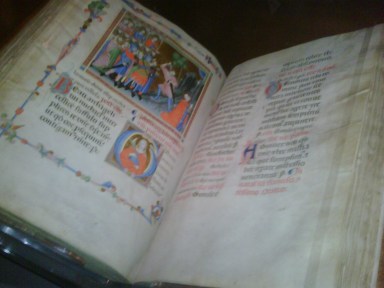
Here's what an illuminated book can look like. This is from the AGO show of early Renaissance art that just opened.  (photo: Leslie Barcza)

Here’s what an illuminated book can look like. This is from the AGO show of early Renaissance art that just opened. (photo: Leslie Barcza)

The boy is creating an illuminated book, yet in opening up Agnès to the life of the flesh that had previously been missing from her existence, he also writes on skin.  When the Protector –as Agnès’s tyrannical husband is called—kills the boy it’s with a knife, another –nasty—sense of the title.  In a time when we seem to be witnessing the end of books and coincidentally, a month when I wrote about the magic of illuminated texts at the AGO, the title has a powerful set of implications.  I was so sad to see where the story went, even as I recognize that the opera works like clockwork, the music powerfully enacting and signifiying the characters.

Christopher Purves is powerful, as you’d expect, in the role of the Protector, enacting and abusing his power.  This is the sort of thing you’d hear sung in a baritone voice –like Prospero in the Tempest come to think of it—rather than a tenor or bass.  Purves manages to be very likeable, perhaps a tribute to the writing, but also surely due to his performance, the depths he manages to convey in the harsh glare of high-def close-up.

Multi-talented Barbara Hannigan, shown here conducting (click for more)

Barbara Hannigan is as always, unstoppable, wonderfully subtle for the first part of the work, understated and self-effacing, as she gradually discovers herself.  As a portrayal showing a change in a character, this is a wonderfully impressive piece of work.  I have to remind myself that this is an opera watching her, and get over my horror at what happens.

Bejun Mehta is the boy, a counter-tenor whose mysterious presence animates and electrifies the world of the Protector & his wife Agnès.  He is the artist –writing and drawing—and as such must perhaps be expected to suffer.  Oh dear, another cliché…?  But again, Mehta is wonderful, every note beautiful and every moment hypnotic.  I hope to see him again.

Benjamin’s score is really good.  The only really massively loud parts come when the action calls for it.  Most of the time we hear the singers easily enough, although one of the singers I didn’t name was all but unintelligible (that is although sung in English, I needed the French subtitles to understand what this person was singing…everytime they appeared).

I wonder if I’d be happier with this viewed from a distance?  In close-up, where I can be seduced by the faces of the cast, it’s very hard to endure such extreme violence enacted.  Perhaps from a distance, bathed in Benjamin’s music, it might move me differently.

You’ve been warned.

Posted in Reviews | Tagged , , , , | 3 Comments

Esprit’s McPhee

I picked up Esprit Orchestra’s CBC recording of Colin McPhee in the lobby at one of their concerts earlier this year.  I’d reviewed their live performance in October of Tabuh-tabuhan (1936) a reading of such playful energy that there was no mistaking their enjoyment, right down to the beatific smiles back and forth between the members of the orchestra.  They love this piece, and it shows in their performance.

Ditto on the CD.

Alex Pauk

Alex Pauk

Alex Pauk leads readings of great clarity, energetic yet as tranquil as leaves flickering in sunlight.

McPhee should be better known, a composer one might be tempted to call a minimalist . There’s the same de-emphasis on harmonic development, in favour of rhythmic activity that one finds in such composers as Philip Glass.  McPhee spent time transcribing Balinese music, going on to write works influenced by their style while using a modern orchestra rather than instruments from the East.  If Glass or Reich or any of their peers had heard McPhee he’d surely be understood as an influence, and thereby recognized as a hugely important composer, certainly the most influential of all Canadian composers.  McPhee did influence Benjamin Britten, but as far as the minimalist movement is concerned, they seemed to find their idiom without any help from the Canadian.  Does influence matter? perhaps in some circles of musicology.  All i know is that McPhee is one of my favourite composers.

The CD (all compositions by Colin McPhee) includes

  • Symphony #2 (1967) 
  • Concerto for Wind Orchestra (1960) 
  • Transitions for Orchestra (1954)
  • Tabuh-tabuhan (1936): the work that gives its name to the CD
  • Nocturne (1958)

It’s one of the most delightfully relaxing CDs I own, meditative and oozing charm.

One of the things I especially admire about Pauk & Esprit are the way they program music.  This week they’ll be offering orchestrated versions of Jimi Hendrix and Marius Constant’s theme from The Twilight Zone, on the occasion of Esprit’s 30th Anniversary.  Pauk is a man with a mission, as captured on the occasion of an interview he gave last year:

Esprit’s relevance to modern man has to do with keeping us abreast of recent trends in music and the relationships of that music to how we think about our present condition. By way of comparison, we don’t expect doctors to use medical equipment from the 1800s in their practices today, so why should we expect musicians to only perform music from the past? I enter into my work with Esprit with a sense of adventure and discovery and I want my artistic colleagues, as well as audiences, to share in that experience. While there is sometimes a degree of entertainment value in what we do, the idea of moving music forward in a pure sense is important. We aim to provide a sensual experience as well as an intellectual one – one that relates to life in a meaningful way today.

~~~~~~~

Esprit Esprit Orchestra end their 30th Anniversary Season with a concert Thursday March 28th Esprit Orchestra, 30 and Counting!, at Koerner Hall, March 28, 8 p.m.

~~~~~~~

Programme:

DENIS GOUGEON Tutti*
ERIK ROSS Burn* concerto for saxophone, percussion and orchestra
ZOSHA DI CASTRI Alba
MARIUS CONSTANT TW. Z. (The Twilight Zone)
JIMI HENDRIX Purple Haze
*Esprit Commission and World Premiere
Posted in Reviews | Tagged , , , , | 1 Comment

Wallis Giunta Sins

When is a recital not a recital?  Perhaps when its materials and its assembly begin to outgrow that narrow definition, to resemble something bigger and more exciting; so it would seem on the basis of Wallis Giunta’s program Sunday March 24th as part of the Canadian Voices Series, in collaboration with pianist Ken Noda.

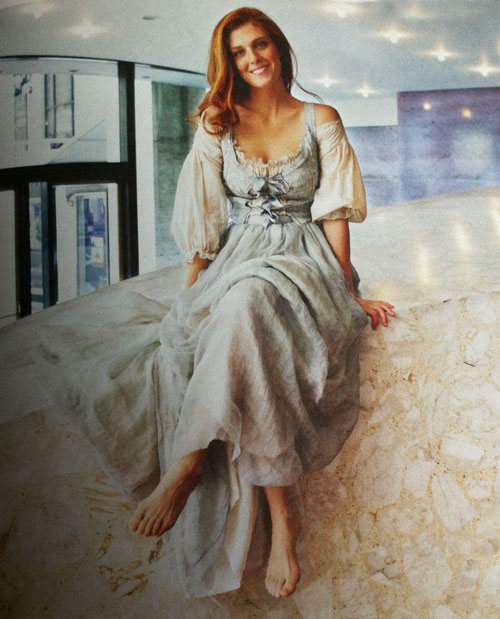
Mezzo-soprano Wallis Giunta as she appears in re:porter, Porter Airlines magazine (photo: Michael Edwards; costume by Camille Assaf)

Mezzo-soprano Wallis Giunta as she appears in re:porter, Porter Airlines magazine (photo: Michael Edwards; costume by Camille Assaf)

Giunta’s choices seem to reflect the same creative breaking-the-mold approach to assembling a concert program seen lately in the area.  It’s not enough to be a brilliant performer in the astonishingly competitive Toronto market, not when small opera companies are laying claim to rep outside their usual purview (something I’ve talked about so much recently that I won’t beat a dead horse by naming names).

It’s handy that we recently saw a version of Kurt Weill’s Seven Deadly Sins presented in the city, to have some idea of the originality of the concept.  Instead of two Annas and family, we had Giunta singing some of Weill’s songs in a cavalcade of the sins, followed by other materials ranging wildly in an all-out investigation of various aspects of sin, at least as commentaries or echoes of one another.  Without even addressing Giunta’s performance, this is one of the most amazing programs I’ve ever seen, for example,

  • Weill’s languid “Youkali”, Poulenc’s luscious “Hôtel” and then Flanders & Swann’s “The Sloth”
  • Weill’s “Stolz(Pride)” with Britten’s “The Plough Boy”
  • Weill’s “Zorn(Wrath)” with Montsalvage’s “Cuba a Dentro de un Piano” and Monteverdi’s “Addio Roma” from L’Incoronazione di Poppea
  • Weill’s “Unzucht (Lust)” with Chapi’s “Al pensar en el Duno de mis Amores” and Porter’s “Love for Sale”

And that’s just the first part of the concert.

I came expecting something intelligent, having been keenly impressed by her work (last month) as Annio in the COC Clemenza di Tito, channeling Michael Cera’s character in Juno.  The gorgeous red-head was unrecognizable (it took me about 10 minutes to realize who she was, even though i had the cast list and knew the opera well), transformed into the sweet & gormless youth, as instructed by her director.

And so Giunta’s approach was as varied as the compositions.  For “Addio Roma” Giunta sang much of the aria facing into the piano, making both a curious acoustical effect and a fascinating visual.  For Foster’s “Old Folks at home” –a song bundled with Schubert’s “”Der Zwerg” and Weill’s “Neid (Envy)”or in other words, a problematic song laden with potential irony—Giunta gave us the utmost directness & simplicity, sitting at the foot of the stage, and singing half the song unaccompanied.  For John Lennon’s “Imagine” (a song that drew spontaneous applause at its conclusion), she came fully downstage, but looking directly out.  Some songs called for something physically outgoing, as in the lust-set, while the sloth set were matched by a far more low-key movement vocabulary.  Each number wasn’t simply sung, as you’d expect in a recital, but fully realized.

I wish the concert had been video-taped, as there’s much there to unpack and explore, that I am sure I missed on this single encounter.  The program was sufficiently complex that Giunta decided to ask for an introduction, smoothly delivered by Eric Domville, giving us some of the contexts for the works we encountered.

At times, particularly in the two songs that are also on Theresa Stratas’s Weill album, I was aware of the way some other singers come at this material, songs that are as daunting in their way as Everest.  For the mountain, there’s a well-annotated history of people who approach it from the north or the south; for these songs it’s more a matter of whether one comes at them with the direct and intense presentation of text as by a cabaret performer (thinking of Lotte Lenya, or more recently Toronto’s Lindsay Sutherland Boal for instance), or the pathway via pure voice (thinking of Stratas, who in my opinion didn’t always really manage the songs), or some other set of choices entirely.  Giunta’s young voice has all the beauty of Stratas but with a better integration of upper and lower registers, so that one doesn’t suffer (take that literally if you wish) the disconnect between the sounds that Stratas made at the top and bottom of her range.

Let me add a brief parenthetical rant while I am on this topic.  Giunta really gets how to sing popular music without insulting the material or the audience.  While this was not a young crowd, I suppose the oldest among us are still baby-boomers, fluent in rock n roll or jazz.  It’s wasn’t fake that “Imagine” won the applause.  Singing Cole Porter, her line had a fluidity you didn’t hear in the Schubert, a way with pitch that was like a gentle tease, which we also heard in “Youkali”.  This is, in miniature, the issue one often encounters when opera singers take on popular music, the pretentiousness of a Carreras singing West Side Story or Placido Domingo and John  Denver singing an embarrassing duet.  So long as one knows what one’s getting –suspending judgment of a great artist, the way we suspend our judgment of our children or our grand-parents—there’s no harm I suppose.  Giunta’s venture outside classical rep is always clever & brilliantly conceived, with no hazard to anyone’s sense of taste.

So in other words it was one of the greatest vocal recitals I have ever seen, wonderfully eclectic but purposefully so.  Ken Noda brought lots of emphasis with no loss of clarity to his contribution from the piano.  If Giunta plans to repeat this program somewhere, I’d ask her to please capture it on video.

Wallis Giunta, wearing McCaffrey Haute Couture (photo Miv Fournier)

Wallis Giunta, wearing McCaffrey Haute Couture (photo Miv Fournier)

Posted in Reviews | Tagged , , , , , , , , , , , , , , | 6 Comments

Serendipitous Poulenc

The mind sometimes makes patterns out of the chaos of the programming around us.  Lately it’s been Francis Poulenc:

  • March 1st Isabel Bayrakdarian programmed the boisterous Le bal masqué, a work I’d studied a very long time ago 
    …look at Poulenc’s face. What a comedian!
  • Wallis Giunta will sing the languid “Hôtel” as part of her concert program this coming Sunday at Glenn Gould studio 
  • The COC are about to present Dialogues des Carmelites (no comedian in sight)

Such variety…!

click for more info about the CD

That’s part of my context coming to Musique de chambre from Pentaèdre, a CD collaboration between the woodwind quintet and pianist David Jalbert, offered in honour of the 50th anniversary of this amazing composer’s death in 1963.  Like Debussy and Stravinsky –likely influences upon him—Poulenc is a composer ranging broadly across the emotional landscape.   While the music of some composers seems to hang together neatly in a single tight statement for posterity, Poulenc’s variety suggests a colourful personality & and an interesting life.  If we think of our exploration of a composer’s music as a journey, Poulenc throws more than a few surprise twists our way.  The disparity may be entirely in my head, given that someone else may easily manage to find harmony in my discord.  Like Debussy & Stravinsky, Poulenc at times pays homage to the past, at other times boldly points to the future, music that may invoke nobility or spirit at one time, while at other moments happily reminding us of popular culture & even jazz.

And voila –courtesy of Pentaèdre, Jalbert and ATMA –we’re presented with Poulenc’s glorious variety.

There’s the “Septuor pour piano, flute, hautbois, clarinette, bassoon et cor”, a kick-off for the CD utilizing all six of the personnel in a bold beginning.  Their reading is pristine yet jarring, fearless and crystalline in its perfection.  In this instance Poulenc shows his allegiance to Les Six, in a clinical score pushing any ensemble to its limit without sentimentality.

Danièle Bourget follows (with Jalbert) in a reading of the well-known flute sonata.  It’s been awhile since I’ve heard the piece, from its haunting opening movement, to the rhythmic vitality of its closing.  Bourget and Jalbert offering is the first of several highlights on this CD.

Then it’s the turn of horn-player Louis-Philippe Marsolais in the “Élégie pour cor et piano”, this time showing a deeper and more soulful side to Poulenc, composed in response to the untimely death of Dennis Brain in the 1940s.  Martin Carpentier & Jalbert follow with Poulenc’s clarinet sonata, one of his final works, written with Benny Goodman in mind.  At times soulful, at other times wildly joyous, the balance is very self-assured and congenial.

And then for something completely different –yet typical of the variegated genius that is Poulenc—we come to the trio for oboe, bassoon and piano.  This elegant neoclassical work –written in the 1920s –points backwards at the 18th century in a manner reminiscent of Ravel’s Tombeau de Couperin.  Norman Forget and Armand Lussier join Jalbert in a sparkling reading, a subtle display of delicacy and grace.

They close with an arrangement of the melodious Novelette oozing charm & class.  Here and throughout the CD, Pentaèdre –a Quebecois treasure—show a natural affinity for one of the recent masters of French culture.

Posted in Reviews | Leave a comment