At the first COC podcast, we discussed the implications of a post from John Terauds, when he speculated about Toronto audiences.
In passing it was observed by one of us (perhaps Wayne Gooding, perhaps John Gilks, perhaps Gianmarco Segato; all I know is that it wasn’t me) that the venue in question was part of the problem. Koerner Hall was half full, which was the reason the matter was raised as a concern by Terauds. A half-full Koerner Hall? Still likely 500 people present, but it doesn’t look very good, does it?
Today, recording our next discussion, we were looking at the successes of Against the Grain Theatre and other smaller companies in the Toronto area.
Optics can make a huge difference, it seems.
On the one hand, you have the phenomenon reported by Terauds, where 500 seats seem paltry. Even worse is the example someone gave of a chamber concert in Roy Thompson Hall, where the ambience of the venue already seems too big, particularly if there are unsold tickets.
If you put on an opera in a smaller venue (that is, 100 seats or even fewer) and sell every ticket, making your audience frantic for those few tickets, the result is “buzz”.
The lesson would seem to be, that one should aim for the right size of venue. Too small? You make less money, even if you create excitement. Too big? Even if you’ve sold plenty of tickets, you don’t want to seem to be rattling around inside a large space, because there will be less excitement.
Tamara Wilson is a soprano who’s going places, a major talent with the voice to be a star.
An alumna of the Houston Grand Opera Studio, Wilson’s awards include the George London Award from the George London Foundation, as well as both a career grant in 2011 and study grant in 2008 from the Richard Tucker Music Foundation. Wilson had the honor of being Washington National Opera’s 2011 Singer of the Year.
We’ve been fortunate to hear Wilson at the Canadian Opera Company in Toronto, first as Amelia Grimaldi in Simon Boccanegra in 2009, and as Elettra in Idomeneo in 2010. I reviewed Elettra this way in 2010:
Tamara Wilson, on the other hand, injected a campy levity into every moment she was on stage as Elettra. Wilson easily stole the show, whether chewing the scenery in over-the-top displays of jealousy suitable for an old-fashioned diva, or channelling the 18th century version of the Material Girl in her fantasies of a happy future complete with matching luggage. But perhaps that’s inevitable when everyone else is serious, and poor rejected Elettra is so much fun, especially in her raging coloratura.
In the meantime, Wilson has been busy (and I won’t even mention concert appearances).
Last season?
Miss Jessel in Britten’s The Turn of the Screw at Los Angeles Opera
Her German debut at Oper Frankfurt in concert performances of Wagner’s early opera ‘Die Feen’ as Ada, to be commercially released by Oehms Classics.
The 2011 – 2012 season?
Aida at Teatro Municipal de Santiago in Chile
Elisabeth de Valois in the five-act French version of Don Carlos at Houston Grand Opera
debut at Théâtre du Capitole in Toulouse as Leonora in a new production of Il trovatore
And needless to say, I’ve been eagerly awaiting her return to Toronto in the new COC production of Die Fledermaus, which is now happily upon us. Fledermaus opens October 4th at the Four Seasons Centre.
I ask Wilson 10 questions: five about her, and fivemore about her portrayal as Rosalinde in Die Fledermaus.
1) Which of your parents do you resemble (what’s your nationality / ethnic background)?
Soprano Tamara Wilson
I am a pretty even mix of the two. I definitely have my father’s face and hair color. I have my mother’s ears and eyes. My eyes change from green to blue to grey.
We’ve been working on our family history so I can tell you that I am mostly French, Irish, Scottish (Wilson from my Dad), English, and German (Miller or Müller from my Mom). You know, the countries with all the super pale people. My nickname at home is Casper. Fun fact, I have played Miss Jessel in Turn of the Screw in two different productions. Both times they had to give me makeup darker than my actual skin, to play a GHOST. Sad.
In doing our family history we found that we are related to Martha Washington, George Washington’s wife. We are also related to Napoleon through marriage. There are some pretty powerful women in my bloodline. We’ve traced our family lines all the way back to Charlemagne.
2) What is the best thing / worst thing about being an opera singer?
The best thing I would have to say is the travel but it’s a double-edged sword. It can be both awesome and tiresome. Singers basically get paid vacations in cities all over the world. We get the chance to see all walks of life from many varied cultures, which fascinates me. The problem with that is we are away from home most of the time. I think from August of this year till next June I’m away for around 224 days. I have started feeling more at home living out of suitcases. If I’m anywhere longer than three months I start to get antsy. It can be lonely at times but on the bright side our opera community is so small that we work with the same people a lot of the time. They then become a sort of quasi-family. Let me tell you, Skype is the best technological advancement for stabilizing the sanity of the travelling opera singer.
Worst thing is that if we get sick we don’t get paid. It’s not like a day job where you get a paycheck every week or month. Opera singers aren’t afforded the luxury of sick days. If you’re sick on a performance night you forfeit that paycheck. If you only have five performances that’s 20% of your fee gone. Only in very rare cases will a singer receive their fee. This is why some singers are constantly wearing scarves, drinking tea and acting crazy. We have to work wisely and be smart enough with our budget that we can afford those times when one just can’t sing.
3) Who do you like to listen to or watch?
I will give you two categories for this. Classical and What I actually listen to everyday.
My first ever classical cd was Cecilia Bartoli’s Chants d’amour. That sort of hooked me on classical vocal music. I love how unique and expressive her voice is. My other favorite singers are Montserrat Caballé, Anita Cerquetti, Anna Tomowa-Sintow, Anna Di Stasio, Serena Farnocchia, Alexandrina Pendatchanska, and the lovely Joyce DiDonato. All of these ladies have a technique that is amazing and musicality beyond compare.
My ipod is awash in various artists and genres. I love bluegrass, indie, 80’s pop, jazz, acid rock, heavy metal, R&B, rap, orchestral. My all time favorite band is the Foo Fighters and anything that Dave Grohl is involved in like, Them Crooked Vultures. This band has Josh Homme from Queens of the Stone Age, Dave Grohl and John Paul Jones from Led Zeppelin. This is essentially a recipe for awesomeness. Their live show from Roskilde 2010 is simply amazing. I highly recommend it. Here’s the youtube link.
Other favorites include Grizzly Bear, Muse, Band of Skulls, The Staves, St. Vincent, and Local Natives. There’s so much good popular music out there right now you just have to sift through the stuff they play on the radio.
There is one thing you’ll never see on my ipod and that’s reggae. I can’t stand it. I think it’s because it all sounds the same to me.
4) What ability or skill do you wish you had, that you don’t have?
I wish I had the ability to download languages into my head. The day they invent that computer chip I will be the first one in line. I have a basic understanding of French, German and Italian but it would be nice to be fluent in all languages.
Oh and not being a klutz. I FALL DOWN. A. LOT.
5) When you’re just relaxing and not working what is your favourite thing to do?
I like to paint in my spare time. I have always loved drawing and painting. It’s another artistic outlet that I don’t have to be judged on. I can just do it for fun.
I do like home improvement as well. I like building things and working with my hands. I helped my folks remodel their basement. Put up wall studs and dry wall, put stone up in the wine cellar. It’s nice to feel like you’re doing something productive.
I love to read as well. I finally broke down and got a kindle (mostly because it was a gift). I love the feel and smell of books but it’s hard to pack light with them. I just finished reading, How the Universe Got It’s Spots: Diary of a Finite Time in a Finite Space, by Janna Levin. I love anything having to deal with science. If I weren’t a singer I would totally go back to school to be a science teacher.
Five more about appearing in the COC production of Die Fledermaus:
1) How does singing the role of Rosalinde challenge you?
This will be my fourth role in German. I have over a dozen in Italian. So doing this operetta with all of the dialogue is a bit of a challenge. However I love the fact that you get to act more in these types of scenes. I really miss doing plays. I used to think memorizing lines in English was hard but learning them in German is a whole other level.
On the vocal side of things I think she’s a really great fit. She has everything, a little coloratura, high notes galore and long legato phrases.
2) What do you love about Rosalinde: both the role & your part in the intrigues of the production?
I LOVE the fact that I get to be funny for a change. Most of the Verdi roles I sing don’t have even a glimpse of levity to them. It’s nice to not be suffering for once.
Director of the COC Die Fledermaus, Christopher Alden
I really enjoy the acting aspect of Opera. This production is very thoughtfully constructed. Our director, Christopher Alden, did not want to do a rehashing of what everyone else has done with this piece. It is a bit of a different type of comedy. Ambur Braid, one of our Adeles and I think it’s more like a Wes Anderson film. A dryer comedy than the usual screwball versions associated with this piece. I always like to try things that are different from the norm. It makes things far more interesting.
3) Do you have a favourite moment in Die Fledermaus?
Musically speaking, I love the slow Duidu waltz in the party scene. I think it’s some of the most gorgeous music. This score in general is built on great tune after great tune. It’s easily one of those shows you go home from humming.
We’ve just started our staging this week and the Rosalinde/Alfred scene in Act I might be my favorite so far. Alfred comes in wearing a Caruso-esque Shakespearean costume and promptly does a strip tease. Not gonna lie, it’s pretty amazing.
4) How do you relate to Rosalinde as a modern woman?
In most of the productions I’ve seen Rosalinde is not a very likable character right away. She’s mean to her maid. She’s either taking pills or drinking to fill the void her husband creates in their relationship. Then she has a gentleman caller who she doesn’t really do anything with but probably wants to. At the end of the opera it’s a little hard to swallow that her husband treated her unfairly. Both of them flirt with others. They are both guilty.
This production is trying to show that Rosalinde and Eisenstein do love each other, but the passion has run out. Now they’re just trying to get it back. A situation like this is universal. Every marriage/relationship has this period where things aren’t as easy and fun as they used to be. It gets to the point where you actually have to work on the relationship to make it successful. Rosalinde feels neglected while Eisenstein feels smothered and wants to be on the prowl again. I think that today there are many women that deal with this all the time.
Back in Rosalinde’s time it was sort of expected that a man would be able to have a little on the side. A woman’s place would be in the home, period. Nowadays women can be man’s sexual equals. Everyone is free to cheat equally. Women have sexual desires so why should men have all the fun?
Maybe I would regulate a teensy bit more self control than Rosalinde does. Plus I don’t think disguising myself at a party to trick my husband would be such a great relationship builder.
5) Is there a teacher or an influential recording you’d care to name whose work you especially admire?
Barbara Honn
I have known my voice teacher, Barbara Honn, since I was 17 years old. I am now 30 and I still go to see her (when I’m actually in the country). She was the one who taught me not only how to sing but how to teach, be a better human being, and learn how deal with our business. She has been a true mentor. Plus she makes sure you don’t get away with anything. I sang Don Carlos in Houston last year. After the performance she said, “I have a few exercises that will help you not sing that in your neck. It was ok but it could be better.” That, my friends is the mark of a true teacher.
~~~~~~~~
One of Constance Hoffman’s costume designs for the COC production of Die Fledermaus
The Canadian Opera Company production of Die Fledermaus, starring Tamara Wilson runs October 4th – November 3rd at the Four Seasons Centre. Find out more here.
Classrooms can be amazing places for discovery, especially for the teacher. Sometimes we can’t anticipate what develops right in front of us.
Not long ago I showed two contrasting DVD versions of Puccini’s Madama Butterfly to my opera class.
Having talked about the differences between theatrical realism and verismo –not at all the same things—we began with Frédéric Mitterrand’s 1995 film version. Starring soprano Ying Huang and tenor Richard Troxell, this is a very handsome version that seems to stop at nothing to create its illusion of reality. Although Ying Huang is not Japanese, she looks enough like Cio-cio-san to help us believe in this tale of east meets west.
At the other extreme is Jean-Pierre Ponnelle’s 1975 production originally made for TV. Starring Mirella Freni & Placido Domingo, this is a very theatrical approach.
I thought I’d be demonstrating the ways that different interpretations offer us variety, encouraging us to revel in the divergence we encounter between different directors, and the pleasures we could take.
Instead we were confronted with some of the limits of verisimilitude. Richard Troxell’s Pinkerton is shown up close in Mitterand’s film. With each subsequent viewing I feel more and more troubled with the character of Pinkerton, surely one of the least heroic leading roles ever to emerge from Puccini’s pen. While he sings well, Troxell is trapped by Mitterand’s framing of the role. For those who seek realism, Mitterand seems to spare no expense, but I am not sure that the result makes the opera more meaningful.
Ponnelle’s approach has many strengths, but in passing it’s worth noting that one of its chief objectives seems to be a kind of rehabilitation of Pinkerton. I’ve never been fond of the character, but nothing could make it so clear as our head-to-head comparison in the classroom, as though Ponnelle wanted us to like our American naval officer. Where the opera pushes him aside after the first act, making Pinkerton almost a bit player –absent in Act II and remorseful but inexorable in Act III—Ponnelle reframes everything around Pinkerton. The opera begins with a surreal flashback of Pinkerton’s frenzied pursuit of Butterfly that concludes the work, as she kills herself.
My favourite moment in Ponnelle’s interpretation is the inventive introduction to the last scene. We see images as if from Butterfly’s dreams, figures moving in the manner of stylized Kabuki figures. Her dream includes her physical (re-)union with Pinkerton, surreal figures associated with the USA (including Uncle Sam & someone resembling Wild Bill Hickok), and a Butterfly who dreams of assimilation, counter-intuitively dressed in western clothing for a change. While this is not by any means a recent film, Ponnelle’s profound images are deep & troubling, calling me back again and again for repeated viewing.
Watching Ponnelle’s work I feel convinced that, contrary to what some people would say, opera scores are far from exhausted, if only directors would seek to explore them more fully.
The conversation about the arts is as much about the audience as it is about the art. If you’re marketing the question can be one of identification (who’s coming to see/hear) as much as how to find, connect with and retain that audience.
While it’s been said before, this is a time of transition, a new world being born from the old. We have new works co-existing with the old, and new ways of presenting & packaging those creations.
New platforms are coming into play for all of the arts, and opera isn’t being left behind, whether we’re speaking of opera in your movie theatre or your telephone. While the music you hear from your tiny device may not offer the faithful audio reproduction that a high-end system can in your home, that’s not relevant when you’re jogging, cycling or driving.
Nikitin and his controversial tatt
And the communications can be very political. The Metropolitan Opera saw a scandal erupt online earlier this year when their General Director Peter Gelb seemed to be censoring Opera News, the Metropolitan Opera Guild’s own publication. I believe Gelb’s approach was short-sighted, in failing to see the value in the vibrant –if sometimes dissenting–discourse around his own company & their productions. In similar fashion, The Bayreuth Festival –an opera house that has seen more than its share of controversy –was again in the spotlight for many of the wrong reasons, with the departure of Yevgeny Nikitin from their production of Der Fliegende Holländer over tattoos that may or may not have included a swastika. Like the tattoo itself, the story was a jumbled mess, and a case study in how not to handle a situation.
Wayne Gooding, Editor of Opera Canada
Speaking of conversations, new media and controversy, I was happy to participate in The Big COC Podcast Episode 1 with Wayne Gooding of Opera Canada, John Gilks of operaramblings and hosted by the COC’s Gianmarco Segato. Episode one includes round table discussions about the controversy at Bayreuth, thoughts on marketing classical music in Toronto and the question of operetta in an opera house, especially considering the upcoming production of Die Fledermaus by the COC.
I’m going to talk about another aspect of the composer that fascinates me, one that probably deserves greater attention considering that it’s rarely discussed on-air or in reviews.
Debussy is usually spoken of as an impressionist composer, an epithet that I’d consider mistaken for a number of reasons. First and foremost, it can’t be used in the same way that it’s used for painters, who were working towards certain objectives. While the epithet was not originally meant as a compliment — a criticism of paintings whose brush-strokes were visible, and whose vibrant colours and everyday subject-matter might be found jarring when compared to classical painting–one should be wary of using this for composers. While there are analogous effects in Debussy, the same can be said for some of the compositions of Rimsky-Korsakov, Stravinsky or Richard Strauss, just to mention three late romantic composers who exploited vivid orchestral colours.
My main objection is that the visible brush-strokes and the appearance of spontaneity in such paintings is totally unlike what Debussy—one of the most deliberate composers of all—actually sought to create. There is a certain irony in the use of a painterly epithet for Debussy when his scores are among the most carefully created of all music, so much so that they can be seen for their aesthetic design qualities upon the page: particularly if one accepts the hypothesis in Roy Howat’s Debussy in Proportion. Howat examines the musical specimens in terms of two numerical concepts associated with formal balance:
symmetry or bisection
the ratio known as Golden Section
Howat explains Golden Section this way (in an explanation at the very beginning of his book):
…Recognized since ancient times as important in architecture, painting and natural organic growth, the Golden Section (Golden Mean, Golden Ratio—henceforth “GS”) is the way of dividing a fixed length in two so that the ratio of the shorter portion to the longer portion equals the ratio of the longer portion to the entire length. In mathematical terms, b/a = a/ (a+b)
Howat then mercifully gives us a diagram to illustrate, one that I will more or less paraphrase roughly (forgive me that the proportions aren’t properly illustrative of GS: the line is roughly at the division point):
| a | b |
There’s another proportion known as the Fibonacci series, where each number in the series is found by adding the two previous numbers. Here’s an example of numbers in the series (even if it goes on and on from here)
0, 1, 1, 2, 3, 5, 8, 13, 21, 34, 55, 89, 144, 233, 377, and so on to infinity. Notice that each number is the sum of the two numbers immediately before it in the series.
Golden Section and the numbers of the Fibonacci series can be observed in nature, which is one reason that such proportions are important.
An example from nature illustrating the applicability of the Fibonacci series to proportions in nature
There’s no smoking gun for Howat’s hypoethesis, but there is one remarkable letter Debussy wrote to his publisher Jacques Durand that Howat cites. On that occasion the composer was carefully counting bars and beats. The letter tells us of a necessary change to give the piece (“Jardins sous la pluie”) le divin nombre. Was Debussy on this occasion giving us the one and only clue to an otherwise mysterious compositional process? We don’t know for certain.
Howat gives several examples of compositions that he parses for size, showing how the various sections (delineated by such features as changes in orchestration or tempo) often seem to reflect something like a proportional construction using either Fibonacci numbers or Golden Section.
Remembering that such proportions also have metaphysical associations –for example as noted in the letter where the composer called it “the divine number”—we can see additional indirect support for Debussy’s possible adherence to such an approach in his fascination with the occult. One could list several pieces of evidence, both among Debussy’s works and in his known friends & associates, that lend support to the idea that Debussy was fascinated with metaphysics and hidden meanings.
Among the compositions parsed by Howat, some of his analyses are virtual tours de forces, exquisite explorations of the ways music can be constructed. I am persuaded by his prose, for example his reading of L’isle Joyeuse, an illumination that takes the work apart without dissecting it. I play and hear this piece differently since reading Howat’s study. The additional advantage of this performance by Maurizio Pollini is that you can see the beauty of the design for yourself even if you don’t read music.
Howat ends with the humble assertion that his book should raise more questions than it answers, a thought that works well for me, considering Debussy’s stated objection to formulas. In the end I was relieved that Debussy couldn’t quite be reduced to a system, although I wasn’t surprised at the evidence that he was much more than an intuitive artist.
In the Tuesday gatherings of Mallarmé and his followers, poems, plays, or songs might be performed to an appreciative audience. Nobody minded if the work being auditioned was unfinished. A glimpse of a dream could be every bit as powerful. For the symbolists directness and blatancy were frowned upon, while under-statement was the ideal. The goal was to intimate or suggest rather than state. It shouldn’t therefore be a surprise that this reticent group sought problematic signification and even valorized incompleteness as a model for perception and meaning.
Mallarmé’s Afternoon of a Faun, while complete, presents images that seem fragments of something larger, intimations of a transcendence that slips through our fingers, and his dramatic fragment Hérodiade–which could not be staged—was still worth reading and publishing, even in unfinished form.
No wonder that Claude Debussy felt at home in this circle, and not merely because his first great masterpiece was his orchestral Prelude to Mallarmé’s poem.
While Schubert may be famous for his “Unfinished Symphony” it is really Debussy who should be known for projects left in varying states of incompleteness; and this should not be held against him.
There’s his one complete opera: Pelléas et Mélisande. But before undertaking that opera, he had to let go of Rodrigue et Chimène, a work nearing completion that had been a torment to him. Where Pelléas was a dream project, setting a play from a much-admired playwright (Maeterlinck), in a style close to his heart (symbolist) , Rodrigue et Chimène was an unfortunate project in comparison.
The libretto by the librettist Catulle Mendès had been rejected by other composers, before Debussy came along around 1890 to begin the project for reasons in a direct contrast to the rationale for Pelléas. Where the Maeterlinck project was idealistic & daringly original, corresponding to the composer’s dream of “two associated dreams”, Mendès presented Debussy with a commercial opportunity, and a way to make money. From 1890 to 1892, the composer created most of the work but without orchestration. Presumed lost, it has only been reconstructed in the last little while, including missing passages that were filled in, using a style imitating other passages by Debussy.
When you listen to the reconstruction of the opera (See CD link above), you get something diametrically opposite to the reticent symbolist style of Pelléas. There are choruses and battles. Where Pelléas surrenders to his fate, Rodrigue is an epic warrior. Alien as the story is to our usual understanding of the composer & his literary preferences, Debussy’s work deserves to be heard, one of the most exciting compositions I’ve encountered in the last decade. If only it could be produced.
But that early incomplete opera was neither the first nor last such fragment.
Previously Debussy had undertaken an adaptation of some of Villiers de L’lsle-Adam’s Axel, perhaps to determine its aptness for operatic adaptation. Before Rodrigue et Chimène came Diane au bois, a work that I’ve only heard in a partial excerpt as part of a lecture by Richard Langham Smith; his analysis is wonderfully suggestive in connecting its methods to those found in later compositions such as the Prelude to the Afternoon of the Faun, including a small sample performance.
After Pelléas, Debussy would make two attempts to adapt Edgar Allan Poe.
Le diable dans le beffroi (The Devil in the Belfry)
La chute de la maison Usher (The Fall of the House of Usher)
Guilio Gatti-Casazza, General Manager of the Metropolitan Opera
Neither of these would be completed, even though Debussy was commissioned in advance for them by Giulio Gatti-Casazza of the Metropolitan Opera.
And this is far from a complete list of Debussy’s fragments and unfinished projects. But it must be remembered that at this time, in his circle, there was no shame in creating an unfinished fragment.
Every now and then life gives us a glimpse of hidden meanings. Maybe it’s all in our head, but even so one can’t help wondering. Coincidences can seem like more than mere chance.
In the 1990s I spent a few years as the tenor soloist at an Anglican church in North Toronto. The organist, Art Wenk, was one of the most impressive musicians I’d ever met, a man of eclectic taste & musicianship.
Although most times he turned his own pages sometimes the piece was so difficult he’d need someone to turn pages: for instance when he played the Bach St Anne prelude and fugue. Oh and by the way that’s not Art playing.
I left the position at the church because I was expecting to be too busy when I started grad school.
I didn’t make any connection when I came upon a pair of books about Claude Debussy, by someone named Arthur B. Wenk. First I came upon Claude Debussy and the Poets(1976), one of the most purely entertaining books on a composer that I have ever encountered, possibly because the author writes about music as part of the broader milieu, across several disciplines. The book works whether you come to it via French poetry, musicology, or simple curiosity. Nowadays it would be called “a good read.”
I suppose Wenk was ahead of his time. Inter-disciplinary study isn’t new anymore. It’s the norm. What Wenk brought to Debussy was a thorough grounding from the literary side, exploring the composer’s sources and inspirations, coupled with a musicologist’s eye for the score and its details.
Wenk was the one who noticed that Debussy put the same number of bars in his Prelude to Afternoon of a Faun as there were lines in Mallarmé’s eclogue. Or as Wenk put it “it seems more than coincidental.”
Wenk takes us through several different kinds of input. There’s Pierre Louÿs, Debussy’s friend & room-mate, who wrote the Chansons de Bilitis. There’s Debussy himself, who wrote the poems of the Proses Lyriques that the composer set. And there are the different kinds of inspiration supplied by Banville, Baudelaire, and especially Verlaine (who caught Wenk’s eye as much as Debussy’s).
And there’s another book from Wenk, titled Claude Debussy and Twentieth-Century Music (1983), where the analysis is predominantly musicological, and much dryer in its style, but every bit as incisive.
Our paths crossed again thanks to the Canadian Opera Company’s Opera Exchange, and by this time I’d put two and two together, realizing that Art & Arthur B were the same Wenk. The occasion was the COC’s 2008 production of Pelléas et Mélisande. I talked about symbolists, and then Art talked about Debussy.
Wenk is a man of many talents. He continues to excel at many sorts of keyboard. He’s still a musician (piano or organ), and he’s still a writer. Wenk now writes mystery novels.
It seems perfectly natural that the hero of his novels is musicologist Axel Crochet, considering that Claude Debussy’s music criticism early in the 20th Century was published under the nom de plume of “Monsieur Croche”.
“Sesquicentennial” –a word we don’t hear too often –means 150th anniversary.
Claude Debussy
On August 22nd 1862, Claude-Achille Debussy came into the world. In response I’m going to post a few times over the next week in my own personal sesquicentennial commemoration. I don’t know if anyone else has noticed. Today people are talking about Julia Child and Oscar Peterson, both of whom are exactly 100, and in the days to come there will be others such as Gene Kelly, who’ll have his centennial the day after Debussy turns 150.
There are many things one can say, but I believe I want to save something for the posts that are to come this week. Tonight? Simply a few of his greatest hits in recognition of the possibility that some people don’t know him as well as others.
So I shall offer a countdown of five Debussy tunes.
#5? why not begin with something that came up in a music textbook. Leonard Meyer wants to argue that Debussy’s “Prelude to the Afternoon of a Faun” may be good but isn’t great like Beethoven’s 9th Symphony. Me? I am not so sure, although I find it irritating that I am asked to pick one, when clearly we have both (or should I say all five? The Beethoven is, after all, four movements).
Here it is in a piano version. Why piano? Debussy played it on the piano for his friends before it was premiered. Do you believe in ghosts? Player pianos perfectly mimic the movements of hands that long ago ceased to be alive. There may seem to be a ghost in the machine.
#4 Let’s listen to something more in keeping with the assumptions people have about Debussy. He’s often spoken of as an impressionist composer: even though it’s a misnomer. While Debussy famously disliked epithets, this one is especially wrong considering what impressionists were really all about. But nevermind. Here’s a piece that people think of as impressionist music, jeu de vagues from his orchestral suite “La Mer” (or The Sea), a colourful display if ever there was one.
#3: This tune always makes me smile, one that’s perhaps not as well-known as it should be. It’s called “En bateau” from his Petite Suite, originally for piano four hands, but just as lovely –and better known—in an orchestrated version. Purist that I am, I want to show it in its four hands version, because two at a piano resemble two people rowing a boat (one at each oar). It’s not killer difficult –and indeed Debussy rarely is—but my it’s an eloquent evocation of the sensations. Note, that’s not the same as impressionism is it..?
#2: This is another composition that I adore, the Prelude from the 1st book called “La Cathedrale Engloutie”. It’s a version unlike any I have ever heard, on a piano roll created by none other than the composer himself, and much subtler than any other interpretation I’ve encountered.
Finally #1? The tune Debussy is best known for is one of his simplest, namely “Clair de lune” from the Suite bergamasque. This simple composition is regularly transcribed to other instruments, ensembles, orchestra or even synthesizer. Here’s a version that is even simpler than the original, for guitar. And by the way, “simpler” doesn’t mean “easier”.
I saw Stefan Herheim’s Parsifal tonight via the miracle of the internet, a complex take on the opera that rewards the serious viewer/listener. I found it here, via links that may not be live much longer. If you want to see for yourself, don’t wait!
Stefan Herheim (link to Bayreuth Festival article about him)
Herheim’s production isn’t new but is reprised this summer, rich with associations from history, from Wagner’s biography and the mythology of the story itself. Much in this production is self-reflexive, both as far as Wagner is concerned and German culture. Wagner’s home –known as “Wahnfried”—is referenced in the set design, as is the Bayreuth Festival theatre itself.
Gender is one of the key issues Herheim seizes upon. We had already seen gender as a focus in Syberberg’s 1983 film of the opera, where the protagonist changes gender from male to female partway through the second act. Herheim takes it further, likely influenced by the possibility that Wagner may have been a cross-dresser, emerging from the composer’s correspondence; Klingsor –the evil magician—is therefore portrayed as a flamboyant transvestite.
Several characters ambiguously conflate with others:
Kundry and Parsifal’s mother Herzeleide are combined, as we see the birth onstage in the opera’s Prelude, again reminiscent of Syberberg’s film.
We see a young boy in a sailor suit carrying bow and arrow in the Prelude who might be Parsifal, although as the opera begins, we meet several other young men similarly attired. Later we’ll meet Parsifal still attired as a boy in shorts & sailor suit even though he’s a full-grown man. We also see another boy who might be Amfortas, and a boy who substitutes for the swan (in one of the most powerful effects of the act).
Even so I would say that this production is relatively straight-forward in its approach to Parsifal. Much of the last act reads as a very conservative approach, particularly in context. Act II, which ends with the destruction of Klingsor’s castle, is staged so that the swastika banners are unfurled five minutes before Parsifal blows them all away: a moment that feels very cleansing considering the festival’s history.
When we get to Act III, amid the ruins of Germany and the festival in modern dress, the arrival of Parsifal in traditional garb is breath-takingly edgy, precisely because it employs the conventional costume. The moments in the final hour that are usually most powerful in audio recordings are also the most powerful in this production.
Amfortas, who at times has resembled Jesus Christ, comes in for the final eulogy over Titurel in modern dress among a partisan parliamentary chorus, some heckling rather than grieving. When he finally succumbs to his despair and rips his business suit open, revealing his unhealed wound, the effect is more powerful than you might expect, particularly when Parsifal arrives with the spear.
The musical presentation was stunningly good, leading me to hope there will be a DVD of the production. I was delighted to read that Philippe Jordan was the son of Armin Jordan, who was conductor in the Syberberg Parsifal. Both Jordans keep things moving briskly, which may not be to everyone’s taste, but definitely accords with my preferences.
Thomas Jesatko (Klingsor) and Susan Maclean (Kundry). Photo: Enrico Nawrath / Bayreuther Festspiele
Of the singers there’s a lot to celebrate. Kwangchul Youn creates a Gurnemanz of compassion, powerful at times, yet very delicate in the last act. Burkhard Fitz makes Parsifal completely three-dimensional, taking him from the clueless youth of the first act, to a very subdued, world-weary hero in the last. Susan Maclean’s Kundry is wonderfully detailed and committed, at times a bit strained at the top but never dull and often gorgeous in the lower register. Detlef Roth creates an Amfortas reminiscent of Dietrich Fischer-Dieskau, at times very lyrical, and with a conflicted dignity reminding me of Hugh Laurie (aka House). Thomas Jesatko is a thoroughly enjoyable Klingsor, at times played as if he were a music-hall performer rather than an opera singer.
Here’s Act One as of August 13th, although the link may not be live much longer.
The phrase “Coen Oddball” may seem redundant or non-specific, when that bizarre heading matches so many of the Coen Brothers’ films.
Raising Arizona? oddball comedy
Fargo? oddball thriller with pregnant cop stalking killer on frozen lake
Oh Brother Where art Thou? Homer’s epic in a daring adapation transplanted to the American South, complete with a fabulous soundtrack
Indeed, if they’re all oddballs, coming to the umpteenth in a series, one might well think they’re becoming banal and predictable.
But maybe not with the Coens, the oddball’s oddball. If they’re reading this I hope they’re smiling, even if their mom (wherever she might be: is she still alive?) might shake her head in disapproval.
I sometimes think about this in the abstract. I went to lunch yesterday with a friend, discussing his current music-theatre project, which he very generously opened up to me over lunch.
Artists are expected to show originality. Newness is one of the yardsticks by which we recognize importance.
But as always there’s a problem. We only really know what we have seen before. Creators employ genres that invoke patterns for the audience so that there’s at least something familiar, to fall back on.
We’re all different, and one way to understand that difference is the amount of novelty we crave. There are people who want the same breakfast every day, and rely upon the arts for a similar sense of order in their lives.
By a serendipitous coincidence, I watched A Serious Man last night. This is another Coen Brothers film, but one that for me brings up that whole question of newness, originality and intelligibility. As far as I know it did not do well at the box office: which may not be significant, but likely matters to those people who cough up the $ for the next Coen brothers film.
The first five minutes are in Yiddish. Then we’re in modern times, albeit not quite the present. Perhaps the 1960s? In that first half-hour –when I was admittedly sleepy and still feeling the effects of wine from dinner—I was trying to get a handle on this mysterious flick, and yes, nodding off a couple of times. I suppose I may have missed 5 minutes.
Gradually it started to make sense precisely because A Serious Man so studiously avoided being intelligible in any of the usual ways.
At times it resembles a comedy.
It’s full of judaica.
The film is pre-occupied with questions that can’t be answered. Sometimes they are deep questions with spiritual import. Sometimes they’re trivial matters. But the film is all about questions and questioning. A gambler seeks to find a system to win. A boy prepares for his bar mitzvah. All kinds of things go wrong in the protagonist’s life, from his struggles with a TV antenna that won’t allow his son to watch F-Troop, to the flagrantly bizarre arrangement his wife wants to foist on him.
In the process the questions being asked of us are often unintelligible.
I think the Coens were concerned they were becoming predictably oddball, that the phrase “Coen oddball” was now something you can google and even define. “Oh my God”, I hear Joel saying to Ethan, “we are no longer unpredictable!”
Or so they may have said, before they went back to the well, back to their roots, for A Serious Man.
For those who require complete intelligibility without ambiguity, stay away from this film. It will upset and anger you. And while you’re at it, vote for Mitt Romney. If you’re rich he’ll take care of you. If you’re poor and you vote for him? You’ll get the world you think you deserve: when Obama wins and you get another four years moaning.
I recommend this film without reservation to those wanting that magical experience of being lost in something new. No it’s not at the theatres any longer. I found it on DVD (click the picture for Amazon).

 Today, recording our next discussion, we were looking at the successes of Against the Grain Theatre and other smaller companies in the Toronto area.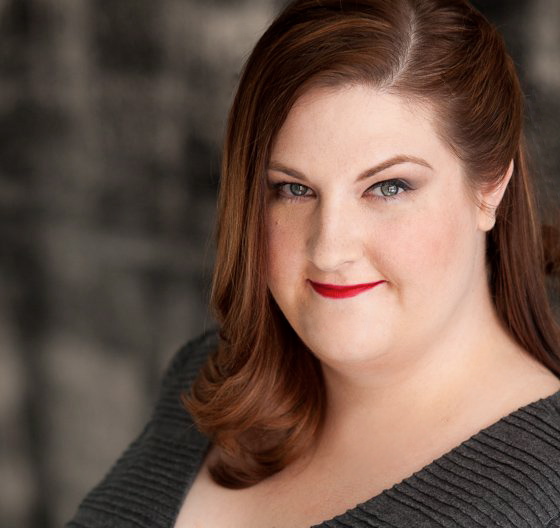


 barczablog