The Toronto Symphony’s opening concert welcomed the “dynamic duo”, soprano Barbara Hannigan and violinist John Storgårds. Each did some conducting, and each took a turn as a soloist. While it was not a long evening it felt like a lot to digest perhaps because so many food groups were represented.
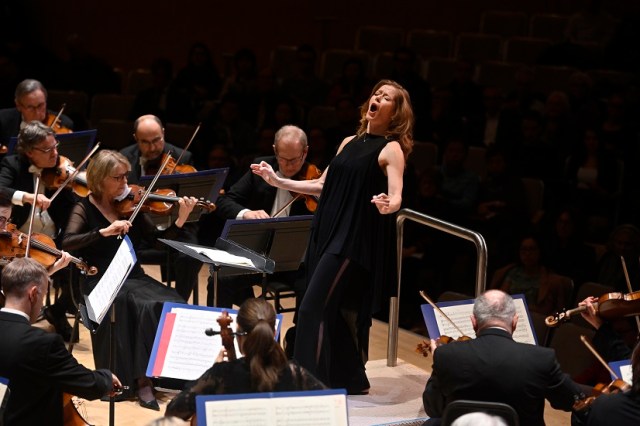
Did you ever dream of singing with Barbara Hannigan? Mission accomplished. Hannigan led us in “Oh Canada”, beginning unaccompanied then asking us to join her with the orchestra completing the ensemble partway through. If you come to the concert Saturday night you can have the same thrill, and that’s just the first couple of minutes.
Soprano Barbara Hannigan, singing & conducting the Toronto Symphony a few months ago. (photo: Jag Gundu)
For me the highlights were after intermission although there was lots of music before.
Beethoven Egmont Overture
Dutilleux Sur le même accord: Nocturne for Violin and Orchestra
Haydn Symphony No. 96 in D Major “Miracle”
Intermission
Brett Dean And once I played Ophelia for String Orchestra and Soprano (Canadian Première)
Sibelius Symphony No. 3
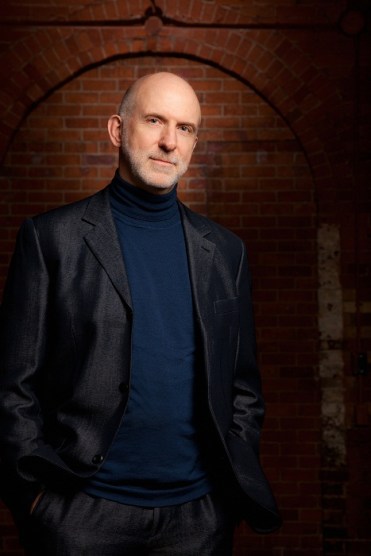
Matthew Jocelyn
Sometimes I prepare for a concert by reading the program notes over, other times I come in unprepared to see how it all hits me. I chose the latter approach for better or worse.
This is especially relevant to Hannigan performing Brett Dean’s piece, a kind of gloss on Hamlet with libretto by Matthew Jocelyn. You may remember Dean for his work curating the TSO’s 2016 New Creations Festival.
You may remember Jocelyn as director of the opera Julie presented in 2015 by Canadian Stage where as Artistic Director he imprinted a multi-disciplinarity into their programming that I’ve found irresistible and that appears to have become their brand, even with his successor.
One can listen with one’s head buried in the program to follow the libretto: and as a result be unable to see the singer or the orchestra. I chose to attempt to follow without the program, watching and listening as well as I could. I’ve said it before and I am saying it again. Come on TSO / Roy Thomson Hall, isn’t it about time you had surtitles projected, the way even Bill Shookhoff manages in his tiny company Opera by Request? Don’t force me to choose between intelligibility and watching a talented actor like Hannigan. Can’t I have both? I saw Alexander Neef of the COC in the audience, where they’ve had surtitles since the 1980s.
The program (where the text is printed) says “Please turn page quietly.” Surtitles would be even quieter.
The first frenetic minutes of this piece are a compelling beginning, as our Ophelia sings words that were directed at her rather than her own lines, the “get thee to a nunnery” lines sung and then fragmented into bits, sounding genuinely mad. Hannigan physically & vocally gave me something of Ophelia that I’ve never seen before, a kind of disabled and wrecked personage. From there we retreated into something so much softer, I wondered how Dean scored it; how many p’s did he dictate for this amazingly soft texture? We went from a frenzied sound to something suggesting a recollection, as though from afar or from the other side of the barrier between madness & sanity. Perhaps we’re inside her head (where it seems sane)? The super soft harmonic texture of the strings allowed Hannigan to sing easily, where the first part was much harder to understand. This is a beautiful piece of music to interest anyone intrigued by the Shakespeare or by the possibilities of the human voice.
John Storgårds conducted the works after intermission, both the Dean sung by Hannigan followed by the Sibelius 3rd Symphony. I wonder sometimes what conditions a conductor’s style, what leads them to their particular approach. Storgårds is a violinist whose approach seems very different from Hannigan, persuading the TSO to play very softly with wonderful solos emerging throughout. The TSO responded to him in both works. The Sibelius was built from the inside out, transparent in texture, energetic and committed, as every player seemed to bring their “A game”.
Before intermission we heard Hannigan leading older classical repertoire surrounding Storgårds as soloist in the Dutilleux, a wonderfully angular piece, deconstructing and analysing a pattern of notes over and over. I will have to listen to it again. Before it we heard the Egmont overture of Beethoven in a reading playing up rhetorical phrases & dramatic effects, from the dreamy and thoughtful to the bombastic and revolutionary. And after we then heard a wonderfully idiomatic reading of Hadyn’s Symphony #96. Maybe I read too much into Hannigan’s presence (that champion of new musics), but at times the Haydn felt very new, almost inevitable in its organic unfolding.
The concert will be repeated Saturday September 21st.
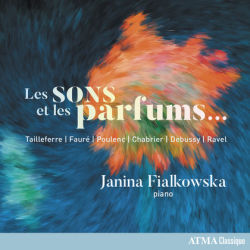
Janina Fialkowska has made a delightful new recording of French piano music titled “Les sons et les parfums…”
You might know that phrase from Baudelaire’s Fleurs du mal, in a wonderfully evocative poem “Harmonie du soir”, where music is as fundamental to the evening as a sunset or the air we breathe. Recalling Walter Pater’s famous saying that “all art aspires to the condition of music”, this poem is practically a sermon, both an invitation & an exhortation. Of course it’s an uncommon title for an album, perhaps an indication that this is a change of direction for Fialkowska, who I know mostly as an interpreter of Chopin, Liszt, and eastern Europeans with some ventures into German rep.
But I couldn’t help noticing how the opening cut sounded like something Chopin would have written, an easy-going Impromptu by Tailleferre that put me in mind of Chopin’s A-flat Impromptu, with its flowing lyricism. Did Fialkowska mean to open as though making a segue from Chopin into the French rep? Or maybe it’s all in my mind. But of course Chopin himself is a perfect bridge, an exile from Poland who was after all half French. Tailleferre’s easy & melodic textures open the doorway in the gentlest way for what’s to come.
But the liner notes suggest that this is if anything a sentimental journey for the pianist, familiar rep from the past that she has played many times in the past. Perhaps it’s who she has always been even if the French pieces can’t be found in her discography.
Better late than never..!
It’s a fascinating and well-conceived survey that brings us into the 20th century from the final decades of the 19th.
Impromptu by Germaine Tailleferre
Nocturne #4 by Gabriel Fauré
Intermezzo by Francis Poulenc
Habanera by Emmanuel Chabrier
Poissons d’or by Claude Debussy
Les sons et les parfums tournent dans l’air du soir by Claude Debussy
Reflets dans l’eau by Claude Debussy
Clair de lune by Claude Debussy
Jeux d’eau by Maurice Ravel
Sonatine by Maurice Ravel
If these works are not well-known to you, the album will persuade you of their importance, very easy to listen to. There’s variety even though they hang together like a well-curated exhibit of art by several painters.
Fialkowska’s sound is very clear, mostly sparing in the use of the pedal, without any noticeable blur even when many notes are being sounded, as transparent & sparkling as a clean aquarium full of koi. For the most part this sounds very relaxed, without the kind of drama one associates with virtuoso display. We’re hearing a pianist who is so self-assured that she gets inside the music. The water pieces by Ravel & Debussy have lots of atmospheric effects, decisively coloured and yet ultimately very calm & tranquil. This is pianism of the highest order without struggle or conflict.
I will resist the temptation to use the “I” word that is so often used when speaking of Ravel & Debussy, a descriptor imported from the realm of painting. I don’t use the word because I believe it’s misapplied when speaking of Debussy, and likely as well with Ravel. These evocative compositions conjure visual images of water & fish & moonlight in Fialkowska’s interpretations. If you find it helpful to think of the painterly qualities of music in this period, especially if it reminds you of the colours & effects found in paintings by Renoir or Monet, then by all means, seize the association. However you choose to understand the music, you’ll hear confident and accurate playing inviting you to an encounter of warmth and tenderness.
I wish I could somehow reclaim my innocence. Sometimes sophistication & experience get in the way.
No you can’t believe everything you read, especially when you overthink (….guilty). When will I learn?
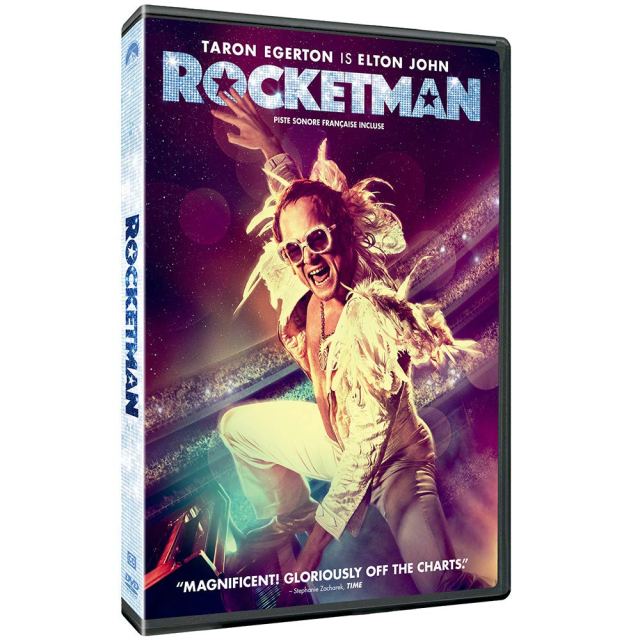
I came to Rocketman this past weekend more or less accepting what I had heard & read about it. I heard that “ho-hum another biographical film with music about a rock-star” and tried to get beyond that, to recognize the film on its own terms. Yes we’d already had Bohemian Rhapsody. Hollywood does lots of imitation, so of course when you get two that seem similar a kind of cynicism about the business takes away much of the lustre. At such times be especially on guard against BS in the press because of course a film is much more than just someone appearing to imitate someone else. Usually one big project has little to do with another big project except in the sense that someone noticed that this subject is marketable, helping to get them a green light. Where the first one of a type might be understood as risky, the second one is suddenly a genre. I recall that when there was a second film adapting Les Liaisons Dangereuses I heard that Valmont couldn’t be as good as Dangerous Liaisons.
And when I saw it the opposite was true. And they’re ultimately two very different films. The first one into the theatre isn’t necessarily the better one. And sometimes some film critic takes a short-cut in observing a similarity, that becomes the story.
I wish I had gone to see Rocketman in a theatre during its first run.
A film by an aging rockstar seeking to tell his own story? Nevermind Rocketman, TIFF led off this year with a doc about The Band focusing on Robbie Robertson, so of course this is an idea with lots of interest. While we’ve seen lots of films about films & actors, the study of the music business hasn’t gone nearly so far, not when we recall that Inside the Actors Studio for example, began 25 years ago. If this is to be a new genre? Welcome! I can’t wait.
I loved Bohemian Rhapsody, a film that won its star Rami Malek a best actor Oscar. I came to Rocketman expecting something similar because, between the trailer and my own expectations, I couldn’t really unsee what I’d seen, which framed the two as in a sense of the same genre. Argh, but they’re not really the same.
During lunchtime today I watched the title track again.
It’s not what I expected. Yes Taron Egerton is the actor portraying Elton John, and that means not just acting but singing too, but he doesn’t begin the song, as you may have noticed watching this video (just now? Or perhaps you already saw it). There are at least two other actors portraying the character, whose name is “Reggie”, namely Matthew Illesley as the younger Reggie and Kit Connor as an older version. Reggie is the young man who then changes his name to “Elton”.
From time to time I find insights into human psychology while watching a play or an opera or a movie. The conceit at the heart of this film is pure gold. Who would have expected that the carefully constructed version of Elton John’s life might offer something of depth?
During his apprenticeship playing keyboards in rock-bands in bars, Reggie (as he was then calling himself) hears something powerful that he took to heart.
Reggie (his real name & persona) had to be killed. He had to die: so that there could be an Elton (the stage name, a new larger than life creation). Elton gives himself not just a new name but a whole new way of living & behaving, erasing Reggie.
And no wonder then that Elton meets Reggie at the bottom of the pool in the middle of trying to kill himself. At this point has Elton forgotten about Reggie? Estranged from his true self, at war with his inner child (to invoke another idea that has become cliché)?
Doesn’t he look a bit surprised to find himself while losing himself?
I was blind-sided by this image that I have never encountered before, that seems useful at least as a model for what some people do, possibly a cautionary tale: what never to do. There’s a lot more to this film than I expected. The songs are used less in the style of Bohemian Rhapsody, where the tunes are shown more or less in their historical context, and more in the manner of ABBA’s songs in Mamma Mia or the Beatles songs in Across the Universe, where a plot-point becomes the occasion for a famous song, and never mind whether or not it’s at the right time in the artist’s chronology. “Your Song” may or may not have been written as shown in this film, as a kind of love-song from the gay Elton to Bernie his straight but nonetheless loving lyricist. For that relationship alone –a loving relationship with ups and downs between a straight man and a gay man—I am indebted to the film-makers, something we’ve not seen often enough in film.
There are moments to put alongside the best in Amadeus (thinking of the moments near the end when Mozart sketches the confutatis) to show us inspiration at work. Is this actually a musical that we will someday see done live in theatres? I would love that, even if it is, after all, rated R, which might not work quite as well in a live theatre setting. First and foremost there are a ton of songs in this film, if we include the little snippets and the wonderful allusions in the soundtrack. I saw 22 songs listed when I searched online. No I don’t pretend that I know them all, even if I’m enough of a nerd that I was a fan when many of them appeared in the 1970s. They didn’t use such huge hits as the song “Daniel” or “Candle in the Wind”: but I am pretty sure I heard brief allusions to them in the soundtrack. So when we are watching Bernie & Elton discussing a reconciliation, to resume working together again after a break, we hear some of “Goodbye Yellow Brick Road,” the song that was sung during their big fight earlier in the film.
Perhaps the real star(s) of the film are the songs, arguably the greatest recent body of work from a pop star since the Beatles, and largely under the radar until now.
Of course this is the same Elton John who wrote songs in Lion King, so it’s not as though he’s been invisible. I wonder if that means he will be competing against himself at Oscar time, if say the song “Rocketman” is up against the new song for the recent film (and that doesn’t even include “The Circle of Life”).
Rocketman is surprisingly good. I was suggesting it to a friend as we talked about varieties of bad parenting. Chances are you will see yourself or someone you know in this film. There’s a lot to it, illustrations of every variety of human behaviour. I’ve only sat through it three times this week via pay TV, which makes me want to see it a few more times.
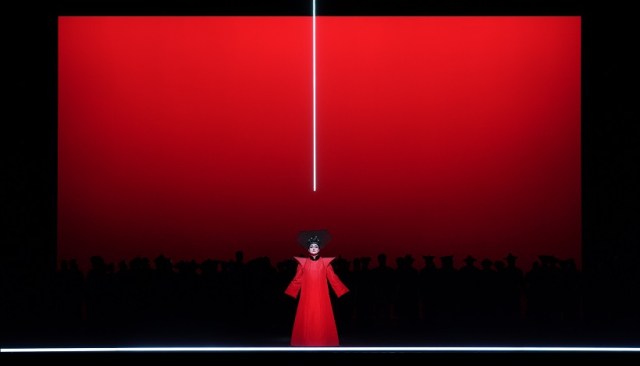
I’ve been reading a bit about Robert Wilson in anticipation of the new Canadian Opera Company Turandot that is to launch the 2019-2020 season at the Four Seasons Centre, a co-production with Teatro Real & Lithuanian National Opera. Online pictures (for example this link) from the previous incarnations in Madrid and Vilnius give us a good idea of what to expect, especially considering how much has been written about Wilson’s style.
Wilson is called “a towering figure in the world of experimental theater” on the COC page announcing & promoting the production. He’s been a famous director for such a long time that he likely was already famous before most in the current opera’s cast were even born.
His work has been seen here before.
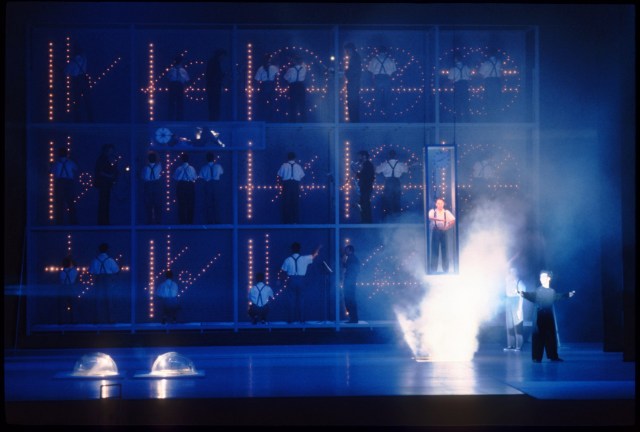
In 2012 Einstein on the Beach, a work premiered in 1976 (43 years ago), came to Toronto as part of a world tour. At the time I wrote about its influence, a seminal piece talked about far out of proportion to the actual number of people who had seen it. I posted a picture while saying “I can’t help noticing an echo of Wilson in Robert Lepage’s designs (the compartments of the space-ship scene replicated in Lepage‘s Damnation de Faust, even as Wilson himself paid homage in that scene to Lang’s Metropolis).”
Wilson echoes Lang. (Photo: Charles Erickson 1992)
• In 2008 another tour brought us The Black Rider (The Casting of the Magic Bullets).
• In the 1990s Wilson gave a talk in a lecture theatre packed with drama students at the University of Toronto.
The phrase from that talk that still sticks in my head from his lecture, in his bland lecturer voice was “the stage picture”. There were slides showing us how Wilson treated the proscenium arch theatre as a kind of viewer window that he divided quite decisively in his sketchbook, such that we would see certain things to the left or right, as though the actors and the lighting were all nothing more than parts of a flat picture, parts of a strategy to create a particular kind of image. I am reminded of the painter Maurice Denis (whose operatic connection btw is that he painted the cover of the program for the 1893 premiere performance of Maeterlinck’s play Pelléas et Mélisande) who famously said
“Remember that a picture, before being a battle horse, a female nude or some sort of anecdote, is essentially a flat surface covered with colors”
I can’t help thinking of that when looking at a dramatist showing us pictures of a stage picture, that might be 3-D but is presented to us as a flat picture. Is Wilson’s work the logical mirror image to Denis (the symbolist seeking something transcendental in his work, at least in the 1880s & 90s)?
And Wilson showed little or no concern for what anyone was saying or thinking onstage, no Stanislavskian worries about motivation let alone transcendence. They might move but it was a physical correlative to the mechanical actions we find in Sam Shepard’s play Action or the redundant repetitive texts in the Songs from Liquid Days, words that go so well with the noodling but un-motivated eighth note ostinato in a Philip Glass composition (such as the aforementioned Songs). I was reminded of Edward Gordon Craig & his fascination with puppets and the über-marionette”. Where Craig saw the puppet as a means to a representative end, the ideal vehicle in the presentation of a Wagner opera, what if you strip away all that heavy fraught symbolist baggage and simply let the puppets move or be still? If you can have dance qua dance, movement for the joy of movement without the weight of meaning & storytelling: why not puppets or über-marionettes for the pure exploration & joy of the puppet & its movement of stillness..?
And yet as I look at the pictures from the Madrid & Vilnius productions of Wilson’s take on Puccini’s opera, I want to come at this from a different direction. Let’s back up for a moment and look at Turandot, recalling for a moment two previous productions brought to Toronto by Alexander Neef.
Alexander Neef (Photo: Gaetz Photography)
I’ve been thinking about Wajdi Mouawad’s Abduction from the Seraglio (who interrogates the Mozart Singspiel as a site of what the director might call “caricature or casual racism” ) and Peter Hinton’s Louis Riel (an opera originally conceived as a site for a kind of struggle between French and English, while the Indigenous part of Canada –arguably the key to Riel—was disrespected, both in the appropriation of a song used without permission, and its politics) a pair of redemption projects arguably rescuing operas from their own problematic politics.
Is there any need to save Turandot from itself? (which shouldn’t be confused with Calaf’s project to save the princess from herself and her murderous project of revenge upon males).
You may laugh at the thought that there’s anything especially problematic in Turandot. It’s funny to me recalling my favorite DVD version, in which Eva Marton gives a wonderfully sympathetic account of the princess’s grudge against the male gender, especially the one long ago who raped one of her ancestors, as we watch Placido Domingo of all people portray the prince Calaf, a prince claiming to be different. Do you want to #standbydomingo ?
Not me.
But there is a big gaping problem in the construction of Turandot, an opera Puccini was not able to finish before his death in 1924
In its first performance in 1926 the ending was left open, unfinished. Like the opera itself, which has been completed by at least two composers, there are multiple versions of what happened. It is agreed that the opera stopped partway through the 3rd act, that Toscanini turned to the audience to speak, after which the curtain descended.
1. One reporter present at the occasion quoted Toscanini saying
“Qui finisce l’opera, perché a questo punto il maestro è morto”
(“Here the opera ends, because at this point the maestro died”).
2. Another reporter quoted the conductor saying
“Qui finisce l’opera, rimasta incompiuta per la morte del povero Puccini”
(“Here the opera ends, left incomplete by the death of poor Puccini.”)
3. The version I heard has Toscanini say “Here the Maestro laid down his pen”, which is certainly romantic even if it maybe be nothing more than a loose paraphrase from the two eye-witnesses.
Yes Puccini left pages of sketches with Toscanini, begging him not to let his Turandot die. But it’s not that simple. At the point where Puccini left off composition the slave-girl Liu had died, sacrificing herself to save Calaf’s life. Meanwhile with no Liu left onstage I find I rarely believe in the ending:
Because Turandot is heartless, largely responsible for Liu’s death
Because the scene where Calaf is left alone with Turandot—using Puccini’s sketches but finished by someone else—feels inauthentic and weak compared to what has come before
…as I wonder: are we meant to like or admire Turandot? to like or admire Calaf?
Do we care about this royal couple?
Why couldn’t Puccini finish it? Of course his health was part of it. But it’s intriguing to notice parallels between life & art. Puccini’s wife accused her husband of having an affair with a servant girl: and the servant committed suicide. Is this not a curious parallel to what we see in the plot of the opera? And how interesting that Puccini was trapped, becalmed in the waters of Liu’s suicide, unable to bring the good ship Turandot into port. Death meant that other composers faced the task of persuading us that Calaf & Turandot belong together at the end. Did Puccini even believe in the ending of the story or was he stuck? I wonder about his motivation in setting this opera, which may have been a kind of mirror, even a veiled confession.
It’s a funny thing that when I was young Turandot was my favorite opera. I knew it through the RCA recording conducted by Erich Leinsdorf, with Birgit Nilsson, Jussi Björling, Renata Tebaldi, Giorgio Tozzi & Mario Sereni. I knew nothing of problems in the dramaturgy, because for me at this time opera was all about singers hitting high notes, music rather than theatre. I knew opera as a series of arias and set-pieces.
I had not yet discovered Wagner & Gesamtkunstwerk, the ideal you and I embrace in our modern world without properly appreciating its origin. The unified behaviour of your phone is employing the same dramaturgy seen for the first time in the middle of the 19th century. Dramaturgy on a phone? But it’s what all devices do now when they’re sending you a message. Your car may tell a little story, depending on whether you’re being warned of danger or reminded to fill your gas tank. Machines don’t communicate with irony or humor, but with a total unity between the machine and the functions and/or sites we visit. When it works the music is happy to tell me of success, beeping when it’s done or playing a happy little tune. When something is dangerous or prohibited the machine tells me so. That’s something invented in the 1850s for the first time when Donner the god of thunder called up a storm in the last half hour of Das Rheingold: by wielding his hammer. The moment when he strikes, there is a magical event, both in the story and the history of theatre. For the first time there was an instruction in the score where all elements of the mise-en-scène and the text (both the words & the music) function in complete precise synchronization. We hear the lightning & the ensuing thunder-clap, AND we see the flash as requested in the score. Gesamtkunstwerk is often translated as “total art work”, with the expectation that all of the components work together towards a unified goal.
And so by the time we get to Puccini, he’s doing it too. He’s mickey-mousing
to tell us when Rodolfo is sprinkling water on Mimi’s face (to make one smile or even giggle),
or
to show us Angelotti desperately searching for the basket in the first moments of Tosca (to make one feel his indecision & terror, and finally relief when he finds it)
or
giving us the sounds of the cannon fire in Nagasaki harbour in Butterfly’s imagination, during “un bel di” (to make one teary-eyed):
…right in his orchestral score. It’s Wagnerian, that idea of unity, with the orchestra functioning like a wordless Greek chorus whispering non-verbal messages to inform us of important information that isn’t conveyed in words.
In Puccini one sometimes encounters the dilemma the composer must have faced, between those two impulses:
numbers or through-composed
arias with climaxes vs something continuous
opportunities for singers to show off (aka arias) vs the showcase for composer & librettist
Who do you go to see/hear when you go to the opera, or indeed any play or film? Is it the story or the star? Is it a singer or a song? In Puccini that conversation is especially intriguing, the famous tunes embedded in scenes without the full-stop one usually gets in opera. “Nessun dorma” may get applause but the music is written to go on at the end: unless the conductor holds the orchestra back in expectation of an explosion of appreciation from the audience.
My favourite scene of the opera as a child was one that’s often shortened, phrases cut mercilessly: namely the scene between Ping, Pang & Pong that opens Act II.
Oddly it seems apt for 2019, the powerless observers dreaming of something better while feeling powerless. It reminds me of a Globe & Mail editorial I saw a few days ago. Is there so much difference between what Ping Pang & Pong observe in China (dealing with Turandot’s daddy the Emperor) in the opera, or what the Globe would observe about Brexit & Boris Johnson?
In the opera there are at least three different textures musically, corresponding to something in the story, interconnected like solid plates or quilts sewn into one fabric
The heartless chorus and the implacable Mandarin in whole-tone harmonies
The romantic leads in melodies that are often pentatonic (recalling how pentatonic Puccini can get even in other operas with no connection to the far east such as Tosca)
Ping, Pang & Pong in the discursive space between the two extremes. When we’re in whole-tone mode things are dark if not nihilistic & brutal, while the melodic space is a sentimental and diatonic place where happy endings at least dreamt of, even if they are impossible. This includes some choral moments such as the boys who sing Turandot’s leit-motiv: which articulates the dream of reconciliation between male & female.
RAGAZZI
Là, sui monti dell’est,
la cicogna cantò.
Ma l’april non rifiorì,
ma la neve non sgelò.
Dal deserto al mar
non odi tu mille voci
sospirar: “Principessa,
scendi a me!
Tutto fiorirà,
tutto splenderà! Ah!…”
BOYS
There, on the Eastern mountains,
the stork sang.
But April blossomed no more,
and the snow didn’t thaw.
From the desert to the sea,
can’t you hear a thousand voices
sighing: “Princess,
come down to me!
All will blossom again,
all will be resplendent! Ah!…”
Zeffirelli cast the boys in Buddhist attire in his production, but this is not a Buddhist idea, this attachment to desire. It’s funny how this tune
made me cry (Tutto fiorirà)
before I even understood what it meant (tutto splenderà!),
before I understood desire (Ah!…”).
Do we make a mistake with Turandot in expecting it to work the way other Puccini operas have worked? Where Boheme , Tosca and Butterfly all build up to a catharsis summation on the last page, where there is a combination of the powerful melodramatic action typical of verismo, complete with the orchestra taking over for that final summation–in a Wagnerian approach to story-telling– Turandot perhaps needs to be thought of in other terms. Where those three operas have closure & catharsis on the last page, maybe we should think of Turandot as closed at the moment when “the maestro put down his pen”. While Liu has made her sacrifice and that once savage chorus are now contrite, fearful in asking her spirit for forgiveness, Calaf & Turandot are still glaring at one another across a physical & discursive gulf. While Puccini may have given us his last word at the moment he stopped, that the servant gave her life for love, even so: the story is not concluded and therefore must be thought of as open.
Enter Robert Wilson, who could be on the cover of Umberto Eco’s The Open Work, because of his tendencies coming at theatre & signification.
I see in a review by Polina Lyapustina of the Lithuanian production from earlier this year, she says that “It seems that the director was not convinced by the dramatic denouement of the work and he seemingly made no attempt to create it.”
Could that be another way of saying that Wilson chose to show us the characters as they’re written, reflecting the open ending Puccini has written? Maybe Wilson dares to offer us an older kind of opera, where we get spectacle, music, singing but without insisting on the total work, and instead offering ambiguity & ambivalence. Instead of the total artwork we get an open work. I can’t help placing this in context with Alexander Neef’s previous redemption projects: Wajdi Mouawad aiming to redeem Abduction from the Seraglio, or Peter Hinton re-thinking Louis Riel. Instead of the usual struggle to make the ending of the unfinished opera work, perhaps Neef saw the match between Wilson, who leaves works open, and Turandot a work that is arguably unfinished even with the endings created by other composers such as Alfano (whose ending is to be used in this production). Its conclusion is in some respects an oxymoron, a happy ending in spite of everything Turandot tells us she stands for, in spite of Puccini’s attempt to persuade us that Liu should have Calaf. Should Turandot and Calaf end up together or should the ultra-feminist resist Calaf’s attempted seduction? I’m dying to see how it looks and whether it works. Of course it was likely Wilson’s idea to take on the opera, but at least Neef had the good sense to bring it to Toronto.
Does it work? Or does my younger self still win out, in my former desire for the happy ending? We shall see. I hope that it does work.
Of course this is my speculation without yet having seen the show. Robert Wilson’s Turandot opens at the Four Seasons Centre on September 28th, presented by the Canadian Opera Company.
Irene Theorin as Turandot in Turandot (Teatro Real Madrid, 2018), photo: Javier del Real
Professor Jill Carter, Curator & Director of “Encounters”
Tonight I witnessed the first of the three performances of Encounters at the “Edge of the Woods” being presented at Hart House Theatre, a Storyweaving project in association with Hart House’s 100th Anniversary. This is a worthy vehicle to commemorate a site that is arguably the cradle of Canadian theatre, a place pre-dating Stratford or Shaw, as noted by Professor Jill Carter in the talkback session afterwards.
It’s both a collective creation and a pedagogical experience for the participants.
I found myself bemused by the recognition that this was theatre when it was also clearly a kind of testimony, each person bringing their own life-stories to be honed & assembled by their Professor Jill Carter: their instructor, director, curator and perhaps also mentor.
Last week I was in Stratford for one of the most powerful pieces of theatre I’ve seen in a long time, yet that was unmistakeably theatre, as we watched actors moving, their wheels turning in their heads as they prepared to deliver a line. It was a piece of art.
This was not freighted with that virtuoso polish, and as a result what we got was much more genuine. Often the delivery was leavened with irony & humour, but sometimes we were in the realm of the confession.
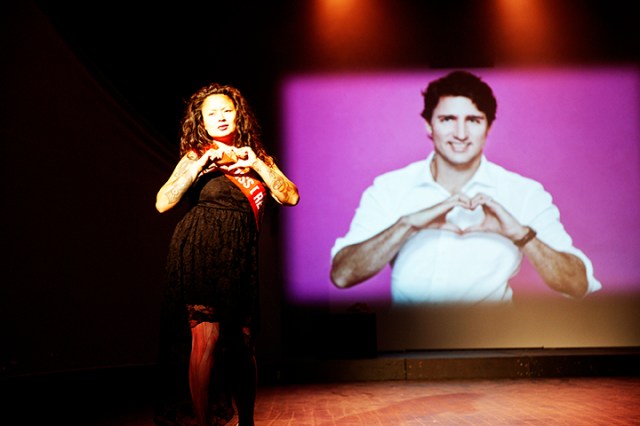
One of the funnier moments in the Encounters at the “edge of the woods” (Photography by Scott Gorman)
This was 100% authentic and real.
If you’ve been observing the ongoing conversation around reconciliation with our Indigenous populations, you’ll be aware of such things as the recent controversy about the use of the word ”genocide” in the report following the national inquiry into missing & murdered Indigenous women & girls; I wonder if you share my discomfort at this response? surely the word is used correctly. Quibbling over the word adds insult to injury. When we talk about the residential schools, I hope there’s no controversy in calling it cultural genocide, when we remember that children were forcibly taken from their families and force-fed another culture while stripping away their own languages. That “G” word reared its controversial head again tonight. The sadness & anger that we glimpsed were balanced by other feelings, including celebration, appreciation, and some gentle ceremonial moments. I can’t claim to be average, but I believe that for those of us who think of ourselves as allies, an experience like the one I had tonight is very inspiring, very cathartic. I was thinking of how even if one goes to church one doesn’t expect salvation from one trip, but rather from a lifetime of prayer & practice, of thoughtful reflection and careful action. Perhaps works like this can also serve that ritual function, to take us through darkness towards something like reconciliation.
Let me set the content question aside, to properly acknowledge what Jill accomplished with her team of students & collaborators. There were no performances that did not persuade me, indeed they didn’t seem like performances at all. This felt genuine rather than artificial, like a celebration. My admiration for what Jill achieved increased after I heard about the process in the talk-back session. It was a very passionate exchange, with Jill at times so moved as to be unable to speak as she expressed her gratitude. And indeed many of us were tearing up as we listened to her.
I won’t mention any performers except to remark upon the excellence of what we saw, the commitment & the vulnerability. As a regular observer & participant in student theatre over decades, I was blown away tonight by what I saw.
There are two more performances on Saturday September 7th. For further information or for tickets click here.
I’ve just seen Birds of a Kind, a recent play by Wajdi Mouawad that received its English language premiere this month at the Stratford Festival’s studio theatre space. I was drawn to it by Ken Gass’s strong recommendation, and recalling my previous experiences of Mouawad
His direction of the Canadian Opera Company’s co-production (with Opéra de Lyon) of Abduction from the Seraglio in early 2018
Denis Villeneuve’s film Incendies adaptating Mouawad’s play
A production of Mouawad’s play Scorched (Incendies translated into English) that I saw at University of Toronto
Playwright & director Wajdi Mouawad
Currently director of Le Théâtre national de la Colline in Paris, Mouawad was previously Artistic Director of French theatre at the National Arts Centre, and appointed an Officer of the Order of Canada.
I interrupt this lengthy preamble to mention that Birds of a Kind is the best production of a play I’ve seen in a long time, possibly the best I’ve ever seen at Stratford. It’s three hours and twenty minutes long with a 20 minute intermission, yet the time flies by, speaking as someone who regularly watches 3 and 4 hour operas. I’ll try to avoid giving away too much about this play, that delivers several breathtaking surprises.
As with the COC co-production mentioned above, there’s a trans-Atlantic connection involving different companies. Stratford Artistic Director Antoni Cimolino who directed Birds of a Kind, described the gradual gestation of the project (in this excerpt from the program note that I quote immediately below; you can explore them by clicking here), beginning back in 2006 from the inspiration of Natalie Zemon Davis’s book Trickster Travels concerning Leo Africanus,
“…a historical figure who many believe served as inspiration for the character of Othello. A Moroccan diplomat who was born in Granada, Leo Africanus – or al-Hasan ibn Muhammad al-Wazzan, as he was named at birth – was captured by pirates in the Mediterranean in 1518 on his way back from Mecca. Realizing they had no ordinary man in hand, the pirates made a gift of him to Pope Leo X. The Pope, a Medici prince, took a great liking to Wazzan and offered him liberty in exchange for his conversion to Christianity. Wazzan then wrote a series of brilliant books, including an introduction to Africa, a continent as yet largely unknown to Europeans. He is thought to have died in Tunis in 1554.”
The resulting play Tous des oiseaux won the critics award as the most outstanding piece of theatre in the Paris season for 2017/18.
Africanus aka Wazzan is at the heart of this story, whether in its French version or in the one seen here in Stratford, with the subtitle “English Translation by Linda Gaboriau.” I call attention to the problematic matter of language because it’s not just a play that was in French that’s now heard in English. Oh no. Indeed I don’t know for sure how many other languages we hear.
Just from the technical requirements of the cast, it’s a phenomenal tour de force when we observe that in addition to English, we hear German, Hebrew, at least one Arabic language, some of the cast functioning in multiple languages. I’m grateful for the titles projected onto surfaces around the stage, enabling us to follow some of what’s being said. I say “some” because I’m a bit of an agnostic in my experience with titles. I’m certain that the production takes this very seriously considering how much is projected, sometimes in Arabic characters, when the Arabic speaker begins to speak in English. It’s magical yet I know that nuances can be lost, especially when we’re hearing the kind of passionate ferocity we get in so many places of this show. I suspect that every outing with this remarkable script is an event in the lives of this cast, particularly the principals.
It’s a bit of déjà vu reading Cimolino’s essay about the theme of the season as “Breaking Boundaries”, not unlike Toronto Summer Music’s recent festival theme “Beyond Borders”. But Cimolino doesn’t have to remind us of the 21st century politics invoked in Tom Allen’s opening monologue earlier this summer (when he spoke of a certain American pre-occupied with walls & those who would cross them), not when they’re front & centre in this multi-generational play.
We begin with the young students, German-born Eitan who would reduce everything to chromosomes, denying anything transcendental, meeting the American Palestinian Wahida, who is doing her thesis on Africanus /Wazzan. The unlikely pairing is an affront to Eitan’s parents, David & Norah. But just when you think you see where the story might be going, we meet David’s parents Leah & Etgar. Where I thought I was to see a story reminding me of Romeo & Juliet, a pair of feuding cultures, Mouawad surprised me completely in the trajectories of the stories.
I found myself laughing often, wondering if I could comfortably call this piece a romantic comedy (recalling that for the first part of Shakespeare’s play we might mistake it for a romantic comedy: at least until the moment when Mercutio is surprised to notice that he’s been run through. Mouawad seems darker than Shakespeare offering us fewer places to hide). But maybe genre is as misleading as language or culture, another label to deceive or confound you. I found myself thinking of the ambivalence of someone like Gustav Mahler, whose music encompasses agony & comedy sometimes in the very same moment. As usual Stratford feels like a refuge from the world, a place to enact rarities and to ask the deep questions.
I wondered too about the title itself, which is a bit problematic. Did they mean “birds of a feather” but chose to avoid that over-used epithet? The metaphor for the title is unpacked by Cimolino in the program notes.
“The title comes from a story told by Wazzan/Leo Africanus about an amphibious bird. In order to avoid paying taxes to the Bird King, the bird dives into the water and lives among the fish. He does so until the Fish King asks that he pay taxes. The bird then returns to the air – for a time. It’s telling that Wazzan is intrigued by the bird’s ability to defy the conventional demands of identity. Birds are not bound by walls or borders. If you could ask a bird, “Where are you from?” it would likely answer, “From all over!” Birds’ migratory routes inform their sense of identity, but no single place defines them.”
Cimolino might want to remind us that, as if to illustrate the Festival’s theme, birds break boundaries. But I think we would hear a different explanation from Eitan –the reductive one obsessed with our chromosomes—who might argue that the birds are simply flying and that to them boundaries don’t exist. Political fictions are nonsense to them, and arguably to humans as well. Love or faith transcend the lines drawn on the map.
Birds of a Kind flies on the wings of some remarkable performances in several languages. There was so much going on, that I suspect my focus is a bit like telling you what I saw staring at an inkblot, saying more about my neuroses than an accurate report of this densely textured piece, one I need to see again. Wahida from Baraka Rahmani opposite Eitan by Jakob Ehman are our Palestinian-American Juliet & our European Romeo, quickly sucking us into a story that will morph several times. Alon Nashman’s David eventually becomes the central figure of the play, enormously energetic in multiple languages, poignant & heart-breaking, opposite Sarah Orenstein, as his overly rational & reductive wife Norah. And again just when I thought I knew where it might be going I was blind-sided by the older generation, Deb Filler as Leah bluntly setting us straight again & again, in contrast to the gentle wisdom of Harry Nelken’s Etgar. Sitting in the very back row I was still right on top of the action for this powerful piece; in other words there are no bad seats in this little theatre.
I found myself crying & laughing a great deal, and wanting to see it again.
As with Incendies I suspect Birds of a Kind / Tous des oiseaux will be filmed at some point. In the meantime if you have a chance to get to Stratford to see this play, do go see it.
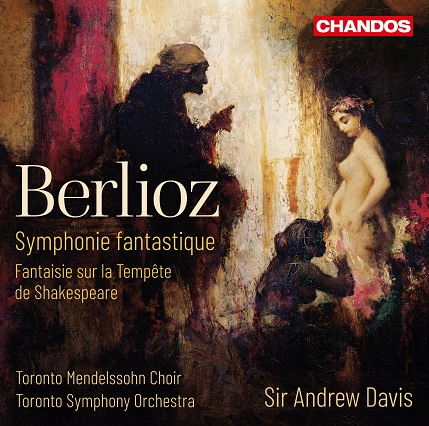
Did they know when they programmed the Toronto Symphony Concert for September 2018 featuring Berlioz works conducted by Sir Andrew Davis that it was going to make a good recording?
Here I am now thrilled to be able to listen to a new Chandos recording of one of those splendid concerts, just released a few weeks ago.
I attended one of the concerts, a fun program featuring the Fantaisie sur la Tempête de Shakespeare, a piece that works nicely as a curtain-raiser at a little over 14 minutes in length for the Symphonie fantastique that follows. Berlioz re-purposed the Fantaisie to close Lélio, Berlioz’s dramatic sequel to the Symphonie fantastique, and indeed when you’re playing the CD one may begin with this charming little work, or if one keeps listening after the SF, one gets to hear the music Berlioz understood as the finale to the piece subtitled “the return to life”. They complement one another so remarkably well, you’d think they were meant to go together.
Which of course they were…
You wouldn’t mistake Berlioz’s work for an accurate treatment of Shakespeare, but that’s par for the course with this composer. His Roméo et Juliette is largely the story told from the young Romeo’s point of view, a bold paraphrase rather than an accurate telling of the story with a poet’s passionate flourishes. Similarly with the Fantaisie, Berlioz is offering a commentary upon the Tempest rather than telling the story. We hear the airy sounds of the Toronto Mendelssohn Choir, a chorus singing rapturously to Miranda, and warning her of Caliban & Ariel. Two pianos magically tinkle away, the simple direct melodies of the choral writing reminding me of the Apotheosis of Marguerite in the composer’s Damnation de Faust.
In other words it’s very beautiful. Please understand that I don’t say this because I want Berlioz to faithfully set the Shakespeare. Indeed I’m not sure anyone has ever done that, and besides, this is way more fun.
And to follow we get a performance of the Symphonie Fantastique. It’s a full meal, this CD at almost 70 minutes when you add the 14:25 Fantaisie to the 55:33 SF.
The Toronto Symphony and the SF are a good match. It’s a wild boisterous piece that can furnish a great test for your car’s new sound system. The TSO have been steadily adding new young talents, so that the skill level has arguably never been higher. With Davis they have a steady hand to lead them into the realm of fantasy & hallucination, to the brink of madness and back. I enjoyed writing about the piece last fall a few weeks before Canada legalized pot.
If you’ve never thought a classical piece could be stoner music, I have news for you. Symphonie Fantastique is arguably the first such composition, long before the Beatles said “let me take you down”. The combination of clear sound on the recording with an accomplished performance makes this hard to resist. I’ve surrendered to it over and over.
In the opening movement Davis coaxes a gentle aching vulnerability from the soft introduction, genuine “rêveries”. In due course Davis brings it to vivid life, the pace to suggest you are elated as though something is pulsing in your veins, your heart rate surging out of control, then subdued, then wildly excited again. The ball of the second movement is led masterfully by Davis, so elegant and precise you can almost see dancers in period costume. In the scene in the country that is our transition to the druggy realm Davis lets it sing sweetly, building inexorably to the perplexing ending (the sounds of distant thunder, portending the bad trip that is about to erupt) and the real fireworks that follow.
Thank goodness Davis is a purist, a guy who takes the repeats as written. It’s especially powerful in those last two movements, one a nightmare march to the scaffold (the timbres so bizarre especially in the use of the bassoons, building to an execution at the end), the other a quirky send-up of everything that has come before, the lovely melody now parodied in the ghostly finale. These last two movements are big and loud like heavy metal: except the metal is the brass section & percussion, not guitars. While it’s done without use of amplifiers, that doesn’t mean it’s quiet. There are places to make you jump as though you were watching The Shining. Davis keeps the TSO in check, patiently building to fabulous climaxes in each of the last two movements.
And the bonus is that you can then go on to listen to the Fantasie after the SF. It follows rather nicely, because it was from the sequel after all. I’ve had it in the car, playing it endlessly, letting one follow the other, on and on. They’re literally made for each other.
I’ve been listening to a song since childhood even though I still don’t really know what it means.
Imagine if the most impressive song you had ever heard was in a foreign language. So please picture the most impressive song you’ve ever heard, in your head.
Got it?
That could be a popular song or a classical aria or song. Imagine? Okay Computer? It’s now or never? Oh patria mia? They’re all relatively easy to find. Everyone is usually able to find their touchstone, and usually able to understand it. Indeed, understanding is a part of the magic normally (although come to think of it, some songs –even in English– are pretty hard to understand. Radiohead?)
Because in my case, the music was well-nigh impossible to find it continued to be largely an unknown. And I feel like a cheat now that Google has made it possible to solve some of that mystery.
Not long ago my brother (who like me also loved the song) got the music as a gift from a student. Finally we’re going to try it out. I’ve been playing the piano part in anticipation of him coming over to sing it. Bit by bit the mystery is receding.
The headline mentioned the word “macho” which tells you a lot about how I see the song. The title “Till havs” is Swedish for “At sea”.
But this is not like John Masefield’s poem “I must go down to the sea again”. That poem is nostalgic and distant, more in the head than out on the water. Of course the fact that I know what Masefield’s verse means changes it substantially. Till havs appeals to my subconscious because it’s more symbolic, a mostly musical experience, a song suggesting bravery, and the elemental power of the oceans.
And yes part of the magic comes from not knowing precisely what it means. In my youth –before the Canadian Opera Company invented surtitles, before titles became ubiquitous—we watched operas while knowing the synopsis and –if we were really keen—looking up the meaning of the text.
If you couldn’t find the score (and remember we couldn’t find this one until recently), you were out of luck. There was no google in the 1960s, ..or 70s… or 80s.
Although I was able to use google just now to translate the first part of the text, I feel like a cheater. So let me share the first part of the song (text by Jonatan Reuter 1859 – 1947):
Till havs At sea
Nu blåser havets friska vind Now the fresh wind of the sea is blowing
ifrån sydväst from the southwest
Och smeker ljuvligt sjömans And sweetly caresses the sailor’s cheek
kind av alla vindar bäst! of all winds, the best…
Then we get to the refrain…
But instead of deconstructing / translating the song I prefer to keep it in the mysterious form it has held for me, unknown in another language.
The song calls forth a very masculine sound from the singer. Most arias and songs encourage a more reflective side to the singer, indeed that’s probably why opera relies so heavily upon divas: because gentle reflection can exploit the best qualities of a female voice. Short of heavy metal, what can a loud male voice do? There are some moments I can think of such as Hagen’s call to the vassals in Gotterdammerung: which may be loud but isn’t at all pretty.
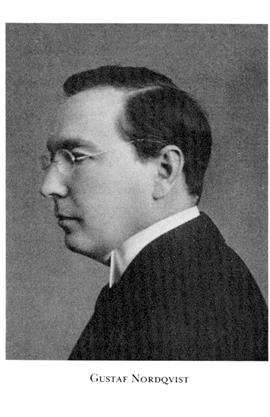
And then there’s “Till havs”. The music is by Gustaf Nordqvist (1886−1949).
I have been hearing this song since childhood. Today for the first time I saw a couple of videos that allowed me to see the song sung, which changes it slightly. There’s less mystery when you can watch the singer, even if I still don’t know what the text means.
To begin, there’s the singer with whom I associate the song, Swedish tenor Jussi Björling, who died when I was just 5 years old, the same year as my father.
I associate the two in my head. I have almost zero memories of my father, who took the family first to Sweden (long before I was born), before eventually bringing the family to Canada (where I was born).
So the association isn’t completely random. Far from it.
This is the first time I’ve found a version of Björling singing with video, so that I get some idea of what he looks like as he sings the song, which is nice I suppose. The recording is from 1953.
But it was more magical on the old vinyl record.
Here’s a more recent version sung by baritone Carry Persson in a lower key. The sound is clearer in the recent version. But I think I like it better in the tenor’s key. And the poor audio somehow seems more apt for a life that is less about technological prowess and more about grappling with the natural world.
And here is another look at Björling singing, this time with piano in 1958, about two years before his death.
Forgive me if I keep listening to the song without knowing precisely what every word means. Before too long I suppose I’ll find out.
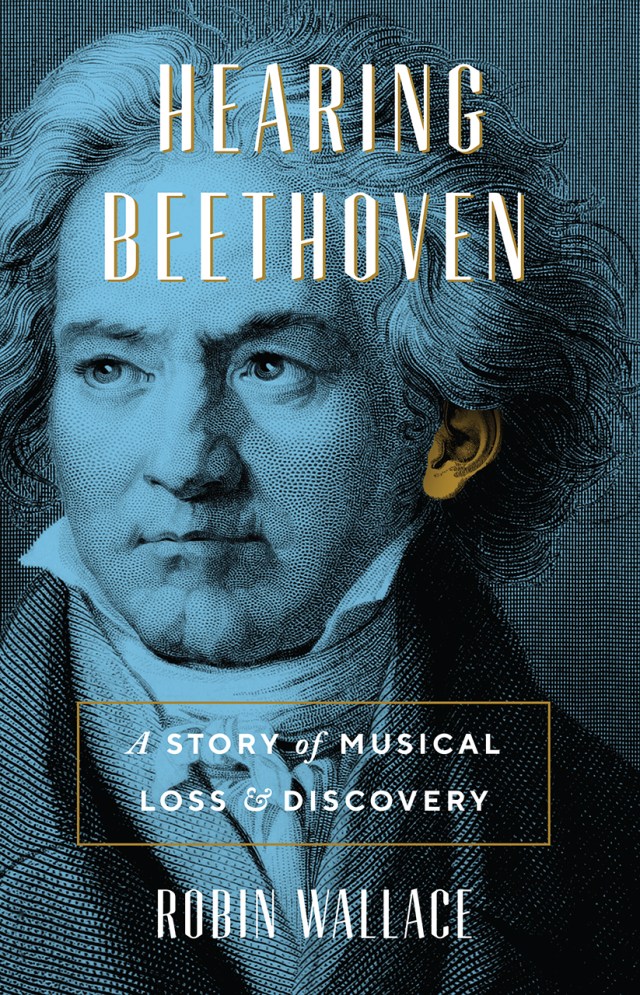
I’m very grateful for the serendipity that led to Robin Wallace’s book even if the fate governing its creation is cruel indeed.
A shy and short-sighted musicologist named Robin married a nurse named Barbara. She was losing her hearing. I suppose it had to happen eventually: that a student of Beethoven’s music would have a close-up experience of the life of a person who was gradually losing their hearing. As Robin observed Barbara’s fight to retain her ability to hear, her eventual deafness and the various strategies & responses in her life, it gave him insight into the composer’s comparable struggles in the 19th century, not just as a composer or pianist but as a man trying to cope.
Robin’s new book Hearing Beethoven is many things.
a study of the life & music of the composer Ludwig van Beethoven.
a memoir and love-letter to his wife Barbara
an insightful multi-disciplinary study of the composer & his relationship to his music, both as a pianist & as a composer
a wonderfully readable book (I devoured it in less than 24 hours,unable to put it down)
While I don’t believe this is a book for absolutely everyone (but then again what book is?), yet it creates a conversational space encompassing music & disability studies. I did not expect to be sobbing while reading a book of musicology. But it’s not just musicology, not when we’re also dealing with neuroscience, psychology, music perception & disability studies, just to mention the disciplines to which Wallace nods in the last paragraph of the book.
Professor Robin Wallace
I hate it when film critics are spoilers, giving away key plot points. But I know I’m not giving anything away when I mention that Barbara passed away. Robin told us about her passing early in the book. Yet even so when we got to the climactic events of December 2011 ending her life Robin wrote an eloquent epilogue speaking of embracing wholeness, and I am now treading carefully, aware that I can’t possibly do it justice in just a few words. Suffice it to say that the book is so much more than musicology.
I’ve long wondered about the impact of Beethoven’s deafness on his compositions. Ever notice how playful some of them are? The opening minutes to the last movement of the Eroica for instance –going back and forth between huge loud orchestral sounds and soft little sounds surrounded by big rests—is surely a wonderfully creation. Now listen to it recalling that it comes from someone dealing with hearing loss. Notice how quiet it gets around sixteen seconds into the movement in this clip. And then it gets louder. Softer. Louder. Of course there’s more to it than just Beethoven’s hearing issues, but when seen through that lens, we see/hear it in a different light.
Is he playing with us? Maybe.
Hearing Beethoven is true to its title. While I’m delighted to have a different perspective, a whole new way of understanding the composer, yet I think I will be different in my dealings with the people I know who are having challenges with their hearing. There are at least three in my immediate family. This is a book to give you not just insight but genuine empathy. I will never hear, never play, never experience music the same way again.
Wallace offers more than just the insights into the composer’s hearing issues. For example, he makes a wonderful comparison to Mozart –another composer who was exploited by his father—before offering an insightful quotation from Alice Miller’s The Drama of the Gifted Child.
Quite often we are faced here with gifted patients who have been praised and admired for their talent and their achievements… these people—the pride of their parents—should have had a strong and stable sense of self-assurance. But exactly the opposite is the case. In everything they undertake they do well and often excellently; they are admired and envied; they are successful whenever they care to be—but all to no avail. Behind all this lurks depression, the feeling of emptiness and self-alienation, and the sense that their life has no meaning. [Miller cited in Wallace p28]
Wallace connects this masterfully to Beethoven’s life.
In the Heiligenstadt Testament, Beethoven was clearly struggling to construct a sense of self-worth based on his continued ability to compose, despite the humiliation caused by his failing hearing which he described in the 1801 letter to Wegeler. If by 1812 he was once again doubting his ability, this would be more than sufficient to explain the depths of depression that he suffered during the ensuing years. As Miller points out, such people often reach to their own children for validation, thus perpetuating the cycle. Beethoven had no child of his own, so it is hardly surprising that he now devoted a great deal of his energy to seeking one, rather than to the increasingly challenging task of composing music. [Wallace 29]
And then Wallace reminds us that Beethoven sought custody of his nephew Karl…
I think Wallace is correct to say that Beethoven did not fully lose his hearing, a matter that’s rather hard to prove one way or another, following up on an assertion in a 1994 article from George Thomas Ealy. Wallace offers the de facto evidence via Beethoven’s many efforts to obtain devices to compensate, such as hearing trumpets & attachments to pianos to magnify the sound. Although he is never as reductive as I am being in what I am about to say: one wouldn’t do that if one were completely deaf, right? Surely that means he had some hearing left, and indeed Wallace produces an enormous amount of indirect evidence suggesting that Beethoven’s hearing loss was partial & gradual rather than complete.
The book goes back and forth between chapters about Beethoven in the early 19th century, and chapters about the Wallace family drama of hearing loss. It’s so unlike what one usually finds in musicology and I must say it’s thereby so much better than what you usually get. I am a believer in multi-disciplinary approaches, and indeed an agnostic about much of the musicology I read, because I find it too narrow. I’m finally reading studies of opera that get that it’s not just music but a hybrid of text & music, a medium for spectacle & movement as well as music & words, all conditioned by complex factors of cultural contexts & market forces. The humility of Wallace’s book is not just touching but apt. Would that more musicologists would lose their egos and instead submit to the complexity of their study.
I can’t recommend this book highly enough. I want my mom to read it, I want my wife to read it.
The funeral for Father Owen Lee will take place on this Saturday, 10th August 2019 at 10 a.m. at St Basil’s Church, Bay Street at St Joseph. All lovers of music are encouraged to attend.
Although not a member of the Faculty of Music (he was a Basilian priest, and a member of the Classics Faculty at St Michael’s College) he was perhaps the most well-known and widely read musicologist at the University of Toronto.
In the citation for one of his three honorary degrees it was said that he was “perhaps the most famous faculty member at this University” beloved by an estimated eight million listeners to the Metropolitan radio broadcasts over 23 seasons. He received the University’s “outstanding teacher award”.
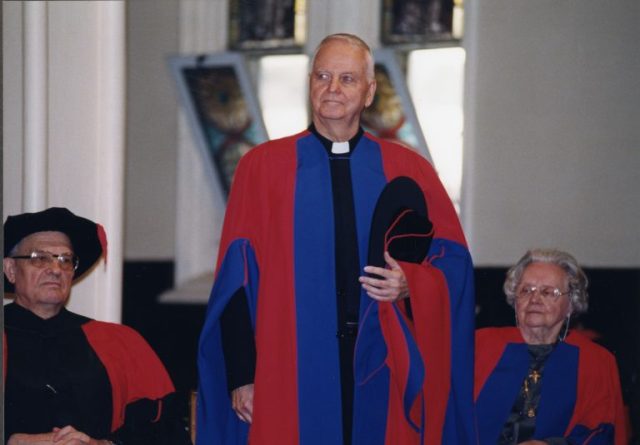
Fr. Owen Lee, CSB received a Doctorate of Sacred Letters from the St. Michael’s Faculty of Theology at a convocation ceremony in 1999. Photo courtesy of the University of St. Michael’s College archive.
A scholarship was endowed in his name at the Faculty of Music, by Paul and Nancy Nickle and is awarded annually to a promising student in the Opera Division.
His four short books on Wagner have become essential reading for all Wagnerians. His “Wagner, the terrible man and his truthful art” is perhaps the most read introduction to the paradoxes of Wagner’s genius. His book on Wagner’s Ring Cycle “Turning the sky around” continues to be the best-selling introduction to that monumental work, according to Amazon.com and his other two Wagner books, on “Wagner and the Greeks –Athena sings” and on “Die Meistersinger – the wonder of art” are full of similarly succinct and masterly insights.
His thoughts on “Parsifal” were further elaborated in his book on the meaning of Quests (“The olive-tree bed”) which also provided an inspiring Jungian interpretation of the quests of Homer’s Odysseus, Goethe’s Faust, and Virgil’s Aeneas.
His insights into the wider operatic repertoire are contained in five other music books, two of which are particularly recommendable. Father Lee’s compendium of some of his radio scripts “First intermissions – twenty one great operas explained, explored and brought to life from the Met” and his follow-up compendium containing his program notes (for a further 23 operas for a variety of performing companies) “A season of opera – from Orpheus to Ariadne” have greatly expanded our knowledge of the art form.