Questions for Cecilia Livingston: Balancing the Score

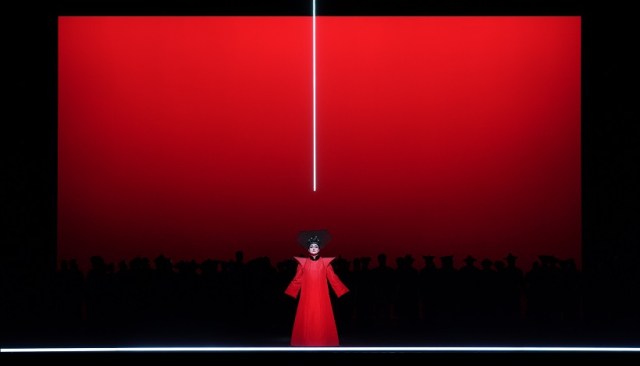
A little over five years ago, I interviewed composer Cecilia Livingston in anticipation of her new opera commission The Masque of the Red Death, an occasion for some marvelous comments about composing & opera (see what I mean? ).

I’m not surprised to hear that she’s to be honoured by the Glyndebourne Festival, the sole non-British candidate. […but Cecilia set me straight, as she holds dual citizenship… okay!]

“Balancing the Score: Supporting Female Composers” is a new development program exclusively for female composers, as their press release tells us:

The program’s four inaugural composers, who take up their positions in January 2019, are Anna Appleby (England), Ninfea Cruttwell-Reade (Scotland), Cecilia Livingston (Canada), and Ailie Robertson (Scotland). Participants will spend two years immersed in life at Glyndebourne, attending rehearsals and meeting professional opera makers and performers. Glyndebourne is also collaborating with its resident orchestras, London Philharmonic Orchestra and Orchestra of the Age of Enlightenment, as well as Philharmonia Orchestra, London Sinfonietta and Southbank Centre, to provide opportunities for Balancing the Score participants.

It’s a happy coincidence that Friday March 8th is International Women’s Day, and Saturday March 23rd is “The Next Wave Workshop” from Musique 3 Femmes, showcasing the work of women in the opera world –directors, librettists and composers—including Cecilia Livingston.

poster

You can read more about the March 23rd event here, but first? the opportunity to ask Cecilia about her experience so far.

BB: Cecilia, congratulations!  How did you find out? What were you doing when you got the news?

It was such a Hollywood moment: I was in London, standing in the great courtyard of Somerset House – which is just south of the Strand, overlooking the Thames – on a deliciously warm, sunny day, waiting for a friend and fighting a bad Wi-Fi signal to check in for a flight on my phone. I was so amazed at the news that I let out this strange loud yelp, loud enough to draw the attention of the security guards! Security down there is pretty tight (this is London) so I had to explain to them that, actually, I just had some wonderful news.

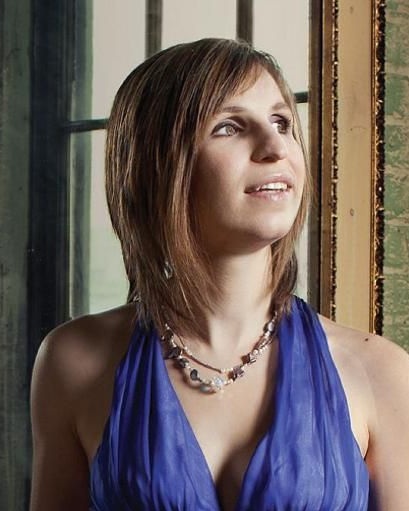
cecilia

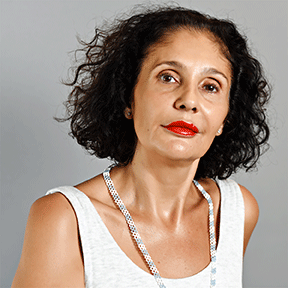
Composer Cecilia Livingston

BB: And so how did the program begin?

It started with an official ‘induction day’, bringing us together at Glyndebourne: an in-depth tour, planning sessions for some of the projects we’ll be working on, and lots and lots of meetings. And important orientation things, like getting swipe cards and finding the company canteen (the food is excellent – amazing meatballs!). We got to sit in on that evening’s rehearsals in the auditorium to get a sense of the space and its acoustics.

(These were rehearsals for Howard Moody’s ‘Agreed’, Glyndebourne’s most recent commission and one of their legendary mainstage community operas.)

BB: Have you met the other three participants yet?

Yes! I had met two of the three other composers at our interview days in the fall, so under, er, slightly awkward circumstances. Happily, this is a lovely group: we’ve been messaging and Skyping since we found out we were selected, so meeting in person again on the start day of the scheme was like meeting old friends. There’s a really nice feeling of mutual support and collaboration already, rather than competitiveness. I think that’s special, and means we can do great work together through the program.

BB: Opera isn’t your only compositional activity.  If you can wrap your head around this question, roughly what percent are you an opera composer, and what percent, other sorts of music? (for instance Wagner & Verdi were almost totally opera composers, even though RW did write other things before, and a few later such as the Siegfried Idyll that’s based on operatic themes; and Verdi, similarly was mostly an opera composer; Beethoven & Debussy wrote one opera each, but mostly other music; Stravinsky, Ravel, Poulenc, wrote a few, but lots of other music too. AND feel free to observe that an opera composer in 2019 is not like one from 1919 or 1819…. Let alone 1619)

That is a really good question, one I think about a lot actually. I’ve felt for a while that pretty much everything I do is headed in the direction of opera, even when it’s not opera per se. I was chatting about this with Elizabeth McDonald a couple of weeks ago: she’s been singing my ‘Penelope’ on tour for the last year or so, with her trio Women on the Verge, and they were here in London in February. And she said something like “well, ‘Penelope’s’ not really art song at all, is it? It’s really a scene.” And I think she’s right about that. Even when I’m writing pieces without voice, I’m still thinking primarily about how structure and pacing, and motivic play and harmonic tension and rhythmic drive all create affect, atmosphere, drama, narrative – just as I would for an interlude or a transition section in opera. And I’ve felt that way for a long time, which has made moving into the opera world feel very natural. Plus I’ve done a lot of writing for voice, and I think that shows. Opera seems to be in my DNA, at some fundamental level.

BB: Is there anything you’d observe that’s different about opera composers, to distinguish them from composers who write other sorts of music? Or is there perhaps a difference in the sort of operas written by someone who doesn’t compose much of anything else?

Well I think there are some differences in skill set, or different skills that are required: understanding how to write for an operatically trained voice, and how to orchestrate to support it and enhance it. How to set text. How to serve story. I’ve been lucky to hear quite a lot of contemporary opera in the last few years (particularly the last couple of months here in the UK) and experience and thoughtfulness in those areas really show. I’ve heard a lot of opera where the composer was, I think, hired because they write great chamber or orchestral music, and the resulting operas often have incredible instrumental music and very inventive timbral languages, but then there’s a voice sort of stuck on top (or in the middle), and it quickly deflates the operatic qualities of the work: character, story, the magic of the singing voice. Opera demands so much, a whole package of skills. It’s a bit daunting.

But maybe the fundamental difference is attitude, or maybe I mean purpose – the reason the composer wants to be composing in the first place, which I think in opera has to be to tell stories. And then everything serves that.

BB: is composition understood to be part of the Balancing the Score experience?

Yes! That’s one of the most exciting parts of the program. And what is great is that, like the whole residency, this is really flexible so that I can choose projects that will help me grow and let me work with the amazing people at Glyndebourne that I can learn the most from.

BB: At this point in time, do you have any projects underway that you can talk about, operatic or otherwise?

I’ve got two on the go right now.

The first is ‘Singing Only Softly’, which is a chamber song-opera I’m creating with Loose Tea Music Theatre and Musique 3 Femmes. The libretto is by Monica Pearce and is inspired by the redacted sections of Anne Frank’s diary. Loose Tea’s Alaina Viau came to me with the idea for a dramatic song cycle around this subject, something that questioned the lines between art song and opera, and encouraged audiences to imagine the more complex Anne that her myth, or legend, tends to flatten. The project won the Prix 3 Femmes, and then a commissioning grant from the Ontario Arts Council, and next we’ll workshop the complete score in Toronto in March. There will be performances of excerpts at the Canadian Opera Company’s Richard Bradshaw Amphitheatre on March 19 and at Tapestry on March 23, and then the piece will premiere in early May in Toronto. We did a brief performance of scenes-in-progress at the ‘Opera’s Changing Worlds’ conference in Montreal in September and the piece has grown and deepened so much since then: I can’t wait to hear the whole thing.

‘Terror & Erebus’ is my longer-term opera project, for Opera 5 and TorQ Percussion Quartet, which takes as a starting point the last days of the Franklin Expedition to the Arctic. This is a big one for me: first, the full-evening length, but also the challenge of creating opera with percussion as orchestra. I have been a TorQ fan since we were in school together: they have a very special understanding of the theatre of performance, and that’s something I want to highlight – they are a part of the opera, not off in the corner or stuck in a pit. And it’s the first opera project in which I’ve really been able to play with narrative: the libretto is by Duncan McFarlane, and he’s got three story timelines overlapping, which blur the chronology and help the opera move past what audiences might expect (some sort of ‘Pirates of the Northwest Passage? ‘Billy Budd On Ice’? Yikes!) into something that’s more like a dream or a ritual, that’s much more about the experience of Franklin and his crew and their suffering. It’s interesting to me that in the middle of this hugely absorbing, hugely challenging project, I’ve had so many amazing opportunities. Sometimes life gives with both hands. And we’ve been so lucky in the support around ‘Terror’: particularly the Canadian Music Centre’s Toronto Emerging Composer Award, which was such a vote of confidence in me at a moment when, to be frank, I needed that support and encouragement very much.

But clearly a comic opera is what I need to do next to balance this all out!

BB: You pointedly thanked Christos Hatzis in your interview saying
“ I’ve a huge respect for my teacher, Christos Hatzis. His enthusiasm and energy are astonishing – he lives a true musical life.Can you describe what you would be doing if you were living a true musical life?

hatzis20bo20huang20thumb20nd3_5784

Composer & composition professor Christos Hatzis

As I’ve graduated and moved into my professional life, I see ever more clearly now how important my teachers at U of T were to who I’ve become. That’s particularly true of Christos: his enthusiasm, his curiosity, his sincerity, his complete commitment to his work – those inspire me every day. And the way he thinks about musical structure… I hear him in my head a lot! Once when I was in my Master’s someone came up to me after hearing a piece of mine in a concert and said “are you Christos’s student?” And when I said yes I was, this person replied “Aha! I thought so. Every note in its right place.” Which is also almost a Radiohead quote, so I was doubly delighted.

I think being a composer requires this absolute commitment, because it is such a brutal artistic path. For me, that commitment and the focus it demands is helped by finding a state where everything one is doing feeds into the work. It’s really, really difficult to find ways to nurture that kind of focus, but also, you know, eat and pay rent. In many ways it’s actually easier when you are in school, which can offer a sort of artificial bubble of time and concentration – or it should. It’s terrifically hard to protect that in professional life, and I think we’re only just starting, as a society, to recognize how exponentially more difficult this is for female composers, for example, and for composers who face significant financial or other personal challenges. Too often those things are hidden, and for solid reasons, but it creates terrible loneliness and terrible struggle. The romance of the starving artist in the garret is such nonsense – it’s only ‘part of being an artist’ because of the way certain artists are treated. What a handy narrative to justify not supporting artists while continuing to benefit from the ways they make our society livable. It’s like the myth of genius: a great way to ignore the dedication of craft and labour that goes into the ‘great works’, trivializing the very creations in question. Sorry, I’m being sarcastic because these things make me genuinely cross.

By some amazing coincidences of good luck, and feeling emboldened by the support of people around me, I’ve found myself in a place where I’m able to really focus on music – both the music itself and the professional life that makes creating it possible. So I’m lucky to say I think I might have found my way to my own musical life.

BB: When you wrote about Masque of the Red Death you wrote the following, which sounds astonishingly prescient as a description of a certain politician:

The Prospero of the story is a sort of hubristic peacock, strutting around his quarantine. The immediate question for us was why someone would behave this way. If a ruler has the presence of mind to institute a quarantine – and this was a brand-new civil technology in the 14th century – and in particular, a very modern inverse quarantine that attempts to preserve the leadership while leaving the population to fend for themselves, would he really be this callow? The only plausible answer, I think, is that Prospero is attempting to distract his courtiers from the realities of the plague. His bizarre performance in Poe’s story is exactly that: a performance, designed to keep everyone’s mind on the party and off what is happening outside the walls.

….[so to now ask the question:]
Do you have any thoughts about the operatic potential of any politicians or public figures, any stories that perhaps need to be told?

Ah, the question of the CNN opera! Politicians and public figures are human beings, and opera is – essentially – one of the ways we tell stories about the human experience. The concern for me, as a composer, is what weight the audience’s pre-knowledge hangs on the work, and how that is or is not useful to the experience I would hope my opera might facilitate. Let me put it another way: ‘Nixon in China’ is, quite possibly, my favourite opera ever. It encapsulates what a wonderful form opera is for satire and the satirical, and for good old comedy too: but more broadly, that opera excels at undermining the two-dimensional. ‘Nixon’ does all these things – plays with recent history using the satirical and the elegiac, the elusive and allusive – in very broad, and very subtle, very sophisticated ways that go far beyond Nixon as a historical figure. The character becomes a means to the opera’s ends. But that opera is a freak to me: how often do creators of such skill come together?

BB: If you could have written any pop song, which one would it have been?

Radiohead’s ‘Decks Dark’. Let’s not look at the play count in iTunes…

BB: I just watched Wes Anderson’s  Isle of Dogs again last night, one of my favorite films of the year, alongside Ralph Wrecks the Internet.  The boundaries between art for adults & children is getting blurry these days.  I want to ask first, are you more of a cat person or a dog person? And more seriously, given the phenomenal number of animals we see these days in media (social especially), do you see any animals or stories for children in your operatic future?

I just love animals, period. Dogs are good for composers because they make us get up and, you know, move. I think cats like composers because we sit very still for long periods of time.

I know one cat who, I’m convinced, thinks I AM a cat for this reason.

I think both children and animals are rich sources of stories for opera, despite the old saying that neither should be on stage or you risk mayhem. Opera for children is actually a subject on which I have very strong feelings. My condescension-radar kicks into high gear. I have very little patience with opera that is purely didactic (be it for whatever audience), and I loathe opera that patronizes kids.

‘Peter Grimes’ is, at one level, an opera ‘about’ bullying. And yet it is so, so much richer than that. Why should opera for children be any less complex or nuanced in its storytelling?

So I’ve got pretty exacting standards there: opera for children and with children should have the same artistic integrity as any other opera.

And I think this might indeed be in my future: one of the wonderful components of my residency at Glyndebourne is getting to work with their education department. They have a remarkable record of commissioning very strong work for young people: Howard Moody’s ‘Agreed’, which I just heard earlier in March, is exactly the best kind. Well crafted, inventive, lots of children involved in the production, and while there is a message or point within the story, the opera is so much more than that.

It’s funny you mention film: I’m really interested in composing for film. I just keep getting asked to do concert music and opera. But it seems like a very similar set of attitudes to the ways music tells story, illuminates character, creates atmosphere. Plus, the same need for collaboration and team work.

BB: What’s your favourite opera (meaning fun / enjoyment) and what’s your operatic ideal (meaning, the one you most admire)?  When you’re composing might either of these in some respect embody your objective(s)?

For fun and enjoyment? The first scenes of ‘Nixon’, every time. Mozart. I have a huge soft spot for ‘Madama Butterfly’, though I’d hesitate to call it ‘fun’! Operas I admire… ‘Nixon’, all of Britten but particularly ‘Death in Venice’, ‘Written on Skin’ for sure, ‘Invisible Cities’. Those would be my top four. ‘Nixon’ for its incredible shadings of emotion, its moral imagination. ‘Death in Venice’ for the sheer beauty of the music, the impeccable text-setting. ‘Written on Skin’ for the best vocal writing, the best orchestration around the voice, and such clear-eyed understanding of dramatic economy. ‘Invisible Cities’ for its inventiveness, its intimacy, its imagination.

BB: Operas have often centred on a female’s suffering and dying.  Please speak for a minute about opera in context with the feminist project of Balancing the Score.   How you feel about opera’s past and its future?

Opera has a very challenging canon, for sure. I’ve eye-rolled my way through many a death aria (love those high notes with one’s dying breath!) just as I’ve eye-rolled my way through yet another rom-com heroine waking up in full hair and makeup. Because opera gets under my skin so much, I’ve had some truly uncomfortable experiences. (The ‘whip her to death’ scene in ‘Nixon’ – I can hardly bear to listen to it, though I know why it’s there.) There are more sophisticated, historicised answers to why these tropes have arisen and are perpetuated but as a creator, I must move forward. Not despite these issues, but in recognition of them. In defiance of them.

What I love about Balancing the Score is that it identified a problem, and proposed a practical, flexible opportunity as a solution, and distributes that solution beyond one individual: it’s a shrewd approach to talent investment. There are so many schemes where one early-career composer gets one shot: that’s a set up for failure and disappointment all-round. Glyndebourne’s is a much longer-term support system, one that is keenly aware of the importance of access to opera’s networks and what a huge challenge that can be for female creators.

BB: Opera is many things, but it’s an industry, artists & artisans & pedagogues, musicians & writers and composers, and many others besides.  Talk for a moment about the women in the business and why it’s important to get more women involved.

Kaija Saariaho put it pretty succinctly: half of humanity has something to say.

BB: Is opera dead, or dying? Can it be saved?

Oh, opera’s been dying since it got started. Mark Adamo addressed this nicely:

“I was lecturing at a music school in February, and during a Q&A with the opera students, one asked me, ‘Is opera thriving? Collapsing? Mutating?’ To which I answered, ‘Yes’.”

He’s right. Though I do see a fundamental problem when it comes to renewing the genre, to creating new work. The ways that the industry supports creator-development is totally incoherent, and examples of thoughtful talent investment like Glyndebourne’s residency are so rare.

If we support people and help them learn how to create compelling opera that audiences want to hear, then they’ll ask for it, and houses can stop insisting that to sell seats they can only program ‘La bohème’. But these are very long projects. And I think it’s important to recognize that there are people who want their art to be entertainment, who do not want to be moved, or shaken, or challenged in any way, ever. They are the most truculent audience members. But that can’t be all that there is, because that is only one audience group, and it means that one group never gets a chance to change. I love ‘Bohème’ – I just get nervous when we start restricting the range of experiences art can offer us, and blame the new work for why we are restrictive.

A lot of contemporary opera is terrible – sure. I just get cross when people complain about both ends at once, saying that opera is a bunch of old chestnuts with too many dead women, but also that new opera sucks. As I get older I’m getting bolder about asking them what, exactly, they are doing to support new creators as we learn our craft. Because it takes a lot of learning, and learning costs time and concentration, both of which cost money. So the funding for new creators, and our trial-and-error, has to be there. Lab-style, festival-style, small-theatre opera where we can learn our craft: then follow through and build those mainstage opportunities for us when you’ve seen the work is promising.

BB: In your interview you spoke admiringly of singers.  Some composers write difficult & virtuosic music, while others are more (musically) plain-spoken and direct in their style.  If you’ll forgive me for sounding simplistic, I wonder if you know your preference between these two poles?

Myself, I lean towards what I think you mean by ‘plain-spoken’ and ‘direct’. But there’s a time and a place for both polarities you’ve identified. As a listener, I’m annoyed when I can’t hear what is being sung and I can’t discern why that is the case – like, there’s no aesthetic or dramatic justification for that choice. And I’m concerned when I suspect that the composer is imposing unhealthy or unsustainable vocal practice on singers, particularly when those are early-career singers who may not feel they can speak out.

Singers are the best guide here: they know what they do best and what they want to experiment with. I remember a masterclass (actually, one for instrumentalists) and a young composer said “but I want it to sound laboured” and the clinician-composer just looked at the guy and said “they can act that. All you are doing here is asking them to hurt themselves.” I want singers to want to sing my music. If they don’t, they won’t, and it will sit in a drawer, and for me that defeats the whole purpose.

BB: The writer Slavoj Zizek in Opera’s Second Death spoke of the function of opera before the time of Freud, as psychotherapy (and opera’s death he would ascribe at least partly to therapists, now supplanting opera by performing the same function).  Would you rather write something that gets into someone’s head obsessively making them a bit crazy (I’m sure you can think of examples of composers who did that) or instead do you want to create something that is the cure?

I want to do both, because I think ‘both’ is what art can do. I think good opera creates these moments that haunt the imagination, that play out on the mind’s stage over and over again – an afterimage burned into the retina, etched on the eardrum. And I think those are the moments that also point to opera’s cathartic opportunities – and I use that word ‘cathartic’ deliberately. Which are deeply bound up in opera as a live performance medium… clearly, we are going to need do another interview!

BB: While you’re in Britain, Balancing the Score, do you miss anyone? Do you want to say hi to anyone here?

I miss everyone! It takes a village, this composing life. So let me say a huge thank you to all the people who have helped – you know who you are and I hope I have made clear how much I treasure your support and faith in me. You give me the courage to dream big!

*****

And speaking of “it takes a village” I refer you to  The Next Wave Workshop from Musique 3 Femmes.  For further information please look at their press release. to know more about the upcoming presentation on March 23rd at Ernest Balmer Studio.

Posted in Interviews, Music and musicology, Opera | Tagged , , , , | Leave a comment

Questions for Mladen Obradovic: The Woods are Dark and Deep

A few years ago I saw a Feydeau farce starring Mladen Obradovic. He was a startlingly good actor, playing two distinctly different roles, a bit of a tour de force really, and totally unforgettable.

flea_ALONE

Mladen Obradović as Poche in “A Flea in Her Ear” (photo: Derrick Chow)

So this week I see that he’s written a very serious play about a serious topic.

Did you know that…

 “…during World War I, immigrants who were living in Canada, but who came from countries that Canada was at war with, ended up interned. This included Germans, Italians, Ukrainians, Croats, Serbs, Austrians, Hungarians, Turks…. More than 8500 people were kept in 24 internment camps and receiving stations.”

Did you know this? This is the first I heard of it.

Mladen’s play is called The Woods are Dark and Deep concerning immigrants who were locked up. The historical angle grabbed my attention. Did you see Hungarians were on that list?  I think of myself as a Hungarian-Canadian (my family only came to Canada in the 1950s.).  And I am very curious about the play.

So of course I had to ask Mladen some questions.

BB: Are you more like your father or your mother?

I love this question, because I didn’t have an answer ready right away. It made me think. I guess I have some sides to me that make me more like my mother and some that are totally like my father. I think my mother influenced me more- supported my individuality, my artistic side, my empathy. I don’t know what kind of a person I would be if it wasn’t for her influence, but I do know that she made me want to be a better one. And I picked up my father’s OCD, his ambition and straightforwardness. I am also a lot like my maternal grandmother. I picked up my diligence and practicality from her.

MladenObradovic-LVIMAGERY-4 - Copy

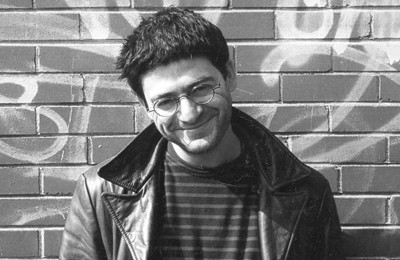
Mladen Obradovic

BB: What is the best or worst thing about what you do?

Acting is truly a very cruel profession- very few people get to have a career, even rarer is for them to have it on their own terms, without making horrible sacrifices in their private life. The most obvious example is the fact that many actors can’t sustain a long-term relationship, or chose not to have children, mostly because of the uncertainty of our job. That constant state of alert, looming above, has to be one of the worst things about this profession. There are absolutely no guarantees. One can star in a theatre show or a film, get an award for it and then not getting any work for the next two years. I saw so many phenomenal actors quit this job and go into a totally different line of work because they needed some certainty in their lives. That brutal selection is always heartbreaking to watch.

On the other hand, one of the best things about this job is constant movement, meeting different people all the time, working on different projects all the time. This job can never be boring. Cruel yes, but boring no. One of the best days of my career happened in Belgrade when I performed a children’s fairytale show in the morning, then went to a rehearsal for Shakespeare’s Macbeth that we worked on, then shot an episode of a TV show for which I portrayed a poet and recited his love poems, and then did a late evening recording of a radio show where I played in some very raunchy scenes. It was amazing. I did four totally different things in one day, and they were all rewarding in their own way. That is what I always strived towards- new experiences, fresh challenges.

So far- I was lucky enough to get it.

BB: Who do you like to listen to or watch?

I watch a lot of movies and TV shows. I do like all genres, so some of my favorite movies include very different ones: The Matrix, L.A. Confidential, Cabaret, The Color Purple, Dogville… Some of my favorite TV shows include: Sense8, Breaking Bad, Six Feet Under, Shameless, Dexter, The Wire… and comedies: Alo, Alo; Only Fools and Horses, 3rd Rock from the Sun, Friends.

I mostly listen to older rock and pop music, some of my favorites are The Cranberries, David Bowie, George Michael, Sting, Annie Lennox, Queen. I watch tennis, I despise reality TV, although I do love dancing shows- So You Think You Can Dance and World of Dance.

BB: What ability or skill do you wish you had, that you don’t have?

I wish I was a bit taller. I am only 5’ 7”, and it is so hard to be an average height actor in a world where size does matter.

RESIZED_MladenObradovic-LVIMAGERY-1

Mladen Obradovic

BB: When you’re just relaxing and not working, what is your favourite thing to do?

I watch a lot of films, do a lot of gardening, take my kids to a pool or a playground, going out- anywhere really- either for walks in nature, or clubbing, dancing, watching shows. I don’t rest a lot.

BB: Did you experience a shock of recognition discovering the history of internments during the First World War?

Yes. Once I started my exploration of the topic, it made some sense, but my first reaction was of utter shock and disgust. The truth is that there were about 8500 people in those camps. So many different nationalities too- anyone who came from countries that were in war with Canada.

However, the problem was that half of those people were running away from those same countries. Austro-Hungarian Empire, for example, occupied Ukraine, Croatia, and so many other countries and territories. Serbia and my home country of Montenegro were under Turkish occupation. Immigrants from those countries came to Canada to escape the oppression, but were labeled as possible traitors and put away. There were so many reasons why this happened. Some of these people were not safe because their neighbours actually thought that they were dangerous. It was the biggest war ever by then, so everyone was very concerned and some of them responded from their fear. In order to prevent conflicts, the government pulled some of those immigrants into camps. Some were being framed by their coworkers or neighbours, some were just too poor and happy to go to a camp because it provided them with shelter and food, and they were paid too- as much as Canadian soldiers were. There were all sorts of stories, but the important part was that it was involuntary imprisonment of immigrants. I am an immigrant, it resonated very deeply.

Could it happen today? What needs to happen for someone to tell me that I don’t have the same rights and freedoms as people who were actually born in Canada? The history of the human race is the history of oppression. Coming from a war-torn country I am very sensitive about these issues. But I did mention that after I started my exploration, things started to sound much more logical. I do envision someone whose child was fighting somewhere in Europe, and I do understand how it must have been really difficult for them to have a German family, for example, living next door to them. Let’s not forget that this was an era where all the news came from newspapers, or similar paper based propaganda. People were less educated, more scared, and, I presume- easier to rally. I can see how it escalated to innocent people being imprisoned for years. The important part is not to forget those lessons from our history and work on never repeating them. Can we see the parallel between illegal immigrants being imprisoned by the thousands in USA at this point? Children dying in their custody? Our story happened a hundred years ago but it is easy to assume that nothing changed.

BB: I understand that the “Canadian First World War Internment Recognition Fund” approached you to do this work. The announcement says they “commissioned and produced this show.” That sounds like an adventure. Please tell that meta-story, of how you were approached and persuaded to do this play.

It was first mentioned by a friend of mine who worked for Toronto Public Library, where she heard about WWI Internment Recognition Fund and their work. Their mission is to support art projects that will help keep the memory of these events alive. She dug a little deeper and when she found out that there were Serbians there, she suggested we do something to honor their memory.

I was intrigued by the topic right away and I knew that I wanted to write a play about it. The only problem was that I never finished a full-length play for grown ups before. I wrote a few children’s plays, but nothing like this. So I approached the organization, asked them if they would be interested to help me with the project, and they offered all the resources they had. They only requested for the play to be historically correct. After I did my research and wrote the first draft, their entire board of directors went through it and sent me their notes- the objections about the truthfulness of places, dates, timelines… I was, obviously, thankful for this. Although I wrote a story with fictional characters, the frame of the story is absolutely authentic.

BB: Who do you imagine is the audience for your play?

It is a coincidence that the main characters of this play are Serbians and Ukrainians. I just knew more about them so I chose them as my leads. But there were so many nationalities interned in those camps. Any immigrant can recognize themselves in the destiny of these people. And any Canadian should see this play- we should all be reminded about how easy it is to hurt someone who had a less fortunate start to their life in Canada.

BB: Does The Woods are Dark and Deep correspond to any conventional genre of theatre?

“The Woods…” is a drama. It has its own romantic subplot, it has a lot of traditional singing in it, but it’s not a romantic drama, it’s not a musical, it’s a drama. I am not sure it follows any templates. It is based in realism, it has its heroes and villains, but I don’t think it resembles any well-known story. There is something very familiar, but also something quite individual about this script.

BB: How difficult was it for you to write The Woods are Dark and Deep?

This is definitely the biggest play I ever wrote, and the process was quite difficult. The research and the writing of the first draft took a year to finish. I did give that first draft to several of my close friends to see it and give me some notes, and we also changed some of the things during rehearsals, the director of the play, Sandra Cardinal, helped me a lot with those edits.

BB: Talk about the team working with you on The Woods are Dark and Deep

The Director of the play is Sandra Cardinal. I first worked with her last summer on a little Fringe show called Kitchen Sink Drama. That is where I saw how detailed she is as a director, how keen on bringing the emotions of the scene out, and I was excited to work with her again.

Sophie_McIntosh_as_Claire in The Woods are Dark and Deep

Sophie McIntosh is Claire in The Woods are Dark and Deep

My partner in producing is Ivana Obradovic, and this is the third show we’re doing together. Amanda Caliolo is my Stage Manager and this is the third show I am working on with her. Third show with Meredith Wolting- our Set and Costume Designer, second one with Alexandra Caprara, our Lighting Designer, and with most of the actors I worked with before- third collaboration with Francesco de Francesco and Biljana Karadzic, second one with Ratko Todorovic and Jake Zabusky, and the children in the play- Mila Jokic and Simeon Kljakic have been recruited from Pulse Theatre’s Drama Studio.

Jake Zabuskyas Dragutin in The Woods are Dark and Deep

Jake Zabusky is Dragutin in The Woods are Dark and Deep

I am a very loyal friend and a very loyal collaborator. When I find people I am comfortable working with, I tend to stick with them every chance I get.

Biljana Karadžić as Anya in The Woods are Dark and Deep

Biljana Karadžić is Anya in The Woods are Dark and Deep

BB: This is not like A Flea in Her Ear. If we imagine a continuum between The Woods are Dark and Deep and the Feydeau farce, where is Mladen on that scale?

I am so happy you still remember “A Flea in Her Ear”, our delightful Fringe show from two years ago.

“The Woods…” is very different though. “A Flea” was an outburst of energy, celebration of love and life. “The Woods…” is like an open wound, tender and sensitive, dark and deep. Maybe because it stems from real life events, maybe it was me changing, or just totally committing to a very different experience, but these two shows couldn’t be any more different.

cards

Rehearsal: Ratko Todorovic, Mladen Obradovic, Dewey Stewart, Jake Zabusky

And I love them both, because they challenged me in very different ways. I am very impulsive. I tend to make my mind up about things instantly, I like change, I love challenges. So I don’t know what the future brings, but it might be something completely different. Or maybe I finally make up my mind and stick with one genre? That would also be a change! I just know that I do hope to survive in this industry. Being an immigrant actor, an audible minority in this city is not exactly a guarantee for success.

fight

Rehearsal: Jake Zabusky, Mladen Obradovic, Dewey Stewart, Francesco de Francesco

So far I was lucky enough to find enough engagements, and I hope it doesn’t stop here.

BB: are there any teachers and/or influences you would care to mention?

I am what I am because so many generous and knowledgeable people stopped and shared their trade with me. My professors from Serbia: Ciga Jerinic, Boris Pingovic, Zoja Begolli, Marina Markovic, Dragana and Tomo Brkovic and the late, great Kaca Brkovic… my professors from York: David Smukler, Eric Armstrong, Michael Greyeyes… Jadranka Mamic, Zaklina Ostir and Aleksandra Bosnic from Montenegro, Julie and Craig Hartley from Centauri Summer Arts Camp, Christina Akrong and Alex Breede from TheatrePeace Inc, Barbara Rosenberg and Janice Gruchy from PACE Academy… Just some of the people who changed my life forever.

But most of all my family, especially my children. They changed my life and keep on changing it by changing me, every day.

*******

Mladen Obradovic’s new play The Woods are Dark and Deep premieres on March 21 at the Factory Theatre. For tickets click here.

banner

Posted in Dance, theatre & musicals, Interviews, Politics | Tagged , , , , , , , | 1 Comment

Musique 3 Femmes: The Next Wave Workshop

Musique 3 Femmes with Tapestry Opera Announces

The Next Wave Workshop

Presentation of operas by winners of inaugural $25,000
Mécénat Musica Prix 3 Femmes, new prize supporting creation of operas by
emerging female and female-identifying composers and librettists in Canada

March 23, 2019 at Ernest Balmer Studio

In collaboration with stage directors Jessica Derventzis,
Amanda Smith, Anna Theodosakis, Aria Umezawa, Alaina Viau

(TORONTO) Musique 3 Femmes presents Canada’s first opera workshop to feature exclusively all-female creative teams in the development of five new operas by women in collaboration with directors Anna Theodosakis, Aria Umezawa, Jessica Derventzis, Alaina Viau, and Amanda Smith. The workshop sees a preview performance on March 19 at Canadian Opera Company’s Richard Bradshaw Amphitheatre as part of the Noon Hour Concert Series, and culminates in a staged evening performance in the Ernest Balmer Studio on March 23 at 7:30pm. The performance features Musique 3 Femmes artists soprano Suzanne Rigden, mezzo-soprano Kristin Hoff, pianist Jennifer Szeto, and the participation of mentors JUNO-Award nominee composer James Rolfe and two-time Governor General award-winning playwright and librettist Colleen Murphy.


The project aims to put emerging female creative voices working in Canadian opera front and centre. “It was a thrill for us as an ensemble to uncover so much talent with this year’s prize,” states Musique 3 Femmes’s Jennifer Szeto. “We’re also excited that all teams have seen their works programmed by companies for further development and performances. It’s a testament to their promise as emerging creators in this field, and we’re pleased to create a new spotlight for their work.”

Works presented:


Singing Only Softly (Composer: Cecilia Livingston, Librettist: Monica Pearce, Director: Alaina Viau)

A song-cycle opera by Toronto composer Cecilia Livingston featuring an original libretto by Monica Pearce inspired by redacted texts from Anne Frank’s famous diary. The work explores Anne’s complex adolescence, her growing maturity, and her tumultuous relationship with her mother, Edith. Singing Only Softly is led at the Next Wave Workshop by Loose Tea Music Theatre Artistic Director, stage director Alaina Viau.

L’hiver attend beaucoup de moi (Composer: Laurence Jobidon, Librettist: Pascale St-Onge, Director: Aria Umezawa)

Amidst the harsh and cold weather of northern Quebec, Léa tries to reach a safe-house in order to protect herself and her unborn child. She meets Madeleine, a tormented woman who promises to lead her to the end of a road where no one else goes. L’hiver attend beaucoup de moi pays tribute to feminine solidarity and resilience, as well as to the strength of the Quebecois territory. The work is led by director and former San Francisco Opera Adler fellow Aria Umezawa and will see its premiere at Opéra de Montréal in March 2020.

Book of Faces (Composer: Kendra Harder, Librettist: Michelle Telford, Director: Jessica Derventzis)

“Nothing on Earth has prepared me for life like the Internet…” Book of Faces is a comic opera exploring the world of social media and two millennials for whom the struggle is just too real. The second collaboration between Saskatoon composer Kendra Harder and librettist Michelle Telford, Book of Faces sees a world premiere at Next Wave Workshop led by director and Artistic Director of Opera 5 Jessica Derventzis, and later performances as part of Highlands Opera Studio’s 2019 season.

Suites d’une ville morte (Composer: Margareta Jeric, Librettist: Naima Kristel Phillips, Director: Amanda Smith)

A woman returns to a place where she fell in love. She finds a piano on a heap of rubble. An exploration of the anatomy of a piano, this work examines the interplay of loss and connection in a world where everything can change in an instant. Based on the play Ghost Town Suites by Naima Kristel Phillips, Suites d’une ville morte is the first collaboration by Phillips with Croatian-Canadian composer Margareta Jeric. The work is in development for Toronto’s FAWN Chamber Creative, and is led here by FAWN founder and stage director Amanda Smith.

The Chair (Composer: Maria Atallah, Librettist: Alice Abracen, Director: Anna Theodosakis)

“You didn’t even know her name. You don’t even know my name.” With an original libretto by Abracen on a short story by Atallah, The Chair explores grief, loss, and friendship through the eyes of a teenager. Melanie loses her best friend in a tragic accident and returns to school to face throng of well-wishers and a mysterious new classmate. For the Next Wave Workshop, the piece is led by COC Ensemble dramatic coach and founder of Toronto’s Muse 9 Productions, stage director Anna Theodosakis.


Musique 3 Femmes is a Montreal-based ensemble which supports future female leaders in opera. In 2018, they launched the Mécénat Musica Prix 3 Femmes, a biennial $25,000 award which supports the creation and development of operas written by emerging female and female-identifying composers and librettists in Canada. The 2018 prize enabled the creation of five new French and English language operas by teams from all across Canada, which received a first workshop and performance in collaboration with Opera McGill in September 2018, including a featured performance at “Opera’s Changing Worlds”, a national summit co-hosted by Opera.ca, Opéra de Montréal, and Opera McGill. This season, Musique 3 Femmes is an Ensemble-In-Residence at Mount Allison University and Queen’s University’s DAN School of Music. Musique 3 Femmes comprises mezzo-soprano Kristin Hoff, coloratura soprano Suzanne Rigden, and pianist Jennifer Szeto. M3F gratefully acknowledges Canada Council for the Arts and the SOCAN Foundation for their support.

poster

Posted in Music and musicology, Opera, Press Releases and Announcements | 2 Comments

Unsafe at Berkeley Street Theatre

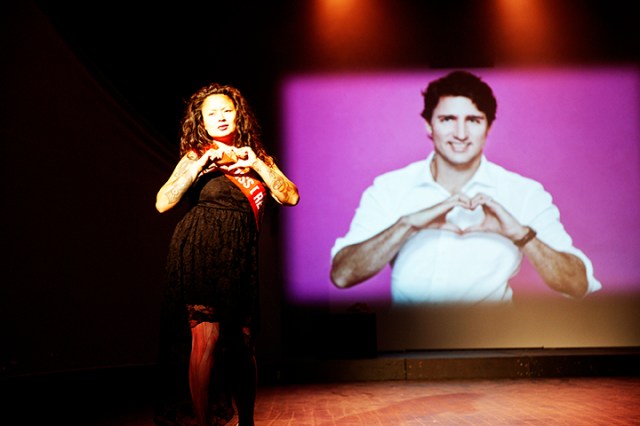
A world premiere event by a Canadian cultural icon.

UNSAFE

AN INVESTIGATION IN THE CENSORSHIP OF ART
AND THE ART OF CENSORSHIP IN CANADA

Written + Created by SOOK-YIN LEE
Directed by Sarah Garton Stanley
Performed by Sook-Yin Lee + Christo Graham

“Making theatre is unsafe. Theatre makers are at risk the moment they embark on a creative endeavor. In making Unsafe, I’ve learned that fear rises from deep inside your body. It’s at the root of every secret desire, every shame, every guilt, all you hate and what you think you will be killed for. It’s what drives your need to control, and it’s the foundation of censorship.” — Sook-Yin Lee

Multimedia artist and broadcaster Sook-Yin Lee’s Unsafe is a meta-theatrical documentary performance that investigates the censorship of art in Canada. What makes some art acceptable and some art not?

Adding to this documentary/meta-theatrical production are projected interviews with artists who have been silenced, limited, and censored: 2018 Polaris Music Award winning classical trained opera tenor Jeremy Dutcher; Governor General Award-winning poet, playwright and professor George Elliott Clarke; stand-up comedian Chris Robinson; Anglican priest and social justice activist Maggie Helwig; Globe and Mail columnist Kate Taylor; Canadian-Arab artist Laila Binbrek and others.

*****

We asked Lee to answer some questions about the piece, which was developed here in residence at Canadian Stage.

The title of your project is Unsafe. How would you describe the core subject matter of your piece and how it relates to “being unsafe”?

Unsafe is a documentary performance that combines my broadcasting and journalism skills with live storytelling in a theatre. It explores censorship and creativity in historical contexts and where it exists today in silencing, exclusion, and social media call-out culture in Canada. It delves into the tension between our desire for freedom and need to control. Unsafe is dangerous because it reveals the personal cost and consequences of opening up a difficult conversation. Is it possible to even begin without, in some way, censoring someone else? And will it help or further damage spaces for equity and understanding? Unsafe is an unfolding experiment. I pose many thorny questions and we’ll see what the responses are!

What, in your own opinion, makes this such a relevant and urgent topic today?

Movements throughout history have been about the struggle for greater liberty for everybody, and yet we’re constantly confronted by pressures to suppress, withhold, restrict and sanitize expression. Today, social media backlash and call-outs are common, which makes us even more inclined to hide how we really feel in order to be loved, appear more interesting, and less annoying.

The piece is concerned with public discourse and large communication platforms, but it’s also deeply personal. Working on Unsafe, have you discovered anything new in terms of what makes you feel unsafe?

In creating Unsafe, I encountered many obstacles due to sensitivity around the censorship conversation. It was frustrating and often scary when the project teetered on the verge of collapse. In those tense moments, I could have thrown in the towel, or succumbed to pressure, but I decided to commit to a new strategy for me, which was to accept each obstacle as graciously as I could and work with it. Even when I was confronted by obstacles I thought were impossible to overcome, I pushed myself to remain present and figure out a way to problem-solve. Interestingly, I think the obstacles and their work-around helped improve Unsafe!

You are mostly known as a radio/TV personality, activist-artist, filmmaker and journalist, but this is the first time you are appearing in your own “play” in the theatre. Can you speak a little bit about what made you choose this genre – a theatrical performance crossing over into a documentary/meta-theatrical form?

I have appeared in my own theatrical productions before but they were narrative dance works, which are poetic and expressionistic compared to the reality-based direction of Unsafe. Unsafe deals primarily in non-fiction and is grounded in the broadcast interview form, which I consider to be one of my artistic practices. Originally, I was hired by playwright and filmmaker Zack Russell via Canadian Stage and former Artistic Director Matthew Jocelyn, to develop a work on art and censorship. Delving into the process, it became clear to me that the most direct, revealing, surprising, educational, entertaining, and dangerous response to this difficult proposal was to embrace an experimental documentary-performance approach.

Unsafe runs March 12-31 at Berkeley Street Theatre.

*****

Press releases and announcements” are presented verbatim without comment

Posted in Press Releases and Announcements | Leave a comment

The Woods are Dark and Deep: internment story

poster

The Woods are Dark and Deep is a new, original historical drama by Mladen Obradović, a Toronto-based theatre creator. It is based on a little known historical fact that during World War I, immigrants who were living in Canada, but who came from countries that Canada was at war with, ended up interned. This included Germans, Italians, Ukrainians, Croats, Serbs, Austrians, Hungarians, Turks…. More than 8500 people were kept in 24 internment camps and receiving stations.

The story follows three Serbian men, and a Ukrainian family, parents with two children. All of these characters came to Canada to work and earn a better life for themselves and their families, but through no fault of their own ended up locked up and forced to do manual labour for several years, being payed a quarter a day.

A hundred years later, Canadian First World War Internment Recognition Fund is an organization that is dedicated to keeping the memory of these little-known events alive, and is hoping to educate future generations about the position of immigrants in our country and the ordeals that they had to go through to integrate into the fabric of modern Canadian society. In collaboration with Pulse Theatre, they commissioned and produced this show that will educate, thrill and touch the audience, reminding them how tough our ancestors were and how their sacrifices informed our legal processes and our today’s social freedoms. The show is based on historical events and highly educational when it comes to Canadian history.

Directed by Sandra Cardinal, featuring a diverse cast of immigrant performers, as well as actors of both Serbian and Ukrainian background, and with a soundscape of beautiful Serbian traditional songs, we can’t wait for The Woods are Dark and Deep to start it’s run in Factory Theatre. We will have eight performances, March 21-27th, and we do hope that you will come and see it.

*****

“Press releases and announcements” are presented verbatim without comment

For tickets click here.

Posted in Press Releases and Announcements | Leave a comment

Perchance to Dream

I’ve just seen Perchance to Dream in its Canadian Premiere with Toronto Operetta Theatre.  Ivor Novello’s musical romance was a great success upon its first appearance in London in 1945, although tastes have changed.

I was reminded of Salieri in Amadeus, a once-famous composer who has become obscure, if not forgotten.  I am once again moved to thank TOT Artistic Director Guillermo Silva-Marin for taking a risk in presenting this piece.  Happily the theatre was packed with an eager audience, sharing my curiosity and delighting in the melodious score.

ivor-novello-4-sized

Ivor Novello

Charming as the TOT production was, I can see how Novello has fallen from sight, if this show is any indication.  The tunes are all lovely, but it’s very much like a serenade, the songs and the choruses lilting and delightful.  It might be the prettiest score I’ve ever heard.  As theatre, though, it’s very gentle with few jolts or surprises.

Perhaps I’m born in the wrong era to appreciate it..?

Speaking of which, this is a very romantic story across several generations.   Indeed it’s like something you might have seen from Hollywood, love and loss in different centuries.  But the music is very tuneful, lovely melodies & harmonies. While there’s pain in the story the music is very sweet indeed.

The young attractive cast gave us a semi-staged presentation, although in formal attire rather than costumes, directed by Silva-Marin.

Lynn Isnar was an audience favorite in the multiple roles of Lydia – Veronica – Iris (depending on the year for the scene), singing the show’s big hit song “We’ll Gather Lilacs”.  Isnar’s voice was especially brilliant on top, used to great effect.  Caitlin McCaughey (Melinda- Melanie –Melody) certainly lived up to her character’s name, leading the women in the show’s boldest number “The Glo-Glo.”  Rosalind McArthur’s rich speaking voice was thrilling to hear as Lady Charlotte.

Tenor Cian Horrobin was affecting as Sir Rodney.  Joshua Clemenger and Yervant Khatchadourian both have beautiful voices with several lovely moments, courtesy of Novello’s melodious writing.

The musical direction by Peter Tiefenbach at the piano was perfection, very well-balanced & transparent whether working with a soloist, an ensemble or the entire company.   Unfortunately there’s just the one performance, but I hope TOT will consider presenting another one of Novello’s works someday.  There seems to be a demand for his music, judging from the full house today.

Posted in Dance, theatre & musicals, Music and musicology, Opera, Reviews | Tagged , , , , , | Leave a comment

Grainger’s rambling approach to popularity

There was a thread on social media not so long ago about music that gives you the shivers. It seemed like a fun topic, when I was walking along in nasty cold weather, to be able to shiver from a remembered tune heard in my head rather than due to the extremes of climate.

If you have to shiver anyway, why not let it be a positive and even an ecstatic experience?

My current champ is Percy Grainger’s paraphrase of a Richard Strauss melody from Der Rosenkavalier. The Australian piano virtuoso already had a place in my heart with a piece I cited a few years ago that figures in the Merchant – Ivory film Howard’s End, namely the “Bridal Lullaby”. That one was already a guaranteed ticket to spinal chills, but this new one is even chillier.

In fairness the music Grainger is sampling from the Strauss opera is already pretty thrilling, likely to induce all kinds of electricity running up and down your vertebral column. When I recall parts of Rosenkavalier there are several that instantly induce paroxysms. Grainger has the good sense to boil it down to only a very small amount from Strauss. Wonderful as Strauss’s tunes are, the adventure playing a piano vocal score, imagining the complete work in your head is still virtual, because so much is missing. A paraphrase aims to somehow stand alone without the voices & the orchestra. It’s not that we’d ever trade an opera for a paraphrase, so much as the simple fact that if you’re all alone with your piano, it can be an amazing invocation of the larger work.

I made the serendipitous discovery when my friend Jim Fretz shared this on Facebook, namely the “Ramble on the love-duet from Der Rosenkavalier” by Percy Grainger. Here’s the tantalizing clip.

So of course I had to see if I could chase it down in the library. Thrill of thrills, there it was at the Edward Johnson Building library at the University of Toronto’s  Faculty of Music, and once again it’s from the “Schott Virtuoso Transcription Series”, that I’ve already lauded for the three Glenn Gould transcriptions and the stunningly beautiful editions they’ve printed.

schott_grainger_ramble

A beautiful score from Grainger, Strauss & Schott

Maybe it’s my fading eyesight talking, but if the notes are easier to read, surely that’s a good thing, no?

Grainger’s pianism varies. In some of his pieces (for instance anything invoking a cakewalk style such as “In Dahomey”, subtitled “Cakewalk Smasher”) he demands an extroverted and aggressive approach. What is being smashed if not the piano? The instructions in his score include words such as “clatteringly” or “chippy”, or (for one of his left hand melodies) “clumsy and wildly”.  You can see where Grainger’s instructions specify “LH hammered”.

Full disclosure, before we set aside the loud & boisterous Grainger (or even the perky Percy of “Handel in the Strand”): that “In Dahomey” is much more difficult to play, as you can probably tell listening to Marc-André Hamelin, than his softer pieces.

So yes, there’s another more lyrical side to Grainger, the gentle pianism you hear in this Ramble or in other works such as the aforementioned “Bridal Lullaby”.  Another ramble that he titled “Blithe Bells” based on Bach’s “Sheep may safely graze” resembles this one, in reproducing the famous tune more or less as we know it, but adding decorations.


There’s a festive flair to the embellishments, the melody intact but seemingly dressed up for the occasion.

I can’t help noticing that there’s another dimension to virtuosity that Grainger demonstrates with these pieces, that I was struggling to understand when Stewart Goodyear premiered his new piano concerto a few weeks ago. A species of popularity or some similar concept lurks underneath this conversation, at least as an implication. At the time I was aware that one of the subtexts is the perplexing question: how does a composer gets other artists to perform their work? What if you’ve written something so difficult that other pianists can’t play it? I was very much in awe of what Goodyear had written, wondering just how playable it might be. How indeed does an opera composer get commissions? how does a composer of virtuoso music get other virtuosi interested? I can’t help including this in the conversation. Does one compose simply to make music? Or to re-phrase the old aphorism (about that falling tree-branch in the forest):

If a composer writes a song and no one sings it: is there music?

If singers find music attractive they may perhaps then sing arias or songs by that composer, thereby promoting one another. If a pianist likes what they hear, likes what they see on the page, ideally they will want to take that music out to the world, sharing their discovery. Popularity isn’t just what the audience likes, indeed that’s totally filtered by what the artist is willing to perform. Maybe we should be asking pianists what they like to play, and whether that’s a factor in their choice of repertoire. How much of what we hear performed is conditioned by what the artist likes to play, as opposed to what the audience wants to hear?  The two are surely linked, but I’m not sure that we’ve spent enough time studying the former, as a factor in what we get in response to the latter.

Grainger’s rambles are not easy but they’re also not terribly difficult.  One doesn’t have to be a virtuoso to play them: because I am no virtuoso, and I can more or less handle these slower works. I am not sure if that is a good or bad thing, only that I feel lucky that I’m not excluded, that I am able to play them and enjoy them. That too is part of the “popularity” equation.

Posted in Music and musicology, Personal ruminations & essays, Popular music & culture | Tagged , , , , , , , , , , , , , , | Leave a comment

Gosford Park, Ivor Novello: Perchance to Dream

ivor-novello-4-sized

Ivor Novello

When I heard that Toronto Operetta Theatre will be staging Perchance to Dream, an Ivor Novello operetta, I was reminded of Robert Altman’s film Gosford Park.  I dug up the film again last night, delighting in its subtle intimations and implications.

Do you remember this film?  It’s not quite Altman’s last film. That would be Prairie Home Companion, from 2006, the same year he passed away.  I’d be hard pressed to identify my favourite Altman film: because I like so many of them.  Everyone knows MASH.  Have you seen McCabe & Mrs Miller, with its remarkable use of Leonard Cohen’s music? a hauntingly original film.  Nashville is pretty amazing too. And then there’s the bizarre world of Popeye. There’s his stunningly original segment in the anthology Aria¸ employing Rameau, bringing madness & opera into vibrant contact.  And there are three amazing films from the 1990s, namely Vincent & Theo, The Player and Ready to Wear.  There are many more I could mention.  Right now, though I have to think Gosford Park is my favourite, because of what I saw last night.

I was once again hypnotized, totally sucked into the film within a few minutes and hooked for the night.  It’s the 1930s, when we get to see an upper class English household through the eyes of their servants.    Among the house-guests are some tourists who work in film. There’s an actor researching what it is to be a servant, an impersonation that infuriates one of the real servants (played by Richard E Grant, who we saw on the Oscars a couple of days ago), who spills a coffee deliberately onto a very delicate place of his anatomy.  There’s Weismann, fictitious producer of the Charlie Chan mystery series, a charming little Jewish-American.  But in the midst of the fiction there’s Ivor Novello, a historical figure.  We meet the singer, song-writer and famous personality as portrayed by Jeremy Northam.

At dinner we hear a bit about the plan to film a murder mystery.  After dinner, Novello sings songs at the piano, entertaining the guests as well as the servants furtively listening.

His songs make for a gently romantic soundtrack, a dreamy style with more than a bit of crooning from Northam even as we discover more about the family & the master of the house, envied or hated by almost everyone present.  And then in the midst of one of the songs we see his murder enacted, and the tone of the film shifts only slightly.  At one point Weisman jokingly remarks about how much freedom servants have, that the butler really could do it, at least in a film.  But these police don’t take the servants seriously as possible suspects, which is a good thing.  Because if we want the perpetrators to get away with it, we can’t have competent police investigating the murder, now can we?  Sometimes incompetence is useful.

When I looked for a score to an Ivor Novello operetta in the music library I came up empty.  Although at one time Novello was a big star, composer of some of the most popular tunes, he’s beneath the radar at the Edward Johnson Building (at least for a complete score) although I think they must have a song or two in an anthology somewhere.

All the more reason for me to want to go see & hear Perchance to Dream this Sunday. He is arguably an important figure, now obscure after great fame in the first half of the 20th century.

Here’s Novello’s most famous song, written at the beginning of WW I, namely “Keep the home fires burning”.

Posted in Cinema, video & DVDs, Dance, theatre & musicals, Music and musicology | Tagged , , , , , , | Leave a comment

Questions for Stacie Dunlop – Lonely Child Project

Stacie Dunlop is a rare artist, a soprano who commissions original new music, some of the most original projects I’ve ever seen.

You can read her bio.

Three years ago I saw a workshop of The Harvester

More recently came Balancing on the Edge, a mix of new music & aerials.

I was especially impressed at the time with the way Stacie explained her work to a young child in the audience. As I eavesdropped I found that I was becoming inspired.

And now Stacie and her team  are re-imagining Claude Vivier’s Lonely Child with an aerial element. Here’s the way it’s described on her website:

A three stage creation project. For the first stage a new arrangement has been created of Claude Vivier’s Lonely Child (originally composed for soprano and chamber orchestra) by composer/arranger Scott Good for singer (soprano Stacie Dunlop), pre-recorded instrumentals, and will be reimagined including theatrical elements and aerial choreography in collaboration with 2 aerialists (Angola Murdoch and Holly Treddenick). A grant has been received from the Canada Council to facilitate the creation of the new arrangement, along with a development period from October 2018 through March 2019.

The project is still in its first of three stages. Next week I’ll be seeing a workshop presentation that I’ll write about  afterwards.

But first? I must ask Stacie a few questions.

BB: Are you more like your father or your mother?

This is a difficult question…my childhood was unstable: I was taken away from my father at age 6, raised by my mother who was more of a child than a parent and eventually found my way back into my father’s life around age 21. I love my father: he is a kind, generous, loving, stable and supportive human being. I like to think I am like him, but I know I am also like my mother. Both of my parents are self-focused, and I know I am similar. Growing up, I was closest to my grandmother. We had a special bond…we were best friends and I think she understood me better than anyone.

Stacie-Dunlop-Cefalú

Stacie Dunlop

BB: What is the best or worst thing about what you do?

The best thing about what I do is I bring to life my dreams…but the worst thing is that I am also driven to bring my dreams to life and this can be quite stressful, at times weighing on my soul heavier than even I realize, but then the dreams begin to come to life and that weight lifts and it can be truly joyous.

BB: Who do you like to listen to or watch?

Hmmm…funny question: I rarely listen to quality music unless I am researching something…and then I tend to obsessively play the same tunes over and over. When I run outside I like the drone of Indie Chill on Slacker, but when I run inside on the treadmill I like to watch bad movies, usually action or sci-fi, on AMC. This is kind of like white noise for me, but at home, when I am working, I do it in silence…I have never been able to work or read with music playing. I adore movies, especially horror and sci-fi genres, and am currently fascinated with any and all films Scandinavian or Korean.

BB: What ability or skill do you wish you had, that you don’t have?

People who know me will laugh at this question…I have quite a few skills up my sleeve, and like to think that I can pretty much do anything from installing car batteries and bathroom plumbing, to cooking gourmet meals and sewing drapes or knitting complex patterns. I guess I wish I played the piano with more skill, as I still struggle with the basics and can’t seem to keep up my practice. The same holds true with languages.

BB: When you’re just relaxing and not working, what is your favourite thing to do?

I love camping…the outdoors…smelling like a campfire, cooking over an open wood flame and sleeping in the fresh air…heaven!

*******

More questions for Stacie Dunlop about the Lonely Child Project.

BB: Stacie, tell us about your background and how that leads to Lonely Child Project.

In 2016, I was paired with aerialists Angola Murdoch and Holly Treddenick for a show called Balancing on the Edge, an evening of new music and new contemporary circus. We created a work called Ascension, where we took John Cage’s Aria and Fontana Mix and reimagined it theatrically with aerial elements. I mainly worked on the floor, but also worked with Angola and Holly on the ladder apparatus. It was an amazing experience and a truly unique collaboration beyond what I could have ever imagined.

Processed with Snapseed.

Ascension (Holly Treddenik, Angola Murdoch, Stacie Dunlop, music: Aria & Fontana Mix (1958/59), John Cage) from Balancing on the Edge, November 2016.

When we had drinks after the final show, we were all chomping at the bit to work together again, and that night I presented them with my idea for Lonely Child.


BB: why did you choose this piece?

I can’t remember what year it was that my mentor and dear friend, David Jaeger, took me to the CBC music library and plopped down the score of Lonely Child in front of me to peruse. He said he thought it would be a very good piece for me. Ever since that day, I’ve had it in the back of my mind as a work I needed to know, and also perform, but it was not until I spoke to Scott Good in late 2016 or early 2017 about reimagining this work for a smaller ensemble to be staged theatrically, that I knew in what form this was going to come to life. I just knew that it had to be brought to life by me in some way.

BB: Please talk about how you got the idea to explore Vivier’s Lonely Child in this way.

I am kind of obsessed in reimagining existing works in a new way: In 2009 I was introduced to the Debussy song cycle Cinq Poèmes de Baudelaire and knew I wanted to perform them, but they were problematic as the song cycle was quite long, so I had the idea to create a theatrically staged show with these songs as the base and I commissioned 4 more new works by three Canadian composers, Scott Godin, Tawnie Olson and Clark Ross and included other works by Jonathan Harvey, Elliott Carter and Sheila Silver, all of which were either inspired by or used texts of Baudelaire. I called the show Rêve doux-amer: it was about a life lived and loves loved. I am also passionate about the idea of taking an existing large scale work and creating a smaller chamber version of it. I had this vision with my opera project, which pairs a new opera (The Harvester by Aaron Gervais and Paul Van Dyck) with a new chamber arrangement of Arnold Schoenberg’s Erwartung. I commissioned Canadian composer Aaron Gervais to create both the new opera and the new reduced (10 player) version of Erwartung.

BB: Tell us about the way you’ll be presenting Lonely Child.

This work, originally composed for soprano and chamber orchestra, will be brought to life in a new way that will include the 2 aerialists working on 2 different apparatus (created specifically for this project), the singer, who will also be involved in some way with staging and movement, and it will involve recorded sound. The original score, set for chamber orchestra, will be pared down to string quartet (v1, v2, vla, cello), double bass, percussion and 2 accordions. This first stage process of Lonely Child is being brought to life using a midi-version of the score: that is, the electronic sounds of the live instruments will make up the recording and are set in a way that the tempos will work for the singer, including timed calculated breaths, and will be performed conductor-less. The total length at the moment is around 17 minutes. This is the first stage for the project. The second stage will include working with the 8 live instrumentalists.

BB: Talk about the team of artists working in the Lonely Child project.

There is so much that I can say about this creative team…these people all inspire me: Angola Murdoch and Holly Treddenick are aerialists but really that is just a small part of who they are and what they do. They are contemporary circus performers and the choreographers of this work. Holly has a background in contemporary dance and Angola is currently training as a therapeutic clown. They each run their own companies (LookUp Theatre (Angola) and Femmes du Feu (Holly)) and they are mothers, friends, passionate creators of art and two of the most incredible humans I have ever worked with in this lifetime so far.

IMG_7442

Scott Good is an amazing composer, instrumentalist, conductor, and friend. He knows Vivier’s work well and has previously arranged Pulau Dewata for Esprit Orchestra. Sara Porter has been an incredible support as our outside eye for this project as well as for our previous project Ascension. Her experience as a dancer and performing artist has been a huge asset as she gives us important feedback throughout our development of the work. I need to note here that there is no director or outside artistic vision. The work has come together organically through discussion, discovery and experimentation. The evolution of this work has not begun with a pre-conceived idea of what it should be, rather it evolves daily from our research, play and feedback within the group.

BB: do you expect to be working with aerial artists again in the future?

Yes, without a doubt. This project will continue to grow and I certainly would love to work with contemporary circus performers again…definitely with Holly and Angola, but also with other artists if the opportunity should present itself.

*****

I’m looking  forward to seeing The Lonely Child Project in its current version, as it evolves and grows.  Afterwards I’ll share what I’ve seen & heard.

Posted in Dance, theatre & musicals, Interviews, Music and musicology, Opera | Tagged , , , , , , | 1 Comment

Egoyan- Lite

I had another look at the Canadian Opera Company’s Cosi fan tutte tonight, a production that I enjoyed even more this time in its closing performance.

18-19-04-MC-D-0536

Tracy Dahl as Despina & Russell Braun as Don Alfonso (photo: Michael Cooper)

Last time I was content to have so much fun & so many laughs, but this time I guess I’m trying to be a bit more analytical, hoping to understand what’s different from five years ago. There are a few possible explanations

  • In this year’s version did Atom Egoyan see the light? Did he decide to be less pretentious? The overbearing images –Frida Kahlo, butterflies & pins to pierce them, and this heavy-handed “school for lovers”—are all still in the design concept, but feel different this time. Or was assistant director Marilyn Gronsdal the real genius behind this incarnation of the opera? (and the reason I like it so much better) If the director was more of a brand-name to sell the production than a real controlling force (as sometimes happens in revivals), perhaps the singers were able to shake off the original directorial concept (as seen in 2014) and bring the opera back closer to its usual tonal colour as a comedy.
  • In this year’s version was the change from Sir Thomas Allen to Russell Braun the necessary catalyst for a lighter reading? When I watched Braun high-five the entire chorus in the curtain call, there was no mistaking the joy in the company. They were having fun, whereas last time there seemed to be something more reverential at work, a pompous self-important tone, either with Sir Thomas or the director. Last time my first laugh was an hour into the opera, at the arrival of Despina. This time I was laughing throughout.  While this is a different sort of role for Braun –it lies lower than his usual baritone parts– I daresay he was phenomenal, and the driving force all night.  It was a pleasure watching him.
  • In this year’s version the women are funnier. Is this the personnel or their direction, I wonder? Wallis Giunta is a talented mezzo-soprano who was terrific last time. But Emily D’Angelo was turned loose in this version, showing a real gift for physical comedy. Last time I recall that Tracy Dahl was more or less on her own as the comic element of a rather serious reading of the opera; this time all three women were funny.

    18-19-04-MC-D-1520

    (l-r) Kirsten MacKinnon as Fiordiligi & Emily D’Angelo as Dorabella (photo: Michael Cooper)

  • The chorus seem to be smiling more this time. Again, I know they smiled last time, but there was an energy this time, a lightness of foot and a sense of delight. They have a huge amount of work to do, as witnesses & students observing the lessons they’re being taught by Don Alfonso. Braun’s school for lovers? It is a fun place, where Allen’s school seemed more solemn, so thoughtful as to be well, boring! Yes I almost fell asleep a couple of times in 2014.  Not this time.

There are still question-marks, but they’re not for Egoyan or the COC. I love this production but I am reminded as usual: of problems I have with this opera, with the libretto that Lorenzo da Ponte handed Mozart. Oh well, two out of three ain’t bad, considering that Don Giovanni and Nozze di Figaro (the other two operas Da Ponte created with Mozart in that miraculous 5 year period) are arguably the two finest operas of the 18th century. I am still waiting to see a production of Cosi that really balances the genders at the end, holding the men to the same account as the women. Egoyan / Grosdal are busy with other issues, and so at the end we listen to the women apologize, while nowhere do the men really apologize for anything. We come as usual to the “funny” line that always rankles, when Alfonso says “Cosi fan tutte”, a line that surely must apply to the men as well as the women. I have seen productions that aim for more balance than this one.  In this one? the quartet of lovers seem  estranged at the end. So while the music is fabulous and the performances mostly wonderful –especially the quartet of Canadians—it’s not much of a happy ending. But I guess that’s normal for 21st century productions of this opera.

There are a couple of oddities in this reading. We have a scene where we watch the young women drinking to excess, a moment that felt especially odd today with the news about R Kelly. Drunks (the women have consumed seven bottles of wine) and under-age persons (their clothing suggests school-age… maybe it’s just a metaphor?) cannot give consent. Happily I must admit that those two women –Kirsten MacKinnon & D’Angelo especially –are very good at appearing inebriated onstage. In the next scene they are suddenly sober, perhaps because the scene would be very troubling if they were still drunk. But that’s a tiny quibble.

And there’s something in the 2019 director’s note that I don’t understand at all, where Egoyan claims that the women have a parallel wager. Maybe he’s as troubled by the text as I am? My big problem is how this 18th century story parallels a 21st century double standard I’ve seen in some men, who think it’s okay for them to have affairs and adventures while holding their GF or wife to a different standard, to point fingers at any straying they do, while feeling completely empowered to have all sorts of affairs on the side. What I think I see in Da Ponte’s libretto is a critique of women without any comparable critique of the men, perhaps symptomatic of a culture (in the 18th century) holding women to a different standard than the men, and being bold & revolutionary in suggesting that women might be as capable of infidelity as men. The big gesture on the male side is to admit that they were playing a game, that they were messing with the women. Oh how kind of them to admit that they were screwing around. But where’s the admission that everyone is really the same? I think that would be a much more important objective than all the images of bleeding hearts and butterflies.

As a man it bugs me that we got off easy yet again.

Posted in Music and musicology, Opera, Reviews | Tagged , , , , , , , , , , | 1 Comment