Inter-textual Strauss

Composer Richard Strauss often dropped subtle references to other works into his scores. We’re accustomed to this in poetry, drama or film, where a quote can add depths to our experience, but it’s especially powerful when we recall how abstract music is, adding meanings that would otherwise not be available in a musical score. “Intertextual” is a word Julia Kristeva employed to call attention to the powerful relationships between texts.

By now we’re familiar with this effect in film-music.  Here’s a classic example from Gone With the Wind, as Max Steiner creates a medley of several songs whose associations amplify the effect of this scene.

I recently mentioned a Wagnerian allusion in the first act of Arabella.

In one of his last compositions, Metamorphosen (1945) Strauss quotes from the mournful slow movement of Beethoven’s Eroica, as though to write the epitaph for Germany in the darkest years late in the Second World War. It’s in the last minute of the work (if the link works you’ll start there). Strauss inscribed the words “In memoriam” at the pertinent passage of the score.

It sounds very much like what Max Steiner did in that excerpt above.  And it’s a bit surprising to recognize that Strauss wrote his work years after Steiner.

But Strauss is especially likely to quote his own music.  In his 1899 autobiographical symphonic poem Ein Heldenleben –or “A Hero’s life”—the composer is the hero, his exploits illustrated in quotes from several of his own compositions—Don Quixote, Death & Transfiguration and Also Sprach Zarathustra, to name three– while doing battle with the enemy: the critics.    Or in the last decade of his life, he wrote a series of songs assembled into the “Four Last Songs”.  The one usually sung last, “Im abendrot”—or “at sunset”—which was the first of the four composed, includes not just the passage from “Death & Transfiguration” that is usually discussed in program notes, but also a passage from Don Quixote.  Heldenleben was a marvelous opportunity to make self-reflexive music, bringing back the various characters—in a series of musical themes—as though he were on a psychiatrist’s couch introspecting about different aspects of himself. Strauss seemed to valorize the humble Don Quixote’s version of heroism above all others, returning to the Quixotic ideal in “Im abendrot” even if he gives us the big show of humility in the midst of a colossal display of ego.

He’s hardly the first one to do this kind of inter-textual reference.  In Die Meistersinger, Richard Wagner quotes his previous opera Tristan und Isolde, a poignant quote pointing to the impossibility of a relationship between Hans Sachs and Eva, who are as far apart in age as Isolde and Tristan’s uncle King Marke (Isolde’s intended husband).  OR in Don Giovanni Mozart gets comic mileage in the last scene of the opera when he quotes an aria from The Marriage of Figaro.

So when I was listening to Arabella, especially recalling it as an opera that was the last collaboration with Hofmannsthal, I expected to find other music.  This game of looking for quotes is an old-style musicology that is out of fashion, with roots in the dry leit-motiv lists for Wagner operas, searches for meaning in esoteric little quotes.  I would insist that any such commentary must be supported in the story.  For example Arabella’s longing for the mysterious stranger while being besieged by suitors for whom she has little or no interest, parallels Elsa’s dream in Lohengrin (which incidentally is the very first time we encounter that tune in the Wagner opera). While Lohengrin is no comedy, it might be the single opera most associated with romantic love & marriage, especially when we recall another theme, surely the most famous tune Wagner wrote.

I thought I heard something from Der Rosenkavalier the first time through Arabella.  Let me do this in reverse.  Before I went back for a look at the actual text, I couldn’t help noticing remarkable parallels in the stories.  Of the six operas Strauss did with Hugo von Hofmannsthal, it’s Rosenkavalier surely that we might think of, not the other four:

  1. Elektra
  2. Ariadne auf Naxos
  3. Die Frau ohne Schatten
  4. Die ägyptische Helena

The first and last adapt characters from classical myth (Elektra and Helena) while the other two are even further removed from reality via a magical story (Frau ohne Schatten) and a topsy-turvy juxtaposition of two different dramatic presentations presented simultaneously at a wedding (Ariadne).  Rosenkavalier and Arabella, though, are much more similar.

When I started to tally up the parallels between Rosenkavalier and Arabella I was drawn to look for something more in the music.

  • both explore romantic love
  • both call for an ambiguous portrayal:
    • Octavian is a young man portrayed by a woman, while Zdenka is a young woman who masquerades as a young man in the diegetic story itself
    • both Octavian and Zdenka attempt to bring two lovers together
    • both Octavian and Zdenka present a rose on behalf of the one for whom they’re advocating
    • both Octavian and Zdenka end up with the one they were touting to someone else

And no wonder, then that Strauss decided to gently underline some of those parallels in the score of Arabella.  The theme of the roses that are such a magical bit of colour in the opening of Act II of Rosenkavalier and echoed at the end of the opera for the starry-eyed young couple is what I thought I heard in Act I of Arabella.  And there it is right in the libretto. When Arabella is asking about roses, a moment before she utters the question the music reminds us of that rose presentation music.  The stage directions say “sie sieht die Rosen” or “she sees the roses”, and at that precise moment a version of the theme is heard in the orchestra.
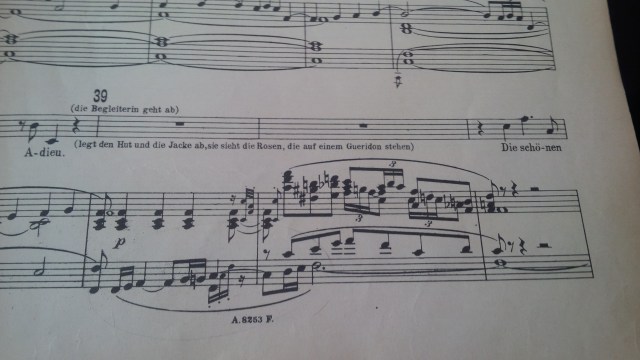
arabella_roses

Here’s the original, where Octavian meets Sophie while carrying his ceremonial silver rose.

Let me be clear. It’s not vitally important.  One can watch the opera without ever noticing this. But I think it’s worth observing that Strauss made the connection, perhaps encouraging us to think about the parallels and divergences.

Can we find any more? I wondered about something else, not in the score but in the libretti and this time it might be an allusion to Ariadne.  You’ll recall that the arrival on Ariadne’s island by Bacchus –the god of wine & intoxication—is announced by his offstage voice singing of Circe, who gave a drink to Ulysses’ men, turning them into swine.   The god is not transformed.  Similarly Arabella brings a glass of water to Mandryka, as a ritual show of love and readiness to marry; when she’s asked if she will remain the same she asks to be accepted as she is because she can’t be anything else.  But is this something Kristeva might call an inter-textual reference?  The formality of the moment suggests it might have been self-conscious but even so I tend to doubt it.  And in Act II we watch Mandryka get steamed up, drinking aggressively and somewhat transformed as a result.  Is it in any way an allusion to Bacchus or Ariadne?  No I don’t think so.  Yes it’s fun to peer into the score. But while this can be a nerdy way to get deeper into the music, if it doesn’t lead us to the theatre and something we can discern in performance, I question the value of that kind of close study.

I’m looking forward to watching the Canadian Opera Company production at least a couple of times, at which point I’ll be very susceptible to echoes from the other operas, especially Ariadne, which was one of the first operas I ever saw, a U of T student production of the opera at the Edward Johnson Building when I was 12 years old.  Come to think of it I think this was the first time I had seen an opera that really moved me, that really worked.  Strauss is a curious composer, largely under-rated or even dismissed as a creator of kitsch, a composer who self-consciously turned his back on avant-garde music with popular operas such as Rosenkavalier.  Yet just a couple of days ago TCM broadcast 2001: A Space Odyssey (1968) featuring the two most famous minutes Strauss ever composed, and premiered the same year of that student Ariadne.

No matter what the critics say, everyone knows a little bit of Richard Strauss.  We will talk about him in the opera course that begins in September and also in the film music course early next year.
Posted in Cinema, video & DVDs, Music and musicology, Opera | Leave a comment

An Arabella DVD

Every year as I prepare to teach the Most Popular Operas course at University of Toronto’s School of Continuing Studies, I have to adjust the course to include the current season’s repertoire.

Fall is in the air, as the nights get cooler.  Three different operas to be presented in Toronto will be rehearsed & then premiered:

  • Arabella and Elixir of Love from the Canadian Opera Company
  • Marriage of Figaro by Opera Atelier

After three consecutive Christine Goerke role-debuts, the Canadian Opera Company will be giving Richard Wagner a rest.  Instead of an immense long Ring opera (the five + hours of Götterdämmerung last season to finish CG’s Brunhild-trifecta), Toronto COC fans will have to be content with a single bar of music by Wagner.

Just a single bar? Yes, and here it is.

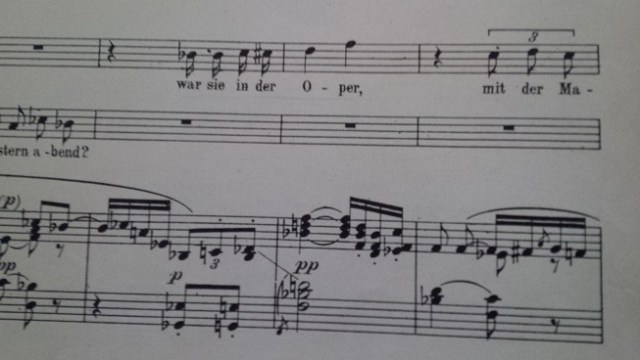
Lohengrin_snippet

It’s a backhanded reference in the first act of Arabella, the opera that opens the fall season for the COC on October 5th.

Matteo wants to know where Arabella has been.  Not only does Zdenka answer –“ war sie in der Oper”, or in other words “she was at the opera”—but the orchestra goes one better by telling us which one.  We hear the theme for Wagner’s hero Lohengrin.  It is especially apt considering that everyone is pursuing Arabella, while she waits for her dream suitor to come and sweep her off her feet: not so very different from what Elsa dreamt of in Lohengrin.

While I’m still trying to wrap my head around this story, the last in a series of collaborations between Richard Strauss and Hugo von Hofmannsthal, the music is delightful.

I’ve been watching & listening to a DVD starring Renée Fleming & Thomas Hampson from the 2014 Salzburg Festival, and conducted by Christian Thielemann.  If you’re a fan of the music of Richard Strauss you might know that one city & its orchestra in particular had a special relationship with Richard Strauss & his music, namely Dresden.  This is where Arabella premiered in 1933.  If you’ve heard the recordings of Strauss tone-poems and short works led by Rudolf Kempe from the 1970s, you will have noticed how effortless they can make these challenging scores seem.  So too with this DVD, as the Staatskapelle Dresden manage transparency and lightness, so powerful yet without burying the singers in sound.

Portrait_Florentine_Klepper_Wolf Silveri

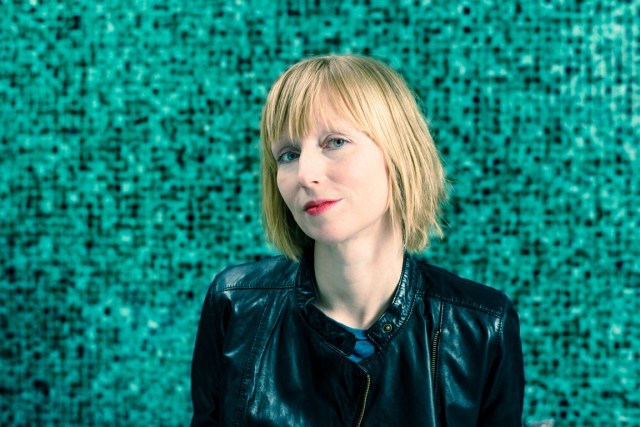
Stage Director Florentine Klepper (photo: Wolf Silveri)

Florentine Klepper’s production is not one to obscure the story in the hijinks of director’s theatre.  Brian Large’s video brings us into intimate proximity with the lovers.

We’re watching two pairs mostly:

  • Renée Fleming & Thomas Hampson
  • Hanna-Elisabeth Müller & Daniel Behle [thanks Joseph So for the correction]

Where Fleming as Arabella & Hampson as Mandryka are quite conservative in their portrayals, Müller as Zdenka & Behle as Matteo give us the quirks and more, just as the plot requires. I was surprised at how compelling this production makes the story. Arabella, who needs to marry someone with money to save her impoverished family, is holding out for love while surrounded by suitors.  Enter Mandryka, who serendipitously has fallen in love with Arabella from afar. A story that might be out of a fairy-tale is juxtaposed against something much messier.  Zdenka is dressing as a man –“Zdenko” as (s)he’s called—because the family is too poor to marry off a pair of daughters.  While poverty might be the plot rationale, Klepper makes us question that, wondering at the psychology of this fascinating young woman.  Zdenka keeps enabling Matteo’s obsession with Arabella (writing fake love letters purportedly from Arabella), even though it’s a bad plan if Zdenka wants Matteo for herself.  Convoluted?  But it has the strength of emotional logic when we watch Müller  struggling against herself, concealing her true self for most of the opera: until of course, she finally consummates her love with Matteo.   I’m looking forward to seeing what the COC does with this opera, starring Canadians Jane Archibald as Zdenka/o, Erin Wall as Arabella and David Pomeroy as Matteo in a production directed by Tim Albery.

In the class we will explore Arabella, Marriage of Figaro, Elixir of Love, Toronto’s autumn operas, as well as the operas of winter and spring such as Rigoletto, Abduction from the Seraglio, The Return of Ulysses, and Anna Bolena, all framed in their historical context.   For further information and to register click here.

Posted in Opera | 3 Comments

Beethoven’s five minute sermon

Nothing changes your perspective on a piece of music like repurposing it. The new context may strain the original to its breaking point. A happy tune works well at a party, perhaps not so well at a funeral. This is especially so when we think of instrumental music, abstract and with less specificity than songs with text.

I suppose I am really invoking that colossal topic, “meaning in music”. What if anything does a piece of music mean, what can it signify?

I’m thinking especially of one piece that I’ve been playing obsessively the past week or two. I didn’t know why, I didn’t understand what I was really experiencing, or why the short composition was haunting my thoughts. The title refers to a very specific sort of framework that I imposed. I think it’s helped me understand a new dimension in this piece and perhaps a few more besides.

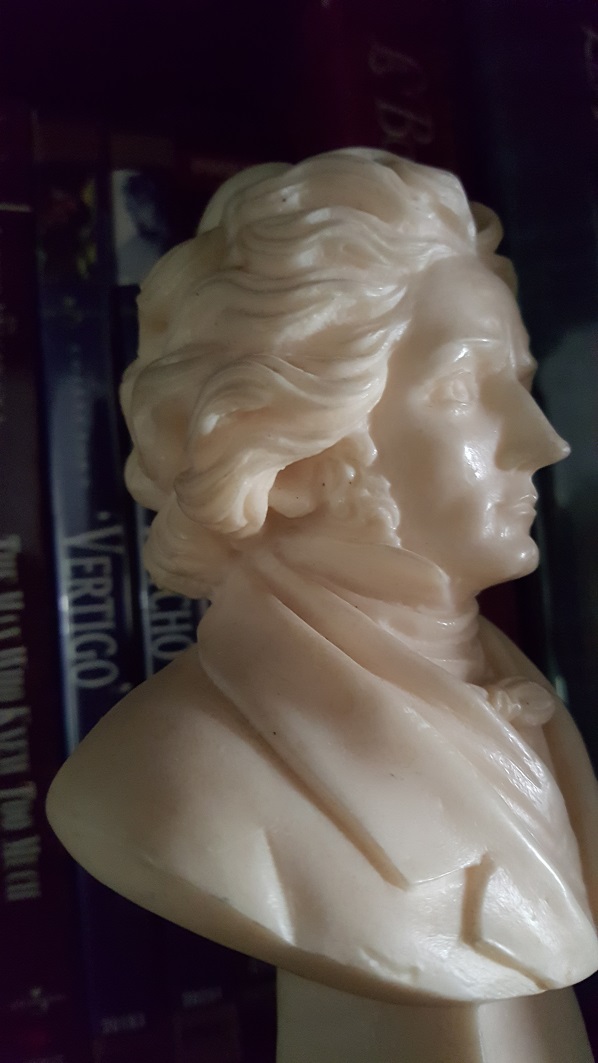
beethoven_head

The second movement of Beethoven’s 4th Piano Concerto is one of the most original little pieces. In five minutes we’re experiencing a kind of debate or dialogue. We are in the presence of something fundamental about music and its power. One can’t help thinking about the composer, whose hearing had started to fade in the late 18th century. I read that he was 60% deaf by 1801, completely deaf by 1816. This piece was created in his decade of transformation, premiered in a public concert in 1808, after a private performance in 1807.

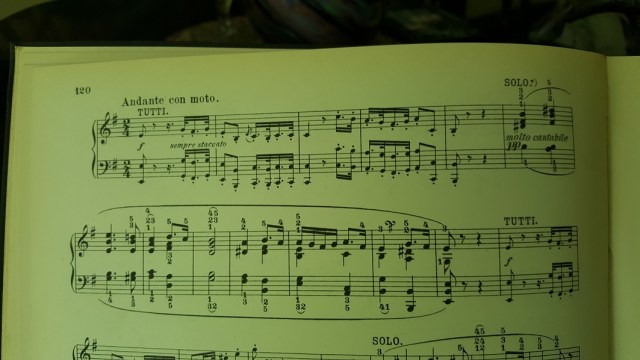
The strings of the orchestra come in with a loud unison statement. The solo piano seems to answer, as soft & gentle as the orchestra was rough and implacable. I find this piece a bit of a challenge to hear clearly, because of the contrast, the adjustment it requires of us. What are we hearing exactly? A loud orchestra and a soft piano? Or is this an encounter between Beethoven (the piano) and the unyielding world that he was having trouble hearing?

The allegorical explanation I first heard for this music was of an encounter between Orpheus (the piano) and the furies of hell (the orchestra). It might make sense, if we notice the way the anger of the orchestra seems to soften in the presence of the gentle sweetness from the piano. The voice or persona on each side is distinct, but as the piece goes on, the piano gets stronger, while the orchestra seems to back down.

4thconcerto_beethoven

Today I played this piece –that is, in a reduction for piano—at the conclusion of the church service (I was the organist). I couldn’t help noticing a new possible reading for this five minute composition, influenced by what I’ve been seeing on CNN, an ideal re-write of the headlines from Charlottesville, Boston or so many other places and confrontations. Yes the orchestra and piano in dialogue could be the world vs Beethoven, or the Furies vs Orpheus. Or maybe what we have here is a dignified response to angry extremists, with nobody killed or injured. Of course it’s a fantasy, a five minute drama entirely in music.

I call it a sermon because it seems to enact the appropriate response, showing us how to behave. The piano doesn’t rail against the stronger louder forces arrayed against it. Soft gentle sound works to soften the opposition, and the result is harmony.

This is not a triumphal ending to a church service. While I didn’t frame the piece for anyone –not offering my own allegorical reading– the stillness at the end was exactly what I’d hoped for.

Posted in Music and musicology, Personal ruminations & essays, Spirituality & Religion | 2 Comments

World Premiere of  Bandits in the Valley

For Immediate Release: August 15, 2017

Tapestry Opera Presents the World Premiere of 
Bandits in the Valley at Toronto’s Historic Todmorden Mills
-A free, all-ages opera for the community, weekends in September-

TORONTO, ON: Canada’s leading contemporary opera company, Tapestry Opera, in conjunction with the Toronto Arts Council and the Todmorden Mills Heritage Site, is pleased to announce the world premiere of Bandits in the ValleySet in 1860s Toronto, Bandits in the Valley tells the story of a local bandit group, aided by a troupe of travelling Gilbert & Sullivan players, who attempt to steal a mysterious object from a wealthy citizen’s home in the Don Valley. Six performers will make their way through the site singing and playing a variety of instruments, such as the accordion, guitar, piano and recorder, as the story is revealed. Performances are 55 minutes and run every Saturday and Sunday in September (with no performance on Sunday, September 17) at Todmorden Mills, boasting multiple shows daily. There is also a special performance on Friday, September 22 at the Westben Festival Theatre.

An ode to local history, Bandits in the Valley is a new multimedia opera based on the Don Valley’s past as a haven for smugglers and bandits during the late 1800s. This work is a free historic site activation that takes place near the original haunts of Toronto’s bandit gangs, using the area’s illustrious buildings and engaging the audience by having them follow the performance through several locations at the Todmorden Mills. The project is made possible through funding for Animating Historic Sites from the Toronto Arts Council and will be accompanied by a program for youth funded through the Ontario Trillium Foundation.

The opera is directed by Tapestry Opera’s Artistic Director Michael Hidetoshi Mori, the 2017 Dora Award Winner for outstanding direction in opera or musical theatre, and was written by playwright Julie Tepperman and composer Benton Roark. The cast includes tenor Jacques Arsenault, baritone Alex Dobson, tenor and star of last season’s Oksana G. Keith Klassen, soprano Sara Schabas, soprano Jennifer Taverner, and mezzo-soprano Stephanie Tritchew.

ABOUT TAPESTRY OPERA: 
Now in entering its 38th season, Tapestry is the leading producer of contemporary Canadian opera. The company is a champion of Canadian works and artists and is a provocateur and revolutionary in the opera/music theatre sphere. Tapestry produces new works in new ways that provoke reaction, engagement and interest in opera, keeping the art form relevant for current and future generations. This past season Tapestry was nominated for nine Dora awards, taking home five awards, making it the most awarded company of the season.

“Press releases and announcements” are presented verbatim without comment.

Posted in Press Releases and Announcements | Leave a comment

Syrinx: The way the future used to sound

One can’t write objectively about friends, especially when those old friends are beloved pieces of music.

I’m very fortunate to get all sorts of wonderful recordings through the mail.  One of the best things about the summertime, when there are fewer concerts, is that I have a chance to catch up a bit on my backlog.  I recently had the chance to explore music I first heard in my youth through one of those windfalls in the mail.

tumblers_cover

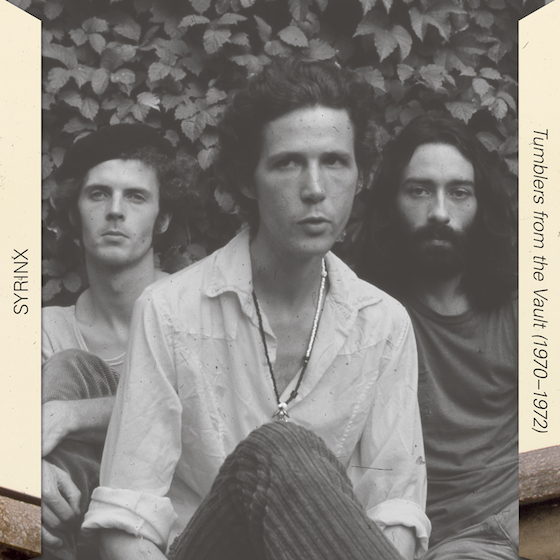
Tumblers from the Vault from Syrinx

Tumblers from the Vault tumbled into my life, a Syrinx retrospective of the years 1970 -1972.   Syrinx can be understood as a pop music band, comprised of three people

  • Composer & synthesizer pioneer John Mill-Cockell (aka “JMC”)
  • Saxophone player Doug Pringle
  • Percussionist Alan Wells

But while they’re understood to be a band I think it’s a misnomer to think of their compositions simply as pop music.  Or maybe it’s just that I see depths I never noticed when I first encountered them.  Hindsight has a way of being 20-20, to fill in gaps of understanding. When I first heard this music I was moved, excited, but also stirred by the ambiguities of the music.  I recall getting lost in the sensations without understanding how they did it. At times I could tell that there was electronic music, but it was rarely foregrounded, instead blending into a mix.

My headline comes from my first encounter with Syrinx, namely “Tillicum” a piece used as the theme for a CTV series called “Here Come the Seventies.”  I had such a serious obsession with the opening theme, that sometimes I’d stop watching the show after I’d heard the theme.

The only thing I can compare this to is my first experience of Walter Carlos (later Wendy Carlos) via A Clockwork Orange. I had never heard or felt anything quite like that. I think it’s fair to say that Syrinx were ahead of their time, and even now have a remarkable freshness to their sound.

image1

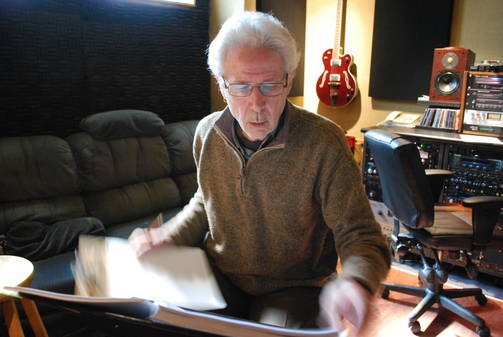
Composer, musician, innovator, teacher John Mills-Cockell

At times you’re hearing something resembling world music, with melodic turns and chord changes suggestive of other cultures and musics.  Some of their music resembles the pattern music of Philip Glass, which is especially interesting when one realizes that his first big recordings happen later.  I’m not interested in questions of who influenced whom, not when so many musicians seemed to get to the same sort of sound.  There are also melodies that remind me a bit of Frank Zappa, although not nearly as jagged or angular.   What Zappa and JMC have in common is a classical background.  Nobody talked about crossover in 1970, but that might be a relevant concept for composers making music that seemed to bridge cultures or disciplines.  I’m reminded also of Mark Mothersbaugh, whose work is boldly post-modern in his playful use of sounds and textures.  Mothersbaugh, Zappa & JMC made music that was considered legitimate as serious or classical music, yet also had credibility in the pop music realm.

Many millennials grew up listening to JMC’s music for The Stationary Ark, a regular series on TVO.

You may recall that a few years ago I interviewed JMC when workshopping his opera Savitri and Sam with a libretto by Ken Gass.  I’m hopeful that the opera will eventually get a full production. What’s clear when I think of S & S, in context with Syrinx is simply that JMC manages to be accessible.  While I love Zappa he is guilty of some of the most effete artsy writing, admittedly full of wit & unpredictability.  JMC seems more secure, less anxious about the need to seem brilliant, and so more confident as he gives us music that is at times pleasant and tranquil.

The same secure melodic gift is there in his Stationary Ark music, as it is in the Tumblers CDs. Of course I should be careful to credit all three of the members of Syrinx, a tuneful and rhythmic treasure.

I want to quote directly from their press release:

1) One modest task of Tumblers from the Vault is to reinstate Syrinx to their place in the wider canon of groundbreaking music so their story can be appreciated beyond the limits of Canadian notoriety
2) Unlike so many turn of the ‘60s experiments fusing rock and pop music language with new technology, Syrinx was never excessive in expressing their vision of what electronic music could offer. Instead, they blended these sounds in a holistic way, allowing the acoustic and electronic textures to create one organic voice. They opted to foreground the lyrical and poetic content of their compositions rather than their innovative techniques.

This is such a Canadian story, don’t you find? If they were Americans or Brits, they’d be much more famous. And their self-effacing approach to composition is quintessentially Canadian.

Tumblers from the Vault can be obtained here.

Posted in Music and musicology, Popular music & culture | 4 Comments

The Ethics of Sweat 

Sweat is the name of the opera produced this summer by The Bicycle Opera Project.

BOP-banner2

The name seems like a natural for a company who pull opera around the country behind their cycles, even if tonight was an unseasonably cool night, allowing me to wear a long-sleeved shirt to the Aki Studio Theatre at Daniels Spectrum. Little did I realize that I was making a political statement when I wore my shirt from Envelop (thanks Jim!), a shirt-maker whose ethical manufacturing is all done in Canada employing well-paid workers.

bicycleopera

After miles and miles on the road, the 2017 Bicycle Opera Project finish their season Sunday August 6th.

The title of this opera means “sweat” as in sweat-shops, as in the horrific fire in Bangla Desh that killed over 200 workers. Even as I google the incident now, google –another huge company –offers me an advertisement promoting a toddler’s long-sleeve sleep set for $14 from the infamous manufacturer whom I won’t dignify by mentioning.

As I sat in the theatre awaiting the beginning I wondered about the possible authenticity of what we’d be seeing and hearing:

  • artistic exercise or genuine?
  • would the singers seem like real working people?
  • could it be dramatic while being operatic?
  • And how wold it work when it’s entirely sung a capella, without any instrumental assistance?

These were the questions in my head before we began.

While the summer season for Bicycle Opera is all but over, with their final performance here Sunday afternoon, I feel certain that the participants in Sweat know that they created something rare & genuine.

For much of the night we were watching singers making simple repetitive vocal patterns on the boundary between singing & speech, while moving with clockwork precision.  As the workers sing of their work as though enacting their tasks, their hands and arms and bodies became like a big complex machine.  We were watching something between dance and a kind of installation as though the bodies had become mechanical.  Jennifer Nichols choreographed them into a sewing phalanx ready for battle.  There is so much organized physicality in Sweat that it resembles a dance piece.

Opera has often struggled to reconcile itself to competing impulses, on the one hand lured by virtuosity for its own sake, but confronted with the necessities of drama and ensemble work.  Between Nichols, music director Geoffrey Sirett and stage director Banuta Rubess, the diva impulse was effectively throttled, in the service of compelling storytelling.  You get sucked into this story.

But the text of Sweat sits astride the boundary between fantasy and realism, between something like hip hop or rap poetry on the one side and a story torn from the headlines. Anna Chatterton’s libretto is a compelling mix of genuine phrases and fanciful sounds and constructions that are already music before one looks to the composer, Juliet Palmer.  Or perhaps it needs to be said that the symbiosis between the words and music is so elegant & smooth that we have to simply credit the team, the words sounding beautiful in so many ways, a superb musical-dramatic text that works.

As I sat there watching the show, I recalled my ongoing hunger for something political, particularly in the wake of the American election.  Where is the Frank Capra or the Bertolt Brecht, who will champion the worker at a time when the class struggle has renewed: but not as Marx might have expected. No this is a class struggle where the 1% aren’t satisfied with the lion’s share and want more: or that’s what it seems, for example in the GOP’s  drive to take medical coverage away from over 20 million Americans.

While the opera’s ending may have been somewhat obvious –the story going to its inevitable cataclysmic tableau—it was still beautiful to watch and to hear it unfold.  I did not expect to be persuaded. The choice to make it unaccompanied made it much more irresistible, placing a bigger burden upon our imaginations. As a result I was ready to buy into the opera’s central propositions.  We began not in the workplace but with a horse-race, a focus on gambling, $ and dreams of something better.  And then I remembered that the people I supervise at the U of T buy a lottery ticket every week.  For me it felt close to home.

I was very impressed by the work of the workers chorus, Caitlin Wood, Justine Owen, Emma Char, Alexandrea Beley, Cindy Won, plus their co-workers Stephanie Tritchew and Larissa Koniuk.  Catherine Daniel as the Overseer and Keith Lam as the Owner and thug (two different characters) made strong impressions.

And going off on the political tangent for a moment, what can one do?  Shop ethically.  Or opt to make your own clothes, being careful in the procurement of fabrics, notions and designs.

me

Wearing my Canadian designed & made Envelop shirt tonight

It’s worth noting that Bicycle Opera shop Canadian, presenting their works with 100% Canadian talent.

Posted in Personal ruminations & essays | 4 Comments

Toronto Summer Stoicism

Summer festivals can be a challenge.  Bayreuth may be the ne plus ultra for Wagner but you sit on hard seats as your reward for having traveled around the world.  Tonight’s Toronto Summer Music Festival concert (in Walter Hall, not the Bayreuth Festspielhaus) was a bit of an ordeal due to air conditioning that was on the fritz at the wrong time.  It led to some adventures for the string players trying to stay in tune.

The concert was ostensibly to honour Anton Kuerti although they didn’t explain the rationale for the progam or the players, other than to tell us that pianist Jane Coop –who played in every part of the program tonight—was a Kuerti student long ago. She told us that even now his teaching sometimes comes back to her when she’s playing.

In addition to the challenge posed by the heat & humidity most of the performers tonight seemed dressed for the usual air-conditioning, under layers of fabric. I spoke to a friend at the concert who –like me– had been almost chilly in the a-c at the last concert here, and so was dressed too warmly for the unexpected tropical heat.   I don’t envy anyone who took part, as this was service above & beyond.

There were four distinct sections to the program, each calling for a different kind of performance:

  • Solo piano, as Coop played the seven Beethoven Bagatelles op 33
  • Collaborative piano with violin, Coop and Barry Shiffman playing Mozart sonata K 304
  • Vocal music (again calling for collaborative piano & viola this time) as Laura Pudwell sang two Brahms songs with Coop & former TSM artistic director Douglas McNabney
  • Chamber music, as Coop, Shiffman & McNabney were joined by cellist Joseph Johnson for Schumann’s piano quartet op 47.

Coop showed us a different side of herself in each one.  In the Beethoven we saw a deadpan comedienne at work, serving up the oddball humour of Beethoven in these quirky little masterpieces, jewels that deserve to be better known.  Coop played up the sudden shifts of tone, the unexpected coups de théâtre emerging from passages of tranquility and elegance, that had us laughing out loud a few times.  I think Beethoven would have approved, and hope Kuerti liked it.

The Mozart violin sonata was especially poignant in the menuetto second movement.  Pudwelll’s plangent sound saturated the hall in the Brahms songs, with McNabney offering soulful sounds in the lower part of his instrument.

pudwell_laura

Mezzo-soprano Laura Pudwell

After the interval I was reminded that Schumann used to be my favourite composer, someone that I believe isn’t played often enough.  The foursome of Coop, Johnson, McNabney & Shiffman each seized the stage for their solo moments, Johnson being particularly effective with his beautiful sound.

The Festival is coming to its close this weekend, concluding on Saturday (info).


Posted in Music and musicology, Reviews | Leave a comment

Jonathan Crow and Philip Chiu

Tonight’s Toronto Summer Music Concert featured violinist Jonathan Crow & pianist Philip Chiu.

The first guy is the draw.  Jonathan Crow is the Toronto Symphony Orchestra’s concertmaster, and in his first season as the artistic director of Toronto Summer Music Festival.  When he came out into the corridor afterwards you could be forgiven for mistaking him for a rock star, given the electric response among his fans.

jonathan-crow

Violinist Jonathan Crow, Artistic Director of Toronto Summer Music Festival & Toronto Symphony Concertmaster

The concert was promoted as “Jonathan Crow”.  And the other person playing? I didn’t give the pianist a second thought until I got to the hall, but he set us straight in due course.  Both Crow & Chiu took their turns being the witty host.  Again, I expected this from Crow, whereas Chiu’s wit was a pleasant surprise.  More importantly, Chiu held his own playing some difficult repertoire.

For the umpteenth time this year, I heard a Sesquicentennial rationale for a concert programme.  This one made a bit of sense, as we heard works for piano & violin from the two founding cultures:

  1. Claude Debussy: violin sonata (1917)
  2. Healey WIllan: violin sonata #1 (1916)
    (intermission)
  3. Edward Elgar: selections for violin and piano (from the 1880s and after)
  4. Maurice Ravel: Violin sonata #2 (1927)

The works strike an intriguing balance, given that we heard from two French composers, two English composers, AND a Canadian: Willan qualifying for inclusion in lists of Canadian composers even though he was born in England.

As we heard in one of the witty introductions it seems that Crow & Chiu used to work together at McGill University and so have developed a genuine rapport that was especially evident in the Ravel that closed the program.  While they made beautiful music together all night long, they took it to another level with the Ravel sonata.  The opening movement is poetry, closing with a reminiscence of earlier themes as though we’re hearing them in a dream or hallucination.  The second movement is blues, reminding me a bit of the foxtrot from L’enfants et les sortileges but without any singing dishes.  The closing movement’s perpetuum mobile is every bit as hair-raising as that name might suggest, the violin perpetually playing, the two of them building to a colossal climax.

Before that we heard a contrasting pair of sonatas and some sweet little tunes.  Crow & Chiu gave Debussy’s sonata a decidedly modern ride, without any schmaltz or excess.  From what I understand this is how the composer liked it, as they appeared to follow the score without deviation or rubato.

In contrast, Willan’s sonata seemed to take us back to the 19th century, a work that’s especially challenging for the pianist.  The first movement sounds like Rachmaninoff, the second more like Brahms, while the third has the exquisite gossamer textures of Mendelssohn’s faerie music, including some gorgeous melodies.  I wonder that this work isn’t played more often, except for a piano part that is ferociously difficult.  I daresay Chiu played it note-perfect throughout and with great sympathy for Crow’s soulful and expressive approach to the occasional broad melody.

The Elgar collection included three tunes I’ve never heard and two that are quite well known, namely the “Chanson du matin” and the “Salut d’amour”.  Chiu was very understated throughout the Elgar, and indeed Crow opted for a very delicate and self-effacing approach to the melodies.  This was a schmaltz-free reading.

We’re now in the last week of Crow’s first TSM Festival, which concludes August 5th.  Sesqui

Posted in Music and musicology, Reviews | Leave a comment

Memory Lane

I posted a few pictures to Facebook at the opening of SOLT’s all-Canadian program of two operas at the Robert Gill Theatre, one by John Beckwith who turned 90 earlier this year, one by a later generation in the person of Michael Rose.

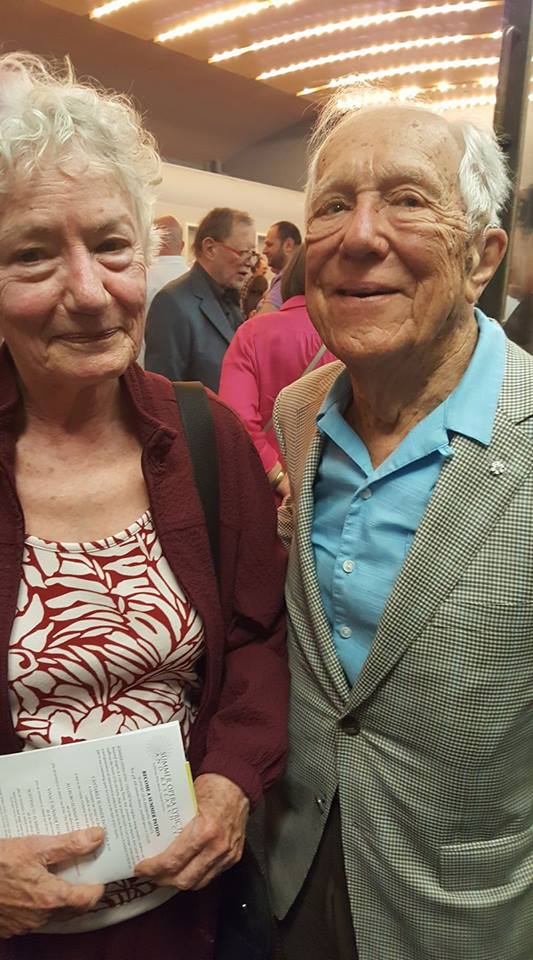
beckwith_mcmorrow

Kathleen McMorrow and John Beckwith

At times I get all tenderized. I choose that word because I am like a hunk of meat that’s been smacked with a hammer, all soft and mushy from the feelings & memories stirred by experiences in the theatre. It occurs to me the morning after, as I let the emotions and recollections have their way with me, that theatre really is memory lane. It’s been called a temple, a sacred space. And every time you revisit any theatre you’re being invited both to discover the new while being reminded of the old.

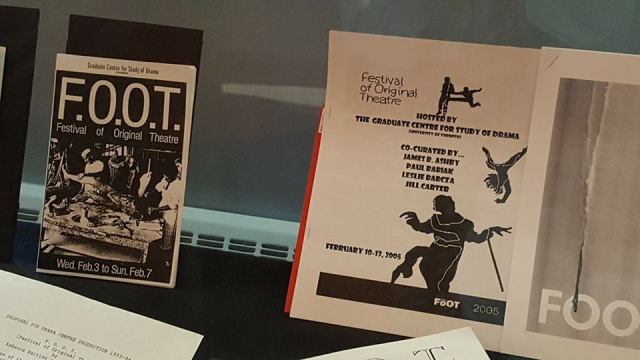
In the case of the Robert Gill Theatre,  it’s certainly true for me. Coincidentally, the Centre for Drama, Theatre and Performance Studies (formerly the Graduate Centre for Study of Drama) have had their 50th anniversary this past year, leading them to offer displays showing off their past. There in the lobby I saw a display case that included at least five projects with which I was intimately connected, including a couple of posters that I designed, and a few festivals in which I participated as a composer and/or performer.

FOOT_pics

A small part of a display in the lobby

In my brief chat with Kathleen McMorrow, who was standing quietly beside the display case that I photographed, I mentioned my memories of Lu Massey, who was so diligent in many roles, including as the institutional memory of the DC.  I joked to Kathleen that just outside the window is the catwalk where we used to go outside to smoke.  I had thought of Lu last week when I wrote about the DC’s 1977 Dog Beneath the Skin directed by Michael Sidnell (Lu stage-managed for Michael), mentioning her work and her recent passing to Kathleen McMorrow as I stood there, perhaps a bit hyper in the presence of so many memories. Kathleen rightly reminded me that this is librarian-ship, maintaining such a collection and an archive. I do not know who is currently doing this important work and to whom I owe my thanks for creating this display.

I only had time for the one quick shot above during intermission that shows two items (and excuse me as I digress for a moment to explain my strong reactions):
1)That first FOOT, (Festival of Original Theatre), with the theme “The Body Dismembered”. You can see the poster that shows butchers at their work. The first Artistic Directors were Marlene Moser & Rebecca Harries. I performed twice: once, in an experimental performance called “The Singer Actor Divided”, offering up the first scene of Pelléas et Mélisande, but using a singer plus a human ubermarionette to portray each of the two characters in that scene. I played the piano. Kristina Bendikas would write her doctoral dissertation on what was probed in this performance, the notion that opera singers are a mixture of the singer and the actor. And the second thing was really my biggest undertaking, staging something I composed in the 1980s, called The Compleat Shakespeare. I’d heard of a piece someone did called something like “The Complete works of William Shakespeare” in one night. I went further –again thinking of a body dismembered—and atomized the Compleat Shakespeare into a series of famous lines, to make a Prologue from all the prologues (including from plays-within-plays), an exposition from all the expositions, an interlude for clowns from all the clownish lines, a soliloquy from all the soliloguys, taking us to a catastrophe/denouement from all the denouements, followed by an epilogue from all the epilogues.  Do it again? Hmm.
2) In 2005 I was co-AD, which was much more of a vicarious academic thing without the chances to be a practitioner (eg composer / playwright/ pianist / singer), but closer to the sort of thing I regularly do on this blog, when I’m watching rather than doing.

Each of those mementos conjures up a complex set of associations to a time. In 1993 I went off to Chicago to see the Lyric Opera of Chicago’s Siegfried and to present a paper at the MATC conference and did music for Daniel Moses’ Kyotopolis, for example. In 2005 it was a blur of so many tasks at the same time to make that brief festival happen. A reverie about the past, strolling down memory lane, is just an extension of what’s in the theatre where we experience something in the present while connecting it to what we’ve felt & seen and what we expect that we will see and hear.

I also remember the Robert Gill as a forbidding place for at least two reasons. Its acoustic is unkind to opera, a very dry space that sucks up the subtleties of a voice, and dryer the further back that you sing. If you can sound good in there, you will sound good anywhere. I was very lucky last night to be sitting up close. The space is also a design challenge with a very low ceiling: on the 3rd floor of a beautiful old building.

SILVA_bruceKELLY

Baritone Bruce Kelly and SOLT Artistic Director Guillermo Silva-Marin.

The summer is a great time for reflection, looking back while considering what lies ahead. We encounter promising new voices with SOLT, while meeting up with old friends.

Recreate yourself and then in the fall we begin again.

Posted in Opera, Personal ruminations & essays, University life | Leave a comment

Canadian double delight

Rare as it may be to encounter a full evening of opera from Canadian composers, that’s what Summer Opera Lyric Theatre offered tonight in their season opener.  The Robert Gill Theatre was packed with a receptive crowd for a double bill of John Beckwith’s Night Blooming Cereus paired with the world premiere of Michael Rose’s A Northern Lights Dream.

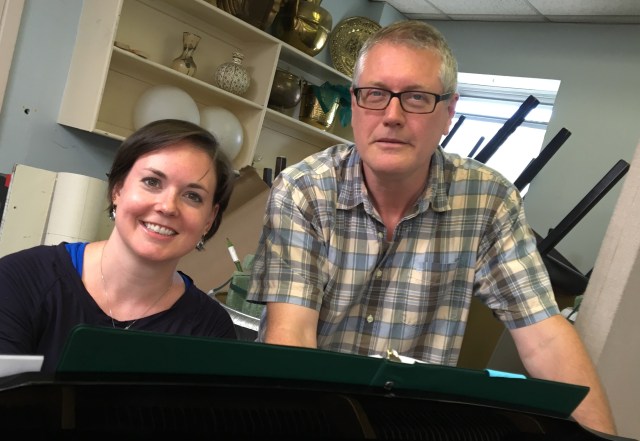
FullSizeRender

Suzy Smith is music-director of Michael Rose’s new opera plus John Beckwith’s Night Blooming Cereus.

SOLT is a summer training program for singers that is one of the usual stepping stones for young talent seeking to establish themselves.  While they’re also presenting Carmen and The Marriage of Figaro, there are special challenges & opportunities in doing new works. Instead of well-known arias & ensembles, the cast for these two works had the chance to make something entirely their own.

We began with the Beckwith, a work with a libretto by James Reaney that premiered in 1959.  Although we may call it “modern” the town and its mores are quaint and anachronistic compared to what we see nowadays in the media.  The characters are quirky without being evil or neurotic, which is another way of saying that they seem very Canadian in their innocuousness.  The language is poetic, stylized perhaps to make this seem artificial or even to invoke something magical & ritualistic. Reaney’s language is ostentatious, and at times feels pretentious.  Beckwith’s score –in a piano version played with exquisite clarity by music director Suzy Smith – manages the libretto’s transition from frustrated longing towards the possibility of happiness & fulfillment, a rhapsodic conclusion of great beauty.

After the interval came Michael Rose’s work for which he created the libretto as well as the score.  It’s in a style that includes dialogue and numbers with full stops at the end, inviting applause: which was enthusiastic throughout.  Rose’s libretto has lots of intertextual connections to the play with the similar title (not A Midsummer Night’s Dream but A Northern Lights Dream).  Helen is married to Demetrius (just as Helena chased Demetrius), Robin is the same Robin Goodfellow, aka Puck, albeit 400 years later. It’s not Nick Bottom the weaver who wears the ass’s head, but Nick who works in the donut shop, wearing an ass’s head to attract customers. And Mrs Duke suggests nobility as well.

In keeping with the allusions to the older play, Rose follows the same pattern as Mendelssohn, who you may recall for his choice to underline the social strata of the play with his musical choices, between the Faeries, the nobility of Athens, and the rude mechanicals.  The faerie Ladies sing to music that is more classical sounding, sometimes employing canonic imitation.  We also hear music in a more bluesy vein, even if the singing is sometimes quite challenging.  The resulting work is somewhere in the middle ground between opera and music theatre.  I think the genre question is not important, recalling that opera singer Michael Burgess made a great success as Jean Valjean in Les Miserables.  The young singers of SOLT could do very well in the realm of music theatre.

I do think that Michael Rose made the work shorter than it needs to be. There is a great deal in this story that I wondered about at the end, as I pondered: could this work be lengthened, could it be a full evening rather than sharing the stage? Only the composer knows for sure, but I think there’s more there, more that he could add.  But it needs to be said that Rose has a gift for dialogue and pleasing melodies.  I laughed loudly and often.

SOLT rotate Carmen, The Marriage of Figaro and this all-Canadian double-bill at the Robert Gill Theatre until August 6th .


Posted in Dance, theatre & musicals, Opera, Reviews | Leave a comment