Immolation Nation

The morning after the end of the world feels pretty good, especially if you’re one of the little people and not one of the old gods swept aside.
16-17-04-MC-D-2112

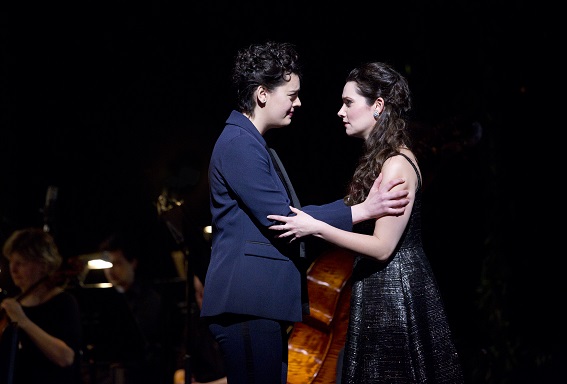
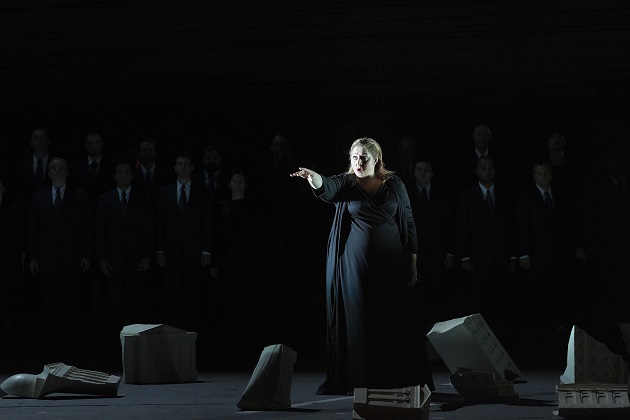
Christine Goerke as Brünnhilde in the Canadian Opera Company’s production of Götterdämmerung, 2017 (photo: Michael Cooper)

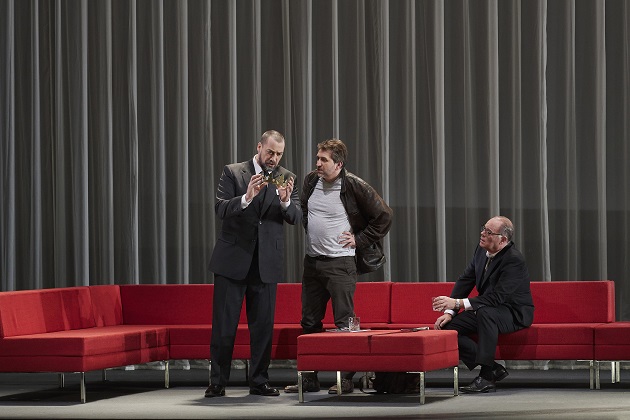
I am not Barack or Hillary, just one of the little people who can’t stop reading tweets and CNN, WaPo and NY Times, fascinated by the unfolding conflicts between the great & powerful forces on either side. I found solace immersing myself in the Canadian Opera Company’s Götterdämmerung, one of many templates where I could watch my own story unfold. In this production, does Hagen remind you of a more manly and handsome Steve Bannon, as he commands the vassals, in support of Gunther, the corrupt CEO figurehead? And does it matter whether the fraud and fakery come from a potion, the tarnhelm or Spicer, Conway and alternative facts? Truth is stranger than opera.
16-17-04-MC-D-0488

(l-r) Ain Anger as Hagen, Andreas Schager as Siegfried and Martin Gantner as Gunther in the Canadian Opera Company’s production of Götterdämmerung, 2017 (photo: Michael Cooper)

I saw the first and last performances, fascinated by how it changed since its Groundhog Day opening. On that occasion there were unfortunately empty seats as the last act began, perhaps daunted by the length of the show. Last night was a different story, the most intense audience response I’ve heard in Toronto in many years. Suddenly it was as though everybody in the house had bought their tickets from a scalper, had a personal stake in the show: and nobody left early. I’ve never heard such a wave of yelling and bravos in this city, both in response to the principals and to the orchestra, who were brought onstage for the applause.

Everyone seemed much more comfortable this time, less nervous than on the opening night.

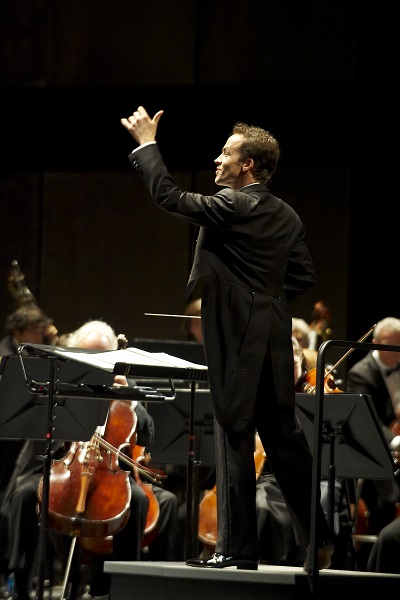
Johannes Debus is still a young conductor, which might be the reason Toronto basks in the riches of his performances with the COC.
09-10-S-01-MC-D-

The COC Orchestra and Conductor Johannes Debus. (Photo – Michael Cooper)

I’ve enjoyed watching his first encounters with great scores over the past few years, getting impossibly polished performances from the COC orchestra. One of the great joys of my 2nd row seat is watching Debus lead the COC orchestra, the chorus and soloists through each opera, immersed in an orchestral sound that can make it challenging to hear the singers (and the worst place to assess voices). But I had a perplexing time last night, struggling to see the first downbeat of each act due to a front row all leaning forward rather than the usual mix of interest and apathy. Even so I managed to find him for key moments. At the end of the first of the three sunrise sequences, he’s singing that opening brass salvo in E-flat that greets Siegfried & Brunnhilde as they enter in the Prologue. He’s faithfully probing the drama of that lengthy interlude between Hagen’s watch and the scene back on the rocks with Brunnhilde, as the drama of the hero’s forgetfulness is laid out for us in the orchestra. He appears to be launching an army into battle as the vassals respond to Hagen and the immense sound thrown back and forth, and again, on a more intimate scale, in the plotting between Gunther, Hagen and Brunnhilde that brings Act II to its perplexing & ironic conclusion. After all the powerful moments, Act III offers a lyrical respite, a resting place both for our ears and the wind-players’ chops in the delicacy of the Rhine-maidens scene and Siegfried’s reminiscences from the forest-bird, before Debus turns them loose in the full catharsis of the funeral music for Siegfried.

Christine Goerke is in some ways every bit as young as Debus. As he has conducted his very first Walküre (2015), Siegfried (2016) and now Götterdämmerung, she assayed the role of Brunnhilde with us in Toronto for the very first time in each of those Ring operas. Sitting up close gives me the privilege to see the performer coping, the wheels turning, responding. Sometimes you see a singer trip over a hem, (as we saw just last month ) or struggle with a messy stage (as she and Heidi Melton did with the Walküre set). I am a bit of a sucker for histrionics and drama, which means that if I find one singer doing more than the other, I’ll lock in on that one. It meant that for the scene between Waltraute and Brunnhilde, I watched Goerke even when Karen Cargill was singing, as there is a huge amount of drama enacted on the stage of Brunnhilde’s face. She begins, believing that this visit is good news. But we get all sorts of nuances I haven’t seen before, some anguished, some triumphant, and overall, quite unlike what I’m accustomed to in this scene. I’m not sure if the part that excited me most (and left me staring through a mini-Niagara Falls down my cheeks) was there the first time, as I’m pretty sure I was watching Cargill last time, whereas this time I watched Goerke go all to pieces during Cargill’s narration (and I followed suit: monkey see monkey do).

There was a nagging question that emerged with the force of a revelation with Brunnhilde’s re-appearance upstage, at the climax of the opera, namely “but where have I heard this sound before”? It crystalized a short while later in her clear and confident singing of the commands “starke scheite schichtet mir dort” that begin the Immolation Scene. The dark colour here sounded more than a bit like the great American soprano Jessye Norman, or perhaps like Helen Traubel (another great American) except there was none of that tendency both Norman & Traubel displayed, that the voice often sang a fraction of a tone flat throughout the entire range. Rich tone like Norman or perhaps Traubel: but precisely on pitch. Where there had been some humble caution on opening night, in the closing performance she seemed to lose herself completely in Brunnhilde, a rich warm portrayal that seemed so easy and natural that there was no longer any question of whether she could handle the role. There’s voice to spare, as it’s clear that Goerke really owns this role. Next time she’ll be able to build on this experience, adding additional richness to a portrayal (or should I call it portrayals? Three very different parts actually) that is already the most profound Brunnhilde I’ve ever seen. She’s not just singing, she’s acting and reacting.

Andreas Schager gave us a Siegfried to put me in mind of the challenges of this role. Few tenors can sing all the high notes in the role, let alone sing them with such a ringing tone that you always hear him cut through the orchestra. Once you have the person with the voice, it’s a bonus if the tenor looks halfway heroic in his physique, while offering a convincing portrayal. In this respect Schager is a genuine triple threat, in his attractive look and powerful sound. Having seen him twice, I was intrigued that he seemed to be free-lancing a bit more on closing night, singing notes that weren’t notated, while appearing to have a whale of a good time. He brought a wonderful swagger to the part, but there was a bit of Danny Zuko preening in his leather jacket before he sings “Summer Lovin’”, that might be some of the reason I found him unsympathetic. I’ve seen productions where the Siegfried stares at Brunnhilde in Act II with true innocence and without any apparent guile, whereas this interpretation brings out a sneaky conspiratorial side, as for instance in the tete-a-tete with Gunther. Maybe that explains why I wasn’t as upset as usual, at his demise, left without any sense of tragedy or loss in his murder.

Ain Anger as Hagen presented us with one of the other rock solid elements in this production. Along with Robert Pomakov as Alberich, Hagen was that most curious phenomenon, the portrayal that seemed so absolutely timeless, that it fit the modern production while seeming to be the enactment of the role as Wagner wrote it.
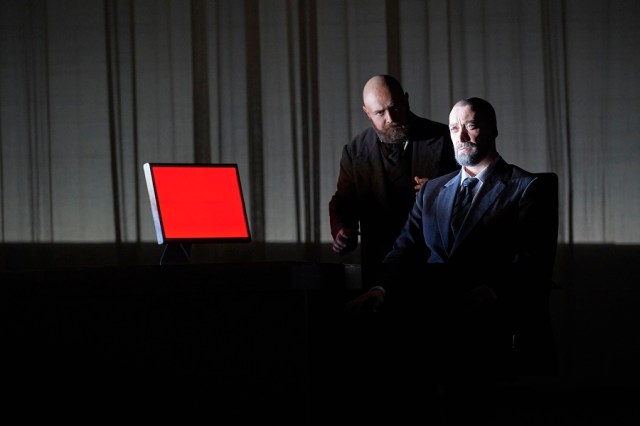
16-17-04-MC-D-0932

(l-r) Robert Pomakov as Alberich and Ain Anger as Hagen in the Canadian Opera Company’s production of Götterdämmerung, 2017 (photo: Michael Cooper)

Anger & Pomakov are in modern dress, but informed by the ageless obsessions ruling their envy and hatred. While Anger has the vocal credentials to offer up the black bass sounds of a Greindl or a Frick, he scaled it back for most of the portrayal, giving us the subtleties you see in Karl Ridderbusch’s quicksilver Hagen on the von Karajan Ring. The advantage of this approach onstage is that we see a Hagen who –like a good Iago—can be trusted by those around him, and whose villainy is well concealed rather than so obvious as to make everyone else on stage look foolish (for having trusted such an obvious bad guy).

Martin Gantner and Ileana Montalbetti present us with the unfulfilled brother and sister Gunther & Gutrune, proof that money can’t buy love or happiness. Gantner presents a figure all too familiar to us from television, a man conflicted & compromised, tormented by his awareness of his weaknesses. Montalbetti sounded much better tonight (perhaps she was unwell on the opening?), in a part that does see some growth; unlike her brother she has the one genuine moment of heart-breaking recognition in the last scene.

As the show is now closed I can mutter a few comments that may sound like complaints under my breath. Does it make sense that Brunnhilde has wine on her table on her mountain? Presumably one of the amazon drones delivered it, as no human can get through the impenetrable fire that tends to disrupt her social calendar. When Brunnhilde thinks Siegfried has come back (Act I) I think it’s adorable that someone (Goerke?) believes the Valkyrie-turned-human would tidy her table: because her man has come home. And then when Siegfried-as-Gunther turns the table upside down, and the wine and glasses go flying how is it that after all that, he picks up a plastic glass and sips more wine? But I suppose in this realm of fluorescent lights, ties & office furniture, we accept that the glasses are really plastic and therefore as immortal as Grane.

And now, what? Cast-members fly off to gigs elsewhere and/or back to waiting families. In their spring season the COC offer Tosca and Louis Riel. Next season we take a bit of a break from Wagner. And in the meantime the tunes continue to play inside my head.
Posted in Opera, Reviews | Leave a comment

Mackay’s Visions & Voyages

My own little reconciliation journey continues.

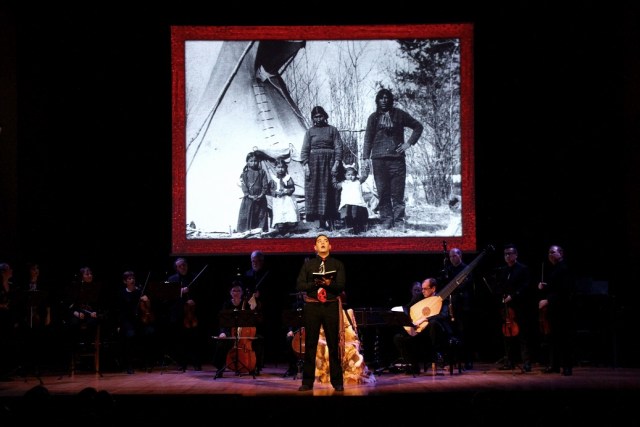
Last year I saw the Royal Winnipeg Ballet’s Going Home Star, a ballet aiming to probe the history behind the Truth and Reconciliation Commission, a powerful piece about the trauma associated with the residential schools.

A few weeks ago I saw and heard Toronto Consort’s utopian Kanatha/Canada: First Encounters, taking us back to a Montreal peace conference in 1701.  Imagine a time when our indigenous peoples were addressed truthfully as equals.  Is that even something you can imagine, with so many lies in the last century and a half?

Where Toronto Consort is led by and curated by David Fallis, Tafelmusik’s Visions & Voyages: Canada 1663 – 1763 is another multi-media piece conceived & created by his wife and Tafelmusik bass player Alison Mackay.  I knew I’d be seeing her show, and pondered their influence upon one another.  That led me to rush over to UC Art Centre to catch Kent Monkman’s “Shame and Prejudice: A Story of Resilience”.  I didn’t expect to be shaken to my core.  Just as Jesse Wente said that to make Canada’s 150th Anniversary meaningful, we must include the stories of indigenous peoples, so too Monkman, who demanded to know: where are the

“…history paintings that conveyed or authorized Indigenous experience into the canon of art history..? Where were the paintings from the nineteenth century that recounted, with passion and empathy, the dispossession, starvation, incarceration and genocide?”

Where Fallis presents us with something peaceful that I called “prelapsarian” in its evocation of  a perfect Canada before it fell from grace, in our later inability to keep faith with indigenous peoples, Mackay’s project is somewhat different.

visions-voyages-artists

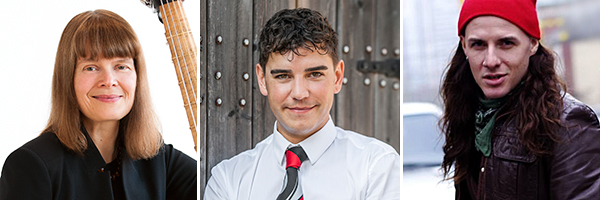
Alison Mackay, Ryan Cunningham, Brian Solomon

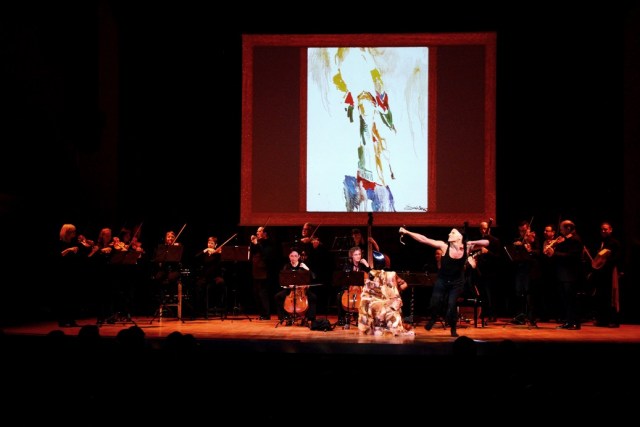
Visions & Voyages is an epic presentation, communicating on multiple channels as we hear music and words, see photos & art projected, watching musicians and actors and dance.  The word “historiography” was in my head as I pondered the ways in which our history was not just being told, but explored, articulated, and re-imagined.  The first half places a focus on New France and the francophone culture and music, while the second half shifts to Rupert’s Land and the music that goes with the English side of our early history.  As with Fallis’s account, sticking to the earlier part of the story means we can mostly avoid hearing about genocide, epidemics and death.  Mackay does venture into the 19th century briefly to talk about the Indian Act & residential schools.  We do not focus on the things you usually get in history books, which is why I bring up historiography, as it could be argued that we largely went astray (Canadians and Americans too) by how he decided to frame our national narratives, including the story of the indigenous peoples.  I saw someone arguing on social media just a couple of days ago that Riel was a criminal who couldn’t be treated as a hero, a person trapped by their ultra-conservative view of history.  But that’s one tiny part of the bigger story.  Happily Mackay is not bothering  to tell the usual story. We are instead hearing of dignified encounters between peoples and the music that was part of those encounters, whether in the cultural encounter of aboriginal Canadians brought to England complete with baroque pomp & dignity, or the funeral of a Wendat Chief in Montreal.  When we notice that history and our assumptions have led us astray, it’s time to jettison the old story and find a new way to tell it.  I think that’s the impulse behind Mackay’s work, and it’s a very healthy one.

dancer_brian_solomon_in_tafelmusik_visionsvoyages_by_jeremy_chan

Dancer Brian Solomon, Tafelmusik “Visions and Voyages” (photo Jeremy Chan)


Where Fallis offers a concert from a time before we screwed it all up, Mackay dares something beyond that.  We are experiencing art with a narrator, Ryan Cunningham lending a certain authenticity to the story-telling.

narrator_ryan_cunningham_in_tafelmusik_visionsvoyages

Narrator Ryan Cunninham with Tafelmusik (photo: Jeremy Chan)

The events of the past 150 + years are hinted at only.  Mackay seems to presuppose that we know it, and the educated crowd gathered in Jeanne Lamon Hall would accuse me of being perversely difficult for suggesting anything different.

But I’m wary, at least because of identity politics.  Tales of such sensitivity can make people very upset, when treated without due sensitivity.  This is not our turf, these are not our wounds to heal.  Yes, as a guilty liberal, I want to make my pain go away.  And the indigenous participants in this concert are very generous.  I was moved past the ability to speak for awhile at the end, as we went from history to a kind of healing-catharsis dance, a celebration of sorts.  But while I was exultant at the end, almost delirious with joy listening to what Mackay created and what Brian Solomon danced to bring the concert to its conclusion,  I feel that I’m being let off the hook, absolved: and I am not sure I have the right to feel this way.

As I ponder what I feel, I’m tempted to ascribe the key difference between the Fallis and Mackay programs to gender (and hope that this doesn’t sound simplistic, reductive or worse), to a generous and loving sensibility that seeks to focus on life and relationships as reflected in music-making: rather than politics.  The redemptive and hopeful ending that Mackay spoke of in her introductory words before the concert began were fulfilled for me in Solomon’s dance.  In short order he took us from a kind of pained disability, staggering about with such aching pathos, blinded by a book literally stuck across his eyes, (not unlike so many people I see immersed in their electronic devices on the streets of this city), and then finding a vocabulary that seemed so genuinely Canadian in its invocation of the old folk dances.  It’s not for me to permit the celebration, welcome as it is.  But yes I am grateful for the way Solomon’s joyful movements were like a magic wand, blessing and absolving us of our guilt for the moment at least.

Mackay has been doing this for awhile, combining music and ideas and images, to make a whole greater than the sum of its parts.  I think this is her best yet, something truly redemptive and healing, even if lately I am overwhelmed with how much we have to answer for.  Chances are Tafelmusik will gather the talent and the music together into a DVD, one that I know I will buy and enjoy.

Visions & voyages: Canada 1663-1763 continues Saturday night at 8 pm and Sunday afternoon 3:30pm Trinity-St. Paul’s Centre, Jeanne Lamon Hall.

Posted in Music and musicology | 2 Comments

An Evening with the Ensemble Studio

Institutions are like buildings. They have structures.  They’re solid, which means they resist change, and offer shelter to those who rely upon them. A change in an institution may be bewildering and hard to understand, but is ultimately inevitable, even in an institution, and usually leads to a new normal.

Tonight represented something new & different for the Canadian Opera Company’s Ensemble Studio. Instead of offering their members roles in a special performance of one of the season’s operas, we saw something new, titled “An Evening with the Ensemble Studio.”

I wondered: why the change? but of course I don’t know the answer, so I can only speculate. There are three obvious reasons I would offer, that are only guesses of course:

  1. The past practice may have been too expensive. Imagine a whole set of costumes and all those rehearsals for one performance. And has it been worth it (meaning the shows from past years): in terms of what it might offer the members of the Ensemble Studio? I can’t say.
  2. The past practice may have other problems leading to its elimination. There was the year that the lead had the flu but went on anyway, something I wish I’d seen for the heroics involved but still: hardly a recommendation for the practice. Maybe Alexander Neef and the rest of the COC brass breathed a colossal sigh of relief that they survived that particular ordeal, and looked at coming up with something safer.
  3. And looking at the complement of singers this year, maybe they simply had no choice.

Tonight we saw five female ensemble members + a female guest sharing the stage with three men, suggesting that maybe the Ensemble Studio had no other option given their current complement.

I’m guessing that this experiment will become the norm. Instead of a fully staged opera we had semi-staged scenes, the singers in evening attire. That didn’t stop us from having a great time.

I suspect –speaking of cost—that one of the underlying factors in assembling the program is familiarity. We heard excerpts from Mozart’s la finta giardiniera; Bellini’s Norma; and Handel’s Ariodante. Two of the three items on tonight’s program are relatively familiar to the COC orchestra, meaning that less rehearsal dollars would be required.

There were some wonderful moments tonight, anchored by Johannes Debus leading the COC Orchestra.

Mireille Asselin showed her versatility, undertaking fragments of two totally different roles tonight. First she was a very funny Serpetta in the Mozart, then the contrite Dalinda from the last act of the Handel.

resized-ensemble-bs-0326

(l-r) Mezzo-soprano Emily D’Angelo and Ensemble Studio alumna soprano Mireille Asselin perform in the Canadian Opera Company’s An Evening with the Ensemble Studio on February 23, 2017, with the COC Orchestra conducted by COC Music Director Johannes Debus. (Photo: Bronwen Sharp)

There were several highlights:

  • Arias by Lauren Eberwein, Charles Sy and Danika Loren in the Mozart
  • A full-out old fashioned sing from Megan Quick and Samantha Pickett in a wonderful excerpt from Norma
  • More fireworks from Emily D’Angelo & Danika Loren in the Handel

My one disappointment is that the hall wasn’t fuller, but I recall the same issue with the Ensemble performances of full operas. I don’t know if it’s a matter of how they’re promoted, so much as timing: falling near the end of the runs of The Magic Flute & Götterdämmerung (closing Friday & Saturday respectively). I wonder if they set this up in a week when there’s not so much going on, whether they could fill the hall? Perhaps at the very end of the season? I believe this can be another occasion for celebration.

But in fairness, this is the first time they’ve done this. The COC are an institution and one of the great things about institutions is that they’ll learn how to do this better every time they repeat the pattern.

Posted in Opera | Leave a comment

Kent Monkman: Our Shame, Our Prejudice, Their Resilience

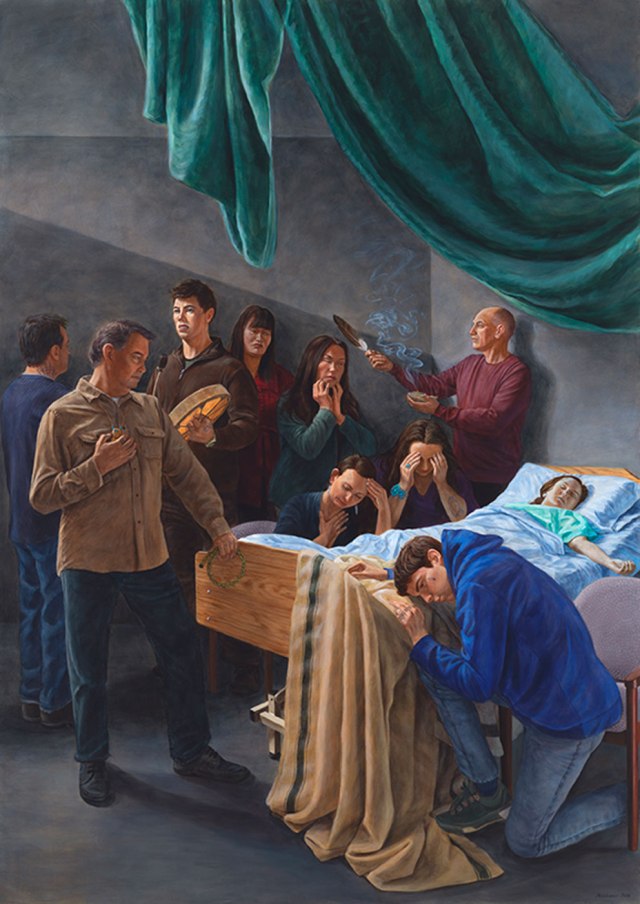
I have just experienced Kent Monkman‘s show at the University of Toronto Art Museum, a series of paintings, textual passages and installations proposing something quite ambitious. As he observed in the Foreword (in a little brochure I picked up as I entered the exhibit):

“I could not think of any history paintings that conveyed or authorized Indigenous experience into the canon of art history. Where were the paintings from the nineteenth century that recounted, with passion and empathy, the dispossession, starvation, incarceration and genocide of Indigenous people here on Turtle Island?”

Coincidentally I read something on social media today, Jesse Wente’s call to make Canada’s 150th Anniversary meaningful, by including the stories of Indigenous peoples and not just the European conquerors.

2017_monkman_secondary3_light

Kent Monkman Death of The Virgin (After Caravagio) 2016. Acrylic on canvas. 183 X 130cm.

Reality is made from a series of assumptions. What if your reality requires you to deny truths that, were we to face them, might leave us unhinged?  Richard Wagner famously suggested that anyone seeing a good performance of his Tristan und Isolde should leave the theatre mad. As I walked around in this overpowering show, listening to at least one person say they couldn’t take it anymore, I wondered. Are we – that is, the descendants of Europeans—lying to ourselves, denying what really happened? These paintings should be upsetting, should strip away the false pretense.

It’s as though you’re up on a bridge and suddenly walking on a glass floor, seeing how far you might fall, that maybe there’s really nothing under you.

I went to this show with a quaint idea. I’d seen Kanatha/Canada: First Encounters earlier in February, David Fallis’s marvelous collaboration between western & indigenous musicians re-creating an intercultural peace conference from over 300 years ago: when the Europeans had not yet subjugated local populations, when a dignified relationship was still possible. Tonight it’s his partner’s turn as Alison Mackay premieres her latest multi-media concert with Tafelmusik, namely Visions & Voyages: Canada 1663- 1763. I wanted to insert something edgy into the mix, knowing that Monkman’s art pulls no punches. Since November 2016 I have an endless appetite for political art & commentary: or so I thought.

But I have no handy analogy or conceptual pigeonhole for Monkman’s art. A sensitive person should be squirming, disturbed, upset. This is a reminder of a holocaust, yet we walk about in the midst of their Auschwitzes (to make a crude analogy), blindly ignoring their traumas or paying lip service at best. I mentioned Wagner because this show left me feeling unhinged from reality. I was reminded a little bit of the catharsis I felt at the end of Go Home Star, the ballet from Royal Winnipeg Ballet that I saw about a year ago when they set fire to the residential school. And I am now recalling that they had counselors present for those who might be traumatized by the work. Of course as a Canadian with a European background, I was intrigued but had no trauma.

Or maybe I’ve been sleep-walking.

In Monkman’s show there’s a painting –one of the most tranquil and even utopian—titled “Reincarceration” (2013). It’s several things at once. In the furthest background I am pretty sure there’s a residential school, given that it’s the same shape of building we saw on the ballet stage. Figures emerge from the distance, who cross the water in the foreground, and join a dance circle.

Monkman’s project is no delicate dance however. Prepare to encounter the history of his peoples as seen in juxtaposition with our collective unconscious, the inherited storehouse of images from western art, parodied and turned on their head. I like his sense of humour although I didn’t laugh once. Speaking as someone who has spent a lot of time in church, I feel as though I’m more in touch with reality after seeing this show.

There are several huge canvases, including one room that is overpowering in its imagery.

The title of the show is “Shame and Prejudice: A Story of Resilience”. While it’s true that the residential schools induced shame in the inmates, the shame I speak of is mine, ours as Canadians. We may have had the TRC, but our truth isn’t yet faced, the reconciliation is barely begun. I’m grateful to Monkman aka Miss Chief Eagle Testickle, for offering the occasional laugh along the way.

“Shame and Prejudice: A Story of Resilience” runs just until March 5th. For a Sesquicentennial that is truthful, don’t miss this show at the U of T’s Art Museum.

Here’s the show’s brochure.

Posted in Art, Architecture & Design, Politics | 3 Comments

Toronto Symphony Ratatouille

I’ve been loving the live performances of film-scores accompanying screenings of films presented by the Toronto Symphony over the past couple of years.  They set up a huge screen above the stage, the orchestra assembles in their usual place, but instead of being the focus of our attention, they’re almost under the radar.  In fact, many of them are invisible behind the screen (depending on where you sit), obscured by the film that they accompany.  Film music composers might share the same grievance as librettists, best articulated by Rodney Dangerfield, when he said he couldn’t get any respect.

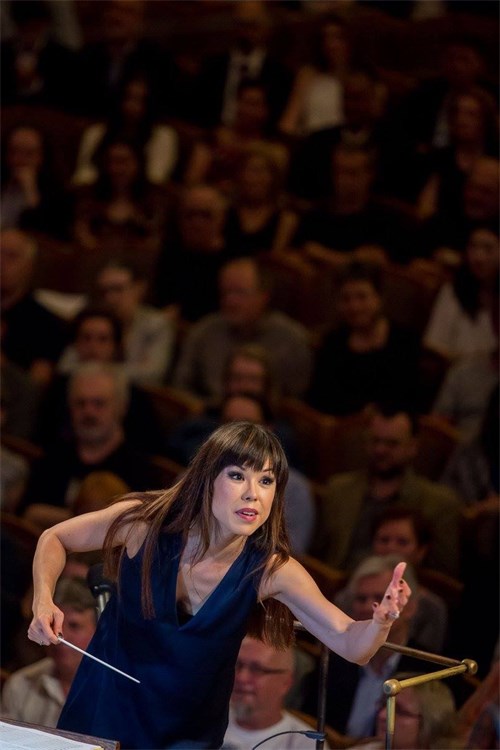
And yet there’s no mistaking the challenges of Michael Giacchino’s score.   At today’s first of two screenings of Ratatouille (2007), presented by Disney Concerts, we saw the TSO’s A-team.  For example Jonathan Crow, concertmaster and Joseph Johnson, principal cellist, were across from one another, facing conductor Sarah Hicks in her TSO debut.

sarah_hicks2

Conductor Sarah Hicks

This is a 110 minute film with a short intermission, the conductor in some respects strait-jacketed by the challenges of her role following images on the big screen above, synchronized via information on a small screen on her podium before her.  It helps that so much of this score is either jazzy-atmospheric evocations of French culture, complete with accordion player (who plays more than anyone else), or insanely tense chase music.

While those chase compositions are hilariously funny when coupled with the film –and had me laughing throughout—they are not easy music.  Whereas the chases you usually get in a thriller will have a steady pulse –whether we’re thinking of Korngold or Herrmann—Giacchino does something incredibly daring, regularly seguing instantly from one place and its mood to another with little or no transition.  And this is precisely how it must feel if you are an intelligent articulate rat (got that first part of the hypothetical? It’s a big “IF” to absorb) who is yanked from out of one place into another.  We are as helpless as Remy the rat, ripped out of one milieu and inserted into another, which is what is so especially magical about this score and this film.  The percussion section were hyper-kinetic conjuring up moods, four players using instruments sprawling across roughly a quarter of the orchestra’s floor-space, dashing from marimbas to drum-kits to bells and with little time to catch a breath.

I’ve seen this film many times in the decade since it appeared, a sophisticated meditation on many things, from art to food to love, and even criticism.  Peter O’Toole voices the imperial food critic Anton Ego, who makes or breaks restaurants in Paris.  While it’s suitable for children it never talks down to anyone, a sophisticated creation suitable for children or adults

And it dawned on me, noticing advertisements for a couple of the upcoming films in the series –Raiders of the Lost Ark in March, The Wizard of Oz sometime next year—that the best way to do such a series might be to find films we know inside out, films one knows so well that suddenly you’ll be seeing them a whole new way: because you’ll suddenly be hearing them with a live score.  I had a magical experience just this past December when the TSO gave us The Fellowship of the Ring that seemed to be transformed into an oratorio by Howard Shore with wonderful live choral support. I understand that it’s not entirely up to the TSO as they have partners in the film world who prepare these films, as for instance Disney has with this Pixar classic.  I wonder, will someone please prepare Max Steiner’s Gone With the Wind, King Kong, or Casablanca, or perhaps Korngold’s Adventures of Robin Hood? Ennio Morricone’s The Mission or The Untouchables?  Elmer Bernstein’s Magnificent Seven or Ten Commandments. Think of your favourite film –meaning the one you’ve seen so many times you know every line, and don’t worry if it’s not necessarily what critics would acclaim as a great film.  Now imagine it with the music done live.  How would Moonstruck come off if all those segments from La Boheme were live in front of you?  Or if you could have a live version of 2001: A Space Odyssey accompanied by live versions of Ligeti, Khatchaturian and Strauss (both of them).  Okay that last one would be very difficult.

It can be surprising.  You think you know how you feel about some movie seen countless times, but it’s a chance to time travel as if by magic when you revisit your response, making it new.  Yes there were laughs.  But there are also moments like the tearful encounter with the Ghost of Christmas Past in Scrooged.  It happens to me, and could happen to you.


Posted in Cinema, video & DVDs, Music and musicology, Reviews | Leave a comment

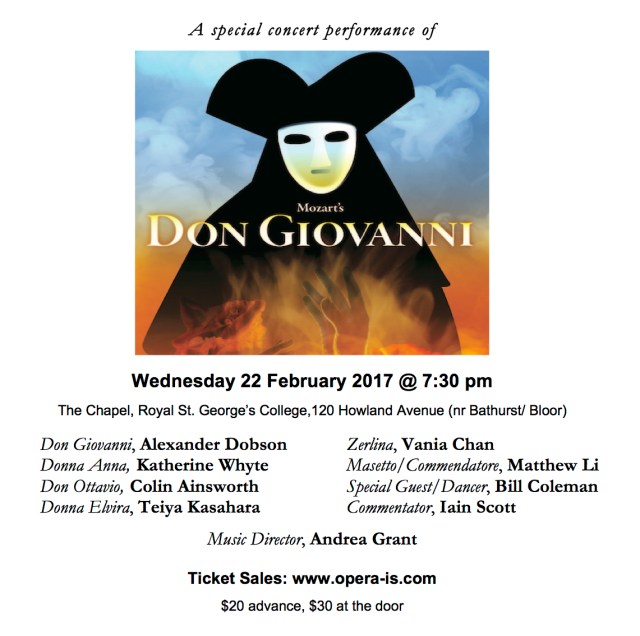
Don Giovanni in concert

don-giovanni-22feb2017-final

Posted in Press Releases and Announcements | 1 Comment

Thirteen questions for James Quandt, Senior Programmer, TIFF Cinematheque


James Quandt is the Senior Programmer for TIFF Cinematheque.  He has curated hundreds of directorial retrospectives, national surveys and thematic programmes that have contributed to the interest in and revival of forgotten masters and films, has been with TIFF since the launch of TIFF Cinematheque (then called Cinematheque Ontario) in 1990, and prior to his current role, Quandt worked as Film Programmer at Harbourfront. From 1985–1990, Quandt assembled all the film programmes at Harbourfront and curated several series for other film institutions, including the Art Gallery of Ontario and the Canadian Film Institute.

resized_not_reconciled

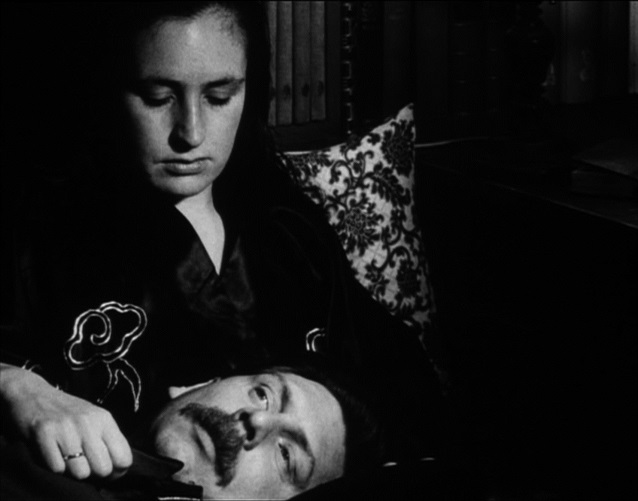
Not Reconciled (1965) Image credit: Courtesy of Barbara Ulrich

I’m thrilled & honoured to be able to interview Quandt on the occasion of TIFF offering their Straub-Huillet retrospective, titled “Not Reconciled: The Films of Jean-Marie Straub and Danièle Huillet” that begins March 3rd.

1) Are you more like your father or your mother?

James Quandt: Equal inheritance from both.

2) What is the best thing about what you do?

James Quandt: Programming films I love that I hope others will also admire.

3) Who do you like to listen to or watch? 

James Quandt: I am passionate about art (all periods from early and Renaissance through modern and contemporary) so I visit galleries and museums and travel to see art exhibitions; my other passion is classical music, again all periods, from early and baroque through classical and contemporary. New music is a particular enthusiasm.

4) What ability or skill do you wish you had, that you don’t have?

James Quandt: Patience.

5) When you’re just relaxing and not working what is your favourite thing to do?

James Quandt: Reading.

6) As a programmer with decades of service to tiff, the film-viewing public and the world at large, do you prefer to be an invisible part of the process, or do you expect to be drawn into conversations like this one as a teacher & scholar whose knowledge can inform our viewing?

book_cup

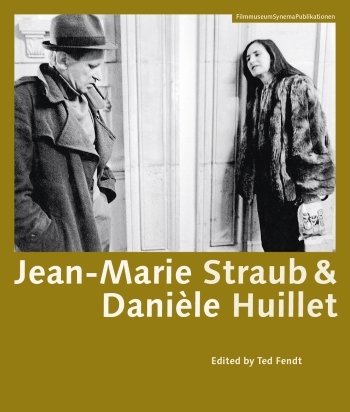
Cover of the Columbia University Press book edited by Ted Fendt. Click on the link to see more about this book.

James Quandt: Invisible. I hope my introductory essay will encourage some people to discover these majestic, difficult films, but others have far more knowledge and understanding of their work than I. The best possible primer on Straub-Huillet is the new volume edited by Ted Fendt, published by the Austrian Film Museum.

7) Please explain the significance of Jean-Marie Straub and Danièle Huillet, both for their achievement and their influence.

James Quandt: Their achievement is immense, in a career that has spanned many decades and produced a vast number of both features and short films. More than any other director I can think of, aside perhaps from their mentor Robert Bresson, Straub-Huillet remained intransigently committed to a singular, fiercely political vision and an aesthetic or approach whose severity derived from their own moral clarity. It is paradoxical that, again like Bresson, their particular, unyielding style should have exerted such a wide influence, but a list of contemporary filmmakers who have in some way been inspired by the duo includes dozens, ranging from the Portuguese auteur Pedro Costa to the American film essayist John Gianvito.

8) Please unpack some of possible meanings of the epithet “Not reconciled” in the Straub – Huillet retrospective, and what we should be looking for, as we watch their films.

James Quandt: “Not reconciled” is an apt term to describe Straub-Huillet’s absolute refusal—through their art, their production methods, and their sometimes incendiary statements—of a world in which the powerless remain ever so, solidarity is hard won, and political iniquity prevails.

9) Please reflect on the Marxist-materialist element in Straub and Huillet.

kommunisten_malraux_3

Kommunisten (2014) Image credit:Courtesy of Barbara Ulrich

James Quandt: Theirs is a Marxist-materialist cinema, in which class is always a cardinal issue, as signaled by the title of Class Relations—tellingly renamed from its source, Kafka’s America.

chronicle_of_anna_magdalena_bach__2_

The Chronicle of Anna Magdalena Bach (1968) Image credit:Courtesy of Barbara Ulrich

What other biographers of Bach would focus so relentlessly on his art as work, and his struggle to secure positions and payments?

10) In your essay you comment upon an apparent contradiction, at least in the critical response to Straub- Huillet, where some remark on distancing elements as you’d find in Brecht, while others see an immersive impulse. Are we over-simplifying in seeking to push them to one pole or the other, or is there another way to reconcile those polarities?

James Quandt: Straub-Huillet repeatedly refuted characterizations of their cinema as one thing: severe, difficult, Brechtian, cerebral, etc. They truly had the utopian belief that their films could (and should) offer emotional, immersive experiences, and appeal to the everyday filmgoer, not just intellectuals.

11) Please discuss the highlights of the Straub – Huillet retrospective, both as far as the well-known / famous films are concerned but especially the obscure gems.

James Quandt: The comprehensiveness of the retrospective is staggering, given that so few of their films have been individually available—at least in good copies, with English subtitles.

A parenthetical aside
(By the way, you might be interested to know that the copy of The Chronicle of Anna Magdalena Bach that is circulating in the tour at other venues is a DCP of the English version they made simultaneously with the version you saw.

resized_sicilia

Sicilia! (1999) Image credit:Courtesy of Barbara Ulrich

For the many who have asked me what their most accessible films are, I cite the Bach film, Sicilia! (a personal favourite), Class Relations, the programme of their early films (Machorka Muff, Not Reconciled, and The Bridegroom, The Comedian, and The Pimp) and the heart-bruising programme of shorts that includes Le Genou d’Artemide. The use of Mahler’s “Der Abschied” is devastating in the latter.
12. A film of Moses und Aron, Schönberg’s unfinished opera, is the film in this retrospective that I anticipate most eagerly, that I’ve heard called the most perfect film of any opera ever made. For the opera-lovers and those intrigued by this exploration of Zionism, please comment on how Straub – Huillet approach the work and how it fits into their body of work.

James Quandt: I love the two Schoenberg opera films; Von heute auf morgen actually reveals a kind of Lubitschian lightness of social-marital comedy that is very surprising. Moses and Aaron, of course, is much thornier. They were determined to make it for many years, and attempted to make it as authentic as possible, shooting in a Roman amphitheatre. Oddly, I find operatic elements in many of their other films—dialogue delivered as sprechtstimme, for instance. I recently published an article about how, though totally spoken, the dialogue in Sicilia! can be heard as operatic roulades, arias, etc.

13. Do you have a favourite film or favourite director?

James Quandt: I am currently working on a visual essay about Robert Bresson’s final film, L’Argent, which I think is perhaps his greatest. So, for the moment, it’s the one.

~~~~~~~

TIFF Cinematheque’s Not Reconciled: The Films of Jean Marie Straub and Danièle Huillet runs from March 3 to April 2. Curated by James Quandt, Senior Programmer, TIFF Cinematheque, this first ever Toronto retrospective assembles dozens of their features and short films, many of them to be seen in the city for the first time.  Sunday March 12, the screening of Moses and Aron includes a live performance by Against the Grain Theatre.

Posted in Cinema, video & DVDs, Interviews, Personal ruminations & essays | 2 Comments

Kindred Spirits in Markham

At the risk of saying something really obvious: there’s a great deal of music going on in Toronto, and all around the city too.  I ventured just north of the city to one of several community venues, the charming 527 seat Flato Theatre in Markham to hear a concert by Kindred Spirits Orchestra.  As I’ve observed previously on visits to Barrie & Richmond Hill, the epithet “if you build it they will come” was never truer than when applied to culture.  I watched a concert of Wagner, Schumann & Shostakovich played to a packed audience, responding to the soloists as though they were rock-stars.

kristian_alexander_portait

Kristian Alexander,founding Music Director and Principal Conductor of the Kindred Spirits Orchestra

Okay nobody screamed or threw items of intimate apparel up onstage.  But a smaller venue such as this one is a wonderful asset, creating a genuine buzz in the lobby –when the audience meets the artists—or in the enhanced acoustic potential of a smaller space to thrill the listener at the most basic visceral level.  We’ve seen the same thing from the small new opera companies in Toronto over the past five years, who generate much more excitement packing a smaller space, less concerned with the number of actual tickets sold. In the end excitement and intimacy are difficult to generate in those larger spaces whose only advantage is the prospect of making money.

As a downtown denizen I have to admit, the physics actually flatters the hinterland and should raise some questions about what we’re getting in those bigger spaces.  If you do the math (which is the key to physics after all):

  • Roy Thomson Hall seats over 2600
  • Massey Hall over 2700
  • the COC’s home at the Four Seasons Centre seats around 2000
  • Koerner Hall 1350
  • Richmond Hill Centre seats 631
  • Markham’s Flato Theatre seats 527.

The spaces are not shaped the same, but just as a concept, imagine that when you’re hearing a big loud Shostakovich Symphony played by the TSO at RTH, you’re sharing the loudest sound with another 2600+ patrons –or at least the space for those seats & possibly bodies too—whereas the same concert played in Koerner Hall will seem louder because you’re now sharing that sound with half the bodies / people, the same orchestral energy energizing a much smaller space, far fewer cubic yards of air being excited.  No, I don’t think the TSO could actually fit the huge Shostakovich orchestra onto the Koerner stage and it might not sound enjoyable. And if you’ve heard them play Mozart @ Koerner and also @ RTH you had a chance to make the comparison more precisely.

But please follow along with me.

mercer

Cellist Rachel Mercer (photo: David Leyes)

I listened to Rachel Mercer play the Schumann cello concerto with a chamber orchestra accompanying, in a 527 seat theatre.  Mercer’s cello sounded almost as though it were amplified, its tone filling the space. I’ve never heard such exquisite sound, and almost wish there were some way that Mercer herself could hear what this is like in the space, although I suspect it sounds pretty amazing from the stage as well.  Imagine that all the orchestral energy that is usually shared by 2600 people at RTH was instead there for a mere 527.  No, the Kindred Spirits Orchestra is not the TSO.  But I think this might explain one of the great recent mysteries in Toronto, that in some circles the Canadian Opera Company orchestra is perceived as better than the Toronto Symphony: because a great orchestra can’t sound as good in a big hall, as a good orchestra playing in a great hall with perfect acoustics.  It’s been an eye-opener hearing the TSO in Koerner, where you discover oh my God they are amazing, but: can’t always discern that brilliance in the big hall.

I was attracted by one item on the program, the chance to hear my colleague Margarete von Vaight sing the liebestod with an orchestra.  I’d heard her sing this already in a practice room at the RCM, where I played it, and by the way, now imagine how it sounds when a voice that can sail easily almost drowning out a full-size orchestra, sounds when you’re alone in the practice room.  I am the O between two colossal Ws, if you catch my meaning, the jaw-dropping “o” you see when someone has their mouth open in shock.   Even so, what one can do in practice isn’t necessarily what one gets in performance, when the adrenaline or Murphy’s Law conspires against you. That’s why live performance is so exciting, why i had to be there to hear it in person.

Kristian Alexander is the conductor of Kindred Spirits Orchestra, an ensemble I’d never heard before last night.  They’re an interesting mix of professionals and perhaps 20 young players being mentored.  Alexander has a sure hand, a very clear baton technique who cuts a charismatic figure reminding me of Thomas Haden Church (star of Sideways) in a tux.  Aleander & KSO began with the Prelude, before seguing into the Liebestod, an expansive reading.  While I don’t think this is a full-size Wagner orchestra (perhaps 75 players, not 100-120), the sound in this intimate space was quite powerful.  It’s not just a matter of volume, but rather that you hear nuances to every instrument. The bite of the rosin into the strings, the crackling  aspiration as notes begin on reeds or the momentary swell of the sound in the brass, become part of the blur in a big hall, lost the same way facial details are impossible to discern from afar.  And the big voice doesn’t just sail over the big orchestral sound, but also has shading and delicacy in softer passages.  Von Vaight gave us a strategic sing, singing much of the piece very softly (as it’s written) rather than just blasting her way through as some will do.  Having heard her talk to me about how this is to be sung I knew that the entire piece was planned, to build throughout to a climax resembling physical release, entirely appropriate for an opera celebrating love.  I was reminded of Sondra Radvanovky and Jon Vickers, two singers I’ve observed making clever use of soft notes that project, to catch a moment of rest in a difficult score before pouring everything into the climactic phrases.

Next came the Schumann Concerto.  Playing from the front of that stage I swear I’ve never heard such a big cello sound as what we hear from Mercer, executed with great accuracy.  When the concerto called for dialogue –a series of brief back and forth phrases between soloist and orchestra –the strings of the KSO were wonderfully precise, answering the luscious sounds of Mercer’s cello.  While I don’t know if this was a typical concert the response was an extraordinary ovation, as we’d already seen for the Wagner.  The fact that the worst seat in the house always has a kind of direct relationship with the players onstage might be the key.  I could see them, they could see me.  You don’t make such a direct connection in a big hall.

After an intermission including brief interviews of the soloists by associate conductor Michael Berec, we were on to the most ambitious item (both for the orchestra and as a challenge to this audience), Shostakovich’s 10th Symphony.  Alexander turned them loose.  Where the Wagner and Schumann had been exercises in careful control – respectfully controlling the volume of the orchestra and watching their tempi while seeking to follow soloists—the big romantic symphony was an entirely different animal.  For the strings –who begin the work soulfully—it was mostly a matter of staying together, laying big swaths of sound into the little hall.  The baton is passed gradually in the last three movements as almost all the winds take turns at being soloists or playing in groups, tasked with offering colour, both emotional and timbral, to an increasingly restless emotional landscape.  Solo clarinet, flute, piccolo, bassoon, contra-bassoon, snare-drum, horns (Engliish & French)? You name it, they played it and wonderfully well I might add.

I have to close with two very different thoughts suggesting that our downtown chauvinism may be every bit as misplaced as the superiority I used to rail against from New Yorkers, recalling someone calling us and our talent “provincial” (happy to tell anyone details in private email).

First, this cute little theatre managed to project surtitles on the back wall during the Liebestod.  Isn’t it time that Roy Thomson Hall offered the same courtesy?  I just saw Tafelmusik orchestra & choir at Jeanne Lamon Hall, where I suppose we were being true to tradition (historically informed rustling of programs?) in the absence of text projected on the wall, although in their defense it might be hard to figure out where to project the titles.  Perhaps a screen from the top of the organ pipes?

Second was the rhapsodic audience response.  The soprano’s soft walk in, during the Tristan Prelude was described thusly: “You came on like a F*****  ghost … You were SAVAGE”   That’s from a conversation quoted to me afterwards, so sorry I didn’t hear it in person, although I fear I might have giggled, giving the wrong impression.

KSO’s next concert Aril 14th is titled “Death & Transfiguration”, including , Richard Strauss’s tone poem of the same name, Tchaikovsky’s overture “The Tempest”,  and Rachmaninoff’s piano concerto #3 with Rudin Lengo as soloist.

KSO, with their intermission interviews, surtitles, their intimate venue and ambitious programming? I think they’re on to something.

Posted in Music and musicology, Opera, Personal ruminations & essays | Leave a comment

Remembering Nicolai Gedda

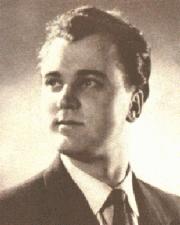
gedda_klein

Tenor Nicolai Gedda

The passing of tenor Nicolai Gedda will elicit testimonials and remembrances of the artist, of the person, of performances & great moments.

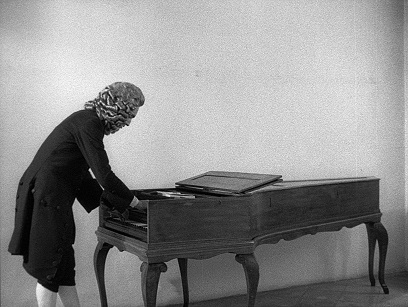
I’m just sharing this because I think it’s important to do so, arguably all that we have.  Drama and music are written down on paper, and so we may sometimes lean very heavily on books as authorities, so much so that we badly distort our understanding of the disciplines. It can get a little insane, when some people think the most perfect version is in their head, sitting on a chair reading rather than in a performing venue. Music has been thrown off track by the apparent authority of recordings, which may seem to be live, but distort the reality: in the absence of wrong notes, in the absence of audience coughing, in the artificial stillness. I recall this distortion in a recent film I saw, the curiously ideal film about JS and Anna Magdalena Bach, featuring performances of such perfection as to seem to be inside my head.

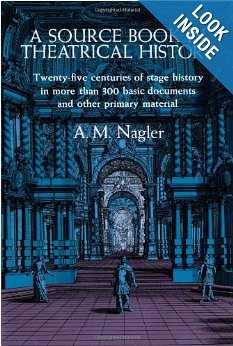
61gynx9jmsl-_sy346_pjlook-inside-v2topright10_sh20_

Still available from amazon: because it’s still a valuable resource

Pardon me if this is turning into a diatribe or manifesto. But I remember hearing something that I took to heart back when I was doing my MA in drama at U of T, something counter-intuitive. Professor Lise-Lone Marker relied very heavily on one book, namely A.M. Nagler’s A Source Book in Theatrical History. I took this course a long time ago, but the book’s still available, still a landmark of sorts. The heart of this book is a series of testimonials, reporting things people saw. We can write all the books of theory that we want, but the subjective response to a live performance is very valuable, sometimes the only authority we have. And so I will report a bit of what I heard.

Nicolai Gedda might be the greatest tenor ever, and alas he died recently. His death was reported this week, although it happened roughly a month ago, January 8th 2017. Coincidentally, Leontyne Price, possessed of one of the great soprano voices of all time, just had her 90th birthday. I was fortunate to hear both live (although my recollections of Price –at a solo concert—are a jumble, with spirituals as encores at the end… I was sitting close, staring up in awe)

And I’m highly skeptical about what I really heard with Gedda, as it was long ago. Memory sometimes plays tricks on us.  It was 1970, and my older brother did something very generous, taking me along on a trip to NY to hear the Metropolitan Opera, when I was 14 and he was perhaps 20. We went to operas Tuesday (Die Walküre including Rita Hunter in her Met debut as Brunnhilde, Jess Thomas, and Hans Sotin), Wednesday (Faust with Enrico di Giuseppe, Adriana Maliponte and Cesare Siepi as Mephisopheles, plus Edward Villela and the ABT in extensive ballet in the Walpurgisnacht scene), Thursday (Otello, the prize of the trip: Vickers, Quilico, Zylis-Gara and a young James Levine, including handshakes backstage with Vickers & Levine.) and Friday (Siegfried with an amazing sounding Helge Brilioth, Ursula Shrãder and Thomas Stewart).

My brother was studying with Quilico at the time, so we had lunch with them on one of the days. And there was another bonus, namely the chance to go see the dress rehearsal, yes that famous one, where Nicolai Gedda tried to sing Hermann in Pique Dame (Queen of Spades). Tried? I can still hear that voice in my inner ear, ringing with the words “tre carti, tre carti!!” (that’s how I remember it… as it was in Russian and a long time ago, perhaps I’m not recalling it right). The theatre was pretty empty, so the acoustic wasn’t the way it would be for a regular performance. But wow, the voice rang effortlessly over the orchestra, the sound was powerful, a beautiful stunning sound. But for some reason he chose not to sing the role –and this I only know from reading about it years later. At the time? I assumed he’d sing it opening night, that he’d be brilliant, because he sounded wonderful.

Although in fact I understand why he might have been hesitant. This voice, like the one of my other great favourite, Jussi Björling, is poised on the precipice between lighter repertoire and more dramatic rep. As young singers you heard a greater freedom at the top, a sound more purely in the upper register and not as dark as it would become once the lower register blended in. When you hear their later recordings, they’re both getting darker in their sound, which is intoxicatingly beautiful, precisely because that darker macho sound usually goes with the loss of some of the effortless freedom at the top.

This is a man whose voice could do so much:

  • range, meaning the ability to hit high notes
  • longevity,  in the sense that his career was so long: suggesting that his vocal production was natural and healthy. My touchstone in this category is Robert Merrill, who was still singing the national anthem at Yankee games in his 80s, the voice stll beautiful.
  • beauty of tone, arguably a subjective quality
  • sensitivity to text: and few were as agile in multiple languages as Gedda

I suggest you go to youtube to enjoy what you can while you can. And if you like what you find there buy the recordings.

Posted in Opera, Personal ruminations & essays | Leave a comment

A Bach Tapestry

It’s been a JS Bach sort of week, what with the tiff screening on Wednesday (“Chronicle of Anna Magdalena Bach” coming Friday, March 3 at 6:30 p.m)  and the press release announcing the upcoming Bach Festival, including a reconstruction of a St Mark Passion.

Sometimes we’re more receptive to things, whether it’s food or art or music, depending on what else we’ve been feeling or experiencing. I’m particularly blessed to be coming to tonight’s concert just at this time, a concert titled ”A Bach Tapestry”.

So yes it was all Bach tonight with Tafelmusik Baroque Orchestra and Chamber Choir at Jeanne Lamon Hall, and will be again Saturday & Sunday, Feb 11 -12, as well as Valentine’s Day at the George Weston Recital Hall.

1617-ivars-taurins-portrait-bysianrichards_50

Ivars Taurins (photo: Sian Richards)

We were in the capable hands of Ivars Taurins, not just conducting but actually curating. The word has acquired some cachet of late, in this time of convergence, when the boundaries between disciplines crumble. The program notes were wonderfully suggestive, whetting our appetite for the many varieties of JS Bach we experienced. Bach is an idea, a platonic ideal of music and composition, especially for the human voice singing praise to God. If a concert is understood to be a kind of trial, where the performers advocate for the composer, their performances arguing for the importance of that composer, Taurins & co. succeeded admirably.

Is Bach the greatest composer of all?? A concert like this one certainly seeks to make the case, and it was a persuasive night, via choral singing with a few instrumental appetizers to cleanse the palette.

One of the bizarre challenges Bach poses is in the sheer volume of music, enormous numbers of cantatas written each year of his life. While there are a great number of well-known pieces – two of which put in appearances tonight—there are a great many that aren’t known. And as Taurins says in the programme, it’s not that the unknown pieces are inferior, quite the contrary.

There is a difference, though, when musicians play well-known pieces. There’s a different kind of attention to the familiar, and playing such pieces is different as well. You could sense this when we came to those greatest hits, that were so well received:

  • Chorale “Jesu bleibet meine Freude” from Cantata 147
  • An original arrangement of the Italian Concerto –a solo work for keyboard—as a concerto for two violins, in the manner of Vivaldi.

Another remarkable moment –and for me the highlight of the evening—came in the Chorus “Und wenn die Welt” from Cantata 80, with swirling orchestral convulsions surrounding the simple and direct choral statement of Luther’s reformation hymn “Ein feste Burg ist unser Gott”, as if to illustrate the perils and evils surrounding humankind. I’d never heard this adaptation before, sung so clearly and with marvelous conviction under Taurins’ joyous leadership, but it will now inform every other version (whether the adaptations by Mendelssohn and Ullmann or the original hymn in a church) as I hear them live or in my head. I suspect that for those who are more thoroughly immersed in their Bach than I (a fellow who knows only a few famous pieces),  this too was one of the “greatest hits”; but from now on, me too!

Who’s the greatest of them all? While we may have had a Mozart festival not so long ago, and orchestras will celebrate Beethoven, Bach endures. A full evening of Bach, and I simply want more.  More!

Posted in Music and musicology, Reviews | Leave a comment