
“Yuja Wang Plays Prokofiev” might be the title of the Toronto Symphony’s opening concert of the 2026-27 season Thursday September 24th, but we heard a great deal more last night.
Yuja also played four brilliant encores in a breath-taking display for a rapturous audience who didn’t want it to end. The applause erupted, and part of the drama was wondering: would she be willing to play more? And what would she play?
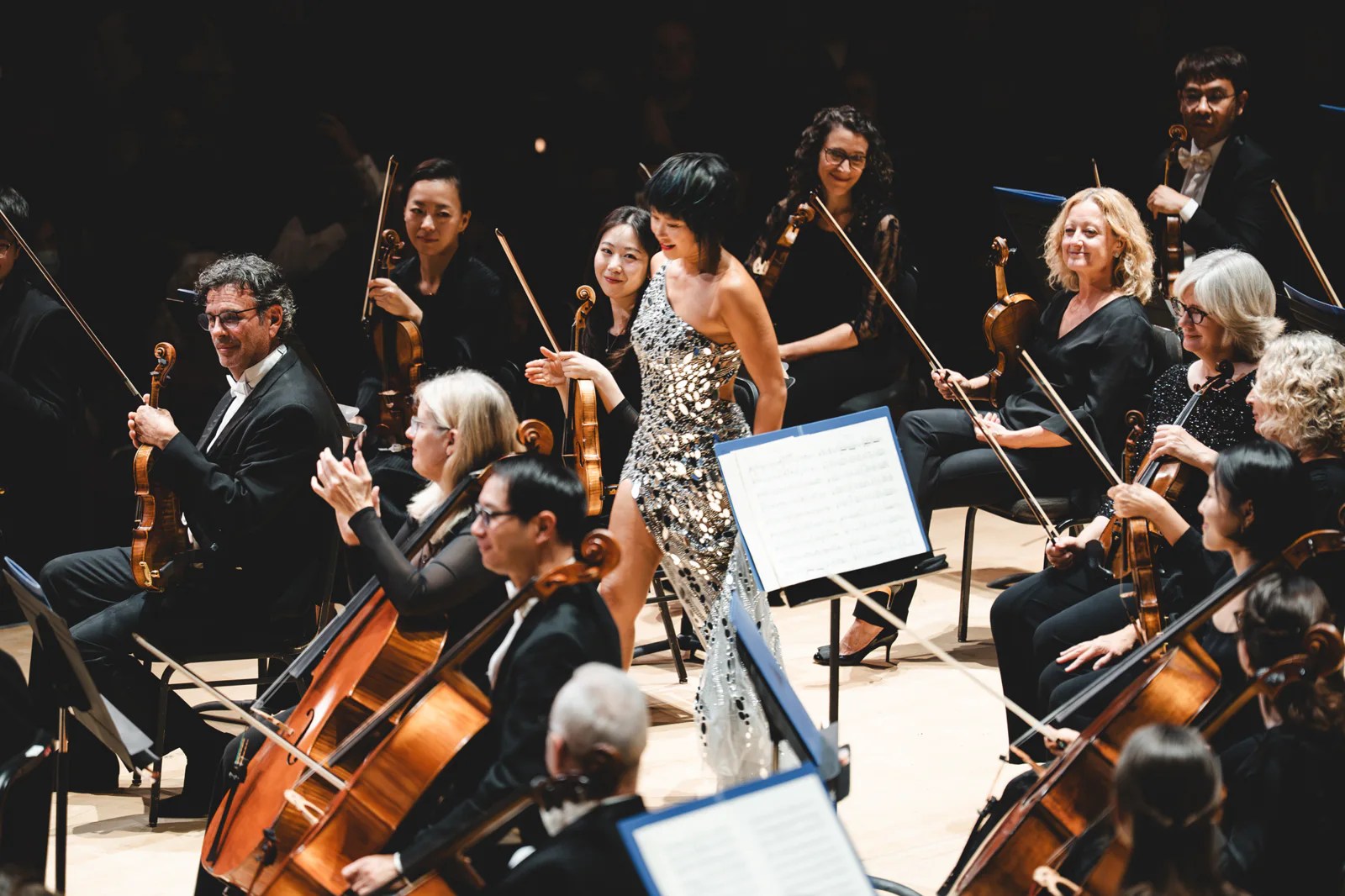
She rewarded the applause first with Dave Brubeck – Blue Rondo à la Turk.
After lots more applause, we heard Arturo Marquez – Danzon No. 2 (for solo piano), as each piece was a shift, a change of mood.
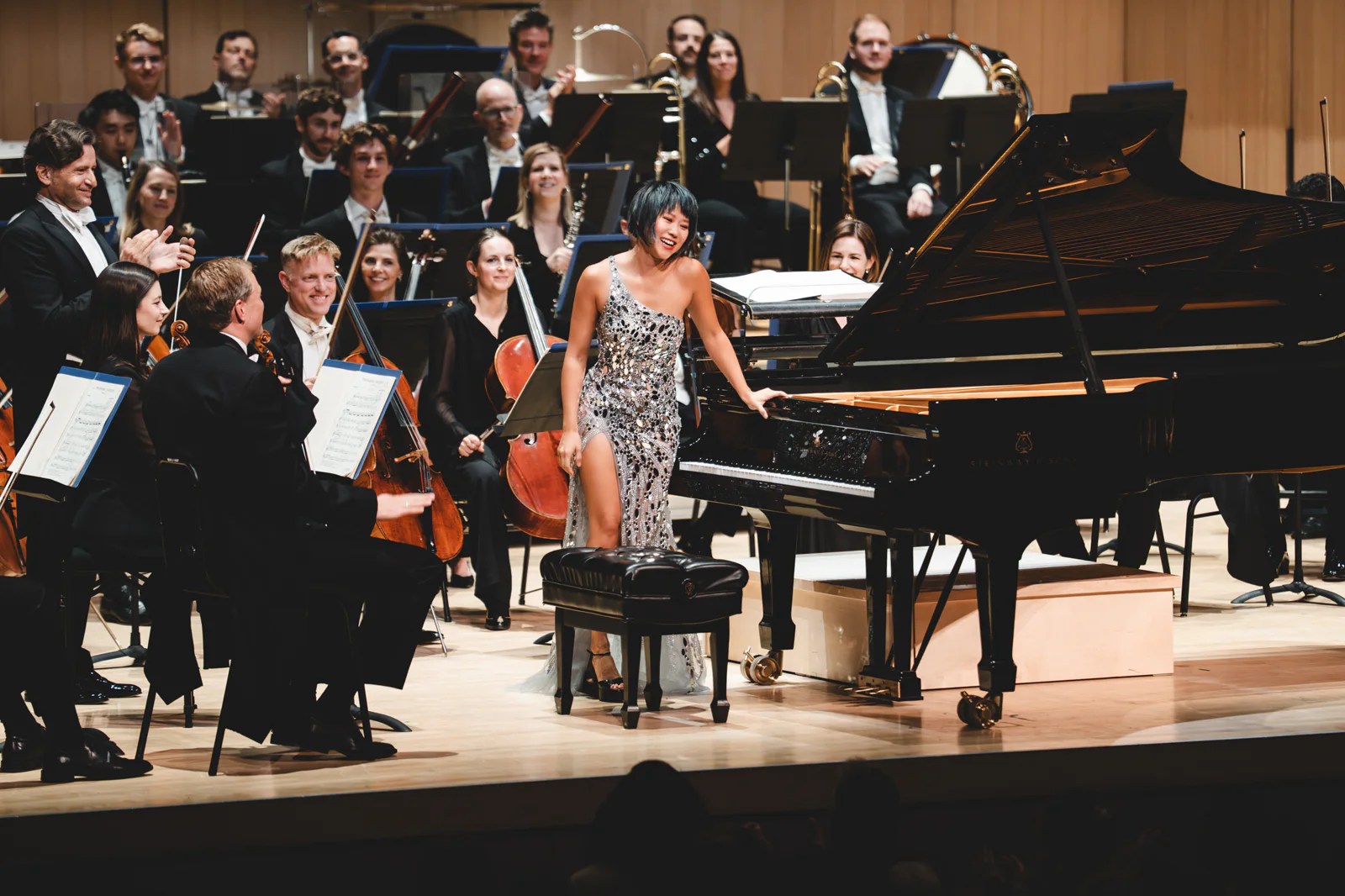
More applause was rewarded by a stunning arrangement of Shostakovich – String Quartet No. 8, Op. 110 – Mvt. 2. Where the first was jazzy, the second with a Latin flavour, this time we heard a stunning display, something comparable to the concerto.
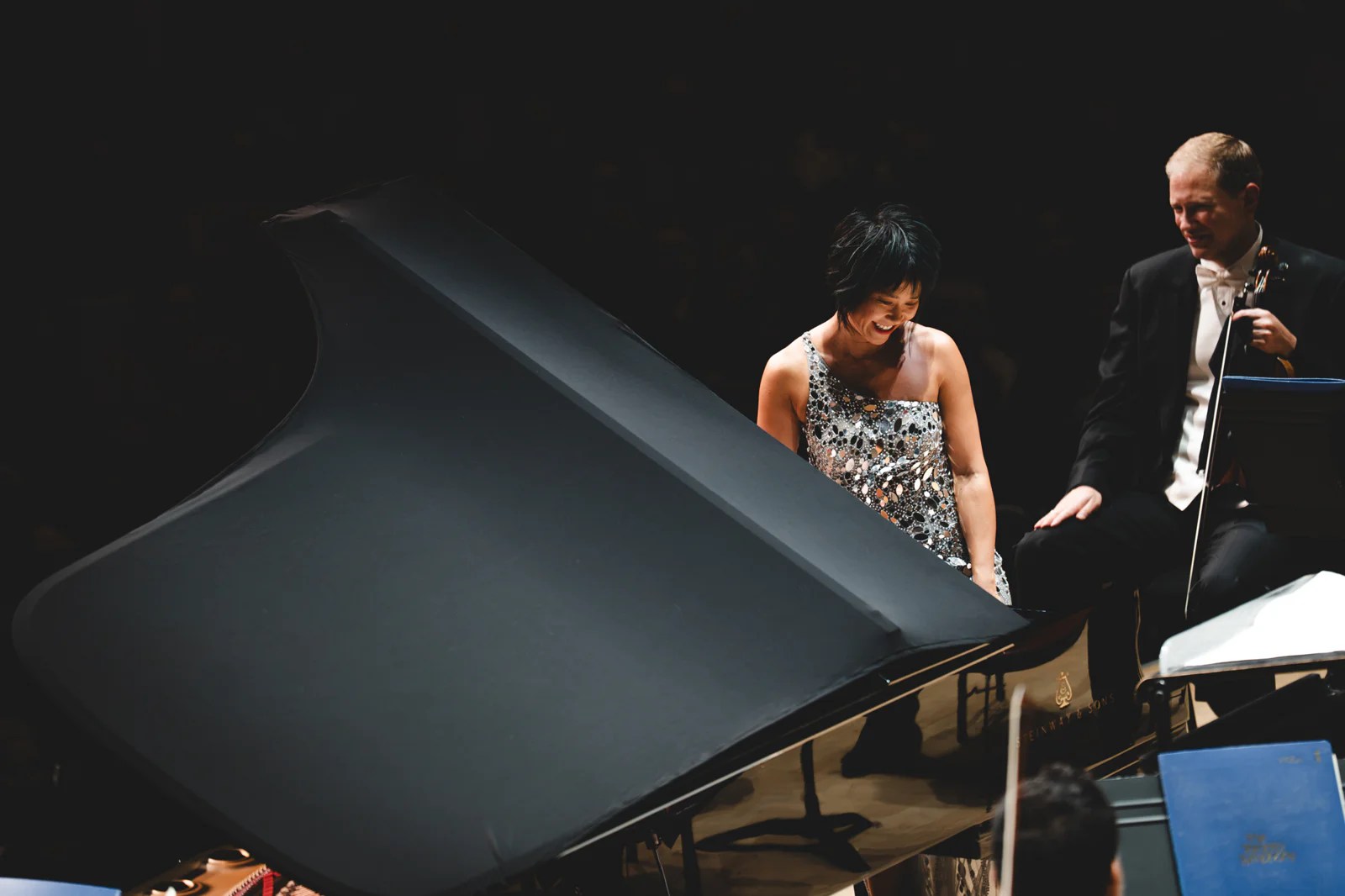
And for a fourth encore, we heard one of Mendelssohn’s Songs without words, a softer gentler pianism, that I thought might be meant as a hint to the audience to let the concert be finished. I’m overflowing with gratitude for her generosity, the encores almost like a whole other recital.
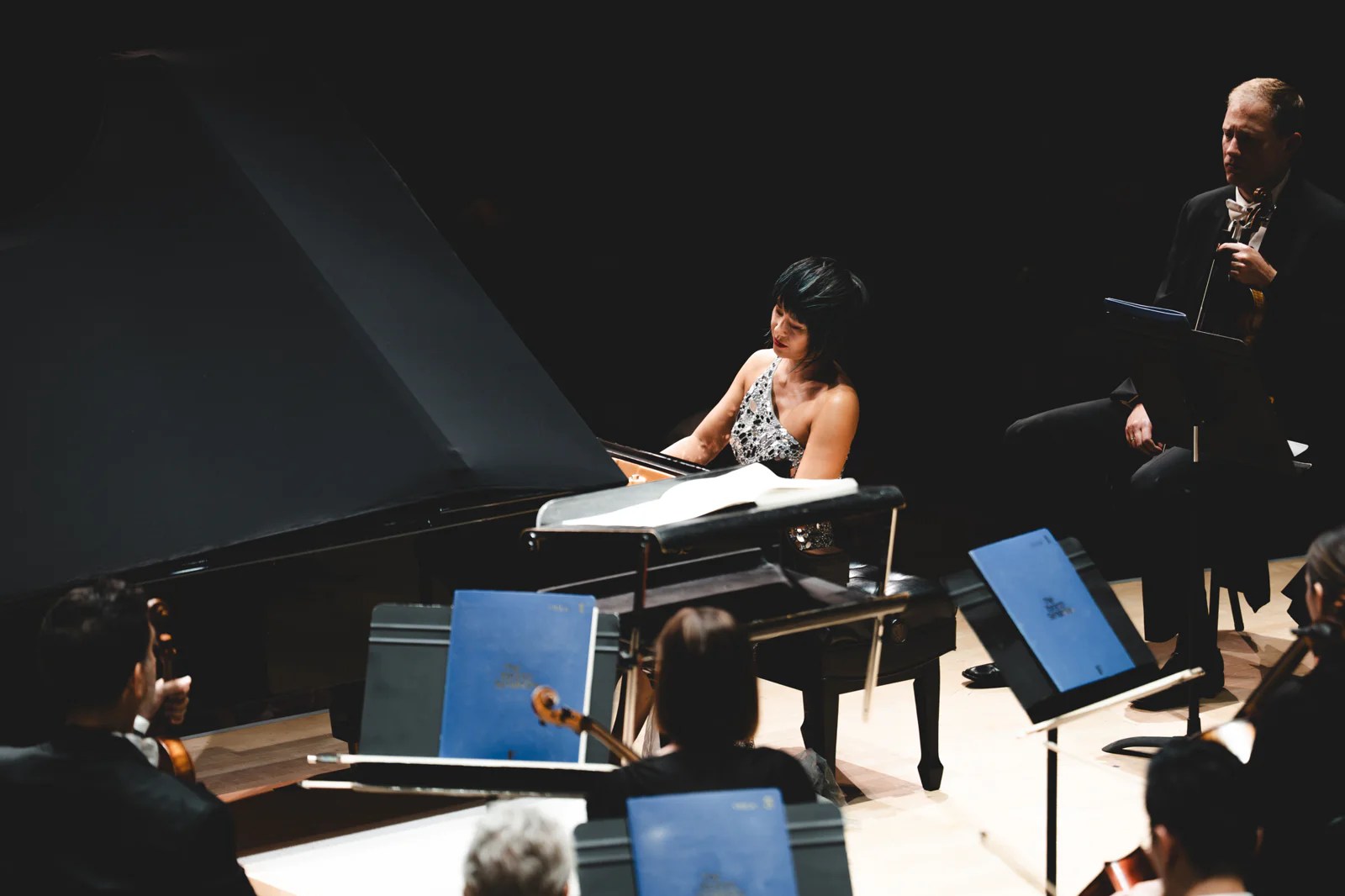
If the orchestra had not stood up, would she have played a fifth encore for us, her greedy fans? I wasn’t sure how to read that, except that Yuja seemed to genuinely be in a zone, her playing especially in the Mendelssohn, speaking softly across the space of Roy Thomson Hall, to an audience so silent as to seem reverent: that is until the next explosion of cheers.
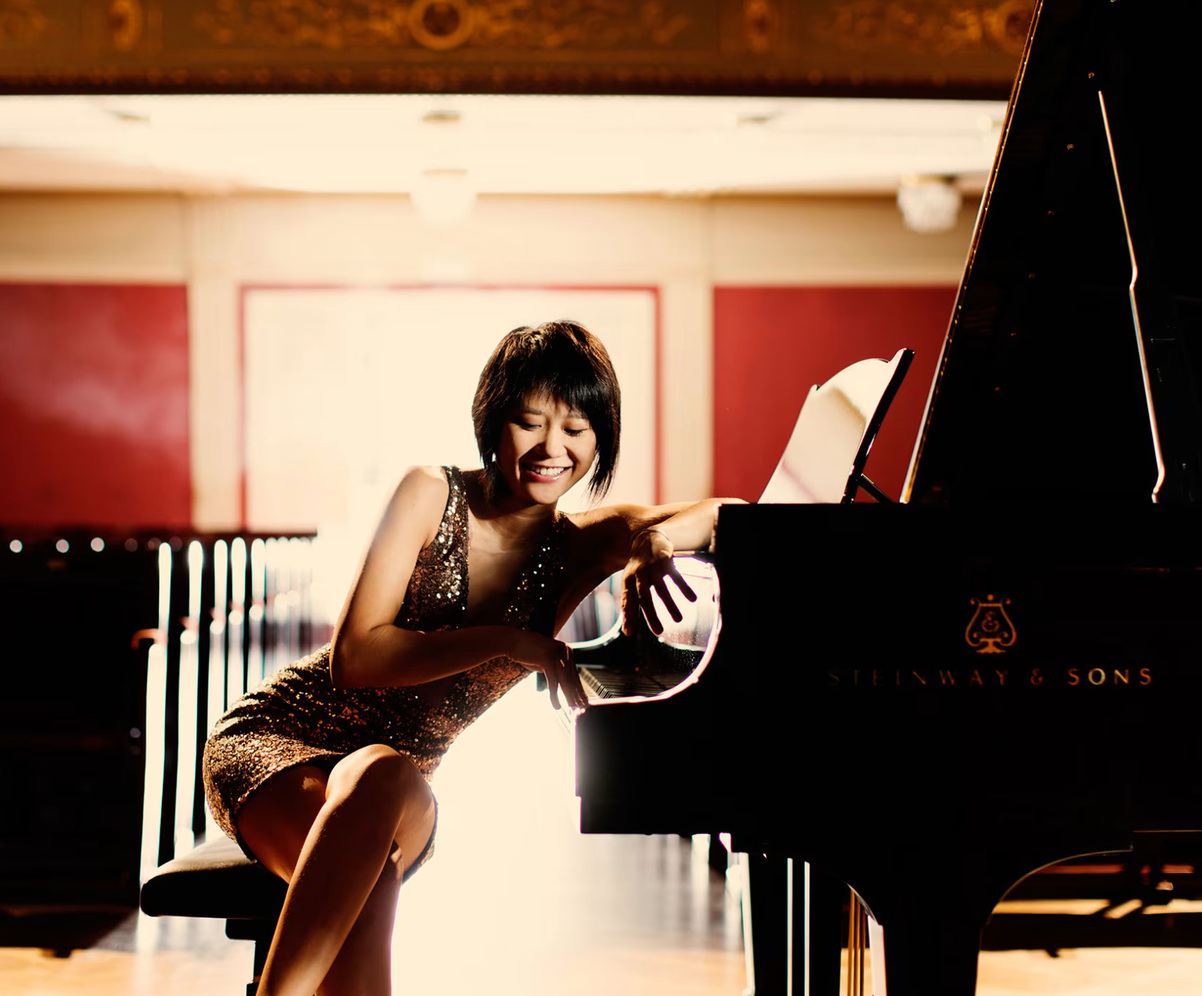
Toronto Symphony gave us a concert in two parts that seems to embody something their Music Director Gustavo Gimeno said in a program note. “The creation of contrast is at the heart of what I believe about concert programming,” and that’s exactly what we heard to begin the fall season. The performances before intermission were in some respects the exact opposite to Yuja. I’ll come back to that in a moment.
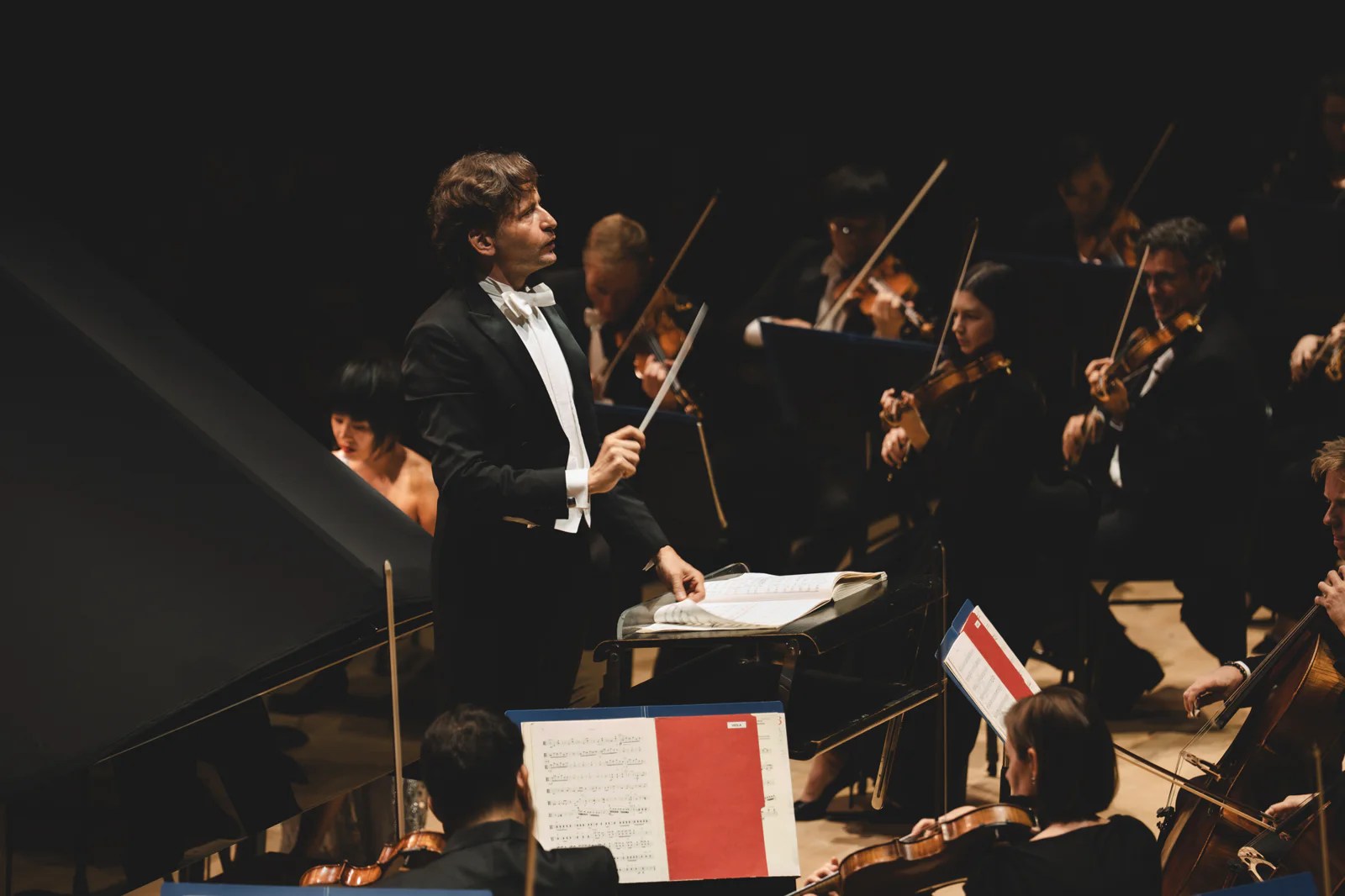
Is Yuja the fittest virtuoso we’ve ever seen? Her bows upon entry are themselves a bit of a feat, speaking as someone who worries that she’s going to bump her head. The gesture is a sign of generosity & seems vulnerable rather than ostentatious.
But obviously she is in great physical condition. Aging artists worry about repetitive strain, fading eyesight, physical changes. Yuja seems to be an athlete, rather than a frail artist.
We may think of the virtuoso as a species of show-off, developing their skill to take it before an adoring public. Yet Yuja seems to be a in a genuine pursuit of art. I see humility not showmanship in this photo.
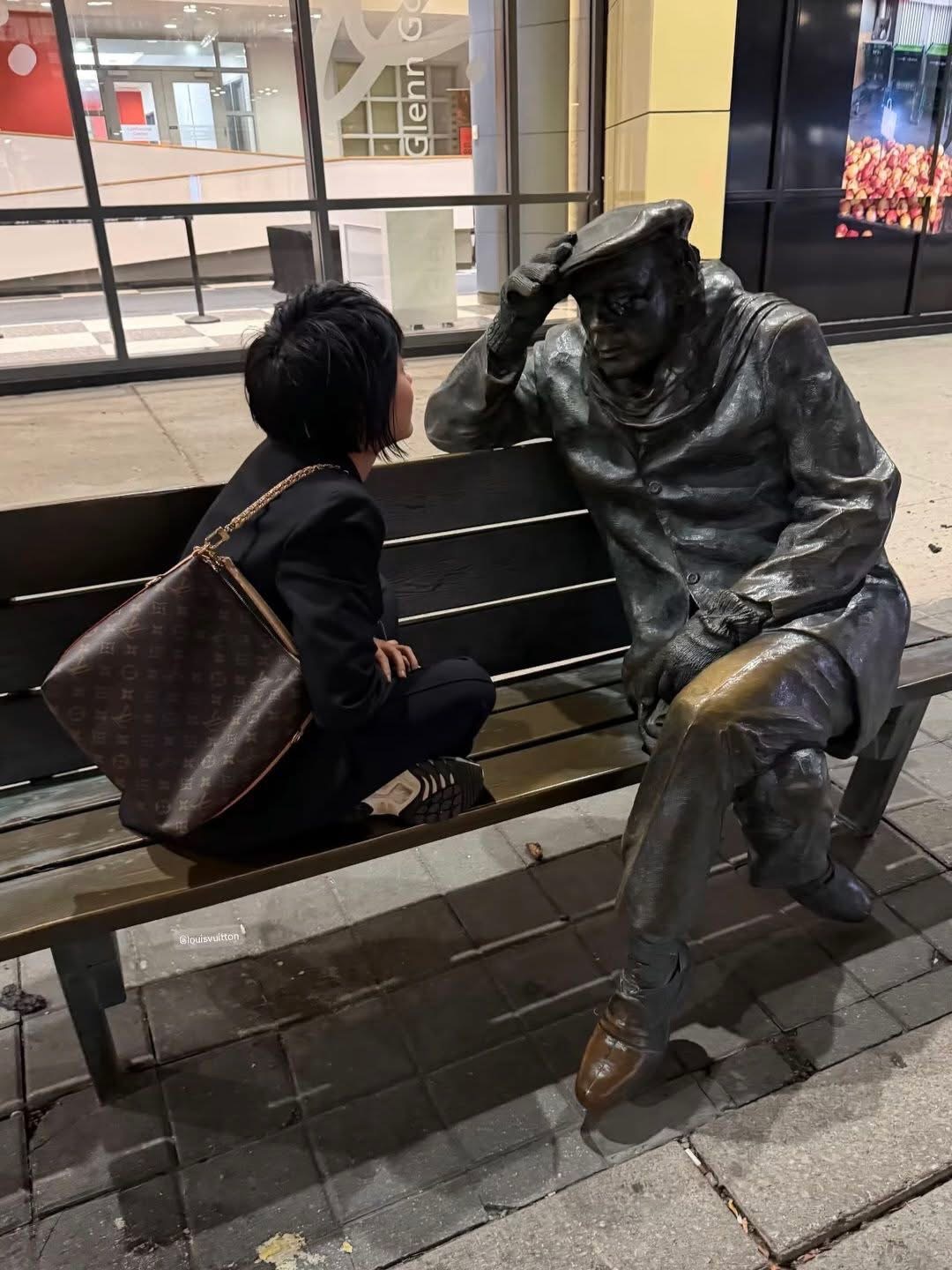
And by the way, happy birthday Glenn Gould! Born September 25
I wish Yuja would go on Saturday Night Live as a musical guest, playing a solo piece like one of the encores we heard last night. There are lots of people who might become classical music lovers if they heard her play. I remember the way the three tenors popularized opera (especially Nessun dorma) when they had their special concert televised worldwide. Pavarotti also went on SNL long ago. Why not Yuja? Somebody needs to make it happen, she could open eyes & ears to a whole other musical world by going on a show with such a huge audience. Or am I wrong to think she would do that? Her devotion to music seems genuine.
I realize I said nothing about the concerto, one of the toughest one can hear.
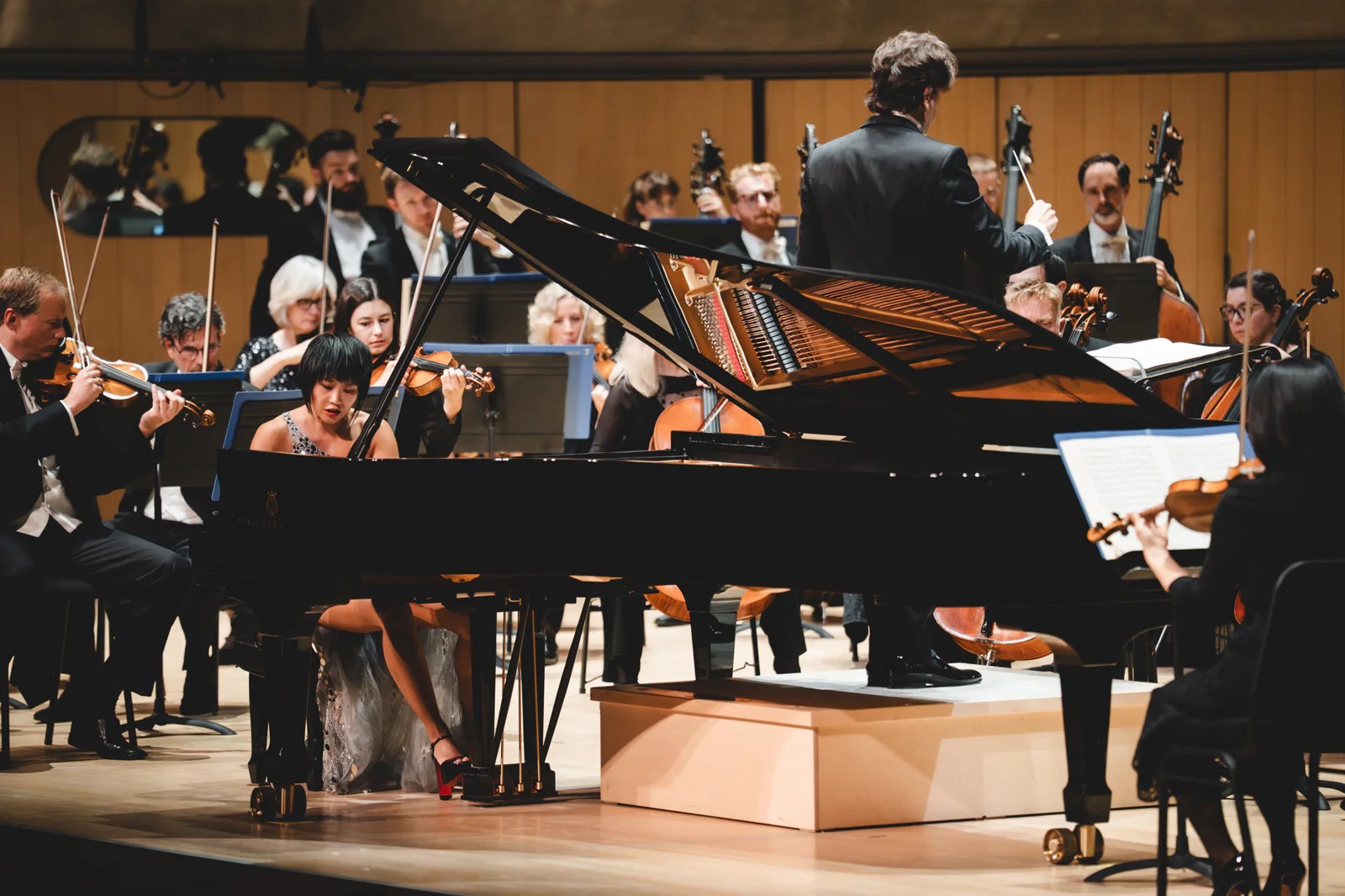
The first movement has that soft slow beginning before suddenly taking off to the races. The second movement is like a suite, a series of variations on a theme, sometimes with the pianist in a reflective space, sometimes with the orchestra offering the peace & tranquility of that gentle gavotte, a suggestion of something old even if nobody dances the gavotte anymore, least of all Russians or Soviets in the 1920s. In that last movement we’re again watching as much as listening, Yuja articulating with phenomenal clarity. I don’t think of Roy Thomson Hall as a place with perfect acoustics, although for such a big hall one hears quite well: but I mention that for Yuja’s performance it’s as though our ears are working better. People are quiet, attentive, respectful, no phones going off, no whispers. The piano sounds better than I’ve ever heard it in this space. Or perhaps it’s simply altered reality, as though I were on a drug, we were all hearing differently, leaning forward in our seats.
I’m going in multiple directions writing about this delightful concert, to be repeated Saturday night & Sunday afternoon. Given that I couldn’t see any empty seats anywhere, neither in the loft behind the stage nor in the sections around me, I’m sure tickets for the weekend concerts will be even harder to get. Yuja is a phenomenon whose stage presence is beyond mere skill. Today September 25th is Glenn Gould’s birthday, a reminder of another sort of virtuosity, devoted to performances without any public present: if we recall that Gould stopped playing for the public, only playing in a recording studio. Yuja seems to reconcile the impossible split between private intimate beauty of pianism with the flamboyance of public performance. I wonder what Glenn Gould might have said, had they met.
Let me talk about the other contrasting segment of the concert before intermission.
In some respects Gould might be closer in spirit to the first part of the concert. We heard two pieces played without interruption, becoming effectively one seamless unit. Before hearing the first of the three movements of Debussy’s La Mer, the TSO gave the world premiere of Linda Catlin Smith’s The Horizon.
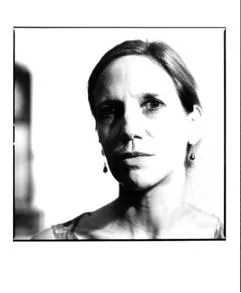
I’m tempted to see the title of Linda’s piece two ways, especially when it’s played as a kind of prelude to the Debussy work.
The first one is the obvious literal meaning of the word. What is a picture of the sea without a horizon? And so Linda’s work makes sense in that context.
The program note invites us to see it another way, in the spirit of an audience’s horizon of expectation.
Linda wrote
“The “horizon” is not a real place, it’s an idea: hovering mutating elusive (Music too is elusive, always vanishing…)….The horizon is what lies ahead, but is never reached, a symbol for the “unattainable“. “
That word “symbol” caught my eye, possibly because I prefer to think of Debussy as a symbolist rather than an impressionist. While we are captivated by the suggestiveness of the orchestration in La Mer, it can’t be mistaken for what Monet was doing, attempts to capture a moment in splashes of colour that seemed almost random & accidental, a descriptor meant originally as an insult rather than a compliment. I prefer to align Debussy with Gaugin, Van Gogh & the post-impressionist painters, not least because of the chronology. Maurice Denis, Gaugin’s colleague, another of the Nabis painters, designed the cover of the programme for the premiere of Pelléas et Mélisande in 1893. The Debussy whose first of three Nocturnes, Nuages, might be the prototype for minimalist composers of the 20th century, would connect to what Linda is saying. The symbolists believed not in blatancy but in nuanced expression, hinting at something rather than saying it. While the word “minimalist” is a label that often takes us into the pattern music of a Philip Glass, it doesn’t feel wrong if we look instead at something like Nuages, rather than the busier late- 20th century sounds you get in something like Glass’s Koyaanisqatsi soundtrack.
That idea of a horizon applies to the way we listen. I feel Linda is writing something that is almost like meta-orchestration, a thoughtful piece to contemplate orchestral music while listening to some gently beautiful orchestral sounds. We are not hearing someone displaying ego in their writing. The orchestra or music might be more from the realm of symbol than reality. The composer’s persona is invisible. This is surely the softest & subtlest use of an 80-piece orchestra piece I’ve ever heard.
We went from the contemplative softness of The Horizon into La Mer without a segue, just Debussy’s quiet opening, where we’re in a realm of sound effects as much as music. Gustavo Gimeno brought us gently from the softness of Linda’s Horizon, to the soft dawning Debussy offers to open La Mer. There was a gradual build-up, the orchestra finally letting loose in the final powerful passages.
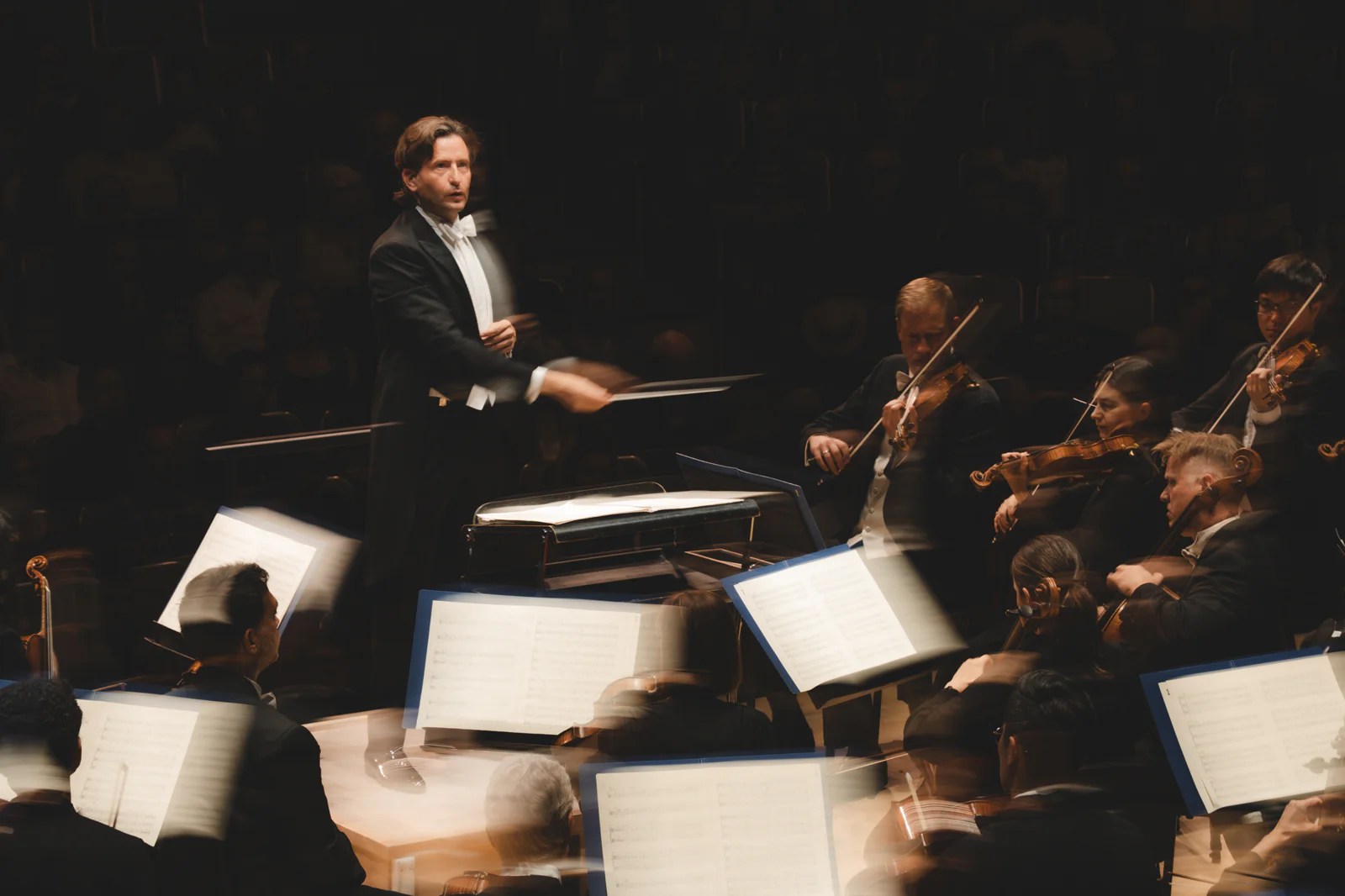
I want to briefly speak of the contrast I saw in the concert, between our focus upon a soloist and how we listen in Yuja’s half of the concert vs. the orchestral half. It’s worth thinking about why virtuosity is important. Beethoven, Liszt, Rachmaninoff & Prokofiev each in their way explore the possibilities of the piano, expanding an instrument’s expressive vocabulary. And meanwhile they draw in audiences with the showmanship and drama of a risky piece, as we wonder: can they play this tricky music? Sometimes the reason for the concert is to see the soloist, sometimes to hear the music. Fortunately in this concert with Yuja and the TSO, we had it both ways.
Yuka Wang plays Prokofiev will be repeated Saturday night and Sunday afternoon at Roy Thomson Hall.


A great review, Les. We were there last night and, like you, were thoroughly impressed. Thanks for listing the encore pieces and, yes, I thought that getting a fifth encore would have been a bit much.
You mention Wang’s athleticism. One thing that struck me from our lofty perspective up in the gods (that is, the balcony): When one looks at her arms moving, they seem incredibly flexible, almost waving like a ballerina’s, up to the point when she hammers the keys forte. Then her ams look like steel.
We also enjoyed the first half of the concert, and I join you in applauding the programming. We really enjoyed the Linda Catlin Smith piece. It’s interesting that you repeat the term “minimalist” in your review, as it came up in the excellent interview you did with her. I don’t know that the term is all that useful, unless by “minimalist” one means achieving great effects with economy of means. As I listened to The Horizon, I thought of music by Copland and Britten, where there’s often a sense of clarity and simplicity, effective without appearing to be staining for effect. By contrast, when I hear many contemporary compositions, I’m often left with the impression that highly skillful orchestration is overwhelming everything else: a kind of sonic overkill that leaves one wondering if there was much musical substance underneath.
I expect the TSO is pleased with last night’s performance and the audience response, and well it should be. This was a great start to the concert season.
LikeLike
I meant to properly mention my TSO contact Patrick Iun, who was the one I asked about the names of the encores. I thought I knew #1 to be Brubeck (didn’t know the piece’s name), thought I recognized Shostakovich for the 3rd (didn’t know the piece’s name) and knew the Mendelssohn (the one piece easy enough for me to be able to play). No idea about #2 except its Latin idiom (ha so that narrows it down to only a thousand composers!).
Perhaps the “minimalist” thing sounds daft. It’s especially funny considering what I didn’t say. I regularly smile and say nothing in a review, then tee off more directly in a comment like this. The whole question of whether Debussy was an impressionist or not is something some of us spend lots of time arguing, even if nobody nobody cares. So there I am seemingly committing a similar faux pas. Minimalism as a movement is non-existent, the same way as musical impressionism doesn’t exist. Painters opted in (or out) of the movement, even if it was less a movement than a label. Have you seen the AGO show yet? Or the immersive Monet show up in Downsview? The latter really offers a clear definition of impressionism. Debussy was imo a symbolist. He wrote poems that seem to imitate a style we see in Maeterlinck (poetry i mean), in his proses lyriques. He is a literary being almost as much as a compositional one. The symbolists were troubled, if not creeped out by virtuosity. Maeterlinck famously said something like (famously but ha i paraphrase because no he didn’t say it in English) “something of Hamlet dies when he is put onstage”. He was speaking of the magic of reading vs drama. I don’t agree one iota, but it’s vital to contextualize Debussy and his non-operatic opera Pelleas et Melisande, where there are no arias or real virtuoso singing. They didn’t want to call attention to the apparatus, a direct opposite to Brecht. So when I speak of a minimalist ha it’s my own sense of the word, that includes Erik Satie & works by Debussy such as Nuages, a piece that is in my opinion the minimalist prototype. Bernard Herrmann is sometimes a minimalist, employing timbre as an expressive device while his music does next to nothing: a lot like what Linda Catlin Smith was doing. No there’s no minimalist movement. I’m applying a descriptor to arrange some music into groups for my own purposes, and maybe it has no relevance to anything…(?) I admire the confidence with which Linda composed something that was so confident about not showing off, not being a virtuoso.
Thanks for the positive words Ian, a happy Glenn Gould’s birthday to you.
LikeLike