Scarborough Philharmonic opened their 2026-27 season Friday October 2nd with something of a bombshell announcement.
SPO’s Artistic Director & Conductor Ronald Royer stood before us, disclosing that he’s fighting cancer. He confidently predicted he would beat it, returning fully next year, but for this concert & the next he would share some of his conducting duties.
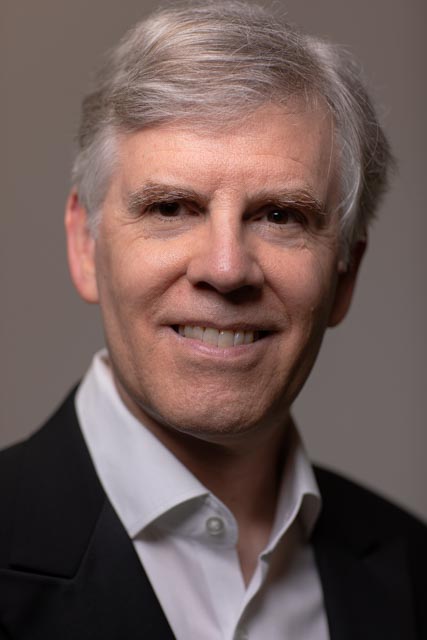
He’s undergoing treatment, his hair is thinner, but Ron showed us he is still as energetic, as outgoing in his preamble at the microphone before the SPO plays, as capable of leading as ever.
I’m hopeful, especially watching Ron conduct and listening to the SPO’s excellent sound. Maybe I’m easily distracted but in short order the vibrant live music pushed aside any questions of health.
The concert was titled “Showpieces” at the Salvation Army Scarborough Citadel, Ron offering a bit of a lecture before we started, concerning the debate about program music vs absolute music, a debate that has never been settled except maybe in the competing popularity of different compositions.
We began with two movements from Kye Marshall’s five movement suite About the Trees. I remember Kye for her remarkable opera Pomegranate, presented by the Canadian Opera Company in 2019 and again in 2023.

Here’s an excerpt from Kye’s program note to About the Trees:
We are now discovering that trees are ‘social creatures’. Through root networks they share water and nutrients and send each other distress signals warning about impending drought and disease. Humans have relied on trees for many things including shelter and fuel and crucially creating the oxygen we need to survive. We also need to trees to build stringed instruments and bows! Canada has a wealth of trees which we often take for granted. Sadly our trees are under threat from the effects of rapid climate change and deforestation. This composition celebrates five of our magnificent Canadian trees and hopefully brings attention to their fragility in a changing world.
Here’s what Kye wrote about the two movements played by the SPO, namely “Pine Tree” and “Poplar”.
The White Pine is the most majestic of trees, growing to a height of 150 feet. It’s wood is highly valued and thus often harvested in it’s prime. This is ‘narrative ‘or program music movement- telling a story. It opens with a proud regal chorale which is interrupted by the timpani and bass drum representing both foresters and elements of climate degradation. Chaos ensues. Protesters try and stop the devastation but are unsuccessful. The movement ends with the opening chorale which is abruptly cut off.
The Poplar This fast growing tree is very useful for winter windbreaks and soil remediation making them a valuable species in forestry and environmental applications. Its graceful, upward-stretching branches and bright leaves seem to touch the sky, while its deep roots connecting it to the earth as may be heard in the orchestra. This tree has oval, heart-shaped leaves that grow close together, fluttering in the wind. One can hear the leaves dancing especially with the tambourine and marimba.
The brass chorale from SPO sounded especially regal, strongly diatonic in a clear representation of something standing up tall & strong. “Poplar”, the second piece, made a lively contrast, in the play of the short fluttering phrases suggesting leaves dancing in the wind.
Ron then led the SPO in a reading of Franz Liszt’s symphonic poem Les Preludes. It’s great to observe how over the past few years the ensemble gets better and better with every outing, the brass & woodwinds especially effective in handling Liszt’s powerful & dramatic themes.
Ron shared the workload with Michael Newnham, our guest conductor for the remainder of the program.
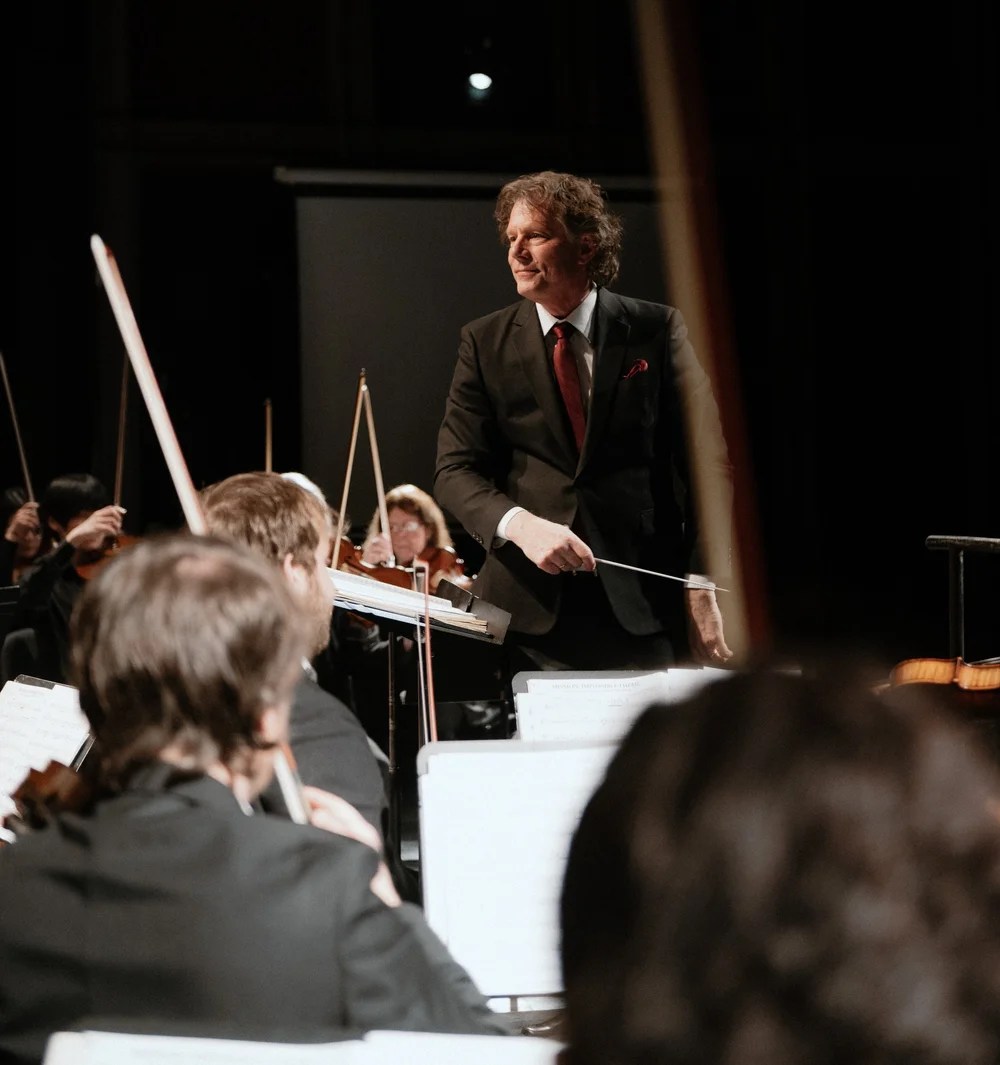
Michael’s first appearance ended the first half before intermission, an orchestral arrangement of Liszt’s popular 2nd Hungarian Rhapsody, well known at least through the realm of Bugs Bunny, Elmer Fudd, Daffy Duck & more.
Michael and the SPO ran the gamut from the slow sombre opening, building to several shattering climaxes, exploiting all the dramatic possibilities in this playful piece.
Getting another person to assist with the conducting may have been necessitated by doctor’s orders, but this is also a genuine opportunity. Guest music directors bring new perspectives, like a visiting professor bringing outside expertise that can help an orchestra learn new things. And the chance for Ron to listen to the SPO playing while led by Michael can also be a useful part of the discovery, insights both for the players and for their artistic director.
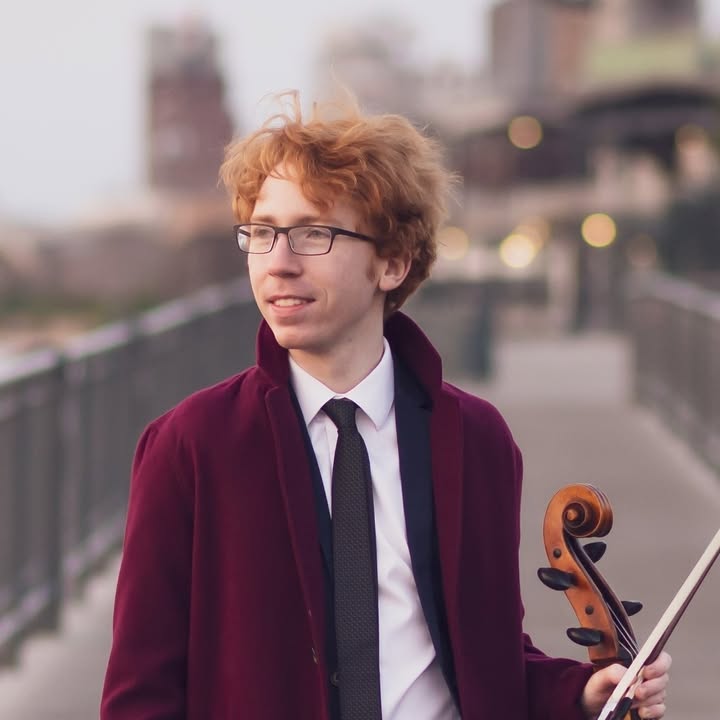
After intermission Michael conducted Dvořák’s cello concerto featuring soloist Cameron Crozman.
The concerto was another short visit to Eastern Europe, as the Czech flavoured cello concerto of Dvořák following the Hungarian Rhapsody of Liszt both include folk music elements.
But this time our focus was largely upon the soulful soloist Cameron, his powerful tone soaring over the orchestra. The audience’s enthusiastic reception to Cameron’s superb performance was rewarded by an encore, his solemn reading of the Sarabande from the 3rd of JS Bach’s unaccompanied cello suites.
Scarborough Philharmonic Orchestra return November 7th with Viva España, when Ron Royer will be joined by guest conductor Christóbal Soler, mezzo-soprano Lorena Valero, performing Suites No. 1 and 2 from The Three-Cornered Hat by Manuel de Falla, Sinfonía Sevillana by Joaquín Turino and selections from Spanish zarzuelas. For tickets & information click here.

