Questions for Sabatino Vacca as SOLO begins

Sabatino Vacca is a busy man, Music Director of the Cambridge Symphony, Milton Philharmonic and the Etobicoke Philharmonic Orchestras, and now the Artistic Director of the brand-new Southern Ontario Lyric Opera, or “SOLO”.  For the launch of SOLO’s first season a semi—staged production of Verdi’s La Traviata is only a few days away, with a fully staged production of Puccini’s Tosca to follow in March 2017.  With the loss of Opera Hamilton in 2014, SOLO may help fill the vacuum, performing in the Burlington Performing Arts Centre.

Sabatino has conducted orchestras in the Czech Republic, Symphony Hamilton, the Cathedral Bluffs Symphony, the Scarborough Philharmonic Orchestra, and the Brampton Symphony Orchestra. For Opera York he has served as Artistic Director for productions of Carmen, Suor Angelica/Gianni Schicchi, La Traviata, The Barber of Seville, Tosca, Rigoletto, La Bohème, and Madama Butterfly, and as Conductor for Le Nozze di Figaro, Così Fan Tutte,  Cavalleria Rusticana and Pagliacci for Bel Canto Opera. For Brampton Lyric Opera he has conducted Pagliacci, and Rigoletto. For Opera Kitchener he has conducted Madama Butterfly and La Bohème. He is also currently on staff with Wilfrid Laurier University, has worked as an opera coach for the University of Toronto, as well as the Royal Conservatory of Music in Toronto.  A recent soloist for Symphony Hamilton  (in Liszt’s Totentanz at the piano), he also recently completed arrangements for Quartetto Gelato’s latest CD. Sabatino is the recipient of the Spirit of Ontario Award for the Arts by the National Congress of Italian Canadians.

On the occasion of SOLO’s inaugural production September 17th I asked him some questions to discover more about him and his professional life.

1-Are you more like your father or your mother?

vacca

Conductor Salvatore Vacca

I am flattered to reflect on my parents, and to think I have inherited qualities from both, as they shared many worthy and honourable characteristics. They were very opposite in many ways which complimented each other’s personalities. My mother could be very emotional and extroverted, while my dad was generally level-headed and more reserved. I have definitely inherited more of my father in this regard, and have never really been the social butterfly my mother could be.

I’m happy to say that they both shared a love and passion for music, especially opera! What a gift they passed on for which I’m ever grateful. Who knows what I would have ended up doing otherwise.

2-What is the best thing or worst thing about what you do?

I REALLY enjoy the challenge of building something from the ground up, developing a vision while at the same time being open and receptive to unexpected twists and turns in the journey. That’s when the creative juices really start to flow! The realization of how endless the possibilities are is both daunting and inspiring at times. It brings with it a great responsibility and motivation. One has to be careful to never lose sight of the bigger picture when one is immersed in the smaller details. If one is not careful it’s very easy to be left feeling dry and parched and wondering how you got there.

3-Who do you like to listen to or watch?

It’s fascinating to watch just how different conductors can be. Conducting styles often reflect the personality of a conductor, which then shapes the personality and style of an ensemble. I suppose the opposite can also be true to some extent, an ensemble can also exert its style and influence on a conductor. It’s very much give and take.

4-When you’re just relaxing and not working what is your favourite thing to do?

Play with my 3 year old son, soon to be 4. He’s at such an articulate and interactive age. I also enjoy gardening and looking after my vegetable garden. Part of what goes with that is coming up with an outdoor summer project every year. Last year I redid my deck, this year I redid my stairs leading up to the backyard lawn. I took my time with it and spread it out over several weeks a little at a time. I really miss that part of the outdoors during the winter.

*******

More about presenting La Traviata for Southern Ontario Lyric Opera.

1-Please talk about how you reconcile the different sides of yourself, as you function as a director of a show, where you are also artistic director of the company.

As I mentioned previously I REALLY enjoy taking something new and building it from the ground up. It’s been absolutely delightful to see our Board for Southern Ontario Lyric Opera (SOLO) grow this past year, one at a time. They’re a GREAT team and I look forward to Board meetings!! Essential roles have mostly been filled, we are still looking around for someone with grant-writing experience, but as with many other tasks I’ll be covering that for now.
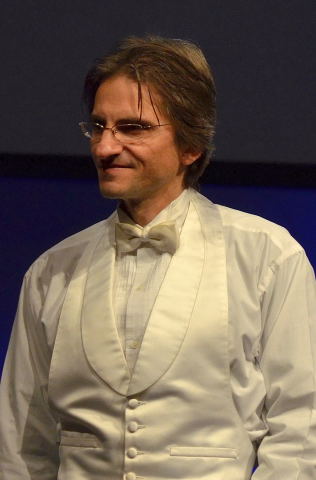
Concert2012Nov09_03

Conductor Salvatore Vacca

I’m the Music Director for 3 local orchestras: the Cambridge Symphony Orchestra, Cambridge is where I reside; the Etobicoke Philharmonic Orchestra; and the Milton Philharmonic orchestra which I founded 2 years ago. With each group I’ve gained a lot of experience beyond the music side of things, and have discovered skills and talents I didn’t know I had. All of this experience I’ve been able to bring to SOLO. I enjoy getting into the advertising aspect and the challenge of getting the word out about our upcoming Traviata performance and our company in general. This also involves creative outreach possibilities in the community. It’s our mandate to be really involved with the community and not just pop up a couple of times a year and proclaim “here we are, come and see our show.” We are very much starting to build a community profile and build lovely partnerships along the way. Part of this work is through our Chorus who act as ambassadors for the company. They have performed 2 concerts at a local seniors home, something we will be doing more of. The Chorus has participated in a local outdoor festival in Burlington. We performed the national anthem for a city council meeting which gave us great exposure to all the Burlington city councillors and Mayor. We didn’t change the lyrics! The company was also asked to organize and perform a fundraising concert to help sponsor a Syrian refugee family at a local church in Hamilton, which turned out to be the church where I grew up, so it was a bit of a homecoming experience. The Chorus will be taking part in Culture Days concerts in early October, and we’ll probably be doing some outreach concerts around Christmas time.

Currently and for the past little while I’ve been working on SOLO related tasks any moment I can and will continue at this pace until our Traviata performance is done.

Is it stressful? Not really, I don’t have the time to get stressed.

2- Tell us about Traviata and why you wanted to make it SOLO’s debut piece.

Audiences love Traviata and it has not been performed in the area for 10 years, 2006 was the last time Opera Hamilton had performed it. The music is timeless and direct with lots of memorable tunes. Traviata is easy to take in if you’ve never been to a live opera performance before. It’s easy to relate to the characters in the opera and their motivations. We can all empathize with Violetta and admire how honourable she is, and we see many sides to her throughout the opera. She really comes to life through her impending death! We come to love – hate – love Alfredo. We can sympathize with Papa Germont. What parent wouldn’t be as protective of their child and family reputation as he is. We may not wholly agree with him but we can understand where he is coming from.

As a debut work for us Verdi’s other popular middle period works were also in the running, namely Rigoletto and Il Trovatore. I decided against the former mainly because it only requires a male chorus and I knew how much our ladies of the chorus wished to perform and not be left out. The latter opera requires some real heavy duty mature voices for one and I wanted to try and keep things on the lighter side vocally. The characters and story line are also not as real as with Traviata. The music is still memorable and powerful but overall does not have the same kind of connection with audiences as Traviata does.

3-Tell us about your cast for the SOLO production of Traviata.

I am very pleased with our cast. I’ve worked with each of our 3 main leads before and felt they would have a good chemistry together on stage in these roles.
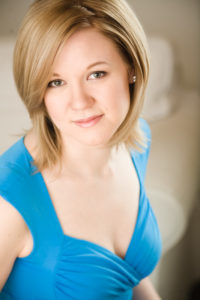
arends

Soprano Allison Cecilia Arends will sing the role of Violetta for SOLO

Allison Arends has a great voice for the role of Violetta, and also the personality to play her many sides. Allison is a warm and engaging presence on stage (and off) and brings a great depth to the role.

Riccardo Iannello is a perfect counterpart to our heroine, bringing a passionate youthful naiveté to the role.

Jeffrey Carl is a commanding presence on stage with a rich baritone voice capable of great nuance and colour.

4-What is your favourite moment in Traviata?

Is it okay to say pretty much the whole opera? Sorry. Right from the get-go Verdi draws us into the world of Violetta Valery in the Prelude with a solemn opening for strings alone written in a high register. It is disputed among scholars whether Verdi took a cue from the Prelude to Lohengrin. Soon Verdi combines the “Amami Alfredo” theme in the cellos with more festive music in the upper strings, the latter shows Violetta’s other more social side, which then sets us up for the party scene. Verdi had a knack for writing great party music, i.e. the opening of Rigoletto, the end of Un Ballo in Maschera. There’s also more party music at Flora’s later in Act II; fun stuff! Another thing that strikes me about his opera scores in general is his sense of rhythm and off beat accents. If he were more contemporary I think he would be at home in a more jazz medium.

It might be easier for me to answer if there is a moment which is not particularly my favourite. Perhaps it would have to be Germont’s Cabaletta which is usually cut, it doesn’t seem as inspired as the rest of the opera.

5-Is there a teacher or an influence you’d care to name that you especially admire?

Definitely!! When I was at Opera School at U of T training as a coach Professor James Craig was a very big influence. In fact he got me involved with conducting which at the time was not even on my radar. Within the first few weeks I was there he asked me to prepare and conduct one of the choruses we were preparing for a concert. I quickly caught the conducting bug and have forever “blamed” him for it!!! We developed a friendship which continued long after he retired until he passed away in 2012. We spent time working through Traviata a work he was especially fond of and had conducted many times. He was very generous with his knowledge, and had lots of experience on which to draw. He was also one of the funniest persons I have ever met, often had me rolling in laughter when we went out for lunch or dinner together. He trained many generations of great Canadian singers who have had or are having major international careers.

*******

Southern Ontario Lyric Opera (SOLO) present Verdi’s La Traviata at Burlington Performing Arts Centre September 17th at 7:30 p.m. (click for ticket information)

Posted in Interviews, Opera | Leave a comment

Taking up Lance’s nationalist challenge to the CBC #Canada150

Lawrence Wiliford (AKA Lance Wiliford) posted the following on Facebook today:

I challenge @CBCMusic @CBCclassical @CBCArts to air 15 mins/day of music by Canadian classical composers during 2017. Not film or crossover.#Canada150. Canadian Music Centre Canadian League of Composers/La Ligue Canadienne des Compositeurs The Huffington Post Canada Canada Council for the Arts | Conseil des Arts du Canada Canadian Art Song ProjectJustin Trudeau Mélanie Joly Canadian Heritage (I urge others to issue this same challenge to the CBC).

20111027OperaAtelier_DonGiovanni_DressRehearsal

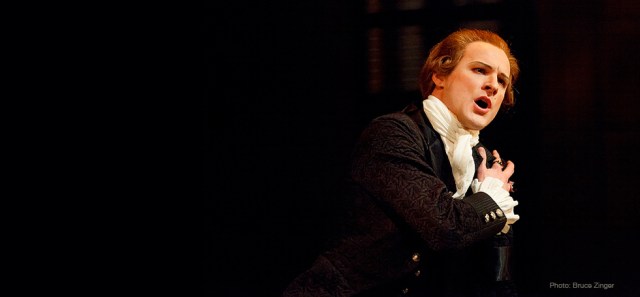
Tenor Lawrence Wiliford (photo: Bruce Zinger)

Lance has been putting his money where his mouth is as co-artistic director of the Canadian Art Song Project,  whereby Canadian composers (let alone singers) are encouraged and supported through concerts, commissions & recordings of new vocal compositions: unlike the CBC.

I don’t know whether anyone has issued the same challenge, but I’m jumping in here.

2017 is significant as the 150th anniversary of Confederation aka the sesquicentennial. A few important promises have been made:

  • The Toronto Symphony begin in January 2017 with “Canada Mosaic”, a celebration of Canadian music including 20 unique programs, over 40 newly commissioned orchestral works, in a co-operative venture partnering with 40 other Canadian orchestras, and including an e-learning platform
    https://www.youtube.com/watch?v=L7BiMpFGaOM&feature=youtu.be
  • The Canadian Opera Company are programming Somers’ Louis Riel, one of two operas originally commissioned for the centennial.
    web_louisriel
    • Tafelmusik offer a new multimedia concert—Visions & Voyages: Canada 1663 – 1763 —by Alison Mackay (she’s the one holding the double-bass)
    1617-visions-voyages-updated

And yet the Canadian Broadcasting Corporation / Radio Canada is arguably a much bigger richer institution than the three Toronto institutions I mentioned.

What are you going to do CBC? I think we have a right to know what – if anything—you’re planning. How about it, CBC..!?

I had a look through my google-lens. Here’s something they announced, which doesn’t mention Canadian composers or music as far as I can see: but it’s still only the end of August. Perhaps there’s time for some kind of response?  I remember a CBC that used to be the steward of music in this country, encouraging and funding all sorts of creativity.

It could be so once again.

Posted in Music and musicology, Personal ruminations & essays, Popular music & culture | 6 Comments

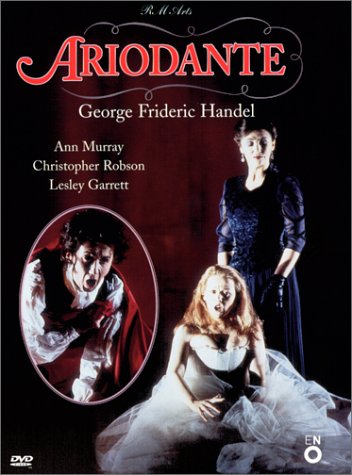
Ariodante DVD

One of my objectives in my popular operas course (to begin in September at U of T) is to survey the operas being presented by the local companies. In anticipation of the Canadian Opera Company’s fall season production of Handel’s Ariodante –an opera that’s new to me—and one set to open in a few weeks’ time, I found a video at a library, a recording that’s still available.

ariodante_DVD

You could do worse than to watch this erotically charged interpretation directed by David Alden, an English National Opera co-production with Welsh National Opera, from the London Coliseum, featuring the ENO chorus & orchestra conducted by Ivor Bolton.

Although the story is from Orlando Furioso it has some similarities to one of the romantic plots of Much Ado About Nothing. But where the Shakespeare plot sees a woman slandered to a fiancé denouncing her to a father who refuses to believe the slander, in this tale the betrothed is her champion to a condemning father.

This is a relatively simple plot to follow. Polinesso is an ambitious schemer, plotting against the happiness of a royal couple in love, Ariodante and Ginevra. Ginevra’s father is a king who approves of Ariodante both as a suitor and as his successor. The opera unfolds as a happy celebration for the first act, until a conversation early in the second act between Polinesso and Ariodante on the eve of the wedding, when Polinesso boasts he has been Ginevra’s lover. Polinesso enlists the aid of  Dalinda (a woman who pursues him), who disguises herself as Ginevra.  Polinesso fools Ariodante as well as his brother Lurcanio. The storyline turns from celebration to tragedy, as Ariodante despairs and then tries to kill himself, unsuccessfully. Ginevra is imprisoned, her fantastic dreams enacted in dance to end the second act. The last act leads to eventual redemption for all, as Lurcanio avenges his brother (whom he believed to be dead) by killing Polinesso. Ariodante re-appears, not dead after all, proclaiming Ginevra’s innocence and asking that Dalinda be forgiven. The story progresses from darkness to light and eventual celebration.

Ann Murray is very sympathetic in the trouser role of Ariodante, singing fabulously, as believable as one could wish in some very tight camera work. Joan Rodgers as Ginevra is especially good, whether as the joyful bride or the wronged woman going mad in her lonely cell surrounded by hallucinatory images.

Christopher Robson, counter-tenor, brings a genuine menace to the role of Polinesso, the evil genius at the heart of the story. Robson embraces the evil possibilities of the role, and invited by the direction to go a bit over the top. Lesley Garrett makes a great deal of the role of Dalinda, the one who obsesses over Polinesso and does his bidding in the conspiracy, and is later forgiven: a full night of singing and acting for any performer.  Tenor Paul Nilon as Lurcanio brings a wonderful bright sound to his arias, including lots of interpolated high notes. Gwynne Howell as a solid and sympathetic King anchors the production.

I’m eager to see the COC production (a co-production with Féstival d’Aix-en-Provence, Dutch National Opera, Amsterdam and Lyric Opera of Chicago), set to open October 16th.  Conducted by Johannes Debus, directed by Richard Jones, we’ll see Alice Coote as Ariodante, Jane Archibald as the wronged Ginevra, Ambur Braid as Dalinda and Varduhi Abrahamyan as the ambitious Polinesso (here’s a video from the young singer’s website).  Given that the plot requires us to believe that Polinesso is irresistible to Dalinda, I think this will be very interesting.

I can’t wait.

Posted in Opera, Reviews | Leave a comment

Love, Marilyn

Ever notice how patterns may appear around you?

The two films I saw this week (one on the big screen, one, seen now at least 3 times this past week at home) couldn’t be more different, at least on the surface.

Last night I saw Florence Foster Jenkins, a dramatization of the life of a rich woman who liked to sing. The performances by Meryl Streep, Hugh Grant and Simon Helberg were wonderful, exploring something that’s never really been explored in film. We’ve got a society that seems to make a hierarchy of everything, evaluating, competing, judging.
A week before I turned on TVO at the right moment, catching some of Love, Marilyn, a documentary from 2012 by Liz Garbus. I hunted it down at the library, permitting me to see it another 3 times.

Because my first time I came into the doc having missed the first few minutes, I didn’t hear the key sentence concerning the film’s premise. I was bewildered to encounter a documentary that was full of performances, full of stars reading lines: lines apparently written by Marilyn Monroe!

815gojuyg6l-_sl1500_

And so later—watching the film in its entirety—I saw that premise explained in a little note at the beginning, that recently a couple of boxes of MM’s notes had been found. This is a documentary like no other.  We’ve watching a study of performance, of all life as performance.

It is repeatedly explained in different sorts of illustration throughout the doc that Marilyn created Marilyn, her persona was a creation. We see Lee Strasberg speak, we also see an actor portray Strasberg. We see some of those notes projected hugely on the back, and then an actor steps before us to read those words. Glenn Close, Viola Davis and Ellen Burstyn give us very under-stated versions of MM, Uma Thurman and Marisa Tomei are much more histrionic. There’s quite a large group of performers, including some very clearly influenced by MM such as the surreal Lindsay Lohan (so weird to see someone looking exactly like Marilyn speaking Marilyn’s lines, and someone so young). We are reflected back upon the process of signification, of getting inside words and speaking them. We encounter authorities, some like Strasberg or Billy Wilder, or Jack Lemmon from the realm of acting, others like Gloria Steinem or Norman Mailer, commenting on the MM phenomenon.

And magically we are seeing not just the phantom film clips of dead people, but living actors performing those fascinating diary entries and poems.

So I guess you can see the connection. I felt that the Florence Foster Jenkins film was a profound meditation on what we do when we seek to make art. And here was Love, Marilyn probing the same interface, between the self and art. It’s hard to imagine two more different people than MM and FFJ, one the sexual icon, the other so damaged by syphilis, in a sexless marriage. Yet they both defied convention. If you accept the studio fiction that I heard as a child —that MM was sexy but talentless—it may be heresy to be presented with the evidence that she’s a key agent of the sexual revolution, a brilliant creator. I hope this isn’t news to you.

It’s a fascinating coincidence to observe ways that both MM and FFJ were exploited. FFJ’s record was the top-seller for that label. MM’s nudes, for which she was paid $50, make Hugh Hefner’s fortune, and that’s only the first in a series of times she is underpaid, unappreciated.

I see them both as powerful women, who were in other ways, victims.

And there is a huge mystery at the core of both of their lives. I alluded to the mystery of FFJ – wondering just how much she knew, whether she was afflicted with syphilitic dementia, or safely ensconced in the cocoon of a loving husband – and of course the last hours of MM are a mystery.

I think one of the things I love most about both of these films is how they honour the mystery and don’t push one simple interpretation. That makes me want to go back, see them over and over, to pursue the snake that eats its tail, to enjoy the unfolding of these lives, and for a few moments to believe they’re still alive.

Posted in Cinema, video & DVDs, Dance, theatre & musicals | Leave a comment

Florence Foster Jenkins, everywoman

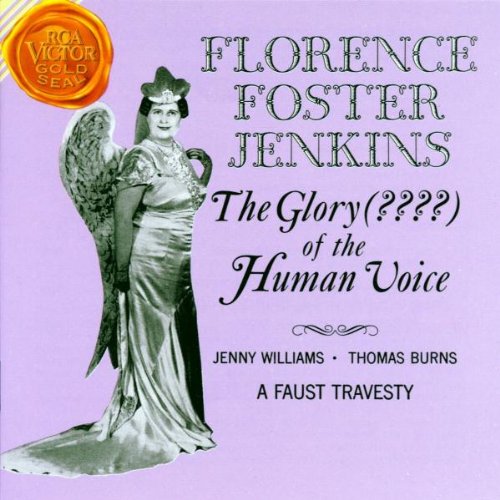
When I was a child I was introduced to the singing of Florence Foster Jenkins, on a record called “The Glory (??) of the Human Voice”.

51em6thdtnl

There was a kind of illicit pleasure in listening to her singing, because

  • She did not sing well
  • She did not seem to notice that she did not sing well

Ours is a society of sophistication. Whether you paint or dance or sing or play golf, we aspire to do these things well, and usually are aware of our handicap / limitation.   When we fail to perform well we suffer, we are ashamed, we have stagefright.

The astonishing thing with FFJ: how much conviction she seemed to bring to her singing.

The great mystery with FFJ: did she sing this way without any inkling that she was not successful? that people were laughing?

Usually singing teachers discourage singers from undertaking repertoire that is beyond their capabilities.  Indeed, a teacher who does not stop a student from over-reaching can damage a singer’s confidence and even ruin a voice.

And so, in our adoration of the virtuoso, our aspiration to excellence both for ourselves and what we enjoy, the Florence Foster Jenkins mystery is profound.  Did she know that people laughed?

Florence Foster Jenkins is Stephen Frears’ new film with Meryl Streep as the singer and Hugh Grant as her devoted boyfriend, an actor who didn’t quite make it.  Big Bang Theory’s Simon Helberg is FFJ´s pianist Cosme McMoon, another virtuoso who didn’t quite make it.  I always thought that the pianist’s bizarre name suggested that it was a pseudonym, a good piano player who refused to be identified, but the story we get in Frears’ film tells quite a different sort of story.

I can’t help thinking that this might be the most profound meditation upon performance and art that I’ve yet encountered, precisely because, as far as FFJ is concerned there but for the grace of God, could go you or I.  Some of us are more talented than others.  I grew up in a household with a stunning voice –not my own but a sibling—that has forever got me thinking about such things.  We can be very harsh critics of ourselves.  FFJ is the other extreme, perhaps someone who was overly enabled by loving and supportive friends & loved ones.

How much did FFJ really know?  I think this film offers one set of answers, even while displaying other possibilities.

Along the way we also encounter a very enlightened film about relationships, about unconditional love.  For most of the film Streep is doing a remarkable impersonation of the messed up interpretations of opera arias I recall from childhood, although we get a tiny glimpse as if from FFJ’s perspective: as Streep suddenly gets to sing in tune, a poignant moment near the end.

In this electoral campaign where one of the candidates has ridiculed a disabled person’s speech, I can’t help feeling uncomfortable about the topic.  In the darkened theatre I confess I giggled a few times even as I watched Grant as the boyfriend express outrage that anyone could laugh at her.  Why is this kind of laughter okay and sanctioned by our sophisticated attitudes, while we disapprove of what Trump did?  We go into a church or a school and when the little children in sunday school or kindergarten sing out of tune we think “aw isn’t that adorable” and withhold judgment.

But we judge ourselves harshly, because we expect too much of ourselves.  Competence and sophistication seem to be the rocks upon which we wreck ourselves as we age, as we become progressively less competent. For some reason we forgive some, while judging others harshly.  Florence Foster Jenkins is a delicate examination not just of this quirky story, but of the predicament of every performer, aiming to be great and squirming in the presence of failure.

Posted in Cinema, video & DVDs, Music and musicology, Opera, Personal ruminations & essays | 5 Comments

60th Anniversary of Hungarian Revolution: Two Commemorative Concerts

CANADIAN-HUNGARIAN ASSOCIATION FOR MUSIC PERFORMANCE COMMEMORATES THE 60TH ANNIVERSARY OF THE HUNGARIAN REVOLUTION WITH TOP CANADIAN ARTISTS

This year marks the 60th Anniversary of the Hungarian Revolution.  The influx of approximately 40,000 Hungarians in 1956 influenced society so much that it was declared a Canadian National Historic Event, and is part of Canadian heritage.

To commemorate this occasion two large-scale concerts with the title “A Bridge to the Future” are being organized by CHAMP:

Thursday, November 17, 7:30 PM.     —      Tuesday, November 29, 7:30 PM.

Trinity-Paul’s United Church, Toronto — Canadian Museum of History, Gatineau

Tickets available: www.champ1956.com  —  Box Office of Museum

The concerts will also commemorate the 135th anniversary of the birth of Béla Bartók with the performance of his Music for Strings, Percussion and Celesta. Works by Kodály, Liszt and Polgár  (North American Premiere) performed by Krisztina Szabó, mezzo-soprano, Daniel Warren, trumpet, Peter Cosbey, cello, Mary Kenedi, piano and a chamber orchestra led by conductor William Shookhoff.

The concerts are under the sponsorship of Stefánia Szabó, Consul General of Hungary, and Bálint Ódor, Ambassador of Hungary. Both events will be attended by both Hungarian and Canadian dignitaries, and will be followed by a reception.

###

The Canadian-Hungarian Association for Music Performance (CHAMP) was founded to present professional concerts with a repertoire of Hungarian and contemporary Canadian composers. The music bridges the two countries, reflecting the assimilation of the Hungarian refugees of 1956. Music is a universal language communicating equally to all.

Contact:   Mary Kenedi, Founder, Pianist  —  Website: www.champ1956.com

                   info@champ.com  —  416-272-4904


“Press releases and announcements” are presented verbatim without comment.

Posted in Press Releases and Announcements | Leave a comment

A Tale of Two Cities: the opera

Charles Dickens’ novel A Tale of Two Cities (shall we call it TTC for short?) has now been adapted by composer Victor Davies and librettist Eugene Benson as an opera, and given its world premiere production by Summer Opera Lyric Theatre and Research Centre (known as “SOLT”). That’s the same team who gave us Earnest, The Importance of Being (or EIB) premiered in 2008 by Toronto Operetta Theatre and revived just last year by TOT. When I say “the same team” I am loosely conflating TOT and SOLT, given that Guillermo Silva-Marin is the driving force & artistic director of both organizations. I’m hoping that history repeats itself; just as TOT premiered and then revived EIB, perhaps we’ll get to see TTC revived as well.

SILVA_headshot2

SOLT Artistic Director Guillermo Silva-Marin

After seeing their work presented, Davies & Benson may make revisions. Hopefully we’ll get to see another version of the work. Silva-Marin continues to be an important broker for new work in this city. Although SOLT,  TOT and Opera in Concert (all run by Silva-Marin) are three companies where one expects to see classic works from past centuries those organizations also occasionally venture into new work. Last year we saw the World Premiere of Isis and Osiris by Peter Togni and Sharon Singer via Opera in Concert.

The final performance was Saturday night at the Robert Gill Theatre in Toronto, an educational opportunity for all concerned. While SOLT is a kind of training program for young singers (whether they’re undertaking an older opera such as Handel’s Julius Caesar or a new work like this one) this is an especially glorious opportunity for Davies & Benson to explore the strengths and weaknesses of their new work. I chatted briefly with Silva-Marin, who described the six week workshop process.

For a creative team, getting the chance to try out a new work in front of an audience is invaluable. The theatre becomes a kind of laboratory, a place for genuine experimentation. Given that theatres usually aim to make money, an unknown and untried work is particularly risky. It seems to be an excellent partnership. SOLT used Davies & Benson as the context to teach young singers unique lessons about opera performance (world premieres don’t happen every day!), while Davies & Benson got the chance to try out their new work with live audiences.

I think TTC is a much more ambitious project than EIB. With the Wilde play you start off with a well-tested and stage-worthy play, whose setting as an operetta aimed to hit the same high-points as the play: and mostly succeeded. TTC however is a novel, which makes the adaptation process much more difficult. Lines that are spoken as one reads to oneself are not necessarily lines that work when spoken aloud in a theatre, a hurdle that is further heightened when the line must be sung rather than spoken. There’s also the question of the incidents of the plot for an entire novel, which can make for a much longer work (as in one of the long serialized TV adaptations) or a more condensed account of the story, depending on the choices made in the adaptation.

Listening to Davies’ music, I saw different possible directions as far as the understanding of genre. Sometimes the music was more dissonant, particularly when the events of the story were most fraught and upsetting. Sometimes the music was aptly sentimental for romantic scenes. Davies exhibited his melodic gift at times, although I felt the work is still not finished, as it still could be tightened up. In places the work seems operatic, in other places it’s more like a musical, reminding me at times of Les Miserables. I don’t think that’s a bad thing, though, as some musicals are wonderful pieces of theatre, that are sometimes undertaken by opera companies. I don’t invoke the genre question to judge (negative words especially) so much as to discover new opportunities, to better understanding the direction of a work and the best ways (and personnel) to exploit those opportunities.

Davies & Benson were well served by SOLT and Silva-Marin. For the most part characters were portrayed in a direct or sentimental way, sometimes resembling the melodrama of the mid-19th Century, their hearts on their sleeves. The exception was the barrister Carton, whose more conflicted emotions were subtly captured by James McLean, one of the seasoned professionals SOLT sometimes brings in to work alongside the students, an important part of their learning experience.

Michael Rose as music-director and pianist gave a stirring account of Davies’ score, while keeping things tightly organized even when the chorus was singing from far offstage. Davies sometimes threw lots of notes at the pianist, but the rhythms were mostly regular, the harmonies mostly tonal, and the singing rarely too difficult. As a result the singers were very easy to understand. I was pleasantly surprised that I understood almost every word without surtitles.

Posted in Opera | 1 Comment

CBD, part the second

After writing two pieces last night (one about the AGO, one about a trip to a dispensary to get CBD), I decided to take one of the pills, a gel capsule containing cannabidiol (aka CBD).

Please note, this is just the testimony of an average guy. I’m no expert, cerrainly nor a medical practitioner. I’m just a citizen trying to find the best way to live, and sharing my observations, which shouldn’t be generalized as a prescription. Anyone else thinking about alternatives needs to decide for themselves.

When I took the pill last night I had no alcohol in my system, just the caffeine from a strong coffee after dinner, plus whatever residue remains from the 2 coffees I’d had earlier in the day. I felt something within fifteen minutes of taking the pill.  It didn’t get me high, not one iota. As it was bedtime, it worked beautifully that I began to feel relaxed. This was ideal preparation for what I was doing first thing today  (Thursday morning), namely a dental hygiene appointment.

My arthitic symptoms include neck stiffness, tightness in the jaw, numbness and/or pain in various places such as my legs, my shoulders & my arms. In past years my dentist told me to take a valium before my appointment to help me combat that stiffness.   It’s a practical concern because it’s hard for a dentist or hygienist to work when my mouth doesn’t open all the way.  That inability to open can make the appointment quite uncomfortable, so in addition to the valium for muscle relaxation, I’d also take a Tylenol to lessen the pain.

This morning I went to the clinic for my 8:30 hygiene appointment, still feeling the effects of the pill I took last night. I remembered what I had read in the paperwork I was asked to sign by the clinic, that had admonished me to be mindful, that if I was in any way intoxicated: I must not drive.

But there was no intoxication, no altered reality. I woke up briefly in the night, thinking again about those concerns about driving if I was impaired. But I was fine. I woke up very well- rested this morning, having had a deeper than usual sleep. I had my usual breakfast, and took the recommended Tylenol in case I had any pain. When I brushed my teeth after breakfast I noticed that my jaw was looser than usual, that i could open my mouth quite wide.

Wow.

So that’s the first thing to report. When I began the appointment, I felt quite a bit different than usual. As I was being lowered back in the chair by the hygienist, I felt ten years younger, with none of the discomfort –or pains– I usually experience at this moment.

None whatsoever.

When we began the cleaning and I opened up, it was noticeably different. My usual is to be reminded sometimes to open wider. Today I was looser than last time, looser than any recent time I’ve been.

I thought of the times when I took the valium (which I didn’t do the last couple of appointments, having run out of the prescription and not bothering to re-fill it), which made me feel a bit dizzy. I hated the sense of being drugged, not fully there in the moment.

How ironic that something based on cannabis would help me to be more in the moment and less intoxicated.

The outcome of the appointment was much more positive than usual, as I enjoyed the experience rather than cringing.  Afterwards, talking to friends, I must have sounded euphoric with the unexpected sense of freedom.  I felt taller, although that may simply have been because i wasn’t hunched over in pain, wasn’t limping or aching.

Maybe part of what I felt is a placebo-effect, but even so, i felt amazing.

This is the beginning of a conversation with my doctors, as I will want to discuss how to use these pills and to make informed choices, to learn from the experience. I know that I will always want to take CBD before a dental appointment, but perhaps there’s more, given CBD’s supposed anti-inflammatory properties.

It’s nice to have options.

Posted in Food, Health and Nutrition, Personal ruminations & essays, Psychology and perception | Leave a comment

Gates yea, Martin nay

I wanted to like it.

As a child and teen, Lawren Harris was one of my favourite artists.  Steve Martin was and is one of my favourite comedians, actors, and writers.

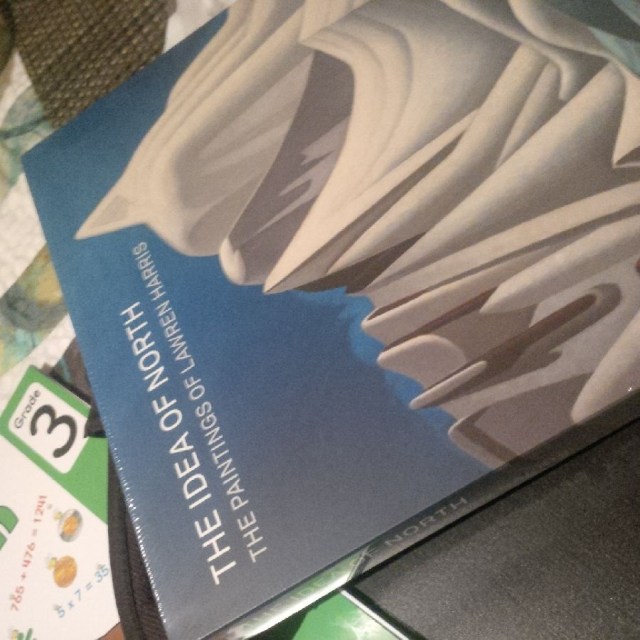
But when I got to “The Idea of North: The Paintings of Lawren Harris” something was lost in the translation.  I wonder, thinking about such things as the French embrace of Jerry Lewis, as to whether Steve Martin’s version of Harris –passionate though it may be—misses something.

I quite liked the earnest little film of Martin talking about his discovery of Harris, mistaking him at first for Rockwell Kent.  That was my only brief encounter with Kent, but what struck me immediately was an aspect of Harris’s work that I’d never thought about before, something that hadn’t troubled me.

Kent’s paintings in juxtaposition to Harris’s work reminded me of the dual exhibit of Henry Moore and Francis Bacon, a recent AGO show I liked very much.  At the time I’d been struck by how abstract Moore seemed, compared to Bacon, and here I was again, possibly making a simplistic comparison.

Let me cut to the chase, telling you what I love about Harris, especially in this show, and what I felt was being disrupted by this presentation of his work.  For me Harris is extremely stylized, showing us a vision of rocks and trees, sky and water, that rarely resembles the subject.  Because we know what’s being signified it doesn’t trouble us to see trees that don’t look like real trees or mountains that don’t look like real mountains.  We may as well be looking at a visual allegory, a symbolic picture.

Symbol is really the key word.  I was reminded of Paul Gaugin and Maurice Denis in the handling of the colours, a pair of painters I associate with the symbolists, even though their works date from the 1890s, not the 1920s and ‘30s.  And as a painter whose images of Canadian landscape is so completely reified –without any signs of genuine life but instead from a symbolic (or symbolist) tableau—perhaps the paintings should be accompanied by the music of Debussy or Satie.

And so I believe the problem with this show is that we’re not embracing symbol but fighting against it.  We see photos and attempts to illuminate Harris’s vision.  Pardon me, but when I am in a theatre seeing an opera or a movie, please don’t interrupt my reverie with images of the actors out of costume, of biographical details.  Yes, later on I’m happy to view such things on the DVD. But as I walk through the gallery, as I seek to sink into a reverie with these paintings, to be yanked out again and again?  Not helpful, not respectful, not what I liked at all.

Better?

E-02409-theaster-gates-660

Theaster Gates, powerfully exploring meanings of “house” and “museum” at the AGO.

Upstairs there’s a show that blew me away from an American artist, Theaster Gates.  It’s political edginess strikes a chord in this season of rallies by Black Lives Matter, BLM being only one small footnote to this show.  First and foremost, I found Gates stimulating. Sometimes touching, sometimes achingly vulnerable, there’s a lot to think about, lots to feel.

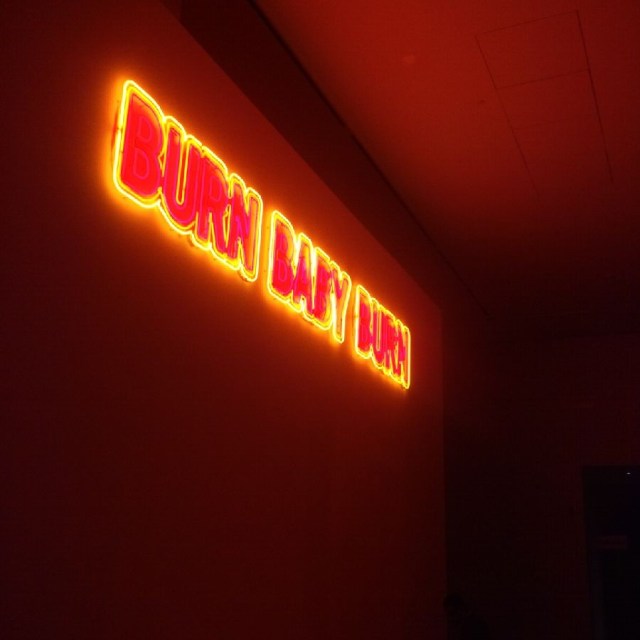
burn_babyBut perhaps it’s more important to say that I was able to access Gates in a way that I couldn’t really access Lawren Harris.  I kept bumping into the curating vision of all the other minds, all that big money seeking to tell me how great Lawren Harris is, and who Lawren Harris is. And in the process, they interrupted my delight in his paintings, because –excuse me– Lawren Harris is new to me the way Richard Wagner or Hector Berlioz is new to me: one of my favourite artists since childhood.  Only one room really allowed me –near the end of the second part of the show—to fully sink into the experience of Harris’s paintings.  Am i sounding petulant? perhaps. To repeat: i wanted to like it. I really did.
And make no mistake, there are a great many wonderful paintings there. Perhaps the key is to look at the art and ignore the many messages from curators and historians.  Don’t listen to people tell you who Harrris is.  Maybe they’re more accurate than I in understanding him?  Could be! But if you go to this show and find it’s not working for you, there are at least two possible strategies I would suggest for you to take, that I took:

  • Go upstairs to the fifth floor, where you can see an artist’s vision unencumbered by curatorial intervention. The energy and joy coming at you are unmistakeable.
  • Buy the book. I think I came to know Harris from books, where his reified understanding of our landscape –an idea of north if ever there was one –comes through most clearly.
HARRIS_book_pic

Where better than the book of “The Idea of North” to get the idea of the Idea of North..?

And when I go back to the show I will concentrate on the paintings.  Just as we didn’t really need the French to tell us who Jerry Lewis really was, perhaps we can find Lawren Harris for ourselves.

Posted in Art, Architecture & Design, Books & Literature, Opera, Popular music & culture | 2 Comments

CBD, part the first

A loving family member cajoled me to try something new today. My chief pain management strategy for dealing with my arthritic symptoms could be summed up (before tonight) with the following quote:

“Denial ain’t just a river in Egypt. It’s a pain management strategy”.

In other words sometimes stoicism is the best medicine, given the hazards of the alternatives:

  • NSAIDs (aspirin is in this class, that includes much more powerful versions that do many of the same anti-inflammatory things).
  • Biologicals (Enbrel or Humira for example: powerful and expensive meds that might work for some, but aren’t recommended to someone who’s spooked by the list of possible side-effects / hazards. When your dad died of leukemia you don’t naturally think these are a good option)

I exercise.

I eat carefully (having discovered the low- or no-starch diet option).

And yet there might be another option. I have the initials CBD on the back of my hand, written there as a reminder, to know what to ask for. Cannabidiol or CBD? One of the many ingredients of marijuana.

canna

One can get pills containing CBD, bypassing the smoke & the stone altogether.

I was persuaded to visit a dispensary today, where I spoke to a nurse practitioner about my symptoms via skype. It was a bit surreal –she had a stunning smile, astonishing teeth that I coaxed out of their hiding place once I persuaded her to giggle at a bad joke I made—to be in this place in downtown Toronto.

I’ve talked to activists pushing for harm reduction and the legalization of cannabis, both medicinally and recreationally. I couldn’t help noticing that while the activists such as Lisa Campbell are an intellectually brilliant lot, that’s not what I saw at this dispensary.
In fact come to think of it, I guess what I saw resembles what I see when I go to a liquor store or beer store, except that the demographic was mostly the group under 35. I must have seemed an oddball there, a guy with posture problems and a bit of a limp (sometimes), among all these healthy young people.  No I am not saying they weren’t legit. But I did stick out like a (pardon the irony) sore thumb.

I know that the medicinal marijuana is for a host of things, sometimes stress, psychiatric issues, or to assist people in sleeping. I came there actually unsure what I would find, but persuaded to seek out CBD, rather than the usual cannabis. You can read a comprehensive paean to CBD in a piece arguing that it’s the “medicine of the future”.

But I am writing this simply to report on a fascinating phenomenon that seems to be under the radar. One of these days Justin Trudeau and Bill Blair will find the right language for legislation legalizing cannabis, both medicinal and recreational. I am impatient for it on the principle that alcohol and tobacco are legal even though neither is as safe as cannabis as far as I can tell / as far as I have read.

Part two of this conversation will be to report on my first CBD pill. From what I have heard, my dose is very mild, certainly compared to what is taken by a person coping with chemo and/or cancer.

Depending on how I feel that may be taken tonight.  I’ve got a dental hygiene appointment tomorrow morning, for which i used to take valium to ensure that my jaw is looser, to lessen the pains i experience in my neck and back.  Perhaps a good night’s sleep via CBD will be helpful.

Posted in Food, Health and Nutrition, Personal ruminations & essays, Psychology and perception | 1 Comment