10 Questions for Kyle Ketelsen

Kyle Ketelsen is a special talent, a wonderful voice with extraordinary dramatic presence. I’ve seen him twice. The first time he was in the Canadian Opera Company’s La Cenerentola, when I said that he “brought a majestic sound to the role of Alidoro, the philosopher”. The second time was in the video-recording of the Aix-en-Province production of Don Giovanni directed by Dmitri Tcherniakov broadcast on TFO last year, playing a Leporello unlike any I’ve seen before.

More on that in a moment.

Ketelsen is in demand all over the world, with the world’s leading opera houses and orchestras. You can read more details of his bio here. This weekend that same production of Don Giovanni (the COC’s co-production with Teatro Real Madrid (TRM)/Festival d’Aix-en-Provence/Bolshoi Theatre) opens at the Four Seasons Centre. I had to ask Kyle Ketelsen ten questions: five about himself and five more about his work in Tcherniakov’s Don Giovanni.
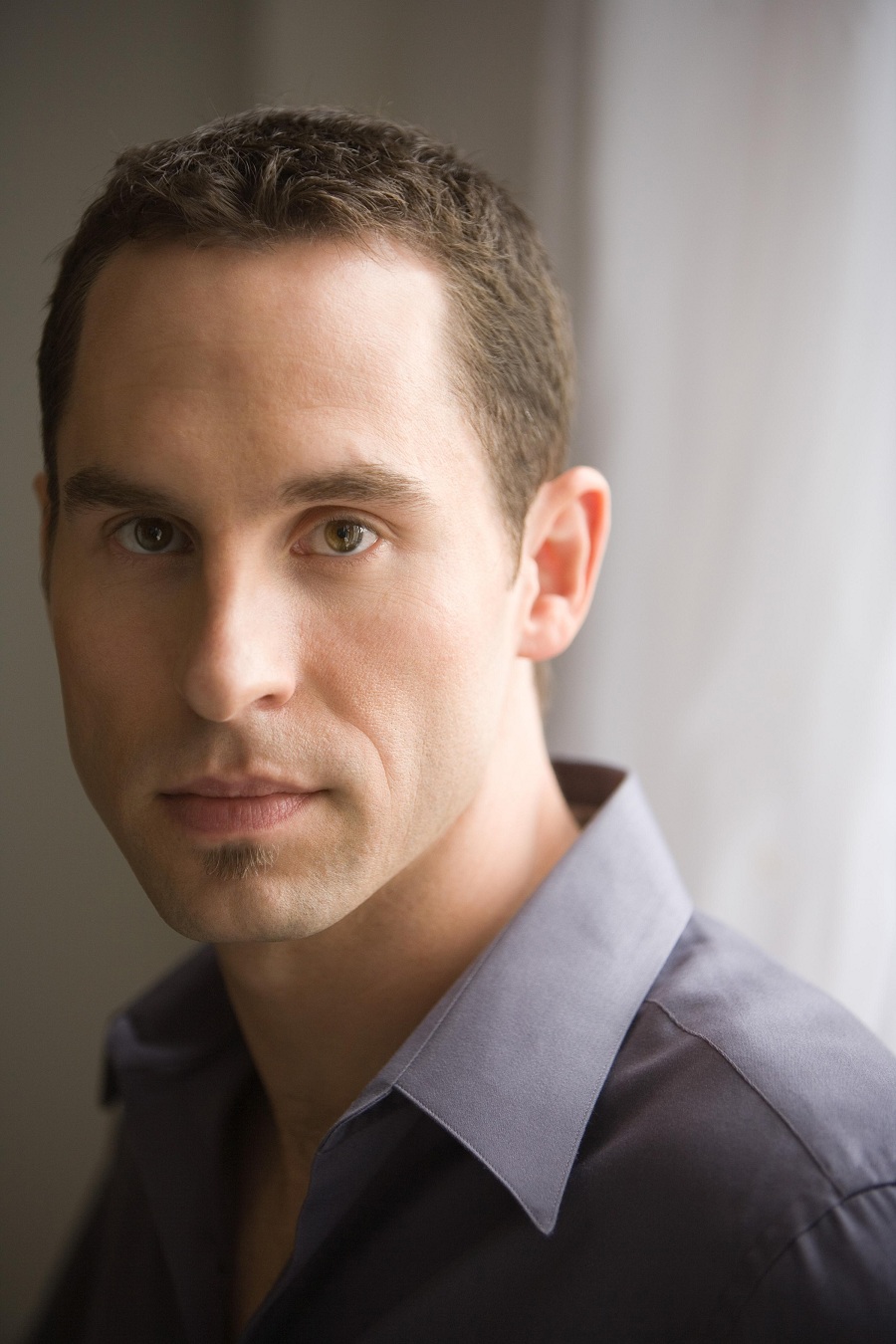
Bass-baritone Kyle Ketelsen (photo: Dario Acosta)

Bass-baritone Kyle Ketelsen (photo: Dario Acosta)

1-Are you more like your father or your mother?

Well, of course the appropriate answer is difficult to gauge, since we are invariably an amalgam of DNA. I suppose it’s my father, though I do see my mother in me quite a bit. By appearance, naturally, I’m nearly a clone of my dad. Same size and build, same voice. Same thin face with close-set eyes, just without the firefighter’s moustache he brandished for virtually all of his adult life. The older I become, the more frequently I see him in the mirror. Funny how that happens.

Dad was such a gentle soul, a devoted husband and caring father. He truly was my hero. He wasn’t without a temper, which he inherited from his father, but managed to tone down quite a bit. Much the same as I have with the temper he gave me. That’s the challenge of each new generation – to build on our parentally-taught positive traits, and dull the sharp edges of the negatives. He surely did, and I am.

My sisters and I kept a list of “Dadisms” when we were young. Things dad said that struck us as particularly funny. For example, “He’s ugly as a burnt rope.” Or “Baker Baker,” code for bad breath. “Let the big dog run” was one of our favorites. Many others not fit for printing in a family publication. My sisters and I continue his legacy by repeating as many of these little sayings as we can. It’s not difficult, as they naturally pour out of us. I hear my kids repeating them as well. Passing it down.

Physically, I’m hard-pressed to see my mother in me. I’m 6 feet & 192 pounds. At her apex, she reached 5’2” and maybe 110 pounds. I could heft her like a sack of flour, but mentally she was Plymouth Rock. As in many families, she was the glue that bound us, and the driving force creatively. I have her emotional (read: sappy!) perspectives of things like family, music, nature, movies, and the world in general. Which quite often will leave me in satisfying tears. The happy curse of having sympathy, I suppose. I see it in my kids as well, which is quite beautiful.

There’s an interesting (albeit indirect) connection my mom has with the COC. She was a devourer of books and, until I was out of grad school, ironically, I myself resisted reading. Couldn’t see the point in it when there was a perfectly good television sitting right there in my living room. My mother died much too young just before I was to debut at COC with “La Fanciulla del West” in the 2000-2001 season. My role of Ashby was pretty minimal, so I found I had significant chunks of free time at rehearsals. I remember thinking that there’s probably a reader somewhere in my genes, so I started with Catcher in the Rye in those COC rehearsals 14 years ago. I’m so grateful to have discovered that part of mom in me.

2-What is the best thing or worst thing about being a singer?

Gran Teatre del Liceu, Barcelona. Kyle Ketelsen as Escamillo. Fabio Armiliato as José. 2011 (Photo by Antoni Bofill).

Allow me to make one thing clear: to do what you love for a living is a gift! Plain and simple. I try my best to never take it for granted. Don’t hate me, but I have one of the best (and BIG quotes here!) “jobs” in existence. There’s a lot to choose from when it comes to finding the best thing about being a singer. Is it getting as much sleep as I want every night, or not working in a cubicle, or not attending committee meetings, or playing dress-up for money, or that I have collaborators in lieu of a “boss?” Quite possibly, speaking for my soul, it is that I’m fortunate enough to be fulfilled artistically while at work. That intangible capital, at the same time fleeting and yet somehow cumulative, that you hold inside which gives you pleasure in being artistically alive. Or perhaps this is just from hearing the applause, and feeding my ego. I think maybe these things are related…

Even on the worst day of rehearsal, it doesn’t rate compared to so many other possible scenarios. I like to say, “No one died on the table today.” That said, easily for me the worst part of being a singer is spending so much time away from my family. Becoming a husband and father was always a part of my life plan – well before the idea of becoming a professional singer – so I hold it above all other priorities. Traveling to foreign lands can seem exotic and exciting, which it sometimes is. However, it’s often overpowered by the painful separation from my wife and children.

3-Who do you like to listen to or watch?

I’m a rock-n-roller, for sure. I do enjoy opera, but I hear it all day at work. So it’s usually Led Zeppelin, Stones, Beatles, Jack White, STP, Radiohead, and many others to a lesser extent. Just about every genre of music (shy of country or, say, death metal!) makes it onto the air in the Ketelsen household, including jazz, bluegrass, standards, showtunes, movie soundtracks, pop, blues, and heavy metal. The mainstay of my playlist lately has been Rival Sons, a kind of neo-Classic Blues Rock group with four albums under their belt. Very reminiscent of ‘70s-style rock n roll. I just can’t get enough!

I’m a huge fan of movies, and I’ll see quite a few on the road. Binging TV series is a favorite pastime as well. I’m currently rewatching HBO’s The Wire. Others on my faves list (in alphabetical order) are: The Americans, Archer, Betas, Bron/Broen, Derek, Homeland, House of Cards, Justified, Ray Donovan, Silicon Valley, The Walking Dead, True Detective, and Veep.

I’ll also watch just about any NBA or NFL game. Cubs/Bears/Bulls are always my priority.

NHL??? Sorry, Canada, I can’t follow the puck!!

4-What ability or skill do you wish you had, that you don’t have?

Having played pick-up basketball passionately for over 20 years, I used to actually have dreams about dunking the ball. I could always grab the rim, and even dunk things like a tennis ball, or my sweaty jersey. It’s as close to flying under my own power as I can imagine. So much beauty in that act.

5-When you’re just relaxing and not working what is your favourite thing to do?

Some days on the road it’s just good to do nothing at all; let the brain and body rejuvenate. Most free days, though, I’ll either work out, take a long walk, read a book over dinner at a nice restaurant, see a movie, take in a museum or sporting event. Hopefully I have good colleagues, with whom I enjoy spending time. Quite often I’m working in a city where I have friends or relatives, so it’s a treat to be able catch up with them. This job certainly affords me the opportunity to stay in touch with people I might not otherwise ever see.

When I’m home, it’s all about family. My wife is endlessly creative in finding activities for our kids. I’m on the go quite a bit, taking them to karate, piano, guitar, and ALL manner of sports. Not to mention intellectually enriching classes & events. It’s truly a pleasure to witness your kids thriving and finding things they like and have a talent for.

Five more about Leporello in the new COC Don Giovanni opening this week.

1-Please talk for a moment about the rationale or subtext of Leporello, in Dmitri Tcherniakov’s reading of Don Giovanni.

In this production the roles of master & servant are set aside in favor of a more modern take. Leporello is a wayward youth in desperate need of a father figure, which he finds in Giovanni. It’s established in the staged overture that the two have previously met, though is appears that they’re not yet friends. My character is in his late teens or early twenties, and has been a sort of ward of the state. He’s allowed to live in the house of the Commendatore, to whom he’s related in some obscure way.

Like any youth Leporello has learned how to relate to others from adults – in this case Giovanni. It’s clear he’s been misguided when dealing with just about every other character in the show. Where a son might mimic how his father treats women, such is the manner by which Leporello acts toward the gender. His notions of what makes a relationship are severely warped, clearly demonstrated (I hope!) in his interactions with Elvira. He makes a pathetic attempt at wooing her during the Catalogue Aria, and later tries to impress her with an eerily cold, lifeless kiss.

The mutual contempt he holds for his peers – played by the members of the chorus in one scene – is made clear as well. Every relationship Leporello has is horribly dysfunctional. He’s just a lost little boy at heart.

2-Please talk about working with Dmitri Tcherniakov, his methods and his manners.

I honestly believe Dima is an artistic genius. He creates layer upon layer upon layer of motivation and back-story for each character, and commits an unbelievable amount of rehearsal time to each character, in each scene. Many directors will have holes in their plan, not knowing exactly what to do in certain places. No such thing with Tcherniakov! He arrives the first day of rehearsal with his entire story so well conceived, it’s a Russian novel unto itself. That’s not to say he’s inflexible with his concept. He does allow for artistic interpretation, and honestly considers any input. If he doesn’t agree with a suggestion from a singer or conductor, he will give you a thoughtful reason why he doesn’t want it. No decision is made willy-nilly in his productions. There’s multi-level reasoning behind nearly EVERY move made onstage. Astonishing depth.

3-What’s your favourite moment in this Don Giovanni?

It does happen to be the first act recit and trio with Giovanni and Elvira, leading to the catalogue aria. It establishes in detail what my character is all about, as well as my relationship with the two. It begins with my expressing disapproval of Giovanni’s lifestyle, segueing into flirtatious infatuation with his former love, Elvira. My action during the aria demonstrates my character’s immaturity. In attempting to impress Elvira, I invent sums of the Don’s conquests, mock the contents of her purse, show off with a yo-yo (!), make faces at her through a window, make light of the Commendatore’s memorial, pose and preen as he believes a desirable man would, before moving in for the overt seduction attempt. It all reinforces Tcherniakov’s architecture of the character, to be very boy-like, mocking and insulting instead of praising and positive attention, in an attempt to impress a female.

4- The arts often feel very precarious in this country, spoken of as a luxury even as they starve alongside wealthy sports teams. Please comment on the business and how you observe it unfolding as an artist and as a citizen.

Indeed we’re in an age where the arts are often seen as an elitist indulgence. As a form of entertainment, opera thrived well into the 20th Century with very little competition for viewership. Today’s entertainment options are seemingly unlimited, therefore we need to fight for exposure and relevance. If we’re to guarantee opera’s survival and prosperity, each must do his part. It’s why outreach to schools, creative marketing and audience development are absolutely vital, as well as inventively incorporating social and mass media.

I am concerned about the survival of this very special art form. Public and private financial support are continually scaled back in favor of more “tangible” causes. This is incredibly short-sighted and ignorant. Intangible benefits are benefits nonetheless, and fulfill the soul. Art for art’s sake benefits society, and is indeed for humanity’s sake.

5- Is there a teacher or an influence you’d care to name that you especially admire?

I’ve had the incredibly great fortune to encounter the perfect voice teachers at the appropriate moments in my development as a singer. My voice teacher in undergrad at the University of Iowa was a man named Albert Gammon. He was a perfectionist when it came to vocal technique and diction. He was a living legend 25 years ago, and has a remarkable enduring legacy with hundreds of his students, and their students.

My teacher in grad school at Indiana University was Giorgio Tozzi. Readers who aren’t familiar with him should just search YouTube.

One of the most famous basses in history, he was a caring, insightful teacher. Always positive, famously friendly and generous, he was also incredibly intelligent, and had diverse interests like art, politics and hypnosis!

He very quickly opened my upper vocal register with his Italianate technique. For years we concentrated on legato, warmth of tone, and overall interpretation. He became very much a grandfather figure to me.

click for more information about the production

I’m so very lucky to have encountered these two men at the ends of their careers.

*******

The COC production of Don Giovanni opens Saturday January 24th at the Four Seasons Centre.

Posted in Interviews, Opera | 1 Comment

10 Questions for Jennifer Holloway

Lauded for her “nuanced dramatic impulses” and “voice that is liquid, lambent, and lit from within”, American singer Jennifer Holloway gives new life to the characters she plays and the music she sings at leading opera houses and concert halls at home and abroad. This season brings exciting role debuts, including Rosina, Musetta, and Adalgisa, and her first appearances with the Canadian Opera Company as Elvira in Dmitri Tcherniakov’s production of Don Giovanni.

Recent performances have met critical acclaim, including in her English National Opera debut as Orlofsky in Christopher Alden’s striking production of Die Fledermaus, as well as a breakthrough performance in her South American debut at Argentina’s Teatro Colón as Temple Drake in the World Premiere of Oscar Strasnoy’s new opera, Requiem, and her return to the Metropolitan Opera for Tebaldo in Don Carlo, conducted by the late Lorin Maazel. Among the highlights of her concert work were her first appearances with the Marseille Philharmonic and Maestro Lawrence Foster in a concert tour around China, and with the Jerusalem Symphony Orchestra in a program including the world premiere of Frédéric Chaslin’s Love and a Question, which he composed for her.

She has concentrated her repertory in major roles by Mozart and Handel, performing the roles of Dorabella in Cosí fan tutte (Dallas, Atlanta, Minneapolis, New York City Opera, Tokyo), Cherubino in Le nozze di Figaro (Dallas, Portland, Bordeaux), Idamante in Idomeneo (Opéra National de Bordeaux), Donna Elvira in Don Giovanni (Pittsburgh, Tulsa), Irene in Tamerlano (Teatro Real Madrid, Los Angeles Opera) and the title role in Serse (Pittsburgh). She made her debut with the Metropolitan Opera in New York in December 2010 as Flora in Willy Decker’s new production of La Traviata, and has also appeared at the Glyndebourne Festival in new productions of Hänsel und Gretel (Hänsel) and Falstaff (Meg Page), at the Santa Fe Opera in new productions of Cendrillon (Prince Charmant) and Faust (Siebel), the Maggio Musicale in Florence, the Théâtre du Capitole Toulouse (Rameau’s Hippolyte et Aricie with Emmanuel Haïm), the Théâtre du Châtelet in Paris and the Opera Theater of St. Louis. Concert and festival appearances include the Hollywood Bowl in Los Angeles (Mercedes in Carmen with Gustavo Dudamel and Zweite Dame in Die Zauberflöte with Leonard Slatkin), Anne de Boleyn in Saint-Saëns rarely-performed Henry VIII at the Bard Music Festival with the American Symphony Orchestra (now available on itunes), as both Octavian and as Der Komponist in Chautauqua, NY, and at Chicago’s Grant Park Music Festival in Rossini’s Stabat Mater. She has also formed a strong partnership with Jean-Christophe Spinosi and his Ensemble Matheus in works by Rossini and Vivaldi.

I had to ask Jennifer Holloway ten questions: five about herself and five about her portrayal of Elvira in Tcherniakov’s production of Don Giovanni, that opens this weekend at the Four Seasons Centre.
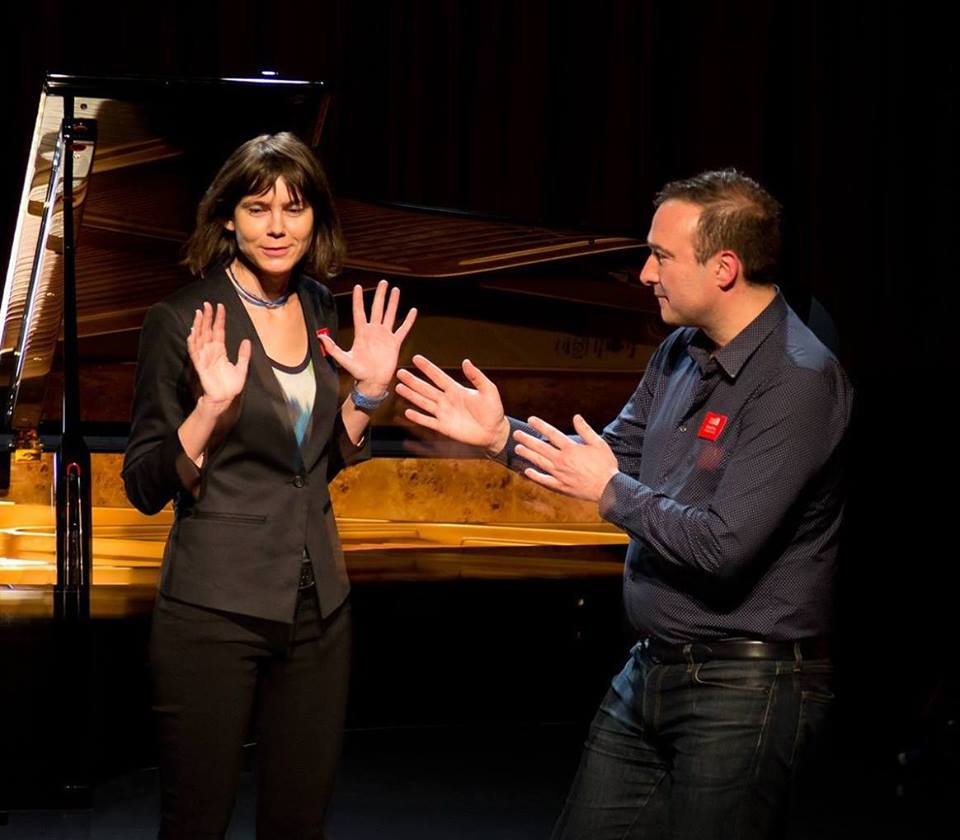
Jennifer Holloway (photo by Arielle Doneson)

Jennifer Holloway (photo by Arielle Doneson)


1. Are you more like you father or your mother?

There are so many elements of both of them inside of me. Although I have taken on PLENTY of their bad traits, I prefer to focus on the good things I got from them! Both of my parents are very loving, caring, and selfless people. My parents will go out of their way to help anyone in need, even complete strangers. They love big and care big, and want to show that to both family and community. I love that they have instilled in me a feeling that we can all create a better society if we help each other out. I am not as good as they are, but I like to think I try to consider other people, and to make them happy. I try to realize that I am a part of a community, no matter what I am doing… whether I am driving on the road or on stage with my cast. We all work together and help each other out to make something wonderful happen.

One thing that I think is very much like my dad is his learning style. He is a very hands-on person. He can fix anything because he wants to know HOW things function. It kills him to call a repair person because he is pretty sure he can fix anything if he just knows how it is put together…. where the connections are, what comes first, where one part is in relation to another. There were so many stories of him ruining his brothers’ and cousin’s toys when he was little because he would dissect them to find out how they worked. Back then, he couldn’t always put them back together again, so after a while, everyone hid their toys from him! Toys turned into cars and houses his own kids’ toys… and my dad is still that way. Once he has really experienced and touched and felt how something works, and he has asked a lot of questions, he uses crazy powers of deduction and ingenuity to find a solution and fix it. I love that he’s always taught my sisters and me by letting us try. He does the same with my kiddo. It is beautiful to watch. I have found more and more that I learn best that way. I have found that in my career, when I am learning music or when I am learning staging, I have to DO it and EXPLORE it and find out how every part of how it works before I can BE it and PERFORM it!

2. What is the best thing or worst thing about being a singer?

Well, there are a million best things. Ultimately though, opera is so cool because it takes so many art forms… sets and costumes (visual art), movement (dance), acting, words (literary), and music and combines them all to heighten each one. I love being a part of an art form that has the possibility of combining all of those things to make people feel more deeply than they would while experiencing just one art form at a time. I also love that the combination of all of these art forms causes ME to feel and understand so many human emotions and situations more deeply. When it all comes together in just the right way, we can change lives and that makes any crummy things worthwhile!

There are not very many bad things about being an opera singer, but it is definitely difficult to be in a profession that is so unusual to the normal population. Let’s be honest, the fact that time is a practice room or for warm up is actually work time, or that I can’t commit to anything ahead of time because my schedule doesn’t come out until 5pm the night before is just weird! I think the most difficult thing for normal people to understand is in the way our family functions… especially in relation to my little girl. People tend to look at our family as eccentric and odd. Lots of folks have what seems like great advice, and it comes from a good place, but it can be a little ill-informed. Sometimes, knowing that people are a bit judgmental about the time I spend away from home is pretty difficult to handle. My heart breaks when I am away from my child and my husband. When I am not home, she is surrounded by family who loves her, and we make sure to keep things as “normal” as possible. We make a point of traveling to be together as much as my job and her school allows. We keep her as busy as possible in after school activities and friends, and I try to keep as busy as I can doing the “best parts” of my job and throwing myself into them because when I am not doing them, I have time to think about the parts of her life that I am missing and will continue to miss. We make so much use of Skype. We have breakfast together every morning before school and we play and do homework together and read each other to sleep almost every night. It is unorthodox to say the least, and I know we all wish we could just reach through the computer screen and hold each other. It is difficult, but so are many parts of other peoples’ “normal” family lives!! This is our normal.

BTW, when is that teleporter gonna be ready?

3. Who do you like to listen to or watch?

My colleagues. I learn more from the people who I work with than from any recording ever. There are one million right ways to do something, to sing something, to be something. I don’t believe in this “definitive recording” garbage. What we do is so changeable and moveable! I love to see someone taking chances, I love to see someone figuring something out, and I love to see my colleagues taking what they have and don’t have and making something special out of it. I learn so much from it. There are so many things that make a great performer or performance, and it is through watching the people close to me that I can observe and understand what those things are and maybe try to work some of them into what I do!!!

4 What is the ability or skill you wish you had that you don’t have?

I would LOVE the ability to be in two places at once! Not least of all because I would love to sit in the auditorium and watch and listen to myself so I could know what I needed to do to communicate all the way to the lady in the back of the 2nd tier. I depend on other people to give me feedback. What I hear in my head is COMPLETELY different from what you all hear in the audience, so I depend on others’ ears. It is also always shocking to watch myself on a video. There always things I thought I was doing that nobody could ever see, and there are always things I had NO idea I was doing! “oh my! I had no idea I was rocking back and forth like that!!!” We are inhabiting characters and resonating in weird ways, and we have NO idea!!! It’s a weird world we live in hahahaha

5. When you are just relaxing and not working, what is your favorite thing to do?

Well that’s easy. If I am home, I wanna spend every moment with my daughter. I completely lose myself when I am with her. We just do normal everyday things, and they become fun. Things sometimes take more time… grocery shopping, for example. I am the terrible mother who lets her kid drive her around on the cart, or we play games to find the things on our list, or silly things like that. My husband always tells us to behave! The three of us love to be together. We don’t have to go anywhere special, we just like being together.

Five more about preparing Donna Elvira for the upcoming Canadian Opera Production of Don Giovanni

1-Please talk for a moment about the rationale or subtext of Donna Elvira, in Dmitri Tcherniakov’s reading of Don Giovanni.

Director, set & costume designer Dmitri Tcherniakov

This Elvira is very different from the other ones I have met. This Elvira is very tragic. I want to take her and talk some sense into her. I want to be her friend to show her that she doesn’t have to try and please everyone else.

I have always thought of Elvira as a very strong woman who knows what she wants and who will do whatever she can to get it. In this reading, she is so different. She is many young girls that we know today, maybe a little awkward, and desperate to find somewhere to belong, so playing “the cool kid” as much as possible. She wants Giovanni back, and knows somewhere in her mind that she can’t have him, but maybe doesn’t want to admit that. It also kills her to see him with everyone else. Since she can’t get him back, she will try to expose his shortcomings and turn everyone else against him, and in turn be a part of a new group… the group who has Giovanni as a common enemy (Ottavio, Anna, Zerlina, Masetto). She is amazed but a little regretful at the beginning of act two having reached that goal in the end of the act 1, and we watch her struggle with her desire to belong with that group juxtaposed with her desire to do make amends with and to help repair this man (Giovanni) who she deeply loves and whom she feels she has helped to break. We see her struggle to try to keep up the right face for the right people at the right time. She is tired and confused and helpless. By trying to go along with something she doesn’t believe in, she ends up too late in helping the helpless Giovanni, and all is lost.

2- Talk about working with Tcherniakov

This man is amazing – his words, his understanding of human beings, of the millions of ways to react to a situation. His words are wonderful, but his actions are better. I HATE when directors show me what to do. I get frustrated and feel they have taken my power of creativity away. In this case though, when Dmitri gives an example of what he thinks a character will do, there are one million ideas and feelings of understanding that go through my body and brain. I don’t have to do it just as he did, I am not him. He understands the music and the relationships, he shows all of them in his body… and I can understand his vision and my character in a completely different way when he shows me something. It is rare to work with a director of this quality. I feel very fortunate.

He is controversial, some love him, some don’t.  I love him without reservation.  Watch this little clip for a glimpse of that intensity. 


3. Favourite moment in Don Giovanni

There are so many wonderful moments. Truly. But my favorite moment in I think all of opera is in the act two finale when a desperate and scared and charged up Giovanni challenges the Commendatore and sings, “Parla, Parla, ascoltando ti sto.” It is the most heart breaking, earth shattering and at the same time, sexy music. I am so filled with emotion every time I hear this part of the opera. Mozart wrote some really good stuff! hahaha

Jennifer Holloway (photo by Arielle Doneson)

Jennifer Holloway (photo by Arielle Doneson)

4. The arts often feel very precarious in this country, spoken of as a luxury even as they starve alongside wealthy sports teams. Please comment on the business and how you observe it unfolding as an artist and as a citizen.

I am not Canadian, so I can speak only to what I know about the situation with the arts and opera in the United States. The arts in the US has a very big problem in that, in most places in the US, almost anything in the arts is viewed in much the same way people see homeless puppy on the street. “It’s so sad, something should be done about that”, or “Someone should take care of that dog, but not me. I don’t even like dogs… it’s not my responsibility” or even more likely, they just walk past it and ignore it. But for the people who take the time to feed, to take care of, and to get to know the puppy, the amount of joy they will receive back is unlike anything else. Here is one major problem… if you never grew up with animals or if you got bitten by a dog when you were young, you will be likely to walk right past the dog or worse, run away in fear upon seeing it.

We are fighting a difficult battle here as there are so many things stacked against us. People don’t see the arts as important because they haven’t been exposed, partially because the arts have been buried in a sea of easy media. People’s time is easily, conveniently, and cheaply filled. When choosing what to do on any given night, almost everyone has a television and the internet at his disposal. You have sports, drama, and comedy all at the literal click of a button. Cheap and super convenient. If you feel like leaving the house, you can go around the corner and see a movie. You will complain about ticket prices, but still go for less than $50, and be allowed to enjoy the flick while munching away on a snack. Relatively cheap and pretty easy. If planning ahead, maybe you will plan to go see a comedy show, or a basketball game, or a pop concert. Not so close, and requires some planning. Also not as cheap. But what you choose to go and see is something you have been exposed to for a long time. There were all those ads on TV. You have seen that comic or at least SOME comic on television, so you know what that will be like. You think, “It is great to laugh on my own couch… wouldn’t it be great to do it live?” “I have watched basketball or football or hockey on TV for years, I know the sport… I played the sport when I was younger. I think I will get my butt out tonight and see a live game.” “I have seen this video one million times on TV and heard the song over and over on the radio. I bet this pop concert would be fun… and cool. It’s on TV and the radio! Maybe I will shell out the extra money to see that in person!”

The performing arts fit into that last category: Performances are not so close, require some planning, and are not super cheap. In order to be one of the things that people choose to do on a Saturday night, we have to actually make it on to their radar. We have to be the thing that they saw on the commercial and we also have to be cool! Television is a fantastic form of marketing. Think of all the show choirs that popped up once Glee came on the air! Think of how many people have become home gourmets since the advent of the Food Network, and how well Home Depot is doing since we all want to be the Property Brothers! I think our media presence has to be much bigger. The difficulty is that each of our companies has a great marketing department, but we need a HUGE arts partnership marketing TEAM to really make a difference like this. I wish there was some way of all banding together in this. I think the idea of putting opera in the movie theaters is a nice one, but we skipped a step… we haven’t really created a buzz about what we do in the first place.

In addition, and even more importantly, WE MUST BE EXPOSING CHILDREN TO THE ARTS from a young age. We are losing out with the kids. I think we all underestimate the importance of little kids going to live performances several times a year. My daughter still talks about Wayne Tigges’s chicken spitting Leporello from my first Giovanni. She was 3 when she saw it. Now, not everyone has an opera singer mom, so the best way for us to reach them is to hijack them during school! I think I have a photo of the kids in my daughter’s kindergarten class seeing the Atlanta Opera school show in their gym. The kids were completely engaged and into the story and rooting for the hero. It was similar to the way they would watch a movie only the kids were more alive… almost ready to jump out of their seats. I also love when we do school performances. The kids’ reactions are so huge. In heartbreaking moments, you can hear a pin drop, in funny moments, the theater erupts in laughter. Every one of those kids is right with us, and at the end, it sounds like you are in a rock concert because of the thunderous applause. When they get home, they will tell their moms and dads and then we have THREE butts in seats and three new arts lovers. You cannot love it if you are never exposed. As we grow older, it becomes more difficult to understand and to let go of preconceptions and misconceptions about how you have to act and what kind of fuddy duddy goes to the opera. Little kids don’t have those ideas yet. They are open to it all… and as for arts’ importance, I think the proof is in the pudding. The fact simple exposure to the arts makes someone want to come back again, then the arts are something that we need in our lives. They make us feel in a deeper way. They make us all more human. You can forget yourself for the duration of the performance. You can forget the piles of paperwork on your desk, you can forget the sewing that needs to be done, you can forget about the clicking sound that the engine is making, and you can just be. You can be transported out of now, and into another time or city or situation. We can watch people with much bigger problems than our own and feel deeply for them, or laugh with them! We are able to uncover emotions that we cannot always explain.

But people can’t know about that if they haven’t ever experienced it. I wish there was a way to get more money to do more educational outreach and to do more kids shows for free. Catering to the young folks and those who don’t know if they want to spend the money on opera tickets is a great things too. Efforts like Opera Philadelphia’s Opera in the Park, where they show the opening night film on a big screen for free in the park. I loved seeing so many families and 25-40 year olds on their blankets with picnics. I ran into some old friends of mine who had no idea I was on the screen until they got there. They just wanted to come. I love that English National Opera allows you to bring your alcoholic beverage into the theater! What a great way to encourage you to have FUN while watching the opera!. It takes the pomp and weirdness out of what we do and makes it something to try. If we could ramp up the already fantastic efforts of opera companies, we may be able to get the arts back on track in the next 20 years. It’s a long commitment, but it is so worth it.

5. Is there a teacher or an influence you’d care to name that you especially admire?

There is a group of people who puts in more hours and harder days than any other on the stage. They arrive before the first day of rehearsal and they clean it all up after the final performance. They make sure everything is running smoothly every day, and if something goes wrong, they take the blame (even if it isn’t their fault). They field the rolled eyes and the diva fits and the demanding directors. They have to know where we are at all times in the score so they can tell stupid singers when to enter, or what the next line of recit is, where they are supposed to be on stage at any moment, or when to simply be quiet backstage. They have days where they don’t feel good, or when their mom is in the hospital, or there was a flood in the basement, but they still come in before everyone else to set up the rehearsal room or unlock the dressing room doors, and they leave way after everyone else when all is cleaned up and locked again. These men and women are highly intelligent, and incredibly talented. They are also amazingly selfless (something we don’t find often in opera!).

The difference between a great Stage Management team and a not so great one is the difference between a great performance and a terrible one. The stage management team here [at the Canadian Opera Company] is fantastic. Jenn, Tiffany, Stephanie, and Jane are always smiling… and they always have our backs. There are so many things that could go wrong backstage, but because I trust my stage management team, I can concentrate on performing and not of all of the stuff that could kill me in the wings. I could not do their job… most people couldn’t… But I am so grateful they are so great at it.

Sometimes it’s just a person who reminds me how important it is to treat everyone with respect and kindness.

*******

click for more info about Don Giovanni

I can’t wait (…but it’s not Saturday yet!).

The Canadian Opera Company’s production of Don Giovanni opens January 24th at the Four Seasons Centre, running until February 21st.

Posted in Interviews, Opera | Tagged , | 1 Comment

Based on a True Story: Big Eyes and The Theory of Everything

A new production of Don Giovanni opens at the Canadian Opera Company next week, followed shortly by Die Walküre.  Neither one bears the epithet “based on a true story”, as so many current films seem to (thinking for instance of three films I have yet to see: American Sniper, The Imitation Game and Selma).   As an opera fan & lover of all things theatrical, it’s predictable that my favourite film of the past year was Grand Budapest Hotel, a colourful larger than life piece of film-making that moved me as much the third time I saw it as the first.  It’s an adaptation of a novel.  Operas are almost always adaptations rather than true stories.

I suppose some of us have a lower tolerance for reality than others (I’m not about to see American Sniper anytime soon), which might at first glance suggest why I prefer opera.   The phenomenon of realistic storytelling is comparatively recent.  Yes there’s an opera called Louis Riel that the COC will be staging for the Canadian sesquicentennial in 2017.  John Adams wrote an opera about the Achille Lauro incident called The Death of Klinghoffer, as well as Nixon in China and Doctor Atomic (about Oppenheimer).  In the 18th century Don Giovanni may have seemed edgy, considering the behaviour captured in the opera.  And while Wagner in the middle of the 19th century dealt mostly in myth & symbol, his operas offer some of the most profound insights into human psychology at least until Freud & Jung appear on the scene.

I saw two films today that could have that epithet –“based on a true story”—somewhere in the trailer, namely Big Eyes and The Theory of Everything.  I can’t help thinking that nothing is all that different.  We’re still watching someone telling a story that purports to be real even as it clearly wanders into the realm of art.

At first glance Big Eyes seems to be a big departure for director Tim Burton, known for a highly symbolic visual style  in such films as Corpse Bride, Beetlejuice, Sleepy Hollow, and a pair of Batman movies starring Michael Keaton.  Other than his bizarre biography Ed Wood, Burton’s world is one of fantasy & imagination, not harsh realities.

Yet it fits beautifully.  As in Charlie & the Chocolate Factory, Ed Wood, Nightmare before Christmas or Corpse Bride, we’re exploring a kind of misunderstood or even misbegotten creativity.   Big Eyes is every bit as creepy as any of the gothic films.  Artist Margaret Keane is a perfect subject for Burton in her suburban superficiality, her wide-eyed waifs as creepy as something out of Edmund Gorey.  When husband Walter takes credit for her work, locking her away in a kind of artistic sweatshop, she may as well be a living breathing corpse bride.

Without offering any spoilers on the story, I can simply say that Burton seems to be less interested in showing real people and their emotions, than in evoking moments as surreal as zombies or ghosts.  The dichotomy in the film between the creative & commercial sides of art makes it somewhat heavy-handed in its approach to a story.  Perhaps this is progress for Burton as a film-maker, even though nuance is sacrificed.  Maybe he was responding to studio pressure to go with the realistic flow.  But I haven’t connected with a Burton film in awhile –this one included—since at least Charlie and the Chocolate Factory, a decade ago.

I wonder if it makes sense that I experienced Christoff Waltz’s portrayal of Walter Keane as a two-dimensional cartoon rather than a real person, an actor I’ve usually enjoyed in the past.  The part is written that way I suspect, as Waltz is caught in the crossfire of Burton’s critique of an industry that hasn’t always understood or sympathized with his vision, Walter Keane being like the embodiment of everything working against poor Tim Burton.   Amy Adams—nominated for an Oscar—gives a performance that’s very sympathetic alongside Waltz’s.

Unexpectedly I was much happier with James Marsh‘s The Theory of Everything, another film based on a true story. 

This time we’re only peripherally concerned with the newsworthy items –such as Stephen Hawking’s theories—and instead busy with the relationships at the heart of the film.  Eddie Redmayne’s performance persuaded me completely.  Yes we’re in the realm of disability drag, watching an actor portray a broad range of symptomatic behaviours.  This can be very difficult to enact, unbelievable to recreate.  I was very comfortable watching this film even as physics and physicality are cheek by jowl in this film.  Several times we’re pulled away from the objective portrayal into elements that are subjective, inviting us to identify with something impossible to experience.

Felicity Jones as Jane Hawking gradually asserts her place as the most important person in the film, but then again the film is really her story, as it’s her book that’s adapted.  The deeper we get into the story, the subtler the expressions from Redmayne (Stephen Hawking), making him harder to decode.  As a result we’re pushed further towards Jones for reactions, the drama often residing not so much in her husband’s condition as in her wonderful facial expressions in reaction: where the real drama is acted out.  Saintly as he may seem in the film, she’s pushed and provoked by her husband in various ways, leading an impossibly challenging life.  So of course the tale may be a bit self-serving –in its bias towards her—but that drama was unexpected and daring I felt.  All that was accomplished without compromising either, without making anyone a villain, although I’ve seen comments online suggesting that the film is unfair to her.  But then again films always face this kind of flak.  All three of the films I mention above ( American Sniper, The Imitation Game and Selma) have been challenged over their accuracy.

I love the musical subtexts in this film.  I can’t argue with Hawking’s taste in music, if the film is to be believed.  He’s listening in his Cambridge residence room to the opening bars of Die Walküre twice in the film, although never getting far enough for anyone to begin singing.  The third bit of Wagner is highly poetic as symbolism, the physicist having finally made it to a performance of the Ring, but then lapsing into a coma precisely at the most perfect evocation of physics in any opera; when Brunnhilde awakes to greet the sun in the last act of Siegfried, he falls unconscious.  I wonder if it really happened that way, although I know I’ve been to performances of that act when I also became unconscious (that is: asleep).

And the biggest laugh for me came when Jane Hawking’s mom takes her aside to offer her advice: and solemnly tells her to join the church choir.  I guffawed, even if it happens to be brilliant advice whether or not you’re overwhelmed with the demands of family.

I’ll be interested to see how the films are received at Oscar time.  I must search out their books (especially Stephen Hawking’s A Brief History of Time and Jane Hawking’s Travelling to Infinity – My Life with Stephen ).

Posted in Cinema, video & DVDs, Reviews | Leave a comment

10 Questions for Heidi Melton

If a list of engagements on a website is anything to go by, Heidi Melton is coming into her own. Toronto audiences are lucky to be able to see the young soprano at a time when she’s taking on all kinds of wonderful parts around the world.

For Deutsche Oper Berlin, that meant Gutrune and the Third Norn in one Ring Cycle, and Sieglinde, Gutrune, and the Third Norn in the other in 2013-14, with Elsa in Lohengrin for 2014-15, a role she also sang at Badisches Staatstheater Karlsruhe, as well as Didon in Les Troyens, Venus/Elisabeth in Tannhäuser, Ellen Orford in Peter Grimes, as well as revival performances of the Marschallin in Der Rosenkavalier. But I’m only picking a few things from a much longer bio that went from the Merola program at the San Francisco opera, to the Metropolitan Opera, companies in Europe and America, as well as concerts & recitals, including a recent one for the Jussi Björling Society in Voxna, Sweden (the wonderful people I met while walking through their museum this past June).  Next item in that long list of exciting engagements is her upcoming Toronto debut as Sieglinde in the Canadian Opera Company’s Die Walküre that opens January 31st at the Four Seasons Centre.
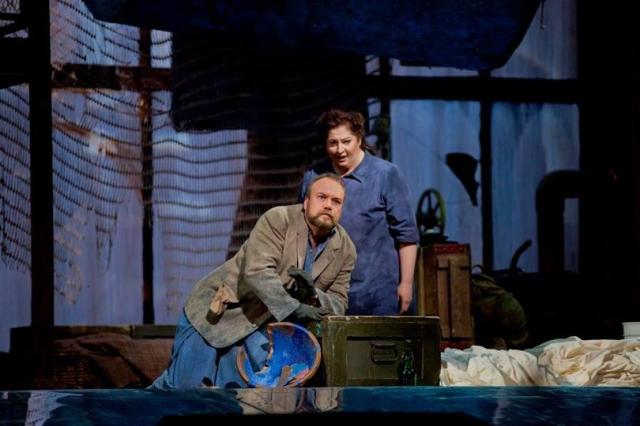
I asked Heidi Melton ten questions: five about herself and five more about singing Sieglinde.

Soprano Heidi Melton (photo: Simon Pauly)

Soprano Heidi Melton (photo: Simon Pauly)

1-Are you more like your father or your mother?

If I am being perfectly honest- I would say neither! I am not sure who I am like, but if I have to make a guess, I would say that I have always had my family tell me that I favor my grandma, Frances, both physically and personally. Growing up she was my best friend and the person who I looked up to for everything. She began teaching me piano when I was 4, and we would have lessons almost every day after school. If I did particularly well, we would play duets. As I got older and got into singing, she would come to my lessons and accompany me. She always had the best advice, loved baking, giggling, going to movies and didn’t like getting her head wet. She gave the best hugs in the world, loved harmonizing and everything she did, she did fiercely. In my opinion, growing up and now, she was practically perfect in every way. I do not know that I am like her, but perhaps the question should be, who do I aspire to be most like? My answer would definitely be her.

2-What is the best thing or worst thing about being a singer?

Best- The music. The colleagues. The cities. The travel. Meeting amazing people. Trying new and incredible things. Did I mention the music?!

Worst- Figuring out the taxes. The taxes themselves. The travel. The loneliness. Getting sick away from home.

3-Who do you like to listen to or watch?

I like to listen to absolutely everything. Every genre has something to offer – my musical tastes look pretty crazy. I have everything from blue grass to hard core rap to country to rock to pop and dance. I do listen to opera- but I try not to when I am studying that role. As far as watching, I love movies and tv. I love relaxing at the end of the day and watching something. I just finished watching the first season of The Affair. Amazing ideas with storytelling. Just incredible!

4-What ability or skill do you wish you had, that you don’t have?

I was going to go with something deep and serious. And then I thought, no. The ability I want more than anything is teleportation. That way, I would never have to stand in customs lines, be searched because I am wearing an underwire, sit next to coughing people in tight quarters, and I could pack as many fluids as I want.

5-When you’re just relaxing and not working what is your favourite thing to do?

Heidi Melton (photo: Simon Pauly)

I love talking with my friends and Facetiming with my nieces. I love spa days. Going to movies. Walking around new cities. I love getting organized (when I can) and getting things done. And some days you just need a tv binge in pajamas. If I have a chunk of time free, I may even plan a vacation. This past summer, I took my nieces on a beach vacation for a week.  Dolphins were spotted.

Five more about preparing Sieglinde for the upcoming Canadian Opera Production of Die Walküre.

1- Tell us about how you understand the personality & psychology of Sieglinde, a woman who suffers, yet a woman whose ecstatic expressions are among the highlights of the entire Ring cycle.

Sieglinde is one of my absolute favorite characters to sing and act. She is simultaneously one of the most complex and most primal characters in opera. She paradoxically begins the opera very passive and beaten- a result of being kidnapped and forced into marriage at a young age, and then she absolutely explodes into a passionate and vital woman when she realizes that Siegmund is the one who was sent to save her.

It becomes rather tragic then, in the second act when she is on the run from her husband, and she has a complete break down. She has finally discovered love and, because of her clairvoyance (a gift she shares with her half sister, Brünnhilde), she knows that Siegmund will die in battle and be separated from her. Then in the third act, after her visions have been fulfilled and Siegmund is dead, she quickly changes from suicidal dejection to absolute ecstatic rapture when she is told that she is pregnant with her brother’s child, who will become the hero of the world. Sieglinde goes through about every emotion that I can think of in this opera but if I have to say just one word about her (brevity is not my strong suit)- I would say that she is a fighter.

And I love her for it. 

2-It may be a cold month in Toronto, but that might keep the focus on Wagner & Walküre. Please talk about the joys of working with this cast on this opera at this point in time. 

So far, this has been a complete and utter joy. The company itself is absolutely amazing to work for and I am loving my time in Toronto.

Director Atom Egoyan (Canadian Press photo)

Atom is astounding. He looks at this opera with such fresh and open eyes. He really challenges us to bring new ideas and trust ourselves. He believes in the power of the music in a way that most directors don’t and it makes me giddy. At the same time, he doesn’t have all of the pre-conceived notions that so many directors have about it- he has really found new and unusual takes on this and I am so excited to portray his vision of this story.

Maestro Debus is amazing. He is attacking this for the first time and is so clear and focused on his ideas and what he wants the architecture of the piece to be. He’s also incredibly kind and beautifully collaborative. It’s pretty incredible. I can’t wait to do this with the orchestra!

Clifton is unreal. He has done this role over 100 times and still every time we sing and rehearse it is new and different and fresh. He is incredible and I’m so fortunate to be working with him.

Dimitri is one of the kindest and sweetest colleagues but is absolutely a terrifying Hunding. It’s amazing. He will throw me around and then smile and teach me Russian words. And Christine is just rad. She is down to earth, very funny and sounds like a rock star. She is an incredibly intense and giving actress and also a pretty amazing Friday-night- post-rehearsal buddy.

I’m so fortunate to be in this cast. I pinch myself daily. 

3-What’s your favourite moment in this Die Walküre?

I can’t choose! That’s horrible to ask. I have a few! I would have to say, one of my favorites is the end of act one. The whole build up to the pulling the sword out of the tree and the realization of who they are and what they are about to do, and then the orchestral postlude. I really don’t know that there is any sexier music. If I smoked, I would need a cigarette break. 

I also love the Todesverkundigung (even though I am always passed out during the entire thing), of course the end of act three and the fire music is amazing, and I would be completely remiss not to mention the “O herrstes wunder” and the redemption theme.

Can I just say the whole thing is my favorite? Because it is. 

4- The arts often feel very precarious in this country, spoken of as a luxury even as they starve alongside wealthy sports teams. Please comment on the business and how you observe it unfolding as an artist and as a citizen. 

I have just spent quite a bit of time over in Europe and I will say, I love that the arts are considered very important by the government and the citizens. It’s a thing people do from a very early age. It is just part of life. I love that. I believe that we have to fight hard to keep them important. Please note, I didn’t say relevant. No one argues that Rembrandt is relevant for being Rembrandt. Or that the David is relevant as it is. Opera is relevant for being opera. Please don’t think that I am trying to say that we don’t need new ideas or new stagings, etc. What I am saying is that it is relevant. It is alive. This music is incredible. These voices that have trained a lifetime to sing this music are incredible. We need to focus on the music and telling the stories and the relevance is there. I have to believe that, in the end, the art form will survive. 

5- Is there a teacher or an influence you’d care to name that you especially admire?

The teachers/mentors that have been most important to me are- Matthew Epstein, Mikael Eliasen, John Parr, Sheri Greenawald, Hilde Zadek, Cesar Ulloa, Rhoslyn Jones, Steven Moore, Melissa Percy Drumm and most importantly, my Grandma. 

Singing influences- Astrid Varnay. (I’m pretty sure she was perfect.) Kirsten Flagstadt, Birgit, Jussi Bjoerling, Nicolai Herlea, Johnny Hartman, Barbra Streisand, Sarah Vaughan…you really don’t want me to get started on this.

We could be here forever.

*******

Sigh, i wish….(!)

But in the immediate future Heidi Melton’s portrayal of Sieglinde as part of the COC production of Die Walküre begins January 31st at the Four Seasons Centre.
Posted in Interviews, Music and musicology, Opera | Tagged | Leave a comment

COC Season launch #coc1516: come back, all is forgiven

The launch of the Canadian Opera Company’s 2015-2016 season felt like a genuine celebration, a special occasion because of the performances, and a moment when the COC appears to be looking boldly forward.

Speaking as a subscriber, though, I feel it’s a kind of reconciliation, a return to more familiar territory and a coy peek over the shoulder at where we’ve been. It’s very Canadian, very dramatic, and sure to be enjoyable.  For this subscriber it will be easier to persuade my partner to renew in a house where there has been some disagreement and resistance to adventurous stagings. And so I’m both enthusiastic and relieved at the same time. It’s a good news season, likely to be good at the box office.

We’re looking at six operas again, three being among the most popular, namely La traviata, Carmen and The Marriage of Figaro, while a fourth­­—François Girard’s production of Siegfried—continues the current Ring cycle survey begun this season, and opening at month end with Die Walküre and again starring Christine Goerke.

Goerke was a big part of the celebratory atmosphere, contributing a hypnotic reading of the song “Traüme”, aided by a large close-up on the big screen of her amazing eyes.  Hers was one of several sparkling performances tonight, accompanied by the COC orchestra & Johannes Debus .

Another reason for the excitement was the commitment to new opera & Canadian talent. Barbara Monk Feldman’s new opera Pyramus and Thisbe shares the bill with two brief Monteverdi pieces, the Combattimento di Tancredi e Clorinda, and Ariadne’s brief Lament (the only fragment, alas, that remains from this opera about Ariadne). We heard of the progress of Hadrian (a libretto being workshoped etc), of a revival of Somers’ Louis Riel for the Canadian sesquicentennial in 2017 (yay!), and a new opera from Ana Sokolovic concerning Queen Christina of Sweden, for the 2020 season.

And with all the hints in the media of late I wasn’t even a tiny bit surprised to hear that Joel Ivany will be directing Carmen, a development that rewards true merit. Ivany’s recent work is the most exciting seen in Toronto of late, if you think of his work with Against the Grain, namely Messiah, Pelléas, and the first two we’ve seen so far of his Da Ponte trilogy. Given that the COC was involved with the Banff Centre in those productions I wondered if Ivany might get an opportunity to direct with the COC.

Yes!

Director Joel Ivany

Director Joel Ivany

I have no opinion about the sixth opera, except that it intrigues me, namely Maometto II an opera seria by Rossini that I understand – from what I heard tonight—to be a vehicle for a bass baritone.  We were told that Luca Pisaroni is apparently really good in the role, although I have no idea. I do know that Elizabeth DeShong is a fabulous bel canto singer that is always welcome in this town, and that anything conducted by Harry Bicket is likely to be wonderful. Recalling Roger Norrington’s CD of Rossini overtures, I’m willing to bet that this music will benefit from his edgy leadership.

I don’t want to babble on at length, except to remark about the other performances. We heard a wonderful finale to conclude the evening, the whole massive Act II finale from Figaro, including some luxury casting with Jane Archibald as Susanna & Russell Braun as the Count, and Gordon Bittner of the Ensemble Studio standing tall as a very funny Figaro. And be still my heart, Aviva Fortunata sang, one of the genuine talents in the Ensemble, taking a small part in that finale, but also unveiling that lovely line and fabulous top in a bit of the Rossini that’s completely new to me.

And to give us a small idea of Barbara Monk Feldman –whether or not her opera will sound this way or not—we heard a lovely performance of “Verses for five”, a somewhat minimalist piece with lots of colourful percussion (marimba, celesta, piano, gongs, piano and some winds), delicately suggesting magic.

And so the new season sounds safe but exciting, edgy where it matters, and likely to be very watchable.

Posted in Opera | 2 Comments

Talisker Players: Puttin’ on the Ritz

click for more information

Talisker Players, that inter-disciplinary nexus for music & text, have made another crossover adventure. “Puttin’ On the Ritz” takes us into the world of Irving Berlin, in a series of songs sung by Bud Roach and Whitney O’Hearn.

I’d call it crossover for a number of reasons:

  • Because the songs don’t have anything like the usual sound –such as what you get from a piano, a jazz trio or a pit-band for music-theatre–because they’re instead arranged by cellist Laura Jones for the Talisker Players: a string quartet that includes Jones, violinists Kathryn Sugden & Elizabeth Loewen Andrews, and violist Mary McGeer, Talisker’s Artistic Director.
  • Because the singers are coming from a classical background
  • Because both Talisker and the venue (Trinity St. Paul’s Centre) are strongly associated with serious / classical music

Irving Berlin is surely a worthy focus for such exploration. Jones apologized at the outset to each of us that perhaps they couldn’t present our favourite Berlin song, considering his huge output in a long life (101 years old when he died in 1989 ). This is my favourite, a song that Barack Obama referenced in his first inauguration, bringing tears to a few million pairs of eyes (mine included) in the process.   But there are so many other possibles that weren’t included –as I heard from those sitting near me—that there was no way to satisfy everyone.

They dared venture into Fred & Ginger territory with the set before intermission. It was charming to watch Roach & O’Hearn take on “Top Hat”, “Let’s Face the Music and Dance”, “Let Yourself Go” and even “Cheek to Cheek”. Crossover is always a trade-off. While they’re not dancers, the trade-off? A full house eager to hear this familiar music sung by lovely voices.

Roach is the surprise for me, an early music specialist I wrote about a few days ago. The voice that is so apt for baroque Italian opera or song works really well with Tin Pan Alley. I am recalling comments I’ve heard about the older era of pop singers, and the way Bing Crosby or Frank Sinatra sound as though they’d be fine singing bel canto. The sound begins from the words, like so many good Italian singers (and I’d include Bastianini, Protti and Sinatra in that group) all effortlessly intelligible in their text, with a sound that opens fully instantly, unlike the kind of sound you get from German voices. We’re always told that the Italian songs of the baroque are the ideal training for a voice, and I believe Roach is proof thereof. His gentle tone soars at times as though he were a modern-day incarnation of a matinee idol such as Dick Powell, although when he was having fun with us, his hammy delivery was more like Ethel Merman, effortless and wacky. Either way every syllable was as clear as speech.

O’Hearn’s singing was more like the singing one might have encountered in the earlier years of Berlin’s time, reminding me of an operetta star with a luscious full sound. While she was nowhere near as intelligible as Roach, it’s not really a fair comparison, considering that they were accompanied by a string quartet. Berlin’s songs are rhythmic, often syncopated yet with the string quartet there was a percussion deficiency that was only satisfied by the percussion in the singers’ consonants. In ballads O’Hearn’s luscious voice worked wonderfully, as in “Lazy”, with a very subtle arrangement from Jones to open the second half.

The program will be repeated again Tuesday January 13th at 8 pm at Trinity St Paul’s Centre.

Posted in Music and musicology, Reviews | Tagged , , , , , , | Leave a comment

10 Questions for Jocelyn Morlock 

click for purchase info

Juno-nominated composer Jocelyn Morlock is one of Canada’s most distinctive voices. She is Vancouver Symphony Orchestra’s Composer in Residence having just completed a term as inaugural Composer in Residence for Vancouver’s innovative concert series, Music on Main (2012 – 2014).  I reviewed her recent CD Cobalt, having discovered her original voice in one of Tapestry’s opera workshops.

In the immediate future, though, is the VSO’s New Music Festival on January 15-18. Morlock plays a big role, including three separate compositions. Here’s Morlock’s description of the three pieces: “Theft”; “Ornithomancy” and “That Tingling Sensation.”

Theft (2009)
I. Water Clocks
II. Insomnia
Theft was inspired by two arresting images found in One Hundred Years of Solitude: the insomnia-ridden town, and the “water-clock secrets of the moths.” In Marquez’s novel, we never find out what the moths’ secrets are, and this mystery intrigued me. The moths are a mysterious lot.
Insomnia, on the other hand, has a manic quality loosely based on the feeling of panic/fascination that ensues when you hear the birds start to sing loudly in the morning after you’ve been up all night.
Water clocks are Klepsydrae, literally water-thieves. Long periods of insomnia will rob you of sleep and sanity, and eventually will kill you. You should get more sleep.

Ornithomancy (2013) (a flute concerto)
Ornithomancy is the practice of divination by observing the activity and flight patterns of birds. Though I’m not convinced of their ability to predict the future, I have a long-held fascination with birds of all kinds. Their energy, flight and songs are beautiful, fleeting and strange – a fertile subject for a flute concerto. In keeping with the idea of bird-like flocking activities, Ornithomancy features many short solos and cadenza-like passages that include soloistic playing from members of the orchestra.

That Tingling Sensation (2014)
The inspiration for this piece stems from the fascinating human experience of being physically thrilled by music. When an experience moves or enthralls you, your hair stands up, and you feel the music viscerally. I think this is likely *the* great reason why people love music – that inexplicable visceral reaction to beauty, to energy, to lovely or powerful sound. (This reaction is known as an ‘autonomous sensory meridian response’, in case you’re planning to Google it.) I’ve named my piece out of love for this ideal, and for the kaleidoscopic and electrifying palette of sounds the orchestra can create.

And so, as first female Composer in Residence of the Vancouver Symphony, and on the occasion of their upcoming New Music Festival, I ask Morlock ten questions: five about herself and five more about her professional life.

Jocelyn Morlock

Jocelyn Morlock

1-Are you more like your father or your mother?

I think I’m more like my father, the primary reason being that we have (had? He died in 1999) the same sense of humour. And I always felt like we quietly understood each other even when we weren’t saying a whole lot. He used to send me Far Side Comics in the mail, I still have one up on my fridge, it’s this boa constrictor at lunch, in the process of swallowing an entire pig, and the phone is ringing, and above the boa’s head is the thought “Damn.” We also have pretty much the same eyebrows, which must count for something.

2-What is the best thing or worst thing about being a composer of “new” music?

Being a composer of new music is weird because it is such a niche market, if you will…there aren’t going to be thousands and thousands of people who like it, or even care whether it’s good or bad, and yet it is generally the most important thing in my life. That is kind of confusing sometimes.

On a more daily-life/working level, it is challenging because form in music has pretty much exploded and there are no rules left so every time you write a new piece you need to come up with a new set of rules. Form is the most frustrating and contentious aspect of composing these days, for me at least. Sometimes I crave a nice ternary form…

3-Who do you like to listen to or watch?

All kinds of things – some of the most unusual music that I am fond of is Gambang Kromong from Indonesia –

I can hardly believe it happened, it’s a very distinctive juxtaposition of gamelan, Dixieland trumpet, and slide steel guitar. No, I am not making this up.

Canadian composers I’ve been listening to recently include Michael Oesterle, Nicole Lizée,   Marc Sabat, Thierry Tidrow, Gabriel Dharmoo, Riho Esko Maimets (and lots more too…) On the less “classical” side I’m a huge fan of Laurie Anderson and of Tom Waits, and generally of jazz singers from last century, especially Dinah Washington. I like watching films a lot but I don’t have enough time…(I’m a fan of David Lynch because he’s a big weirdo…also dead people like Tarkovsky and Fellini…)

4-What ability or skill do you wish you had, that you don’t have?

I love this picture as an indication of how unpretentious and real Morlock actually is.

I love this picture as an indication of how unpretentious and real Morlock actually is.

I would really like to be able to fly. Or to be invisible. I admit both of those are pretty unlikely. I think as far as things that might be attainable, being fluent in more than one language would be very cool, but my most desired skill is to be an awesome tango/salsa dancer. A somewhat unlikely acquisition, given that I’m not especially graceful, nor am I taking dance lessons…

5-When you’re just relaxing and not working what is your favourite thing to do?

Erm, not really sure. If I don’t work for too long I get a bit weird. Walking around outside is lovely, or hanging out with friends and laughing about silly things. I like dressing up for Halloween and wearing outrageous things now and then but that doesn’t happen too often.

Five more concerning being Composer in Residence at the Vancouver Symphony Orchestra

1-Being a composer in residence sounds like a grand position. What’s involved with such a title and what are you expected to do?

I suppose the most obvious thing is write new music for the VSO – I just finished a new piece called “That Tingling Sensation” which will be premiered during out New Music Festival, on January 17th. I also help program the New Music Festival, and our Annex Series which is a set of three concerts of new or newish music – i.e. 20th century classics alongside new 21st century rep. I am also the liaison between the VSO and the composers we work with, and I guess you could say I do a fair bit of outreach/promo, talking to people about our concerts, finding out what’s interesting to audience members, stuff like that. It’s a lot of fun, and there’s a lot of variety in what I’m doing.

2- You’re the first woman composer in residence in the history of the VSO. Is that a big deal?

02

Jocelyn Morlock and David Pay (of Music on Main), photo by Jan Gates

Funny that – I didn’t think it was such a big deal, but it seems that it is. I am used to being one of relatively few females in my line of work – when I was younger I thought I’d likely go into computer science, and I was the only girl in my grade 12 computer science class, so this is all fairly normal for me. It hadn’t occurred to me that younger generations of composers might want a female role model, but I guess to some extent I am one of those now! (Yikes! Responsibility!)

3-What’s your favourite Jocelyn Morlock composition and what’s so good about it?

What an evil question! Erm, frequently when I’m in the middle of writing a piece it alternates several times a day between being my favourite piece and the worst thing I’ve ever written…currently I think my favourites are my concertos “Aeromancy” (for two cellos) and “Ornithomancy” (for flute.)

[NB Jocelyn didn’t know i’d include the music when she answered… listen for yourself]


If I had to be even more specific I’d pick just the second movement of “Aeromancy.” What’s good about this music? Well, for “Aeromancy,” the cello lines are extremely expressive, very high and soaring, and the way that the two cellos sing together is almost like having one giant meta-cello. The orchestral colours with them are unusual – predominantly quite lush string orchestra in the background, but also a pair of soloistic oboes, horns, and a significant and quite sparkly glockenspiel line. For me this all adds up to a good thing. The form is rather unexpected but non-random, which I also believe is positive. Describing my own music this way is appallingly difficult!

4- The arts often feel very precarious in this country, spoken of as a luxury even as they starve alongside wealthy hockey teams. Please put your feelings about new music into context for us, especially with respect to your post at the VSO.

The performance of new work is what keeps the VSO (or any ensemble) from being solely a repository of aged treasures, rather than a living art form. An influx of the new is the only thing that keeps us from becoming just a museum.

The Vancouver Symphony Orchestra, with its visionary artistic director, the conductor and composer Bramwell Tovey, makes an unusually strong commitment to innovation and to new music in general.

5- Is there a teacher or an influence you’d care to name that you especially admire?

Yes – the late Russian-Canadian composer Nikolai Korndorf was a huge influence on me. I first heard his music ca. 1998, at a time when I found that much new music I was hearing was leaving me cold and I was craving a stronger emotional connection. As soon as I’d heard Nikolai’s music I decided that I had to study with him, and I was very lucky that he agreed to teach me. He was living in Burnaby, BC at the time, having moved to Canada in 1991. Nikolai had an encyclopedic knowledge of standard orchestral repertoire, and was fascinated by and interested in many, many styles of modern music, and it was fascinating (if very daunting!) to learn from him.

The recording of his monumental “Hymn No. 3 in Honour of Gustav Mahler” (recorded on Sony Classic CD “A New Heaven”) was the first piece of Nikolai’s I ever heard, and it made an incredible impression. Other wonderful pieces include “Concerto Capriccioso” (on Toccata Classics’ release of Korndorf’s complete cello music) and “Yarilo” for solo piano (there are several good recordings of it available including ones by Anna Levy and Ivan Sokolov.)

*******

The VSO New Music Festival featuring three compositions by Jocelyn Morlock runs from January 15 to 18.

Posted in Interviews, Music and musicology | Tagged , , , , , | 5 Comments

Bud Roach: Arias for Tenor and Baroque Guitar

Every now and then a recording or performance comes along to challenge your assumptions, possibly giving you a new way of seeing things.    I’ve been listening to two Bud Roach CDs:

1-Sospiro: Alessandro Grandi Complete Arias, 1626 (recorded in 2012: CD | iTunes)
and
2-Giovanni Felice Sances: Complete Arias, 1636 (recorded in 2013, released just a few months ago: CD | iTunes).

Within a few seconds of putting them on the player in the car, I’m spirited away to another place, another century. Whether or not you understand the Italian text (I pick out parts, but need the enclosed booklet to decode all the wit), it’s a magical combination. Roach is guitarist & tenor for these songs, singing at times with great delicacy, sometimes with a broad & comical approach to his vocal production.

It’s quite a bit to wrap my head around, these solo performances (the what, the how, and more questions than I can throw a stick at). I can’t help wondering who might have heard these, what composers might have been influenced by this music. Were these songs in the ear of the public, and therefore, likely to have been heard by more established composers? and how far did the influence extend? I’m no early music scholar, just a fan. But listening to these songs one wonders how and where these lovely songs would have been heard. Roach’s essay in the enclosed program notes are wonderfully suggestive. I have to include a big quotation.

Proud and haughty/ The true enemy of love/ You make your heart / A preserve of harshness
You give me death/ In exchange for my faithful love / O cruel and pitiless one!
You are so unfrateful to him that adores you / I hate myself for loving you so

So begins the first aria from Alessandro Grandi’s third volume from 1626, one of the finest examples (and collections) of a much-maligned genre from the early 17th century. Musicologists from the beginning of the early music revival have been unusually scathing in their surveys of secular Italian song, whether labelled canzonettas, arias, cantatas or even monodies…Moreover, notions of class-based discrimination appear to inform their thinking, just as they did those of the self-appointed defenders of high art held in 17th century Itality. Uncritical acceptance of the prejudices of mid-20th century academics denies us the chance to explore the beauty of these arias. Then, as now, it is difficult to find critical approval for respectable composers incorporating folk elements in their music. However, when experienced as they were performed at the time, these works can move our hearts as surely as they did those of their contemporary audiences. Recent scholarship has taken a more generous tone…

Part of my background is in drama scholarship, leading me to imagine possibilities and to resist the kind of class bias Roach describes. Writing and telling history is always susceptible to vested interests. I can’t help wondering if the improvised theatre that we call Commedia dell’arte –known to have originated in Italy long before this music—might have employed songs like these.  Serenades that we encounter in other operas sometimes employ lots of musicians (thinking of The Barber of Seville), sometimes very few (Manrico or Don Giovanni).  Whether we’re speaking of the innamorati (lovers) or the zanni (servants) , I recall mentions in the scenarios of songs. Because they’re merely scenarios a great deal is filled in through improvisation. If there were popular songs to which a city was already receptive, surely that would be a good choice for the performer. The many blank spaces in the history of this period are gradually getting filled in by speculative explorations such as these from Roach.  I am reminded of CdA because the world of the CdA is one of traveling performers, disparaged often as thieves, where the class bias is deeply seated. But these performers were not permitted into established theatres—who wouldn’t want the CdA’s free-wheeling bawdiness in their officially sanctioned (aka censored) spaces.

Now in fact Roach’s texts are not as wild as all that, they’re quite respectable: at least in his performances. But the innamorati and their amorous aspirations represented the more conventional aspects of a CdA story, while the servants carried the most anarchistic elements of the stories. Even so, the texts offer improvisational possibilities even when done with a straight face.

So that’s me babbling about the “what” of Roach’s CDs (and going off on tangents as usual), yet I could just as easily get lost in the “how”, in his approach to the performance of these songs. His voice is very easy on the ear. I have listened to him for hours at a time without fatigue. His playing is a big part of the formula. At times the strings are stroked very gently, while at other times he’s highly energetic: but never loud. Roach is also artistic director of Capella Intima , an ensemble I encountered last year in La Dafne, a co-production of Marco da Gagliano’s 1608 opera. In addition to the singing & strumming he’s a fascinating stage performer, judging by his incarnation as Demo in Toronto Consort’s Giasone earlier this year. In my review from April I said

With the exception of Roach whose broad delivery suited a character showing the influences of the Commedia dell’Arte , everyone seemed to underplay in a largely deadpan delivery.

In a real sense this is all research. Creating a role, putting it onstage, or taking a score and realizing it in a new century, one is making a hypothesis of how the text can work, how the music can sound. Roach’s two CDs offer us something that can change the way we listen, challenging our assumptions about the music and how it works.

Yes  I’ll be keeping my eyes open for Roach’s next early music venture, but in the meantime he’s doing something different this weekend, as he joins Talisker Players & Whitney O’Hearn for “Puttin’ on the Ritz”: a pair of concerts celebrating Irving Berlin on Sunday, January 11 at 3:30pm and Tuesday, January 13 at 8pm, at Trinity St. Paul’s Centre.

Posted in Dance, theatre & musicals, Music and musicology, Reviews | Tagged , , , , | 2 Comments

10 Questions for Christine Goerke

It’s a coup when a great international artist comes to your city. But when the artist in question is one of the most talked-about singers of the year? AND she’s choosing to make her most important role-debut here in this city?

That’s a huge big deal.  The moment the Canadian Opera Company announced that Christine Goerke was coming to Toronto to star in Richard Wagner’s epic Die Walküre, in her role debut, might have been the highpoint of the tenure of COC General Director Alexander Neef so far.

Christine Goerke has recently elevated her singing to a new level, possibly because there’s a world-wide appetite for what she does. The audience response to her portrayal of the Dyer’s Wife in the Metropolitan Opera’s Die Frau Ohne Schatten roughly a year ago was rhapsodic, both in person and in social media. Those of us who couldn’t get there could only envy those who got to see and hear her in person. No wonder that shortly thereafter Peter Gelb signed Goerke to be the Metropolitan Opera’s next Brünnhilde. Ditto for Houston Opera.

But before NY or Houston, Toronto will be the lucky ones to hear Goerke in her role debut as Brünnhilde at the end of January in the remount of Atom Egoyan’s production of Die Walküre. Last season she sang Brünnhilde in concert with the New Zealand Symphony Orchestra, but this time the role will be fully staged.

Die Frau ohne Schatten at the Metropolitan Opera with Johan Reuter (click image for Christine Goerke's website)

Die Frau ohne Schatten at the Metropolitan Opera with Johan Reuter (click image for Christine Goerke’s website)

And so I had to ask Christine Goerke ten questions: five about herself and five more about preparing Brünnhilde at the COC.

Soprano Christine Goerke (photo by Gary Mulcahey)

Soprano Christine Goerke (photo by Gary Mulcahey)

1-Are you more like your father or your mother?

That’s a tough one… I have to say that I’m really not sure!

My Dad is *super* organized and likes everything “just so”. I’m a little OCD, and if things are out of place? It makes me crazy. My family laughs at me (and sometimes actually tilt pictures on the walls *just* a little to mess with me.. it completely freaks me out!) So, in that way, I’m like my Dad. He’s a very intelligent and self taught man.. so I hope some of that rubbed off also. Unfortunately, we lost my Mom when I was just twelve years old and she was just thirty eight. Though I don’t remember very much about her, sadly, I do remember her as a very gentle, caring, and sweet woman. I pray some of that has rubbed off and is evident in my parenting. I was lucky enough to have had an amazing stepmother in my life from the time I was eighteen until recently, when we sadly lost her as well. I tried to take some examples from her as well, as she was an amazing, giving, and joyful woman. I guess the old question of nature vs nurture comes in here!!

2-What is the best thing or worst thing about being a singer?

Best things…

The way that the music touches my soul. It’s an incredible gift to be part of something so much bigger than yourself.

That I can be transported from my life for a few hours.

The feeling – yes feeling – of the orchestra when I’m on stage. It’s physical, it’s visceral.

Finding that I have an “opera family”. When you settle in a repertoire, you tend to run into the same people over and over, and as lonely as it can get when you’re away? It’s so nice to know that you have “family”.

It’s FUN!

I get to be loud, dress up, and pretend for a living! What could be better???

Worst things…

Being away from my home and family. As a parent I doubt myself constantly about what is best for my children. I hear constantly about how incredible it is to show them that their mother is a role model.. someone who is doing something she loves and more importantly providing for her children…. but my heart breaks every single time I have to leave to go on a gig. Bless Skype and FaceTime. I try to be in contact twice a day with my family no matter where I am in the world. I do my best to plan my schedule to have chunks of time at home with my “monkeys”, and when I am home? Those kids *own* me. It’s so funny… I go from ball gowns to yoga pants. From riding in town cars to driving my mini van. My life is a series of extremes and I love it.

This is going to sound a bit insane and certainly like I’m looking a gift horse in the mouth? .. but I am honestly a little uncomfortable with all the attention that I’m getting now. I kind of liked it better when I was flying *just* under the radar. I just want to show up, be part of something bigger than myself, make music, create art (hopefully), and go home. The rest of this… not my thing. The “soccer mom” in me wins out here.

3-Who do you like to listen to or watch?

Well, as far as listening… I am from Long Island, NY, so if I don’t start my list with Billy Joel? I am officially betraying my “heritage”!

I adore Billy Joel, Queen, I love Earth, Wind, and Fire, Bruno Mars.. I tend to avoid listening to a lot of classical music unless I’m studying it for performances. I will say that as far as “who is the soprano you like to listen to” goes? I am a huge Varnay fan. Something about that voice just gets to me.

What do I like to watch.. I don’t leave for a gig without “The Princess Bride” and “Grumpy Old Men” on my iPad. No matter how bad my day has been? Those two movies always elicit giggles. My guilty pleasure is “Say yes to the dress”. I know, it’s silly… but I like pretty dresses! I also watch Storage Wars, Pawn Stars… kind of silly and light things. I find it’s a good way to take my mind faaaaar away from my job for a while.

I often find myself turning on the Disney channel when I am away. Just out of habit. In a weird way, it makes me feel as though I’m a little closer to my girls..

4-What ability or skill do you wish you had, that you don’t have?

I wish I had the ability to be in two places at once. (is that an ability or a super power??)

I wish I was able to stop thinking and just turn my brain off occasionally. It’s so hard for me to walk away from things that are left undone. Sometimes? We just have to do that for our sanity, and I’m *lousy* at it!

I wish I wasn’t so hard on myself. I preach to my children that life is about learning. That perfection doesn’t exist. I wish I’d listen to myself and believe that! (because that’s right! … I just expect the impossible of myself.)

5-When you’re just relaxing and not working what is your favourite thing to do?

I literally sat staring at the screen for a good five minutes thinking about this one, and realized my answer is … “just relaxing and not working? Is that a thing??” I’m a working Mommy! I guess the answer is sleep????

*******

Five more about undertaking the role of Brünnhilde for the first time in the Canadian Opera Company production of Die Walküre

1- Talk for a moment about the vocal challenges of undertaking your first Brünnhilde here with Maestro Debus & the COC.

Well, first, taking on what is the pinnacle of Wagner roles for me is both incredibly exciting and utterly terrifying! Wagner requires a rock solid technique, stamina for days, and irrational fearlessness! I was told from the time that I was twenty five years old that I would be a dramatic soprano. I thought, “Wow, that’d be cool!” .. but at that age, I was far away from actually singing this repertoire. I made a very happy living with Handel and Mozart operas, and suddenly – around age thirty two? Everything started to change.. and change *fast*. My voice got bigger/louder, deeper, more colorful, and it required me to retool the way that I was singing. It also enabled me to start into this repertoire. I had hoped *so much* to sing this role someday. So few women have the honor… the fact that I am actually doing this? It’s literally a dream come true.

COC Music Director Johannes Debus (photo: Bo Huang, 2012)

We are just a week into rehearsal for me, but working with Maestro Debus is a total joy. When you work with a conductor for the first time, you never quite know what to expect. With a role like this? You hope and pray that you will have a great connection with the conductor. I can honestly say that at the very first rehearsal, it was clear to me that I was safe. Feeling safe in this repertoire is huge. It enables us to take chances. To know that if I look down, Maestro Debus’ eyes will be on me. He’s an amazing musician, and more over? A lovely colleague. That is a big gift.

I’ve also been looking forward to working with the COC since I found out about this contract. I have heard nothing but raves from my colleagues about how incredible the company is, about the amazing people who make up the company, about the acoustics of the house, and about the artistic level here. I can happily report that it’s all true. To be prepared for Toronto in the winter I was told to show up with my score, Sorel boots, and a down coat. Add a flying horse, and I guess I’m all set!

2- What’s your favourite moment in the role of Brünnhilde?

This is going to be odd. I’m not actually singing. No one is! Just after I finish singing my role, there is the big “hug” moment in the orchestra in the third act. It is so unbelievably heartbreaking that I have yet to get through it without sobbing like a two year old. That’s technically in the role, isn’t it???

(..a girl loves a good ho jo to ho, too… 😉

3-Please talk for a minute about your pathway as a modern woman portraying a legendary immortal, a sung role in a stylized opera.

Interesting question… because I find her to be quite human (a huge part of her problem as an immortal… for now.. oops spoiler!). When we singers step on to the stage? We have to leave our daily lives behind. I find Brünnhilde to be one of the most remarkable characters in all of opera. Over the course of the three operas that she is in, she goes through every emotion, every joy, every sadness… In this one, she is young. The teen who knows everything, and knows better than her parents. Well meaning, always… but finding her humanity, leads her to a punishment of … well, humanity. I think that over the course of the three operas, we see how something amazing can come from a perceived tragedy. If that’s not a modern idea, I don’t know what is..

It may seem that the Ring Cycle is about Gods, and Dragons, and Castles… and it’s the stuff of lore. It is! .. but when you look past that? It’s about personal relationships that run very deep and have so much truth for each of us every single day.

It’s why I love it so much.

4-The opera world can be every bit as comical or tragic as the stories portrayed on its stages. Please comment on the business and how you observe it unfolding as an artist and as a citizen.

Wow… well? I can say that I have zero patience for ego and .. well, sorry but .. BS. Politics also. As I said earlier, I’m about showing up, creating something uplifting, and hopefully doing my job to transport the audience for a few hours. I never judge singers when I read about strange demands, etc. This is a reaaaaally weird job that we have, and it takes a lot of nerve to get out on stage and do what we do. We have critics at us left and right, and every person in every seat has a right to their opinion about what we do. That’s not easy! So if someone needs something specific to do that job? I say more power to them.

In the USA (and around the world), we’ve had a very scary run with the economy and we have lost a lot of our smaller companies. I am doing my best to help when I can, but I feel that we must support these smaller companies and bring *live* performances to people. To give them the opportunity to experience this amazing art form live. To have that visceral feeling coming over them as the orchestra starts, as the singers begin.

I would also really like to see less of folks listening with their eyes and more listening with their ears.

5- Is there a teacher or an influence you’d care to name that you especially admire?

I have been really lucky to have two women who have held my hand while I worked through my technique. From my start, I had the amazing mezzo Elaine Bonazzi, and for over ten years now the incredible soprano Diana Soviero. I can’t thank Diana enough for instilling the thought that *all* singing has to be based in a bel canto technique in me. It is the gift of longevity.

I also have to mention my manager, Caroline Woodfield. It’s a blessing to find a manager that understands that my family life is a huge part of my career planning, and that carving time out to be home is a necessity. She is a great “business mom” and I’m so incredibly grateful to have her in my life.

*******

Christine Goerke is Die Walküre for seven performances with the Canadian Opera Company at the Four Seasons Centre, January 31- February 22nd.

The Valkyries, Susan Bullock as Brünnhilde and Adrianne Pieczonka as Sieglinde in the Canadian Opera Company's production of Die Walküre, 2006.  directed by Atom Egoyan, Set and Costume Designer: Michael Levine (Photo: Michael Cooper)

The Valkyries, Susan Bullock as Brünnhilde and Adrianne Pieczonka as Sieglinde in the Canadian Opera Company’s production of Die Walküre, 2006. directed by Atom Egoyan, Set and Costume Designer: Michael Levine (Photo: Michael Cooper). Click for information about the 2015 production

Posted in Interviews, Opera | Tagged , , , | 2 Comments

Two books for the choral conductor: mortality at my fingertip

As the old year winds down I’m aware of the passage of time.  Reminders of mortality prod me, as if to say “you’re getting old”. To be more accurate, I’ve acted as though I were indestructible, denying my own pain, ignoring the evidence of my own aging.

Today I’m reading because the piano is off limits. Yesterday? I ding’d a couple of fingers closing the garage door in the dark: acting as though I were indestructible.  This morning –overly grateful for an apparent quick recovery – I foolishly jumped into playing Gould’s transcription of the Dawn & Rhine-Journey that I still have out from the library.

Finger selfie.  The middle finger --shown-- has the worst swelling, roughly an additional half centimeter.

Finger selfie. The middle finger –shown– has the worst swelling, roughly an additional half centimeter.

By the end of it I was barely playing mp-mf instead of ff, because of a blue bulge on the middle finger. It looks like a tummy that’s been over-indulging on Christmas treats, except the fat is in a finger not a waistline, and it’s bruised tissue. Here’s a picture of it as I stop writing for my finger-selfie, and no i don’t mean to give anyone the finger to end the year.  In fact i am very lucky that it wasn’t much worse (even if my Wagnerian celebration of my recovery at the keyboard was premature).

People think of mortality at funerals & wakes.  I attended one earlier this week.  People contemplate their remaining life span and what they’re doing with their lives on Dec 31st and to begin the new year.  And yes, when you get hurt ka-POW you are thinking about mortality.

I had a similar reminder last Sunday. I was so busy making copies on the church’s xerox for the offertory that I missed the warm-up, diving straight into “Shine Jesus Shine”. As in my encounter with the garage door, perhaps a bit more fear would have been wise. There was no swelling or obvious injury, but my top?  AWOL, at least until I’d cajoled my upper register to join in, sometime around mid-morning.

click for more info about this book on Amazon

My awareness of the non-existent high notes was especially heightened by a book I’ve been reading, namely Choral Pedagogy and the Older Singer by Brenda Smith and Robert T Sataloff.  Warmups! people need them at every age but especially as they age. It’s obvious i suppose but i never thought about it before.

I started singing late in the game. I was an accompanist before my own voice changed, and perhaps daunted that before I even had a man’s voice I was playing for an older brother who had one of the prettiest manliest baritone voices in the country. Under the circumstances why sing? I stayed at the piano as an accompanist & music director, only discovering I had a voice when –in illustrating passages to singers in a show—I noticed I had a voice after all: sometime around the age of 40. I always thought of myself first as a beginner, then as a late bloomer, but now as the gray hairs begin to over-run my beard I can no longer deny that I am an “older singer”.

Smith & Sakaloff may be aiming for the choral conductor, but their book reads very much like a text book for a choral curriculum, complete with review questions at the end of each section. I found myself grateful for the summaries, but also intrigued, as I visualized conductors using this book as a tool. My church choir is full of older singers even though it’s only in looking in the mirror of this book that i am confronting the implications of aging:

  • Changes in vocal capabilities (range, stamina, vocal quality)
  • Changes in the body impacting the choir (hearing, sight, back-health etc)
  • Psychology of singing and confronting limitations, aging, loss, and eventual mortality

I’ve been in denial about aging so of course I’ve avoided reading the book straight through. Yet every time I open it I see something valuable (and i’ve sampled almost every chapter). For instance I just opened to a page concerning the “breath gesture,” where it’s noted that there’s a difference between conducting an orchestra and a choir. I’d noticed before that David Fallis & Ivars Taurins (aka Herr Handel) do not assume that the voices they lead are mere machines (who should have their breath ready in the instant of downbeat) but instead offer additional gestures before the down-beat.  And you hear it in the results. Throughout –for instance just now as I glanced at a section concerning the appropriate sized accompaniment for the performing choir (ie piano or duo piano vs orchestra)—the authors always err on the side of that poor vulnerable group of singers, cautioning the conductor to be mindful of the difficulties & challenges facing singers.  Of course this is likely true even if you’re a virtuoso in your twenties, not an aging amateur in a church choir.  It’s always a good idea to treat voices as delicate instruments.  The common sense of this volume applies universally i would say, and not just to aging voices.

But come to think of it: we’re all aging aren’t we..?  It’s the same lesson I should have learned long ago, that we’re not indestructible, not immortal, but human and finite.

click for more info about this book

Another book for the choral conductor is Camerata: A Guide to Organizing and Directing Small Choruses. It’s by Arthur Wenk, a true Renaissance Man. At different times of his life he’s been a math teacher, music professor, psychologist, organist and choir-director and mystery novelist.  Our paths crossed a few times in my life:

  • As the director of my church choir
  • As the most impressive organist I’ve ever seen in person (I was his page-turner for the big items such as Bach’s St Anne Prelude & Fugue or the Widor Toccata)
  • He’s author of two of the key books on Claude Debussy –although I never realized he was the same Wenk until much later—namely Claude Debussy and the Poets and Claude Debussy and 20th Century Music
  • Co-participant in the COC’s Opera Exchange, concerning Pelléas et Mélisande
  • Conductor of Toronto a capella choirs Camerata, and later Quodlibet.

Camerata –the book that is—seems to be a natural outgrowth of this work leading chamber choirs here in Toronto and elsewhere. It seems to be meant to ensure that anyone seeking similar goals should learn from Wenk’s experience, via a how-to guide for this kind of ensemble. This is a very practical book, as the first paragraph illustrates:

Arthur Wenk

Arthur Wenk

Begin by deciding what kind of choir you want to direct. My Camerata choirs are small, mixed choruses specializing in unaccompanied choral music. Their repertoire spans the entire range of a cappella music from Bach to Bartók, and from plainsong to Stravinsky. (When I started the Pittsburgh Camerata, one newspaper ran the phrase “back to plainsong by Stravinsky,” an intriguing notion.) Music for each concert is chosen to fit a theme, and the audience is supplied with program notes including both the original words and an English translation to aid comprehension of the music. (In Québec, this meant providing both English and French translations of works sung in German, Latin, and Italian.)

Ah yes, it’s clear that Wenk has done this before Toronto, in Pittsburgh and in Quebec (where he was also a music professor). The book is full of common sense. For instance, concerning rehearsals, Wenk tosses out some ideas that are good for any discipline, not just unaccompanied choral singing (i quote a few, although there are a great many, all excellent):

You might want to consider some of the following ideas:

  • Purchase 1”-wide three-ring binders and prepunch the singers’ s scores before distributing them. Having and keeping music in order can save an enormous amount of rehearsal time.
  • The time you spend making sure that the music is clear and the texts legible, especially in foreign languages, will repay itself many times over in rehearsal time saved.
  • Don’t rehearse more than sixty minutes without a break
  • Consider the benefits of learning a cappella music without the aid of a piano
  • Consider the benefits of conducting from memory. Keep the score in your head, not your head in the score.
  • End every rehearsal on a positive note by concluding with something the choir
    sings well.

Wenk has done this before many times, and from all angles: as conductor, programmer, composer, and promoter. Needless to say, he offers the tips of an expert, passing the torch to the next generation.

Here’s more information about these two fascinating books, including purchase info:
SMITH & SATALOFF: Choral Pedagogy and the Older Singer
WENK: Camerata: A Guide to Organizing and Directing Small Choruses

Posted in Books & Literature, Music and musicology, Reviews | 4 Comments