10 Questions for Jan Lisiecki 

This month the Toronto Symphony has a festival of five concerts between November 12th and 22nd, featuring Danish conductor Thomas Dausgaard and young Canadian pianist Jan Lisiecki commemorating Carl Nielsen’s 150th birthday, presented alongside the three final piano concerti of his great hero, Ludwig van Beethoven.

  • Click for the Carl Nielsen Society

    On November 12 and 13, the first programme showcases Carl Nielsen’s emotionally charged Fourth Symphony, written at a time of international chaos during the First World War. An affirmation of faith in the power of life amid the darkness of war, his symphony will be the perfect contrast to the mellowest of Beethoven’s piano concertos, No. 4.

  • The focus on Beethoven and Nielsen continues on November 15 with the tempestuous Piano Concerto No. 3 by Beethoven and Nielsen’s whimsical Symphony No. 2.
  • Maestro Dausgaard will then guide the TSO on November 20 and 22 through Nielsen’s optimistic Symphony No. 5, with Beethoven’s heroic Piano Concerto No. 5.

The New York Times has called 18-year-old Canadian Jan Lisiecki “a pianist who makes every note count”, who has been signed by Deutsche Grammophon to an exclusive recording agreement at the age of 15.

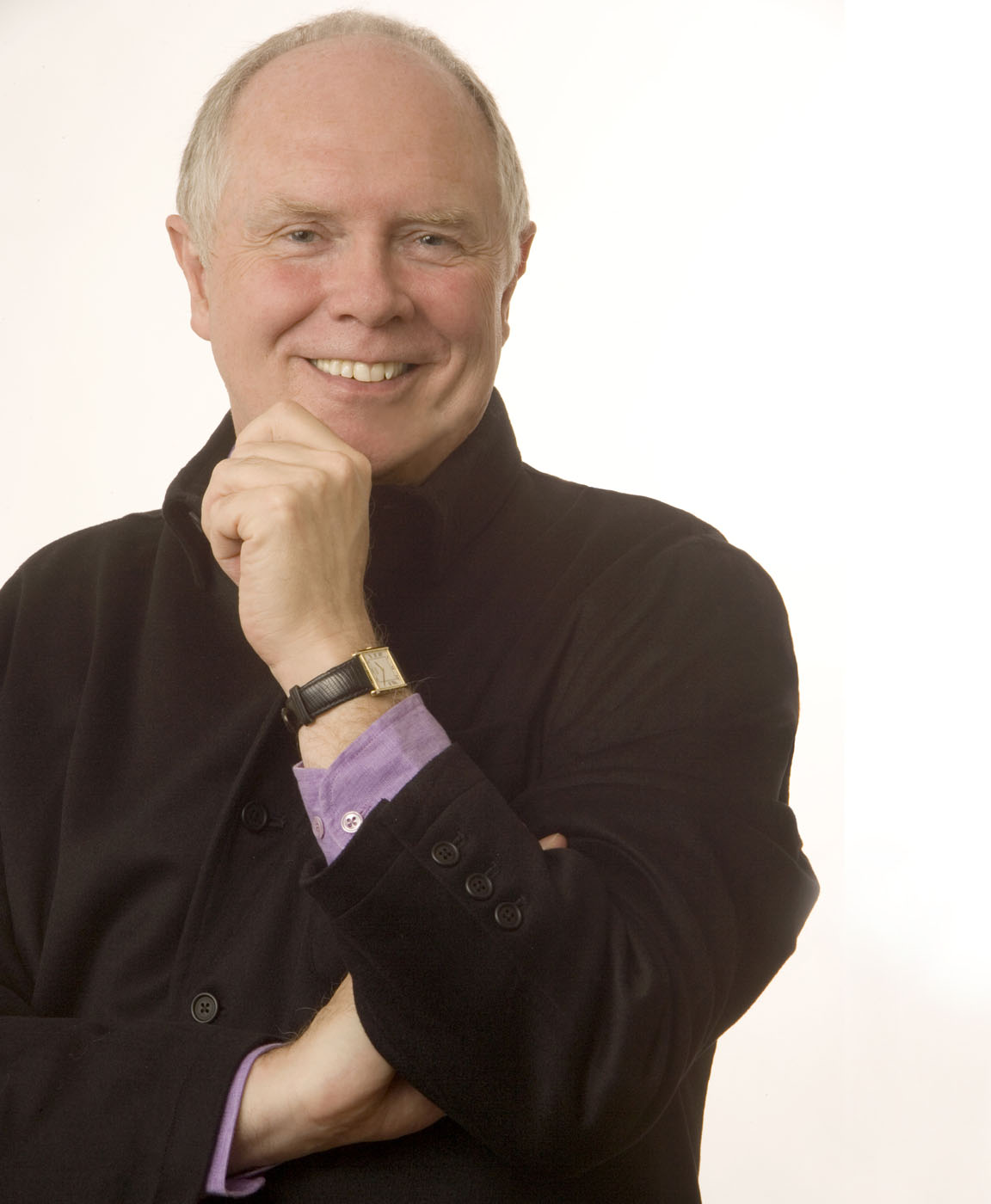
Conductor Thomas Dausgaard

Wow.

Lisiecki’s performances have been broadcast on CBC Canada, BBC Radio, Austrian Radio, French Radio, German Radio, Luxembourg Radio, and Polish Radio, as well as on French Television 3 and on TV 1 and 2 in Poland. He was featured in the CBC “Next!” series as one of the most promising young artists in Canada, and in the 2009 Joe Schlesinger CBC National News documentary about his life: “The Reluctant Prodigy”.

Upon the school board’s recommendation Lisiecki was accelerated four grades and graduated from high school in January 2011. Since September 2011 he has been studying for a Bachelor of Music at the Glenn Gould School of Music in Toronto, and in 2012 was named UNICEF Ambassador to Canada in 2012.

On the occasion of this Nielsen-Beethoven Festival of concerts with the TSO, I ask Lisiecki ten questions: five about himself and five more about preparing the upcoming concerts.

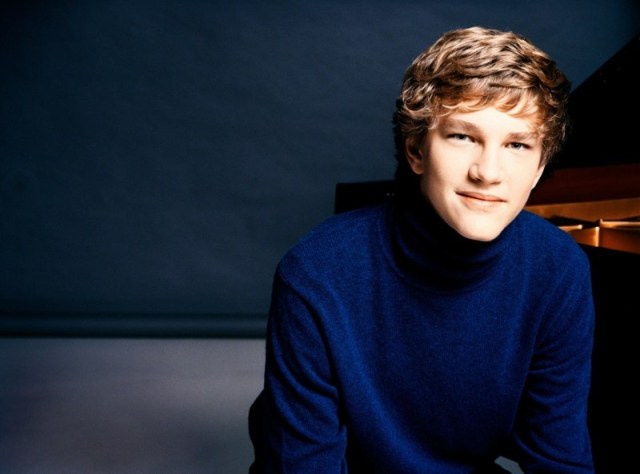
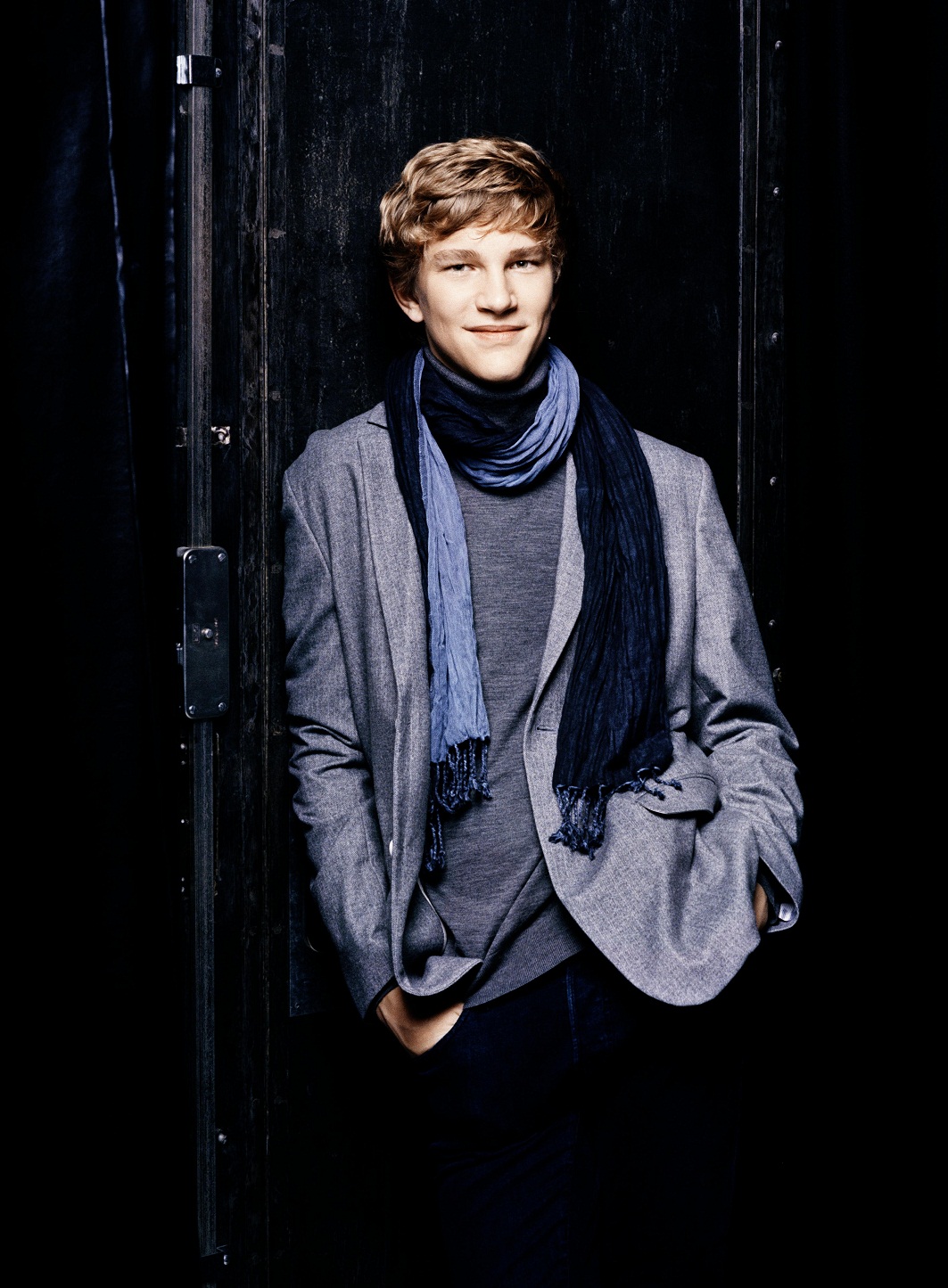
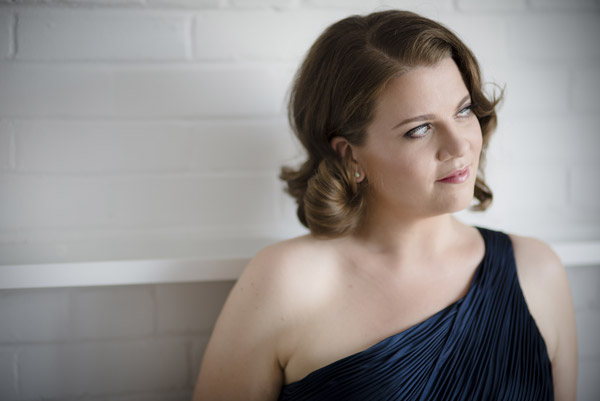
Pianist Jan Lisiecki (photo: Mathias Bothor-- DG)

Pianist Jan Lisiecki (photo: Mathias Bothor– DG)

1-Are you more like your father or your mother?

Some people tell me I look like my father, other like my mom… (It’s interesting, as no one has ever been blonde in my family!) But who I am more similar to? That’s a tough question (though I do get the feeling it is intended to be one!). I do believe I have inherited the more rational side from my dad; the compulsive one from my mom. But since I’m still with them on a daily basis, I am not yet in a situation to be able to assess what long-term effects in my personality I may find. Perhaps the person I’m most similar to is my grandmother (from my mother’s side). She was a math teacher for over 30 years, very calm, never gossips, never criticizes others. If I’m not similar, at least it’s a good role model! 😉

2-What is the best thing or worst thing about being a pianist?

I love something that’s simultaneously the best and the worst. In this case, that thing is pianos themselves. I like to say the piano has to be your friend. That’s true – as with most friends, there are positive and negative sides to a piano, things you’ll like and things you’ll have troubles with. Pianos are neverperfect. Some have a wonderful tone, other have a great action. So one must simply focus on those positives, and try to highlight them. I’m not saying to ignore the downsides, but definitely they should not be apparent to the audience.

3-Who do you like to listen to or watch?

My movie selection is shaped by offerings of airlines (so mostly uninteresting with a gem here and there) and enhanced by suggestions of others. I like watching weekly TV shows – it sets a pace while traveling and maintains some sense of normality. My current favourites are Person of Interest, Modern Family and The Blacklist. As far as listening, I don’t actually listen to much beyond my time with the piano. I enjoy evenings at home with jazz on CBC R2, and will pull out my iPod when I have craving for a reality check with Pink Floyd.

4-What ability or skill do you wish you had, that you don’t have?

Thankfully I think at 19 I don’t have to worry so much about not learning something… I only have to think of “what next!” Time will tell.

5-When you’re just relaxing and not working what is your favourite thing to do?

I truly love traveling, and therefore, whenever I have a spare week I fly around the world, simply to experience. Everything is a part of it: the destination, the country, the airline, the airplane. In December, I will spend 8 days flying around the world with my dad, putting on over 36,000 miles in that week, and visit Dubai, Hong Kong, and Sydney.

*******

Five more concerning the upcoming series of concerts with the Toronto Symphony Orchestra between November 12th & 22nd playing the last three Beethoven piano concerti.

Pianist Jan Kisiecki (photo: Mathias Bothor--DG)

Pianist Jan Lisiecki (photo: Mathias Bothor–DG)

1-Talk for a moment about the challenges of the last three piano concerti: # 3 in C Minor, #4 in G Major and #5 in E-flat Major, three of the most important pieces in the concert repertoire.

We all know that Beethoven was revolutionary. By extension, he also reinvented the piano concerto form. These three concerti are a cross-section of the evolution of his writing style. The Concerto No. 3 is very classically rooted, with significant hints of change to come. The fourth concerto immediately captures the audience’s attention – the piano starts. And The Emperor – well, nothing needs to be said.

2-What do you love about Beethoven’s concerti?

If you take the orchestra away from, say, the Chopin Concerti, you still have a very complete work. But if you take the orchestra away from a Beethoven Concerto, you are left with structure. This is exemplary of the weaving he used to intertwine the parts of the orchestra and soloist. I personally love when it is chamber music being made on stage, therefore I love the Beethoven concertos, and it is also this I greatly look forward to with the TSO.

3-Who’s your favourite pianist, living or dead?

Many of them are dead, many of them are alive. It’s a long list! Zimerman, Perahia, Argerich, Ax, Pires… I can go on forever!

4- The arts often feel very precarious in this country, spoken of as a luxury even as they starve alongside wealthy hockey teams. Please put your feelings about the music you love into context for us, especially with respect to these upcoming concerts with the TSO.

Music is always in a delicate position. Many things can be said to defend its position in our society, but I will make only one argument.  If you don’t mind posting this video, I think it illustrates the point exceptionally well.  

5- Is there a teacher or an influence you’d care to name that you especially admire?

Yes – I study at the Glenn Gould School in Toronto, with a fantastic dean, Mr. James Anagnoson, under a wonderful teacher, Mr. Marc Durand, and all made possible by a generous scholarship provided by Ian Ihnatowycz.

*******

 The Toronto Symphony Orchestra presents a series of five concerts commemorating the 150th birthday of Carl Nielsen, featuring music of Nielsen and Ludwig van Beethoven, November 12th – 22nd.   For information click the image.

Posted in Interviews, Music and musicology | 1 Comment

Dreams of the Vienna Woods

How can a place signify so much if you’ve never been there?  But when we look forward to a promised land –whether it’s America for the immigrant, Mecca or Jerusalem for the pilgrim, or just a personal utopia—it’s a mental landscape more special perhaps if one hasn’t been there.

The Vienna Woods are an ideal place with a different meaning to the locals than to those of us who have never been there. I’m finding that they have a particular lure right now.

There’s a Johann Strauss Jr waltz from 1868 titled Geschichten aus dem Wienerwald or in other words Tales from the Vienna Woods  

Cynthia Ashperger, Director of the Ryerson Theatre School Acting Program

Ödön von Horvath’s play Tales from the Vienna Woods?  It premiered in 1931, with Strauss Jr & assorted other waltzes as a big part of his cultural subtext.  I’m  blushing that I didn’t know von Horvath, a playwright who deserves to be better known.

Among his many titles is Figaro Lasst Sich Scheiden or Figaro Gets a Divorce, a play that (inevitably?) was adapted as an opera in the 1960s.

And so it shouldn’t be surprising that Tales from the Vienna Woods has also become an opera.  HK Gruber’s new adaptation premiered in the summer of 2014 based on  von Horvath’s play, receiving glowing reviews, and likely will be seen again, at least in Germany in 2016, and (if the reviews are any indication) will likely be heard all over the world thereafter.

Ryerson Theatre program will be staging von Horvath’s play early in 2015, directed by Cynthia Ashperger.

I’m the Music Director on the Ryerson production, which means my current task is assembling the dozen or so songs mentioned in the script, whether that means finding them in the library or—if they’re not to be found— transcribing them. Next week we begin rehearsing the gifted young actors at Ryerson.

We’re doing it in English.

I was just listening to “Wien Wien nur du allein”.

In translation that becomes “Vienna, you alone”.

I must apologize for concerts or performances I’ll miss.  But between Remembrance Day Service at Hillcrest playing the organ (Sunday) and wandering musically & otherwise in von Horvath’s Forest, I’ll have to miss a few things I would normally attend.


Posted in Dance, theatre & musicals, Music and musicology, University life | 3 Comments

10 Questions for Daniel Cabena

Canadian countertenor Daniel Cabena is highly regarded in both Canada and Europe for prize-winning performances ranging from baroque to contemporary repertoire, described as “very classy, with his freely flowing slender, well-sustained alto voice”. Cabena holds an Honours Bachelor of Music from Wilfrid Laurier University and a Doctorate of Music from l’Université de Montréal. He has also taken part in numerous workshops and academies, including the Centre for Opera Studies in Italy, l’Académie Internationale de Musique de Comminges, l’Académie Baroque Européenne d’Ambronay, and the Briten-Pears Young Artist Programme, for which he was assisted by the Canadian Aldeburgh Foundation.

Cabena’s engagements this season will include appearances in Europe with Musica Fiorita, Ensemble La Morra, Ensemble Diapsalma, Le Concert Spirituel and at the Schlossmediale Festival. In Canada, Cabena will appear with the Guelph Chamber Choir and Nota Bene Period Orchestra, as well as with pianist, Stephen Runge, in a tour of “A Sanctuary in Song,” a recital program of 20th Century English and Canadian song, which they premièred on CBC radio in 2013. In the summer of 2015, Cabena will appear with l’Orchestre de la Francophonie in the première of Chants dérobés, a song cycle for countertenor and orchestra by Stacey Brown on texts by Québécois writer Augustin Rioux.

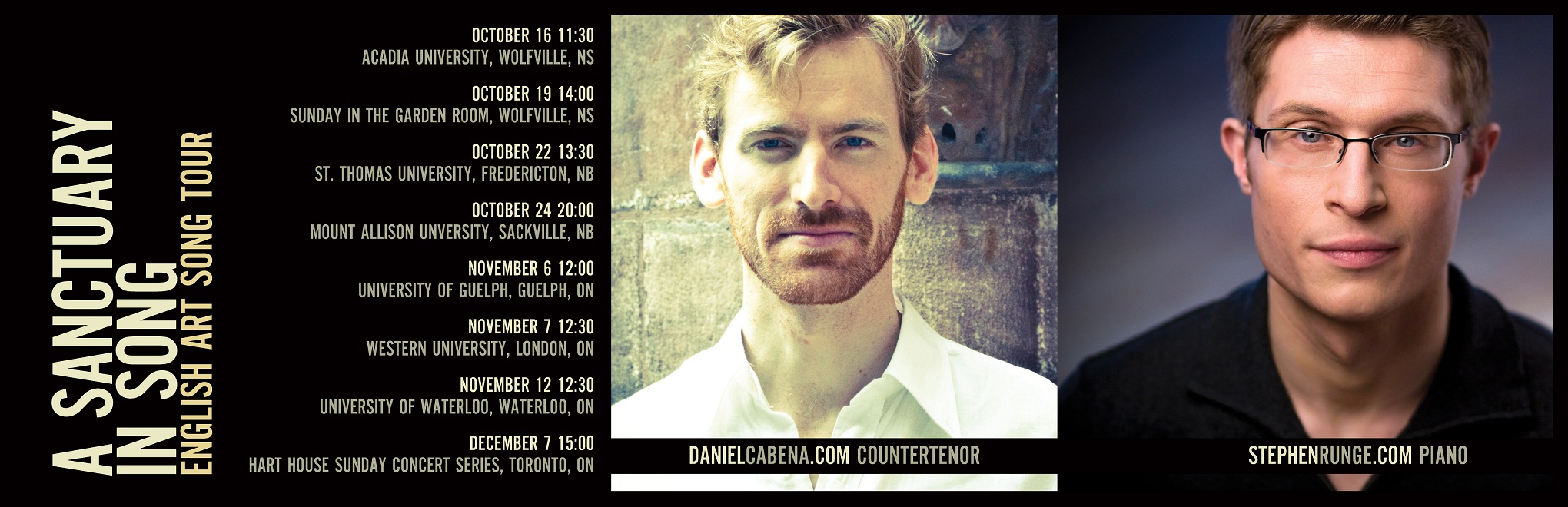
On the occasion of “A Sanctuary in Song”, an eight concert art-song tour running until early December 2014 in Eastern Canada with collaborative pianist Stephen Runge, I ask him ten questions: five about himself and five more about his creative projects.

1) Are you more like your father or your mother?
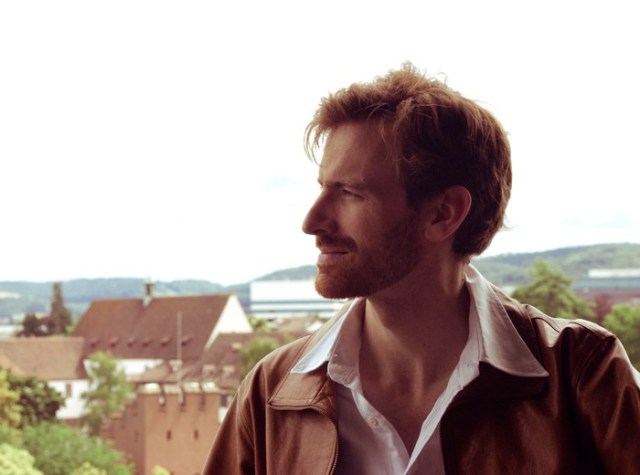
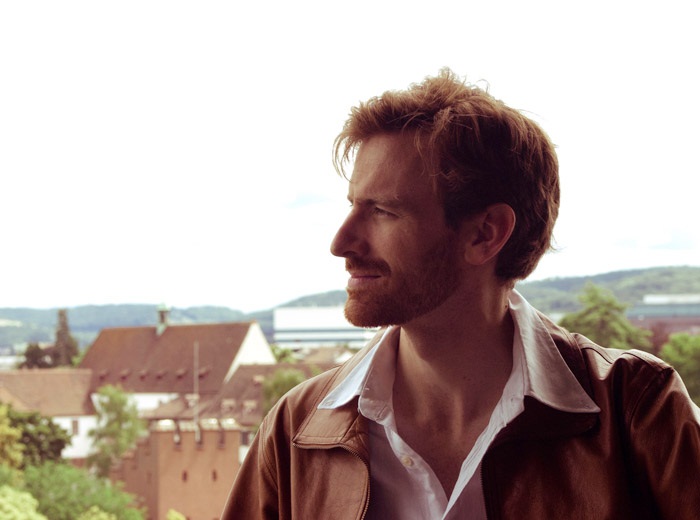
Counter-tenor Daniel Cabena

Countertenor Daniel Cabena

I suspect that I most closely resemble my father, Barrie. I share many of his features and predispositions, especially a passion for music and what I would call a devotion to story, in a number of different guises – fiction, liturgy, anecdote, legend…. We’re also both quite involved in an inner life, both introverts and both fascinated by the processes and influences that shape that inner life. But we’re also temperamentally quite different one from the other, so I might look to my mothers for insight. And perhaps you noticed the odd plural there! My biological mother died when I was a child, a bit too young to have known the term “melancholic,” though certainly old enough to know its most famous representative, “Eeyore; so, in other words, it would be difficult for me to identify in myself traits of temperament that I might share with my mom. But I’ve been blessed with a wonderful step-mother with whom I do share many traits of personality and many values and interests. In choosing a musical path, I follow both my father, who’s primarily a composer and organist, and my step-mom, who’s a very accomplished amateur singer. I’m grateful to my parents for having raised me in a way that honours honesty, love, hard work and intuition. I find that those values inspire me in all that I do, in all my singing and living.

2) What is the best thing or worst thing about being a singer?

Singing has a lot to do with bests and worsts! The process of singing is complex and as fraught with emotional danger as it is full of spiritual possibility. The lifestyle that comes with singing can also be difficult to manage. And singing is a profession in which there’s no single and often no evident career path. In all of those areas one can see “bests” and “worsts,” difficulties and possibilities.

I love the process of singing, that is to say, the intricate technical, musical, poetic, physical, spiritual, theatrical… processes by which something comes to be communicated through the human voice. I love the feelings associated with the most basic singing gesture of uttering and shaping a tone; and I love to speak the language of that tone and the language of speech at the same time. I love to speak with people and to be a conduit by which to share with them beautiful sounds, beautiful music, beautiful words. And I love, perhaps most of all, to be involved in an act that seems to carry with it – for performer and audience alike – the possibility of healing.

There are hard things, too, painful things about singing – like the gap between what one feels one can accomplish in the practice room and that which one can “deliver” on-stage. That can be a frustration, even though I’ve been encouraged to notice that, as the years go by, the gap can actually shrink a bit. And the profession itself can bring with it many challenges, especially simple, practical ones, like the necessity to make music far away from where one might live. I find it painful to be away from my family.
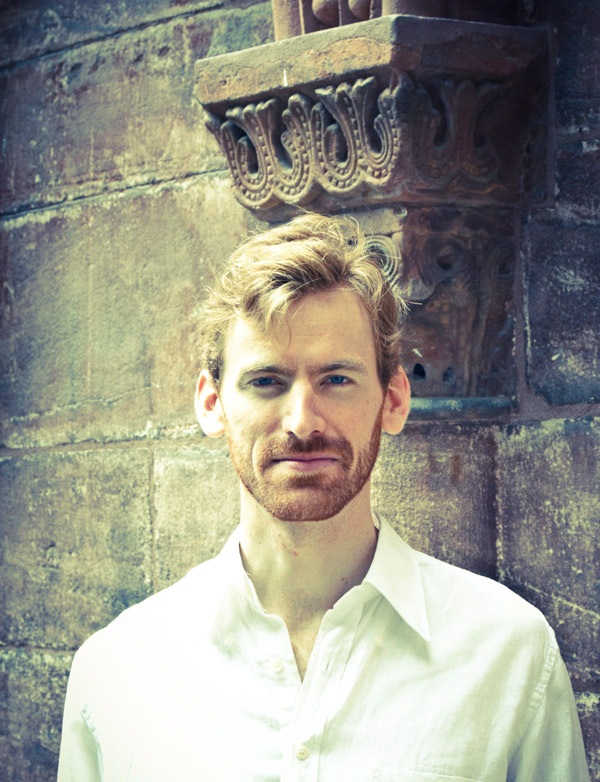
Counter-tenor Daniel Cabena

Countertenor Daniel Cabena

Those are some elements that I see on each side of the singerly coin.

3) Who do you like to listen to or watch?

I find that my days are and that my imagination is so full of music that I don’t spend very much time listening to it! Nor do I find the medium of recorded music to be particularly compelling. And I find far less compelling the newest sound media, which entail so much digital editing and so much file compression that one feels many steps removed from the original moment of music-making.

I do, nonetheless, love the radio. I love live performances on the radio. I love radio documentaries and interviews, and I suppose that what I listen to most are those sorts of things. Garrison Keillor’s broadcasts are among my favourites; and I also like programs like “This American Life.” But I simply adore ‘my’ CBC programs – “Writers in Company,” “Ideas,” “The House”…. I also really love what public radio stands for; and I’m fascinated and inspired by its history. I wish we were, in Canada, more protective of that tradition and more imaginative about all that it can and could be. And I can’t help but be upset by what’s becoming of CBC2, both in terms of its gradual commercialization and in terms of its programming.

As for watching, in the “media” sense, there are lots of fine TV programs that my wife and I like to watch. And I have some enduring favourites, like “M.A.S.H.,” “Star Trek” (especially The Next Generation), the Jeremy Brett “Sherlock Holmes,” and “The West Wing,” to name a few.

But what I really like to watch and listen to are live performances. I love to attend theatre shows and dance shows. I love chamber music concerts, recitals and symphonic concerts. I love the opera. I love to listen at church, in concert hall, under tent, in salon…anywhere where folks come together to appreciate and create something. Together.

4) What ability or skill do you wish you had, that you don’t have?

I wish I could play the piano. When I was wee I fell in love with the violin. So, from about the age of 4 until the age of 23, that was my big musical outlet, to the exclusion of keyboard studies. That’s a bit odd, seeing as my father, Barrie, is a extremely accomplished organist, choirmaster, pianist and composer. But we – wisely, I suspect – decided that I shouldn’t be taking lessons from my dad! But that meant that I – unwisely, I know – never pursued the keyboard. For a singer, indeed, for a musician of any kind, I think the piano is a very helpful ‘tool,’ that, of course, along with being a beautiful instrument in its own right. Anyway, it’s a tool that I don’t have in my toolbox, though I’m always working to improve my skills. (In fact, one of the most enriching elements of all my musical education was the two years of mandatory harpsichord lessons that I took at the Schola Cantorum in Basel. Each lesson was simply a joy; and I would happily have spent three hours a day just doing my little exercises on the Schola’s beautiful instruments and sampling from the large repertoire of pedagogical music.)

5) When you’re just relaxing and not working what is your favorite thing to do?

It’s funny, but I find that there’s no obvious point in a given day when the work ‘stops,’ so restless and curious is the imagination, and so close-to-hand is the voice. (I sometimes wonder if I shouldn’t work harder to create such a point.) In any case, when I’m not practicing or rehearsing or studying or doing business emails or booking travel… I find that my favourite things to do are domestic things. I love doing the laundry and ironing. I love tidying and cleaning. I love cooking. And the thing that I love best of all is to do those things with my wife, Mary. We have a great time making and keeping house!
But we also have a good time reading together, doing the Globe crossword (and swearing at the same, in both official languages), walking, sitting and chatting. Simple things. We also like shopping at vintage shops, searching for hidden gems. And I have a great interest in tailoring and all things sartorial. I also love to do yoga, which I’ve been practicing, sometimes in studios but usually on my own, for almost ten years.
I also have a wonderful time being involved in the busy lives of Mary’s two children, walking beside them as they pass through the adventure that is highschool. They’re both budding artists, too, one a thespian, one a graphic artist, so it’s a joy to be able to share with them some “shop-talk,” and much silliness.

And speaking of silliness reminds me of a quote from G.K. Chesterton, something about home being the one “wild place” in a world otherwise dominated by “rules and set tasks.” I like very much the idea that home can such a place, wild – a place of freedom and adventure as much as it is one of safety and repose.

Counter-tenor Daniel Cabena

Countertenor Daniel Cabena

Five more about your upcoming Canadian tour of concerts & masterclasses.

1- Please talk about the concert programme you’re singing on your tour, including your favourite.

Pianist Stephen Runge (click for more about him)

I feel quite spoiled to be singing this program, which is called “A Sanctuary in Song,” because it’s composed of so many of my favourite songs. The program features music by a number of 20th Century English composers, including R. Vaughan Williams, Gerald Finzi, Edmund Rubbra, Ivor Gurney, Roger Quilter, Herbert Howells and Benjamin Britten. I’ve put this recital together with Stephen Runge, a truly wonderful pianist and accompanist, whom I met while we were both studying for our doctorates at l’université de Montréal and with whom I’ve had the pleasure to work a number of times in the last few years, including in 2013, when we first recorded a version of “A Sanctuary in Song” for broadcast on the CBC.

The idea behind the program is, as its title suggests, to explore some of the themes that surround the idea of sanctuary; and we’ve grouped together the songs in order to address those themes specifically and from a few different angles. We’ve also shaped the program as a whole such as to suggest a narrative, trace the progress of a central figure, a sort of pilgrim who, passing through joy and tribulation, is seen to experience the qualities of sanctuary that the songs describe.

In selecting the songs of our “A Sanctuary in Song” recital, Stephen and I have also sought to recognize a few interesting and touching connexions. One of those connexions is the close friendship between Ralph Vaughan Williams and Gerald Finzi, a friendship that, as it happens, was in part spurred on by a mutual admiration for another composer featured in our program, namely Ivor Gurney. And to mention the latter also highlights another theme which Stephen and I have sought to address in our exploration of sanctuary, that of war, whose tragic reality touched (and in some cases shattered) the composers and poets whose works we are presenting.

We’ve also included in our program two songs by Australian-Canadian composer, Barrie Cabena, who, along with being my father, was a composition student of Herbert Howells’, whose beautiful “King David” in one of my most favourite songs.

2- The counter-tenor voice is no longer the novelty it once was, but there is still sometimes controversy about the correct vocal type to sing certain roles, especially given the various vocal types that are sometimes subsumed under the category of “counter-tenor”. Could you talk about your voice, and what you feel your voice is best suited to sing?

I’ve had an interesting parcours as a countertenor in the sense that I began my studies in Canada, in which milieu my voice type is at once scantly represented in number and provided with a great liberty in terms of repertoire, and completed my studies (insofar as one’s studies can ever be said to be “complete”!) in Europe, where there are hundreds of countertenors but where that voice type’s repertoire is more strictly circumscribed. So, on the heels of a time of intensive exploration of a countertenor ‘orthodoxy,’ I’ll take this opportunity to reveal one of the bees that’s gotten stuck my bonnet, a deliciously strange and liberating irony, which is that, though countertenors have found themselves at the forefront of the early music movement, they represent the newest voice Fach. In fact, to hear a solo falsettist was, as far as I can determine from my own reading, an extreme rarity to say the least until the latter decades of the 20th Century, after Deller had inspired a generation of male altos. It happens, therefore, that countertenors are now very much in demand but that we’re called upon mostly to sing repertoire that would almost never have been sung by singers of our kind.We sing music written for boys, castrati and women; and – in part as a result of the role played by Deller in the Purcell revival – we are often, and in my view too often, solicited to sing music better suited to high tenors (hautes-contre).

And this brings me to a detail of your question that I appreciated very much, which is that you recognize that “countertenor” is in fact a rather large umbrella. I don’t think that’s widely-enough understood, in fact; and misunderstandings in the area of vocal “Fach” can be a real frustration (even a danger) in the training of a singer, which is why I’m emphasizing this point. There are male sopranos, mezzo-sopranos and contraltos – distinctions to be made, I mean, along the lines of range and tessitura; and all the more subtle Fach distinctions can also be applied. Perhaps most of us are “lyric” countertenors; but there are “coloratura” and “spinto” countertenors, I would venture to say. And there are a few who could perhaps be called “Karakter” countertenors – I’m thinking of a singer like Dominique Visse, whose preferred opera roles might be said to fall into that sort of category. In any case, I don’t think there’s any need to define all of that to too great an extent, especially considering the fact that so much of our repertoire is borrowed from entirely other voices! But I do think that it helps to recognize the diversity that reigns under the broad umbrella that’s come to be known as “countertenor.”

And I would say, finally, that, rather than limiting himself to repertoire that’s come, by way of the early music revival, to be understood as “authentically” his, a countertenor should sing the music that he loves and that fits the dimensions of his voice beautifully and challenges him in all the right ways, the music that makes him sound fabulous and his audiences cry.

For me, there are many that fit but no single repertoire that fits those essential criteria. I love to sing Medieval music and music from the Renaissance; I love to sing works from the early Baroque and the high Baroque; I love to sing Classical music (though I regret that there’s not more Mozart that works well for my voice!); I love the 19th Century; and I adore the 20th and 21st Centuries. And I also love the music of the theatre, the church, the concert hall, the recital, the salon…. I love it all!

But, finally, I would say that I’m often struck by the verity of two observations, one made by the founding father of countertenor singing, Alfred Deller, the other by a champion of the generation that followed him, namely James Bowman. I saw the first on the back of a record jacket of Deller’s great folksong recording. The quote was something about the “inherent melancholy” of the countertenor voice. I think one hears that quality in Deller’s singing, and I wonder if it’s not an ingredient of many countertenor voices. (It’s in any case a quality that characterizes a lot of the music written in the 20th Century for male altos and a lot of that which has come to be most closely associated with our voices.) The other comment comes from James Bowman, and he made it to me when I met him a few years ago at a competition in France. His feeling was that the countertenor voice, as he put it, “creates an atmosphere of relaxation.” Those two phrases have often provided me with guidance as I seek to discover just what it might be that I have to offer with my voice.

3-What role(s) are you preparing / looking forward to singing in the future?

I’m very much looking forward to carrying on with the Ontario leg of Stephen Runge and my “A Sanctuary in Song” tour. I’m also eager to begin work on a couple of lovely Bach projects, one with the Spiritus Ensemble in Waterloo, Ontario, and one with another Waterloo-based ensemble, Nota Bene. I’ll also sing Handel’s “Messiah” with the Guelph Chamber Choir before Christmas. And then I’ll turn my attention to slightly earlier repertoire, as I’ll have a concert with Musica Fiorita of Basel, Switzerland, of the music of Vialardo, followed by a project with Toronto’s Scaramella of 17th Century German music. Then it’ll be back to Europe for another “Messiah” project in March 2015; and then I’ll turn my attention towards Purcell’s “Dido and Aeneas,” which I’ll be singing with Les Violons du Roy in April in Quebec City, Montreal and New York City. In the spring I’ll turn my attention towards the 21st Century, as I’ll be learning a new work for countertenor and orchestra by Stacey Brown and which I’ll be premiering with Jean-Philippe Tremblay and the Orchestre de la Francophonie in the course of their 2015 summer season. What a joy it is to have so many fascinating projects on the go, to have the chance to work with such wonderful colleagues and to sing such various and beautiful music!

4-Do you have a favourite counter-tenor either currently singing or from the past, whose voice represents your ideal, possibly a sound you either emulate, or simply one you enjoy?

This is a wonderfully important question for singers, I think, a question that touches upon an important element of any singer’s apprenticeship, which is that special mentorship that recognizes itself – sometimes from a distance; sometimes simply through listening – as kindredness. I’ve always felt a deep kindredness with the singing of Paul Esswood. His singing has always struck me as beautifully well-rounded and beautifully simple. He cares for the text, its clarity and its meaning; he cares for the melodic line, its tensions and releases; and he cares for the tone, allowing it to be magical and animal, deeply alive. I encountered Esswood’s voice shortly after I began singing countertenor, at which point my father kindly and wisely began acquiring for me recordings by the Deller Consort and by the Early Music Consort of London; and it was in the latter recordings that I discovered Paul Esswood, singing Medieval and Renaissance polyphony, and in marvelous company! But, of all the beautiful voices on those discs, it was in Esswood’s that I recognized something of myself; and it was in his singing that I recognized something of how I sought and seek to sing. And that’s why I speak of kindredness.

I had the privilege to spend a week with Paul Esswood, studying with him in St-Bertrand-de-Comminges, France – in the Pyrennees – where he’s been offering summer courses for a number of years. In 2010, when I attended, there were only two students, myself and a very fine Catalan countertenor called Sergi Moreno Lasalle; so we each had about three hours of private lessons each day of that week! And most of the time that we didn’t spend studying and singing we spent eating at a little restaurant with Paul and listening to his tales and anecdotes. He is a most generous and eloquent teacher, which is no surprise, for those two qualities are abundantly present in his singing.
I would say, too, that I’m grateful to have been offered in my teens those discs of Alfred Deller’s, to whose recording of the Couperin Lamentations I’ve listened perhaps more than any other (even more than I’ve listened to the Bach motets and the Ravel and Brahms string quartets or the Magnetic Fields’ 69 Love Songs – and that’s saying a lot!). I find the sound of his voice touching, haunting and his commitment to the text compelling. He’s also a man to whom I, as a countertenor, owe a great debt of thanks; and I must say that I’m mindful of that fact each time that I hear his voice. Finally, I would say that I’ve been deeply touched and inspired by the singing of Derek Lee Ragin, whose recording of Gluck’s “Orpheo” I hold close to my heart.

5- Is there a teacher or influence you’d care to name that you especially admire?

I’ve been blessed to have come into contact with a number of fine teachers over the course of my apprenticeship. Each of them has instilled in me essential insights into the universes of singing and teaching; and the process of learning with each of them, of developing a pedagogical vocabulary and getting to know them personally and musically, has been a great gift.

Wendy Nielsen

In the last couple of years I’ve been studying with two magnificent teachers, one in Canada and one in The Netherlands. In Amsterdam, I work with Margreet Honig, who’s really helped me both to clarify my technique and to bring it into a unity with all the other elements of my singing. She’s also helped me to hear new possibilities in my voice and, more importantly, to feel them. My teacher in Canada is Wendy Nielsen, from whom I’ve gained innumerable and invaluable insights into singing and my voice. Wendy and Margreet have slightly different but entirely complementary ways of working with the voice, and I benefit greatly from their twin influences. But I’m also so inspired by them, by their calm and positive energy, their honesty and their magnificently virtuosic pedagogy.

I’ve also had the great good fortune to have encountered Aaron Low, a Toronto speech pathologist, whom I consult regularly and who’s been a great help to me in breaking down vocal barriers, discovering new physical dimensions, and learning how best to manage the physical demands that every singing athlete must face.

*******

A Sanctuary in Song, Daniel Cabena’s art song tour with collaborative pianist Stephen Runge reached Ontario, with stops at University of Guelph (Nov 6th), Western University, London (Nov 7th), University of Waterloo (Nov 12th), and finally at Hart House at the University of Toronto, on Dec 7th. LOW-RES-Draft-Tour-Poster-v2

Posted in Interviews, Opera | 4 Comments

Extensions of Us 11.13.14 Questions and Answers

The program was created as a reaction to our experiences as recital performers and audience members. We come to this process with a great love for the art form, but also with a combined knowledge and experience as to its most frequent successes and failures. This is the beginning of that discussion as we test the waters of change.
Our goal is to blur the lines of artistic discipline and, in so doing, challenge the audience’s expectations. Simultaneously, we wish to entertain. Too often standard repertoire is shied away from, almost as if a hummable tune is a sign of lower art. We are looking for the one two punch: moments that test our preconceived ideas, followed immediately by the gratification of the familiar and beloved. Why can’t we have both? We are searching for something that works and that is distinctly us.

1-Who’s the “us” involved in Extensions of Us?

Lucia Cesaroni, Soprano
Italian-Canadian soprano Lucia Cesaroni has appeared with The Royal Philharmonic, The Ravinia Festival, The Aldeburgh Festival, Vancouver Opera, L’Opéra de Montréal and Pacific Opera Victoria.
If there were to be a ‘leader’ or group manager, Lucia would earn that designation. She and choreographer Jennifer Nichols conceived of this recital over several bourbon Manhattans at The Comrade in Leslieville. Both Lucia and Adrian will step past the role of vocalist and be integrated in to the choreographic elements of the evening.

Soprano Lucia Cesaroni

Adrian Kramer, Tenor
Tenor, Adrian Kramer, has appeared in opera and concert with many excellent theatres across North America including the Canadian Opera Company, Chicago Opera Theatre, Santa Fe Opera and the Castleton Festival with Lorin Maazel. Adrian was a part of the earliest programming, development and marketing aspects and has continued in that role throughout the process.

Tenor Adrian Kramer

Jennifer Nichols, Dancer/Choreographer
Jennifer Nichols, professional dancer and founder of The Extension Method™, owns and operates The Extension Room. Trained in ballet, she is also the founder of Hit and Run Productions and dances regularly with Opera Atelier. Jennifer has also recently been named Head Choreographer for the popular CW series, Reign.
Jennifer has been an integral part of the recital’s conception and development. She and Lucia worked hand in hand to make the recital a reality. Jennifer has been part of the programming, development and marketing of the recital. Once inside the studio she will take on the role of choreographer and movement leader, as well as dancer.

Choreographer Jennifer Nichols

Choreographer Jennifer Nichols

Justin De Bernardi, Dancer/Choreographer
Justin De Bernardi is one of North America’s newest and upcoming choreographers. A recent graduate from the Performance Dance program at Ryerson University and recipient of the Theatre Dance Award, De Bernardi is an independent dance artist currently residing in Toronto, ON. He is currently teaching and choreographing with companies, dance studios and conventions across Canada and the United States.

Justin, Jennifer, Adrian and Lucia will mirror each other throughout the show and highlight a character’s idea or emotion, an underlying theme and bridge the pieces together.

Maika’i Nash, Pianist
Hawaiian pianist, Maika’i Nash is a sought-after pianist coach & pianist across North America. He is a coach at the University of Toronto and works with a number of opera and dance companies in Toronto. Maika’i is also excited to make his Carnegie Hall debut with soprano, Audrey Luna in January, 2015.

Mai is the orchestra, the palette creator and the support upon which the musical and theatrical elements of the recital rest. His playing and his person will be intertwined in to the movement and multi media elements of the show.

Pianist & Music Director Mai Nash

2- Who was the driver/organizer bringing the team together? Is there an artistic director / someone in charge? Or is it a collective creation?

The program was borne out of Lucia and Jenn’s desire to collaborate and explore the recital format. But the musical chairs had already begun: Adrian and Lucia wanted to sing Traviata and Mascagni together , Mai and Lucia had been exploring the Poulenc and Jenn and Justin are regular partners. Everyone is represented in this concert through their choices of repertoire, individual musical aesthetic, years of experience and differing vantages as pianist, dancer and singer. All members of the team have absorbed multiple roles as performers, programmers, organizers, administrators and promoters.

3- The poster lists “Mascagni, Verdi, Part, Stravinsky, Bernstein, Poulenc, Canzoni Napoletane”. What’s the music you’re performing?

ACT I
Son pochi fiori – from L’Amico Fritz by Mascagni
The Cherry Duet – from L’Amico Fritz by Mascagni

Traumerei – by Schumann

Canzoni Napoletane:
Mamma
Core ‘Ngrato

Un di felice – from La Traviata by Giuseppe Verdi
È strano…Ah fors’e` lui…Sempre libera! – from La Traviata by Giuseppe Verdi

INTERMISSION

ACT II
De miei bollenti spiriti – from La Traviata by Giuseppe Verdi

Rejoice, beloved – from The Rake’s Progress by Igor Stravinsky

Variations for the Healing of Arinushka – by Avro Part

La Dame de Monte Carlo – by Francis Poulenc

La Séparation – Nocturne in F by Mikhail Glinka

Dance at the Gym – from West Side Story by Leonard Bernstein
One hand one heart – from West Side Story by Leonard Bernstein
Maria – from West Side Story by Leonard Bernstein
Tonight – from West Side Story by Leonard Bernstein

4-It’s more than a recital. You’re working in multiple media (music & words with movement & projections). Could you say more about the idioms you’re likely to be working in on this occasion?

Each of us bring key themes and ideas which have driven our repertoire choices and are, well, extensions of us! This program, the images projected at climactic points, the choreography all came out of our desire to build on these themes, teasing out new meaning through movement and in so doing, re-examining the singer-pianist recital format itself…The immigrant experience in Canada, the dynamic tension between a couple… These themes will be the driving force for the slide projections which will serve to colour the moments of transition between musical numbers. We are striving for a fluid product. One that flows from music to dance to projection seamlessly, bringing an element of opera’s Gesamtkunstwerk to a recital.
Just as the musical selections are meant to be an extension of the musicians performing them, the movement aspects are meant to function as personal expression for the dancers. They are an extension of the themes, key phrases, emotional climaxes and private admission of the singers and their characters.

5- Is this a one of a kind or do you see other performances of this sort in our future?

We are hoping that this is the beginning of something bigger than a single evening’s event. Future dates are already being proposed. For now, the most exciting part is that a beautiful program has emerged and we are yet to assemble as a group in the wonderful space of the Extension Room. It is then and there that the organic process of the program’s creation will begin in earnest. Thus far we have a great deal of conceptualization, theory, musical preparation and enthusiasm, but the workshop and group experimentation is still to come!

*******

Singing. Dancing. Good Tunes.
Surtitles & Beer.
What more do you need?

Extensions of Us:
Lucia Cesaroni, Adrian Kramer, Jennifer Nichols,
Justin De Bernardi, Maika’I Nash.
In Recital
The Extension Room
30 Eastern Avenue, Toronto
November 13 @ 8pm
Tickets: Thirty Dollars-General, Twenty Dollars-Students
Available @ luciacesaroni.com /extensionroom.com

Posted in Dance, theatre & musicals, Interviews, Music and musicology, Opera | Leave a comment

Addio Butterfly

I saw the “A” cast of the Canadian Opera Company’s Madama Butterfly tonight. There are two singers undertaking Mrs Butterfly (or she might tell you “Mrs Pinkerton” if you were to ask her) in the cast, a pair of BF Pinkertons and a pair of Sharplesses as well. In three weeks since October 10th a dozen shows (including tomorrow’s) will have gone off, six from each cast. Tonight’s will be followed by the last showing from the Kaduce / Secco / Dahl trio tomorrow. Falstaff and Opera Atelier’s Alcina also close Saturday November 1st, ending a spectacular few weeks.

In the lobby we talked about the topic everyone’s talking about, Jian Ghomeshi and “consent”. Ugly stories fascinate and bemuse us, which is not so different from Alcina (a fantasy of women holding men against their will) or Butterfly (a story of a very young woman giving consent, believing the lies of an older man from far away). The recipe could be “pour nasty story into heart, add music and stir”: stir the heart that is.

The chemistry in that “A” cast, comprised of slightly more famous singers, is somewhat different than in the other cast whom I reviewed back on Oct 11th.
Patricia Racette is a very strong Butterfly, with clear ideas of all the important parts of this huge difficult role. She is decisive in her big arias and moves brilliantly with the orchestra at all the climactic moments.  For a sucker like me, it’s time to turn on the waterworks, and i’m grateful.

Dwayne Croft is everything I want to see in Sharpless. He’s strong in the lower register but soars effortlessly when necessary. Where Pinkerton is the ugly American, Croft embodies all the decency of middle-America, a face that’s so wonderfully reactive I was watching him as much as I was watching Butterfly. He was an avatar of goodness counter-balancing a story of evil, both with his smooth baritone and his tormented body-language.

Elizabeth DeShong was again fabulous to listen to and to watch as Suzuki, and as the only principal required to sing all twelve performances, was the rock both of the Butterflies leaned on, which couldn’t have been easy considering some of the divergences between the two stars. I suppose it helps that she loves what she’s doing. Both DeShong & Croft wore their hearts shamelessly on their sleeves, which is not a bad thing in such a heart-wrenching work.

I’m going to say something controversial now.  We’ve all been staring at a picture of singers from an earlier run of Brian Macdonald’s production, a fabulous photo that’s been central to publicity for the COC for this production.  It’s a reminder to me.

Madama Butterfly, Canadian Opera Company October 2009 with Adina Nitescu and David Pomeroy (photo: Michael Cooper)

I saw David Pomeroy sing Pinkerton a few years ago and he was good. I saw Andrea Carè Oct 11th and he was fairly good too, although I think Pomeroy was better. But tonight? While there might be a virus to blame, I was struck by a couple of truths.
1) Some tenor roles are a perfect fit for the special personality of the tenor. Canio in Pagliacci, The Duke in Rigoletto, Don José in Carmen, and especially our friend Benjamin Franklin Pinkerton are jerks, people who are very hard to like, people who put me in mind –again—of the whole Ghomeshi discussion. (and for someone like me who’s a nice guy, makes me wonder: if I were more of a prick would my life have turned out differently? Nice guys really do seem to finish last). And so one can get away with a lot. If the tenor stands there, self-absorbed, unwilling to act, and sings a few high notes, he’s forgiven. It may be a pathetic waste of space, a drain of the energy of the production, but so what? He’s a tenor (and I can say this because I too am such a self-absorbed monster), and so we don’t expect much humanity.
2) This is the really controversial thought, partly inspired by thoughts I had at the Talisker Players concert Tuesday, listening to Virginia Hatfield. The COC uses the Ensemble studio as a training ground and I suppose that’s not a bad thing. But then singers are more or less shown the door. If Pomeroy –a Canadian—can sing the role well, why are we suffering a mediocre non-Canadian tonight? There seems to be a curious phenomenon at the COC right now. The Canadians who are being cast are amazing, and I mean seriously astonishingly amazing. Gerald Finley, Russell Braun, Adrienne Pieczonka, Jane Archibald, Michael Schade, and (in his two awesome appearances before retirement) Ben Heppner aren’t just competent. These performances we’ve seen in Toronto (Archibald’s Zerbinetta and Semele, Pieczonka’s Ariadne & Emilia, Finley’s Falstaff, Braun’s ongoing parade of lyrical loveliness, Heppner’s Tristan & Peter Grimes, Schade’s Tito) are arguably the best in the world right now. Some of the Americans are magnificent (Kaduce, Croft, Racette), but by and large there are Canadians available who should be getting experience singing roles that often go to mediocre imports. If the imports are as wonderful as Kaduce or Croft or Racette? Great. Let’s set aside the brilliant singers who obviously earn their place. I’m talking about many of the other parts. Given the choice between a mediocre Canadian and a mediocre foreigner, I think there’s an obligation to cast a Canadian, whether or not that person is from the Ensemble Studio or not.  Maybe i’m overdue saying this, because Alexander Neef is doing a better job in this regard than Mansouri or Bradshaw, two Artistic Directors who regularly brought in mediocre foreigners.  Maybe i’ve been emboldened by what i am seeing, such as the amazing all-Canadian Falstaff that closes Saturday, or the gradual raising of the bar of virtuosity across town at Opera Atelier, in a mostly Canadian cast conducted, directed & choreographed by Canadians.

Okay end of tirade. I hope people will not complain about Brian Macdonald’s production. It’s really quite good so long as the stage is peopled by adequate talent, as it has been for the past three weeks. Both casts are very good, although one moved me more.

And anchoring it all was a stunning reading from Patrick Lange leading the COC orchestra.

Halloween night is the last time they’ll put on that particular set of costumes for awhile at least.

Posted in Opera, Reviews | 13 Comments

COC: back to BAM in March 2015

COC MAKES RETURN VISIT THIS SPRING TO PRESTIGIOUS
BROOKLYN ACADEMY OF MUSIC WITH SEMELE

Toronto – The Canadian Opera Company is proud to be invited to present the U.S. premiere of Zhang Huan’s theatrically transcendent production of Handel’s Semele at the world-renowned Brooklyn Academy of Music in March 2015. The COC’s presentation of Semele at BAM is directed by Zhang with distinguished British conductor and Baroque opera expert Christopher Moulds leading the critically acclaimed COC Orchestra and COC Chorus.

Semele is scheduled at the Howard Gilman Opera House (30 Lafayette Ave., Brooklyn, NY) for four performances only – March 4, 6, 8 and 10, 2015.
“We’re very proud to be invited to bring this production of Semele to BAM. It represented new territory for the company on multiple levels: the opera had never before been performed by the COC, and the production itself asked us to push the artistic boundaries of the art form and show its infinite possibilities,” says COC General Director Alexander Neef. “It’s an honour to be asked to present this work on the global stage that BAM
represents, especially when it comes so soon after our last visit in 2011 with our production of The Nightingale and Other Short Fables.”

The COC’s 2015 tour to BAM marks the opera company’s third visit to the illustrious multi-arts centre that, for more than 150 years, has been a home for adventurous artists, audiences and ideas – engaging both global and local communities. The COC’s prior invitations to BAM were also to perform two equally ground-breaking productions:
in 2011 with The Nightingale and Other Short Fables and, in 1993, with a double bill of Bluebeard’s Castle/Erwartung, both directed by Canadian visionary Robert Lepage.
This production of Semele offers up a provocatively playful staging directed by famed Chinese visual and performance artist Zhang Huan. His daring East-meets-West production blends the Greek myth of Semele with the contemporary true story of an ill-fated Chinese love triangle – all set within the walls of an actual 450-year-old
Ming Dynasty temple, which weighs 17 tons and is transformed into an altar, a palace, a crematory, and heaven.  With appearances by debaucherous Buddhist monks, a giant inflatable puppet and an overtly aroused donkey, Zhang layers cultural taboos and ribald humour with classical compositions, creating a bold and contemporary fable.
The story, of what is Handel’s most sensuous opera, focuses on Semele, a princess and mistress of the god Jupiter, who wishes her lover to grant her immortality. Semele’s ambition and vanity, however, ultimately lead to her undoing.
Internationally renowned Canadian singer Jane Archibald reprises the role of Semele, which she sang with the COC in 2012, for this production’s U.S. premiere. Both abroad and at home, Archibald has dazzled audiences and critics alike with her vocal dexterity and dramatic presence. Her 2012 performance was met with overwhelming
praise. The Globe and Mail described her as “possibly the best coloratura soprano of her generation” and the Toronto Star proclaimed “Jane Archibald is alone worth the price of a ticket. She is spectacular in the title role.”
Archibald leads an esteemed cast of new and familiar faces to the COC. Canadian tenor Colin Ainsworth is the god Jupiter, and Welsh contralto Hilary Summers makes her COC debut portraying both Jupiter’s jealous wife, Juno, and Ino, Semele’s sister. Canadian soprano Katherine Whyte returns to reprise the role of Juno’s messenger,
Iris. American bass-baritone Kyle Ketelsen portrays Semele’s father, Cadmus, and the god of sleep, Somnus. American countertenor Lawrence Zazzo is Semele’s jilted suitor, Athamas.

Han Feng, sought-after for her fashion as well as costume and exhibition designs, plays with Zhang’s concept to create a fusion of Chinese theatre and European Baroque in the costumes enhanced by the magical lighting design originally conceived by Wolfgang Göbbel, and recreated by Willem Laarman.

Christopher Moulds makes his COC debut conducting Handel’s Baroque masterpiece. An experienced and versatile conductor, Moulds is considered an expert in classical and Baroque operas and appears with the premier houses and orchestras of Europe.
This production of Semele had its North American premiere with the COC in spring 2012. It was the first opportunity for audiences to experience Zhang’s production outside Brussels, Belgium, where it premiered in 2009, and Beijing, where in 2010 it was China’s first major staging of a Baroque opera.
TICKET INFORMATION
Single tickets for Semele and BAM’s 2015 Winter/Spring season engagements go on sale December 8, 2014 (December 1, 2014 for Friends of BAM). To purchase tickets online visit BAM.org or contact BAM Ticket Services at 718-636-4100.

ACKNOWLEDGEMENTS
The tour of Semele is made possible, in part, by the Ontario Arts Council.
The COC’s Semele is a co-production of Théâtre Royal de la Monnaie, Brussels and KT Wong Foundation.

“Press releases and announcements” are presented verbatim without comment

Posted in Press Releases and Announcements | Leave a comment

Talisker Players: Songs of Travel

My own song of travel is not a purposeful one, but a bit of a spontaneous adventure. I hope I can be forgiven for meandering around this theme of wanderings.

As of 6:00 p.m. I thought I was going to a CD launch in the suburbs. I had just been to a play rehearsal, a passionate display of talent from the students, emerging into the traffic chaos that is Toronto in 2014. While this can be a good thing –such as trips to and from the downtown sufficiently long to permit me to hear the entire Diabelli Variations in Stewart Goodyear’s new recording—it’s a daunting prospect if you’re getting onto the Don Valley late in rush-hour. And trips are never quite so enjoyable when you’re fighting a migraine (dogging my every move for the past 24+ hours, whether I go north south east or west). No I didn’t want to go to the launch, nor did I really want to drive home.

I was flummoxed because I just wanted to curl up in a ball.

And then I remembered that Talisker Players’ first concert was also happening tonight, just a few short blocks away from my office. The venue is such a friendly place, at Trinity St. Paul’s Centre, that  I thought I’d be fine: and indeed my headache was gone, at least until I ventured outside afterwards. If I don’t sound sympathetic or cranky in what I write I beg your indulgence, because of the throbbing in my forehead.

Lo and behold, the program is called “Songs of Travel”, a series of songs & meditations upon the theme. Talisker Players have a kind of formula that I have surely disrespected in previous reviews. They combine songs around a theme with poetry and/or prose spoken by a skilled actor or orator, whose speaking serves as connective tissue for the musical offerings. For the actor serving up this cartilage it must be challenging enough, knowing that you’re competing with –for example tonight—Virginia Hatfield & Geoffrey Sirett, without the additional insult of someone like me, who has barely acknowledged their contribution in past concerts. Today I was especially aware that I wasn’t really listening, because I was relying upon the music as a kind of creative aspirin. Derek Boyes was the actor/reader, who hopefully didn’t notice the guy way in the back row, who wasn’t being especially attentive as we started (..but at least I kept quiet).

I’m very fond of Talisker’s multi-disciplinary approach, peeling distinct layers off of their topic. Tonight was no exception. Among the glories of the program was the observation –not remarked upon by the programmers but manifest in the notes—that roughly half of the composers on the bill were women. That’s already a trip, no?

In the course of the program we were presented with more than two voices: because the widely divergent rep pushed the singers to use different sounds. And so while there were two singers present, we heard at least four voices (as I shall explain in due course).

Le Sommeil d’Ulisse is one of a series of Cantates françoises from composer & librettist Elisabeth Jacquet de la Guerre, Ulisse being one of the greatest voyagers of all time.

Soprano Virginia Hatfield

Virginia Hatfield was indeed the reason I wandered to this concert instead of the other one. Hers is a flexible instrument of great accuracy, one I’ve heard as a soprano soloist in Messiah, as Marzelline (Fidelio) and long ago at U of T in the title role of Alcina (an interpretation that compares favourably with the professional voices I heard at Opera Atelier just this week). As we approach the next COC event to choose members in their Ensemble Studio, I can’t help mourning the voices who wander away. Hatfield is a former Ensemble Studio voice who would be welcome in almost any production. And from the first note, Hatfield didn’t disappoint, her warm tone easily filling the space, her smile reaching the back of this church where I sat like Quasimodo, curled around my pain.

I started to feel a lot better, seduced by this lovely composition that I’d never encountered before.

The next item was also from a female composer, namely excerpts from Vally Weigl’s “Songs of Love and Leaving”, sung by Geoffrey Sirett. This congenial set –also settling me into the warm space—was lovely. I stopped scowling and opened my eyes.

The following piece on the program was one that had my back up for a bit, a brave bit of programming that for me was one of the highlights of the night, once I got over being a resistant old fart about it. Hm, maybe I should let you read what I say as you may think I am still being a resistant old fart.

Here we are again, encountering Canadian culture. It’s different somehow lately. Has Canada crossed an important threshold of self-worth? Lately I see less and less of the apologetics that used to be our primal response. I saw the Colville show presented between shows of, first Bacon & Moore, then Michaelangelo & Rodin. I’m sure Colville’s own eyes would bug out, observing what heady company he’s in. And I made a comparable observation at Esprit Orchestra’s concert, juxtaposing Adès & Ives with Paul Frehner and Chris Paul Harman.

It’s the same with the Canadians on this program, who were my favourites: Lightfoot, Mitchell, Tyson and Applebaum.

First came a trio of popular songs. In case you didn’t recognize those surnames, I’m speaking of Gordon Lightfoot, Joni Mitchell and Ian & Sylvia Tyson, whose songs were arranged by Talisker cellist Laura Jones for two voices, oboe and string trio.

The songs? “Early Morning Rain”, “Blue Motel Room” and “Four Strong Winds”, the latter song giving the cycle its name. Of the three, I felt the Joni Mitchell song in the middle, the jazziest of the three, fared best at Jones’ hands, although it also served as a wonderful showcase for a completely different kind of singing from Hatfield. The singing in the other two was splendid –Sirrett & Hatfield—but less is more in this sort of thing. I found the accompaniments too busy, getting in the way of what we really want to hear, especially in the closing song: the singing voices (but it’s a matter of taste; you might like them!).  Both Sirrett & Hatfield were using totally different sounds in these songs.

After intermission we were in a completely different place thanks to Louis Applebaum. It’s funny, I met him on a train once long ago. There he was near me on the train to Stratford, with a score in his lap. I smiled at him, and because I recognized the famous face, asked the obvious question. “You’re Louis Applebaum” and he smiled. I apologized for bothering him but he said he wasn’t really busy and we chatted for awhile. I am remembering this other story of travel from a million years ago –in the 1980s—in appreciation of what I heard tonight. His score “Algoma Central” is totally wacky, in a good way. The piece has wordplay that reminds me of nothing so much as The Bald Soprano, Ionesco’s playful piece from the 1950s, except that it’s built out of Canadian place names. With that charming text, we’re then immersed in the sound world Applebaum creates with a harp & flute teasing out the sounds from the soprano, who at times echoes in the space as though in a train station. I wonder if the piece has ever sounded so beautiful. I felt it received a fair hearing, and respectful treatment even if in some respects it’s like a big game that Applebaum is playing with us.

Our travels concluded with Sirett and Ralph Vaughan Williams, namely the “Songs of Travel”. I think for many in the audience this was the highlight of the evening (and is the piece giving the name to our concert program after all), even if I had stronger loyalties to the journeys undertaken on Canadian soil.

Talisker Players and their Songs of Travel will be back Wednesday October 29th at the Trinity St. Paul’s Centre.

Posted in Music and musicology, Reviews | Tagged , , | 1 Comment

10 Questions for Rachel Andrist

Canadian pianist Rachel Andrist studied at the Cleveland Institute of Music with Ann Epperson and Warren Jones. In 1997, she moved to Europe and joined the music staff of the Theatre Royale de la Monnaie in Brussels, Belgium. Since then she has been a regular guest at the Salzburg Festival, the Salzburg Easter Festival, and the Bavarian State Opera in Munich, and has also been on the staff of the Glyndebourne Festival, De Nederlandse Opera in Amsterdam, English National Opera, and Scottish Opera.

Andrist has worked extensively with conductors Sir Simon Rattle, Antonio Pappano, Ivor Bolton, Rene Jacobs, Valery Gergiev, Philippe Jordan, and Kazushi Ono. Since 2008 she has been the head coach for the Young Singers Project at the Salzburg Festival, the head of Musical Projects at the Royal Danish Opera Academy, and a guest at the Chicago Opera Theater. In the fall of 2010, Andrist returned to Canada to join the music staff at the Canadian Opera Company.

In November 2014 she begins the second season of Recitals at Rosedale.

I ask Andrist ten questions: five about herself and five more about her professional life as a collaborative pianist & leading Recitals at Rosedale.

Pianist Rachel Andrist

1) Are you more like your father or your mother?

This was difficult to answer so I polled my two wonderful sisters and my amazing brother. They decided I was the best and the worst of both of them.

2) What is the best thing or worst thing about being a collaborative pianist?

There are so many different facets to what I do and there are many good things and many difficult things at the same time. In any given day, I might play a staging rehearsal, a working session (audition) for Alexander Neef, I might coach either ensemble or mainstage singers, plus ( and very important ) do my own practicing. There are always things to translate or programmes to put together and I am also a voice coach at the Glenn Gould School. So, one of the things that I find challenging is changing my “hats” several times a day.

The best thing about my job for me, is when a singer says “I could not have done this without you”.

3) Who do you like to listen to or watch?

To be honest, I listen mostly to Fado and jazz. I also love country music….big fan of the Dixie Chicks. I consider “Takin the long way around” my theme song!

My Father was a jazz drummer and I inherited a lot of his love for Oscar Peterson, whom I did get to hear live once in Bruxelles, and most especially, Bill Evans.

4) What ability or skill do you wish you had, that you don’t have?

Well, I would like to have the skills of Lara Croft, Tomb Raider, but if that’s not possible, I wish I could dance really well. And play pool!

5) When you’re just relaxing and not working what is your favorite thing to do?

I am a serious fan of three different sports teams, which right now shall remain nameless because none of them are based in Toronto:) So I can spend lots of time yelling at the TV. I swim several times a week and often get my best ideas for recitals and repertoire in the “medium” lane. I have loved books and have had my head buried in them since I was very young.

~~~~~~~

Five more about your roles as a collaborative pianist and as Artistic Director of Recitals at Rosedale

1) Recitals at Rosedale is dedicated to art song, employing some of the greatest singers in the country. Please talk about your objectives and what direction you would you like to go with the series .

Ileana Montalbetti (photo: Bo Huang)

Ileana Montalbetti (photo: Bo Huang)

Recitals at Rosedale was originally the idea of Samuel Tam, who was the music director at Rosedale Presbyterian Church at the time. He had organized a concert for Ileana Montalbetti and I to air some repertoire for a competition she was doing and we “borrowed” the church and invited people. One thing led to another, the church came into the project and now we are in our second season.

Last year, we explored themes that were a tribute to the church…..the Seven Virtues and Deadly Sins and we put together programmes of art song tied together by quotes. My personal favorite was the Love…Actually concert where we took the audience on a journey through the stages of grief. There is so much amazing song repertoire in this world and I love the fact that most opera singers are dying to sing this repertoire. So in the long term, of course we want the series to continue and we will keep programming emotional journeys for people to come along with us.

2) Please talk about your November 9th programme “A Walk on the Dark Side: Myths, Legends and Fairy Tales.”

Allyson Mchardy

Mezzo-soprano Allyson Mchardy

The November 9th programme came from a germ idea after Allyson McHardy and I worked together last year on the Virtues programme. She is such a treasure to collaborate with and at some point in a rehearsal, we looked at each other and said, “we have to do the Zemlinsky songs”. So this programme of fairy tales and myths and folklore was built around those pieces. I played them ages ago in Bruxelles on a programme of songs and words by Maurice Maeterlinck and was fortunate to have had Jose Van Dam for a coach and have always wanted to do them again.

Leslie Ann Bradley (photo:  Lisa-Marie Mazzucco)

Leslie Ann Bradley (photo: Lisa-Marie Mazzucco)

I found some wonderful Szymanowski songs for Leslie Ann Bradley and Geoff Sirett is also featured in a mixed group of songs. We chose three settings of the famous Heine Lorelei ( Liszt, Clara Schumann and Gershwin) and we also have a group based on songs about the Moon. The wonderful pianist Robert Kortgaard is joining me and we are going to tie the groups together with movements of the Ravel Mother Goose Suite.

3) You are one of the busiest artists in town, between your work as collaborative pianist with the Canadian Opera Company, and as Artistic Director of Recitals at Rosedale, now in its second season. At the piano you make it look easy. Between the playing, the programming & the promotion, what’s the most enjoyable part of your work?

Well, everything is, as long as the balance is right. But I guess that can be said about life in general. One of my mentors ages ago said to me that it was important to be able to know when art was art and when it was business. I don’t consider myself a promoter at all but I guess the work I do for the series sort of makes me one, but I hesitate to use that word because I don’t think that part of things suits me.

4) You’re mentoring the very best young talents in this country. If you could talk to the singers who are younger, what would you say, what advice would you have that might make the difference in their development?

Well, at the risk of sounding terribly simplistic, learn to sing. Really learn to sing and when you do then a lot of things will be taken care of. Like what voice type am I and what should I sing and all that stuff that young singers seem so concerned about these days.

Stephen Lord (Photo: Christian Steiner)

Stephen Lord (Photo: Christian Steiner)

Stephen Lord and Sir Thomas Allen were over for brunch at my flat last winter and we were talking about this same thing…..that everyone wants the “diet pill” now and everything needs to be fast tracked. Singing is something that takes a long time to learn to do and its also very important to keep developing and keep studying and keep being open to new things because your body changes at times in your life and you need to rebalance your voice. The best singers I know work like crazy and they coach and they keep getting better. You need to want to sing healthily and well until you are seventy!! And of course there are the other things……if you don’t LOVE words, learn to love them! Read poetry, learn languages, read history. For example, if you are singing any of the arias from Don Carlos and you don’t know anything about the political situation at the time, you are not doing yourself any favours. There is knowledge out there that is so easy to get and so accessible now…..remember when you had to go to the library to find anything out? Be CURIOUS!!

5) Is there a teacher or influence you’d care to name that you especially admire?

Stuart Hamilton

I was so lucky…..I worked for Tony Pappano for five years and learned so much about singers and singing, Tony’s dad was a voice teacher and he spent his life playing lessons. I was also fortunate to work a lot with conductors like Simon Rattle, Ivor Bolton, Rene Jacobs….amazing musicians and inspiring people. I would consider Martin Isepp my mentor for art song and of course here in Toronto, I play all of my recital music for Stuart Hamilton, who is always pushing me to do better. For all these people and many others I am very grateful.

~~~~~~~~

RECITAL: A Walk on the Dark Side: Myths, Legends and Fairy Tales
NOVEMBER 9 at 14:30 at Rosedale Presbyterian Church
After an inaugural season that transported audiences from The Seven Virtues to The Seven Deadly Sins, artistic director Rachel Andrist with artistic advisor Monica Whicher are thrilled to invite you to the 2014/15 season. Beginning November 9th with “A Walk on the Dark Side: Myths, Legends and Fairy Tales”, Recitals at Rosedale presents soprano Leslie Ann Bradley, mezzo soprano Allyson McHardy and baritone Geoff Sirett with collaborative pianists Robert Kortgaard and Rachel Andrist.

The programme features works by Mahler, Debussy, Symanowski, Weil, Gershwin and more.

click for further information about the upcoming recital

Posted in Interviews, Music and musicology, Opera | Tagged | Leave a comment

Stewart Goodyear: Diabelli Variations

While Stewart Goodyear might be the greatest pianist in the world today, as a Canadian he lives under the radar as Canadians so often do. Not only does each country have their favourite son or daughter, but Canadians are a reticent bunch, slow to show the kind of pride Americans routinely demonstrate in support of their own artists.

The epic Sonatathon adventure of the past few years—a one-day reading of all 32 Beethoven Sonatas in Toronto as the “Marathon”, repeated in a few other cities—has been a natural outgrowth of the pianist’s deep love for this romantic composer.

Marquis Recordings captured studio versions of all 32, making them available in a set that does justice to this wonderful body of work. They’re the best such set I know of.

Goodyear is a curious synthesis of the thoughtful precision of a Barenboim, and the passion of a Schnabel, playing several of the sonatas faster than anyone has ever heard them: note perfectly. One might expect a trade-off between accuracy –which might call for a slower tempo—and speed –which might compromise that accuracy. But no.

Goodyear manages to be both fast & accurate.

His Appassionata last movement + coda is the fastest I’ve ever heard yet wonderfully precise.

His Hammerklavier an even greater extreme, considering how slowly some take the four huge movements of that sonata.  I daresay he brought a unique intelligibility to the finale with his breath-takingly fast tempo, as if we’re up in a jet, seeing the huge landscape for the first time, that was previously hidden by the slowness of our traverse (via other pianists).

Click for Marquis website to purchase

And now he’s taken on Beethoven’s Diabelli Variations, a late work that’s a perfect complement to the set. Indeed, I’ve joked earlier that Beethoven’s C Major sonatas are like one extended meditation (from Op 2 #3, the Waldstein in the middle of the book and sonata #32); with these variations Beethoven again takes up his fascination with C Major.
Goodyear has something else to offer, though, which you would have noticed if you’d picked up any of the sonatas or the complete set: namely, he writes astonishingly well. His liner notes are wonderfully eloquent. I am reminded of Anton Kuerti, a Canadian of another generation, whose notes were wonderful reading.

The essay accompanying the Diabelli’s is similarly brilliant. But that’s not why you should get the recording. Goodyear comes at the variations with a bit more care than I thought I noticed in the sonatas, possibly because –as he claims—they’re a recent discovery for him and not the lifelong obsession that we see in the sonatas. In a few places I sense care, a prepared attack, rather than the breakneck impulsiveness we sometimes encounter in the sonatas. But that’s perhaps apt for these pieces. I felt –having listened to the recording twice today (the highlights of my day, and a perfect set of bookends) –that each one is like a jewel. There’s an implicit set of rules or procedures for each variation, and so Goodyear is totally self-consistent in each one. The notes are clear, distinct and untrammelled by excessive emotion. Many are playful. Some are fearlessly powerful. The last one, which I’ve heard turned into something sentimental is emotional without losing its own sense of proportion.

Goodyear’s recording of Beethoven’s Diabelli Variations is now available from Marquis Recordings.

Posted in Music and musicology | 3 Comments

Happy Halloween, Frankenstein’s Boy!

The song during the pre-show was a tip-off I suppose. While the title says the show is about a boy, this song says otherwise.

And there it is, right on the poster.

click for tickets & info

Eldritch Theatre’s newest is Frankenstein’s Boy, a classic tale mixing the grostesque & the beautiful, employing some familiar tropes & romantic gestures.

When I say “classic” I’m also referencing existing texts, known storylines and even familiar turns of phrase, very much as the title might suggest, and certainly along the lines of the picture.

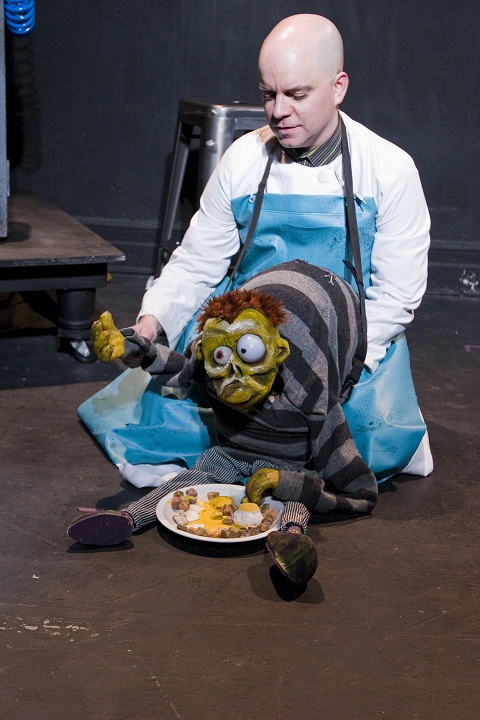
Eric Woolfe, playwright, puppet maker, actor & classicist

Eric Woolfe is the writer, grabbing chunks of known horror texts from romantic literature, theatre and film across a couple of centuries.That Woolfe has sewed them together as though it were a quilt is only appropriate, although come to think of it there’s another more grotesque kind of sewing invoked, using pieces of human bodies rather than fabric.

Did I make you shiver? Did I?

Woolfe is respectful of the integrity of the bodies he’s plundering, whether we’re speaking of captured flesh or text.  It’s not a neat & tidy split between Kimwun Perehinec’s beauty and Woolfe’s grotesquerie.  Both of them take their turns trundling down the thoroughfare of terror.  Both look good with red all over their hands.  Depending on how suggestible you are, it’s a matter for giggling or gagging.

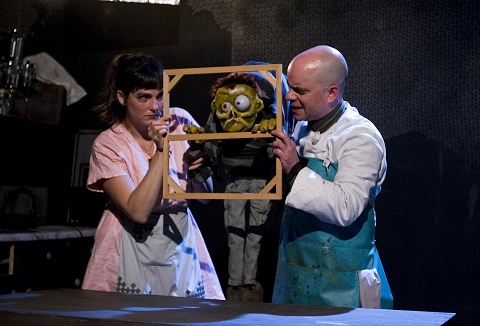
Kimwun Perehinec and Eric Woolfe

Kimwun Perehinec and Eric Woolfe (photo: Dawn Weaver)

Frankenstein’s Boy puts Woolfe and Perehinec onstage at the Red Sandcastle Theatre, a deliciously intimate space seating perhaps fifty or fewer initiates as though at a seance on Queen St East.

We didn’t join hands however.

Kimwun Perehinec (click for official bio)

I watched a very eager audience lean forward, clearly familiar with Woolfe & his body of work (or should that be “bodies of work”?) for Eldritch Theatre.

Woolfe and co-conspirator Perehinec create a horde of creatures with varying degrees of humanity, a multitude of voices, body-shapes, and impersonations.  At times I wanted to second guess, observing the choices made between scary and silly, the willingness to hold us in suspense or make us laugh. But then again, how real would I want the illusion to be? How genuine the blood and gore? At times Perehinec & Woolfe choose to let us see how they’ve made their magic, making this a safer voyage than what it might be. Even so we’re still sometimes right on the super-sharp knife edge… Coming into the theatre on a Sunday afternoon from this friendly neighbourhood, I’m feeling confident and giggly rather than shivering with fear. This could be a nasty journey if undertaken on a dark night. I wonder if Woolfe & Perehinec will be scarier as they get closer to Halloween?

In the meantime, I commend you to the Eldritch Theatre website, where the biographies demonstrate Woolfe’s darkly comic sensibility. For more of the same visit the Red Sandcastle Theatre, 922 Queen Street East October 23th – November 8th: if you dare.

Eric & accomplice

Eric & accomplice (photo: Dawn Weaver)

Posted in Dance, theatre & musicals, Reviews | 1 Comment