A better Mary Poppins

Before I had ever seen an opera, I already had experience with adaptation. I had read Mary Poppins.

And then I encountered the Disney film. Julie Andrews didn’t really seem anything like the character in the book. I was young, so I didn’t have stipulations. I just knew that the film seemed too Hollywood to me, too American. Too commercial.

I didn’t like any of the songs very much. “Supercali….”…what? I suppose I did like the concluding number “Let’s Go Fly a Kite”. It had a very hopeful positive feeling to it. But other parts of the film seemed more Disney than Travers.

Fast forward to another millennium. Tonight I watched a film on PPV called Saving Mr Banks, taking us through the drama of Disney’s adaptation of PL Travers’ classic book. The first hour was excruciating, as Travers resists Disney’s suit, making endless stipulations about how the film of her book must appear.  It was so painful because I always dislike this kind of negativity, but also because i love her book.

I had to wonder: how could they understand the way I felt so perfectly? Here I was, so many years later, reminded that while Disney’s adaptation had won five Academy Awards and that many people had loved it no I most emphatically did not love it at all. Nope. And here I was, listening to song after song that I disliked.

And so too, it seemed, did PL Travers.  Wow we had so much in common.

I am not going to spoil this film for you, but wow, here I was wondering how we were going to get to the end. Travers, as portrayed by Emma Thompson, is very difficult, very picky about how her book is to be filmed. Tom Hanks is a more ebullient Walt Disney than the one I recall from television, but of course we don’t know what the private Disney was really like, do we…?

There’s a genre of film whose name I couldn’t tell you. Amadeus might be an example, at least for those few minutes when it takes Don Giovanni, and then deconstructs it as a personal drama explaining Mozart’s life with the help of Salieri’s narrated analysis.  The film of Wizard of Oz does this too, in creating the whole dream built using the farm-hands.  And so, too, in this case. Director John Lee Hancock and writers Kelly Marcel & Sue Smith give us a rationale for the relationships and the writing of the book.  Mary Poppins, Mr Banks (the father in the book) and the family dynamics of the book are illuminated gradually.

The usual strong performances from Colin Farrell & Paul Giamatti add another dimension. I won’t tell you how we get to the end, only that we get there, complete with Disney’s Mary Poppins, a film that I still don’t like very much. But I found myself thinking that this –Saving Mr Banks—manages to tell the same story. In a real sense it’s Mary Poppins: that is, a better Mary Poppins than the one Disney made.

And that made me smile.

Posted in Cinema, video & DVDs, Reviews | Leave a comment

Hallelujah Sellars

Hallelujah Junction is:

1) A place.
When John Adams went there –so he said recently—he

to buy, click to go to Amazon

figured that it would make a great title for…
2) A musical composition. And so it came to pass, a composition for two pianos. And I wasn’t surprised to discover it’s also the title to
3) A book, as I discovered quite by accident with the help of google.

A book?  Yes, Hallelujah Junction is a book by John Adams that came out in 2008.  I immediately reserved the book from the library (the awesome EJB Library who obtained it in 2008). And it came in this week. I brought it home but only started reading today. How? I looked at chapters. (do you always read books from beginning to end? I do sometimes, especially when I don’t open the book voraciously. But obviously this time is different, considering the book is a bit like a box of chocolates, and my mouth is watering.)

The first is “Winnipesaukee Gardens”. Hmm so is this more biography than theoretical treatise? I really had no idea. I will come back to that one i think.

Ah, Chapter 13 is “A SWIRL OF ATOMS” which suggests Dr Atomic. And I noticed a familiar phrase: “THE PEOPLE ARE THE HEROES NOW.” NB chapter titles are in upper case.

Where had I heard that before? Oh yes, Nixon in China, how could I forget? I must go there immediately…!

I open to page 125, where Chapter 7 begins, and I’m thinking that this is indeed serendipity. Earlier this morning I read a piece by Robert Harris –a writer I especially enjoyed in his previous incarnation with CBC—concerning Hercules and Peter Sellars. I heard Sellars speak in a curious interview with Richard Ouzounian after seeing the dress rehearsal of his Tristan und Isolde production last February, more monologue than interview (did Ouzounian ask perhaps two or three questions in ninety minutes?) .

While I had admired that production –more for Ben Heppner and the COC Orchestra than the direction—Sellars had made much more of an impression on me in the Met production of Nixon in China that I’d been fortunate to see exactly at the time that the COC also produced John Adams’ opera.

And so oh my gosh here he is –Sellars—decades ago, as Adams describes a 1983 encounter. And while I love reading this, the whole time I’m reading I can’t help wondering how Sellars remembers this same moment, how he might recount this encounter.

Sellars was in residence at the [Monadnock Music Festival], directing the staging of an obscure Haydn opera, Armida…. I arrived first that day and sat in the cafeteria carefully examining all the people as they entered, one by one, for their lunch, wondering which of them might be Peter Sellars. When the genuine article entered he came at me con moto with a knowing and open expression that made it seem as if we had known each other for years.
It was typical of his special way with everyone—warm and focused and completely at ease. His small body and extraordinarily large head crowned by a shock of coarse hair that in later years he would wear in an absurd Bart Simpson crew cut made him appear as if he were hard-wired to an electrical outlet. His expressive face and intelligent eyes zeroed in on whomever he was talking to with a wide, appreciative smile. I realized that I was in the presence of very rare spirit. Peter possessed a maturity and interpersonal confidence far in advance of his years. I would later learn that his outré appearance and theatrically extravagant mannerisms were just a diversion, an entertainment even, concealing a man sensitive and empathetic to the extreme, one whose balance of masculine and feminine energies was keenly individuated. Already he was becoming famous for what some misinterpreted as “fast-food” productions of Mozart and Handel operas. What those who dismissed his work were missing, of course, was that hiding behind the pop playfulness of his productions was an intensely serious and sophisticated artist with the moral zeal of an abolitionist. (Adams 125-6)

Now I am not pretending I’ve read Adams’ whole book. I’ve read two pages so far. But I am already recommending it without reservation, as a valuable and important document.  I may have been guilty of the same assumptions Adams cites, under-estimating Sellars.  I am being pushed to re-think, which is something i appreciate very much.  Adams is at the very least an articulate witness.

Director Peter Sellars (click for another interview)

And how unexpected, how fascinating that Adams should be witnessing Sellars, as though Richard Wagner were merely watching Liszt produce Wagner’s opera, when we usually think of Wagner (or Adams) as the real star..? Someone else taking the stage, while he observes? Curious! But this phenomenon—especially Sellars’ role— becomes clear a few pages later. Clear? Like a bomb exploding really.

On that summer day of our first meeting in 1983 Peter already knew several of my early pieces, and he wasted little time in proposing that we collaborate on making an opera. He even knew what to call it: Nixon in China, a wry and mischievous title, like a pop-art mangling of Iphigenia in Tauris. He told me he had been watching Chinese Communist political ballets, the products of Madame Mao’s fevered agit-prop culture campaigns, and these, together wiyh a reading of Henry Kissinger’s pompous, self-congratulatory account of his White House years, had suggested an opera that might be a delicious “East meets West” study in modern Realpolitik. How he could have imagined me, who had never written a note for solo voice, as the ideal composer for such a project beggars understanding. (Adams 127)

Holy crap. And here I had mis-read Sellars as the guy with funny hair and verbose speech patterns, vicariously riding Adams’ coat-tails.

Wrong..!

When will i learn? you can’t believe everything (anything?) you read.

I will re-think, probably in the shower or while stuck in traffic jams. I will notice insights, as I ponder this new version of Sellars, a much taller figure in my imagination. It will change my experience next week, that’s for sure.

Yes it’s a jam-packed weekend, with Tapestry Friday, Toronto Consort’s Giasone Sunday, and something else I was considering (Gaudeamus: Deconstructed and Reconstructed at the Music Gallery) that i’d hoped to see Thursday, the latter now a bridge too far. While Essential Opera’s New Works also premiere on Saturday, I regret that I have to give them a pass (sorry!) because Sellars’ Hercules opens Saturday.

Sellars’ Hercules? I’m curious even if –on this occasion at least– he didn’t tell the composer what to write.  I wonder what Handel would say?

Oh… and i do need to read the rest of Adams’ book.  I’ve barely begun.

Posted in Books & Literature, Opera, Reviews | 2 Comments

10 Questions for Michael Mori

Michael Mori was announced as the new Artistic Director of Tapestry Opera earlier this year. Having worked alongside Tapestry founder, Wayne Strongman for two years as Associate Artistic Director and for the past eight months as Artistic Director Designate, this was the logical path of succession.

In his time at Tapestry Mori has such notable achievements as NewOpera 101 (helping emerging artist) and championing the integration of Hip Hop into Tapestry’s INside Opera program, bringing music theatre creation to at-risk youth in St. James Town.  An accomplished stage director who earned raves for his direction of last year’s Tapestry Briefs, Mori’s next adventure comes to the Distillery District the first weekend of April, namely Tap:Ex or in other words, Tapestry Explorations: Revolutions.

As opening night approaches I ask Mori ten questions: five about himself and five about Tapestry and Tap: Ex.

1-Are you more like your father or your mother?

mori

My mother.

I was raised by a collection of matriarchs in fact. My mother was a teacher, both creative and strict, proud and goofy at the same time, also the first in her family to have a degree. My maternal grandmother was the social lynch-pin of 5 generations of her family, and my paternal grandmother was a scholar and translator in Japan during the US occupation, and an old school social networker (she would write 2-5 letters a day). All of these incredible women were used to going where women “didn’t go” and making choices for themselves. The lesson of defining yourself by your choices and dreams rather than society’s or others’, was modelled from early on.

I almost became an engineer and had a math scholarship to UBC, but my mother’s constant encouragement to follow my passion, turned me back to the arts. She convinced me that learning language was a matter of will and immersion and as a result I have had a lifelong attraction to trying every language I might have a reason to learn. My mother was selfless in her work with special needs students, and I model my work and life goals after hers.

To be honest, I didn’t take the arts as a career seriously until I became an adult. It was her encouragment and passionate language about music that kept me in the music and theatre world long enough to discover my own passion and calling(s).

2- What is the best thing or worst thing about being artistic director of a company such as Tapestry?

Best:
This is opera that has a chance to change the world.

Discovering a company whose mandate was to make opera current (and current operas) and discard the museum stuffiness of the experience, rescued me from giving up on opera. It killed me to see the vast expanse of separation between the interested educated person, and the weak currency of the “traditional” opera experience being perpetuated by most major opera companies around North America. As AD, I have a mandate to change that within our productions and an arts and opera network to rally around updating, unifying, and evolving opera culture in Toronto.

The Bonus:
Being artistic director gives me the ability to work with emerging and world class artists, not only soloists who work at the COC and the Met, but also world-class playwrights and composers.

3- Who do you like to listen to or watch?

Watch: Roger Federer, Maria Callas, Anderson Silva, Pina Bausch

Listen to: Greer Grimsley, Russell Peters, Christopher Hitchins, Nina Simone

4- What ability or skill do you wish you had, that you don’t have?

“These are not the droids you are looking for”

5- When you’re just relaxing and not working what is your favourite thing to do?

Cycle, read, travel, dance… and when possible all in the same day!

~~~~~~~

Five more about Tapestry Explorations: Revolutions, upcoming April 4th & 5th at the Ernest Balmer Studio in the Distillery District.

1-Please talk about the challenges of Tapestry Explorations: Revolutions in the growing tradition of Tapestry Opera and your history of adventurous & original opera.

Challenges:
Challenge #1: Selling out weeks in advance… Well a week in advance… after you publish this, Rob Ford might be videoed ranting about the dangers of “subsidizing the arts for nyew opera” while smoking a monster joint rolled in an Aperghis score. The picture will go viral, the publicity will be incredible and we will have the challenge of turning people away when there are no more seats left.

Our Challenge to Big Opera: Tapestry’s new repertoire itself is a challenge to traditional opera. Tapestry Explorations is a challenge to broaden the skillset and expectations of the practitioners of opera, challenging performers to actively broaden their virtuosity to include the physical. Our performers are already physical and athletic people, in addition to being very accomplished singers and actors. Revolutions will call upon every aspect of their coordinated abilities, to communicate and perform challenging music and drama.

The true challenge: branded “Words”
“Opera” “New Music” “Experimental” – Words are a dangerous thing.
There is a reason why Against the Grain and Queen of Puddings call(ed) themselves theatre or music theatre companies. The word “opera” seems immutable and connected to a rigid perception from both lovers of opera and those who couldn’t be bothered. Many who don’t know opera are afraid of it, and many who love opera are afraid of new music, especially new opera. That puts an experimental opera show in a great place to prove everyone wrong.

Revolutions is exciting in how it allows us to be daring and collaborate with disparate artists:
Marijo is incredibly dramatically intuitive as a choreographer and Greg lives and breathes exciting non-traditional music. We are on DAY 3, and beautiful and compelling sequences are emerging as if they had been rehearsed and researched for weeks!

2-What do you love about Tapestry?

I love the word Tapestry. The word speaks to a combination of colours, of threads, of textures and images. We are empowered by our interwoven connection to artists and artforms spanning the gamut of traditional and contemporary, a unique place in the opera world.

We are small, and like Royce Gracie, our size is also our secret power and gives us advantages over the heavy weights.

What else.. I love that it’s alive (opera), and that young and more experienced performers get turned on by working on repertoire that means something to them.

Tapestry is the only professional Canadian company to completely embrace the evolution of the repertoire. Tapestry has premiered fourteen full-length Canadian operas (compared to the Canadian Opera Company’s four) and over a hundred short to mid-length chamber operas. We have taken our productions across Canada, to New York, London, and Glasgow, but the works we have commissioned have had even greater reach, bringing Canadian operas to many major cities in Europe, Asia, and Austrailia. More importantly, we are building our model around bringing both new and jaded audiences to opera.

3-Do you have a favourite moment in Tapestry Explorations: Revolutions ?

Choreographer Marie-Josée Chartier  (photo by Bill Blackstone)

There are two moments that pair really beautifully. The opening chorus from Bach and a duet by Aperghis between Neema and Andrea, choreographed by Marie-Josée. These numbers highlight music’s exceptional power to reveal humanity to us. Revolutions is about change, and exploring self to find a truer existence… and as we work we are discovering that there is so much in music both as performers and listeners, that precipitates self examination and change.

I am in awe of my performers. These voices are remarkable and any opera house in Canada would be lucky to have their talent. Given this stylized project, they have come in with open hearts and minds, and risen to every challenge (so far!).

4-How do you feel about the relevance of Tapestry as a modern-day citizen?

Zealous. Relevance is what opera companies talk about, but avoid when it means the financial risk of consistently programming new repertoire and supporting living creative artists. Tapestry takes this risk every year.

In a time when children are born with a device in their hand, and 99% of entertainment consumed is digital, the need for transformative live performance is greater than ever. Opera is transformative and Tapestry has relevant and compelling works to share with a contemporary audience and performance culture. So yes, I feel zealous. It is wrong that the majority of our talented emerging operatic artists, connect primarily to masterworks from a different country and time.

5-Is there a teacher or an influence you’d care to name that you especially admire?

Nancy Hermiston and Wayne Strongman: My artist/producer icons

Both of these people took their unique balance of artistic and business skills and created influencial organizations out their drive and passion. Their lives are their work and the opera world has benefited greatly for it.

Nancy Hermiston is the Head of Opera and Voice at the University of British Columbia.  Wayne Strongman is the founder and former Artistic Director of Tapestry, and lead the company for 34 years winning The Order of Canada, garnering multiple Dora Mavor Moore Awards, and leading opera creation in North America.

 ~~~~~~~

Tapestry Explorations: Revolutions April 4, 5 at 7:30 pm (doors open at 7pm)
Ernest Balmer Studio, Distillery Historic District 9 Trinity Street, Studio 316
Tickets: $35 +HST www.tapestryopera.com/tickets    416.537.6066 x222

Posted in Interviews, Opera | 1 Comment

CASP at RBA

I’d like to call the Canadian Art Song Project a recent initiative, but I think the truth is that they’ve been around since 2011 and so I’m late to the party. Today was my first encounter with CASP. They were kind enough to invite me to an earlier event, on a date when I was busy.

Their mission statement is impressive:

To foster the creation and performance of Canadian art song repertoire by commissioning Canadian composers to write for Canadian singers; to facilitate a collaborative process between the composer and the performer; and to promote artistic excellence and the Canadian experience in the living art of song.

CASP Artistic Directors Steven Philcox and Lawrence Wiliford  (photo by Danilo Ursini http://www.ursiniphotography.com)

Who is CASP? As far as I can tell, they’re artistic directors Lawrence Wiliford and Steven Philcox, who saw a need and have found collaborators on several sides:

  • In the community of singers
  • In the community of composers, including SOCAN, who have contributed funding for some CASP events such as today’s concert
  • In the Canadian Opera Company, whose noon-hour concerts in the Richard Bradshaw Amphitheatre had previously provided one of the venues for CASP

While I can’t comment on what’s gone before, today’s outing at RBA seems to fit nicely with that mission. Three established singers sang a varied program by four composers, giving a hint at the breadth of songs that have been and are being written by and for Canadians. Today’s program can be seen here:

As you’ve probably heard me say in this space before, we come to encounter the work and the performer, both objectives being encompassed in CASP’s mission & in today’s concert.

Forgive me if I keep asking existential questions as I go. I’ve been having conversations like this with a friend over the past 24 hours (he asked what makes a score operatic, as opposed to just being a musical theatre piece), so I find myself pondering…

  • What if any is the difference between an “art song” and any other sort of song?
  • Is that difference—if there is one—apprehended in the song or the singer?
  • Just as there are better or worse texts for libretti, are some of these texts more suitable as songs? …what makes a good song text?

And are we really as literate of the ins & outs of art songs, compared to other media such as opera or ballet? I’m hesitant even if I’ve come at these questions from several angles: as a composer, as a performer, as a scholar, and yes, as a listener. Each of the composers, and each of the performances can be understood as answers to such questions.

The concert began with Dissidence (1955), three songs by Pierre Mercure setting trois poems de Gabriel Charpentier. I found it ironic that Mercure leads off with the oldest compositions of the day, when I’m sure I’ve encountered his work leading off in the more normal place for Canadian compositions (at least in a conservative symphony program) but as the newest work to be played, serving as what R Murray Schafer called a ‘piece de garage’.   That allusion is not the only sign that I’m perhaps out of touch. Mercure’s three songs are very tonal—as are all composers heard today—employing accompaniments that are often brilliant. Soprano Monica Whicher did not conceal the irony of these songs, which is another way of saying that the texts mean much more than I could glean from a first encounter.

The next group was for me the highlight, four selections from A Play of Passion (2012), by Derek Holman to texts from diverse sources sung by tenor Colin Ainsworth. On this occasion I felt we were coming at art song from a quasi-dramatic direction, reminding me of recent dramatic presentations such as Ana Sokolovic’s Svadba and Against the Grain’s Kafka/Janáček/Kurtág program, each built from songs. And come to think of it, Kafka/Janáček/Kurtág features Ainsworth singing Janáček. The fact that Ainsworth employed a style that was the most operatic of those on display might explain my preference. Ainsworth’s voice showed phenomenal range –and I don’t mean his high notes, although those were on display too—in colour and mood. I think he sang the quietest and the loudest notes heard, or maybe that’s just because the music had me listening so intently. I think it’s also worth mentioning that Ainsworth recounted how the work had been presented previously, likely a factor in his mastery of the texts. I can’t forget how Canadian music has often been consigned to the scrap-heap, performed only a few times; that Ainsworth comes back to the texts—as opposed to merely premiering the work—gives his performance added depth & insight.   I mean, yes Mozart & Puccini are wonderful, but one reason they’re so remarkable is from decades of interpreters adding nuances, singers growing up on these works. Would that someone in this country could write something that could become common currency (thinking of everything from “caro mio ben” to “Down by the Salley Gardens”).

Different again were Whicher’s next group, three recent songs by Matthew Emery. I was moved by Whicher’s words of introduction, acknowledging Emery’s unique voice, which was fulfilled by his songs. He has a gift that I don’t think I’ve ever encountered in a Canadian composer, a gift that is sadly all too rare. Emery is simple and direct. His melodic lines often go exactly where you expect them to go, rising to the high note that crowns the accompaniment, rather than fighting it. Many lines end on the tonic. It’s maybe a little thing but oh my, in a program full of precious composers showing how clever & artsy they can be, he’s a breath of fresh air. Whicher is absolutely right, and I agree with her that Emery’s voice is one we need to hear in future.

The program’s last set was world premiere of an intriguing group from James Rolfe, with texts from André Alexis, and is a genuine cycle. Titled Moths, we’re taken through a night-time of associations, a poetic flight of fancy that sometimes also comes to life musically. I was more delighted by Brett Polegato’s loveliness of tone –one of the nicest baritones to be found in this country—than the actual songs. There’s so much going on in the texts that at times they’re almost upstaging the music. Considering the subject, I believe this cycle of six songs could easily be twice as long, half as fast. The delivery is at times so frenetic as to bely the sleepy world that purports to show itself to us.

For this last cycle we heard CASP artistic director Steven Philcox at the piano, a strong collaborative effort. The previous three sets were ably played by Kathryn Tremills.

Posted in Music and musicology, Opera, Reviews | 4 Comments

Any interpreter

Am I like everyone else? Could be.

I know people who get bored with music, are incessantly searching for new tunes, new interpretations, new sensations.  I don’t use that B word, which strikes me as a kind of obscenity.  How could one experience… no i won’t even say the word. But I will honour their statement without challenging it, given that “new” in that guise often means “new top 40” rather than a composition that’s genuinely new in the sense of a composer or choice of instrumentation that’s not following an old trend, not in fact imitating every other hit tune of the past half century. Forgive me, I recognize that everyone has their own idea of what’s new and old, familiar or edgy.  I don’t really use the word “bored”, as i simply allow myself to fall asleep when i am not stimulated; or i walk out.

While I suppose I have lots of curiosity, I noticed recently I have a few compositions that I can’t avoid putting in the car, that I can’t leave home without, that I keep coming back to, over and over: not recordings, so much as pieces. I have multiple recordings of these pieces, but the remarkable thing is that any interpretation will do. When I say “will do” I am understating things, as I mean that I can find my way to something bordering on ecstasy by many pathways (but there are several ways up the mountain, right?). I recognize that much of what’s going on may seem to be reified airy-fairy nonsense, something that’s more fantasy than real.

But for now, I am going to talk about these five, which represent five of my favourite composers, each in a different guise. And because any performer will do, I will rely on youtube, that treasure-trove. These five are always in my car.

Let me add by way of a brief digression, that I also have some works that I will omit mentioning because they’re big & long, and therefore impossible to experience in a simple trip downtown (ie 30 minutes or so). Yes these are great –and big—works and indeed likely to evoke a similar sort of response from other people. When we’re speaking of profound works, there are usually several great approaches to be found. Two operas come to mind, both with the same first initial, and indeed sharing some of the same thematic materials. I have never heard a bad version of either Parsifal or Pelléas et Mélisande, even though there’s an enormous range of interpretations out there. But let me set aside obvious choices such as those two great works, because as I said, you can’t listen to them in 30 minutes, can you…? And I don’t find that the noisy secular environment in the car is very conducive to either work.

But there are these five other CDs that I rely on from time to time. I don’t listen to them every day but whenever I turn to them they take me somewhere else.

1-piano transcriptions
. I used to have a great deal of vinyl devoted to transcriptions, but now I prefer to play them myself rather than listen. The exception is with Bach via Busoni. I’m especially fond of the Chaconne in D minor, although the St Anne prelude & fugue also transports me. Any recording will do, although I rely especially on Maria Tipo, whose magisterial readings blow my mind every time I listen. Oh and the link may not last, so enjoy while you may. 

2- Byron’s best bet
There are several wonderful instances of musical Byronism. I recall the time I told a professor that the actual Byron was a disappointment, and yes, seeing his
disappointment in me. But I think it’s a valid observation. Is L Frank Baum as good really as the 1939 movie? Sometimes adaptations surpass their source. I recall reading of Europeans of the last century who thought Shakespeare in their language surpassed him in English. While that idea once outraged me, I love it. How poetic, speaking as someone who prefers Berlioz’s Roméo et Juliette to the play. Berlioz’s Roméo is a Byronic beast, splendidly alone for much of the work, because the work is really an exploration of Berlioz’s own hyper-romantic sensibility. Has there ever been anything so amazing? Wagner acknowledged his debt to Berlioz (who never returned the favour, though he likely did owe RW a debt here and there).

But yes there was something as amazing, the thing that led Paganini to commission R & J in the first place. Harolde en Italie is four remarkable movements. I need to write in more detail about each but suffice it to say that this is really where you see the Romantic movement begin. I’d like to say it’s at the opening of the last movement with a blunt and symbolic gesture.  Beethoven begins the last movement of his Ninth Symphony with a medley to review the previous movements, followed by a redirection of the piece, via the blunt declaration by the soloist “oh friends, not in these tones”. In other words Beethoven shows us an abyss but consciously pulls us back to celebrate joy instead.

What does Berlioz do? He shows us the abyss too via a series of movements and a medley to open his last movement. But whereas there’s a neo-classical bass soloist ostentatiously calling us away to another purpose in Beethoven’s symphony, in Berlioz’s piece –an orgy of brigands—we slide helplessly off the edge of a cliff. It’s such a modern piece, Byron –via Berlioz—could be describing Toronto politics, the loss of honour & the impossibility of transcendence, the end of meaning itself.

On top of all this brilliance, Berlioz had the astonishing insight to put his Byron right onstage. The work is a kind of concerto, where we have a viola –that dark brooding voice—as though it were Byron, confronted with the romantic landscapes. This is not a virtuoso showing off, which is why Paganini didn’t understand it when he read through it, although he rejoiced when he saw it performed, a phenomenally original series of ideas in one densely packed symphony.

I’ve heard tons of interpretations, yet never yet encountered one that didn’t strike me as brilliant. Am I a fool or is Berlioz idiot proof? Of course it does require great players, so in that sense it truly IS idiot proof I suppose. It also makes terrific fun in the piano transcription Liszt made of the orchestral part (to be played with a violist of course), although I am not pretending I can play all of it.  The inner movements are easy enough. The outer ones? that’s another story.

So let’s sample one of those magical little inner movements, namely the March of the Pilgrims. Notice the odd duet back and forth to open (and later close) the movement: as though the pilgrim walks, hearing the bells from home behind him and the bells ahead, an aural image of the destination.  And then that soloist stands and plays, as though he were Byron against the whole world. That middle section of fast notes –a bit like Philip Glass only better–is truly like a long journey, wandering up and down through fascinating chord progressions that were likely the most adventurous thing anyone had heard so far in a concert hall.  And by the end, are we nearing the destination? Which destination after all:  the Holy Land or Paradise Itself?

3- overture
There are lots of great overtures I suppose, but only one works magic on me. Mendelssohn wrote one that uses two Goethe poems, a concept that I find vivid for the way it takes me back to a time I never saw. Sir Thomas Allen recently sang the Schubert version of one of these poems –“Meerestille” or becalmed sea – that goes with a constrasting companion, namely “Gluckliche Fahrt” or fortunate voyage. We know it in English as “Calm Sea & Prosperous Voyage”.

There are really two thoughts to this tune, that hit me at a very primal level. A calm sea is really a dramatic frame for voyaging. Without wind you can’t travel. And so the first section is a dramatic meditation that could be upon the surface of the beginning of time, at a cellular level before life began. Okay maybe I exaggerate, but the construction of this overture invites my mind to wander. When the wind picks up, we begin a sonata movement that is really about the two sides of a voyage. We have an exposition departing from the tonic key, moving into other keys for the perils of the development, and then, in the recapitulation, the home-key was never so fundamental, so safe and welcoming. It’s humanized by the sense of purpose & gratitude. And the very last notes mirror the beginning, when we sense that motion has finally stopped.  We’re safe at last.  Gratitude. Peace. Speaking of gratitude, I suppose i should mention Mendelssohn, so eloquent in his construction of melodies & structures, giving the history of the world in ten minutes. 

4- Commedia dell’Arte
Many composers have invoked the Commedia dell’Arte, that is, the improvised comedy of Italy that was exported throughout Europe in the Renaissance and later. Some wrote songs, some wrote operas. And later, the CdA became a kind of trope that –at least according to some professors—was distorted in the nostalgic images seen in the romantic period, whether in painting, onstage or in music. Yet there is phenomenal richness in these layers, as in any adaptation. I don’t worry that the “real” CdA is unlike what was signified in –for example—Fauré’s Masques et Bergamasques. I let my mind conjure up that “distorted” version without judgment, as I hear the four movements. The energetic first, the poignant second, the boisterous third, and the achingly nostalgic fourth… Their brief glimpse of a magic world is one that I wish would never end. It always makes me sad when it does, as if at the end their time is over, and they must go away. I’ll start  you at the beginning, and you can decide whether to continue or not.

5- two pianos
There is an enormous wealth of music for two pianos, so the pieces I will speak of may seem an odd pair to mention. Debussy’s four movement “Petite Suite” is charming and simple. Two of them share titles with poems by symbolist poet Paul Verlaine. I shared the opening movement “En bateau” over a year ago, a piece that reminds me of the actions it seems to describe. Watch the bodies, and then think of two men rowing a boat. No the players aren’t precisely rowing, but still the body-language reminds me all the same. All four pieces are like jewels, as note-perfect as Mozart, but dare i say it, better, because they’re not necessarily symmetrical. They have an organic perfection that’s like nature itself.  Golden section perhaps? or merely his insight & sensitivity.

What to listen to next?

Posted in Music and musicology, Personal ruminations & essays | 5 Comments

American Hustle

It should be better.  The performances are mostly good.  Christian Bale is amazing with a surprisingly big gut and a comb-over, channelling the Robert De Niro of Raging Bull.  Yes, we’re told, Amy Adams can act.  This is the sexiest thing she’s ever done, a complete reinvention of her usual onscreen persona.   But something’s out of wack if that’s the film’s chief claim to fame.

A friend reminded me that David O Russell directs American Hustle, whose previous film is Silver Linings Playbook (review).  They’re worth comparing.

Both have larger than life performances from Jennifer Lawrence and Bradley Cooper, plus a smaller role for Robert de Niro.     De Niro puts in a brief appearance, a much quieter thug than any he’s shown us heretofore in a long career of mobsters.

I found much to admire in both films.  They achieve a kind of realism by allowing scenes to go on with their own emotional logic, often much longer than you’d expect.  The effect is to create a quirky texture, a sort of soulfulness that is a lot like real life, dragging us into various culs-de-sac, corners where we can get totally lost.

Both films feel longer than they have to be.  Perhaps this is bad? Or maybe it’s because they’re genuinely new & in their originality, forcing a new sort of literacy upon us.

Both films seem to be more a series of intriguing episodes than a unified story.  This makes for great chunks at Oscar-time, fabulous opportunities to be nominated for awards.  But when you get past the trailer & the highlights you see, and then sit down to watch the film, it’s actually less than the sum of its parts.

I can’t help thinking that all this great work should amount  to more, that the deficiency must be mine.  I must be watching this the wrong way, missing something along the way. Maybe i will learn how to read this style, will pick up on a few tropes & stylistic preoccupations that will sustain me.

But then again—in that conversation I alluded to—I found it hard reconciling Bale & de Niro (whose work and big guts I admire very much) and the foppish Cooper.  I like that Russell pushed Cooper further into this foppishness by showing him to us in curlers.  I keep waiting to see the light, but all I see is a very buff handsome young man with beautiful teeth, and not a persuasive performer.  It probably doesn’t help him that he’s sharing the screen with such authentic performers as Adams, Lawrence & Bale.

I will watch it again, seeing if I can find a way through this maze, to make it work for me.  Maybe another film or two from Russell & I will understand his style.  Right now, he has great moments, and has a knack for getting a lot of energy out of his actors.  For that alone I am grateful even if I am puzzled as to why it hasn’t yet gelled for me.

Maybe next time.

Posted in Cinema, video & DVDs, Reviews | Tagged | Leave a comment

Pesky Porter raccoons

I had a conflict of interest, I’ll state it right off the bat.  I love flying to New York on Porter airlines.  As a resident of Scarborough it doesn’t make that much difference going to Billy Bishop Airport on the waterfront or Malton in the Northwest of the GTA.

I prefer the aesthetics of flying those charming propeller driven planes to Newark over taking a jet to one of the NY airports anyday.

I have liked Porter and their clever marketing, that includes a raccoon cartoon.

Conflict of interest?

Yes, I loved them up until now, when they were flying small planes.

But they want to enlarge the runways at Billy Bishop, to grow their brand substantially.  They could do this at Malton, but of course then they’d be competing with Westjet, Air Canada and all the other carriers who aren’t trying to force jets into the downtown.

I was following this, I admit, with conflicted feelings because I find the flights so convenient already, and like any traveler am a sucker for convenience.  If they could shave a few more minutes off my flight time, if LA and Vancouver were suddenly part of the mix, hey that sounds pretty good right?

But I have to thank Adam Vaughn for bringing me back to sanity.   I heard about this through a piece shared on Facebook from the Globe and Mail.

Here’s the problem.

Toronto’s transportation infrastructure is severely messed up, as anyone living here can tell you.  Several mayors have lied to us, telling us what we want to hear.  Rob Ford is only the latest in a series who promise lower taxes even when we have serious needs to address.  To his credit Ford spoke of building subways.

Now if we have these colossal problems, needing a downtown relief line for the subway plus one of the assorted cross-town options, just to clear our choked arteries, why would we piss away $100 million in government funding on support for the roads around the airport?  I mean, yes, it would help me get to NY or LA a few minutes faster.  But why in heavens name are we getting government support for the people seeking a quick exit from the city, when everyone else is stuck in gridlock?

It’s immoral, pure and simple, to be using funds this way.

It hit me clearly, reading Adam Vaughn’s words, that my loyalties had been out of wack.  Or maybe it’s just that I liked Porter as the tiny perfect airline, but can’t bear the thought of them as big and noisy.  It’s ironic that their corporate identity matches what they are and have become: urban pests who are out of control. Sorry, but I am increasingly thinking of Porter not as the little airline that could, represented by the cute masked figures, but instead, a clever and highly political agitator for a vision of my waterfront that is totally against everything I stand for.  Yes the raccoons are now behaving true to form. Have you ever had raccoons in your roof? The airline are like the animal, in an out-of-control growth spiral, infesting our city.  At least none of the planes are turning over garbage containers (yet).

Those tax dollars arguably belong to everyone.  Where does city council get off giving that money to the rich (Porter and those of us flying to see a show on Broadway)?  We need subways first, as Mr Ford has said. As a Porter customer i indeed feel conflicted, no longer quite so comfortable that I have been supporting the wrong side.

Um, does the deputy mayor even have the authority to push for something like this?  Isn’t his mandate to stay the course?  To an outsider this city must seem totally crazy.

I know that to this resident it seems very odd, very confused.

Posted in Animals, domestic & wild, Art, Architecture & Design, Personal ruminations & essays, Politics | Leave a comment

10 Questions for Laura Pudwell

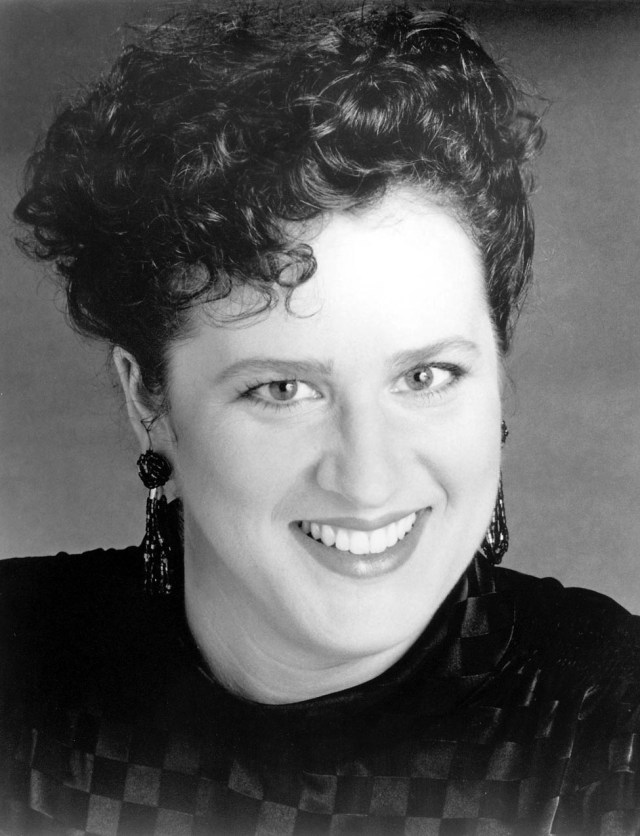
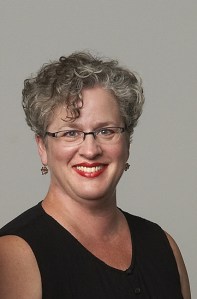
Laura Pudwell’s reputation as a superb vocalist has been well-established as a result of her performances worldwide, in a vast repertoire ranging from early music to contemporary works.

Mezzo-soprano Laura Pudwell

I’ve been watching her engaging performances for many years, fascinated by her effortless sense of comedy.  Yet Pudwell brings a genuine pathos when needed, as we saw in the Tafelmusik Hercules a couple of years ago, or as a soloist in the Mozart Requiem just over a year ago.  The vocal colours are rich, her expression & diction wonderfully flexible.  Those comic gifts will be foregrounded in Toronto Consort’s upcoming presentation of Cavalli’s 17th century masterpiece Giasone in early April.  On the occasion of assuming the title role I ask Pudwell ten questions: five about herself and five more about her work on Giasone.

1) Are you more like your father or your mother?
Mezzo-soprano Laura Pudwell

Mezzo-soprano Laura Pudwell

Interesting question!  I’ve always thought I look very like my father, but in recent years I see more and more of my mother in me.  I would still say I have more the look of my Dad than my Mum.  But in terms of personality, it’s my Mum all the way!  Of course this made for very interesting teenaged years… my brother used to refer to us as the clones, and I’m not sure he was being altogether positive.

Like my mother, I’m a very quick processor, in fact I do everything quickly, which is both good and bad.  I  learn quickly, make decisions quickly, make friends quickly, anger quickly.  You get the picture.  I’ve always wished I had my Dad’s calmness, rootedness, gentleness.  But my brother got all of that.

2) What is the best thing or worst thing about being a singer of historically informed performance repertoire?

The very best thing about singing the repertoire that I perform is the people I get to work with!  No question about that.  The creativity and talent is boundless, and collaborations are always fun and challenging. I get to work with some of the worlds most talented instrumentalists and singers, and am privileged to be part of every project I do.  I used to fret about being pigeonholed as an early music singer, but you know, I’m very happy where I am now.  I don’t think I would change a thing.

3) Who do you like to listen to or watch?

Curiously, I don’t listen to much vocal music.  I’m a cello fan, as is my son, so I listen to a lot of Rostropovich, Mischa Maisky, Jacqueline Du Pre. (Will  anyone ever play the Elgar Cello Concerto more beautifully?)   My son introduced me to a recording called The Goat Rodeo Sessions, with Yoyo Ma, Stuart Duncan, Edgar Meyer and Chris Thile.  Fantastic stuff.  And I confess that the popular bands of my youth still hold me in their power;  Supertramp, Led Zeppelin, Genesis,  The Beatles, The Rolling Stones.  But I also have a secret fixation on great tenors, and listen to them just for sheer heart-stopping beauty.  Caruso, Bjorling, Wunderlich, Pavarotti.

4) What ability or skill do you wish you had, that you don’t have?

Oh good grief!  Where do I start?  The list of what I can do is SO short.  I’ve always wanted to ski.  Well, I’ve always wanted to be not AFRAID to ski, which I guess is different.  And there’s the cello again.  Every time I watch a beautiful player, I think how great it would be if I could just sit down and pick up that lovely instrument and play it.  So sad.  And as the mother of two teenagers, I would LOVE to be clairvoyant so I could actually have some clue as to what they might be thinking…

5)    When you’re just relaxing and not working what is your favourite thing to do?

I’m a big reader.  Every Saturday after I finish the Globe and Mail cryptic crossword, I pour over the Book Section and make notes of everything that sounds interesting; biography, fiction, non-fiction, murder mysteries.  Sadly, my list is now so long I’ll never get through it, but I keep adding books to it anyway.  I also knit socks.  I have a largish family with very cold feet.

~~~~~~~

Five more about Giasone,  Toronto Consort’s upcoming production at Trinity-St. Paul’s Centre, Jeanne Lamon Hall April 4-6.

1) Please talk about the challenges in creating Giasone.

Well, the biggest challenge was certainly not mine!  Just creating the score, which our brilliant Artistic Director, David Fallis, undertook, was a very time-consuming, painstaking process.  That’s way outside my skill set.  Laura Pudwell PHOTO
I have done very few pants roles in my life;  I’m neither physically nor vocally suited for them, as they tend to be for higher mezzos.  Having said that, it’s always interesting to try to find a masculine energy, while clearly inhabiting a feminine body.  I had some very good success singing Nerone in Poppea, simply by channeling the energy of my children at around three or four years of age;  self-centered, impatient, unreasonable a lot of the time.  It seemed to work very well!  Giasone is clearly not the same sort of character as Nerone, so I will have to use a different strategy.  In the Cavalli portrayal of Giasone, he comes across as a rather devil-may-care womanizer, not so much heroic as opportunistic.  I haven’t quite figured out how to find that in myself yet, but I will.

2-What do you love about Toronto Consort?

Toronto Consort Artistic Director David Fallis

Oh boy, where do I start?  I have been a member of this group for 28 years now.  My first concert was in the Fall of 1986.  So obviously there is something compelling about this group of people and the music that we perform.  I remember auditioning for David Fallis and Terry McKenna, taking in some Abbess Hildegard von Bingen (I had discovered the Sequentia recording A Feather on the Breath of God and was compulsively listening to it)  I had no idea about performance practice, I’d never had a voice lesson, I just went in and sang how I always sing and was immediately asked to come and do a concert with the group, a kind of trial concert to see how I would fit.  Apparently I fit pretty well …  Almost everything I have learned about period performance of Medieval and Renaissance music has been through working with and listening to the members of this group.  We have covered such a range of time periods, composers, languages;  there have been some crazy collaborations (one of my favourites was about light where we performed a Christos Hatzis piece and the Perotin it is based on, and shared the concert with two throat-singers.)

But one of my favourite things about working with these truly wonderful musicians is the laughter.  We laugh a lot, about all manner of things.  There is such mutual respect and admiration among us that rehearsing is a real pleasure.  And I get to listen to them perform for free!

Toronto Consort

3) Do you have a favourite moment in Giasone?

I’m still making friends with the score, but I suspect there will have be two parts where I will have to bite my cheek not to laugh out loud.  The first is when Isifile (played by Katherine Hill) finds Giasone with Medea, asleep.  She wakes him up in a very startling manner, and proceeds to demand her due.  Having borne him his first set of twins, she has the right to be as unreasonable as she is.  Knowing Katherine, she will make Giasone squirm, and she will make ME laugh.  This could be bad.

The second moment that already makes me laugh, is a moment with Besso, Giasone’s right hand man, played by John Peppper.  He has been given quite cryptic instructions by Giasone, which will result in a murder.  He does PRECISELY as he is told, ends up killing the wrong person, and then explains himself in a most hilarious manner.  John will sing this so perfectly.  I’m already laughing, and I haven’t even heard him yet.

4) How do you feel about historically informed performances such as Giasone for a modern audience?

I would venture to say that most people will not ever have heard this opera.  They will likely be familiar with the story of Jason and the Golden Fleece, but might not know about the myriad distractions Jason faced in his search.  I mean really, twins with Isifile, another set of twins with Medea …

I think it’s important for anyone who enjoys opera to see how the threads of early opera are woven into the fabric of Grand opera.  From these early operas of Monteverdi and Cavalli and others, we see how continuo recitative can lead into the accompagnato recitative of Mozart, for example, and how the arias of later opera grew out of the short ariosi of these early operas.

I love how much freedom there is for individual interpretation in these earlier operas.  While there is of course a very clear structure, there is much more room for true collaboration between the singer and the continuo instruments.  Great continuo players, like the ones we will hear in this performance, will change the colour and feel of their playing according to each individual singer.  The performance can change substantially each night.

5) Is there a teacher or an influence you’d care to name that you especially admire?

Even before I started my almost thirty year career in singing, I had people who encouraged me to discover and hone my potential, and offered tangible support as well.  In 1985 I was working full-time for the Inter-Church Coalition for Refugees, and was asked to sing my first Messiah, in Toronto.  My boss, Kathleen Ptolemy, and her husband happened to choose that Messiah as their holiday concert, not knowing that I would be participating.  This remarkable woman offered to house me for a year with the understanding that I would pursue a career in performance.  My dear friend Edith Shore paid for my first year of singing lessons.  My teacher, Patricia Rideout, by sheer force of her warm, generous, no-nonsense spirit, got me to stand up straight and take responsibility for my own talent.  Despite her tragic, early death some years ago, she remains a cornerstone of my performance.

I have had the great good fortune to learn from some remarkable colleagues over the years.  The great Canadian soprano Henrietta Schellenberg taught me so much about how to work with a conductor and an orchestra.  Daniel Lichti has been an advocate and mentor for my entire career.  There are countless others whose performances have helped me to shape my own.

Perhaps my staunchest supporter and advocate has been David Fallis.  He was the first person to hire me after I made the leap into full-time singing, and he has been a constant presence in my musical life ever since.  His gentle, wise and generous counsel has helped me through many a rough patch over the years.  And he’s the smartest person I know!

~~~~~~~

Laura Pudwell plays Giasone in Cavalli’s opera in Toronto Consort’s upcoming presentation at Trinity-St. Paul’s Centre, Jeanne Lamon Hall April 4-6.

Posted in Interviews, Music and musicology, Opera | Tagged , , , , , , | 3 Comments

Voices to discover

The media give us interfaces with the arts.  Yes, we can go see plays, concerts & operas in person.  But what are the credentials of those voices on TV, radio, in newspapers and elsewhere?  We’ve all heard that  line “those who can’t do, teach”.  And do those who can’t teach criticize?

Don’t answer that….

Of course sometimes the question is answered decisively, as we encounter famous people in those roles.  Tenor Ben Heppner is the new host of CBC’s “Saturday Afternoon at the Opera”, after having turned up regularly in operas broadcast in that timeslot.  The name of drama critic Richard Ouzounian regularly turns up in programs, his work on both sides of the footlights.  No one questions Randy Bachman’s credentials as an expert host for his CBC program “Vinyl Tap“.

This preamble is subtext for three CDs I’ve listened to recently, conducted by another media figure.  If you listen to Kerry Stratton on CFMZ there’s no mistaking the authority in the voice, anecdotes from a life as a conductor, from a thorough knowledge of music & composers.  For what it’s worth, Stratton has one of the most beautiful speaking voices I’ve ever heard.

The three CDs I’ve been listening to establish his credentials.  I wonder sometimes how one gets to be a successful Canadian conductor.  I know of few in this rather tiny fraternity (and yes there are probably women, but I don’t know of any who hold steady jobs, aka “successful”).  I’ve dropped names such as Peter Oundjian, David Fallis, Derek Bate & David Warrack, along with many others who weren’t actually born in Canada.

While I have not yet heard Maestro Stratton conduct in person, the recordings are enough of a demo for me.

Two of the CDs represent music that I didn’t know.

click image for more information

First let’s talk about a CD titled “Music for String Orchestra” with compositions by Jean Françaix, a composer I’d never heard of.  Having listened incessantly to this recording by the Sir Georg Solti Chamber Orchestra, conducted by Stratton, I wonder how I missed hearing of Françaix, an authentic and unique composer from the 20th Century.  I wasn’t surprised to discover mention of Ravel & Poulenc in the Wikipedia article I just read, given what I’d heard.  This is a sure antidote to February & March, which is to say, positive & energetic, and nothing to encourage a surrender to the darkness of winter.

The CD includes the four movement Symphonie d’Archets, the Ode to Botticelli’s Birth of Venus, and music for the pantomime DieKamelien. Stratton has done a huge service in bringing two world premiere recordings before the public.  The luscious sound of this string ensemble serves Françaix very well indeed.

Why has this composer somehow managed to be under the radar, unknown, largely unrecorded?  The CD’s liner notes suggest indirectly why he’s not known: because he was so busy writing.  Where some composers busy themselves with their legacy, others are so consumed with creation that they neglect this other crucial task.  Not to sound critical, but I read somewhere that Sibelius spent the last decades of his life composing very little, and it’s the same with Rossini, who became a very wealthy man from a very prolific youth.  The music –electric & at times very witty—suggests something very sane about his preoccupations: that he lived in the present.

click image for more information

The second of the three CDs is someone a bit more familiar to me, namely Alan Hovhaness.  I’d heard a little bit of his music long ago and was, I confess, unimpressed by his late romantic sound.  Have I changed? Probably.  Or maybe I heard the wrong compositions before.

This time it’s the Slovak Radio Orchestra that’s led by Stratton, in a recording titled “Celestial Fantasy”, aptly named for one of the pieces on the disc, considering that most of the disc has a spiritual or religious focus.  But the music seems to reflect an eastern religion, reflecting Hovhaness’s Armenian heritage.  This God is glimpsed dimly from afar, a being of mystery and gentle inspiration.

click image for more information

The third disc is much closer to the mainstream, containing three marvellous pieces from Anton Dvorák performed by the Prague Radio Symphony Orchestra.  It begins with the Czech Suite, followed by “Songs My Mother Taught Me” in an arrangement for violin & orchestra. Yes these sound authentic, readings that stay in my head.  I was pleased to be serenaded internally during a dentist appointment today, by recollections of these haunting melodies.  The third item is one of my favourite pieces by Dvorak—or any composer come to think of it—namely the wonderfully inventive Serenade for Winds.

All three can be found on this website.

Stratton leads a performance of Brundibar by Hans Krasa next weekend on March 29th at BMTM Secondary School.  Click here for further information.

Posted in Music and musicology, Reviews | Tagged , , , , , | 1 Comment

Creature to Creature

Talisker Players’ program themed around the animal kingdom titled “Creature to Creature” was better than expected.

I should explain, because I love Talisker.  Why lower expectations?  Classical programs using music about animals usually condescend. Such compositions –however excellent—are relegated to playing comic relief, are infantilized, elicit mugging in the usually repressed world of classical concerts.  Or they are shuffled into a category sometimes known as “light music”.

That’s not what Talisker did, and thank goodness.  Only the closing set—by Flanders and Swann –caved in to the usual kind of broad comedy, and of course these songs earned the biggest applause of the afternoon.

And the featured creatures at the heart of Talisker’s matinee were “archy and mehitabel”, Alexander Rapoport’s adaptation of some of Don Marquis’ best known pieces for two singers, flute clarinet & string trio.  It’s a great choice of text even if it’s been done before.  But as we’ve seen with films of Shakespeare or Austen, a good text inevitably generates multiple adaptations.

I can’t deny I was resistant.  There’s an ambiguity on the page that disappears in performance, so any adaptation of a favourite book or poem must collide with preconceptions.  For example, I wouldn’t have given a cat who says “toujours gai” an American accent: or at least that’s not how I read it when I first encountered it years ago.  But Norine Burgess persuaded me, making a compelling case for Rapoport’s intriguing combination of styles in “the song of mehitabel”, using a voice that was sometimes decidedly feline, usually American, yet with the injured dignity of reincarnated royalty.  Geoffrey Sirett was every bit her match, although I think I wasn’t resisting his performance quite so much, as he sounded very much the way I would have expected archy to sound.

Composer Alexander Rapoport

I hope Rapoport’s composition gets further hearings, either in this kind of concert setting or perhaps with a fuller staging.  Coming the day after a matinee performance of Puppetmongers’ March Break show, I couldn’t help thinking that “archy & mehitabel” could work wonderfully with puppets (and please don’t accuse me of condescension or infantilizing in that formulation, because I don’t see puppets as something only for children. They should be part of a director’s toolkit, and something I’ve used in opera stagings on more than one occasion), or perhaps as a soundtrack for animation.

Rapoport’s songs give me hope, considering how original music sometimes vanishes without a trace after a single hearing.  The one place I had a tiny concern –and it’s minor—is that the last song had a somewhat pretentious & academic sound that struck me as a mismatch with the text, even if it was still catchy.  But overall his use of instrumental colour showed off the Talisker ensemble to great effect, while the texts were wonderfully lucid and among the most intelligible phrases sung all afternoon.  I’ll be hoping to hear these songs again someday, whether live or in a recording.  They deserve to be heard.

There were no weak spots in the concert, displaying Talisker’s usual combination of sung texts and readings by actor Ross Manson, juxtaposing different styles & periods:

  • “La Bestiaire, ou Cortège d’Orphée” by Francis Poulenc, setting poems by Apollinaire
  • “Creature to Creature” by Miriam Gideon, setting poems by Nancy Cardozo
  • “archy and mehitabel” by Alexander Rapoport, text by Don Marquis with supplementary text by the composer
    –intermission–
  • “Duetto buffo di due Gatti” by Rossini
  • “Rainforest” by Lee Hoiby, setting poems by Elizabeth Bishop
  • “Songs from The Bestiary” by Donald Swann (arranged by Laura Jones), text by Michael Flanders
Norine Burgess

Mezzo-soprano Norine Burgess (photo credit: Johannes Ifkovits)

The most intense music-making of the afternoon followed the intermission, first in a splendidly convicted and deadpan reading of the well-known Rossini duet, followed by three Hoiby songs that are new to me.  I can’t help wondering about the vicissitudes of programming, the choices by artists to sing a particular composer while ignoring another.  Hoiby (as well as his mentor Menotti) and their tonal approach appeals to me very much, even if it was a Tempest by English composer Adès rather than American Hoiby that premiered at the Met last season.  I suppose it’s a matter of who will champion you –singers championing composers, and perhaps vice versa—as a new generation of directors favour their own composers.  Burgess sounds wonderful singing Hoiby.  The three inter-connected songs of “Rainforest” meander about in tonal language that shows Hoiby’s usual sensitivity to the text.  Where composers of previous generations get caught up in introductory rhetoric, these songs are very direct, wonderfully expressive in their pulsing rhythms and bold use of instrumental timbres.

Talisker Players, Burgess, Sirett and Manson will be back at the Trinity St. Paul’s Centre for the Arts at 427 Bloor St West Tuesday March 18th.

Posted in Animals, domestic & wild, Music and musicology, Opera, Reviews | Tagged , , , , , , , , , , , , , , , | 1 Comment