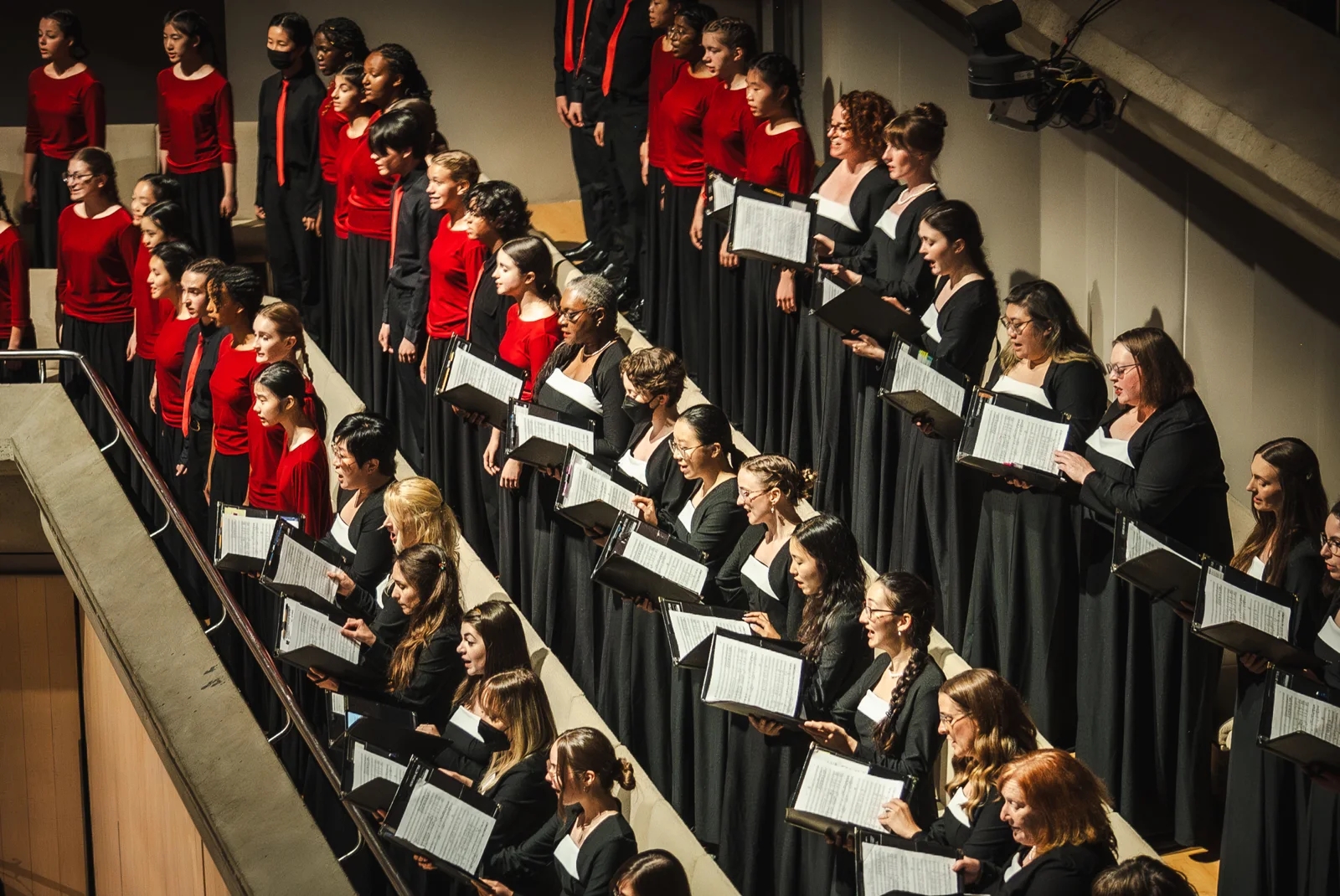
On April 7th the ARC Ensemble present a concert “The Viennese in Los Angeles”, a happier title than what they might choose to call it, from composers in exile.
In the promotion for the event we’re told that for the concert the ARC Ensemble “performs Erich Wolfgang Korngold’s extravagantly lush Piano Quintet, and works for string quartet and clarinet by his Viennese contemporary Ernest Kanitz. Both settled in Los Angeles during the 1930s, where Korngold became the most celebrated film composer of the day and Kanitz became a legendary teacher at the University of Southern California.”
By a funny coincidence, Kanitz’s birthday is April 9th (right after the concert), and the date of his death is April 7th (the date of the concert). This little factoid is all I know about Kanitz, having googled him. I admire the work done by the ARC Ensemble, helping to advance the lost or under-valued music of exiled composers that might otherwise be forgotten. I raved about their recent CD of the chamber works of Robert Müller-Hartmann, especially the Three Intermezzi and Scherzo Op 22 played by pianist Kevin Ahfat, who sent me a pdf file of the pieces. It’s a tiny glimpse of the complex task faced by the ARC team and their artistic director Simon Wynberg finding composers whose music has been suppressed or lost. The hand-written score is not always easy to read on the page. The poignancy of this struggle to bring lost music to the public is underlined by the hand-written manuscript, brilliantly played by Kevin. No wonder music such as this from composers running for their lives might vanish.
I notice that the night of April 7th they plan to show Robin Hood, although I have to say I’m sad because I believe it’s the wrong film to show. In placing Korngold in the context of the exiled artist, what could be better than music from a film that shows refugees and oppression? Yes Robin Hood is a good film, so are Sea Hawk and a number of other films. But there’s one film that actually addresses refugees and exile explicitly. I think it’s largely under the radar because most people don’t think of it as Korngold’s composition, nor do they notice any refugees in the film.
In 1934 Max Reinhardt directed a production of A Midsummernight’s Dream at the Hollywood Bowl, including extensive use of the music of Felix Mendelssohn. Reinhardt’s student William Dieterle acted as translator for Reinhardt when Warner Brothers filmed it, a prestige project for a studio known for gangster pictures. Korngold arrived in Hollywood in time to work on this his first film in America.
I grew up thinking of this as the funny film with Mickey Rooney, Joe E Brown and James Cagney, without taking it seriously. Only later did I change my viewpoint.
There are two large ballet sequences in the film that employ Mendelssohn’s incidental music for the play, but not precisely as originally written. The first is when we first meet Titania and her faeries, including a mysterious introduction that’s Korngold’s music, followed by arrangements of Mendelssohn. The second and much darker sequence comes after Oberon has successfully snatched the changeling boy as Titania sleeps beside Bottom as he wears an ass’s head.
Reinhardt, Korngold and Mendelssohn were all Jews. So that’s the official reason that this film would be banned in Germany during the war. Perhaps another reason the Nazis banned the film was because of the scene I’m about to describe.
This ballet sequence begins with the dark shades of Oberon’s retinue flocking over the hill. They enter to music that sounds a lot like Wagner. Korngold composed the opening fifty seconds of the segment that segues into the Nocturne. I’ve captured this segment on my iPhone from the DVD because it’s no longer on YouTube. The absence of this extraordinary piece of film from YouTube shouldn’t surprise anyone (even though it surprised me), given that it’s been largely forgotten.
The opening 50 seconds, before the Mendelssohn Nocturne begins
I didn’t get it at first. My brother Peter pointed out that we were watching refugees. The shades are oppressive bullies, forcing the light-coloured faeries who surround Titania to flee. They don’t have any weapons but they’re overpowering all the same.
In addition to the faeries, we see the elven musicians, who are also being forced to leave by the dark shades.
In short order we’re watching everyone onstage being pushed to leave, becoming a stream of refugees, fleeing slowly before the oppressive dark-clothed shades.
We also see Oberon in a charismatic attitude, the camera looking up at him. The changeling boy stares up in adoration.
And the shades surround Oberon as though he were their Fuhrer, their worshipful adulation impossible to miss.
Whether or not Reinhardt actually saw Triumph of the Will, Leni Riefenstahl’s 1935 film, he would surely have known of events such as the 1934 Nuremberg rally by the Nazis. The echo is unmistakable.
I don’t believe anyone was making cinematic references to the Nazis as early as 1935. Most of the film is simply Shakespeare via Hollywood.
For more information about the ARC Ensemble concert click here.
Every year in the aftermath of the Academy Awards I’m left wondering how they do it. Yes I should be in awe of the creations: but I was speaking of the awards process. Why this film and not that one? and why suddenly a stampede towards one film?
Why has Danny Elfman (whose work I love for films such as Good Will Hunting, that we re-watched on the weekend) never won an Oscar, while Ludwig Göransson has now won two Oscars before the age of 40 (he’ll reach that milestone in September). I loved his work on Black Panther but did not agree with his win for Oppenheimer. I can’t lose sleep about it given that every year there are awards that drive me a bit nuts.
I again muse on the process as I speak of an even younger composer. I’m especially fascinated by the work of Jerskin Fendrix, who isn’t even 30 years old yet.
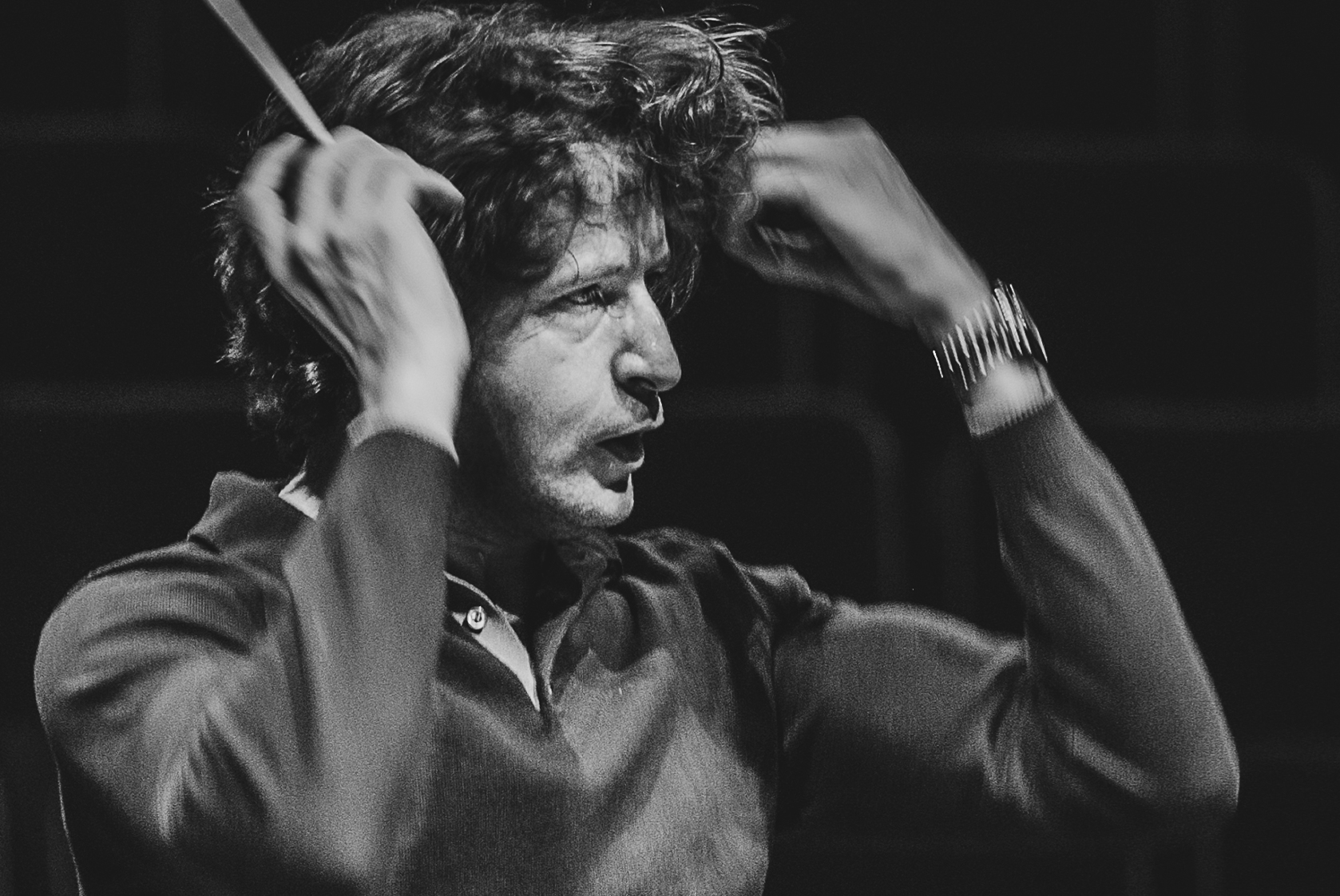
Composer Jerskin Fendrix
Fendrix scored Poor Things, scoring an Oscar nomination for the film. “Score” is the perfect word, don’t you think?
And I see that Fendrix has also scored Kinds of Kindness, a new film to be released soon, reuniting his Poor Things collaborators Yorgos Lanthimos, actors Emma Stone and Willem Dafoe. Don’t be surprised if some in that group are again nominated, although I don’t understand how Dafoe was ignored this time, anymore than how Martin Scorsese could again be snubbed, having seen online that his last four films received 26 nominations but zero wins. And alongside Dafoe, why wasn’t Leonardo DiCaprio nominated? Or perhaps what I should be seeking is the pattern explaining the politics of wins & losses. If I could figure that out perhaps there’d be no surprise, less pain. Every year I’m not so much baffled as disappointed, hurt, upset.
In fairness some wins make total sense in hindsight. The pair of songs from Barbie can be seen as yin & yang, male and female principles captured in song. Billie Eilish’s delicate barely audible song “What Was I Made For” so sad in its existential doubt as a thing, a plastic toy suddenly realizing its true nature, in contrast to the garish and simple-minded construction of “I’m Just Ken.” Of course, in a year when the director of Barbie was being snubbed, they would have to throw the film a bone, and that would be via Billie Eilish. But wait, that’s suggesting that the Academy is some sort of monolith that deliberately snubs or rewards, when it’s actually an electorate of members making choices, some really good and more than a few really frustrating.
While Terry Gilliam’s Adventures of Baron Munchausen received four nominations in visual categories (art direction, costumes, visual effects and makeup) nobody seemed to notice its extraordinary score by Michael Kamen, possibly the most impressive score I’ve ever encountered. At its core it is essentially a set of variations on a theme taken from a song from the depression-era about cheering up in spite of our poverty, in keeping with the madness of Maggie Thatcher’s Britain that frames the film.
The original song is from Irving Berlin. Notice the italicized words of the refrain: “let’s have another cup of coffee and let’s have another piece of pie“.
Now here’s The Baron’s main theme, which comes from that song, beefed up with Handelian pomp and brass. It’s heard at the beginning of the film and at the conclusion.
It’s a lot like Richard Strauss’s tone poem Till Eulenspiegel. In both the Strauss and Gilliam’s film we’re watching the adventures of a character in a series of variations, and brilliant orchestrations. When the Baron is in danger, the theme is suspenseful and in a minor key. When he dies there’s a miniature Requiem Mass for him (complete with chorus).
It ends with the voiceover of the Baron telling us how much he recommends death as something we should experience, and the immortal story-teller fabulist is back, miraculously.
I’m also reminded of Kamen’s score for The Baron because, while somehow in 2024 young Fendrix broke through to get a nomination (and a win in BAFTA), Poor Things won three of the same oscars as the Baron (costumes, makeup & production design).
Maybe the key to having your music recognized & appreciated is eye candy.
And speaking of eye candy, as in Kamen’s score for the Baron, there’s a show-stopper of a dance sequence.
Here’s the one from Kamen, featuring John Neville and Uma Thurman. Please note: the youtube example I’m sharing takes Kamen’s music, likely from the soundtrack album, matching it with the actors in the right sequence of the film but without the dialogue that we should be hearing (their lips move without hearing their words). Sorry it’s the best I could find.
I have to think that director Gilliam must have liked this idea of a dance, given that he imitates his moment in his next film The Fisher King, with a different composer. But it’s nowhere near as interesting.
And wow here’s the one from Fendrix, featuring Mark Ruffalo and Emma Stone. Notice that among the steampunk magic of this film there’s even a new musical instrument with an attempt to create its original sound.
What would that instrument (seen roughly 27-28 seconds into the clip) be called? I wonder. I love that the music-making is integrated into the production design, representing so much more than just underscoring, as we saw with the surreal team of Kamen and Gilliam previously for Brazil & The Baron. This kind of dance is an integral piece of the film, telling us more about the characters.
If you’ll forgive me, I want to zero in on the music. In the film music classes I taught I used to enjoy playing the Psycho shower music without the visual so that students would actually hear what Bernard Herrmann had created. Let’s listen to the dance music without the distraction of the visual.
I found Fendrix’s Winterreise (2020) on YouTube, a fascinating mixture of sounds & musical moments. Has he come a long way? yes, although this album is already full of bold and original moments. While it may sound like a do-it-yourself project, he’s so young, right? And that sense of being clever and original is precisely what’s so appealing in his film-score.
No it’s not Schubert (who wrote a song cycle of the same name and come to think of it at the same age), but the title is still a fascinating choice.
Fendrix is still as direct & clean as this in the film-score, amplified by the astonishing visuals from Lanthimos and his team.
While I continue to be puzzled by the mysterious Oscar process, pleased yet often frustrated, I’m mollified somewhat after watching Poor Things, seeing that there’s lots to celebrate in this film. And now I’m eager to see and hear what Lanthimos & the young Mr Fendrix (as well as Stone & Dafoe) can do in Kinds of Kindness, scheduled to be released on June 21st. I can’t wait.
Sometimes interviews are just a series of obvious questions designed to publicize an artist and their work. I’m happy to play that game. But there are times when I’ve been fascinated by what I’ve seen from an artist, my curiosity aimed at finding their secret, encouraging me to interview them.
Maghan McPhee is one such person, a singer, teacher and entrepreneur whom I’ve observed since she was a very young voice student. I may be much older but from the first she seemed very mature beyond her years, very clear in her goals & objectives. She recorded a very impressive CD a decade ago.
I have heard that she started BIIMA, a summer program in Italy for artists. And soon Maghan will be singing and recording in my part of the world with our Scarborough Philharmonic next month and returning again next year.
I needed to find out what makes her tick, how she does it.
BB: Are you more like your father or your mother?
Maghan McPhee Oh this is such a good question. I think I look and act like my mom and her side of the family. My mom and her family should all be opera singers. They are expressive, hilarious people. The volume with which they speak is at a very high decibel level, even when they’re happy! My mom comes from a family of 11 children, hence the need for all of them to speak up. I grew up having a lot of influence from my mom, her sisters and my grandmother and I took on their way of expression. They wear their hearts on their sleeves and I think it’s the most honest way to live. It takes so much ENERGY to try to be something other than ourselves and put on a mask to fit in. I tried that for a long time without realizing it and it was exhausting. I’ve been described as “intense” on several occasions. I realize that it’s not a compliment, but I’ve come to see it as one of my superpowers.
My dad is such an industrious person. He built a really successful business from nothing and is now enjoying retirement. I’m so proud of what he’s done and what he dreamed for himself and for his family. We (myself, my 2 kids and husband) are actually visiting them at their home in Florida currently over the March break. I’ve always felt like the black sheep in my family, because I didn’t pursue a career in the family business like my brothers and their partners, in Timmins, Ontario.
About a decade ago, I started to see that my path wasn’t going to be like others in my world, as I wanted to begin my family and change what I was doing. I began to think more like a business person, conferring with my dad quite a bit, while understanding that I can also build something from nothing, in a very different way than he did: BIIMA. I didn’t need to follow the typical path of an opera singer and I could find a way to create a business out of my passion.
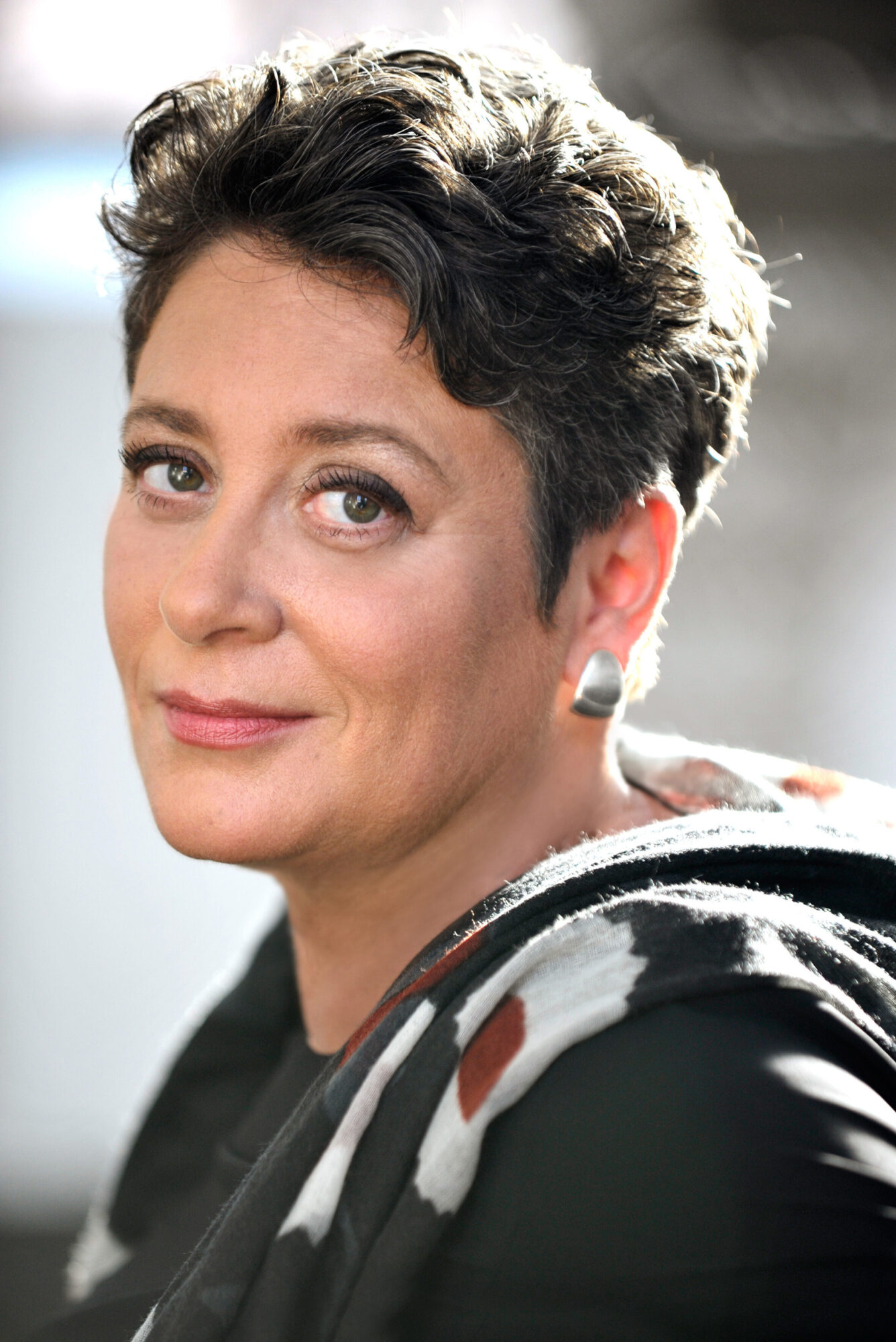
Maghan McPhee, soprano & teacher
BB: And in a moment I will ask you to tell us more about BIIMA. But first, what is the best or worst thing about what you do?
MM: The best thing about what I do is that I am helping my students listen to their inner voice, discovering their unique gifts to unleash their true sounds. I love being a detective to help the students find their sound. It’s incredibly rewarding and it’s what gets me excited to start my day every day. I went through quite a vocal struggle in my twenties and worked so hard and spent a lot of time (and money!) on working with the best in my field to figure out what was going on. I truly went from having a very easy, natural ability…
BB I remember. You had an amazing sound.
MM: I went from having an incredible range when I was a teen, to losing my high notes (and confidence) when I left U of T. I found amazing teachers in New York who helped me tremendously.
It was a long road, but I’m on the other side of it, and I’m so happy to be able to work with students to help them find their sound, no matter their level, because I’ve BEEN THERE. I know what it’s like to KNOW that there is more sound, more ease, more range, more agility, but unable to access it. So, I feel like I can authentically work with a student who is struggling and give them tools to find one clue at a time to figure out their own vocal puzzle. I love holding their hand through the process and helping them uncover the mental and physical blocks standing in their way. I work with students of all levels. I have students who are doing professional auditions, some university level students, teenagers that are preparing (and winning!) provincial competitions, and some retired singers who want to feel better about their voices when singing in their respective choirs.
BB:Who do you like to listen to or watch?
MM I started listening to Mel Robbins. I love her motivational approach and I relate to her struggles. She’s so honest about who she was and how she had to make big changes to become her best self. She’s a working mom and cares deeply about so many things in her life. Her message isn’t: SIMPLIFY! I CAN’T simplify. Wouldn’t life be easier if I JUST sang, or I JUST taught, or I JUST ran BIIMA? People are always saying to me that I need to choose. I feel the calling to do all three and I want to make it all work. I have an incredibly supportive husband and like Mel Robbins I am able to find a way to do all of the things that keep me feeling alive and serving those that choose to work with me through all of the struggles I’ve overcome and continue to work on.
BB: What ability or skill do you wish you had, that you don’t have?
MM: I think it would’ve been amazing to have a business degree, since I’m now an entrepreneur. I also now realize that it would’ve been really helpful to take a minor in psychology, to be able to help my students understand their struggles. However, a good friend of mine once said that singing teachers are not cheap therapists, which is so true! When I feel that the student wants to unleash some heavy things that I’m simply not qualified to take on, I always refer them to a therapist that I’ve worked with in the past. This way, we can focus on the act of singing and that the work needing to be done outside of this framework can be done with a qualified professional.
BB:When you’re just relaxing and not working, what is your favourite thing to do?
MM: I love to walk. Walking allows me to feel like I’m accomplishing something and I know it’s really good for me. I often seem to figure out answers to my problems while I’m walking and away from the laptop.
I also love to watch Netflix/Apple TV series to take me right out of my world. Shows that are on the lighter side, like Working Moms, The Let Down, Offspring, The Morning Show and Beef have been fun to watch and get me out of my stress and to do list.
BB: What was your first experience of music ?
MM: My first memories of music was at our local music competition in Timmins, Ontario. There aren’t a lot of performance opportunities in Timmins. All of the music students work all year for the competition and it was truly one of the most amazing influences on me from the time I was seven years old. It’s what kept me focused on getting my music ready for performance. I played in the piano categories- I rarely placed in them, yet I spent over a decade competing, and I sang many pieces in every festival and won a lot. It kept me very motivated.
BB: What is your favorite song or aria?
MM: A piece I love to sing: Morgen by Strauss or anything by Mozart. It’s too hard to choose!
BB: Do you ever feel conflicted, reconciling the business side and the art?
MM 100% It took me many years in this field to see myself as an entrepreneur, because essentially, I truly want to help people sing. With BIIMA, I wanted to create this amazing oasis that I wish I would’ve had as a young singer, and I know that every artist deserves the chance to attend. I understand that it’s an investment to afford a program like this, based in Italy. I spend countless hours trying to find people to sponsor the talented students who audition for us, as I know that many can’t find a way to take this opportunity.
It is a life-changing opportunity, but how can one quantify this, unless they’ve been before? I was able to secure two full scholarships (including travel!) for two students who are from my home-town of Timmins and are both studying at Western University in classical music. The music festival in Timmins helped us with covering their tuition and an incredible supporter of the arts in Timmins worked to get their travel covered. She worked incredibly hard to receive a grant from Canada Nickel to cover their travel costs, which was incredible. I believe that this opportunity for these two young artists opened their minds to what’s possible and I couldn’t be happier to have been able to offer the opportunity to both of them. We were able to offer our thanks to the community of Timmins by putting on a free recital this past November and donating all of the proceeds to the Timmins Food Bank. We raised $1800. It was a win. Anything is possible, we just have to be the ones to make it happen and not wait for someone to hand us the opportunity.
More generally, it’s common for artists to undervalue their skills and experience. This is an important culture change that needs to happen and I’m learning that we have to switch our mindsets to truly understand our value. This means charging a proper fee for all of the different projects that we do to live well and to offer the best of ourselves. I’m surrounding myself with people who have the same mindset and staying away from negative, old school thinking, that one isn’t a real artist if they are making a living outside of performance, or not living in Toronto or Montreal (if they are living in Canada) and having a family.
I didn’t realize for so long that there were so many mindsets that I had to overcome, not only from the people in my life who aren’t artists themselves and their expectations of me, but also purists in the arts who think there is only one way to live artistically. Redefining success was a huge milestone for me and it changed everything. I realize that I am a success, even if I didn’t follow the path that many of my colleagues did and even if others don’t agree. I love my life and my path so far and I wouldn’t change any of it. The struggles made me who I am today and I now know that every part of it created the singer, teacher, entrepreneur and mother I am in this moment. I’ve come a long way, but I know that there is still so much out there that I want to create and develop. I have NO plans on retiring, even in old age. I believe I will continue to work and develop ways to create and educate as long as I’m capable.
BB: Of everything you sing (whether we’re talking about opera, lieder, pop tunes or anything else) what feels the best in your voice and what do you think sounds best?
MM: What’s interesting, is that we (singing students) are taught at a young age that we should be able to do it all- opera, lieder, contemporary, oratorio, but then as we age, we’re often asked- what’s your niche? I would think to myself- I haven’t the faintest idea! I love all of it and what I’m not good at yet, I want to be better! I never wanted to be pigeon-holed in one area, because there was so much to learn from all of the classical singing areas. The music that has by far pushed me the furthest has been contemporary art song. I truly love all of it- Mozart is what feeds me the most, but I do have to say that I love working on music that has never been performed before. How to bring this incredible new music to life and sing it well with proper technique, the way you would have to with any music by Mozart, but express it in a way that’s simple and natural so that it is received by the listener, even if it’s very complex.
An older recording I have where I do feel proud of my performance is during the 2009 Montreal International Voice Competition where I was a semi-finalist, performing with my good friend and incredible pianist Lucas Wong, 3 German pieces by living composer Elmar Lampson.
This was not long after I graduated from Dawn Upshaw’s program at Bard College in upstate New York, where I worked on a lot of contemporary music with living composers and had placed second at the Eckhardt Gramatte competition in Brandon, Manitoba. I also adore singing chamber music. Der Hirt auf dem Felsen by Schubert is something I still enjoy listening to on my CD ‘Portrait’. I’m proud of this performance, because of the vocal gymnastics and the depth of expression that came together while working with my pianist Parvaneh Eshghi and clarinetist Shauna (MacDonald) Barker.
More recently here’s a video of a contemporary work by Travis Reynolds as part of a workshop where Daniel Mehdizadeh (composer), Valerie Dueck (pianist) and I worked intensively with young composers on creating pieces for soprano and piano, where we recorded the piece at the end of the online workshop. I truly love this piece and felt that he knew how to allow for my voice to soar through the beautiful melody he created. Valerie and I have been collaborating for over 20 years! It was a true pleasure to work with her on this project.
BB: Singers come out of training programs, including the ensemble studio of the COC. And then what? Some people can make a living, some can’t. Stratford Festival and National Ballet function as places to employ almost 100% Canadian talent. Yet the fiction is out there that we need to bring in singers from abroad. Can you imagine Canadian opera with Canadian personnel?
MM: I think you raise a valid point here. Why can’t the Canadian Opera Company hire on the whole Canadian talent? I think that’s sadly something that’s reflected in our Canadian culture. We can’t get behind Canadian talent, unless they’ve made it elsewhere. We can’t hire actual Canadians to run our opera companies, because what do they know? I know countless singers who deserve to be on stage, but can’t get hired, because they lack experience. They lack experience, because no one will take a chance on them, because they don’t have experience. And around and around we go.
I began to understand, after my time in New York and I returned to Canada (I completed my second Masters degree at Bard College and traveled to Manhattan every week to coach with our teachers) that the auditioning I was doing was kind of a waste of time (and so much money). The people listening, even at the regional opera level, wanted singers who were already being hired all of the time by the bigger companies, and out of the country. It didn’t matter how well one sang, it was what was on my resume that seemed to matter and the fact that I was based in Ottawa seemed to really upset everyone I sang for. It was baffling to me. An artistic director of a very small summer opera festival told me as much, and I was happy to have had the guts to say that I was sad that he was worried about my resume, more than the performance I JUST gave. He needed to hire based on what everyone else was doing, instead of his own gut instincts. The more I auditioned, the more I realized that they weren’t the only Canadian company working in this way.
Americans seem to know how to back up their talent, as do Quebecers. Why is it that the rest of Canada can’t back up their own? It must be something that’s deep within our psychology and something we don’t even realize on a conscious level. I’m from Timmins and so is Shania Twain. I remember when she made it really big, so many people in the town didn’t like her music and didn’t support her success. You would hear time and time again that she wasn’t any better than anyone else, and who did she think she was? She was Shania Twain, and she made it all the way to the top! She beat all of the odds. We should have all been celebrating this amazing person who came out of poverty and from our small, isolated community. My point with this, is that it’s no surprise to me that the Canadian Opera Company and many others are constantly overlooking and under supporting the Canadian artists who have decided to stay in their own country to live and work. I do think it’s important to bring awareness to this problem, and I’m incredibly grateful to you, Leslie, for being our champion and for calling out these companies.
BB Thanks and yes it has been an obsession of mine. So nowadays it’s very expensive to live in a Canadian city, whether it’s Toronto, Vancouver, Ottawa, you name it. Can a performer survive without a day job?
What’s cool is that we are now discussing portfolio careers in many universities, which is how an artist can survive. When I was a student, it was the do or die mentality, which is crazy, because we all know most of the graduates in music will not have a performance career, based on the fact that there are too many graduates and not enough work. We need to equip our students with the knowledge and the drive that you CAN have a performance career in Canada, but it may take some creativity to make it work for you.
Maghan McPhee
BB: Aha, “portfolio career”. That expression is new to me.
MM: I certainly have a portfolio career, singing, as well as teaching and running a summer program. I think it’s important to have skills in many areas, to be able to continue your craft.
BB: Does one have to be an extrovert or even an egotist, to be a good singer?
MM: I personally believe that the singers and musicians we are excited to listen to or watch are the artists that are making music from a very personal place. It’s less about them, but about the music and the text they are performing. These performers who are truly genuine are often introverted and not that excited about being the centre of attention. But, give them the space and they will touch you with their genuine expression, which I believe is at the core of what artists should be thinking about. How do we touch the people who come to listen to us, instead of, how do I look, sound, act? Is it enough? It will always be enough if it is authentic. Everyone has something to say, even if it isn’t through perfect technique.
Yes, to answer your question, I do speak on a video about being shy and how this affected not only my posture, but my vocal position on the whole. I didn’t realize that my speaking voice was in a lower pitch to where it should actually be anchored to have a healthy tone nor did I realize that my shoulders naturally rolled inward due to my shyness and insecurity, which can inhibit breath.
MM: These are things that I continue to work on to this day, but knowing one’s tendencies is the first step to being able to change for the better!
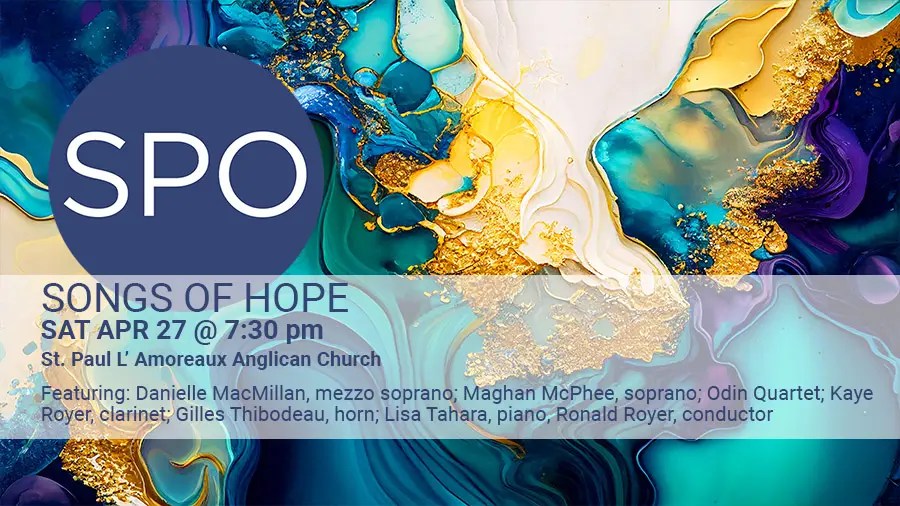
BB: I hear you will be singing with the Scarborough Philharmonic on April 26 and 27, new premieres by Canadian composers as part of a double album recording project. Please tell me more.
Conductor Ron Royer
MM: This project means a lot to me. I will be performing and premiering new Canadian works in Toronto with Ron Royer and the Scarborough Philharmonic Orchestra on April 26 and 27 with mezzo soprano Danielle MacMillan. We will be performing contemporary music solos and duets as well as some famous opera hits. It’s part of a double CD release project where Danielle will be featured this season and I will be featured next season with newly commissioned Canadian works. I’m thrilled to be able to finally record songs that were written for me over 20 years ago from one of my mentors in Timmins. Geoffery James Lee was the conductor for many years of the Timmins Symphony and began a strings school in our community which is still thriving to this day. He gave me the opportunity to sing my first Pamina at the age of 19 and wrote songs for me when I was doing a fundraising recital to travel to Italy for my first ever summer program. He sadly passed away very soon after the premiere of these songs and I’m very honoured to have the opportunity to bring them to life and record them with the Odin String Quartet. These songs “Moonlight Solitude” and “Last Flight “ were the inspiration for the theme of my album with the SPO, entitled Luna I’m excited to expand and commission moon themed pieces by Canadian composers and members of the SPO.
Our Voice Intensive is a personalized program, catered to each individual singer. We accept approximately 8-12 singers and nurture them and help them achieve their goals. They receive DAILY one-on-one attention (which is unheard of at most of these summer programs), daily masterclasses, Italian language class, body awareness classes, ensembles classes, performance opportunities, discussions on performance anxiety, the business of music and the list goes on.
Participants can sign up for day trips to Verona to watch an opera at the Roman amphitheatre and Milan to tour La Scala opera house.
Faculty: Maghan McPhee, Dr. Christina Haldane, Dr. Carl Philippe Gionet and pianist Jason Handy Dates: July 16-30 Toronto auditions: March 29 or via video auditions Registration deadline: Apr 15, 2024
Dr Christina Raphaëlle Haldane, Voice Teacher & Soprano
BIIMA Choral Retreat will provide an authentic and unforgettable cultural immersion in Breno, Italy for the active amateur choral musician. Choristers will spend two weeks living in the Italian Alps learning the language, developing musicianship and vocal technique, rehearsing repertoire, performing in the historic city of Brescia, taking in performances, and making life-long connections and memories with fellow travellers and singers. Participants can sign up for day trips to Verona to watch an opera at the Roman amphitheatre and to take in a breathtaking winery.
Faculty: Lee Carter conductor, Maghan McPhee voice teacher Dates: July 1-14, 2024 No auditions necessary Registration deadline: Apr 15, 2024
BIIMA Composition, Creativity and Improv retreat:
Through daily non-judgemental, guided creative activities and free form spontaneous improv sessions, this individualized, highly tailored program will free your mind and unleash your full artistic and creative potential.
Faculty: Margaret Maria composer, Alice Kanack author/composer Dates: July 16-30, 2024 No auditions necessary Registration deadline: Apr 15, 2024
BB: How did you get involved in something as original as BIIMA. How did it start?
MM I don’t know if you or your readers would believe this, but the origin of this story is weird. I was driving my husband to work, as I did every morning and I was telling him about a past student who was now at McGill, working with Ana Maria Popescu, who ran a small voice summer program in Italy. I then said that it would be a dream to run a program and I know exactly what I would offer, as I had done many summer opera programs in Europe, and although I gained a lot of experience, what it came down to was that the student was supposed to be impressing the faculty, similar to how it was during my undergrad, instead of actually learning and improving, I felt that the obvious need for most young artists was to find a place away from the pressure of being perfect every time they opened their mouths was paramount. Great faculty with actual current performance careers that could help them achieve their personal goals would be the goal. Having discussions about portfolio career strategies, classes on mental health and performance anxiety, body awareness group classes, masterclasses, performances and of course daily one-on-one guidance was a must.
I returned home, opened my email, as was my routine to begin my day, and there was an email from an Italian contact who was asking me to run my own voice summer program in Italy.
This was in 2014. I began the program with 5 of my own students and an incredible pianist voice coach, Carl Philippe Gionet who happened to be in Europe during the period we needed him for.
Carl Philippe Gionet, pianist
It was a match made in heaven as the two of us seem to say the same things in different ways when working with a singer. We didn’t have a name for the program yet as I worked in conjunction with the cultural Italian organization Cieli Vibranti. The name finally came to me a few years later, as I wanted the name to encompass the possibility of expanding into different areas of music education.
Lara Deutsch flute (Brent Calis Photography)
My Italian partners Andrea Faini and Fabio Larovere have been wonderful about allowing me to see this dream through and we have now expanded from a small opera intensive program, to a flute masterclass with Lara Deutsch, and a Choral Retreat for the amateur singer this year with Lee Carter.
Lee Carter, choral conductor
And there’s a really exciting groundbreaking program with composer Margaret Maria, called Composition, Creativity and Improv for any kind of musician and genre.
Margaret Maria, composer
BB: Why should singers go to Europe?
MM: The setting we’re in at BIIMA is literally out of a dream. Think Sound of Music. We are in the Italian Alps, in a small medieval town in the north of Italy, where no one speaks English. Our music academy is part of a convent, with incredible facilities including Steinway pianos, amazing acoustics and the presence of art everywhere you look. We have these wonderful nuns looking after us, cooking for us and hosting us. Everything from the time we arrive is managed for us and all we have to do is create and work on our craft.
Why Italy? I’m asked this a lot. After my first year of university, I had the opportunity to join a summer program in Italy and it changed my world. I had never been to Europe before and I was stunned by the beauty, the people, the language, the food, the heat…everything. I feel that having the opportunity to sing in a place where no one knew me was truly an important part of my development. I could try things out and knew no one would really remember me once I left and it was so liberating! It was wonderful to sing an aria at the final concert in the piazza and have the public literally singing along with me! I think experiencing Italy, where opera was conceived, is an important part of music education, especially with respect to classical voice. Understanding the culture around our artform is paramount in being able to share it authentically. Speaking technically, as Canadians or Americans, we don’t (on the whole) speak in a very resonant position. Spending two weeks surrounded by Italians, the students can begin to hear the natural legato in the Italians’ speaking voice, with incredible resonance. Working on the speaking voices of my Canadian students is a huge part of the work that I do, because most of us speak with much tension in our vocal tract. “Parla come canti e canta come parli” Speak the way you sing and sing the way you speak. I find that so many Italians speak so beautifully and it’s no surprise that opera stemmed from these people and their natural way of speaking on the vowels in their resonance, on the breath.
We offer an intro to Italian language class as well every morning, which is an added bonus. It’s wonderful for the students to see that it’s possible to learn another language, one that’s essential to the classical music world and my hopes are that the students then take this experience of the language and expand it when they return to their homes and their institutions.
BB: If you could tell the institutions how to train future artists for a career in opera, what would you change?
MM: All of the institutions that offer classical voice should offer a business of music class on how to find auditions, network, market oneself, file taxes and learn how to manage time efficiently. Most will have to find a way to work in a different career while performing. Another surprise is that not all institutions that offer a classical voice degree offer obvious things, like a mandatory diction class. How can institutions claim to offer young singers a chance at a career if they aren’t even receiving the basics in their education? I was happy to have been able to offer a diction class in 2019 at Carleton University, but sadly the class was too expensive to continue.
As great as many of these music programs are, the unwritten rule is that the students should be continuing their studies at summer programs throughout their degree and beyond to fill in the holes of their education. Those who do attend summer programs have the advantage of hearing other singers, have access to new faculty, new ideas and new feedback. They also continue to learn and grow throughout the summer months, which otherwise would be a four month hiatus from their lessons and performance practices. This is an essential part of the music student’s development, because it’s not enough to be the best at your school. You need to know that there are thousands of other young artists just like you around the world. What makes you different? What are your strengths and how can you stand out? Our program is about building up the artist based on their strengths while tackling their weaknesses.
BB: Talk about your own educational pathway and how it prepared you for your current career.
MM: My undergrad and my two masters degrees at the University of Ottawa and Bard College didn’t prepare me for my current career, full stop. I never expected the institutions to magically make things happen for me on a career level. I was on a quest to better myself and my voice and to some extent, I learned some of that at each institution. The interesting thing about my journey was that my undergrad took away a lot of what I was doing naturally and I lost so much of my range and had throat tension that I didn’t know what to do with throughout most of my degree. No one seemed to know what I was talking about (my teacher, coaches, professors and fellow singers), so I kept it to myself and tried to figure it out on my own. It was terrible that I felt shame about something that was happening to me and likely many others in the program. I still sounded good and won auditions and competitions, so no one really understood what I was going through. I felt like an imposter for so many years and it absolutely took my confidence away from me. I had to work very hard to continue on as a performer throughout this period that went on for years. I came very close to quitting and moving on, but my stubbornness and my need to find the answers to my voice kept me going. That and my husband’s belief in me and my dream.
I realize now that what I put out in the universe has come back to me. My singer friends’ goals were a career in performance and many of them have achieved it. My drive was that I wanted to understand my voice. I wanted to know how these amazing teachers in New York with whom I worked seemed to waive a magic wand and help singers sound instantly better in a masterclass. I wanted to understand technique and how it worked for me. I wanted to find the natural way I seemed to sing before I went to school for singing and I knew that I wanted to help others find their gifts as well.
BB: Do you have any teachers or influences you would care to mention?
MM: Teachers who made a big difference in my singing: Benita Valente, Lorraine Nubar, Jennifer Ringo Conlon and my current teacher Heidi Melton.
BB:What do you have coming up?
MM: I’m excited about a few things that are coming up:
We are holding Toronto auditions for BIIMA on March 29th in TORONTO for our voice intensive! Each audition is a mini-coaching, so that the singer will have the chance to work through their piece(s) should they so choose.
I have a new voice program that I run from September-June online, Release Your Inner Voice, where I work with singers individually through a personalized program, but also as part of a community through online group discussions, masterclasses, guest speakers and all sorts of new ways to work. It’s been a huge success this year, and I’m excited to be offering it once again next season. I’m excited to be able to work with singers all around the world.
I’m performing and premiering new Canadian works in Toronto with the Scarborough Philharmonic Orchestra on April 26 and 27 with mezzo soprano Danielle MacMillan. We will be performing contemporary music solos and duets as well as some famous opera hits. It’s part of a double CD release project where Danielle will be featured this season and I will be featured next season with newly commissioned Canadian works.
I will also be performing in Breno Italy, as well as in Lake Moniga where I will feature Italian repertoire and Canadian works with pianist Carl Philippe Gionet.
When I started reading John Holland’s new book, I didn’t expect it to be more than a study of a composer and his operas.
That modest goal would already be significant, considering the cognitive dissonance I feel whenever the plural phrase “Dvořák’s operas” reaches my ear or eye. I glibly think I know Antonín Dvořák, one of the most important composers of his time, composer of wonderful symphonies and amazing piano music. I admit that I know his life only superficially, his travels in America resulting in remarkable music, his connection to Brahms, which I only know in the most superficial terms. Dvořák’s Slavonic Dances are among my favorite pieces of music, as they got me through the worst of the pandemic, meaning a two-handed arrangement of his Op 46 and 72. I’m smitten with the first set of eight, still figuring out the second set. I am sometimes puzzled that he isn’t better known, but that’s just one of the mysteries that begins to be answered by John’s study.
I was frankly gob-smacked reading John’s book, not just with the discovery that Dvořák composed ten operas, but that except for Rusalka all of them are out of print. How could that be? When I go to the Edward Johnson Building Music Library at the University of Toronto, admittedly one of the greatest collections anywhere in North America, I am repeatedly spoiled by the excellence of their comprehensive collection, whether among popular composers (Philip Glass’s Akhnaten or Songs of Liquid Days) or more obscure treasures such as the piano vocal score of Camille Erlanger’s Aphrodite, autographed by the composer himself.
my photo of autographed score
So while I can find all of Mozart’s or Verdi’s scores, multiple copies of Puccini or Wagner operatic scores, can find a piano version of Mahler’s 5th Symphony or Liszt’s transcriptions of Beethoven and Wagner, my mind boggles to think that John Holland himself has a better collection than my beloved music library. I don’t mean to single out the EJB, as John’s research has enabled him to assemble a considerable library of the scores that, if not the most comprehensive in the world, is certainly the biggest in North America. You want proof that Holland is an expert? Let’s start there! Sigh, I was looking forward to grabbing the score of Jacobin to play through it at my piano and maybe sing some parts, in preparation for the upcoming production: but it’s out of print. Or to explore his other scores, the way I’ve been able to do with the early operas of Mozart or Wagner or Verdi.
But I can’t do that obviously.
It’s not just puzzling that the works of a great composer can’t be found. I find this quite upsetting, especially with the help of Holland’s book. I don’t know if he meant to light a fire under me, but the book is quite disturbing in the best way, exploring the context in order to raise questions and inspire curiosity.
How could this be, and how did this happen? That’s what Holland’s book addresses.
I was trying to put Holland’s work into context. I’ve barely begun that, really. Let’s talk about history for a moment. When I started reading The Lost Tradition of Dvořák’s operas I was surprised at how much history is included, how much background we’re given before Dvořák even appears in Chapter Four. Chapter One is really about John Holland and his experience of the phenomenon that I’ve been obsessing over, his encounter with that bizarre absence of Dvořák’s operas from the world. Please note we’re not talking about a composer who tried and failed at opera. Liszt and Mahler for instance avoided opera except as producers and conductors. Dvořák composed ten operas. And considering that opera would be the composer’s preoccupation for much of the last decade of his life (as Holland explains), it’s especially perplexing that but for Rusalka, none of them can be found in print. Maddening.
That’s why I’ve put the headline on this book review. Holland is taking a position as a scholar that is pointed and energetic. The fact I couldn’t put the book down but read its 180 or so pages in a little over 24 hours is a tip-off. I’ve been re-reading the first chapter, which reads differently after you’ve finished the book. I suggest you do the same thing, as it reads differently, retrospectively.
As a Hungarian I want to pose parallel questions, having spotted a word that grabbed me. To “Germanize” is something that may sound odd to your ear. Yet I’ve noticed this among other Europeans. It’s Georg Solti, not György Solti, nor Solti György, given that the Magyar way is to put the surname first. Franz Liszt, not Liszt Ferenc. See a pattern here? Whether we’re speaking of the great 19th century virtuoso or one of the greatest 20th century conductors, Hungarians have often used a Germanic form of their name. Indeed it prickles me a bit to think that the word “Hungarian” is itself of foreign derivation, as we call ourselves Magyar not Hungarian. The misnomer via a Latin root reminds me of other comparable names applied from abroad such as Eskimo (rather than Inuit) or Gypsy (rather than Roma), although the experience of the Magyars was far more successful, via this Germanizing tactic, than what we see from Dvořák. No wonder then that Holland embarks upon a project of cultural rebirth, seeking to breathe life into a moribund tradition. But it wasn’t just a matter of popularity.
John Holland looking like a proud papa with his new book.
I almost feel like I’ve seen a political thriller or a documentary history, rather than a book of musicology, disliking “spoilers” that give away plot-twists. But this is history and indeed the fiction part might be the version of the truth that we were given before. At times Holland’s book reads like activism, in its efforts to rescue Dvořák’s operas from their undeserved purgatory, where they sit waiting to be remembered and revived. Perhaps an organization such as the Canadian Institute for Czech Music can help, as CICM could promote interest in Dvořák’s operas, by helping find & publish the scores.
It can’t be a surprise to think that political questions rear their problematic heads, both from Dvořák’s time and since. I wouldn’t presume to paraphrase complex questions in this space. Operas become popular for a multitude of reasons, as most go in and out of the standard repertoire. We hear of politics in the opera world (competing visions of what opera should be) and the cultures presenting opera. In the case of Dvořák’s operas it’s not enough to speak of a loss of interest, when the operas are literally gone, out of print. Holland doesn’t go as far as to suggest a conspiracy but does show mechanisms whereby Dvořák’s operas have been discouraged, in effect suppressed when one looks at the outcome as of 2024, when only one opera can be found in print. I completely accept the validity of Holland’s historical essay, describing the contending factions and their motivations.
Along the way we get musicological analyses with splendid illustrations from the missing scores. There’s a chapter looking at Jacobin and Rusalka as a pair of operas that show how Dvořák reconciled himself to the two poles of operatic dramaturgy, namely the Wagnerian model and the number opera associated with Verdi. Holland even gives us a leitmotif list for Rusalka! How cool is that? As far as John knows nobody has done this before.
When I was first getting to know the Ring Cycle, it was a special thrill that the Solti recording of Das Rheingold that I got in my teens directed us to notice the leitmotifs as they appeared. And then I encountered books with different ways of understanding the themes, eventually coming to Robert Donington’s Ring and its symbols. I invoke Donington to suggest that there are higher levels of engagement with a score, that can only begin with the kind of work John is doing with Rusalka, let alone the invisible scores. At the very least John is laying groundwork for future studies, including those he may do in the years to come.
One of the issues John brings up can sometimes be a lightning rod for discussions about operatic production, namely Regietheater aka “Director’s theatre”. Our different academic pathways may be showing in the way I react to what John is saying (my graduate work was in drama, not music), although I am sympathetic. John is absolutely right to observe that in opera productions the 21st century is so far a century that belongs to the director. Indeed I must mention that in many respects John writes a history of opera, inserting Dvořák into that study, a broadly based analysis, at least until he gets to the part where he observes the challenge of Regietheater. I was amused hearing what John has to say, and confess I’ve had similar conversations including a big argument I had with a member of my committee who was outraged by the COC’s production of Semele.
In the best of these, one can still see the original through the layers. I’m again invoking Linda Hutcheon’s metaphor of the palimpsest to describe adaptation, where we see through the new surface to the older text seen beneath: or at least one would hope so. When Patrice Chereau set his opening scene of Das Rheingold in a modern river where we see a power dam rather than a pristine riverbed, we were still within shouting distance of the original, that was distorted but not harmed by the imposition of new contexts onto the old.
But it’s problematic when the text being presented is unknown. We won’t see through layers if we don’t know the original opera. John complains about a London production of Rusalka that for many was their first experience with the work, and therefore (in his view) destructive as far as the popularization of the works of Dvořák. I’m a bit more of a Darwinian, believing that popularity is a de facto phenomenon, not so very different from the phases of the moon or the weather, being largely beyond our control.
Difficult, too, is the question of opera that presents folklore and ethnic culture, in a theatre environment that seeks to be edgy or controversial. John rightly observes that maybe this is bad timing for Dvořák. I have more faith. I have seen how a Regietheater approach can sit on the fence, working with something traditional, as in Dmitri Tcherniakov’s Prince Igor at the Met, or his Bolshoi Ruslan und Ludmila. In both cases the traditional surface of the first part of the production sets up electrifying drama in the latter part of the production. I wish I knew Dvořák’s works better, to be able to speak more authoritatively but haha, nope. I am confident, though, that publishing scores and getting the chance to hear the music will work its usual magic, especially as an admirer of Dvořák and his gift for melody. Once they’ve heard it, film-makers will start inserting the music into their movies, singers will program arias or scenes into concerts, and as curiosity will grow about the operas, there will be a need to produce the works.
No it won’t happen overnight. But my goodness, John Holland is performing important work to make this possible. I was moved to the brink of tears reading the dedication of the book.
I watched the last hour of Killers of the Flower Moon today.
I had heard terrible things about the violence in this film, although the same was true of Taxi Driver, another Martin Scorsese film with a brilliant orchestral score from a composer (Bernard Herrmann) making his last film. The title is a dead giveaway (if you’ll excuse the choice of words). So I downloaded the film and have been watching it on the small screen at home rather than submitting to the relentless dominance of a movie theatre.
I stopped partway through, earlier this week.
Yes it’s violent, but that’s not what I’m posting about. Let me simply say parenthetically that I now see a whole new market for streaming and downloading, where a movie might be overpowering in a theatre. I saw Oppenheimer in an IMAX theatre, and to be honest, was disappointed.
It’s almost time for the Academy Awards, an annual ritual that tends to drive me nuts. While I like the notion of celebrating excellence I don’t believe in awards that would say, for example, that Christopher Nolan’s direction of Oppenheimer is somehow better than Martin Scorsese’s direction of Killers of the Flower Moon, whether or not they even admit Barbie into that conversation.
I wanted to see Killers of the Flower Moon for a number of reasons, and I’m glad I bought it, as I will watch it again. It seems to capture our exploitive and genocidal relationship to the Indigenous populations rather well, horrific as it is. I always like Scorsese’s work, painful as it may be to watch.
But I was especially interested in hearing what Robbie Robertson contributes to this epic exploration of genocidal violence and exploitation in an American Indigenous community. After a lifetime of collaborations between Robertson and Scorsese this would be the climax.
I was not disappointed.
Robbie Robertson and Martin Scorsese in 1978 (Photo: Richard E. Aaron/Redferns)
I believe Robbie Robertson deserves the Oscar for best Original Score. That may sound kind of stupid when I’ve only seen one other nominated film, namely Oppenheimer.
The nominees are:
AMERICAN FICTION -Laura Karpman INDIANA JONES AND THE DIAL OF DESTINY -John Williams KILLERS OF THE FLOWER MOON -Robbie Robertson OPPENHEIMER -Ludwig Göransson POOR THINGS -Jerskin Fendrix
If Karpman or Fendrix win, that would be a fascinating and unexpected turn of events. Perhaps they deserve an award. As mentioned, I haven’t seen those two films.
If the 92 year old John Williams wins I won’t be upset. But Williams has won the Oscar before. Williams is old, while Robbie Robertson died this past summer. Please note, I am not proposing Robbie Robertson as winner because he’s dead.
I saw Göransson’s film, which many are touting for best picture and best director and best actor nods.
What gets a little crazy is when the voters decide they need to reward a film in adjacent categories, that they love a film so much that it needs to win multiple Oscars. It made me crazy that Blade Runner, the most cleverly art directed film I’ve ever seen, with its brilliant imagery of a future dystopia, should lose the Art Direction Oscar to Gandhi, in that film’s sweep of the awards. Something similar may happen with Oppenheimer, even though Göransson, like Williams, has won an Oscar before.
Let me offer my criteria. The touchstone for me of music to accompany a play or film has always been Felix Mendelssohn’s music for Shakespeare’s A Midsummernight’s Dream. The 1935 Max Reinhardt film of the play, in the debut of Erich Korngold, makes a most impressive use of Mendelssohn to underscore the film.
Why is it impressive? Mendelssohn created a musical style for each of the three social milieux represented in Shakespeare’s play, namely 1) faeries 2) lovers and 3) mechanicals. Each of them has a distinct kind of music that aids the story-telling. For me that’s the ideal.
Robbie Robertson’s score isn’t playing music for three different groups, but it does underscore the social divide in Scorsese’s film, between the Osage Nation and the settlers of the American west. There are times when the music functions as a greek chorus, telling us what’s really happening beneath the surface. I want to watch it again and listen more closely, as I thought I detected times when Robertson underlines the cultural divide with music that illustrates a comparable spiritual divide.
Robertson’s roots from a Cayuga and Mohawk mother lends the musical score a special authenticity and authority.
Scorsese has a habit of showing up in his films to play a small part. I loved his appearance in Hugo as a cameraman filming at Georges Méliès’ studio. I wonder if the 81 year old Scorsese suspects he is coming to the end of his life, given that this time (spoiler alert) he delivers the stirring final speech of the film.
At the end we see that the film has been dedicated to Robbie Robertson. An additional heartbreaking thought that Erika gave me just now, is that the composer who died in August likely never saw the finished product, released in October.
I’m looking forward to seeing and hearing it all again.
Tonight Gustavo Gimeno and his Toronto Symphony presented their latest TSO live concert at Roy Thomson Hall, recorded for future release by Harmonia Mundi recording label. We were a well-behaved audience, not making any disruptive noises, like polite voyeurs watching an ongoing love-fest between an orchestra and their leader that wouldn’t have been out of place last week for Valentine’s Day, a romantic comedy with a guaranteed happy ending.
Gustavo Gimeno (photo: Allan Cabral)
All three works on the program for the concert titled “Stravinsky’s Pulcinella” refer back to other musical influences or texts:
Kelly-Marie Murphy: Curiosity, Genius, and the Search for Petula Clark Igor Stravinsky: Divertimento from Le Baiser de le fée (the Fairy’s Kiss) –intermission– Igor Stravinsky: Pulcinella (complete ballet)
While Murphy’s ten-minute curtain-raiser was commissioned in 2017 to celebrate Gould’s birthday and his relationship with the TSO, via his experience listening to Petula Clark on the radio, it was ideal for this occasion, alongside pieces making connections between musics, a good appetizer for the ear and the mind. I searched but didn’t find Petula Clark’s music in Murphy’s score but that doesn’t matter. The piece lives up to its title encouraging us to sit forward in our seats displaying curiosity. And Murphy gives the percussionists a workout on several instruments, soloists in several sections interacting with flamboyance and verve as a warmup for what was to come.
It made a superb preparation for two works by Stravinsky that rework music from other composers namely The Fairy’s Kiss and Pulcinella. I have to wonder, did Stravinsky get tired of making music that caused riots, as with Rite of Spring, and decided to create something of stunning beauty, while still employing the most original means? These two works still sound so original a century later even as they reframe older melodies and styles in a newer framework. It challenges my understanding (and overuse) of the word “new”.
I have had a longterm relationship with Stravinsky’s music for Fairy’s Kiss. First came the multi-year struggle to find this piece, having been seduced to the bottom of my soul when I heard bits of it on the radio, missed the part where the host tells you what it is, and then puzzled over it. Because it’s hardly mainstream and in a style that defied my understanding, it would lurk in the back of my head as possibly the most beautiful thing I had ever heard. I was chasing the afterglow, as elusive as an actual fairy kiss. I wonder if Stravinsky had something like this in mind, writing a piece that vaguely alludes rather than quotes older music. Fairy’s Kiss (1928, revised 1949) is much subtler in its relationship to the past than Pulcinella (1920). When I stumbled on piano music by Tchaikovsky including compositions that served as sources for Stravinsky they hit me like deja vu, a magical experience. I believe the composer was aiming for something like this. So while I can’t promise anyone a lifelong relationship with the piece on first hearing it, I can’t be objective about a piece that has lived inside me like a remnant of the half-forgotten dreams we chase in the morning.
For the twenty or so minutes before intermission, Gimeno led a confident polished reading. There are passages where the sections are massed together, a choir of horns in one movement, a clutch of flutes in another. The horns were subtle and gently athletic without stridency or excess. The flutes were ravishing, the strings seductive. It makes me smile to think that I can get this on a recording one of these days to hear the beautiful passages whenever I want.
After intermission we were in a different kind of sound-world. Stravinsky’s ensemble for Pulcinella is much smaller than what we’d heard in the previous pieces, as is appropriate for the baroque. But it’s not really old, not when the materials are used this way.
Pulcinella was part of the ongoing interest in commedia dell’arte that lurked in the theatre decades after the form had effectively died out, especially around the beginning of the 20th century. Diaghilev (who had already called upon Stravinsky for his most famous ballet scores in the previous decade, namely Firebird, Petrushka and Rite of Spring) would have been aware of Meyerhold’s ongoing interest in the masqued figures of the CdA and may have seen Faure’s nostalgic romance Masques et bergamasques premiered in Monaco in 1919: and Stravinsky responded.
It’s as though Stravinsky’s score, turning away from his big flamboyant scores said “and now for something completely different.” I wonder how much of Stravinsky’s inspiration for the neoclassicist breakthrough of Pulcinella began in the pragmatism of the re-purposed music one finds in a theatre. Neoclassicism can be understood as a frame that’s a bit like a mental proscenium arch, through which we look and listen. I’m reminded of Linda Hutcheon’s metaphor of the palimpsest, a page where we can see one text written over top of another; her analogy is that with this kind of adaptation it’s as if we’re looking through layers, seeing both the original version and the newer one. Inside that magical gate we see the past but it’s re-framed in an edgier modernist package, still recognizably old but reconstituted.
Speaking of frames, for Pulcinella I felt as though we were in a recording studio observing a session between Gimeno, the TSO and the three wonderful soloists, namely tenor Paul Appleby, mezzo-soprano Isabel Leonard and bass-baritone Derek Welton. While these were TSO premieres, two of the three have been heard at the Canadian Opera Company before. Appleby was Ferrando in the Atom Egoyan Cosi fan tutte in 2014, Leonard was Adalgisa in Kevin Newsbury’s Norma and before that a brilliant Sesto in Christopher Alden’s Clemenza di Tito in 2013.
Isabel Leonard as Sesto in the Canadian Opera Company’s production of La clemenza di Tito, 2013, director Christopher Alden . Photo: Michael Cooper
For Pulcinella I must return to my earlier suggestion of voyeurism at a recording session. While I loved what I heard, while I was impressed by musical values, we were on the outside of that charmed circle of musicianship where Stravinsky was brought to vivid life. Gimeno and the TSO made something I will certainly obtain for my collection. The quality of the soloists helps sell the project to the outside world. I was again frustrated that while the Italian text with translations is printed in the program, we were sitting in the dark unable to make any use of the wonderful program notes. That’s probably necessary, a wise choice given the necessity for silence in a recording, when hundreds of rustling pages might be audible. Why in this day and age that we didn’t have projected titles baffles me. If the music with sung text is just a soundtrack for a ballet, all well and good: except we were watching a concert performance without any ballet. Yes I’m sounding like a stickler, but when I watch a film in another language I expect subtitles unless I know the language. Leonard, Appleby and Welton are gifted singing actors. There was one segment where Appleby –standing close to the microphones– sings almost inaudibly, mysterious, that the titles might have explained his interpretive choice. Yet by the same token I regularly miss lyrics of songs by Beyoncé or Billie Eilish that I have to search out later, so maybe I’m out of step. The next time I’m listening to this music will likely be on the HM recording, when I expect I can refer to the liner notes for text.
The concert will be repeated at 8:00 Saturday night February 24th at Roy Thomson Hall, highly recommended.
Afterwards the soloists (Derek Welton, Isabel Leonard & Paul Appleby) enjoy applause (photo: Jae Yang)
Tamara Wilson is one of the best singers in the world. Yes we import Europeans to sing opera but some Americans have no equal.
We’re lucky to have heard that voice in Toronto, usually the most impressive sound in that show, whether she was Turandot or Desdemona (Otello) or Rosalinde (Die Fledermaus).
Tammy Wilson’s Facebook profile pic
Back in January when she told Facebook that she had tested positive for covid, she agreed to answer some questions while convalescing.
Barczablog: The first question to ask turns up in the headline. When you’re working do you prefer “Tamara” or “Tammy” or “Ms Wilson”?
Tammy Wilson: In the professional sphere when people don’t know me, Tamara. If we work together or know each other privately, Tammy. Ms. Wilson is only if I’m getting called at the doctor’s office. 😉 Plus in Europe, Tammy isn’t really a thing. With my family I’m Tammy.
BB: Do you believe the pandemic is over / do people foolishly believe it’s over?
Tammy Wilson: Covid will never be over, it will now mutate. Just like influenza. It’s arrogant to think that another pandemic won’t happen.
BB:Did you wear masks before, believe in vaccination. I think singers are especially at risk.
Tammy Wilson: I feel like no one learned from what happened. I feel like, if you are sick, you should wear a mask not just because of being a singer but because you don’t know everyone’s underlying health issues.
My experience in France (in public) is zero % of adults cover their mouths when they cough or sneeze. The children are much better at it.
BB: How does a singer protect their voice?
Tammy Wilson: First and foremost rest. Real rest. No talking, no singing. Letting your body heal. As far as practical things when I get a cold: Mucinex, DayQuil, Flonase, Gelo Revoice tablets, and a ton of throat coat tea.
BB: Is paid sick time a solution for singers and those in the gig economy?
Tammy Wilson: I think that would be good for singers on a weekly fee. Most principals are paid per performance or in one lump sum at the end of the performances. If you are sick for a performance, you forfeit that fee.
BB Do you describe yourself as a nerd, and if so, what’s your focus, between music, theatre, sciences and other disciplines.
Tammy Wilson: Oh, there is a full spectrum of nerd and my focus knows no bounds. I love Dungeons and Dragons, Star Wars, vintage movie musicals, watching history videos, archeology, economics, woodworking, video games, gardening, musical theater, painting, physics, the list goes on.
As far as reading, I’m currently in the Court of Thorns and Roses series and the V.E. Schwab’s Shades of Magic series, and N. K. Jemisin’s Broken Earth Trilogy.
BB: What are you working on right now
Tammy Wilson: Too many. Brünhilde, Abigaille, Lady Macbeth. There are many more but that’s through the end of the year.
BB: Tammy you have a big voice. I want to quote two recent interviews.
ADAM KLEIN said: “broadcasting opera favors the smaller voices, and worse, it disfavors the larger ones, because the close body mikes they use simply can’t handle the decibel level, upwards of 110 in many cases; and it equalizes small and large voices, removing the amazement we feel, when in the physical space, that a human unamplified could be making that much sound, and it’s still pretty. In fact, the mikes often make us sound ugly: Callas is the premiere example.”
ALEX HAJEK said: “the whole idea of overtones of the human voice can never be captured on a recording properly. IYKYK”
BB: Adam also spoke of the travesty of the Björling-Nilsson Turandot as an example. Recalling your own recent Turandot here in Toronto, I wonder: can your voice be captured properly in recording or in a high definition broadcast?
Tammy Wilson: I would say it’s doable but you need a sound engineer who understands it. If you can record heavy metal singers shouting directly into a mic, you can record a room with opera singers. I think it deals a lot with how sensitive mics are now. Head mics are not it though. The worst seat to hear an opera singer is right up close. It’s not pretty.
It also has a lot to do with time. Recording is expensive and the classical world is trying to find the cheapest way to get content out. I’m mostly speaking of live performances. We don’t have pick-ups or sound checks really. We never get feedback for how we can help recordings. Also, the performers are usually mic’ed up the show or two before for the engineers to get levels. We normally don’t get to hear those before we do a final recording. The singers have zero control over how we sound and any notes to make it better. Plus, any recording of an opera is owned by the orchestra and company, singers don’t get a say. Our job first and foremost is to the audience in the theater. Whatever gets put into the mic is out of our hands.
When I recorded a half album in the studio it was also all about time. Popular recording artists have time in the studio to talk to their engineer and tweak things. They can do multiple takes and curating the album. We don’t really have that luxury. I recorded in a day. Only got to record about two takes per song. I don’t know how it works with opera singers recording solo albums with classical labels so I can’t speak to that.
Also, this whole big voice little voice thing is a construct. Yes, some people are louder than others. It’s who has optimized their resonance to cut through the orchestra and fill a house. A voice doesn’t need to be large. A person doesn’t need to be physically large. Their resonance needs to cut.
We keep people in boxes too. I started singing Mozart. 15 years ago. I in no way thought I was going to sing what I sing now. I haven’t changed how I sing now from how I sang back then. It’s the same technique. What did change is people allowing me to try different repertoire and different styles so I could learn how to negotiate them with my voice.
BB: Is there any music you’d say that corresponds to your spirituality?
Tammy Wilson: There is one and only one piece that makes me contemplate the eternal. Duruflé Requiem.
BB: Do you believe in astrology and if so, what’s your birth sign?
Tammy Wilson: Kinda yea. Just for fun though. I’m a scorpio.
BB: What was your first musical experience?
Tammy Wilson: Watching: probably Disney or Fairie Tale Theater. Live: Sweeney Todd. Scared the crap out of me. 6th grade. Being in: Bye Bye Birdie as Mrs. MacAfee. 8th grade.
BB: What was your first theatre experience?
Tammy Wilson: High School. Midsummer Night’s Dream.
BB: Do you bother with award shows such as the Academy Awards, and if you have seen any of the nominated films, what’s your favorite?
Tammy Wilson: I used to love watching award shows but now that everyone has an opinion about every second of every show and it’s all over social media the next day, it’s taken the joy out of it.
I saw Barbie and Oppenheimer. Loved both. Past Lives, Poor Things, and Killers of the Flower Moon are on my list.
BB: I was just watchingKillers of the Flower Moon today.
Tammy Wilson: It was weird this year because I was either in Europe when things came out or just missed it in theaters. I can’t wait to watch Past Lives because members of my favorite band wrote the score, Daniel Rossen and Christopher Bear. They are from the band Grizzly Bear.
BB: What are you watching as you convalesce?
Tammy Wilson: Dimension 20’s new season of Fantasy High on DropoutTV. A lot of Smosh videos on YouTube. Horror films. Just watched Talk to Me and Rise of the Evil Dead. I also watch videos of farming and caring for livestock. They calm me.
BB: The beach or the forest? (vacation preferance)Beach or forest/cottage or something else? Mountains?
Tammy Wilson: Oh I’m a forest person. I love the beach but I’m the color of Casper the Ghost. I’m not made for it. If there is a place with mountains, trees, lakes, and a valley, I’m there.
BB: Dogs or cats?
Tammy Wilson: I love both. One day I would love a Corgi or a Swedish Vallhund. I love a short dog.
BB: Stephen Sondheim or Andrew Lloyd Webber? And did you know they have the same birthday? (Same birthday as me as it turns out which is why I noticed.) Do you have a favorite musical, by them OR anyone else?
Tammy Wilson: I did not know they had the same bday. That’s cool. You can’t make me choose. They are the best for their own reasons. If I had to pick purely by my favorites of each of theirs Sondheim’s Into the Woods would win. I do love Starlight Express though.
BB: Taylor Swift or Beyoncé?
Tammy Wilson: More power to Taylor. I like about 5 of her songs. Nothing against her, just not my vibe. I love Beyoncé.
BB: Taylor Swift or Travis Kelce? (in other words, Taylor’s music or NFL football?)
Tammy Wilson: Neither, I do not care. I’m just happy they found love. Good for them. Everyone needs to leave them alone.
BB: Agreed!
Barbie or Oppenheimer?
Tammy Wilson: Again, two different vibes that shouldn’t be pitted against each other. Both did great things for storytelling.
BB: YES! I find awards problematic, comparing apples to oranges.
Was Greta Gerwig snubbed?
Tammy Wilson: Yes. Unequivocally.
BB: Favourite character on Succession?
Tammy Wilson: I haven’t watched it but whatever Matthew Macfadyen is in, I will like his character.
BB: Yes, we were watching the 2005 Pride & Prejudice, gobsmacked to see him in that. He showed me subtleties as Mr Darcy that are missing in other versions.
Tammy Wilso Have you seen the British show Spooks (MI-5 in the States)? Such a good show.
BB: No, I’m way behind in my tv watching. Still need to see the last season of Ted Lasso.
Favorite old tv show?
Tammy Wilson: Things I binge all the time, Parks and Recreation, New Girl, Bones, Brooklyn Nine-Nine, Turn.
BB: Who is your favorite SNL personality?
Tammy Wilson: Kenan Thompson. Grew up with him on Nickelodeon and now SNL.
BB: Giving me a reason to post a video of Kenan Thompson? yay!
BB: Verdi or Wagner?
Tammy Wilson: I love singing both. I hate learning Wagner, too long and too many words. Once it’s learned though, love it
BB: Tebaldi or Callas?
Tammy Wilson: I don’t have a favorite. I listen to everyone. When I’m learning something, I gather as much as I can to listen to. I don’t listen to singers for pleasure like I used to. Now it’s all analytics. When I listen to my rep, I do deep dive listening on how singers’ phrase, breathe, approach certain phrases. I try not to listen to one recording too much though because I want to make my own choices.
If I do listen for fun they aren’t in my repertoire. I love listening to Cecilia Bartoli and Philippe Jaroussky.
BB: Favorite opera?
Tammy Wilson: Favorite to see: Carmen. Hear: The Rake’s Progress or Midsummer Night’s Dream. To Sing: Always changing.
BB: Favorite music that’s not opera?
Tammy Wilson: Indie music by singer/songwriters. Heavy Metal. The bands played the most on my lists: Grizzly Bear, Punch Brothers, Alter Bridge, The Pretty Reckless, Peggy Lee, Huey Lewis and the News
BB: What is your favorite sport?
Tammy Wilson: Baseball. I love the game and the ambiance. My first game was when I was 6. It was an Oakland A’s game. Then when we moved to Illinois it was Cubs games at Wrigley.
Now it’s the Astros in Houston. Favorite team? Savannah Bananas. J (look them up)
It’s the anniversary of Derek Jarman’s passing, February 19th 1994. He was 52 years old when he passed.
I was looking at Jarman’s IMDB entry, where there are a pair of pictures with him with Amy Johnson, listed on IMDB as “the old lady” for Jarman’s segment of Aria (1987). When I wrote about this a couple of years ago I observed that Jarman chose this short aria, celebrating new love and youth, at a time when I feel certain he was wondering about his future, having recently been diagnosed with AIDS.
Amy Johnson in Jarman’s segment of Diva
While I can only guess at Amy Johnson’s age at the time, it struck me today that Jarman himself would now be in his 80s. The old lady is bowing, receiving adulation from an audience. Of course, I realize now, as I watch my own mom reach an advanced age, or Leontyne Price celebrating a birthday in the 90s and see others who haven’t made it, that this is of course cause for celebration for someone expecting to die young.
Meanwhile I think of how much one can accomplish in 30 years, or in the four minutes of an aria or song.
As you look at Jarman’s IMDB entry with 94 directing entries, one notices that most of them are short. He did a great many music videos for Pet Shop Boys, Bryan Ferry, The Smiths. And then his contribution to Aria is really just another music video, employing Leontyne Price’s version of “depuis le jour”.
Like Chopin or Schubert, Jarman was a miniaturist. If you don’t expect to live a long life perhaps you get busy making perfect little creations rather than expecting to finish something massive like a full-length symphony, opera or feature film. Yes Jarman made some enigmatic & challenging features, a body of work that deserves to be better known.
And Schubert & Chopin made some full-length works. It still upsets me when I think that Schubert never heard his amazing 9th symphony performed in his short lifetime. Why am I so lucky to have multiple recordings of a piece the composer only heard inside his head or perhaps paraphrased at a keyboard.
I miss Neil Craighead, who’s currently studying, working and living out west. You may know him as a Dora Award nominee in 2015 for his Leporello in #UncleJohn with Against the Grain Theatre.
L-RL Sean Clark, Miriam Khalil (facing away,,,) Neil Craighead seated, Betty Allison, Aaron Durand and Sharleen Joynt.
Time flies, look at how young he is in that picture. Fast forward to 2023, with Neil studying at UBC including a portrayal of the Forester in their production of Cunning Little Vixen.
Neil Craighead as the Forester in The Cunning Little Vixen, UBC (photo: Sarah Race)
Neil was already a superb comedian, stealing the show in that Against the Grain transladaptation of Don Giovanni. In graduate school while singing several roles in his spare moments he’s sure to get better.
This interview was my chance to catch up with him.
~~~~~~~
Barczablog: Are you more like your father or your mother?
Neil Craighead: Maybe it’s a cop-out but I think I’m a pretty good mix of both. I have my mom’s tenacity and focus, which has served me well as a musician and in pretty much every other job I’ve ventured into. Physically I’m more of my dad who is also tall, and luckily, I’ve inherited a strong head of hair as well. I’ve just turned 40, and as I spend more time with my parents lately, I find it’s my dad’s calmness and kindness that I want to emulate more in my own behavior. I admire my parents’ relationship which is still going strong after more than 40 years.
BB: What is the best or worst thing about what you do?
Neil Craighead: The best thing about what I do is just the act of singing. The physical sensation of joyfully making music with one’s own body is irreplaceable. At its core singing is a primal, communicative function rooted millennia in the past, perhaps even predating language, and it just feels good. Society places all kinds of expectations around what it should or shouldn’t sound like that place hangups, mental hurdles, technical and physical blocks along the way, but in the end, singing for oneself can be extremely gratifying, regardless of the ‘product’.
BB: Who do you like to listen to or watch?
Neil Craighead: We could do a whole article on my listening and viewing preferences. I LOVE to listen to music of all kinds and have a vinyl collection with over 1000 albums that grows constantly (I just rescued 35 from Value Village here in Victoria). I adore Pavarotti singing pretty much anything, but especially Rodolfo, Cavaradossi, and Calaf on those fabulous Decca recordings. I’m also a Kaufmann fan, and regularly find myself watching the ‘Nothung’ scene from Walküre on YouTube for a shot of energy. Amongst my own voice type, I’ve always admired the singing of Nicolai Ghiaurov since I was introduced in undergrad to him singing “Le veau d’or” on his fantastic LP of operatic hits. George London is also a favorite of mine with his booming power that seems effortless. Outside of the classical realm I listen to a lot of beat heavy music like jazz, funk, and hip-hop, especially the 90’s-2000’s era niche. I’m fascinated by beat producers like J Dilla or Dr. Dre, and that’s led to a love for classic hip-hop, drum-n-bass, house, and electronic dance music. Other highlights that regularly make a spin on my turntable are Billy Joel, Joan Baez, Chicago (the band not the musical), Johnny Cash, Zeppelin, Wu-Tang Clan, Rage Against the Machine.
BB: Sigh, I’ve got a few discs that I haven’t listened to in awhile, because my turntable isn’t working, hasn’t been set up in awhile. But I have a big CD collection. We need to have another conversation about our collections…
What ability or skill do you wish you had, that you don’t have?
Neil Craighead: I wish I was a better pianist. My brain struggles with multiple musical lines as I’m used to processing music horizontally as a soloist, reading multiple notes vertically is slow. I have incredible respect for all the pianists I work with on a regular basis.
BB: When you’re just relaxing and not working, what is your favourite thing to do?
Neil Craighead: Fishing. Over the last few years, I’ve become an avid fisherman and spending the day on the ocean or a lake is my favorite way to pass the time.
Neil posted this picture on Facebook 6 days ago with the following caption: “Yesterday I staged my whole role in Ainadamar. Today I had a costume fitting and then I caught some rockfish!”
I love the peace of an early morning sunset on the water before the crowds arrive on the beach or the water-skiers crank up their music. I caught my first pink salmon this past year from the beach in West Vancouver, a highlight of the summer for sure.
Neil posted this one day ago with the caption “Only one bite today but it was a good one!”
BB: What was your first experience of music ?
Neil Craighead: My family is musical and though I can’t recall a specific first experience, music was around me my whole childhood. My mom’s mother was the church organist and my mother is a decent pianist. My father played the guitar, and his brother was in a band. I joined the Calgary Boys Choir at the age of 8 and spent nearly a decade in the choir which at that time was led by Gerald Wirth, the current director of the famed Vienna Boys Choir. He is in my mind, the reason I am a classical musician today as he instilled so many lessons to us youngsters about theory, instruments, languages, and world music. He was also one my first voice teachers and guided me through my break from 1st soprano to 2nd bass over the course of a summer.
BB: What is your favorite opera?
Neil Craighead: My favorite opera is I Pagliacci. In my humble opinion, it is a near perfect example of what opera can be. Its brevity combined with the density of spectacular music from the prologue to the commedia finale is unmatched. The characters are all so visceral, Canio’s soul crushing pain, Nedda and Silvio’s hope and passion, Tonio’s jealousy, and the chorus’s horror. Second place might be Salome, which is just so weird and wonderful I could listen to it endlessly. John the Baptist is a bucket list role for me. I’ve always had a soft spot for Hansel and Gretel as well.
BB: In November 2023 you were the Forester in a student production of Cunning Little Vixen at UBC, but will be in professional productions at Pacific Opera Victoria in February and Edmonton Opera later this spring.
Neil Craighead as the Forester in The Cunning Little Vixen, UBC (photo: Sarah Race)
BB:How did you approach the role of the Forester? And do you find much of a difference between student & professional shows?
Neil Craighead: My approach to learning a role is no different for a student or professional production at this point, as I must assume that if the role is a good fit, I will sing it again. Cunning Vixen is an incredibly challenging score in so many ways, not the least of which is the Czech language which uses sounds and letter combinations (especially the rolled r/z) that we North Americans struggle with. I have some experience with the language as I spent two summers in Czechia (then the Czech Republic) during my undergrad at UBC, which has a partnership with a theatre in Teplice. The most important component for me is translating the language so that I understand each word in Czech, this is my memorization method as I find it much easier to remember words and phrases than syllables and sounds. Then working to combine the text with the complex rhythms and not quite tonal melodies takes quite a bit of time and repetition. I started working on the role nearly 4 months before we opened the show and listened to Thomas Allen’s version on YouTube quite a bit.
Between student and professional shows there is very little practical difference. UBC’s program produces 3-4 operas a year with orchestra, sets, costumes, lighting, hair and makeup, and most of the features of professional productions. This is amazing training for the students, and they emerge ready to participate in mainstage productions anywhere in the world. The major difference is in the funding and budgets of productions. This forces schools to be resourceful, whether building and saving their own sets, furniture, props, and costumes, or limiting rehearsal and performance schedules. Students themselves also take on major roles of stage managers, set builders, stage crews, costume teams and most of the other backstage positions that would be filled by industry union professionals. Double casting is another feature of student productions that allows more people an opportunity to get stage time and learn alongside peers, but this also means splitting rehearsal time, which means one must be efficient to learn and memorize staging quickly.
I enjoy my role at UBC as a professional student. I have opportunities to mentor the younger students and help them figure out a Mozart recit or how to see the conductor in a vital moment. I also have opportunities to try out a role like Forester in a safe environment with guidance from a teacher.
BB: You’re appearing in Golijov’s Ainadamar at Pacific Opera Victoria. Tell us about the role and the opera.
Neil Craighead: When I got the phone call about participating in Ainadamar I said, “come again?” and my agent laughed before explaining this wonderful show to me. It tells the story of the tragic end of the Franco-era Spanish poet and thinker Federico Garcia Lorca (sung by Polish mezzo Hanna Hipp) through memories of his muse, actress Margarita Xirgu (played by my wonderful friend, soprano Miriam Khalil).
Federico García Lorca and his muse, Margarita Xirgu
The opera is sung in Spanish (a first for me!) and includes flamenco vocals, guitar, drums, and dance in some sections. It is at times groovy and musically thrilling, while also managing to find moments of stark beauty and sadness. The cast is small and made up mostly of women (Lorca is a trouser role), with an all-female chorus and dancers. My part is that of José Tripaldi, a falangist guard who provides a moment of humanity before Lorca is disappeared. A highlight of the production is Spanish tenor Alfredo Tejada whose flamenco singing is something to behold.
BB: I was excited to see you’ll be taking on the role of Wotan in the Edmonton Opera Das Rheingold in May. Tell me about your preparations, how you’re finding the role so far.
Neil Craighead: Wotan is a dream come true, but also a daunting task to take on. I have been preparing slowly since I found out, starting with buying and preparing a score. For me that means underlining my text, translating it all myself, including everyone else’s lines (I use DeepL which if you haven’t tried it, puts google to shame), tabbing all my entries, along with all the usual music markings that get added to a score as reminders to wait, sing through, don’t go flat, be quiet, etc. So far, its going well, but the scale of the score is unlike anything I’ve done before. The scenes are endless and the text is long, which just means its more of everything to remember. I’m starting to see why prompters were a necessity for so long.
On the vocal side of things, Wotan is a gift. It just feels wonderful to sing. That’s not to say it’s easy, as it requires a level of engagement that goes beyond much of the standard repertoire, but it is written in a way that allows you to exist in comfortable registers for much of the role, with moments of intensity that require that extra gear. I’m really enjoying working on the role with my teacher Patrick Raftery who is no stranger to the demands of Wagner and joys of his music.
Patrick Raftery
As far as being Wotan moving forward, I have no expectation that they will cast me in the next three operas, but I would definitely be open to the possibility. Having just turned 40, I really feel as though the next phase of my career is just beginning, and I would love to make Wagner’s music a major part of it. And of course, I have a wonderful relationship with the city of Edmonton through Joel Ivany and everyone at Edmonton Opera, and Kim Mattice-Wanat at Opera NUOVA, who has been a mentor and supporter of my career as a singer and pedagogue.
BB: You’re taking a graduate degree at the same time that you’re a practitioner onstage. What does the practical teach you about theory, and do you ever find your theoretical studies changing your approach to singing opera?
Neil Craighead: Returning to school as an adult student has been challenging and invigorating. I’m really loving the seminar classes that I’ve taken as part of my doctorate, and they are forcing me to flex brain muscles I haven’t used in some time. I think my practical experience only makes the theoretical more meaningful, as I can relate it to my time in the industry and on stage and evaluate different theoretical approaches through that lens. Where I’ve really enjoyed being challenged is in relation to positionality, hearing other perspectives and starting to notice my blind spots. Opera can be a polarizing art form for the modern consciousness, dealing with issues of violence against women, cultural appropriation, and insensitive programing are all conversations we must embrace rather than shy away from. I’ve learned a lot from my interdisciplinary professors and the readings I’ve absorbed and I’m grateful for their knowledge and perspectives.
I’m not sure that theory has altered my approach on stage, but it changes the way I think about my professional career and our industry when I’m off stage. I’m a singer, but I also have aspirations of producing opera or being involved in the running of a company or school at some point. I think its important to understand the landscape of modern academia and theoretical thinking and familiarizing myself with things like feminist theory or critical affect make me a better thinker. So much of being a performing artist or actor is an accumulation of life experience and knowledge that all contribute to your toolbox as an actor and your ability to think outside yourself. In that regard, everything I learn or experience makes me a better, more rounded artist.
BB: If you could tell the institutions how to train future artists for a career in opera, what would you change?
Neil Craighead: I think there needs to be a rethinking of the way we group singers in with other musicians in school training. The thing that separates us and forces us to be more than exclusively musicians, is text. It is impossible to separate the importance of text, namely poetry and scripts, from the job of singing the notes. I feel that the current system focuses more on music theory and history, and not nearly enough on poetry, text interpretation, languages, and acting. I would love to see more collaboration between music and theatre departments, training singing actors from the beginning rather than teaching singers to act once they have sufficient technique. I also feel like there needs to be a relaxing of the “classicalness” of the academy to permit more of the broad public who want to hear more musical theatre, jazz, pop, and modern vocals. If we can attract more singers from diverse backgrounds and introduce them to classical singing alongside their practice of “music for fun” we stand a better chance of finding the future stars of our artform.
BB: Does one have to be an extrovert or even an egotist, to be a good opera singer?
I believe that to be a great opera singer one needs a sense of self belief, that we have something to say and a voice worth listening to. I’m not sure that’s the same thing as being extroverted, at least not all of the time. Many of the best singers I’ve encountered on stage are mild mannered and quiet off the stage, while just as many are as loud in the pub as the rehearsal room. Many artists suffer from imposter syndrome and self doubt, so the battle is between that and the quiet voice that says “keep going”, and I have been fortunate to have a team of supporters and mentors that push me and encourage me to continue on the path in times of struggle.
BB: Toronto is insanely expensive. Do artists, singers need a dayjob nowadays?
Neil Craighead: Vancouver is no better, so frankly, yes! I reject the idea of starving for your art, and I believe the best art comes from a place of freedom to create, which requires stability. I have had all kinds of jobs since I began my singing career, from waiter, to carpenter, to singing teacher, they were all necessary at the time, and all taught me something I needed to know, adding to my ‘toolbox’. I’m trying to make singing my day job, hence the doctorate degree. I really enjoy teaching and I feel like I have a lot to give in that regard, so I’d like to have the stability of a university job, along with the benefits and pension which are unheard of for freelance singers. This also reflects the reprioritization in my life since my children entered the picture and the need for family stability, reduced travel, and a plan for the future.
BB: Singers come out of training programs, including the ensemble studio of the COC. And then what? Some people can make a living, some can’t. Stratford Festival and National Ballet function as places to employ almost 100% Canadian talent. Yet the fiction is out there that we need to bring in singers from abroad. Can you imagine Canadian opera with Canadian personnel?
Neil Craighead: One has to acknowledge the power dynamics in play here. As freelance artists we have no job security, no reliable paycheque beyond our next contract, and our relationships with producers are extremely important, thus some artists will be very careful in their answer to such a question.
I have said for some time that the current model of opera in Canada doesn’t serve artists at all. I have mentioned the challenges that we face as self-employed independent contractors, and I would really like to see the system change to provide a more livable experience for artists. I like seeing things like artists in residence programs that allow for stability and family life, and I think that idea could be expanded to see small fest-like core ensembles in major companies.
I have zero issue with flying in a major talent to sing a big role that makes the production possible, but I find it frustrating to see secondary and comprimario parts go to foreigners, when there are limited performance opportunities within the country and visa restrictions on singing internationally for Canadians. How is one expected to make the leap from an ensemble position to the working profession if we cannot cut our teeth on these intermediary roles. It limits opportunities for all except the early exceptional.
It also forces Canadian singers looking for stability to leave the country and seek it elsewhere, namely German speaking Europe, which on the one hand is an impressive export, but on the other, sends many of our most talented singers oversees and renders them invisible to the Canadian public.
BB: Do you have any influences or mentors you’d like to acknowledge?
Peter Barcza
There have been so many influential people in my career it would be hard to acknowledge them all.
I’ve already mentioned a few, Gerald Wirth, Kim-Mattice Wanat, and J. Patrick Raftery, but I need to include Wendy Nielsen who has been a wonderful voice teacher and friend for many years and Liz Upchurch for her guidance and persistence during my time in the COC Ensemble.
Your own brother Peter Barcza was a formative influence during my undergraduate years at UBC, and Jason Howard was a catalyst for the latest phase of my career. Our exchange of renovations for voice lessons was one of the most productive times in my life and I miss our lessons in his kitchen (pity his neighbors, imagine two Wagnerians bellowing on the other side of a duplex).
BB: What’s coming up for you this year?
Neil Craighead: February 21, 23, 25 & 27: Golijov – Ainadamar – Jose Tripaldi – Pacific Opera Victoria (POV) Easter – Bach – St John’s Passion – Soloist, Jesus – Vancouver Bach Choir April – Mozart – Cosi fan tutte – Don Alfonso – UBC April – Mozart – Reqiuem – Kamloops Symphony May – Wagner – Das Rheingold – Das Rheingold – Edmonton Opera September – Doctoral recital (Likely rep: Glinka – Farewell to St. Petersburg, Wolf – Michelangelo Lieder, Vaughan Williams – Songs of Travel. TBA Fall Mozart role Winter 2025 – Dove – Flight – Minskman – Vancouver Opera
The Metropolitan Opera’s 2023 production of X: The Life and Times of Malcolm X, the 1985 opera with libretto by Thulani Davis and music be her cousin Anthony Davis, was shown on PBS over the past week, likely as a nod to Black History Month. Although I’ve seen Davis’ music described as jazzy or jazz-inflected, except for the scene in Boston with the street, I think that description is unhelpful and misleading, possibly meant to encourage listeners to take a chance on the work. The score reminds me of Stravinsky or Zappa in its willingness to build melody from jagged shapes, and to make meaning through repetition. The frequent repeated cells do not in any way make the score minimalist even if at times –especially in the most spiritual moments such as the hajj undertaken by Malcolm– we are hearing chants and repeated phrases.
The libretto is an impressive creation, entirely intelligible to my ear. The ability to write phrases that can be understood seems to be an elusive goal, given libretti that lose track of the need for simplicity, of the fundamental transactions in drama seeking to communicate meaning to an audience. Thulani Davis makes poetry out of long thoughtful aphorisms that when repeated have the power of the spiritual, even if the opera didn’t already have the religious context hanging over the piece. I may have lost my objectivity, listening to this work at this particular time.
Will Liverman as Malcolm
My headline may seem absurd when one recalls that Malcolm had a conversion experience in prison, discovering Islam through Elijah Mohammed. But I’m talking about my encounter with the opera via my own path & my own spiritual journey while watching the Met on PBS. I’m looking through so many lenses I may seem to be like a kid holding his binoculars backwards, peering in at the wrong end. Yet maybe that’s the right way to address fundamental questions of faith.
I’ve been reading John Elford’s award winning book Our Hearts Were Strangely Lukewarm, subtitled The American Methodist Church and the Struggle with White Supremacy.
I came to the book through social media, where I’ve followed John, a classmate of mine from over half a century ago. John’s book is a careful history that is easily readable regardless of whether you’re a scholar or not, written in very direct language that doesn’t mince words.
His title might be the best signal, a poetic snapshot of the cognitive dissonance suffered by those perplexed by a church that fails to live up to what Jesus preached or what the founder John Wesley laid down as guiding principles. “Strangely Lukewarm” as the church sometimes seemed not just quiet about slavery but even speaking to endorse slavers. Or at least the church wasn’t as zealous in opposition as it might have been. Yet John is not judgmental or simplistic in his exploration of the different branches of the church.
Let me just say that Christianity is hard. You think about it on Ash Wednesday or Easter, when the teachings of the Gospel challenge us. I try to remember not to judge, not to presume to speak of what others are going through when I haven’t walked their walk, when their journey is so different from mine.
Reading John’s book recently I was mindful of the whole question of communities of faith and how we choose to belong or resist being in such a community. My own path, as a child of a single working mother, left me with a memory of church and Sunday school, but into adulthood without any connection to a congregation. How happy are those brought up in the bosom of a church family. I noticed this especially at funerals for church members, surrounded by members who may treat the departed as a saint of the church.
I was startled by how much I identified with Malcolm X in his journey. He loses his father early, and his mother is so distraught that the children are taken from her and placed in care. I remember that when my father was dying my siblings and I were taken into the home of our Pastor and his family for a time, while my mom lived beside my father in his hospital room. (or so it seemed) Even then when I was only 5 years old, I knew my mom was distraught by what had happened.
Malcolm’s youth is presented with the jazziest music in any part of the opera. The seedy community life in Boston living with his sister is dominated by Street, a charismatic tenor character so reminiscent of Sporting Life from Porgy and Bess that I have to think the similarities are deliberately built into the opera. Sporting Life is the agent of corruption, tempting Bess with happy dust (cocaine).
We see Malcolm (sung by Will Liverman) end up in prison perplexed by the futility of his life so far, listening to his brother recommend another pathway that he himself found, via Elijah Mohammed.and the Nation of Islam. As this idea revives a despondent Malcolm we will meet Elijah, another charismatic tenor character played by the same singer as Street (Victor Ryan Robertson) even as he inspires him in the opposite direction.
Malcolm X begins his own ministry throughout the USA, an electrifying speaker who helps the Nation of Islam grow in the decade from 1954-1963. But Malcolm’s words after JFK’s death bring him into conflict with Elijah, who commands Malcolm to be silent for a time.
We come to the most spiritual portion of the opera, as Malcolm decides to trust in Allah to help him, going to Mecca on a pilgrimage. The chorus are chanting behind many of Malcolm’s lines. I felt solidarity with him as a stranger in a strange land listening to chants in another language, as he sought meaning and clarity. I found his demonstration of humility touching, his conclusions about unity moving.
As for the rest of the work leading us back to USA and Malcolm’s assassination in 1965, the opera does its job with remarkable economy of means. When I think of the time put into the deaths of most opera characters, whole arias devoted to their last moments, this is so brief as to take your breath away. You barely have time to register that yes, the onstage banner tells us it’s the Audobon Ballroom where we may remember that Malcolm was shot, and we see that Malcolm is on stage with the child version of himself, Young Malcolm who we saw earlier in the opera. I was grateful for this merciful choice considering the brutality of the event.
The Met production features dancers choreographed by Ricky Tripp working in a variety of styles, sometimes African sometimes American, sometimes suggesting other cultures. They underline many scenes like a non-vocal greek chorus, married to the story-telling, and underlining the energies of the music. They expand our sense of a community in each scene where they appear.
Directed by Robert O’Hara with projections designed by Yee Eun Nam, the story unfolds before us on multiple levels, something like what we see in the current Toronto production of Cunning Little Vixen, where details and motivic elements are projected before they’re enacted. The stage space is rarely employed in a way that I’d consider representational or realistic, but rather in a series of scenes suggesting something static like oratorio, the singers at times standing and delivering as though preaching, and I don’t limit that to the two actual preacher characters (Elijah and Malcolm). Everyone including Malcolm’s brother Reginald (Michael Sumuel), his sister Ella (Raehann Bryce-Davis) and the dual roles of Malcolm’s mother Louise & his wife Betty (both played by Leah Hawkins) are given moments of declamatory singing that wouldn’t seem out of place in a Bach oratorio.
It’s wonderful singing, beautiful music, some superb dance in an opera I wish someone would present here in Toronto. I know we have the talented singers who could undertake the main roles if someone would produce this fascinating work.
I’ve saved the opera on the DVR where I will listen again.