Our society and our culture are seeking recovery now, trying to heal. Yes there has been illness & death. But even if we’re safe & healthy (very fortunate to be safe in this city, in this country) we’re troubled in our hearts, because of what’s happened to our culture. Concerts are not just music making, they are a medium for communication, an exchange between artists and audiences. If the audience is not there, the artists are distant: there is a kind of estrangement, an alienation. At times we’ve been locked down, kept in our homes by rules restricting who could see one another, sometimes permitted to venture forth cautiously.
Speaking of lockdowns, there’s a curious parallel to Toronto City Opera’s choice of work. This fall they’ll be doing Verdi’s Nabucco, an opera telling a story of the Biblical Israelites and their captivity in Babylon.
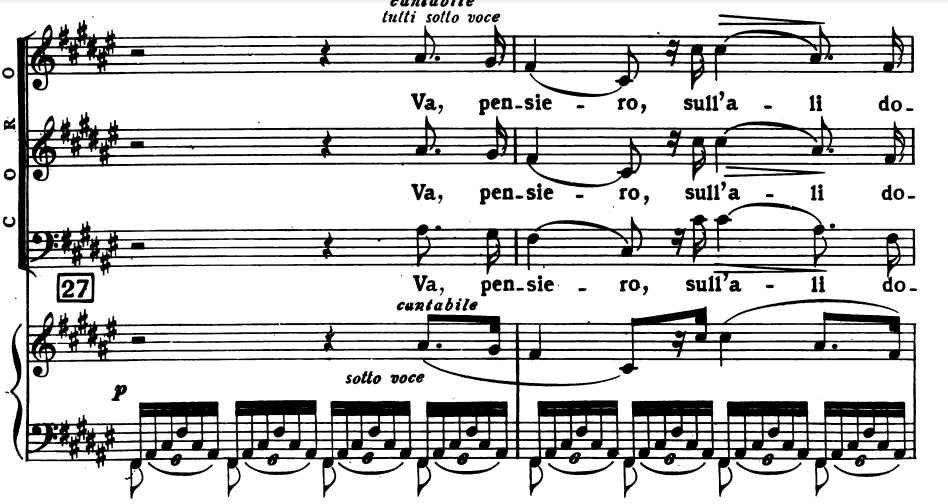
The most famous number in that opera is a chorus “Va, pensiero”, the sad lamentation of a people far from home.
It’s the latest example of programming influenced by the pandemic. Voicebox/Opera in Concert programmed La Voix Humaine, knowing that we’re in a similar predicament as the lonely woman talking into her telephone, an opera that never seemed so relevant to me until now. Lyric Opera of Chicago programmed Pagliacci, putting the chorus, (who usually function as the audience for the play within the play) in the seats of their opera house, allowing them to fulfill the social distancing requirement at the same time. Their edgy version of Wagner’s Götterdämmerung, staged in a modern garage with the audience in their cars for a drive-in experience, included a the diva riding off at the end in her convertible.
And now Toronto City Opera offer Nabucco, including the famous chorus.
In this remarkable video, you see and hear thousands of people singing along, which seems an apt illustration when we consider Toronto City Opera. TCO are an offshoot of the Toronto District School Board. They began way back in the 1940s, when they offered an opera workshop at Central Technical School, but changed their business model and their mission statement in the 2017-2018 season: “A new performance model was created with paid, emerging, young professional soloists, a new professional artistic team, and new performance venues to enhance the audience experience”
While the soloists have to audition, their chorus still get a learning experience, available to anyone who wants to sing, without any audition requirement. I’ve signed up myself, because I miss live music, miss singing and miss making music in church.
And I’m looking forward to be in their chorus singing “Va, pensiero”.
After I registered (including paying a fee), they sent me a link to download pages of the score, a list of cuts. We begin rehearsal on Thursday September 30th.
The safety protocols are reassuring: • Double vaccination required for all artists and production personnel including all choristers • Disposable singers masks provided by TCO for choristers • TCO has rented a space that will allow for distancing for rehearsals and performances for performers and audiences • Ontario Public Health regulations for concerts which require masks and audience vaccination will apply.
Toronto City Opera will be producing Nabucco as a semi-staged Opera In Concert in November. As an Opera in Concert the chorus will be using scores so memorization will not be required. TCO performances are conducted by Artistic Director Jennifer Tung with piano accompaniment by Music Director Ivan Jovanovic Performance Saturday November 13 – matinee at St Andrew’s – time TBD Possible second performance Friday November 19 – venue TBD
Before the Canadian Opera Company begin their virtual season this fall, it’s worth looking at what the other big companies have been doing.
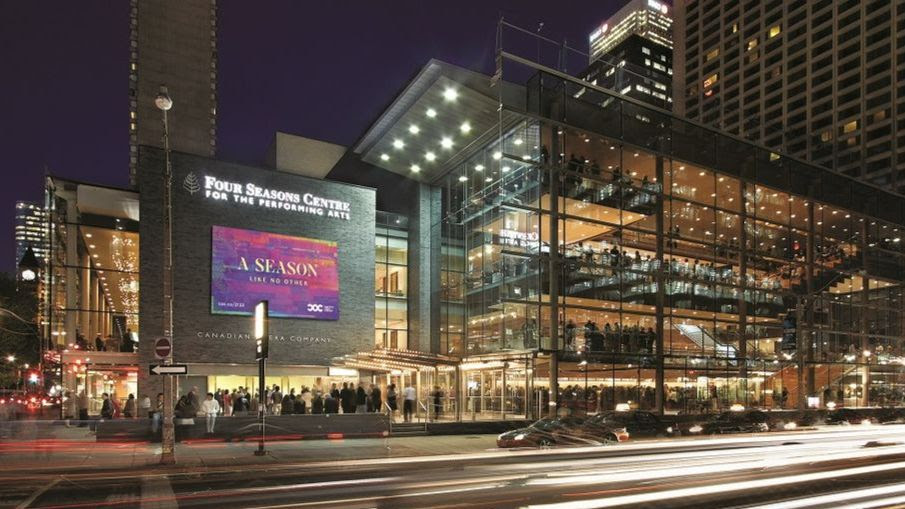
The COC are promoting “A Season Like No Other” in this unique time when everyone is living through their own annus horribilis, the worst year in memory, struggling to cope with a complete loss of ticket revenue, and the devastation of their relationship with their community.
And we’re not even talking about the impact on the artists and their income (or lack thereof).
Earlier this year I wrote about some of the free online offerings from the Metropolitan Opera and San Francisco Opera as responses to the pandemic. As I now consider the other big North American opera company, Lyric Opera of Chicago, I’m using their example to demonstrate patterns, in hope that they may help us understand what might be coming in Toronto and elsewhere. It’s exciting that we now also have the technology here in Toronto to offer content online to make the name of the Canadian Opera Company relevant in a new way.
While LOC have begun their fall season of live performances, with Macbeth and The Elixir of Love, of course it’s a different country, where there’s an entirely different social contract. While there may be an appetite for theatre in Toronto it’s not permitted indoors: at least not on this scale. It’s worth noting, however, that in Chicago the productions are either brand new or new to Chicago. For the COC in Toronto where we’re not seeing anything live until February and we have a new General Director launching a new era, the COC have chosen to cautiously offer us three mainstream operas in productions that we’ve seen before. Is the difference a matter of cultural differences (the brash Americans, the cautious Canadians) or the leadership? I can only speculate although I’ve heard tell of financial challenges faced by the COC.
Enough about divergences, let me return to the question of similarities, in a search for a pattern or template.
LOC have been offering a virtual – online option, with some similarities to the Met & San Francisco, but some differences. At the risk of being reductive, I think I see three usual options in the streamed content, namely 1-concerts, 2-opera in conventional presentations, and what we might call 3-operatic adventures. If I am over-simplifying I’m sure you’ll tell me.
Option 1: Concerts LOC recorded a concert led by their longtime Music Director Sir Andrew Davis. (Yes he’s the same one who was once the Toronto Symphony’s Music Director) that has been available on YouTube since the spring.
The Met has done something similar.
By coincidence, the Canadian Opera Company begin their online offerings this weekend with a concert, Russell Braun and Tamara Wilson with the COC orchestra, led by music director Johannes Debus.
Johannes Debus (photo: Bo Huang)
I feel I must mention one concern that comes up for me whenever I watch concerts online, best summed up by a cliché I regularly invoke. You’ve probably heard the old philosophical question asking “if a tree falls in the forest and no one hears it, is there a sound?” But I wonder, if music is played but there is no audience: is there actually a concert? This is especially relevant to opera and the relationship to audiences. Is “vissi d’arte” really “vissi d’arte” without applause at the conclusion? I’m not sure about that one. Of course when we watch opera on film it’s similarly distanced from an audience.
Option 2: traditional presentations of opera LOC offer a performance of Pagliacci in modern dress captured in their own theatre. The chorus are socially distanced, seated in the audience, but that works perfectly for Pagliacci given that the chorus function as an audience for the performers in their opera-within-the-opera that closes the work. While it’s not as long as most full-length operas, (usually paired with another opera to fill out the bill), it’s enough for a virtual offering. Like the Soundstreams concert I watched yesterday 75 minutes is enough in the virtual world.
No it’s not so traditional as to use the costuming & sets of the score as written: but nowadays fidelity to the text is the exception rather than the norm. Having Canio or Tonio in modern clothes is actually normal for opera in the 21st century.
Similarly, the COC will offer Gianni Schicchi in October as their first opera offered online. As with Pagliacci, it’s a shorter work: but online that’s okay.
Option 3: more radical approaches to opera LOC had Yuval Sharon do a radical re-invention of Götterdämmerung, titled Twilight: Gods, originally staged inside a parking garage as a kind of drive-in opera. This too is short compared to the original (although when I recall some complaining at the length of the full opera, I remember: you can’t please everyone). Where the ending as written has Brunnhilde ride her horse onto a funeral pyre (impossible to stage), in this version, instead of riding on a mustang (or a horse) our heroine drives off in a Ford Mustang convertible. Some of the segments worked better for me than others. The Hagen-Alberich scene was electrifying. There was original content added, that might irritate a purist. Where the men sang with pristine clarity I was sad that most of the female voices in this show failed to enunciate their words clearly. It’s not something that has to be so, given how clearly I heard every word sung mostly by women in yesterday’s Soundstreams presentation. It can be done, so long as the singer makes the effort to treat every word with care. On balance, I welcome this kind of broad exploration of repertoire, a way of opening up new channels and pathways, finding a new audience. It makes opera feel more inclusive so long as it is done with sincerity and a thorough-going integrity of purpose.
The COC offering for November seems to be from the same rough template, as they turn to Against the Grain Theatre for Mozart’s Requiem. The AtG version is described this way in the press release:
This multi-disciplinary presentation in collaboration with Against the Grain Theatre invites us to reckon with the impact of COVID-19—and heal together through the power of Mozart’s astonishingly moving Requiem. Incorporating interviews with front-line medical workers and community members directly affected by the pandemic, this interpretation conceived by Joel Ivany and Johannes Debus connects individual stories of loss and resilience to the sonic world of Mozart’s heartbreakingly beautiful piece. The result charts a passage out of the darkest days of an unprecedented global event towards a new hope for a brighter tomorrow.
Against the Grain Theatre’s artistic director Joel Ivany
There are other presentations this fall as well, including: Espiral from OKAN beginning November 13, which appears to be a concert from a group described as a fusion of “jazz, folk, and global rhythms with Afro-Cuban roots”. In Winter, a concert including Ian Cusson’s newly commissioned work “In Winter” featuring the COC orchestra, chorus and soloists.
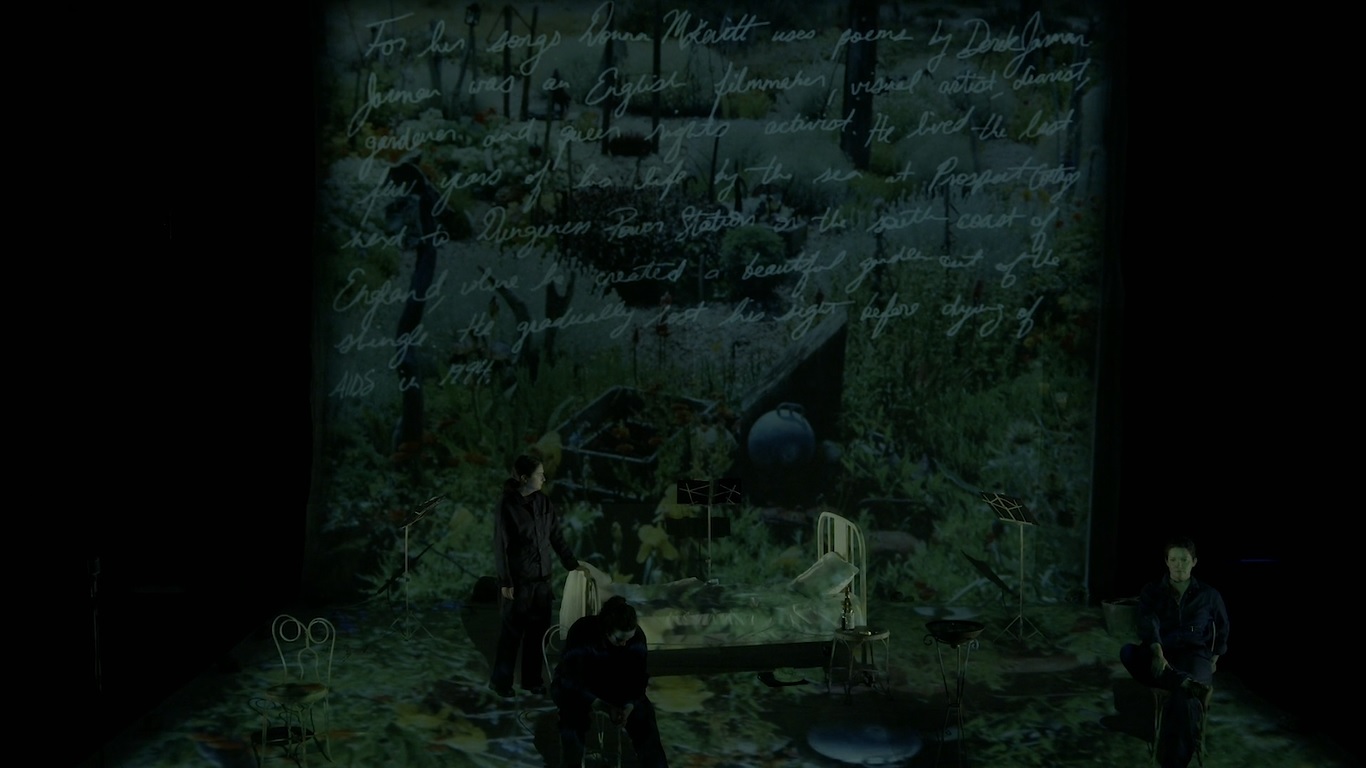
I wondered whether one needs to know Derek Jarman, as I watched Garden of Vanished Pleasures for the first time. It’s the new Soundtreams Online Broadcast through Crow’s Theatre that is available from now until October 10th. I wondered whether it’s universal, something you can appreciate regardless of whether you know anything about Jarman and his life.
Garden of Vanished Pleasures is an apt title for a song cycle comprised largely of Jarman’s poetry, a gay activist film-maker who died of AIDS related causes in 1993.
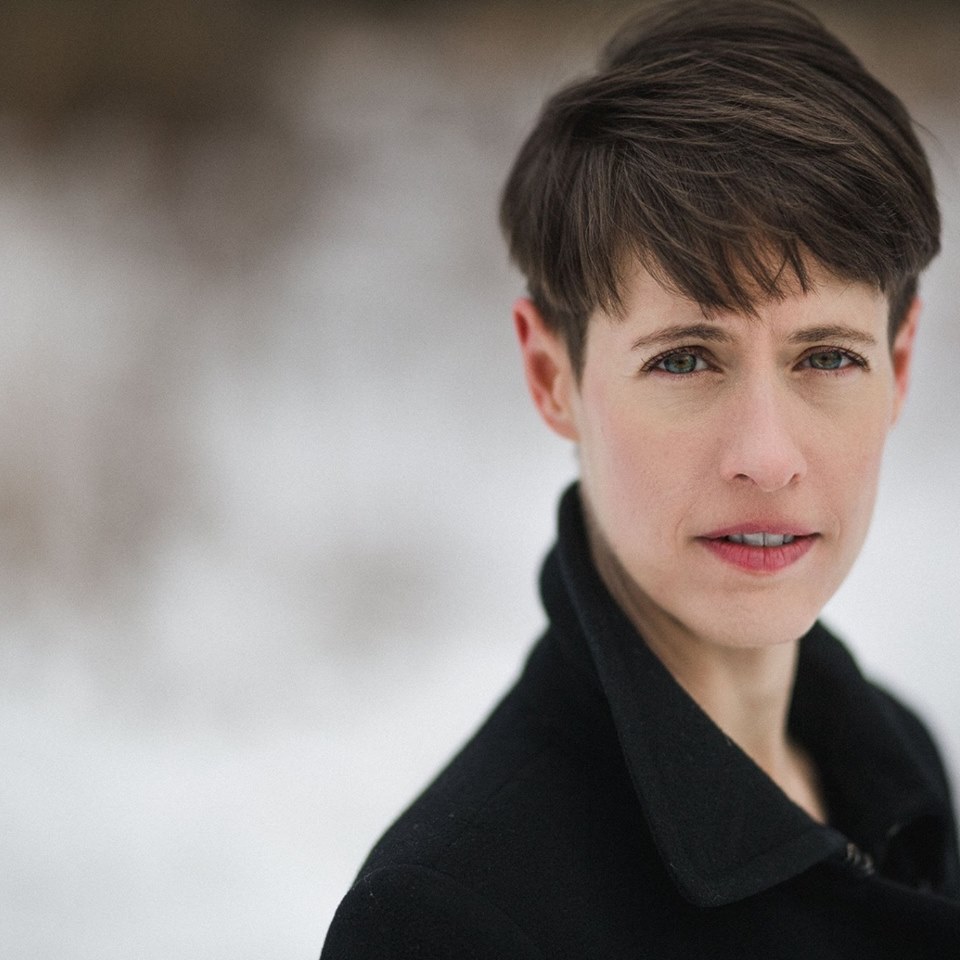
Composer Donna McKevitt
With music composed by Cecilia Livingston and Donna McKevitt, it is mostly a gentle approach to the subject although sometimes the profanity comes bursting through, the anger of the Gay Plague. While I believe this work could have been produced at any time, Soundstreams come at us knowing we’re especially sensitized to outbreak imagery and the contemplation of mortality. For the most part we’re spared suggestions of mass illness or death as Jarman’s vision is largely one of the immanent beauty of his garden sanctuary staring at his own mortality and the loss of his friends.
Composer Cecilia Livingston
While everyone will process the work differently I’m comfortable recommending the work to you. It’s not opera but rather a series of songs, meditations and ruminations rather than anything requiring action. If we were to imagine the continuum between realism and poetry, we’re mostly in the world of the symbol, a place that welcomes ambiguity and complicates the process of signification. There are several layers to Jarman so it’s no wonder that we encounter them in Garden of Vanished Pleasures.
No the visuals won’t be mistaken for the richness one finds in Jarman’s films, but this is a song cycle, not a feature film. We’re in a realm where meaning is created in the mind of the listener, rather than in a perfect representation of reality on the screen.
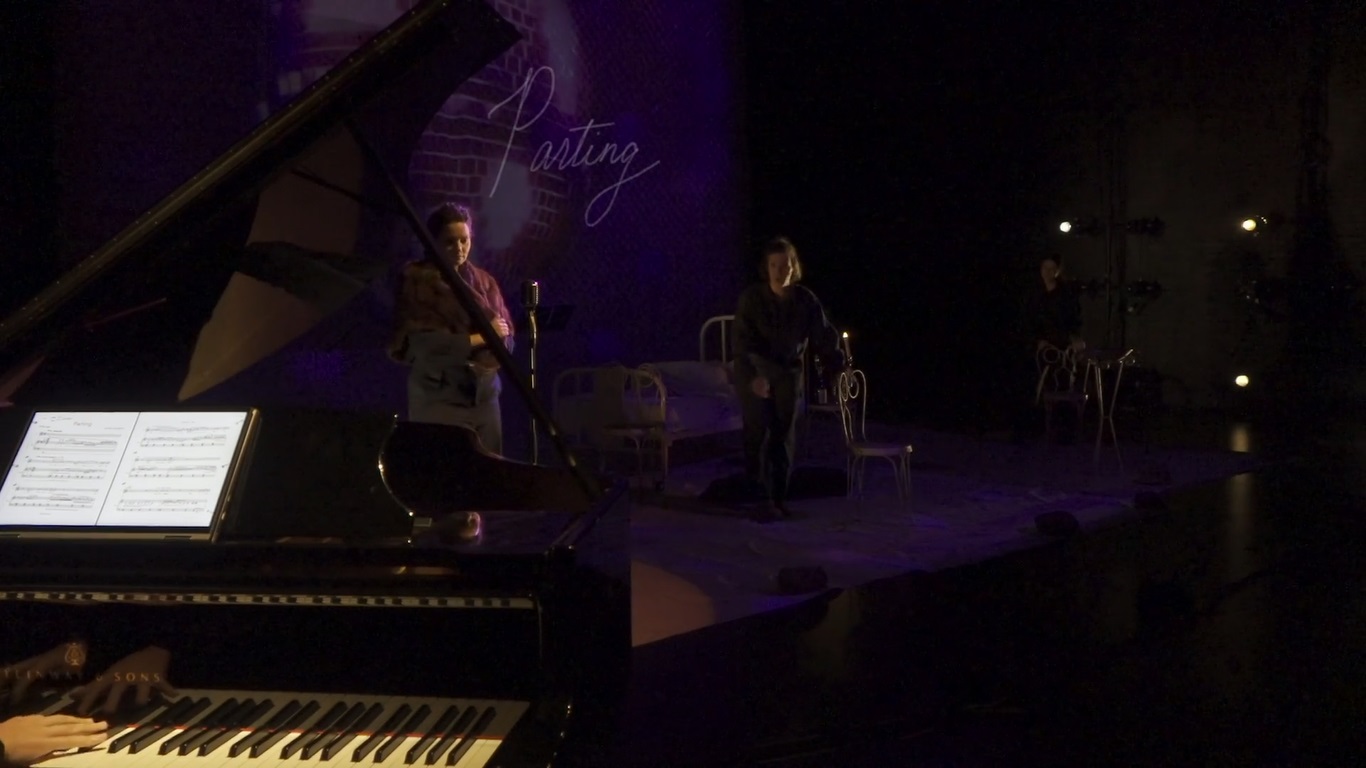
There’s an interesting combination of sung performance, projected images and CGI, requiring a fairly sizable team of collaborators. Tim Albery’s name may be familiar to you as the director of some of the most impressive shows ever seen at the Canadian Opera Company, such as War and Peace, or Götterdämmerung, while his production of Aida was one of the last schedule operas to be cancelled last season due to the pandemic. Unlike the masses required for the three big operas I mention, Albery has only four singers and a few musicians, often alone on the Crow’s Theatre stage where they filmed.
Music director Rachael Kerr leads from the piano.
The ensemble of musicians playing sometimes alone, sometimes with singers, included Rachael Kerr, music director and piano, Brenna Hardy-Kavanagh, viola and Amahl Arulanandam, cello.
Soprano Mireille Asselin
The singers, sometimes as soloists, sometimes in groups, were sopranos Mireille Asselin and Lindsay McIntyre, mezzo-soprano Rebecca Cuddy, and countertenor Daniel Cabena.
Countertenor Daniel Cabena before the image of St Sebastiane
Garden of Vanished Pleasures will be available until October 10th. It’s quite a stimulating creation, well worth your time.
I’ve seen some disgruntled responses in social media to the announcement of the Canadian Opera Company offerings for early 2022.
The COC are offering nine performances of Madama Butterfly in February, then seven shows each of La Traviata & Magic Flute in late April through May. Two of the three are identified as COC productions, while the third is a co-production with Lyric Opera of Chigao & Houston Grand Opera. That surely means that the Butterfly would be Brian Macdonald’s (last seen in 2014) the Flute would be Diane Paulus’s (seen in 2011 and 2017), while the co-pro Traviata was seen in 2015.
The disgruntlement I heard has to do with the comparative safety shown by COC’s management in programming three of the absolutely most popular operas.
How safe?
If we go to operabase.com they will tell you that the most popular operas are, in order, (I didn’t bother going past #7 for obvious reasons): 1) THE MAGIC FLUTE 2) La boheme 3) Carmen 4) The Fallen Woman( aka LA TRAVIATA) 5) The Marriage of Figaro 6) Tosca 7) MADAMA BUTTERFLY
I don’t know the year for this listing, only that this was what presented itself without any preamble or adjustment to the site.
I will look at this, and the question of whether the dissatisfaction I spoke of is reasonable from at least three overlapping different contexts: 1) As a Canadian concerned about the COC and the stewardship of the company. 2) As a lover of the arts who has observed singers & musicians struggling through the pandemic. 3) As a subscriber, aka as a customer considering renewal of my subscription
1 concerns the COC’s survival. We’re coming out of a pandemic that has devastated many businesses. The choice of operas strikes some people as too conservative (in being 3 of the 7 most popular operas).
But that conservatism is in the service of the company’s survival. These three operas are more or less a guaranteed sale, money in the bank. And speaking as someone who misses live performance, I would love to see these operas done live, especially if they’re done well. I’m sure I’m not the only one who feels this way.
2 concerns the working artists. While I hope that the COC will aim to employ Canadians rather than bringing in a bunch of foreign imports, at the same time, the ticket sales that drive #1 may require a few stars. Later this month for instance, the COC are offering an online concert featuring Canadian baritone Russell Braun opposite American superstar soprano Tamara Wilson. We don’t yet know who is to sing in those three operas, but the management has to reconcile fiscal prudence against their responsibility to the artform & the artists. I don’t envy them, given the challenges they face.
For #3, my options as a subscriber pondering the renewal, I’m in the dark as to what’s really being offered, given that we’re told on the website & in our emails, that (and I quote)
Subscriptions on sale: October 14, 2021 Subscription renewal deadline: November 10, 2021
Yes the season has been planned very quickly, but this is an astonishingly narrow renewal window, in fact just four weeks.
We don’t yet know who is to sing in these operas. Presumably they’ll tell us by October 14.
We don’t yet know whether we will be permitted to fully occupy the theatres as of February 2022. If the delta variant & the “fourth wave” prevent a full opening of theatres in Toronto perhaps the question becomes moot.
But come to think of it, if Perryn Leech and the COC brass are asking the same question –that is, wondering whether full occupancy of theatres will be permitted – that would go a long way towards explaining their safe programming.
COC General Director Perryn Leech
Imagine if they had undertaken something risky such as the coproduction of Wozzeck that’s eventually coming our way, and they were committed to it, but forced to work in theatres holding a limited seating capacity. The “safe” programming choice makes sense if they fear having the rug pulled out from under them by COVID.
There’s another question mark of another sort. If we don’t jump on board between October 14 & November 10, we have no assurance that we keep our subscriptions for the following season. I haven’t phoned up the subscription office to query, but in the FAQs, they say this:
What if I did not renew for the canceled 2020/2021 season?
No further action is required from you at this time, and your priority in the seating queue will be maintained if you order a subscription for any 3 opera package of Madama Butterfly (Feb 4-25, 2022), Verdi’s La Traviata (April 23-May 20, 2022), and Mozart’s The Magic Flute (May 6-21, 2022).
That implies that if we feel uncomfortable about going inside a full theatre in February, April or May, and skip the winter-spring offerings, that we lose our place in line. Or in other words “your priority in the seating queue will be maintained if you order a subscription for any 3 opera package.”
I’m not sure how I feel, predicting the future. What will it be like in Toronto in February, or April or May? I’m conflicted about risking my health (or the health of my 100 year old mom whom I see regularly). I’d be totally cool with seeing the Macdonald Butterfly, the Paulus Flute and the Arbus Traviata if I knew they were employing young Canadians who need the work. I’m eager to see the François Girard Parsifal, or the William Kentridge Wozzeck, whatever year they’re finally programmed, and so I must not lose my subscription seat to be assured of that opportunity.
I assume that I must buy a subscription even if I don’t feel comfortable attending: to keep my place in line. I will have four weeks (between October 14 and November 10) to decide what to get, without knowing how safe it will be. I trust that they’ll tell us a bit more about the casting by October 14. Perhaps they don’t mean to put a gun to my head about seeing these three operas if I want to continue on in the fall of 2022. But then again that’s usually the deal. A subscription normally means a leap of faith.
Then again I wonder what the availability of tickets will be. Perhaps a subscription is not needed? But I love our location and would hate to lose them (although I wonder whether we will even be able to sit in our usual location for the three operas…? so many questions).
All these factors — COVID, the health & safety of Torontonians, the fiscal health of the company, the casting choices — come into the question of the COC’s programming in February April and May.
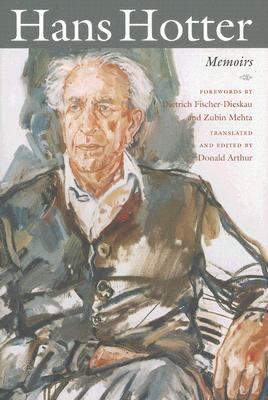
I met Donald Arthur through the Toronto Wagner Society, our guest after publication of the memoirs he translated & edited for Hans Hotter, the great Wagner baritone.
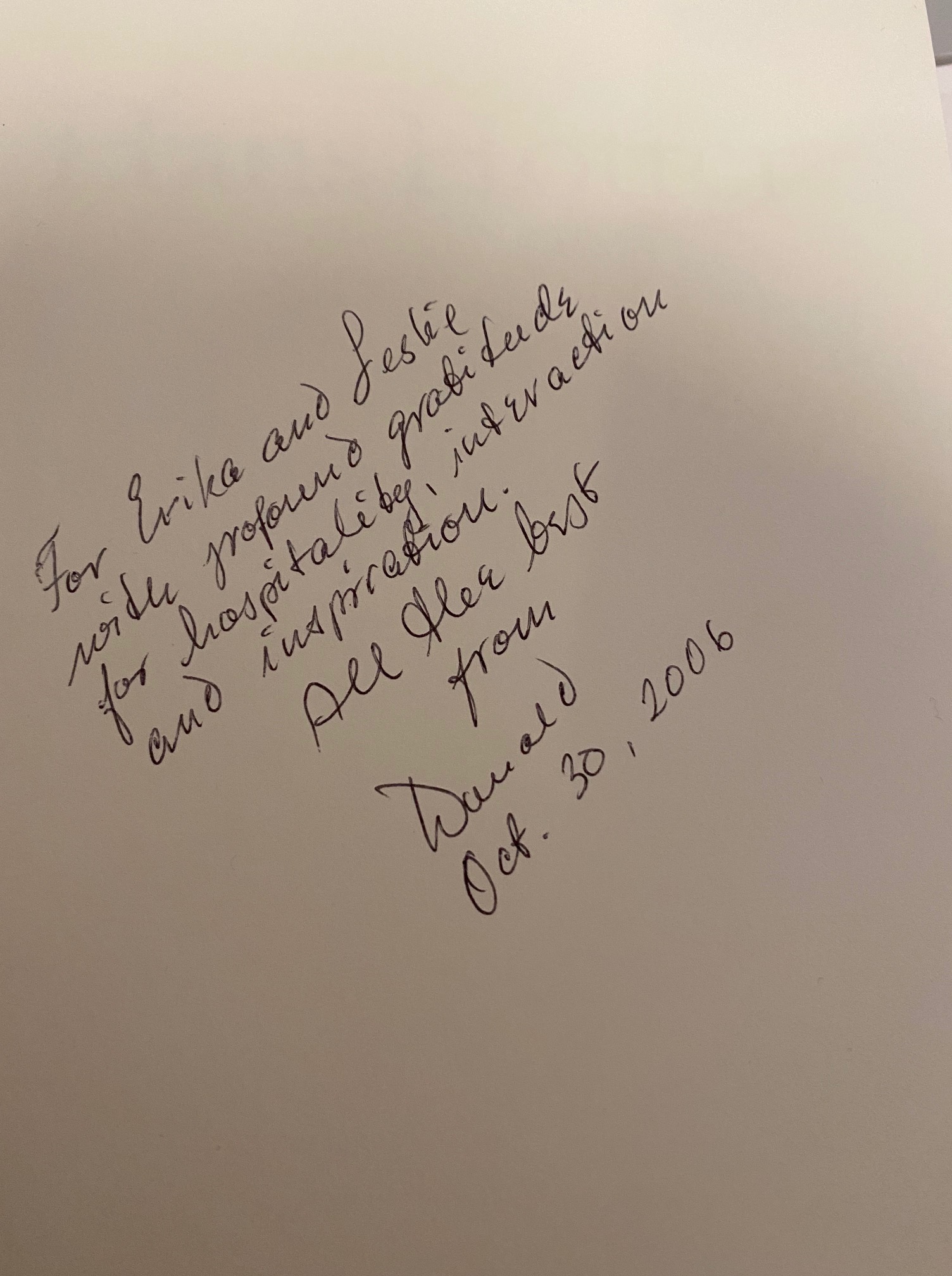
I jumped at the chance to offer Donald a bed overnight in our home. The next day we made him breakfast, and then I took him to the airport. I wracked my brains trying to recall when that was. I was on the TWS executive for a time, a regular contributor to their newsletter between 2004 and 2008. I found the inscription he wrote into the Hotter memoirs, that tells me October 2006.
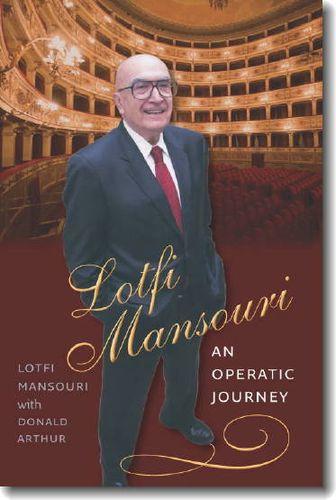
In addition to the Hotter memoirs Donald’s name also appears on the cover of Lotfi Mansouri: An Operatic Journey and he participated in Astrid Varnay’s memoir, a book that I will eventually read.
Donald also shared excerpts of a draft he was writing with James King, although the tenor died in 2005. I don’t know whether they had finished writing and editing, but the book has not been published. I saw some parts available online from a university library’s collection of King’s collected writings. I wondered, not for the first time, about the complicated life of the collaborator, especially when their subject passes away, and how (or even whether) Donald was compensated for his work on the King book, done perhaps in expectation of future sales that never happened.
We’re coming up to the five year anniversary of his passing, on September 21, 2016 in Munich, roughly half a year short of his 80th birthday. Donald was born on April 29, 1937 in New York.
I used to say “I wear many hats” as writer, singer, keyboardist, academic, composer, a bit of a jack of all trades. But my hats are off to Donald Arthur, a uniquely versatile individual. He was a writer and ghost-writer, a translator, an actor, singer, voice-over artist, in multiple languages.
His entry on IMDB (37 acting credits and another 16 in other disciplines) is remarkable, including a surprise. The 1981 film Montenegro credits three writers and Donald Arthur is one of them. I wish I could have asked him about that, one of my favorite films of that decade, that I haven’t seen in a long time.
Wow.
Here’s the one example of his work in English that I found on YouTube.
Alas we drifted apart. I regret that we seemed to lose touch with one another, partly because I was swamped on several fronts, but most likely because Donald was so busy. For example, here’s an excerpt from an email he sent in December 2006, not long after his visit to the Wagner Society and our little home in Scarberia.
Dear Leslie; Well, after doing my dog and pony show, in a manner of speaking, across the map of North America and beyond, I finally made it back to home base and am slowly digging myself out from under the ever-growing mound of responsibility, but mind you, I’m not complaining. The beauty part is that when I asked a lot of potential customers if they wouldn’t mind waiting for me to come back, it never entered my mind that most of them would, bless their cotton socks. But the biggest surprise came about in San Francisco, where a friend of mine currently reading a book on linguistics by a distinguished professor of the subject in Manhattan showed me a footnote in which he despaired about the failure of the German version of SOUTH PARK to convey any of the flair of the original except for the guy who dubs Isaac Hayes as the Chef, and even sings Isaac’s songs in German, who comes across as a carbon copy of the original! That’s high praise, and I guess that makes me an honorary soul brother.
I was a bit frustrated when I tried to find examples of Donald’s voice-work in Germany. After a long search, I found two very brief samples of Donald singing in German, once I figured out that I needed to search for “Chef Koch”. Perhaps there are more.
Not bad.
But let’s get back to the encounter during Donald’s visit, when I found out something that Toronto was known for…
Donald split his life strategically between two homes. In summer he lived in Germany, but would winter in Malta.
…Donald asked me to find a Maltese bakery he had heard of, located in the west end of our city, a bakery that was known in Europe. I was to take him there en route to the airport. I was a bit astonished that our Wagner society guest would want to stop for a coffee and pastizzi at the “Malta Bake Shop”. But there it was on Dundas St West, conveniently located in our path westward to the airport, where the bakery exists to this day.
Pastizzi were new to me. I remember enjoying my first pastizzi plus coffee through Donald’s visit to the bakery before going on to the airport.
It wasn’t the first time I thought that Donald really knows how to live.
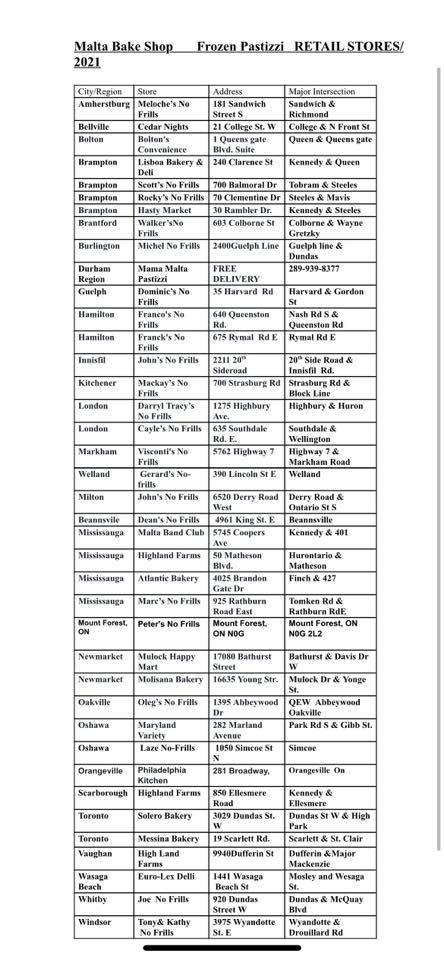
Years later, I looked up the Malta Bake shop, confirming that yes they are still in business, as of 2021. They offer their wares at multiple locations around the GTHA as I discovered via their fan page on Facebook.
a graphic I found on Facebook
One of the locations on that list is not far from me in Scarborough.
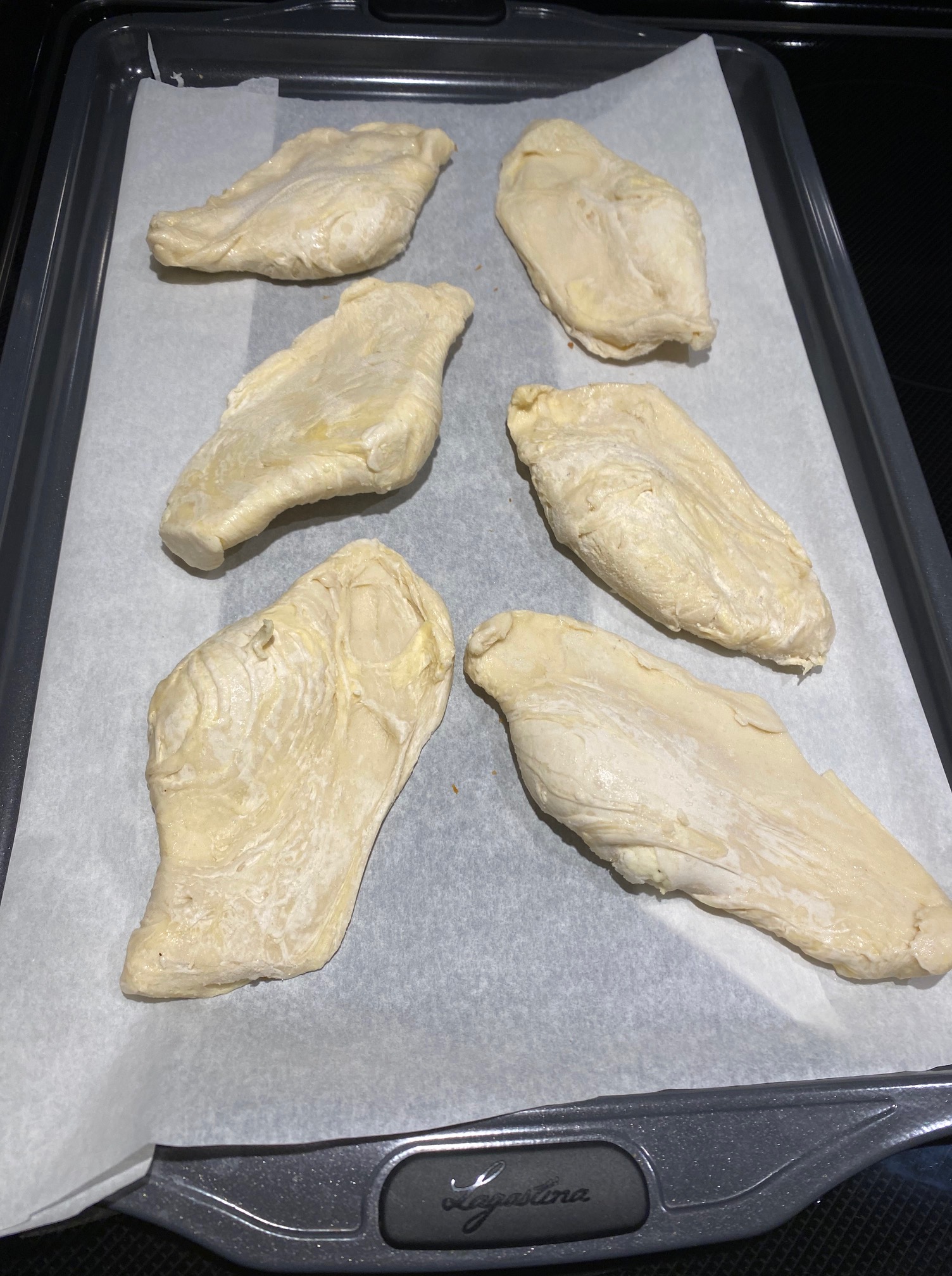
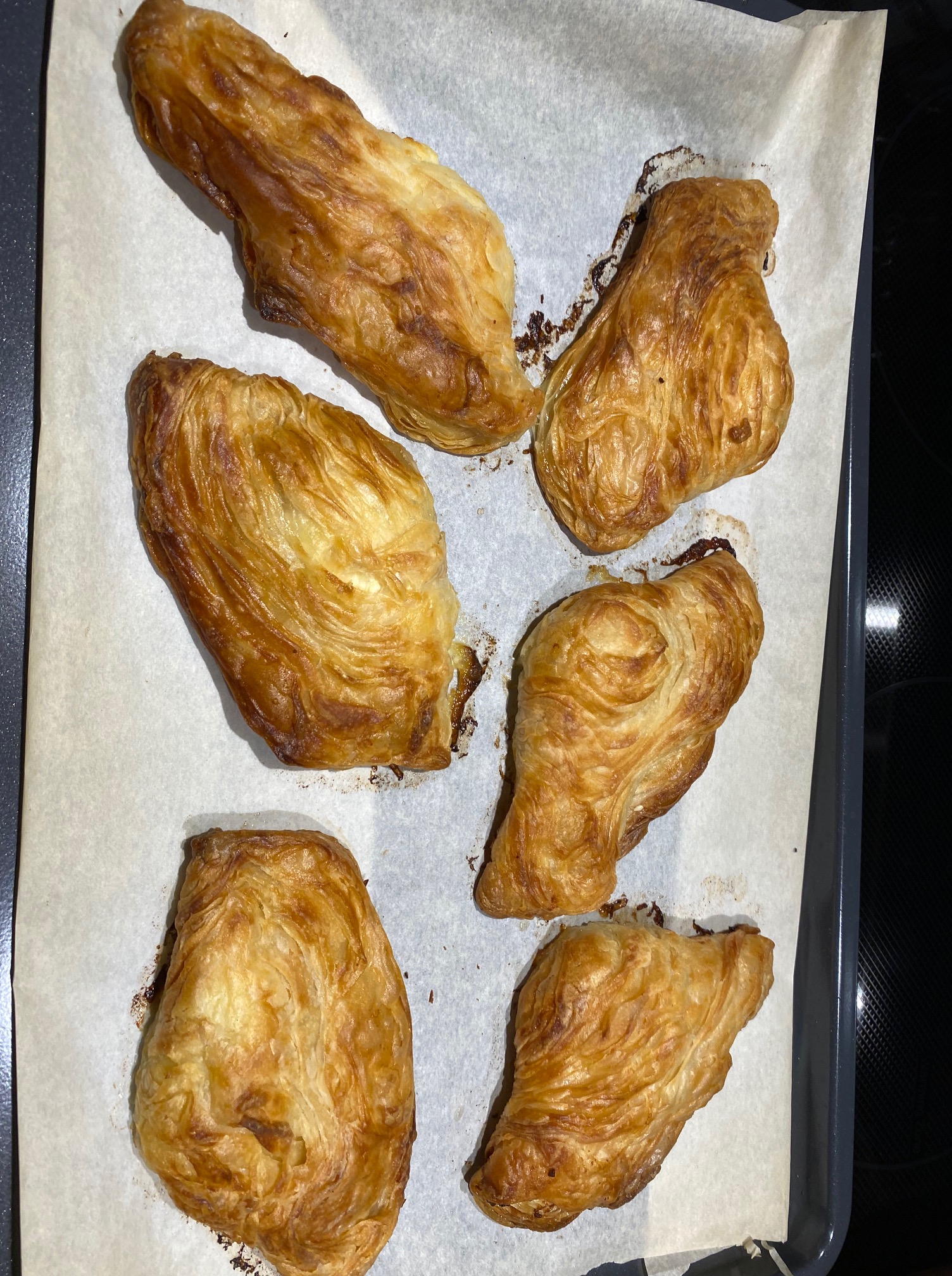
A couple of weeks ago Sam the dog gave us a bit of a scare, an occasion to visit the emergency vet up at Birchmount and Ellesmere here in Scarborough, not so far from the Highland Farms location that carries products from Malta Bake Shop. Yes, I found pastizzi in the freezer at Highland Farms and thank goodness Sam is okay after all. But with all the disruptions of our day at the emergency vet clinic, we needed to grab something fast to eat from Highland Farms: including the pastizzi.
beforeafter
When I baked them I wondered, perhaps the ones you get fresh at the Dundas W location are better? But these were pretty amazing. If I could bake them without messing them up, that’s a good recipe. They’re delicate in flavour & texture. And hard to resist.
I will end recalling the way Donald closed email, a true gentleman.
Fond good wishes to Erika and your good self – Ésanyam, too! Donald
“Ésanyam” means “and to mother” directed to my mother in law Irene whom he had met here on his visit. He was the picture of charm, adding that tiny bit in Hungarian.
I don’t know Derek Jarman as well as I wish. But I’m presuming to offer some thoughts in answer to a question posed on Soundstreams’ blog a few days ago.
I recall Jarman’s contribution to the anthology Aria (1987).
The premise of Don Boyd’s film was to approach several directors to create something resembling music videos, but using opera rather than popular music. Many of the little films feature Leontyne Price. We hear her Liebestod, her “La vergine degli angeli”, her “Depuis le jour”, versions as good as any ever recorded.
The segments are short, with Jarman’s being one of the shortest. Yet it’s arguably a self-portrait, even if it’s a bit perplexing at first glance, not easy to decode.
I recall that when film critic Jay Scott interviewed Stewart Hamilton, trying to get some insights into Aria, especially Jarman’s segment, Hamilton dismissed it as nonsensical: which is what you do when you don’t understand. I regret deeply that I never talked to Scott about it. I see that Scott probably died of AIDS related causes, which is particularly heart-breaking under the circumstances. I wonder if Scott had an inkling what Jarman was doing..?
Let me tell you about it, or at least how I decode it.
First, let’s talk about the music Jarman chose to set. “Depuis le jour” is an ecstatic aria about new love sung by an impetuous young woman, Louise. She is telling us of a first kiss, the first days of a new love. It is very much in the present, about something new and immediate, sensual and physical.
Now, let’s add some additional layers.
Derek Jarman, not unlike Jay Scott would get the plague. Scott died in 1993, while Jarman died in 1994, both of AIDS related diseases.
Jarman chose this short aria, celebrating new love and youth, at a time when I feel certain he was wondering about his future. Perhaps he did not have a diagnosis yet, and was merely watching the plague unfolding around him. Or maybe he knew that he was going to die.
But I know how Jarman listened to “Depuis le jour”, when I watch what he put on film, that so perplexed Stewart Hamilton, that moves me.
We see an old woman (played by Amy Johnson), who resembles a diva onstage enjoying the accolades. We don’t see her perform, we see her bowing repeatedly.
Amy Johnson
What is this old woman doing in an aria about young love?
Jarman of course knew he wasn’t likely to get to be an old man bowing. Never mind the gender of the woman singing about new love. Jarman surely is talking about himself in this aria. This was an impossible dream, to be old with the death sentence hanging over him.
Let me mention too that Jarman had made a lot of super8 film.
In “Depuis le jour” we switch between the old lady bowing onstage, and we seem to see memories captured on handheld super8. Jarman’s regular collaborator Tilda Swinton is captured in elusive glimpses as though they were memories from youth.
Tilda Swinton
I’ve seen it so many times and it still takes my breath away. As we go back and forth I wonder, are they the same person, or the same soul? perhaps the bowing old woman is not so much a long-lived woman as the soul of the young one, looking back.
It’s poetry so I don’t know that there is any clear answer, and we don’t need one.
This is some stunning footage. The difference in the types of film suggest two different realities. It’s been imitated many times.
I cry every time I see this even when I don’t also think of Jay Scott.
The super8 seems to be a recollection of a life, as seen from the old lady’s perspective, recalling the first days of youthful romance & love. It’s a poignant fantasy for someone who knew that old age wasn’t possible for him.
Whether or not Jarman was being autobiographical or merely poetic, doesn’t matter. I think it’s the most beautiful five minutes of cinema I’ve ever seen.
The music is amazing. But it should be better. Am I asking too much?
Earlier this week I watched Respect, the new biography of Aretha Franklin. I paid for 48 hours worth of viewing time, but only felt like watching it the one time.
Jennifer Hudson sounds a lot like Aretha Franklin. My wife enthusiastically reported that Aretha herself insisted on having Hudson create her in the film. It’s a good impersonation. At times Hudson does a bit of a wail in her singing that reminds me of Aretha. But to me when Hudson is singing, it’s a broadway voice. Sure, Hudson has amazing vocal production, don’t get me wrong. She has a laser focus when she starts a note, sometimes soft, sometimes loud and sometimes then opening it up to something even bigger with vibrato that stays on pitch. It’s not quite as wild as Aretha, whose voice threatens to go out of control because it’s not the same sort of voice. Maybe I oversimplify, but I come back to Hudson’s origins on American Idol, where singers with this much accuracy are treated as suspect, a broadway-bound artist rather than the rock musician. Hudson is fabulous in Dreamgirls for instance, where her voice matches the idiom. And Hudson is a good actor, a terrific artist. But when the resemblance is too close it reminds me of a sketch from Saturday Night Live, like one of those imitations by Jimmy Fallon that has you saying “wow, sounds just like him / her”.
Maybe I’d feel different if I’d seen it in a theatre? At home where I’ve also binge-watched the Fosse-Verdon series, a good impersonation is simply not enough. I want insight into characters and their creations, I want something dense with meanings & if possible something profound.
I’m thinking too of Rocketman, Elton John’s biopic. You’ll recall that Elton had to approve of the story that he produced & therefore authorized as his official story. When there are places in the story where we wonder about accuracy we have in the back of our minds that yes, this is really auto-biography. Ditto with Aretha’s Respect. There are two children in her life that she had at a remarkably young age. She was 12 for the first, 14 for the second. But we hear nothing about how it happened. The children just appear and then are given into the care of her grand-mother, the details (possibly a horror story) seemingly redacted out of the story.
Aretha loses her beloved mom at an early age. Aretha is taken out on the road with her father, a fascinating minister involved in the civil rights movement sensitively portrayed by Forest Whitaker. Aretha was inevitably exploited by her father for her vocal talents to help promote his ministry. How his daughter was violated or seduced isn’t explained. Depending on your perspective, this is problematic, horrific, the big shadow lurking over her? I wish I knew what happened even if it’s totally mysterious in the film. There are gaps in the storyline. I get it, Aretha had a difficult childhood. Her pain is real. So just as with Rocketman we’re in the realm of the authorized biopic, strongly controlled by the artist. As in Rocketman Aretha also permits aspects of her story into the film that are decidedly unflattering, dark, troubling. Even so, I suspect her control stifles the picture.
I wonder if I would have felt differently seeing it on a big screen..?
Some of the best moments are scenes in recording studios, watching the process of music being made, musicians inventing licks and adding layers to songs. It’s stunning to watch. Hudson is persuasive sitting at the piano as a creative force while the musicians react to her. I love this part of the authorized story, ready to accept Aretha as much more than just that voice.
The film is especially good at the beginning, perhaps too good. We start with glimpses of the childhood Aretha performing for her family & her father’s congregation. It’s so believable, so organic, that it sets the bar perhaps too high for what’s to come. Hudson never fully persuades me, the way Skye Dakota Turner grabs me as the ten-year old Aretha.
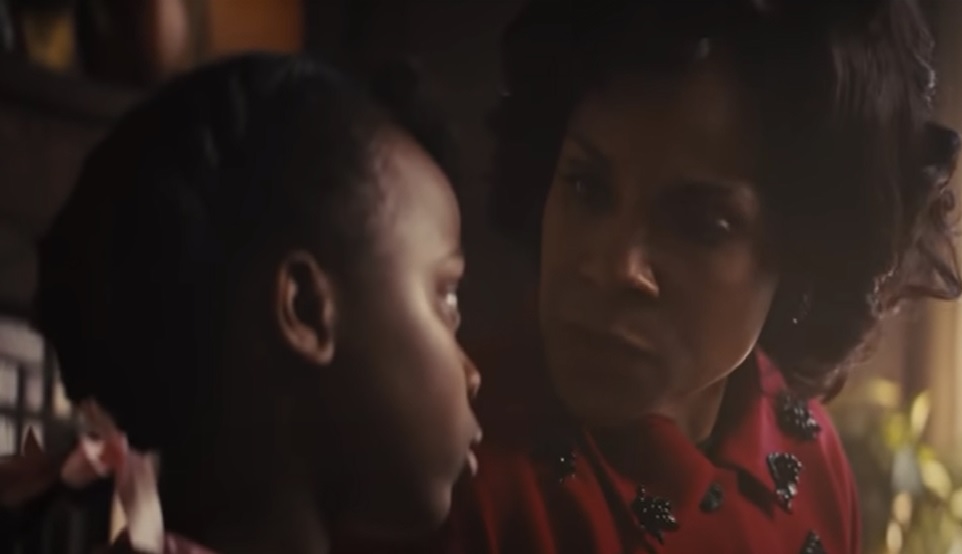
As much as I admire Hudson, there is never the same kind of magic with the adult Aretha as we had at the first part of the film, especially when we watch Turner with her mother incarnated in Audra McDonald.
Skye Dakota Turner and Audra McDonald
This is the best part of the film.
I hate to sound churlish in saying that the film needs something more. I don’t know what that would be. Perhaps it’s more truth about Aretha’s children, perhaps it’s more than the one biographical plot line. I recall having low expectations of Rocketman, but being stunned by its brilliantly surreal combination of songs and story-telling. There’s nothing in Respect quite so illuminating.
But the musical performances are fabulous. If for no other reason than to listen to the voices, you’ll enjoy Respect.
Maybe it goes without saying, but I was intrigued that the familiar short-form used by family addressing Aretha was ”Re”. If you’ve been called “Re” all your life, singing “R-e-s-p-e-c-t” complete with backup singers going “re, re, re, re,” like her own cheering section, takes on a whole additional meaning. That’s an exciting discovery.
I took lunch to my mom today, as usual. I’m part of an unofficial committee with my siblings, sharing the various chores such as lunches, laundry, and more.
She asks how we’re doing, if Erika is working hard, how is the dog.
I don’t go into a lot of detail. I said Sam was okay, even though, truth to tell, I’m worried.
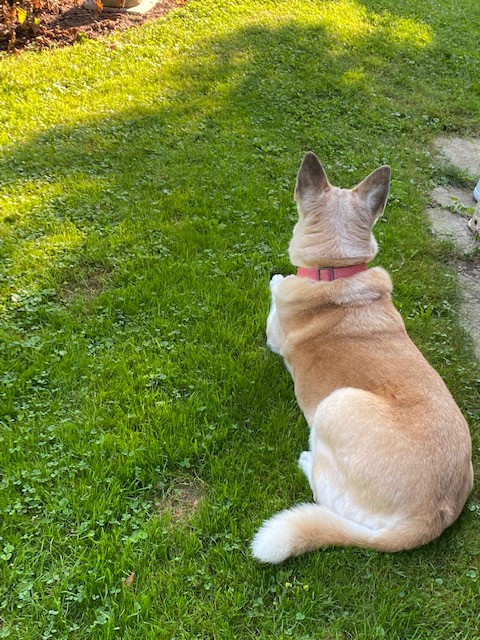
Sam does a lot of lying around, staring off into the distance
Sam has been scratching incessantly at her lump. It’s bigger all the time. We worry about her.
But she does seem to be in good spirits. A dog doesn’t know that it’s supposed to run slowly because of a humidex of 39. A dog doesn’t know she’s supposed to run slowly because of her lump or her advanced age. She may be over 14 but she often acts like a puppy. Strange dogs or delivery persons elicit an explosion of barking. Otherwise she’ll just lie there.
Today after lunch my mom & I were chatting about someone named Pongor Barna. My mom told me that he was a school-mate of my father when they were both studying to be engineers in Hungary. Yes that’s a long time ago. Where my mom had her hundredth birthday as of July, my father (who passed away in 1960) and his school colleague would have been older still.
My dad was born in 1917.
My mom was remembering when Pongor Barna came to visit the family (which didn’t include me, as I wasn’t born yet). I understand that we lived on Humewood Avenue. It’s the “we” that I speak of as a member of the family collective. But at this time I was still floating around in the cloud of unborn kids waiting to arrive.
When I looked it up on Google, I was surprised to discover that my family was living in the vicinity of my current church, namely Hillcrest. It’s one of those coincidences that makes me feel as though I’m in the right place. They say there are no real coincidences.
My mom then shifted gears to read some recent rhymes.
This one was delivered ruefully. I think she meant it as a true confession.
I always eat my lunch too late Maybe that’s why I’m gaining weight
She then told me that “This one is called <Hummingbird>”
You’re as big as my coffee spoon You return every spring in early June The buds will suddenly burst into bloom You will be visiting each of them soon Hummingbird hummingbird hum me a tune It won’t be as loud as a morning loon.
And then she asked me if I knew what a loon sounds like. I said of course, we used to hear them up at the cottage.
But I realized, hm, perhaps not the cottages I went to with my mom as a child. She and her second husband (my step-father) had a cottage for awhile up at Deanlea Beach, on Georgian Bay. Perhaps the youthful rascals dashing down to the water aka me and my siblings, wouldn’t be expected to notice the subtle beauty of loons in the rush to the beach.
We were a bit loony ourselves.
She read another poem, in a tone of discomfort.
I did not sleep all night I got up by the morning light They tell me “try it at daylight Because there is no wrong or right” Now this I cannot fight Never slept at daylight Never tried it: but I might.
She paused for dramatic effect. Sometimes she tells me of her difficulties sleeping. I guess this poem is about that debriefing process. We’re always asking “how did you sleep”?
She went on to the next one, delivered with more of a twinkle in her eye, to suggest something ironic, more playful.
I came here with my singing band They bring their trusted reverend Who promised them The Promised Land Where they hope their tour may end.
But Trusted Reverend this is not the promised land… Nothing here but shifting sand. Seems our journey still won’t end, Looking for the promised land.
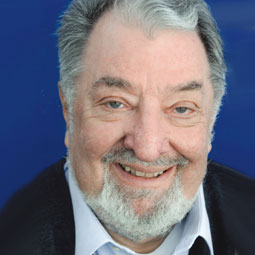
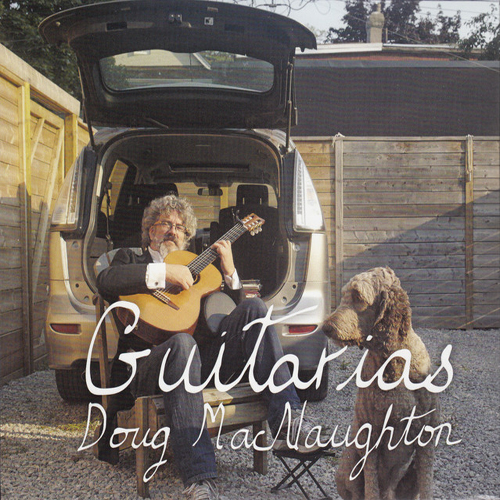
Doug MacNaughton is known as much for his acting as for his singing, at home in opera, operetta, music theatre and concert work.
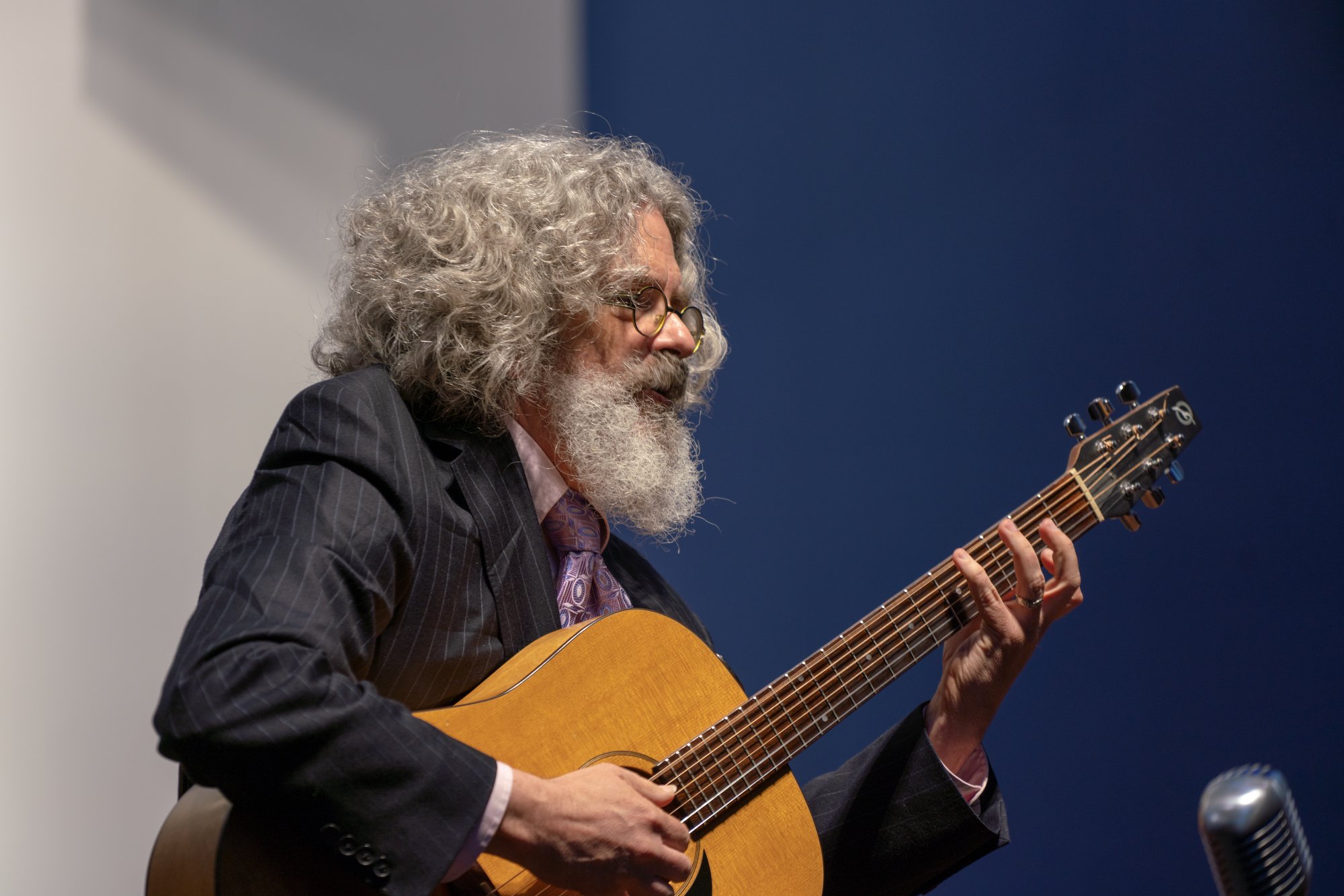
As powerful as he sounds in ONE DAY MORE Doug also has the ability to use his voice with delicacy. And he plays the guitar.
I wish there were more artists like him. I had long felt a connection to Doug, a versatile artist who doesn’t fit the normal template.
I knew Doug had been nursing an older dog named Benji. Our family dog Sam is over 14 years old and unwell. She almost died a few months ago. We hope to make her last months as enjoyable as possible.
But in the end Doug and I did not talk about dogs.
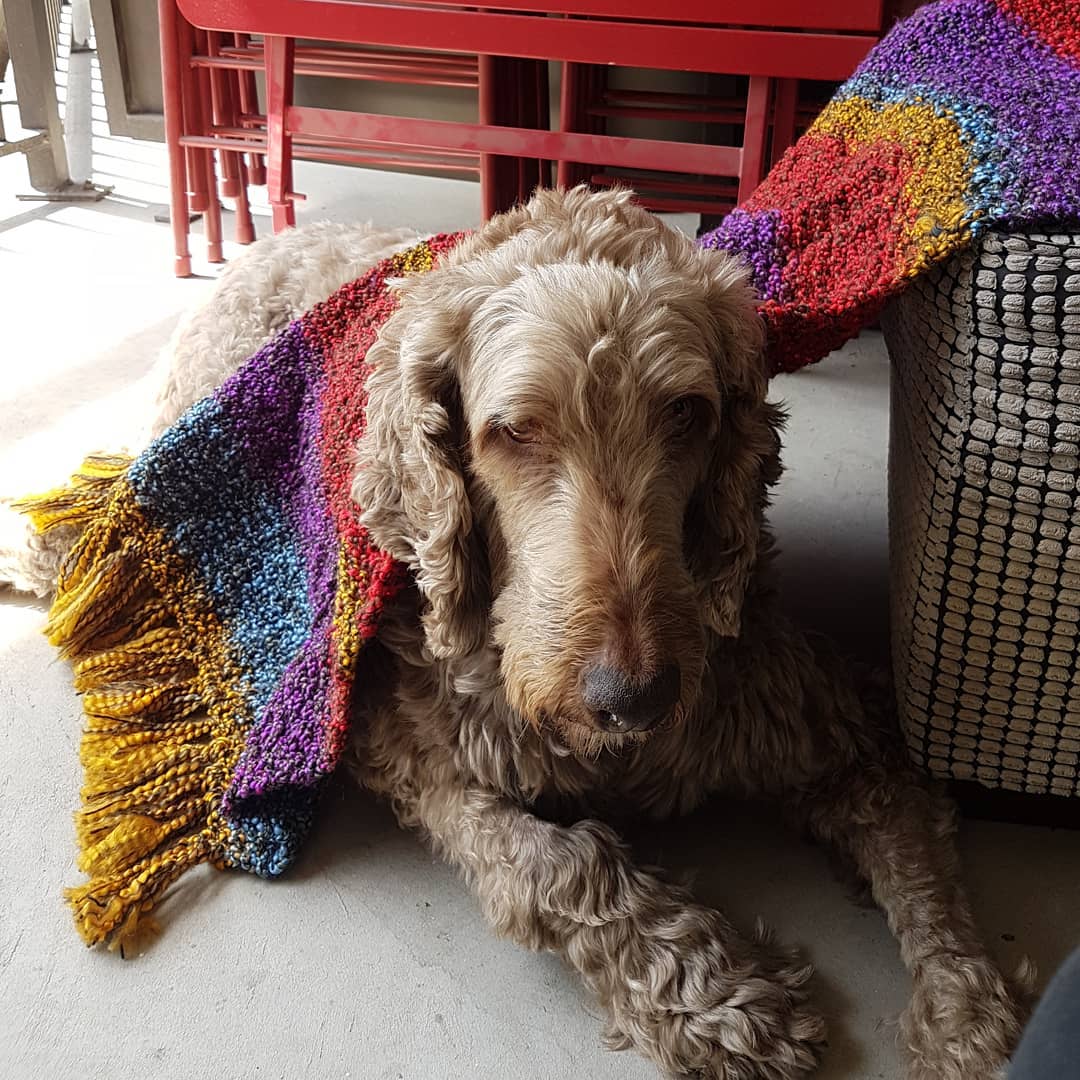
Benji with a prayer shawl from Fairlawn Avenue United
Doug was willing to talk to me on a Wednesday, even though his beloved Benji passed away on the Monday. And so we didn’t talk about Benji.
I promised Doug I would re-assemble our lengthy conversation in search of logical connections.
Doug MacNaughton I’ve just got to warn you, that “logical connections” are not part of my being.
BARCZABLOG: (LOL) Are you more like your mom or your dad? Talk about your relationship with your parents and their influence on you.
Doug MacNaughton: I’ve been thinking about this one for ages because there are aspects of both of them that I’ve picked up, for better or worse. So one of the ways I’m more like my mum than my dad, is that my dad was pretty much tone deaf.
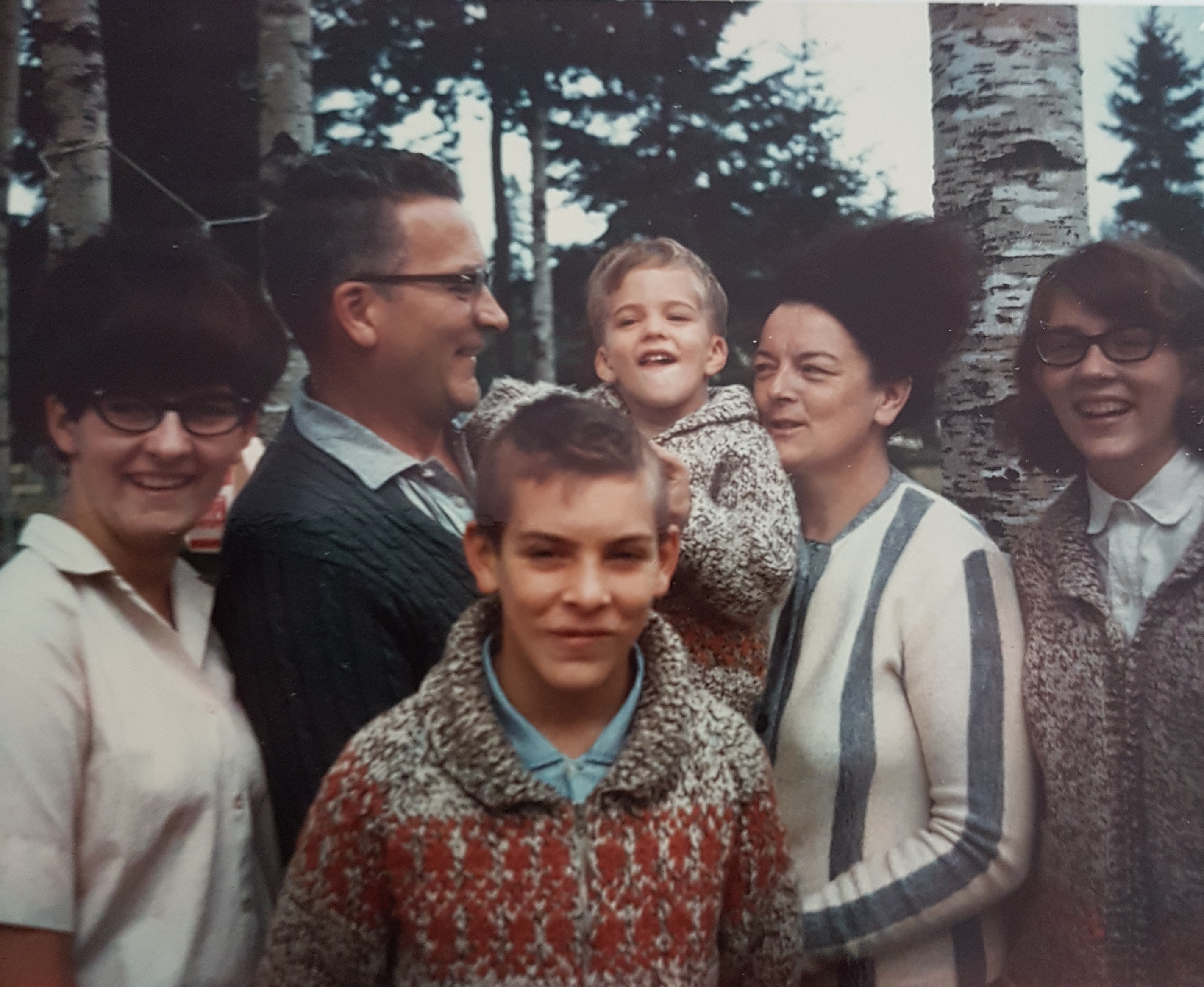
(Left to Right) Elspeth Mary Reid, née MacNaughton (1948 – 1991) ; Dr. William Norman MacNaughton (1918 – 2006) William Dick MacNaughton (1954 – 1980); Doug (1962 – ) Elspeth Morrison MacNaughton, née Ogg (1923 – 2001); Anabel Margaret Fryatt, née MacNaughton (1952 – )
So all that was by way of saying, because of growing up on a farm my Dad and my Uncle Peter, they were discouraged from taking up any musical training… Which is particularly funny, because my two aunts Muriel and Lexie both were quite accomplished pianists. And both of them were known to play the organ in church
BARCZABLOG: so speaking of which…. Could you talk about how you found your way, your pedagogical path, perhaps through church singing to: opera? How did you learn music, when did you start? Through church or through school..?
Doug MacNaughton: a bit of both. My first instrument was the recorder in grade 4, which was not uncommon in those days. But I really loved it. And then it was two years later, that I overheard my mom on the phone talking about selling my brother’s trumpet. And I said “don’t do that,… I’ll play it!”
BARCZBLOG: so you have an older brother..(?)
Doug MacNaughton: I had an older brother, yes. He had played the trumpet for a time in high school. He wasn’t playing it, my sister wasn’t playing her clarinet much… So I ended up joining the school band. Now in Brandon—which is where I grew up—they had one big band for the entire city, as opposed to bands in the individual schools.
And I don’t remember when exactly I started church choir. But it was somewhere around Grade 4 or Grade 5.
BARCZABLOG: what church were we talking about? United or Presbyterian?
Doug MacNaughton: Presbyterian… And my parents were both elders in the Presbyterian Church, and took it very very seriously.
BARCZABLOG: so are you still a Presbyterian?
Doug MacNaughton: No, if I’m anything in Christian denominations, my adherence is to the United Church, which is not to say I have any animosity to the Presbyterian Church. It’s just religiously and spiritually I’ve gone from Presbyterian, to a brief Evangelical phase, to an atheism (that varied from mild to quite militant), to coming back around to being a religious person again.
I’m like that with many other institutions. I’m very suspicious of universities…even though a lot of the things I love learning about are taught very well at universities.
BARCZABLOG: I’d love to hear about that.
Doug MacNaughton: We have this tradition particularly your voice lessons or your instrumental lessons, are taught, just with you and the teacher in the same closed room. And that works well as long as long as everything is honest and above board and open, between the teacher and the students. But that very system is just so open to abuse. And that power structure –“I have the knowledge, you don’t have the knowledge” –coupled with, we have this half-hour to an hour session in a closed room once a week. “And let me demonstrate how that’s supposed to work. Can I put my hands on your abdomen? On your rib-cage.”
And so I am fortunate, I’ve never had an uncomfortable session. In the 1980s I worked with someone at Banff who has since been arrested and jailed for his misconduct. I don’t know that any of that was going on at Banff at that time. We’re talking about ’82 – 83. All of this finally came to a crisis point sometime in the last two or three years.
BARCZABLOG so do you see a way? Do you have an ideal framework for music education and pedagogy?
Doug MacNaughton: If there’s a third person in the room, that solves a tremendous amount.
BARCZABLOG: so if the next child is waiting and observing that makes it safe. Wow that’s very clever.
Doug MacNaughton: I’m also a big advocate of recording everything. Teacher X has at least one camera that just gets clicked “on” as soon as the student walks in the room. It’s time-stamped, and everything happens in front of that camera.
BARCZABLOG: Wow. You’re absolutely right.
Doug MacNaughton: now it’s not a universal cure, because I have spoken to say, people who were the pianist for voice teacher “X” and they would talk about how voice teacher X would do these things that were so inappropriate.
BARCZABLOG Oh! So they were enabling it by looking the other way, you mean?
Doug MacNaughton: So that has me immediately thinking: if voice teacher X was doing something inappropriate did you feel you could go somewhere and blow the whistle on this teacher?
BARCZABLOG: there’s a quid pro quo they’re getting paid, so I guess they keep quiet.
Doug MacNaughton: Yeah. I don’t know how much truth there really is behind the anecdote, but my father- in-law was a prof at University of Guelph from ’68 until he took early retirement in the 1990s. And he told this story of one particular student of his who came in wearing a very skimpy outfit. And closed his office door behind her. And he said “no no please leave that open”. And she said “no I want to leave it closed”. He went over and opened it. And she proceeded to give him this whole story of how “I’ll do anything to get a good mark in this course”. He reached down into his desk drawer, he pulled out the reading list, and slapped it on the table. “Start with that. If you have any questions after that, feel free to email me….” And he basically behaved as if he was too dumb to take the hint of her advances. And he did give her the potential of earning a good grade.
BARCZABLOG At times like that, the camera will protect both people. It always does I suppose.
Doug MacNaughton: I’ve thought about this particularly in light of the U of T situation. You almost need for the teacher and student to start out their relationship with some sort of formal declaration, of rights, expectations, responsibilities.
BARCZABLOG yes there are some funny rules at university. Let me shift gears a bit. You’re a man of many talents. Give me a quick version if you were to describe your career and your talent. Who are you, right now?
Doug MacNaughton: So the thing is, the primary thing I do for a living is opera. And on top of opera, as a classical singer –as some people like to call it—that invariably gets you into certain oratorio situations. I’ve done a bit of musical theatre, a few very specific shows, like Les Miserables, like Man of la Mancha, where an operatically trained singer –there are a set of roles—where that singer can fit in quite nicely.
Man of la Mancha, Stirling Festival (photo: Caroline Smith)
And so I’ve done a certain amount of that. I haven’t done much spoken word theatre but the little I’ve done, I’ve absolutely loved.
BARCZABLOG you seem to be a very good actor. I was very impressed with your work that I saw in Marriage of Figaro, 2016.
Doug seems to be flying watched by the Figaro of Gordon Bintner (photo by Michael Cooper)
Doug MacNaughton: You learn so much from working with actors though their approach can be completely different. One of my dearest friends and mentors is the late Graeme Campbell. Graeme had this reputation. He was an actor’s actor. The work he had done at Stratford: he made everyone onstage look good. And that was the whole thing about him. It’s not an individual sport. It’s a team sport. If you have one great actor and several average actors and one poor actor, the impression of the show is no good. The great actor then has the responsibility of finding a way to lead the less good actors into performing the best they possibly can.
The stage in St. James’ Park has a maple tree in background on the right of the frame planted in memory of Graeme Campbell in 1991, by the cast of Les Miserables.
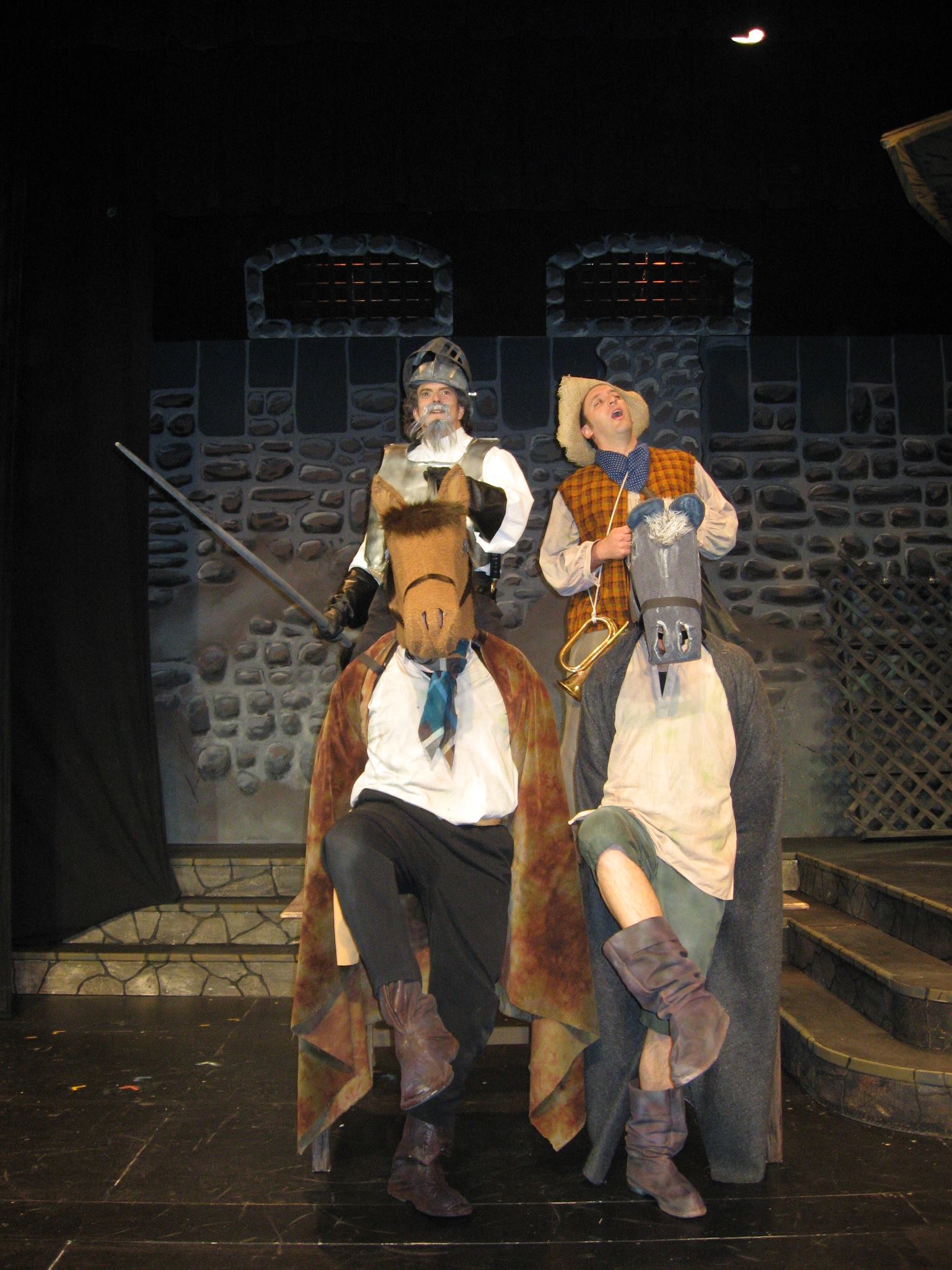
I had an interesting moment during Man of La Mancha at Stirling Festival Theatre. It’s in the nature of that role, Cervantes / Don Quixote: he’s the serious one, and he doesn’t get many laughs. It’s the Sancho Panza who’s getting the laughs, chewing the scenery, and eating up the stage. And there’s a moment where I found myself considering “I gotta have a talk with Jonny (the guy who’s playing Sancho),because he’s stealing all these scenes on me”.
Doug as the Don Quixote, Jonathan Ellul as Sancho Panza Marc Richard as horse, Pierre Cook as mule 2008 Sterling Festival
I had to pull myself back and think: no, stealing scenes is his function in this show. That’s what he’s there to do. If you ask him to pull back, you’re asking him to give less than his best. And that’s just not gonna work. What you have to do, oh Doug, is figure out how to steal the scene right back. Use him as a challenge, to get the very best out of yourself. And by the end of it that worked out quite well. It was a revelation.
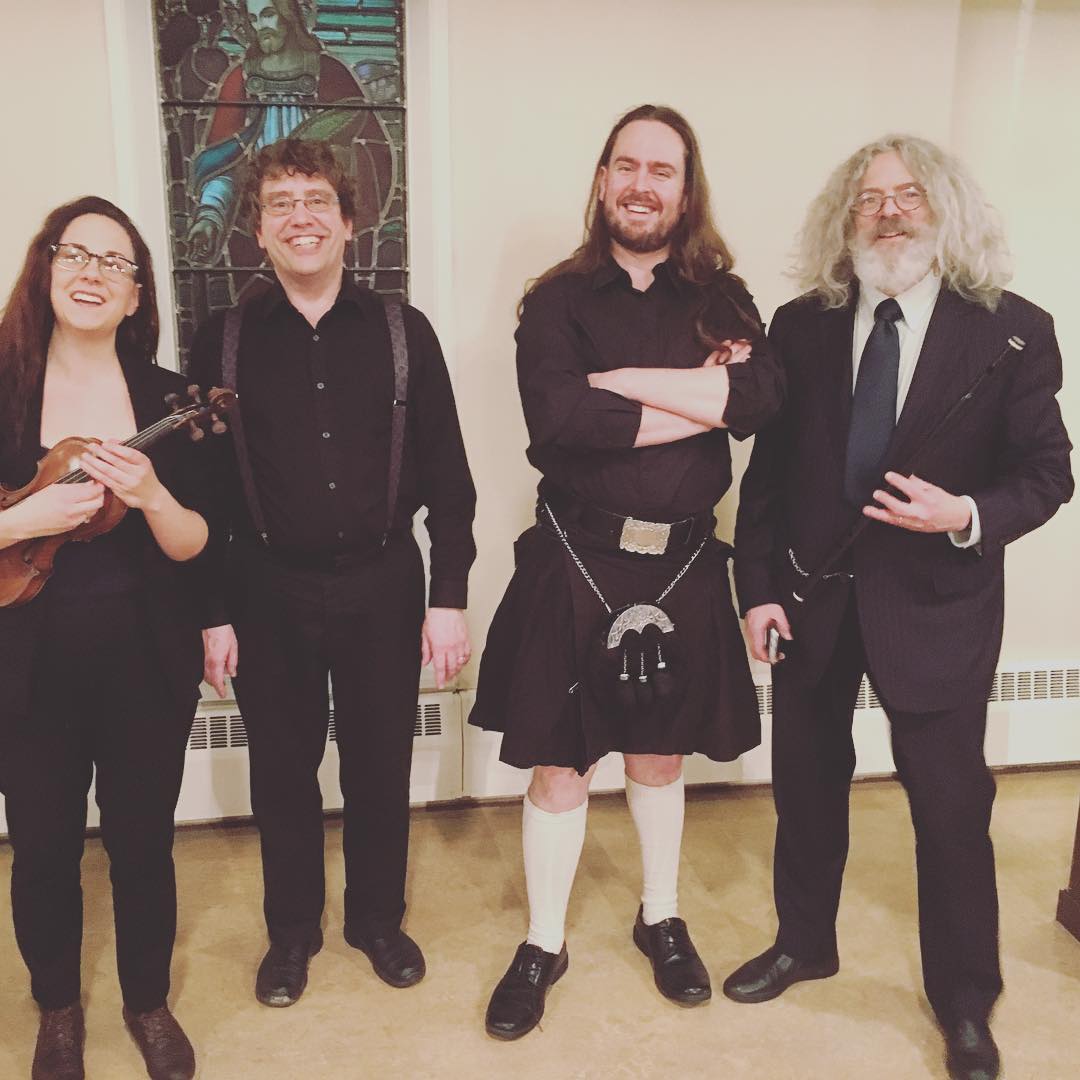
Doug MacNaughton: Yeah. But that’s me as a “singer-slash-actor”. Then you can throw on, me the instrumentalist, because I’m part of a quartet called Chroì (pronounded “Cri”), and that’s the Irish word for “heart”.
And so there are four of us in this ensemble. Chris Dawes, Jenna Gallagher, Doug MacNaughton and Gord Simmons.
Jenna, Chris, Gord and Doug aka Chroì
All four of us sing, and we’re all coming at it from a background of being church musicians, which is interesting. So what we do is a pan-celtic band. Four singers, one of whom also plays piano and organ, another of whom is a fiddler, another of whom plays the bodhrán and then there’s me who plays guitars, penny-whistles, Irish flute, Appalachian dulcimer and I guess whatever other instrument we need.
Doug, Gord and some of the choir
And so we’re pan-celtic in the sense that we’re playing the stuff you’d expect if you’re from Ireland or Scotland or Wales. And there’s the Isle of Man, there’s Cornwall, there’s Bretagne, Galicia in Spain near the Basque region in the North-east corner of Spain. And then there’s what happens in the diaspora, when this music goes to Newfoundland or the Maritimes, or Quebec. Or the Appalachian region of the United States. Or Australia and New Zealand.
And then there’s the question of what happens to this music in the late 20th and early 21st century. Do we remain staunch traditionalists? Like groups such as the Chieftains… They are very concerned with playing the pure version of the music. Whereas other groups will introduce other instruments, introduce more active rhythmic beats. They may explore odd meters. There’s a great trio based in Toronto called Nua. And their bodhrán player is stunning, Jacob McCauley. But yeah they do Celtic music in odd meters like 7/8 or 5/8. It’s fantastic.
BARCZABLOG: so you’ve told me the name of your band. Do you have any recordings?
Doug MacNaughton: no it’s strictly live the whole time.
Hollywood would have you believe that bands are constantly breaking up because of creative differences and incompatible personalities. My personal finding is that bands tend to break up because the members are too busy to get together and rehearse. They’re all good musicians but they can’t make their schedules work to get together. The four of us: it’s all we can do to get together for a rehearsal before we do a gig. Getting together to do enough rehearsals for a recording? Seems to be beyond us.
Well there’s me who’s on his way to New York one of these days. The bodhrán player Gord is now in Vancouver. We haven’t really talked about what we’re going to do since the pandemic. I don’t think any of us are quite ready to give up on it. So we’ll just have to see what happens.
BARCZABLOG you think once you’re in New York, that you’ll look for a new band to associate yourself with?
Doug MacNaughton: (laughter): The Celtic music scene in New York City is pretty active. As long as I’m not losing any money in the process, I’d be happy to come back up and do a few gigs.
BARCZABLOG: you wear multiple hats. You talked about a musical about Raoul Wallenberg.
Doug MacNaughton: That was 1992 and it was at Leah Posluns Theatre, at the JCC on Bathurst. The ones who wrote it are from Philadelphia.
It was a fascinating subject. It was called “Another Kind of Hero”. They wanted to underscore the whole time, to the best of anyone’s knowledge, Wallenberg never fired a gun. He never hit anybody. But so many people from Budapest, they got their lives saved because he would issue a Swedish passport to anybody who could show up in his office and get it stamped. Once they were considered Swedish, Sweden being neutral, they couldn’t be deported to the camps. He did face down a Hungarian general toward the very end of the war. He had everybody corralled into one of the ghettos. He was going to open machine gun fire on everybody in that ghetto before the Russians came in. And Raoul Wallenberg came in and stood in front of those guns and said “you cannot do this. If you do this I will make it my life’s goal to have you hanged as a war criminal”. And so he stalled them long enough for the Russians to actually get in town.
Then that’s the craziest part. He actually walked up to the Russians and said “hello my name is Raoul Wallenberg, let me help you with the restoration of the city”. Because he was American as well as Swedish the Russians just said “no you’re a spy, you’re being arrested”. And it’s a testament to Soviet inefficiency. That’s the last we ever saw of him, when he walked up to the Russians. And no one’s quite sure what happened, other than various spottings in various gulags. And since then there has been evidence that he may well have been spying on behalf of the Americans, during his time in Budapest. That being said, you would have thought he was important enough that the Russians couldn’t just take him, and then completely lose track of him. Yet they did.
He has the tremendous honour of the Knesset in Israel, they’ve named him a righteous among the gentiles. There are trees planted in his memory in virtually every Holocaust remembrance park, because it’s a hugely important story to tell, even in the midst of these atrocities, there was someone fighting back.
BARCZABLOG: Talk to me about opera now. I want to ask you…
Doug MacNaughton: it’s a silly way to make a living.
BARCZABLOG: You could say it’s a silly way to make a living….
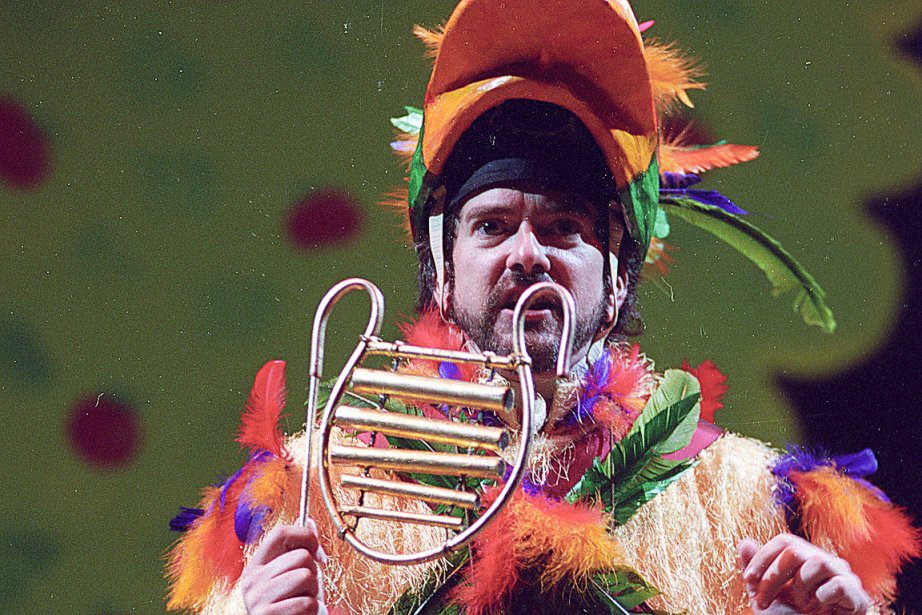
Doug as Papageno, Opéra de Québec
Doug MacNaughton: with me it’s a weird situation. I’m going to take you back to my high-school. By then I was playing tuba in the brass band, playing guitar in the stage band, I was working on guitar on the side as much as I could, and I wanted to be the next fire-breathing jazz-rock fusion guitar player. I wanted to be John McLaughlin, I wanted to be Steve Howe from Yes or Steve Hackett from Genesis. But when it came time to go to university and I wanted to go to university too, because all my guitar heroes had serious theory and history and musicianship chops, in addition to how good they were at playing. But I barely made it out of high school, because anything that was not written by JRR Tolkien had no interest for me whatsoever. Maybe throw in Arthur C Clarke and Isaac Asimov. All of the stuff I had to read for high school English? I wasn’t into it. So: I got out of there with something like a 52 in English. And so I did get my high school diploma. But it meant that, my local university, Brandon, has a certain obligation to take a certain number of shall we say marginal cases, from the local city. And so I could get in that way. But I couldn’t get in as a guitarist, because I didn’t play classical guitar, and they didn’t have anyone who taught anything other than classical guitar. They also didn’t really have how shall I say, the mindset, the attitude, being 1980, to think there was any form of guitar worth studying at the university level other than classical. So the thing I fell back on was that I’d sung in church choir and high school choir. And I could read music quite well. So I auditioned as a “necktie tenor”, because that’s what I’ve been doing in choirs the whole time. “He’s got kind of a high voice so let’s make him second tenor”. As a soloist, though, no. I was a baritone or a bass. And the fact that my voice lessons were at 8:30 in the morning,… even worse.
BARCZABLOG when did you take your first voice lesson?
Doug MacNaughton: My first voice lesson would have been sometime in January of 1980.
BARCZABLOG: in other words, you were largely self-taught to this point.
Doug MacNaughton: Yes. Certainly as a singer. I had taken some lessons as a guitarist, some lessons on other instruments. But no, I’d never studied voice at all.
BARCZABLOG Would you say that your unorthodox path to opera may have helped you in some ways?
Doug MacNaughton: in some ways certainly. There’s just an inherent eclecticism, to what it takes to be a good operatic performer. You have to have this voice, you have to be able to work in other languages, you have to act at least to the extent that you are convincing in this moment in the show. There may be a dance element to it. There can be other physical aspects to it. For a number of roles it sure doesn’t hurt to have some idea of which end of the sword to hang onto.
BARCZABLOG remind me, were you in the COC Ensemble studio? And when was that
Doug MacNaughton: ‘88 through ‘90
BARCZABLOG: So you came out of university in 84…?
Doug MacNaughton: no, I went to Banff in the summer of ’82. And I loved it. That was my first experience of being onstage in opera. And I get back to Brandon University that fall and I’m looking at, oh I don’t even know what to call it, I’m in two and a half to third year.
And I get a call from Edmonton Opera. They thought we had Paul Massel booked to sing the role of Captain Corcoran in a school tour of HMS Pinafore, and he was not interested in it at all, apparently had made it quite clear. So at the last minute somebody remembered me from Banff, told Irving Guttman and George Cotton about it, and they brought me out to audition. So I took the train out, took the train back, and the Monday I got the phone-call. “You’re in… get in here, your first rehearsal will be tomorrow, and your first performance will be Friday”.
BARCZABLOG Wow just like that.
Doug MacNaughton: And that’s exactly how it worked out. And the following Monday we started the school tour.
BARCZABLOG How big was the tour? How many weeks, how many shows?
Doug MacNaughton: So I think we started in the last week of September and we ran clean through to the end of June. So the other thing was it was similar to the COC ensemble, except if you weren’t doing a small role onstage you were the leader of that part of the chorus.
BARCZABLOG That was something you were probably really good at anyway?
Doug MacNaughton: well I hadn’t done much chorus before. Choir yes, but chorus is a slightly different animal. You have to act and it’s no longer entirely about the blend. You sometimes have to make some pretty big sound. So let me see if I’ve got this one right.. That year was… We did HMS Pinafore and Hansel and Gretel and La Boheme on the tour. I was understudying the father in Hansel and Gretel.
That was Richard Margison’s first witch in Hansel and Gretel. He was my room-mate. I might as well say it before he gets a chance to…We got this two bedroom place at 117th Street. There were the three of us. Richard, and Lettie Snethen who has since left the business and me. And so they got the two bedrooms, we shared the kitchen and the living room. There was a storage closet in that apartment that was about six feet by two feet / three feet wide. So I threw a mat into the bottom and slept in a sleeping bag, and paid them $100 to sleep in a closet. Which of course led to Richard’s saying on an almost daily basis:
“Dougie came out of the closet this morning”.
That first tour was almost nine and a half months. And when we weren’t on the tour we were on the mainstage. That year we did Traviata, Tales of Hoffmann but I wasn’t involved, Puritani, and Girl of the Golden West.
Girl of the Golden West was my mainstage debut with Edmonton Opera, singing the role of Happy.
BARCZABLOG you’d probably look really apt in that opera. Were you as hirsute in those days as you are now?
Doug MacNaughton: In high-school I had shoulder length hair. And I would always have these terrible wispy goaties & moustaches that in retrospect looked more like a cat had shit on my lip than anything else….But yes, eventually the beard & the moustache came in. It’s one of those strange things. When I’m between shows I like to let it go, and let everything grow in. From that people assume that I’m really attached to my facial hair and long hair.
It’s a show. Just like with this Barber of Seville even though it’s just a concert performance. you can’t have a guy with a beard long enough to lose a badger in. The shaving scene now makes no sense. He’s still got that honking beard. I took the beard off for that. But I did leave the hair. They said “it almost looks like a powdered wig”.
Doug MacNaughton: sure. The thing I loved about that Quebec performance, we were still under the COVID protocol. We got away with singing unmasked but we had to remain six feet away. That immediately means that in the shaving scene you have to have this strange mime situation. Because you can’t have his hand close enough to you that it’s plausible that he’s shaving you with a razor.
BARCZBLOG: Yes that was very strange….Thank you for explaining.
Doug MacNaughton: the set consisted of that checkerboard pattern on the floor. That was it. Everything else was mime. Opera singers do not necessarily study mime. When you’re six feet away from someone (the COVID protocol), the most disciplined form of mime I can do? I’m miming that I’m holding this pencil. I hold it out, and you reach out at the same time. We’re still six feet apart. The moment you take the pencil and I let go of the pencil have to coincide. Otherwise the imaginary pencil has dropped to the floor. Learning the precision of that timing is really challenging.
The fun thing for me about that production: I showed up with a whole bunch of ideas. And Iran them past our director. This is my favorite way of working. I have made a whole bunch of choices, and I present you with those choices. At the end of that rehearsal you say “I like this, I like this, I’d like to suggest a change with this other thing…” That’s how we meet up. At times I’m deliberately doing things that are a bit much, but that’s partly because I want to find out where your limits are, in terms of taste. So for example, this is a thing I will do every time with Bartolo unless someone tells me otherwise. I think it’s hysterical that he’s a medical doctor, in the 18th century, and he’s germa-phobic. So every time someone touched me I mimed pulling a little bottle of hand sanitizer out of my pocket and washing my hands. And then when the Count says “I’m also a doctor” and explains “I’m the veterinarian for the regiment”. And so I play it, that I just got embraced by some guy who touches horses all the time!?”
And so to me that’s the whole game, right? You can’t depend on the director to give you everything, because there’s not enough time for that.
BARCZABLOG: you’re supposed to show up with something, that’s why they hired you, you have creativity.
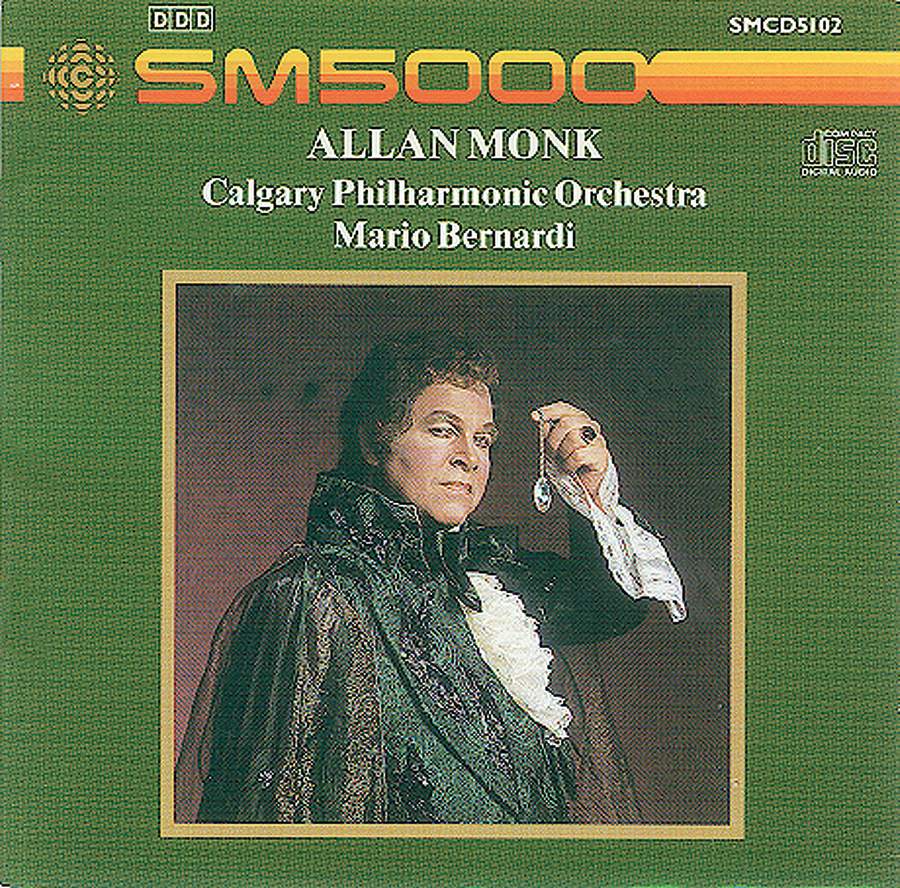
Doug MacNaughton: In every role. It’s better to make a bad choice and play it and find out the hard way. But if you don’t commit to a choice you’ll never know whether it’s good or bad. And those choices define your portrayal. My Bartolo is different from Peter Strummer’s or Allan Monk’s because we’ve all come from different backgrounds. As long as our choices are strong… Okay that’s what makes Doug’s Bartolo his.
BARCZABLOG so how do you feel about the future of opera, given how much of it has been virtual?
Doug MacNaughton: That concerns me a lot. I’m not sure that everybody gets why the live is so much better. I’m sorry if that sounds like an elitist way of putting it. I don’t mean it to come across as elitist.
BARCZABLOG I don’t think it sounds elitist. But let’s unpack it a bit. What is missing when it’s the computer screen or your phone, that I get if it’s live?
Doug MacNaughton: The thing is, you don’t have the same impression of the person 100 yards away is singing and you are hearing it where you are sitting. It gets put onto a soundtrack but all that impressive work under a really good conductor and with a really good composer. They can give the impression that the voice is a lot louder than it really is by framing it.
This is by the way why Wozzeck is one of my favorite operas of all time. That’s a huge orchestra, at least 110 pieces if you do the full version. But he only uses that full orchestra for the interludes between the scenes, and for that magnificent symphony after the drowning scene. Under the singers you rarely have more than five or six instruments playing at a time. I say rarely because the fugue in Act II scene ii : that’s loud.
BARCZABLOG Have you actually sung performances of this opera?
Doug MacNaughton: Yes. I alternated the role of Wozzeck and the 2nd Apprentice (but we called him “the Colonel”). It was in Banff in ’95, that was John Rea’s reduced orchestration. I did Mischa Aster’s production of Wozzeck/Woyzeck at the Bathurst St Theatre. This was for his fledgling company Theatre of Ideas. That was September of 2001, for four or five performances. I remember I was looking for a review of it, the day after we opened, and I was frustrated that the internet was so messed up. And finally someone said “you should really check the news today”.
That was September 11th 2001.
BARCZABLOG oh wow. Was there a review?
Doug MacNaughton: there was a review in the Globe (and you can read it here: ) I was singing the Captain and the Doctor. So you’ve got one of the most extreme character tenor parts, and one of the most extreme character bass parts. And I had to do them both. And I had to spend a lot of time talking to myself, because we did the fugue in Act II scene ii and well, I’m two of the three characters involved.
BARCZABLOG: were you playing it for comic effect, or…(?)
Doug MacNaughton: he wanted it to be as serious as the play merits. He wanted to combine elements from the play and elements from the opera. And doing that he made the very strong but very difficult choice, that Wozzeck would be as inarticulate as possible. So Wozzeck was almost a mute, frustrated in his inability to communicate. But he never communicated from than a few words in a row.
BARCZABLOG: so if I understand correctly, this production used some of the Berg opera? Or all of it?
Doug MacNaughton: we used all of the Berg opera in that reduced orchestration. For example the big aria “Wie arme leut”. You heard the orchestral accompaniment, but you didn’t hear the melody. You heard this actor hitting himself, (Doug makes noises of the inarticulate Wozzeck). It was quite moving. It wasn’t the opera really but Mischa had read George Steiner’s The Death of Tragedy, and like Steiner was absolutely convinced that Berg had made a huge mistake in making Wozzeck articulate. And so he reversed that “mistake”.
And then I also did Wozzeck for COC in 2006. I was both the understudy for Wozzeck and for the Doctor. I don’t know what we would have done if I would have had to go on for both those roles… (!) We would have figured something out.
Me and digital technology: it will never be peace between us. I think back to the merry days when I started out in electronic music. It was with a TEAC four track and a Revox two track. And an ARP 2600. And that was the equipment that I had. “Edit” meant demagnetizing a razor blade and physically cutting the tape and then splicing it together. And I loved it. I adapted quite nicely to that. But this modern era of using wavepad or Acid or Logic to edit your stuff, and I’m just …. Oh no. Ten minutes into it, and I’m ready to kill somebody. “Nooooo…!!! I just erased you!!!”
BARCZABLOG Oh dear. So, do you have any stories you want to tell? You’ve worked with some great people. Do you have any Richard Bradshaw stories?
Doug MacNaughton: I’m actually astonished that he died. He was so much larger than life. Among my favorite Richard Bradshaw stories, he was notorious while he was fund-raising for the Four Seasons Centre. He would go for these long multiple bottle of wine lunches with various patrons, to try to talk them into donating to the ballet- opera house. But it was beyond that. For instance there was the time he was out to lunch at Biagio with someone. And he talked someone into giving a $300,000.00 donation. And they shook hands on it. And then he says “I hope you’ll excuse me for a moment but I must make this call”. And he took out this early cell-phone (he didn’t like cellphones much), and he called somebody else. And he says “hello!? Yes, it’s Richard! I’m just out here for lunch with _” (whoever it was) ”and I have to say he’s making you look TERRIBLE! You look like such a cheapskate right now. He’s giving me $300,000.00! You’ve only given … oh what is it? not even six figures! You’re going to have to step up.” And he would get away with that. He could take you out for dinner and the wine would flow and the anecdotes would too. And he made all of those patrons feel like their contribution was massive. For many of them it was. It was a combination of things. He needed to raise the money? Okay. He’s out there raising the money. He made everybody feel their contribution was so important. And he got the buzz about the opera house. All of these wealthy patrons trading Richard Bradshaw stories, what happened when he took THEM to dinner.
BARCZABLOG : What’s your favorite opera?
Doug MacNaughton: Wozzeck is gonna be in there, that’s a definite.
There’s a thing about how it’s done nowadays. Just about everyone eliminates the act breaks, and you’ve got a 90 minute show. That’s short movie-length. But I like the palate-cleanser of the total silence. And Berg did this, where the music that ends the First Act, begins Act Two.And I don’t think you’ll ever hear the second act as a symphony if it’s not a unit unto itself. If it’s sandwiched directly between the first and last acts you lose that.I think in terms of where you’re at, when the act ends, it’s good to have the breaks between acts. But that’s not the modern aesthetic…And without act breaks, it turns into something you want to get over with. I don’t like feeling that way, even when it’s a long honking show.
BARCZABLOG What do you think of directors theatre / Regietheater? In a nutshell..?
Doug MacNaughton: When it works it’s brilliant. It’s just the length of the work is such that it doesn’t always work all the way through. And when it doesn’t work all the way through? it doesn’t work. This is not exclusively an operatic question, right? You get this in Shakespeare too.
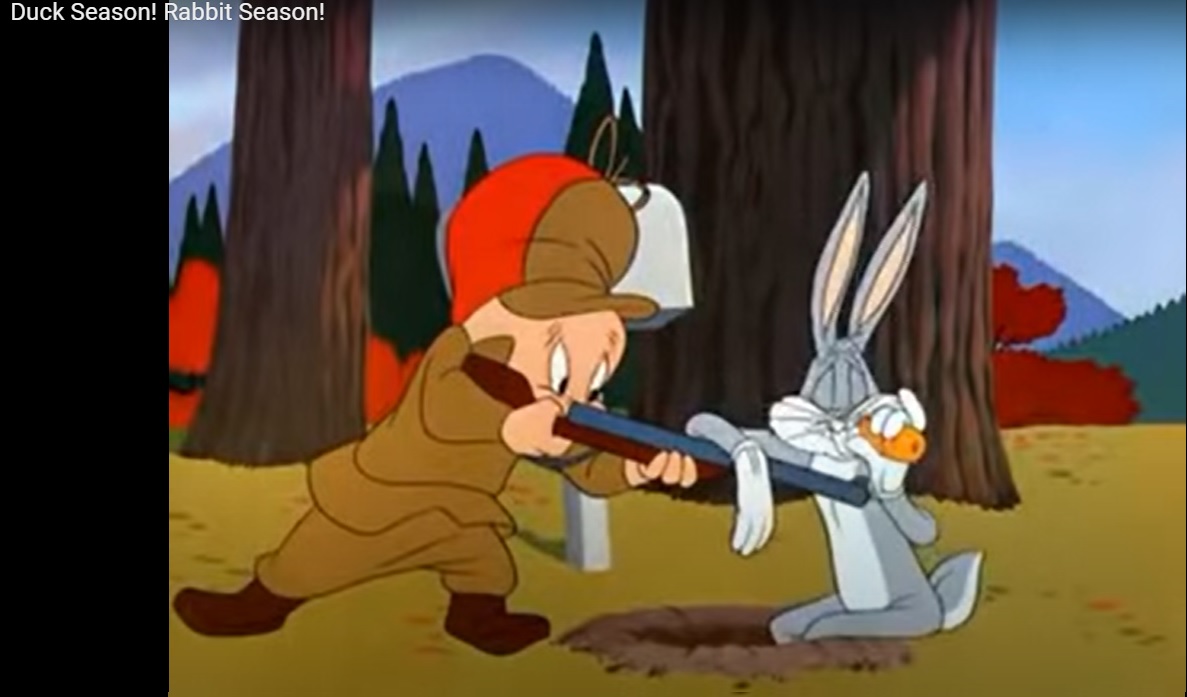
I’m coming from a Looney Tunes sensibility on a lot of these things. There’s something wonderful about Looney Tunes. No one’s caring about the anachronisms. No one’s caring about the reversed logic, like “where did he get the anvil?” It doesn’t matter where he got the anvil. The anvil just appears. You just kind of roll with that. If we’re gonna go with this Regietheater stuff I wanna see more of that kind of sensibility, that clown sensibility. He just happens to have a bucket of water right there…And when he throws it it’s glitter, we’re straight into Ringling Brothers. Cirque du Soleil.
One of my favorite versions of the William Tell overture is the one by Spike Jones.
Carl Stalling was the music director and had a fantastic imagination. Carl would be at story-board meetings, and would be, you know looking like he’s not paying any attention but every now and then they’d say something about the story and he’d giggle and he’d write a note.
And they got in the habit of saying “okay Carl, what was that?”
“Oh you just said ‘picnic’ so I just thought I’d work in eight bars of ‘Sunday a sandwich and you’ at that point”.
“Okay that’s perfect, have you got the rights?
“It won’t be a problem.”
The number of places where there’s the music from Tannhaüser at one point in one of them.
There’s the great moment in What’s Opera, Doc”. [And Doug then does a spot-on Elmer Fudd singing…] “Oh Bwunnhilde, you’re so wove-wy”.
BARCZABLOG I asked you what is your favorite opera, but who is your favorite singer? It doesn’t have to be an opera singer, but if it is, that would be cool….
Doug MacNaughton: Well my favorite classical singer is Thomas Quasthoff. A huge part of that is his eclecticism and diversity.
BARCZABLOG so is there a particular performance that you listen to?
Doug MacNaughton: I look him up on YouTube all the time. And it doesn’t seem to matter whether it’s him singing Dichterliebe or Winterreise or whether it’s him singing some of the Bach arias, or whether it’s him doing jazz. Absolute 100% there. There was a beautiful thing out, it was like a trailer, for a concert that he did with Bobby McFerrin. And that was the thing. There have been other singers who have said “I wanna sing some jazz”. And it’s not always successful. He said “I’m going to call up Bobby McFerrin and work with him for awhile. And,“okay you do that”. The two of them got along like a house on fire.
It’s an unfortunate thing for singers. As we’re coming up through the ranks our biggest influences are universities and the church. So when you sign up as a first-year voice major at whatever university, and the first thing you think of for a dayjob is “oh, I should get a church gig, as a soloist / sub / section leader. ” Well that’s okay, so you do that. But the thing about churches and universities, both, is they take themselves painfully seriously. And their structures are quite rigid and bureaucratic, it’s rigidified. You end up with these people who are used to performing, in situations where they’re scared shitless of doing anything wrong, because if they do they’re going to fuck up the ritual, or they’re going to fuck up the grandeur of this educational institution. Do you honestly think that the church has never had somebody who walks to the front with The Bible, who trips and drops it. Well of course that happens. It’s natural. I’ve seen so many university level performances, where something goes wrong onstage –and it’s going to—but they get this deer in the headlights look and they don’t do what they just naturally do in real life.
Like an incident I had just two months ago. I’m on a Zoom call with a friend, and I’m telling them about this painting, that a friend of mine in Québec gave me. And I turn the computer to show the painting. And the power supply of the computer catches the bottom of my wineglass. And so the wineglass tips a little bit toward the computer. So I make a grab for it. I don’t manage to catch it, but at least I don’t let it spill on the computer or the painting. But what then happens is the entire contents of this wineglass spray the wall and the bookshelf with red wine, which then dribbles all over the six guitar cases that are sitting there on the floor and into the carpet, the rug that’s there. I basically have to hang up the call, and for the next hour and a half I’m finding wine everywhere.
BARCZABLOG was it good wine?
Doug MacNaughton: yes…. That’s what happens in real life, and that’s how you deal with it. But if you’re in an opera performance and you spill the glass of wine and try to ignore it because you were too scared to deal with it…(?). The audience notices. The scene becomes about this glass of wine, all over the floor and why isn’t he dealing with it (?) rather than whatever you thought was more important than the glass of wine.
This is an old Allan Monk wine story, oh it will be from ’87 or ’88. We’re doing Rigoletto and Allan Monk is Rigoletto. And we’re just coming up to “Cortigiani”. And everybody’s got a honking big sword on their hip and everybody’s got a crappy hard glass goblet from Honest Ed’s in their other hand. And someone takes an unexpected step back and someone takes an unexpected step forward and a wine meets the pommel of one of those swords. Crashhhhh! Broken glass everywhere. And we’re coming up to “Cortigiani.”
And Allan Monk looks at the wineglass all over the floor and you see the wheels turning, and he realizes, that wineglass is exactly where Gilda was going to come out in her almost see-through nighty and get thrown onto the floor: into a pile of broken glass.
So on his feet, he changes the staging. He pulls everyone further downstage, further right, he whispers to a couple of guys “you stand over there, the stage-hands can sweep that and won’t be seen”. In the middle of “Cortigiani” he’s doing everything he can to steal the focus, which, you know, it should be on him anyway. A couple of guys come out, they sweep up the whole thing. They take the stick roller to it so there are no minute particles of glass. And: Gilda comes out, gets thrown down there. Not a problem at all.
That’s thinking on your feet. Because of what he had coming up, he would have every excuse to say “no I can’t deal with that: because I gotta sing cortigiani in 30 seconds”. But that was never how Allan Monk ever thought. He was a huge influence to me: how to integrate your acting to your singing.
Well here’s another Allan Monk one, where Tales of Hoffmann, somebody came out, and this is the first act. He’s got this thing that looks like a braid of garlic except they’re all eyes. But one of the eyes fell off. And so there’s this eye rolling around the stage. And once again. Allan Monk sees the eye. Realizes how easy it would be for someone to slip on that, so he gauges to himself “where are we in relation to the wings?” And he walks to just stage right of it, and he kicks it. Boom, he kicks it straight into the wings, right between the curtains. I wanted the stagehand to come out and you know, raise his hands to signal “touchdown”.
Nobody in the audience would have noticed that. But my goodness, somebody would have noticed if Olympia had taken a tumble because she stepped on an eye. You’re always thinking about what you gotta do, your relationship to your fellow characters, about the reality of the set. But at the same time, you’re thinking “is there anything wrong onstage”, and “can I be the one to fix it.” And maybe you can’t, maybe it’s somebody else. And this is the thing, that’s really scary to see in these university age people, they drop a sword and it rolls a bit. If you dropped a sword in real life, you’d pick the damn thing up. Or you’d step on it so somebody else can’t pick it up. Or whatever.
We took this in clown. I studied clown with John Turner. Not the Prime Minister, the clown.
John Turner
He talked about things going wrong onstage as being gifts of the gods. If there’s a sound that no one was expecting. You’re just about to say this line, and: a car goes “whoosh”. And everybody in the theatre hears it. Well you can’t pretend you didn’t hear it. Because it’s part of your shared reality. So in the course of the clown show, you react to that sound, in whatever in-character way you can come up with. And you go on with what you’re doing. If you try to ignore it like it never happened: that never works because everybody knows it happened.
Thinking too of Bill Hutt at Stratford. The year I worked at Stratford I was just one of the gentlemen from Japan in The Mikado. That was the year Albert Millaire directed Imaginary Invalid. And William Hutt was Argan, and oh my God between the two of them, it was magnificent. Bill Hutt just went to town on it, and Albert Millaire was clearly working with a kindred spirit.
BARCZABLOG: a question I love to ask a seasoned performer like yourself: if you could advise a young performer, is there anything you would tell them? Besides “become a doctor”..?
Doug MacNaughton: (in horror movie voice) “oh-h-h-h-h turn back!!…. oh-h-h-h-h turn back!!”
No it’s amazing between the present day and when I started out. So my first professional gig: it got me my Equity card. It was a nine and a half month tour.
And: nobody does that anymore. Even a big company like the Canadian Opera Company? The Ensemble might do a tour for four to five weeks. Maximum. And it’s a number of things, right? The interest isn’t necessarily there. The sponsorship money isn’t there. And so, this is another side thing. I’ve been a member of the Elmer Iseler Singers for, oh we’re coming on two years now. And I started in September of 2018. And those tours and that gig that used to be, that was pretty much a living. And it’s just not the case anymore.
BARCZABLOG it’s become more expensive to live in Toronto. The last year and a half have been insane of course.
Doug MacNaughton: I’m not even counting the last year though. I don’t think we’ve done a tour with the Iselers that lasted more than ten days. I remember in the old days. Do you remember Opera Piccola? And it was mostly an excuse for Leopold Simoneau and PIerrette Alarie to have something to do in the summer, on Vancouver Island. They’d get everybody together, you’d rehearse for four weeks, and the tour would then start in Victoria, and you’d go all the way to the east coast. And you had nine months of living out of a suitcase.
BARCZABLOG But I guess you didn’t go on those
Doug MacNaughton: No…
BARCZABLOG The COC at one time had their tour, going around in Canada, but haven’t done that since the 1970s. I guess when they stopped, Edmonton Opera stepped in, as opera in Canada became regional, and indeed the country became more regional. At one time it was just Toronto & Montreal, but then we had more and more artistic centres across the country.
Doug MacNaughton: One of the challenges is that, in the Western cities, the art-form itself can be a bit of a sell. But it’s interesting if you look at all the opera companies in Canada and you say “who’s got the most world premieres”.
BARCZABLOG I would guess Victoria.
Doug MacNaughton: It would be Calgary. Calgary under Bob McPhee did something like eight or ten. I’d have to go through the archives and count them all up.
Bob McPhee
Victoria with Tim Vernon is up there, but the world premieres have been in the last few years. I love Tim Vernon’s whole working method.
Timothy Vernon (photo: David Cooper)
BARCZABLOG Yes I assumed it would be Tim Vernon (Victoria), I never guessed it could be Calgary. Thanks, always grateful to be educated.
Doug MacNaughton: They did the first Philomena. They did the first of every other opera by John Estacio. I do believe there was a strange one where Bramwell Tovey’s opera premiered in Calgary not Vancouver. And the same time, somebody else’s opera was premiering in Vancouver. Bob (McPhee) had a real commitment.
BARCZABLOG Things were so active out west because we seemed to be stuck in Toronto. There’s a lot of talent in this country and it has to go somewhere.
Doug MacNaughton: And I’m surprised there isn’t more in Montreal but L’Opera de Montreal is a way more conservative company. Bernard Uzan was very very strict. They were just doing the traditional shows, in traditional stagings. And doing them for a minimum expense. The company did fairly well out of it.
BARCZABLOG It can work for awhile, but does it build your audience?
Doug MacNaughton: And as Tim Vernon said to Bernard Uzan, “Bernard, there is an artisticdeficit. You can have a fiscal deficit. But you run an artistic deficit if you play too safe.” And that’s the thing I love about Tim’s programming ideas.
BARCZABLOG I wondered if there is anything of yours that I can share in the interview.
Doug MacNaughton: There’s my own album Guitarias. So the first eight songs on Guitarias are all pieces that I commissioned. And the second half of it is a piece by John Rutter. It’s his only composition for solo voice. And he wrote it for solo voice and guitar. And he never wrote it with the intention that it would be played and sung by the same person.
That’s been my mission, with that whole Guitarias project, to expand what voice and guitar means in classical terms.
With John Beckwith, whose 3 Beckett songs are included on Guitarias
BARCZABLOG Could you see yourself doing this as a one-man show on a stage?
Doug MacNaughton: Oh I’d love to. And now what I’d do in putting it together that would be different, is that I’d take the kind of format from the “live from the backseat” concerts, which is to intersperse… You sing and play a song and then you either tell an anecdote or you read a poem, and then you do a different song.
Because of the nature of voice with guitar it’s kind of interesting to alternate between classical pieces for voice and guitar, and contemporary pieces for voice and guitar.
My overhead is fairly low. My guitarist is an asshole. (laughter)
And I love that whole aspect of things, where you’re not really stuck in one form or one thing that you do. One of the pieces I wrote last summer, and it’s an extended pop song called “Father Knows Best”. In the opening I had the twelve string guitar tuned in such a way that I could play a two-chord progression just using my right-hand fingers. So it was just a question off which strings I selected out of the twelve to play at any point. And I then played an alto recorder with my left hand at the same time.
BARCZABLOG that sounds really difficult.
Doug MacNaughton: And these days most people would say “why didn’t you just put the guitar on a looper, and then play the recorder with both hands?”
BARCZABLOG But that’s the thing about live performance.
Doug MacNaughton: well there are those who play their loopers well enough to be able to do it in live performance.
But from there the song morphed into something about what it was like to be a kid in the backseat of the car with my dad, driving at night, and I’m falling asleep. And just the idea that I’ve never felt so secure as I felt in those moments.
It gets heavily into my relationship with my dad, how he was such a traditional fellow. And it kind of takes it through my experience as a teenager driving, being a grownup driving with my own son in the backseat, and how it’s a completely different experience. I might have felt secure. He didn’t..I sure don’t feel secure with my kids in the back. I’m twice as hyped up about morons trying to run me off the road.
BARCZABLOG So is there anything else I should know about you?
Doug MacNaughton: I’m mostly harmless.
BARCZABLOG you’re having fun, I can see that. I’ve really enjoyed talking to you. I think that’s maybe the key
Doug MacNaughton: And if I remember, if I’m not mistaken the night we did that Winterreise at the Lula Lounge I ended up talking to you for like ten or fifteen minutes, before the actual show began. (my review… )
BARCZABLOG speaking of nights that were magic, but broke the rules
Doug and a few other baritones
Doug MacNaughton: but it broke the rules in a really caring committed way.
BARCZABLOG there was a structure to it. Like any good poem, it wasn’t chaotic. It still had lots of order.
Doug MacNaughton: it was funny because I remember, while it was September, it was one of those days when the payphones were melting in the streets. And you stepped into the lounge and it was air conditioned. And the air conditioning and the ambient temperature were locked in a permanent struggle.
BARCZABLOG that was a once in a lifetime moment. I hope those guys are gonna do more stuff.
Doug MacNaughton: I hope so too, but Aaron is moving on to civilian life, it would seem. He will do the odd gig. But I’ve seen so many young performers get discouraged. This is something I would say to any young singer. It’s very tempting to go from your high school to you undergrad, from your undergrad to your Masters and from your Masters to a PhD: all in one nice smooth flow. And if what you want to do is to become some sort of academic teacher slash prof then that’s not a bad path. But you know, when you’ve finished a Masters of Music but you’ve never been onstage in a professional show in your life it’s just not right. It’s not going to be a good way of working.
BARCZABLOG I think that’s very polite what you’re saying. You’re pointing to one of the real weaknesses of music education right now. I could talk your ear off about this…
Doug MacNaughton: there’s something wonderful about someone not quite knowing what they’re doing, and doing it anyway. Fortunately all the people who might spy on me or do surveillance… they just got tired of doing it.
BARCZABLOG good idea! And now you’re free to live your life as you see fit.
Doug MacNaughton: oh yeah. I’m the sum total of my various mentors and influences.
BARCZABLOG: Is there a mentor or influence that you’d care to name, who is the most important? Or mention a few.
Doug MacNaughton: I’m going to have to. Someone who was a huge influence on me was my good friend Graeme Campbell. He was such a great influence during the days of Les Mis. I formed a number of really close friendships in the course of that show. My friend David Nairn, the Artistic Director of Theatre Orangeville, he and I first met during that show. My friend Jimmy Selman, who’s now out of the business. But I was his understudy when we met in 1990. And they were huge influences, not only in terms of your performing life onstage, your acting chops, but also in terms of your personal life, stuff you do onstage is huge it’s big it’s massive it’s grand, but your real life is just real life. It’s ordinary. Your dog doesn’t care. Your dog is “oh you’re home. It’s time for a walk”.
BARCZABLOG So you were in the production of Les Mis that was in Toronto at the Royal Alex conducted by Derek Bate around 1990? Or somewhere else?
Doug MacNaughton: I started in 1990. Derek Bate was our main conductor. Just after we closed in Toronto, I did the first national tour, that was Calgary, Vancouver, Anchorage Alaska.
BARCZABLOG And what role or roles were you playing?
Doug MacNaughton: For that first part I was Combeferre, who’s best known as the student with the glasses. We did the remount in Toronto in 1991 and again I was Combeferre (we opened in May or June) up until October, and then I went up to be Enjolras, which is a role I had understudied. And this is a pat myself on the back moment. I was the first Canadian Enjolras to survive a contract change.
BARCZABLOG excuse me? (from my voice it was clear to Doug that I didn’t understand the significance… And no I didn’t)
Doug MacNaughton: Just about everybody else, they did that contract and then it was always like “thank you, see you!” And I was the first one to get re-engaged.
BARCZABLOG is it because the role is hard, or people are worn out by it?
Doug MacNaughton: It’s just that the role is hard. This is a very typical music-theatre thing. Your job security depends entirely on your ability to hit a G-sharp at the end of the ABC Café scene. So when Gavroche comes in and says “General Lamarque is dead”. And everybody is really bummed. Enjolras picks it up and says “aha. (Doug singing softly) Lamarque is dead. Larmarque his death is the sign we await” And you plow through this page of high E’s. And at the end of it you have to go up to a G-sharp.. So if you’ve given too much, you’re up a gum-tree, you won’t make the G-sharp.
BARCZABLOG you’re a curious animal. You call yourself a baritone, but you’re cleverly able to sing tenor stuff. Or I guess you’d still call a G-sharp baritone.
Doug MacNaughton: Well Figaro in Barber of Seville has got to have an A. No two ways around it. Pelléas has got to have an A.
And if you’re into that bari-tenor operetta repertoire, that Bill Silva loves so much? All of those leads: Eisenstein, Danilo, all those cats in those operettas that I barely know, they’ve all got to have Gs and As. And you’ve got to be able to hit them often. So in terms of that, Fledermaus ought to be one of my favorite operas, because I’ve done all the roles that it’s possible for me to do.
I’ve done Doctor Blind I’ve done Eisenstein, I’ve done Falke, I’ve done Frank and I’ve done Frosch.
BARCZABLOG the grand slam?!!
Doug MacNaughton: Yes.
Actors: Mark McKinney, Barbara Hannigan. Vocalists: Barbara Hannigan, Doug MacNaughton
BARCZABLOG And while there were things Doug couldn’t permit me to announce at the time of our conversation, I can at least mention as of Monday August 16th, his inclusion in the COC’s fall season. Doug will be Maestro Spinelloccio in the virtual Gianni Schicchi coming in October.
Nope in a few weeks it will be opera season, and not just in Toronto. Thank goodness we don’t have to hear Elmer Fudd try to say “opera season”.
That’s right, they really will be shooting the opera..!
Not with guns.
But with video cameras. That’s how it will be possible to watch the COC from coast to coast, indeed anywhere in the world.
And yet, maybe it’s more accurate to call it election season. The Liberals are running for re-election. The news broadcasts are full of talking heads, politicians announcing new programs.
And that means there are also going to be the inevitable attack ads.
No wonder that I feel that the Canadian Opera Company’s fall opera season is caught in the crossfire.
Not literally I hope.
Perryn Leech is the new General Director of the COC, taking over in the midst of a pandemic that has devastated the lives of artists and performing arts companies all over the world.
If you read the press release from the COC announcing their fall seasons, you can’t help but notice how the role of General Director is political at this delicate time. On the one hand there’s the audience, especially the donors and subscribers. On the other, you have to literally reconcile this on a balance sheet. There are artists who have lost most or all of their fees since March 2020. The COC Orchestra, the backstage staff, the singers: all wonder about the future, how they can pay their bills. When the offerings are offered entirely free of charge you wonder: how much money will it cost?
As an opera fan, as a COC subscriber, I am enormously grateful for the choices made by the COC and by their new General Director.