Domenico Scarlatti (1685–1757), wrote those fascinating sonatas for keyboard, but he’s not the only Scarlatti by any means. He had an older brother Pietro Scarlatti (1679-1750) who had some success as a composer.
Domenico’s father was Alessandro Scarlatti (1660 –1725), composer of over 60 operatic creations. They took various forms such as “dramma per musica” or “commedia per musica” or “melodramma” or “favola boschereccia” (woodland fairytale): and that doesn’t exhaust the list.
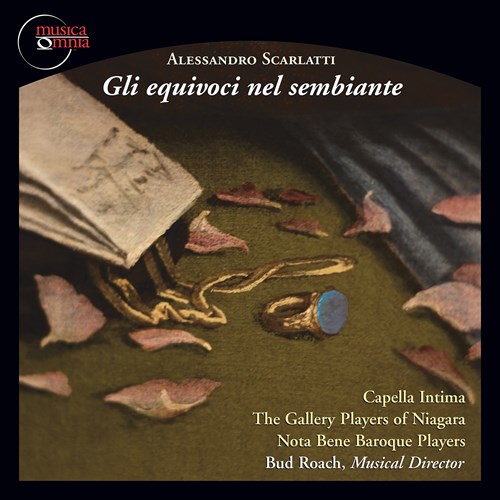
Alessandro’s very first opera was Gli equivoci nel sembiante which might translate roughly as “Mistaken Identities” although I saw an article that would call it “Folly in Love,” a pastoral comedy (identified as a “dramma per musica”). Dating from 1679, it’s the creation of a teenager, when Alessandro was not even 19 years old.
And it’s also very early in the history of opera.
Monteverdi’s operas in Florence and Venice are from the first half of the 17th century, La favola d’Orfeo (aka L’Orfeo) from 1607, L’incoronazione di Poppea from 1643
The mid-century Roman operas from composers such as Luigi Rossi & Francesco Cavalli created a new comic-opera style
In Paris the operas of Jean-Baptiste Lully may have been an influence upon Rossi.
My reading suggests that Alessandro may have been exposed to & influenced by the Roman operas of Cavalli & Rossi.
I’ve been listening to the opera, in what may be the first complete recording of the work, created for us by artists right here in Southern Ontario:
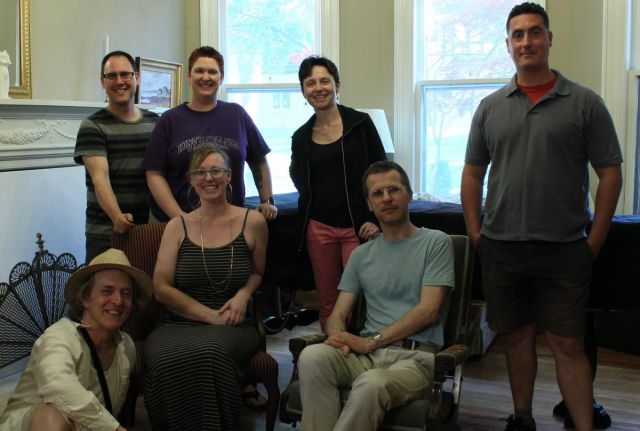
Capella Intima
The Gallery Players of Niagara
Nota Bene Baroque Players
The members of Capella Intima sing the roles in the opera:
Baritone David Roth: Armindo, a stranger, and Eurillo’s double
Bud Roach is also the Musical Director for the project.
I’ve been driving around with this CD in my car, going through the opera a few times. I’m floored by what I’m hearing from that gifted teenager Alessandro in this new recording. The playing is of a historically informed style, wonderfully transparent & clear with a small ensemble that plays with great energy.
With comedy, especially one involving visual mix-ups we lose something when we only have an audio recording. I wish I could see this performed onstage. Roach is especially apt for comedy as we’ve seen in other performances here in the GTA with his Hammer Baroque or working with the Toronto Consort. He is often cast in comic roles both because of his clear light voice, but also because of his willingness to play. Sometimes he’s singing with great care and a fidelity to the score but at other moments we’re into something resembling the bold improvisatory spirit of Commedia dell’Arte, a style likely influencing Italian theatre & the operas of this time. Dietrich’s clear high sound is a lovely contrast to the richness of St Pierre’s voice. Roth’s lovely full sound is a welcome addition.
A long time ago I was an undergraduate, a university student fresh out of high school. At the time a summer job was indispensable to help me afford my life between September & May, living in my apartment & studying.
As I look back, hindsight suggests that Socrates was right when he said “know thyself”. I envied those who had a narrow path to follow, circumscribed by the things they disliked. I knew people who really only liked one thing and so could follow through single-mindedly.
Not me. If you’re not sure what you are going to do, your choices become a bit more challenging. I am omnivorous, I love everything, as a student, and as an artist. There’s something to be said for specializing, for choosing one thing and sticking to it. If you are not limited by your taste, though, it becomes tougher. In my 20s I was sometimes a composer, sometimes a performer, sometimes a writer, music for plays, for film, for dance, a couple of musicals…. I was a coach, accompanist, a music director. And I was exploring the synthesizer and electronics, but also playing classical piano, and sometimes rock & jazz.
I don’t think this makes me in any way unique.
And the whole time that I was exploring different aspects of music – theatre, I had a variety of jobs to support myself. Whereas the university experience precluded jobs in the winter, as I gradually segued into something outside the school year, the emphases changed, especially once I married & became a father. The game becomes more serious.
I recall interviewing Philip Glass in 1981 before Satyagraha came to Artpark in Lewiston NY. He spoke of dayjobs in his recent past (I think he mentioned work as a cab driver and as an electrician… it was long ago, I wonder if I remember it right?). As I was still in my 20s I took that to heart, remembering the taunt in the back of my head that I couldn’t forget, namely “don’t quit your dayjob,” the ultimate insult to a serious artist. No I did not spend very long sustaining myself entirely on the avails of music. So indeed I went back to a dayjob. Sometimes I worked in a bookstore, sometimes a library, sometimes I did construction, landscaping, carpentry, shipping-receiving, lugging & lifting. I got a job delivering mail at the University of Toronto, and got lucky in someone else’s misfortune. When the boss got sick, I became the new Manager, a job I’ve now held for 3 decades.
While I felt lucky to have the position, there’s cognitive dissonance, because my identity is in the arts, not in admin. It’s crazy when I’ve now spent so much time working. I managed to mitigate those feelings somewhat by seguing into the academic realm, studying the disciplines academically that I had previously practiced. Even so, whether I was making music or studying it, that was all jammed into the spare time left to me after working a fulltime job, a divided life.
I mention this in context with the wonderful interview I shared from Margarete von Vaight, another person living a life divided between her art, her professional life & her studies. I feel it needs to be said in 2020, that you’re not a failure if you have a dayjob. At least that’s what I tell myself. Even so I feel like a turncoat, a traitor, a person whose loyalties might be suspect. That’s what I meant by the headline. Today especially the world of artistic creation feels profoundly disturbed, unsustainable, shaky at best. The current business model? It’s a house of cards. Great opera singers have been staggered by the sudden disappearance of the medium due to wholesale closures around the world. The Metropolitan Opera, Lyric Opera of Chicago, Seattle Opera, Royal Opera Covent Garden, the Paris Opera, have all cancelled huge parts of their seasons, while leaving us wondering what will happen with the loss of revenue. What will become of the performers who lost the gigs & their fees? What is to become of the art?
And the same applies in many other disciplines.
I don’t take comfort in having taken the safe path. I can’t claim to be smarter just because I survived, so fascinated with my job that my artistic activities were often shoved into the background. I had a fulltime job, while I finished my BA, then did an MA & a PhD in my spare time (although in fairness I cannot call myself “Dr”, as I didn’t finish) and also did at least a show a year, sometimes as many as 5 shows a year. There was the year when I did two operas in the space of a year, while going to class & working fulltime.
Self-portrait? the stack is the job, the building academic study, the blue space: what’s left over
My vacation days were pretty wild that year.
The curious thing about the job activities is how seductive they can be. I learned computers, web design, finance, spread-sheets, learned a smattering of skills in labour relations, management… It made me a better teacher, a better music director. If you know who you are, venturing off into a new line of work can be fun rather than a threat. If you aren’t sure who you are, the money & the gratification can be so alluring as to lead you astray. I’m not saying I got lost, not when I’ve been having such a good time.
While I’ve asked myself “do you work to live or do you live to work” I try not to over-analyze. If I’m enjoying myself then I think I’m okay. I’m about to retire from my job with a pension, able to devote myself completely to creative pursuits. I will now have time.
It’s a strange world. Will opera be back in the usual way? Time will tell. And what of the young artists coming into the field? I’m hardly a person to give advice except to say that education is invaluable.
And universities & institutions of higher learning may function the way monasteries did in the Middle Ages, to preserve culture in a kind of dark age.
With all the performers, musicians, artists social distancing at home, you might think that this is an opportunity, that they’d be busy singing, strumming, painting…. All that time to create, right?
Yet it’s not what I hear on social media. There’s something not quite right. Is it like a writer’s block? I don’t know if that’s the write metaphor…
(bad joke… pardon me).
Perhaps the best way to describe it is the way Obi Wan spoke when he felt something inside, not quite right.
Some people are struggling to survive. Many people are dying. The artists are the most sensitive of us all. Could artists, our canaries in the mine, be feeling something?
I am reminded of something that I read long ago in Keir Elam’s book The Semiotics of Theatre & Drama. The theatrical transaction begins with the audience in this theory. The moment when they begin to show up –whether it’s 500 coming through the door or just 5—is when the process would be understood to begin, or so says the theory, and not in anything that the actors or musicians might do.
As I recall Elam gathers together many different theories & the work of theorists, so he is more of a curator than author, as we walk through his museum of insights & observations.
He called it a “transaction” because it’s at least partly communication, perhaps also a speech act. It allows us to really ask a different version of the classic: if a tree falls in the forest, is there a sound? Let’s change it slightly. If an actor speaks on a stage but there is no audience, is there theatre? We might well say yes there is drama, but without an audience, can there be theatre? Without an audience there might be music but is there a concert?
And I suspect this is the root of the malaise in the artistic community. When one performs, one feels a connection to the listener / viewer. I don’t think it’s about applause per se. It might be connected to fees & a kind of recognition. If you make music or speak in a church, the silent connections can be the most powerful affirmations of community.
I’m remembering something from PSY100, the introductory Psychology course at University of Toronto that’s always enormously crowded (speaking of audiences). We were told of something called a “natural experiment.” A soldier in WW I might have a bullet sever his corpus callosom, separating the usual pathway of nerve fibers connecting the left & right cerebral hemisphere. This would never happen as a deliberate act of surgery, of course. But the accident on the battlefield allowed research on the functions of the brain by virtue of a de facto event rather than something done to test an experimental hypothesis.
Right now COVID19 is making our society change in so many ways. People are behaving differently and in the process we’re having all sorts of new views into human behaviour that might be understood as comparable to the natural experiments I spoke of, a kind of de facto accident of our society right now.
Not “what happens when you separate the hemispheres?”
–but– “what happens when you separate the artist from the audience?”
You think the pandemic is difficult? It’s especially daunting if you’re one of the involuntary specimens in this ongoing experiment.
COC GENERAL DIRECTOR RESPONDS TO MEDIA REPORTS OF AN EARLY DEPARTURE FOR PARIS
Alexander Neef (Photo: Gaetz Photography)
Toronto – In response to recent media speculation out of France that COC General Director Alexander Neef plans on exiting his role with the Canadian Opera Company ahead of July 2021, Neef confirms that no decision has been made on accelerating a departure date.
In July 2019, Neef was appointed the next General Director of Opéra national de Paris, with plans for him to succeed current head, Stéphane Lissner, after the close of the COC’s 2020/2021 season. Yesterday, France’s Ministry of Culture confirmed that Lissner is departing the historic opera house a full seven months ahead of schedule, vacating his post following December 31, 2020. An article in Le Monde further speculated that Neef could now start his Paris appointment as early as January 2021.
“I certainly did not anticipate Lissner’s early departure,” says Neef. “I have not yet had any formal discussions – either with the Paris Opera or members of our Board of Directors – about accelerating the start of my engagement in Paris. Moreover, the ongoing global health crisis makes it difficult to envision how any significant changes to the intended timeline could be accommodated.”
“The COC continues to navigate an extraordinarily challenging time for the performing arts industry and that is where my focus is centred right now,” adds Neef. “I remain committed to our company and the work before us.”
Alexander Neef took over as General Director for the Canadian Opera Company in 2008. Over the course of his tenure, he has transformed the COC into one of the most significant opera producers in the world. Most recently, in the wake of COVID-19, Neef has spearheaded the launch of a number of digital programs and initiatives, housed on the company’s Digital Content Hub, as way of bridging audience members and the art form, at a time of physical distancing around the world.
*****
“Press releases and announcements” are presented verbatim without comment
Did you know? The first ever Monty Python episode was titled Whither Canada.
I suspect it’s a title meant to invoke the sort of bland but innocent British documentary we see here in Canada as “Hinterland Who’s Who” or “Heritage Minutes”.
Of course that’s not what the viewer got for this, the first Monty Python episode, nor the next 44, plus assorted films, concerts and more.
But it’s a question we might ask of the Canadian Opera Company, although I apologize, I’m not as funny as Monty Python.
“Whither COC”, although I’m tempted to put that first “h” between parentheses to suggest a second meaning for the word.
I wonder what’s ahead as we say goodbye to Alexander Neef the COC general director. If this was a year like the earlier ones in Neef’s tenure, one might wonder: does the company want to find a comparable successor, someone to lead the company along a similar path?
But this is not a year like any other.
The last two operas of the season could not be staged due to the pandemic.
Cancellations? Toronto Symphony concerts from April onwards, Stratford & beyond…
The Metropolitan Opera are closed until the end of December
Singers, musicians, artists & technicians in every discipline have lost some or all of their expected performance fees.
In 106 days from now it will be September 25th: the projected opening night of Parsifal.
In 19 days it will be June 30th, the renewal deadline for my COC subscription.
I have the option to cash in the two operas that we lost in April- May on the new season. But I wonder, will I be purchasing six operas for the price of four? Or is it to be a shortened season, perhaps four operas: for the price of, gulp, two?
For the customer? that sounds like a bargain, if indeed that’s what it comes down to. But it sounds like so much of a bargain that I wonder. Will the COC be able to survive?
If Alexander Neef leaves as expected in the spring of 2021, what shape will the COC be in? This is the backdrop as the COC cast about for a new general director to ensure the survival and prosperity of the company.
Implicit in that process of searching for new leadership is the whole question of identity.
What is the COC and whom does it serve?
What is its mission? It would be a good new beginning for the Company if the new leader were to articulate the mission of the company, a vision for the Company in Toronto and in the country bearing the Company’s name.
What do we understand by success for the COC? In other words, what are the strategic objectives that matter other than balancing the books and finding donors?
I’m putting this out there more in the interest of encouraging a conversation than to claim I have the answers.
In the aftermath of the pandemic the COC may want to retreat into a more Canadian model closer in spirit if not actuality to the founding impulses of the company seventy years ago, when the performers were all Canadians. If Parsifal is to be staged in the fall its cast is mostly imported, a hugely expensive undertaking. One can think in the short-term, not unlike the governments planning for our survival during the pandemic, while remembering longer term concerns.
A short-term nationalistic approach to casting may preclude ambitious works such as Parsifal, while preserving the company. It may seem like a lame analogy, but in a family’s finances, if one or both of the bread-winners lose your job, you put off expensive purchases, lavish vacations: until such time as you’re not going broke. Perhaps the COC might do the same at least for the short-term.
What if the Ensemble Studio members were to step into a more central role (excuse the pun), not merely the spear-carriers but the stars..? In their auditions they sang the arias belonging to lead roles, even though their time in the Ensemble Studio rarely affords such opportunities. They know how to act, they know how to sing. Let’s give them the chance.
What if the next General Director were to be the steward of the company & the dream of Canadian opera, the guide & guardian of our talent & our culture.
What if the new General Director’s mission were to seek out the prodigals who have wandered away, offering them sanctuary & a welcome home? Go ahead, call it romantic & even nonsensical. But there are many singers right here in Toronto, across the country & abroad. It’s not so much that they deserve the chance (although they do), as we the audience deserve the opportunity to see & hear them, finally.
Imagine a Canadian hockey club filled with European players, when there are Canadians living here and abroad who could take the ice & play just as well or better. Is that crazy? But Canada punches above her weight as a producer of hockey players, AND opera singers. (Soccer players? No.)
But the point of the analogy is to suggest how crazy it is to bring in talent from afar if locals are being ignored, especially if the hockey team is funded or subsidized by a government agency. The COC gets money from granting bodies at several levels of government, who have not –at least not yet—demanded the hiring of Canadians as their quid pro quo for funding.
IS it such a crazy idea, when singers & artists get CERB-funds, when the companies are subsidized: yet there appears to be no accountability as far as how the grants are used?
Call me a Philistine. But I will be happier walking into the Four Seasons Centre to see a Canadian Opera Company comprised of Canadians, backstage, onstage, in the pit, in the front office.
The mandate could extend further afield, naturally. I grew up listening to stories about the COC tour, tales of funny ad libs from singers & character actors such as comedian Briane Nasimok. Nevermind MAGA, by touring they could Make COC Canadian Again (is that MCOCCA?…oh dear that sounds more like something out of Monty Python).
Field of Dreams is a film that I’ve always loved. It still moved me when I saw it this weekend but now in a totally new way.
One of the small consolations of the pandemic is the clarity we are offered. Because life as usual isn’t possible, because things have been slowed down, we see and hear our arts as if for the first time. But that’s not always a good thing.
I was vaguely aware of the politics in the story of Field of Dreams, but watching it this week as we saw Americans take to the streets protesting the murder of George Floyd, the resonances were impossible to ignore. I understand the story differently now.
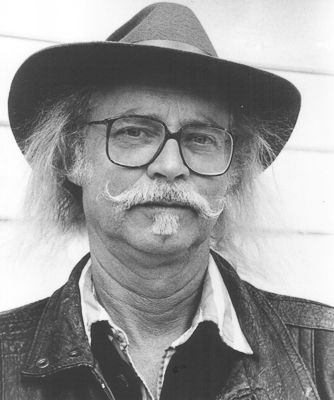
Novelist WP Kinsella (1935 – 2016)
I hope you noticed that it’s not just about baseball, that the game is a backdrop rather than the real subject.
Field of Dreams is based on Shoeless Joe a novel by Canadian WP Kinsella.
If you’ve seen the film you’d probably enjoy the book, although there’s a great deal that comes across differently with the help of cinema, the actors & the music of James Horner.
I make no apology that I’m offering spoilers for a novel & a film that appeared more than 30 years ago, back in the 1980s.
The protagonist of the book has a similar surname to the novelist. The farmer we meet played by Kevin Costner is Ray Kinsella. Ray is not your usual farmer though. He seems like a stranger in a strange land, both on his farm, and especially when he starts to hear voices & see visions: leading him to build a baseball field in the middle of the corn on his Iowa farm. Ray’s father had been a ballplayer and an admirer of Shoeless Joe.
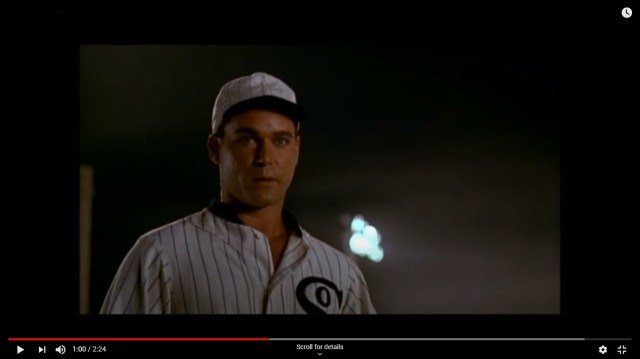
The Shoeless Joe of the title is of course Shoeless Joe Jackson, who was among the players given a lifetime ban from professional baseball by Kenesaw Mountain Landis, the first major league commissioner, and a figure determined to bring integrity to baseball. The story of the Chicago White Sox players taking bribes to throw the 1919 World Series has become known as the Black Sox Scandal. If you want to know more about this, you must see Eight Men Out, a film that will give you most of the facts of the complex story of bribes and bettors. And in passing it will offer you the best performance of John Cusack’s career. Unlike Field of Dreams, it’s about the hard realities of the game & the business of baseball, surely the best movie ever made about the game.
The two films –Eight Men Out (1988) and Field of Dreams (1989) – might be yin and yang, a complementary pair of opposites. Argh now I have to pull out Eight Men Out and watch it again.
Field of Dreams is less about the business of baseball than the poetry of the game especially when understood in context with the value of real estate. That juxtaposition seems very timely in a summer when artists are going broke because of a pandemic. It’s a story about possibilities, about ghosts & visions, more a tale of what one wishes would happen rather than what really did happen.
So let’s talk about Field of Dreams. The ghosts of the Black Sox players, beginning with Shoeless Joe, begin to appear on Ray’s surreal baseball field amid the corn. Are they ghosts?
Ray’s wife & daughter can see the players but Ray’s brother-in-law, who only sees the land for its real estate value, can’t, and thinks the others are crazy for seeing something that isn’t there.
It’s a highly theatrical film given that we’re dealing with discrepant awareness, and that that the discrepancy is political.
We’re taken on a bit of a road trip, as Ray first persuades novelist Terence Mann – originally JD Salinger in Kinsella’s book—to come with him to a game at Fenway Park in Boston. The two of them then go looking for Archie “Moonlight” Graham, a ballplayer whose entire career totaled precisely 1/3 of an inning, before retiring to the life of a country doctor. Circling back home –after Ray has a middle of the night encounter with Graham’s ghost back in 1972, perhaps the very night Graham passed away—Ray & Terence pick up a young hitch-hiker looking for a chance to play baseball, none other than Archie Graham.
The last few minutes of the film are almost too tidy, as they tie up the knots in the story.
Ray was estranged from his father, both because baseball had become like a chore rather than a game, and after reading a Terence Mann book (perhaps analogous to Catcher in the Rye). The book somehow would epitomize their quarrel
Ray regrets what he said to his father (that he couldn’t respect someone whose hero was a criminal, meaning Shoeless Joe), and that he didn’t get the chance to take it back before his father died
Terence Mann suggests that the whole ordeal is Ray’s penance
Archie Graham gets his chance to play, finally
Ray’s little girl is choking on a hotdog: leading to one of the great moments of the film, when youthful Archie drops his glove and again gives up baseball to become the old doctor Graham, saving the child’s life
Terence the troubled novelist is invited to walk out into the corn, perhaps to rediscover his passion for writing
The voices in Ray’s head had been saying “ease his pain”, which Ray thought of at first was the pain of Shoeless Joe; at the end we hear that it could just as well be the pain of Ray or of his father
We meet a youthful ghost version of Ray’s dad, at this point looking younger than Ray, looking in fact a whole lot like JFK, the dead father of this generation: at least for the liberal left.
In the last scene of the film Ray belatedly (because he never could do it during his actual lifetime) dares to ask his father’ ghost to play catch with him. I have always been conflicted about this scene. I have misgivings about this moment, which is so syrupy sweet you might need insulin. Even so I tend to prefer to believe in a film even when it feels contrived. yes it’s a humongous metaphor. I can live with that.
But that’s the thing. In their reconciliation, we could be watching the story of what’s still unfolding even now in America, the break between generations. The split we see between right & left persists like a family schism. Fathers and sons are still estranged. But Field of Dreams feels today, alas, like a liberal fantasy because of course it’s from a largely-Canadian & northern perspective, largely disrespectful of the attitudes you see among those who wear the red MAGA hats, who might identify with the farmers of Iowa who mocked Ray for being crazy enough to plow his field under, wasting a precious cash crop and bizarrely putting up a ball diamond in the midst of the corn instead. One might ask whose dreams are signified in this film.
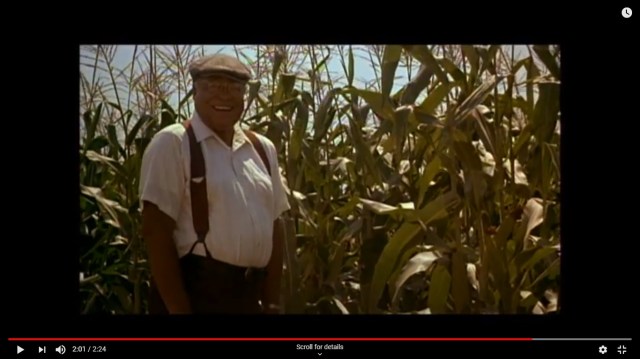
While James Earl Jones may be a black man with a huge role, he’s the only black person we see in the whole film, admittedly because the action is in Iowa where every single person seems to be white. Twice in the film a white person asks “is this heaven?” and is told “It’s Iowa”.
How does that feel if you’re a black person watching this film? Is heaven a place with only white people? Or maybe I’m just a bit overwhelmed by what I see on the news this week.
The split inside Ray’s family (between those who are able and willing to see the ghostly ballplayers, and those who only see land that is worth money) is apparently healed when (after the choking child is healed) his brother-in-law now suddenly can also see the ghostly players, muttering “don’t sell the farm Ray”.
I wish there could be a real healing between the estranged and conflicting groups in America. Are they included in this dream? I hope so.
And the last thing we see in the film as Ray and his dad play catch, are the cars, now lining up for miles across Iowa –a lovely image to be sure—lending support to the notion “if you build it they will come”, a dream for the artists & visionaries.
Miraculously Ray & his family dodge foreclosure & bankruptcy because as the little child said “people will come”.
If only. It’s a beautiful dream, one that I always wanted to believe. I guess I might seem a bit foolish to say it’s too good to be true. It’s a dream after all. What I wish for is a real reconciliation, between MAGA & BLM, between Democrats & GOP, Liberals & Conservatives. The film hints at this, and maybe I’m asking too much.
But that’s my dream.
Yet in the summer of 2020 ballparks and concert halls are closed. I miss live performance, I miss live sports, indeed, I am missing baseball and opera and many other things besides. The Stratford Festival and the Metropolitan Opera and many others are likely closed for the rest of 2020. Lovely as that image of the cars may be it’s hard to imagine anyone getting out of the cars, or filling the lobbies at Roy Thomson Hall or Four Seasons Centre or Bell Lightbox, let alone our actual churches, temples & mosques.
Transcendence awaits the all-clear signal. In the meantime, I will keep watching the films, enjoying the chance to escape.
I don’t know about you, but I’ve got lots of time to think, to ponder questions old & new.
One of my oldest questions is the conundrum of popularity in music. It’s a complicated phenomenon, and I’m not saying I understand it. But I’m thinking about it a lot right now, as we wait to see what will survive the pandemic.
Artists & the companies that employ them are taking a beating. Artists are sometimes getting little or nothing for concerts or shows for which they prepared and even memorized their part: that were never performed. Companies are having a rough time, losing revenues while somehow wondering when things will open up again.
The headline employs an analogy that may be stretching things. Let’s see.
When we speak of gentrification we usually think of a neighbourhood like Queen St West or Yorkville or Cabbagetown:
At one time in the past the buildings in that part of town were less valuable, less developed: because the only people who wanted to live there were the Bohemians, the artists & the fringe members of society.
Those interesting denizens of the fringe brought something to those neighbourhoods, helping to change them into something they could no longer afford.
Yorkville & Queen West & Cabbagetown were improved by clever entrepreneurial approaches to real estate; or in other words real estate was treated not as a human need but as a commodity, and leveraged over & over.
And before you know it, the people who made those areas interesting –let’s call them “Bohemians”—were squeezed out. Artists haven’t been seen in Yorkville except as employees in one of the stores. I remember working in the Classical Record Shoppe in the 1980s, when Yorkville was already seriously gentrified, and artists were still to be found in places like Queen St West.
If I may insert a radical thought parenthetically, why do we call it “profiteering” when someone buys up all the toilet paper or sanitizer during a public health emergency, and then turns around to sell it at astronomical prices: but society calls it “clever” when housing is treated the same way, at a time when we have people living on the street or in tents under expressways?
Isn’t that also profiteering? But excuse me for the digression.
We see something similar in music, and I’m not about to point fingers or criticize anyone, not when so many artists in every discipline are struggling.
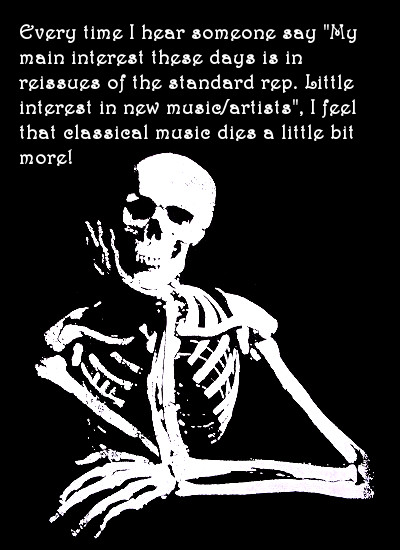
I saw this graphic on social media a few weeks ago, and saved it, knowing I wanted to pair it with this piece: when I finally figured out what I wanted to say.
The charming person (sorry I don’t know their gender) says the following:
Every time I hear someone say “My main interest these days is in reissues of the standard rep. Little interest in new music/artists”, I feel that classical music dies a little bit more!
Let me unpack the ideas in the analogy a bit more before applying it to music.
Is real estate a commodity or a public right? Or perhaps it’s both. But right now it’s hard to remember the first without the other intruding.
I am reminded of Wagner’s Ring¸ where we see the beautiful gold in the Rhine river, protected by the Rhine Daughters: who celebrate its beauty. The end of the first scene of Das Rheingold is like The Fall in the Bible, where a kind of innocent paradise is wrecked by the theft of the gold & making it into a ring, changing the world in the process.
Here’s a glimpse of Patrice Chereau’s view of this scene: one heavily informed by George Bernard Shaw’s analysis in his essay The Perfect Wagnerite. Chereau (employing Shaw’s analysis) shows us the deeper structure, the politics manifest in Wagner’s opera.
And then of course the big four opera cycle is all about the implications of that change, because the guy has turned the lump of gold into a ring. It doesn’t matter if the ring is beautiful, not when it has power, the powers of commerce & trade as Shaw showed us.
So let me re-frame the question I posed before about real estate, that Wagner asked in Das Rheingold.
Is music or any of the arts there for the sake of art, to enrich humanity, if you will? Or is it a commodity, meant to make profits that enrich some people? YES I totally get that people have to live. I have been paid for my labors as a composer, as a musician, even as an actor or as a designer. And I’ve been paid to teach, to be a critic, a writer, a commentator.
You can’t help have noticed that we’re in a period of upheaval, as many business models are being revised. If you can sell online you’re probably enjoying a surge in sales. If you can’t somehow sell online, you’re probably seeking to find ways to reinvent your business to sell curbside. And of course there are also proprietors who don’t face crises, who are doing well in the pandemic.
What’s to become of the arts? Must the business model be to sell what people want most? The composers of new works –the ones I spoke of in that quote above—face a daunting time if they’re not well-established. It’s a difficult time to break into the arts, although it helps if you have lots of real estate or something that people already want to buy from you.
I’ll stop writing for now although I can’t stop thinking about it. I was mostly seeking to pose some questions, to throw out some ideas. I don’t have answers, indeed I’m not sure I am even asking the right questions.
Social media can be a lot like real life. There we are, all alone, when someone tries to get our attention demanding some sort of response. It may involve some work, or some fun: or both.
I’m recapping the way I responded to a request from a pal in Newfoundland that I met twenty years ago at a conference. As in any friendship, how we met, what we ever did together –mostly while separated by thousands of miles—is surely immaterial. I did enjoy drinking beer with him and watching some hockey, possibly at the same time. That was back in the days when one could actually see a live hockey game, in a bar, on TV, while drinking their beer.
And then one day on social media, he said
“For day 1: I was challenged to post an image – no posters, no title, no explanation – from 10 movies that had an impact on me. Each day I will nominate new people to take the challenge. 10 days, 10 movie images, 10 nominations. No explanations. Now I ask ****** ****** to accept the challenge and play.”
I love attention and the task is a fun one. So of course I did it happily, enjoying the choices & the challenge & the social context. Of course when I took my turns & did it? Maybe I didn’t select the right people or maybe they’re already played this game enough times that they felt they had paid their dues? (this was perhaps the third or fourth time for me, playing this game… As you can probably tell I never tire of this sort of thing). Of the persons I named, most ignored the challenge. Oh well.
So for the remainder of my cycle of 10 I stopped issuing challenges to people. I just published the last ones without challenges.
Ach du lieber, I hope that’s not cheating! The game gods may look down upon me with ire or judgment. In hopes that they forgive me, to appease their anger?
I have ANOTHER game in mind. (Perhaps the headline tipped you off?)
Having played these games before I wanted to see if I could suggest the movie gently without being obvious. I was deliberately vague, difficult, perhaps a bit socially distanced: or maybe that’s what I thought I was doing.
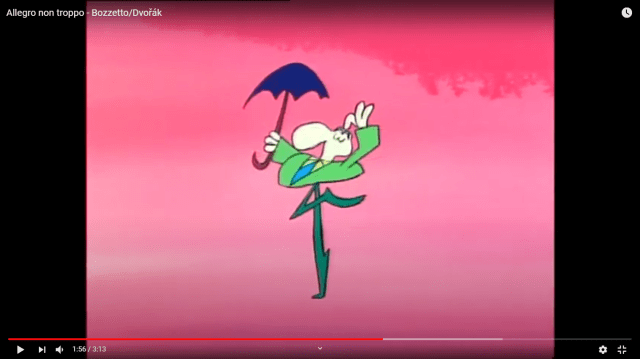
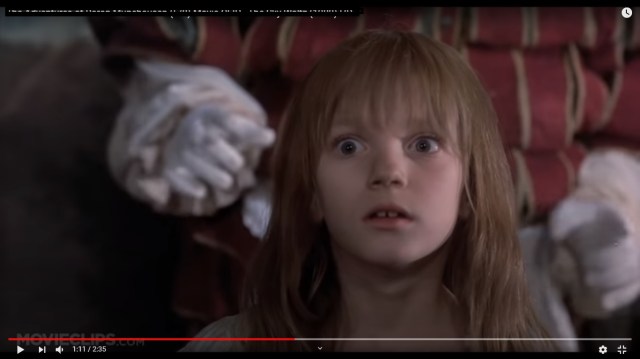
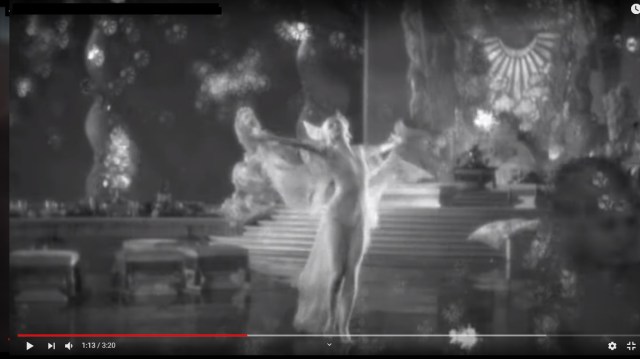
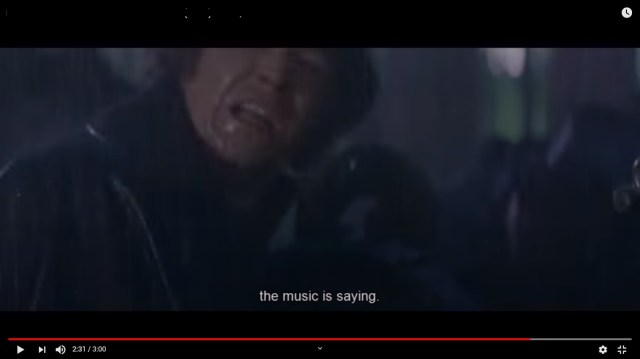
But that’s the source of this quiz. I have ten images from ten films. I will offer them in order. At the bottom I’ve got the answers. See if you can figure them out.
One even has the name of the film (right on the image).
Image #1
Image #2
Image #3
Image #4
Image #5
Image #6
Image #7
Image #8
Image #9
Image #10
As I assembled the last few I realized this was a list of my favorite films. I had an 11th & 12th that I left out because they’re so well known, which spoils the fun. But I’ll post those two here.
#11
#12
For me it was fun assembling this, I hope it’s fun for you looking at the images.
ANSWERS:
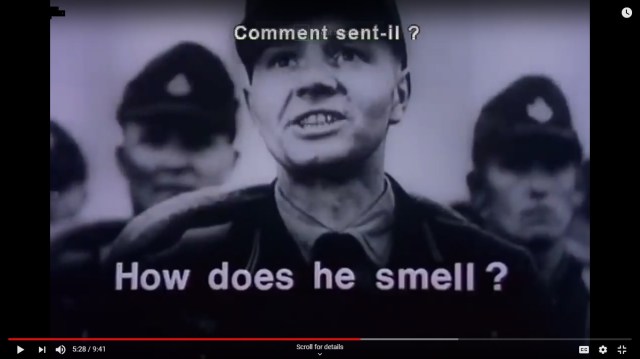
1 Time Bandits
2 Allegro non Troppo
3 The Adventures of Baron Munchausen
4 A Midsummer Night’s Dream
5 Immortal Beloved
6 Hugo
7 North by Northwest
8 Blade Runner
9 Amarcord
10 Good Will Hunting
11 Some Like it Hot
12 Singin’ in the Rain
This subject seems apt right now. The voices in this music have no words, which is a perfect expression for a time when we don’t know what’s to come. Of course we never do, but it’s especially noticeable when we’re locked down during a pandemic.
Most but not all of the examples I’ve come across are joyful so for the most part this is likely to make you smile rather than frown.
I don’t know if it’s fair to call it a trope because I don’t think I’ve ever seen anyone write about the topic. Composers may write grand & complex pieces employing their skill, whereas these pieces are among the simplest you will ever encounter. That might help explain the popularity of these pieces.
You wouldn’t expect Verdi’s 1851 opera Rigoletto and the 1939 MGM film The Wizard of Oz to have much in common. Yes they both have orchestral music as well as musical numbers sung by men and women, including choral numbers. But the similarity I wanted to highlight is their use of the wordless chorus.
We might not expect to find such a thing in Rigoletto.
But when we come to the emotional highlight of the work in the last act, where Gilda sacrifices her life to save her lover, and the storm’s winds seem to be speaking to us with the wordless voices of the chorus? The music has become something else, no longer merely oom-pah accompaniments for great singers. At the very least it is melodrama.
Notice how we have the high woodwinds to suggest lightning, the quivering lower strings to suggest thunder, and the chorus suggesting something else without words. It’s melodramatic in the best sense.
I love it. But is it so very different from the Wizard of Oz opening (1939)? You’ll hear a wordless chorus near the beginning and again roughly a minute in.
I’m inclined to think of this as something we might call symbolist rather than impressionist, invoking hidden connections, indeed suggesting something spiritual and/or metaphysical.
Let’s look at the greatest hits of wordless chorus.
Near the end of the 19th century Claude Debussy included a chorus in the third of his Nocturnes for orchestra Sirénes. This version allows you to see the singers.
The most popular example in this list –other than Wizard of Oz—would have to be Puccini’s “Humming Chorus”, one of several moments the composer gives us to offset the desperately tragic arc of the story of Madama Butterfly (1904).
Ravel’s Daphnis et Chloé is a ballet premiered in 1912. The performance you hear if you follow this link is especially effective because the chorus is treated like an instrument, often so subtle that you can’t tell that anyone is singing.
Holst gave “Neptune the Mystic” an especially magical chorus to finish his Planets suite (1916)
Film composer Danny Elfman might be the most prolific user of the wordless chorus, a regular feature in several of his scores. Notice how he begins Scrooged. (1988)
It has become such a regular part of Elfman’s toolkit as to almost be cliché: except he does it so well. Maybe it’s corny but how can you resist when Elfman wears his heart on his sleeve this way in Edward Scissorhands (1990)?
He’s far subtler in Good Will Hunting (1998). Are they real voices or synth? I can’t tell.
I won’t ask “who are they” because we don’t know. What do they mean?
Who knows, perhaps something non-specific to connote intelligence or something mysterious, something unfathomable. They’re not giving us any words, yet these can be among the most meaningful moments. How exactly, and what do such moments signify? I suppose the short answer would be to say “it depends” on the context. Perhaps the most important thing to recognize is that there is no verbal signification even as we have the presence: of voices, persons, perhaps angels.
They remind me of how much I miss live music, live performers.
I heard today that Douglas Chambers passed away this past weekend, and that the cause of his passing was COVID-19.
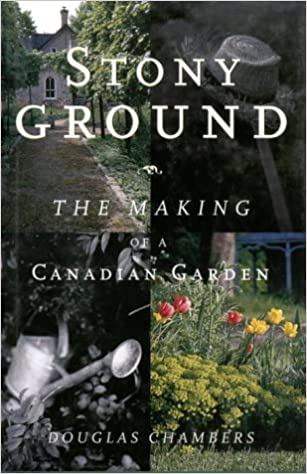
I sometimes make big long preambles when I’m avoiding something. I can’t deny this time that I’m avoiding several big issues, perambulating around some of the biggest issues of my life. We may have a brush with greatness, and may spend the rest of our lives decoding the impact of the encounter. Writing about Stonyground is not so much an evasion as a gentle way of sidling up to the real subject. Stonyground may be a book about a place, but it’s really a meditation on so many things, not unlike gardening itself. Stonyground: The Making of a Canadian Garden is an account of the beautiful place Chambers made, but it’s especially a trip into his head. So while the subject of Stonyground is Stonyground (the place) it’s above all a tour of Chambers’ intriguing sensibility.
I recall suddenly that “sensibility” was for a time a word I used over and over, because I’d absorbed it from Chambers. Do you know the word? I don’t hear it much anymore.
No I can’t presume to write about Douglas Chambers because I don’t think I knew him. I admired him and struggled at times to understand him. He had a knack for long complex sentences that remind me (as I think back on lectures I heard decades ago): …of what exactly? I guess it’s a bit of the prose style of Slavoj Zizek, where he might begin a sentence and you’d wonder OMG where is it going? as you’d watch its arcing aerobatic logic, the words threatening to crash. How is he ever going to land that thing, bring it down to the ground and somehow managing to make sense? I remember he used to often stop in his lectures after a long paragraph and say “does that make sense”? It was the humblest thing, considering that he was watching the bewilderment on our faces and never holding it against us that he might have left us behind in his flights.
His was a forbidding intellect, multi-disciplinary long before the word came into fashion, ranging over many things across different subjects & centuries. While I think he enjoyed throwing us off a bit his students were often the best and brightest. There was no shame in it, indeed it was gloriously enjoyable, including the post-mortem afterwards in the cafeteria recalling the best moments. I remember the time he turned and looked at me when I mentioned Vergil, asking me if I had read it in Latin (nope!), pretentious nerd that I am. I had no idea that I’d inadvertently spoken of one of his favorites.
I was thinking of him this past weekend. I sometimes play the piano for an older relation of mine, just as I once used to play at Casey House long ago. I can’t help pulling the two together, thinking of Douglas as a survivor of one plague, caught now in another. Let that be a natural segue to a couple of paragraphs I shall quote from Stonyground. He’s explaining himself throughout, and here in medias res he again seems to be orienting himself and us, making sure we’ve come along with him.
…Things are rarely as one remembers them. Why does learning to drive (and getting a truck) that summer now seem so commonplace when I know that the whole process was one of farce mixed with terror? “What is material to this diary?” I find myself having written that summer on the day when I discovered that I was HIV-negative. Could I have gone on with all this –would I? – if the result had been otherwise? “This book looks like a hyper-text” said a writer friend who picked up the first few pages of the first draft. “Not hyper-text but intra-text” I said. There is no one text in its writing, any more than in the making of the garden itself, all the texts interweave with one another. Somewhere in the centre of this book is the chronology of it all, but the structure of the book as a whole is almost as obscure as the origin of the spider’s web. Many texts are here—cultural, personal, historical, botanical—all of them leaking into the discourse of one another and creating something that even I will not understand, probably, until years from now if then. (Chambers 84)
It may seem like a curious passage to quote, but the whole book is curious and profound like that, zipping back and forth between the theoretical and the practical, between the personal and the abstract. And as a kind of de facto testimony I point to the futility of the University of Toronto Library and the Library of Congress classification system, that placed his two books where? In the Noranda Earth Sciences Library. Yes it’s ridiculously convenient to my office in the North Borden Building, but why in heaven’s name are his books about the intersection of literature & gardening placed in this library full of science books? Rather than judging I simply giggle at how handy it is for me, and yes, it seems an apt illustration of someone often misunderstood.
Chambers is the funniest sort of academic, having an enormous amount of erudition yet without real pretense about it. He introduced me to words such as “prelapsarian”, unpacking the typology of the hortus conclusus (or the enclosed garden) of 17th century poems, before also quoting “and I dreamed I saw the bombers riding shotgun in the sky turning into butterflies above our nation” in the very same class. Remember that the song also says “and we have to get back to the garden”.
Chambers’ writing is full of references to plants and poems & sudden unexpected bursts of pure fun.
The Great Garden is the antithesis of what I call the “brown-earth school of gardening”: everything neatly set off by its little patch of safely dead earth. Certainly it is no place for gardening nannies: hair well brushed and fingernails clean. As blowsy and sluttish as its Oriental poppies and peonies, the Great Garden looks as it if had been scripted by Tennessee Williams with parts for Greta Garbo and Mae West. Its indiscipline would be the despair of the Sunday garden writers. No plantsman’s garden (though there’ a wide range of species), it bursts out like a big girl’s blouse in a lush and vulgar profusion of colour. (50)
For all the fun, there are some very useful ideas about how to make your garden beautiful. He quotes a Pope translation of Horace:
He gains all points, who pleasingly confounds, Surprizes, varies, and conceals the Bounds
Sir Henry Wotton in The Elements of Architecture (1624) enlarges upon the confusion to the eye chiefly by differences in elevation, that would be one of Chambers’ influences in his planning of Stonyground.
I confess, I have been reading the book for the past few weeks, sometimes reading several chapters, sometimes musing over a single paragraph, and then thinking about it while I walk around outside in my backyard. It’s all a reverie for me, as I think about Douglas Chambers. I had asked a few fellow alumni about Chambers, without success, and then today one of the same cohort pointed to his obituary.
There’s so much more to him than just the book. Chambers was an activist in the heady days when being openly gay was a bold political statement. I regret that I didn’t spend more time just listening.
Stonyground –originally taken out of that library the first time I read it, now something I’ve purchased—is a belated opportunity to really hear what he has to say. There is such richness in this book that at times it reminds me of poetry or the Bible. I can imagine a concordance capturing all the references & implications.
Or one can simply read it and enjoy it. He seems to go off on a bit of an unpretentious tangent in quoting John Evelyn’s salad dressing recipe. This is the same Evelyn whose Letterbooks represent the final great project of Chambers’ academic life, completed in collaboration with David Galbraith & released in two handsome volumes in 2014. What seems to be off topic or irrelevant is surely a matter of defying conventional wisdom, especially if one understands a thing by coming only from within the logic of a single discipline. Chambers in citing Evelyn on vegetable gardens signals to us the same thing he regularly did to his students, namely that there’s always a bit more to it than what’s on the surface. Never fully awed by the usual rules of the discipline he might leave us gasping at his references & the connections he made, while refusing to put anyone on a special pedestal.
Chambers may have passed but I still have his books. And that’s a treasury. Stonyground appeared in 1996 but is still available new or used from a couple of different online sites.





 Stonyground –originally taken out of that library the first time I read it, now something I’ve purchased—is a belated opportunity to really hear what he has to say. There is such richness in this book that at times it reminds me of poetry or the Bible. I can imagine a concordance capturing all the references & implications.
