Questions for Michael Rose: premiering A Northern Lights Dream with SOLT

Michael Rose is a familiar figure in the Toronto opera scene, a pianist, music-director & coach.

On July 28th Summer Opera Lyric Theatre (SOLT) will be giving the world premiere of his first completed opera,  A Northern Lights Dream presented on a double bill with John Beckwith’s Night Blooming Cereus.  Michael studied with Manus Sasonkin (1930-1992) and Malcolm Forsyth (1936-2011).  While he has been writing and composing since childhood, his own musical creations always took a back seat to making a living as a performer & teacher.  It’s only recently that Michael has begun to take it seriously as part of his professional life.  After several readings of large-scale dramatic works and some songs that have been performed Northern Lights is both his first commission and first dramatic piece to make it to the stage: a musical composition for which he also wrote his own original libretto, with a small nod to Shakespeare.

On the occasion of the premiere of A Northern Lights Dream with SOLT, (who also present The Marriage of Figaro with Michael music-directing & at the piano) I asked Michael some questions about his creative life.

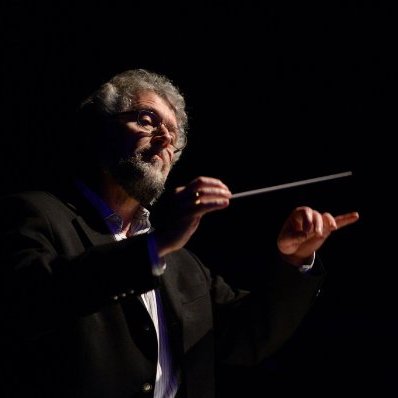
resized_MICHAEL_headshot

Michael Rose

1) Are you more like your father or your mother?

I suspect we all experience that profoundly startling moment in life when we suddenly find ourselves standing in an odd attitude or moving with a peculiar mannerism or saying something in a foreign but all-too-familiar voice. It’s that dreaded moment when your fantasy of uniqueness and independence is exploded, and you realize that, for that one split second, you have become your mother! Or your father. Or both. In my case, it’s both plus my maternal grandparents.

My musicality comes from both my parents. Musicians crop up on my mother’s side of the family through as many generations as we can trace. And my father, who was an orphan, taught himself to play the clarinet and trumpet. He played in bands in the Air Force and even in a community orchestra, when I was little. It was he who asked me if I wanted to take piano lessons. This was when I was six. We were living in the country near Brighton, Ontario. I don’t remember it, but the story is that my parents were in the kitchen when they heard a terrible racket in the back yard. They looked through the window and saw that I had taken a transistor radio outside and had surrounded myself with all the metal garbage cans and lids we had. I was bashing them with sticks to the music on the radio, a wannabe Ringo Starr.

I like to flatter myself with the claim that I resemble my grandfather. It’s not as true a claim as I would like. He was a gentle, patient soul, with an almost childlike conviction that the world is just what it should be and that everything is for the best. He loved my grandmother (and she him) perpetually. It was an ideal relationship. She was the business woman, driven, constantly exploring. He was happy to be helpful to her and to people at large. He was the kind of man who loved nothing more than pottering about among his rose bushes, pruning a bit here and there.

I share some of my grandparents’ traits. Like Grandad, I tend to wear rose-coloured glasses. But unlike his, mine have a sharp edge. Like Nana, I need to be on the move. I get anxious being too long in one place. But unlike my grandparents, I’ve never found a relationship like the one they had. On the other hand, there’s a lot to be said for being single!

2) What is the best or worst thing about what you do?

There are many ‘best’ things in what I do. As a pianist, I cherish those moments when there’s electricity in the air and musical spontaneity is high; when the communication between players and between players and audience is somehow superhuman. I had one of those moments recently in a concert I played with the Forte Gay Men’s Chorus. There was a palpable energy from the audience. And from the first note to the last, there was magic. That is the kind of performance that keeps us addicted to all the hard work that goes into it!

As a coach, the best thing is to hear a young singer conquer a difficult challenge. Those moments are very exciting – for me as well as for the singer. SOLT gives me a chance to work with many gifted new singers. As pianist and music director, my aim is to inspire them to look at the score with fresh eyes and ears. The goal is to feed their imaginations. If they find themselves at the end of the summer singing and acting in a way they could never before have conceived, then I’ve done my job.

As composer and playwright, this season I have the added pleasure and responsibility of providing them with material to challenge and inspire them.

3) Who do you like to listen to or watch?

I don’t listen to a lot of music any more. I can’t remember the last time I listened to a recording. I enjoy live concerts; but after a day of music making, I much prefer to go see a play. Or read a book. I watch TV (I love Game of Thrones, Sense8, House of Cards, Davinci’s Demons, and many more!) and movies (mostly on my little laptop). But I prefer the intimacy, magic, and intellectual courage of live theater.

4) What ability or skill do you wish you had, that you don’t have?

I would love to be a mathematician. What’s happening now in science, particularly in astronomy, is amazing. I would love to be able to understand the mathematics of Newton and Einstein and then explore the many brilliant things that have been discovered since. But I’m just a musician. I can count, but I can’t add!

5) When you’re just relaxing and not working, what is your favourite thing to do?

I love to sit in the sun at a coffee shop and read or write. Or just watch the world around me unfold. I also love to travel. But my favorite thing to do when I travel is to sit at a new coffee shop and watch the world around me unfold.

*******

More questions about working with SOLT,
especially premiering Northern Lights Dream

FullSizeRender

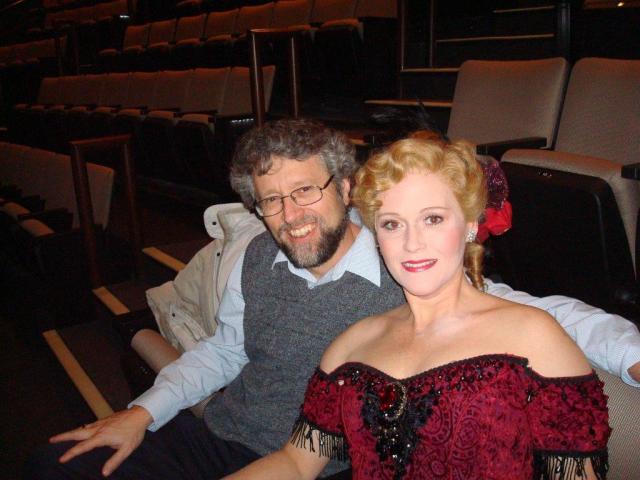
Suzy Smith is music-director of Michael Rose’s new opera plus John Beckwith’s Night Blooming Cereus.

1) I recall a composer once telling me that one learns to recognize one’s own authentic voice by imitating the things you like, trying out different procedures and sounds, until finally you discover something you like. Our culture has a fetish for newness & originality, while some other cultures make more of a virtue of the imitation of models or emulation of styles. Could you please address this both as a composer AND as a vocal coach, namely how do you reconcile imitation and originality?

This question is not as simple as it might seem. I think most people would say that originality is desirable. There’s nothing more tedious, for instance, than going to a new music theater piece and hearing music you’ve heard many times before with new lyrics stuck onto it. I feel cheated when that happens (and it happens a lot!) But there are natural limits to originality. Absolute originality would be incomprehensible to anyone but the composer. And what’s the good of that? Every artist learns from his or her predecessors. Brahms from Beethoven. Beethoven from Haydn. Everyone from Bach. We’re the product of innumerable influences. And that’s a healthy, human thing. If a composer can filter those influences into something that is uniquely her own, then she has accomplished something of significance for her audience.

I try not to be aware of any particular style or composer when I’m writing music. Fortunately, I’m aided by the simple fact that I write music for the stage. I’m not trying to write the great Canadian symphony! So I can be inspired by the characters and situations. That’s what dictates the style. I’m a music dramatist. I work to find the right sound for the character.

The same concepts apply to originality in a performer. A composer’s or writer’s work is filtered through the personality and technique of the performer. It’s a dance where both partners can easily tread upon one another’s feet!

The performer has the added influence of other performers and traditions. It’s hard sometimes to learn from outside sources without imitating them. Part of a coach’s job is finding the individual spark in a performer and encouraging that. Sometimes it’s necessary to smash icons. Often a young singer will adopt a musical mannerism that seems insincere or illogical. When questioned, the response is usually something like, “That’s how so and so does it.” My response is always, “If so and so’s name is not Beethoven, or Schubert or Debussy, then I don’t want to hear it.” But, naturally enough, young performers idolize their heroes. They want to be just like them. They must travel a long road before they gain the courage to make their own mistakes!

2) What style of music—both in terms of harmony and vocalism—should we expect to hear in your new opera?  

In the case of A Northern Lights Dream, the characters gave me a chance to write a broad spectrum of style. I had completed about half of the music before I realized where my instincts were taking me. The story has humans, gods, and fairies. The more other-worldly or magical the character, the more complex the counterpoint and harmony; and the more operatic the sound. At the other end of the scale, for the earthy, folksier characters, the style moves closer to musical theater. Robin, who lives quite comfortably in both the magical and human realms, sings in an accessible style, but with great virtuosity.

3) please tell me a bit about the story of Northern Lights Dream.

The story is set in the town of Shakespeare, Ontario, in the present day. It opens with a 400 year old Robin Goodfellow (Shakespeare’s Puck) relating his frustrated attempts to win the heart of Aurora Borealis. He decides to change his trickster ways with mortals in order to gain the goddess’s favour.

In town, meanwhile, there is a fashion designer named Helen, whose shop is at risk of bankruptcy because of an unpaid bill for a wedding dress and bridesmaids gowns – unpaid because the bride and groom have had a row and called off the wedding. Helen, although wary of Robin’s powers, is eventually convinced by her friend and employee, Taylor, to seek the fairy’s assistance in getting the wedding back on track. This leads to a day of revelations for Helen and the other mortals as their hidden, inner lives are gradually made visible, both to themselves and to one another.

4) please reflect for a moment on the pedagogical value for a singer doing a new work, as opposed to a standard work such as Carmen

Guillermo

SOLT artistic director Guillermo Silva-Marin

If you were to attend staging rehearsals at SOLT, you might hear Guillermo Silva-Marin, the director, say to the students, “Stop listening to the recordings!” I agree, wholeheartedly. You cannot say this too often or with too much conviction to a student. It’s advice I was given when I was young and advice that I promptly ignored. But it is good advice, nevertheless. Students must forge their own relationship with the score. To the best of their ability, they must channel the composer’s concept and not simply imitate the recreations recorded by other artists. To paraphrase Vladimir Horowitz, Why should they copy someone else’s mistakes, when they can make their own?

A new work has many pedagogical advantages. There are no recordings. The students have no choice. They must rely on their ability to interpret the score. Plus, the composer is present. They can test their interpretations against the source and see where they were right and where they went horribly off track! And the reverse is true. The composer can find those places in the score that need more precision in order to get the desired result.

5) If a young student wants to have a career, what qualities –between a big voice or a good range or musicianship or good acting– would you tell them to work on?

Musicianship and a musical, artistic imagination are essential. You can have the greatest voice in the world and excellent technique. But if you have no concept of how the music goes and nothing personal to express, then it is mere sound, signifying nothing. I always recommend that singers get back to the basics of music making. Forget that you’re a singer. Hum the tunes in the same way that anyone would hum a favorite melody while walking down the street. It’s the beauty of the tune that people want to hear, not just the beauty of the voice (although that’s important, too!)The next thing is to work on interpersonal relationships. If people enjoy being around you, they’ll be more likely to want to work with you. It comes down to some very simple things sometimes. Good hygiene. Wear deodorant, but not perfume. All musicians and artists (not just singers!) breathe. We need clean air! Be on time. If you habitually keep people waiting, you’re wasting precious time. You won’t be asked back. Be friendly but focussed.  It may seem silly to mention such things. But there are many great performers out there. Your odds of being hired are that much better if people love spending time with you.Don’t ignore the other arts. Go to the theater, the art gallery. Read literature and poetry. Art is not created in a vacuum!

6) Please put Dream in context vis a vis operatic prototypes of the 21st century.  How radical or conservative is this opera? 

In terms of contemporary trends in new opera, Northern Lights fits with a stream of thought that predicts a merging of opera with musical theater. I don’t know how accurate that prediction is. But the trend is certainly there, starting with such luminaries as Menotti and Sondheim. I tend to think of my own work as theater with music.
Another recent development, spurred on no doubt by economic realities, is the resurgence of chamber opera. Indie companies like Against the Grain, are doing wonderful work in reinventing the standard repertoire for contemporary audiences, in English translation. I love the intimacy and immediacy of this kind of work. Toronto Operetta Theatre is another company that explores smaller scale work in English translation. There are advantages to this. The audience understands what’s being said. And, in a smaller theater, they get to be closer to the action. Hearing a singer from ten feet away is a totally different experience than hearing that singer from two hundred feet away!

7) What direction do you see yourself going after this?

I’ve started work on a new full-length show to be premiered in Toronto in the 2019-20 season. It hasn’t yet been announced publicly, so I won’t say which company it’s for. But I can say that I’m thrilled to be given the opportunity! Once SOLT is done and I’ve had a chance to see Northern Lights on its feet, I’ll sit down with Guillermo Silva-Marin and discuss possible revisions. As well as being the director of the show, Guillermo was my dramaturg during the writing process. His insights will be invaluable. The audience response will also be immensely informative.

8) Is there a teacher or an influence you’d care to name that you especially admire?

I’ve been fortunate in my colleagues and my teachers. But the biggest influence has been my friends. It’s friends who really help us become who we are.

Or who we might be.

*********

Michael Rose continues to wear several hats this summer:

  • His new opera A Northern Lights Dream receives its world premiere on a double bill with John Beckwith’s Night Blooming Cereus on July 28th with Summer Opera Lyric Theatre (SOLT) at the Robert Gill Theatre.
  • Michael will be music-director & pianist for The Marriage of Figaro
  • SOLT’s 2017 schedule is as follows: (see website for details and purchase information)

Carmen – Jul 29 & Aug 6 at 2 pm; Aug 1 & 3 at 8 pm.
The Marriage Of Figaro – Jul 29, Aug 2 & 4 at 8 pm; Aug 2 at 2 pm
Night Blooming Cereus & A Northern Lights Dream – Jul 28 & Aug 5 at 8 pm; Jul 30 & Aug 5 at 2 pm.

CAST_resized

The happy SOLT cast surrounding Michael, and including…. hockey sticks?  Ah but it is the Sesquicentennial after all.  (Front: Elizabeth Ferguson, Liv Morton, Adriene Donkin, Leyanna Slous;  rear: Kimberley-Rose Kim Pefhany, Avery Laura Lafrentz, Grace Quinsey, Shaelyn Archibald, Michael Rose, Alida Doornberg, Logan Hickey)


Posted in Interviews, Opera | 1 Comment

Irresistible Flea

I am usually drawn to Fringe shows either by the material or by the personnel in the show, so I couldn’t miss Pulse Theatre’s production of Feydeau’s A Flea in Her Ear. It’s directed by Aleksandar Sasha Lukac, a director who always makes me laugh, especially when he’s directing one of my favourite playwrights.

resized_SASHA

Aleksandar Sasha Lukac, director of A Flea in Her Ear

Toronto could stand to show us more Feydeau, a playwright who is a special challenge with his fast paced story-telling, his clockwork plot construction and requirement of endless energy. There are no small parts in this play, as everyone has their moments pushing the plot along, especially in a production adding wacky dance numbers during scene changes. There are very few moments in this show that aren’t suggestively sexy in their physicality.

Oh to be young again.

flea2

Mladen Obradović, Kimberley Wells, A’mar Wharton-Matthew, Tomas Ketchum, Kyla Dewey, Adrian Milan, Suzanne Miller, Xavier de Guzman, Madelaine Burgess, Laurie Hurst, Aaron Schaefer, Anne-Marie Krytiuk (photo: Derrick Chow)

A story centred on questions of marital fidelity is only helped by showing the sexual tensions & subtexts with nothing held back. I understand that this particular farce has a long history in Serbia, a theatre community who influenced Lukac’s unique physical style. While he’s been in Toronto for decades now, both as an important teacher and practitioner, he maintains ties with the old country, regularly taking shows across the ocean.

flea_ALONE

Mladen Obradović as Poche (photo: Derrick Chow)

Spoiler alert.  Theatre Pulse’s Artistic Director Mladen Obradovic has a key role: or perhaps I should say roles. The hair-style tricks may not fool you at all, especially if you read in the program that Obradovic is playing two roles. He does an amazing job as two people. This is a special kind of theatrical magic, where those onstage are fooled in a plot involving mistaken identity –due to the two identical people, played by one person–while those of us in the audience may choose to be fooled as well to maximize the fun.

Some performances are more cartoonish, some more like real people. I can’t decide which I prefer, only that Lukac’s approach requires them all, as they all earn laughs at different times for different sorts of actions.

Madeleine Rose, Xavier de Guzman, and  A’mar Wharton-Matthew, as Antoinette, Étienne and Camille start us off in a realm of what I’d like to call physical eloquence, beautiful bodies in motion, sometimes moving in the most unexpected ways. For Lukac whose comedy is informed by the wisdom of the Commedia dell’Arte, every moment and every line become opportunities for discovery in the script.  While she’s a burlesque artist, which may be getting a bit like the flavor du jour for theatre directors, this is so much more than just a glimpse of skin.  All three create intriguing parts out of small roles, setting up everything that follows in the play.  As the commedia often showed us (even though Feydeau is a million miles away from CdA), servants may be the most authentic people on the stage.

Adrian Milan and Suzanne Miller are Don Carlos & his wife Lucienne, a powerful couple who aren’t just visually striking. Milan knocks the play out of the park with his volcanic temper tantrums, a cartoonish thug whose sense of menace is all too real: even though I couldn’t stop laughing.  There are no weak spots in the cast, no small parts in this ensemble, who keep it moving at breakneck speed from start to finish.  It’s a good thing the space is air conditioned.

Pulse Theatre’s A Flea in Her Ear continues at the Factory Theatre on Bathurst until July 16.


Posted in Dance, theatre & musicals, Reviews | 3 Comments

Going down to the sea with La Nef and Seán Dagher

SEA_SONGSAs soon as I heard of Sea Songs & Shanties, a new recording by La Nef and Seán Dagher from ATMA, I eagerly obtained it because I had a good idea what I’d find:

  • Musicianship
  • Authenticity
  • Passion

And I haven’t been disappointed with the recording that currently holds sway in my car.  There are several songs that are new to me that keep running through my head. What greater compliment can a composer have than this?  And when we’re speaking of music that’s the product of an oral tradition one must assume that a catchy melody has been sung for a long time by many people. A tune that is meant to get stuck in your head is easier to learn, easier to remember, easier to sing.

That’s what you encounter here, an anthology of songs that invoke a vanished world, a lost culture.  It’s all very well to read about the hazards of a voyage, the different sorts of ship, the dreaded press gang.  Although one can read about things and know them as facts and details from a book, it’s something else again to get inside the heads of people living in that culture who have a visceral understanding. That is what these songs represent when done correctly.  They’re little time capsules bringing us life & death, the blood & the guts from another era with entirely different assumptions.

From the first cut you’re immersed in a whole new world or more precisely, an old world.  The language is dense with words no longer in use as if we were suddenly hearing Shakespeare, although it’s not that old nor that poetic. Sometimes the language is tough to decode, a bit of a challenge.  The music is never modern sounding, but always direct as folk music must be, speaking plainly.

I think of La Nef as a folk ensemble although they are known for playing early music.  I first encountered them a few years ago collaborating with Michael Slattery on Dowland in Dublin, and more recently in performances in Toronto.  While we might understand Dowland as early music this was brand new for its experimental reframing of the music in arrangements probing the composer’s possible Celtic roots. Sylvain Bergeron, one of the founding members, played with the Canadian Opera Company orchestra for their production of Handel’s Ariodante this past season.

These Sea Songs offer you a chance to go on a genuine voyage of discovery, to be taken somewhere new.  The music sung in a tavern, or the working songs of the sailors on a ship are no less important cultural artifacts just because they don’t bear the name of a famous composer, and are important influences on what we’ve heard since.  Recently I sat listening to Ethel Smyth’s The Boatswain‘s Mate, written a little over 100 years ago but at times echoing this much older oral folk music of the sea.

There is at least one song that might be known for its place in higher culture via the plundering hand of John Gay, who wrote The Beggar’s Opera employing popular songs such as “Greensleeves” and “Lillibullero”.  The first duet between Polly and MacHeath is set to the song “Over the Hills and far away,” a song that has had several versions over the years, including the one from La Nef on this album.  In the space between the two versions is a huge amount of subtext and coded meanings.  The allusions are as complex and subtly flavored as a single malt but without the dangers of impairing your driving.

And every one of these sea songs distills the complex allusions and meanings into a few minutes that are like a snapshot.  We hear of sailors working proudly, or wanting desperately to get home, of the infectious optimism of men as they get closer to land, of their romances and lost loves.

Yes there’s a lot of testosterone on this album. It’s men singing about men among men.  That alone makes it resemble a historical artifact.  Some songs have accompaniment, some are a capella, as well they might be when we’re hearing a song sung by sailors on a boat.  For all that there’s a remarkable variety to the recording.  Seán Dagher who is the Musical Director of La Nef and plays several instruments, sings four solos, Nils Brown sings three solos, Michael Schrey and Clayton Kennedy two each, Nelson Carter, who plays several instruments also sings a solo, while David Gossage & Andrew Horton play more instruments & sing backup vocals.

This is a recording of great imagination, perhaps answering the question “what would it be like to somehow hear sea songs not as concert pieces but in their native element: as if on board a ship?” No we don’t hear winds or waves or sea-birds, so perhaps I exaggerate. And it’s a layered question, as I have no idea which part comes first. Before you can curate the appropriate collection of songs—as Dagher and his team surely had to select songs to play from the much larger tally of possible repertoire—you have to immerse yourself in the music and the culture.  You’d have to make choices, to figure out how you wish to perform this music, and not because they’re virtuoso pieces requiring special skills so much as the necessity for authenticity.  For other branches of historically informed performance—whether we speak of Bach cantatas, baroque opera or oratorio (and there’s more one could mention)—that has been a decades-long process. For practitioners, we can speak of a shifting understanding of the craft of playing & interpreting and of the compositions themselves.  While they didn’t make as pretentious a declaration as what I’m making here, I believe that there are indeed more such branches, including the musics that fall through the cracks, as popular or oral traditions.  For example ballads that might have been sung in taverns represent a whole other genre (or series of genres really) for composition & performance, implying a whole series of assumptions.  There is one such song on this album, that might have had life as a bit of a ghost story in song form.  With these songs we’re dealing with a special series of challenges closer to the fringe of society.  Where opera and concert music were the focus of intense scrutiny by critics, listeners and performers (usually including literally centuries of shared pedagogical assumptions about how such songs should be done), popular and folk music complicate those main parameters, especially when the connection to an oral tradition of the past is lost.

While you’ll never find the words to these songs on your karaoke machine, nor are people likely to know the tunes, I wish I could hear them sung in a tavern or on a ship, as they offer one of the most vivid glimpses of a real historical past that one could hope for.

Posted in Popular music & culture | 3 Comments

Intense Bluffing in Scarborough

Tonight was a public hearing, a chance to see what the Toronto Regional Conservation Authority will do with the waterfront in Scarborough over the next few years, and an opportunity for the TRCA to get the feedback of community members, in a face to face meeting at Cardinal Newman High School. All three levels of government were present, most of whom took a turn at the microphone for a brief statement.

There are three segments of the shore in the plan, a series of long-term projects over more than a decade  with a budget of $170 million plus an additional 50% contingency (if I heard correctly), running from Brimley (Bluffer’s Park) to Highland Creek. The rationale as I understand it for that subdivision into three, is that each area is different, and perhaps too, they can only build a little at a time. I was intrigued and frustrated that the big dollar figure was treated as a bad thing. If one were to propose work on this scale for less, surely that would be a bad thing, no?  I am delighted that nobody is proposing shortcuts, nobody is taking the easy way out.

This meeting with the acrimony and disrespect from the floor? not the easy way out, to be sure.

AAA_shoreline

Listening to the people coming to the microphone, I realized that the waterfront is like an inkblot, which is to say something that means something different to each person. Most of the people hurling questions at the expert panel claimed expertise, either because of decades lived in the neighbourhood or some other special knowledge. We heard from a surfer (concerned about the surf), from a fisherman (wondering about fishing boats), then a long-time resident, then from a disabled veteran of the Canadian Forces, reminding us that the beaches needed to be accessible to all.

I was intrigued that no one brought up the thing I’m concerned about, which I’ll mention here. I live in the area and watch a population of cars and pedestrians on weekends that seems to be getting bigger every week. Brimley is not terribly safe for a pedestrian, especially when surrounded by cars & bikes hurtling down the hill.

AAA_brimley

The view down Brimley on the left

I can’t help noticing how this mirrors the housing crisis. We are living in a city of wealth and income disparities, of glaring gaps between the haves and have-nots. Bluffer’s Park is a beautiful place because it offers recreation to both the haves (the yacht and boat clubs) as well as the have-nots (the beaches).

I want the pathways down to the lake to be safe. I saw a proposal to put in shuttle buses, which would make it safer still. I hope that this plan is for both the rich and the poor.

The panel of experts showed great patience, very professional in their response to the audience. This is how democracy works in Toronto, which is to say: you have to show up to have any input. If you didn’t find out you’re excluded. Some of the questions were very disrespectful, and because they razzed the panel of experts they inevitably got applause. We heard lots of of inexpert commentary. Everyone thinks they know best.

bill_BLAIR

MP for Scarborough Southwest Bill Blair was one of a series of politicians to address the meeting.

Unfortunately this was the last public meeting. Unfortunately the first few questioners chose to tell us their life story before getting to their question, leaving several people lined up at the microphone, unable to ask their question. They were allowed to direct their question to the relevant expert, although this meant that the rest of us in attendance didn’t get to hear. As Bill Blair explained to me: “the ground rules need to be clear when you begin”. Instead of allowing big long speeches, the facilitator should have insisted that each person ask their question. Oh well, but I suppose this kind of meeting –with all the venting and acting-out—also serves a useful function.

There are several steps before anything will actually be done, and from the projected timeline we were shown, 2018 would likely be the earliest anything would be built. Google helped me find a TRCA pdf  that appears to be the terms of reference for the Environmental Assessment of the project.

If I hear anything further I’ll let you know.

Posted in Personal ruminations & essays, Politics, Sports | Leave a comment

Oundjian’s Carmina Burana with TSO

Tonight’s concert brings us to the end of the Toronto Symphony season, and of their Decades Project, an exploration of music & art led by Peter Oundjian.  There’s an additional poignancy when we notice that the TSO’s Oundjian decade and a bit is also coming to an end.  Oundjian’s tenure enters its twilight (his final season in 2017-18 still to come) with an unmistakable air of valedictory already in the air.

THISONE_RESIZED_Nicola Benedetti, Peter Oundjian @Jag Gundu

Violinist Nicola Benedetti with the TSO and conductor Peter Oundjian (photo: Jag Gundu)

One can’t help wanting to draw conclusions, especially after hearing two fitting pieces:

  • A violin concerto played by a young soloist seemed apt recalling that Oundjian is himself a violinist as well as a mentor
  • A big celebratory piece, namely Orff’s Carmina Burana was a natural outlet for the impulse to have a season-ending party

He told us upon his 60th birthday that he’d stop dying his hair.  Yes Oundjian is so much more relaxed up there, so at ease, particularly when he’s leading a big complex piece such as the Carmina Burana, holding the Toronto Mendelssohn Choir, the Toronto Children’s Chorus, the TSO plus three soloists perfectly together.  Watching the rapturous reception for this work reminded me a bit of a rock concert, both because of the huge applause, and yes, because I had a sentimental flashback to undergraduate days listening to this piece high, a work as legitimate as stoner music as anything by Led Zeppelin or Pink Floyd.

We watched three wonderful soloists.  I hope the TSO asks Phillip Addis back after such an  intelligently sung debut.  I watched him marshal his resources through the “Estuans interia”, a series of (I think) high Gs, and a final powerful A. He’s a theatrical singer who happens to possess a lovely sound and flawless intonation.  When Daniel Taylor stepped forward to give us his “Cignus ustus cantat”, a deadpan swan-song assisted by the chorus, the energy level went up another notch.  Soprano Aline Kutan whom I recall hearing with the COC a few years ago brought her beautiful colour to the unforgettable lines at the climax of the work.

Before intermission we had a very different sort of work. Nicola Benedetti was soloist in Szymanowski’s Violin Concerto #2.  Like the Orff work it’s another piece from the 1930s, and as Oundjian explained at the beginning of the concert, a work receiving its first Toronto performances this week.  I can’t help thinking about the objectives of the Decades Project, and the wish that this become a more or less permanent feature with the TSO.  Ideally we need to regularly hear new works –both the ones that haven’t been played here before and those commissioned by the TSO—in the years ahead.  Whatever we’re hearing, the process of educating the listeners and creating a vibrant community for music is an ongoing conversation that is spurred on by programming like this, where history of the music is front & centre.

Benedetti and Oundjian made a strong account of this work, one with a wonderful cadenza at the end of the first movement, and lots of stunning extended chords in the orchestra that wouldn’t be out of place in a Gershwin piece.  I’m not saying it’s jazzy but some of those sonorities were stunning, and Oundjian always kept the orchestra softly out of Benedetti’s way, allowing her to offer a sensitive exploration of the piece.

But the key thing is that the TSO follow up on this pattern, that Oundjian is a kind mentor, a generous leader who shares the spotlight.  His instincts are very good, a natural teacher who suggests the ideal template for his successor, huge shoes to fill even if he’s not such a big guy.  This kind of curatorial wisdom, leading us to explore the connections and resonances between different compositions must not end but go on in the decade to come.

Posted in Music and musicology, Reviews | Leave a comment

Dame Ethel Smyth: Suffragette

I’ve seen two operas by Dame Ethel Smyth presented tonight by Opera 5 under the heading “Suffragette”. The title feels especially apt for a composer I’d never encountered before, who was not only active in seeking the vote for women (making her an actual suffragette) but who was daring creatively as well, writing her own libretti for her operas, a trail-blazer of a composer who lived from 1858 to 1944. Opera 5 are to be commended for bringing someone new before us on the stage, and apt for a company whose leadership—Artistic Director Aria Umezawa and General Director Rachel Krehm—is female.

resized_Mate3

Alexandra Smithers as pub-owner Mrs Waters (photo: Emily Ding)

Tonight’s program included two works : Fête Galante (1921-22) and The Boatswain‘s Mate (1913-14), presented at Theatre Passe Muraille’s main space. Opera 5 gave us quite a spectacular presentation, using a small orchestra of a dozen players, led by Evan Mitchell.

Of the two operas, The Boatswain’s Mate takes up the biggest portion of the evening. While it’s an earlier work than Fête Galante (which has some ambitious elements to its dramaturgy that are genuinely experimental for its time) I’m sure Opera 5 presented them in this sequence knowing that Fête Galante is not entirely successful in its experiments, not as good a piece of theatre as the rollicking Boatswain’s Mate, a work that includes some dialogue, and numbers with full stops allowing for audience applause. And applaud we did, delighted with the performances.

The Boatswain’s Mate is clearly the work of a feminist, a story ahead of its time. When we meet Harry Benn (Asitha Tennekoon) , who seems sympathetic in his desire to marry pub owner Mrs Waters (Alexandra Smither), we might mistake him for the hero of the story. But both the composer and Mrs Waters have other ideas, as neither the story nor its genre follow the usual expectations. We meet Ned Travers (Jeremy Ludwig), who conspires with Harry to fake a robbery designed to persuade Mrs Waters that she needs Harry. But they’re surprised by the independence of Mrs Waters who refuses to fit anyone’s stereotype, meeting the burglar with a bat and lots of backbone.  It’s much funnier than what I’ve described here, a very physical story vividly brought to life by Director Jessica Derventis. In the middle of the night Mrs Waters has to deal with a crew of pub-crawlers, but they’re no match for Mrs Waters.

Smither has ample opportunity to show off both her voice and her dramatic skill, although her numbers aren’t quite as interesting as what Smyth gives poor love-struck Harry to sing, and Tennekoon boldly rises to the challenge.

In Fête Galante Smyth writes in a more advanced through-composed style without any full stops or divisions for numbers, but I found that the resulting music is not as interesting, in the trade-offs she made to unify the whole. The story, too, is challenging to pull off, a somewhat melodramatic tale incorporating commedia dell’arte elements reminding me a wee bit of Leoncavallo’s Pagliacci in the way illusion and reality collide in a story of love & jealousy. The singing was lovely even if the requirements of the score did not push the singers as far as The Boatswain’s Mate. But Elizabeth Polese and Jonathan MacArthur were very effective together, and Alan MacDonald showed off a lovely baritone sound.

“Suffragette”, consisting of these two works from Dame Ethel Smyth will be repeated at Theatre Passe Muraille’s main space June 24 & 25.

Posted in Music and musicology, Opera, Reviews | 1 Comment

#Odysseo in Mississauga: Celebrating what it is to be Canadian

Tonight it was my great pleasure to witness the opening night of Odysseo in the big tents set up beside the Hershey Centre in Mississauga, presented by Cavalia.

odysseo-finale_lynne-glazer_0_RESIZED

Finale of Odysseo (photo: Lynne Glazer)

Cavalia is a company led by Normand Latourelle that features live music, dance, acrobatics, aerials, and above all, horses, either ridden or led as part of the multi-media show that is Odysseo.  The sample in their trailer (at the bottom) might mislead you, as much of the musical flavour of their performances is very gentle but passionate, punctuated sometimes by something more dramatic when there’s suspense.

There are 50 performers in various disciplines in the show, sixty-five horses, and a huge complement in support.  Tonight was my third time seeing the show, having seen it twice in its previous incarnation in the east end of Toronto a couple of years ago.  I like it better each time I see it.

The evening was framed by an announcement from Latourelle at the beginning of the show: that he had welcomed 800 refugees as his guests, drawing a warm ovation of welcome.  I got a bit teary eyed when, after a few welcome messages, the usual instruction to turn off our mobile phones and to refrain from taking flash photos because it would startle the horses,  we were then hearing the same instructions in what must have been Syrian.  I couldn’t help noticing that this show, just a few days before our 150th birthday, captured so much of what it means to be Canadian. While there are displays of virtuosity and skill, there are no real class distinctions.  Whether you are the one on the horse leaping over the bar, or the guy standing there holding the bar for the horse to leap over, you’re part of the team. The riders high-five the guys holding the bars.

This is true team-work and without any sense of vanity.  And while there are perhaps more males than female, it’s a multi-racial cast.  2017 or not, the one gender gap is among the horses who are all males (either stallions or geldings).  But we don’t see cruelty. We see horses running without bridles, without much visible evidence of control –there are some tiny whips although I didn’t see them used very much—and with a breath-taking sense of freedom.  The horses seem as though they could go anywhere they wish. So of course it’s that much more impressive—and beautiful—when the horses stay in perfect lines, obey their handlers, and look beautiful.

Let me back up to the most obvious thing about Odysseo.  This is a happy show. You watch beautiful animals, stunningly beautiful humans –specimens rippling with muscle—jumping or flying or riding.  There is no suffering, no sadness.  Yes there is the suspense generated watching the performers, who risk life and limb, sometimes hanging perilously from fast-moving horses, sometimes flipping and flying through the air.   But the longer you watch the more you see the harmony between human and animal, between the members of the team onstage, and between the parts of the show (sets, CGI projections, music, and performers) brought together so smoothly.

They say the exception proves the rule. And so tonight. There were two remarkable moments, when things weren’t quite clockwork precise, possibly because this is opening night. And the slight departure from perfection shows a lot about this company and their values:

1) At one point an acrobat, flipping over a bar didn’t quite make it. The ones holding the bar let go instantly. They helped up the acrobat, who shook it off, got up, waved and the made his exit. It was nicely handled

2) At one point one of the horses mounted another horse, perhaps unable to resist his equine compadre.  No harm done. They were given some space, and –not sure how, whether it was whistles or running beside—the horses found their way back into the proper formation. No harm done.

They’re all so friendly.  At one point we were singing about world peace, which seems like the most natural thing in the world.  The acrobats had something like a dance-off, competing against one another with ferocious flip & jumps, and getting us to sing along with them.  But while there was a bit of friendly competition it’s a loving thing.

Odysseo will be in Mississauga for at least a few weeks.  I would like to see it again, as it’s the happiest presentation I’ve seen in awhile.

Posted in Animals, domestic & wild, Dance, theatre & musicals, Reviews | Leave a comment

Life Reflected

Tonight I enjoyed the sole Toronto performance of Life Reflected at Sony Centre, a multi-media anthology produced by the National Arts Centre Orchestra, celebrating four Canadian women as part of the Luminato Festival.  Google tells me that Life Reflected was first presented in May at the NAC, produced and directed by Donna Feore, conducted by Alexander Shelley: an ambitious undertaking, however you choose to understand it.

These four women were the subject of a segment:

  • Alice Munro
  • Amanda Todd
  • Roberta Bondar
  • Rita Joe

Each one represents a story told in a different way, although I understand this primarily as a pretext for the NAC Orchestra to commission original compositions for orchestra:

  • Zosha di Castri composed Dear Life, employing words by Alice Munro, spoken on tape by Martha Henry with soprano Erin Wall
  • Jocelyn Morlock composed My Name is Amanda Todd
  • Nicole Lizée composed Bondarsphere
  • John Estacio composed I Lost My Talk, featuring Monique Mojica and dance on film choreographed by Santee Smith
resized_LUMINATO-2017-Life-Reflected-Photo-by-Fred-Cattroll-I-Lost-My-Talk

I Lost My Talk from Life Reflected (Photo: Fred Cattroll)

While the four pieces are linked by design elements, they are quite different, one from another.

Dear Life is like a melodrama –thinking for example of Schönberg’s Ode to Napoleon Bonaparte—where a text is spoken while accompanied by orchestra to illustrate or amplify. We hear Martha Henry’s wonderful speaking voice, while Erin Wall sings something like scat (as in jazz) although some of what she sang is verbal.  I think di Castri was charged with composing something in support of the text and not to compete with it: which she accomplished very respectfully.

My Name is Amanda Todd made me cry, a very simple idea perhaps, but a colossal challenge for composer Morlock, whose score holds your attention for its entire ten minutes. At times the score employed patterns, sometimes shorter phrases, but a very beautiful piece for orchestra.

Bondarsphere was another typical Lizée work, in its inter-connected and self-referential writing, sometimes reminding us of the workings of technology, sometimes being more conventionally orchestral.  We see globes in space, globes shown on TV screens or the globes that float on staff-paper.  The score takes chunks of text –for instance from CBC broadcasts—and uses them as departure points for playful explorations, sometimes in the realm of sampling, sometimes via imitation.  I was reminded of the last Luminato piece I saw in this space namely Einstein on the Beach, complete with another trippy launch of a spaceship every bit as thrilling as what Glass gave us. And while the score seems to want to drill down on its sources, analyzing and sampling and echoing, we do build to something like a diapason from the brass near the end.  This piece drew a huge ovation, although I think we may have missed the actual end of the piece, which went on thoughtfully for awhile after.  I am so in awe of her work, wow I wish I could hear it again (although I need another ‘wow’ for the visuals from NORMAL accompanying the piece, a tidy marriage between all elements).  

Estacio’s I Lost My Talk was the piece of theatre we needed to see at the conclusion.  If Life Reflected is a sesquicentennial project then its credibility rests heavily on this last piece, which is a beautiful reminder of the Truth and Reconciliation Commission.  Mojica says so poignantly:

“I talk like you
I think like you
I create like you”

This is the context for cultural genocide, the viewpoint of a child forced to speak the language of the colonizing culture rather than the one into which she was born.  At one point she says something like (this is a paraphrase, whereas the above is a quote) “help me find my talk”.  At first glance I was wondering –in light of the recent conversations about cultural appropriation—how Estacio could be writing this music and how could they dance ballet –which is to say, European music and a European theatrical form? Ah but then it dawned on me, that this is perfectly apt for the lament of one who is telling us that she is speaking to us in OUR language not hers.

I wasn’t surprised to see Donna Feore’s name on this piece.  I enjoyed her work in Stratford recently.

I hope some or all of this can be produced again, at least as concert performances of the music, which is all excellent.  Perhaps they will make a DVD.  The NAC should be proud that they commissioned a full evening of original music. Much as I am grateful for the two minute sesquies we’ve been hearing, this is what a commitment to Canadian culture looks and sounds like.  Bravi..!

Posted in Music and musicology, Reviews | 1 Comment

TSO: a decade’s lessons

The Toronto Symphony’s Decades Project has taken the orchestra and its listeners on a gradual tour through history.  As we’ve progressed forward 10 years at a time we’re less and less able to escape, as more and more we confront the underpinnings of our own time, never more so than in last night’s visit to the 1930s, featuring Barber, Bartok and Weill, plus a world premiere of a short piece by Andrew Balfour.

While the first three items on the program were orchestral pieces, the stage configuration had us anticipating the fourth piece, to come after the interval:

  • Kiwtetin-acahkos—Fanfare of the Peoples of the North, world premiere (Balfour)
  • Adagio for Strings–1936 (Samuel Barber)
  • Music for Strings, Percussion and Celesta–1936 (Béla Bartók)
  • The Seven Deadly Sins—1933 (Kurt Weill / words by Bertolt Brecht)

I haven’t thought of Roy Thomson Hall as a stage before, but that’s precisely what we were invited to do through the first works we heard.   Theatre is often a matter of trade-offs, of pragmatic choices, and so we looked at the orchestra led by Peter Oundjian, a bit further away across an empty strip of real estate that glowed with the promise of what was to come.  Yet it was a positive in so many ways, as the concentration of the players upstage made for an interesting acoustic.  Because the players had a wall directly behind them and an open floor to bounce sound, I heard them with great clarity, even if the tightness of the spacing meant one couldn’t always see them too clearly.

When we came to the Brecht-Weill, we were in a kind of mixed medium space fitting for a hybrid that isn’t easily defined. It’s a sung ballet, but the TSO also employed some film mixed with the projection of surtitles, and deployed the performers in various spots around the auditorium.

RESIZED Peter Oundjian, Wallis Giunta, Jennifer McNichols (@Jag Gundu)

Peter Oundjian leads the TSO while the two Annas Wallis Giunta and Jennifer McNichols take the stage at Roy Thomson Hall (photo: Jag Gundu)

The work was ahead of its time, possibly because the personnel weren’t there in the 1930s, the way they are now.  What would Brecht & Weill have made of Cats, or more relevantly, how might they have employed performers who were genuine triple threats in this work?   The TSO opted for opera performers plus one dancer, sometimes choreographed.  Hybrid works –and let’s not forget that opera and ballet are both hybrids –sometimes have us wondering about the parents and influences, as we wonder about the choice of emphasis.  Opera struggled for centuries with questions about text vs music, often with liberal sprinklings of dance & other spectacular effects.  The TSO deserve credit for their ambitious programming, once again turning to Joel Ivany & his collaborators as they did last season for the Mozart Requiem.

There’s so much richness in the work, that it challenges the viewer / listener.  I didn’t know where to look or on whom to focus.  One could simply watch and listen to Wallis Giunta singing and occasionally dancing as one of the two Annas; or watch dancer / choreographer Jennifer Nichols dancing and occasionally speaking as the other Anna.  There is so much going on in the work to begin with, and then when you add movement, acting on multiple places onstage (for instance, when both Annas are there to confuse us with the ambiguities of their similarity / difference), one can focus in many places, not to forget that one might simply listen, while watching the TSO and Oundjian working away upstage, not unlike the dance-band you’d see in an old Hollywood musical.

And nevermind the 1930s, there were many resonances with the recent past, meaning the creators:

  • Ivany and Against the Grain Theatre did Seven Deadly Sins in a smaller space, about five years ago
  • Giunta did some of this in a concert setting four years ago
  • And I can’t help recalling two programs choreographed by Nichols, where she danced as a kind of doppelganger of a vocalist, once in 2014, and again with CASP in 2015

Our attention was torn between the dramatic elements, the choreographed elements, and the pure joy of watching and listening to Giunta interpret the songs, which was aided considerably by some sort of electronic support.  This freed the orchestra to play more or less at will –which was ordained once they decided to face Oundjian upstage, who was unable to really watch or follow; but the way the levels were set, the men were relegated to backup singer status at times.  Ivany’s staging brought out the dark humour in the text, which is (or should be) steeped in the class struggle of the 30s, now somewhat quaint in light of the current brouhaha south of the border.  Karl Marx seems as faraway as Frank Capra, a relic for our sentimental fantasies.  In other words I would have welcomed more political edge, but I suppose the danger in this medium is that one can slide into something bombastic & obvious, whereas Ivany and Nichols kept things very subtle.  The best moments gave us a kind of cabaret sensibility.  I can’t help thinking that this was a work created ahead of its time, that deserves to be done more often, to become more familiar.

I should spare a moment to speak of the pieces occupying the majority of the program.  We began with a wonderfully subtle Sesqui from Andrew Balfour, a work that I don’t want to underestimate, that seemed minimalistic in its two minutes of pulsing and brooding, never overdone. This was the least celebratory Sesqui I’ve heard yet, but given its Peoples of the North association, this is a thoughtful commentary in a year of self-congratulation.The familiar Barber piece came out of that upstage configuration quite well, the cellos situated far upstage but penetrating the texture easily, whether as a byproduct of the stage configuration or through Oundjian’s machinations.  The Bártók in the middle of the program was again a slightly disturbing effect, listening to the orchestra displaced by the space to be used in the Weill, and deployed (as Oundjian explained) symmetrically as two orchestras as per the score.  Was I listening more closely because I had to work a bit harder to see them, clustered upstage? I don’t know.  I may be projecting, but Oundjian seems very relaxed, like a kid still in school during the last week of school, grinning and without a care.  The TSO were totally responsive tonight, themselves seeming totally at ease.

The program repeats on June 15th, minus the Sesqui.

Posted in Music and musicology, Opera, Reviews | 1 Comment

Toy Piano Composers play with us as they launch CD

When you stop and think about it, it makes sense. We “play” our instruments right? Then surely all instruments are in a real sense toys, broadening the implications of Toy Piano  Composers, a Toronto collective of music makers who just launched their first album Wednesday night.

And can we somehow retain the magic of a child in its first encounters with their toy, in their exploratory play?

Questions like that were running through my head at this truly extraordinary event at the Ernest Balmer Studio.  There was the usual drinking & schmoozing, which are also playful impulses, but drives to which I can’t surrender when I have to drive: home to Scarborough that is.  But I certainly wanted to celebrate along with them.

The name “Toy Piano Composers” is more than jest, especially when you hear the sort of music we heard in tonight’s programme, all compositions found on the CD.

  • FISHER PRICE LAUGH & LEARN FUN WITH FRIENDS MUSICAL TABLE (Elisha Denburg – 2014)
  • Strange Gazes and Birdsong (Fiona Ryan — 2013)
  • clangor (Monica Pearce – 2013)
  • Walking (Chris Thornborrow — 2013)
  • Encore of FISHER PRICE LAUGH & LEARN FUN WITH FRIENDS MUSICAL TABLE
toy

It sounds as cute as it looks

We began the Denburg piece with something coming out of a Fisher Price toy, automated or perhaps preset for sounds / voices to be pumped out when you push a particular button.  And so we heard the cutesy voice from the Fisher Price.  And WOW you couldn’t script it better, when the toddler sitting in front of me ANSWERED, because the magic of that toy spoke to him or her.  The entire audience was galvanized by the experience, which takes the entire thing to its most existential level.  But this dialogue between organic and artificial sums up the entire night, if not the album as well, on a fascinating interface. Yes there was some of the post-modern edginess of sampling but if this was angry hip-hop it was the crankiness of someone needing their diaper changed. In other words we were in a very safe and self-aware place.

Denburg’s piece is a kind of meditative conversation between the instruments playing a bit like robots –in the sense of Rossini rather than sci-fi, retro music constructed into fast runs with a kind of comical Barber of Seville frenetic- mechanical flavor. [spoiler alert] We get a whimsical bit of Eine Kleine Nachtmusik, counter-intuitively in the wrong key just to be even wackier.  Music is coming out of the instruments, and it’s not clear who is in charge, between the Fisher Price and the six players, who seem to be automated or robotic even as the whole thing is very playful and fun. I recall the magic in this very same space not so long ago (2014 as it turns out), when Tapestry gave us one of their workshops of incomplete works, in this case a bit of Nicole Lizée’s masterful adaptation (five minutes worth) from Capek’s R.U.R., the famous play that gave the world the word “robot”.  Both then and now, I feel that double-edged magic, that we are seduced by the automated music even as we are terrorized by the implications.

The next piece, by Fiona Ryan, also explored that threshold between the musical player and the more organic sound, this time from the realm of birdcalls generated artificially.  I am always grateful when “new music” finds a new way to explore realms that are genuinely beautiful, or to articulate a new kind of beauty.  When a flute seems to converse with one of those mechanical birdcalls, we’re in a funny area, perhaps a parody of one of those romantic virtuoso cadenzas such as you find in Norma or Lucia where the singer and an instrumentalist imitate one another, sounding a bit like birdsong, but mostly like a cadenza in a concert.  The discursive space this opens up is wonderfully thorny, as we may wonder just what this music really is, as far as its origin.

After the intermission – with lots more carousing, drinking and good cheer—we resumed with two more pieces.

clangor takes us to the interface of mimesis, where we are listening to sounds in a toy piano of all things, being juxtaposed with bicycle bells, and the lovely fading of those haunting sounds. While no one says anything is being imitated –as with the previous piece—I can’t help reading something into the sounds that resemble one another, close together in the composition, as though they’re voices learning from each other or perhaps even in conversation.   Again this is music for the investigation from first principles: as though one were a child.  And if we’re lucky that’s how we are able to hear.

And Walking is a powerfully virtuosic work, especially challenging for Daniel Morphy, the percussionist.  If I hadn’t seen it played live I would have wondered, but he was crisp & accurate throughout, bringing the audience to their feet for the biggest ovation of the night, admittedly for a work that challenged the entire ensemble as well
(The personnel from the CD: Pratik Gandhi, conductor, Tim Crouch, flute, Anthony Thomas, clarinets, Wesley Shen, piano/toy piano, Adam Scime, double bass.
Last night though,  special guests Stephanie Chua playing piano/toy piano/bicycle bells, and Suhashini Arulanandam on violin.).

As a bit of magic we heard an encore performance of the FISHER PRICE.

And so we heard four of the seven pieces on the CD (that was not only launched tonight but given to everyone who paid to get in).  I’ll give it a listen and tell you more in due course, particularly once I figure out how you can also buy a copy of the CD (that I received as part of my admission to the concert).

[to buy the CD try this link]

Album_Art_FINAL

Posted in Music and musicology, Reviews | 2 Comments