They Can’t Kill Us All

I may seem to lead a divided life, vanishing into realms of violins and sopranos, opera and oratorio, without much apparent connection to the struggles of people in the 21st century: with the possible exception of the singers trying to make a living.

But this year seems very different. It may have begun with the surprise outcome of the American Presidential Election in November. And now as performing arts companies are at least nodding towards our Sesquicentennial, history rears its head in the most curious places:

  • Earlier this week the Toronto Symphony presented Accused a song cycle showing individuals confronted by oppressive regimes across different centuries, languages & cultures. Their New Creations Festival a few weeks ago was especially edgy this year.
  • Kent Monkman’s pictures at the University of Toronto hold up a mirror to a cultural genocide
  • Each of Tafelmusik and Toronto Consort offered a musical reflection on our relationships of centuries ago with the Indigenous peoples of this continent
  • The Canadian Opera Company are now rehearsing Louis Riel, in a production with a revisionist approach to this opera about Canada and its colonialist past
  • The Straub-Huillet retrospective at TIFF (still with a little over a week to go) has been offering several films challenging the usual understanding of history and power

They Can’t Kill Us All is the title of Wesley Lowery’s book.  I heard about it via Matt Galloway and Metro Morning on CBC.  I remember thinking somehow that I wanted more, that there was something elusive, unsaid, that needed to be articulated.cantkillusall

And now I’ve read the whole book and even after finishing I still feel the same thing.  Wesley Lowery does some great things in this book.  He’s a young journalist, going around the USA assembling stories of the resistance to racism, protests inspired by horrific shootings.  We know the saying “Black Lives Matter” that has spawned a movement in social media and elsewhere .  The book is a very useful primer because it helps give you a clear picture of who’s who, of what happened where and when, going beyond the superficiality of TV and twitter.

And yet he stops short of what I hunger for.

(How do I put this?)

Lowery is not James Baldwin or MLK. He stops short of making the big sweeping statements.  He’s a journalist and very factual, very careful in his statements, and certainly not a poet or a preacher.

And he’s a black man treading carefully at a very dangerous time. The quintessential narrative would be, the black man in the presence of police, being super careful not to give offense: and getting shot anyway.  The book has to reference this template both in the incidents reported and in Lowery’s own polite language.  He stops short of calling the USA a racist or fascist country.  The book is factual.

As a white Canadian perhaps I can say what’s missing.

The title hints at what’s underlying this book and under the surface of black life in America, the implications underlying the phrase “black lives matter”.  If you need to say it, then clearly it’s in question. The horror underlying the assertion that “they can’t kill us all”, is that no one is safe, that the unthinkable needs to be put into words:  as though everyone really could be killed, that some of the racist element in the USA might even want that.  After reading Monkman’s text in his exhibit –where he chillingly quoted someone speaking of “the final solution” to the aboriginal problem—I think reconciliation must be far more radical, far more profound in its goals, whether we speak of indigenous truth and reconciliation, or the equivalent conversation concerning black lives in USA.

There is one very powerful moment that might sum up this attitude, the clear statement Lowery would make, concerning the current limits of action.  Brittany Packnett, who Lowery describes as a “thirty-one -year- old  Ferguson protester”, told him a story.

    One evening when she was eight years old, her father and younger brother came bursting through the front door, her brother in tears. They had been out for a drive and had gotten pulled over. As the officer had approached the vehicle, he has asked Mr Packnett to step out of the car, and then had thrown him onto the hood and put him in handcuffs. The officer didn’t believe that this black man could possibly own the Mercedes he was driving.
    The entire family was outraged, and Packnett’s brother was traumatized.  Her father, who was among the most politically connected black men in St Louis, called the police chief and demanded that the officer apologize personally, in front of his son.   
    As she grew older, Packnett became an outspoken minority in her predominantly white private schools, sprinkling her class assignments with asides about equity and racial justice and helping to organize a regular seminar on diversity and inclusion. That drew backlash in the hallways of her majority-white high school.  She recalls that one particular student, a young white man from a prominent local family who was a year ahead of her, began following Packnett around in the hallways, mocking her.  “Is my whiteness oppressing you today?” he would ask as she moved from class to class. She  would ignore him.  Then, one day, she didn’t.  She turned around, just outside the women’s locker room, and told him to stop speaking to her that way.  In return he spit in her face.
    Packnett said her track coach, one of her mentors in high school, insisted she tell the principal, who forced the boy to apologize.  Immediately, the memory of her late father’s interaction with the officer who pulled him over flashed back into her mind. That officer like this boy, had been made to apologize.  But had either actually been held accountable? Or did the system send the message that abuse of a black body can be negated and papered over by an “I’m sorry” no matter how reluctantly uttered.  
    “It’s this idea that all a person had to do was say ‘I’m sorry,’ and then they never had to be held accountable for their actions.” Packnett said.  “Thinking about those two incidents is, for me, a constant reminder that this system was never built for us in the first place.”
(Lowery 228-9)

When you plunge into a dark lake you need to know how to find your way to the surface and to the shore. I came up for air regularly as I read the book,

  • grateful to be Canadian
  • grateful to be white, even if that carries some responsibility: to be helpful and active rather than to passively hide away in my safe hidey-hole
  • and wondering what it would be like to be raising sons, particularly if I were black

Watching the news in 2017 it seems to be a troubled time in the USA.  During the election campaign, Donald Trump claimed that it’s worse than ‘ever, ever, ever’ for black people.  With his victory over Hillary Clinton, the phrase has a curious resonance now.

Barack Obama turns up in this book, and he’s a fascinating reference point, the obverse side of that reflective template that recurs throughout the book that I mentioned above, black man encountering police.  Obama as President is the dream, while the police shootings are the nightmare, each a benchmark of the same sad fact: that the civil rights struggle is far from over.  The election of a black president was supposed to signify something, but if anything it signaled a renewed push back from the extreme other side, the alt-right, the KKK, those who resented Trump’s presidency.  Sadly, little has really changed, especially in the deep south.

They Can’t Kill Us All is not a book to show you the path forward, so much as a forensic examination of the labyrinth in which we’re currently stuck.  Nobody seems to know the path forward, although to his credit, Lowery speaks to the new generation of young activists who will be part of any coming transformation.  This is a compassionate and methodical journey to several front-line encounters, uncensored and direct.

If you’re needing motivation, if you want to read and get angry, this book can work for you.  I wanted something a little more strident, but found it very polite, not unlike the young black man who has to walk carefully, for fear that he might trigger something by seeming too strident or dangerous.  I was kind of heart-broken by this book.  If you think Afro-Americans have made progress and that the civil rights movement is over, you should read this book.  I need something more to feel better about my place in this society.  I recall feeling un-moored and dizzy coming out of Monkman’s show, and this is somewhat parallel.  I hope the black experience in Canada is better than this –oh my God I hope so—particularly with police.  I can’t help feeling humbled, that as a white person I have privileges and a safer status.

And we’re still a long way away from true reconciliation.

Posted in Books & Literature, Politics | 2 Comments

Lintu Finesses TSO

I don’t know if Hannu Lintu is a candidate to succeed Peter Oundjian or not, but I wish he were.  The Finnish conductor enticed some of the finest playing I’ve heard all season out of the Toronto Symphony in a program from three different centuries.  We heard a modern oxymoron sandwiched between two antiques, and all three were fabulous examples of committed playing by the TSO.

We’re accustomed to a degree of ostentation in singing, an approach that may offer a display of both the sound of the voice and the person of the vocalist.  And yet that’s not the only option.  I’m thinking of Pellèas et Mèlisande, an opera that is other-worldly in its subject and almost devoid of the usual material that we expect in opera.  No arias. No displays of virtuosity.  As an opera it’s an oxymoron, a contradiction between the expectations of the form and the actual work.  There are other such works I could point to, for instance, Melati Suryodarmo who danced on butter—or should I say slipped around on top of butter, deconstructing the whole idea of virtuosity and perfection.

Anu Komsi_2 (@Jag Gundu)

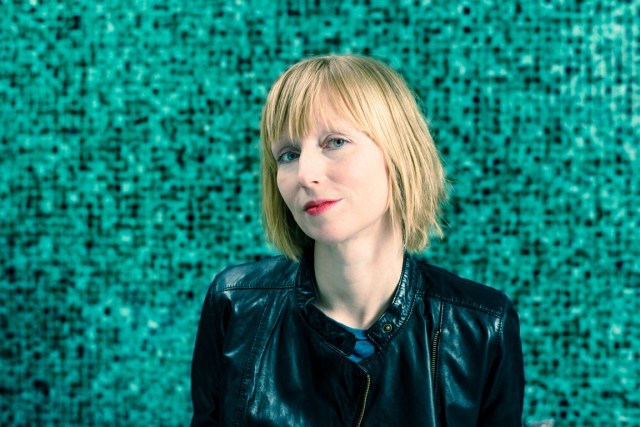
Soprano Anu Komsi with the TSO and conductor Hannu Lintu (photo: Jag Gundu)

Did composer Magnus Lindberg actually want us to hear every note and nuance of soprano Anu Komsi’s performance in his Accused: Three Interrogations for Soprano and Orchestra?  If this work were Harold in Italy or perhaps one of Beethoven’s concerti, no matter how epic the struggle between soloist and orchestra, we’d expect to be able to hear the soloist and clearly discern their performance, in keeping with the ideas of heroism in the music of the romantic period.

But not this time, and I have to think that was intentional.

And so maybe you can tell that I am conflicted.  This work is as contemporary as the blur surrounding the question of fake news.  Three different scenarios are presented, one French (from their revolution), one German (from the 1970s) and one in English (from this century).  That the answers to the interrogation were often inaudible probably shouldn’t be blamed on the acoustics in Roy Thomson Hall, as it appeared to be a deliberate choice of composer + interpreters as this work received its Canadian premiere in this week’s concerts.  Part of me wishes I could have heard some of those ultra-soft replies from Komsi (download the text as part of the concert’s program here), yet they are singularly apt, like the dance in butter or the absence of virtuosic display in Pelléas.  In a work that seems to flout its own divergence from the norm, that makes new rules, I’m inclined to applaud, intrigued by this daring and original approach.  We need to hear this with 21st century ears, attuned to the buzz of fake news and bogus media.

Komsi was precise, accurate as a coloratura at times, yet delicate and dignified even when overwhelmed by the huge orchestral forces Lintu whipped up around her and  –it might seem – against her.  In some ways Lindberg’s score answers a question I posed a few days ago, concerning the next generation of  12-tone, as we heard music with none of the nasty dissonances you find in Schönberg,  a wonderfully tuneful and assonant sound even as it offers a great deal of ambiguity.  I think the orchestra had a great time with this piece, as they responded with some lovely delicate sounds, as well as some wonderfully boisterous playing.

After the interval we went in a different direction, in a stunning reading of Beethoven’s Sixth Symphony.  The level of commitment I thought I saw and heard from the players tonight led to a memorable performance.  The first and third movements were on the brisk side, while the other three were conventional, or even slower than what’s written.

A flamboyant gesture from guest conductor Hannu Lintu (photo: Jag Gundu)


Lintu has a very clear baton technique, opting sometimes to move once per bar or even (rarely) standing and watching the orchestra play rather than religiously beating every note.  When he wanted something extra his gestures were frenetic, including one lovely moment reminding me of a batter losing his bat, when the baton went flying: suggesting a wonderfully loose technique.  The music is the real test, and it sounded glorious.  At times I was reminded of the Cleveland Orchestra and their colourful brass and winds, both in the first movement (where the horn part was highlighted more than any time I’ve ever heard), and the last.  Phrases in the finale were particularly elegant, allowed to make their full eloquent statement, hymn-like, solemn, glorious.

I was totally a mess at the end of a concert that had already taken us into the hellish criminality of regimes tormenting whistle-blowers in Lindberg’s score, to a glowing re-affirmation of the natural world in the hymn that closes the Beethoven. I’ve never heard those final coda passages played so firmly, so clearly.

Yes the world will still be here in spite of our current craziness.

We opened with Sibelius’ suite of incidental music from The Tempest, (perhaps to match the storm in the penultimate movement of the Beethoven?).  This was a more restrained sort of music-making, but a wonderful way to start the evening.

Posted in Music and musicology, Reviews | 2 Comments

COC’s 2017 Revival of Louis Riel: “from a more inclusive perspective”

CANADIAN OPERA COMPANY’S 2017 REVIVAL OF LOUIS RIEL FEATURES VOICES NOT HEARD BEFORE

A Uniquely Canadian Contribution to Opera Revisited for the 21st Century

rielToronto – Louis Riel, composed by Harry Somers with libretto by Mavor Moore, is a uniquely Canadian contribution to the opera world. First performed in 1967 and last performed by the COC in 1975, Louis Riel returns to the stage in 2017 in a new co-production between the COC and National Arts Centre (NAC) that works to revise the opera’s colonial biases and bring forward its inherent strengths and power. Louis Riel runs for seven performances by the COC on April 20, 23, 26, 29, May 2, 5, 13, 2017 at Toronto’s Four Seasons Centre for the Performing Arts before making its way to Ottawa to be presented by the NAC on June 15 and 17, 2017.

Somers’ Louis Riel is the epic presentation of an intensely contentious moment in Canada’s political history dramatizing the story of the Métis leader, Louis Riel, and Canada’s westward expansion, while also being a landmark work in the canon of Canadian opera. At its 1967 world premiere, the Globe and Mail announced that with Louis Riel “[Canadian opera took] its first gigantic step forward,” Time magazine declared it an “undeniably masterful score,” and Opernwelt deemed the libretto “a masterpiece of dramatic concentration.” Its subsequent revival in 1975 at Washington’s Kennedy Center was met with the pronouncement of being “one of the most imaginative and powerful scores to have been written in this century” (Washington Post).

“Even 50 years after its creation, Louis Riel still hits us with its bold and commanding vision. Somers and Moore created a unique, powerful and daring statement that makes the piece rank amongst the most important and interesting works of music theatre of the last century,” says COC Music Director Johannes Debus, who conducts the COC Orchestra when Louis Riel is presented in Toronto.

In reviving the opera for 2017, the COC/NAC co-production confronts the traditions and demands of an art form that make Louis Riel a dynamic and compelling opera and its collision with the voice, culture and representation of indigeneity. This production uses historical research and multiple community perspectives to expose the lines between truth and mythology and co-existing perspectives of settler and indigenous stances as Riel’s story is told and retold.

“The challenges are many and well worth the undertaking. We’re looking at this opera from a more inclusive perspective,” says Louis Riel director Peter Hinton. “We’re not changing the intentions of the piece, but revisions are being made that honour the virtuosic complexity of the music, while allowing for the introduction of voices that have not been heard before.”

“We have an opportunity here to give the performance history of Louis Riel a new point of reference,” adds Debus. “We want to make sure that this striking piece of music theatre is done right to see its importance and continued relevance.”

Louis Riel distinguishes itself from other operas with its musical diversity. In addition to incorporating original folk music and traditional melody lines, Somers wrote in an abstract atonal orchestral style which heightens the dramatic intensity and sets the orchestra entirely apart from the singing. Electronic music also comes into play, creating at times an auditory surrealism that mirrors the distortion and confusion of events unfolding in the narrative.

Louis Riel demands singers to demonstrate a range of vocal techniques and dramatic intonation, sometimes in harmony with the orchestra and sometimes in conflict, and other times delivering gripping musical lines with the voice completely laid bare to scrutiny and unsupported by the orchestra. An orchestra of 67 musicians, including strings, woodwinds, brass, piano, and large percussion ensemble requiring six players, accompanies the cast and chorus.

Unique to the score of Louis Riel is the “Kuyas” aria which opens Act III and is sung in Cree by the artist in the role of Marguerite Riel, Louis Riel’s wife. The music for the “Kuyas” aria was based on a Nisg̱a’a mourning song called “Song of Skateen” that was recorded by Marius Barbeau and and transcribed by Sir Ernest MacMillan on the Nass River in 1927. The words for “Kuyas” were selected by Somers from Cree Grammar by Rev. H. E. Hivers and the English-Cree Primer and Vocabulary by Rev. F. G. Stevens, as well as from a story told by Coming Day to Leonard Bloomfield on the Sweetgrass Reserve in Saskatchewan. The composer was further assisted in ascertaining pronunciation and feeling for the language by Mrs. Lou Waller of Cree descent from Alberta, to whom Somers dedicated the “Kuyas” aria. With respect to both the Nisg̱a’a and Métis peoples and in recognition of how the songs of one nation are not the same as another’s, the COC and NAC’s co-production of Louis Riel acknowledges the current holder of the hereditary rights to this song: Sim’oogit Sgat’iin, hereditary chief Isaac Gonu, Gisḵ’ansnaat (Grizzly Bear Clan), Gitlax̱t’aamiks, B.C.

For the 2017 production, Louis Riel will continue to be sung in English, French and Cree, however, it will now feature a new translation of the Cree and include spoken dialogue in Michif, the official language of the Métis that would have been spoken in the 19th century, in select scenes between Métis characters. The new Cree translation is by Manitoba-born actor and writer Billy Merasty, who is of Cree descent, and the Métis dialogue is translated by Norman Fleury, a Métis elder, Michif language expert and translator, professor, and historian. The 2017 production of Louis Rielwill also feature English, French, Cree and Michif SURTITLESTM.

The role of the chorus in Louis Riel has also been redesigned. The original opera called for a single large chorus to act and sing a variety of groups and assemblies in the narrative. For the 2017 revival, there will be two choruses performing in contrast to the historical figures represented by the principal cast, representing the modern dynamic of debate and protest that continue of this history, both in the houses of parliament and on the land.

The COC Chorus takes on the role of the Parliamentary Chorus and represents a group of settler and immigrant men and women. The Parliamentary Chorus sings and is seen but does not participate in the physical action of the narrative, only commenting and debating on what should take place. They serve as a modern-day Greek Chorus while also representing the functions of Members of Parliament who legislate and validate the struggles of all Canadians in Ottawa. Additional members of the COC Chorus will be members of the Métis Nation.

A group of Indigenous men and women will be cast as the physical chorus known as the Land Assembly. On stage throughout the opera, the Land Assembly is a silent chorus in protest, and stands for the people for whom the opera has not provided a voice. The Land Assembly shift and transform in response to the actions on stage and are a constant, physical representation of the Indigenous men and women who are directly affected by the outcomes, victories and losses of Riel. The players in the Land Assembly will be announced at a later date as part of the COC’s complete casting release for Louis Riel.

New characters have been introduced to bring Indigenous voices into the opera as well as present a more informed history of the Métis and Indigenous peoples in Riel’s history. The previously unattributed opening vocal line is now delivered by a character known as The Folksinger, to be sung by a contemporary Métis singer. The role of The Activist, to be played by a Métis actor, will deliver the Land Acknowledgement as the opera unfolds, setting the tone for interpreting the action playing out on stage. The artists in these roles will be announced at a later date as part of the COC’s complete casting release for Louis Riel.

The 2017 production of Louis Riel is made possible through the financial support of individuals, corporations and charitable foundations and trusts. The COC gratefully acknowledges its underwriters: The Catherine and Maxwell Meighen Foundation, Philip Deck and Kimberley Bozak, Asper Foundation, and The Max Clarkson Family Foundation in honour of Harry Somers; with additional support from Mark and Gail Appel, Margaret Harriett Cameron, Catherine Fauquier, Sally Holton, Michiel Horn and Cornelia Schuh, Michael and Linda Hutcheon, The Michael and Sonja Koerner Charitable Foundation, Peter Levitt and Mai Why, John D. McKellar, Trina McQueen, Roger D. Moore, Sue Mortimer, Dr. Shirley C. Neuman, Tim and Frances Price, Dr. Joseph So, Philip Somerville, Françoise Sutton, Dr. John Stanley and Dr. Helmut Reichenbächer, The Stratton Trust, and John Wright and Chung-Wai Chow. Louis Riel has also been made possible by generous donors to the National Arts Centre Foundation, who believe in investing in Canadian creators, including Kimberley Bozak and Philip Deck, Earlaine Collins and TD Bank Group.

Louis Riel was the first opera written by a Canadian to be presented by the COC, and the COC is the only professional opera company to date to have ever performed it. Somers and Moore were commissioned in 1966 by the Floyd S. Chalmers Foundation to write an opera to commemorate the centennial of Canada, and it was subsequently performed by the COC in 1967 and 1975.

The NAC presents Louis Riel on June 15 and 17, 2017 as part of its Canada Scene festival in Ottawa. For more information on the NAC’s performances of this production of Louis Riel, please visit http://www.nac-cna.ca.

TICKET INFORMATION
Single tickets for Louis Riel range from $35 – $235 and box seats, when available, are $350. Tickets are now on sale, available online at coc.ca, by calling 416-363-8231, or in person at the Four Seasons Centre for the Performing Arts Box Office (145 Queen St. W.). For more information on specially priced tickets available to young people under the age of 15, standing room, Opera Under 30 presented by TD Bank Group, student groups and rush seating, visit coc.ca.

About the Canadian Opera Company
Based in Toronto, the Canadian Opera Company is the largest producer of opera in Canada and one of the largest in North America. The COC enjoys a loyal audience support-base and one of the highest attendance and subscription rates in North America. Under its leadership team of General Director Alexander Neef and Music Director Johannes Debus, the COC is increasingly capturing the opera world’s attention. The COC maintains its international reputation for artistic excellence and creative innovation by creating new productions within its diverse repertoire, collaborating with leading opera companies and festivals, and attracting the world’s foremost Canadian and international artists. The COC performs in its own opera house, the Four Seasons Centre for the Performing Arts, hailed internationally as one of the finest in the world. Designed by Diamond Schmitt Architects, the Four Seasons Centre opened in 2006. For more information on the Canadian Opera Company, please visit coc.ca.

~~~~~~~

“Press releases and announcements” are presented verbatim without comment.

Posted in Press Releases and Announcements | Leave a comment

Schönberg and Sicilia: two more from Straub /Huillet

Tonight’s installment of TIFF’s retrospective “Not Reconciled: the films of  Jean-Marie Straub and Danièle Huillet” must have seemed like a remarkable opportunity to James Quandt and the team assembling the schedule.  Each film is almost exactly an hour long, a pair of films that appeared consecutively, and perhaps the two most dissimilar in the entire retrospective. Of course they paired them up.

  1. From Today Until Tomorrow (from Von heute auf morgen) (1996), a one-act comic opera by Arnold Schönberg came first.
  2. Sicilia (1998) followed, described in the TIFF program guide as:
    “a four-part “road movie” that follows Silvestro, an immigrant who is returning home to the island after 15 years in America” based on an anti-fascist novel from 1939 that was banned at the time.

I shall address them as two separate films, but first want to address what TIFF gave us.  Each film can be seen as a critique of the whole question of genre especially as understood in the world of popular cinema, straddling categories.  Because they’re only about an hour long they preclude themselves from a commercial release, even before we consider how commercial a twelve-tone opera might be, comic or otherwise.  Sicilia too would be puzzling to the average viewer who might not know what they’re seeing, in its tonal ambiguities: which I’d consider good.

In other words forget the usual objectives of a commercial cinema, to create a product and to make money.

But genre is sometimes nothing more than a handle, a lifeline for someone trying to climb out of the dark place that is the average theatre.  Genre can be both pigeon-hole and pigeon, both the classification into categories, but also a series of attributes and descriptors.  In these two instances I think one is better off staying away from such questions, as they only lead one astray.  We’re better off in the here and now of the film in front of us, trying to discern what’s being exhibited, rather than trying to develop a set of expectations based on the genre we think we’re seeing, that might lead us to expect certain sorts of outcomes.

So watching this opera unfold, I am convinced that it needs to be staged more often for performers to have a better idea of how to make it work: meaning, how to make it successful as a comedy.  If you consider that singers come up through school singing arias from Puccini, Verdi, Mozart, or Handel, and then when trying to do an opera, have a sense of the style and may even have experience of the music in their voice.  And then there’s Schönberg.  I saw online that Von heute auf morgen has only been staged a couple of times EVER.  As with Moses and Aaron, screened by TIFF last Sunday, this adaptation in no way resembles realistic drama, as the singers tend to stand and deliver, rarely even making eye contact with one another.  This might be a Brechtian device (as in: whenever Leslie sees something puzzling that makes no sense, he tries to justify it via theory), given its similarity to how the singers were posed and prevented from interacting like real people in Moses and Aaron (although if you can tell me how real people interact when they’re singing at the top of their lungs, please give me a call).

I want to mention a brief Facebook conversation I had with Topher Mokrzewski, who played & music directed the twelve-tone excerpts sung by Adanya Dunn before the two Schönberg films last Sunday.

I said:
i wonder, do we need a second generation of 12 tone, to tteach us how to do COMEDY and IRONY?…..it’s great for tragedy and pain, but also, should be able to portray love and sexuality…i’m still waiting   😉

Topher said:
I just wish someone would write anything funny!

After tonight’s film, I see two issues.  Part of the problem is just practicing and performing this repertoire more often, because this rep is hard to do.  Dunn and Mokrzewski were wonderful together last week.  But what about this comic opera?  Can it be made funnier somehow, perhaps by a gentler handling of the singing & playing?  I couldn’t help thinking that heavy metal tends to do everything with the volume set to 11 (as they said in This is Spinal Tap).  Not all Schönberg is quite that extreme, but I wonder: are performers having too much fun wailing and blasting their way through, when they need to show some delicacy and lightness of touch: as Topher showed us last week..?  Or maybe the composers need to hold back, by all means employ the twelve-tone palette but use more restraint, subtlety. Stop using dissonance the way a heavy metal band uses their guitars.

Sicilia leads me to a book I will have to obtain, namely the novel that the film is based on.  I read in TIFF’s programming guide, that the film comes from Elio Vittorini’s 1939 novel Conversations in Sicily, banned by the Fascist government.

Angela Nugara in Sicilia

Angela Nugara in Sicilia

Where the opera shows Straub & Huillet being so faithful to the composer that they seem to kill the humour in the opera, a curious sort of battle between man and woman, Vittorini gives them what they always seem to want, namely a site to celebrate humanity and class struggle, seen from an oblique angle. This is not a book about revolution, sharing much of the dark tone of futility I spoke of in last night’s film Too Early / Too Late.  Life can be celebrated even when one is poor.  We get this from several angles, the different vantage points of the people encountered in the journey, a series of dialogues.  As in History Lesson the film goes back and forth between different sorts of dialogue and other calmer sorts of cinema, tranquil imagery setting up some intense bursts of language, sometimes resembling opera without any scoring.  This is an amazing little film, a piece of art that makes me want to go back, to see it once more.  Alas I wonder if I can get my hands on it.  There are a few little snippets on youtube, and no sign of it in any library I know of.   But I’ll have to explore further.  My only option may be to find the book and pray that the growing reputation of Huillet & Straub leads some distributor to make the film available some day.

Here’s a beautiful segment, to close the film.  The man with what resembles a bicycle is a sharpener, and although the subtitles aren’t English, it’s stunningly musical in its composition & execution. I don’t really miss the translation, as it brings my focus to the composition, to the rhythm & the performance.  The sense of futility I spoke of comes up in a conversation where they speak of sharpening cannon, rather than scissors or knives, and payments to cover bread, wine & taxes.  They close with a fascinating exchange of abstractions: reasons for joy, reasons to love life.  In any language they are unmistakable.

Posted in Cinema, video & DVDs, Politics, Reviews | 5 Comments

Too Early/Too Late: you say you want a revolution?

Too Early/Too Late (1980), the latest installment in “Not Reconciled“, TIFF’s Straub-Huillet retrospective, is aptly titled for at least a couple of reasons.  As a study of revolutions co-opted or hijacked by others, the title is about timing.  But the title –which appears in four languages as you see in the image (German, English, French & Italian) –reflects the film’s cross-cultural ambitions.

troppo

Political as the film is, we are less in a realm of ideologies and advocacy, and more in one of tranquil meditation.  They might have titled it The Tao of The People, or perhaps Glorious Peasantry, even if those titles sound all wrong (and have nothing to do with their very dry & contained sense of style).  The emphasis on beauty and stillness reminds me a bit of Reggio’s Koyaanisqaatsi (1982) a hypnotic film from roughly the same period. I can’t help thinking that Too Early/Too Late influenced Reggio, who made this, the first of a trilogy of films (perhaps best remembered for their time-lapse effects + music by Philip Glass)  just after Huillet & Straub made their film.

There’s an unspoken subtext, that probably didn’t need to be mentioned in the 60s or 70s, namely the thinking of Marx & Engels.  Revolution, they said, was supposed to begin with the proletariat, with the peasants, the workers.  These are the classes needing a change, wanting to overthrow their bosses.

Or so goes the theory.    This is what I feel underlies this very tranquil film, the whole question of the workers / peasants rising up.  On the surface we’re watching people, while we hear political commentaries, first two short pieces from Friedrich Engels followed by another longer text from Mahmoud Hussein concerning Egypt.  We begin with a dizzying shot, a highly impressive chunk of film literally showing revolution, as we orbit in a traffic circle around the Bastille in Paris.  And in this study of futility, no wonder we begin with an image where we don’t get anywhere but go in circles. Yet we do zero in on the land and the people.  When the focus shifts to Egypt we are given an even more intimate glimpse of folk along the road or on the river, complete with their families, animals, fields, and all the sounds one hears.

Imagine that you were to venture out into the country, and then settle down to observe for ten minutes, twenty minutes, even an hour.  You’d be calm and peaceful, while becoming immersed in all the sounds of wind and water and trees and birds, plus the various machines and even music (if you’re near a mosque with a singer whose voice carries across the landscape) that surrounds you.  Framed with the two texts, one might wonder how anything could ever change, could ever achieve the hoped for revolution.

And of course we come to the last portion of the film, and it abruptly shifts into newsreel footage, black and white reminders of the way it really played out in Egypt: not a proletarian revolution at all.  We see charismatic Gamal Abdel Nasser, briefly glimpse Anwar Sadat.  I can’t help thinking that for Huillet & Straub, they must have felt disappointment if not outright despair: but of course, they assembled these images.  While revolution is the promised utopian goal in Marxist thinking, there is a decidedly dark sense of futility to the last part of this film, very much like the negativity captured in the title.  In whatever utterance in whatever country it appears to always be the same, that revolutions get hijacked by military or oligarchs of one shape or another.

That sad reality is balanced by the true focus of the film, which isn’t change but the enduring fact of the people. It is the material reality of the peasant / worker class, a beauty that endures regardless of who might rule these people.

In the wake of the GOP – Trump victories in the USA, as the rich appear to be on the verge of securing an even tighter hold on their wealth, this film has an especially poignant edge to it.

Not Reconciled“, the TIFF retrospective of films by  Jean Marie Straub and Danièle Huillet runs from March 3 to April 2.

Too_Early_Too_Late_2

Posted in Cinema, video & DVDs, Politics, Reviews | 1 Comment

Moses,Aaron, and a few others at TIFF

Today TIFF presented two musically-oriented films from their Straub-Huillet retrospective, introduced with a live performance by Against the Grain Theatre.

claudevivier-main

Composer Claude Vivier

AtG have boldly gone where opera has not often gone before, taking their productions into bars, TV studios, and now a film theatre.  I believe it was TIFF’s idea, given that it’s not the most hospitable place for unamplified music. The acoustic is deliberately deadened (otherwise the loud sound in cinema #1 is heard in cinema #2 and #3),. But this is the precise opposite of how voices are usually welcomed in performance, with a very tight reverb time, and no resonance whatsoever for the upper harmonics.  This was somewhat flattering to the piano playing of Topher Mokrzewski, whose delicate and precise playing sounded even more accurate than usual in the absence of any sort of reverberation. You could hear just how precisely he was playing, perhaps also to avoid drowning out the singer.  As the person sitting closest to the piano & Soprano Adanya Dunn, I was in the midst of the sound, but wished she had the benefit of a more generous reverberation, to properly hear her voice in Claude Vivier’s Hymnen an die Nacht  (1975) followed by five selections from Schönberg’s Pierrot lunaire (1912).

TIFF were trying something experimental with their programming. In addition to the juxtaposition of live artists with film, this was ostensibly an entry point into the two Straub-Huillet films, both revolving around Schönberg. I’ll return to the question of the TIFF experiment after talking about the two films.

The first short film was a text written by Arnold Schönberg (or “Schoenberg” if you prefer), added to an earlier composition by the composer.  Straub-Huillet did something a bit like Fantasia, in taking a pre-existing piece of music and turning it into a film: not with animated centaurs or hippos, but with Schönberg’s own words.

Here’s how the Arnold Schönberg Centre website describes the composer’s op.34, “ACCOMPANIMENT TO A CINEMATOGRAPHIC SCENE”), a nine minute composition:

 In 1929 Schönberg was commissioned by the Heinrichshofen Verlag in Magdeburg to write film music. The composer, who – as subsequent experiences in Hollywood were to reveal – even in financially difficult situations would never have agreed to play a subordinate role to a director’s or producer’s conception of art or even relinquish his formal independence for a pre-produced film, ignored the possible guidelines and oriented himself exclusively towards the key words “threatening danger, fear, catastrophe.” As a result of this, the work can in fact be attributed to the broad sphere of programme music, but without describing precise situations or groups of people. There is also a lack of repeated leitmotivic material. The difficulty in assigning the three sections of the subtitle to specific parts of the composition suggests that Schönberg seems never to have intended that these words should summarise the form of his composition. The film therefore remains imaginary. As in the Variations for Orchestra, Schönberg’s Opus 34 does not begin with a linear presentation of the twelve-tone theme, but rather with a short introductory passage. The subsections or episodes of the work (introduction – twelve-tone theme – song form – rhythmic ostinato – four contrasting episodes – subdivision into tetrachords – climax – reflection on the beginning of the work) only partially correlate with one another through clear connecting elements. Schönberg forms the climax of the “Begleitungsmusik” from the confrontation of a successive sequence of smaller components which are sometimes in sharp conflict with each other. 
© Arnold Schönberg Center

What could be more apt to illustrate these abstract key words of “threatening danger, fear, catastrophe” than the composer’s own fearful letter to Wassily Kandinsky, concerning the dangers faced by Jews at this time in Europe.

Here’s the blurb in the notes to the TIFF retrospective:

“In 1923, sensing the gathering storm of ‘fear, danger, and catastrophe’ in Germany, the composer Arnold Schoenberg wrote a devastatingly prescient and heartbreaking letter to his former friend, the painter Wassily Kandinsky. Schoenberg aligned his fate with that of all Jews, knowing they were soon to face exile or violent death. Straub-Huillet’s film, a recitation both of Schoenberg’s letter and Bertolt Brecht’s 1935 speech to the International Congress in Defense of Culture, is a fierce condemnation of anti-Semitism, German crimes against humanity, and the barbaric war machine of capitalism” (Museum of Modern Art, New York).

The music of Schönberg’s compositional school has always done better in portrayals of anguish and pain, as for example in Berg’s two operas Wozzeck and Lulu.  In the second opera Berg was beginning to push his style into intriguing new directions, showing us irony and even dry comedy in places.  But as far as this 1972 pairing from Straub-Huillet, of the Op 34 with Schönberg’s anguished words, it’s a stunning and powerful piece that for me was the highlight of the afternoon.

Here is that amazing film.

The main work of our afternoon was Schönberg’s unfinished opera Moses and Aaron, as filmed by Straub & Huillet in 1974.  Their interpretation seemed to enact the debate of the opera between the two brothers.  Most of Act I is austere and almost completely without any sort of illusion in the dramatization. The singers have costumes but the action is placed inside a kind of amphitheatre where a group of choristers stand still while singing rather than offering any sort of dramatization.  The only small illusionary elements are concerned with the three miracles:

  • The rod that turns into a snake: which we see as if from the chorus’s perspective, the snake vanishing below the camera eye, as though at our feet: a scary moment
  • The water that becomes blood
  • The leprous hand that heals

Otherwise the first act is more of an oratorio than an opera: as it conforms to the fundamentalist language preached by both of the brothers.

But in Act II, when Moses is up on the mountain, and the discontent of the Israelites grows, Aaron gives in to the pressure of the people, creating the Golden Calf.  As the people push Aaron into compromise, so too the dramaturgy, as we see animals alive and dead, men dancing, naked virgins, people surrendering to the call of nature in various ways.  This surprising film opts out of the usual Hollywood illusions, while bringing us close to the heart of the opera.

And what of TIFF’s experiment, combining live singers with film? I’d say it’s a qualified success.  I suspect the thought was to give us an entry into the austere style of the composer.  The irony is that what Dunn & Mokrzewski did was a great deal more authentic and true to the style than what we heard in the film, which was bigger and more operatic than what Schönberg actually wrote.

topher_adanya

Pianist Topher Mokrzewski and soprano Adanya Dunn in rehearsal

Nobody’s asking me, but wouldn’t these possibilities be intriguing:

  • To introduce a musical screening with a live performance of a tap dance or of jazz singing
  • To introduce a screening of a film with a performance of some sort of paraphrase of the music in the score, for example something like this:


….and I should add, that one of my absolute favourite moments in my film music course is when I play the shower scene WITHOUT music. It doesn’t work terribly well without the music. TIFF should try it, and then add the music. But wow the music sounds very good without any film

And I am sure you can think of many other possibilities.

Posted in Cinema, video & DVDs, Opera, Reviews | 1 Comment

New Creations Festival Finale: Miller, Bjarnason & Lizée

Tonight’s Toronto Symphony New Creations Concert to close the festival was a demonstration of the old maxim “less is more”, an epithet I used to use as a personal motto (at least for its pun-potential).  If I had any objection to the programming by Owen Pallett and Peter Oundjian – who did a marvelous job with this series—it’s in the feeling that the minimalist music was all in the same program, namely tonight’s concert conducted by André de Ridder.  When relatively similar pieces follow one another –a pattern we also saw in the first concert of the festival with a darker hue of composition—I’m not sure that we can hear their excellence quite so well as if they’re in contrast to what they accompany.  If concerts were meals, we wouldn’t want three salads last Saturday and three soups tonight, but rather to spread out the soups and the salads so that they don’t seem to be in competition with one another, AND to enhance the flavour of the entire meal.

But that’s a small quibble, especially when this last concert felt so much like the best of the three.

Tonight three composers gave us four pieces without intermission other than the time required to reconfigure the orchestral players and their instruments & equipment onstage:

  • Nicole Lizée’s Zeiss After Dark: Sesquie for Canada’s 150th
  • Cassandra Miller’s Round
  • Daniel Bjarnason’s Emergence
  • Nicole Lizée’s Black MIDI
Nicole_Lizee_Murray_Lightburn

Composer Nicole Lizée (photo: Murray Lightburn)

My age may be showing in my suggestion about the way the pieces were presented: an approach more consistent with the way one would assemble a gallery show or installation –where the thematic consistency is possibly the most important issue rather than my quaint thoughts about how the pieces sound together –than the old-fashioned way concerts were programmed in the last century.

We began with another Sesquie, those two minute salutes to Canada’s 150th anniversary.  I am breathless with admiration for the way Lizée writes her program notes, again more in alignment with the art world than the old classical world I know.  Zeiss After Dark would replicate in music something ground-breaking in the history of cinematography, even as we saw Lizée on that most curious interface: looking simultaneously into the past while employing revolutionary tools that break new ground, as though revising our notions of historiography.  When Stanley Kubrick filmed a candlelit scene in Barry Lyndon he was simultaneously reaching into the past – to show us an optical effect we never see on film nor terribly often even in our own lives; yet to do so was a kind of advanced trick of recording history, a kind of time-travel.  How she might have asked herself would a composer go back in time to record something similar if intangible and elusive from Canada’s history?  With the same or analogous aural tools to hear as though in that unilluminated place: where the light helps us hear rather than see.  We got something deceptively simple, and while that may mean something minimalist on the surface, it was a slippery surface, one that I grappled with and would like to hear again, as I can’t pretend that I understood it.  This was the most probing and elusive two minutes of any of the Sesquies I’ve yet heard, but come to think of it, the year is yet young, I’m sure I’ll hear more.

Cassandra Miller came forward, interviewed by the ever-charming Peter Oundjian, who helped her unpack her compositional ideas in Round.  I’m grateful for their exchange, which confirmed my suspicion that there was more than a bit of whimsy in how Miller came up with her program note, alluding to Plato’s ideas on how to put children to sleep.  This is a very daring admission at a concert, when the usual goal is to avoid putting people to sleep.  The piece is not at all soporific but a charming bit of pattern music whose textures & repetitions would be recognizable both to the fans and haters of Philip Glass.   I was reminded of the sound-world of Colin McPhee, but without any allusions to Balinese rhythms.

Daniel Bjarnason’s Emergence began in an even quieter place than Miller’s score. His three-movement work has a pair of outer movements coming from a slow reflective place, while the inner movement was the pulsing heart at its core.  We were encouraged to look for the Icelandic geology in the piece, and it was surely there in hidden fires and bursts of air under its cool surfaces.   Where Miller seemed to want to soothe –not just in her notes but in the sonic world she created—Bjarnason was often poking at prodding us with percussion, inner voices and gradual changes in the predominant timbre.

I am not a newspaper writer, who would lead with the big story. Instead I wrote this in sequence because I have so much to say about the final wonderful piece on the program, Lizée’s Black MIDI, a commission from the TSO & Kronos Quartet.  Yes it comes with a preamble, the requirement to understand its language, but that’s a very rewarding stipulation when it comes right down to it.  Black MIDI is a series of short compositions for orchestra & string quartet, with films projected above that illuminate what we’re hearing.  I’m tempted to call the work a series of short films, resembling documentary in some respects but much more fanciful than what we usually see of the genre, and far more oblique in the approach to expression.

Black MIDI is ostensibly about one narrow phenomenon, yet is in effect a history of music.  MIDI is the invention that currently is the usual way that machines make music, the interface that makes most synthesizers work (at least of the 2nd generation digital variety, as opposed to the analog machines Moog and Walter Carlos showed us so long ago) and enables the crew to synchronize a band with their accompanying light show.  “Black MIDI” is a genre that Lizée uses as an opportunity to investigate the fundamentals of music and music making. If we can imagine that the notation of many notes on a screen will make many notes to be heard, then imagine if that is taken to the extreme, so many notes that the screen is almost blackened.  This extreme case of what a machine can do served as an exploratory playground.  For twenty electrifying minutes we investigated music from first principles.  Black MIDI serves Lizée perfectly to illustrate the implications of technology in the creation of music. If black MIDI didn’t exist she’d have to invent it.


Black-Midi-example

An example of Black MIDI I found online via google.

Lizée offers us a profound meditation on the relationships between mechanical and manual, the interface between the human and the machine, a curious parallel to the one she explored briefly to open the concert.  Indeed we could expand beyond music to explore the relationships between human and machine if she so chose, as this is a profound subject.  Where her two minute Sesquie proposed a way we might frame the question –by implying that we might look back by avoiding our usual apparatus and instead using the toolkit of the past—so too with Black MIDI.  In one film we seem to dance around on the interface between the human and the mechanical, watching students singing the notes drawn on the board by their teacher .  It must be a music conservatory as they have classic staff lines on the board. And so what if instead of writing (in chalk) first this single note, or that single note, while the class sings this note and then that note, we get the dense clusters of Black MIDI on that board? It’s a funny thought, comical in the way it soon outstrips what the humans can do.

Or what if we probe the problem –as she phrased it—of Black MIDI? I saw at least two possible problems.  Humans aren’t machines, which cuts both ways.  Humans have limits, as we observed watching people try to play quickly, watching the fellow in one of the short accompanying films trying to keep up, beginning to resemble a cartoon or puppet as he got quicker and quicker.  And when the notes get too fast they may disappear into a blur, like parts of a pulse or heart-beat.  But that interface is a complex one (meaning that problematic one between human and machine, not MIDI), whether we’re trying to go back in time (as in the Sesquie) or pursue the goal of progress.  We are within shouting distance of some of the ideals of modernism, which I say with Schönberg very much in my head after having interviewed Against the Grain about their Sunday collaboration with TIFF and having played through the piano parts of Pierrot lunaire.  Modernism sometimes seemed to want to liberate music from the human element, to make music purely abstract in its ability to obey science & mathematics, rather than emotions and expressive principles.  Lizée seems ambivalent when we see a Black MIDI scarf being knit in one of her short films as though in a nightmare, organic and involuntary but a reminder that scores were once handcrafted by Beethoven, Mozart, Schönberg and all the other composers of past centuries: when the candlelight alluded to in that Sesquie was the only option other than daylight.

I think the piece has a great deal to offer, and could be made longer if Lizée had any interest in exploring further, even if the length right now feels taut with suspense & dramatic tension.  I hope to encounter this work again, perhaps in a video.

~~~~~~~

And I realized as I re-read this: but I didn’t make any mention of the music. How indeed did Lizée approach telling this story? We had a series of eight titles representing eight segments to the performance, perhaps eight distinct films:
i. Kronoscope
ii. The Tuning Fork
iii. Pictionary Night
iv. MIDI in the Schools
v. The Problem with Black MIDI
vi. The Scarf
vii. 1978
viii. Cassette Culture

The first section sets up the sometimes self-reflexive performance where the Kronos Quartet are located at the front of the stage. We began without them, so in this section their live persons walked onstage, took up their instruments, made adjustments, etc.

In the second section we had one of several quasi-autobiographical segments, as the composer told us her story, a mysterious process whereby she received a tuning fork and an ear, represented as a disembodied object. This is not the only time she will reference the music-making process in ironic fashion, seeming at a great distance from it, and showing us the ambivalence I spoke of earlier. The tuning fork is struck and off we go.

The third plays with our sense of the process, as we look at a game with players who employ a set of game procedures.  Pictionary begins with a mystery and the requirement to decode the mystery, being a charming analog to what performers do with musical scores. There’s a moment when the quartet players being tearing & shredding paper, but I can’t recall if it’s during this segment or not. I think we see the first of several recurring images, of a small piece of paper that might resemble a black MIDI piece or chunk thereof, that gets ingested onto a human tongue, seen in close-up. And of course people do sometimes observe that yes music does come into the interpreter and become a part of the musician, so we’re seeing an ironic portrayal. Sometimes these ironic moments made me laugh, whereas i could see that others might call it pretentious.

As you may have already noticed, I swallowed it eagerly.

I have already described segments IV, V and VI very superficially. In each case there were moments when we saw something that might be black MIDI music, but the score –played by the TSO and the quartet—may or may not have been actual black MIDI. At times the music was a blur of enormous numbers of notes, when the visuals suggested something like black MIDI. But could the TSO + Kronos actually execute such music? I don’t know. What we were hearing was at times highly ironic, as for example, when the “Problem” section was examined in a series of repeated little segments of film, repeated as though the person and these few seconds of his life as he spoke were to be played and sampled like a bit of a vinyl record being scratched for house music, or some digital equivalent.

The last two –1978 and Cassette Culture – refer us back to old technologies that permitted some of the experimental / compositional possibilities of the digital MIDI world, although we only see that now with the benefit of hindsight.

The images & ideas will be reverberating in my head for days.

Posted in Music and musicology, Reviews | Leave a comment

Straub & Huillet’s History Lesson

I saw History Lesson (or Geschichtsunterricht ) at TIFF tonight, a 1972 film by Jean-Marie Straub and Danièle Huillet that’s my latest instalment in the retrospective “Not Reconciled”.

Straub & Huillet adapted an incomplete fragment of a novel by Bertolt Brecht. In a recent interview James Quandt (who programmed this series for TIFF) said

“Straub-Huillet repeatedly refuted characterizations of their cinema as one thing: severe, difficult, Brechtian, cerebral, etc.”

Difficulty is in the eye of the beholder of course. Sometimes people are stopped by the simplest things, such as a language barrier: because the films may not be available with the right subtitles. Thankfully this retrospective goes a long way to answering charges arising in a vacuum. There’s really no substitute for seeing the films.

And so, speaking of translations, the Brecht fragment is titled Die Geschäfte des Herrn Julius Caesar which can be translated as The business (or the business affairs?) of Mr. Julius Caesar. Oh how I wish I had read the Brecht so I could get a better handle on the adaptation, to discern how far Straub-Huillet (who co-wrote the script as well as directing it) might have strayed from the original. How much is Brecht, how much is them? i’ll know better once i get my hands on the book: although i don’t know if i can find it in English.

We’re in the presence of something deconstructive, as there is a kind of irony in the disparity between what we might expect, given what we’ve been taught about Rome and its history, and what Straub-Huillet give us instead. Modern Rome is the site for a series of conversations, apparently with ancient Romans –and I don’t mean senior citizens but rather figures brought to us from history– somehow brought before a camera and speaking German. And so when the film concludes, why not have a burst of Bach after all? These are not choices one might immediately think of as Brechtian: yet they are powerful reminders that we were not seeing real Romans in their context, not unless one allows some supernatural agency whereby they’re back from the dead, in modern Rome, and speaking German. I can’t be objective about this, as to whether these choices are designed to distance us or not. More Brechtian are the occasional abrupt pauses in the film during the conversations (reminders of the artificiality of the situation), or the shot of a face, staring directly at the camera for several minutes, as we hear the birds singing in the background: and nothing happens.

A man drives around Rome, interviewing different personages, who appear to be historical although we don’t actually find out their proper names. One is a business man, one is an ex-soldier who is now a peasant, one is a lawyer and the other one is a poet. The day after International Women’s Day, I can’t help noticing the preponderance of the male gender: but perhaps that’s unavoidable and surely a reflection of Brecht’s original. (but I am just speculating).

I glanced at a few commentaries and couldn’t help noticing that the things catching my eye aren’t mentioned by anyone. Am I off track? We are watching a series of interviews, conversations between a wanderer and the four subjects from different social strata, driving through the narrow streets of Rome. This is no Aston Martin, no wild car-chase. No, this is a beat-up old car that stalls at least twice, and is honked at regularly because it’s kind of slow. We are slowly descending through Rome, in a kind of labyrinth. Am I crazy to want to think of this listener as Dante? But there is no redemption or religion here. At one point a big truck crosses our path with the huge words EPIPHANI: suggesting that spirit and religion are just another business even in the Eternal City. But whether the listener reminds you of Dante or perhaps Diogenes (another D who came to mind), simply seeking an honest man, this is a very oblique sort of enquiry. The questions aren’t ever clearly stated. We are getting answers to unstated questions, long narrations that are alternatives to the usual explanations.

straub

Director Jean-Marie Straub

That is a part of the history lesson. Our listener is hearing testimony from those who know,  or would be expected to know. A soldier who twice saw Caesar in the distance more or less confirms that none of the soldiers gave a damn, they simply wanted something to eat. It’s a classic Marxian reading, where the material conditions inform anything theoretical that one might surmise. The capitalist speaks of war and observes how commerce is like war, a very ironic series of assertions.

Another aspect of our history lesson is the meta-question, the matter of historiography that was such a central preoccupation for the New German Cinema. Now of course I’m not sure I should be lumping Straub – Huillet into that group, a huge and sometimes contradictory series of film-makers, but I see some clear parallels, or if you prefer, techniques and preoccupations in common with those German film-makers of roughly the same period.  Straub & Huillet were Germans who left the country behind, but likely had similar aspirations.

When we’re looking at historiography in this film it’s a matter of rejecting the usual approach to history. No we won’t study it via the great men, although this film does revolve around the big names –Crassus, Pompey etc surrounding Julius Caesar—but this is a deconstruction rather than a faithful study. The great men maybe weren’t so great, or not who we thought they were. That kind of project, revisiting assumptions especially sacred cows, is typical of the New German Cinema.

There are two very different sorts of discourse in this film, just as I saw with The Chronicle of Anna Magdalena Bach that opened the retrospective last week. Straub-Huillet offer two very different sorts of content, juxtaposed against one another, namely on the one hand the words in the diaries of AMB, read aloud  and on the other hand the musical performances of the compositions of her husband, JSBach, that are performed. For History Lesson, we again have two almost irreconcilable discourses. The listener drives through Rome, meandering through crowds of people. And then we have the interviews, the verbiage from those who would tell us what it means. But maybe we see history not just in those words, but just as much in that stream of people in the narrow streets of Rome, blocking the movement of the car, sometimes lugging food, sometimes leading their children, sometimes honking horns: while little or nothing happens.

And speaking of lessons, Brecht & Marx suggest something nostalgic to me if not to everyone watching the film. The Cold War was supposedly won, Marxism conveniently buried. The insights of this film feel remote indeed from a world where the 1% are poised to take an even bigger share of the wealth with the help of their orange haired champion to the south. The rigor of the film both formally & ideologically seems like a remnant from another time when –thinking for example of the composer at the centre of Sunday’s films, Arnold Schönberg—matters of form and principle commanded our attention, and when audiences had a longer attention span. It’s refreshing being in the presence of film-makers expecting their audience to think.

The retrospective continues:

  • Friday: A Visit to the Louvre and Cézanne: Conversation with Joachim Gasquet
  • Saturday: Antigone
  • Sunday: Moses and Aaron, including a live performance by Against the Grain Theatre.
  • More information about the retrospective


Posted in Reviews | 1 Comment

Louis Riel returns to Canadian Opera Company

LOUIS RIEL RETURNS TO CANADIAN OPERA COMPANY WITH  INCLUSIVE AND EXPANSIVE HISTORY RESTORED

A Contentious and Provocative Celebratory Work to Honour Canada’s History

rielToronto – Canadian history comes to life on the stage of the Four Seasons Centre for the Performing Arts this spring when Harry Somers’ Louis Riel returns to the Canadian Opera Company. A new production of this uniquely Canadian contribution to the opera world is being conceived by one of Canadian theatre’s most acclaimed and inventive directors, Peter Hinton, with the COC’s celebrated music director, Johannes Debus, conducting. This production of Louis Riel is proudly presented by the COC and its co-producer, National Arts Centre (NAC), in anticipation of Canada’s sesquicentennial and the 50th anniversary of the opera’s premiere. Louis Riel is sung in English, French, Michif and Cree with English, French, Michif and Cree SURTITLES TM, and runs for seven performances by the COC on April 20, 23, 26, 29, May 2, 5, 13, 2017 at Toronto’s Four Seasons Centre for the Performing Arts. It will premiere in Ottawa by the NAC on June 15 and 17, 2017.

The 2017 production of Louis Riel is made possible through the financial support of individuals, corporations and charitable foundations and trusts. The COC gratefully acknowledges its underwriters: The Catherine and Maxwell Meighen Foundation, Philip Deck and Kimberley Bozak, Asper Foundation, and The Max Clarkson Family Foundation in honour of Harry Somers; with additional support from Mark and Gail Appel, Margaret Harriett Cameron, Catherine Fauquier, Sally Holton, Michiel Horn and Cornelia Schuh, Michael and Linda Hutcheon, The Michael and Sonja Koerner Charitable Foundation, Peter Levitt and Mai Why, John D. McKellar, Trina McQueen, Roger D. Moore, Sue Mortimer, Dr. Shirley C. Neuman, Tim and Frances Price, Dr. Joseph So, Philip Somerville, Françoise Sutton, Dr. John Stanley and Dr. Helmut Reichenbächer, The Stratton Trust, and John Wright and Chung-Wai Chow. Louis Riel has also been made possible by generous donors to the National Arts Centre Foundation, who believe in investing in Canadian creators, including Kimberley Bozak and Philip Deck, Earlaine Collins and TD Bank Group.

Composed by Harry Somers for Canada’s centennial in 1967, Louis Riel was described as “big, efficient, exciting” (Toronto Evening Telegram) when the COC gave the opera its world premiere. Louis Riel, and its story of the Métis leader and Canada’s westward expansion, went on to be called “one of the most imaginative and powerful scores to have been written in this century” (Washington Star) after its 1975 US premiere at the Kennedy Center. More recently, on the occasion of its 2011 DVD release, it was hailed as “both a personal story and a national epic…the libretto is as taut and thrilling as a well-written play” (Globe and Mail).

Telling the history of Louis Riel is ever more important in this period of Truth and Reconciliation. It is the COC’s intention that an inclusive and expansive history shall be restored with the 2017 production. Throughout the conceptualization of the 2017 production of Louis Riel and in preparation for the rehearsal period, Hinton and his creative team have followed the guidance and wisdom of members of the Indigenous community.

“What struck me from the very beginning about this piece is the motivation for its creation. It is a contentious and provocative ‘celebratory’ work,” says Louis Riel director Peter Hinton. “When composer Harry Somers and librettist Mavor Moore were commissioned in 1966 by the Floyd S. Chalmers Foundation to write an opera to commemorate the centennial of Canada, Somers and Moore chose the subject of Louis Riel. Their choice to show Canada’s history of struggle and representation in the west, against colonialist and centralist objectives, is not only a metaphor for the conflicts which forged the idea of confederation, but also serves as a challenge for present and future understandings of our country.”

“We asked Peter Hinton to direct this production of Louis Riel because of his long-standing relationship and involvement with Indigenous artists and his knowledge and experience in mounting a theatrical project of this scale,” says COC General Director Alexander Neef. “His involvement brings an informed and culturally sensitive approach to the interpretation of Louis Riel that we are sharing on the stage.”

“The National Arts Centre is thrilled to be the co-producer of Louis Riel. It’s one of the great Canadian operas—an epic story about our country,” says Peter Herrndorf the President and CEO of the National Arts Centre. “When Alexander Neef approached us a number of years ago about a partnership, our immediate answer was ‘yes’, and we both agreed that Peter Hinton had the sensitivity and vision to bring this story to the stage as our director.”

Since 1985, Peter Hinton has directed over 75 productions of new plays, classical texts and operas as well as written the librettos for two operas with composer Peter Hannan, working across Canada and with many theatre companies. He has been the associate artistic director at Theatre Passe Muraille and the Canadian Stage Company in Toronto, artistic director of the Playwrights Theatre Centre in Vancouver, the dramaturg-in-residence at Playwrights’ Workshop Montréal, and artistic associate of the Stratford Festival. From 2005 to 2012, he was artistic director of English theatre at the National Arts Centre, where he created a resident English theatre company, with actors from across the country, and programmed the NAC’s first season of Canadian plays. It was in this role at the NAC where Hinton initiated a commitment to producing the work of Indigenous theatre artists every season during his tenure. Hinton’s directorial work has included premiere works by Métis playwright Marie Clements, as well as producing plays by Kevin Loring, Waawaate Fobister, Yvette Nolan and George Ryga. In 2012, he directed an adaptation of Shakespeare’s King Lear with 40 First Nations/Métis actors and starring August Schellenberg in the title role. He has directed works by Tomson Highway and, in the fall of 2017, Hinton directs the world premiere of City Opera Vancouver’s much anticipated production of Missing by Brian Current, with a libretto by Marie Clements about the Highway of Tears.

“Our challenge is taking an artifact from the 1960s and reviving it for today within a contemporary and inclusive practice,” adds Hinton. “It is a delicate balance of renewing the original spirit of the piece with contemporary perspectives in order to revise the opera’s colonial biases and bring forward its inherent strengths and power.”

Working alongside Hinton is assistant director Estelle Shook, a Métis artist from British Columbia. Artistic director of Caravan Farm Theatre from 1998 to 2010, and current interim artistic and managing director, she recently directed the Dora Award-winning Sunday in Sodom for Canadian Stage. Shook is also a descendant of Saskatchewan pioneer Thomas McKay, who testified at the trial of Louis Riel in 1885. Shook makes her opera debut with Louis Riel, bringing personal, professional and cultural perspectives to the production.

Joining Louis Riel as a cultural liaison is Bruce Sinclair, a Métis artist originally from Meadow Lake-The Battlefords, Sask. An actor, director, playwright and producer for numerous First Nations and Métis theatre works since 1986, Sinclair has worked with Twenty-Fifth Theatre, Persephone Theatre, Native Earth Performing Arts, 4th Line Theatre, Waweyekisik Theatre, The Batoche Theatre Co., Undercurrents Theatre and Jumblies Theatre.

Santee Smith makes her COC debut as the choreographer for Louis Riel. Smith is a member of the Mohawk Nation, Turtle Clan from Six Nations of the Grand, Ont. One of Canada’s most exciting choreographers, she is the founding artistic director/choreographer for Kaha:wi Dance Theatre and has propelled her company to international acclaim. In Louis Riel, she re-imagines and re-stages a number of dances, including the Buffalo Hunt.

Canadian Michael Gianfrancesco, who previously designed sets and costumes for COC school tour productions of The Magic Flute, La serva padrona and The Barber of Seville, makes his COC mainstage debut as the set designer for Louis Riel. His work has been seen across Canada in productions of theatre, opera and dance, with the Stratford and Shaw festivals, Canadian Stage, Neptune Theatre, Theatre New Brunswick, Theatre Passe Muraille, Theatre Aquarius and Pleiades Theatre, among others.

In Louis Riel, Gianfrancesco has created a single set with the flexibility to convey the epic-scale of the events being told as well as the more intimate moments of quiet reflection. The physical space sits atop a solid wood floor into which the topography of the Red River Valley has been carved. Set pieces will come in and out as needed to suggest interior and exterior spaces, transporting the audience from the Parliament Buildings of Ottawa to Fort Garry in Manitoba to Riel’s home in exile in Montana.

Dora Award winning Canadian designer Gillian Gallow makes her COC debut as the costume designer for Louis Riel. Her work in set and costumes has been seen across Canada in productions for Thousand Islands Playhouse, the Stratford Festival, Theatre Calgary, Vancouver Playhouse, Soulpepper and National Arts Centre, to name but a few.

Gallow’s costume design for Louis Riel is inspired by the drive for historical authenticity while also communicating a modern-day sensibility. The resulting aesthetic realizes the visual contradiction between truth and misconception and what is being lived out in the East versus in the West, as well as offers an opportunity for audiences today to see themselves reflected back in the onstage action.

Canadian lighting designer Bonnie Beecher returns to the COC with Louis Riel, last with the company in the 2008 Ensemble Studio double-bill presentation of Giuseppe Gazzaniga’s Don Giovanni and Igor Stravinsky’s Renard. A multiple Dora Award winner and frequent nominee, Beecher’s work has lit the stages of theatres across Canada, including the Shaw and Stratford festivals, Opera Atelier, Soulpepper, National Arts Centre, National Ballet of Canada and Tarragon Theatre, as well as internationally for the Dutch National Ballet, American Ballet Theatre, Glimmerglass Opera, The Royal Shakespeare Company, New Zealand Opera, Stuttgart Ballet and Kevin O’Day Ballet. The lighting design for Louis Riel will serve the range of experiences and spaces playing out on stage, from epic and intimate, to interior and exterior, to realistic and magical.

Louis Riel was the first opera written by a Canadian to be presented by the COC, and the COC is the only professional opera company to date to have ever performed it.

The NAC presents Louis Riel on June 15 and 17, 2017 as part of its Canada Scene festival in Ottawa. For more information on the NAC’s performances of this production of Louis Riel, please visit http://www.nac-cna.ca.

Additional information about the libretto and score of Louis Riel, as well as complete casting, and a series of public education and outreach events will be forthcoming in separate press materials issued in the coming weeks.

TICKET INFORMATION
Single tickets for Louis Riel range from $35 – $235 and box seats, when available, are $350. Tickets are now on sale, available online at coc.ca, by calling 416-363-8231, or in person at the Four Seasons Centre for the Performing Arts Box Office (145 Queen St. W.). For more information on specially priced tickets available to young people under the age of 15, standing room, Opera Under 30 presented by TD Bank Group, student groups and rush seating, visit coc.ca.

About the Canadian Opera Company
Based in Toronto, the Canadian Opera Company is the largest producer of opera in Canada and one of the largest in North America. The COC enjoys a loyal audience support-base and one of the highest attendance and subscription rates in North America. Under its leadership team of General Director Alexander Neef and Music Director Johannes Debus, the COC is increasingly capturing the opera world’s attention. The COC maintains its international reputation for artistic excellence and creative innovation by creating new productions within its diverse repertoire, collaborating with leading opera companies and festivals, and attracting the world’s foremost Canadian and international artists. The COC performs in its own opera house, the Four Seasons Centre for the Performing Arts, hailed internationally as one of the finest in the world. Designed by Diamond Schmitt Architects, the Four Seasons Centre opened in 2006. For more information on the Canadian Opera Company, please visit coc.ca.

~~~~~~~

“Press releases and announcements” are presented verbatim without comment.

Posted in Opera, Press Releases and Announcements | Leave a comment

Pallett – Ehnes TSO #NCF17

Tonight’s New Creations Festival Concert by the Toronto Symphony gave us a closer look at the co-curator Owen Pallett, who stepped into the spotlight with a premiere of his own, alongside two other world premieres and a recent composition from south of the border.  We sampled three substantial works of diverse flavours, after another Sesquie.

The more I encounter these short pieces –commissions designed as two minute celebrations of our Sesquicentennial, and therefore called “Sesquies” – the more I see in them.  Restrictions can be an incentive to creativity, as I’m finding in every one of these lovely little works.  Harry Stafylakis called his offering “Shadows Radiant: Sesquie for Canada’s 150th” and I’d have to say that it’s the most celebratory one I’ve heard so far.  While we did hear a trace of Oh Canada, the main thing was to let loose joyfully.  Nevermind misgivings we may have at this point in time, carpe diem on July 1st 2017.

kernis-200x301

Composer Aaron Jay Kernis

Then, as promised yesterday, it was time to hear what James Ehnes could do, in a new violin concerto written just for him.  And while I had an eye-opening experience last night hearing Ehnes’s Bach solos –both up close and personal in the intimacy of the RBA, and as I binge listened on youtube—it’s as though composer Aaron Jay Kernis wanted to build on that, knowing the violinist’s strengths.  In the first and last movements we heard wonderful solos. In the first movement there was more than a hint of the baroque even if the orchestra burst forth with a post-romantic barrage, at times overwhelming the subtleties of Ehnes’s violin.

Kernis fills me with optimism, hearing a piece that sounds so fresh, full of new sounds & ideas.  At times there was a kind of irony to the self-reflexive texture in the orchestra, chopping up phrases in response to short phrases from the soloist. The orchestral sound could be big and dissonant, or softly reflective, mellow but still very new sounding in its invocation of quasi-jazzy sonorities.  The moods were varied, and chosen with a solid sense of authority, in the clear delineation of movements that were at least following a familiar template, right up to the rhythmically vigorous closing movement. And then a few minutes before the end, I watched Ehnes play a cadenza, creating sounds I’ve never heard from a violin before, as much a treat to hear, as to watch Peter Oundjian smiling like a cherub at this amazing performance right in front of him (lucky guy). I have to think that Kernis set out to challenge Ehnes: who more than met the challenge in the amazing passage at the end.  I must hear it again!

After the interval came more distinctive voices. First came heard Owen Pallett’s song cycle Songs From An Island, featuring bass-baritone Daniel Okulitch.

owen_pallett_by_brian_vu

New Creations Festival Curator Owen Pallett (photo: Brian Vu)

After the overpowering intensity of the concerto, Pallett’s songs made a welcome contrast: but of course he knew that when he assembled the program.  Pallett’s texts are a surreal triptych on the edge of dystopian horror, litanies of delicately phrased nightmares underplayed in Pallett’s setting and delicately voiced by Okulitch’s mellifluous reading of the songs, like the gentle radio host inside your head.  I’d be tempted to call them minimalist, perhaps thinking of the way Philip Glass tippy-toed on the boundary dividing art song from pop song in his “Songs From Liquid Days” back in the 80s, but Pallett’s texts are much wilder, his settings closer to pop music than art-song from where I sat. This was a very accessible music, housing explosive imagery in the text, not unlike the way a bottle of nitroglycerine is packed in soft fabric.  Argh again I feel I must hear this again. There’s a great deal to unpack in those songs, which don’t reveal themselves readily in one listening (or so I felt).

And to close, the piece that made me smile throughout, Nick Muhly’s extraordinary Mixed Messages.  The program notes led me to believe that the piece was concerned about communication: and so it was.  I felt I was hearing a sonic picture of a brain, synapses firing, then mis-firing, an aural model of discourse, complete with the pulsing electricity of our nerves and the occasional pause before renewing the flow.  This too was a highly accomplished piece of such perfection I didn’t want it to end, yet felt totally contented when it did finally stop.

Pallett gave us four delightfully contrasting pieces, all wonderfully executed. The first two were conducted by Oundjian, the latter two boldly led by André de Ridder.  The TSO sounded fantastic throughout, particularly the brass, who were given a fair workout in the second half of the program.

Although today might be International Women’s Day, the TSO will celebrate it Saturday night, when three of the four compositions programmed by Pallett will be by women composers.  I can’t wait.

Posted in Music and musicology, Reviews | Leave a comment