Questions for Evan Webber: Other Jesus

Evan Webber is a writer and performance maker who lives in Toronto. Evan’s work considers the relationship between time and text, and between narratives and institutions.

Evan is an Associate Artist of Public Recordings, a collaborative operation that conjoins artistic research, performance creation, learning, and publication. And he is curator of the HATCH performance residency at Toronto’s Harbourfront Centre. His work’s been shown across Canada, Europe, Australia and Japan. Evan is a graduate of the National Theatre School of Canada, where he is now a guest instructor.

And In May Evan Webber’s play Other Jesus will receive its Toronto premiere through Public Recordings.  I took the opportunity to find out more about him and the project.

head_shot

Evan Webber (photo: Sarah Bodri)

Are you more like your father or your mother?

I can’t muster any objectivity on the subject of parents. My mom and dad have both lived what I would call difficult lives–lives that have taught them a lot about the difference between loneliness and being alone. They are spiritual people, however, and their practices provide them with powerful sustenance. I suppose I am like both of them in the respect that I also look to be sustained not only be material means.

What those other means are I don’t know but presumably art has something to do with it.

What is the best or worst thing about what you do?

Public Recordings’ ongoing project is to make time-based artworks in order to learn about the nature of togetherness, on the ways that groups of people might work collectively, and how they come to share in the projects and feel agency to change them. My own way into this practice is through writing and I take special pleasure in continually re-discovering how this putatively solitary act is, in fact, most lively as a collaborative one. Creating and producing and trying to reach a public through collective means is a lot of hard work but there is nothing bad about it. There’s no worst thing.

Who do you like to listen to or watch?

I really liked listening to Fred Moten and Robin Kelly speak with each other last Wednesday. The hall, which at least three people said was like a Harry Potter set, was packed with people. Moten and Kelly were talking about black studies & indigenous studies & ecology, joy, counter-mapping, the State of Israel & the People in Israel, anti-intellectualism, and how scale is the enemy of the renewal of sociality.

What ability or skill do you wish you had, that you don’t have?

I would be a better accountant–an accountant in the first place. I really appreciate specialized knowledge, especially of mechanics. But I don’t know much about this.

When you’re just relaxing and not working, what is your favourite thing to do?

I like cooking and doing the dishes.

*******

More questions about the creation & presentation of Other Jesuspicture

Other Jesus is being produced in collaboration with St Matthew’s United Church and will be presented inside a church space. Please talk about your relationship with the church, both in their role in the creation and how your text places you in- or outside a church with all its politics.

We didn’t want to do the play in a church. I was worried that if we performed in a church people would think the work is about religion or rationalism or atheism or something. We thought that if people walked into a church then they wouldn’t be able to read any metaphor in the story. In the play, religion is a cypher for the way stories produce power in and among people with precarious lives, which, sooner or later, is everyone.

I guess we were imagining some kind of archetypal church when we developed this opinion; some patinated, vaguely sinister old institution. When we visited St. Matthew’s we encountered a very different reality. It’s a community space in flux; it’s in a process of becoming and its future as a ritual space is far from certain. Most places like it in Toronto are being sold to condo developers. Inasmuch as it’s space where people just experiment with doing things together the church feels very familiar. (There are probably about as many people who regularly attend the United Church services as people who regularly attend experimental theatre and dance, another common point.)

The text of Other Jesus is about institutionalizing practice and the role that performance plays in the process. It’s about how things come together and how they fall apart. And the church itself offers a beautiful and complicated example of this process.

I read that your director Frank Cox O’Connell, said this about you Evan:

“Evan began the process by trying to write an adaptation of the Gospel – but what he ended up writing was a very personal text about trying to believe in something and belong to something when you feel like you’re living at the end of the world. I loved it. I found it strange and fun and ambitious and heartbreaking. I’ve been working with Evan for almost 15 years – this is his strongest work. –”

Please elaborate on this

I was interested in appropriating the “creative strategy” of divine inspiration as a system for writing because to me this is actually the official doctrine of whatever part of capitalism we’re in right now: if you don’t have a lot of capital already, you really need to hope for the best and trust the system to disclose its inscrutable truths. I wanted to really commit to that and see what it produced. So my version was to simply sit and write a gospel, word by word, without any editing, beginning at the beginning and ending when I had to stop, which was usually about fourteen hours after I started. (I repeated this process four times with a lot of research and planning in between.) It’s really a record of my attempt to stay present and receptive to my own imaginative or regurgitative capacities. Incredibly, my collaborators on the project were not only committed to staging the work, but to extending the logic of my formal writing constraints: learning, word for word, this halting document of material experience and trying to act as though it were a kind a naturalistic launch-pad into the supernatural.

I think Frank is wrong in saying it’s my strongest work. It’s absolutely the weakest by the measures of originality and coherence and it’s full of things I would normally consider to be errors. In this sense I would say that it’s authentic, however. I’m curious about how that will feel.

Is there anything you would want the audience to do to prepare for Other Jesus, anything we should read or study? Would it be better to look at the Bible, to forget anything we ever knew about religion: or somewhere between those two extremes?

Matt Sergi, who is theatre scholar at U of T, said at a talk before a performance the other day, “Think about what you know about this story, about what it means, and as you watch the show, try to see how it articulates a contrary meaning.” I found that suggestion widely applicable.

Could you quickly place this in a religious context for us, and how Other Jesus is in some respect a response to your spiritual crises, or the result of your spiritual evolution?

It feels absurd to say that Other Jesus isn’t about spirituality but, for now, I will. I would say it is a response to material that is shared, the story of Jesus and his disciples. And I would say that my community and perhaps my society are presently enduring a crisis of sharing.

Are there any shows you’ve done or seen that now seem to have laid the groundwork for what you’re doing in Other Jesus?

The groundwork is in Public Recordings’ big collaborative works and especially an ongoing writing project I co-created with Ame Henderson called performance encylopaedia which we last did in Toronto at the Art Gallery of Ontario. I’ve worked with Frank Cox-O’Connell for many years too, and we have a shared interest in the problems of canonical western narratives–this work resumes our conversation on that subject. Shows I’ve never seen exert probably the greatest influence because I’ve had to imagine them: Brecht’s unfinished God of Happiness, for example, and Fassbinder’s Blood on the Cat’s Neck. Through the wonderful writer Stephen Mitchell, I discovered that Thomas Jefferson wanted to make a Bible that scrubbed out any mention of magic. He thought the young United States of America deserved no less. The complications posed by magical powers in Other Jesus reflect on this–the potential of the unwritten.

Please talk about how you came to be involved in this project.

I was invited to join the Tarragon Theatre’s playwrights’ unit by Andrea Romaldi. The playwrights’ unit is a yearlong commitment for a group or writers who share their work and have it read publicly at the end. It was interesting to be invited. I never imagined that my work aligned with the Tarragon’s interests. But the context gave me a lot to push against, and the constraints produced the work over the course of the year. In the end I found I had a lot more in common than I had initially supposed.

*******

What’s the difference between a person and a story about a person?

Toronto’s award-winning Public Recordings stages a new play by Evan Webber. In the occupied territories of ancient Judea, a group of spiritual workers consider what’s real while trying to break even–until one of them turns out to have the magic touch. Other Jesus is a performance on the risk and reward of believing and belonging. 

Text & Dramaturgy by Evan Webber. Direction by Frank Cox-O’Connell. Scenography & Costumes by Sherri Hay. Music & Sound Design by Christopher Willes. Lighting Design by Ken MacKenzie. Production Management by sandra Henderson. Additional collaboration and performance by Courtney Ch’ng Lancaster, Ishan Davé, William Ellis, Thom Gill, Ame Henderson and Liz Peterson. 

Produced by Public Recordings and EW & FCO. Co-Produced by Festival TransAmériques. Created with the support of Tarragon Theatre’s Workspace, Videofag and St. Matthew’s United Church.

Toronto Premiere
May 6-14, 2017
Tuesday-Sunday, 8pm
St. Matthew’s United Church 729 St Clair Avenue West, Toronto

Box Office Information:
$25 General
$20 Arts Worker/Student/Senior/Under Employed
Advance Sales: 416-531-1827 // publicrecordings.org/otherjesus

Tickets available at the door
or here.

Posted in Dance, theatre & musicals, Interviews, Spirituality & Religion | Leave a comment

Robert Lepage speaks white in 887

Although I missed Robert Lepage’s 887 the first time it came to Toronto in 2015 (during the Pan Am Games) I’m glad I was able to see it today with Canadian Stage at the Bluma Appel, in a short run that ends Sunday April 16th.

Don’t miss it.

887

Robert Lepage and Ex Machina: 887 (Photo: Érick Labbé)

887 has been all over the world, but speaks with a particular edge to a Canadian audience, especially in 2017. Last night I saw the latest Sesqui: 2 minute compositions in the Toronto Symphony’s Canadian Mosaic series. While the Truth & Reconciliation Commission has shifted the consciousness in this country, to at least make some gestures in the direction of the Indigenous peoples and their cultural holocaust, 887 is a treasure trove of memory to remind me of an earlier version of the national dialogue, comprised of two founding cultures.

887 is a play that is at once, a meditation on memory, an auto-biographical testimonial by Robert Lepage himself, a funny two hours, and a highly political study of recent history. Several times I thought I saw the kernel, the main well-spring of Lepage’s inspiration: and yet so thoroughly are the different threads sewn together that I can’t really say for certain.

  • There’s the poem “Speak White” by Québecoise Michelle Lalonde, a text with which we’re teased throughout as Lepage shares the challenge trying to memorize the poem (and we wonder just how much of it he will eventually retain), which he has been invited to read at an event. As we shall discover, the poem is like the cri de coeur of an underclass seeking equality. This year especially the poem is must reading for any Canadian.
  • There’s the Québec motto inscribed on their license plates, namely “je me souviens”, or I remember. But what do we –or does Lepage—actually remember?
  • I couldn’t help thinking that at one time separatism was such a threat to confederation that every day we heard something in the news, about possible referenda, about the polling numbers for the Parti Québecois. As Lepage gives us his one-man show, I felt the subtext could have been that collective memory lapse, as the once powerful and threatening movement seems to have faded away to nothing.
  • And memory is personal for Lepage. The set is ostensibly a model of his childhood apartment home, but in a real sense it’s a model of himself, of his brain and his influences (and while this thought may seem wacky or strange to say, at one point Lepage made it literally so, allowing the diagram of the apartment to morph into cerebral hemispheres, complete with a bit of explanation about what the different mental apartments might be good for).
  • When he briefly alluded to his grandmother and her struggles with dementia, I wondered if I was the only one in the place suddenly uncontrollably crying –stifling sobs actually—in the way we were suddenly at a bedside. It’s still killing me hours later that the ambiguity of what we were seeing and discussing let the association come up. I thought I heard someone else audibly crying too at that moment. Mercifully we segued to a childhood scene of theatrics, the study of memory both enacted and analyzed.
  • And there’s probably more.  Lepage joked about the whole process of memorizing, which may have been a personal subtext for the show.

The whole question of how and what we remember makes up 887, from the beginning as Lepage muses over phones and phone numbers, how he can’t recall his own phone number, to questions of future memory –posterity that is—in the question of how he will be remembered via “cold cuts”, the pre-made obituaries for famous people.

logo_em_130pxLepage is of course the consummate theatre artist, one of the country’s great exports, thinking of opera productions via his company Ex Machina, with whom he collaborates on this occasion as well for a total theatre experience. The literal design concept underlying 887 reminds me a bit of what we’ve seen in Needles and Opium the Met Opera Ring and Damnation de Faust. In Needles & Opium we watched a rotating box, the addict inside struggling to cope with a moving horizon that simulated the altered reality. For the Ring we saw a big expensive machine that both simulated and symbolized a world in flux, protean, changeable.  In Faust Marguerite sings of the flaming ardor of her love, as we watch her image begin to turn into flames on a huge screen behind her.

In this instance we’re in the presence of memory, watching Lepage go down memory lane with his family, with his neighbours, his city and his explanation of the memories: which is who he has become and who he continues to be. It’s fabulously rich and rewarding.

One could easily underestimate this man who captivates us with his deadpan story-telling skills, who kept me and everyone else laughing for much of the show. He’s up there for the whole show, joking about his ability to memorize lines, while he speaks for two hours. Maybe there’s some sort of prompter (recalling his joke about a prompter’s box, one of the great things he may have wanted to borrow from the opera house), but even so on a purely physical level this is a magnificent display. As I write this it’s, oh, 6:46 pm, and Lepage will be getting up there again at 8 pm, for another two hours in two languages (have no fear, when he starts speaking French he mercifully offers surtitles, or in other words he does indeed “speak white” for most of this show in an anglo city).

For those of us as old as Lepage or older, certain moments will push buttons differently from those who are younger or those who aren’t Canadian of course. Seeing the moment when De Gaulle says “vive le Québec libre” from this perspective is illuminating. The flag debate is also there.

We are less than two weeks from the opening of Peter Hinton’s revisionist take on Louis Riel with the Canadian Opera Company. While Riel was Métis –half French & half indigenous (perhaps Cree, I do not know)—the opera’s focus reflects the cultural assumptions at the time of its composition; the chief anxiety was Québec, an increasingly alienated francophone culture providing the subtext for Mavor Moore’s libretto. As far as I can tell Hinton is seeking to redress the balance –to reconcile the French side of Riel with his Native side—but it’s very important to recognize just how volatile Canada’s conversation was in the 1960s and 70s. Now, when the PQ are dead in the water one could easily forget.

I’m grateful that Lepage reminds us.

Posted in Dance, theatre & musicals, Music and musicology, Opera, Politics | 3 Comments

Dausgaard leads TSO

Judging by the way the Toronto Symphony are responding to their current series of guest conductors, I have to wonder. Are they better than we realize? Perhaps it’s unrealistic to expect so much excitement from a resident music-director. Or then again, maybe this is a glimpse of what’s possible. Tonight I was again blown away, and I don’t know if it’s fair to credit the visitor or the people in this orchestra.

Thomas Dausgaard was the latest guest conductor to work magic on the podium of Roy Thomson Hall tonight in a program including Schumann’s cello concerto, Mahler’s 10th Symphony & another Sesqui (the two minute fanfares commissioned especially in celebration of Canada’s Sesquicentennial), this time by Christine Donkin.

2_Thomas Dausgaard_2 (@Jag Gundu)

Guest conductor Thomas Dausgaard (photo: Jag Gundu) leading the TSO

We began with the most accessible Sesqui yet, at least among the ones I’ve heard. I was reminded of the Simpsons theme by Danny Elfman, an upbeat and vibrant two minutes of pattern music and broad melodies from the brass. Nevermind conservatories and academic approaches. And I wasn’t the only one blown away by Donkin’s direct and crowd-pleasing approach to music.

Joseph Johnson, the TSO’s principal cellist, then took the spotlight playing Schumann’s cello concerto.

1_Joseph Johnson, Thomas Dausgaard_2 (@Jag Gundu)

Cellist Joseph Johnson, conductor Thomas Dausgaard and the TSO, joyfully finishing (photo: Jag Gundu)

It’s unfortunate that the comments in the program –calling the piece “enigmatic in its refusal to embrace virtuosity for the sake of virtuosity”—put such a negative spin on a piece of music that was and is decades ahead of its time. You may as well mock a person for not being a conformist, even though the originality of this piece is surely part of its charm. Johnson brought his gleaming honey sound to the lyrical moments, a performance that was unmistakably popular with his peers in the orchestra. Aside from the joy he brought to the performance, I believe these concerts employing the TSO soloists –for example when principal horn Neil Deland plays a horn concerto or concertmaster Jonathan Crow plays Scheherazade—are wonderful opportunities to build the chemistry of an ensemble, with benefits far beyond what we hear on that occasion.

After intermission came Mahler’s 10th in Deryck Cooke’s realization, the major work of the evening if not of the year so far. This is the first time I’ve heard the piece played live, although I’ve heard a few recordings over the years.

I prefer Dausgaard’s approach, which is to say, fast rather than slow, transparent –with inner voices showcased—rather than opaque, and only moderately loud most of the way, making the climaxes much more dramatic. If you give us too much loudness too soon, you have nowhere to build. And so for example in the first movement, when we get that unforgettable loud chord, a passage roughly ¾ of the way through the first movement, one that’s imitated if not repeated in the last third of the last movement, Dausgaard gave it to us softer than I’ve ever heard it played. Oh I’m not saying it was pianissimo, it was still powerful and forte, but not the ear-splitting loudness we sometimes get. In fact, the sound built from there, to the most dissonant sounds in that movement that were genuinely ff or even fff. The dance-rhythms, though, were very light, very clearly accentuated, the pace quick and energetic. And so we dodged the lugubrious depressive effect some get with Mahler, even if their performances are also legitimate and fascinating to hear, thinking especially of Klemperer, who was my Mahler conductor of choice during my youth. I listened to a recording of the opening movement this morning conducted by Leonard Bernstein, who has been my favourite Mahler conductor; Dausgaard gave us a pace every bit as energetic and vibrant.  For over an hour we were treated to bold confident attacks and precise playing with nary a fluff or mistake, wonderfully together and often at a breakneck pace.  To repeat what i said already, this was among the most impressive playing I’ve heard all year from the TSO.

Wonderful as this reading was, there were times when I thought I detected places to quibble with Cooke, places where I thought Mahler must be cringing if he were listening. The middle movement is stunningly beautiful: but seems to end so abruptly I can’t help thinking that Mahler would have added something or repeated something. The simple tonalities we hear in places during the final ten minutes of the work seem to me to be sketches rather than Mahler’s last word, which is troubling when this movement IS supposed to be Mahler’s last word. Here perhaps the problem is that –for one little stretch—Daugaard gets the orchestra to play in a way that –for better or worse–calls attention to something that’s missing in the score.  I believe it’s inevitable that we notice some shortcomings in this, which is in effect a kind of paraphrase, and only genuine Mahler in the first movement. After so much complexity, after an hour that kicks down the door to the 20th century and stomps all over conventional tonality, it seems so odd to suddenly step back from the brink, to be employing harmonies less adventurous than anything since perhaps his first symphony. I have to think that in these passages Cooke’s version shows us that Mahler had sketched but not really finished his thinking, that if he had heard it, he’d change it. But this symphony is at a disadvantage, because it hasn’t been programmed and played for a hundred years like the other symphonies, but only was completed by Cooke in the 1970s; orchestras likely will find other options, other ways to play through this score that seem more coherent. Or maybe the fault is mine and the way i am listening..? Yet I didn’t notice so much of a disconnect at the end of Nezet-Seguin’s recording, although now i need to re-listen to it. But I think the wonder of Mahler –any of this symphonies—is how many different good interpretations are possible in the same work.

I look forward to Dausgaard’s next visit.

Posted in Music and musicology, Reviews | Leave a comment

Othon: au revoir à Straub et Huillet

The mystery of Straub and Huillet has not been solved by watching their films.  This afternoon TIFF presented the final screenings of Not Reconciled: The Films of Jean-Marie Straub and Daniéle Huillet. And while the TIFF series may be over I will have to investigate further on my own.

This is the 9th in a series of pieces. Everything I’ve been seeing or reading over the past two months has been informed by their politics, their rigor, their aesthetic.

chronicle_of_anna_magdalena_bach__dirigeant_

Gustav Leonhardt conducts players of Concentus Musicus, Wien and (I think) a young Bernd Weikl (photo: Barbara Ulrich)

And finally, today’s program of Proposition in Four Parts (the film with the SHORTER title of today’s films) followed by Eyes Do Not Want to Close at All Times or Perhaps One Day Rome Will Permit Herself to Choose in Her Turn.

Maybe it’s the mood I am in today, but I found today’s selections disappointing: as I shall explain.  I suppose I was hoping for something especially powerful to close the retrospective: an unreasonable expectation on my part.

We began with Proposition in Four Parts, a 40 minute film that re-purposed or more accurately re-visited images I had seen before in other Straub – Huillet films.  The program guide says this:

Straub-Huillet fashion a caustic critique of capitalism,
suggesting that not much has changed since Griffith’s analysis.

I was more of the opinion that maybe it’s more that not much –or not enough—has changed in film-making since DW Griffith. Their zen approach that can be so tranquil, full of lyrical beauty is at times puzzling, for instance in using an excerpt from Moses and Aaron.  I don’t mind that it’s obscure. I just don’t think it accomplishes very much.  I find myself hungry for pointed commentary, for writers or film-makers willing to take a position.

The main item on the program—the film with that impossibly long title—is an adaptation of Corneille’s late tragédie Othon.  I know I wasn’t the only one puzzled, as I heard others in the audience, exchanging questions as they exited the theatre.  We saw some of the same curious dramaturgy seen in Moses and Aaron and Too Early/Too Late—both operas by Arnold Schönberg –even though we were watching an adaptation of a spoken play rather than opera.  I hope I can be forgiven for calling these Brechtian devices, in their tendency to call attention to artificiality, for example

  • personages in classical costuming even though we could hear traffic noises and see modern buildings
  • quirky camera work as we’d zero in on one person in a conversational exchange while we would only hear the replies and not see the person speaking those replies.
  • Personages (both in Othon as in the two operas) delivering their lines without eye contact, standing still while firing out their lines, sometimes with extraordinary speed

I’d felt strange about the delivery of the lines in French.  I saw a curious remark in the closing credits from Straub & Huillet, (ex-pat French living abroad, largely because Straub had avoided the draft during the 1950s, during the Algerian War) , dedicating the piece to those who had not had the opportunity to hear the glory of the French Language (and excuse me that I may not be quoting this accurately, as I grabbed this quickly from the credits –in French—as they zipped by).

But the colossal irony of all this? The cast were not French. Adriano Aprà (Othon) is Italian.  Anne Brumagne is Belgian, and almost everyone else is also Italian.  At times the lines are being delivered in accented French, and often very quickly.  It is the most curious thing, this sense of alienation brought about by a sort of frozen delivery, from people making no eye contact, even when speaking of love and loyalty.

While there is a musicality to the delivery, it’s the music of Rossini, as though the lines are being delivered mechanically without empathy or emotion.  I wonder what Corneille would make of it.  I believe the result is very reified in the manner of our own reading, where we are deep inside the text and its implications and not distracted by the personages performing: even though some of them were very beautiful to look at.  I am sure Brecht would approve.

But this is most emphatically what one must encounter in a retrospective. Not just the greatest hits. Not just the famous parts, the popular moments.  To properly explore any artist we must see the extent of their work, whether we like it or not whether we get it or not, and attempt to reconcile all these parts.

book_cup

Cover of the Columbia University Press book edited by Ted Fendt. Click on the link to see more about this book.

Yes I am very much reconciled to Straub & Huillet, even if I have a project ahead of me: to find books about the film-makers, and to dig up their films. As James Quandt told us (in the interview)

“The best possible primer on Straub-Huillet is the new volume edited by Ted Fendt, published by the Austrian Film Museum.”

Thank you James Quandt.

Thank you TIFF!

Posted in Cinema, video & DVDs, Reviews | Leave a comment

TSO’s Beethoven & Stravinsky

There are several different currents flowing through Roy Thomson Hall right now, and each one is inspiring the Toronto Symphony and their audience in different ways.

  • We’re hearing two minute Sesquis: original little jewels to commemorate the Canadian Sesquicentennial.
  • We’re encountering core classics alongside new pieces
  • We’re meeting brilliant young artists to inspire both the orchestra & the audience, possible candidates to lead the TSO in the future.

In the first half we were treated to Karen Gomyo’s precise & passionate reading of the Beethoven Violin Concerto.

Karen Gomyo, Robert Trevino_ 2 (@Jag Gundu)

Violinist Karen Gomyo with the TSO conducted by Robert Trevino (photo: Jag Gundu)

Gomyo pushes the envelope with her dynamic range, beginning some of her phrases very softly, letting her tone crescendo through phrases, sometimes seeming to erupt with emotion. Her commitment was hypnotic drawing the audience into the drama of this titanic work.

For the second consecutive week I watched a new face lead the TSO. Last week it was conductor Hannu Lintu, leading a Beethoven symphony and a brand new work. Tonight it was Robert Trevino as the conductor, ably leading the TSO through the newest of the 2 minute fanfares to Canada’s birthday—a contrapuntal piece with palindromic tendencies from Cheryl Cooney—to lead off. Trevino followed Cooney’s Sesqui with the Beethoven violin concerto and concluded with the 1947 version of Petrouchka.

trevino_1

Conductor Robert Trevino (photo: Irene Haupt)

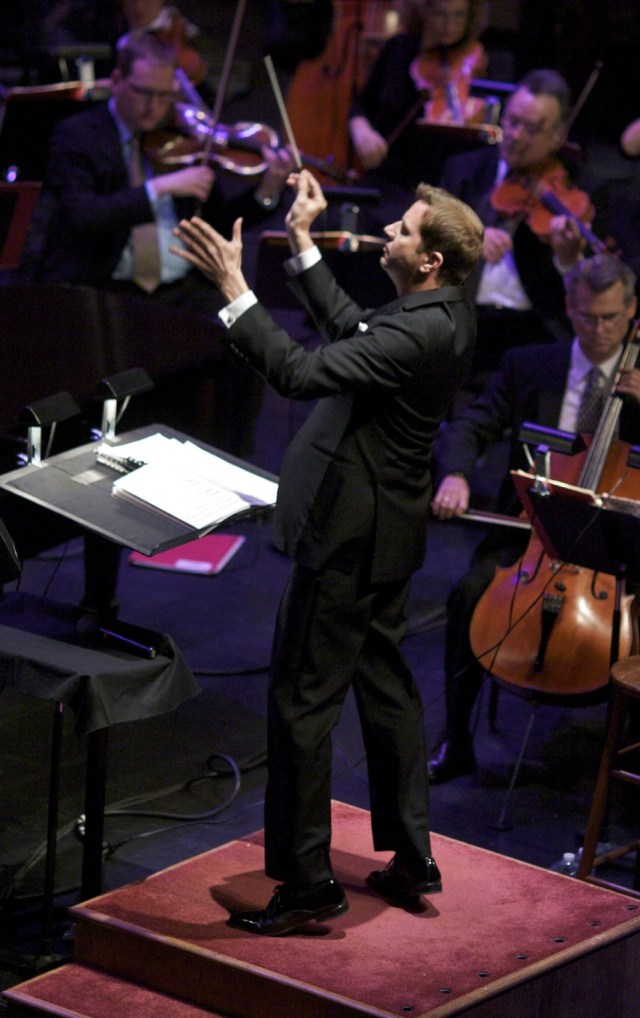
Where Lintu let his baton do his talking –leading a stirring performance—Trevino showed us the most affable podium manner this side of Peter Oundjian, explicating the Stravinsky score in such an unpretentious way as to highlight the comedy in the story of this ballet.

Robert Trevino, speaking (@Jag Gundu)

Robert Trevino, the charismatic story-teller, before he picked up the baton to conduct (photo: Jag Gundu)

Dare I say it, that this is what the TSO desperately needs?! I wasn’t the only one laughing, but more importantly, when the various comic bits came up in the score, people guffawed and giggled with genuine recognition.

And the performance! This isn’t easy music. Recalling the google doodle that you may have seen a couple of days ago, commemorating the 150th birthday of Sergei Diaghilev, there were three consecutive important ballet premieres from Stravinsky with the Ballets Russes:

  • Firebird in 1910, with a big romantic score that was mostly tuneful and caused no scandal
  • Petrouchka in 1912, where the edginess of the music corresponded to a grotesque story of puppets and magic. For my money this is the most surprising and original of the ballets from Stravinsky, with its use of folk music and mechanical patterns suggestive of non-humans moving, apt for the humans portraying puppets in this ballet
  • Le Sacre du printemps in 1913, famous for its riot, although the riot may have been as much for its actions & dance as for the music, admittedly a bit noisier and more dissonant than Petrouchka

I should perhaps also mention that Sunday’s concert for the TSO also includes Debussy’s Prelude á l’après-midi d’un faune: an 1893 composition that was also made into a ballet by Diaghilev in 1912. In tonight’s concert Debussy’s piece was not included. I’m not sure why they give us the shorter program Saturday. Petrouchka is full of amazing solos, much of it highly challenging music. I wish I knew who the piano player was, as their playing was especially good, one wonderful soloist among many (in the slower section resembling a piano concerto): but the others get their names listed in the program. Trevino was undaunted by the varied time-signatures, keeping the orchestra together, while gradually building the intensity and tempo to a scintillating conclusion.

I hope we see him again.

Posted in Music and musicology, Reviews | Leave a comment

Extra Trouble – Jack Smith in Frankfurt

“Extra Trouble – Jack Smith in Frankfurt” at Künstlerhaus Mousonturm Frankfurt a.M. Th. 22.11. — Su. 25.11.2012

Guest blog by Zoe Barcza recalling November 2012

jack-smith-in-frankfurt-opening-night-22112012-extra-trouble

The poster for the 2012 festival

The festival “Extra Trouble – Jack Smith in Frankfurt” (a dense weekend of screenings, talks, art exhibits and panel discussions) was held to commemorate and seemingly to canonize the influential underground filmmaker, who inhabited many roles during his prolific life: filmmaker, performer, photographer, playwright, “extreme artist and pioneer of queer and camp culture” (as the schedule pamphlet phrased it). Smith, who died of AIDS in 1989, has previously only really achieved a sort of cult-fame amongst experimental film nerds (I use the phrase with love), and is only now being digested by the “art world”. He’s been credited with being a visionary of camp aesthetics; his trashy-baroque hallucinogenic orgiastic films would influence Andy Warhol, John Waters, and many others in the underground film ecosystem. Also he attained notoriety when his 1963 film Flaming Creatures was seized by the New York police, along with Jean Genet’s Un Chant D’amour and Kenneth Anger’s Scorpio Rising, and deemed by the Supreme Court to be obscene. This episode was so traumatic he never “completed” a film thereafter, safeguarding his films so they could never be stolen or viewed in the wrong context, only screening them during live film performances where he would stand at the back of the room with the projector, re-editing the material as he went along, manually adding in a soundtrack by intermittently playing pop records from his collection.

The main reason I missioned to Frankfurt to catch this festival was the chance to view some very rare prints of his films that have until recently been inaccessible. Even having the opportunity to see the better-known films screened properly with a projector and audience is a universe apart from watching the films on UbuWeb on my laptop screen. And the films were deliriously beautiful Technicolor pageants; the lack of conventional storylines and the durations of the screenings induced a sort of trance-state, dissolving one into a haze of pure receptivity to the procession of projected images. (Adding to the trance-vibe was the 50/50 chance of getting stuck in a lecture given entirely in Deutsche…) But all of this I was expecting.

94_Live_Film_Jack_Smith_RGB__jpg_540x300_q85

Jack Smith preparing for Rome, Cologne, 1974

What became more interesting to me during the festival and symposium was the discussion circulating around his films, as Smith posthumously begins to attain wider cultural recognition. At one point Jerry Tartaglia, the man responsible for restoring several of the films, compared what was happening to the legacy of Smith to watching a plane takeoff. But since Smith’s cultural impact is just now being venerated, Tartaglia stressed the responsibility and importance of recording the history correctly. And the history of Jack Smith is one that can be retold through many conflicting voices, and is rife with discontinuities and disputes. At one point Tartaglia made a theatrical show of reading from an article written by Ken Jacobs, and then furiously crumpling it up and wiping his ass with it. Jacobs, an accomplished filmmaker himself, was a contemporary and former friend of Smith, before the two had an angry falling out. The scene of people working together on Smith’s films was friends and lovers. Frequently they were completely high during filming. Jack Smith academic Marc Siegel, while in conversation with Smith’s beloved drag starlet Mario Montez, made a special point of noting that Ms Montez’ recollections could definitely be trusted since she was the only one not partaking in intoxicants on the set. And his nerdly enthusiasm was palpable when he frequently would interrupt Montez to confirm or correct some seemingly minute detail within her account; things to the tune of, “don’t you mean that you edited that material on East 33rd St, not East 35th?”

One aspect I appreciated was the attention payed to the physical life of the celluloid films themselves, it became somewhat like a forensic exegesis, and with so many original participants in the room one could get a sense of the full picture being cobbled together. Special attention was payed to whether we were viewing original or negative prints of the films (it turns out you can tell the difference by observing whether the dust and scratch marks are black or white). At one point Jerry Tartaglia was amazed to see footage that he thought was lost included in the program, in a German TV special “Kino ’74 – Jack Smith”, to which the filmmaker Birgit Hein, who was in attendance, admitted that Smith had handed her the loose film stock and she had had it in her possession ever since.

tartaglia_SmithExoticLandlordism

Film still from Exotic Landlordism, courtesy of Jack Smith Archive and Gladstone Gallery, New York and Brussels

Smith left no will and quite likely wished for his films to be destroyed. After his death the archive of films was kept in his friend Penny Arcade’s house, and despite attempts, no funding could be secured from museums or institutions to properly restore the films. There then ensued a lengthy legal battle, in which his long-estranged sister appeared out of nowhere and tried to gain control of his estate. It was only when private gallerist Barbara Gladstone acquired Smith’s estate that Jerry Tartaglia could be hired to restore the films. There was an air of suspicion to many of the questions during the weekend.

Ostensibly Smith was being transformed into a commodity of the art world; how was this ok, when Smith was so outspokenly socialistic and anticommercial in every aspect of his life and art? “Is this what Jack would have wanted” was repeatedly asked. And furthermore, by canonizing Smith through the weekend’s academic lectures and events, through selling blown-up Chromogenic prints that were initially just stills from his films, were we participating in sucking the life out of his work, mummifying something that was intended to be breathing and ephemeral? As I mentioned the evidence suggests that Smith wanted his films to be destroyed, however I guess ultimately I’m still grateful that the material is available and circulating somehow, even if in a somewhat ethically compromised way.

Posted in Art, Architecture & Design, Cinema, video & DVDs, guest blog | Leave a comment

Raiders: Williams & the matter of popularity

The recent fad for films with live accompaniment is shining a light on artistry that has often languished in obscurity.  Oh sure, film music composers are well paid, especially someone like John Williams, composer of the score for Raiders of the Lost Ark: the film shown tonight in a partnership between TIFF & the Toronto Symphony.  But in a normal screening, or watching a film on TV, who notices the film’s music: other than a nerd?

(guilty as charged)

I hope this new way of seeing film catches on: which is to say, I hope that the TSO does a whole lot more of this, because I think they’re merely scratching the surface.  Tonight the energy was electric.  When conductor Steve Reineke referenced the TSO a couple of times he reminded me of the announcers at a ball game. It wasn’t “Your Toronto BLUE JAYS” but rather “Your TORONTO SYMPHONY”, and the cheer was every bit as boisterous and unanimous.

head_shot_Michael_Tammaro

Conductor Steven Reineke

The partnership between the TSO & TIFF is very neighbourly.  When I see a film at the TIFF Bell Lightbox I park under Roy Thomson Hall, just a couple of blocks away.  Yes there will be more films at RTH next year, and maybe somehow the favour can be returned, if TIFF opens up to some sort of music there (as we saw recently from Against the Grain).

It’s worth itemizing differences, the ways in which live showings re-frame and re-invent the usual experience of film.  Reineke presented this to us as a concert, and in a real sense that’s what it was, accompanied by powerful visuals on the screen looming over the stage.  In the cinema, while the music may still be “there” in some sense, it comes from invisible sources on the film, and it’s recorded rather than live.  The liveness is a big deal. I heard a couple of fluffed notes that I cite not to complain, but rather to celebrate the magic of liveness, like the blemishes on the face of a model: before they’re photo-shopped out of the image.

In this live context, the dynamics are totally different.  While we have the spoken voices available –and they can turn the volume up ridiculously high to ensure we hear every deathless word from Harrison Ford or Karen Allen—those are always going to feel canned, fake, artificial, when compared to the music.  And what the TSO played is mostly much louder than what you get on the DVD or in a normal cinema, where the levels are all adjusted and mixed to suppress the orchestra except at a few climactic moments, such as when the heads are melting.  But this was like an oratorio, as the music-making took the space and made something celebratory out of the film.  Even the silly set-pieces –I hate the truck chase, with all those killed soldiers, although I quite like the chase scenes through the market place, complete with a quasi-Egyptian music for atmosphere—can become serious when the orchestra is playing with such intensity.

And that’s another thing that is truly different.  In Raiders–that is in any film presented in the usual way– normally you are hearing recordings of music made from sessions assembled into a quilt, bits of music patched together.  But live? Those brass players only have the mouth they brought to RTH for the 7:30 beginning, even though they have several powerful sequences that they must somehow survive, lips intact.  Nevermind Reineke, who worked his butt off, with only the occasional silence studded through the two hours of the film, the players had a very full evening’s work.

I am hopeful that this kind of programming will bring a new audience to the TSO, intrigued and bemused by the familiar and the popular.  I am reminded of another critical frontier, namely the question of popular operas, lambasted in some quarters even though they are a guaranteed success at the box office.  The most notorious of these is coming to the Canadian Opera Company, namely Puccini’s Tosca, the opera that Joseph Kerman & George Bernard Shaw are both known to have loathed.  Nevermind their objections, they represent a similar issue to what we see in Raiders, a popular entertainment. It’s as though the critical acclaim is in inverse proportion to box office success.

And yet what Puccini accomplished in Tosca or what John Williams pulled off in his score for Raiders is far from easy.  If it were so simple to replicate lots of other composers would do so: and Williams wouldn’t be a multi-millionaire, in demand for what he does in films such as Jaws or Star Wars.

But at least TIFF & the TSO have discovered the magic of these live concert-showings.  The effects were heightened tonight, the snake music snakier, the love music more romantic.  And the closing credits, when we hear that main theme –a march, ringing out from the whole orchestra—was like that popular song played at the close of a rock concert, where everyone knows the tune, and explodes into rapturous applause at its conclusion. When I went to the washroom afterwards it was uncanny how almost every single person –not kidding!–was humming or singing that march tune aloud: infected with Williams’ ear-wurm.

As with Tosca we’re talking about something well-known that can’t miss, can’t fail.  When everyone knows what’s coming that doesn’t invalidate the experience, but rather makes it almost like a public ritual, comparable to hearing the national anthem or a hymn.  We see something similar when we get to the Hallelujah Chorus and everyone stands (however lame that might be), every note and word known to everyone present.

I’m looking forward to more of the same, more films with live orchestral accompaniment from the TSO, and yes, Tosca from the COC.  Serious art has its place, but that doesn’t mean we should avoid the works that move us, the works we know and love, music that is so well written that it can’t miss.

Posted in Cinema, video & DVDs, Music and musicology, Opera, Reviews | Leave a comment

Kommunisten: Straub sans Huillet

TIFF have been presenting “Not Reconciled”: which is both the epithet attached to this powerful retrospective and the first film from the uncompromising collaborative team Danièle Huillet and her husband Jean-Marie Straub. Tonight we ventured into a very dark, place, namely the decade since Straub was left alone, with the passing of his partner in 2006. Straub is now 84 years old. What kind of films would we see from the aging auteur, suddenly bereft of his companion and artistic partner?

Tonight we saw three of the last four films Straub has made alone.

  • Kommunisten (2014) 70 minutes
  • The Algerian War! (2014) 2 minutes
  • The Aquarium and the Nation (2015) 31 minutes

IMDB also mentions a film that we did not see tonight, namely In omaggio all’arte italiana! from 2015, at ten minutes another short film. This ‘homage to the art of Italy’ includes footage from History Lessons. Similarly, Kommunisten (the film of the three upon which I want to focus) includes footage from a few previous films.

KOMMUNISTEN_Malraux_3

A moment from Kommunisten (2014)

The published program from TIFF explaining the six vignettes that comprise Kommunisten says,

“five of these are gathered from Straub-Huillet’s previous films, making Kommunisten a kind of career summa.”

I suppose it makes sense that the film-maker should bring back images from before, at least as a kind of reminiscence or celebration of his collaboration with his deceased partner, if not to perhaps attempt some sort of valedictory or last statement. I couldn’t help thinking of the way musicians will re-purpose existing music, whether at the organ in church or creating a film – score, making something seem totally new. This can be both a pragmatic choice –when you have something that works and it’s much harder to make something entirely new & original – as well as an opportunity for inter-textual references. I can’t pretend that I got all the references, especially considering that some of the significance may be more personal concerning Straub’s own memories of Huillet rather than something meant for the audience to read. Setting aside the decoding of inter-textuality—which I can’t do without a great deal more research—I believe there’s a lots to be made simply from the composition of these vignettes, as a final statement in the same thematic area as the previous films. Most of the Straub / Huillet films explored aspects of Brecht & Marx, offering fresh views of class-struggle, celebrations of the common person & the material world (“material” in the sense of Marx not Madonna), and at the same time exploring new ways of employing Brecht’s dramaturgy on film.

For a Marxist widower in 2014-5, looking back on his body of work with his wife, in the quarter century since the USSR fell apart and the Marxist struggle more or less collapsed, I think he wanted to make a kind of statement.

I wonder if I was the only one in the theatre overcome by a profound sense of nostalgia in Kommunisten hearing the way he began the film.  We start with a tune that for me represents the impossible dream of class struggle, at least in the 20th century, namely Hanns Eisler’s national hymn for the GDR. Let the words and melody be a kind of image of the dream, that would be unfulfilled in GDR, especially for the composer.

Consider that

  •  The melody is about ideals and reconstruction
  • Eisler’s tune reminds me of The Internationale
  • That the GDR in practice never came close to practicing the ideals sung in their beautiful  anthem
  • Eisler himself was a martyr to that hypocrisy, first black-listed and then thrown out of the USA for being a communist, then after going home to East Germany as a true believer, hounded by the GDR government
hannseisler1

Composer Hanns Eisler

In the film proper we see interrogations, the persecution of those who admitted to being communist. We again see the dignity of people filmed as they go about their business, in huge numbers and without any individuality. We see the land and the insignificance of humanity in the presence of mountains and nature’s majesty. And we come to some relevant texts, both retrospective (looking back at the fascist period in Italy) and prescriptive / idealistic, dreaming of what might be. The ending is upbeat.

The second film was only two minutes, yet sustained tension for what felt like much longer. In all their films I find that Straub & Huillet play with our perception of time. On this occasion we’re confronted with the war that a much younger Straub evaded, going to Germany instead: in its personal impact for him and anyone else for that matter. The film closes with the mad intensity of Schubert’s ballad Der Erlkönig, suggesting some of the obsession Straub must have felt concerning this war.

The last film began in the most innocuous way. Of the roughly half-hour of The Aquarium and the Nation, we spend the first ten-fifteen minutes watching fish swimming in an aquarium that fills the screen. It’s our whole world, which as we’ll discover, is totally apt. We see a reading from what I believe is a Malraux novel, linking the innocuous fish we were watching with something more metaphysical, as we’re told that fish don’t see their aquarium. Transcendence comes in an excerpt from Jean Renoir’s film La Marseillaise, the higher meaning coming in the new idea of a “Nation”.

I’ve been in very odd places. Saturday I was spirited away on the sublime sounds of the Tallis Scholars singing unaccompanied religious music in a reverberant basilica. Last night it was Kiss Me Kate on TCM, one of the more ambitious Hollywood musicals, but still, a very commercial alternative to Saturday, and again with tonight’s intensity. Tomorrow it’s back to something more commercial in the form of Raiders of the Lost Ark at Roy Thomson Hall with the Toronto Symphony.  Straub & Huillet are (or in her case, were) artists with no interest in commercial success. If he does have any sense of a mission—and I think that’s a big “if”—it would be to inspire the next generation of activists & artists. I can’t deny I feel very inspired by tonight’s program, and am eager to see the last two films in the retrospective, taking us back to the 20th century for Othon (1969) and Proposition in Four Parts (1985).

Posted in Cinema, video & DVDs, Politics, Reviews | 1 Comment

Tallis Scholars & friends: Magnificat

Tonight felt like a kind of affirmation of permanence in the face of change and disorder in the world.

The Tallis Scholars, conducted by Peter Phillips, joined forces with two University of Toronto ensembles –Schola Cantorum and Theatre of Early Music—conducted by Daniel Taylor. While the repertoire ranged from the renaissance to our own century, we were listening to unaccompanied choral music, using religious texts: Magnificat, Pater noster, Ave Maria and Nunc Dimittis, all in multiple settings.

As a student of the phenomenon of musical signification especially as it applies to religious texts it was a special experience to be able to compare different approaches to the same words, across different periods, the different strategies and styles applied to the same spiritual concept and similar words.

St Paul’s Basilica at Queen & Power was packed with eager listeners, attracted no doubt by Tallis Scholars’ wonderful discography, but also perhaps aware of the new kids in town, Taylor’s two ensembles that shared the program and are now also recording for SONY.

basilica

The crowded interior of St Paul’s Basilica in Toronto tonight

The acoustic plus the visuals are a dream come true for musicians presenting this kind of program. Where a theatre with spoken word must be dry (less than a second reverb) and an opera house aims to have less than 2 seconds of reverberation time (say 1.5), concert halls may be around 2 seconds or more. But this was quite a bit more, perhaps in the vicinity of 4 seconds of reverberation: ideal for a different sort of music that was composed with a reverberant church in mind.

For a few of the pieces we saw the combined forces, as in Praetorius’ Magnificat V to begin or Holst’s Ninc Dimittis to close the program. For most of the evening, though, we were listening to the Tallis Scholars, as many as ten singers, but sometimes fewer.

The thing to remember after listening to this precise sample is how different that sounded in the Basilica space where everything was super live and reverberant.  I daresay this is how this music was conceived.  While we’re in the midst of Lent, the music was nonetheless full of celebration, even jubilant at times.

Notice too that the singing is very direct and without excess vibrato (as you’d find in styles from later periods). The notes—especially the ones sung way up high—are totally exposed, and requiring nothing less than perfection of intonation.

I shall investigate further: through the magic of recordings.

Posted in Music and musicology, Reviews, Spirituality & Religion | 1 Comment

Beyond Reason: Wagner contra Nietzsche

I finished my previous book last night (They Can’t Kill Us All). I began the review of that fascinating book—filled with the keen-eyed observations of Washington Post reporter Wesley Lowery—by a kind of apologetic preamble about my life in fantasyland, my blessed existence as a reviewer of opera & concerts.

Where that book was like a digression even as it seemed to bring me closer to the real world, the next book brings me back to something normal, namely the operas of Richard Wagner.  Yes you may think i live a topsy-turvy life, where exploring opera is the norm.

cover_image

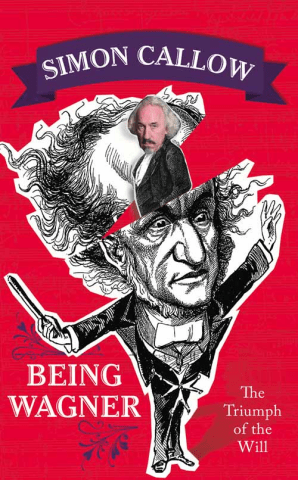
I have barely begun Karol Berger’s Beyond Reason: Wagner contra Nietzsche, a colossal 412 page book from University of California Press, that includes appendices & notes swelling it well beyond 500 pages.  Every time I visit the Edward Johnson Library I poke my nose into the shelf with the new arrivals. I grabbed this when I saw it: the first book I’ve seen with “2017” on the spine and a year that is also seen in the copyright indication at the front of the book.  I am probably the first one to take it out.

Berger’s introduction proclaims his objectives.

I started out convinced that Nietzsche’s objections to Wagner were by and large well taken, and that the study of their encounter would likely illuminate Wagner’s dramas but not Nietzsche’s books.  Today I still admire Nietzsche’s critical acumen, but I see as well not only that Wagner’s works can defend themselves surprisingly effectively against some of the philosopher’s central strictures, but also that these works implicitly offer an unexpectedly perceptive critique of a number of Nietzsche’s most cherished doctrines.  That is why I felt the need to amplify Nietzsche contra Wagner with Wagner contra Nietzsche. 

I haven’t read enough of the book to be able to review it, only to express my interest in it. To read this book at all is an act of faith, an expression of interest, given how many have undertaken the project of explaining / exploring Wagner, and making sense of his works in the broader context.

I’ll be reading this for awhile, yet even here reality & politics won’t let me escape fully from the broader contexts of our world.   I am for example, drawn deeper by these passages:

   But I expect that the book will also find readers who are already familiar with these works and whose main interest is to understand the philosophical-ideological significance of the Wagner phenomenon.  These readers will want to concentrate on the final sections of chapters 2 through 4 and the epilogue, reading the prologue for the background it provided. If they resemble the author at all, they are likely to be conflicted about Wagner’s achievement, loving and admiring it and at the same time being disturbed and even revolted by it.  I do not intend to help them resolve such conflicts; rather I aim  to shift the component within this unstable mixture and hope that, like myself they will close this book equally, but differently, conflicted.
(Berger xv)

instructorPhoto

Karol Berger teaches music history at Stanford

Berger goes on to lament the usual focus of Wagner studies.

The history over the Wagnerian roots of Nazi ideology has been succinctly characterized by Hans Rudolf Vaget: “In their examination of the Hitler-Wagner nexus, Mann, Adorno, Viereck, and others highlighted a whole range of ideological affinities, among them nationalism, megalomania, the substitution of myth and fairy tale for history, the totalitarian mind-set, demagoguery, self-praise, love of pomp, the rejection of liberalism, the espousal of revolutionary dynamism for its own sake, and the obsession with racial purity.  Today, however, it seems fair to say, that the topic of anti-Semitism virtually monopolizes the debate about the historical legacy of Richard Wagner.”  In a sense I would like to return to this earlier, and richer, stage in the debate.”
(Berger xvi)

I share that hope, and look to Berger to illuminate the subject in my upcoming reading.  I’ll get back to you when I’m done to let you know what I found.

Posted in Books & Literature, Opera, Politics | 1 Comment