I was glad to see the final show in the Canadian Opera Company’s fall run of La Traviata Saturday afternoon October 17th, a chance to hear the trio of principals (soprano Kathryn Lewek, tenor Long Long & baritone Russell Braun) who sang opening night and for seven of the ten performances.
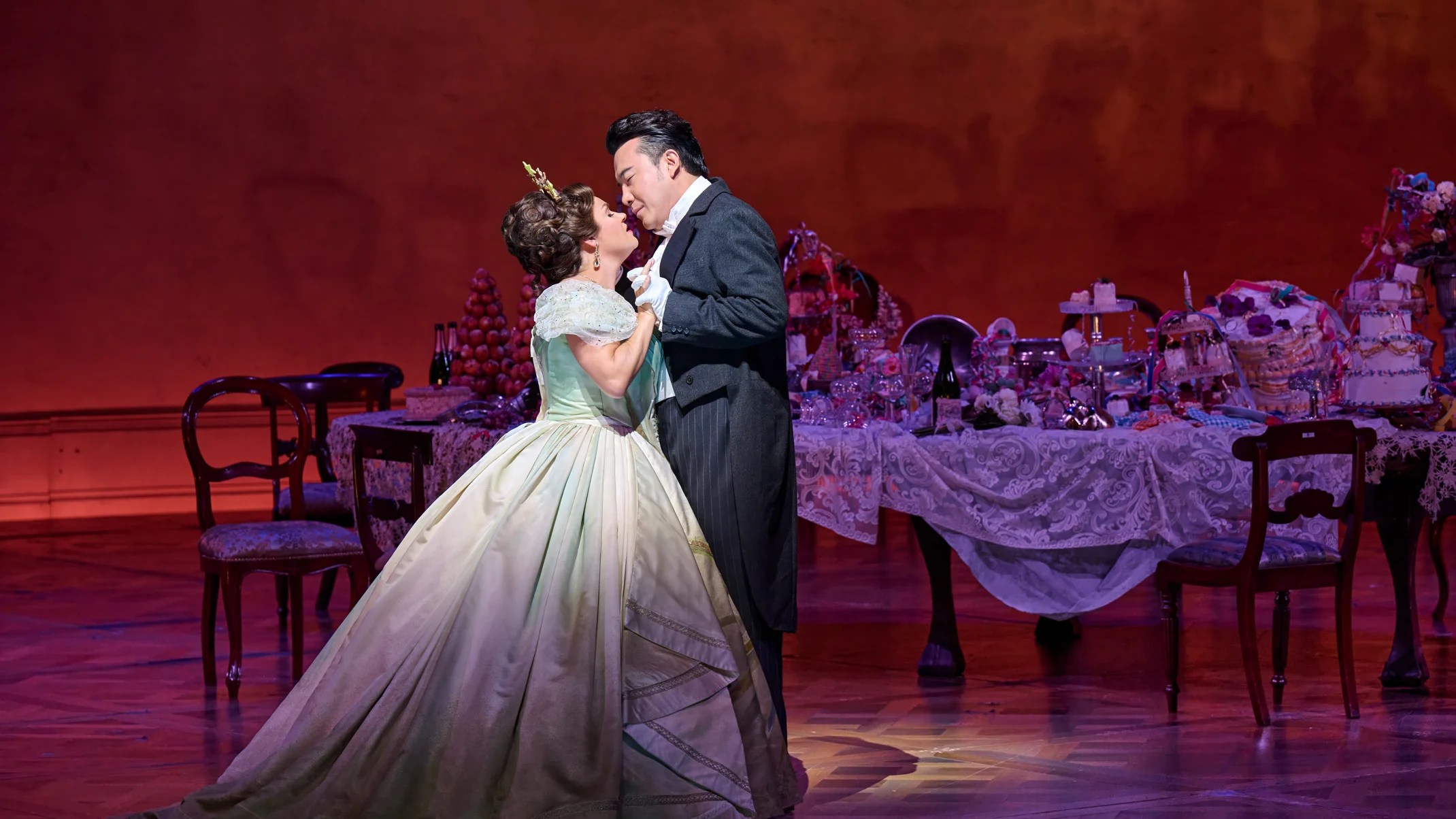
I was intrigued by the apparent contrast between the two casts as seen at a few key moments. I previously reviewed the alternate cast who sang 3 shows. The headline is another way of framing the “A” cast’s approach to the challenges of Verdi’s roles, and an attempt to keep things positive. Opera as a medium is sometimes understood as musical, sometimes as drama given that it’s a hybrid of words & music onstage. Singers are sometimes understood as beings who live to impress you with their voices, even as the form calls for music & drama. There are several ways to reconcile the two sides of opera, the words & music, the drama & the singing. The “A” cast were the more impressive, the showy singers whose high notes drew explosions of approval from the audience. This time it was the music that drew us and excited us.
I really love to see the final performance of a run of operas, when the cast are working together like a well-oiled machine, when their objectives are crystal clear. I thought I saw a few things that are worth sharing at least as a historian if not in a spirit of judgment.
Kathryn Lewek sings Violetta with a great deal of authority, a true diva. I say that while recognizing that the word is a bit of a double-edged sword in its connotation of egotism. I’m calling attention to a bold approach to entries after pauses, taking a second or two longer than one might have expected, adding a bit of extra drama. In the final act duet “Parigi o cara” the second verse, sung by the soprano, had Kathryn forcing the conductor to adjust his tempo to her slower reading. It’s a simple square melody that we’ve just heard from the tenor, so her change was surprising. But the main thing I felt was of a confident singer who expected to be accompanied, very much a traditional approach to the relationship between the soloist and the accompaniment. She knew what she was doing and showed us, boldly hitting her high notes throughout the opera.
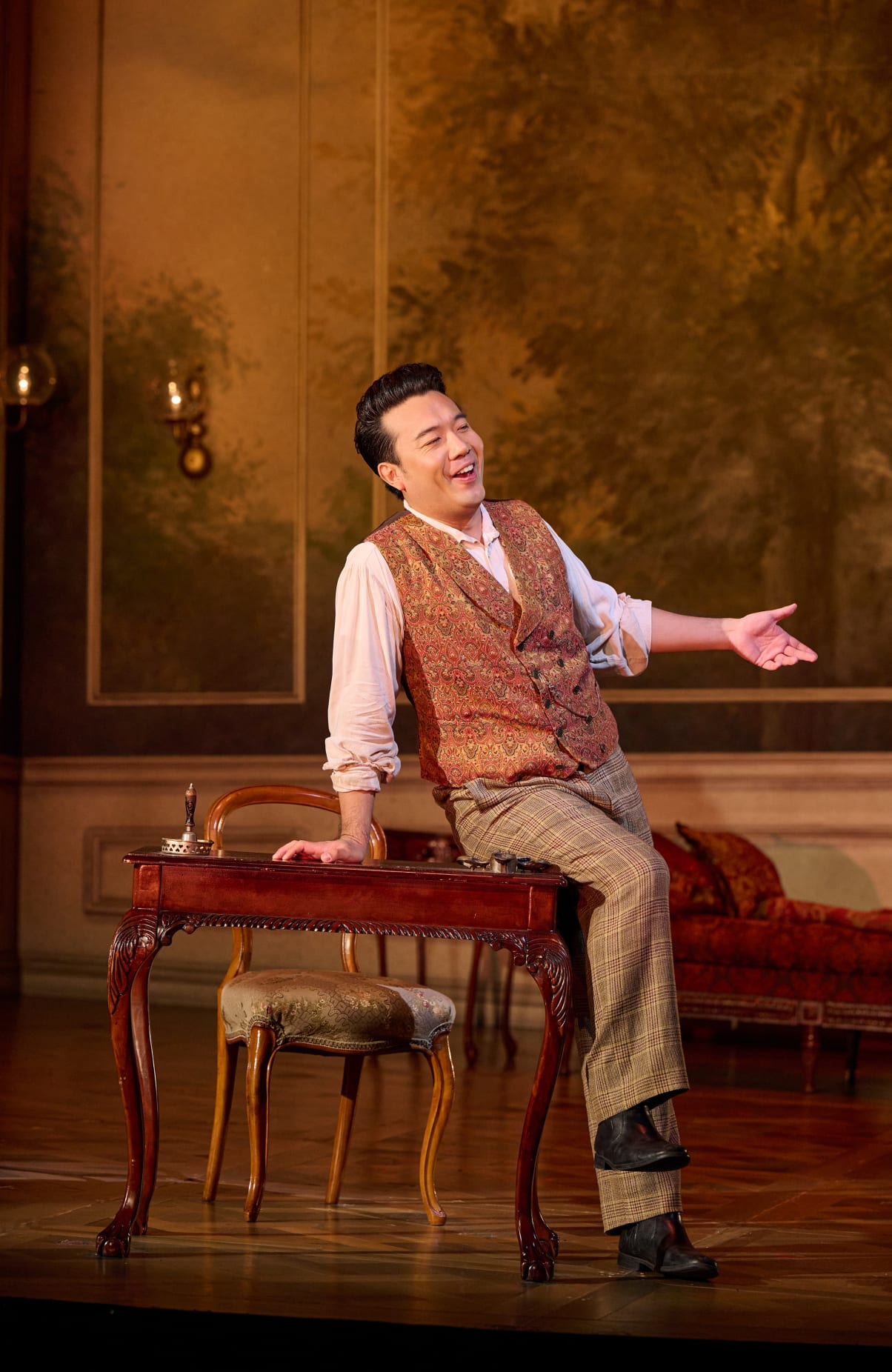
Long Long is a tenor with a brilliant technique who reminds me a bit of Jussi Björling. It’s not that they sound the same, but they both had a tendency to be a wee bit sharp at times, especially when they’re singing at the top of their vocal range. The reliability of his instrument, his intelligent approach is what I want to observe, especially as I waited for the inevitable high C in the cabaletta Oh mio rimorso! to the Act II aria, a note he held for a long time. Long Long sang really well.
I was pleasantly surprised by the voice of Russell Braun, who sounded better than I expected. I had assumed he was no longer singing such roles as Giorgio Germont given that he did Don Alfonso in the 2019 COC Cosi fan tutte, and the Speaker in the COC’s 2022 Magic Flute, roles that are more bass than baritone. He also sang Peter (the father) in Hansel and Gretel in 2020, a light baritone role but without the kind of difficult music you find in Verdi.
Russell’s big aria was a highlight of the performance, and it sounded effortless.
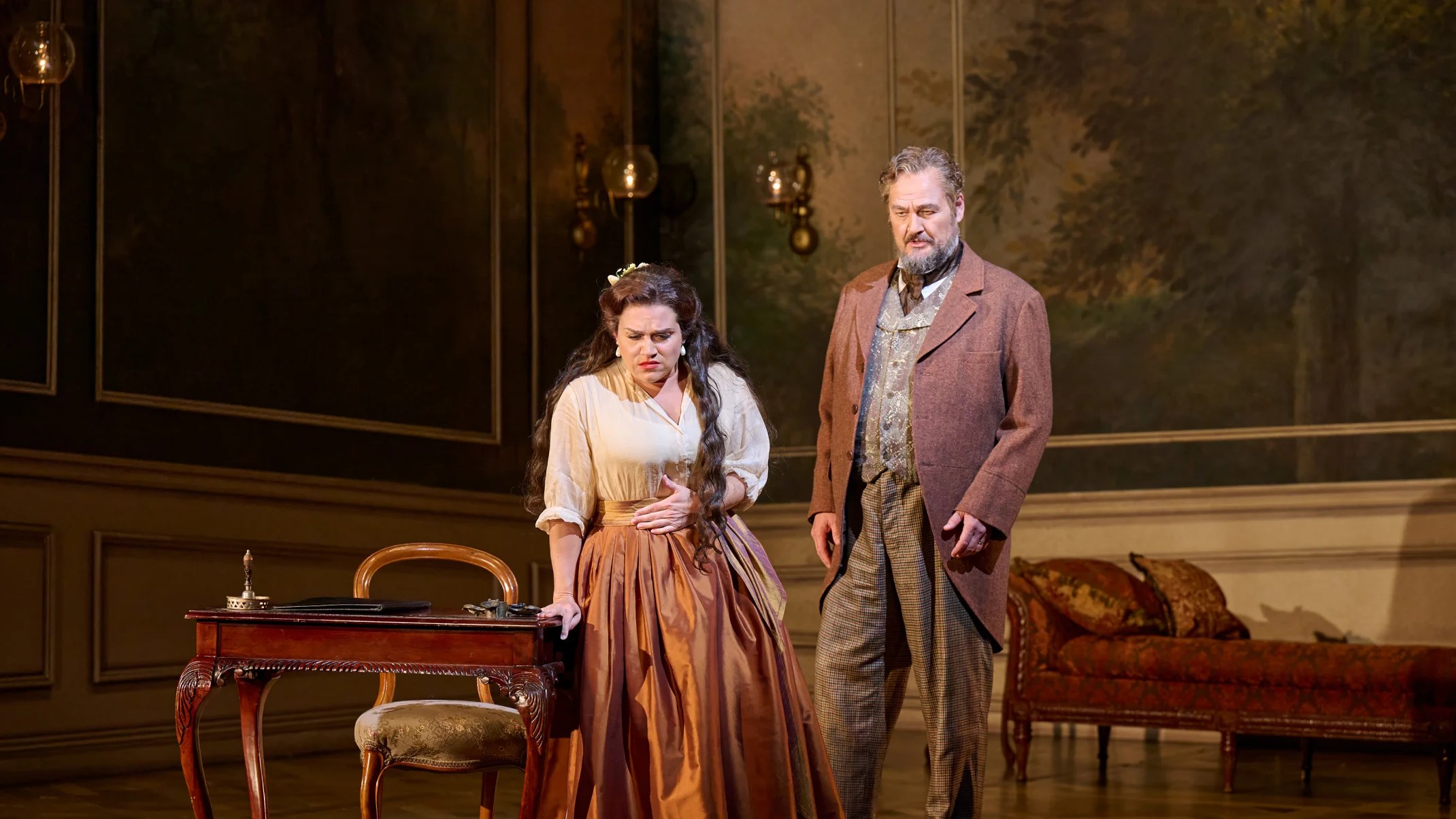
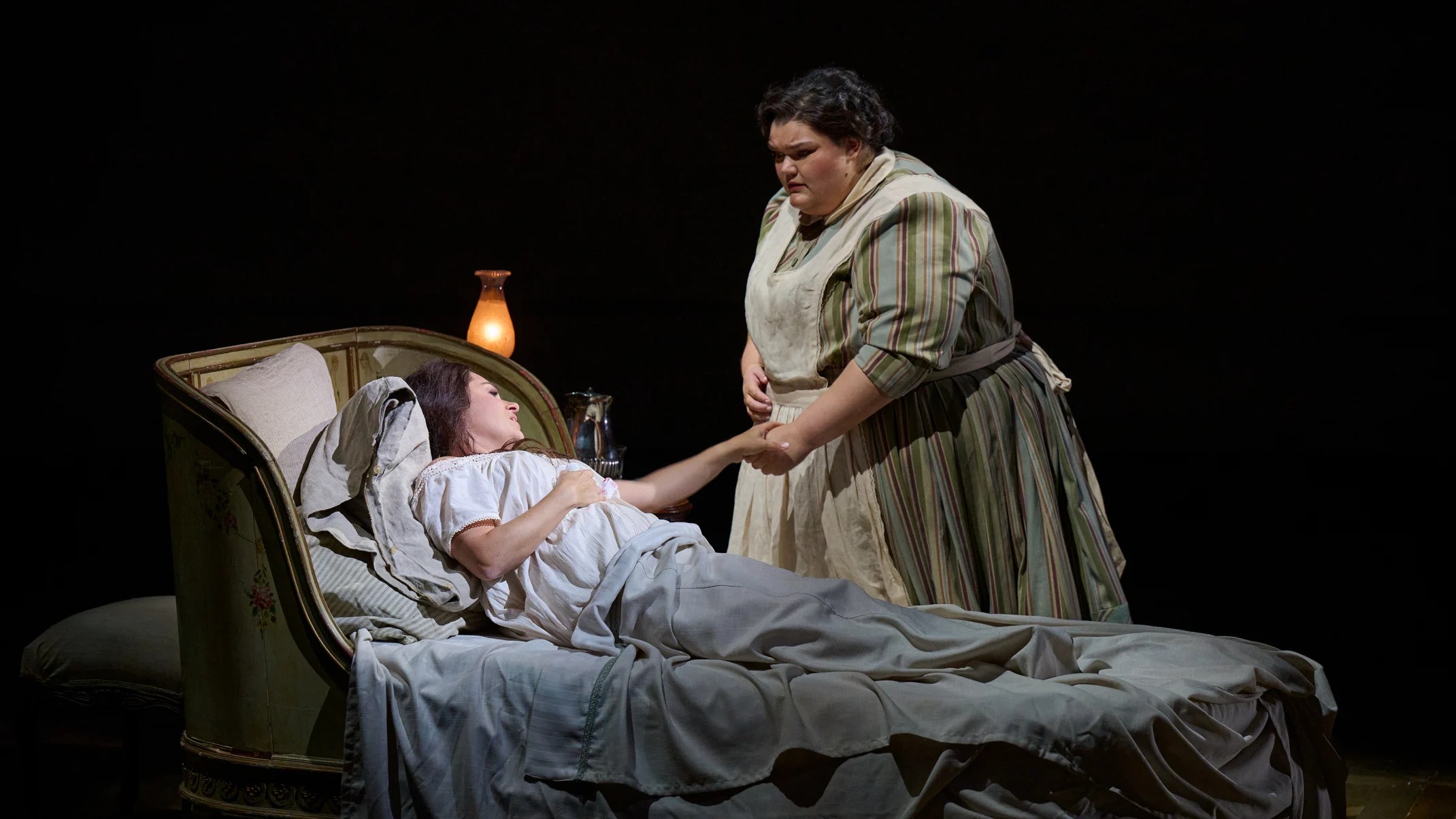
Let me be clear. I was impressed throughout by the voices of this trio. But I was not moved the same way that I had been by the other cast. Maybe I’m a sap but I love being moved to cry by an opera such as La Traviata, and the first time I cried on this occasion was watching Emma Pennell as Annina dressing Kathryn in the final act.
For the previous acts I was impressed by singing, but not seeing real chemistry between the trio of principals. The surrounding cast of smaller parts were as persuasive as last time, while I felt I was watching three soloists doing an excellent job of singing difficult music. Please note, neither Andriana Chuchman, our alternate Violetta, nor Luke Norvell, the alternate Alfredo, were as impressive in their high notes. When I wrote about Andriana I didn’t mention that I thought her sempre libera was weak in Act I, something I chose not to mention because she made the rest of the performance so compelling dramatically. Kathryn Lewek sang the aria with all the high notes, a virtuoso performance. Ditto Long Long’s wonderful high notes, that never made me really connect to a character: although in fairness this was normal, given that I don’t really like the character of Alfredo. I was happier with Luke’s “oh mio rimorso” minus the high C of this aria in its more extroverted form. The high note sung by Long Long is a show-stopper, so I don’t want to blame him for something that seems false in the opera itself.
Emma was again impressive, always interesting to watch. I especially liked the contrast between her big voice and the delicacy of Kathryn’s singing in the last act.
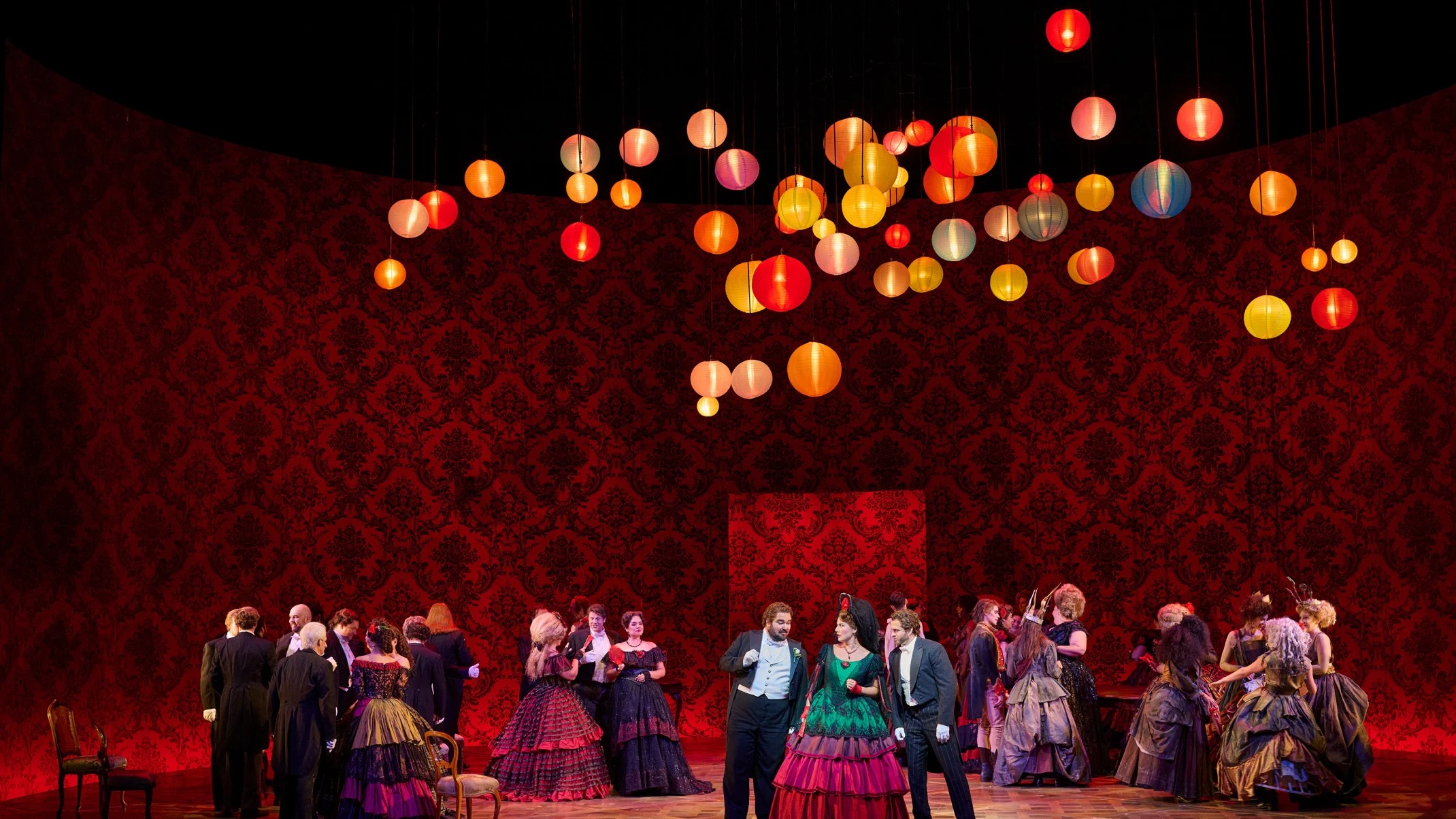
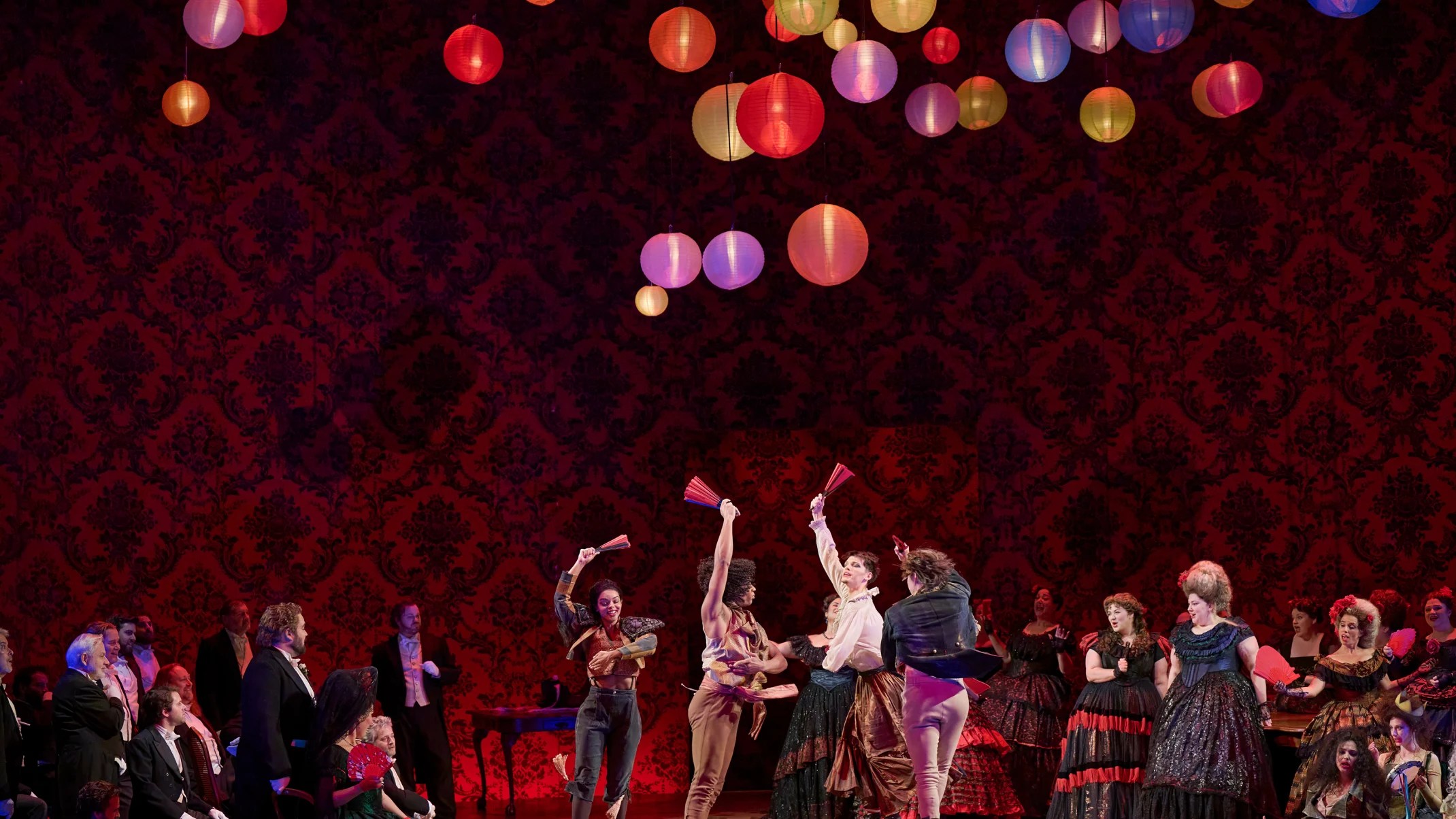
Alex Halliday’s Dr. Grenvil, who we see among Violetta’s friends in the world of parties earlier in the opera comes back for something more genuine alongside Annina, for the final scene. Ariana Maubach made the most of the rather thankless role of Flora, Violetta’s friend and the host of the party where Alfredo denounces Violetta. It’s funny that in a performance when I wasn’t thrilled by the chemistry of the principals, I was captivated by the work of the Marquis d’Obigny (Nick Murphy), the Baron Douphol (Peter Barrett) and Gastone (Owen McCausland), bringing Violetta’s social circle vividly to life around her. The first part of that scene includes some of the most entertaining moments of Arin Arbus production of Verdi’s opera, juxtaposed against the coming conflict between Violetta & Alberto. The flamboyance of the staging made a good backdrop for the interpersonal melodama of the climax, where Alfredo throws money at Violetta, and the reactions of the others singing together in response.
This was the closing performance of the Canadian Opera Company’s fall season. The Arin Arbus La Traviata was previously seen in 2015 & 2022, the Atom Egoyan Cosi fan tutte in 2014 & 2019, but that changes next year. Three of the four are new to the COC, while the fourth, Elixir of Love (May 8th) in the production directed by James Robinson was only seen once nine years ago. New next year: Turn of the Screw (January 23) and Ariadne auf Naxos (February 4th), followed by the world premiere of Empire of Wild (May 1st).

