Eve Egoyan CD launch Oct 16-18

“Less is more.”

Eve Egoyan performs intimate contemporary piano music in an intimate space at Toronto’s Small World Music Centre, October 16 – 18. This distinctive recital programme features music by Toronto composers John Mark Sherlock, Nick Storring and Linda Catlin Smith. The event also serves as the launch of “Thought and Desire”, an album comprised of world première recordings by composer Linda Catlin Smith.

I’ve been going back and forth between a pair of contrasting CDs. One is a massive symphony, the other is Thought & Desire, Eve Egoyan playing miniatures for piano by Linda Catlin Smith.  The idiom might be described as “minimalist”, but that term usually means pattern music.  I’d go back to one of the earliest minimalists, Erik Satie, as the prototype for the pianism you encounter in Thought & Desire.  A few notes resonating at the piano send the mind off on pathways of association.   A little complexity goes a long way.

Composer Linda Catlin Smith

Here’s the programme:

  • byland (2015) by Nick Storring *
  • rake, rake (2015) by John Sherlock *
  • Nocturnes and Chorales (2014) by Linda Catlin Smith **

* World première
**Toronto première

Eve Egoyan Recital / CD Launch October 16 – 18, at 8 pm
Small World Music Centre, Artscape Youngplace, Unit 101, 180 Shaw Street, Toronto
Tickets $30 regular / $20 Seniors, Students & Arts Workers
Ticket purchases: smallworldmusic.com General enquires: (416) 551-3544

Posted in Music and musicology, Press Releases and Announcements | Tagged , | Leave a comment

The wit and wisdom of Eldritch Theatre’s Doctor Wuthergloom

Praetorius Wuthergloom is a 142 year-old widower, an itinerant mediciner of supernatural blight & exorcist–the titles he gives himself—whose most recent extravaganza ended tonight, alas, with the closing performance of his show at the Red Sandcastle Theatre. Be not afeared, he might say, for there’s another show coming at the end of the month, The House on Poe Corner. 

Don’t be confused. Yes there’s a book with a similar name, a comforting tale to help children sleep at bedtime. This is just a bit different, still involving cute stuffed bears but possibly not quite ideal material to send them off to sleep.

Eric Woolfe is the genius behind both the medicine show and the upcoming urs-travaganza (“ursus” = bear, right?), a man of many talents. As in Madhouse Variations and last year’s Frankenstein’s Boy, we’re in the presence of a gifted actor who shares the stage with puppets. Woolfe brings them to life, while also portraying several characters himself over the course of the performance. His sensibility is one of a kind, taking its cue from the imagery of gothic horror. I find I am often right on the edge between laughing uncontrollably, and cringing at grotesque images.

Bring children into the mix –as he did downstairs for the second part of the show—and he’s upping the ante, making the game that much more powerful emotionally, and the thrills or laughs that much more explosive. There can be moments of great poignancy, yet it’s all done with the artifice in full view, no mistaking the puppets for real people. And even so we are swallowed up in this world of the supernatural.

I ask myself afterwards if it’s something about me that makes me so susceptible. Am I a sucker for puppets? In the Medicine Show, Woolfe as Wuthergloom shows a talent I never suspected (or one he recently added to his repertoire) for magic. And is the readiness to believe in magic possibly related to the readiness to be persuaded by puppets? I recall hearing that some people are easier to hypnotize than others, and wonder if maybe some of us are already so hooked on symbolism and metaphors that we are ready for whatever Woolfe might offer, dreaming with our eyes open. Is it possibly one of those fancy psychology words like “apophenia” or “pareidolia”? The fact I prefer opera to spoken theatre (in other words, a medium that is patently unbelievable) suggests I am not precisely a junkie for verisimilitude, otherwise Wagner wouldn’t have such a hold on my imagination. Maybe I shouldn’t hold my breath for an Eldritch Theatre adaptation of Pelléas et Mélisande. But even so there seem to be huge points of contact between the more symbolic classical media such as certain operas and ballets on the one hand, and puppet theatre. Maeterlinck’s puppet plays (of with P & M is one) tell horror stories. While I laugh loudly at what Woolfe is doing –at least the last couple of shows I saw—he has the rigor & passion to do operas if he wanted to (but I doubt that he has any interest in telling such stories…sigh!).

All of this is heightened when brought into the presence of children, or the reminders of children such as teddy bears. In The Silence of the Lambs one of the most powerful scenes (ha you’re probably waiting for me to describe something involving murder & blood) is the one that gives the film its name. Clarice tells Dr Lecter about the time she tried to rescue a lamb from slaughter. The innocence of the young child–in her recollection– confronted with the vulnerability of the lamb is overwhelmingly powerful.

Yet I believe Debussy did it better or perhaps with a subtler agenda than the film, wonderful as it is.  In P & A my favourite scene is one where a little boy is mystified by silent lambs. Does the title of the film come from this scene in the opera? It’s scary precisely because we don’t have the overdone response from Jody Foster recalling her childhood response, her exhaustion trying to haul a big lamb away. No, it’s simply a child with a series of questions that leave us staring into the dark. The unanswerable questions a child would ask often take us to a blunt confrontation with such horror that one pathway is to provoke our laughter and horror together. It’s tougher though to prolong the suspense, leaving us wondering what’s happening.

Yniold
Oh! oh! j’entends pleurer les moutons…   (I hear the sheep crying)

[and a minute or so later]

Maintenant ils se taisent tous…             (why are they silent now?)
Berger! Pourquoi ne parlent-ils plus? (Shepherd! Why are they silent?)

Le berger                              (the shepherd)
Parce que ce n’est    (because that’s not the path
pas le chemin de l’étable..                 to the stable)

Yniold
Où vont-ils?                                             (where are they going?
Berger? berger? où vont-ils?            Shepherd, where are they going?)

See for yourself,, and sorry that I couldn’t find a youtube version with subtitles, which is why i added these excerpts from the text (there might be one but you’d be watching 3 hours of opera, not three minutes of the little boy).

I  am eager to see Eldritch Theatre’s House on Poe Corner to be presented Oct 29th – Nov 7th.

Posted in Dance, theatre & musicals, Opera, Personal ruminations & essays | Tagged , , , , , , | Leave a comment

Richard Margison as Abraham: David Warrack’s new oratorio

Abraham, an oratorio by David Warrack about the patriarch of three major faiths, will bring together leading Toronto artists in a special fundraising performance for Syrian refugees, Wednesday, October 28, 8 p.m. at Metropolitan United Church, 56 Queen Street East, Toronto.

Tracing the key elements of the Old Testament story, Abraham runs approximately two hours plus one intermission. Although it has previously been heard in excerpts, this will be its first complete performance.

This is the first oratorio written by Warrack, (www.davidwarrack.ca), who is best known as one of Canada’s foremost creators in musical theatre. He was inspired by the fact that “Abraham is at the base of three of the world’s great faiths. This oratorio is reminding us that we all come from the same place and we must find a way to share this world. We need to get past a lot of the things that have divided us.”

The October 28 performance of Abraham is a joint production of the Intercultural Dialogue Institute (IDI) GTA, Metropolitan United Church, Toronto Area Interfaith Council and Holy Blossom Temple. Sponsors are BMO, the Hal Jackman Foundation and the Hellyer Foundation.

I had the chance to ask David some questions about the upcoming performance of Abraham.

Q: is there a story to this Oratorio, and is it the same as anything from one of the sacred books (whether the Bible, Koran or any other sacred book)

YES…..It’s an epic tale! If we tried to tell the whole story we’d be feeding them breakfast at the end.

We have Sarah at the beginning… She is so beautiful. Much later, she is singing an old person’s love song. Joking she is having a child, way past the age when she should be having a child…covering quite a period of time.

I do use the Angel to cover some of the passages of time, like a narrator. The Sufi choir, too are like the angels choir. They’re 9 people (5 singers and 4 instrumentalists) with a very evocative, unique sound, as a connective tissue throughout the show. Their music is meant to take us into another world, not the world we are living in.

The text is from sacred books. First reference point is The Holy Bible RSV in places, but not quoting, paraphrasing some lines that are recognizable from the Bible. I’ve done a lot of reading about the other faiths. I do have people from the Jewish faith and Islamic faith who gave me suggestions. I look on this as a work in progress. Eventually hope to have some text in Hebrew, some in Farsi, and have screens to translate. All in English right now.

I have read so many different versions and different interpretations… I don’t know where the line is crossed… AND it will change.

Q what sort of thinking would you like to provoke in the audience?

Cultural co-operation…. Reason for doing it, starts with the fact that Abraham is the base of 3 religions. We need to learn to get along. This world is all we’ve got.

We hear the question: “Can the world find peace?” And the answer comes back “If we surrender to the passion of the voices saying it can never happen, then it can never happen.”

I am constantly amazed when certain politicians –for their own personal gain, not looking at the world or the country around them—use the forces of division for a specific purpose of getting elected, as opposed to asking what is best for this country. I believe that most people come from a good place.

Tenor Richard Margison (photo: Katie Cross)

Tenor Richard Margison (photo: Katie Cross)

Q Richard Margison is playing Abraham. Are you writing this for the operatic Margison –who sings “Nessun dorma”—or the Margison who has sung folk & rock music?

Ah, a bit of a cross-section actually.  Realistically, it’s not in an operatic style, nor is it music-theatre.   It covers quite a range.

Q Will we hear/see Abraham on video (or DVD) someday?

This performance is to be recorded, to be a CD. There will be something in future with orchestra: fall of 2016.

Q What are the instrumental & vocal forces playing and singing?

Farsi choir
Elmer Iseler Singers
Bach Children’s choir
And I play the piano with a few musicians

We hope to do it again at Holy Blossom Temple in spring, eventually with orchestra, and hope to record it in the summer.

*******

Internationally celebrated Canadian tenor Richard Margison stars as Abraham, founding father of Judaism, Christianity and Islam. Joining him are five principal vocalists: Ramona Carmelly, Meredith Hall, Hussein Janmohamed, George Krissa and Theresa Tova; and three choirs: the Elmer Iseler Singers (Lydia Adams, conductor); the Jarrahi Sufi Choir with Whirling Dervishes, and the Bach Children’s Chorus (Lynda Beaupré, conductor). David Warrack will be at the piano.

Jarrahi Sufi Choir with Whirling Dervishes

Jarrahi Sufi Choir with Whirling Dervishes

Proceeds from this event will support the Syrian Refugee Program at Metropolitan United Church. General admission tickets are $54; $36 for students. $75 VIP tickets offer reserved seating and an invitation to the post-concert reception.

Tickets and information are available from www.abrahamoratorio.ca. Inquiries may also be directed to 416-809-6044, or click image below.

Posted in Interviews, Music and musicology, Press Releases and Announcements, Spirituality & Religion | Leave a comment

COC traviata and the three faces of Violetta

I witnessed something rare and wonderful at the opening of the Canadian Opera Company’s la traviata at the Four Seasons Centre tonight.

It’s almost impossible to do justice to the role of Violetta that Verdi created in his adaptation of Dumas fils’play La Dame aux camellias. Across three acts we see not so much multiple personalities as multiple approaches by the composer.

  • For Act I she’s a party girl, or at least she struggles to break out of that persona, while darkly asking herself if she has other options. The two part aria that closes Act I juxtaposes a melancholy cavatina (ah forse lui –ah maybe it’s him), while her cabaletta (sempre libera –always free) throws caution to the wind, embracing the party life. This is Verdi employing bel canto conventions in a bold new way. Violetta must sing difficult coloratura and some very high notes.
  • In Act II we see her in a series of emotional confrontations: between her and her lover’s father (as he asks her for a huge sacrifice), and between her and her lover as she masks her emotions while affirming her love in the last moments before she dashes away from him. Verdi is writing in a bold new way, arioso that flows back and forth between characters, powerful moment answering powerful moment, powerful lines articulating emotions rather than bouncy coloratura. The second scene of this act builds to a climax followed by some very lyric singing at the end of the scene.
  • While the music of Act III is much the same as Act II –more ariosos once we get past the powerful solos opening the scene— the circumstances change everything. When we present this opera in the 21st century, with our expectations of verisimilitude and authenticity, this means that although we are watching a sung portrayal, we expect something true to life, overpowering in its depiction of mortality and death.

From the bel canto coloratura of our Act I party animal to the beginnings of tragedy in her Act II confrontations & sacrifice, to her dramatic challenges in the last act, it’s a rare singer who can give us all three faces of Violetta: but Ekaterina Siurina – our Violetta tonight- did so. Hers is a voice with a rare precision, always on pitch, and a lovely tone that reminded me a bit of Joan Sutherland only smaller and clearer. Her quest for authenticity meant that the Act I aria was very intense, with a couple of thoughtful pauses that challenged conductor Marco Guidarini to adjust. While some singers will begin to talk or shout in the last act (which can be very powerful if done well), Siurina mostly sang.

1052 – Charles Castronovo as Alfredo and Ekaterina Siurina as Violetta in the COC’s production of La Traviata, 2015. Conductor Marco Guidarini, director Arin Arbus, set designer Riccardo Hernandez, costume designer Cait O’Connor, and lighting designer Marcus Doshi. Photo: Michael Cooper Michael Cooper Photographic Office- 416-466-4474 Mobile- 416-938-7558 66 Coleridge Ave. Toronto, ON M4C 4H5

Charles Castronovo as Alfredo and Ekaterina Siurina as Violetta (Photo: Michael Cooper)

This was a well-matched cast. Charles Castronovo managed to balance the poetic and the passionate in the role of Alfredo, sympathetic even in the scene when his behaviour alienates everyone on stage. The voice has a marvellous timbre that reminds me at times of Cesare Valetti in its delicate nuances. Quinn Kelsey was a reminder of what a Verdi baritone sounds like, as Giorgio Germont. While he played the part as a classically conservative but well-intended father, every note had not just vocal beauty but conviction. The scene between Kelsey and Siurina was the best thing I’ve seen on the COC stage in quite awhile.

There are many other performances, portending the immediate and more distant future of Canadian opera. From Charles Sy, seizing the stage to begin the opera as Gastone, Aviva Fortunata once again making more than expected of a small role, this time as Annina, to James Westman as a very menacing Baron Douphol, the future looks bright, especially when we can look forward to another cast taking the stage next week in the same production.

Traviata is sometimes modernized or transformed by the concept of the director and/or the designer, for instance the last version given by the COC. Director Arin Arbus, working with designs by Riccardo Hernandez (set) and Cait OConnor (costumes & puppetry), gave us a traviata set in the 1850s (when it was written) in a co-production with Lyric Opera of Chicago & Houston Grand Opera. I hate to sound like a conservative, but there are so many things that are lost when you modernize or conceptualize, beginning with the nuances of the performance & interpretation. Guidarini and the COC orchestra are thereby enabled to honour the music of Giuseppe Verdi in this production. I came away from the show, blown away by what felt like the three strongest lead portrayals in a COC production: because the production didn’t prevent me from noticing, didn’t once get in the way, and often amplified the beautiful performances. When I recall the last production of traviata (where for instance the baritone sang his aria sitting awkwardly on a giant futon, looking as embarrassed as a politician caught on camera in a brothel), how could one really look good, when the text was at times totally at war with the presentation? I love an illuminating production, but such directorial intervention shuts down the virtuoso, making them look somewhat ridiculous in difficult arias. How refreshing to have such a perfect match between the opera, its singing and its directorial & design concept. The COC chorus were put to especially good use by Arbus, making the opening party scene very convincing, but in every scene the text was illuminated with great clarity, even as we listened to some of the most beautiful singing i’ve ever heard in a COC production.  This is an old-fashioned traviata, and may I add, if you don’t cry you should check to see if you have a heart.

The COC’s la traviata continues until November 6 at the Four Seasons Centre. Don’t miss it.

Posted in Opera, Reviews | 6 Comments

Hannigan conducts the Toronto Symphony

Soprano Barbara Hannigan is also Conductor Barbara Hannigan.  We knew she could sing. Tonight she sang and conducted the Toronto Symphony, her first time conducting an orchestra in North America.  This wasn’t just a concert to enable her to plant the flag on that particular mountain-top.  And there have been other woman conductors.

But it was a remarkable concert, showing off a very intriguing set of chops, a virtuoso unlike any other.

soprano & conductor Barbara Hannigan (photo: Elmer de Haas)

soprano & conductor Barbara Hannigan (photo: Elmer de Haas)

We began with an unaccompanied work for solo voice, Nono’s Djamila Boupacha.  I was reminded of some of the different vocal sounds I had heard in a pair of recent concerts (Love Shards and Beyond the Aria), the voice sometimes almost inaudible, sometimes throbbing, sometimes engaged in the more classical sound.

And without further ado Hannigan swerved into Haydn, physically turning about (facing the orchestra this time rather than the audience) to segue directly into the opening of the Symphony #49.  I find this kind of contrast very useful, encouraging us to see what is new and edgy in an older work by placing it directly beside the newer work, as though they were hanging in the same gallery side by side.  Haydn’s penchant for drama was called forth by Hannigan’s approach, which resembled something rhetorical, as though an exhortation rather than the usual beating of time.  In places she stood still, her hands down as though waiting to see some kind of response –eye contact?—from the TSO players.  But this was very dramatic, those moments of stillness from her often punctuating a fresh attack.  She conducted from memory.

I was reminded of something I’d observed with Historically Informed Performance, except in reverse.  The old chestnuts of the repertoire are reinvigorated by HIP. But maybe the same has always been available in reverse: that a bold and modernistic (if that is the apt adjective, thinking of the appreciation for the edgiest elements of newer music) reading can re-vivify any music, new or old.

The next item on the program was my favourite, an early composition of György Ligeti.  I had read that he had been doing research into folk music, partly from interest, but also strait-jacketed by the Stalinist context in which he worked.  Concert Romanesc was apparently re-constituted much later (from rough notes) after the work was lost in the conflict with censors who had objected to the work in its original form.  Listening to this piece for the first time tonight I couldn’t help thinking that this was like a fit of ear-worms loosed upon an audience by someone obsessed by the tunes he was studying (I could almost imagine the composer saying to his imaginary audience as he composed “if these tunes have to be stuck in my head, they’ll be stuck in your head too!”).  Ligeti at this point was more tuneful than the composer we’ve come to know via Stanley Kubrick (2001 and The Shining), sounding a bit like a Hungarian Copland, the piece sounding like a Transylvanian Rodeo.   At times we’ve seen the TSO under other conductors roaring along with phenomenal precision and clarity, but not necessarily remembering to bring their hearts along for the wild ride.  As I watched Hannigan lead the TSO through the Ligeti, I thought that whether it was slow and soulful, or occasionally frenetic this was always a consensual frenzy, the orchestra like a big powerful animal comfortable under her reins and never feeling whipped or abused.

And as I pondered headlines (as I sometimes do) I giggled to myself thinking that instead of “Garbo Talks!” we could have “Hannigan conducts!” She did indeed, and very well. This is what the TSO should always aim for, namely a guest conductor who offers a fresh perspective on music and performance.  I hope we hear her conduct again!

After intermission we were treated to an impressive performance of “Bella mia fiamma,, Resta o cara”: a Mozart concert aria.  A purist might have been troubled to see the soloist leading the orchestra while she sang; you’ll know that when I say such things I am usually about to slam dunk the purist through the hoop. There is no such thing as a proper approach to a concert aria, a hybrid oddity if ever there was one. To find a viable way to perform such a thing is surely a good thing, regardless of whether it’s traditional or not.   As with her work last year in the New Creations Festival, it was amazing to see the voice emanating from the midst of the sound of the orchestra, her movements and gestures an organic reflection of the music itself.  Good conducting should be like that, almost as though the music + conducting creates a kind of total art or Gesamtkunstwerk, a union of media as the ensemble is led by the perfect gestures melding with the music.  How could it be better than to have the vocalist lead the ensemble, her gestures discreet and just enough to delicately suggest tempi?

Of course what Hannigan did was impressive.  I giggled to myself wondering: “what would Mozart say?”  But I think he’d be fine with it.  This was a virtuoso display, and we have in many respects lost touch with the virtuoso impulse in our fascination with method acting and verisimilitude: values that emerged long after Mozart was pushing up the daisies.

We finished with a more conventional display of conducting, Hannigan leading the TSO in Stravinsky’s Symphony in Three Movements, beating time in the usual manner because of course the work isn’t amenable to the sort of rhetorical approach Hannigan tried in the more conventional works.  Here too the TSO responded gloriously, playing with a wonderfully organic feeling throughout.  Inner voices came through beautifully, and it all hung together as though they were actually listening to one another.  It sounded marvellous.

Too bad the attendance wasn’t huge, even though this was one of the most fascinating displays I’ve seen in a long time.   But of course who knew that the Ligeti could be such a crowd pleaser, that the Stravinsky would elicit such a big ovation from the audience?

I hope the TSO brings Hannigan back.

Barbara Hannigan (photo: Elmer de Haas)

Barbara Hannigan (photo: Elmer de Haas)

Posted in Music and musicology, Reviews | Tagged , | 5 Comments

Still Alice’s Alzheimer’s

There’s a film from a few years ago called Away From Her, starring Gordon Pinsent & Julie Christie. IMDB tells me it was made in 2006. I waited quite awhile to see it because the subject was very close to home. A family member had developed Alzheimer’s and died in 2010. The DVD had sat on the shelf unopened, too painful to contemplate until earlier this year.

The irony of that wait was that when the film finally turned up on the small screen (that DVD) , it didn’t resemble a story I knew or could recognize, a struggle like those in this family. But of course there’s not just one story, anymore than there’s only one case of the disease. Every case is different, and the impact can reach into families touching everyone. Away From Her didn’t resemble this family’s struggles enough to really speak to us. I found it puzzling, even if the performances seemed to be good.

There’s another film concerning Alzheimer’s. It’s called Still Alice. It won Julianne Moore the best actress Academy Award half a year ago for her portrayal of an afflicted linguistics professor. I say all that because I just watched it. The Alzheimer’s in this film –early onset Alzheimer’s, hitting an intellectual in their early 50s—was a very different sort to what we saw develop in this family.

Where Alice gradually had trouble remembering, Still Alice recalls the disease rather well.

Where Alice gradually had trouble speaking, Still Alice speaks eloquently.

I reviewed the film, based on this novel by Lisa Genova.

Throughout the film I experienced flashbacks. There was a moment in the film to do with incontinence, reminding me of that visible expression of shame that you couldn’t forget, that you wished you didn’t have to see, as well as moments of family members struggling to understand, struggling with judgment and subsequent guilt. There was the bewildering collision between who the person had been and who they’d become, the startling transformation from someone strong and impressive into someone lost and vulnerable.

There’s a dynamic I saw in Still Alice that spoke to me about my own issues with a disability, the fakery of someone trying to fit in, concealing their ailment to avoid pity. My attempts to cover up a limp or bad posture are as nothing, however, compared to the struggles of someone with Alzheimer’s. This is the nastiest disease for what it does to you. You’re not you anymore. The family can’t mourn in the usual ways because there’s a body-snatcher at work, stealing you away even as you continue to live after a fashion.

I will watch it again tomorrow. I recommend this film to anyone who has been afflicted, but also to anyone who is simply curious. There were a great many moments with the ring of authenticity, a familiarity that was both comforting and disturbing, often at the same time.

Posted in Cinema, video & DVDs, Personal ruminations & essays, Psychology and perception, Reviews | Tagged , , , | Leave a comment

Questions for Lisa Campbell, Cannabis Activist

Lisa Campbell's United Nations ID

Lisa Campbell’s United Nations ID

Lisa Campbell has been the Outreach Director for Canadian Students for Sensible Drug Policy since 2013. As the former Trip! Project Coordinator and having worked as the manager of a needle exchange, Lisa has worked with a diversity of young people who use drugs and continues to advocate for drug policy reform across the globe. She has a plethora of experience in drug policy reform, having served as the Senior North American Representative for Youth RISE’s International Working Group and continues to work tirelessly to end the war on drugs.

Lisa’s work in drug policy reform has brought her around the world as an advocate for young people who use drugs including Lebanon, Portugal, Mexico, UK and the US. She has been featured in both local and international media, including National Geographic, BBC, VICE and the National Post. Most recently she has joined the Pot TV Network as the co-host of TMZ with Matt Mernagh at Vapor Central. On top of her work advocating for youth harm reduction services, Lisa has become one of the top cannabis activists in Canada and is leading the charge towards legalization.

Lisa recently started a cannabis industry lobby group called Women Grow in Toronto, and has just released a drug policy election report card for the Canadian Students for Sensible Drug Policy (aka CSSDP), which will also be distributed through the Canadian Drug Policy Coalition.

Women Grow

Women Grow

As an arthritis-suffferer I wonder about available alternatives to the powerful meds that are sometimes worse than the disease they’re meant to cure. I wish I had the option of legal cannabis. As the election comes closer, on the occasion of the CSSDP drug policy election report card, I wanted to interview Lisa Campbell. I asked her fifteen questions: five about herself and ten more about the issues.

1) Are you more like your father or your mother?

I think I’m equally influenced by both my parents, who I like to tease about both being legal drug dealers. My mom is very creative and had a long career as a modern dancer, before she trained to be a psychiatrist. I think I get a lot of my creativity and knack for public health and research from her. My father is a successful businessman who imports wine from around the world. Due to these restrictive laws against alcohol sales my dad found himself in a 5 year court battle with the LCBO, and the business had to close temporarily as a punishment by the government. My father’s fight against prohibition inspires me, especially as he’s in an industry that was once completely illegal and still suffers from over regulation. As well, my great grandmother was a bootlegger, and my bubby grew up selling bathtub moonshine as a young girl in inner city Detroit. It’s huge that we’ve taken a once underground illegal industry, legalized it and taken it out of the hands of organized crime. We can do exactly the same thing with cannabis in Canada! We need some policy to regulate based on research and principals of public health.

Cannabis activist Lisa Campbell

Cannabis activist Lisa Campbell

2) What is the best thing about being an activist?

Being around people who are passionate about what they do! I love the youth volunteers who I get to work with at Canadian Students for Sensible Drug Policy who are so dedicated to ending prohibition in our lifetime. As well, it’s been so cool to start Women Grow in Toronto as I get to meet so many cool women entrepreneurs with products that are helping people heal.

3) Who do you like to listen to or watch?


I’ve really been into Narcos on Netflix lately, but just because it’s pure DEA propaganda. Similarly I can’t get enough of shows like Weeds or Orange as the New Black that show the ridiculousness of the war on drugs while also incorporating a gender perspective. Jenji Kohan is my heroine! As well, Broad City is doing a lot for cannabis reform in terms of normalization. I also listen to a lot of electronic music and you can follow me on Soundcloud (https://soundcloud.com/qnp/sets)!

4) What ability or skill do you wish you had, that you don’t have?

I wish I had a better memory!

5) When you’re just relaxing and not working what is your favourite thing to do?

I really enjoy cannabis and it is a full time hobby. It’s finally starting to become a job, which is exciting.

LisaCampbell (right) with Nazlee Maghsoudi

Lisa Campbell (right) with Nazlee Maghsoudi

*******

Ten more about lobbying for marijuana reform in the federal election.

1) “Women Grow in Toronto” is a cannabis industry lobby group. Talk to me about the hazards of being an activist, and what you are seeking.

Women Grow was started a year ago in Colorado and has grown to be a global movement highlighting the voices of women leaders in the emerging legal cannabis industry. Unlike other established industries with strong gender divides (like tech), if we promote equity from the beginning we can create an inclusive cannabis industry. Women were the founders of the cannabis industry in Canada, with Hillary Black cofounding the BC Compassion Club Society, the first cannabis dispensary back in 1997. Many of the original activists pushing for legalization have been left out of this new cannabis industry, with corporations stepping in mostly run by white guys (no offense). Women Grow is about honouring our roots and promoting more women getting involved as leaders in the cannabis industry, despite the barriers.
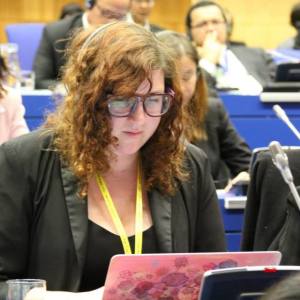
Lisa Campbell

Lisa Campbell

Women Grow promotes women entrepreneurs in the emerging cannabis industry in Canada through running Signature Networking Events. While much of this industry is 100% legal, we work with all sides of the cannabis community from grey market businesses like bakers or dispensaries, to Health Canada certified Licensed Producers. Women have always been at the forefront of the cannabis industry as podcasters, bakers, dispensary and vapour lounge owners. None of those businesses fit into the federal governments MMPR regulations for cannabis, although many of them have been existence since the 90s. As Women Grow we represent women from all aspects of the cannabis industry and together we are united for full legalization.

2) Talk to me about marijuana for a moment compared to such ubiquitous products as the valium, and Tylenol in medicine cabinets, or the tobacco & alcohol all around us. How safe is it?

Cannabis can be used as an alternative medicine to many pharmaceuticals and is less physically addictive than benzodiazepines and opiates. In some trials cannabis has shown promise in opiate substitution therapy and for this reason there are many cannabis clinics opening specializing in chronic pain. It is also much less harmful than tobacco and alcohol, although I think it’s important to acknowledge that cannabis use is not without risk. Just like we need regulation for tobacco and alcohol, we need the same for cannabis in order to control sale to minors. While we also need controls for cannabis, we need to find a balance to ensure patient access.

3) What are the criteria you’ll have on the report card?

On top of my work with Women Grow I also am the Outreach Director for Canadian Students for Sensible Drug Policy. CSSDP recently published an Election Drug Policy Report Card evaluating our federal party leaders on cannabis, harm reduction and mandatory minimums. Not surprisingly the Green Party scored the highest in drug policy, with the Liberals and NDP not too far behind. The only thing the Conservatives didn’t fail was cannabis, as they privatized the medical marijuana program, breaking the federal government monopoly on production. Unfortunately the new MMPR introduced by the conservatives took away patients’ right to grow, but did create a billion dollar industry of over 25 licenced cannabis producers. Meanwhile, Health Canada ironically insists marijuana is not a medicine and that dispensaries are illegal. You can see the whole report card here to see how the party leaders did overall: http://cssdp.org/?p=2235

4) Is there a clear choice in the election?

Why are these men smiling? (MARK BLINCH / REUTERS)

The Liberal Party and NDP have relatively similar platforms on marijuana. The Liberals are pro-legalization but include little details on how to get there, including timelines. The NDP have said that they would decriminalize cannabis immediately and create a commission to study legalization. Considering the Canadian Medical Association Journal just called legalization a best practice in public health policy, we can guess what kind of policy such a commission would craft. While the Greens have the best drug policy, you should ultimately vote for the candidate with the best choice of beating Harper.

5) How many users are currently estimated to use marijuana? And if so, are there any estimates of how much possible tax revenue legal marijuana could bring in to the government?

Here’s some old stats from the University of Ottawa: http://www.med.uottawa.ca/sim/data/Marijuana_e.htm

  • Estimated number of marijuana users in Canada: 2.3 million
  • Average age of introduction to marijuana: 15 years old
  • Number of people aged 12 – 17 who use daily: 225,0005
  • 10% of regular users develop dependency
  • Annual Canadian consumption: 770,000 kg.
  • Annual production: 2.6 million kg.
  • Amount of domestic production consumed in Canada: 30%
  • Number of grow operations: 215,000
  • Number of people employed in grow operations: 500,000
  • Price of 1 ounce of top grade product (enough to produce 20-50 joints: $250
  • Annual number of arrests for all offences concerning illegal drugs: 90,000
  • Number of reported marijuana offences (1999): 35,000
  • Number of reported marijuana offences in 2001: 71,600 (70% for possession)
  • Annual cost of enforcing marijuana laws (police and courts): $500 million
  • Estimated annual costs associated with substance abuse in Canada:
    $1.4 billion for illegal drugs; $7.5 billion for alcohol and $9.6 billion for tobacco.

To top off those old statistics, the new emerging cannabis industry includes 25 Health Canada Licensed Producers (and growing). While I don’t think medical marijuana should be taxed, if we were to expand the MMPR program to allow taxed and regulated recreational production we could eliminate black market production entirely and produce millions in tax revenue.

6) Could you talk about the many good things marijuana does?

Cannabis is a great medicine for so many conditions, including epilepsy, arthritis, chronic pain and nausea. There is a lot of research on cannabis, but very few clinical trials due to its legal status. This makes it hard for governments to regulate it as a medicine and puts physicians in a tough bind. Now that we have licenced producers in Canada, many are starting clinical trials to produce evidence.

Medical cannabis became a movement around the time of the HIV crisis, and to this day medical marijuana dispensaries work closely to help patients coping with the symptoms of HIV and AIDS. I find learned about dispensaries at the World AIDS Conference in Toronto where I met the folks from Cannabis As Living Medicine (CALM) in the harm reduction area. Cannabis is harm reduction as it reduces dependency on pharmaceutical medicine and can be used as complimentary medicine for a variety of conditions.

Personally I enjoy using cannabis for so many reasons. Sometimes I use it as medication for pain or nausea or cramps, other times just for fun! I also have anxiety, so I find that cannabis in low doses can be effective at preventing panic attacks. Ultimately cannabis does not work for everyone, but it helps a lot of patients!

7) What are the current prospects for getting marijuana legalized? Are there any obstacles other than getting the right party elected?

I think that cannabis will be legalized but we need to do it in conjunction with international bodies like the United Nations. In April 2016 the United Nations General Assembly is holding a meeting on drugs during 420. If we can vote in a new government it could mean a progressive voice for legalization at the international table. If Canada and the United States can come out prolegalization at the UN in 2016 then there is hope for a commission which would move towards a flexible interpretation of the drug conventions for cannabis. This commission could also suggest that cannabis be removed as a schedule substance, which might mean that a new convention would be created similar to Tobacco. This would take cannabis out of the control of the International Narcotics Control Board and United Nations Office on Drugs and Crime and it would become a global commodity similar to alcohol. Ultimately I think global free trade law ironically will be what spearheads legalization, as the new cannabis lobby will take full advantage to get their products to market post legalization.

8) Rona Ambrose attacked the Supreme Court for declaring that medical marijuana could include brownies (with a second side shot at Justin Trudeau for good measure). Please talk about the alternatives to smoking, thinking less of home-baked items than the commercially available products.

The Supreme Court of Canada declared that all medical cannabis patients have the right to cannabis in all of its various forms, including cookies and brownies. There are many ways to extract and consume cannabis, as THC is fat and alcohol soluble. You can extract it in oils like butter or olive oil to use in cooking, or you could use alcohol to create a tincture. There are a few other solvents you can use to create things like Rick Simpson Oil, BHO, CO2 and other cannabis oils but I wouldn’t suggest trying them at home. RSO is available for $25 a syringe and is very popular with cancer and epilepsy patients as you just take a small dose once or twice a day. While oils are starting to become available through Licensed Producers, many patients rely on compassion clubs to find their medicine. The City of Vancouver has banned the sale of food at dispensaries, so now you can just buy oil or butter. Toronto dispensaries sell edibles still, but be careful to read the strength and mind your dose!

9) In an election where we talk about the economy, immigrants dying while escaping foreign tyranny, deployments of our military, and the behaviour of our Prime Minister in suppressing democracy, how important is cannabis as an election issue?

Over 60,000 Canadians are charged with cannabis offenses annually, with ¼ of Ontario students having tried the drug. That’s one and four families that are affected by cannabis prohibition! If you were to take ¼ of families of MPs and put them in jail then it would be a political issue, but most people with power in Canada aren’t affected. It’s poor people, people of colour, the homeless, etc. who are charged for cannabis. Most rich people have the privilege to smoke pot in their back yard and ignore the war on drugs, while youth of colour are incarcerated. To top this off native communities are disproportionately represented in our prison system, many for non-violent drug crimes. Cannabis is an election issue because it is a social justice issue!

10) Do you have any influences teachers or mentors you admire in your activism?

I grew up in the cannabis culture, reading Cannabis Culture Magazine, attending Freedom Festival in my teens and 420 rallies through my 20s. I used to idolize people like Marc Emery but now that I’m a grown up these people are also my peers. My biggest mentors in the movement are folks like Dana Larsen from Sensible BC and Matt Mernagh from 420 Toronto. These are guys that understand social justice and support grassroots cannabis activists from all stripes. They’re politically engaged, media savy and they fight to win!

Now that I’m older and more involved in the movement from a leadership perspective I realize that there are so many women warriors who have been fighting from the beginning. Women like Hillary Black and Rielle Capler from the early days of the BC Compassion Club Society, Abi Roach from Hot Box Café, Erin Goodwin from Vapor Central and activist Tracy Curley. Jamie Shaw and Shega A’Mula from Women Grow Vancouver / CAMCD also rock my world!

*******

The Canadian Federal election is October 19th, when there is a clear choice as far as drug policy choices. The Canadian Students for Sensible Drug Policy report card offers a perspective.

Please vote!

Posted in Interviews, Politics, Psychology and perception | Tagged , , | 3 Comments

Soundstreams: Beyond the Aria but not beyond Virtuosity

Tonight in a Soundstreams concert titled “Adrianne Pieczonka: Beyond the Aria” we saw and heard two great operatic artists go beyond their usual boundaries, using their instruments in unexpected ways.  Soprano Pieczonka was joined by mezzo-soprano Kristina Szabó in a program whose oldest items date from  the 1960s, in keeping with Soundstreams mandate to present contemporary music.

Soprano Adrianne Pieczonka (Photo by Lisa Sakulensky)

Soprano Adrianne Pieczonka (Photo by Lisa Sakulensky)

Earlier at today’s Array concert at the RBA I wondered whether virtuosity is over or just out of fashion, hearing gentle sounds in minimalist compositions requiring none of the usual vocal fireworks one expects in an opera house.  I had wondered if Soundstreams were merely seeking Pieczonka –the world-famous singer –as a draw to attract a bigger audience. While it’s true that the concert at Koerner Hall was packed, this was a unique concert. We heard singers go in several non-operatic directions, but with the expressive capabilities of the voice always front and centre.

The program was framed (beginning and ending) by works composed by American George Crumb.  We began with five excerpts from American Songbook, Crumb’s bold paraphrases of traditional materials mixed and reframed in flamboyant arrangements employing both singers either in solos or duets.  “Dry Bones” uses the well-known song complete with percussion to make you shiver in their grotesquely comical resemblance to skeletons.  And while the Saints may indeed go marching in, it’s in an abrasive 5/4.  The ensemble was extremely tight, led by conductor Leslie Dala.

The light-hearted beginning was followed by a contrasting world premiere, namely Canadian composer Analia Llugdar’s Romance de la luna, luna.  Soundstreams sought to commission a work that would underscore the Crumb piece that concludes the program—Ancient Voices of Children—which Pieczonka performed with Soundstreams a quarter of a century ago, when she was just beginning her career.  Both works utilized texts by Federico Garcia Lorca and have similar instrumentation.  Szabó faced a different set of challenges, in a work that is more recognizably Hispanic in its rhythms and harmonic idiom, which shouldn’t be a surprise, given that Llugdar was born in Argentina.  The work is a tour de force, a showpiece, and perhaps so full of flamboyant challenges as to at times obscure some of the simplest elements in the text. But Szabó and Dala were more than equal to its challenges.

The last item before intermission was a bit of a departure, and probably the moment when the audience were most attentive, namely three of Berio’s arrangements of Beatles songs.  While there is an element of surprise in the framing of “Michelle” among unexpected chord progressions and a moody opening, the other two songs (“Yesterday” and “Ticket to Ride”) generated a bit of hilarity in their ironic packaging, particularly the former in its near-exact quoting of Bach’s “Air on the G String”.  There was the usual discomfort in trying to orient ourselves vis a vis the genre, calibrating the choice to sing in pop or classical style.  Pieczonka can’t turn off her legato, which does betray her slightly in creating a smoother phrase than is idiomatic for pop.  But the combination of the new arrangements with that stunning voice still brought down the house,.

After the interval Pieczonka and boy soprano Andrew Lowe gave us Ancient Voices of Children.  We began with a singer projecting her sound into the depths of a grand piano, the strings resonating with her many different approaches to singing.   She emerged to join with Soundstreams for the wonderful variety of sonorities Crumb calls up in support, from toy pianos to harmonicas to bells and percussion.

Vocal pedagogue Mary Morrison (click for bio)

With the contrasting approaches to singing I remarked upon (the gentle softness this afternoon, the flamboyance from both women tonight) it’s worth noting that a voice teacher was singled out by both programs, namely Mary Morrison.  This afternoon she was given a shout-out by Rick Sacks of Array, and acknowledged by Pieczonka both in the program tonight and in our interview.  The program mentions the vocal techniques Morrison showed her.  In the interview Pieczonka said

I performed Crumb’s Ancient Voices of Children nearly 30 years ago (with the group before it became Soundstreams). I was still a student at U of T at the time. I’m sure Mary Morrison, with whom I then studied, was somehow instrumental in this engagement.

It’s intriguing that Morrison is so influential among singers of such divergent approaches, both among singers who employ a soft minimalist approach, and also one of our biggest stars of the operatic stage.

Posted in Music and musicology, Opera, Reviews | Tagged , , , , , | 1 Comment

Love Shards of Sappho at RBA

Today’s free noon-hour concert in the Richard Bradshaw Amphitheatre (the upper lobby of the Four Seasons Centre) offered a rich pairing of matched works, presented by the Array Ensemble & a pair of sopranos.  Today feels especially like a preparation for Barbara Monk Feldman’s Pyramus and Thisbe, an opera that gets its world premiere October 20th with the Canadian Opera Company.  A concert like this one feels like a win-win partnership, exposing the magic of Array’s music to a broader audience, helping COC fans to explore outside their usual comfort zone, while helping introduce a style of music we will be encountering shortly.

Composer Linda Catlin Smith

The first work was Linda Catlin Smith’s Hieroglyphs (1998), using violins, cello & percussion and soprano Brooke Dufton.  I’m tempted to look up the meaning of “hieroglyph”, given that the text was assembled from definitions in dictionaries dating from 1859, 1906 and 1939.  I think it’s fair to say that the text aims to capture something from another time, not unlike the picture-words embedded in a wall as hieroglyphics.  That notion of a fixed paraphrase –something embedded in a wall—places the composition beyond the usual realm of interpretation.  Sure, Dufton sings, and Array’s Artistic Director Rick Sacks led the players through the score.  Yet we’re not in that kind of exuberant vivid enactment of life, not experiencing opera nor even a ballad or song, but into a reified place of reflection and ideas about things.  It’s a quiet place, one where the singer is a gentle medium, and you wouldn’t expect ringing high notes.  There were indeed two songs (as I recall: if they should even be called “songs”) that took Dufton to each extreme of her range, but it was a calm traversal of that remote place, done without drama or tension.

Array Artistic Director & Conductor Rick Sacks

As this is my first concert of the season I may be overly fulsome in my response simply because I have missed these daylight explorations.  At one point an ambulance siren added a charming obbligato voice to the composition we were hearing.  Both pieces on the program dialled the dynamics down several notches, quieter than what most of us usually experience, especially in an opera house, where virtuosity usually manifests itself via extroversion and flamboyance.  I have to wonder if virtuosity is merely out of fashion or completely over, listening to this mature kind of expression, as though the species has outgrown ego and the performer’s egomania,  the need to belt or blast, and instead is in a tranquil place of reflection.

One can dream.

While this might be the longest such concert I’ve ever been to (the COC concerts normally start at noon and end before 1:00, whereas this one went past 1:00): I didn’t want it to end.  I believe any art implies an interface, as we learn how to watch & listen in the encounter.  I experienced a kind of altered reality, surprised at how the time had gone, and listening extra carefully to every quiet little nuance.  I have to think that if I could have gone back to the beginning with the ear I had at the end, I would have been more appreciative, more sensitive. I hope i remember this when i see the opera later this month.

I think –but can’t be sure—that Smith’s composition was the longer one on the program, at least based on the number of words in the program.   Yet I totally lost my sense of time, listening to the second composition, Barbara Monk Feldman’s The Love Shards of Sappho(2001).  I was reminded of the way I felt the first time I heard the ending to Mahler’s “Der Abschied”, the last of the songs in his Lied von der Erde, with its repeated patterns of notes, and oh so gradual diminuendo, as though one were lost in a slow sunset that is a long goodbye.  She might hate the comparison, given that I am speaking of a piece with a telos and a genuine sense of ending, whereas I think Feldman’s piece has even more of a labyrinthine quality: where we are very gently disoriented, among very soft sonorities, safely enclosed and protected.

At the risk of projecting –in a program with two women singing works by two women composers—I find myself embracing the alternative that I think they present to the masculine option, where we are in a realm of soft sounds that are not required to be explicit or dramatic, where the expression seems to transcend ego.  We are on the boundaries of meaning, sound for the sake of sound, beautiful sounds that signify, but also, sounds that simply are.  The chunks of the various words are genuinely shards, as though the words were fragmented.  Is this merely the arbitrary syntax of the composition & its procedures, or rather the fragmentation of experience itself? Or of love? I can’t say.  There is also the element of history –again—as we might wonder if Sappho’s text, paraphrased millennia later in this form, must inevitably shatter, an encounter across distances of miles & years, meaning failing like a soap bubble stretched too far.

Feldman’s piece is for a violin, clarinet, piano & percussion, plus soprano Ilana Zarankin, who sang with such remarkable softness for such a long time, I went into an altered state.  I am reminded of what Phillip Addis said in our recent interview, which now makes a great deal of sense:

Singing Pyramus and Thisbe is challenging not in its virtuosity but in its minimalism. In rehearsal we are striving for such a spare aesthetic that we are having to let go of habit, ego and expectation in order to participate in any given moment. There is very little dynamic variation and the range of my part is just an octave, meaning that any move towards the extremes of these narrow parameters is more deeply felt, like one wave on otherwise still waters.

I can’t wait to see Feldman’s opera  later this month.

Posted in Music and musicology, Opera, Reviews | Tagged , , , , , , | 2 Comments

10 questions for Phillip Addis: Pyramus and Thisbe

Canadian Baritone Phillip Addis “is praised for his creamy, bright, smooth voice as much as for his spell-binding, daring, yet sensitive interpretations. A rising star on the international stage, Addis has performed in opera, concerts and recitals throughout Canada, the United States, Europe and Japan.” (additional biographical info can be found on his website)

Addis has already made an impact on the Toronto stage, especially impressive as Don Giovanni in the Opera Atelier production in 2011.

Addis returns to the Canadian Opera Company (where he debuted in their production of la Boheme in 2013) in October in  Pyramus and Thisbe, a program combining operas from the 17th and 21st centuries.  I asked Addis ten questions: five about himself and five about the upcoming project.

1) Are you more like your father or your mother?

My parents were very supportive as I found my way through my education, despite being very surprised when I switched from the sciences to music and then specifically to vocal studies. I certainly have inherited traits from both of them that have been useful in being myself both on and off the stage. They both have good singing voices and a strong memory for songs and lyrics, far better than my memory has ever been. They are great collaborators in their fields, and this has been a good example to me as I strive to put projects ahead of my own ego.

2) What is the best thing about being a singer?

As French Lt. Audebert in the Opéra de Montréal production of Silent Night (photo: Philip Groshong)

The greatest reward is the experience of using one’s body as an instrument of the mind, in sync with one’s musical partners, and feeling the rush of pleasure when the imagined ideal is fairly realised. Basically, when things go even better than rehearsed thanks to adrenaline.

3) Who do you like to listen to or watch?

I like to be surprised, whether by a comedian who sheds new light on a subject, a musician who ruptures my prejudices about how a sound can be used, or a filmmaker who leads me down one path, only to reach an unanticipated destination. These three things meet at a point known as the musical-parody/comedy video.

4) What ability or skill do you wish you had, that you don’t have?

Organisation. I would probably achieve more of my dreams if I knew how to  plan to make them happen.

5) When you’re just relaxing and not working what is your favourite thing to do?

I don’t have one favourite activity. A short list would include connecting with my wife over food and drink; reading, playing and creating with my son; getting slightly lost while exploring new places; stargazing; birding; and photography.

Baritone Phillip Addis

Baritone Phillip Addis

*******

Five more about the upcoming COC production Pyramus and Thisbe.

1. Please talk about Barbara Monk Feldman’s vocal writing, and how it feels to sing her composition.

Singing Pyramus and Thisbe is challenging not in its virtuosity but in its minimalism. In rehearsal we are striving for such a spare aesthetic that we are having to let go of habit, ego and expectation in order to participate in any given moment. There is very little dynamic variation and the range of my part is just an octave, meaning that any move towards the extremes of these narrow parameters is more deeply felt, like one wave on otherwise still waters.

2. You’ve sung several modern classics, such as Jauffré in Love from Afar, George in Of Mice and Men¸ and last year Lt Audebert in Silent Night, yet you also played Don Giovanni for Opera Atelier. As you prepare for this intriguing mix –both the 17th century composer Monteverdi and the contemporary Barbara Monk Feldman—please reflect on how you approach the mix of repertoire.

In fact these two composers are a good pairing and not so far removed from one another. If anything, the writing of Monk Feldman almost seems like a renaissance antecedent to Monteverdi’s baroque sentiments. Singing these works is no great challenge in terms of vocal stamina, but is a major endeavour mentally and physically. We’ve decided that the characters have an arc through the whole production, so we’ve made efforts to harmonize the pieces and hide the seams. Our movement through the piece is as important as anything we’re doing vocally, and that has required a strong discipline and an exploration of our physical limits.

3. What is your favourite moment in the show?

We’re still rehearsing, but what I like best about this production are the moments where the lovers have a kind of near miss, that is to say, when they almost connect in a positive way, but then things turn for the worse. The tension created by the frustration is what’s interesting.

4. Please talk about the psychology of your portrayals and how you come at the character.

I begin with the text, under the assumption that this is also what the composer had as inspiration, and I read it dryly, then in the rhythm that has been established in the score. These I alternate to explore possible meanings, or double meanings, of specific words. Then I consider the pitch and melody as contours which drive the inflection. It’s sometimes frustrating when you want to stress a word a certain way, but the composer has had other ideas. Sometimes you can keep a kernel of your original idea, but usually you have to submit to the composer’s will in this case. As for any psychology, it would be false to say that I embody the character. I’m constantly aware of what words I need to deliver next and how and when. If I look like I’m in an emotional state, it’s because I’m imagining how it ought to look, and then creating the appropriate mask. One can’t get too worked up on the inside in opera, not really, or the very instrument upon which you rely will not function. The only time I can really remember losing it was in a final chorus of Hänsel and Gretel, as the father, at a time when my wife was expecting our son. I was blubbering away and it was all rather overwhelming.

5. What is your next big gig?

I’m looking forward to a return to the role of Pelléas, this time in Hamburg. Pelléas et Mélisande has, to my great fortune, become a niche for me over the years, and I never grow tired of it. It is such a masterful score and the general aesthetic lies very close to my heart. This upcoming production is new to me, but I feel like I could be happy telling this story with almost any setting. Kent Nagano will conduct, and I can’t wait to see what musical ideas he brings to this score.

*******

Phillip Addis stars in the new Canadian Opera Company production Pyramus and Thisbe, a combination of baroque masterworks by Monteverdi and a new work by Canadian Barbara Monk Feldman, opening October 20th at the Four Seasons Centre.  For further information click the image below.

Posted in Interviews, Opera | Tagged , , , | 1 Comment