SOLT, The Importance of

This afternoon I saw the closing matinee of EARNEST, The Importance of Being, presented by Summer Opera Lyric Theatre and Research Centre (aka SOLT), at the Robert Gill Theatre. It’s an operetta based on Oscar Wilde’s play with music by Victor Davies and libretto from Eugene Benson, directed by SOLT General Director Guillermo Silva-Marin.

It’s my second look at the adaptation I previously reviewed in a presentation by Toronto Operetta Theatre back in 2015 (and premiered in 2008), when I think I misread the work in my first look at it. Today I had the chance to chat with the composer during intermission.

Davies & Benson faced an interesting set of options in taking up one of the greatest comedies in English. How are we to understand genre, or more to the point, what were their aims in their adaptation? I mistakenly called the piece a musical (the implications of that headline from back in 2015) , wishing I could see it in the hands of a cast such as the outstanding students at a school such as Ryerson. But in places the women’s parts, especially the vocal challenges of Cecily, are simply beyond what you’d usually expect from a player in the realm of musical.  Oh sure, graduates are now what we’d call “triple threats”, with capabilities as actors, singers & dancers. But when you drill down on that you discover that the vocal capabilities are for a pretty voice but not necessarily the extreme skillset required of Cecily, whose part ascends to the stratosphere many times. So in other words I was wrong.

This is an operetta: because Benson & Davies were mindful of the context for Wilde’s play. One can’t help thinking of Gilbert & Sullivan while listening to this score, and not just because  G & S are roughly contemporary with Wilde. It’s a tuneful adaptation but perhaps more important, it’s deliberate. There are several places where a small pretense in the text turns into an aria or an ensemble expanding upon that little gem. A 21st century musical would never be so deliberate, as the commercial imperative would push the piece to move quicker, and in so doing, to feel less authentic. Cecily & Gwendolyn are positively Victorian in their manners, adorably detailed creations. If Davies & Benson were not quite as successful in capturing that magical essence in the men, it’s only because they get blown off the stage by these remarkable women: not just the young ones but also Miss Prism & Lady Bracknell as well.

So in other words the four female cast members today were exemplary. You couldn’t take your eyes off of Karen Bojti’s Lady Bracknell whose every movement generated hilarity with a voice & a presence that was truly larger than life. Katelyn Bird (Cecily) seems aptly named for her brilliant coloratura & precise intonation, while Anika-France Forget (Gwendolyn) was an effective contrast, every bit as playful & vocally impressive.  Stephanie O’Leary has her moments too as Miss Prism, especially in her big scene near the end of the piece

Perhaps most important, the operetta is quite a funny piece of work that had me laughing out loud throughout. The adaptation doesn’t lose the wit of the original, and director Silva-Marin gave his cast lots of great business to illuminate the text.  Whatever the abilities of this cast — and they range from beginner to expert –Silva-Marin ensures that they all look good even when we can see that the performer is just learning how to act: so that the illusion is compelling & absorbing.  We get a great piece of theatre.

SOLT are a force training young singing talent for the world of opera. I put that headline on there, playing with the operetta’s title as I contemplate the future for Guillermo Silva-Marin. My mind is thinking of succession planning for at least a couple of reasons:

  • Because it’s something we’re looking at within my own organization
  • Because Alexander Neef is now known to be leaving the Canadian Opera Company, and speculation has begun as to his successor with the COC
  • Because in the lobby there was a mysterious lobby display with balloons mentioning retirement. I was asked about it, and I don’t think it’s for Guillermo (as far as I know) but rather from the Centre for Drama, Theatre, and Performance Studies, –the home department at University of Toronto in the Robert Gill Theatre– and who hosted a retirement reception for a professor back in May.
    That’s my best guess.

I was looking at his many accomplishments on Guillermo’s website, including

  • founder of Toronto Operetta Theatre in 1985 (34 years ago)
  • founder of Summer Opera Lyric Theatre in 1986 (33 year ago)
  • And General Director of Opera in Concert since 1994 (25 years ago)

If he were to decide he’s had enough and walked away from his tripartite career who would take over at the helm of his many important activities? SOLT? Opera in Concert? Toronto Operetta Theatre? I don’t have any answer, and indeed I hope I don’t seem impertinent for mentioning this. But SOLT (like TOT & Opera in Concert) is an important organization. We need for all three to continue.

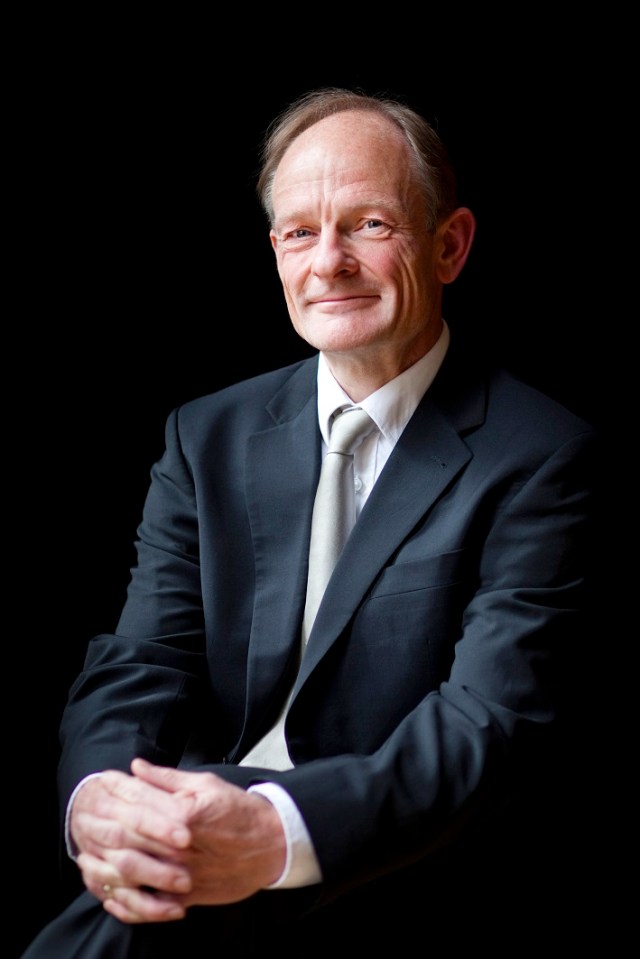
gsm2

Guillermo Silva-Marin, General Director of SOLT

I am tempted to sing the blessing from Turandot that’s addressed to the Emperor.  God bless Guillermo.

Posted in Dance, theatre & musicals, Music and musicology, Opera, Reviews, University life | Tagged , , , , , , | Leave a comment

Song of the Earth

I can’t help noticing symmetry in 2019’s Toronto Summer Music and its Beyond Borders theme.

The Festival opened July 12th with a concert featuring a Mozart sonata including the famous rondo “alla Turca” and a 20th century song cycle in a reduction to a smaller –sized ensemble. Tonight in the last TSM concert at Koerner Hall a Mozart concerto bearing the epithet “Turkish” and another 20th century song cycle presented in a reduced form would seem to bookend the Festival for us.

And both concerts were extraordinary.

Tonight we heard a reduced version of Mahler’s Das Lied von der Erde (aka The Song of the Earth) a work for two singers normally with a large orchestra. In this reduction begun by Arnold Schoenberg in the decade following Mahler’s death, and only finished by Rainer Riehn in 1983, we encounter a new set of parameters for the six songs of the cycle, not unlike what we heard in the reduced “Four Last Songs” premiered last month. I think it becomes a new composition with different requirements, a different kind of balance & dynamics, amenable to lighter voices.

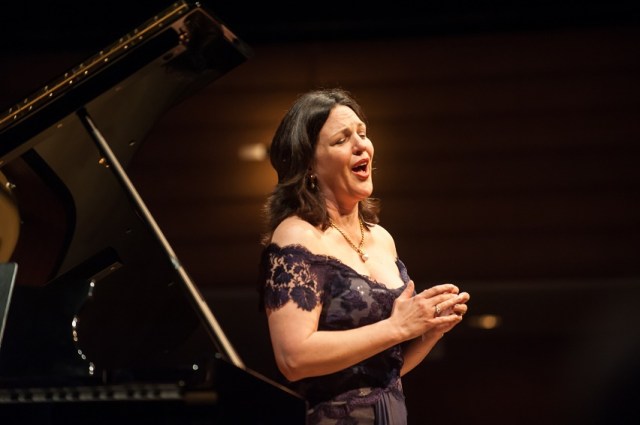
Aug-1-Rihab-Chaieb

Mezzo-soprano Rihab Chaieb

We heard soloists Rihab Chaieb and Mario Bahg, the ensemble led by conductor Gemma New. The Schoenberg-Riehn score is for about 14 players (2 violins, viola, cello, double bass, harmonium, piano, percussion(2), horn, flute/piccolo, oboe/English horn, clarinet(s), bassoon), most if not all called upon to function as virtuoso soloists. There are no easy parts, indeed some are extremely challenging. Add to that the brisk tempi New took—especially in the wildest parts of “Von der Schönheit (Of Beauty)”—and you’re seeing something rare. With the usual orchestration that fast middle part of the song can be a loud murky mess (sorry Gustav), with its overtones of sexual violence: but New and Chaieb were crisp & precise, giving it a hair-raising ride. Is it heresy to suggest that this version fixes a part of the cycle that needs to be fixed? Perhaps.  At this moment Mahler captures the battle between yin & yang, perfect order confronted with a big noise, reflection vs action: just like life itself.   If we are to understand that the reduced version aimed for clarity, it’s fair to say that that goal was achieved, as inner voices came through as never before.

(morning after thought… deconstruction/analysis take us inside a work leading us to understand it better. Students used to be asked to paraphrase & reduce works as part of their study. Playing a piano reduction for instance gives you a sense of the interplay of voices that’s invaluable…DITTO hearing a new version like this one)

It was a great pleasure watching New’s direction, her body language so articulate as to seem to paint the music in the air before her.  This was a fast & dynamic interpretation, one that deserves to be heard again.

Gemma_new

Gemma New (Fred Stucker Photography)

Bahg too has a remarkable voice with a gorgeous colour and fabulous legato, that he mostly kept in check in matching the dynamics of the ensemble. From time to time he unfurled a big gorgeous note especially up top.  Both soloists easily filled the space with their sound, articulating words & expressing the text clearly. These songs were the best thing I heard in the 2019 Festival.  I’m dying to hear it again.

Jonathan Crow has been everywhere in TSM, both as the Artistic Director and often as the star, and tonight he had me wondering if this was a bridge too far given that he was in effect playing exposed solos all night. Yet except for a few moments in the opening movement of the Mozart, when he was perhaps just getting warmed up, Crow continued to impress with his agile sound & full tone. In the first half of the concert we heard 3 movements that got better and better. I think it’s fair to say that the third movement was the one that really excited Crow, both for its quirky inter-cultural overtones (in keeping with the Festival’s theme after all) and for the challenges it posed.

The Festival concludes this weekend.

Posted in Music and musicology, Reviews | Tagged , , , , , , , | 1 Comment

Crow Comes Out

Tonight’s concert at Walter Hall –“Europe and the New World”—in the Toronto Summer Music Festival put artistic director Jonathan Crow into the spotlight.  He seems very comfortable there.

That’s what I’m getting at with the headline. Our concert was sold out, the audience buzzing with excitement.  We watched violinist Crow and pianist Philip Chiu play a series of pieces from either side of the Atlantic.

The young concertmaster of the Toronto Symphony with the matinee idol looks also has wit & charm to burn, as we saw between pieces tonight.  And with this year’s festival he’s arriving as a genuine star in this city.

jonathan-crow

Toronto Summer Music Artistic Director Jonathan Crow

There were four items on the program plus an encore.

  • Brahms’s Scherzo in C minor
  • César Franck’s Sonata for violin & piano
    intermission
  • Heifetz’s arrangements of five selections from Gershwin’s Porgy & Bess for violin & piano
  • Corigliano’s Sonata for violin & piano

Crow introduced the encore with a dedication to Toronto Symphony’s longtime manager Walter Homburger, who passed away a few days ago at the age of 95.

homberger_TSO

Walter Homburger, onetime manager of the Toronto Symphony, who passed away this week.

For the second time in the past few days, a TSM concert encore featured a piece by Healey Willan, namely his Romance.

Chiu was very much Crow’s equal throughout even if we may be a bit more familiar with Crow.  In the Brahms I was pleasantly surprised by the amount of weight he used, especially in a series of triplet eruptions, resembling a galloping rhythm.  It was a great omen for a concert requiring a pianist to take the stage and not merely “accompany” the soloist.

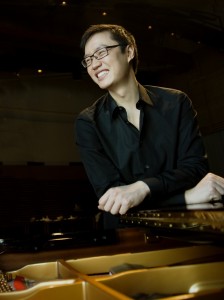
Philip_Chiu

Pianist Philip Chiu

The Franck sonata is perhaps best known for its finale featuring a melody that gets passed back and forth between the two instruments.  I was amused watching Chiu turn his head to watch Crow before some of their entries, a remarkable feat even if he weren’t also playing as well.

After the interval it was Gershwin’s turn via Heifetz’s stunning arrangements.  Chiu gave a recommendation to the audience that tempted me to stand up –big mouth that I am—because he was telling people they need to go see Porgy & Bess.

I’m surprised he didn’t mention that it’s featured on February 1st 2020 in this season’s Metropolitan Opera high-definition broadcasts, starring two singers seen in Toronto, namely Angel Blue (seen in last season’s La boheme) and Eric Owens (seen in Hercules a few seasons back).

What we heard tonight were those wonderful tunes, via Crow’s violin.  Heifetz’s brilliance was able to turn a duet (“Bess you is my woman now”) into a virtuoso violin solo, Chiu’s piano grounding the violin with the necessary jazziness.

To close we were dazzled by Corigliano’s sonata, a work Crow rightly described as having “many notes”. Oh yes, and they were played with fire & passion.

Toronto Summer Music is in its last week.

Posted in Music and musicology, Opera, Reviews | Tagged , , , , , , , , , , , , , | Leave a comment

New beginnings in snakeskin

It has been a week of new beginnings.

Today was Benjamin Kidd’s ordination. As of Saturday July 27th he is no longer a student. I wonder if we’re now supposed to call him “Reverend Ben”? Perhaps that comes out as #RevBen in the world of hashtags.

I wore a shirt that for me symbolizes new beginnings. I recall being a bit scared to wear it to church when I first saw it, recalling the Biblical characterization of snakes.

snakeskin

But maybe snakes deserve second chances? I know I have taken to this shirt now that I see it as an avatar of rebirth, of new beginnings.

I’ve said little about the flood in our house, although yes it’s been a factor in my comparatively quiet spring this year. It’s almost as though I’ve been AWOL for the spring of 2019, compared to past years.

  2017 2018 2019
April 18 15 15
May 16 10 8
June 9 12 8
July 11 8 4
Totals 54 45 35

It has been a challenging spring, this 2019 version.

You may recall my tale of the tick, reporting a bite inflicted several months ago. I didn’t speak of the new dog Samantha (aka “Sam”), new in the sense of “new to us” although she’s 11 or 12 years old. Being a rescue it’s hard to know her precise age. But she’s amazing, often lying underneath the piano while I’m playing. She’s smart enough to know: flattery will get you everywhere, especially if you’re a dog.

SAM_in_piano

If Sam seems a bit blurry it’s because she’s actually reflected in the surface of the piano.

And we had a flood. While we’ve been blessed, fortunate in our insurance coverage, that doesn’t change the disruption we’ve endured the past few months.

Last week we took the first delivery of boxes returning to us from storage including CDs, DVDs, music books, all sort of things we had to live without since the end of March. They arrived on our anniversary, a lovely coincidence that reinforces my sense of new beginnings: new beginnings for Ben, a new life for Sam, and for us as well.

I will gradually return to a more active life, although yes, I still have lots to unpack & organize. The scores aren’t yet in alphabetical order, nor the DVDs.

Of course I did alphabetize the CDs.

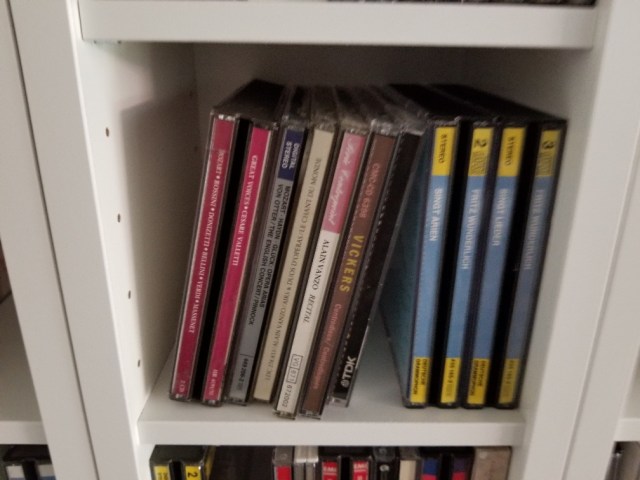
CDs

The mysterious dark one is an interview with Jon Vickers.

I am just basking in the afterglow of Ben’s ordination service, that included a very wacky postlude. I cobbled together a medley of tunes based on Ben’s requests (via Facebook), because of his past associations with the Canadian Forces.

This includes

  • Logistics – (March of the logistics branch)
  • Medical – (Farmers boy)
  • Chaplain – (Ode to joy)

And so here’s how it went.

1) We start with “Joyful joyful we adore thee” (aka the ode to joy from Beethoven’s 9th) in G, and forgive me for presupposing that you know that tune.

2) The Farmer’s Boy in B-flat (G being the relative minor to B flat, in other words easy to segue)

3) March of the Logistics branch in E-flat (a natural, especially when the first notes of this march start on that B-flat)


4) …and knowing that Ben loves Star Wars, we did a little segue into the rebellion’s theme in C Minor (the relative minor to E flat)

5) And to finish we go to the Ode to Joy (Joyful joyful we adore thee) in C (major this time) with a big AMEN to finish.

Bridging each segment I let the fanfares from the Star Wars Throne Room scene (near the end of Episode 4) to serve as the natural glue to attach each segment to the next.

I think there’s a party tonight, but I had to get home to look in on Sam, who had been alone all afternoon.  12 years old, when translated into dog years? (7 years for each human year). Do the math.

She’s older than me, that’s for sure.

Posted in Music and musicology, Personal ruminations & essays, Spirituality & Religion | Leave a comment

Voices Across the Atlantic

The title “Voices Across the Atlantic” could refer to compositional voices or singing voices. You had Barber & Willan from our side of the pond, Brahms, Britten & Monteverdi from the other. Ditto for the performing talent, coming from many places far & near.

Such was tonight’s iteration of the Toronto Summer Music theme “Beyond Borders” venturing beyond the other festival venues clear across Bloor Street to the congenial space of Church of the Redeemer.

And it was extraordinary, professionals at different stages of their careers:

Charles-Daniels-Credit-Annelies-van-der-Vegt (002)

Tenor Charles Daniels (photo: Annelies van der Vegt)

  • Masters of the vocal art such as tenor Charles Daniels and counter-tenor Daniel Taylor (also conducting and being a wonderfully informal host)
  • Steven Philcox, one of Canada’s pre-eminent artists of collaborative vocalism, and a co-founder of the Canadian Art Song Project, at the keyboard
  • And Toronto Summer Music Fellows, a talented young group including baritone Clarence Frazer, who has made a huge impression locally (for example in Canadian Stage’s Miss Julie or more recently in the Tapestry /Opera on the Avalon co-production of Shanawdithit) while still in the first decade of his career.
dam-cf-170927_clarence_frazer_headshot_500px_bw-crop-u53655

Baritone Clarence Frazer

Yet everything was done in that most Canadian way, without any sense of ego or flashiness. For the audience it was an impeccable performance while for the musicians it was an opportunity for collaboration of the highest sort.

Here’s the program:

  • Benjamin Britten: Canticle II: Abraham and Isaac Op 51
  • Samuel Barber: Dover Beach, Op 3
  • Johannes Brahms: Four Quartets, Op 92
  • Benjamin Britten: Canticle IV: The Journey of the Magi, Op 86 (TS Eliot)
  • Claudio Monteverdi:
    • Si ch’io vorrei morire SV 89
    • Adoramus te, Christe SV 289
    • Lamento della ninfa SV 163
    • Beatus Vir SV 268
  • (encore) Healey Willan: “Rise up, my love, my fair one” motet #5

There was no intermission, and refreshments were offered right after the performance.

The Britten Canticles are dramas without staging, for the virtual theatre of the mind’s eye. Where the first one is solemn, the voice of God uncanny as a blend of the two high male voices and the urgent dialogue of father & son, the second with its playful text by TS Eliot is more ironic and distanced from anything overtly sacred, and feels forever timely. For the first we were treated to the blend of the Daniels’s, where the latter added the extra warmth of Frazer’s baritone. And Frazer gave a warm reading of the Barber, Arnold’s being another text that feels brand new when juxtaposed against current events.

We heard another sort of vocalism in the Brahms quartets, as two different quartets of TSM vocal Fellows each sang a pair of the lovely compositions. To close we were going back & forth between secular & sacred texts set by Monteverdi, with Willan’s motet casting the deciding vote in harmony with the church space: although the Song of Solomon would almost seem to erase any boundary between sacred or secular (speaking of “crossing borders“).

Don’t get the wrong impression, the young performers are accomplished early-career professionals not students.  And they’re performing again this weekend as part of the Toronto Summer Music Festival.

Posted in Music and musicology, Opera, Reviews, Spirituality & Religion | Tagged , , , , , , , , , | Leave a comment

New Orford celebrate their first decade

Two for two.

It’s the second night of the 2019 Toronto Summer Music Festival and again it felt like a special event, this time in celebration of the tenth anniversary of the New Orford String quartet.  There’s a natural connection given that one of their violinists – Jonathan Crow—is the Artistic Director of TSM.

orford

New Orford String Quartet: left to right, Brian Manker, Eric Nowlin, Andrew Wan & Jonathan Crow

They gave us another program touching upon the festival theme “Beyond Borders”:

  • Joseph Haydn’s String Quartet in D Major Op 20 #4: influenced by Roma violin
  • The world premiere of Christos Hatzis’ String Quartet #5 “The Transforming”, a TSM commission, that I shall elaborate upon below
    — intermission —
  • Ludwig van Beethoven’s String Quartet in C major, Op 59 #3: again with foreign inputs

Hatzis? That’s heady stuff to be giving a world premiere, even if it’s not also sandwiched between Haydn & Beethoven, arguably the two greatest practitioners of the string quartet.

And his music wasn’t out of place.

The titles of the three movements suggest something  spiritual, the movements titled “Pesach” (the Hebrew name for Passover), “La Pieta (Jerusalem)” and “Regeneration”.  It’s often in a very rhetorical style, as though the instruments are doing call & response or dialoguing with one another.  In other places they are chordal suggestions of a choir, although I’m likely projecting something spiritual, knowing the movement titles.  In the second movement there’s a tonal melody played by Jonathan Crow, and later violist Eric Nowlin plays something that sounds a lot like Parry’s hymn “And did these feet”.  I have to assume Hatzis knows what he was doing in choosing a hymn that’s at least an alternate national anthem for England, a tune composed in the darkest days of WW I with nationalist if not imperial associations.  I’m not saying I don’t like the tune, I’m saying that suddenly it’s as though a big Union Jack was unfurled, especially as you could hear the change in the deportment of the listeners.   So be it, and perhaps this is exactly what Hatzis expected and wanted..

It’s an accomplished and polished creation with some marvelous moments. In the last movement I was especially moved by the use of harmonics to create some wild effects, truly magical.  While I don’t know if this is ground-breaking or “new” (whatever that means), it’s quite impressive whenever I hear a composer demonstrating that they knew how to achieve striking colours.  There’s a place near the end that reminds me of the last minute of Also sprach Zarathustra, where Strauss seemed to be posing the question about the meaning of life, balanced and unresolved between two opposing tonalities that might suggest negation & affirmation.  Hatzis does something similar except, once he’s posed the question, he brings us to a very firm & decisive answer at the end.  Hatzis would seem to be saying his eternal  “yes”.

On either side we had a pair of stunning quartets.  The Beethoven pushes the players to the limit.  All but smiley cellist Brian Manker wear a poker face, whereas Manker wears his heart on his sleeve.  Often he seemed moved by the lovely playing of the other three across from him.  Violinist Andrew Wan was especially strong in the opening movement, while Manker, in that wacky 2nd movement with all that pizzicato seemed to be channeling Charlie Mingus in his cool pluckings.   To begin we heard Haydn’s op 20 #4, in D, clean & as impressive as you could ask for.

For an encore we heard another Orford commission (but of course not a premiere), a lovely Pavane by François Dompierre that settled a raucous crowd down with its tranquil tunefulness.

The festival continues! While I didn’t drink any koolade yes I did buy the T-shirt.

T_shirt

My new T-shirt

Posted in Music and musicology, Reviews, Spirituality & Religion | Tagged , , , , , , , , | Leave a comment

Beyond Borders with Toronto Summer Music

Tonight was the opening concert of Toronto Summer Music, running until August 3rd at multiple venues in Toronto. In this the third year of Jonathan Crow’s tenure as Artistic Director the talent pool seems a bit deeper, suggesting exciting days ahead.

jonathan-crow

Toronto Summer Music Artistic Director Jonathan Crow

The theme of the festival is “beyond borders”, a fascinating concept. CBC’s Tom Allen, our host for the evening, called ironic attention to the relevance of the subject since November 2016 aka the moment Donald Trump’s presidency put an additional spotlight on immigration, walls & refugees.

It was not your usual concert, featuring Allen’s ironic commentary. I’ll only quote one joke, his opening words of appreciation and pride for Toronto’s Koerner Hall: “unlikely to leave Toronto even if someone does give it $150 million”.

What can it mean, to go beyond borders? A great deal and it gets clearer if you look at the adventurous programming we can expect over the next few weeks thanks to Crow & his team.  Music sometimes crosses national borders. Allen wanted to suggest that the music doesn’t know borders, but I’m not so sure. While it was kosher to appropriate exotic cultures 100 or more years ago it’s now understood to be problematic, as the Canadian Opera Company’s experience with Louis Riel and a sacred song used without proper consent illustrates. Okay, so for centuries it’s been okay to borrow, whether it was Mozart going alla Turca or the Roma (or “gypsy”) tunes spicing up violin music. There are of course disciplinary borders too, that can be transcended in performance, between popular folk and classical, or even in the norms of what we expect in a concert.

The juxtaposition of solo piano, accompanied violin, and vocal pieces made everything seem a little edgier, the eclecticism making everything sound better. Usually we get several pieces by a composer such as Chopin, not a single shining jewel as we had tonight in the Ballade in F Minor Op 52, played by Jon Kimura Parker. Allen’s little introductions made the curatorial choices that much stronger, a series of light—hearted explanations, although in speaking of Chopin, that curious exile from Poland, Allen was much more serious, and highly illuminating.

Here’s the program:

  • Mozart’s piano sonata in A “Alla turca” –Jon Kimura Parker piano
  • Ravel’s “Cinq melodies popularies grecques” –Adrianne Pieczonka soprano & Steven Philcox, piano
  • Sarasate’s Zigeunerweisen –Kerson Leong violin & Rachael Kerr piano

–intermission—

  • Four Kreisler pieces (La gitana, Lotus Land, Hungarian Dance 17, and Tambourin chinois)—Leong & Kerr
  • Chopin Ballade no 4 in F minor – Parker
  • Richard Strauss’s Four Last Songs in a new arrangement by John Greer for string quartet & piano –Pieczonka, Philcox and the New Orford String Quartet (Crow, Andrew Wan violin, Eric Nowlin Viola, Brian Manker cello)

What an evening of riches, enhanced by the contrasts between items we were hearing. There’s so much I could say, but I’ll limit it to a few key elements.

The reduced version of the Four Last Songs often sounded like a paraphrase, an original approach to a well-known piece, which isn’t to say it was bad, only that it sounded & felt new both to the ear & as I watched the artists. Curiously a paraphrase or an adaptation of an existing piece also takes us across borders to a new place. I missed the horns in the coda of the first song (“Spring”) and the woodwinds again in the opening to “September”, leading a chap behind me as we walked out to call it “fussy”. We were hearing an inner voice elevated to a prime-time role played beautifully by Crow, but all the same, changing the character of the piece. I didn’t mind although the fellow who was speaking wasn’t quite as thrilled by it. The further we went in the cycle, the more I got used to the sounds of the ensemble and accepted it as “Strauss” rather than “Greer”.

Adrianne Pieczonka-Photo by Lisa Sakulensky-Courtesy of the Royal Conservatory of Music

Soprano Adrianne Pieczonka (Photo by Lisa Sakulensky)

Vocal careers seem to be getting shorter. Why? Perhaps the answer is: because few people show the intelligence of Adrianne Pieczonka. I don’t need to mention the voices that are gone because of bad choices. But Pieczonka is sounding amazing, the voice still luscious and round and gleaming top to bottom. Throughout I was astonished to hear her carefully holding back. The high “B” in “Spring” was sung so softly, the B-flat in “Time to Sleep” floated gently. Pieczonka has so much voice to give –she gave us a Liebestod with the Toronto Symphony not so long ago. But contrary to my dumb-ass suggestions (wanting her to undertake bigger tougher roles), the reason she sounds so youthful and indeed so perfect is because she has the backbone to say no to those who can’t see the big picture. Of course this wasn’t opera nor even a normal performance of the Four Last Songs, which normally require a singer to work against the textures of a full orchestra in a big hall, not this tiny group in a small space such as Koerner. Pieczonka’s musicianship was a display of maturity & restraint of the highest order. Artists need to say no more often, resist the temptation to ride the gravy train, because if you sing too much too soon: the career will be over. What a treasure Pieczonka is, what a great voice and especially, what a smart singer, an intelligent artist.  She was in tears at the end of the last song, and no wonder.  The cycle was given a wonderful original reading.  I hope that this version gets performed again.

Parker gave us a very romantic evening of music, whether in the incandescent Chopin that silenced the hall before it exploded in adulation, or the Mozart sonata. And just as Parker was offering virtuosity in the service of beauty & truth, which is to say, without being a show-off, Crow’s programming suggests a comfort with virtuosity for its own sake. Leong’s pieces are all crowd-pleasers, opportunities to tease an audience with pure skill, and Leong didn’t disappoint. Rachael Kerr was mostly functioning in support but had her moments as well.

The festival continues! For further information click here.

Posted in Music and musicology, Opera, Reviews | Tagged , , , , , , , , , , | 2 Comments

Remembering Larry Earlix

It’s a day for sentimentality.  My mom’s had her birthday, which is of course a wonderful occasion: but I won’t talk about that here as it’s a bit too private for the blog.

Yes Virginia there are things I don’t babble on and on about. I also don’t talk about why I’ve been somewhat quiet the past few months, blogging far less than usual.  I don’t want to complain other than to say I’ve been busy due to a flood in my basement.  We’re very lucky with how it has turned out (and thank goodness for insurance coverage) but that doesn’t change the fact that one gets preoccupied with all sorts of details.  I’m going to write a long personal blog today because of how I feel about Larry and mortality and the necessity of grabbing life when you get the chance.

I hadn’t thought of Larry Earlix in ages and ages.

And he pronounced it so that it rhymes with “girl—ix” or “swirl-ix”, no matter how you might think he—a guitar player after all—should have pronounced it… No not “Ear-licks” or “beer licks” apt as that might be for a really good lead guitar.

But I was reminded of Larry listening to the radio yesterday, as we were invited on “Here & Now” (an afternoon drive-home program) to remember the Volkswagen Beetle and to share our memories.  I didn’t call because I knew at the time that what I was remembering would be impossible to capture in a little phone-call to the kind folks curating the contributions for Here & Now.  Indeed I wondered how sentimental I might become recalling Larry, the coolest person I knew at the time if not the coolest person I ever met.

Of course one man’s cool is another person’s faux-pas, so it’s relative.  Others from that era might roll their eyes at the thought. Larry was not tall.  Larry was not imposing. Larry was gentle and kind, articulate but not an imposing academic. Many knew him for his background support work, not any starring roles.

So, in the process of thinking about the car I remembered a lot of other things about someone who was for a time my best friend.

I remembered that I phoned Larry awhile ago. It must have been the 1990s, I realize now. Wow times flies.  I looked him up through something that might have been the internet.  Was there a google? No, it was long distance directory assistance. Yes I remember now you used to be able to ask for phone numbers, if you had the right part of the world.

But I found a phone number and called him up. I remember a friendly chat, with someone I’d known long before, the voice so familiar.

He suggested I come visit him in California.

If you have that impulse to call someone, to chat or talk? Do it.  Go with it. Don’t hesitate, wondering if there will be a next time.

That call was the first time in a long time, and it turns out, the last time we would or could speak.

Googling today I couldn’t find very much.  If I had, I’d do what I usually do, I’d make a list with bullet points. By now people know me for that, right? I do what I do blogging as in my life as a manager at the university, whether I’m talking to my customers or my staff or my boss.

But when you find next to nothing, bullets are out.

So what did I find?  The first link Google offered, I wasn’t even sure it was him at first.  The name Earlix is uncommon, just like Barcza, which is a huge advantage when you’re googling.  If your old pal from the 1970s is Smith or Jones or Mancini or Singh: you will have a much harder time.

Google gave me three possibles, and in each case I was skeptical (feel free to search for yourself, using “Larry Earlix”).  The second seems only marginally possible, but I’ll come back to #2 in a moment.

#1? The first thing that caught my eye was disheartening especially if I admit to myself that yes, I was hoping to talk to an old friend.  The first phrase is

“Unfortunately, Lawrence Earlix passed away at the age of 51, the date of death was 07/26/1998.”

Hm could it be the right Larry Earlix? Reading those words I was hoping it was the wrong one.

The site came up as

Lawrence Earlix (Larry), 51 – Monterey, CA Background Report

I don’t know about background reports. And I was just curious about an old friend. IS this him?  Larry was older than me.  In 1998 I was 43. Hm, 51? I didn’t know how much older he was, but that sounds totally plausible.  I saw Larry regularly in the latter 1970s when I was connected to the University of Toronto’s Varsity newspaper.  I was the classical music editor –a free job—and also the proof-reader –a paid gig. Larry used to drive me and the layouts to the plant up on Lesmill Rd. We used to go up the Don Valley.

Jeepers it’s all coming back to me, in a stream of banal details that are rich with associated memories.

I remember the guy who ran the plant where they printed the paper, who used to call the Varsity’s layout editor “Alex Alphabet”: because he had a long Ukrainian name, and in those days it was normal to mock anyone ethnic.  I don’t think there were any persons of colour, and speaking of colours, LGBTQ was barely on the horizon on a campus with perhaps one or two openly gay professors, one of whom I admired very much & studied with (although he –the brilliant Douglas Chambers –challenged me & my miserably mixed up attitude saying “why are you here”?..a question I still haven’t fully answered to this day. I’ll have to talk about him in another blog).

The only other thing I found on the internet about Larry that I’m certain is him –and which sadly corroborates the fact of his death in the first URL I shared– was a tiny page with a photo from 1995.  Because it’s again mentioning Monterey California, I have to think it’s the same guy in both and yes this is him in the photo.  It’s the third of the three things that come up on Google,, with this URL: https://www.qsl.net/kc6jev/

aaa_LARRY__imageTV0

Ham Radio operators Greg Pool, WH6DT, and Larry Earlix, KC6JEV, During the 1995 Monterey Floods

Larry is the nerdy looking fellow on the right.  He’s likely posed standing because the fellow on the left who is seated is probably much taller.  I can hear his accent in my head, a very American intellectual kind of accent that brands him as a northerner, even if I should associate him with the mid-west.  He told me of his time in SDS, Students for a Democratic Society, the Chicago riot at the democrats convention in 1968 (a time like our own?  Nixon would win that election) but I don’t know what state he actually came from, was born in where that accent originated.

…where his mother and father had lived.

So #2 is much more ambiguous. No wait, having looked more closely I’m sure it’s him also. He’s politically active back in 1987 which is the date of a news report.

https://www.latimes.com/archives/la-xpm-1987-12-11-sp-18712-story.html

I am going to quote this piece from LA Times because links have a way of ending or changing & then ceasing to work:

  • just like the phone numbers of old friends with whom we lose touch, or
  • just like the beating hearts of our friends.

The piece is written by Pete Thomas, Dec 11 1987.  And I quote:

The Alliance for Resource Management announced that an initiative to ban gill nets along the California coastline did not reach the 550,000-signature goal required to put a constitutional amendment on the ballot for June of 1988.

This is the second time such an initiative has fallen short of the necessary signatures. The first was sponsored last year by editor Ken Kukuda of South Coast Sportfishing magazine.

The final count is incomplete, but ARM spokesman Larry Earlix estimated the shortfall at 250,000 signatures.

Despite the failure, Earlix said he was optimistic about next year.

“We’re already prepared for next time,” he said. “We know there is a broad-based general concern and we feel confident that we have the public mandate to take our position to the California state legislature. A whole state-wide organization of activists is now in place.”

Should it fail again?

“If there continues to be a lack of commitment by the state in protecting the fragile ocean environment, we’re just going back to the people and do it again,” Earlix said.

As I quote Pete Thomas’s piece from 1987, over 30 years ago, I think I’m honouring my mother and my old friend Larry who is fading away in my dim brain.  I suppose I’m honouring myself as I meander through memories of long ago.

Larry was a political animal. I mentioned SDS right? Larry had been in Canada for awhile. I don’t know if it’s accurate to say he was a draft dodger—that bizarre epithet of another time—because I don’t know the full timelines of Larry’s life.  Given that he was at least 5 years older than me and was doing graduate work in Psychology (ah yes, I am remembering that he was involved with the student union for Psych, that was in the basement of Sidney Smith Hall), it was entirely possible that he had come here—or somewhere in Canada—during the Vietnam War.

He had been in Chicago in 1968, a decade before I met him.   Argh, there’s so much I don’t know, and will never know about him.

I remember riding in that Volkswagen Beetle, not just the twice a week runs up to the plant (hm was it twice a week? Or was it three times? I can’t remember) but a trip up north. I had told him about the Perseids, one of the great pleasures to be had in the summertime.  This year the Perseids peak on August 13th, by the way.  Larry was enthused, and so we went north on Hwy 400 until we decided we’d reached someplace that was indeed dark enough.  The Perseids are wonderful, but even more so when you travel out of town, away from the bright lights of the city.

I also remember the last chapter of our relationship, when I guess I became impossible.  I was music-directing a show at the U of T, a production of Joker of Seville with texts by Derek Walcott, music by Galt MacDermot. Ron Bryden had worked with Walcott at the Royal Shakespeare and was enthused about the show.  Ah this is one period of my life when I wish I could have a do-over (!).  I learned a great deal about middle-management working on this show, trying to cope with the acoustics of Hart House Theatre, singers of varying skill levels (there was at least one tone-deaf singer whose song was eventually cut, at least one rhythm-deaf singer trying valiantly to sing something syncopated). They were working without amplification, accompanied by a band who were perceived as too loud and therefore felt unwelcome and alien in a show where they should have been the heart & soul of the story.  I saw the hurt in their faces (Larry wasn’t the only one) and didn’t know what to do. I was young and innocent and had not yet learned that most valuable of skills, knowing when & how to keep my mouth shut.  It didn’t matter that Larry was a fine guitarist, not when we were seeking to reconcile the impossible acoustic & the unamplified voices.  I think this is where we parted company, where Larry was kind & gentle & loyal even though he had committed to something that was a lot less fun than we had expected.  But Larry was a great stabilizer, like the heavy water in a reactor that keeps things from over-heating.  He was cool and ironic and yes, distant: while perhaps nursing slights that I didn’t properly address, being swamped with demands from all sides.

But there are some great memories.

We saw Animal House together the first week it opened, possibly the day it opened.  Yes it’s the quintessentially sophomoric sexist film that is like a best friend who keeps making jokes to make a Donald Trump proud, a film packed full of talent & funny lines and also moments so politically troubling that I find the film hard to watch.  Larry saw it as a very political film; I remember he said it was about the birth of the counter-culture.  It’s very much about the end of an era of innocence when you consider that the last scene takes place on November 21st 1963: the day before Kennedy was shot.  Good or bad, I associate the film with my own youthful times with Larry. Funnily enough I was reading about this film, and the many tales of its creation on this IMDB page, which reminds me—again—of this whole process of remembrance and forgetting:
and mortality.  https://www.imdb.com/title/tt0077975/trivia

But there’s no question that people like Larry punched above their weight-class, influential beyond what you might expect.  I recall a few American exiles of the 1970s, who influenced my life & influenced others in our city.  I met Kip at this time, a pacifist Quaker who had come to Toronto with his wife to avoid the draft, taking me to the Friends House.  I recall Jane Jacobs coming north with her children to keep them out of the war.  I wonder if anyone has tried to capture the cumulative influence on Toronto of this exiled group, some of whom would return to America when it was permitted.  Larry went back and had a whole life in California, trying to stop gill-netting: and who knows what else…? I hope our bad time in Joker didn’t persuade him to stop playing the guitar. He had a lovely sound, wonderfully musical.

I remember him for one clever thought he shared, that could epitomize him. He kept his valuable guitar in a beat-up case, so that one would under-estimate what might be inside.

Larry himself was easy to under-estimate, so much more than what he seemed.

If you see this and knew Larry in any capacity please feel free to get in touch. I’d love to know more.

Posted in Dance, theatre & musicals, Music and musicology, Personal ruminations & essays, Politics, University life | Tagged , , , , , , , , , , , , | 5 Comments

Operatic thought for Canada Day

Is it true that Alexander Neef, General Director of the Canadian Opera Company is headed back to Paris?

Today I read Michael Vincent’s news report  via Ludwig-van.com that was a natural segue from the conversation I had with my companion at the symphony, based on a report in Le Figaro.  Note that it is not confirmed yet.

“Une rumeur insistante court à tous les étages de la Bastille”

It’s hard to know, so while we’re on our Canada Day holiday weekend, why not let our imaginations run wild? Tuesday morning things will be back to normal (the global climate catastrophe, election talk on either side of the border, scandals & rumours).

I speculated last night as to whether we should be concerned that Neef is going to leave and poof she told me this morning about Michael’s scoop.

Later I googled “Neef Paris opera” and both Michael’s piece came up AND a piece from June 26 2008 in the Toronto Star from Martin Knelman announcing that

The Canadian Opera Company has named Alexander Neef, the 34-year-old casting director of the Paris Opera, as its new general director.” 

Was it really 11 years ago?  But the rumour certainly makes sense given that there’s already a relationship & connections going back more than a decade.

neefLR_SamGaetz

Alexander Neef (Photo: Gaetz Photography)

In the wake of last night’s concert I find myself asking questions that hopefully will occur to others in powerful positions.  Michael stated the likely impact, namely that Neef might leave before the end of his current contract.

When would he go?

And who follows? That’s where my headline comes into it. Will the next General Director of the COC be a Canadian?  I wonder if I’m the only one posing the question. It comes on the heels of last night’s concert, when I couldn’t help noticing that Peter Oundjian –a Canadian music director for the Toronto Symphony–is to be succeeded by Gustavo Gimeno, who is not Canadian.  There’s a time & place for nationalism, but loyalty to one’s own country doesn’t necessarily get you the most talented person.

So in other words I wonder: is there a Canadian who is up to the job?

And one may ask whether nationality matters, given that the German-born Neef has at times been a strong champion of Canadian talent, on either side of the footlights.  Earlier this week we saw Doras awarded to COC productions composed, directed, designed by and starring Canadians (Rufus Wainwright, Robert Carsen, Michael Levine and Gerald Finley).

Could a Canadian-born artistic director do any better than that?

Happy Canada Day.

(the song is dedicated to Alexander)

Posted in Music and musicology, Opera, Personal ruminations & essays, Politics, Press Releases and Announcements | Tagged , , , | Leave a comment

TSO & Gimeno: a question of leadership

Tonight was the first concert in the Toronto Symphony’s last weekend of the season, giving us a glimpse of their new music director Gustavo Gimeno. Will he come to be known as GG? While last week’s concert with Donald Runnicles suggested a proposition, tonight was QED with GG. My hypothesis: that the TSO were in need of leadership, hungry for it, starving;  the proof can be seen in their enthusiastic and committed playing, especially with GG.

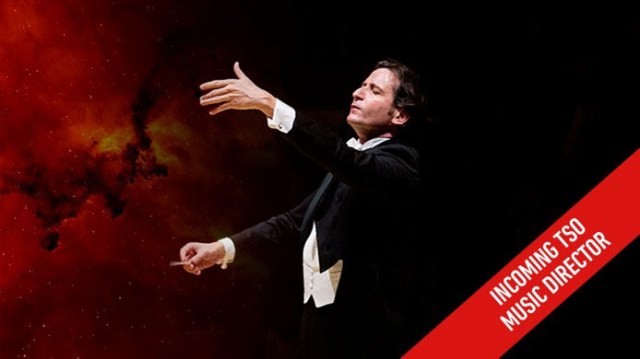
incoming

Incoming Toronto Symphony Music Director Gustavo Gimeno

Forgive me, this is one of those nights screaming for a preamble, for context above & beyond the concert: which was amazing by the way. Hurry and get your tickets before they’re all gone. The pieces are great but the performances were exceptional, the chemistry unmistakable.

I keep hearing people in Toronto musing about the magic of team leaders, that je ne sais quoi that propels a Kawhi Leonard or a Nick Nurse to victory: taking the team along with them. It’s at least a bit of a chicken & egg thing, though, when you consider that the one person can’t do it alone, that you have to assemble the key parts of the team before the special individual leads them to the promised land.

I want to properly recognize where the TSO have been and where GG puts them. Under their last long-term music director Peter Oundjian they were sometimes a remarkable collection of talented players including some brilliant young section leaders, building towards a wonderful future. You might well ask, when is the future?

I relate at a deep level to the conundrum, where we found Oundjian especially good leading the orchestra in concerti –accompanying a soloist—yet lacking some essential vision when playing big works. And in the meantime those young talents were nurtured by Oundjian the mentor, a man of wonderful kindness and generosity but perhaps not enough of an egomaniac, or whatever it is that a conductor requires, to put them over the top.

What is a leader after all? Do we know them by what they do, or by the results of those who are being led? We see this over and over, that the skills of a star player –whether in hockey or basketball OR opera or symphonic music or theatre—don’t necessarily translate into the skills to lead. They’re not the same skills are they? The assumption that a good actor makes a good director, or that a good stick handler or goal-scorer makes a good coach has been shown to be wrong over and over, because of course the skills of a leader are totally different than those of a star. The baton handling is the least of it. We watch Mayor Pete or Kamala Harris or Donald Trump tell us what they believe, and for some reason some people are moved by person X more than they’re moved by person Y, let alone what they manage to achieve if/when they’re put in charge. But I’ll leave off about leadership for the time being, although I suspect I’ll come back to it again in the next little while, because it’s such an important question.

So my first observation is simply that the TSO were hungry for what GG has got and what he gives them. They played really well tonight. The response of the members of the orchestra is a symptom, like children bouncing out of bed early on Christmas morning, or a cat running towards the sound of the can-opener. I believe they were primed and ready, given that they were brilliant last week with Runnicles.

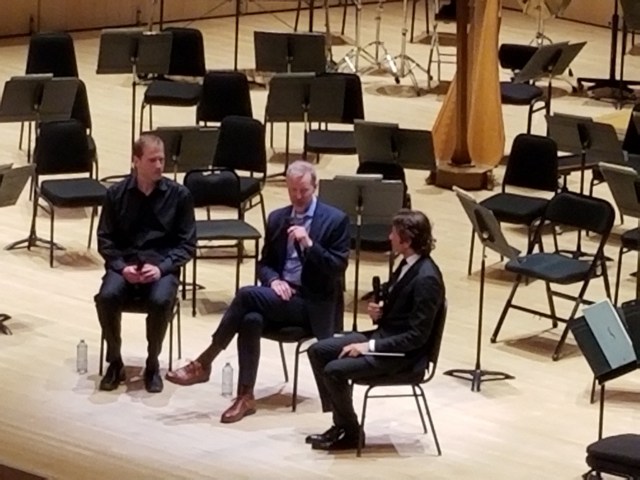
What does GG do to get that response? I can only go by the de facto evidence, both of the performances and in Jonathan Crow’s comments in the post-concert interview, when he confirmed the rapturous response of the TSO, a curious sort of chemistry.

20190628_213655_resized

(l-r) Concertmaster & soloist Jonathan Crow, TSO’s CEO Matthew Loden and conductor Gustavo Gimeno

Tonight we heard three works:

  • Sibelius’ violin concerto, with Crow as soloist
    (intermission)
  • Prokofiev’s symphony #1
  • Stravinsky’s Firebird Suite

As a former percussionist GG brings a steady hand to the tiller. I’m not suggesting he’s metronomic. But there is the matter of meter, a word I haven’t heard anyone speak of in awhile. Let me illustrate with reference to tonight’s concert.

Do you ever wonder how a band or a soloist avoids speeding up or slowing down? It’s a dreadful thing if you notice a change, unless it’s a deliberate effect such as you might get at the breathless ending to a Rossini Overture. While one mustn’t seem like a machine one wants an organic steadiness, a natural flow. GG gave me a new perspective on that Prokofiev symphony tonight, one I’ve heard many times but never quite like this. The first & last movements are sometimes taken so fast as to seem rushed, as though we’re watching a circus performance, virtuoso excellence balancing on the edge. What I found especially breath-taking about these four movements tonight was how everything seemed easy, relaxed, unhurried. The inner voices were not just clear, but seemed to be part of a conversation, as though the parts were answering one another, as though the players were not just playing their parts but listening to one another. The result was lusciously beautiful like a voluptuous salad, where every part enticed you. The Larghetto was slower than I’ve ever heard it, exquisitely articulated throughout. GG’s approach to the gavotte was especially interesting, as he played with the tempo, the phrases feeling like thoughtful gestures back and forth. If I didn’t know better I’d say that this is an orchestra who are feeling a great deal of trust, for their new leader & for one another, given the transparent textures & the precise entrances. There was no sign of any fear or indecision in the playing, reflecting their confidence in their leader & his tempi. For the Firebird, it’s the same quality but on a larger scale. I found that at times GG employed a slower tempo than what I’d previously encountered, in other places, faster: but in every respect, it hung together, collegial & alive. I don’t think it matters sometimes what vision the leader has, so long as they’re decisive and specific. The orchestra followed and for now at least it’s a love-fest, one you can likely see at all the concerts coming up this weekend at Roy Thomson Hall Saturday night & Sunday afternoon.

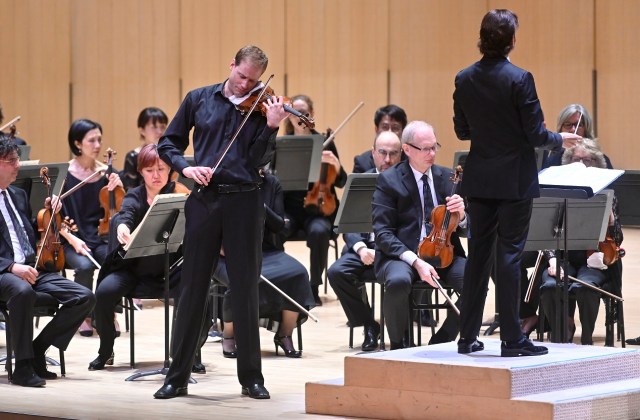
Before intermission we heard a different sort of work, namely Sibelius’ violin concerto with concertmaster Jonathan Crow as soloist.

RESIZED TSO June 28 Photo Credit Jag Gundu

Violinist Jonathan Crow with the TSO led by Gustavo Gimeno (photo: Jag Gundu)

As orchestra & conductor get to know one another –given that we’d expect this to be the beginning of a long-term relationship—it’s a great idea to have the orchestra’s resident virtuoso play a concerto, as a kind of act of calibration. They’re getting the feel of one another, right? So there they were out on the dance-floor together, getting comfortable with one another.  They reported in their post-concert Q & A that they’re speaking the same language.

Speaking of which I couldn’t help wondering: how many languages does a cosmopolitan artist like Gimeno speak? In the Q & A he spoke articulately in accented English, but I’m sure he also speaks Dutch (he had a position in Holland), Spanish, perhaps also German & French & Italian?

We have to wait awhile for the GG era to begin, not until in the fall of 2020. Our appetites have been whetted.  Argh I can’t wait.

Posted in Music and musicology, Personal ruminations & essays, Reviews, Sports | Tagged , , , , , , | 1 Comment