I got lucky.
The Canadian Opera Company Cosi fan tutte that I saw Saturday October 10th is the best one yet.
This is the third time that the COC have staged the Atom Egoyan production of the Mozart opera “Così fan tutte, subtitled “The School for Lovers” Not only does it feature a stunning design featuring a big reproduction of a Frida Kahlo painting for the curtain, all sorts of colour from huge butterfly wings, and ships on top of heads, but it also features a fascinating concept drawn from that title.
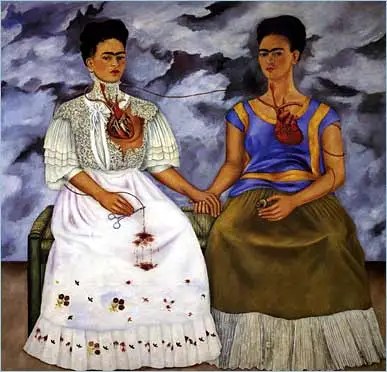
The idea to present the opera showing an actual school for lovers, with Don Alfonso as the experienced teacher, is a metaphor. In director’s theatre sometimes the original opera’s plot collides with the idea superimposed over top by the director, disrupting or complicating the usual presentation.
Egoyan’s idea is wonderfully conducive to the story: except that in its first iteration it was more serious. The story features a bet between Alfonso & two young men who have been proudly extolling the virtues of their fiancees. That first time in 2014, with Sir Thomas Allen as the mature Don, I found the production stiff, slow, a bit full of itself, pompous and overly complex. I think that’s how it was directed, how Egoyan wanted it to work, seeking to inject depths into a comedy.
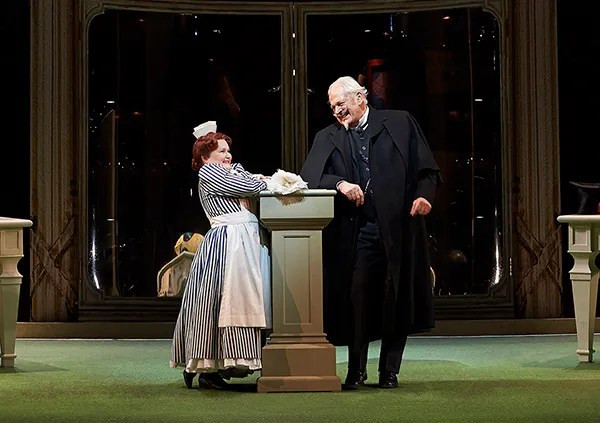
There were some great moments in the singing & delightful images in the set & costumes by Debra Hanson. But speaking as someone who has known and loved this opera since childhood, it felt long and weighed down by its own pretentious concept. It felt like Ingmar Bergman or Woody Allen trying to do Cosi fan tutte, psychology & depth and yes a few moments where my jaw dropped, but unsure how to process it because of its collision with my previous experience of the opera.
In 2019 the COC revived it for the first time, five years after its first run with Russell Braun taking Allen’s role as the mature Don.
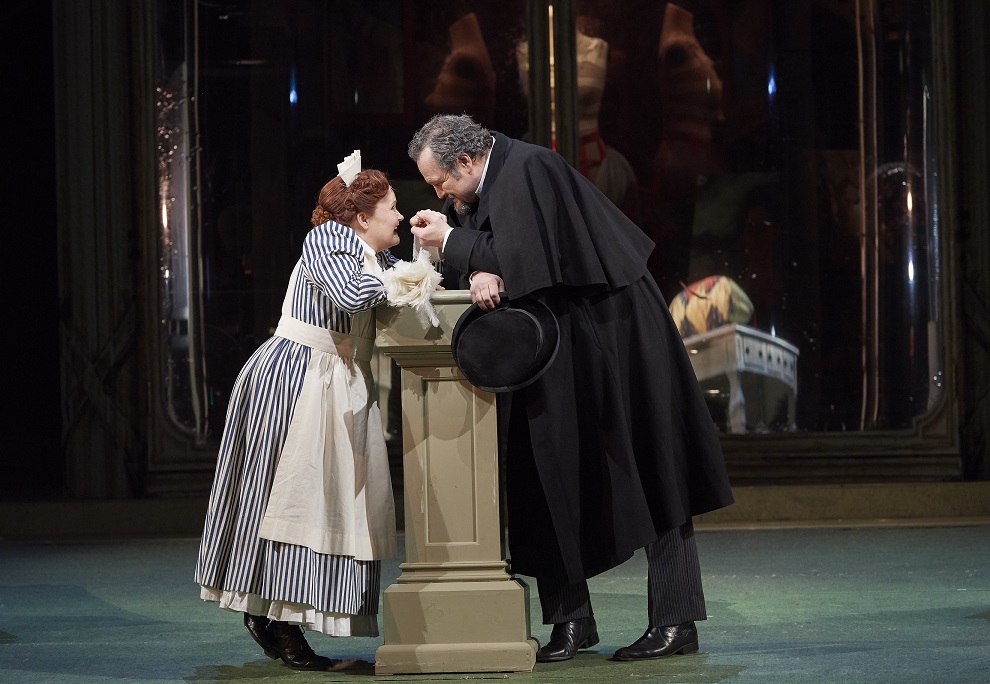
What a breath of fresh air that was, so different. The comedy was no longer being crushed under the weight of psycho-babble, and emerged especially as the cast interacted much more with Alfonso, possibly because they weren’t so much in awe of a singer who had been knighted. The original work began to assert itself, Mozart reminding us how the piece could be done. Maybe Egoyan liked that sense of awe, given that the school for lovers concept revolves around the headmaster? Braun took us closer to the original.
Another factor energizing that revival was Bernard Labadie, who conducted in 2019 with quicker tempi, breathing life into Mozart’s music. Having mentioned a conductor you may wonder when I am going to explain how i could put “starring Johannes Debus” into the headline, but I’ll get to that in a moment.
And so in 2026 in its third incarnation Cosi is truly alive. The design from Hanson and the concept from Egoyan are all still there, but the opera is back to its old self, a fast-paced comedy. While Egoyan’s name is on it and his program note appears dated 2026, I attribute the changes to the assistant directors, namely Marilyn Gronsdal (who also worked on the 2019 revival of Cosi). But it seems that the ponderous weight is lifting with each iteration, the pace quicker (thanks to the conductors), the tone lighter. Daniel Okulitch was our Don Alfonso, energizing the comedy even more than what I reported with Russell Braun, in the process taking the role and the work closer to how it was written.
Tracy Dahl was Despina once again, the star in 2019 and 2014. I remember observing –sadly– that my first laugh in 2014 came in her first scene. She is still the funniest one onstage, a bit older but also wiser, the one we are looking at and listening to.
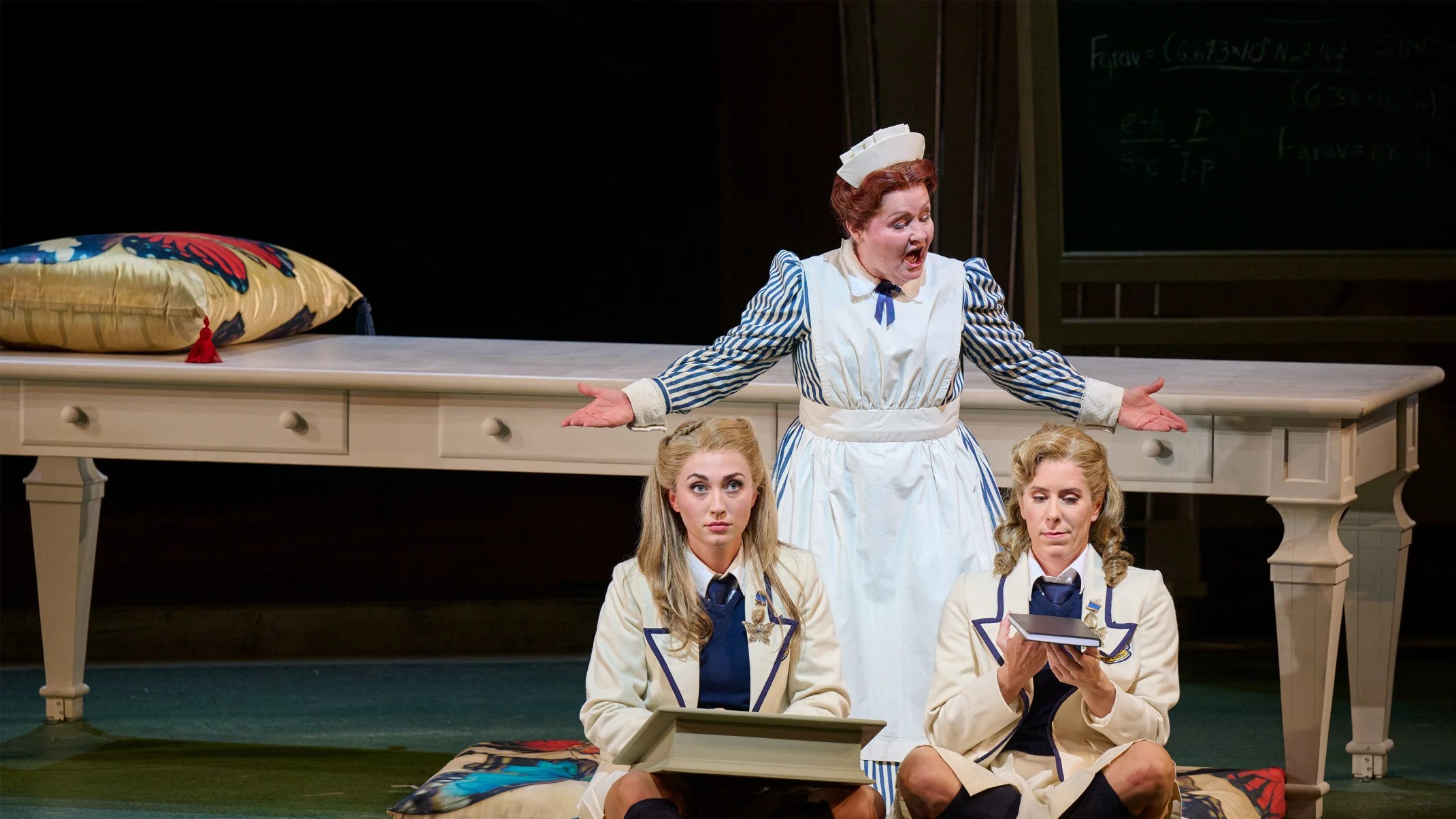
I think she interpolated a high C into her scene where she’s electrocuted by her own therapeutic device! She was inventive, always fun to watch. I love her so much.
I’m excited, writing about this, wanting to report two or three things at once, in a show where after all, we had six soloists, a chorus and an orchestra all contributing to the magic. Ah but first, I must report that there was a bit of drama before the show as COC General Director Ian Derrer came out to announce that tenor Laurence Kilsby was indisposed due to illness.
One singer’s misfortune can be a blessing for someone else. While I am sympathetic, I am especially pleased when I get to see a Canadian take the role of an imported singer. Owen McCausland who had sung a small role the night before in la traviata, listed as understudy for Ferrando in the program, stepped in to sing the role.
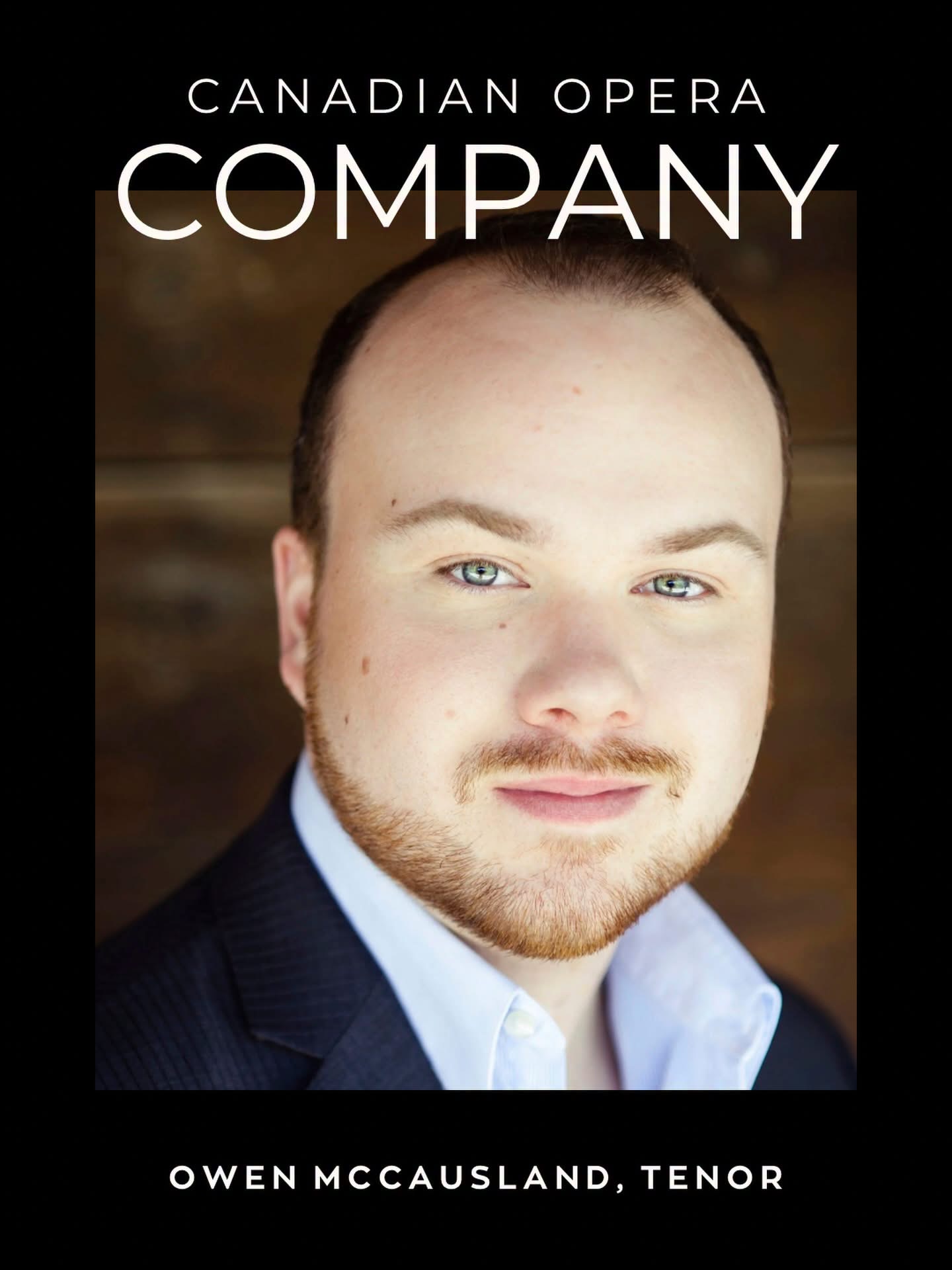
I’m happy to report that Owen sang very well. His tenor voice has hinted in past appearances that he might have a future as a spinto or even dramatic tenor, but as Ferrando he held back, the stylish Mozartian throughout while saving himself intelligently. In a show where I heard at least two in the cast who were “pitchy” (a word I first heard on American Idol, to suggest someone who is either sharp or flat), Owen was never off pitch as far as I could hear. And he played the romantic comedy very convincingly. I wonder if the excitement surrounding his substitution energized everyone.
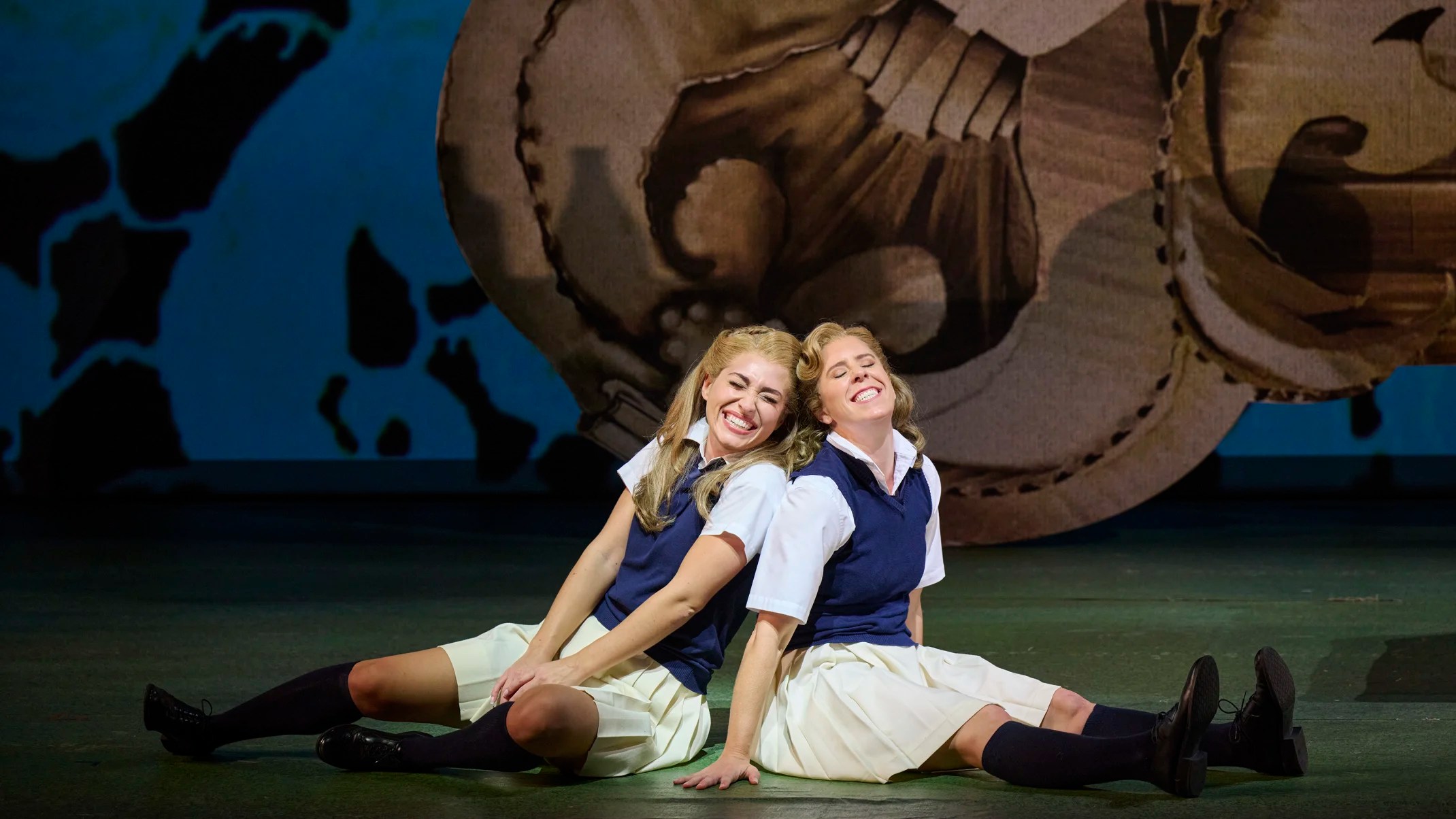
The comedy was inspired, all six of the principals had their moments to shine. The audience loved Joel Allison as Guglielmo, Lauren Fagan as Fiordiligi, especially Martina Myskohlid as a stunning Dorabella both in her vocalism & comic shenanigans.
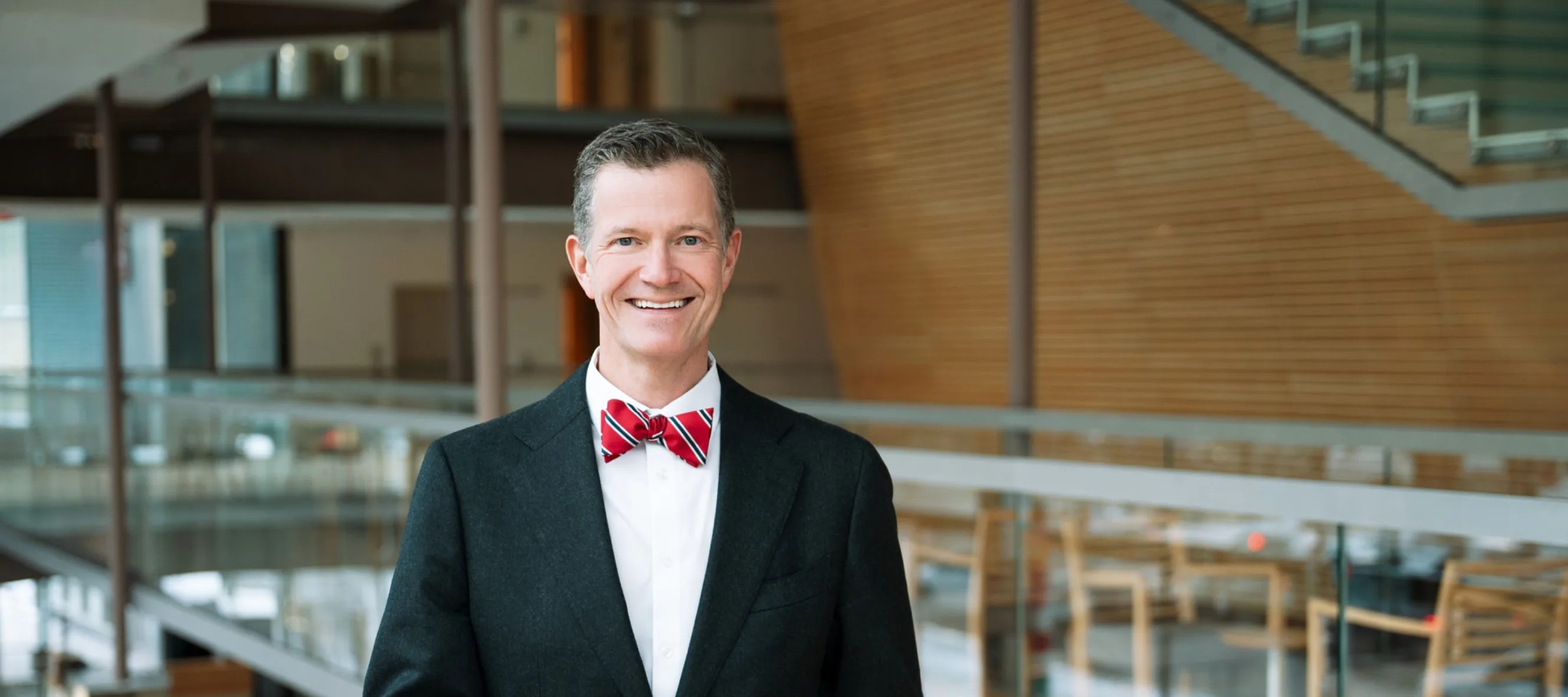
Let me now get to Johannes Debus’s creative heroics. I am surprised that no review has mentioned his work, possibly because he’s in the orchestra pit at the piano, and not onstage. While I figured he could play I never suspected that he could offer such sparkling decorations to the performance, embellishing upon the interactions between the singers. My subscription seat is in the 2nd row, where I was craning my neck to try to see into the pit as I wondered: is he actually playing? Before long it was clear that yes he was playing as well as conducting.
Ah but Johannes plays much more than what’s written. I’ve heard harpsichordists sometimes undertake some recitatives this way. But he took it so much further. Not only is he elaborating, improvising, but he’s added commentary. There are places where he makes interesting additions to the music.
The famous trio “Soave sia il vento“, when Don Alfonso & the two young women wish the men well as they go off to war, includes introductory murmurings & accompaniment, gentle repeated eighth notes, that Johannes then excerpted at least a couple of times when we were hearing mentions made in the opera of the wandering lovers. He made that music almost like a leit-motiv to remind us of their departure & their journey (fake though it might be) in the minds of the women.
Similarly, the opening ensemble “La mia Fiordiligi” before the bet is made features the declaration of the young men, admiring their fiancees: a melody that is one of the clearest Mozart ever wrote. Late in the opera — when the shit has hit the fan– Johannes quotes the exuberant happy melody, as if to say “how’s that bet working out for you boys?” Johannes is adding a layer something like what Wagner does with his leit-motivs, as though they are a Greek chorus, commenting upon the action, yet the tone is quicksilver light, comical and oh so brief.
And all this was done while Johannes went from sitting at the piano to jumping up to conduct the orchestra: who sounded amazing.
And the COC chorus are also doing lots of heavy lifting, as in la traviata. In addition to their singing they’re regularly playing roles as “students” in Don Alfonso’s school for lovers.
In my experience, when a production is revived it may begin to diverge from the directorial concept and inevitably resist the rigorous concept as it goes back to the original work. Mozart and centuries of performance of Cosi fan tutte (admittedly more in the last century when the morality of the story wasn’t frowned upon any longer) weigh against a director, especially if Egoyan’s voice was only heard in a book of instructions being read by the revival director.
In Egoyan’s director’s note I am a bit perplexed by something he said, that seems a nice parallel to this whole question of a director and their influence:
“For those familiar with Così fan tutte, this
production may be surprising in two ways.
First, we are taking the alternative title of
the work and using it literally. It takes place
in “A School for Lovers,” with Don Alfonso
the teacher of this school in which he
demonstrates to his students the complexities
and perils of the laws of attraction.
The second surprise is that the sisters seem to
be in on Don Alfonso’s experiment from the
beginning. I was curious to explore what might
happen to the dynamics of the opera if there
were a parallel wager with the two women.“
He goes on, but I think this is enough. I watched the show, enjoying the cast, watching for any sign that the “sisters seem to be in on Don Alfonso’s experiment from the beginning.” When I watched in 2014 and 2019 I couldn’t be bothered with this, as there was no evidence for it. This time in 2026 I looked closely for any sign of recognition. When they were drinking? romancing? I watched them seeming to be genuinely upset at the end of the opera, when their lovers unmask, feelings they would not have shown such dismay had they been “in on Don Alfonso’s experiment“. I saw no sign of anything anywhere in the opera remotely corresponding to this. But I’m open to discovering how this would work, when the two young women behave throughout as though the wager is genuine and display surprise at the end.
Indeed I thought about how such a thing could be done if a director genuinely wanted to offer women images of empowerment, in an opera that still feels sexist to me, the way the men are let off the hook at the end. What if the disguises were to slip, if one of the moustaches were to slip off and the women were to see, and perhaps nod to one another, and play along. But there’s no sign of that.
In the end I think we come to the 2026 conclusion feeling the way Mozart –the would-be libertine–probably wanted us to feel. There’s a feeling of resignation when Don Alfonso sings the title of the opera, joined by the two young men, a slightly cynical conclusion. Wolfgang & Lorenzo Da Ponte his librettist (who may also have been a libertine) probably thought they were being generous in the way the women are let off the hook, never suspecting that centuries later it’s the men, not the women, who are seen as problematic in their behaviour.
There are three performances of Cosi fan tutte remaining this week, on October 14, 16 and 18. I wish I could go again: especially to hear what Johannes is doing. Please click on the video link below to hear what he has to say.
Bravo Johannes!


I saw this last night and very much enjoyed it. I was so charmed by Martina Myskohlid as Dorabella and I think she is expertly balanced by Lauren Fagan as Fiordiligi.
I also enjoyed your intelligent and informative comments on it.
LikeLike
Thank you for the kind words.
LikeLike
An excellent review of an excellent production. I so enjoyed the experience. This COC season is really off to a wonderful start.
LikeLike
Thanks for the kind words.
LikeLike
Interesting read as I had a completely opposite reaction. The staging was confusing and at times upsetting. The end of part 1 especially – it was uncomfortably sexual and rapey, especially given the context of what happened at Cornell and so on. The school setting made it so much worse. All the classmates (?) and teacher (?) surrounding them with giant pins. I was genuinely upset by it. The Kahlo was puzzling – it’s imbued with such pain that putting it in a farce was bizarre. The surgical scissor props and the giant blood vessel… weird given Kahlo’s history with surgeries and miscarriages. Would be much more suitable in a serious opera. I found the whole thing battling between comedy and “ideas”. I also didn’t see any empowerment or where the girls are in on the joke. Overall, I preferred the U of T production a couple of years ago which just went for straight farce and was both funnier and much more charming.
LikeLike
Thanks for your comments. In its previous run I had spoken of Woody Allen without using the word “pedophilia”. that’s so ubiquitous now thanks to the Epstein saga. I realize that in my editing I chopped out a whole critical paragraph because I didn’t really want to go there (as it were),
So there we are, in a microcosm where men get to wear trousers and women wear short skirts like girls. I was grateful that we were racing through the opera, that the tone was closer for me to the original, ponderous when it first reared its pretentious head the first time. I listened to Johannes and the singers, amused by the drunken young women, while pondering to myself: “what about consent”? Yes that scene where there are, what, six empty wine bottles on the table while two young women are drinking…. I didn’t even think of Cornell, I had Soon Yi in mind in 2019 and before. Maybe the slower feel in the Egoyan original is less rapey because it suggests metaphor & psychological probing, and therefore seems deeper? Or maybe Mozart’s original is problematic, that always lets the men off the hook, not the women (as I said). Of the three Da Ponte- Mozart collaborations this is the one I like the least. I think I cut the paragraph almost because I felt I was being creepy in bringing up my concerns when everyone in the audience seemed to love it so much. I liked this better than the previous versions, feeling we were stripping away the extra layers: but in the process leaving the sexist core exposed. And of course I chose to see this one only once, seeing traviata for the second time today when it closes..
Thank you for your comments!
LikeLike
I want to add the deleted paragraph, that i saved in an email to myself back on October 11th, subject header “deleted from review”
“There are trade-offs in every production. The gravitas of the original Egoyan Cosi with Thomas Allen and the Frida Kahlo images of blood & an exposed heart made it more likely we’d see the women dressed like girls in a school as a metaphor. By taking it back to its comic roots the images on stage are stripped of some of that depth, becoming problematic. Even in 2014 I mentioned Woody Allen and Soon Yi, as some of my buttons were pushed by the way the design seemed to be sexist to suggest that the men were men (in trousers) while the women were girls (in short skirts). Of course it’s lovely to look at. But in 2014 Epstein hadn’t yet reared his head in the popular discourse, so what may have been mildly troubling to me in 2014 or especially in the more blatantly comical 2019 version, as we watch women who are dressed like children getting drunk (six wine bottles onstage for 2 young women?), becomes even more disturbing if you add Epstein to the mix. I’m not saying that makes this iteration bad, only that I was suddenly aware that there were advantages to that more thoughtful 2014 version, where we don’t lose the possibility of consent, while the quicker pace and the drinking could be read the wrong way.”
Plus me writing later in October…
Egoyan couldn’t have anticipated Epstein. I’m sympathetic up to a point. But the comment above from unabashedly…. underlines the weaknesses of a production that in each of its iterations –slow in 2014, faster in 2019, even faster in 2026– still has profound concerns as far as its sexual politics. I could pretend to ignore those when I was satisfied with the comedy & delighted by the music, but maybe it’s time for the COC to mothball Egoyan’s moths/butterflies before anyone else is offended.
LikeLike
I agree with “Unabashedly” and with your responses to their comment. I have seen Cosi fan Tutti before I saw it the COC production on October 14 (most recently the Cineplex broadcast on October 3 from the Metropolitan Opera). I have not seen previous versions of the Atom Egoyan production. The music at the COC was spectacular, both singing and orchestra. But I was incensed by the production itself. To set this opera in a school and give the women school-girl uniforms adds to the already very sexist fabric of the plot, and just before the second intermission when the two lovers in disguise climb into the girls’ beds, apparently without their consent, I was aghast. I was tense throughout the rest of the production. Two people I know got up and left at the intermission because of the whole feeling of that scene, and one of them (who, like “Unabashadly,” described the scene as “rapey”) expressed her amazement that local media hadn’t come down hard on the production. What was Egoyan thinking? And in an unrelated question, what the hell was Frida Kahlo doing in there? Totally didn’t fit, and I do love Kahlo. Anyway, the music was superb and I particularly liked the voice of the tenor, Laurence Kilsby. So I didn’t leave. But I was very uncomfortable with the whole thing. I did not have that response at all to the Met production, which I recognized as having danced around and even acknowledge the central sexism of the opera without embracing it.
LikeLike
I think you’re asking some really good questions. What was Atom Egoyan thinking? Were we –at least the heterosexual males– supposed to look at the scantily dressed young women and be troubled by their treatment, or just giggle and say “cosi fan tutte” while the women get the shaft yet again? I felt complicit, creeped out, waiting for justice that never comes in this opera. Maybe that’s what he wanted: given that the opera lets the men off the hook. I wrote about the conflicts I experienced as a kind of subtext, watching a kind of battle fought between the old readings of the opera and the new text being imposed upon it, hoping in that conflict to find some kind of reconciliation of my feelings. But I think I’m happiest in these late comments from you & “Unabashedly” that permit me to admit my disquiet.
Thank you for your comments..!
LikeLiked by 1 person