
Identified by Opera News as one of the “25 Most Powerful Names in US Opera”, Stephen Lord is a conductor known for his sensitive handling of singers. In my review of April’s Canadian Opera Company production of Lucia di Lammermoor I said the following:
Stephen Lord was quite magnificent to watch, deliciously flexible with the COC orchestra in following the singers no matter where they wanted to go, one of the most impressive displays of musicianship I have ever seen.
That’s not surprising, considering that Lord began his career as a pianist, before becoming a coach & accompanist. Lord also teaches and mentors artists, whether in his previous role as Music Director at the Banff Festival Opera, or more recently as artistic director of opera studies at New England Conservatory. He is currently music director for Opera Theatre of Saint Louis, formerly was music director of Boston Lyric Opera, and has led productions at companies such as Lyric Opera of Chicago, San Francisco Opera, and English National Opera.
On the occasion of the new Canadian Opera Company production of Verdi’s Un ballo in maschera I ask Lord ten questions: five about himself and five more about his work on the COC Ballo.
1-Are you more like your father or your mother?

Conductor Stephen Lord (photo: Christian Steiner)
You know, I think I am truly a 50/50. I used to look like my mother, now I look like my father – especially when passing a shop window and seeing my reflection. “Who is that old man?” I am intensely curious about things like weather and all sorts of world news, farming (he was a fruit grower), etc. But I am at times hyper energized like my mother who, at 87, is doing quite well.
2- What is the best thing & worst thing about being a conductor?
I came to conducting late after having spent my first fifteen years in career as a coach and, even luckier, coach to many of the great singers ending the golden age of the 50’s and 60’s and then the best of the singers in my generation. So the BEST thing about being a conductor is that the thing that challenges so many opera conductors – the theatre and the vocal styles – is second nature. As a pianist I was always slightly nervous as playing a wrong note was anathema to me and, since I came to piano in my teens, I never truly had the assurance of those that start in their single digits. In spite of that it all seemed to work, but the comfort level was an issue. When I started conducting, the possibility of wrong notes is someone else’s problem! I was suddenly liberated to conduct the music, live the music, be inside the music and the feeling when younger of loving it so much you wanted to climb into the stereo speakers, is now a realized sensation. And I can do theatre when doing opera. I spent a lot of time on stage in my past in various types of plays, shows and even operas and so realizing the theatre in music and discovering it is a huge joy for me. While there are no doubt greater conductors than I everywhere, the fact that I know theatre and am intensely interested in it is my ace in the hole.
The worst part of conducting opera, and there is a downside are the long periods away and on the road in unfamiliar digs. I am not someone who does this job as a step in last minute thing as I love being involved in the whole process. And this takes time to rehearse, work out various aspects musically and theatrically, etc. The average away time is 6-8 weeks and when one goes from one to the next with little time between, it becomes a living nightmare. But there IS the music and some truly wonderful colleagues. Right now, in the Ballo cast, I knew everyone but two, some from their very beginnings. So one is never lonely for the familiar. And meeting the terrific director, Sergio Morabito, and working with him is incredible fun.

COC Music Director Johannes Debus (photo: Bo Huang, 2012)
The COC, a company I have been involved with in many capacities since the early 80’s, is a welcoming, warm and first rate operation. This starts from the top with Alexander Neef and Johannes Debus, plus my old friend Sandra Horst and many others. This is great compensation for the sometimes devastatingly lonely times alone in terrific but strange digs.
3- Who do you like to listen to or watch?
Wow. This is a tough one. I have to drive a lot and in my car I have Sirius radio and I often listen to The Metropolitan Opera Radio. This is at times thrilling (older performances with idols like Melchior, Bergonzi, Tebaldi, Sutherland, etc.) and sometimes shockingly disheartening, especially in the years 1990 to the early century. Now, however, I hear people on there I either knew in the beginning of my career or, in some cases, actually started a career and it is wonderful to hear them all grown up and giving of themselves so well.
In the USA, we have NPR, which is terrific and gives me thought provoking subjects to follow.
As for music, just last week on a long car trip it was the whole MESSIAH (which I admit I didn’t hear as I was singing along too much), Carlos Kleiber doing Beethoven and Dame Myra Hess. Sirius also has a Frank Sinatra station, and Elvis station and a 40’s and 50’s pop station. These make me smile as they were sincere and you could still understand the words.
I rarely play piano any more. I developed tendinitis when I was at the end of that career from playing in Dallas on a terrible piano. And that was probably good since I started learning my conducting scores away from the keyboard and in my head. It helped develop my ear and score reading abilities. I have the urge to play piano occasionally again, though, and might get back to it.
4- What ability or skill do you wish you had, that you don’t have?
Woodworking
5- When you’re just relaxing and not working what is your favourite thing to do?
I confess to being a terrible gardener and I just love doing it. I prune too aggressively, and don’t design what I plant carefully, I love buying guy toys by John Deere (my Gator is an especially fun one and the new, big, and more rugged lawn mower might just be coming). One more admission — while pruning on a ladder by myself with a chain saw, I did cut too aggressively, the limb pushed me off the ladder, I landed in a pile of rocks, broke four ribs. Mercifully, or not mercifully, my head hit grass between the rocks. So I am terrible and love doing. I also love working on ways to improve my home. Being on the road is dangerous because I start thinking of what to do next.
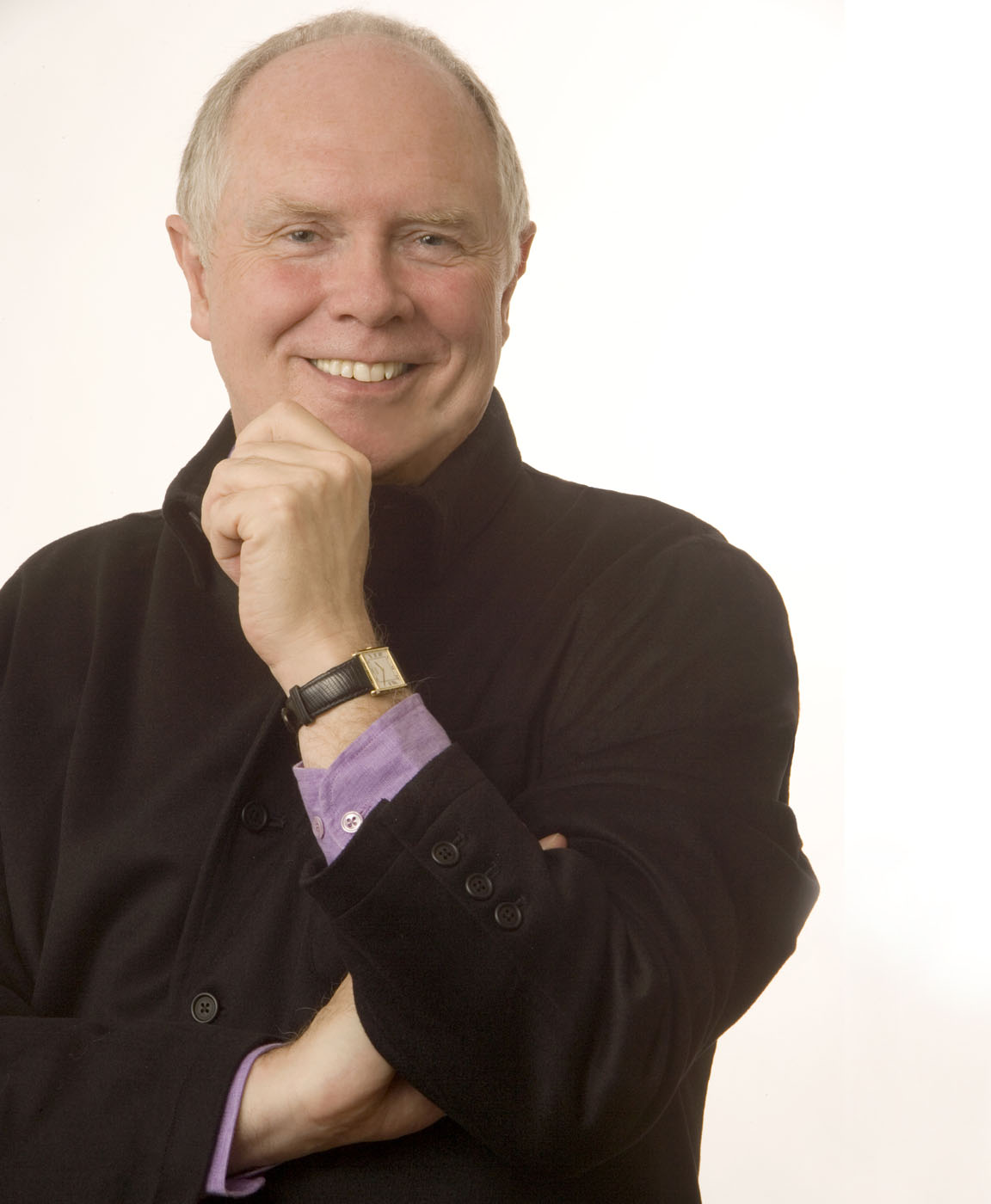
Stephen Lord (Photo: Christian Steiner)
*******
Five more about Ballo at the COC
1-Please talk about the challenges in leading the COC production of Un ballo in maschera.
I used to think some operas were relatively easy to conduct. The older I get the more I realize the folly of that stupid notion.
Because we are dealing with humans on the stage and humans in the pit and humans in the public experiencing it live, the unknowns are tremendous. Sometimes conducting an opera like Ballo is rapturous, sometimes conducting any of them is triage as one tries to analyze all sorts of real time issues and find solutions to them in a split second. Because we have such great resources available in the form of past and/or favorite recorded performances, a great challenge is forgetting what one has heard and inventing it fresh. And, of course, there are naturally times when you’re used to hearing one thing but tailoring to the available forces is the immediate issue. Also, when one has a very strong point of view, as our production does, one has to constantly remind the singers that the action follows the music and the sometimes untraditional action is not the beginning but the end result of the music itself. Theatre in opera comes from music but many fine young singers use the action as an end result. But the music inspires the action, the words inspire the music, and the action is a result of the other two. If a singer thinks the production style is their biggest job, we can get lost. It is my job to bring them back to the truth of the music as their primary impulse.
Ballo has a lot of back stage music, which is always a worry as you can’t see them. Mercifully, I have Sandra Horst, who is brilliant doing that along with the chorus.
The other great challenge, of course, is that the roles in this opera are big, full, grown up opera roles. And with these, come the pressures on the singers to stay in tip top form because if one is in less than best form, the piece cannot happen.
Musically, the challenges in this piece start with the libretto. The poetry of Piave in something like TRAVIATA, for example, is direct. This libretto has some very atypical word and sentence structure and some very unusual text for Verdi. And this affects the musical phrasings. So learning these and getting them into the brain is difficult.
On the plus side, of course, is the COC orchestra. They know opera and play it with heart and soul.
2-What do you love about Ballo?
What do I love about Ballo? Well, let me start by saying I have never been driven to be rich or famous and so I have been fortunate enough to be able to only do pieces I either love or that are very interesting and curious to me. There may be times when I wish I would just go and phone something in and take the money but that is not me. So, Ballo is a piece I love and I am honoured to have been invited to do it. This way we start with the wanting to show my love for the piece by being involved with it again. For the one and only audition I ever did and play on piano, I chose Amelia’s second act aria as the aria selection. I love the danger in the piece — the vocal danger of the role of Amelia and the conquering of the repertoire’s most difficult high C, the length of the role of Riccardo and the stamina it takes to do this, the dangerousness of the dramatic situation – all of these make the superhuman challenge of doing a super performance of this opera make me love its challenge. It is like Everest – it is THERE.
At this point in Verdi’s oeuvres the orchestral writing gets more and more exposed for solo instruments. The cello has quite long stretches of solo writing. The English horn in Amelia’s aria seems a prelude to the oboe writing in AIDA. The trombones probably play more in this opera than in any other of Verdi. In this period of Verdi, everyone has great challenges on stage, chorus, pit, backstage. And my challenge is to see that it is all of one style, theatrical, beautiful, and in the rare occurrence that something goes wrong, to do my best to fix it.
3) Do you have a favourite moment in Ballo?
I think for me the most thrilling moment in this opera is the moment in Act 2 when Amelia confesses her love to Riccardo, the tenor. This is, of course, one of those moments when one’s assistant comes and says “Maestro, the orchestra is too loud here.” I of course listen but also realize that there are times, very occasional, when the sum of the parts (orchestra and singer) is greater than any one thing. The overwhelming moment here in the orchestra tells us more than the singers do. In our age of having recorded performances always perfectly balanced (like the unrealistic MET HD performances) our public oftentimes gets lulled into thinking singers are always forefront and forget that at times the orchestra becomes the soloist. I am not one of those bombastic kind of guys, but there are times you just have to let the race horse run.
4) How do you feel about Un ballo in maschera as a 21st century performer?
And now we come to the hornet’s nest! This probably is worth a whole book of writing. And I have some very strong opinions here. I am totally for whatever brings the piece to life. I think an issue with what some people call Regietheater is that those that produce it bring a particular and often peculiar personal idea to the fore without truly knowing the people in the seats. But the personal and expensive point of view, while interesting, at times supersedes the spirit of the music and the interest of the public. This does not at all mean that these things should not be tried. But the producer who forgets his public and, like a spoiled child, says LOVE IT OR LEAVE have now often reaped the “rewards” and people have left.
Think of the great pianist Glenn Gould who made his career on the works of Bach played on an instrument Bach could possibly never have imagined. The spirit of the music is always there and it brought a lot of this music to the attention of the public. Now, had he worn a clown suit while playing it, the music would have been lost for the distraction of cosmetics. And yet he updated the performance with an instrument the public could relate to.
I firmly believe that the rise of this kind of production (and don’t get me wrong, I appreciate it when done well and musically) coincided with a precipitous decline in musical and vocal standards in the world. I am not talking the early music repertoire, because that is vocally and conductorially less demanding. I am talking about the style of singing that is athletic and as dangerous as NASCAR. I am talking about the singer who has to bat 1.000, while a star ball player can be in a slump and still be paid millions. When the dinosaur generation died off, who on the norm studied longer and at younger ages and were immersed in the repertoire in their cultures and families, replacing them has been a struggle, with exceptions of course. So to replace the visceral thrill that made opera so very popular, people felt forced to replace that thrill with a more intellectual/personal/controversial sort of thrill which, when done badly drives the public and donors away and, when done well, at least has the press and spin doctors abuzz.
My conducting colleagues need to shoulder some of the blame for the bad stuff. When they show up at the end of the rehearsal period and have no input into the process and THEN complain, they have no legs to stand on in my book. Bear in mind I am talking about new productions here, not revivals for which one has been hired. But the uninvolved conductor has been one of the reasons this art form has suffered some bruises. I think even with a production of dubious taste a conductor can make a difference and help the producer by motivating the action with the music and keeping the cast on a tight leash stylistically.
5) Is there anyone out there who you particularly admire, and who has influenced you?

Conductor Tullio Serafin (click photo for more information: scroll down to Tullio Serafin)
Conductor wise, one cannot deny Toscanini, Carlos Kleiber, Tullio Serafin, Antonino Votto, Mitropoulos. Directorially, there is always Jean Pierre Ponnelle, a true renaissance man whose work in the whole repertoire and not simply a niche was exemplary and musical. So many singers have touched my heart they are impossible to name.
But those I admire most? With no question I admire those who are out there, leaving home and family to entertain the public. Each and every one of them.
And if they get the added thrill of a great performance that moves him, all the better.
*********
Stephen Lord leads the Canadian Opera Company production of Verdi’s Un ballo in maschera that opens February 2nd (further information).

click for information about tickets to the production, originally from Berlin Straatsoper (Photo: Ruth Walz)







 barczablog