Opera in Concert Hippolyte et Aricie

Today I took the road less traveled. At the same time as the Canadian Opera Company opened their new production of Un ballo in maschera, in the afternoon before the Superbowl, Opera in Concert took us in a less popular direction under the guidance of Kevin Mallon, leading the Aradia Ensemble.  Mallon wears many hats, including his newest as Artistic Director of Opera Lyra in Ottawa.

I studied Rameau’s Hippolyte et Aricie long ago, more recently purchasing a CD with the historically informed approach that’s now de rigueur.  While it’s a colourful and intriguing work, I didn’t expect to see this opera onstage.  Yes, Abbé Pellegrin’s adaptation of Phaedre may have been “a hit” in the 18th Century, but it’s off the radar now.  According to operabase.com’s compilation for 2012-13 Hippolyte et Aricie was the 305th most popular opera in the world (with eight performances), placing it second among Rameau’s works (after Platée and ahead of Les Indes Galantes): which puts it roughly comparable to Handel’s eighteenth most popular opera, but ahead of anything by Telemann, Barber or Orff.  Even that low number is suspect, when several operas further down are only there because of the way stats are reported (eg Adès’s Powder Her Face and Benjamin’s Written on Skin are listed lower because the exact number of performances isn’t listed).

So in other words we are fortunate that Voicebox –Opera in Concert offered a semi-staged version, as this can’t be mistaken for pandering to their audience or a blatant cash-grab.  Semi-staged means that gods would walk out onstage, and at times the Fates participated in the action, bundling a character up in a huge mass of fabric to rush them offstage: a strategy likely not so far away from what might have been used in the time, but on a much smaller scale I would think.  We didn’t get the full spectacle as there were no costumes or sets.  But even so the charismatic whiff of theatricality in the presentation was certainly enough for this listener, when coupled with Rameau’s score and Pellegrin’s libretto as channelled by Aradia & Mallon.

I think modern listeners are often off the track in how we respond to baroque performance.  These are not so much pieces of music telling a story, but rather stories enlisted to give singers opportunities.  Just as Racine’s Phaedre would have been a star vehicle for an actress, Pellegrin also offers a vehicle for a singer in that role.  As with so many figures from ancient mythology Phaedre is like a chapter from a psychology textbook, a study in pathology as she gives voice to her desire for her step-son and then –when he vanishes—is wracked with guilt.  In other words her extreme passions—rage, desire, remorse—are ideal for an operatic treatment.  While there may be lots to listen to in this opera, Phaedre is squarely at the centre of the work.

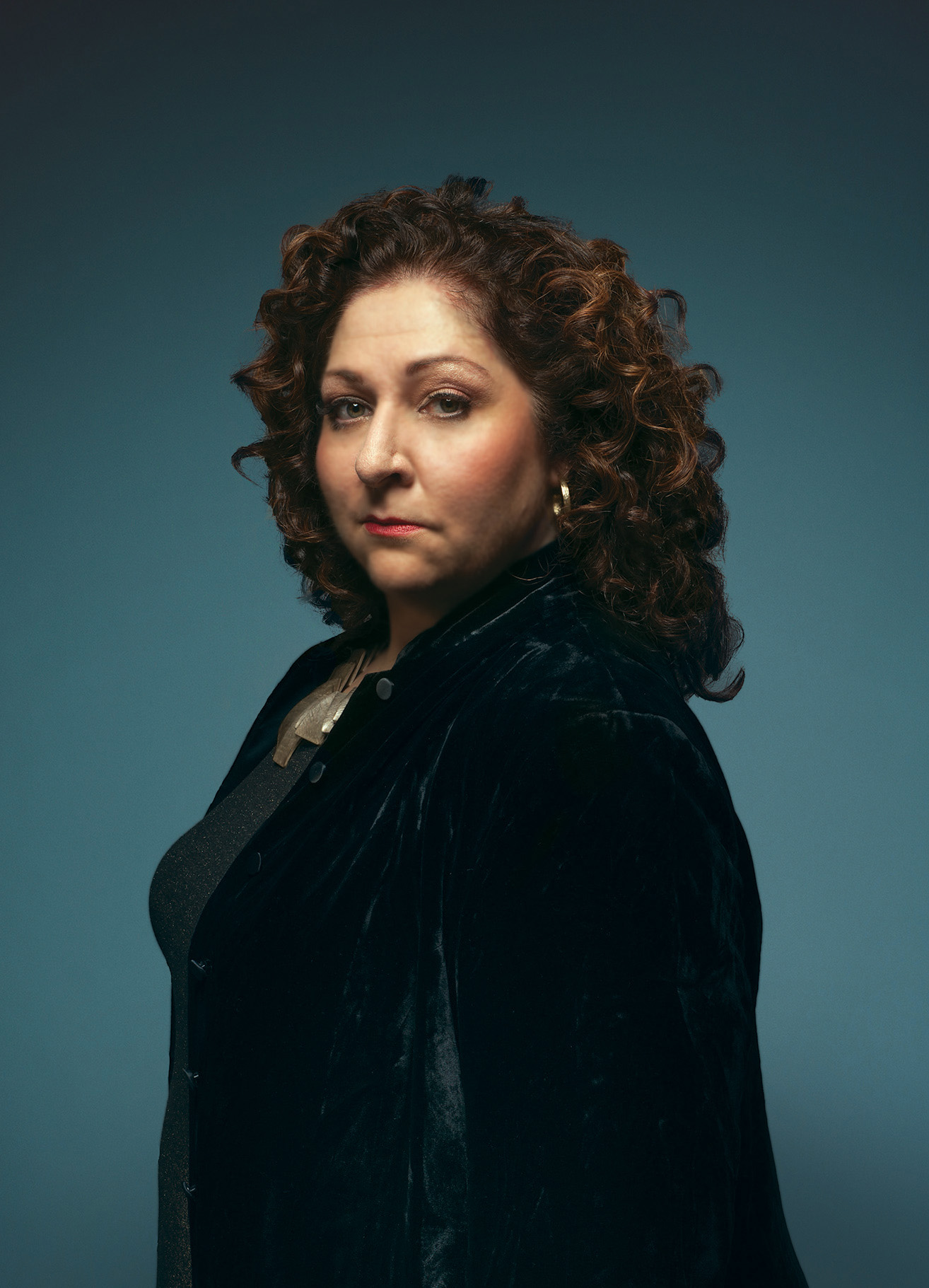
OiC didn’t disappoint in casting Allyson McHardy.  I’ve missed that gorgeous voice, her unrelenting approach to performance.  In addition to the villainous side of the performance, McHardy added a surprising vulnerability, an element that felt modern, and made the character three-dimensional.  Her passions were larger than life in this portrayal.
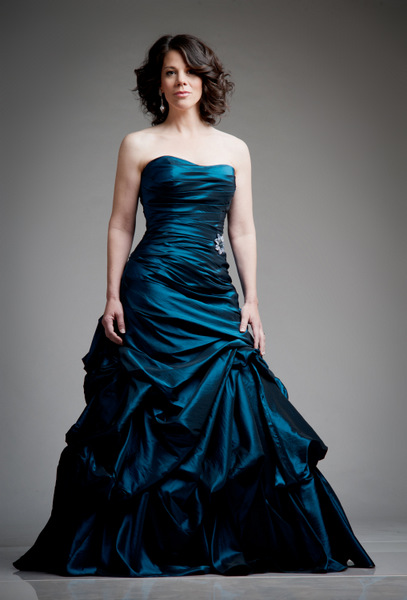
Allyson McHardy (photo: Bo Huang)

Allyson McHardy (photo: Bo Huang)

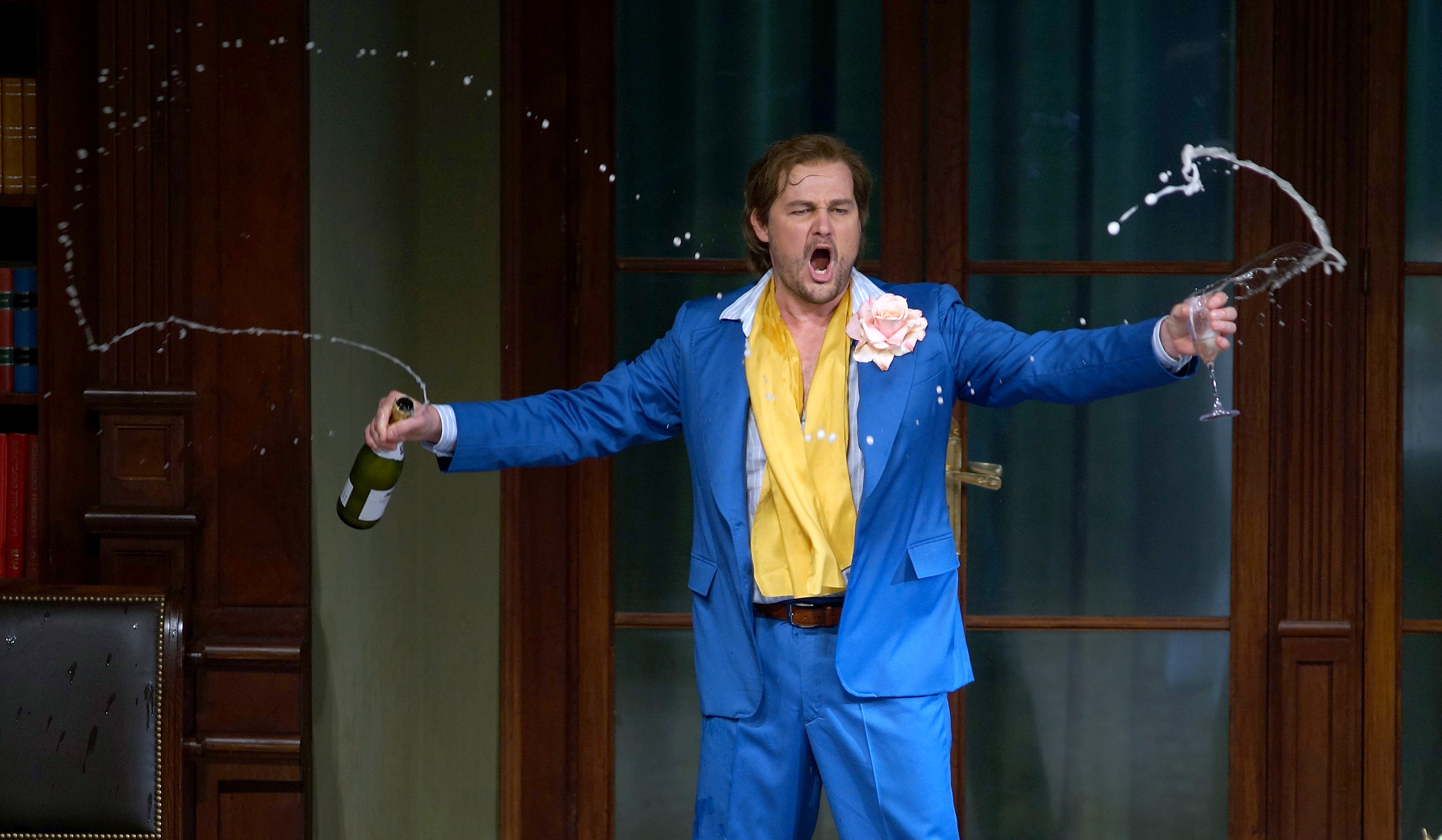
Several other casting choices demonstrated that OiC understood this as a special occasion, one I’m glad I didn’t miss.  As Thesée Alain Coulombe was McHardy’s match at the other end of the emotional spectrum, a powerful dark presence easily filling the space with his warm voice.  As Hippolyte we had another opportunity to hear Colin Ainsworth, who has steadily been growing in lyric tenor roles (often for Opera Atelier), a secure instrument gradually getting bigger without losing any of its sweetness. Ainsworth was paired with Meredith Hall, a supple voice capable of articulating subtle emotion.  Of the immortals, Vania Lizbeth Chan’s Diane made anything seem possible, both in the plot of the opera and her delightful coloratura.

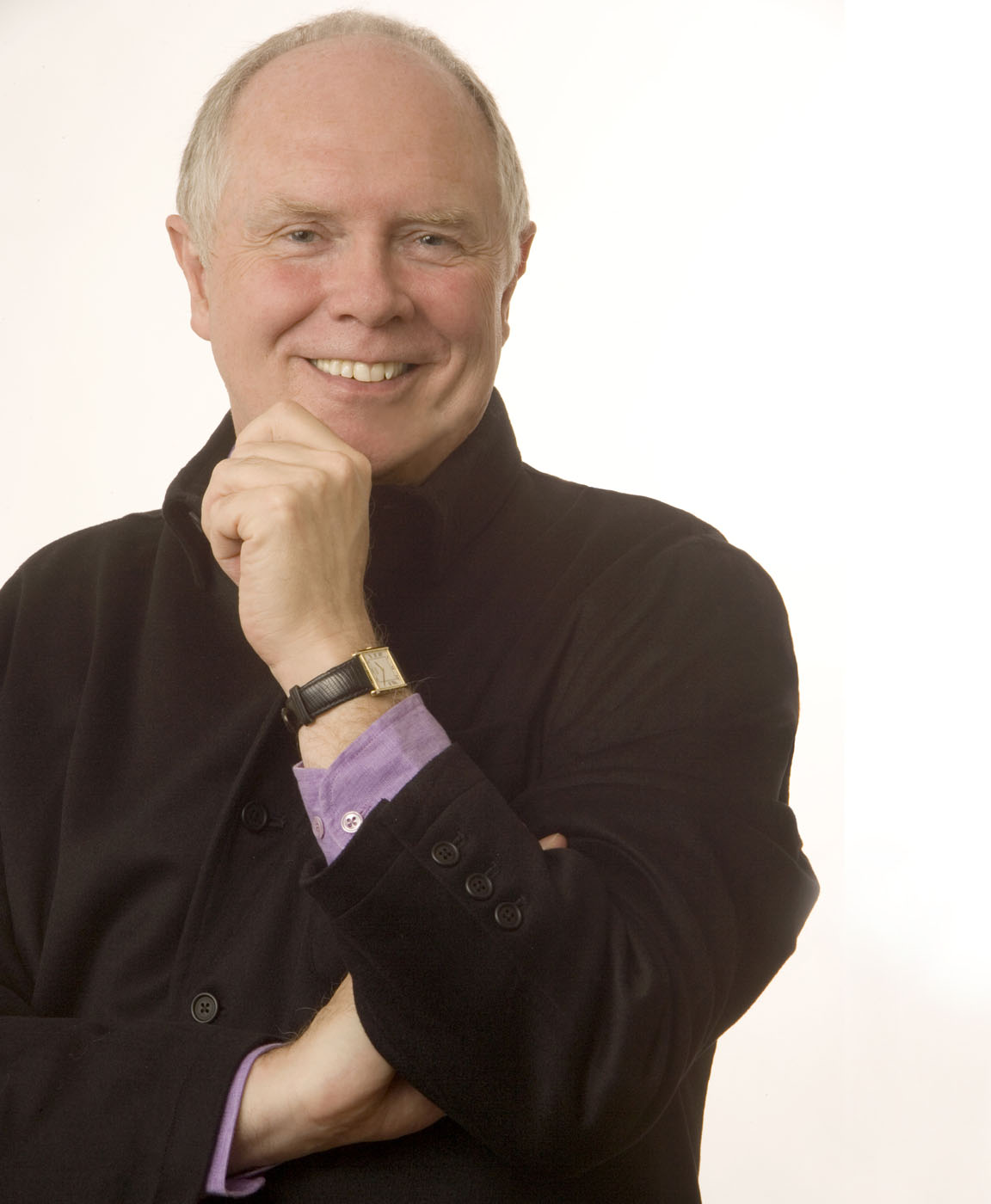
Kevin Mallon, conductor of Aradia Ensemble (click for Ottawa Citizen announcement about Opera Lyra)

Mallon led a sparkling performance, always putting the singers in a favourable spotlight.

Opera in Concert continue their mission of providing interesting programming off the beaten track on March 23rd with Verdi’s Stiffelio.

Posted in Opera, Reviews | Tagged , , , , | 4 Comments

Ten Questions for Sir Thomas Allen

The talent pool at the Canadian Opera Company is deeper than ever, yet even so, few singers have the credentials of Sir Thomas Allen, one of the great singers of his generation.

Currently starring as Don Alfonso in the COC’s Cosi fan tutte until February 21st, Allen is also an unparalleled interpreter of lieder & songs, who will offer a program titled “Songs of the Sea” as part of the free noon-hour series at the Richard Bradshaw Auditorium (at the Four Season Centre) on February 13th.

On the occasion of his recital, I ask Allen ten questions: five about himself, and five more about singing “Songs of the Sea”.

1-Are you more like your father or your mother?

Tracy Dahl as Despina and Sir Thomas Allen as Don Alfonso in the Canadian Opera Company’s new production of Così fan tutte, 2014. Photo: Michael Cooper

I’m certainly more like father than mother. Mother was very much the typical devoted wife for dad. Her job was the home, looking after dad and bringing up the boy….me.

Dad on the other hand was blessed with curiosity. They both grew up in the North East of England when times were not entirely easy. There was a great deal of struggle in just surviving for quite a long period of time in their lives. Their life wasn’t easy but despite that they did all they could for me.

My father loved sport as a young man but the loss of a leg when he was 21 put an end to that.

His passion was music. He played the piano at any spare moment …popular songs, dance tunes and such like and he was the accompanist for a male voice choir and conducted a glee club.

He was my only piano teacher. When I joined the church choir and later began taking organ lessons he was really thrilled. Nothing gave me more pleasure than seeing the pleasure he got from my music-making, whether it was when I sang in the choir, played a service at church, or later when he saw me at Covent Garden or the Metropolitan Opera…his only trip abroad.

I miss him every day.

2- What is the best thing & worst thing about being a singer?

Certainly the worst thing is the business of moving around the world and making a home away from home, wherever that may be. So many apartments are the same and after a while they all blend into one boring conglomeration. It’s that business that takes one away from family for long periods of time. Now after so many years of travelling I look back and feel what a great sacrifice was made to miss so much of my sons growing up. The trouble is that once on that treadmill, it’s accepting that life is ever going to be so and one must either embrace it or leave and find something more ordinary and stable to do in life.

The good thing about singing is not the obvious thrill of listening to the cheering of an audience after a special performance…..one quickly realises that special performances are few and far between. For me the good thing is the fact that being a singer has made me inquisitive about so many aspects of life. Every day is different; each day is an involvement in a study of one sort or another – language, history, literature and people, the latter being arguably the most fascinating of all. It’s made me curious about so many things and I have learned so much as a result.

3- Who do you like to listen to or watch?

I don’t listen to singers much ….not a natural canary fancier. Having said that, Fischer Dieskau was a big influence when I was growing up. But I love the quality of certain voices and that of James Mason, for example, I could listen to all day.

4- What ability or skill do you wish you had, that you don’t have?

There’s too little appreciation of the skills of craftsmen in the UK as opposed to those who are more academically inclined. I think that’s a tragedy. As a skill, more than anything I’d want to make good furniture and generally be an accomplished carpenter.

5- When you’re just relaxing and not working what is your favourite thing to do?

When relaxing, or rather not working, I’ve put together several pursuits that have kept me sane when I might otherwise have gone crazy with this job. I’ve been a bird watcher since schooldays and that remains… I usually travel with a small pair of binoculars. There is always a sketch book and pencil in my bag along with a small box of watercolours. Golf was a big part of my life in early days though I play less these days ….it annoys me too much that I can’t play to 3 handicap any longer. But when I’m home I have a workshop and that’s where I like to be to work with wood, either making toys or serious model boats.

Sir Thomas Allen (photo: Sussie Ahlburg)

Sir Thomas Allen (photo: Sussie Ahlburg)

*******

Five more about the upcoming concert “Songs of the Sea”

1-Please talk about the repertoire you’re singing, especially as a departure from what you’re doing as Don Alfonso in the COC production of Cosi fan tutte.

The recital programme has been put together because the sea is a favourite subject for me.

I’m not a desert person. I was born by the sea, have observed its many moods and find it endlessly fascinating in devising recital programmes.

2-What do you love about singing songs?

Life started for me with the singing of songs. It was something I did that came entirely naturally from the time I was a treble to those first baritonal attempts. I never had a strong desire to sing opera initially. Song is a challenge, each one in a programme asking different questions of us, and all in their own right mini scenes. The pictures in my head that I need for song repertoire have become very extensive over a long period of time. No makeup, no costume, just the imagination, the vocal palette and, importantly, the message the body conveys.

3) Do you have a favourite moment in the program?

Billy Budd is in the programme and I make no excuse for including this short operatic piece in a song programme. The reason being, that it is one of the finest examples of setting the English language that I know.

But I’m also very fond of the Eric Coates song, “I heard you singing”. It’s probably not the greatest creation but it is an example of a sentiment largely lost and which I believe warrants some attention.

4) Talk about the “Songs of the Sea” as a modern singer.  

Some of the songs are dated ….well they all are really, some as far back as late 18th century. That certainly doesn’t preclude them from being heard.

The very idea of a recital, whether it be a reading of poetry or prose or song in our times is something that comes in for question.  Why? We hear so little of narration of stories or anything else now, be it in school, university or conservatoire . That’s a tragedy in my book and I’m doing all I can to rectify it. Without the song recital we would lose a very important aspect of musical composition.  A composer saw fit to set verses to music.  My job is to try to show why that happened in the first place, bringing out the qualities of the musical line and the poetry.

5) Is there anyone out there whom you particularly admire, and who has influenced you?

My dad.  He was a good man and lived a truly honest life. He was my model.  I looked up to him when I was young; I tried to show him that I worked hard to try to achieve something in my life. Perhaps that was because I realised he never had the opportunities …though I wished he might have had and I did it all for him as it were by proxy.

*******

Thomas Allen sings “Songs of the Sea” on February 13th with Rachel Andrist, piano at the Richard Bradshaw Auditorium.

Click the photo for more information about the COC’s free concert series

Posted in Interviews, Opera | Tagged , , , | Leave a comment

Her

It’s the shortest film title I’ve seen in awhile.

Her

It’s eerie just how much this film reminds me of the present and where we seem to be going.  Today, for instance, I was listening to Norah Young on Spark, discussing etiquette, the boundaries people establish to balance real life and virtual, defining acceptable amounts of electronic invasions of our moments in society.

I’m reminded too of the bridal shower I was at a couple of years ago, one of the four oldest people in the room (me & my partner, and the parents of the bride).  About an hour into the party, everything got very quiet, very strange.

Why?

I was talking to someone, in a big party full of silent people. Odd.  I noticed a room of chairs occupied by people staring at their devices.  The four of us were the only ones looking up, while everyone else looked into their hand, changelings left behind while their spirits flew off through their phones & computers.

Her is a movie that is early in a new genre.  I know we’ll see more films like this.  Some of 2001: A Space Odyssey could be from this genre: films concerned with virtual relationships, both the ideal and by implication, the not-so-ideal partnerships.  There have probably been other films exploring this frontier: where relationships are no longer human with human, but human with electronic.  Spielberg’s AI Artificial Intelligence was another film asking some of the questions asked in this film.

What’s different about this one, from Spike Jonze, is how little it has of sci-fi.  We could be in the present but for a few odd and even worrisome divergences.

The biggest one is that the waist-bands of the pants are different from what we see nowadays.  The waist comes up a bit, the shirts tucked in, as if the tummies are maybe a bit softer, in a world that’s not working out so much because nobody seems as physical.  It’s not something you can put a finger on, but yes, it’s as though this whole bizarre world has stopped exercising, because they’re addicted to electronic devices rather than the here-and-now of physicality.

Theodore Twombly writes brilliant letters for people.  I am a bit mystified, not sure I understand, but maybe it’s a metaphor.  The role was made for Joaquin Phoenix, the man who self-destructed in full view of the whole world.  Given his public meltdown, he seems ideal for this man who’s not ready for a relationship with a real woman because he’s so immersed in his own head.  So instead of a relationship with another live woman, why not his super-sensitive operating system?

Jonze is a nice guy creating a piece of art about the human heart, not a prophet nor an accurate critic of information technology.  It’s an extended metaphor rather than a real prediction.  I suspect that IT nerds will not buy this for a few reasons:

  • Because if the operating system were a purchased product, there would be physical  add-ons, a sexual wii that would likely blow your mind (right? surely microsoft or google or apple would think of it and make a fortune)
  • Because if the operating system were a purchased product there would be liabilities up the yin yang, which means they’d figure it all out
  • Because if the operating system were a purchased product there would be a way to keep you hooked into progressive upgrades & improvements, so that they could keep making money off you, monetizing your obsession. I know this precisely because it’s alien to what makes me tick.

Be that as it may, it’s a film that disturbs for all the right reasons: because of the questions it asks, because of a new world we see portrayed.

Speaking of “Phoenix” I feel glad that this talented performer is rising from the ashes of his previous meltdown.  While i don’t pretend to understand what goes on inside his head, i was shocked that he didn’t win an oscar for his portrayal of Johnny Cash, when Reese Witherspoon did, playing his wife. 

I’m glad he’s back.

Posted in Cinema, video & DVDs, Reviews | Leave a comment

Olsen writes about Syberberg’s Parsifal

In October 2007 I wrote the following review for the Wagner News (the newsletter of the Toronto Wagner Society), concerning Solveig Olsen’s massive book analyzing Syberberg‘s film of Parsifal.  I’m pulling it out again because I’m thinking of Syberberg’s film (which i will watch again one of these days), and I want to look at Olsen’s fascinating book once more.

~~~~~~~

Solveig Olsen:  Hans Jürgen Syberberg and his Film of Wagner’s Parsifal

Solveig Olsen’s recent book Hans Jürgen Syberberg and his Film of Wagner’s Parsifal is an immense (554 pages) study of the film and the film-maker.  Syberberg— with Fassbinder, Wenders and Herzog, a member of the “New German Cinema”—is likely best known for Our Hitler, a film of over seven hours length.  Syberberg was for a time an exile from Germany, a figure of controversy, and in his old age an acclaimed artist, just like Wagner himself.

Olsen sketches Syberberg’s life story, including encounters with Brecht and the works of his ensemble, filmed by Syberberg in the early 1950s; his defection to the west followed the unrest of 1953.  Among his most important films is a historic interview with Winifred Wagner from 1975, and a free-form fantasia on Wagner’s patron, namely Ludwig – Requiem für einen jungfräulichen König  from 1972,  not to be confused with Visconti’s Ludwig from the same year.

Olsen’s book likely will be read avidly by Syberberg’s fans and film students for whom his works are compulsory viewing; those who reject his Parsifal would never pick up a book–length dissection of Syberberg’s film.  And that’s too bad.  If nothing else she recapitulates the density of associations in the film and the opera, as for example in this passage concerning Amfortas’ throne in the first act:

   The throne is modeled on that of Charlemagne in Aachen (Aix-la-Chapelle).  In the prelude Herzeleide was sitting on it, but since it was then covered with the star-studded blue cloth, one could not recognize its shape.  The throne recalls the establishment of Charlemagne’s First Reich.  It relates to Wagner’s biography as well.  In 1845 when he staged Tannhaüser in Dresden, the stage decorations ordered from Paris did not arrive in time, forcing Wagner to substitute old sets from other operas.  For the singers’ hall he had to resort to Charlemagne’s throne room from Oberon, which the audience remembered only too well.  The composer would certainly have objected to another reminder of Charlemagne’s throne room for his Parsifal, but Syberberg forces the throne on him.

Olsen’s study is like a travel guidebook illuminating obscure pathways, including medieval sources, Wagner’s biography, and contexts that one can choose to pursue or ignore.  Is even the name of the tenor portraying Parsifal—Rainer Goldberg –meaningful?

Rainer = reiner, “pure”; Gold = alchemically pure substance.

Olsen does not rule it out.

~~~~~~~

Syberberg will be eighty years old in December 2015.

Posted in Books & Literature, Cinema, video & DVDs, Opera, Reviews | Tagged , , , | Leave a comment

Verdi’s Many Masks

The Canadian Opera Company open a production of Giuseppe Verdi’s opera Un ballo in maschera next week.  It’s placed in a modern setting, one that might have you wondering whether Verdi’s instructions are being flouted by a directorial intervention.  But upon closer examination you’d admit that this one is different.

Imagine if we were to play an operatic game of “Where’s Waldo” with Ballo, pointing to all the instances of concealment or secrecy, of people wearing some kind of mask. If we did so we’d include almost everyone and every minute of the opera.  While the title might refer to the actual masked ball in the last scene, the whole opera is one big masquerade.

Shall we try a role call?

  • Riccardo conceals his love for Amelia for almost the entire opera. At one point he participates in a visit to a fortune-teller, singing a song disguised as a sailor, as a lark.  The fortune-teller is not amused.
  • Amelia is married to Renato, but conceals her own passion for Riccardo
  • Oscar? A page, more or less truthful except for the cross-gender writing.
  • Ulrica the fortune-teller sees the truth, but sings to a room full of skeptics and people in disguise, a kind of inversion of truth.
  • Sam & Tom are part of a secret conspiracy against Riccardo
  • Other than the fortune teller, Renato has been the only truthful one, loyally standing by Riccardo when others conspire. Once he stumbles upon his wife’s infidelity Renato joins the conspiracy. Of course, speaking of illusions and masks, there is only the appearance of infidelity, given that Amelia and Riccardo have never consummated their love.

Indeed it might make more sense to identify the moments in the opera when people are being truthful and open, as these are both the exceptions to the rule, and also, the climaxes of the music.  If you don’t ever bother with the story, but listen simply to the passions of the music, you’ll see that this is true.

But there’s the other –bigger—masquerade going on.  One can’t miss Verdi’s republican sentiments.   But of course he was a supporter of the Risorgimento, the movement leading to the unification of Italy.

His operas bubble with revolutionary fervor and criticisms of nobility.  A quick list?

  • Nabucco
  • Il trovatore
  • Rigoletto
  • Simon Boccanegra
  • Don Carlos
  • Aida

And we would want to add the most blatant, if conflicted, of all to that list, namely Ballo, an opera that was itself forced to conceal its identity.  Originally? Ballo concerned a Swedish King killed by a conspiracy. Because of a contemporary assassination attempt, Verdi was forced to change the setting to pre-revolutionary Boston.  The character names were changed even though the behaviour continues to be quaintly courtly.

Stephen Lord (Photo: Christian Steiner)

Ballo is conducted by Stephen Lord (Photo: Christian Steiner)

In some respects Verdi comes closest to removing his own mask in Ballo.  There is no more powerful uprising music than the stirring melody Verdi gives his conspirators, when Renato sings “dunque l’onta di tutti sol una”, a tune so powerful that Verdi has to arbitrarily clamp a lid on the scene after it’s been sung, because it is as genuinely stirring as an anthem.  Yet Riccardo is mostly a likeable character, and so, while we will see a conspiracy unfold, we’ll be conflicted because Riccardo is not an evil monarch.  Was Verdi conflicted? or maybe he was concealing his sentiments.  The opera balances a romantic love-triangle and the conspiracy, linked by the workings of fate.  In this melodramatic tale, no one is really author of their own fate, but instead at the mercy of forces beyond their control, thereby balancing the political with the personal, uprising with romance.  Had Verdi shown us any more of his true feelings –perhaps in a story where his sympathies for the underdog were more blatant—that opera would never have seen the light of day, particularly if the characters were not ruled by fate.  Considering the outcome –of a King murdered—this is as overt as Verdi can get.  Revolutionaries such as Amonasro and the Marquis di Posa may get to sing their dreams: but they normally die afterwards.

And so we come full circle when the production here in Toronto modernizes the tale, to set it in the United States of the 1960s.  No purist can legitimately defend a tradition, because for most of its history Ballo has been in its Massachusetts exile.  Only in the past few decades have producers begun to restore Verdi’s original Swedish setting; yet I have never seen a printed score that doesn’t use the locales & the character names pertinent to America rather than Sweden.

So if anything Ballo’s real home is America.  According to the COC website, the Berlin Staatsoper production that’s coming this week to the Four Seasons Centre “sets Verdi’s abiding love triangle in the American south of the 1960s, with its undertones of Kennedy-era tensions and power plays.”

I’m eager to see & hear how it works. (click image for further information about the production).  The COC Ballo runs Feb 2nd- 22nd.

(l – r) Catherine Naglestad as Amelia, Piotr Beczala as Riccardo, Dalibor Jenis as Renato, Anna Prohaska as Oscar, Oliver Zwarg as Samuel and Andreas Bauer as Tom in the Berlin Staatsoper production of Un ballo in maschera. Photo: Ruth Walz © 2008

Posted in Opera, Politics | Tagged , , , , , , | 7 Comments

Adapting Martin Chuzzlewit

Cynthia Ashperger

Cynthia Ashperger

Just had the first run of Martin Chuzzlewit which I am directing at Ryerson. It is by Charles Dickens in a great adaptation by Michael Hollingsworth. The text has sixty seven scenes and forty characters. Dickens thought the novel his best. Love Dickens…what stories what characters what a heart! I was delighted with how we told the story!…And we have two weeks to go.

So said Cynthia Ashperger, the Director of the Acting Program at Ryerson University, speaking of Wednesday’s rehearsal.

Thursday? Connective tissue.  If there are sixty-seven scenes in two acts, how many scene changes does that make?  Many of them involve music, either instrumental or sung, often diegetic (which means that the music is heard by the personages in Dickens’ world).  I’m the Music Director.  I’m writing this in some respects to explain why I’m AWOL from my usual blogging, a confession. Last year it was Feydeau, this year it’s Hollingsworth’s adaptation of Dickens.

Tonight it was time to focus on getting from one scene to the next, which is less a matter of acting and more a matter of logistics and putting bodies and pieces of set in the right place.  If there are sixty scene-changes and each one is ten seconds long, that’s ten minutes of this play that are spent watching people move onto and off of the stage.  While those can be understood as opportunities to segue, to move from one reality to another, they must be swift & expeditious, otherwise the evening is prolonged.

I am continually astonished by what I see at Ryerson.  I went to University of Toronto’s Graduate Centre for Study of Drama, which is a laboratory to explore the workings of drama, whereas Ryerson is a place for actors to learn & perfect their discipline(s).  Tonight was less for the actors—although they were indispensable—than for the backstage cohort.  Some of the scene changes require the actors to come out and move parts of the set, some require help from backstage with big movable pieces on wheels.  Sound cues come into play as do musical cues, some of which were created on the spot tonight (fun!).

I’m particularly bemused looking at Hollingsworth’s adaptation, compared to what I saw on TV when I rented the BBC video.  That video is full of stars, beautiful costumes & picturesque locations.  It’s also missing many of the most effective elements of the novel.  Adaptation is more than anything a matter of choice when you take a huge novel and bring it to any other medium.  What do you choose to include? What do you have to omit?  Recalling Austen’s Pride and Prejudice, there are several film adaptations running about two hours in length, and also the six hour-long adaptation that helped launch Colin Firth’s career as heart-throb.  If the story is to be told in two hours, compromises must be made.

In the case of that BBC mini-series of Martin Chuzzlewit, the compromise was to omit almost all of the adventures in America. The BBC get Tom Wilkinson & Paul Scofield who offer powerful performances (here’s a link to the first part on youtube).

Hollingsworth leaves out some of the London incidents, no great loss in my opinion, but gives us much more colour.  We see much more of America, and Hollingsworth’s villains are more fully fleshed out.

Instead of stars such as Wilkinson, Scofield et al, Ashperger hands the text to her third year students, a capable & gifted bunch of diverse talents.  Each day Dickens comes more fully to life, the scenes–as well as the transitions–getting swifter & smoother.  This is challenging stuff, much harder to pull off than anything you’ll see on a commercial stage.  I’m reminded of that eight-hour adaptation of Nicholas Nickleby, which was uncompromising and  wonderfully theatrical.  Hollingsworth’s Martin Chuzzlewit is less than half that length, gradually getting closer to three hours.  But in some respects that’s what acting schools are for, both as training grounds, and as the stewards of great dramatic literature.  Ashperger is making a statement with this choice of play, a challenge to her class.  But if a drama school won’t undertake great & daunting works, who will?

Sigh… It’s such a privilege to be there.  When I’m not playing, I’m completely absorbed by the story.

And now, as Cynthia said, Martin Chuzzlewit is into the last two weeks.  It’s already remarkable.  Now we need to make it truly magical.

Posted in Books & Literature, Cinema, video & DVDs, Dance, theatre & musicals, University life | Tagged , , | 1 Comment

Encounters –U of T composers

“Press releases and announcements” are presented verbatim without comment.

 U of T Opera and Faculty of Music student composers present

ENCOUNTERS

One performance only

Thursday, January 30 at 5 pm, MacMillan Theatre
Edward Johnson Building, 80 Queen’s Park

Free admission

Recognized in 2013 by President David Naylor as one of the University of Toronto’s most innovative programs, the U of T Opera Student Composer Collective takes a comic turn this season with Encounters, five miniature operas based upon librettos by Michael Patrick Albano. The production is directed by Erik Thor with music performed by the gamUT Ensemble conducted by Sandra Horst. The production design is by Fred Perruzza with costumes by Lisa Magill.

Encounters is an hour long operatic entertainment comprising five operatic samplings. Grief Encounter, composed by Robert Drisdelle, is a cheeky nod to the operatic convention of surtitles while The Proposal chides us not to take situations at face value.

Following the runaway success of Rob Ford, the Opera two seasons ago, we present In the Shadow of Rob Ford, a romantic scenario composed by Keyan Emami. Two lonely, young people meet during a protest in Nathan Philips Square while Rob Ford, reduced metaphorically to an off-stage voice, provides editorial comment as he packs up his City Hall office.

The Box Office, composed by Bekah Simms, pits an aggravating customer against a heroic box office attendant with hilarious results and the program concludes with Shelley Marwood’s setting of Say No to the Dress, a parody of the rabid obsession with finding just the right bridal gown.

Encounters will have one performance only; Thursday, January 30 at 5 pm in the MacMillan Theatre. Admission is free and the production is made possible through a generous gift from Marina Yoshida.
The MacMillan Theatre is located in the Edward Johnson Building, 80 Queen’s Park (Museum subway stop).
Encounters is presented as part of the University of Toronto New Music Festival, January 25 – February 2, 2014.

Posted in Opera, Press Releases and Announcements | Leave a comment

Cosi women

When you walk into the Four Seasons Centre for the new Canadian Opera Company production of Cosi fan tutte the first thing you see is a huge reproduction of Frida Kahlo’s painting Two Fridas.

I imagined what Frida might have said had she seen this.  “”HA Diego, see?! This is bigger than any of your murals!”

Frida Kahlo’s painting Two Fridas. To read more about the painting, click on the painting to go to another site.

If you know Da Ponte’s libretto you could be forgiven for thinking that these gory images of blood & surgical instruments are incongruous, as you encounter Mozart’s comedy.

If you’re like me –an incorrigible opera nerd—you probably knew that Atom Egoyan was directing Cosi, that he was attempting something ambitious.  I believe what he was attempting tonight was more difficult than either of his previous forays into opera with the COC.  Salome is outrageous while Die Walküre is automatically symbolic and deep.  Both works are dark, without a shred of comedy.

The old saying, attributed to Edmund Kean on his deathbed is “dying’s easy. Comedy’s hard” and I doubt he got a laugh.  I wonder if Egoyan realizes this, as his Cosi fan tutte is often deep, sometimes wildly funny, but just as often, very dark.  This is no light romp.

For starters, Egoyan does something that reminded me of Woody Allen.  The subtitle of the piece –school for lovers—is taken as a logical departure point for the story.  Don Alfonso’s bet with the two men—that he can demonstrate that women are unfaithful by nature—is a kind of illustration for a school.  This is no friendly wager (as it has been in some productions I’ve seen), but something darker.  Egoyan doesn’t hide from the sexism of the story, indeed he seems to underline it, and thereby to transcend it.  The women are all fascinating, because it’s their drama that is in the spotlight, while the men, in comparison, seem to be abusive libertines with all the privileges.

And so yes, I thought of Woody Allen:

  • because the women’s parts are all so interesting that the men are more or less blown off the stage, superficial and flawed, compared to these fascinating women.
  • And yes, I had that other recollection of Woody Allen, the man recently castigated as a pedophile, who married Soon Yi.  We’re all implicated in this production as we stare at a stage filled with what seem to be schoolgirls, two of whom are being pursued in this bet.  Oh sure, I know that the singers playing the parts are of age; but the costuming is sufficiently ambiguous as to invite us into a very uncomfortable place.  What’s more, the youthful mien of Fiordiligi and Dorabella makes perfect sense, when you look at their innocent fantasies; for all intents & purposes they could be children, considering their meagre understanding of the real world.

Egoyan isn’t content with that simple layer, perhaps because of the dark implications I just mentioned.  Remember the huge Frida Kahlo reproduced on the curtain that seemed incongruous?  In Act II we’re given ample reason. In Fiordiligi’s aria “Per pieta, ben mio, perdona” the painting that was already seen on the curtain, was now not only front and centre on the stage, but gradually enlarged, until the heart was almost the only thing visible.  And then our viewpoint wanders to other disturbing images in the painting, such as the surgical instruments.

Layla Claire as Fiordiligi in the Canadian Opera Company’s new production of Così fan tutte, 2014. Photo: Michael Cooper

Layla Claire as Fiordiligi in the Canadian Opera Company’s new production of Così fan
tutte, 2014. Photo: Michael Cooper

It’s a tribute to soprano Layla Claire’s performance that this odd projection gradually growing could not upstage her.  As the aria mentions her heart it did follow logically, but the conceptual shenanigans were completely redeemed by the performances.  Claire was matched by Wallis Giunta as a very playful Dorabella, their voices blending wonderfully, and looking very much like sisters.  There was so much going on at times between them, that I couldn’t take it all in.  The stage action was very rich and detailed even without including the work of the chorus.

When I think about this story, which is sometimes so glib in its treatment of genuine human feelings, I like what Egoyan seems to be doing, essentially validating the deeper feelings of all his characters, if not asking us whether true love is even possible.  The modern director usually seeks to problematize that which has been straight-forward in the past, but in this case it’s a worthwhile exercise, taking a story that is in some respects  (if you’ll excuse the choice of words) heartless.  But as I said, the story really concerns the drama of the women and their choices, not the men, who are simply predatory & exploitive.  It doesn’t leave you with a bright breezy feeling at the end, because in fact it’s just kicked you in the gut with its truthfulness and integrity.  At the first intermission I didn’t think I’d be saying this, because I was a bit bewildered by all the bells and whistles, the butterflies with pins through their hearts, the ships in hats, the loose ends that didn’t seem to be cohering.  But not only do they cohere, finally (the butterflies perhaps a reminder that we are all potential specimens to have our hearts broken), but one can even say that it does end happily enough.  We’re all challenged & implicated in various ways, so it’s a relief that there is so much laughter.  Act II is much funnier than Act I, perhaps because so much of the first act is setting up what’s to come.

I hadn’t laughed once before Tracy Dahl arrived as Despina, but whenever she appeared, the mood lightened.  Not only did she manage the usual comic bits, but she brought extra, especially in her scenes with the two young women.  It’s good to see her back on the COC stage.  I last saw her in one of my all-time favourite productions, the Mansouri Ariadne auf Naxos with Elizabeth Connell & Judith Forst in the 1980s. I am not the only one who thought so (if you’ll excuse a slight digression). I found this reminiscence online from George Heymont (scroll halfway down to the paragraph about Toronto) echoing my sense that Dahl & Connell & Forst were as good as what they offered at the Met that year.

The men were certainly good too, even if I found myself almost embarrassed for my gender.  Does that make me –or Egoyan—a feminist? Perhaps, and I’d say that proudly rather than as a critique.  By the end all get their reward.  Thomas Allen’s Don Alfonso is in some respects a waste of such a profound talent, given that he’s more of a ringmaster or master of ceremonies.  The voice is as splendid as ever, the delivery full of subtleties.   Paul Appleby & Robert Gleadow each had their moments to shine, thoroughly enjoyable to watch.

I’m looking forward to seeing it again, to see how I feel about it now that I know what Egoyan was up to and where it’s going.  The COC’s Cosi fan tutte runs at the Four Seasons Centre until February 21st, including the annual Ensemble performance –with a cast comprised of members of the Ensemble Studio—on February 7th.

Posted in Opera, Reviews | Tagged , , , , , , , , , | 4 Comments

Back to school: open-hearted, open-minded

I’m inspired by last night’s announcement of Canadian Opera Company’s 2014-2015 season.  Anyone bumping into me today will see that my appetite is indeed so whetted that they might prefer to run in the opposite direction.  I can’t help myself.

Today’s reminder email from the COC concerning the Saturday opening of their new Cosi fan tutte directed by Atom Egoyan included not just a press release but the director’s note.  In my current state I’m likely to read way too much into this, but wtf, what’s a blog for if not to go off half-cocked, to propose wacky theories in plain view?  It wouldn’t be the first time.

In this state everything becomes a mirror, everything supports the argument because there is nothing anywhere that is off topic, nothing that can’t be an omen or a parable demonstrating a key message.

Egoyan’s note begins in the most concrete terms:

For those familiar with Così fan tutte, this production will be immediately surprising in two ways. First of all, we are taking the alternative title of the work and using it literally. It takes place in “A School for Lovers,” with Don Alfonso the teacher of this school in which he demonstrates to his students the laws of attraction.

Indeed.  While we will watch them in their onstage learning, we will ourselves be exposed to lessons as well.

Now picture some writers scratching their heads, attempting to figure out a daring opera production: possibly this one.  Now of course writers who are scratching their heads never say “I don’t understand” or “please help me understand”.  No, when you put a critic on the spot their default position often is defensive or dismissive.  How good are you at admitting ignorance, let alone incompetence?  Now let’s put you on the spot, working for the media and ask for your instant comments about something you didn’t understand.  Indeed, if you’re accustomed to being an “expert” you may not even be in touch with your ignorance, but may assume that the interpretation that bewilders you must automatically be bad because it was not intelligible: because you’re experiencing those odd feelings in the pit of your stomach.

I venture into this because

  • My sense of inspiration, due to the COC program announced yesterday
  • A few conversations recently with people who not only fail to share my enthusiasm (did they want to run for cover at the sight of me? Or smack me upside the head?), but remind me of the people in that paragraph above

Both the event yesterday and today’s email had me wondering if there’s a broader educational initiative underway.  PR is after all education. Propaganda? teaching with extreme prejudice.

First I’m recalling the usual (old) assumption—the prevailing philosophy in arts marketing for a generation or two—that arts audiences are built by exposing youth to art (paintings, opera, …you name it), and thereby building literacy, awareness, acceptance and eventually loyalty.  In this colonial outpost –so the thinking goes—the unwashed masses would resist, while the critics assist in the evangelism of the various arts institutions.

In theory the younger generation would be properly indoctrinated, but it didn’t quite work that way. And of course the time has come to throw the idea away.  Audiences—at least some parts thereof—have often shown themselves to be much hipper, much smarter, much deeper than the critics.  The old assumption broke down long ago.

I can’t help seeing that school onstage as a school for operagoers, a school showing both those onstage and the implicated viewers their folly, their weaknesses, and possibly, new paths.

Here’s another sentence from Egoyan’s note that again could be directed at the viewers, particularly the critics.

As Frida Kahlo’s painting “Two Fridas” makes clear, the heart can be brutally exposed, with surgical scissors in one hand, and the romantic talisman of a beloved brooch in the other.

The painting may be mentioned because it’s part of the production (possibly in the design?), but whether it’s in the opera or not, Frida’s double self-portrait has much to teach us (for example, to see the whole painting and to explore subtexts & meanings see this site).  Last night we were reminded that Egoyan is coming back to Die Walkure, that opera about love & twins. A Jungian would say that when we speak of the other, especially a duplicate other, we’re really speaking of ourselves. Are we brave enough to follow those incisions / explorations to their logical conclusion?

I admire those who are open-hearted, although there are easier ways than incisions to achieve that end.  Frida is being strong & brave in exposing her condition through the painting.  Vulnerability is ultimately strength, as Brene Brown says in her TED talk.

Do we dare come to the opera with an open heart, to learn, to feel what it has to show us, rather than sitting in pompous judgment as though we already knew everything?  In that case why go at all?

In Siegfried the Wanderer asks Mime a series of riddles, intent on helping him find out the solution to a problem he needs solved: how to repair the shattered sword.  Of course Mime is so busy showing off what he knows, rather than asking the question he needs to ask (and admitting his own ignorance), that he clumsily forfeits his own head.  When we’re in the presence of beauty or truth or goodness, are we so busy showing off, that we fail to have an open-hearted encounter?  Are we so busy in our vanity & self-love that we fail to get out of our own heads?

…and miss the show right in front of us?

Sorry if I keep asking questions where my bias shows.  I have no idea whether I will like this new production or not.  But I must open my heart & my mind too, and yes, be prepared to love it completely, prepared to let it have its way with me.  Otherwise, as I conceal a part of myself, I am not really there, not really in a position to even see and hear.

There’s one other tantalizing phrase in Egoyan’s note, even if I am likely off on a complete tangent:

For the true libertine such as Don Alfonso, the total lack of rationale behind the laws of attraction is a cause for alarm and certainly a subject worth illuminating to his students.

Now of course just Sunday night (click if you didn’t see what i wrote already) I watched Tcherniakov’s Don Giovanni, the second of three Mozart operas with libretto by Lorenzo Da Ponte.  Is Alfonso perhaps a grown up version of the Don?  Indeed at one time I wondered if for a time Mozart & Da Ponte were themselves libertines.  There’s a fascinating gap in the Mozart correspondence –nothing massive, just a couple of weeks –while Mozart is away from family, and with Da Ponte.

In parting, I offer you a glimpse of Thomas Allen, who plays our “libertine”, in another incarnation (the prequel?) namely Don Giovanni.

Posted in Opera, Personal ruminations & essays, Psychology and perception | Leave a comment

Six for COC in 2014-15

The Canadian Opera Company announced their 2014-15 season at a festive event tonight.  Yes the COC are stepping back from their recent pattern of seven-opera seasons, to offer six instead.  But this is also the year when the New York City Opera & Opera Hamilton went bankrupt.  Let’s not go crazy.  A season that’s safe yet exciting? Surely local opera fans– especially those of the hardcore variety– will be happy.

I know that I’m feeling ecstatic.

We’ll see three premieres alongside three revivals.  All six are at least partially owned by the COC, as opposed to the occasional rental we’ve seen before.  While this was played up in the presentation, it’s less important than the quality of these productions.

New?

  • Canadian director Robert Carsen

    Robert Carsen’s Falstaff, a co-production seen at some of the greatest opera houses of the world (Royal Opera, La Scala, Netherlands Opera and the Metropolitan, including a high-definition broadcast… the encore is on this Saturday by the way) starring Canadian Gerald Finley.  This will be the fourth season in a row featuring a production from Carsen, one of the most high-profile Canadian directors of opera in the world.

  • Dimitri Tcherniakov’s Don Giovanni –the same co-production seen on TFO just a few nights ago, is finally coming home to Toronto—will star Russell Braun, Jane Archibald and Michael Schade.  It’s quirky and deep.  I can’t wait to see it, particularly with Braun & Schade.

    Russell Braun as Don Giovanni from 2013 Teatro Real Madrid production, photo by Javier del Real

    Russell Braun as Don Giovanni from 2013 Teatro Real Madrid production, photo by Javier del Real

  • Joan Font of the Spanish ensemble Els Comediants brings his Barbiere di Siviglia, another co-production. This is the same adventurous team that brought us La Cenerentola back in 2011, a stylish romp of great depth.  I see no reason to expect any less this time.

Revived?

Christine Goerke, photo by Gary Mulcahey, 2013

Christine Goerke, photo by Gary Mulcahey, 2013

  • Atom Egoyan’s Die Walküre is the big news of the season because of the coup represented in the casting of Christine Goerke in her first Brunnhilde.  In passing they let us know that they’ve signed Goerke to sing the Brunnhildes of Siegfried and Gotterdammerung too.
  • Robert Lepage’s double-bill of Erwartung and Bluebeard’s Castle, seen several times in Toronto & abroad since its 1993 premiere in the unfriendly confines of the O’Keefe Centre, makes its first appearance at the Four Seasons Centre with Canadian star John Relyea as Bluebeard.
  • Brian MacDonald’s reliable Madama Butterfly is revived again with Patricia Racette alternating with Kelly Kaduce; while Racette has the bigger name, Kaduce is a terrific singer I saw in Montreal a couple of years ago.

Nationalists should take note of how genuinely Canadian this company looks right now:

  • Four of six directors are Canadian, and they’re all there on merit (Font & Tcherniakov being exceptions to the nationality of Egoyan, Lepage, Macdonald and Carsen).
  • Casting for four of the six operas is mostly Canadian, again on merit (Butterfly and Walküre are the exception to the rule).

While the move from seven to six may disappoint, this is while the COC continues to tour schools, to offer its exceptional program of free noon-hour concerts, and maintains its commitment to the Studio Ensemble.  I am expecting to enjoy every show, and indeed to love five of the six.  The Butterfly is merely a reliable production among five others that scintillate, but it’s still an opera that I love and I know I’m not alone (according to operabase.com).

click for information about next season

Not only am I thrilled by the direction that the COC is going, but I’m impatient to see their operas.    First things first, though.  Saturday night, Egoyan’s new Cosi fan tutte opens the next opera of the current winter season…arrr can’t wait!

Posted in Opera | 1 Comment