I am having a fundraising concert on Saturday, April 2 to raise money for my performance journeys in Italy through to New York.
I have been given the lead roles in two musical productions in Sicily this summer with mentors, conductors, and professors from the Metropolitan Opera, the Yale School of Drama, and the Teatro Alla Scala. This is a 2 part performance experience, with the first being in Sicily for 2 months (July and August), and the second being in New York starting September of this year.
The concert will take place at The Hamilton Conservatory for the Arts (126 James St. S) at 7 pm. It will feature a variety of talented and successful vocal artists and styles including: classical voice, musical theatre, pop, and jazz!
Tickets are 20$ each, and anyone can purchase a ticket by emailing me at: Vasilisa5@hotmail.com .
Thank you
Vasilisa
*******
“Press releases and announcements” are presented verbatim without comment
If you were asking “what is art” you could find at least a couple of ways to answer that question at Cooper Cole Gallery. Art is a calling. It’s a business. It offers windows and portals into other lives, encoding the memory RNA of one person into a concrete object leaving one asking new questions, such as “what was the artist thinking?”
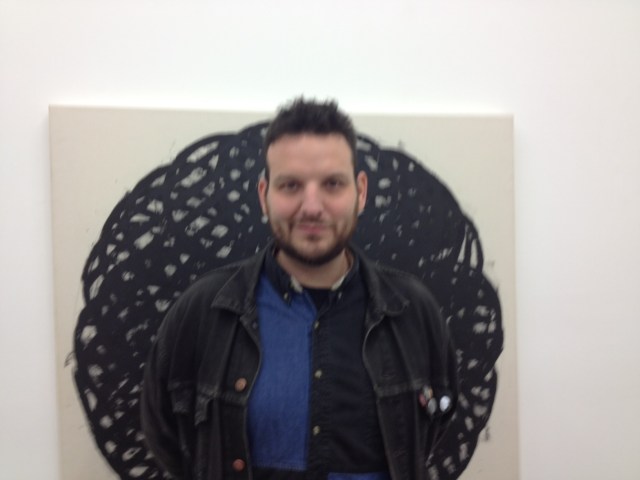
Gallery owner & curator Simon Cooper Cole, in front of one of the Gerald Ferguson pieces in the show “I Am Not an Answer”
As I walk around a gallery one of the questions I ask is “why these artists, and why at this time?”
Simon Cooper Cole decided to put four artists together in “I Am Not An Answer”, the show that opened yesterday at his gallery on Dupont near Dufferin in Toronto. Cooper Cole gallery is a fascinating three level space where one walks around enjoying the different views of anything displayed inside, a flattering space with interesting light, and right now, four complementary artists.
Two are younger, two are older. Two are painters whose work is on the walls, while the other two sculpt or install art in three dimensions.
At opposite ends of the space one encounters the soul-mates who never met.
Gerald Ferguson died in 2009, leaving behind a conceptual legacy in Canadian art. Two of his paintings can be found at each end of the space. Each is a kind of print made from an object (I think it might be a sewer cover or manhole cover) with paint or ink on it, pressed on untreated canvas. The shapes he makes are pure and spare with an almost unbearable rigour, the pristine clarity of an Escher through the use of something existing de facto in the world, a composition made from what is already there in the world.
Zoe Barcza was born in 1984, (and full disclosure, is also my daughter) and has been very busy lately, having exhibitions on both sides of the Atlantic, and a solo-show last spring in New York City. Her one piece in this show is five meters across, continuing an ongoing exploration of surfaces that look ripped or torn, seeming to show what’s underneath. They’re quite arresting in person.
Ferguson and Barcza seem to be from the same family tree, variations of minimalist and conceptual, understated but over-powering as a result.
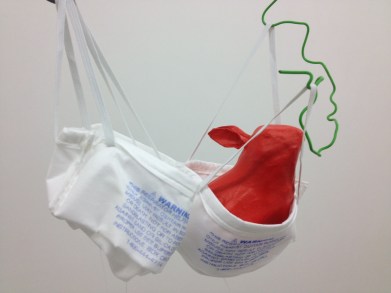
Detail from Georgia Dickie’s installation
Everything else in the room must enter into a dialogue with these works that reframe whoever and whatever is in the space, from other works of art to people drinking beer and talking about the art. In between are the three-D creations. Where the works on the walls are inscrutably understated the pieces from Georgia Dickie seem ironic, darkly comical in combining macho icons in one work, and merging the menace of safety devices with the vulnerability of a bunny-rabbit in the other.
And Robin Peck’s pieces are on small pedestals around the room in the space between the paintings. I heard they were called “crania”, which to me is the plural of “cranium”: the top dome of the skull. Some are more human while others suggest something alien or primeval. One could meditate on the implications, especially when one is in a space containing several. Perhaps can be understood as another version of Ferguson’s minimalism, although up close they’re beautiful and wonderfully detailed constructions.
Two of Robin Peck’s sculptures with a partial view of Barcza’s five-meter painting
For further answers to all the questions posed above and maybe to see something better than my opening-night shaky-handed iPhone photos either go to coopercolegallery.com (where there will be real photography at some point) or go to Cooper Cole Gallery, 1134 Dupont St to see them in person.
Dr Gábor Maté keeps turning up in my life. I just published a review of betroffenheit, a hybrid dance-theatre piece at CanStage, a co-production of Kidd Pivot and Electric Company Theatre, and there at the end I mentioned a PTSD forum coming Saturday with Jonathon Young, Crystal Pite: and Gábor Maté.
In a country that seems to be trying to get over a decade of Harper Conservativism, Maté is an avatar of recovery.
At the talkback after betroffenheit I couldn’t help noticing the intensity of the audience response. I’m reminded of Ancient Athens. There? The great tragedies were part of a universally known culture culminating in a festival where you’d expect everyone to attend: at least that’s the way it happened if my personal mythology is even close to being accurate. Can we imagine anyone asking an Athenian to contribute to a theatre company, to avoid falling attendance, or to turn off their smartphone and pay attention? But this group of Torontonians didn’t seem to need any admonitions.
The Toronto theatre crowd are educated & literate. How many of us have studied some aspect of theatre? I saw a few whom I’d met studying theatre, including a second generation student who worked professionally. A show like this one resembles a sacred festival in its ability to remind us that yes theatre can work miracles. But instead of religion it’s something else, the intersection of drama and the personal. I used the word “psychodrama” to describe bettrofenheit perhaps because the genre seems to turn up a lot lately. When I think about it both of the Canadian Opera Company shows –François Girard’s Siegfried, locating all the action inside the boy’s head, and Claus Guth’s Marriage of Figaro, personifying a disruptive libido figure onstage, pulling the strings in the action—could be understood as psychodramas. And the best kids film I saw this year was not Frozen (although speaking of obsessive-compulsive behaviour, maybe I am a bit shell-shocked from having seen it over 10 times, having played through its score at the piano, having sung its songs with assorted family members; perhaps i should let it go?) but Inside Out, a children’s film that included the conceit of a kind of internal psychological control room very much like what we see in betroffenheit.
I met Gábor Maté September 27th 2015 when he gave a talk at the George Ignatieff Theatre, following up on an interview earlier in September. I used the title “Ayahuasca and the authentic self” because that’s Maté’s message. Psychedelics such as Ayahuasca are powerful because they strip. away those fake layers that we’re undertaken as defense mechanisms. Perhaps “layer” is a synonym for “self”, where we have created a façade or two to blend into the world we aspire to be part of. At the deepest level is the person we left behind when we ceased to be authentic & real: who we were as a child.
When I met him in September I told him I had Ankylosing Spondylitis, an auto-immune disorder. He suggested I read When the Body Says No, one of his books. And I did so.
It’s a natural extension of what I had heard in the lecture, about the authentic self and the layers we create to adapt to / escape from the real world. The relationship between the body and the mind is something that is resisted in the positivist world of hard science and cautious press coverage, but one that is eagerly embraced in such communities as new age enthusiasts for self-help practices, including everything from yoga to meditation to community theatre. Yes, those of us who did much theatre encountered voice and body disciplines—including yoga—along the pathway.
I finished the book a few weeks ago. It’s not precisely happy news, reading this book as an auto-immune sufferer. Yet it explains something I have long suspected. While scientists usually explain diseases 100% in the language of science (that is, via virus or bacteria or other agent of infection), Maté speaks using a different kind of language. I mentioned this in my earlier Ayahuasca piece: that Maté speaks and writes on the interface between science and religion, between the precise and unforgiving language of a doctor and the sweet forgiving discourse of harm reduction & addiction. Maté is a rare bird, because he is unconditional in his tone without abandoning the language of science.
In fact Maté himself lives on that boundary. He is a former doctor. And so in When the Body Says No we encounter a series of case studies, examples of people with ailments encountered during time as a doctor. Maté is no longer a doctor yet he still can call up anecdotes to illustrate his books and lectures. We are told of the weaknesses of the positivistic approach of the sciences.
Maté is a natural for anyone already open to seeing the transcendence of the body-mind relationship, with healing powers that may seem miraculous. For further information click.
There’s a curious mix of adventure and nostalgia that goes with the annual Canadian Opera Company’s Ensemble Studio performance of one of the season’s operas.
After having seen a production with a cast of seasoned professionals, each year we get a chance to see the same thing redone with the young talent in residence at the COC. It could be Diane Arbus’s Magic Flute (2011) or El Comediants Barber of Seville (2015), or this season –last night in fact—it was Claus Guth’s Marriage of Figaro.
We’re watching young singers moving towards professional careers. The momma and poppa birds, aka the professional mentors & teachers at the COC such as Liz Upchurch, Rachel Andrist, Johannes Debus, Alexander Neef, watch conflicted. Their little songbirds take bold test-flights out of the nest. Does one feel pride at the growth seen over the past couple of years? Or perhaps sadness at the imminent departures. It may be the first time we see what a singer can do just as they’re standing close to the door, about to leave.
Sigh…
There’s another layer to this, if I didn’t hear wrongly. In February 2017, instead of an Ensemble Studio performance of an opera we’ll see a series of scenes in a Showcase presented by members of the studio. So there’s an additional bit of nostalgia given that last night may have been the last time the COC made the huge investment of energy and money to put their Ensemble Studio into a performance of an opera. What an opportunity! I can’t help connecting the weak Canadian dollar with this decision to abandon the fully staged Ensemble performance, even as I wish the COC might offer more roles throughout the season to these talented singers as an economy measure.
So if this was indeed the Last Tango, nothing seemed to be held back in a truly fitting climax to a wonderful tradition.
Unlike opening night that I reviewed it was a very different kind of evening. In fairness my joy in the younger cast is likely a reflection of my antipathy to the production. Jane Archibald (Susanna) & Russell Braun (the Count) managed to capture something that was genuinely conflicted, a troubling emotional ambivalence that might be deeper and truer, surely more modern than what Mozart, da Ponte (and Beaumarchais) wrote, whereas Karine Boucher and Gordon Bintner last night (in the comparable roles) gave us something perhaps closer to Mozart and less true to Guth’s dark vision. Was that because they’re younger? I hope I can be forgiven for saying I liked it more last night, much more.
At least some of that enjoyment can be credited to remarkable interpretations.
I thought Gordon Bintner sounded like the second coming of Thomas Allen, but maybe I shouldn’t be surprised considering that he and Allen shared the role of Don Alfonso in the COC’s 2014 Cosi fan tutte. Okay, he sounds like a younger version of Allen, complete with all the vocal power, fabulous diction, physical eloquence and good looks. I’m very sorry I had to miss that 2014 Ensemble performance of Cosi, as this was—for me that is—the first and last chance to hear that awesome voice and confident demeanor in such a big part. I remember wishing that he’d been given more opportunities to shine on the Four Seasons Centre stage, thinking especially of a mis-casting I recall from 2014 when Quinn Kelsey played Sancho Panza, a bit of a fish out of water singing below the best part of his range instead of appearing in Roberto Devereux where his voice would have been idiomatic and a worthy match for Sondra Radvanovsky. I wonder what Bintner could have done with the Massenet, admittedly a role that doesn’t offer the singer all that much to do. So at the very least i suggest that Alexander Neef consider giving thankless roles to his (hypothetically low cost) Canadians rather than expensive imports.
And speaking of singers I missed in the 2014 Ensemble Cosi, there’s Aviva Fortunata, with a voice & commitment to match Bintner. I wouldn’t dream of saying her voice sounds like anyone. It’s unique, but paticularly when she lets fly at the top of her range, it’s clear that the sky’s the limit. Speaking of ready-for-prime-time voices, I think it’s time for the COC to offer her a major role, something that she likely can do at the very least in a performance or two double-cast with a higher-priced singer.
The other two major players –Karine Boucher’s Susanna and Iain MacNeil’s Figaro—seemed like a happy antidote to Guth’s dark spin on Figaro. I confess (okay it’s obvious by now), I really don’t understand the dead birds. It’s probably true that this production makes tons of sense to the cast members who learned the subtext. But I submit that when theatre is still about communication, rather than an arcane cult ritual of obscure signals understood only by the participants/celebrants, I shouldn’t have to read a big long treatise to understand what it means. I’ve been in shows where we were all convinced of the brilliance of what we were doing, but if the audience doesn’t get it? it doesn’t matter. If you’ll excuse me for projecting, Boucher & MacNeil seem to be naturally happy people, or at least happy when onstage, completely at home at the centre of attention. Their Susanna and Figaro seem ready for happiness in this version of the story, whereas Archibald and Josef Wagner were in that darker place, a sophisticated and modern couple that has everything to do with what Guth wanted but perhaps overlaid over what Mozart wrote. I was far happier with what Dmitri Tcherniakov did last year with Don Giovanni even though both productions (DT’s DG and CG’s Figaro) seem to show a progression, a change or evolution. In the DG mankind seems to be outgrowing the seducer archetype; in Figaro we watch as the winged Cherubim –a very inconsistently applied deus ex machina –is eventually ignored by all except Cherubino. If Cherubim is meant to suggest libido or the disorder of desire, the way he is ignored at the end would imply that in marriage we stop having sex. What? that’s ridiculous, an insight perhaps worthy of Fred Mertz, not Lorenzo da Ponte. Maybe I didn’t understand ? which brings me back to the earlier comment about productions that you have to be in to understand.
(left to right) Iain MacNeil as Figaro, Jacqueline Woodley as Cherubino and Gordon Bintner as the Count in the Ensemble Studio performance of the Canadian Opera Company’s production of The Marriage of Figaro, 2016. (Photo: Michael Cooper)
Against all odds this happy energetic quartet, particularly MacNeil and Bintner, manage to keep the story relevant to what they are singing, whereas I felt as cold as one of those dead birds watching Wagner, Archibald, Wall and Braun et alia singing “corriam tutti” on opening night.
My favourite performer opening night was Robert Pomakov, and chances are he heard me guffawing last night as well. I felt he was the only one in the opening night cast who jumped over the chasm of Guth’s production to arrive safely back in the realm of sense when singing da Ponte’s words (quite a feat for a guy in a wheelchair). Megan Latham was his new partner and eventual wife, and a worthy adversary for Boucher and MacNeil. I had a bit of a laugh watching Jacqueline Woodley as Cherubino bemusedly picking up one of the white feathers strewn about the stage, as though suddenly recalling her recent heroics as a bird in white. Between her fluid portrayal of a boy and Sasha Djihanian again stealing every scene as Barbarina, there were no weak spots in the cast, including Douglas McNaughton even more over-the-top as Antonio, Aaron Sheppard as Don Curzio and Jean-Philippe Fortier-Lazure as Don Basilio.
Some of these singers will be back next year. For others it will soon be time to say “ave atque vale”. Hail and farewell? i hope we’ll see them again.
I am riding the emotional high of Betroffenheit, a co-creation & co-production of Crystal Pite’s Kidd Pivot and Jonathon Young’s Electric Company Theatre, presented tonight at the Bluma Appel Theatre as part of Canadian Stage’s current season, in a run that ends Feb 21st.
This is the third sample of Pite’s brilliance brought to the Appel. Both Dark Matters (brought to Toronto in March 2012) and The Tempest Replica (presented here in May 2014) were revivals of earlier productions. Betroffenheit is especially powerful.
You can’t mistake the ambitions of a piece employing a big multi-syllabic word connoting a psychological term. And yet the work is a meditation on the limits of words, signification and meaning itself. Before attending I looked for definitions of the big B word, finding a couple to complement what we were given in the program, which I’ll quote because it’s such an apt synopsis of the work itself.
“A state of shock and bewilderment encompasses you in the wake of a disaster. It is a timeless, liminal space where you return again and again even as you struggle to gain and maintain distance, and where you keep responding to the disaster long after it has subsided. Here a crisis-management team is keeping your emergency situation alive and present, a trusted voice is urging you to come to terms with the past, and a steady supply of “The Show” is available for all the distraction, escape and pleasure you crave. In one sense you’re the survivor and this is your refuge. In another, you’re the disaster waiting to happen. “
This is a work that seems to aim for a kind of healing and redemptive catharsis, even as we’re taken to the depths of hell in the obsessive recurrence of symptoms of horror and shock. PTSD and addiction are big parts of the subtext, but perhaps the key thing that needs to be said is that Young himself had a major trauma that led directly into this project. We’re in the realm of a kind of psychodrama, watching that crisis-management re-enacted over and over, by multiple persons representing parts of the inside of one person’s head. We’re given such a visceral sense of the anxiety lurking under the surface throughout the first part of the work that everything hangs together organically, occasionally set aside when we escape into that refuge of “the show”.
Jermaine Spivey, Tiffany Tregarthen, Bryan Arias, Daid Raymond, Cindy Salgado, Jonathon Young (photo: Michael Slobodian)
Young enacts all the voices on the sound-scape of lines repeated over and over, itself a fascinating achievement that I wish I could hear all by itself.
I think I see a pattern in Pite’s work, one I inflicted upon her in the talk-back session (when she was very gracious to listen). Both of the previous works have an intermission, dividing a first section that is more expository & dramatic, from a second section that is more dance than drama, a distinction that was brought up during the talk-back as a matter of puzzlement. As an opera fan, I submit that in the older works we expect different segments of a work to perform different functions. First we watch the story advanced by recitative (an expository discourse that uses a little music and lots of words to advance the plot), followed by an aria (a meditative discourse that uses a few words and lots of music for the sake of poetry & music). Pite’s dichotomy is like a variant on this. Before the intermission we’re more in the realm of PTSD and anxiety attacks, a soundscape that makes you jump, and lots of words serving as exposition. After intermission we are in a more peaceful meditation upon what we’ve been told, less action than passion, as the physiques of the dancers reflect and re-enact the agonies we’d heard in the first part.
Next week Young and Pite will participate in a PTSD forum with Dr. Gabor Maté, and Dr. Diane McIntosh Saturday, February 27, 2016; 2 – 3PM
Queen Elizabeth Theatre Salon (650 Hamilton St, Vancouver, BC)
FREE, limited seating available.
“The Pilgrim Soul” was the name given to tonight’s collaboration between pianist Emily Hamper and baritone Phillip Addis for Canadian Art Song Project (aka “CASP”).
I had assumed that tonight’s program would be more conventional, less experimental than CASP’s last outing (“The Living Spectacle”), which had included choreography and enough dirt onstage to make Pina Bausch proud. Yet tonight we were truly explorers, in a series of works linked around notions of discovery, pilgrimage and romantic yearning. It’s good to know that this sort of thematic exploration via the songs’ content can still feel so fresh, considering how well-worn that pathway is, with a great many songs and cycles about wandering. One of the delightful aspects of CASP so far has been a willingness to ground their explorations of present and future—including original commissions—in the touchstones of the form’s past. And so their November program included new works alongside a cycle by Richard Strauss, while tonight’s wanderings included Mahler’s Lieder eines fahrenden Gesellen.
Forgive me for over-simplifying, but the art song sometimes resembles a balancing act, two contending discourses (each of which can be broken down further), namely
The art of the song understood through song-writers (composers & lyricists)
The art of the song understood via performance (singers, musicians plus any other collaborative performers added to the mix)
And so while the evening’s program had a unifying theme, giving us several glimpses of the subject through various compositional lenses, we were firmly rooted in the drama of live performance, particularly because both baritone Phillip Addis and pianist Emily Hamper were reported to be unwell. Their discomfort made the concert far more interesting, a display of remarkable skill.
I am conflicted about virtuosity. We watched Addis conserve his resources, intelligently working his way through the scariest moments of the Mahler cycle in a brilliant display of technique; yet he was in a sense held prisoner by these well-known songs in their exacting requirements. On another day without the infernal virus I suspect the songs would have been more transparent, less about the process and more about the content.
For me the most impressive reconciliation between textual challenge and performer’s skill came in the second half of the program, as Addis & Hamper gave us a daring reading of Dominick Argento’s epic cycle The Andreé Expedition. As Argento comes up on his 90th birthday his unique voice still has lots to show us, in works that are largely tonal, and enormously articulate & intelligible in their vocal settings of (mostly) English texts.
This is one of the most original uses of the song form I’ve ever encountered. I’m reminded of the early epistolary novels that told their stories incrementally via a series of letters, assembled into big books such as Richardson’s Pamela. The setting of a series of songs from letters gives the work a kind of documentary realism, as each song can be as static as an opera aria, seizing the gestalt of that instant, and thereby gradually progressing through the big story. We begin with a grand adventure full of joy and pride, a polar balloon exploration, complete with a lover left behind addressed in some of the letters. Gradually the tone shifts from floating aloft in happy grandeur to an increasing sense of plodding, of struggle, leading eventually to stoicism and death. And of course Addis’ symptoms worked remarkably well in telling this story, his own gripping struggle that was all too real, but overcome in a very genuine triumph of a well-trained voice. He poured himself into the songs so totally that he seemed genuinely overcome with emotion at the conclusion.
We had a full evening even though the cycle that gave the evening its name –Raminsh’s 2013 cycle The Pilgrim Soul –was omitted, the artists unable to continue.
Earlier in the concert we heard four songs, beginning with Chester Duncan’s mellow “White in the moon the long road lies,” and after the Mahler cycle, Larysa Kuzmenko’s In Search of Eldorado. In most of these songs, Addis seemed more comfortable, partly because they lie lower than the Mahler, with the exception of the concluding Kuzmenko song “A Dream Within A Dream”, that ended in heroic fashion.
The 2015-16 CASP season concludes at noon May 5th at the Richard Bradshaw Amphitheatre in the fifth annual “Celebration of Canadian Art Song” as part of the Free Concert Series at the Four Seasons Centre. Admission is free, artists and works TBA.
Christos Hatzis is a Juno award winning composer and professor of composition at the University of Toronto. I was recently blown away by his score for Going Home Star, the Royal Winnipeg Ballet’s extraordinary piece in response to the Truth and Reconciliation Commission. Click here to get a current update of where you can hear him: a composer being heard all over Canada.
I feel privileged to be able to ask a series of questions in hope of shedding light on an interesting soul, his process and his ongoing composition.
Composer & composition professor Christos Hatzis
1) Are you more like your father or your mother?
I don’t believe that we are simply a product of our parents’ genes. There are inherited characteristics in everyone’s personality and others induced by one’s environment, to be sure, but the determining factor of our personality is our free will and the choices we make in life. I am quite the mystic, so I believe that there is also karma, things we must face and address because of the exercise of our free will in our past, in our future, on this earth or some other corner of this vast universe. I believe that space and time are not what they seem to be. Everything is a constant “here” and “now”. The past, future and elsewhere are reflections in a cosmic mirror. Even what we consider to be our inherited characteristics are the result of a choice made by us before birth. The older I get, the more natural all this feels to me.
I was born in a small city in Greece, and lived a life that nowadays feels like it was someone else’s, although I recognize everything that I have become as having been unarticulated in me since I was a child. I loved my parents and my siblings and they loved me back. I was a reluctant participant in my early life, did not do well at school, had very few friends and chose to mostly stay home keeping busy with music and painting and feeling rather conflicted about the cultural norms around me in the world outside my home. My father was a rebel and had spent part of his youth in a political concentration camp. He was always viewed with suspicion by the authorities, particularly during my formative years when Greece was under a military junta. My subsequent rebellious disposition and my uncompromising stance on human rights is definitely something I have inherited from him. My mother was very religious, in a doctrinal manner that, in my heart of hearts, I could never resonate with. My mother’s family looked up to the powerful social-religious establishment and looked down upon my father. I loved her and them but my religious feelings were alive, fiery, fearless, unconventional and very real. Formalized religion endorsed the political status quo and the status quo was of no interest to me then or now. My reality was a world of dreams, visions, symbols and archetypes. In the best of days, it still is. I loved the mystical essence of Christianity, its inner pounding heart. I could not articulate it until many years later when, as a student in the United States, I came across the documented utterances of the American mystic Edgar Cayce. It was only then, in 1980 and 1981 that my imaginal world burst open and exposed as illusion what everyone else understands as “reality”.
2) What is the best thing about what you do?
What I do most of the time is compose, teach and search incessantly for answers to the question of our collective origin and destiny. All these eventually merge into a single quest. I can’t define what it is but increasingly my composing, teaching and searching feel like three approaches to the same problem. In my older age I am slowly realizing that in life and creativity the more you give means the more you end up having. This is true with composing as much as with teaching or a conversation with friends, colleagues or students about life in general. Energy is a more evasive concept than what common sense proposes. Because of my diabetes and other ailments, my energy level is no longer what it used to be. Having said this, at the end of a nine-hour teaching day, with no attempt at conserving energy and instead pouring it out to my students, I end up feeling better and more energetic than when my day started. I see younger colleagues feeling exhausted at the end of their teaching day while I feel on the top of the world. Same thing with composing. When I give it all, I end up having more energy than when I started. Sharing my energy with young composers who are groping in the darkness of a creative activity which, at its best, has no certitudes, no methodology and no prescribed path, while asking them to trust their instinct and nothing else can be frustrating to them, but when I occasionally witness a creative breakthrough in them and see their trust pay dividends . . . well . . . there is nothing that can top this in my view. All of a sudden, energy is everywhere and we all soak in it.
3) Who do you like to listen to or watch?
When I am not teaching at the University of Toronto I am in my home out in the country south of Uxbridge, ON. I love the natural seclusion of forests surrounding our home. I am not sure if it is the location, but I feel that I am turning slowly into a cultural hermit. I listen to everything and nothing. Most of my listening is holistic, not attentive. It filters in unconsciously and it sits there waiting to be called at the right creative moment and situation to play a role. Because it has not gone through the anatomical table, it remains fresh, alive and pertinent, and always unconscious. During the creative process, it re-enters the picture but, again, unfiltered and unconsciously. With a few exceptions my music is not inspired by art or even nature. It is the human spirit that inspires me and this spirit can be found in everyday life far more glorious than in the imperfect artistic creations of our species. I am a paradox: an artist who engages with his art almost constantly but who does not get his kicks from art. Even though this makes me a difficult and hapless audience member, it also imparts a strange advantage on me. For many classical listeners, and for the longest time, music has become a substitute for religion. I sense a kind of cultism surrounding artistic activity and I believe that, in the case of classical contemporary music, it is this cultism that has alienated our audiences. I find it hard to be moved by art so, when I compose, I need to feel chills in my body which means that I have to try harder to experience the sensation that someone else experiences more easily. I am not sure if there is a medical term that describes the opposite of musicophilia, but I am convinced I suffer from it. Yet there are times when I hear something profound, like a daylong series of concerts of Giya Kanchelli’s music at the Winnipeg New Music Festival a few years ago, and I am completely overpowered, with tears streaming uncontrollably from my eyes and feeling utterly possessed by the music. Those are rare moments but they make life worth living. They open up windows to a reality that I wish I could inhabit all the time.
4) What ability or skill do you wish you had, that you don’t have?
To be able to cancel my own ego. I mean totally. I know what power that would unleash. But to do this would entail stretching willingly your body on a cross and offer yourself as the sacrificial ram, holding nothing more important than this act of self-sacrifice. I am not ready for this skill yet, no matter how much I fantasize the possibility, but I know that I and everyone else must master it, if our world is to survive past the crucible that we are entering as a species on this planet this present moment in our collective history.
5) When you’re just relaxing and not working what is your favourite thing to do?
I occasionally vegetate in front of the TV set, but the more I do it the more depressed and uncreative I become. Thank God for deadlines, like nowadays, which keep me constantly in front of my computer composing. At night, before going to bed, I always read. Mostly physics books nowadays but also religious esotericism and history. I keep different bedside books at our home and different ones in our condo in Toronto where Beverley Johnston, my wife and I stay during the middle of our teaching week at the Faculty of Music, University of Toronto. This scrambled intake does not seem to bother me at all, in fact it causes a weird clarity in my comprehension. My head buzzes pleasantly in environments with complex random access intake.
*******
More questions about two musical projects, namely 1-Going Home Star, the score & recording from the collaboration with Royal Winnipeg Ballet and 2-a collaboration over the next month with Sarah Slean
1- I recall a composer once telling me that one learns to recognize one’s own authentic voice by imitating the things you like, trying out different procedures and sounds, until finally you discover something you like. Our culture has a fetish for newness & originality, while some other cultures make more of a virtue of the imitation of models or emulation of styles. Could you please address this both as a composer AND as a teacher of musical composition, namely how do you reconcile imitation and originality?
In his ground-breaking book “The Master and His Emissary: The Divided Brain and the Making of the Western World” neuropsychologist Iain McGilchrist makes some astute comments about newness and originality. We have perverted the meaning of these words in our days and the price of this perversion is that our art suffers from a profound lack of authenticity. One of my favourite admonitions to young composers is “You are as original as your fingerprint. The only way you will not sound original is if you try to sound original in which case you will just sound like everyone else who is trying to sound original and that includes just about everybody”. Learning by imitation at an early age can be a good learning strategy. This is how I learned music and this is how many masters in the past learned from their masters. But instead of imitating some other composer’s style I tried to get inside their mind, not their scores. I tried to fantasize what kind of thinking would make their music sound the way it does. If that mind’s thinking was readily discernible by just studying the score, then it was not worth the exercise as far as I was concerned. But if there is magic in the sound, despite of what you get out of reading the score, then you’ve found your master, the one worth following. Claude Debussy is one of the few composers who has kept me occupied for the longest time in this regard.
I don’t think about originality—it’s a chimera. I am not interested in leadership and I have avoided it for the longest time, shying away from administrative positions, or other positions of authority. We are infested with inauthentic leaders that ultimately let us down. In moments of psychic clarity, I realize that, far from being a leader, I have always been a reluctant follower because I have felt betrayed often during my cosmic journey as most of us have. The only leader I have trusted and continue to trust is one who has never let anyone down. He is the central protagonist in our species’ cosmic drama and selflessly keeps on guiding us even though he is no longer bound by earthliness like the rest of us. We know him historically from one of his most recent incarnations as Yeshua of Nazareth but he has experienced many sojourns in many cultures and religions from the very beginning of human life. He is my guiding light. Without him I would not be able to breath, let alone create. I feel him as the living, beating heart of our species. In my best days, all I wish for is to abandon myself completely in his embrace. When you feel like I do, the pursuit of originality is a rather silly concept. It is he who holds the patterns and patents of my being. Without him I am a severed and discarded part. With him, my personality, originality and individuality are washed off by blinding light and dissolve completely into it.
2- The score for Going Home Star is an intriguing mix of influences and styles. Some of it seems designed to exploit the particular idiom, the specific timbres & particular skills of your collaborators, Tanya Tagaq and Steve Wood. The resulting score seems like a genuine synthesis of different approaches into a music that doesn’t submerge anyone, but still honours their individuality in the mix. Could you please reflect on how that happened, both your objectives and your approach, as one of the first world participants in a piece about reconciliation?
Going Home Star was a very difficult project for me. As I have already mentioned I am deeply religious and a project about the Indian Residential Schools where religion was perverted and turned into cultural genocide required long and painful soul searching on my part. I would have not been able to approach this project analytically, that is from the outside, nor from its political, or even historical specifics. The story’s humanity was the only way I could enter it. Since I am religious, I had to understand how idealism severed from deep empathy can turn monstrous. We have witnessed it repeatedly throughout history, but my question was “how does it feel?” not “how or why does it happen?” to answer it, I had to step into the shoes of the perpetrators. As a person professing to be religious, it was them that I needed to understand. “Clergymen’s Dance”, the first scene of Act 2, documents this inner struggle with my own demons. It starts with two notes a major second apart alternating endlessly over different musical contexts. The music has a naïve enthusiasm about it: young people leave the comforts of Europe hoping to be of service to God and humanity in the New World. Gradually the music becomes ever more militant and dark, showing a growing despair frustrating the surface idealism. When despair becomes overwhelming, the music suddenly becomes violent, unhinged and wildly gestural. This loss of control, however, does not result in any learning or understanding. Instead, the music retreats back to its beginning as if nothing happened. Instead of learning we retreat to institutional hypocrisy. On stage, the clergymen cover their eyes as one of them sexually abuses a child on the stage floor.
I often tell my students that, when I am asked to compose a string quartet, I am totally incapable of composing music for two violins, a viola and a cello. I can only compose music for two violinists, a violist and a cellist. This may sound like a sophism to most people but it is very indicative of the way I understand and experience the world. Treating my indigenous musical collaborators as fellow human travelers, trying to feel their fears and aspirations as they engaged in a project like this was the only way for me and Mark Godden, the choreographer, to move forward with our collective story-telling. More than the music or the dance, what one sees and hears in this ballet is the rapprochement of people from diverse backgrounds who attempt reconciliation at a personal level before they can ponder how this may depicted artistically.
Multiplicity of styles, genres and conflicting ways of thinking about music has always been an ever-present element in most of my work. I don’t resort to this multiplicity deliberately, like some kind of menu of “let me show you how many different things I can do”. If it were so, it would have been trite and shallow and I am not interested in showing off my compositional ability as a self-directed goal or for any other reason for that matter. Multiplicity is what I see around me everywhere I look. It seems increasingly harder for us to fit it all together and we eventually resign any attempt to do so, accepting it instead as a kind of meaningless “collage”. Philosophically, to me at least, “collage” is a Frankenstein assembly of parts after death: a zombie creature. All my life I have dug deeper and deeper until the multiplicity of contradictory elements we encounter on the surface reveals their common roots. The “virtual nightclub” of the first scene, spanning from Swing Era Big Band, to Disco, Scratch DJ-ing and Dubstep developed naturally as an intuitive stream of consciousness. While I was composing it I was dumbfounded by its disconnectedness, but I trusted that some deeper essence would eventually reveal itself as it has invariably done in the past. After it was written I could finally see and understand the deeper metaphor. The exploitation of our aboriginal people, the central theme of the ballet, spans centuries. The uncomfortable coexistence between natives and urbanism runs nearly as long. The nightclub of the first scene “time-stretched” itself naturally to drive home this point. If you think about people while composing, not abstract aesthetic notions, and think about people with as much empathy as you are capable of, the music will write itself. If you don’t, you end with a collage.
Including in the project aboriginal artists was never in question. How to include them was a philosophical and technical problem. When Tanya Tagaq performs on her own, she is an elemental presence, a powerhouse, a shaman of cosmic but unpredictable strength. There would be no way of combining her with an orchestra and ballet dancers, for whom predictability and repeatability of musical action is paramount, and not diminish her in the process. A similar situation would be the case with the Northern Cree Singers. Their heartbeat emanates from within their pow-wow circle, their sacred drum, not from an orchestra conductor’s metronomic gestures. It became clear to me that, given the time constraints for producing this score (eight months, instead of the usual two or two and a half years), I would need to bring Tanya and Steve Wood, the founder and leader of the NCS into a studio and record them performing their own songs, improvisations, vocal imitations of birds and animals used during the hunt, etc., and then incorporate these recordings into the soundscape of the composition. Given that the orchestra is in the pit and hence not visually central to the action on stage, I could assign their modified recordings along with other electroacoustic soundscapes on keys on a MIDI keyboard and have a keyboard player in the pit deliver them to the sound system along with the live orchestra delivering its own musical soundscape.
3-As far as the sound-scape / score for Going Home Star is concerned my basic question is: how did you do it?
The ideal way to perform the score is with an orchestra in the pit and with the native material and the additional electronics delivered from a sample playback device, in our case a piano keyboard. This is how it was presented in Winnipeg over a year ago (with the Winnipeg Symphony Orchestra) and more recently at the National Arts Centre in Ottawa (with the National Arts Centre Orchestra), the first stop of the current Royal Winnipeg Ballet cross-Canada tour. Additionally, in Winnipeg and Ottawa, Tanya Tagaq gave a short solo performance from the stage before Act 2 and the NCR and a different pow-group in Ottawa opened Act 1 of these performances.
I can talk a bit more technically about the actual mechanics of composing such a complex score. I compose on Cubase, a Digital Audio and MIDI workstation developed by Steinberg. I own an extensive array of MIDI libraries, which I use to simulate a symphony orchestra in my workstation’s MIDI tracks. Additionally, I use several audio tracks into which I import my audio material (the recordings by Tanya, Steve and the NCR, in addition to processed sounds from these artists and other sources). In this way, I can constantly track and cross-reference the relationships between the playback audio and what a real orchestra will sound like playing along with it. Once the music of a scene was completed and Mark Godden approved the MP3 demos that I sent him over the internet, I transferred the orchestral part into a notation software (Finale 2014) and notated a conventional orchestral score. The score included a piano part whose notation indicated the precise firing of the playback samples. This way the pre-recorded material and the orchestra can follow the conductor without any need for invasive click-tracks in the conductor’s ear. Since I had never tried this system before, I felt constant anxiety about how effective it would be in performance. but it turned out to be very effective.
There are no orchestras available for every venue of the tour, so for most venues the music will be played back from the audio booth, as it did in Toronto’s Sony Centre on February 5 and 6. This is how you heard it and how most people will hear it for the remainder of the tour.
4- Please describe your upcoming collaboration with Sarah Slean for the Thunder Bay Symphony.
This will be my second collaboration with this amazing singer-songwriter. Our first one, Lamento, for her voice and Symphony Nova Scotia was about loss of a loved one, mental illness and suicide, a dark song cycle based on the aria “When I Am Laid in Earth” from Henry Purcell’s opera “Dido and Aeneas”. (All three songs of this cycle are available on YouTube).
The texts and the music for Lamento are my own, but for our new collaboration, called Ecstasy, Sarah has penned her own texts.
The project is a commission by the Thunder Bay Symphony Orchestra. About a year and a half ago, Sarah performed Lamento with the TBSO and it was after the success of that performance that the possibility for a new song cycle presented itself. Sarah is well known as an immensely talented songwriter and singer but she is less known for her profound and mystical understanding of things. Her poems for this project are inspiring and resonate deeply with my own view of the world. I don’t think she would mind if I shared a small excerpt of her poem for the second song which is as yet untitled:
Suddenly,
the present moment bursts from its fog
turning slowly before me,
Like the earth on its axis
Massive, significant, silent
All other tenses
Of all verbs
Flake away,
Dead petals.
There is a magnificent jewel
I cannot see within myself
Unless it is glittering
In another
Whose eyes I have entered
With love
And nothing else.
I am working day and night trying to finish this cycle. Its premiere performance is at the end of March and it is a race against the clock. I am not cutting any corners, however. Actually when I am under the pressure of a deadline I compose some of my best music.
5-What direction do you see yourself going at this point?
For a person who constantly aspires to live in the present moment, it is an impossible question to answer. The projects that have truly changed me as an artist and human being have come looking for me rather than the other way around. There is a deeper thinker in us who thinks in an ineffable manner that cannot be articulated by any language. This is the heart’s thinking. When we think at this deep level the universe around us begins to sing and speak these thoughts like a language in its own right. Things begin to magically happen around us and these ineffable thoughts begin to turn into reality. To the extent that I am able to say anything specific about current interests and future plans, I am deeply concerned about negative attitudes towards migration, in North America and Europe but also other parts of the world. The fear of the Other and the way it is stoked by political opportunism is very worrisome. We are at the gateway of a possible and widespread new apartheid in the western world unless we embrace the Other and consider it part of us. Being an immigrant myself and having been welcomed in both the United States and Canada as a young man, I am weary of our changing attitudes towards immigration. Part of our fear is caused by a deeper awareness of how in the past migrant Europeans nearly decimated native cultures in North America. We are afraid that we may now find ourselves on the receiving end of such cultural supplanting. Fear is the enemy. As John Cage said once “nothing is lost when everything is given away”. This to me is the deeper message of the Cross, the message that we are stubbornly refusing to understand and practice. Nothing is lost when everything is given away. Wonderful new things emerge from such generosity and self-sacrifice, impossible to predict beforehand. Perhaps the phone might ring and I may plunge myself in a project on such a subject or, again, it may just be wishful thinking on my part. It may be that there is a higher necessity why we must collectively experience this crucible that we appear to be headed into and that no work of art may be able to stem the tide and deprive us of such crucible experience. Nothing is random in this world or any other.
6) Is there a teacher or an influence you’d care to name that you especially admire?
So many! Many of them before my time. At the very top, the soul entity who entered as the first human avatar and fell and was willingly raised on the Cross and redeemed humanity as a whole: not mechanically, as most Christian doctrines would have it, but by pointing the Way of the Cross for the rest of us. He has been my greatest teacher and influence.
Edgar Cayce gave language to all the things I felt inside me as a child and could not articulate. He has been a lasting influence in my life and creativity.
Composer Morton Feldman, my last composition teacher, who taught me to mistrust reason and follow my aesthetic instinct. I have followed my heart’s reasoning instead, something that he would have probably not approved, but I learned from him to risk everything for a faint promise of access to something beyond illusory certitude. I learned from him to stand naked in front of the Abyss and know that nothing can possibly happen to me unless I allow fear to weaken me.
A woman who will not be named (in my upcoming autobiography I call her Anne). I thought of her as my inferior when I was fresh out of graduate school with inflated brains only to find out that she had been granted unimaginable cosmic power for one reason only: because she would never use it under any circumstances and would not display her power and cosmic knowledge for any reason. I learned humility from her. For the past thirty five years I have been processing what she had taught me in a few short months. It will take several lifetimes to process completely.
*******
The music of Christos Hatzis can be heard in several places across Canada (this is not a complete list).
The Royal Winnipeg Ballet national tour of Going Home Star continues in March and April, encompassing locations in each province going westward from Manitoba to British Columbia .
Ecstasy, a song cycle and the second collaboration between Hatzis and Sarah Slean, receives its world premiere March 31st with the Thunder Bay Symphony.
Lamento, the earlier collaboration with Slean, will be presented by the Saskatoon Symphony May 14th
Sepuchre of Life, commissioned by four different Canadian philharmonic choirs, written in 2003, will be presented by Mount Royal Kantorei, Mount Royal Artio Cum Vino Cantus; The Calgary Youth Orchestra May 14th
and
The Isle is Full of Noises, a 2013 work using Shakespeare texts commissioned by L’Orchestre Symphonique de Montréal, will be presented by the Toronto Symphony at Roy Thomson Hall April 12 & 13th 2017.
“I feel strongly that with my music, I am trying to force a tiny opening in the clouds that will allow His Light to shine through. At best, I am a follower, not a master, and my MASTER holds the patterns and patents of my being and work. So, in the best of circumstances, I can only think of myself as an imitator.“
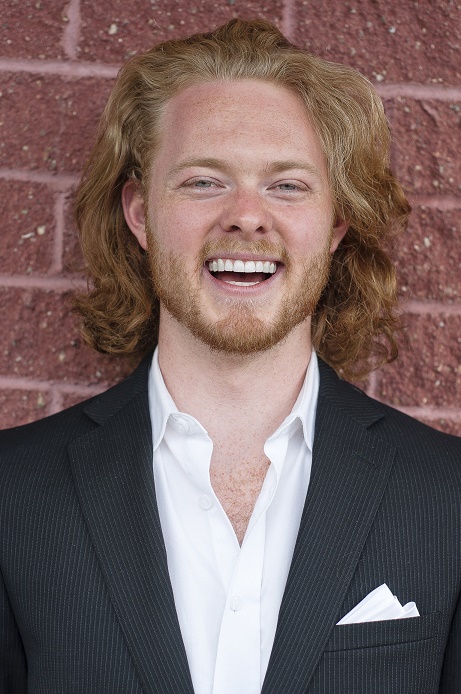
Canadian bass-baritone Iain MacNeil joined the Canadian Opera Company Ensemble Studio in the fall of 2014, after studying at University of Toronto Opera with Canadian soprano Wendy Nielsen. There’s a more complete biography on his website: here. His career is off to an impressive beginning. I singled him out in his portrayal of Dr Bartolo in the Ensemble’s Barber of Seville last spring, making me especially eager to see his latest comic creation: the title role of The Marriage of Figaro February 22nd.
I asked him some questions.
1- Are you more like your father or your mother?
I’d be hard-pressed to determine which of my parents were more influential toward the person that I’ve become. Both of my parents spent a large portion of their childhood abroad, my Mom in Liberia and my Dad in Australia, so I think I come by my wanderlust honestly. As for music, both of my parents sing in choirs and play an instrument or several. Their love and appreciation for music was passed directly on to my siblings and me by placing us in piano lessons, voice lessons, violin lessons, and dance lessons, as well as by encouraging us to participate in school and community bands and theatre. Where I think I resemble my Dad more than my Mom is in my passion for acquiring new skills. My Dad will pick up a new skill and pursue it until he has it completely within his grasp, even if it means hours and hours of reading, practising or whatever kind of training the skill entails. Thanks to this kind of diligence, he’s very handy, plays several instruments, was a committed rugby and basketball player in his teens, and went back to school in his forties to obtain a Master’s degree. I think the Jack-of-all-Trades gene was successfully handed down from him.
Baritone Iain MacNeil
2- What is the best thing about being a singer?
There are a plethora of joys that singers experience. Travelling is high up on the list for me, especially when it’s to a place where I get to test run another language. In this international art form, opera singers are really lucky to have the chance to immerse ourselves in other cultures.
We are also really fortunate to be immersed in powerful music every day, and to be surrounded by passionate artists and lovers of the art form every day.
The ultimate gift, however, is less of an aspect of being a singer and more of a feeling. It’s the feeling of being completely unified with the music, and existing as its vessel for the audience. It is the most enabled, effervescent, connected and meaningful state that I know of, and it certainly does not occur every single time I sing. But when it does, it’s like your whole being is riding a wave, and the audience is riding it with you. There is nothing better.
3- Who do you like to listen to or watch?
When I was 14 I bought an MP3 player, and the music that was at my disposal was my Dad’s CD collection. Therefore the foundation of my musical taste is more or less music from the 70s: Cat Stevens, James Taylor, Simon and Garfunkel, Eric Clapton, Queen. I think from living in Halifax for four years I’ve added East Coast traditional, folk, and Indie music to my regular diet, and from studying classical music at Dalhousie, I’ve added classical music, too! When I bought the MP3 player Dad said, “You can have this MP3 player, but make sure it contains 30% classical music.” I laughed, but ten years later it contains a lot more than that!
4- What ability or skill do you wish you had, that you don’t have?
I suppose this is more of a superpower in its level of attainability, but I would like the ability to understand every language and every dialect that exists in the world.
5- When you’re just relaxing and not working what is your favourite thing to do?
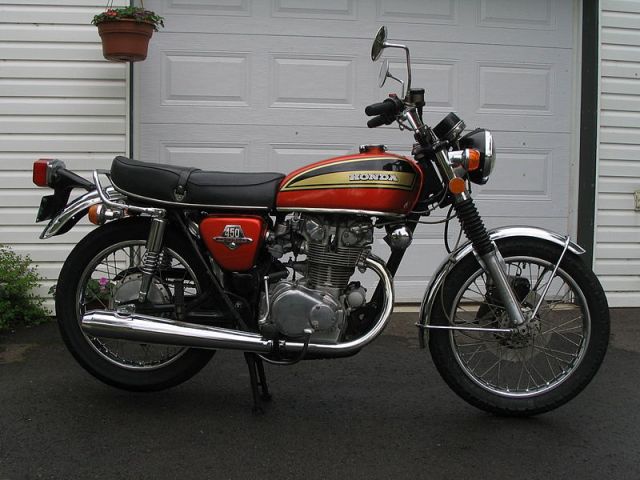
My favourite thing to do outside of work is ride my motorcycle. If I have weeks in a row of free time I’ll take a trip. I’ve been to St. John’s, Newfoundland and back on my 1974 Honda CB450, and let me tell you there is nothing like travelling with an un-obstructed view of the landscape and a bit of wind in your face, as long as you’re alright with being cold and wet every once in a while.
Playing guitar or jamming with my friends is tied for first as a favourite thing to do outside of singing.
*******
Five or six more about singing Figaro in Marriage of Figaro with the Canadian Opera Company
Iain MacNeil and Karine Boucher (Dr Bartolo and Berta in the 2015 Ensemble Studio performance The Barber of Seville) will be re-united as Figaro & Susanna for the 2016 Ensemble Studio Marriage of Figaro (Photo: Michael Cooper)
1-For a role such as Figaro, you must have heard other interpretations, either recordings or live, of such a well-known role. How do you reconcile yourself to the forest of video & audio out there that might influence your own interpretation?
I don’t worry about people seeing or hearing an influence from another artist or interpretation.
In fact I’m absolutely open to having help in creating my own interpretation. I think that’s why we collaborate, with many brains being better than one. All I can hope is for people to believe my Figaro. Bryn is my favourite Figaro, so if someone heard bits of his Figaro in mine, I’d be flattered.
With regards to this production, I did watch DVDs of past productions, but it was the rehearsal process that has brought me closer to what I believe Claus Guth’s concept to be after.
2-What is your favourite moment in the opera?
Le Nozze di Figaro is full of fantastic moments, gorgeous music, and endless potential. The Act IV finale is currently my favourite 15 minutes of the opera, and arriving at, “Ah, tutti contenti saremo così,” with my colleagues is currently my favourite moment. At this point the “giorno di tormenti” is finally suspended for a few seconds of peace, tranquillity, and community. I can only imagine how it will feel to sing it with my fellow Ensemble members after a night on stage together.
3-Please talk about the COC production of Marriage of Figaro and Claus Guth’s take on this story.
When I first saw bits of the production years ago on YouTube, I was averse to the character of Cherubim, who is absolutely central to this production.
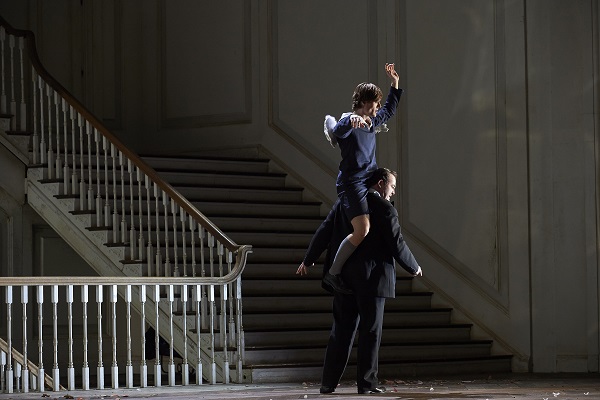
Director Claus Guth’s most invasive moment? Forcing Russell Braun to sing the Count’s hardest aria while carrying Uli Kirsch as Cherubim (Photo: Michael Cooper). Miraculously Braun pulled it off. [see comment below]
Admittedly I did not know the opera well at all, and had no grounds other than a lack of understanding on which to dismiss the unicycling angel. However, the Ensemble cast became flies on the wall to the main cast’s rehearsals, Cherubim’s purpose became increasingly clearer to me. Da Ponte continuously refers to a God, or devil, or immortal being of some sort that is responsible for upsetting the plot at every turn. Claus Guth embodies this external force as Cherubino’s alter-ego, the angel Cherubim. Cherubim, also a pubescent boy who embodies Freud’s Eros, or life drive, arrives throughout the opera to remind the women of their suppressed longings in life and to drive the men crazy. Furthermore, he seems to have the special power to stop time and make his presence known at some of Mozart’s most beautifully suspended musical moments. It is during these times that the characters are often referring to a “diavol” or “nume” that is pulling the strings and orchestrating the craziness of this day. As such, the angel’s existence in this concept is aptly justified, and even organic.
As for my character, I’ve always seen Figaro as an outgoing, hot-headed individual, with a careful, calculated side that can’t be ignored. In this concept he is portrayed as more of an intellectual, almost autistic individual who, while still subject to outbursts, by nature carries out his scheming, plotting and conflict-resolution in an introverted, cerebral, logical kind of way. It’s a really interesting take on the character. Challenge: accepted!
4-I’d ask you to reflect on your time with the Ensemble Studio, and how it culminates in this production.
My time in the Ensemble Studio has been a full on dive into the art form, the business, and the craft of singing. In my two years I have met life-long friends, started a relationship with a prolific company, and acquired tools that I will call upon regularly if not daily for the rest of my life. I am proud to have made it through to the other side with a hugely expanded knowledge of what it means to be a classical singer today, and I look forward to continuing to take ownership of that knowledge.
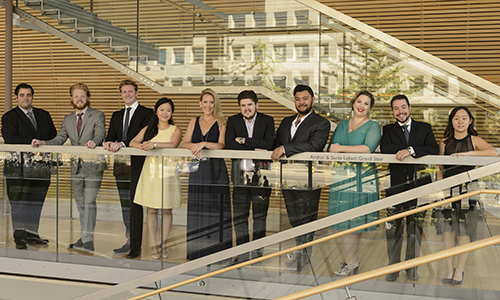
Members of the 2015/2016 COC Ensemble Studio. (l-r) tenor Andrew Haji, bass-baritone Iain MacNeil, bass-baritone Gordon Bintner, intern coach and pianist Jennifer Szeto, soprano Karine Boucher, tenor Aaron Sheppard, tenor Charles Sy, soprano Aviva Fortunata, tenor Jean-Philippe Fortier-Lazure, and intern coach and pianist Hyejin Kwon. (Photo: Chris Hutcheson)
A huge part of this knowledge has been acquired by sitting in rehearsal listening to the artists that sing here, and just by going to the opera a lot. Being in La traviata with Quinn [Kelsey] meant hearing his Germont many times, and I was always fascinated by it. Watching the rehearsal process is incredibly useful and informative for us as young singers so that we can understand what’s expected and what’s possible.
I enjoyed all of my role assignments. Dr. Bartolo was a definite highlight. It was frustrating but eventually so liberating to commit fully to a character that I wouldn’t normally sing. Figaro, however, promises to rival as a highlight for me, as does the opportunity to perform Songs of Travel with members of the COC orchestra in May.
5-The torch is always being passed to a new cohort, but sometimes it seems that the torch is about to go out, that opera is dying. Please talk about the next generation of opera (composers, singers, musicians) and what your peers bring to the table.
I haven’t been around long enough to be able to predict the future of this business, but I have been around long enough to have been completely transformed by this art form. I don’t doubt that it will change, and that part of my job will be to change with it, but I know that the foundational aspects of opera are timeless. For example, on a fundamental level I believe in the power of the human voice to connect with people. I am hopeful that composers of new operas also believe in that power, and I am hopeful that generations of future opera goers will also be transformed by the existing and growing canon of magnificent operas.
My job is to never stop learning, never stop honing my craft, and to never stop giving generously from the stage to the people in the audience. That is where I plan to direct my energy. I am absolutely aware that most opera-goers are not 25 years old, but I am, and if opera can grab a hold of my life from all the way out in Halifax, Nova Scotia, Canada – and my story is not unique- then there is incredible potential for a future audience.
6-Is there a teacher or an influence you’d care to name that you especially admire?
I am indebted to and hugely appreciative of my mentors and teachers Wendy Nielsen, Liz Upchurch, and Rachel Andrist. These ladies care so much about opera and nurturing young talent, and they live this vocation daily. I am very happy to have them in my life.
Marcia Swanston, professor of Music at Dalhousie University
I mentioned my Alma Mater, Dalhousie University. Without it, I doubt that I would be here. More specifically I would like to thank my Dalhousie voice teacher Marcia Swanston. She put the fire of singing in me, and guided me through the beginnings of understanding the craft and being a vessel for the music. I am very fortunate to have had her as a teacher.
*******
Iain MacNeil and the Ensemble Studio take their turn suffering the slings and arrows of outrageous eros in Claus Guth’s production of The Marriage of Figaro, February 22nd at the Four Seasons Centre.
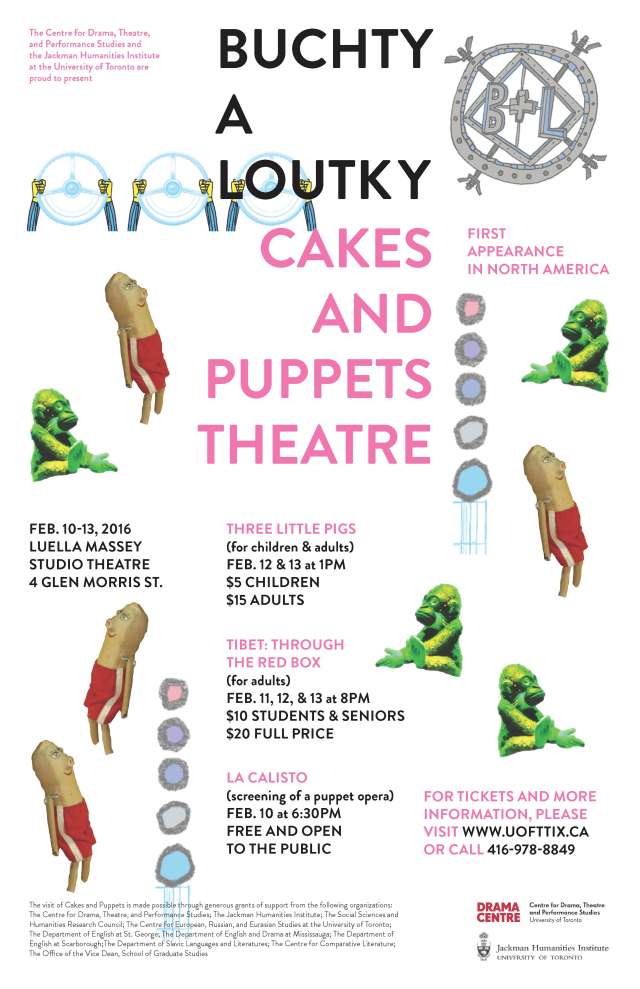
The Centre for Drama, Theatre & Performance Studies at University of Toronto are in the midst of a residency by Cakes and Puppets, a Czech puppetry company. Who are they and what are they presenting in this brief visit?
Cakes and Puppets/Buchty a Loutky is an experimental puppet theatre company from the Czech Republic. Founded in 1991 by graduates of the puppet department of the Prague Academy of the Performing Arts, Cakes and Puppets has premiered over 40 live productions for adults and children and they have designed stop-motion sequences for films including Lars von Trier’s The Antichrist. Their performances combine old toys, discarded objects, and fine art sculpture. Their aesthetic has been called “punk puppetry” and “the theatre of Do-It-Yourself.” Their work spans fairy tales, opera, and a recent “Reloaded” series of puppet productions of classic and cult films including Rocky, Psycho, Jaws, and Barbarella.
For their North American premiere, Cakes and Puppets will bring two productions to the Luella Massey Studio Theatre at the University of Toronto. The first is their adaptation of Petr Sis’s Caldecott Award-winning book Tibet: Through the Red Door. Sis’s father, a documentary filmmaker, was sent to China in the 1950s to film a Chinese construction crew building a highway. Separated from the workers and caught in a blizzard, the elder Sis witnessed events that he could only communicate to his son through tales of gentle Yetis, an encounter with the Dalai Lama, and other “magical stories.” In 1994, Sis discovered his father’s diary, locked in a red box, with the message “The diary is now yours.” Tibet filters Cold War intercultural tensions through the eyes of a child—and an adult reflecting on his Central European past.
The Three Little Pigs is a retelling of the classic children’s story with modern updates, including wisecracking pigs and at least three houses that are built and blown down by a determined wolf. Children and parents are encouraged to stay after each performance to meet the company and try out their puppets.
In addition to appearances in classes the troupe will present
TONIGHT A video of their collaboration between the Czech baroque ensemble Collegium marianum and Buchty a loutky (“Cakes and Puppets”) in La Calisto, by Francesco Cavalli
Feb 12 & 13 at 1:00 pm: Three Little Pigs (for children & adults)
Feb 11, 12 & 13 at 8:00 pm: Tibet: Through the Red Box
Before the opera video we had a question & answer session. While it may have been unorthodox to start with the questions, it was out of respect for the jet-lagged artists/artisans who had just arrived, and have a full agenda over the next few days. Professor Veronika Ambros served as translator, assisting moderators Linda & Michael Hutcheon, who followed the showing with additional Q & A from the floor, while sharing some fascinating stories of puppet opera from around the world. Thursday afternoon there’s an additional session with the Hutcheons and Buchty a loutky discussing “operatic puppetry”.
It seems clear to me that we can see most of these things at least two ways: there are troupes specializing in various disciplines –thinking particularly of puppets, dance or circus and aerial work— and also,, when we come to opera, these artists / artisans are called upon to become part of the team, if not the expressive vocabulary of opera. Robert Lepage once called opera “the mother of all the arts”, perhaps in recognition that he was himself promoting (if not re-patriating) the pure spectacle of the old operas from the 17th century (a choice that’s been resisted in some quarters, embraced in others). Tomorrow I’ll be seeing the Canadian Opera Company’s Siegfried (directed by François Girard / designed by Michael Levine), that features prominent aerial work and puppetry (thinking for instance of the giant dragon made up of humans strung together into a wiggly pyramid). Every decade there are different design trends, so I wouldn’t dream of what the next decade holds…
(left to right) Acrobats Antoine Marc, Sandrine Mérette and Ted Sikström in a scene from the Canadian Opera Company production of Love from Afar, 2012. Conductor Johannes Debus, original production by Daniele Finzi Pasca, set designer Jean Rabasse, costume designer Kevin Pollard, and lighting designers Daniele Finzi Pasca and Alexis Bowles. Photo: Chris Hutcheson
There was a lot of giggling in the first ten minutes, perhaps out of the simple delight in the marionettes. We saw portrayals of gods and goddesses by marionettes and humans alike, including a Zeus who made a fantastic gender change right before our eyes to imitate the goddess Diana, changing from a bass to a counter-tenor (although the voice change was not done through any sort of surgical intervention!). The laughter subsided as the beauty of the medium worked its magic.
The video was a bit frustrating in some of the same ways that the recent Lulu from the Metropolitan Opera high definition broadcast series was frustrating (in fact Lulu drove me nuts). The camera zeroed in on exemplary performances, while often leaving us wondering about the overall stage picture. For La Calisto this was particularly concerning, because we missed the visual tension between the puppet theatre and the surrounding ensemble of singers & players, some of whom stepped into that puppet theatre space. Any video of a live performance must make such a choice (and you can’t please everyone), losing the extra possibilities one has in the live performance space.
Fortunately everything else being offered is live, so you don’t risk that kind of frustration.
The schedule is here. Tickets are available through www.uofttix.ca or call 416-978-8849.
To most people Antonio Salieri is unknown except as the older composer associated with Mozart in Amadeus, perhaps best captured in this little clip from Milos Forman’s 1983 film.
Of course the way that story is told is a cruel misrepresentation (from a play after all). But it is true to say that Salieri’s operas are mostly unknown, so much so that today I saw my first one, namely Falstaff in a semi-staged version here in Toronto, thanks to Voicebox Opera in Concert (hm interesting that their initials –VOIC—come close to spelling “voice”. I suspect they know that).
I came because this was an important opportunity to hear something new. But I enjoyed it far more than I expected. On the heels of seeing the opening of Marriage of Figaro at the COC on Thursday, I can’t help asking a few key questions about why Salieri’s operas have been forgotten:
Was it a change of fashion or is the music as mediocre as you might believe from watching Forman’s film or Shaffer’s play?
Or were other factors at work such as new competing styles (thinking especially of Rossini)
What about the input of the singers (whose preferences can be the ultimate deal breaker)?
Pick your favourite bullet as it’s not something easily settled, and surely requires a more thorough investigation (or a few dissertations), beginning with someone giving Salieri a proper production: which I believe he deserves on the basis of what we saw and heard today (are you listening Marshall Pynkoski@ Opera Atelier?). Full marks to director Guillermo Silva-Marin for his semi-staging that surely gives us more than enough to get lost in this funny story.
The third bullet might be a huge intangible, given that it’s a moving target, hard to calibrate even if people sang exactly at they did back in 1800, when Salieri might have still been part of the repertoire mix and certainly within the living memory of many alive at that time. I heard some numbers that sounded quite difficult, but perhaps might require a different approach, closer to comic (buffa) singing rather than the honest forthright singing we encountered today; or in other words, a comedian going for laughs might have a bit more fun and not worry that he can’t hit all the high notes.
I want to properly acknowledge the heroics, especially
Colin Ainsworth as Renaud in the recent Armide (with Peggy Kriha Dye as Armide; photo: Bruce Zinger) in his more usual guise as the hero
Colin Ainsworth, singing a bit against type as Ford. I wonder if the part is written to sound a bit more like (referencing the first examples that come to mind, namely Wagner’s Siegfried even if this is not to be mistaken for Wagner) Mime the dwarf rather than Siegfried himself, less Tamino and more Monostatos (better example?). But wow Ainsworth made fabulous sounds, including lots of powerful notes on top apt for a helden, wonderfully accurate in this pitch (something i can’t say for everyone in this show), and possessed of a quirky second voice he trucked out for his disguise as Mr Brook.
Dion Mazerolle’s Falstaff was truer to buffa, full of wonderful moments of comedy, and quite charming. His fat knight is a likeable rogue, the voice as well-rounded as the curves of his (padded) stomach. I think the opera is much more congenial when we can like the character even at his most villainous.
Justin Welsh’s Mr. Slender has me asking: “Justin where have you been”? I remember now how much I loved this voice in the Against the Grain boheme but maybe I just haven’t noticed the other things he’s doing. Once again, Welsh’s mellow voice and suave line created the prettiest sound in the whole production (as he was then).
Allison Angelo as Mrs Ford also brought a pair of voices along, one pretty and one silly, making the most of her opportunities.
Perhaps most impressive of all was Larry Beckwith in his role as conductor of Aradia Ensemble and the VOIC chorus. If you’re a dead composer and you need an advocate hire Beckwith! He won this case hands down (well actually hands UP: as that’s how he conducts).
I’m full of gratitude for what VOIC Artistic Director Guillermo brought before us today. With luck we’ll hear more of Salieri someday.


 When I met him in September I told him I had Ankylosing Spondylitis, an auto-immune disorder. He suggested I read When the Body Says No, one of his books. And I did so.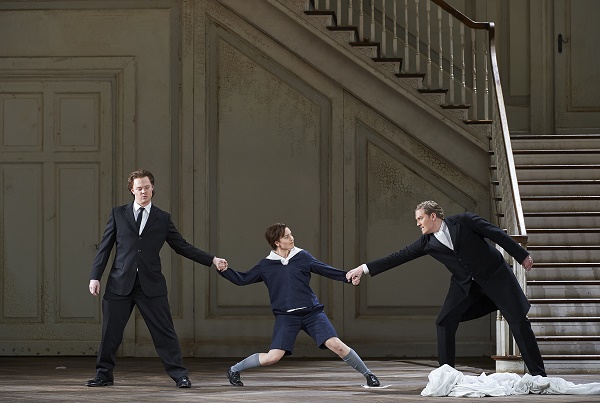
 I am riding the emotional high of Betroffenheit, a co-creation & co-production of Crystal Pite’s Kidd Pivot and Jonathon Young’s Electric Company Theatre, presented tonight at the Bluma Appel Theatre as part of Canadian Stage’s current season, in a run that ends Feb 21st.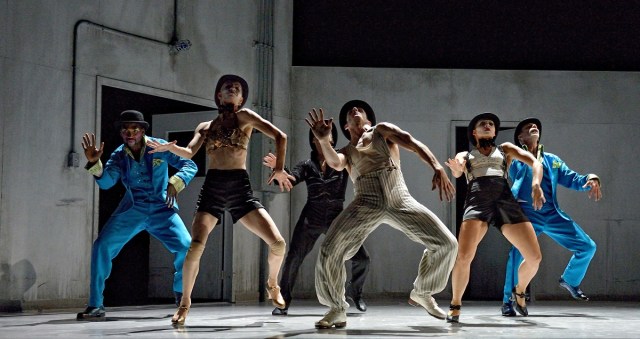
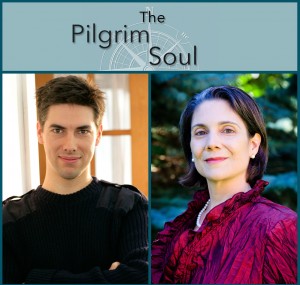 “The Pilgrim Soul” was the name given to tonight’s collaboration between pianist Emily Hamper and baritone Phillip Addis for Canadian Art Song Project (aka “CASP”).
 The 2015-16 CASP season concludes at noon May 5th at the Richard Bradshaw Amphitheatre in the fifth annual “Celebration of Canadian Art Song” as part of the Free Concert Series at the Four Seasons Centre. Admission is free, artists and works TBA.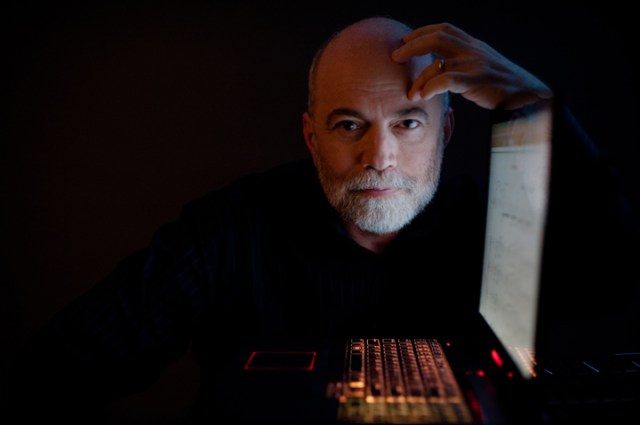


 Fortunately everything else being offered is live, so you don’t risk that kind of frustration.
 I came because this was an important opportunity to hear something new. But I enjoyed it far more than I expected. On the heels of seeing the opening of Marriage of Figaro at the COC on Thursday, I can’t help asking a few key questions about why Salieri’s operas have been forgotten:
 barczablog