The headline is only partly in jest. Yes it was the best concert so far in 2023, as of January 11th. Many are still saying “Happy New Year” and writing the wrong date on cheques (if they even write cheques anymore).
But it was truly brilliant.
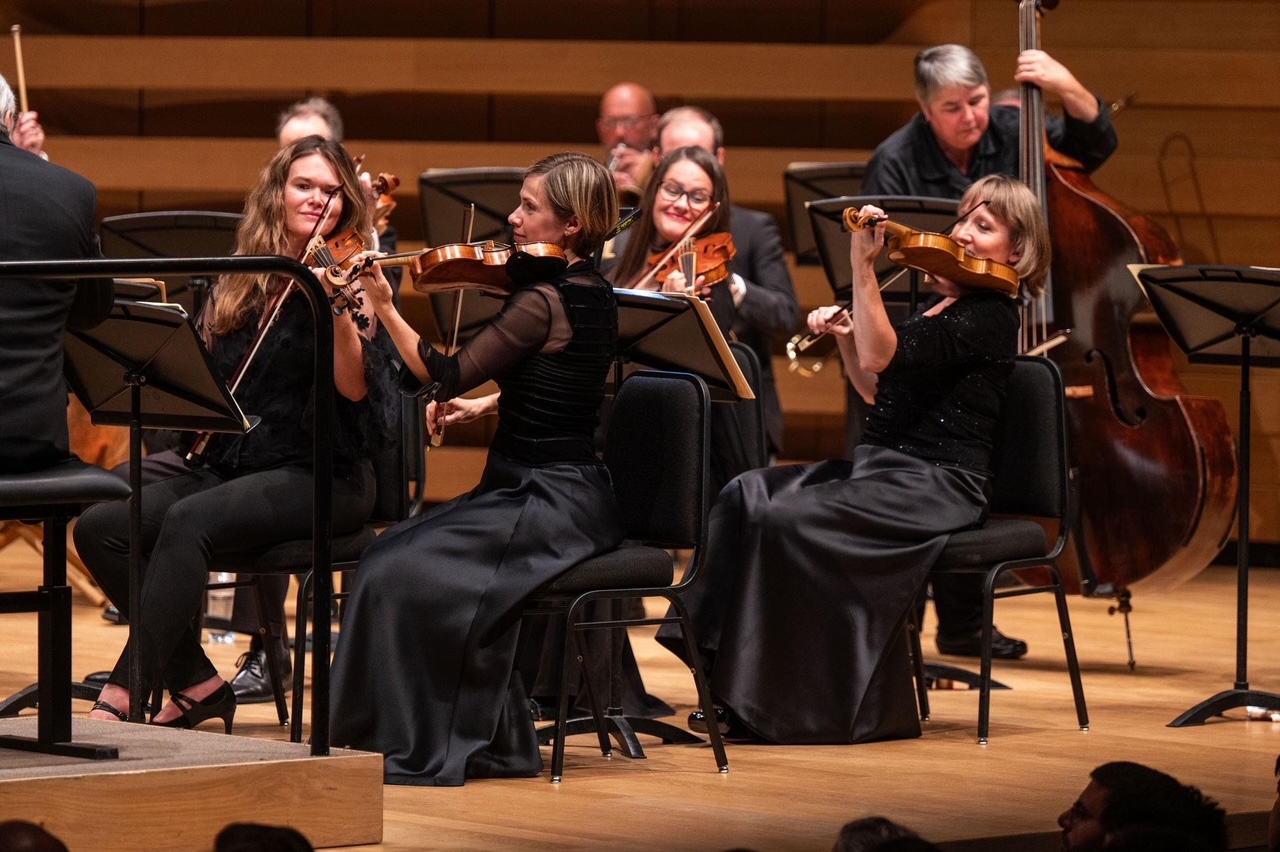
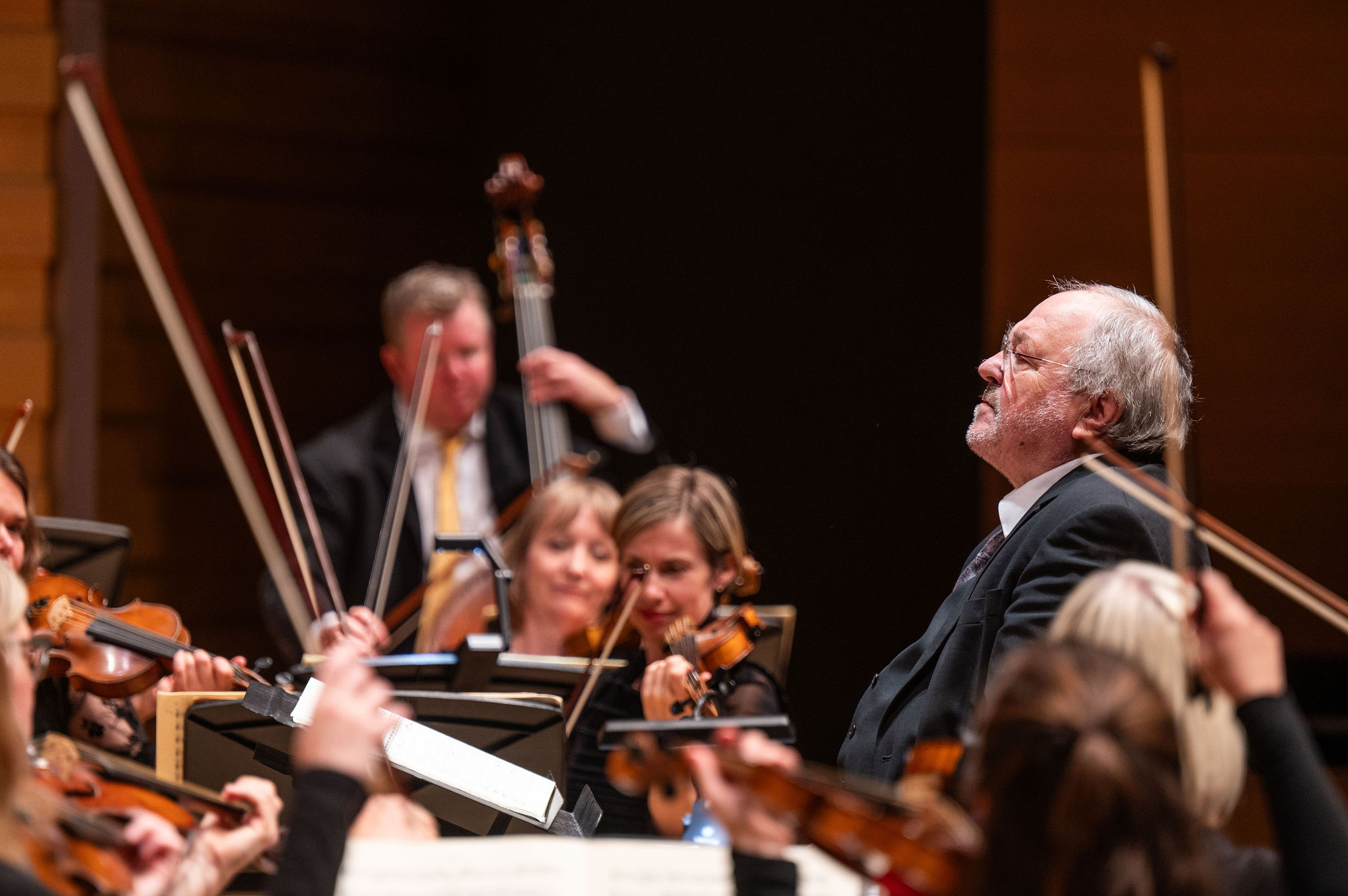
The Toronto Symphony and the Toronto Mendelssohn Choir were led tonight by Michael Francis in a program that left me speechless with wonder. The question of whether this marvel was curated by our own TSO wizards (who did such magic in October) or the visiting conductor was settled when I peeked at Francis’ 2023 schedule, which shows he will conduct the same program on July 2nd in Speyer, Germany (if you scroll down far enough). So clearly it’s Francis who deserves the praise.
I should have known from his witty patter at the microphone. And of course that’s to be expected when he’s also Music Director of the Mainly Mozart Festival in California, The Florida Orchestra, and Deutsche Staatsphilharmonie Rheinland-Pfalz, all at the relatively youthful age of 47.
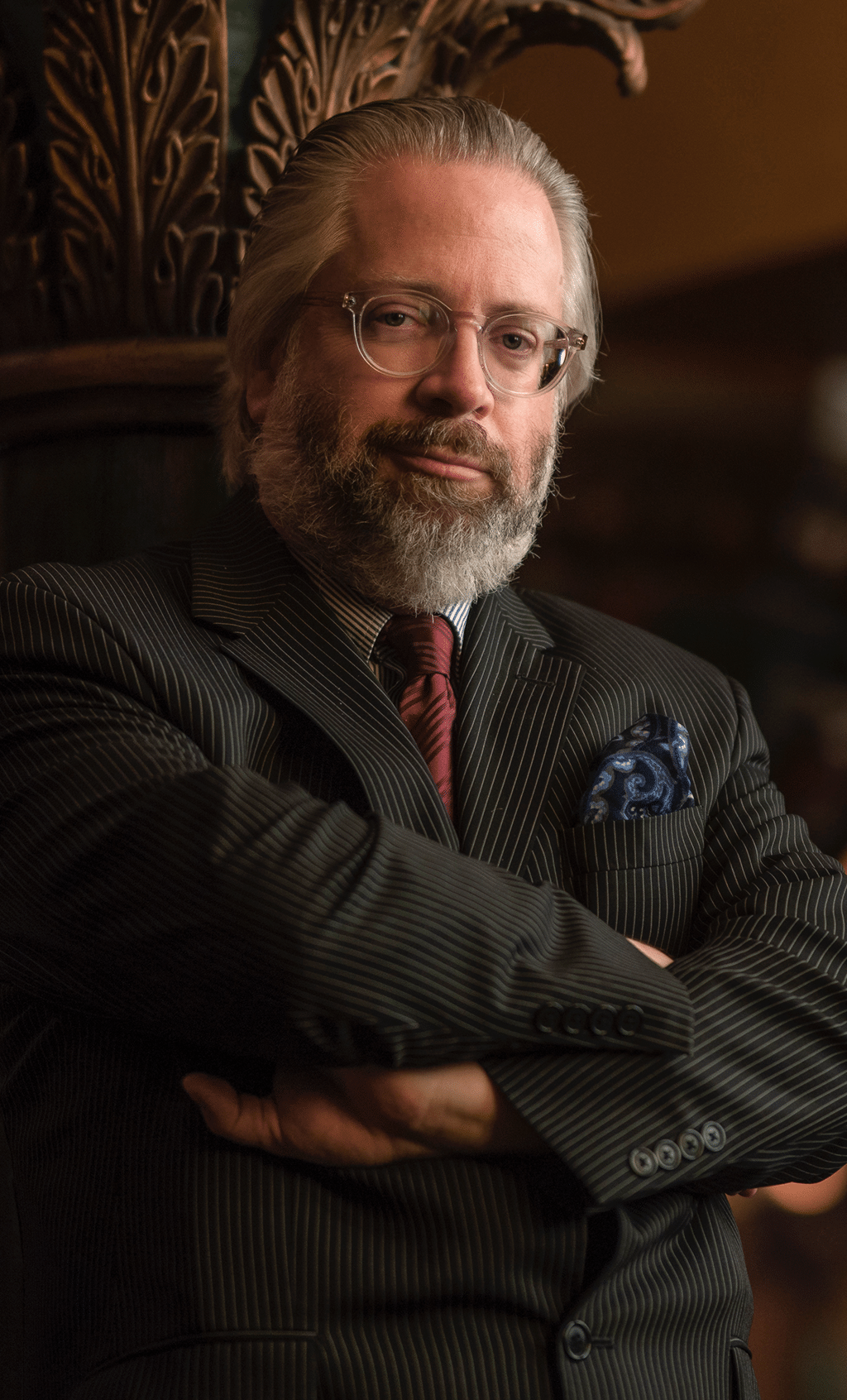
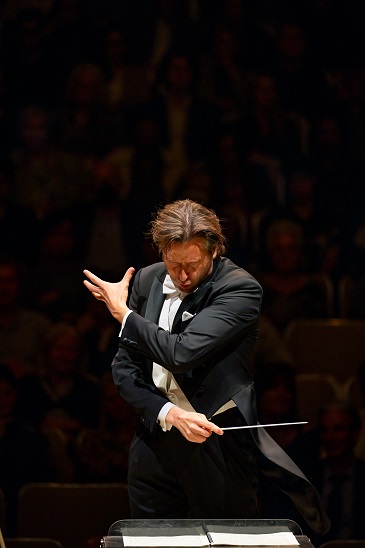
Michael Francis, image from the Mainly Mozart Festival website
Why am I so stunned?
Before intermission we heard: -Von Bingen’s O virtus Sapientiae -Mozart’s Masonic Funeral Music -Beethoven’s Grosse Fuge -Allegri’s Miserere
Full disclosure: for years I’ve been conflicted about Roy Thomson Hall, sometimes enjoying its sound, even as I join the gaggles of seniors struggling to get to the washrooms (myself included), not always able to reconcile the modern architecture and classical music.
Tonight it was as though someone (Francis? Or the ghosts of Mozart, Allegri, Beethoven & Van Bingen) sought to consecrate the hall, to bless this space. For the moment I’m in an altered state as I recall the experience, seeing and hearing it in a whole new way. The first half of the concert was like that, not just the music but also the way it was executed.
For the brief von Bingen opener, lights were dimmed. Ten female voices processed in one by one, carrying their music with only enough light for their upper body and their pages. The text is almost secular in its focus on wisdom.
The Masonic Funeral Music is something I have to revisit, trying to discern whether it usually sounds as macabre & morose, or if that was Francis’ doing in his interpretation, pushing the darkest colours. We’re listening to some remarkably dark orchestral timbres supplied by contrabassoon and some brass in this tiny majestic piece.
Then we were plunged into something different again, a modern-sounding reading of Beethoven’s Grosse Fuge in its free¬standing string version (as opposed to its place in the string quartet where it originated). Again I was particularly impressed by the low voices, this time work of the double basses with their edgy lines. Francis takes this piece without apology to the limit, meaning quickly and in the bolder passages without restraint. We experience big contrasts, but then again the program is all contrasts, every piece a change of pace.
And just when I thought I knew what to expect came what was for me the highlight of the evening. The presentation of the Allegri has me thinking of the modern hall in a new way. Nineteen singers were illuminated at the back of the stage in the choir loft, the first voices we heard. Tenor Isaiah Bell was the answering solo voice, coming to us from backstage. The third group, the high voices in the parts of this composition that everyone remembers best, were situated out among us in the audience (I couldn’t see where, but perhaps on the higher balcony). I see in the program (even if I couldn’t see them for myself) that this group consisted of Rebecca Genge, Rebecca Claborn, Simon Honeyman and Neil Aronoff. There we were in Roy Thomson Hall as though encountering proper antiphony, voices exchanged across the big space, but without the excessive reverb you might have in an old church. It was the best of both worlds truly.
If you can’t see this concert in Toronto (Thursday and Saturday at 8 pm) or North York (Sunday at 3 pm) go to Germany if you can (but then you won’t have the TSO, TMC or the soloists… and that’s a pricey option). It’s outrageously good.
That first part was a little over half an hour, to set up the presentation of Mozart’s Requiem after the intermission.
The version we heard is the Robert Levin edition from the 1990s. Again I’m not sure how much of this is really the edition and how much is Francis. The pace was often breath-taking, passages I’ve known previously as leisurely, suddenly taking on intensity I hadn’t expected. Soloists Jane Archibald (sorely missed around here of late), Isaiah again, mezzo-soprano Susan Platts and bass Kevin Deas were all stylish, in tune, and well-balanced against the forces of the TSO and the Toronto Mendelssohn Choir.
I don’t know what share of the excellence comes back to the input of the new Artistic Director of the TMC, Jean-Sébastien Vallée, but they’re sounding better than I’ve ever heard them. They’re precise and accurate, powerful when called upon by Francis, but delicate when necessary.
If your experience is anything like mine after that stunning opening, you’ll come to the Requiem ready to be moved, tenderized and vulnerable. Francis, the soloists, the choir and the orchestra will not disappoint you.
It’s a great start to 2023, that I suspect will be mentioned in my list of the “best of 2023”.
I enjoy recalling the best moments of the past 12 months.
There’s a fork in the road, however. One pathway leads towards that which is truly “new”, while the other relies on what we’ve seen before. Need I mention, the unknown work lies on a risky path that is less likely to generate big box office returns, even if we’re not also reeling from the aftermath of a pandemic whose impact is still present in the bottom line for arts companies and especially their artists. If there were ever a year when one could justify “selling out” (whatever that means to you), it would be over the past two years, particularly since CERB ended. As someone who had a dayjob for decades, I’m the last person who would judge, but I must salute those who choose to believe in the appetite of the audiences for something fresh and daring, who have chosen the road less traveled. There are many good performances that I’m skipping over in this summary, as my focus is mostly on the decision-making of the folks in charge.
The company and artistic director responsible for the two boldest shows of the year: Tapestry Opera led by Michael Hidetoshi Mori.
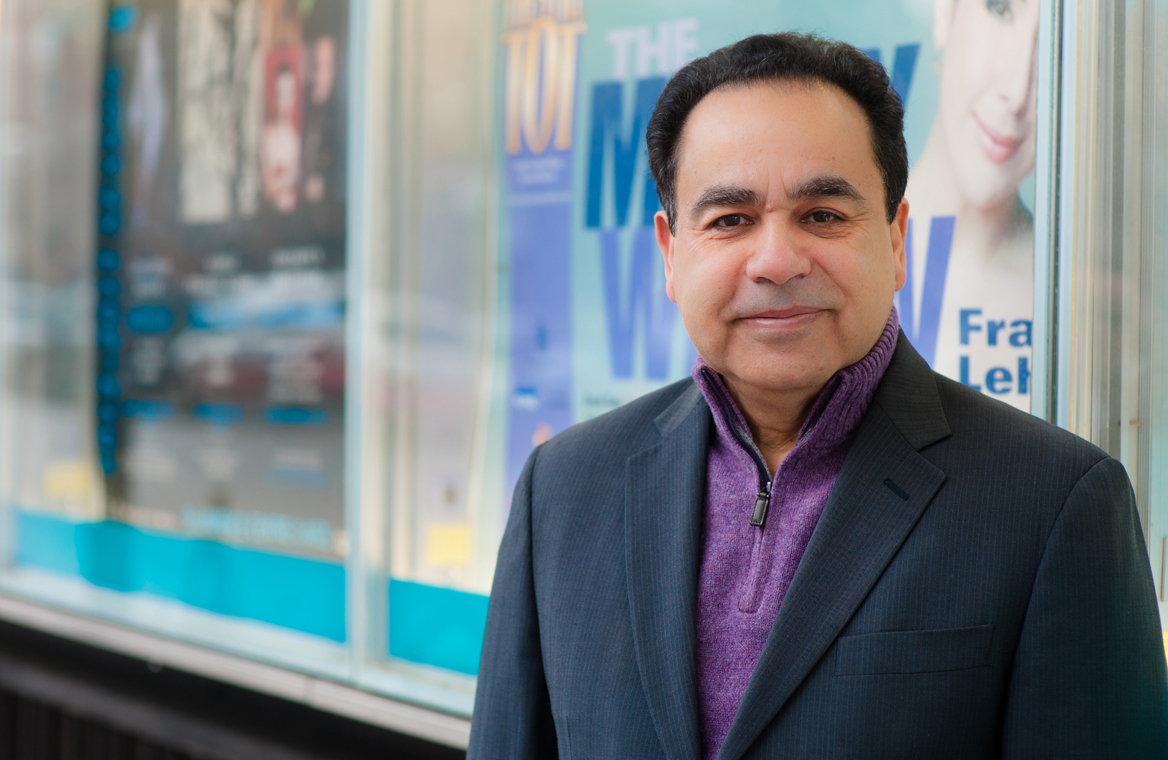
Michael Hidetoshi Mori (photo: Dahlia Katz)
Their two big successes in 2022 strike me as the greatest achievements that this company has ever had. By what criteria? not money or box office, but rather the proper melding of text to music and spectacle, two daring examples of what opera can be at a time when many artists and companies were scurrying for cover. I’m speaking of RUR A Torrent of Light and Gould’s Wall, two pieces that had been in development for a long time. RUR, composed by Nicole Lizée, libretto by Nicholas Billon, was for me the most exciting new work, the best opera I’ve seen anywhere in a long time.
Krisztina Szabó in R.U.R. A Torrent of Light. (Photo: Elana Emer)
While RUR was more visually flamboyant in its creative choices (between its use of new technology to enhance the visual impact in the OCADU space and its remarkable physical movement vocabulary) than Gould’s Wall, the single most memorable thing about the latter is Lauren Pearl’s eye-catching aerial work: speaking of risk.
There were so many performers one could cite in either piece, but I’ll simply mention conductor Gregory Oh for RUR, somehow co-ordinating performers at two ends of the performance space.
If it were merely a question of how many new shows, my assessment above would be unfair, given that my favorite theatre programming in Toronto right now is found at Crow’s Theatre, and thank you Chris Abraham.
Crow’s Theatre Artistic Director Chris Abraham
Three of their 2022 shows would be in my top ten: if I had such a thing. Full disclosure, I don’t believe in competitions, finding awards very problematic, let alone top ten lists. That being said, I can’t deny that I was blown away by Uncle Vanya (in a new translation), Bengal Tiger,Red Velvet , and to continue the winning streak, Gay for Pay. Last year (the little bit of a year that we were vouchsafed in 2021) MixTape and Cliff Cardinal’s radical re-frame of As You Like It were two of my favorites. Obviously Mr. Abraham and the Crow’s team are doing something right. We had planned to go see his Cyrano in Niagara on the Lake (with tickets to the closing show) but COVID prevented us; thankfully Shaw were good enough to refund us the tickets. In the not too distant future Abraham will also be directing Much Ado about Nothing in Stratford.
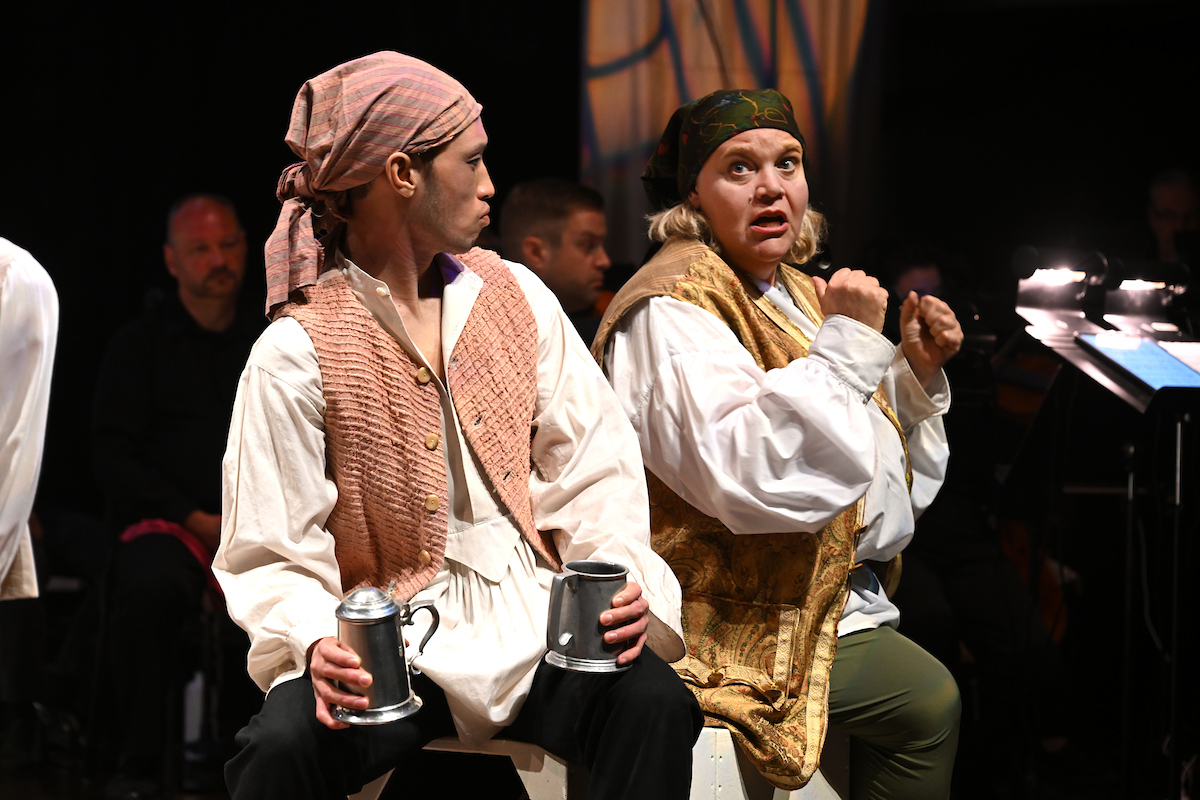
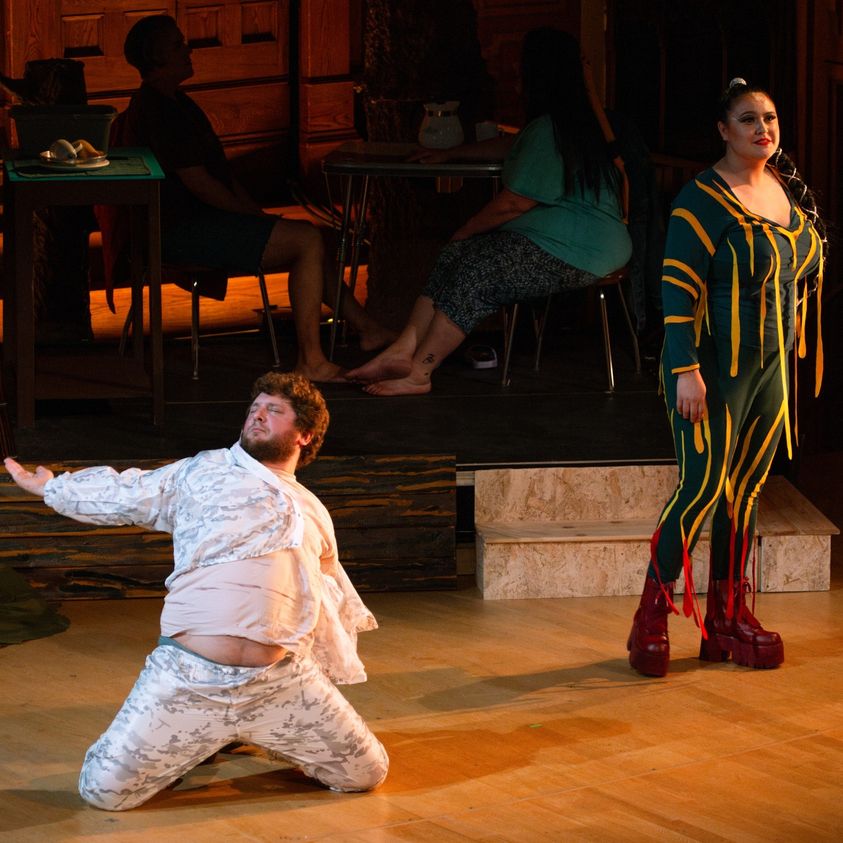
The other favorite show I must mention is Talk is Free Theatre’s Sweeney Todd, brilliantly conceived in an unexpected space as a thrilling immersive experience. I keep an eye on what TIFT are producing (usually up in Barrie), a wonderful team led by their Producer and CEO Arkady Spivak, and Michael Torontow who is Artistic Director.
Arkady is the one on the right, in a pre-pandemic photo in Barrie.
Sometimes what’s new means it’s old but new to us. That’s the way ARC ensemble has been changing the musical landscape, with a series of recordings and performances from their “Music in Exile” series, curated by their artistic director Simon Wynberg. ARC Ensemble are Artists of The Royal Conservatory, their research activities enhancing their teaching & performing here in Toronto at the RCM, unearthing the music of composers we should have known about, but who have been buried or obscured by the political landscape of the 20th century. Every new discovery they share is like a new world opening up.
Similarly, we get a new angle on the old through the activities of Gustavo Gimeno, the Toronto Symphony’s conductor and Artistic Director. Yes he’s an exciting conductor as we’ve seen from his work with the TSO.
Gustavo Gimeno, Toronto Symphony’s conductor and Artistic Director
We heard several outstanding performances. My favorite was Yuja Wang playing Magnus Lindberg’s piano concerto #3, although Yuja would find a way to turn anything she plays into a virtuoso vehicle. When I recall the cancellation of her April 2020 TSO concert as one of the first big disappointments in the pandemic, her return is an omen of restoration.
Yuja Wang playing with the Toronto Symphony (photo: Gerard Richardson)
There was lots to enjoy during 2022. I’m a huge fan of Eric Woolfe whose deadpan style with magic and puppets alternates between terror and hilarity with Eldritch Theatre (both TWO WEIRD TALES in spring and Requiem for a Gumshoe in autumn). Gay for Pay was insanely funny but also a lesson about sexual & gender politics, following up on a year that included Sky Gilbert’s hair-raising Titus. And Tanya’s Secret, a queer-trans Onegin, has me reconsidering opera, as the ideal medium to explore the performative aspects of gender, sexuality, identity and life itself.
It might seem simplistic for me to speak of a changing of the guard, except there seems to be so much going on in cities other than Toronto. The pandemic underlined this, brutally winnowing the city of companies and artists, while discouraging attendance. Elisa Citterio is gone from Tafelmusik, and the creative life of Jeanne Lamon and her contribution was celebrated in a beautiful concert. Joel Ivany may still be with Against the Grain but he has apparently moved his life to Alberta where his life-partner and fellow AtG creative force Miriam Khalil is now teaching at a university. We were again offered Messiah/Complex online, and they’re bringing in a British co-pro of Bluebeard’s Castle in a new English translation, yet even so it still feels as though AtG are looking westwards. Messiah/Complex was one of the most truly Canadian projects ever made, embracing multiple languages, cultures, and yes, all parts of our country. It’s long overdue that our so-called national companies break out of Toronto and/or Montreal.
Kyle McDonald
But there are new artists and companies. The first that comes to mind is Kyle McDonald and Mightier Productions, a company that makes content, including opera and film.
McDonald sings, writes libretti, directs and above all, is the entrepreneurial energy promoting his various projects. This past year we saw two original works. First came The Lion Heart, a serious new rescue-opera with music from Corey Arnold, another over-achiever who also sang. Where Kyle is a bass (also busy in the voice-over field) Corey is a tenor. In May we saw Conan and the Stone of Kelior, a campy pasticcio opera that was unlike anything I’ve seen.
I’ll be watching to see what Kyle and Corey are up to in 2023 and beyond.
Toronto is an expensive place, increasingly gentrified, so we shouldn’t be surprised if theatre companies and theatre artists are forced to look elsewhere, unable to afford this place. It’s a funny time. Some people say the pandemic is over, and they look at me as though I’m crazy when I continue to wear a mask. I’m grateful for the companies such as Tarragon or Red Sandcastle theatre that insist on masks for everyone. Crow’s Theatre offers their performances Tuesday & Sunday to a mask-only audience: when I am happy to attend.
The Paris Opera (led by Alexander Neef) production of Enescu’s Oedipe (directed by Wajdi Mouawad) reminds me of the Canadian Opera Company’s recent production of Abduction from the Seraglio.
Playwright & director Wajdi Mouawad
Alexander Neef has now gone from the COC to be General Director of the Paris Opera, once again calling upon Wajdi Mouawad (who directed that COC production , now director of Théâtre national de la Colline since 2016) for Oedipe. If you want to see that Oedipe, you can find it here.
Meanwhile, in Toronto the Canadian Opera Company are still in business while taking the path of financial prudence, led by their new General Director Perryn Leech.
COC General Director Perryn Leech
Of the six operas this season, five are revivals, while the sixth is a new production of Verdi’s Macbeth. In the next few weeks we’ll be seeing revivals of Egoyan’s Salome and Guth’s Nozze di Figaro. It’s almost as though we’re paying off the expenses for those previous goodtime adventures, now that we have a new more sensible (rather than extravagant) general director, watching familiar productions that are like old pictures in our COC family album. It doesn’t seem fair to the one who inherits the job of cleaning up the previous guy’s debt, to right the ship. While this is not the daring bold path taken by Tapestry or Crow’s let alone the Paris Opera, in all fairness they are doing a good job keeping the COC afloat. The COC Orchestra and chorus continue to be the backbone of every show, holding things together. Soon we’ll hear the announcement of what they will do next season.
As you may already have noticed, I missed a lot of live performances, extra careful about infection as I continued to take meals to my mother 2-3 times per week. She’s still going strong at 101. While cataracts make it very hard for her to see, forcing her to write in block capitals using a sharpie, and while her hearing isn’t great either, she’s completely lucid. The following rhyme was written at around 2 am in December on a cold night.
She wrote : THE BRANCHES AND THE WIND ARE FENCING ICE AND SNOWFALL ARE ROMANCING TWO COLDEST MONTHS ARE ADVANCING FIGURE SKATERS KEEP ON DANCING IT WILL DO NO HARM IF YOU STAY INSIDE WARM
In the interest of staying safe, I’ve chosen venues carefully, and as a result spent much of the past year reading books or watching shows & films online.
And while Sam our old rescue passed away back in April, in January 2023 we welcome a new rescue into our lives, Barkley.
Last week I finally saw Spielberg’s West Side Story. One of the songs in that film is the lens through which I viewed today’s film: Scarborough.
In the 1961 film and the original musical from the 1950s, the young lovers Tony and Maria dream of a happy ending to the story in the song “Somewhere”. They say “there’s a place for us” even though it’s not clear that they will ever find such a place.
But that’s not how Spielberg gave it to us. In the 2021 version of the story, Rita Moreno plays Valentina, the proprietor of a drugstore where Tony lives. She of all people sings the song, a text that speaks to something more universal than anything else in the musical.
I wonder if they got the idea from a live concert performance she gave in 2019..?
That’s the lens through which I’m thinking about the new movie I saw today, Scarborough (2021), co-directed by Shasha Nakhai and Rich Williamson, written by Catherine Hernandez in her adaptation of her novel of the same name.
I’ll get to Scarborough, but I can’t avoid the way I see 2022 through the filter of the song we heard from Rita Moreno in Spielberg’s film. Having someone old sing it accomplishes a few things. It reminds us that the dream is universal. That someone who played in the original West Side Story when she was young and vital is now singing “Somewhere” makes it feel like a poignant link to the original film, as though her character has grown old and still dreams of peace and acceptance sixty-one years later. I was disoriented and can’t be the only one who experienced this. Of course the issues haven’t gone away. We know she was in that film in her youth. And now in 2022 people still face this challenge, wondering if there really is a place for us. When you see someone old and seemingly alone singing this, it hits you differently.
“Somewhere” seems to pose a question, the longing for what we don’t yet have, underlying everything right now. The news often tells us of refugees dying or arriving, of floods of immigrants at the southern border of the USA, of a war for turf in Ukraine, where the Jets aren’t a NY street-gang but actual fighter-planes, of the simmering hostility in Korea. In Ontario we hear that developers will be helped by the government in coping with an expected surge in our population, a highway is to be built through the greenbelt, that housing is unaffordable in our city, and not much better anywhere else.
When we hear “there’s a place for us” it could be the singers themselves wondering: where will their companies be housed? The Distillery District no longer houses Tapestry Opera or the other arts organizations and artists they used to welcome. The performers are squeezed by the lack of affordable housing.
Gentrification is driving people away from Toronto.
Sigh….
The film Scarborough makes a terrific chaser to West Side Story. Here’s the description from IMDB: “Scarborough is the film adaptation of the award-winning novel by Catherine Hernandez. Over the course of a school year, 3 kids in a low-income neighbourhood find community and friendship at a drop-in reading program.”
Don’t let me scare you away from Scarborough. Yes there’s some darkness in this film, some abusive behaviour, some racism from one loudmouth parent, a brilliant creation from Conor Casey. While both films show us people in the midst of a wealthy society that offers them minimal assistance, this isn’t a world of choreographed dances or fights. We don’t get to escape from reality during a song, tempting as that might be. It’s as real as children in a playground playing, bullying and then rescuing each other.
Scarborough is full of excellent performances, especially the children. I’m a bit hesitant about names because I’m not sure who played whom. Everyone was very good. I mention Anna Claire Beitel as Laura because she does an amazing job with a very important character in the film, and in this instance I’m certain I’ve identified the right person.
Anna Claire Beitel as Laura
Co-director Rich Williamson shot and edited the film, giving it a truly beautiful look and feel. We’re often intimately close with the kids as they speak the astonishingly authentic dialogue. We may be seeing them in camera angles literally looking up at adults, the ones with all the power. Some of them are scary, some of them are actually nice, just like real life.
The musical score from Rob Teehan is sometimes moody to gently set the scene, sometimes more powerful to reflect the tensions of the characters. There is nothing I’d change, the film sounds and looks perfect.
After seeing Elvis a few days ago, I re-watched Baz Luhrmann’s Strictly Ballroom, his first big success. While Scarborough is much darker, more realistic in tone and in presentation than Strictly Ballroom, there is some of the same giddy joy to finish the story. In the end, if a story’s resolution doesn’t connect to the situation or the characters, or if it seems too unlikely then it’s going to be troubling rather than satisfying. They’ve made the last half hour gorgeous, and yet it has heart, emerging perfectly out of what has gone before.
I will watch it again and recommend it to anyone looking for a good movie. I’m doubly proud that this film bears the name of the place where I live, a wonderful example of Canadian cinema. I love it.
This afternoon the Toronto Operetta Theatre’s production of Johann Strauss’s Die Fledermaus (or The Bat) opened to a sold-out audience at the St Lawrence Centre.
It’s sometimes called “The revenge of the bat” although today I was inclined to think it’s more the revenge of the tenors, who seemed to take over the show in the second act.
I’m not complaining. Tenors are the butt of so many jokes—in this work and elsewhere—that one doesn’t always want to admit one’s vocal range for fear of being mocked. Anna Russell famously said that heldentenors have resonance where their brains ought to be. In the Strauss operetta it’s even worse than that.
Scott Rumble and Kirsten LeBlanc (photo: Gary Beechey)
We begin with Alfred (played by Scott Rumble) as a tenor whose romantic pursuit of Rosalinda (played by Kirsten LeBlanc) includes his habit of singing chunks of opera on the assumption that she and everyone else wants to hear him. No shrinking violet, he.
Rosalinda is married to Eisenstein (played by Keith Klassen) another tenor. She and her maid Adele (played by Andrea Núñez) both make plans to go to a party at the villa of Prince Orlofsky (played by Greg Finney) who is not a tenor.
Andrea Núñez and Greg Finney (photo: Gary Beechey)
Given that some productions take a walk on the wild-side at this point, it’s worth noting that TOT offer something relatively wholesome.
The production is especially strong on the musical side, Derek Bate conducting the tiny TOT orchestra and the chorus to great effect.
When Greg Finney appeared in the second act it was almost predictable what would happen: that the show would suddenly come to life, as it usually does when he shows up in a TOT show. His relaxed and natural demeanor makes everyone a bit better, a lot funnier, and more believable. This is especially true for the two women. While they sang tremendous performances – LeBlanc with her big powerful voice, Núñez offering brilliant coloratura—both shone brighter in the presence of Finney’s madcap portrayal of the Prince. He makes it look easy.
The other remarkable performance came from an unexpected source, namely Guillermo Silva-Marin, the Founder and General Director of TOT. Guillermo stepped into the role of Frosch, another tenor. We watched as he and Alfred took over the show in the last scene, singing lots of tenor music not by Strauss. I knew that Guillermo could sing –indeed he was once a tenor in NY with the Metropolitan Opera and the NY City opera—as well as the Canadian Opera Company. I saw him sing in the COC’s excellent 1988 Ariadne auf Naxos.
Left to right: Guillermo Silva-Marin, Theodore Baerg, Tracy Dahl, Christopher Cameron & Dennis Giesbrecht in the Canadian Opera Company’s 1988 Ariadne auf Naxos (photo: Robert C Ragsdale, FRPS)
He still has a voice. Who knew? Obviously Guillermo did, casting himself in this comic turn. I was going to say it’s a “small part” but you know what they say. There are no small parts.
Hearing Scott Rumble and Guillermo together was a huge thrill, as the tenors took over the show for awhile.
Guillermo Silva-Marin and Scott Rumble (photo: Gary Beechey)
Die Fledermaus, The Revenge of the tenors, sorry that should be, the Revenge of the Bat, continues with performances Friday December 30 and Saturday December 31 at the St Lawrence Centre.
The recent Saturday Night Live hosted by Austin Butler persuaded me to watch the recent biography of Elvis Presley, starring Butler.
As we watched, Erika pointed to the similarity between Butler and Elvis, two men who both lost their mother relatively early in life, suggesting that might help his portrayal. Watching Butler speak of his mother during the monologue was the first of three times that I cried (tears but no sobs) during this episode of SNL.
Butler himself teared up while he spoke. I suppose it’s contagious.
The second and third moments with teardrops were really about Cecily Strong, my favorite SNL cast member, whose departure from the show was announced with this episode. She came at it in her usual use of bizarre metaphors. In the Weekend Update segment she spoke in character of going to jail, as a metaphor for leaving SNL. More tears but no sobs.
Later, speaking of her plan to leave her job at Radio Shack (again, a metaphor for leaving SNL), host Austin Butler came out to sing “Blue Christmas”.
Seeing this we decided we would watch the Elvis film, speaking as someone who has done a few Elvis impersonations of my own during singing telegrams. No I’m not as good at this as Butler. In the film he looks and sounds like Elvis. Amazing.
When I speak of “Elvis’s redemption” I mean a new perspective on someone I used as a kind of cartoon character, someone I understood as a dinosaur, a relic of the 1950s mocked throughout popular culture.
For instance who can forget the “Song of The King” from Joseph & the Amazing Technicolor Dreamcoat?
That’s one of the more dignified versions of Elvis.
Elvis Presley turns up in Forrest Gump, getting ideas from watching Forrest walk with his leg-braces.
Elvis’s voice & clothing were easy to recognize and usually gave people a giggle when I mimicked him. I never challenged the assertions of his importance as one of the innovators in music history, a bridge between white and black culture: although I understood him more as a Pat Boone type, a white guy appropriating black music, rather than someone authentic in his own right. His eventual fate as a target for so many comic imitations suggested that he was also committing self-parody, which I realize is simply unfair. Of course now I’m coming at this after reading Gabor Maté, who links addictions to trauma and without blame.
I think we’re ready for a new take on Elvis.
Because it’s directed by Baz Luhrmann, a director known to be sometimes over the top, one must come at the film with some skepticism. As with the eccentric Ken Russell or the flamboyant Terry Gilliam, I embrace the poetic excess of Baz’s films whole-heartedly. I first encountered this sensibility in Strictly Ballroom (1992), loved the opportunities Moulin Rouge (2001) affords for examining music in film, and was totally won over by his approach to The Great Gatsby (2013), especially when compared to the pallor of the 1974 adaptation.
There were many places where I knew Baz was taking liberties with the truth. No the film has not fully erased my earlier impressions, nor will it really change our understanding of the cultural icon. But I come out of this thinking that Elvis has at times been misunderstood, as he’s more of a victim. In the 1960s and 70s our culture saw fatness as weakness, recalling John Belushi’s imitation of Liz Taylor for example. Drug addiction too was judged in moral terms.
Butler’s superb performance is the starting point, although in the latter part of the film we segue into films of the actual Elvis, as though to authorize what we’ve seen. Frankly I don’t think it matters. This is an enjoyable movie that makes me like Elvis more than I’ve ever liked him before. I’ll have to watch again. At the very least I found I liked Butler’s Elvis, Baz’s Elvis, if not the actual Elvis, whom I’ll never really know.
Tom Hanks is at the centre of this project in his portrayal of Colonel Tom Parker, the man who managed Elvis for most of his career. For the first part of the film we’re seeing the story through the lens of the Colonel. Hanks plays completely against type, in an Oscar-worthy performance although perhaps Butler will be one of his rivals for the statuette. While this is again a symptom of Baz the entertainer or Baz the poet, the facts underlining this are genuine. Elvis was ripped off by his manager, of this there is no doubt.
Baz’s divergence from reality in this aspect of the story is one that I quite like. I won’t spoil the film by telling you, except to say that it reminds me of the scene in Quentin Tarentino’s Inglourious Basterds (2009) when the Nazis are slaughtered, a scene I ascribe to poetic justice, the way we might wish the story had ended. If you apply similar justice to Elvis perhaps he would have avoided his eventual lonely fate, but at the very least Baz’s Elvis does acquire some lucidity and freedom, even some dignity. Alas the truth is even sadder.
It’s a fascinating film, wonderful looking and tremendous sounding, worth a look and a listen. I’ll see it again.
Austin Butler sings to Cecily Strong on SNL, the reason we watched the film.
The surest sign the city seems to be returning to something like normal, is Handel’s Messiah performed all over. I’m seeing many friends on Facebook either reporting that they’re singing it or feeling left out because so many others are doing it.
There’s Tafelmusik in their historically informed approach, Soundstreams / Crow’s Theatre offering their Electric Messiah, or even the award-winning Messiah / Complex you can now find online from Against the Grain Theatre. Yes it’s that time of year, and we could feel that eagerness in a packed Roy Thomson Hall.
You may recall that last year the Toronto Symphony offered an 85 minute version, which was the best option available at the time, given concerns over our hygiene.
Tonight I went to hear the first of five 135 minute Messiahs the TSO offer this year under the leadership of Gustavo Gimeno. I’m excited to hear a longer version but also delighted at the opportunity to see another side of GG, watching our new Music Director take on something a bit different from what we’ve heard from him so far in his brief tenure.
TSO Music Director Gustavo Gimeno
The stars of the evening were the Toronto Mendelssohn Choir, prepared by Jean-Sébastien Vallée, who, like Gimeno, is also new in his role as Artistic Director.
Toronto Mendelssohn Choir Artistic Director Jean-Sébastien Vallée
The choir were often very soft, particularly in the early portions of a piece such as the Hallelujah Chorus, building throughout. Their phrasing was impeccable, undaunted by the acoustical challenges of a bigger space such as Roy Thomson Hall. I loved the quick tempi they took in “All we like sheep” or “Lift up your heads”, each word distinct. It was a team effort, between Gimeno or Vallée shaping the phrases of the chorus with the orchestra building to spectacular climaxes again and again.
In the past I’ve noticed the TSO responding to Gimeno’s leadership, and tonight saw the TMC similarly inspired.
The four soloists (soprano Lauren Fagan, mezzo-soprano Stephanie Wake-Edwards, tenor Michael Colvin and baritone Elliot Madore) were superb. I was especially impressed by Colvin’s dramatic readings of the Part Two tenor solos, powerfully moving and very musical.
Tenor Michael Colvin (photo: Eloise Campbell)
The TSO – TMC Messiah continues with four more performances on consecutive days from Sunday Dec 18 (a matinee) to Wednesday Dec 21.
I was privileged to observe an open rehearsal of a new creation titled “Mother Sorrow.” The creative team is large, but I should mention director & choreographer Jennifer Nichols, Composer and music director Adam Scime and librettist (combining new words with existing text from the Pergolesi Stabat Mater) David James Brock. We saw performances from a very capable team including dancers Evelyn Hart, Nicholas McClung, Tyler Gledhill, Jarrett Siddall, Brayden Cairns, Rodney Diverlus, soprano Lindsay McIntyre, counter tenor Christian Masucci Facchini, and a baroque ensemble including harpsichordist Charlotte Nediger and a string quartet: Cristina Zacharias, Patricia Ahern, Brandon Chui & Keiran Campbell. I hope my descriptions don’t dishonour what they have been making. We saw some remarkable choreography, heard some beautiful music, and discovered something new created from something old.
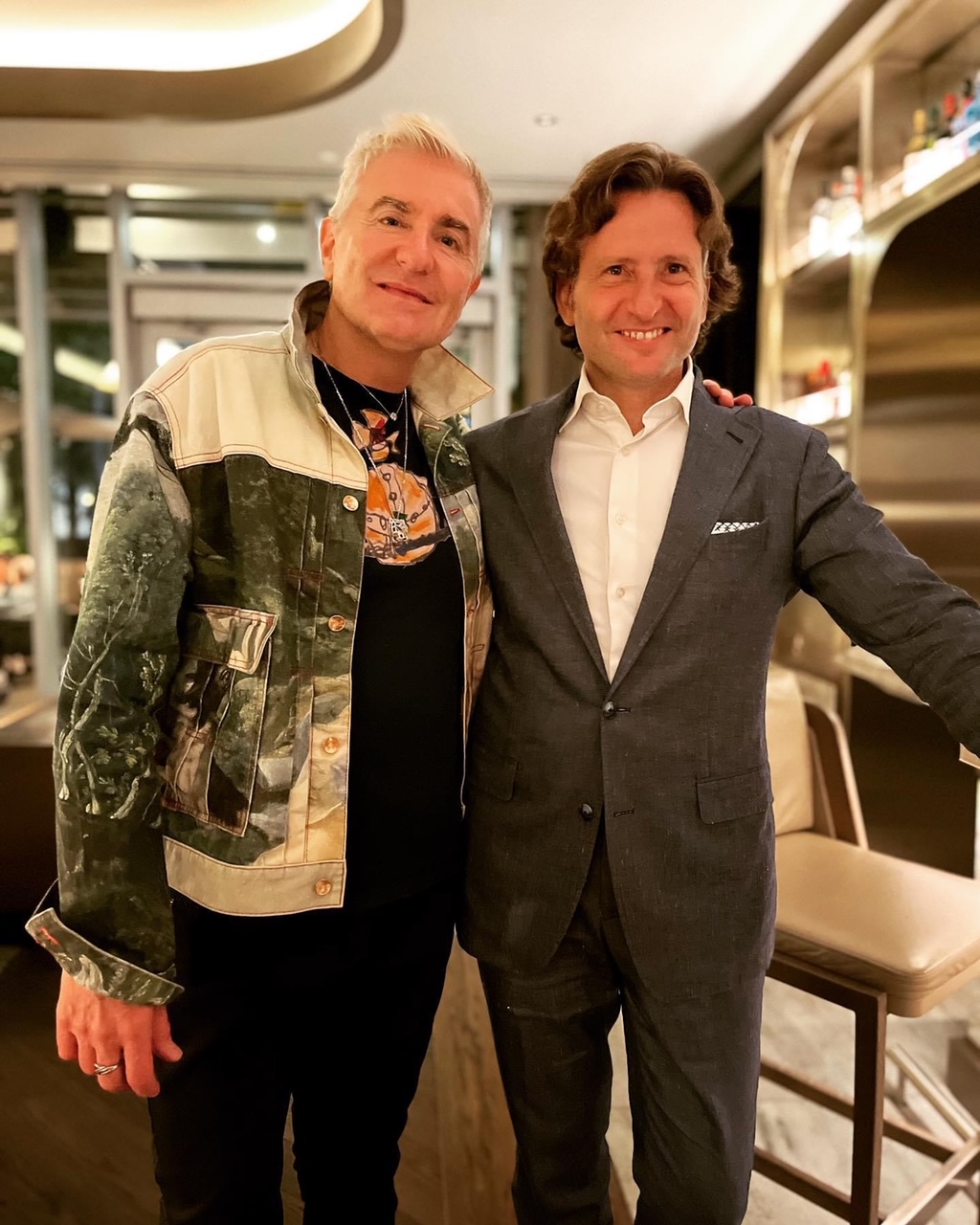
I was seated among a small group of invited guests. Gianmarco Segato was beside me.
I was one of the fortunate ones to get a program that included explanations. When you’re seeing & hearing something new, it’s sometimes puzzling, difficult to understand what the piece aims to do, alongside what it’s actually doing. I make that distinction between aims & actuality because that’s arguably one of the chief tasks of a critic. No matter what I think the piece is doing, we should try to understand what it’s aiming to do. Clearly this project is doing something quite original, and has the decency to explain itself for us.
The first two pages explain a great deal of what was presented to us yesterday. The procedures in play are complicated, but only important if you’re a nerd trying to understand everything they’re doing. If one simply watches and listens they can revel in the beautiful music and the lovely movements. There’s lots to enjoy.
I’m currently thinking a lot about theatre history and criticism: a- after reading Simon Banks’ excellent history of Opera, b- after seeing & responding to Red Velvet at Crow’s Theatre, a meditation of theatre history if ever there was one. Spoiler alert (given that there’s still a week left of this excellent show): while the theatres were jammed full for the two performances by Ira Aldridge, the first black man to portray Othello onstage in London, in 1833, he was not permitted beyond that. A series of behind the scenes machinations were at least partially triggered by critics’ notices. Whether the critics reflected the racism of the time or only served as a pretense isn’t clear (is it ever?). The point is, until the advent of recording technologies, theatre history was entirely in the hands of the eye-witnesses. Critics were the ones whose observations have lasted until now, even if (ha ha ha) they may not always be reliable.
So that’s why I took this very seriously. I am not sure I fully appreciate what they have accomplished, not daring to say too much. I don’t know the Pergolesi Stabat Mater (having heard it awhile back but not having studied it at all). I know the Rossini a wee bit, having sung the tenor solo “cuius animam” (and no I no longer have the high notes to sing it). I re-read the text as preparation.
I was very intrigued by some of the text from David James Brock, There’s some new spoken text that makes a fascinating kind of gloss on the old work, reminding me of old biblical texts that might include commentary in the margin beside the text. It’s the medieval version of metatext. There is a quality to some of this writing reminding me of the multiverse, as though there are different realities implicit within The Bible stories of Mary and Jesus, perhaps implicit in the multiple versions we encounter (such as the four Gospels). It’s powerfully suggestive without seeming to deconstruct or fight with the original. I use that modern word but want to emphasize that it’s not modern, not anachronistic, or fighting the ancient quality of the Biblical story. There are overtones of something very spiritual, as though we might be watching Mary encountering ghostly or angelic versions of her son, especially when we include the different bodies performing, multiple persons to portray a single character (a strategy i really love). I am reminded of a medieval gloss because it seems to exist in parallel, like a meta-reality or commentary, rather than in any sort of opposition or competition with the original.
There are advantages and disadvantages in the baroque and classical period, when you have numbers / segmented construction. While a storyline gets broken up in opera by this kind of construction, it’s apt for a mass such as a Stabat Mater, a Requiem or a prayer text. While the back & forth dynamic between recitative and aria interrupts the staging of a story and interrupts characters –who have arias or ensembles to reflect on parts of their story—that’s not a problem in a mass such as a Requiem, a Stabat Mater or indeed, an oratorio such as Messiah. When we are meditating or of a prayerful mind it’s a whole different kind of presentation, and not at all a problem to have the work segmented. Stabat Mater is a series of moments, a series of meditations or prayers like stained glass images or paintings. I’m recalling the choice by Opera Atelier’s artistic director Marshall Pynkoski to follow the poses and implicit movement vocabulary of the baroque images from paintings; they defended it at a lecture by professor Benoit Bolduc (formerly of University of Toronto, now in NY as far as I know). Or think of the way we look at stained glass, that encourage a genuinely symbolic understanding of stories and Biblical personages. We’re in the realm of stasis and frozen poses rather than naturalistic story-telling. The show-off aspect of baroque singing fits this idea really well, so that we decorate/embellish the static meditations of the moment. No wonder Messiah is so popular, as it’s perfect in its construction, as a reflection of the Biblical texts. To add dance to this seems like the most natural and organic thing in the world.
I mention all this because parts of this workshop are baroque in sound, while sometimes the texture deconstructs that surface, with a series of modern explorations of the story and the characters. It’s ambitious, it’s daring, and in places I found it very exciting. I repeat, I may be the wrong person to comment because I don’t know the Pergolesi well enough to know what’s being reproduced and what’s altered. We saw and heard some marvelous performances, and I’m very grateful for what I enjoyed. But I’m not going to talk about that, as my main responsibility is to look at the workshop as an exploration of text.
What might be missing for me is something that likely would seem alien to the participants in this project. Rossini’s “cuius animam” is a proudly celebratory piece, bold and confident, an attitude you don’t find in the piece we heard yesterday. To the participants, I must sound totally out of touch, in what I’m saying. I’m also recalling such pieces as the “hostias” or the “ingemisco” in Verdi’s Requiem, both pieces that show vulnerability and anguish but also something triumphant and affirming.
I believe the intention (expressed by Nichols in her introductory talk) was to explore ideas of trauma and suffering in Mary and in Jesus. I should mention also that I’m currently reading the recent book by Gabor Maté The myth of normal: trauma, illness and healing in a toxic culture. His latest opus exploring the relationship between trauma and disease seems really timely under the circumstances (I say that having read fewer than 100 pages). I suspect there has been a great deal of exploration of subtexts by Jennifer, Adam and David working with the cast and the musicians, that went into what we saw (now in the third week of the workshop): but I can only speculate.
There was lots to admire, lots of beauty in this workshop. I hope we get to see it in its next incarnation.
I chose this image from Jennifer Nichols’ Facebook page because it suggests the energy without showing the faces: a perfect metaphor for what we saw (photo: Mike McClung)
For me Christmas came early, when I got my hands on Simon Banks’ new book Opera: The Autobiography of the Western World. I mention that because this is the ideal gift for anyone you know who loves opera or who wants to learn more about the medium. It’s a perfect embellishment to decorate the coffee table.
The goal of Banks’ book is to examine how we find ourselves reflected in opera, literature and painting. These arts have been telling our story for centuries. Banks’ unlikely ambition is to summarize and paraphrase all of that into western culture’s life story: the history of the world.
I felt I need to put this preamble onto my review of the book concerning its goals, both because it is highly original (I was gob-smacked when I saw the table of contents) and fascinating in the execution. In passing I feel the need to observe how Banks is simultaneously studying opera, and writing a media history of the west, composed in words and images. This is a beautiful book, delightful to hold, full of pictures.
It fits nicely into a week when I’m obsessing about theatre history after seeing Red Velvet, a wonderful play reflecting on the discourse about our experiences in the theatre and its relationship to the world outside. I find the nerdy exploration of details in the background of a piece of theatre (operatic or otherwise) endlessly fascinating.
I should mention that I’ve seen other books with a clever concept, a unique pathway into the operas they study: where I was seduced by the concept, grabbed by the title: and then disappointed in how it was executed. In fact this also describes some opera productions I’ve seen, where the concept works for some scenes while failing in others. And so, while I quibbled momentarily against Bank’s bold pathway, I was hooked soon enough, especially by the combination of Banks’ analytical texts and the images he includes as corollary. Paintings portraying his subjects remind me of the smoking gun Banks would show us as evidence, as though from the scene of the crime.
It’s no surprise to discover that Banks has taught art history at the University of St Andrews, given the skillful matching of images to the essays. We’re thinking in multiple media, which is refreshing. I’ve written about inter-disciplinary and multi-disciplinary creators as the most exciting artists of our time. But opera has always been a hybrid, not just music, but theatre, design, drama, spectacle.
Presumed portrait of Lucile Desmoulins, wife of the French revolutionary Camille Desmoulins (Louis-Léopold Boilly c 1790; Musée Carnavalet, Paris).
In the chapter on The French Revolution, for example, we see the above portrait, with the following caption: “Putting political principle first: presumed painting of Lucile Desmoulins by Louis-Leopold Boilly of 1790. She loyally followed her husband Camille to the guillotine in 1794. Her self sacrifice is reimagined in the fictionalised heroines of Giordano’s ‘Andrea Chenier’ and ‘Massenet’s ‘Therese’. “
I’m reminded of something I saw as a teacher, that any subset of a discipline can become a lens for looking closer. Yes the study of film music shows you music: but it also offers you a new angle on film. A history of actors onscreen lets you study actors: but with a history of film as a kind of accidental by-product. Any of these lenses are useful, both in narrowing the purview (because the topic is too vast otherwise) and thereby offering a tighter focus. We go from generalization to the kind of specifics we need if there is to be proof.
Similarly with what Banks was doing, as he explains: “There are two timescales in this book. Firstly there is a single historical narrative, one book-long journey through history beginning with the earliest mythological stories and moving onwards towards the present. Each chapter begins with a table listing clusters of related historical events. The 36 chapters are arranged in broadly chronological order. But there is also a second timescale. Each of the 36 chapters takes its own mini-journey through the 400 year history of opera…”
So it’s not so odd that Banks’ history of opera ends up being the autobiography of our culture. It’s poetic and at the same time useful.
I don’t think it would be controversial for the writer seeking to tell the story of the 21st century to devote some of their time to examining how we reflect upon ourselves in television, film, music, social media. For the period from 1600 to 2000, before our modern mass media, we must rely on opera for that kind of reflection.
The history of the West was largely a transition from monarchies towards alternatives such as democracy or dictatorship. That narrative was sometimes dictated by the church or the state, the artists never as free to simply tell their story as what we often enjoy nowadays. No wonder then that opera functions as a kind of barometer, capturing both the aspirations for freedom and the various repressive frameworks against which artists were pushing.
So in other words Banks’ objectives are grand in the tradition of opera itself.
The plan of two time-scales suggests an inter-disciplinary approach, history & opera explaining and informing one another. I can imagine a graduate seminar, not quite sure whether it would more properly belong to or be taught by professors of “history” or “opera”, recognizing that at least for the time being, it would be more apt for the students of drama, music or art than history, even if I believe history students need this too.
There are a few caveats to mention. Opera in the purview of this book really means the text being set by a composer. We’re less concerned with singers or staging, and when we speak of composers we’re mostly using the composer to identify a work, even if the focus is mostly on the libretto, not the music.
As an opera enthusiast one might quibble with some of Banks’ choices. Why this opera and not that one? There are a great many operas in this book, not limited merely to the popular ones. I’m finding Banks’ book tremendous fun to explore, even as he raises some intriguing questions about history and historiography, that slippery question that underlines the relationship between the story being told and how you decide to study / tell that story.
It needs to be said that opera’s relationship to society was very different in the 20th century than before. I’ve often alluded to that seminal year 1927, when talkies are about to appear, when opera’s last popular works premiere. Before this time opera was popular, after this time, film becomes a far better litmus test for western culture. In blunt terms, opera has been on its death-bed since this time, only occasionally twitching since then. That 33 of 36 chapters in Banks’ book concern the period before 1900 is a perfect reflection of opera’s dwindling relevance in the 20th century. Opera isn’t dead, but comes to resemble a dim memory, a mere hobby rather than a preoccupation, an influence rather than a central element.
Banks’ prose does at times resemble an autobiography, flowing smoothly from opera to opera. The many pictures in the book literally illustrate Banks’ ideas, persuading us through another channel, additional evidence to underline what’s in the text.
It’s a perfect Christmas gift idea for the opera lover you know.
Who is Banks?
Simon Banks taught art history at the University of St Andrews and had a career in qualifications management with Cambridge Assessment. Since 2019 his publications include articles in Opera magazine and programme notes for Wexford Festival Opera.
And now he’s written a remarkable book. I suggest you find it and read it (here’s a useful link). While I don’t agree with every word, I know I’ll be coming back to it. It was fun reading.
I feel the need to frame my testimony, reviewing Lolita Chakrabarti’s play Red Velvet at Crow’s Theatre, in the admission that Ira Aldridge, the first black man to portray Othello onstage in London, is almost completely unknown largely because of the way he was reviewed and received.
Lolita Chakrabarti @Lolitachakra
Yes theatre history is full of gaps, an elusive construct distilled from the subjective experience of performance that is only captured in diary entries or eye-witness reviews.
Please don’t hate me because I’m a reviewer.
In her program note Director Cherissa Richards asks “Why is Ira’s legacy largely forgotten?”
Perhaps the play tells us. We open with two people speaking European languages we can’t easily understand. The German-speaking stage-hand stealthily brings a young woman backstage, a Polish writer seeking to interview her father’s hero: the great actor Ira Aldridge.
Nobody seems able to understand anyone for the longest time, an apt beginning for a fictional play about inter-cultural communication. Written by an English woman of Hindu parents Red Velvet shows us change and a variety of reactions to it.
The play bears a content warning: This production contains themes of racism, and the use of racial epithets — including racial slurs.
The play stirred up powerful feelings in me. At times I was furious.
Yet the story is de facto evidence of the possibility of change even if it’s like an oxymoron. Yes we see Ira portray Othello, and the outrage stirred up in response back in the 1830s. That we are in 2022 watching a brilliant performance and applauding this piece affirms that change is possible.
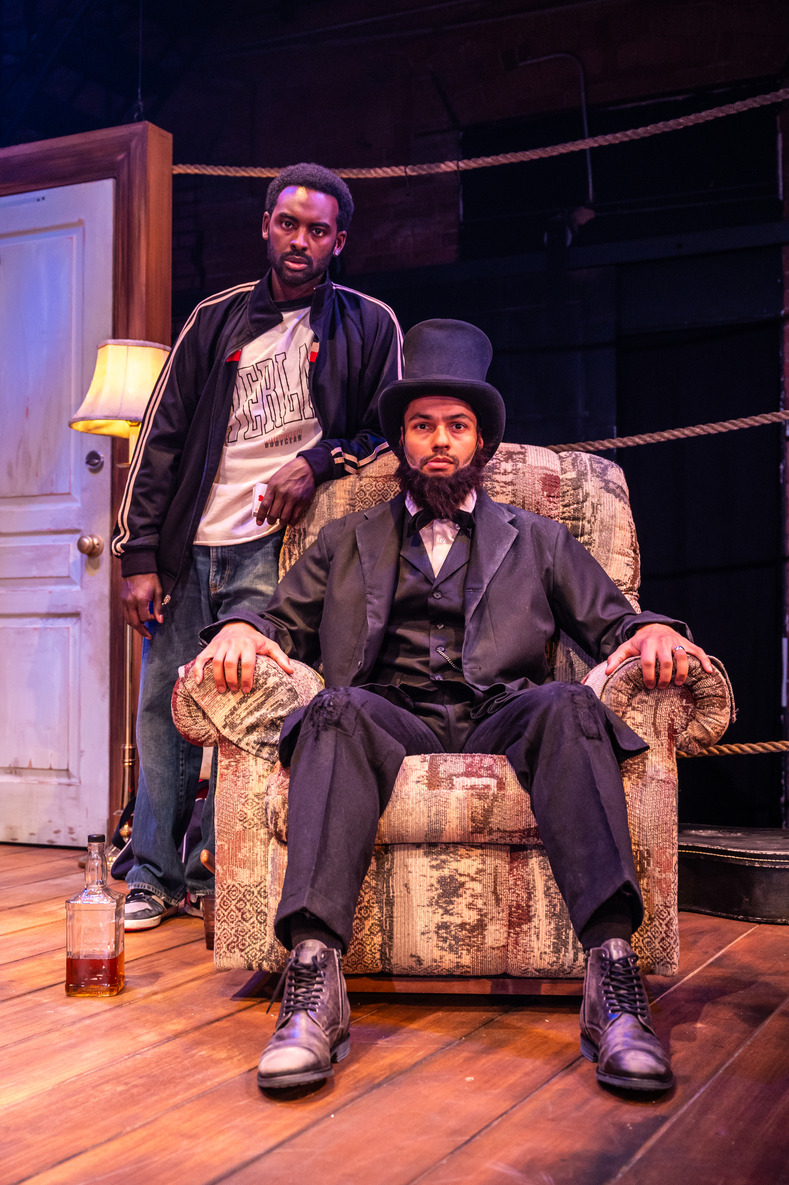
Red Velvet may be fiction but it’s like a theatre history seminar featuring examples of anachronistic stage devices and overdone histrionics that we don’t see anymore. In a season of excellence Red Velvet is an affirmation of the power of live theatre, the best thing I’ve seen yet.
Allan Louis brings a larger than life presence to the stage as Ira Aldridge, both as the sensitive man backstage and the tragic player creating the first black Othello on the London stage of 1833, sometimes showing us reminders of Ira’s American roots.
Allan Louis and Ellen Denny (photo: John Lauener)
Ellen Denny plays Ellen Tree, the actress who would eventually marry actor Charles Kean. Whatever the facts may be, in this fictional story Ellen has been playing Desdemona opposite the great Edmund Kean, who is taken ill in 1833, creating the opportunity for Ira to step into the role of Othello. We watch the remarkable chemistry of their first rehearsals together.
Jeff Lillico is very strong in the thankless role of Charles, son of the great thespian. Inevitably he’s the strident voice of negativity and convention, never admitting any jealousy while watching his fiancée playing opposite Ira.
Invisibly serving tea in the background, Starr Domingue is one of the key players as Connie. Throughout the play she has been the only person of colour present while members of the company debate Ira’s casting, as though she weren’t even there. Her silent witnessing reminds me of Peter Hinton’s idea to put a silent group of Indigenous performers onstage during Louis Riel. In her brief scene alone with Ira we are again watching two people struggling to communicate, as she castigates Ira for Othello’s violence towards Desdemona (conflating actor and personage), and tries to prevent him from reading his reviews.
Ellen Denny, Amelia Sargisson, Starr Domingue (photo: John Lauener)
Amelia Sargisson plays another sort of quiet observer. I’ve mentioned the framing scene with the young Polish reporter Halina Wozniak, whose enacted frustration at the beginning and end of the play mirrors Ira and perhaps the position of the playwright as well. Sargisson also plays Ira’s wife Margaret Aldridge.
I wasn’t sure how to feel about the role of Pierre Laporte, played by Kyle Blair. He seems to be an ally to Ira, taking a big risk to get him cast against opposition even if he gets caught up in the politics. The two men have been good friends, and have some lovely moments together.
The text of Chakrabarti’s play is so perfect in its construction that I can’t imagine removing a word. The two + hours fly by.
We encounter another fascinating sound design by Thomas Ryder Payne including powerful musical passages adding to the intensity of our experience.
Any student of theatre history must see this play, at least to be reminded of how difficult and elusive that history can be. Tempting as it may be to kill all the reviewers (after you shoot the lawyers and politicians), without us there would be little or no theatre history. Of course I might be a bit biased.
Red Velvet continues at the Guloien Theatre until December 18th.
The body count is higher than any superhero movie. But there’s no CGI, no fancy effects. Your imagination is engaged as never before. It may scare you, seeing so much death and contemplating the end of the world in Eldritch Theatre’s new show Requiem for a Gumshoe.
“Rick Fischmascher is a rumpled private detective and warlock for hire, haunted by the death of his son, and entrenched in the arcane murder of a troubled opera singer. And he’s the chief suspect. Requiem for a Gumshoe is a weird-noir, hardboiled mystery, re-telling the Norse legend of Ragnarok in the pulpy style of Raymond Chandler infused with the cosmic horror of HP Lovecraft.”
In a very tiny theatre we confront profundities, the end of the world, terror of creatures mythic, morbid and magical. Perhaps they’re all just inside his head, spurting luridly from the madcap imagination of that narrator. Is it real or is he just acting out psychotic fantasies?
You tell me.
Mairi Babb, Lisa Norton & Eric Woolfe
That ambiguity is exciting. When I speak of a delicate razor’s edge it’s sometimes literally true, a sharp blade to divide the quick and the dead, reality from fantasy.
Eric Woolfe is the playwright and the actor portraying Rick, also the designer & builder of the puppets who populate the show. His imagination underlies all of it.
From time to time Eric performs magic that’s as skillfully built into the story as if Eric were composing an opera to show off his voice. To call them “tricks” doesn’t properly honour their contribution.
I lost count of how many characters we meet, created by Mairi Babb and Lisa Norton plus Eric’s many puppets.
There’s a whole team behind Rick /Eric, to help persuade us, taking Eldritch Theatre to a higher level than ever before. Director Dylan Trowbridge, set & costume designer Melanie McNeill, sound designer Verne Good and lighting designer Gareth Crew ensure that we’re engaged, that the craziness grabs us and won’t let go.
I laughed a lot.
I’m asking myself: who should see this? The people I know who love Wagner opera would be boggled by the alliterated lines about Norse gods. I understand Woolfe’s choices as loving and respectful of anything he brings into his story-telling.
Anyone who recalls the similes of Raymond Chandler will enjoy Woolfe’s writing and the way he delivers the lines. Try googling “Raymond Chandler similes”. I found lots, including the following: • As cute as a washtub. • As much sex appeal as a turtle. • As cold as a nun’s breeches.
Woolfe takes it to the next level, expertly sending up the author’s overblown style.
We’re watching virtuoso performances. I didn’t want the show to end. Full disclosure? I’m perhaps as mad as Rick, a devoted fan of Eldritch Theatre and everything they put forth (Frankenstein’s Boy, Doctor Wuthergloom, Space Opera Zero. I dimly remember Eric’s Madhouse Variations, with help from the faded t-shirt I purchased). I’m fascinated by the cathartic interface between laughter and terror.
Requiem for a Gumshoe continues at the Red Sandcastle Theatre until December 4th.