COC Peter Grimes

Tonight I saw the Canadian Opera Company production of Benjamin Britten’s Peter Grimes.  I’m late getting to the party for a production that opened on October 5th, but I was out of town that weekend.  Regular readers of newspaper reviews will likely have heard of the opening night drama due to the indisposition of Ben Heppner in the title role & his late replacement by Anthony Dean Griffey.  Perhaps my timing is good, considering that Heppner is now healthy.

The COC have already commemorated Verdi (Il trovatore) & Wagner (Tristan und Isolde) in this year of Centennials, and now it’s Benjamin Britten’s turn, even if he’s only 100 rather than 200 years old.

The program called Britten the “leading opera composer of the 20th century”.  I like Britten but would call him “a”, not “the” leading opera composer of the 20th century, partly because I prefer Richard Strauss & Puccini to Britten, partly because such preferences are shared by a great many people (for example, if you read the statistical website operabase).

Alexander Neef (photo bohuang.ca © 2012)

Some operas are such a good match to the strengths of certain companies that they serve to bring out the best in that ensemble.  Such is the case with Peter Grimes.  I’d go so far as to say that this is the kind of opera that the COC should be producing, because it shows off everything that’s good about this company

  • The opera is full of choral work, meaning not just singing but acting
  • The orchestra gets moments to shine playing difficult music
  • The opera is full of smaller parts that draw upon the talents in the COC Ensemble Studio

Peter Grimes is a kind of template, matching excellence we’ve seen before.  One of the high-water marks for this company in recent years was their production of Prokofiev’s War & Peace, another 20th century work requiring choral & orchestral brilliance, and an abundance of small parts to create a gripping piece of music-theatre.  While the principals—whom I’ll speak of in a moment—were also good, that’s not really what makes this opera fly (nor War & Peace). I hope General Director Alexander Neef notices how well the company responds top to bottom, when confronted with a challenging work. The orchestra, especially when led by Johannes Debus, seems to get better every year.  They seemed to make a quantum leap last year, sounding phenomenal in Tristan und Isolde and in Poulenc’s Dialogues des Carmelites.  Hm, I think the Poulenc also matches the template somewhat—20th century, dramatic, wonderful chorus work & ensemble work—although if we push the idea too far it becomes so tenuous as to be meaningless.

Ben Heppner (photo: Michael Cooper)

As I mentioned, Heppner’s back in form after whatever ailed him on the 5th, nearly two weeks ago.  I can’t get over how wonderful it is to again see a Canadian star repatriated after a magnificent career abroad, his Toronto appearances a tiny bit of icing on his cake.  Perhaps we’ll see him again in this city, now that he seems to be settling into his other role at CBC radio.

I can’t rely on my memory to properly contextualize Heppner’s achievement.  I saw Jon Vickers sing Grimes here in Toronto in the 1980s, (a rare visit by the Metropolitan Opera at a festival) an interpretation that was ground-breaking in its brave transgression of the composer’s own idea of the role.  While I recall Vickers giving us something like madness, a desperation in his repeated lines of “I’ll marry Ellen”, Heppner proudly sang the same lines to the rafters.  Heppner’s reading is romantic, a  man who has a strong vision but who simply seems to make mistakes, a tragedy tripped up by fortune and his headstrong ways, where Vickers’ Grimes seems like a more genuinely dark & troubled soul.  I think Heppner’s reading is a valid alternative, that maybe we don’t need to see madness.

Neil Armfield’s decision to set the production in times contemporary with Britten is not radical by usual operatic practice, especially given his self-reflexive reading centred on Doctor Crabbe, the figure whose writings are the source for the libretto.  The focus on the doctor is fascinating, but I did not find anything particularly illuminating in this interpretation.  What’s more, the updating (from 1830s to the 1940s) makes some of the story more troubling.  The rough treatment meted out by Grimes looks very different set in the 1830s, when the boys came from workhouses, than if it suddenly becomes a 20th century story.  By updating I was troubled, applying more modern standards of behaviour for Grimes (especially when the boys are shown as children allowed to play, not refugees from workhouses lugging coal or performing child labour).  When we add in the framing –with Dr Crabbe—I found I was simply confused, unclear as to whether I should think of Grimes as a modern or not.  None of this detracts from Heppner’s work, but it did serve to distract me in places as I struggled to decode the reading.  Armfield gets wonderfully light ensemble work from his company in places, especially at the beginning of the last act, to counter-balance the tragic story arc for Grimes.  Perhaps I should allow that Armfield creates a densely woven social fabric, where almost everyone is likeable at some level, where there are no blatant villains or cardboard characterizations, and where one’s emotions may be deeply conflicted.

The other leads were strong.  Alan Held, who has had several excellent roles with the COC over the past two years (Kurwenal, Gianni Schicchi and Jochanaan) was a suitably powerful presence, one of the two key moral reference-points in the opera.  The other was the Ellen Orford of Ileana Montalbetti, very believable in her embodiment of Grimes’ fondest dream of happiness.

Jill Grove, a powerful Amneris a couple of years ago, gave a colourful portrayal of Auntie, with a voice as powerful as her presence.  I found myself constantly watching Robert Pomakov throughout, a suitably rough-edged Hobson.  In addition, Owen McCausland (the reverend), Tom Corbeil(Swallow), and Claire de Sévigné & Danielle MacMillan (as the wacky pair of nieces) were standouts.  Should I name everyone? Okay.  Peter Barrett, Judith Christin, and Roger Honeywell all had moments to shine, and no one was less than compelling.

The COC production of Peter Grimes continues until October 26th at the Four Seasons Centre.  It’s a brilliant piece of theatre that is not only worth seeing, but –if I get my wish—is worth emulating in future seasons.
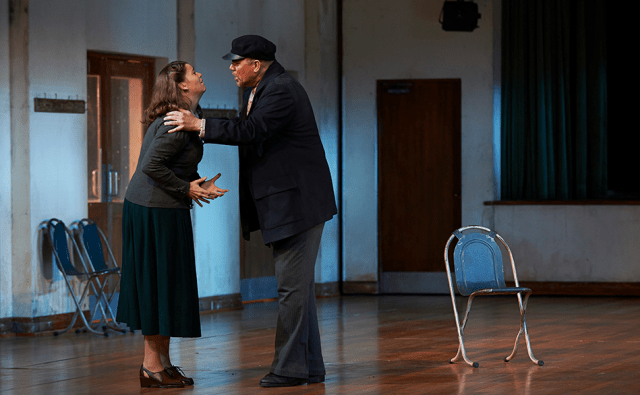
Ileana Montalbetti and Alan Held (photo by Michael Cooper)
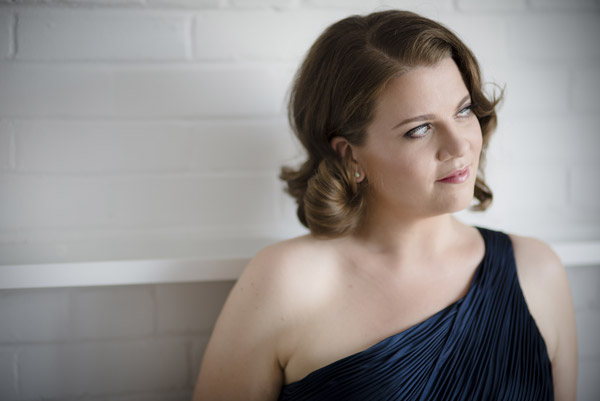
Ileana Montalbetti and Alan Held (photo by Michael Cooper)

Posted in Opera, Reviews | Tagged , , , , , , , , , , | 2 Comments

New Music Concerts: David Eagle and the Art of Interactive Electronics

  “Press releases and announcements” are presented verbatim without comment.

David Eagle and the Art of Interactive Electronics
Friday, November 1 at 8PM at Betty Oliphant Theatre
Traditional instruments make music with computers,
iPhone and Kinect sensor

For Immediate Release – Toronto, October 15, 2013: For the second concert of its 43rd season, New Music Concerts’ artistic director Robert Aitken asked Calgary-based composer David Eagle to curate a concert showcasing some of the most exciting young composers working in the field of electroacoustics and interactive media. The concert will include recent works by Jimmie LeBlanc, Anthony Tan, Anna Pidgorna, Hans Tutschku and a New Music Concerts commission from Eagle himself for voice, ensemble and live electronics. Guest artists Xin Wang (soprano), Julia Den Boer (piano), Katelyn Clark (harpsichord) and Rachel Mercer (cello) join the New Music Concerts Ensemble and Robert Aitken (solo flute and direction).

Curator David Eagle (b.1955 Canada) is Professor of Composition and Electroacoustic Music at the University of Calgary. He is represented by two works on the program, Fluctuare for solo flute and electronics written for Robert Aitken in 2009 (first performed at the Happening New Music Festival in Calgary of which Eagle is the director), and the world premiere of the commission Unremembered Tongues noted above. The new work features texts in various languages including Latin, Blackfoot, Basque, Hawaiian, Cree and several indigenous Australian dialects. The composer will use a Kinect sensor to shape the music through physical gestures and an iPhone to trigger the programmed changes in the processing. Soprano Xin Wang is the soloist.

Composer and guitarist Jimmie LeBlanc was born in rural Quebec in 1977. He composed Lignes d’ombre (Shadow Lines) for harpsichord, piano and electronics for the Contemporary Keyboard Society in 2011. Katelyn Clark will reprise her role at the harpsichord and Julia Den Boer will be the pianist.

Anthony Tan is a Chinese-Malaysian composer born in Canada in 1978 now residing in Germany. On the Shadows of Ideas for piano and electronics (2013) was commissioned by the Experimental Studio SWR, Freiburg. Julia Den Boer who premiered the work is the soloist.

Anna Pidgorna (b. 1985) is a Ukrainian-born Canadian composer and media artist who combines her interests sound, visual art and writing to create works that are dramatic and picturesque. She is currently based in Vancouver, BC. The Child, bringer of light for solo cello with optional amplification (2012) was inspired by Carl Jung’s archetype of the Child. Rachel Mercer is the cellist in this Toronto premiere.

Hans Tutschku (b.1966 Germany) is the only non-Canadian on the program. His work, “behind the light for string quartet and electronics (2011) is a reflection on reflections. What surfaces are capable of reflecting incoming light? How does this alter color and how do the qualities of the reflections change the visual atmosphere? behind the light is an exploration of the relationship between source and multiplication.”

David Eagle and the Art of Interactive Electronics

November 1 at Betty Oliphant Theatre (404 Jarvis Street).

Introduction 7:15 | Concert 8:00

Xin Wang, soprano; Julia Den Boer, piano; Katelyn Clark, harpsichord; Rachel Mercer, cello;

New Music Concerts Ensemble, Robert Aitken, solo flute and direction


Lignes d’ombre (2011) piano, harpsichord, electronics

Fluctuare (2009) flute, computer

Pose II – On the Shadows of Ideas (2013) piano, electronics

Unremembered Tongues (2013) voice, ensemble, electronics

The Child, bringer of light (2012) amplified cello

behind the light (2011) string quartet, electronics

TICKET INFORMATION

Individual Tickets: $35 (regular)/$25 (seniors/arts workers)/$10 (students) –

Prices include 13% HST

Box Office: 416 961-9594

New Music Concerts: 157 Carlton Street, Suite 203  Toronto ON M5A 2K3

416.961.9594 / fax 416.961.9508   nmc@interlog.com  / www.NewMusicConcerts.com

New Music Concerts gratefully acknowledges the support of The Canada Council for the Arts; Toronto Arts Council; The Department of Heritage through the Canadian Arts Presentation Fund; The Province of Ontario through the Ontario Arts Council and the Ontario Arts Foundation Endowment Fund; The Mary-Margaret Webb Foundation; The Koerner Foundation; The McLean Foundation; The SOCAN Foundation; The Amphion Foundation Inc.; Stefan Wolpe Society;  Music Toronto; The Royal Conservatory; Roger D. Moore; Edward Epstein and Gallery 345.

Posted in Press Releases and Announcements | Leave a comment

10 Questions for Ileana Montalbetti

Canadian soprano Ileana Montalbetti has been one of the standouts in the new Canadian Opera Company production of Peter Grimes.  The Toronto Star’s review, for instance says

when we start to consider Ileana Montalbetti’s saintly Ellen Orford, we are in the realm of greatness. The heartbreaking emotional openness of her voice and the wealth of feeling she gives every moment mark her as the beating heart of this production.”    (Full review)

Ileana Montalbetti (photo: Bo Huang)

Ileana Montalbetti (photo: Bo Huang)

Last season included debuts with Edmonton Opera as Antonia in The Tales of Hoffmann (Offenbach) and Michigan Opera Theatre as Leonore in Fidelio (Beethoven).

Montalbetti is a graduate of the COC’s Ensemble Program & the University of Toronto’s Opera Program, a winner of the 2012 New York District Metropolitan Opera National Council Auditions and a 2012 Encouragement Award from the Sullivan Foundation.   She placed second in the 2011 Christina and Louis Quilico Awards and was nominated by the Canadian Opera Company to compete in the 2011 Stella Maris Vocal Competition.

And Montalbetti has a new facebook fan page:

I’m looking forward to seeing Peter Grimes for myself this week.  In anticipation I ask Montalbetti ten questions: five about herself and five more about her portrayal of Ellen Orford.

1- Are you more like your father or your mother?

2012-02-23-COC-Ileana_Montalbetti-3181LOWRES

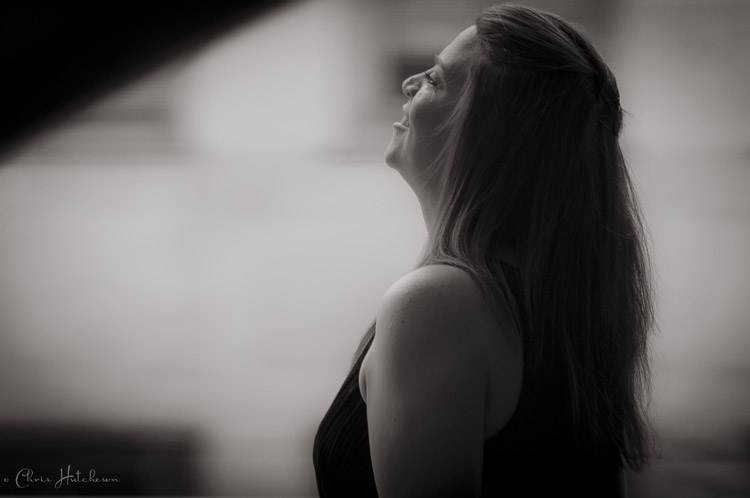
Ileana Montalbetti (photo by Chris Hutcheson)

My mother is a trained singer and the Artistic Director of Saskatoon Opera and my father is a trained stage actor.  For the obvious reasons, I would say I am a good mix of the two.  I have always been drawn to performing and I completed a year of theatre studies before switching to voice performance.  They are both artistic, independent, free thinkers and I know I have these traits from both of them.  They followed their dreams and spent the majority of their 20’s living, studying and working in Vienna.  This has prompted me to always follow my dreams, to work as hard as possible and never give up. They are extremely supportive but never led me to believe that this career is easy.  Having such wonderful examples has helped form me into the artist I am today.

2- What is the best thing or worst thing about being a singer?

To be a singer is to be an eternal student which is wonderful but also challenging.  Musicians are perfectionists but the job is never and will never be done and this is where the frustration and challenges lie.  Our career also requires a lot of sacrifice and there is quite a bit of instability, one must be very flexible and adaptable.

And even though there are times when I am missing friends or family and I am alone in a hotel room I feel very lucky to have acquired these skills and traits through being an opera singer.  One of the best things about being a singer is the opportunity to travel and meet people from all over the world.  I feel incredibly blessed to have close friends on many continents and to feel love and support from so many people and places!

3- Who do you like to listen to or watch?

My iTunes consists mainly of opera and the singer I listen to the most is Adrianne Pieczonka.  I have looked up to her for many years and consider her one of my role models.  She is extremely kind and generous and one of the most genuine artists I have ever seen perform.  I have been lucky enough to coach with her and to get to know her a bit on a personal level and she is incredibly supportive.

Aside from opera I really like the group Pink Martini.  When I worked at the Music Store at Roy Thomson Hall we listened to their CD’s all the time and I own all of them.  When I am walking around the city that is what I’m usually listening to.

4- What ability or skill do you wish you had, that you don’t have?

I wish I could fly!  That would make all my traveling MUCH easier and it would also allow me to sneak visits in to my loved ones whenever I wanted!

5- When you’re just relaxing and not working what is your favourite thing to do?

I watch a lot of TV; Downton Abbey, Breaking Bad, Mad Men, Grey’s Anatomy, Game of Thrones, Scandal and (I may regret saying this) but I am a bit of a reality TV junkie – it’s my guilty pleasure!  I’ve also taken up knitting!  I learned to knit for the role and it has now become one of my hobbies!  I really enjoy it!

*******

Five more about playing Ellen Orford in Neil Armfield’s production of Peter Grimes for the Canadian Opera Company

1-How does portraying Ellen Orford challenge you?

Ellen is an extremely complex character and it has been a challenge, as an actor, to find the core of her character.  She is a school mistress in a village full of narrow minded people and being an educated woman and a free thinker has led her to be a bit of an outcast along with the fact that she has aligned herself with Peter, who the whole town is very sceptical of.  Vocally there are many challenges in the role as well.  Britten’s music requires a lot of concentration and I feel like I always need to be counting.  Also, the duet with Peter in the Prologue is unaccompanied and, basically, the first music I sing so that is always a bit of a nail bitter!

2- What do you love about your role?

Ben Heppner (photo: Michael Cooper)

I love Ellen’s strength and fortitude and playing this amazing character has helped to develop my own strength and fortitude, not only as a singer but as an artist and person.  I am surrounded by an amazing cast of colleagues, including the phenomenal Ben Heppner.  Watching him and my colleagues fully embody their roles has pushed me to dig deep inside of myself and discover who Ellen truly is.  The learning curve on this contract has been steep but the growth I have made as an artist is priceless.  It was, of course, a bit nerve wracking on the first day, especially being opposite Ben, but they have all been incredibly generous and supportive and have always made me feel like I belong.

3-Do you have a favourite moment in the opera?

The opera is full of amazingly dramatic and intense moments and there are many that grab me.  I would have to say my favourite is near the end of the opera where the entire chorus and most of the principals come right down to the front of the stage and sing “Peter Grimes” three times.  The silence between each reiteration of his name is spine chilling.  Our chorus is one of the best, if not THE best, in the world and to hear them in this moment but also in the entire opera is absolutely phenomenal.

4- How do you relate to Ellen Orford & her relationships to Grimes & the town, as a modern woman?

I relate to Ellen in many ways and I think she is a very progressive and modern woman in her own right.  She stands up for what she believes in and for the people she cares about.  Her relationship with Peter is challenging as she sees someone who is hurting and wants to save him.  I care very deeply for all of my friends and family and want to be there for them all the time so I relate to her in that way.  I also relate to her very directly in her love for children as I nanny for many of my friends and colleagues between gigs.  I have always loved children and being with them and, I believe, Ellen does too!  They teach us so much about ourselves, especially about honesty and being in the moment.  Being both an opera singer and nanny has provided me with a wonderful life balance.

Alexander Neef (photo bohuang.ca © 2012)

5-Is there a teacher or influence you especially admire?

I have the deepest admiration and respect for both of my teachers; Mel Braun and Wendy Nielsen.  They both have a tireless work ethic and commitment to their teaching and the craft of singing.  They have stuck with me through thick and thin and have always believed in me and encouraged me to work hard and dream big.  They have taken countless hours to work with me on honing my craft. I would not be here without them!

I also owe a lot to the Canadian Opera Company and Alexander Neef.  Alexander has become an incredible mentor to me.  Being a member of the Ensemble has shaped and formed me into the artist I am today.

*******

Ileana Montalbetti continues her portrayal of Ellen Orford in the Canadian Opera Company production of Britten’s Peter Grimes until October 26.

Ileana Montalbetti and Alan Held (photo by Michael Cooper)

Ileana Montalbetti and Alan Held (photo by Michael Cooper)

Posted in Interviews, Opera | Tagged , , , , , , , , | 4 Comments

10 Questions for Cecilia Livingston

Known across Canada and the US for her vocal music, Cecilia Livingston is deeply involved in Toronto’s choral and opera communities, with a special focus on writing music for women’s voices. She looks forward to projects in 2014-2015 in collaboration with Opera 5, FAWN (Toronto), Young Voices Toronto, and the Hamilton Children’s Choir. She received Honourable Mention in the 2013 Karen Kieser Prize in Canadian Music, and is a prizewinner in the 2013 Toronto Harp Society Composition Competition. Her music has been heard at Eastman’s Women In Music Festival, the Vancouver International Song Institute, the Scotia Festival of Music, the ACDA’s Summer Choral Composers Forum, Tapestry Opera’s Composer-Librettist Laboratory, and the Canadian Contemporary Music Workshop. She also has a keen interest in composing for percussion, and is (very slowly) learning to play the marimba.

In addition to her music, she is also known for her teaching and writing: her articles have appeared in Tempo and in Canadian Music Educator. Her creative and research work was funded by a CGS scholarship from the Social Sciences and Humanities Research Council of Canada, an Ontario Graduate Scholarship, and the Theodoros Mirkopoulos Fellowship in Composition at the University of Toronto, where her graduate work is supervised by Christos Hatzis.

October 27th Opera 5 present In Pace Requiescat, a program of three short operas, including the world premiere of The Masque of the Red Death by Cecilia Livingston.  With that in mind I ask Livingston 10 questions: five about her and five more  about creating the new work for Opera 5.

1-Are you more like your father or your mother?

Composer Cecilia Livingston

Composer Cecilia Livingston

With both my parents very much alive, this may require some diplomacy! I think I can say that I’m a fairly good mix of their better and worse traits. I’ve a great deal of respect for their values: joy in hard intellectual work, a ferocious attention to detail, and endless curiosity about how anything works. They are both quiet people who think and feel very deeply: quite a beautiful worldview for a composer who is interested in things we used to give capital letters to (Truth, Beauty, the Sublime, etc.). I’m told I’m a fundamentally serious person, which isn’t a surprising result. Mind you, I’m quite serious about being silly, quite a lot of the time.

2- What is the best thing & worst thing about being a composer?

The best: connecting with other people through music, in a way that words (talking, writing, what have you) simply cannot achieve. It’s a profound, and very scary experience – and a very beautiful one. Music goes where words fall short, and those are the places that interest me. I also just love the social element of music making – working with performers is such a joy. I learn so much from them, and musicians are some of the most fun people around. I enjoy being a music nerd with other music nerds.

The worst: the hours at the computer. No musician’s life is 9-5 and so much of a composer’s life is spent at a computer. With a big project, those hours alone really add up, and many of them are spent on tech hassles rather than music.

3- Who do you like to listen to or watch?

Cecilia Livingston (click for another interview)

I love opera, although I find I usually don’t listen to whatever area I’m working in, so lately I haven’t been listening to much opera! I tend towards music that has a certain quality – perhaps “stark” is the right word. Non-classically, I love Radiohead and have a surprising collection of bad pop and good hip hop. I respect excellent craft regardless of genre. The deeper I am into a piece I’m writing, the “lighter” all my other activities become: lots of Michael Connelly novels, and large doses of embarrassing TV shows. I may or may not watch a certain Real Housewives franchise with religious devotion.

4- What ability or skill do you wish you had, that you don’t have?

I wish I were a better pianist, one who could really improvise. I injured myself during my undergrad, after fighting through my ARCT, and have never really recovered the technical facility I lost at that time, which is limiting. I’m teaching myself to improvise, but I will always run up against the old pain. But I can’t rue that entirely – that silencing pushed me towards composition, and that’s where I belong.

I’d also like to better at fixing my car. I’m sure my father wishes this too.

5- When you’re just relaxing and not working what is your favourite thing to do?

I’m something of a workaholic, but when I’m not working I’m a true homebody: I like to get all the people I love in one place and hang out with them. My husband is an amazing cook, so I always look forward to the end of the day. A good meal, a glass of wine, a little Downton Abbey perhaps…

*******

Five more about composition & premiere of The Masque of the Red Death with Opera 5

1- Please talk about the challenges in creating your adaptation of the story, and getting it produced.

Follow link for the Edgar Allan Poe society (including texts)

It’s been a very intense process: really three months from first note to last draft, with a chunk of time “off” for Tapestry’s LibLab. My husband and I wrote the libretto, I wrote the main theme, and then basically chained myself to my desk for the next weeks. Opera 5 trusted me with a lot of compositional and dramatic freedom, which I find very liberating: I love getting an idea and just running with it: nothing makes me happier than the extreme concentration of composing when it is going well.

The principal challenge in adapting Poe’s Masque to the requirements of drama, and opera specifically, is that Poe’s work typically has very little dialogue or ready-made mise en scene. There’s a great deal of narrative description, but what really struck me was the world implied beyond the story. It’s easy to imagine Poe’s Prince Prospero as the ruler of one of the smaller principalities that used to dot Italy’s political landscape. And so the story becomes one of narrowing and separation: the little fiefdoms recede from one another as they begin to die; then Prospero seals himself inside the castle, and the story narrows even further; the population of his little nation-state begin to collect outside the walls; then we see him moving room by room, until the whole story condenses down into the final confrontation in a single room: as our Prospero says, paraphrasing another prominent Italian (and an Italian-Canadian no less), “The world’s a little smaller every day.” In that sense, it’s a very contemporary story: we have something of a current obsession with apocalyptic narrative, and in particular with the dissolution and recession of society and civility in the wake of catastrophe.

The Prospero of the story is a sort of hubristic peacock, strutting around his quarantine. The immediate question for us was why someone would behave this way. If a ruler has the presence of mind to institute a quarantine – and this was a brand-new civil technology in the 14th century – and in particular, a very modern inverse quarantine that attempts to preserve the leadership while leaving the population to fend for themselves, would he really be this callow? The only plausible answer, I think, is that Prospero is attempting to distract his courtiers from the realities of the plague. His bizarre performance in Poe’s story is exactly that: a performance, designed to keep everyone’s mind on the party and off what is happening outside the walls.

2-What do you love about Poe and especially his story The Masque of the Red Death?

Composer Daniel Pinkham

I have mixed feelings about Poe as a writer, but as a provider of dramatic material with operatic potential, he has left a great legacy. When Opera 5 told me that they wanted a new Poe-based opera to go along with Debussy’s Fall of the House of Usher and Daniel Pinkham’s Cask of Amontillado, I immediately started looking for parallels in his other stories. What struck us particularly about Masque was the way it echoes those two. Like Usher, it’s about the demise of a dynasty; like Cask, it’s fundamentally about imprisonment and the fear of it. Yet in Usher, what kills the family legacy is time and neglect, and in Cask, the imprisonment is a punishment; and so Masque is an interesting microcosm of some of Poe’s most powerful themes, done in a rather unusual way for him.

3- Do you have a favourite moment in the opera?

Now that I’ve heard it in rehearsal, I love it all! There’s a moment early in the second act when Prospero turns away from the party and his true desperation, fear, and guilt are revealed: I love the music here. It’s a moment of sublime despair, and David Tinervia does a remarkable job with it: he has made a great study of the character.

4- How do you relate to Poe as a modern reader, adapter & composer?

There are two major concerns with Poe: his diction, which takes place in a register of language that we’ve more or less abandoned; and his sense of humour, which is very odd and very tightly bound up with his language. Poe started out writing absolutely straightforward satires of Gothic horror-romances; it was only later, maybe with Ligeia, that he realised he could move satire to a new kind of modern horror. But he never really lost sight of the fact that horror and humour, like the grotesque and the sublime, are ideal if uneasy partners. Much of Poe is like the Porter in Macbeth: a narrator joking before a scene of unimaginable brutality. So this operatic Masque blends the burlesque and the Baroque (it parodies Baroque opera in several ways) to intensify the agony of fear these characters endure, and their hideous end.

Composer Christos Hatzis

5- Is there anyone out there who you particularly admire, and who has influenced you?

Operatically I’m in awe of Adams, Britten, and Glass. But closer to home, I’ve a huge respect for my teacher, Christos Hatzis. His enthusiasm and energy are astonishing – he lives a true musical life. More generally, I really admire singers. I find what they do nothing short of miraculous – it requires such skill, courage, and honesty. Singing is something all of us understand with such immediacy, and yet the work required to be a truly remarkable singer is beyond understanding. I’m fascinated by the voice, and I’m so happy to see my vocal writing deepen and mature as I move into opera.

*******

Opera Five present “In Pace Requiescat”, a program of short operas October 27,  30 and 31 each night at 7:30 at the Arts & Letters Club, 14 Elm St (ring bell for entry):

  • Cask of the Amontiallado by Daniel Pinkham
  • La chute de la Maison d’Usher by Claude Debussy
  • The Masque of the Red Death by Cecilia Livingston (a world premiere)
Posted in Interviews, Opera | Tagged , , , , , , , , , , , , , | 2 Comments

Symbolist horror

What’s in a name?

Sometimes we grab onto something in a name, think we know what we have, and miss something else through our assumptions.  We’re so enamoured for instance with the mystique of the rose, but we don’t usually talk about the nasty injuries those thorns inflict.  I sometimes forget about the hidden peril because of the sweet smell.

Names can be misleading.

Then there’s Debussy, a composer pianists may cosy up to because he can be very gratifying, often remarkably playable, at least in his earlier compositions.  His orchestral compositions connote warm & fuzzy.

But Debussy as a purveyor of horror?  It’s not the first thing that pops into the mind, at least until you look a bit closer.  Debussy actually attempted to set two of Edgar Allan Poe’s stories as opera:

  • The Fall of the House of Usher
    and
  • The Devil in  the Belfry

La chute de la maison Usher and Le diable dans le beffroi were to be a double-bill, a commission from New York’s Metropolitan Opera.  Debussy accepted an advance even though he never finished.  But the fragments are still fascinating…(!)

Composer Cecilia Livingston

Composer Cecilia Livingston

Opera Five are taking us into that realm with “In Pace Requiescat”, a program of operatic tricks & treats in the days before Halloween (Oct 27 & 30), with a final performance October 31st:

  • Cask of the Amontiallado by Daniel Pinkham
  • La chute de la Maison d’Usher by Claude Debussy
  • The Masque of the Red Death by Cecilia Livingston (a world premiere)

Before we had psycho-therapy and psychologists we had literature exploring deep primal terror.  In Opera’s Second Death (Zizek & Dolar) the suggestion is made that before we could go to a shrink, we could always go to the opera.  While they would suggest that opera is dead, replaced by psychiatry, maybe it also means that perhaps opera is still –as ever– tied into our collective unconscious, a powerful well of primal imagery to delight us or drive us mad.  In other words, even if we’ve turned to other forms of therapy opera is still there as powerful as ever.

If you’re as old as I am, you recall the derisive laughter that greeted the French response to Jerry Lewis: a comedian they hailed as a genius.  Bu Lewis is only one in a long series of artists.  The French –especially the Symbolists—appreciated Edgar Allan Poe & Richard Wagner before anyone else noticed them.  Another such discovery in France was Alfred Hitchcock.  I’ll leave Wagner aside for a moment, to point to the two purveyors of suspense, namely Poe & Hitchcock.  There are several similarities to explore between them in their methodology, something I believe someday will result in a book from somebody  (me if no one else can be bothered).

I am immediately intrigued with musical treatments of these materials.  Regular readers of this space will have seen the correlations I’ve drawn between Bernard Herrmann –one of Hitchcock’s greatest collaborators—and Debussy.  The erudite Herrmann was so well-read in classic orchestral scores by the great masters as to emulate famous passages so perfectly as to suggest inter-textual references.  I spoke of how in Psycho Herrmann cleverly combines Debussy’s Nuages (a skyscape) and Wagner’s prelude music for Act III of Tristan und Isolde (Tristan’s sexual desperation, but also, a moment when Kurwenal & the shepherd are watching the horizon for a sail on the horizon:in effect they’re watching the sky/horizon awaiting Isolde’s return) at the beginning of the film, a long shot showing clouds & sky.

Even in Debussy’s symbolist opera Pelléas et Mélisande we have beauty alongside suspenseful portents & brutal acts of violence:

  • Golaud (whom Mélisande had thought might be a giant) has been tender & loving, but when he notices that the ring he gave her is missing off her finger he turns abruptly, sending her out harshly in the darkness to find it
  • When Golaud notices the closeness between his wife & his half-brother Pelléas, he threateningly takes the latter into the dark cavern under the castle. He says that he’s seen  their closeness: and that it must stop.
  • In one of the most violent scenes in any opera, Golaud (mad with jealousy) drags his wife around the floor by her hair
  • Later we see Pelléas with what might be blood on his face without explanation just before he announces his intention to leave that very night.
  • The lovers meet, aware that Golaud is stalking them in the dark, and kiss even though a moment later Golaud strikes Pelléas down

And then in the last act Mélisande dies mysteriously.

Those realms of suspense & horror still seem fertile territory for exploration.  Do you dare?  I’m going there in a few days, hosted by Opera 5. THREE_OPERAS

Posted in Books & Literature, Opera | Tagged , , , , , , , , , , , , , | Leave a comment

Ten Questions for Marshall Pynkoski

Marshall Pynkoski is one of Toronto’s greatest artists, even if he has been completely misunderstood.  Since its inception in 1985, Opera Atelier has been a kind of lightning rod in Toronto for the conversation about historically informed performance.  With co-artistic director Jeannette Lajeunesse Zingg and in collaboration with Tafelmusik Baroque Orchestra & Choir, their growing body of work has articulated a recognizable style.

The conversation hasn’t always been friendly nor appreciative.  I recall critics who were very negative about OA’s productions.  The question of authenticity was sometimes such a focus for the conversation that Pynkoski’s skills as a director were lost in the shuffle.  I regret that we’ve so often been worrying about history that we miss the excellence in the here and now, so busy with history that the direction, the drama, the originality are somehow forgotten. Pynkoski is a very good director, yet because of this focus on history –which was central to the company’s history–his talents are overshadowed.  And because of their unique movement vocabulary, which is unlike any other opera company in this country, they’re sometimes misread, appreciated less for what they achieve than for their divergence from what people usually understand as “opera”.

I expressed faith in Marshall’s brilliance after seeing their  most recent Don Giovanni, a production that seems breath-takingly original even as it honours history.  Last season we were tantalized, first by the first historically informed Der Freischutz in North America, and then with Pynkoski’s announcement that this was merely the beginning, as new horizons were being opened by the company:

This evening we are taking what is perhaps an even more thrilling leap into uncharted territory.  Our production of the first Romantic opera—Weber’s Der Freischütz –boldly redefines the very parameters of what constitutes period performance.  We are not merely drawing a line in the sand; we are stepping past the line in saying all periods are fair game to be reinterpreted in historically informed productions.  Our hearts are still firmly grounded in Baroque repertoire, and this will be reflected in our programming in the years to come, but we also look forward to the potential of re-examining masterpieces by composers such as Debussy, Bizet and even Wagner.

The company he’s built is an important creative voice in this country, and now internationally as well.  I’m proud of everything they do, and delighted that their latest production opens soon, namely Mozart’s The Abduction from the Seraglio on October 26th.   In anticipation I ask Pynkoski ten questions: five about himself, and five more about the opera opening October 26th.

1-Are you more like your father or your mother?

It is difficult to say which of my parents I take after – if either! I seem to be something of a throwback and from my earliest years had interests and obsessions which left my family utterly flabbergasted, sometimes concerned, and frequently annoyed. There are no artists in my family, nor are there any people I know of with a particular interest in the arts in general or the performing arts in particular.

Marshall Pynkoski, Opera Atelier’s Co-Artistic Director

I was, by the way, raised in an intensely religious, fundamentalist atmosphere, which is not without a theatrical side. I have no doubt this played a major – albeit somewhat subversive! – role in my development.

2-What is the best thing or worst thing about being a director, particularly in the realm of historically-informed period performance?

Jeannette Lajeunesse Zingg

Jeannette Lajeunesse Zingg

I feel like the luckiest person in the world. Because I am co-artistic director of a company which was founded by my partner Jeannette and me, I have the luxury of only producing work which I adore. We have made a conscious decision to produce only twice a year, which means we are never choosing a show to fill out a season or to act as a cash cow. Our obsession with Mozart is real, as is our fascination with French Baroque opera and ballet. Because we gravitate toward many of the same artists from season to season, we enjoy the added bonus of having made close and lasting friendships within the arts community.

It’s also particularly delightful to have such close interaction with artists from a variety of disciplines such as my very dear friend Gerard Gauci who has been Opera Atelier’s set designer since the company’s inception. And of course my partner in work and in life Jeannette Lajeunesse Zingg.

Gerard Gauci

Set designer Gerard Gauci

3-Who do you like to listen to or watch?

I listen to classical music exclusively, simply because it is what gives me the greatest pleasure. That being said, classical music is a rather generic term. Renaissance, Baroque, Romantic, and early 20th century music all play an important part in my non-professional life. Jeannette and I are both particularly interested in the aesthetic links between French composers such as Debussy and Ravel, and their predecessors, the great giants of 17th and 18th century French music, including Charpentier, Lully and Rameau. Jeannette and I do not own a television and both of us are – thank God! – too busy to indulge in cell phones or personal computers.

4-What ability or skill do you wish you had, that you don’t have?

I wish I were multilingual. I also wish I were twenty pounds heavier and bristling with muscle!

5-When you’re just relaxing and not working what is your favourite thing to do?

I am a voracious reader, but also draw enormous inspiration from watching DVDs of great ballet performances particularly the repertoire created by George Balanchine when danced by New York City Ballet – to my mind, the greatest ballet company in the world.

When travelling for business or pleasure, we spend our time in museums and art galleries – another serious obsession.

~~~~~~~

Five more concerning  the production of Abduction from the Seraglio that opens the Opera Atelier season.

1-What are the challenges you face with Opera Atelier, a company with a history of period performance?

Jeannette Lajeunesse Zingg, Marc Minkowski, and Marshall Pynkoski, backstage after a Lucio Silla performance

Our biggest challenge is one of audience perception of what a period production is. We are eager for people to understand that Opera Atelier is not a museum and our productions are not artefacts. A period production is simply an opportunity for us to challenge ourselves in a new way as artists in the 21st century. We explore the aesthetics of other eras and cultures in order to help us look to the future. Our recent production of Lucio Silla for the Salzburg Festival was greeted as one of the most radical productions to take place in Salzburg for decades.

A period production is the new avant-garde of the 21st century.

2-What do you love about Opera Atelier?

I love the fact that our productions are built from the ground up and that every aspect of production is considered of equal importance. Like a great Broadway musical, an Opera Atelier production must be firing on all levels as a superb singing event, an orchestral event, a costume, set and machinery event, and a great literary event. This is the style of theatre that we are committed to and even when producing outrageous comedies like Abduction from the Seraglio we take our work and our commitment very seriously.

3-Do you have a favourite moment in Abduction from the Seraglio?

I adore the quartet for Belmonte, Konstanze, Pedrillo and Blonde, which begins with the men trying to ascertain if the women have slept with their captors, continues with the women’s outrage at the impertinence of the question and the final reconciliation between the four of them. I just don’t think opera or theatre gets better than this!

I also adore the entrance for Pasha Selim – a wonderful excuse to show off the Artists of Atelier Ballet dancing to Mozart’s “Turkish-inspired” music.

I think it’s important to remember that Abduction from the Seraglio has a classical commedia dell’arte plot. I do not take the grief and despair of Konstanze seriously, any more than I do that of the Countess in Figaro. These women are meant to be young, and they are indulging and enjoying the intensity of their emotions as only the young can. I find their “serious moments” by turns amusing, poignant and hilarious.

4-How do you feel about the relevance of period performance as a modern-day citizen?

Happily, we are generously supported at all levels of government, and it seems to have kicked in for our corporate supporters and individuals that period production does not preclude innovation, or social and political relevance. Fashions change, but people and their personal dilemmas remain remarkably consistent from one period to another. Period productions place history in a human context and enable us to focus on the story at hand rather than gratuitous special effects and theatrical distractions.

5-Is there a teacher or an influence you’d care to name that you especially admire?

I would not be doing what I am doing or enjoying the wonderful life I have without the input of my ballet teachers John Marshall, David Moroni from the Royal Winnipeg Ballet, Flora Lojekova, and Glady Forrester, as well as George Balanchine – the greatest choreographer of the 20th century, arguably the greatest choreographer in history. His company New York City ballet acts as a constant inspiration for Jeannette and me.

~~~~~~~

Opera Atelier open their 2013-2014 season with Mozart’s The Abduction from the Seraglio on October 26th at the Elgin Theatre, running until November 2nd.

Posted in Interviews, Opera | Tagged , , , , | 4 Comments

Cloudy with a chance of symbolism

click for info on obtaining the Blu-ray & DVD

It’s such a silly title that i couldn’t resist having some fun with it.

Cloudy With a Chance of Meatballs is the best children’s film I’ve seen in a very long time, one of those films full of lines & overtones that a child won’t get, at least not until they’re much older.  In other words it’s a full-length animated feature that’s probably more entertaining for adults than children.

I suppose I shouldn’t expect any adults who aren’t parents or grand-parents to bother with the film, but what I’m saying here is for adults, not children.  If you have a chance to watch this film on TV see it. You won’t regret it.

Note, I am speaking of the first film, not the sequel (Cloudy with a chance of Meatballs II) that appeared in theatres last week.  I knew that certain people in my life would be seeing that sequel, and so I went about getting my hands on the first film.

We bought it.  And we watched it: twice (so far) and counting.

Who would expect a mainstream animated film to promote sustainability, in effect mocking our patterns of consumption and our aspirations as a society..?   I understand there’s a book that came long before any film.  I’d have to see it to decide whether the allegorical implications I’ve seen in the film are also present in the book.

Flint Lockwood is the protagonist, an inventor whose inventions keep misfiring.

As a child we see him come to school, announcing his solution to the greatest problem children face: untied shoelaces.

Instead? Spray on shoes.  Brilliant except: you can’t take them off!  He’s immediately ridiculed in class, as he discovers his spray-on-shoes are permanently attached to his feet (…even when he’s all grown up!).

He creates something called ratbirds.  Are they supposed to be good for something? They are certainly scary.

His latest?  a machine that makes food out of water goes haywire on national TV, destroying the town square before it flies off into the clouds.  In the conversation between disgraced weather reporter Sam Sparks (she’s female by the way) and Flint (our despairing inventor) food begins to fall from the sky.  The machine –which was fed on land by water—is much more effective when fed by the moisture of clouds.

Suddenly they are both heroes, as the town becomes a tourist mecca for its meteorological version of manna from heaven. And a romance might blossom between the two.

The mayor wants to exploit this of course. But isn’t that what mayors always do? I saw Jaws..!

Pardon me if I want to hold up a mirror.  This is your life, Western World. We’re spoiled rotten, as though our riches were falling on us from the clouds, and we don’t appreciate it.  Appreciate it? we are greedy for the next widget or flavour.  The citizens of this animated cartoon world have so much that they simply heave the extra food that they can’t eat into a reservoir.

Nobody seems to notice any problem with this.

When things spiral out of control, when the food weather becomes dangerous, I love the catastrophe that follows. Masses of surplus food piling up in that reservoir reach the breaking point.  As the dam bursts, the food simply floods the town in an avalanche of excess food, burying them in giant hamburgers and hot dogs. It’s a cute version of our society.

Talk about karma.

Sustainability isn’t merely a matter of waste management.  Isn’t it curious that the story is all about weather & climate?  I suspect I am reading an additional layer into the story, something never intended by Judi & Ron Barrett, the authors of that original book.  But what could be more apt in our era of global warming than a story where a silly weather disaster is brought on by human hands, an inventor whose inventions keep having unforeseen consequences.  That’s global warming in a parable for children: that our technologies have backfired upon us.

The ratbirds deserve a film of their own (perhaps Meatballs III, if there is one), a scary hybrid of parrot and rat.  No we don’t hear about DNA or scientists who play God, or Frankenstein’s monster; but if you wanted a watered down cartoon version of such things?  The ratbird covers it perfectly.

Even so, the film is full of positive images, and not just a study in sustainability:

  • Flint is a nerd.  The film is very nerd-friendly, suggesting that it’s okay to be a scientist, that knowledge is powerful and that stupidity is dangerous.
  • Sam –a weather-person and the eventual cartoon version of a love-interest—is presented when we first meet her as aspiring to a kind of plastic fame on network TV, dumbing herself down in the process.  Gradually she becomes herself, divesting herself of the artificial layer, wearing glasses instead of contacts, and allowing her true nerdy self to emerge.

I am now eager (hungry?) to see Meatballs II.  But I’m planning to see the first Meatballs again, even though i already saw it twice.  That’s not recycling, it’s simply fun.

Posted in Cinema, video & DVDs, Reviews | 1 Comment

10 Questions for Beatriz Boizan

Considered “One of the brightest new lights in the classical world” (The Vancouver Sun), pianist Beatriz Boizán is admired for her vibrant personality, charismatic stage presence, unique musicianship and innate talent to deliver breathtakingly authentic innovative performances of Spanish and Latin American music, for which she has been encouraged by her teacher and mentor, Mme. Alicia de Larrocha.  Her debut CD, “Pasión”, Galano Records GLO-2813, features Boizán playing 17 solo piano pieces written by some of her favorite Spanish and Latin American composers – Lecuona, Soler, Cervantes, Albéniz and Ginastera.

Her stunning, scintillating, passionate, moving interpretations, delivered with deep maturity, understanding and respect are certain to make a tremendous, lasting impact on Classical and Latin music fans worldwide. You can find out more about her at beatrizboizan.com

In anticipation of Beatriz’s recital at Toronto’s Gallery 345 on October 18 at 8:00 pm, I ask her ten questions: five about herself and five about her concert.

1-Are you more like your father or your mother?

I believe I posses qualities from both. The strength of character (that ability to stand up for myself and fight for what I believe in) I inherited from my mother. She passed away at a fairly young age. She was forty-eighty and I was thirteen. The perseverance, the intense work ethic, the stern discipline and the ability to completely focus and dedicate myself to a profession I learned from my father. My special love for Martin Scorsese films I inherited from both. My parents were huge fans of his flicks since I was little. I remember hearing them praise “Taxi Driver” and “Raging bull” when I was growing up.

Pianist Beatriz Boizan

2- What is the best thing & worst thing about being a pianist?

The best thing about being a pianist is the ability to create a rainbow of colours and an orchestral sound that ranges from percussive vibrations to the most beautiful singing tone which makes it one of the most multi dimensional instruments around. This brings me to the worst thing about being a pianist. Because of all the above, the art of playing the piano requires countless hours to master it and therefore my job is accompanied by a pretty lonely and sedentary life. I don’t mind being alone completely lost in my own world for the most part but sitting in a chair for large number of hours since I was a child is not very much fun.

3- Who do you like to listen to or watch?

Sprinting, Tennis, Soccer and Football are my favourite sports to watch. I’m a huge fan of MUSIC of all kinds (Opera, country music, Jazz, Broadway, Pop) and I have a special love for singers which I inherited from my aunt (my mother‘s sister) who is an opera singer. I accompanied her in public before I played my first solo piano recital. In a way, my relationship with singers started long before I thought of becoming a soloist. I admire Renee Fleming‘s work very much, especially her Strauss and her Rachmaninoff.  I cried when I first heard her sing live at the Chan Centre in Vancouver back in 2002. Keith Urban‘s “Til summer comes around“ is one of the most beautiful tunes ever written. Diana Krall is a great inspiration in my life because I consider her a rare talent as this girl from Nanaimo who plays/sings bossa nova quite beautifully. I adore Barbra Streisand. I think she gives an unusual substance to Broadway music.

I can’t live without MOVIES. Leonardo diCaprio is my favourite actor. He broke my heart when he played “Arnie” in “What‘s Eating Gilbert Grape” and later, I wanted to marry him when he played “Jack Dawson” in “Titanic”! Among other movies I admire are: “The King‘s speech”, “The Blind side”, “Gran Torino”, “Shine”, “Something‘s gotta give”, “The proposal”, “The bridges of Madison County”, “Blood Diamond“, “Edward Scissorhands”, “Charlie and The Chocolate Factory”, “The Great Gatsby”.  “Mission Impossible 4” and “Casino Royale” were so thrilling I sweat watching them!

I love following politics, especially US politics. I love strong personalities like Barack and Michelle Obama, Bill & Hillary Clinton, Ann Coulter, as well as comedians like Jon Stewart, Stephen Colbert, Bill Maher. I don’t necessarily agree with everything they say but I believe in democracy and diversity of thought. “Sex & The City” and “The Big Bang Theory” are my two favourite sitcoms.

4- What ability or skill do you wish you had, that you don’t have?

World class athletic abilities! Roger Federer is my favourite athlete. My hubby took me to watch him play live @ the Toronto’s Rexall centre when I turned 30 back in 2006: the best birthday present I’ve ever received. I’m also a huge fan of Serena Williams, Usain Bolt, Shelly-Anne Fraser Price, Cristiano Ronaldo. I envy their movement and athletic performance.

5- When you’re just relaxing and not working what is your favourite thing to do?

Fitness is my favourite hobby. I love to run and lift weights. I also love learning about Fashion which is why I find the collaboration with designer Rosemarie Umetsu so delightful and fun. Spending time with my husband is a very special part of my life. We love going out on dates: dinner and a movie. We go for romantic dinners often and love fine dining restaurants. High quality food is heaven!

*******

Five more about the upcoming concert at Gallery 345

1-Please talk about the challenges in preparing your concert program.

I’m presenting a program that includes Haydn’s last keyboard sonata, Liszt’s Sonetto #104 and his etude “La Campanella” and also works from the Spanish and Latin American music repertoire. One of the challenges of preparing this program is mastering the stylistic differences between the composers: the period in which each lived, their distinctive personality traits, as for example Haydn’s brilliant sense of humor, Cervantes’ rare Cuban nostalgia, Liszt’s Romantic nature, and the flamenco inspired flavours of Lecuona’s Malagueña, to mention a few.

I purposely chose a program that would show a wide range of emotions and contrasts. I love the adventure of travelling from one country to another through sound. I find performing each composition with the appropriate style my biggest challenge as a Classical musician.

2-What do you love about this kind of music  (and how do you feel, being able to play such wonderful music)?

Yes, I agree. I feel privileged to have a gift for the Spanish and Latin American music, which is my heritage because it makes the performing experience even more personal and authentic. When I perform Liszt’s “La Campanella”, I’ve practiced countless hours to acquire the finger strength and the speed required to deliver an elegant performance with poise and ease. However, when I play any of the Spanish and Latin American pieces, I feel a complete transformation that goes beyond note accuracy, speed and any other aspect of technique that could be taught and/or learned. It is almost as if reasoning and intellect go out the window and then all I’m left with are my guts, my heart, and those deep childhood memories.  In a way the experience becomes very visceral and that I believe is the strength and appeal of my recitals.

3) Do you have a favourite moment in your program?

While I love every composition chosen for this programme, performing the “Danzas Cubanas” by Ignacio Cervantes (1847-1905) is my favourite moment as I have the warmest memories from growing up in Baracoa (Cuba) with my late grand-mother and first piano teacher Esclarecida Guilarte (1910-2007), who introduced me to his music. I also consider Cervantes my desert island composer. I love the simplicity and symmetry of his writing: so transparent, melancholic, nostalgic and candid. Very often, we think of Cuban music as loud and vibrant and then we have Ignacio Cervantes who lived and studied in 19th century Paris. He brought a unique dimension to our music and re-defined what being a Cuban is about. Very inspiring!  

4) How do you relate to this kind of piano repertoire as a modern Canadian woman of Cuban origin…?  

Moving to Canada has been the most liberating experience for me. Oddly enough, when I was back in Cuba I was in no mood to play Cuban music. It is possible that being overexposed to it didn’t help. It wasn’t until I moved to Canada that I gained a true appreciation for my culture. For some years, I completely forgot about it and it wasn’t until recently when I recorded my cd PASIÓN that I revisited some of these compositions and finally embraced the idea of making a lifelong commitment to it. Being a modern Canadian woman has given me the strength, the belief and the confidence to bring this repertoire to life.

Cecilia Bartoli

5) Is there anyone out there who you particularly admire, and who has influenced you?

I specifically admire Cecilia Bartoli because of her unique love for Baroque music, her determination to bring it to concert audiences and to create awareness towards obscure compositions from this period. I have a similar desire with the Spanish and Latin American repertoire as my niche and passion.

~~~~~~~~~

Beatriz Boizan will be at Gallery 345 (345 Sorauren Avenue, Toronto, ON M6R 2G5)
October 18 at 8pm.  Tickets are $20/$15/$10, available online at beatrizboizan.com, at the door or by phone at 416.822.9781 www.gallery345.com]

BeatrizBoizan-lowRes-poster

Posted in Interviews, Music and musicology | Tagged , , | 2 Comments

The Light in the Piazza

Out of town post #2

Kaffe Fassett & Brandon Mably were the reason I went to Niagara-on-the-Lake, but  once there I jumped at the chance to see the show I was most curious about at this year’s Shaw Festival, namely The Light in the Piazza, a recent musical (2005) with music & lyrics by Adam Guettel & book by Craig Lucas.  If I’d seen it before (that is, another staging) I’d be better able to separate the achievements of this cast from those of the original creators of the work.

The entry in IDBD for the play suggests that this has been re-orchestrated, to give us a chamber-music feel reducing the scale & feel of the original to match the intimacy of the Court House Theatre.  While I see no extra credits for re-orchestration, when I listen to this youtube clip of Guettel’s overture I hear something comparable to what IDBD lists, not a quintet as we saw at Shaw (piano, violin, cello, bass, harp plus asking players to play other instruments occasionally), but a bigger ensemble.

I find myself asking questions throughout, trying to figure out what’s original (such as that reduced orchestration) and what to make of it all.

The first thing I’m wondering about is just how difficult this musical is for the cast.  The music is very tonal, very tuneful, but sometimes complicated.  I am wishing I could see the score; I’ll have to go get one to satisfy myself.  The cast do amazing work, supported by the quintet behind them on the stage, allowing scope for subtleties one couldn’t have with a big orchestra (although in the end, that’s an opening they’ve created that isn’t used…or so it seems).  I’m particular impressed by Jacqueline Thair as Clara Johnson, who is at the centre of the show.

There are questions of tone I am asking myself, perhaps playing devil’s advocate and recalling the film Light in the Piazza.  IMDB confirms what I thought I remembered: the absence of the definite article in the film’s name.  That opens a tiny window of additional ambiguity on the title, additional possible meanings.  I find I am a bit uncomfortable when I hear a song with the phrase (that is “Light in the Piazza”), and even more surprised when wham, another song at the end also uses it.  The film was so delicate & understated.

And on top of everything else, there’s the challenge posed by the adaptation from film to musical theatre, in the usual reduction in words.  It usually takes longer to get through a sung page of text than its spoken equivalent.  This means that when you try to tell the same story in a musical, something has to give. Either you leave something out of the adaptation, or you make it longer.

By now you can probably tell I don’t sound as enraptured as I should sound.  People spoke of this show with such respect I could have been visiting a shrine rather than a production of a musical.  I wanted to love it, I really did.  I liked it rather than loved it, impressed by it and by most of the performances.

I wasn’t sure at first whether my quibble was with the original or with the Shaw Festival production.  But I do notice that in the samples I’ve heard online from the cast album that there seems to be a subtlety to the original that isn’t being honoured in what I saw at Shaw.  There’s a degree of schtick, of edge to some of the numbers.  I’d heard from friends that this was a musical of great delicacy, that there’s so little to it that it’s a bit like a soap bubble.  I found myself delighted at the idea, particularly considering the work’s title and subject matter.  But there are a number of places where the cast seem to be doing the conventional thing, making more of the number than is really there.  They lost me on my favourite number: “Aiutami”.  Listen to the way it’s done on this original performance.   In Shaw’s production it becomes an overdone burlesque, with facial contortions that take away any of the multiple meanings.   Nope, this is “funny” they tell us. I wish they could have toned it down in the staging so that we could have preserved the multiple meanings (horror and silliness, pain and comedy).  It seems especially overdone considering how small this performing space is, a tiny theatre where you’d expect something more nuanced and intimate, which maybe was the reason for the smaller orchestration, the opening I alluded to above that’s not used. I saw facial expressions bigger than what i saw a few days ago at the Four Seasons Centre for La Boheme, playing not to 500 but 1,900 people.  Oh well.

I respect the fact that actors like to get a laugh.  But in several places that impulse to milk  the obvious laugh erases the delicacy that is at the heart of this piece.  The gossamer spun sugar of the writing is not well-served by performances that are arch and overdone.

I’m glad  I saw it though.

I am reminded of “9”, that through-composed musical that dazzled yet was in some ways a self-infatuated tour de force.  I saw it on Broadway, loved the film.  I think the film is better than was acknowledged, just as the original play was not as good as was claimed.  In a room full of admirers –especially actors & performers come to see it a second or third time—perhaps subtlety is always the first casualty.

There was so much brilliance, though, in this production.  I’m sorry if I sound ungrateful.  I am especially in awe of Guettel & Lucas. And Thair was amazing.

Posted in Personal ruminations & essays | 4 Comments

Rockstar of fabric & yarn

Out of town post #1

I spent two days in Niagara-on-the-Lake.  One can see Toronto from a marathon swimmer’s perspective (as we did after dark).  I took Brandon Mably & Kaffe Fassett down to show them the view.  It’s so odd to see Toronto across all that water, teeny tiny, and then as an after-thought a mere 150 feet away? Oh, just the United States of America.   It’s ass-backwards.  You’d think we’d look at the big country far away.

It’s reversed partly because this is recreational territory.  A short swim away on the other side of this little river is their historic Fort Niagara.  The water has pleasure boats, because the serious commerce is over by the Welland Canal far from this perilous river of rapids & waterfalls.  The lyrical skyline across the bay may be our home but we have roots here too, in this town we visit regularly.

The odd reversal of focus parallels my experience the past few days.  I’m on vacation, a passenger (and sometimes a roadie) on their trip, as Kaffe & Brandon are driven to events thronged by admiring fans. I get to be a fly on the wall.

It’s not just a metaphor to speak of Kaffe as a rockstar (and perhaps Brandon as well).  When Justin Timberlake or Lady Gaga have a new album, not only will they turn up on television to sing their newest hit, but they’ll also go on the road, singing live to adoring fans.

So too with Kaffe.  Every year or so he’s got a new book that jolts the creative juices of his fans.  He’s 6’3” and looks like a matinee idol, but dressed with the flair of a designer of course, even when he’s just grabbing a coffee at the Starbucks in Niagara-on-the-Lake.

His lecture is in some respects like the recorded talks one carries in a gallery, explaining the meaning of paintings, except these are funny & profane.

We’ll see a slide, showing a natural phenomenon that inspired the artist,… rock

…..followed by his design inspired by that phenomenon.

design

Kaffe is very humble about it all, although his brazen disregard of procedure has been a breath-taking paradigm shift for the formerly conservative world of knitting, needlepoint & quilting.  As he shows ushis influences, he drops aphorisms into the mix.  For example like a good jazz artist, he wants to remind us that there are no mistakes.  We’re to work with whatever we have, whatever we find: as opposed to being stopped because we can’t find a particular colour of yarn or fabric.

As we watched you could hear deep oohs and ahhs as though the crowd of 200 were receiving some kind of jolt to their pleasure centre: as indeed they did.  Apparently this was a good audience, in their ability to understand what Kaffe was all about, and thereby inspiring him to be funnier & more involved than he might otherwise be.  His involvement is no trivial matter because Fassett is coming up on his 76th birthday in December.  No he doesn’t look his age, partly because he takes good care of himself.

Brandon told me that Kaffe is a bit of a reaction junkie, which is something I totally understand.  When you’re in a classroom and people “get you” and respond  to you, it’s an incredible high, and an inspiration.  Nothing freaks me out like incomprehension, silence, stone-faced impassivity.  Maybe it makes me work harder than I need to, but I totally get this, because in the presence of real excitement, one is in turn further inspired & excited.  It’s a delicious spiral when it works, and as far as I can tell that’s what Kaffe sees wherever he goes.

I am reminded of something I read about long ago, namely “Winston Churchill  Syndrome”.  Is there such a thing? It was something I read of, that was associated with high performance older men who derived great satisfaction from their work.  Churchill for instance lived into his 90s.  The examples I recall were people like Picasso or von Karajan, artists rejuvenated by the profound satisfaction of their art.

Kaffe Fassett

Kaffe may be an artist on tour with his designs, but in a real sense he’s a teacher.  We’re learning not just where he came from –the influences & inspirations—but in a more fundamental sense, he shows us how to see.  The juxtaposition of images is empowering because it shows you how to riff from an image you’ve seen, in the same way that a sound can be sampled or a tune can become the basis for a set of variations.  His books are deeper explorations of his process, taking one along for the creative journey.

It’s been incredible fun getting close to Kaffe and Brandon, to whom we said our goodbyes at Pearson Sunday.  They’re off to Alberta next.

Posted in Art, Architecture & Design, Personal ruminations & essays | Tagged , | Leave a comment