In a fascinating article in the New York Times, Anthony Tommasini observed that virtuosi are “becoming a dime a dozen”. Surely there’s some truth to this. Tommasini made the analogy to the four minute mile, once thought to be an impossible barrier, yet now surpassed by almost seventeen seconds.
And so it goes with the nearly unplayable compositions of yore. Music schools are producing brilliant graduates who are mastering the most daunting compositions in ever increasing numbers. Our understanding of the word “virtuosity” begins to fail when standards that were once all but impossible now are surpassed regularly.
What happens to your sense of value when those once impossible compositions have become surmountable? Terry Gilliam seems to have anticipated this, in a fabulous moment in The Adventures of Baron Munchausen. We encounter the god Vulcan at home with his wife Venus. Vulcan squeezes carbon into a diamond for Venus (his wife). She strokes his temple saying in an exaggerated voice “that’s so sweet”: then hands it to her lady in waiting, saying in a bored voice “another diamond”. And they throw this fabulous creation onto a heap of similar brilliant creations. The fabulous that is repeated can become banal. Perhaps we’re in the same situation as Venus. Cheap CDs abound. Good music is ubiquitous, on TV, radio, especially the internet. One could easily forget how difficult it is to play the Rachmaninoff 3rd piano concerto, when one doesn’t have to ever see the musician struggling with the notes.
Goodyear CD
I say all this as a preamble to an appreciation for an ambitious artist in our midst. As you will have read before in this blog, Stewart Goodyear is undertaking something extraordinary, namely to play all 32 Beethoven sonatas in one day. It’s probably been done before, but that doesn’t take anything away from Goodyear’s ambitions. In a world where some like Tommasini wonder whether we’ve run out of mountains to climb, Goodyear seems to have found us a new Everest, and in the process has stirred up some genuine interest & controversy.
There’s an element of the circus feat, the death-defying performance. And that’s fine, in my books. Goodyear will surely survive in every sense. More importantly, the audience will be taken to a different place. It may be transgressive to present Beethoven without the usual reverence; but I believe Goodyear comes to Beethoven with a missionary zeal.
Perhaps we should be asking ourselves whether we’re up to this Beethoven Marathon of his, whether we’re bringing the right mental attitude.
I confess I won’t hear all of it, as it’s simply too much for me physically to sit there for so long. But I wish Goodyear well, and am looking forward to the experience, which I believe will be enlightening.
Small is beautiful, especially if you embrace theatricality. In a world of CGI, big budget special effects and body doubles, everything is possible on a grand scale. If the willing suspension of disbelief that Coleridge described is an innate human ability, it shouldn’t matter that people are out of the habit of using their imaginations because films spoon-feed us careful imitations of the real world.
Pardon me if I sometimes worry that people may be losing the ability to see without their eyes. Just as a luddite fears technology, I am fearful of realism in film & theatre, worried that the ability to dream can atrophy from neglect. I have a tonic for anyone sharing my fears.
Get thee to Parkdale Peter Pan, a new adaptation of JM Barrie’s timeless classic. While the title implies a local slant to the tale –Parkdale being a district in Toronto—I heard nothing in the adaptation to tie PPP to the Greater Toronto Area other than the talent pool: who are predominantly Torontonian. Directed by Aleksandar Lukac, it’s the latest in a series of works channelling a madcap commedia dell’arte hybrid in such works as Christmas at the Ivanovs and Ivan vs Ivan. The improvisatory element makes for volcanic energy and a genuine edginess guaranteeing that each night is unique.
PPP is a curious project, fronted by Talk is Free Theatre. It’s certainly apt insofar as TIFT bring Barrie (JM Barrie that is) to Barrie (the town on Lake Simcoe) at the Mady Centre, in the centre of town. But it’s not exactly the Peter Pan you saw in Disney or in the broadway musical. PPP is a sophisticated version, a collective creation of the director and the three performers re-inventing the text each night. While I think children are safe seeing it, many of its biggest laughs will go over their heads.
From what I heard the pretence for this undertaking is quite touching. Sandra Purchase, a longtime TIFT supporter and friend passed away just over a year ago. Purchase’s favourite play was apparently Peter Pan, making this project a kind of celebration of her memory. Saturday’s matinee performance included a gathering of some of Purchase’s friends & family in her honour.
When I think of Peter Pan (any version) a few things come to mind:
The applause for Tinkerbell
Boys who don’t or won’t grow up
Adolescence and glimmers of incipient sexuality
Glimpses of material for psycho-analysis
Dodsley and Rodic in earlier madcap incarnations
I think Lukac & company –David Dodsley, Colin Doyle, and Milosh Rodic—do Purchase and Barrie proud. If you believe in theatrical magic, you don’t need the elaborate training wheels of gigantic sets & projections to see fairies or crocodiles or children who can fly. Dodsley, Doyle & Rodic bring complementary gifts to the project, at times resembling the most innocent incarnation of the Peter Pan we’ve come to know, at other times suggesting a post-modern deconstruction of all aspects of the story. The flexibility of the approach allows you to have it all in the same economical package.
Talk is Free Theatre’s Parkdale Peter Pan runs until June 16th at Barrie’s Mady Centre for the Performing Arts.
Composer Christopher Butterfield (photo: Ken Straiton)
Christopher Butterfield’s Contes pour enfants pas sages premiered in Toronto recently adapting Jacques Prévert’s 1947 collection of stories of the same name. It’s a cycle adapted as musical theatre in a collaboration between Continuum Music, Choir 21 led by David Fallis, and a few distinguished soloists. In places it resembles a song cycle, although the forces are way too elaborate for the usual understanding of that form. But then again Butterfield wrote in a very pragmatic mix of styles, never surrendering to the latent humour of the texts. The score, like the performers, is completely dead-pan; like a good straight-man, it refuses to mug or wink at its audience, never pandering after laughs. And so I stifled most of mine, seeking to respect the ambiguities of the text.
I may be under the spell of the French language –a tradition reminding me of those six composers sans pathos like Milhaud, Poulenc, and Honegger –but the dominant impression was Butterfield’s deft avoidance of sentimentality. The music’s surface shimmered inscrutably, challenging one to pay attention to the subtleties of the text & the performances. Butterfield’s adaptation was decidedly sophisticated, and while invoking the child in all of us, not really for children: at least not young ones. A casual parent wandering in might have wanted to cover their babes’ eyes, yet I think on the whole that Butterfield’s & Prevert’s hearts are in the right places, in that curiously misanthropic place of a Jonathan Swift or a Saint Exupery, siding with animals while embarrassed at the behaviour of our fellow humans. These are fashioned as cautionary tales, mostly too silly to be genuinely scary, and as I mentioned, avoiding excessive pathos. Animals and humans meet, speak to one another in the whimsical space of children’s literature, and as often as not die or kill one another.
Butterfield walks in the footsteps of giants. My first impression may seem narrow-minded, but I thought of smaller-scale works such as Ravel’s Mother Goose or Debussy’s Children’s Corner Suite, thinking that the large-scale forces assembled could overwhelm the children’s stories. But it’s a new century. Butterfield isn’t cowed by influence nor what’s come before, only seeking to follow his own voice, occasionally tonal, sometimes in other mixes of tonalities that eluded my easy grasp (or descriptive classification). Even in this small space at 918 Bathurst, the sounds and the presence of all the performers was understated, I suspect largely due to David Fallis’ steadying presence at the helm of Choir 21. In truth there seemed to be a wonderfully collaborative spirit at work, as several different artists conducted at different times, and so I don’t really know where to give credit for the subtlety & balance, except perhaps with Butterfield himself.
And speaking of giant footsteps, Butterfield’s program note has some remarkable echoes. Having spoken of his preference for setting nonsense poetry or experimental writing to music, he went on to say …
“I feel the same way about setting a foreign language. I will never completely understand French cadence, let alone nuance, but perhaps my lack of fluency allows me to create an unlikely set of associations, in which the music will never exactly illustrate the text, and so allow for a more open experience”
Surely this respectful approach to the text frees the listener to make their own sense of the performances. I’m reminded of composers such as Satie & Glass, who in various ways accompany text with cool surfaces, leaving the interpretation to the audience: which isn’t to say that Butterfield is a minimalist. That “open experience” he spoke of is something less determined than the more Wagnerian approach we sometimes find in late romantic music, reminding me of the “open” of Eco’s The Open Work. I’m much happier with Butterfield’s coolness, an openness conducive to deep irony & ambiguity, and a very inclusive and accessible approach.
Butterfield was ably abetted by such talented performers as cellist Paul Widner—achingly beautiful last week in his cello continuo role, from the Four Seasons Centre orchestra pit in Semele—in a very different kind of repertoire tonight. Another Butterfield, namely Christopher’s brother Benjamin sparkled in several of the songs, wonderfully tuneful and especially authoritative in keeping a blank expression on his usually smiley face (which I saw grinning before the show as we chuckled at the spell-check inspired signage outside, advertising “Contest pour…” rather than “Contes pour…” in the work’s title). The talented performers of Continuum Contemporary Music (Anne Thompson, Max Christie, Carol Lynn Fujino, Paurent Philippe, Ryan Scott as well as Widner) jumped into the fray several times, not just as instrumentalists, but in various dramatic roles that added additional layers to Butterfield’s whimsical texture.
Beethoven shown in 1803, not long before the Eroica appeared
Tonight I heard Tafelmusik Baroque Orchestra and Chamber Choir venture boldly into the 19th century, sounding very much like they belong there. The program on this occasion consisted of Beethoven’s “Eroica” and Mendelssohn’s “Italian“ Symphonies, two prototypically romantic works offered in historically informed performance (let’s call it “HIP”).
Notwithstanding the excellence of their H.I.P., perhaps “bold” is an unfortunate adjective to use. I purchased my first HIP set of Beethoven symphonies in the late 1980s, as well as symphonic recordings of Berlioz, Mendelssohn, Schubert, Schumann. Since then conductors have employed authentic instrumentation in performances of such late-romantic composers as Wagner, Verdi, Smetana and Brahms. I have to wonder, Tafelmusik: what took you so long? You’re a brilliant ensemble, why not more romantic music?
Perhaps it’s because they understand themselves as a baroque orchestra, both in terms of their training and the audience who have been coming to support them for so long. Perhaps it’s humility and scholarly care, making them cautious. It’s hard to argue with the results, when the orchestra seems to be successful, prosperous, and gradually enlarging its repertoire, to venture more and more past 1800.
Meanwhile I am bouncing up and down anticipating Opera Atelier’s Der Freischütz next season, to be played by Tafelmusik & conducted by David Fallis, the first HIP Freischütz in North America. While I am delighted to see that Tafelmusik will program another romantic concert next season (Beethoven and Chopin), obviously I’m impatient for even more: how about Schumann, Schubert, and Berlioz?
Conductor and scholar Bruno Weil
In the Tafelmusic program notes conductor Bruno Weil was asked “Is there repertoire that you have not yet done with period orchestras that you would like to do in the futurem” to which he replied “Yes. Beethoven’s Missa Solemnis and Grosse Fuge, Wagner’s Lohengrin, and the Blue Danube Waltz.”
In the meantime, Bruno Weil conducted stirring performances of the Mendelssohn & Beethoven works in Toronto this week. The “Italian” Symphony that opened the program mostly moved faster than the modern orchestra versions we’re accustomed to hearing. Weil had a careful handle on the meter, without the broad tempi variations one might have encountered in the interpretations of an ensemble such as the Toronto Symphony. Many times in the first movement I saw big smiles playing across Weil’s face, at times returned by a beaming Jeanne Lamon as the principal violinist and Music Director. In the recapitulation of the first movement, the second subject’s statement sings out powerfully from cellos and violas, a richness of tone one simply can’t get from a modern orchestra. From what I understand, it’s harder to play the instruments in tune, but you’d never know it hearing Tafelmusik, whether in the moody second movement, the long luscious lines of the tuneful third movement, or the frenetic energy of the Saltarello that closes the work.
Strong as the Mendelssohn was, I was especially focused on hearing Beethoven’s “Eroica”, the work awaiting us after intermission, and Tafelmusik didn’t disappoint. What we heard was a perfect reflection of something Weil said in the program: “One should approach the “Eroica” pretending you do not know the Fourth through Ninth Symphonies yet.” Weil did not over-emphasize discords or extreme dynamic contrasts, simply letting the work unfold. The second movement was perhaps the biggest contrast to older versions with modern orchestras (usually much slower), yet did not lack for grandeur or gravitas. The third movement flew by with quicksilver clarity, interrupted by a masterful horn trio. Finally the last movement brought us to a joyful conclusion, the orchestra often flashing smiles throughout.
So forgive me if I am completely out of touch with Tafelmusik and their community of support, who may look upon the occasional Mozart & Beethoven on the program as a fun departure from the usual baroque excellence. I want to hear Tafelmusik undertake Berlioz, Schubert, Schumann and more, because it’s clear to me that they’re up to it. They may be the best orchestra in Toronto, and should feel empowered to progam absolutely anything.
Alcina by Essential Opera was my second consecutive night of Händel, following my second viewing of the Canadian Opera Company’s unorthodox production of Semele. I hope I can be forgiven for making comparisons, but I think it’s relevant given that Toronto Händel lovers will have seen the COC’s show (with or without the umlaut). Unlike Semele, no Händel lover would have walked out of Essential Opera’s Alcina, which didn’t employ any puppets or dancing horses, just singers & musicians. Alcina was a much more respectful treatment even though it was only semi-staged.
Where the COC employed a modern orchestra, Essential Opera engaged a chamber ensemble consisting of two violins, two oboes, viola, cello & harpsichord, often deployed solely as cello (the exquisitely tuneful Laura Jones) + keys (the reliable Lysiane Boulva).
Notwithstanding the friendly acoustic of the Four Seasons Centre, that space was a yawning cavern in comparison to the friendly confines of the Trinity St Paul’s Centre, a haven for these voices
Both productions were in quasi-sacred spaces, Semele staged on a 450 year old Buddhist temple re-assembled on the Four Seasons Centre stage, Alcina in the Trinity St Paul’s sanctuary. This is curiously apt, when we remember that Alcina concerns magic. Music is a church’s ultimate magic trick, at least temporarily converting atheists into believers, uniting believer and non-believer in its passionate tsunami.
Both productions embraced da capo elaborations: the jazzy creativity on the repeated verse of baroque arias.
[added saturday…something i was too tired to articulate last night] And both operas are preoccupied with one of the fundamental issues in drama, namely the reconciliation of illusion and reality. As such, both operas can comfortably be presented without any sort of verisimilitude, and indeed invite imaginary engagement. Whether one goes off on the tangents of the COC Semele or one presents Alcina in Essential Opera’s semi-staged format, the audience is happily inspired by good musical performance to imagine almost anything.
Contralto and music director Vicki St Pierre
Unfortunately there’s only the one night of Alcina, which offered many noteworthy portrayals. Vicki St Pierre, listed as the music director, displayed exemplary musicianship as Bradamante, the orchestra following her as assiduously as if she were the conductor: as the title “music director” would imply. St Pierre was so solidly positioned inside every phrase she sang, so comfortable whether opening her mouth to sing or simply underplaying her reactions to the odd situations, that she effortlessly added ironic twists & witty expressions on top of wonderful intonation & clear coloratura.
Erin Bardua as the title role had a much tougher path, given that Alcina gets none of the humour nor much audience sympathy. As a villainess Bardua created a powerful presence, showing us several different types of voice throughout. I was especially impressed with the delicacy of her reading in those moments when her power begins to slip, as in “Ombre pallide” in Act II and “Mi restano le lagrime” in Act III.
Soprano Maureen Batt gave us a Morgana blending comedy and poignancy, sung with tenderness and a vulnerability well-suited to the intimate space. Julie Ludwig in the small part of Oberto said what everyone wanted to say in her brief aria denouncing Alcina, with an especially passionate explosion in the da capo verse.
Opera Atelier veteran Vilma Vitols was convincing as Ruggiero, in what I think of as the hardest role in the opera. A good Ruggiero is like a special effect, making us believe in Alcina’s magic: which is exactly what Vitols accomplished.
As if Batt & Bardua weren’t busy enough, they also operate, program & manage Essential Opera: which might explain why they chose an opera with two wonderful roles for themselves. The only two male roles in the opera, sung by baritone James Levesque (Melisso) and Cory Knight( Oronte), nicely balance the predominantly female blend of voices.
We’ll have to wait to see what Essential Opera produces next season, but so far –recalling their earlier production of Massenet’s Chérubin—there’s reason to be eager to hear their announcements.
I had another chance to see & hear and even smell Zhang Huan’s production of Semele at the Canadian Opera Company.
Installation artist & director Zhang Huan
Yes, Semele also smells good (and I’m not just saying that to make a feeble joke). Before the curtain went up, I noticed that the air in Four Seasons Centre was distinctly different. I am sure the singers noticed the extra oxygen produced by the living verdure. It took me back to something Pina Bausch brought to Toronto back in the 1980s (sorry I can’t recall the title but do remember the visceral sensation: which came back to me tonight), where the entire stage was covered in greenery, and the whole theatre smelled wonderfully alive. Ditto tonight, especially for those of us in the first few rows.
I didn’t notice it the first time I saw this production because I was seated further back and distracted. As you may have heard, there’s a great deal going on in Zhang’s Semele, even though a lot of what composer Handel and librettist Congreve might have written is missing. If that’s your deal-breaker –that is, you somehow show up expecting , nay demanding to see x, y and z, and the COC failed to deliver—I have no sympathy. While Zhang’s Semele is not to be mistaken for a traditional production, it is the wisest and deepest production that I saw from the COC all season.
That the audience –led by the sadly negative Toronto press—failed to embrace this production shouldn’t be surprising even if it really bothers me. Toronto audiences have previously taken a few oddities to heart per season, although maybe this one is a tougher sell.
I am perplexed by audience dynamics these days. I sat in the Lincoln Centre audience for two of the four Ring operas directed by Robert Lepage & his Ex Machina team. Not only was I entranced (as I had been for the High Definition broadcasts), but in person the magic was considerably greater, with a carnivalesque quality that simply can’t be captured for a broadcast. The negative buzz in social media killed it for many in the audience, even though most of us went nuts at the end of each show. I was quoted in Macleans possibly because everyone else is lining up to kick Lepage in the butt while I am still as innocent as a little child in the presence of his Ring.
It was the same with Semele. It’s full of hijinks and silliness, yet even so has many serious moments; and unfortunately people sometimes hesitate to embrace something when they’re unsure of themselves. This is truly an intercultural opera production (Tibetan singer, Sumo wrestlers, costumes reminiscent of many places & peoples) , but why shouldn’t it be when the opera (oratorio actually) is itself so intercultural? Semele comes from a Greek myth adapted into a libretto by an Englishman, with music by an expat German. (we needn’t address Handel’s Italian influences). Speaking of odours, I think it stinks to act like a purist, turning one’s nose up at an eclectic treatment of this work.
I want to briefly address a couple of things I didn’t cover concerning on my earlier night.
The ending strips off the joyous chorus & the consolation offered in the plot’s denouement (Bacchus reported born from Semele’s ashes), ending on a sadder note, followed by an unaccompanied chorus humming the Internationale. Finally we see again the figures associated with the temple that is more like an installation than a set, the reminder of the impermanence of life to mirror the outcome of the opera. Why the Internationale? It makes sense to me both as a reflection of this production’s cross-cultural ambitions (recalling that it was funded first in Europe, then taken to China, and now comes to Canada), an anthem to the unity of people everywhere. That the COC plays the final chorus on the PA system after the sombre ending allowed us to have our cake & eat it too. Zhang’s version reminded me of the original Prague version of Don Giovanni, before the epilogue was added. Perhaps at this one moment Zhang felt we’d had enough comedy, although I don’t begrudge the powers that be for adding a little something to juice up the lobby.
While my review of the earlier performance did properly genuflect in the direction of the two fabulous leads, the women who carry this Semele, namely Jane Archibald in the title role (to whom I had the extra thrill of hollering a “thank you” out of my car window a dozen blocks away from the theatre… she flashed a smile in return, sigh blush) and Allyson McHardy as her gleeful nemesis Juno in two stunning portrayals full of wit, energy and glorious singing (whoops, three counting her alter-ago Ino), I didn’t properly acknowledge the rest of the cast, whom I simply waved at by calling it the strongest cast from the COC all year.
Steven Humes sang the dual roles of Cadmus and Somnus, the deepest voice I’ve yet heard in this theatre; I believe Humes hit a B below the low C in his sleepy aria as Somnus (wow). Humes presence was wonderfully strong as Cadmus, whereas he was an entirely different figure as the sleepy god.
Anthony Ross Constanzo was a strong Athamas, seizing the comic opportunities in his big first scene and thereby setting the tone for much of what was to follow.
I was quite delighted by William Burden’s Jupiter, sung with a gentle lilting voice that seemed wonderfully apt precisely because it was not the usual operatic sound, but instead a light and agile sound perfect for oratorio. Burden had a wonderfully deft touch for coloratura. Of all the various aspects of Zhang’s production Jupiter is perhaps the most realistic of all, and in the opportunities given, Burden never failed to resemble someone magical.
Katherine Whyte sang a sparkling Iris, bouncing around Allyson McHardy’s Juno, bravely helping her in so many comical moments that alas didn’t get more than a couple of us laughing (although I guffawed in a few places).
Sigh, the COC season’s almost over. Friday night is the last of the Zemlinsky/Puccini double bill, then Saturday means one final Semele, all at the Four Seasons Centre.
Today I finally closed the circle on Beethoven’s sonatas. I’d played thirty-one of his thirty-two in a sequence following the first two posts I made, after hearing about Stewart Goodyear’s Beethoven Marathon.
For what it’s worth, here’s how I did it.
March 29th I posted about playing sonatas 2, 3, 4, 5 and 6
The weekend of March 31st – April 1st (posting about the Air Canada Centre), played sonatas 7, 8, 9, 10, 11, 12, 13 on Friday – Saturday, then paused before undertaking 14 (aka the “Moonlight” sonata), and 15 (“Pastorale”) Sunday afternoon.
April 20th I played the sequence of sonatas from #28-32 inclusive, writing about it a bit later.
That weekend I continued backwards, playing 27, then 26, then 25, then 24, then 23 and then stopped with 22, realizing how I would now finish the cycle.
Sometime over the next week I sat down to play all the remaining sonatas save one: I played sonata #1 (I’d almost forgot…), then tracked forward from sonata 16, including 17 (“The Tempest”), 18, 19 and 20. It seemed a perfect place to stop, given that 19 & 20 are surely the two easiest sonatas, while 21 is one of the hardest: and the only one left. It was still April.
Today –May 21st, the holiday in Canada known as “Victoria Day” and an occasion for fireworks –after some exhausting yard work this afternoon, mostly consisting of mindless lifting & lugging, I came inside, grabbed a glass of water, and decided it was time to finish the cycle once and for all.
This isn’t to be confused with Goodyear’s Marathon, but even so, I found it quite intriguing to survey the entire cycle, a magnificent body of music. I think one sees different patterns as a player than as a listener, just as one reads Shakespeare differently as a critic or a historian than as a thespian or a set designer. Sometimes the pieces are almost an athletic challenge, especially in the gargantuan Hammerklavier Sonata op 106. Other times the music is refined, as though the big Beethoven of the massive sonatas (Waldstein, Appassionata & Hammerklavier), having vented, decides to speak more softly. Each of these sonatas is its own world, with moments of extroversion and whispered confidences, sometimes sung by a soloist (as in the first variation of Op 109), sometimes by a deft chamber ensemble (as in those wonderful early scherzi such as Op 2 #3), sometimes by a full orchestra as in the first movement of Op 106 or the triumphant last movement of op 101.
At times I am listening to the music while playing it, wondering how well Beethoven was able to hear when composing. Sometimes I feel certain his composition is conditioned by his hearing or lack thereof. The opening of Symphony #9, for example, with its sense of order emerging from out of chaos suggests very strongly to me the struggle to hear, the desperate need to resolve the edge of a theme out of something fuzzy and indistinct.
But that late heroic Beethoven is one of several. We meet the Mozartean Beethoven of that first sonata, already tossing discords at us as a way of creating conflict in a sonata movement. In the first sonatas I frequently prefer the singing (or dancing) inner movements. There are the slow and soulful songs to be found searching for meaning in each of sonata 3, 4, 5, 7 and the famous tune in #8. And there are the delightful scherzi in these sonatas, particularly the break-neck possibilities of #3, suggestive of slapstick comedy. Or there’s the romantic tale told in #4, still just about my favourite of all Beethoven’s movements. Listen to what a stunner this is, in Anton Kuerti’s hands (and note, it’s not difficult to play, as all that fast stuff is completely under the hand).
For my money, sonata #3 is the first complete meal, four fabulous movements each better than the last. Perhaps it’s heresy to say so (especially when there are so many excellent sonatas), but I believe something about this key raises Beethoven’s blood pressure. He will be similarly aroused in two of the best early outer movements, namely sonata #8 in C minor. Did C (major or minor) matter to Beethoven? It’s the key of the Leonora Overture, the Fifth Symphony outer movements and the funeral march in the Eroica (which I am happily anticipating this week from Tafelmusik). The late Beethoven comes back to this key for the Diabelli Variations, a fabulous series of miniatures.
I was struck by parallels between two powerful sonatas in C, namely #21 & #32. Both sonatas are built out of contrasts:
#21 uses a brief meditative intermezzo to divide two very different movements; #32 bravely works with two contrasting movements (although this is not the only such sonata).
The opening movement for each sonata bravely embraces the percussive possibilities of the instrument. The closing movement is more lyrical.
Today as I sat with tired arms (glad to be inside, because it was too warm outside), facing the powerful opening of the Waldstein, I was struck yet again at something I observed previously on the night I played sonatas 28-32. that the longer I played the better I felt. No, I didn’t play it perfectly. But it’s quite an amazing piece of music, a fitting place to close the circle that embraces the potential found in the early sonatas and the towering brilliance of the last handful. Opus 53 falls just before the Eroica, in the same remarkable period with the Appassionata sonata and the 4th Piano Concerto.
Goodyear has had a curious effect on me. While I am humbled by the virtuosity of his reading of Op 106, I am inspired to play Beethoven more often. It doesn’t bother me that I can’t play it as well as Goodyear. So what? I need to hear this music more often, to feel it emerge around me as it’s played rather than just encounter it in a recording or a live performance. It makes me feel better, makes me not just a better pianist but perhaps a better person.
I have to think that playing Beethoven makes Goodyear feel better too.
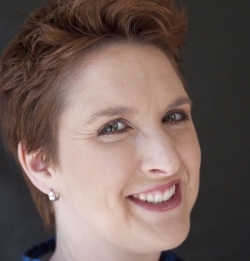
A singer deemed “Superb” by the Los Angeles Times, praised by Opera Canada for her “vivacious stage presence” and “soprano that charms and brightens a room”, the grateful recipient of Opera Hamilton’s Sheila Zack Scholarship for Emerging Artists, Mireille Asselin is a young singer at the onset of an exciting career.
Mireille Asselin with Warren Christie: Magic Flute Diaries
Having taken the title role in Handel’s Theodora with the Bach Collegium San Diego under the baton of Maestro Richard Egarr; Susanna (Le Nozze di Figaro) and Rossignol (Stravinsky’s Le Rossignol) with Yale Opera; and Adele (Die Fledermaus) with Opera Hamilton, last year Opera Atelier introduced Asselin to Toronto audiences as Galatea (Acis and Galatea) and Servilia (La Clemenza di Tito). Asselin made her feature film debut as Pamina in Sullivan Entertainment’s Magic Flute Diaries, released in 2007 when she was only twenty-one. In April 2011 she made her Carnegie Hall debut singing Vaughan Williams’ Dona Nobis Pacem with the Yale Symphony, and returned to Carnegie this January in recital with the Song Continues series.
This year Asselin will sing Beethoven’s 9th Symphony with the Hamilton Philharmonic Orchestra; Proserpine & La déesse Flore with Boston Early Music in their double bill of Charpentier’s La Descente d’Orfée aux enfers & La Couronne de Fleurs; Popera with Opera Hamilton; and Phénice & Lucinde in Lully’s Armide at Glimmerglass this summer.
I ask Asselin ten questions: five about herself and five about her upcoming work with the COC ensemble in Semele.
1) Which of your parents do you resemble (what’s your nationality / ethnic background)?
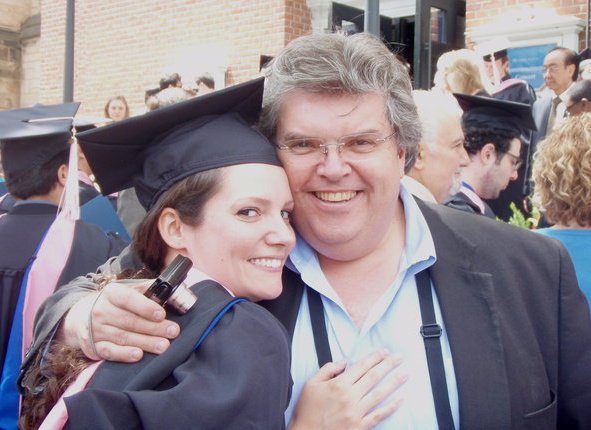
Mireille Asselin and proud father, at her Yale graduation.
I would say that I most resemble my father. Ever since I was born, people would remark on our identical wavy and unruly dark hair, dark eyes and round french face. He’s french canadian through and through, with the first of the Asselin family coming over to New France in the mid-17th century. However, my maternal family would probably make a case for some of the features that I inherited from them as well. My mother is American, with links back to Sweden, Ireland and Wales. In fact, we went to Wales to meet some of our family there in 2002 and they swore I was the template of a dark haired, fair skinned “little Welsh girl”.
My physical features aside, I take after my father in a lot of other ways too: we both are hopeless at remembering names, we learn in similar fashions and he certainly knew how to take advantage of my competitive nature as a child – making a race out of eating my brussels sprouts and doing my multiplication tables. My mother was, and is, the perfect counterbalance to my “Papa” – with her serene strength which gets us through any tough time. She is still my rock.
2) What is the best thing / worst thing about being an opera singer?
The irony of this job, is that all of the things that can be considered the best parts of what we do can also be the worst things on certain days. For example, travel is an amazing perk! We get to travel all over the world for work, for auditions, and for training. I marvel at how much of the world I’ve already been able to see in my relatively short time as a singer, and as someone with a love for discovery and new experiences and learning, this is hands down a “plus”. However, it also means being away from home and loved ones for long stretches of time, often living out of a suitcase, and missing a lot of important normal life events such as weddings, funerals, birthdays or just being able to babysit for a friend when she needs a night off. So some days, travel is a downside.
Another double edged sword is the constant learning and growth. One of the most wonderful and rewarding things about being an opera singer is that we are confronted on a daily basis with the need for self evaluation and improvement. The voice is never “done”. Technique is never “perfect”. There is constant questioning of our artistic ideas, and continuous learning of new repertoire. This is incredible! It is endlessly challenging and stimulating and engaging. But on the other hand, how does one deal emotionally with never feeling that the work is finished? How do you cope with the daily humbling process of auditioning and of fending off self-doubt? I firmly believe that opera singers will always manage to avoid a mid-life crisis, because we have smaller scale ones every day. This is both a blessing and a curse!
3) Who do you like to listen to or watch?
I love listening to Edith Piaf and Ella Fitzgerald. Even though neither of them sang opera, listening to their recordings teaches me about great artistry and great singing. Piaf, a woman of incredible vocal abilities, has the courage to throw beauty of sound and accuracy to the wind. Her singing is heart wrenching because she allows real emotion to creep in. Fitzgerald on the other hand fascinates me with the constant perfection of every note – and that achieved in the innocent days before autotune! She is endlessly witty and when she sings I know I would have loved to have known her as a friend. I think that’s what draws me to these two women – they are uniquely their own artists, and you can hear who they are in how they sing.
4) What ability or skill do you wish you had, that you don’t have?
I wish I were handy. I am always so impressed with people who instinctually know how to fix or build things. I am woefully lacking in this area!
5) When you’re just relaxing and not working what is your favourite thing to do?
I love food, and when I have free time I usually indulge in some sort of food-related activity – either a lazy brunch at my favourite neighbourhood place, baking some sort of extravagant treat or preparing a meal with friends. However, if I can manage some time away from the city my favourite thing to do is to go on a good hike (stocked with a good picnic to enjoy at the end of the trek, of course).
Five more about appearing in the COC production of Semele:
1) How does singing the role of Semele challenge you?
I have found the role of Semele challenging because it contains such a variety of singing styles and requires great versatility. It’s high, it’s low, it’s fast, it’s slow, it’s tender, it’s petty, it’s angry, it’s beautiful. Basically, it asks that every bit of my vocal and dramatic toolboxes be used at some point or another and so it is an incredibly rewarding challenge.
2) What do you love about Semele: both the role & your part in this production?
I love that this opera tells such a modern, relevant story. I think that the reason Greek mythology has endured throughout the ages is because each tale centres around timeless human foibles or behaviours – in this case, jealousy and ambition. And for one of the oldest operas in the standard repertoire, I find it fascinating to see how overtly sexual the characters and the story are. In fact, it embraces what we like to think of as a “modern” attitude to sexuality, which just goes to show that we are not so different from the people who lived centuries before us. On top of all of this, Handel is one of my favourite composers, and he wrote some of his best music for this score. The choruses are grand and moving, and there is such variety in the writing of the arias for each character that when they’re strung along one after another, the listener is really taken by the magnitude of Handel’s genius.
The part of Semele, being central to the whole story, is therefore a wonderful character to play. I’ve really gotten to know the piece inside and out, and the vocal and dramatic challenges of the part, which I spoke about previously, truly make it one of the most fulfilling projects I’ve taken on to date.
3) Do you have a favourite moment in Semele?
My favourite part musically in the opera is a series of arias in Act 2. Juno, Jupiter’s jealous wife, sings “Iris Hence Away!” – a revenge aria which is raucous and electrifying and full of rhythmic spunk…
…and immediately after she leaves the stage we see Semele, all alone, singing “O Sleep, why dost thou leave me?” – a calm, floating aria with the most heartbreaking melody about how she wishes she could just sleep a little bit to soothe her troubled thoughts.
The juxtaposition of these two moments is the perfect example of Handel’s genius. There is such dramatic contrast between the arias that we really understand how different the two women are, and it draws the listener along on a real emotional journey.
4) How do you relate to Semele as a modern woman?
As I mentioned before, this opera really is shockingly modern at times, and so I feel like there isn’t a great divide between myself and Semele. Compared to many operatic heroines, she is not weak and under male rule. Yes, she is set up for an arranged marriage in the first act, but she runs away from the ceremony and goes against her father’s wishes in order to follow her heart. Then, once she is with Jupiter, she again speaks out when she wants something. She talks about how his absence makes her feel, and in the end demands that he give her the one thing that she truly desires – immortality. She is a woman who makes her own decisions, for better or for worse.
5) Is there a teacher or an influential recording you’d care to name whose work you especially admire?
Soprano Monica Whicher
My teacher and mentor is the wonderful Toronto-based soprano Monica Whicher. In the past 5 years, she’s been my trusted pair of ears, my friend, my inspiration and my therapist. I remember her singing Dido (in Dido and Aeneas) on stage with Opera Atelier and thinking: “now there is a true artist”. I’ve been very lucky to have been able to learn from her and hope that she’ll keep putting up with me as I embark on this crazy career!
~~~~~~~~~~~~~~~~
This week Mireille Asselin will appear in the Canadian Opera Company production of Semele: Wednesday May 23rd at 7:30 pm at the Four Seasons Centre.
Later Asselin goes on to the following projects:
Beethoven’s 9th Symphony with the Hamilton Philharmonic Orchestra, May 26th @ 7:30PM (Hamilton Place)
This summer in the roles of Phénice & Lucinde in Lully’s Armide, Glimmerglass Festival, Cooperstown.
Next season with the Canadian Opera Company, in the roles of Adele in Die Fledermaus and Servilia in La Clemenza di Tito
Composer Christopher Butterfield has influenced a generation of composers through his teaching at the University of Victoria, where he is cross-appointed to the visual art department. One time choir boy at King’s College in Cambridge and member of the 80’s Toronto rock band KLO, in the coming months he’ll be singing Socrate, by Erik Satie, and mentoring the Arraymusic Young Composers Workshop. His opera Zurich 1916 was written to a libretto by John Bentley Mays; he is currently translating Théâtre, a collection of three plays by Georges Ribemont-Dessaignes. Compositional work in progress includes a piece for solo percussion and ensemble, for Rick Sacks and Aventa Ensemble, and the never-ending piano trio Madame Wu said… He is on this year’s jury for the prestigious Dutch Gaudeamus International Composers Award, and was a mentor at the Young Composers Meeting in Apeldoorn NL.
Of Contes, Butterfield writes,
“Contes pour enfants pas sages was written just after the war by beloved French poet Jacques Prévert. Eight stories feature animals in various situations with humans and other creatures, some humorous, some absurd, some tragic. It’s certain Prévert intended them for children, but they make you wonder at their purpose – Prévert seems to want his young readers to know that the world is a cruel and unpredictable place as early as possible. Even so, their whimsical nature allows one to remember them as charming, if a little dangerous.
I ask Butterfield ten questions: five about himself and five about Contes pour enfants pas sages: 8 cautionary entertainments.
Composer Christopher Butterfield (photo: Ken Straiton)
1) Which of your parents do you resemble (what’s your nationality / ethnic background)?
I’m definitely a WASP, my father’s father was English, he immigrated to Canada in 1911, to the Creston valley in BC. My mother’s family were from Ontario and Nova Scotia. Oddly, my father was born in the US, and my mother was born in the UK! My dad went into the merchant navy when he was a boy, and then into the RCN after the war. My mother’s father was a career soldier, so I’m very much from a military/naval background. I like to think I’m like my dad, who loved life, poetry, music, dance, people, the sea…
2) what is the BEST thing / worst thing about being a composer?
The best thing about being a composer is being able to create music which does something that one doesn’t necessarily hear anywhere else. It’s not about originality so much as it’s about sonorities – I’m interested in harmony, and relationships that I hope continually surprise the listener. The worst thing is not composing enough. It takes a huge amount of discipline to be a composer, and I’m shiftless by nature. Teaching composition is a privilege, and something that I take very seriously, although my methods might be considered a bit offhand – there are many things to learn about being a composer and music is just one of them.
3) who do you like to watch or read?
John Cage
I buy lots of books, usually on a whim. Sometimes I read them, sometimes I don’t. I read a good biography of Cage recently… also a good autobiography by Carolyn Brown, who danced with Merce Cunningham for 20 years. The last good novel I read was Hans Fallada’s extraordinary story of personal revolt “Every man dies alone”. I used to go to the movies lots, but I don’t anymore. I don’t watch television, or cable, I don’t play computer games, I dont’ have any hobbies to speak of… I don’t listen to recorded music very much… time seems to pass quite quickly regardless. I think what does occupy me are specific projects that I create for myself – I recently sang Satie’s Socrate, which meant I had to actually train my voice (I used to sing a lot, but haven’t for years). And I’m guest curating a show about John Cage at the Art Gallery of Greater Victoria in the fall.
4) what ability or skill do you wish you had, that you don’t have?
I wish I could sail a boat efficiently. I wish I could play the piano. I wish I was a better cook.
5) when you’re just relaxing (and not working) what is your favourite thing to do?
Wandering around downtown. This happens maybe twice a year.
Five more about Contes pour enfants pas sages:8 cautionary entertainments
Jacques Prévert (1900-1977), shown in 1961
1) How does adapting Contes pour enfants pas sages by Jacques Prévert challenge you?
It challenges me in the way any text that I think of setting to music does. I don’t want to be directed by the text, I want to bring pitch, duration, structure, and their resultant melody/harmony/rhythm to bear on the text, such that some kind of synthesis take place, which I’m not interested in knowing a priori. I always prefer to be in the dark, to make an accumulation of events (“music”) associated with a text that, with luck, combine over time to be more than the sum of the parts.
2) What do you love about Contes pour enfants pas sages and this type of composition?
Accumulative Arman
When I was a student, I discovered the French artist Arman. He made what he called accumulations; collections of like or identical objects, that he would organise in very close installations (or, in one variation, the garbage of famous artists). I’ve always liked the idea of musical accumulation; movements or sections or modules that affect one another, but not in any way that I can predict. Contes is composed this way. It’s an accumulation, there’s no plan for its effect, it’s simply a set of eight musical/narrative events which may (or may not) add up to a whole. I’ve done this before: in my opera Zurich 1916, which took 10 years to compose because every time it started to make sense, I would stop working on it; and Jappements à la lune, settings of Claude Gauvreau’s sound poems, which didn’t take quite as long to compose, because the text in this instance was sound poetry.
3) Do you have a favourite moment in the show?
I wish I could tell you that I knew what the show was going to be! I don’t think I have particular a particular favourite – they all have different characters. And two I have never heard before…
4) how do you relate to Contes pour enfants pas sages as a modern adult?
The stories are bitter, funny and absurd at the same time.
5) is there anyone out there whose approach you particularly admire, or who has influenced you?
I like playwright/director Richard Foreman’s work, it amazes me that he isn’t better known. I think Webern’s music is extraordinary, it’s unbelievably moving, WHEN PLAYED THAT WAY (capitals mine). In other words, I think people still see it as an exercise in structure, when in fact it’s the only positive result of post-romanticism, and should always be played with enormous sensitivity. When I was a teenager my favourite music was electric Chicago blues – I love Muddy Waters, and Little Walter… I can’t help but be a product of my upbringing, though: English church music (from my education as a choirboy in the UK), GIlbert and Sullivan (from my dad), and post-war moderns, Cage, Stockhausen, Berio, etc. (from my undergraduate education).
~~~~~~~~
Contes pour enfants pas sages: 8 cautionary entertainments by Christopher Butterfield
with Anne Grimm, soprano,
Benjamin Butterfield, tenor
918 Bathurst Centre (918 Bathurst), May 27 & 29, 2012, 8pm
Tickets ($30 adults / $15 students, seniors & arts workers) available at the door. For more information please visit www.continuummusic.org, email josh@continuummusic.org or call (416) 924-4945
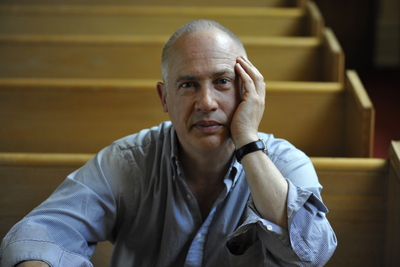
Born and raised in Toronto, Canada, pianist and composer Stewart Goodyear began his training at Royal Conservatory of Music in Toronto, received a bachelor’s degree from Curtis Institute of Music in Philadelphia and completed a Masters Degree at Juilliard School of Music in New York. Now calling New York his home, Goodyear has performed with the major orchestras of the world, including the New York Philharmonic, Los Angeles Philharmonic, Royal Liverpool Philharmonic, Toronto Symphony Orchestra, and the Philadelphia Orchestra, among many.
With a repertoire that includes Bach, Beethoven, Chopin, Liszt, Gershwin, and Messiaen, Goodyear is also known as an improviser and composer. Goodyear’s composition, the fanfare entitled “Count Up”, was performed by the Cincinnati Symphony Orchestra in Spring 2011. Goodyear has released recordings of many of Beethoven’s best known Sonatas on Marquis Classics: Late Sonatas (numbers 28-32) | Middle Sonatas (including the “Moonlight,” “Pastorale” and “Tempest” sonatas) .
Goodyear’s current project is his “Beethoven Marathon,” to be presented as part of the Luminato Festival. In a single day Goodyear will play all 32 Beethoven piano sonatas, which means that between 10:00 in the morning and 11:30 pm at night on June 9th, Goodyear will play for over 10 hours, a feat that as far as I know has never been done before.
I ask Goodyear 10 questions: five about himself and five about the Beethoven Marathon.
1) Which of your parents do you resemble (what’s your nationality / ethnic background)?
The parent I resemble the most is my grandfather on my father’s side. I am a Canadian pianist of British and Trinidadian heritage.
2) what is the BEST thing / worst thing about being a concert pianist?
The best thing about being a concert pianist is doing something that I love and that I have been passionate about since I can remember.
3) who do you listen to or watch?
If he were alive today, I would love to be at a Ray Charles concert. How he combined seemingly unrelated styles of music and created an entirely new music called ‘soul’ is an example of how anything is possible.
4) what ability or skill do you wish you had, that you don’t have?
If I was not a pianist, I would love to have the skill of directing films. I admire each director and how he/she tells a story.
5) When you’re just relaxing (and not working) what is your favorite thing to do?
When I have a little down time, I watch a few scenes from my favorite movies, drink a cup of coffee, and chill to Frank Zappa and Miles Davis.
Five more concerning the Beethoven Marathon.
1) How does the act of playing all of Beethoven’s piano sonatas in a single day challenge you?
The challenge of playing Beethoven in general is to be 200 percent in the emotional zone. Beethoven’s music possesses me to such a degree that I am only aware of my surroundings after the performance is over.
2) what do you love about Beethoven’s piano sonatas?
I love how free and boundless Beethoven is as a creator. He is always challenging expectations and convention.
3) Do you have a favorite sonata?
It is almost impossible to choose a favorite sonata from these 32 gems. If I had to pick one, it would be Beethoven “Funeral March” sonata.
4) How do you relate to Beethoven’s piano sonatas as a modern man?
Beethoven’s sonatas, to me, will always be contemporary and timeless. Every second of his music goes beyond convention of any kind. It goes beyond romanticism, surrealism, minimalism, jazz, pop, and rock. Even in the last sonata, he goes beyond where boogie-woogie would take the listener.
5) Is there anyone out there who you particularly admire, and who has influenced you?
Leonard Bernstein is the classical musician of the 20th century I admire the most. He was inspired by all styles of music, and, just like Beethoven, he defied convention, created his own music, and communicated to audiences of all demographics.
~~~~~~~~
June 9th Stewart Goodyear will be playing all 32 Beethoven piano sonatas as part of the Luminato Festival:
PART 1
(10:00 AM – 2:00 PM) 4 hours, with intermission.
Sonatas No. 1 through 11, as well as No. 19 and No. 20, including the “Grand Sonata” and “Pathétique.”
PART 2
(3:00 PM – 6:30 PM) 3.5 hours, with intermission.
Sonatas No. 12 through 23 (except Nos. 19 and 20), including the “Moonlight,” “Pastoral,” “Tempest,” and “Appassionata.”
PART 3
(8:30 PM – 11:30PM) 3 hours, with intermission.
Sonatas No. 24 through 32, including “Les adieux” and “Hammerklavier.”
Luminato has commissioned internationally acclaimed Indonesian performance artist Melati Suryodarmo to create an on-stage performance piece that will continue throughout Stewart Goodyear’s marathon of 32 Beethoven sonatas. Suryodarmo’s three performance sequences will provide subtle, almost motionless visual enrichment that heightens the listening experience.