Toronto celebrates the artistry of Jessye Norman, Winner of the Twelfth Glenn Gould Prize, with a series of events starting February 11th
January 16, 2019 – TORONTO – Toronto celebrates the life, art and works of Twelfth Glenn Gould Prize Laureate Jessye Norman, the iconic American opera star, humanitarian and civil rights activist, through a series of events starting Monday, February 11th, 2019. Visit www.glenngould.ca for details on all the events.
Divine: A Jessye Norman Tribute
TIFF Bell Lightbox, 350 King Street West
Monday, February 11 to Wednesday, February 13
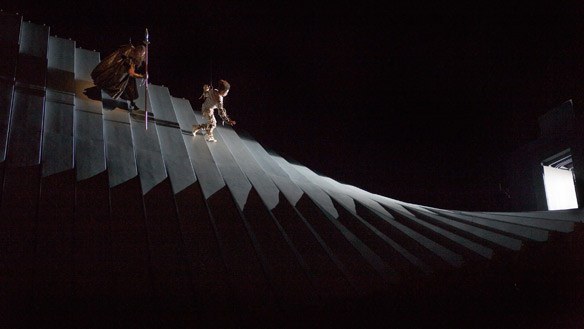
Presented in partnership with the Toronto International Film Festival, this special tribute features three screenings and a candid live conversation with Jessye Norman. Film screenings include: The Tales of Hoffman (1951), directed by Michael Powell & Emeric Pressburger (February 11 at 6:30 PM); Jessye Norman Sings Carmen (1989), a behind-the-scenes documentary directed by Albert Maysles of Norman’s recording of Bizet’s opera with conductor Seiji Ozawa, followed by Oedipus Rex (1993), director Julie Taymor’s theatrical adaptation of Stravinsky’s opera-oratorio featuring Jessye Norman as Jocasta (February 12 at 8:30 PM); Diva (1981), an exhilarating fusion of high culture and pulp thriller directed by Jean-Jacques Beineix (February 13 at 6:30 PM). Tickets are $14 Adult, $11.50 student/senior and $10 Child/Youth.
In Conversation With…Jessye Norman
Tuesday, February 12 at 6:30 PM
This in-depth conversation between Jessye Norman and Canadian Opera Company General Director Alexander Neef will focus on Ms. Norman’s tremendous career in opera, her own experience in film, and the ability of gifted filmmakers to translate the operatic art form into the medium of cinema. Tickets are $23.75 Adult, $19.25 student/senior.
Jessye Norman Master Class
University of Toronto – Faculty of Music
Walter Hall, 80 Queen’s Park
Friday, February 15 at 3:00 PM
Jessye Norman, John R. Stratton Visitor in Music, is one of the world’s most celebrated performing artists and a passionate advocate of arts education. Ms. Norman will lead a rare public 3-hour master class for Voice and Opera students from University of Toronto’s Faculty of Music. The master class is open to the public. Free general admission.
Black Opera – Uncovering Music History
Toronto Reference Library, Bram & Bluma Appel Salon, 789 Yonge Street
Saturday, February 16 from 11 AM to 5 PM
This symposium, presented in partnership with Toronto Public Library, traces the heroic struggles of pioneering artists of African origin to enter the operatic world, their fight for acceptance and recognition, their triumphs and accomplishments.
11:00 AM Opening Concert with soprano Nadine Anyan, tenor Tristan Scott, baritone Korin Thomas-Smith and pianist Angela Park.
11:30 AM Black Voices in the Opera – A conversation with Dr. Naomi André, author of Black Opera and Dr. Gregory Hopkins, Artistic Director, Harlem Opera Theater, moderated by Dr. Melanie Zeck, Center for Black Music Research, Columbia College.
1:00 PM Three Scenes from Black Opera that Changed the History of Music – Dr. Gregory Hopkins and performers from the Harlem Opera Theater.
2:30 PM Not Your Music: A Conversation on Cultural Appropriation – A discussion with writer and broadcaster Robert Harris and Dr. Naomi André.
3:45 PM Concert Performance
4:00 PM A Conversation with Twelfth Glenn Gould Prize Laureate Jessye Norman
Freedom Through the Arts Workshops
In 2003, Jessye Norman helped establish the Jessye Norman School of the Arts in her hometown of Augusta, Georgia, to provide arts education to students from economically disadvantaged neighbourhoods. In 2011, following the presentation of the Eighth Glenn Gould Prize to Dr. José Antonio Abreu, Sistema Toronto was founded to bring the power of music education into the lives of children from the city’s priority neighbourhoods. Partnering with both the Jessye Norman School of the Arts and Sistema Toronto, The Glenn Gould Foundation will bring fifteen students from Augusta to Toronto for four days of workshops and collaboration with the students of Sistema Toronto in what promises to be a transformative cultural exchange.
The Glenn Gould Foundation thanks its Creative Partners of The Twelfth Glenn Gould Prize Celebrations: Canadian Opera Company, Toronto International Film Festival, Toronto Public Library, University of Toronto – Faculty of Music, Sistema Toronto and the Jessye Norman School of the Arts.
These events culminate with The Glenn Gould Prize Celebrates Jessye Norman concert on Wednesday, February 20, 2019 at 7:30 p.m. at the Four Seasons Centre for the Performing Arts (145 Queen Street W., Toronto). The evening features performances by the COC Orchestra, soprano Nina Stemme, lyric soprano Pumeza Matshikiza, tenor Rodrick Dixon, bass-baritone Ryan Speedo Green, soprano Sondra Radvanovsky, mezzo-soprano Wallis Giunta, mezzo-soprano Susan Platts, American jazz singer Cécile McLorin Salvant, and The Nathaniel Dett Chorale directed by Brainerd Blyden-Taylor, with conductors Bernard Labadie, Donald Runnicles, Jean-Philippe Tremblay and Johannes Debus. Viggo Mortensen, Chair of The Glenn Gould Prize Jury, will be among the presenters at the event. Ms. Norman will be present to receive her award at this ceremony.
Tickets to The Glenn Gould Prize Celebrates Jessye Norman gala concert can be purchased through the Four Seasons Centre Box Office and are available by calling 416-363-8231 or online at coc.ca. Tickets start at $45. Gala tickets which include invitations to the post-concert Gala Reception may also be purchased through the Four Seasons Centre Box Office. Sponsored boxes are also available from The Glenn Gould Foundation. Proceeds help to continue and advance the work of The Glenn Gould Foundation.
The Glenn Gould Foundation gratefully acknowledges the support of TD Bank, The Globe and Mail, Azrieli Foundation, Michael & Karen Vukets Family Foundation, Yamaha, Council for Canadian American Relations, Bâton Rouge Steakhouse and Bar, Haynes-Connell Foundation, and gratefully acknowledges the ongoing support of Power Corporation of Canada and BMO Financial Group.
ABOUT JESSYE NORMAN
Jessye Norman made her operatic debut in 1969 at the Deutsche Oper Berlin and has since won acclaim for her performances in a wide range of leading roles with the world’s premier opera companies, in solo recitals and in concerts with preeminent orchestras around the globe. Her exceptional artistry has earned her the reputation as one of the most versatile concert and operatic singers of her time. She has more than seventy-five recordings of her eclectic repertoire to her credit. She is well known for her mastery of the music of Richard Strauss and Wagner, two of Glenn Gould’s favourite composers. Given the exceptional range of her voice, she has sung soprano, mezzo-soprano and alto repertoire throughout her career. Ms. Norman is the recipient of many international awards and honours including The Kennedy Center Honor, five Grammy awards including the Grammy Lifetime Achievement Award for Classical Music, more than 30 honourary doctorates, the NAACP’s Springarn Award and The National Medal of Art, presented to her by President Barack Obama.
A true global citizen, Jessye Norman has sung at two Presidential Inaugurations, President Jimmy Carter’s Nobel Peace Prize Ceremony, Queen Elizabeth’s 60th birthday concert, the 70th birthday concert to free Nelson Mandela (seen by 600 million viewers), the first commemorative concert at Ground Zero following the 9/11 attacks, and was chosen by France to sing La Marseillaise for the bicentennial of the French Revolution.
Known as a devoted mentor and generous supporter of young artists and emerging talent, Ms. Norman is also admired for her humanitarian contributions and her passionate advocacy of arts education which includes helping to establish The Jessye Norman School of the Arts in her hometown of Augusta, Georgia.
ABOUT THE GLENN GOULD FOUNDATION
The Glenn Gould Foundation honours Glenn Gould’s spirit and legacy by celebrating brilliance, promoting creativity and transforming lives through the power of music and the arts with the Foundation’s signature activities, including The Glenn Gould Prize. An international symbol of creative excellence, The Glenn Gould Prize is awarded biennially to a living individual for a unique lifetime contribution that has enriched the human condition through the arts. Prize laureates include Jessye Norman (2018), Philip Glass (2015), Robert Lepage (2013), Leonard Cohen (2011), Dr. José Antonio Abreu (2008) founder of El Sistema, Pierre Boulez (2002), Yo-Yo Ma (1999), Oscar Peterson (1993) and Lord Yehudi Menuhin (1990). For more information visit www.glenngould.ca, follow us on Facebook: TheGlennGouldFoundation or Twitter: @GlennGouldFndn.
*******
“Press releases and announcements” are presented verbatim without comment
I came out of the matinee of Kiviuq Returns: An Inuit Epic in an altered state of reality. It’s new but it’s old, it soothes you even as it challenges you. They set the bar very high for what’s to come in 2019.
See it if at all possible.
Created by The Qaggiq Collective, directed by Laakkuluk Williamson Bathory, produced by Qaggiavuut! and presented in the main space of Tarragon Theatre, I experienced the story as an epic in every sense.
Kiviuq Returns is based on legends shared by elder storytellers.
The performance is partially enacted by six actors (Keenan Carpenter, Vinnie Karetak, Avery Keenainak, Charlotte Qamaniq, Christine Tootoo and Natar Ungalaq), and partially re-told by the elders speaking to us on video. When we see them all gathered for a group shot near the end as the live performers kneel in homage, I was reminded of that beautifully sentimental moment near the end of Return of the Jedi (speaking of epics): also a gathering of wise elders. At times Kiviuq reminds me of clever Odysseus of the Odyssey or Aeneas of the Aeneid, a hero seeking to get home. We see storms at sea killing everyone but the hero. We encounter monsters and lovers.
The entire show is in Inuktitut. I am reminded of opera in the days before surtitles. One would read the synopsis and one listened carefully . While it’s much easier in Italian or German, where one often has phrase & sentences one recognizes, this wasn’t difficult really. The structure of the presentation was such that we regularly came back to a reading by one of the elders, when the lights would come up somewhat, allowing us to check our programs and in effect to know what was coming.
Director Laakkuluk Williamson Bathory
The director’s note recapitulates a theme I’ve heard before (for instance in Jeremy Dutcher’s album Wolastoqiyik Lintuwakonawa ) about the need to reclaim one’s linguistic heritage as a response to cultural genocide:
Inuktitut is the language of Kiviuq Returns. Let it wash over you. Look for the intent, listen for the emotion, hear the cracks of smiles, the lines of sorrow. Feel the corners and curves of our holophrastic way of speaking. Close your glottiss around the sounds “qi-qu-qa” and hiss without using your teeth for “lli-u-lla” Inuktitut is a river; it flows from a lake that is our histories and dreams, it bends around the land that is our daily lives, hardships and joys and it pours into the ocean that is the working of our minds, our creativity. With this performance we immerse you in our language..Inuktitut.
By being together in this theatre, we have all engaged in an agreement: you agree that it is vitally important to hear and see Inuit theatre professionals working in their own language and we agree to work hard on expanding our use of the language, reclaiming the space it has always taken in this place called Canada. As a group of Indigenous people who have faced the theft of our lands, culture spirituality, music, stories, histories and language and who rage against the colonized pull of suicide and loss, we wrap ourselves in the practice of Inuktitut theatre. Our repeated actions on stage are healing. Our connection between our elders and young people is deepened. Humour balances our sadnesses. This play creates safety like the blocks of sod that insulated the houses of our ancestors.
—Laakkuluk Williamson Bathory
I love that the director’s note proposes a kind of contract with us, that our attention at least would suggest that we agree that their language is important to hear, as a project to reclaim what has been lost.
I would solemnly agree.
There is much beauty in this performance. Several images are engraved in my memory, unforgettably powerful. The six performers will hold your attention.
There are at least two things to mention from my classical – opera background.
1-The voices are doing amazing things that we don’t usually hear in the classical realm. More than once, I found myself asking “how do they do that?” Some of it is inevitably related to the way they phonate and speak, but even so, wow. When I recall performances by Tanya Tagaq I am hungry for more, wondering what else these voices can do.
2-The genre of the performance feels something like opera, at least in the broad sense that Robert Lepage used, when he called opera “the mother of the arts” (or some phrase like that), although I don’t think it matters what we call it. Dance, music, singing, masks & theatre all work together in Kiviuq Returns.
And it’s clear when I google Qaggiavuut that they merge tradition with new theatre in exciting ways.
As part of today’s Toronto audience eating it up I know that there’s a genuine appetite here, a hunger to see and hear more.
In past years my annual review was out in December, but this time it’s later than usual: because I’ve had a real holiday this year, more sleep and more silence than usual, dodging the viruses & germs pursuing other members of my clan.
Does it matter? The question has been a recurrent one this year. We’re living in a world that bounces back and forth between films, operas, plays, performances & art containing edgy political commentary and silly escapes from reality. Forgive me if my usual mantra (“I’m a lucky guy”, meant to focus me on gratitude) has been displaced by a phrase I heard from Jessica Chastain on Saturday Night Live early in 2018. (using this url because youtube or NBC have not yet chosen to make the video available to Canadian viewers)
And so it’s been back and forth, between the attempts to be meaningful and the moments of pure silliness. 2018 was book-ended by the two best things I saw all year. At the beginning of the year it was the mad shenanigans in the Talk is Free / Crow’s Theatre co-production of The Wedding Party.
Playwright Kristen Thomson, Tom Rooney, Jason Cadieux (Photo: Guntar Kravis)
Princess Jenora, Hjalmar Pomeranki + Emily Trueheart (Mairi Babb, Eric Woolfe + Lisa Norton), photo: Adrianna Prosser
Thank you to both for so much blissful escapism.
And a bit less silly, but more in the spirit of Chastain’s mantra, there’s The Overcoat, A Musical Tailoring, the remarkable co-production between Vancouver Opera & Tapestry as part of Canadian Stage’s 30th Anniversary Season, James Rolfe & Morris Panych adapting Gogol’s story “The Overcoat”.
Geoffrey Sirett as Akakiy in The Overcoat A Musical Tailoring (Photo: Dahlia Katz); his performance was a highlight of 2018.
I am reminded of another mantra I used to live by, namely “less is more” (pun intended of course). Where others seem to be exploding out of the box of opera in their attempts to be meaningful (thinking especially of Rufus Wainwright’s attempts to show that yes he can write an operatic score, even if the libretto is a travesty), Rolfe and Panych let some of the air out of that fraught balloon: and as a result it mysteriously floats up into the sky. Nonsense sometimes makes sense.
Perhaps it’s the fact that so far I have not learned the lessons of the contestants on that show on the SNL video (above). Has the bar been raised? Good performances (singing –acting- playing an instrument) aren’t enough. I feel hungry for something more, because I’m desperate to see evidence that yes things still do matter.
The films that moved me the most this year all had a political edge. There must surely be films like Isle of Dogs, The Post, The Death of Stalin and BlackkKlansman every year, right? Was it only my appetite that changed this year? Or perhaps the changing times are changing the artists.
Wajdi Mouawad (photo: Jean-Louis Fernandez)
And it’s the same for live theatre. Nothing got under my skin and into my head like the powerful works of Wajdi Mouawad last winter, from his Abduction from the Seraglio at the Canadian Opera Company, his film Incendies (several years old, but found in the library) and his play Scorched, presented in March at the University of Toronto.
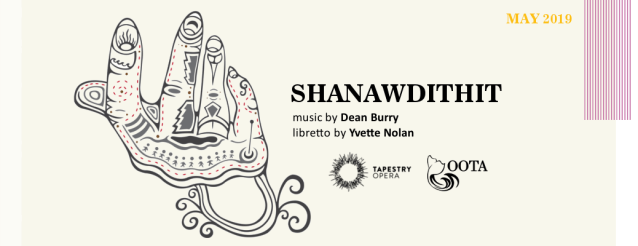
The conversation and quest for reconciliation with indigenous peoples seems to be ongoing when I look back at shows such as Victor Davies’ Ecstasy of Rita Joe presented by Opera in Concert / Voicebox, Jeremy Dutcher’s concert at RBA (launching his brilliant CD Wolastoqiyik Lintuwakonawa ); I Call Myself Princess, Jani Lauzon’s new play with opera (a collaboration between A Paper Canoe Projects, Cahoots Theatre and Native Earth Performing Arts) and the workshop of Shanawdithit, a new opera being developed by Tapestry Opera and Opera on the Avalon in partnership with Native Earth Performing Arts, music by Dean Burry & libretto Yvette Nolan.
Brilliant native artist Kent Monkman put in an appearance in the summer, another wonderful show full of irony, wit and pain.
There were other moments with a political edge, such as Yom Shoah, a concert of remembrance for the Holocaust from Sara Schabas featuring Jake Heggie’s Another Sunrise; Safe Haven an intriguing multi-media performance exploring the ideas of exile & welcome from Tafelmusik curated with love & intelligence by Alison Mackay; a semi-staged performance of Stephanie Martin’s new opera Llandovery Castle, the concert presentation of Yiddish Glory , and the CD that I reviewed a few weeks later, BOUND v 2 from Against the Grain Theatre alongside their new recording of Ayre (capturing a wonderful performance from late 2016), Atis Bankas giving us a remembrance of Kristallnacht in concert; and finally Helen’s Necklace in a new translation, presented by Canadian Rep Theatre.
Forgive me, I mean no disparagement in foregrounding my hunger for something political, and thereby excluding some excellent work.
I’ll have more to say in a moment about the many other outstanding performances of 2018, but first wanted to call attention to those who were missing. First after an intense summertime farewell to Peter Oundjian, I was surprised at how keenly I felt his absence this autumn from the Toronto Symphony. And second, Jennifer Nichols had some misfortune last spring and perhaps as a result, hasn’t been quite the ubiquitous presence onstage that she had been in previous years.
Other highlights of the year?
• H̶a̶m̶l̶e̶t̶ from Tarragon: a successful telling of the story
• Anna Bolena from the COC, the best singing of the year, and thank you Sondra.
• Orphée+, another celebrated production from AtG.
• Of the three wildly divergent productions of Candide I saw in the first half of 2018 aka Leonard Bernstein’s centennial, the Toronto Symphony’s semi-staged production was the most effective & the strongest argument in defense of the score.
• The Return of Ulysses from Opera Atelier, thinking especially of Mireille Lebel as Penelope, the MVP performance of the year raising that production to another level.
• Mass in B Minor from Tafelmusik especially Charles Daniels
• Hockey Noir was a great idea at least.
• Orfeo from Toronto Consort, especially Charles Daniels again
Tenor Charles Daniels (photo: Annelies van der Vegt)
• Another new company has taken its place in Toronto, namely Tongue in Cheek productions. They gave us two fascinating events, namely Winterreise, with 24 singers instead of one, and Verbotenlieder from a female group of performers.
• Actéon & Pygmalion from Opera Atelier were wonderful in so many ways. It’s a curious irony that after so many years when OA have been (rightly or wrongly) associated with a homoerotic aesthetic, that these 2 erotically charged operas should arrive at exactly the moment when the COC were presenting a pair of operas by gay composers.
I’d like to think that we’re sufficiently mature now that sexual orientation isn’t such a big deal. But oh wait…. next paragraph.
It’s 2019. Will this be a year vacillating between silly and serious, meaningless or meaningful? Forgive me if I oversimplify, I miss a lot. We’ve had the Ontario election and the rapid-fire actions of the new government, and guess what!? there’s another election coming in the fall that might be every bit as overwhelming, as frustration with a liberal government leads to a mindless stampede off a cliff. Are we better off without Kathleen Wynne? And why was she and her party annihilated. I fear it was at least partially motivated by an over-reaction to her sexual orientation, as I thought she was doing a good job.
I miss you Kathleen Wynne
You won’t persuade me that things are better now under the Conservatives. Arts funding & support for the CBC are not part of the conservative agenda, and so I’m very nervous about what’s ahead if Scheer takes power federally.
Have I scared you yet?
And when I can’t take it anymore, I hide out in beautiful performances such as Tafelmusik’s Beethoven concert in the spring or various takes on Messiah, each wonderful in their own way.
At least they haven’t taken away our hiding places.
You can change the location but the song remains the same. Tafelmusik Baroque Orchestra & Chamber Choir led by Herr Handel himself gave us their annual sing-along Messiah.
The previous 37 have been at Massey Hall, but this time renovation forced us into Roy Thomson Hall instead.
Playful old George Frideric had some fun with the name of the venue. Last year he called it “Roy Rogers Hall.” This year he got a little closer, calling it “Tom Thomson Hall” before finally explaining who Roy Thomson was, admittedly with help from above.
Herr Handel stares off into space, disconcerted to receive a special message telling him that no it’s not Tom Thomson Hall.
Above? The telegram is ostensibly from the creator, and helped set Herr Handel straight. He also told us that when God is displeased he addresses him as “George”. Because as we all know, God is an Englishman.
I had a bit of an epiphany, and not because the creator sent me any special messengers. No, I was just taking it all in, in the lobby, in the bathroom, in my seat, wherever I went, I couldn’t help noticing the nerdy energy.
I had observed the special audience this past Wednesday at Tongue in Cheek’s Verbotenlieder: everyone at Lula Lounge knew the music being presented. But that small gathering of aficionados was nothing compared to what we saw today at Roy Rogers Hall.
If people can sing Bohemian Rhapsody (and they did so long before the film about Freddie Mercury) or Rocky Horror Show or Mamma Mia: why shouldn’t we do it for Messiah? This crowd of 2000 + armed with scores and seated by section are riding the same kind of high, except we get a bit of extra juice from the Christmas Season.
I feel like a bit of a fraud, I must say. I’ve stopped being a paid church-choir soloist because my singing isn’t what it used to be. While I still can honk out a few high B-flats if necessary (and church solos never get anywhere near that high) I used to have a D-flat, a C, a B…but gulp no longer. At one time I could sing through all of the Messiah choruses without getting very tired, but that was then. Now I am a spent force by the time of the tenor high ‘A’ on the last page of the “Amen” (that echoes the soprano ‘A’ a bar earlier). This year, just like last year, I sat in a mixed section rather than among tenors because I wasn’t sure what I’d be able to hit. At times I had to falsetto my high notes because I was just too pooped.
Yet the people sitting nearby were so gracious it’s amazing. It was a very Toronto kind of moment, to feel such warmth from total strangers, even as I was grateful to be there at all. People are nice here and you really see it at events such as this.
Aiding and abetting the warmth were the four soloists.
Tenor Charles Daniels gave us the first solos. I wonder if someone has ever done a dissertation on the ways in which one sings “Comfort Ye”, as today’s examples from Daniels were exemplary. In his improvisatory passages, themselves a brief sermon on taking comfort from the good news he brings, I heard the most remarkable bold explorations of comfort and peace, as enacted in his few calming notes. And in the cadenza to finish his opening aria “Ev’ry Valley” I believe I heard the highest note I’ve ever heard interpolated, namely a brief high B. It’s a bit of a mind—boggler that the baroque virtuoso impulse that might direct our gaze to the soloist as a showoff is so perfectly compatible with the message in the text: when carried out by someone as scrupulous as Daniels.
Krisztina Szabó might be the most versatile singer I know in Toronto. One of the go-to performers when it comes to new music, having made her mark at Covent Garden recently in George Benjamin’s new opera, that doesn’t preclude regular appearances in works such as Messiah. Hers is a voice and a mind of great accuracy. To this day I’m certain I’ve never heard her sing off pitch. As with Daniels, there’s a textual integrity alongside the musicianship. I was not surprised to find myself tearing up as she sang “Behold your God”, barely able to sing because my voice is all coming apart and emotional as we (the chorus, on the very next page) answer about good tidings. It’s such an insane thrill to be singing in the same show –admittedly from the 2500 or so in the audience—and not like anything else I know of. It’s a good thing there are so many other voices to cover up my mistakes.
Similar pleasures lie in wait when we meet our soprano, Sherezade Panthaki. The recitatives of the soprano telling of the shepherds & angels on Christmas Eve are some of the most remarkable writing of anything from Handel. No it’s not Wagner, but wow, the music has such suspense and excitement, the pace & the accompaniment raising one’s heart-rate even before she sings “And suddenly there was with the angel a multitude of the heav’nly hosts, praising God and saying…“ Much as I enjoyed watching this performed a few days ago by the TSO, there’s no comparison between watching, as opposed to following this in your score, and then getting to answer as part of a huge multitude singing “Glory to God, glory to God, glory to God in the highest!… and peace on Earth”. It’s also very cool that the tenors are (I think) the only section who get to be BOTH in the higher voiced group saying “glory to God” as well as the calm answering lower voices saying “And peace on Earth”. Yes I know it’s a vicarious thing, just like what I spoke of on Wednesday, the envy of one who wishes to be in the show. The singalong impulse is the most natural thing. Of course Panthaki sounded marvelous, although it’s hard to be objective about such things when you’re singing such exciting music.
Likewise baritone Drew Santini: who sang the solo number that received the highest applause, as with last year’s singalong. “Behold I tell you a mystery” followed by “The trumpet shall sound” is one of the climactic numbers in a work that goes far beyond telling a mere story. I remember the first times I encountered this number played on historically authentic instruments, as you find in an ensemble such as Tafelmusik: when there were fluffs aplenty. In those days the trumpet did indeed sound: but not necessarily in tune. The Toronto Symphony could always be secure in the knowledge that their sound—from modern valved brass instruments—were at least more accurate in intonation. That was the trade-off in the old days: that while modern isn’t what Handel had, at least they’d play it right, and sounding better than the authentic instrument. But I don’t think that logic applies anymore, not when Tafelmusik have someone who can play the old style trumpets brilliantly.
Excuse me if so much of this review seems self-centred, as though I’m reviewing myself and the way I sang the choruses of Messiah. My head was mostly down in my Novello score, at least during our choruses. When we were singing of course that means we couldn’t hear the Tafelmusik chorus as well as we would had this been a regular Messiah. They’re a magnificent ensemble, who we could hear and rely upon to help us when we got lost (as I did a couple of times when I didn’t turn the page fast enough). They’re accurate & have a beautiful sound. I should also mention that other Tafelmusik namely the orchestra. Of course I think they sounded great, and again I wasn’t paying them much attention, even in the solo numbers.
Next year I want to do this again, but I will look the music over, making sure I actually know my part. If you’re a church chorister or soloist who knows some of this music, you should consider taking in the Sing-along.
Soloists (l-r) Sherezade Panthaki, Krisztina Szabo, Charles Daniels & Drew Santini, taking in one of Herr Handel’s tirades. AND the program reminds us: “Any resemblance of Mr Handel to any persons living and/or dead, in particular Tafelmusik Chamber Choir director Ivars Taurins, is unintentional, bot not entirely coincidental.”
I had the exquisite pleasure of going to Lula Lounge tonight for Verbotenlieder, Tongue in Cheek Productions’s latest extravaganza.
The premise as I understood it from my recent interview with TiC co-founders Aaron Durand & Michael Nyby is an extension from what they did in their 24-man Winterreise. On that occasion earlier this autumn, TiC did something transgressive; instead of a song-cycle interpreted by one man in a concert setting, they assigned each song to a different person, and in a bar with food being served.
Michael Nyby and Aaron Durand, co-artistic directors of Tongue in Cheek Productions
They took it further this time. Instead of 24 baritones, you had a group of women, and the transgressions were of the gendered sort, women singing rep that is usually sung by men. Oh and they said something I haven’t heard previously, encouraging us to use our phones throughout, to share it through social media. For me that’s a first although I chose to leave my phone aside while singers were singing.
And I think (as I continue to wrestle with a question my wife posed earlier tonight) I know the answer. Why is this event called “Verbotenlieder”?
…which I translate as “forbidden songs”.
Was anything really forbidden? Or is it perhaps a tendency in classical music for people to get up in arms about, pardon me, nothing at all? I think the name was a tease and a provocation, another German compound word like Winterreise telling you that this is meant for a special nerdy audience, a silly thing to have fun while we all get drunk listening to one another.
What would usually be a kind of box-office suicide worked like a charm. The place was jammed, the audience louder by far than last time: possibly because a big chunk was comprised of Winterreise veterans.
No you don’t mention Fight Club: but perhaps something similar is at work.
This was not for your usual audience. The whole thing was a series of in-jokes.
We watch two women singing “au fond de temple saint”
We listen to the daughter of the most famous Canadian interpreter of a famous Italian aria singing it impeccably
We watch a pair of singers undertake the Grand Inquisitor scene, arguably the greatest pissing contest in operatic history, but without any actual testosterone.
Now of course I know some people who probably wouldn’t have approached such an evening the way I did. Pardon me if I decided to have fun. I was at the Messiah last night (fun), and watched a grand-child’s school pageant this afternoon (also fun). Does one show up with stipulations, insisting that this person’s fach is wrong for what they’re trying to sing, or that a woman shouldn’t sing a particular aria or song?
Perhaps: but if you worry that the fach is wrong for the singer
YOU MISSED THE POINT
If you quibble or have stipulations
YOU MISSED THE POINT
if you didn’t let yourself eat drink and be merry?
(okay I understand some mustn’t drink… I never do when I have to drive).
The show I saw tonight was therapy. There isn’t enough work for all the talented singers in this town, or indeed in any town out there. What we saw tonight was a colossal finger jabbed in the direction of those who make the rules, of those who are uncomfortable with experimentation.
They’re called “Tongue in Cheek” for a reason. That being said, there were plenty of serious moments. I did actually shed a tear watching “kuda kuda” sung by Natalya Gennadi, beautifully sung and acted. I laughed loudest at Beste Kalender’s brilliant re-imagining of “Erlkönig” (a drinking game! Divide the audience in three, based on the three characters in the song, and take a sip whenever you hear yours –Vater, Kind oder Erlkönig—mentioned). Did I say I was sober? Tonight fortunately Erika was along so I didn’t need to drive.
Although come to think of it, Brittany Cann gave Kalender a run for her money (as funniest), in her brilliantly inebriated finale to the Ravel cycle “Don Quichotte à Dulcinée”.
It was a team effort, including Elina Kelebeev and Natasha Fransblow, pianists, stage direction by Anna Theodosakis, and several creative (hilarious) departures from the original text. Here’s a link to the page where you can see it all listed, all the names of repertoire and the singers & musicians.
It was a funny night, to be upside down inside the rep. I’ve played so much of this music (for instance, I recall my brother singing the aforementioned Ravel cycle), sung some of it too: often knowing full well that internal sense of the forbidden, picturing the scolding fingers, the wrinkled noses. No I shouldn’t sing Wagner or Verdi. Do I embrace transgression? I sang the Four Last Songs at a recital and just to be really nerdy and weird, I played the accompaniment too, knowing full well that I was not supposed to do it (celebrating the 50th anniversary of the composer’s death: but it was fun).
And what I couldn’t miss was the sight of the supportive artists screaming for one another, eating it up and standing in solidarity, for everyone’s right to break the rules.
Everyone on stage for a final bow.
There may also have been some practical purpose too, when I saw some of those in attendance, enjoying the great singing but also nodding, making a note for future shows: where they might engage one of these brilliant women. It was a showcase of vocal & dramatic talent.
To have singers boldly go where they weren’t supposed to go, a bit like Captain Kirk..? Like I said, it felt like therapy. While this one may be hard to top, I think Aaron & Michael may be on to something. I’ll be intrigued to see what TiC do next.
Toronto is Messiah town, as I’ve joked before. Handel’s most popular Biblical oratorio is everywhere at this time of year.
Tonight I took in the second of six offered this week by the Toronto Symphony, the Toronto Mendelssohn Choir and soloists under the baton of Johannes Debus, the Music Director of the Canadian Opera Company. We’ve heard him lead operas at Four Seasons Centre, I wondered what he’d be like leading an oratorio down the street with the TSO & TMC.
And in fact it was the cleanest clearest Messiah I’ve heard at Roy Thomson Hall.
Part of the credit must go to the deployment of this small orchestral ensemble on the stage. As you can see from my photo, there are all sorts of bare surfaces to reflect the sound, both floor and walls.
The Toronto Symphony & Toronto Mendelssohn Choir just before Messiah began tonight.
That’s a big deal when you compare this performance in a space seating 2600 to what we might get at Koerner Hall, and its 1300 seat capacity. To put it bluntly, as I sat there with my friend Russ, I asked him to imagine the same energy that he and I must share in the big hall, vs the same energy given to just one person instead, as it would be in the smaller space. I’ve been to other Messiahs in this hall where the best moments were the bombastic attempts to raise the roof, but where anything subtle seemed to be asking too much.
Ah but Debus and his team at the TMC (David Fallis & Ezra Burke) accomplished a miracle. Attacks and enunciation were crisp, but the big difference was in dynamics. We often heard choruses sung mostly at moderate dynamics rather than loudly, including that one we always listen to standing up, namely The Hallelujah Chorus. And Praise the Lord, it was a moment of great beauty as it gradually built to the final big chords.
Most of the choruses offered a similar display of intelligence & artistry, whether it was Debus or the TMC preparation by Fallis and/or Burke. My favourite chorus is “Lift Up Your Heads”, a wonderful bit of dramatic dialogue between sections, that builds inexorably to the end. I was thrilled to hear such a lucid exchange of phrases between sections.
Debus carefully reined back the orchestra who rarely ventured past mezzo-forte all night. Our ears were given a rest, able to hear the gentlest phrasing of a soloist. Everyone had their moments.
Allyson McHardy opened Part II with “He was despised”, Debus carefully following her delicately eloquent phrases.
Claire de Sévigné was lovely in the Christmas Eve segment of the angels’ appearance; her smile was the cherry on top.
Tyler Duncan uttered the words “Behold I tell you a mystery”, and as he went up for the word that ends the sentence, his voice was unexpectedly delicate, a wonderful enactment of what he was describing.
Andrew Haji alas was competing in my section with someone who took “comfort ye” literally and thought it meant “tear open your packages of food”. Why Lord why? But Haji was a marvel in a brisk reading of “thou shalt break them”, the orchestra seeming to laugh sardonically in accompaniment.
The TSO and TMC under Johannes Debus continue their brilliant take on Handel’s Messiah at Roy Thomson Hall Wednesday, (Thursday off) Friday, Saturday & concluding with a Sunday matinee.
I saw the opening night performance of Will King’s From the Water, presented by Seven Siblings Theatre at Tarragon’s Extraspace.
A rush of responses across several categories helps me to write. It’s wonderful to be moved, to be excited on several fronts.
From the Water is Will King’s first play, an impressive piece of work. I am almost stunned, disbelieving, because this is a remarkable first play on several fronts.
For ninety minutes we’re swept into a world not quite like our own, science fiction that is speculation and conjecture rather than effects or monsters. Sure there are similarities to our own lives, in their pizza flavours or the DVDs they watch. But in a few crucial ways it’s a world that’s not like our own.
And what’s especially magical is the dramaturgy. They can’t make this world happen using CGI. It has to be story-telling and good acting, and we’re plunged into this world from the first line of the play.
There is one other thing that’s not mentioned anywhere in the program namely sound design (or music composition if you prefer): which I will ascribe to Will King, the playwright. Because he said in his recent interview that he creates music, I’ll consider him the likely creator until someone tells me differently. The extra magic in the sound helped animate their stage.
Will is also one of the four actors (also Shawn Lall, Anna Silvija Broks, and Hilary Wirachowsky) bringing From the Water to life. As I prefer to go spoiler-free (no I won’t give it away) I can’t say too much. The Tarragon Extraspace is a tight little venue that leaves little room for error. While the blood that I saw spilled from my front-row vantage point might have been fake, I was still jolted, still totally persuaded.
I’m reminded a bit of a great old sci-fi thriller from the 1960s, namely The Day of the Triffids, a film whose greatest power came in suspenseful dread of what might happen rather than in explicitly showing us what we feared. It’s actually better not to see too much. And that means, the commitment of the performers makes us care what happens to them. We care because they make us believe.
An added wrinkle in the text is something that Kafka likely would have admired, namely a kind of existential humour in the exposition of an absurd world. Working from first principles we are confronted with the simplest of predicaments, the breakdown of communication due to a complete lack of life experience.
If you’re a brand-new clone, what do you really know about anything? Its simplicity is wonderfully elegant, to be clueless because you’ve just come into the world.
Seven Siblings Theatre Artistic Director Will King
The gormless innocence you see in this smiling picture of Will King is perfect for the role he’s written for himself, one he understands from the inside out.
It’s a superb performance.
All four of the actors make this alternative world live, under the guidance of director Erik Helle. While there are suggestions of a dystopia we could be in any local suburbia, one that is under attack from something that’s not fully explained.
In most science fiction doesn’t the jargon, the unrelenting complexity drive you nuts? To set it all up, for you to buy into that world, normally there’s way too much exposition, way too much of a premise, that requires the creation of a huge explanation before we can even start. Oh but that’s not what we get here. The people in this world are simply inside this puzzle, and struggling to figure it out, and so of course they are not spouting big words and fancy language. Nope. They are properly overwhelmed and freaked out.
And that makes it much more believable than what one usually encounters, because it’s true from the inside out, viscerally authentic.
I’m still a bit shaken, as I write this a couple of hours later.
From the Water continues at Tarragon Extraspace until Dec 16th.
Will King is a graduate from the BFA Acting program at the University of Windsor. With training that includes the Moscow Art Theatre School, & workshops at R.A.D.A. the Stratford Festival, and the S.I.T.I. Company from New York, he is also a certified teacher of the Michael Chekhov Acting Technique (GLMCC).
Seven Siblings Theatre Artistic Director Will King
One of the founding members of Seven Siblings Theatre, Will’s first play From the Water is set to open Dec 12th at Tarragon Extraspace. Busy though he’s been we managed some Q & A about himself, Seven Siblings and the new play.
Are you more like your father or your mother?
I’ll be careful here… My parents are both artists. So I guess I can blame some of my art addiction on them, although neither of them comes from the theatre world… so maybe that’s all on me. My mom is a piano and music theory teacher, and worked as a music and choir director for a long time. My Dad is an architect and bass player. Music was always a big part of my life growing up, and my family is a strong supporter of the arts. I still create music, and DJ sometimes, but I fell into theatre pretty quickly, and I’ve been obsessed with film since I could breathe. My parents are also both self-employed, so I think subconsciously I always thought it was possible to succeed in a field without a concrete career path.
What is the best or worst thing about what you do?
I think that’s for others to decide!
I’m going to keep pursuing this type of storytelling until the day I die, so in my mind, I don’t think it matters what I’m best or worst at right now. I’ve got a high expectation for myself, and I always try to do my best work, so I’ll just stay focused on that. But I will say I have an impractical variety of interests, both professionally and personally. I’ve worn almost every hat in theatre (actor, director, producer, writer, acting coach, choreographer, stage manager, sound designer, photography, marketing, publicity, box office, projection design, etc. etc….). Acting is the priority right now. It’s what makes me happiest, and that’s the career path I’m working on.
Realistically, the worst thing I do is burn out. I frequently wish I had an extra day in the week. It’s the reality of juggling a lot at once, but one day, if I’m really lucky, I can spend all my time doing this stuff, and the day jobs can fade away.
Who do you like to listen to or watch?
I’m a sucker for Sci-fi, and I’ve really doubled down on that recently. I guess this play is really evidence of that! I’m a film nerd. I get excited about seeing films before the reviews come out and making my own opinions at film festivals. I love Guillermo Del Toro, Ridley Scott, Kubrick, Miyazaki, Barry Jenkins, the Coen Brothers… I thought Clair Denis’s new film High Life was the best thing I saw at TIFF this year. There’s some great stuff on TV too, I just don’t have enough time to watch it all. I made time for Westworld though!
I’m really into electronic music. Not exclusively, I think all genres of music have merit when executed properly, but I’m really drawn to electronica. I think it’s the music of our time. It allows for the most experimentation (besides maybe jazz), and provides the best opportunity for pure well-crafted composition. I think people have this idea that it’s rigid and repetitive, but I find the opposite to be true. You’re free to play in a full and specific range of frequency, rather than just 12 notes, and you can make an instrument out of anything. ANYTHING. Every year I see a new instrument that makes my jaw drop. Radiohead, Robotaki, Arcade Fire, Kaytranada, and The Gorillaz have gotten most of my ear space for the past month.
In terms of theatre, I want to see work that’s specific, passionate, transformative, engrossing, and grounded. Every story is worth telling if you do it in the right way for the right reasons!
What ability or skill do you wish you had, that you don’t have?
Retention. I’m terrible at remembering facts and dates. Trivial pursuit is my nightmare. I always want to know more about the why than the when, and it just doesn’t stick.
The power of flight would be cool. I’m afraid of heights, but I probably wouldn’t be if I could fly.
When you’re just relaxing and not working, what is your favourite thing to do?
I like staying in and watching a hockey game with my dog Banksy. I latched onto hockey as a healthy hobby when I was in theatre school. It’s something I admire and have zero actual stake in. I was raised a Leafs fan, and now I think it’s finally starting to pay off.
You’re a member of Seven Siblings Theatre (you can read their mission statement here). Please explain the origins & meaning of the company’s name.
It comes from the Michael Chekhov work. There’s an awareness of the Four Brothers (the actors’ feeling of ease, form, beauty, and the whole), and an exercise called the Three Sisters (where you discover inner rising, falling, and balancing). Together they form “Seven Siblings.” It’s like an abstract family picnic. It’s easy to remember, and I think the name has really helped ingrain our values into our identity.
Michael Chekhov boiled down a lot of ideology into clear, simple, psycho-physical exercises. He got the body and mind working together to make practical choices, and ultimately he created the most inclusive technique I’ve ever learned. It gives depth to my work, it challenges me to concentrate and actively engage my imagination in a practical way, and it’s FUN! It reminds me why I love acting.
I saw in a press release that you describe your work as “Fantastic Realism”. Please explain what that means.
Fantastic Realism can be supernatural, larger than life, existential, absurd, or explosive, but it must be grounded in the world we live in. It’s not strange for its own sake, it exists to reflect our realism back to us, in whatever style serves the piece or the artists that make it. These worlds allow ample imagination for both actors and audience members, and evokes imagery that surpasses everyday naturalism.
To quote Andrei Malaev-Babel in To the Actor, Michael Chekhov “always realistically justified his character, both emotionally and psychologically. His characters remained complex human beings, but perhaps the kind of human beings one mind see in a dream or imagine in their fantasies. That is why, in the eyes of the audience, these characters often manifested universal ideas, such as life and death, love and hate, beauty and ugliness.” By exploring with myth, nature, and fantasy the actor can engage in archetypal storytelling and elevate their work with fundamental clarity.
Please put From the Water into context for us, as a piece done by Seven Siblings Theatre.
The show both stylistically and thematically is a culmination of my interests. There’s a bunch of easter eggs for film nerds, and my pop culture references flow through more than I originally realized…
The play is a domestic drama in a supernatural crisis. Downfalls (supernatural storms) are causing mass disappearances around the world, and it’s believed that hyper-evolved creatures are wiping out the human race during the blackouts. To combat this epidemic, humankind has started cloning capable people, and fighting back for dominance. That’s the world and the given circumstances. The play itself focuses on the lives of Alex (the mother), Peter (her son), Ava (the abandoned), and a few other characters… Alex wants to stay, Peter wants to fight, Ava wants closure, and the Numbers are preparing for extinction.
The piece is a textbook definition of Fantastic Realism (see above), and I think Madryn, Erik, and I are all deeply connected to the power Science Fiction can bring to theatre.
Seven Siblings has produced over a dozen shows within our mandate, but by building one from scratch I think we’ve really been able to capitalize on what make our medium valuable.
Seven Siblings Artistic Producer Madryn McCabe
Please elaborate on the team bringing From the Water to life.
Erik Helle – who I respect and trust more than most people in this world – is directing the show. He’s been involved since the staged reading of the play, and he has really helped me find simplicity and clarity in the storytelling. I’ve rewritten the ending of this piece several times, but it was only when he stepped on board to direct, that we found an ending that satisfied the characters I’d created.
Madryn McCabe, our unflinching producer (and co-owner of Seven Siblings), has made this possible, and having her support and confidence as I explore this uncharted territory as a playwright has been a great gift.
Will King (left) and Shawn Lall
Our actors (Anna Silvija Broks, Shawn Lall, and Hilary Wirachowsky) have been extremely helpful in defining the play. They’ve given open and informed feedback, while respecting the agency I have over the super objectives and story archs, and I have a tremendous level of gratitude for their contributions.
Stage Manager Giulia D’Amanzo with Director Erik Helle.
Our production team is also loaded with superstars. Our Stage Manager Giulia D’Amanzo has been an invaluable second pair of eyes and ears for the work, and Chin Palipane is making some sweet sweet theatre magic on the lights. My Dad (Stephen King) has helped us make an actors playground with our set, and Nate Bitton (my favourite Fight Director in the city) has put his work into the show as well.
Will King and Shawn Lall
I’ve never done this before. I’ve never written a play of this length, or performed in something that I wrote being directed by someone else. Having the level of support that I do from this team is insane to me. And I know this all sounds really melodramatic, but it’s true.
In the press release From the Water is described as a “grounded science fiction thriller”. Can you compare it to any other sci-fi we might recognize?
It’s more like Bladerunner or Black Mirror, less like Doctor Who or Flash Gordon… There’s dark comedy, but it’s not campy. The characters in this play are people that we could meet in real life. Regardless of the extreme circumstance of their being, I hope there’s a sincere vein of truth to them. They’re archetypal, and hopefully through framing that we see reflections of our self. Yes, there’s creatures and clones, but it’s a play about human beings, evolution, family, and the value we place on being “an individual.”
Please talk about the development of From the Water.
I started writing the play about two years ago. I was really attached to the idea of clones. It used to be a two-hander. More of a “war play.” The stories morphed and expanded since the first spark of an idea, but I think the inspiration is still in there. We’ve done some exploration with Madryn and the Michael Chekhov work to discover character, and define the relationships within the space, but really it’s been a steady grind on clarity and text work. More than usual for us. I think we all want to be really specific. We’re deep in the trenches of the scenes, and we’re trying to give it everything we’ve got.
Do you have any influences / teachers you would want to mention?
Lionel Walsh
I’d like to thank everyone that has taken the time to see us, and to bolster our company. Everyone who has contributed to my skillset as an actor, writer, and artist on the whole. And a BIG shout out to the Great Lakes Michael Chekhov Consortium, and Lionel Walsh! Because without him, this company wouldn’t exist.
*******
Will King’s new play From the Wateropens at Tarragon Extraspace December 12th. For information & tickets click here.
Aaron Durand + Michael Nyby = Tongue in Cheek Productions.
No that’s not a formula but come to think of it there is a curious creative chemistry, a tendency to energize. I find it exciting to talk to them, and frankly have been totally fascinated by their initial projects.
First came Winterreise, a song cycle they handed to 24 singers. My my but there was a lot of testosterone, to say nothing of the talent in Lula Lounge that night back in September.
The final ovation for Winterreise, when suddenly all those singers came out at the same time.
And now they’re handing the stage over to women for Verbotenlieder on December 19th. If you want to find out more about Michael Nyby or Aaron Durand, click the name to go to their respective pages.
But first? I need to ask them some questions.
BB: Are you more like your father or your mother?
AD: I think I’m a hearty blend of both, because Mom and Dad shared a lot of qualities. Both of them are the kind of people who “just get it done”. If work needs doing, do it now and don’t wait for perfect timing. This has tempered my tendency to be constantly living inside my head, and given me something to cultivate. Yay, adulting.
My dad has an innate sense of comedic timing, a love of zany things (we all watched Animaniacs together), and no sense of shame. Great things for a performer to grow up with! My mom always pushes us to work hard and aim high (arguably more important!). Most special to me is the idea of unconditionally supporting the people you love. I was–am–incredibly lucky to have a family that supports what I do without reservation or pause. They do so simply because that’s what you do. I try hardest of all to emulate that.
MN: I don’t think I’m more like either one of them. I suppose I try to emulate both of their best traits, with varying degrees of success. My path has been extremely different from either of theirs, but they have never questioned a single decision I have ever made in my adult life. But if pressed, I suppose I’d have to say my Dad. We share the same hairline and propensity to make silly faces at cameras.
BB: What is the best or worst thing about what you do?
AD: Best: the people in this industry are beautiful. Inside and out. They crack open their ribs daily in order to feed their own heart to this art, so they become these incredibly complex people with incredible stories and personalities.
MN: I completely agree with Aaron on this one. I’ve made a lot of good friends over the last decade or so as I’ve been working as a singer, and Tongue In Cheek Productions has given me the opportunity to interact with those friends in a new light. We’re quite early in our tenure, and aren’t really sure what Tongue In Cheek will eventually grow into, but so far we’ve made both our productions collaborative efforts between our performing artists the two of us wearing the production hats. We’ve incorporated the artistic input from a number of our artists, and I’d like to think that everyone involved in our productions can have some feeling of ownership in the company. That spirit of artistic community is definitely the best part for me.
Aaron Durand
AD: Worst: there’s, like, no money. All these amazing artists who could be doing all these amazing things and enriching the life of the whole country, and they’re having to work multiple jobs just for the chance of being considered for something. Ugh. I understand that times are tough everywhere, but if we as a culture don’t fund our artists effectively, it’s like removing herbs and spices from all your recipes. Imagine a world without rosemary, cayenne, or even salt. That’s a world without good art.
Michael Nyby
MN: There’s a lot of worst parts about being a singer, the psychological stress, the financial issues, the difficulty of maintaining a healthy family life. It’s hard to choose one. On the production end of things, I’m not sure I’m yet experienced enough to know what the worst part is. We’re both juggling a lot of balls at the moment, and I’m still at a point where everything is still fresh and interesting.
BB: Who do you like to listen to or watch?
MN: Like most singers, I usually only listen to the music I am working on for my next performance. But when given a chance to indulge, I will generally opt for Bruce Springsteen.
AD: Oh oh another thing inherited from my Dad: eclecticism. Dad taught me to enjoy all sorts of music, and we grew up with everything from Steely Dan to Khachaturian. Currently, I’m really enjoying the Swedish folk rock band Garmarna as well as an incredible reimagining of Fauré songs by Olivier Mellano, Baum, and a plethora of lovely performers.
On the screen, I’m currently on my third rewatch of Bojack Horseman. For a show full of talking animals I’ve never seen something so accurately human. It serves as a perfect example to me of how an art form can push it’s own boundaries and become something so much more. It also reminds me that we need humour if we want any serious themes in our own artistic work to hit home.
MN: I am also a big fan of BoJack. I think anyone who works in an artistic field can relate to that show. It’s a bit of an oxymoron. It’s almost poetic in its absurdity yet feels more real than anything else being produced right now. Also, I can watch the original Star Wars trilogy on repeat for the rest of my life and probably never get bored of it.
BB: What ability or skill do you wish you had, that you don’t have?
AD: We talking realistic or superpower? I’ll answer both 🙂 Superpower: the power to write a perfect grant proposal every time. Or telekinesis. Realistic: an intimate knowledge of woodworking, from carving to joinery. I got a set of carving knives for Christmas last year but haven’t found the time to really practice!
BB: Was it Isaac Asimov who said that for a primitive society technology is indistinguishable from magic. For me, looking at virtuosity or skills that I will never have? It could be magic. What Stewart Goodyear’s hands can do may as well be a superpower.
MN: I would cut off my left arm to be able to competently play the piano. Although that bargain would likely limit my prospects as a pianist.
BB: (shiver) So when you’re just relaxing and not working, what is your favourite thing to do?
AD: If I were to pick just one, I deeply enjoy going out for ramen with a friend or two. Something about the warmth of the food and the buzz of the restaurant coupled with reconnecting with important people in your life. It’s just so…wholesome!
MN: I have a deep and abiding love for off-road cycling. Whether it’s downhill, cross-country, gravel, cyclocross, or bikepacking, as long as I have two wheels off-pavement I’m a happy man.
*******
More questions for Aaron & Michael, the producers of Verbotenlieder, coming up at Lula Lounge December 19th.
BB: Verbotenlieder is the second production from Tongue in Cheek Productions. You began with your Winterreise, 24 songs sung by 24 baritones back on Sept 5th. What was your motivation on that occasion?
AD: Truth be told, our motivation was mostly focused around, “We have a lot of awesome friends and there’s not nearly enough performance opportunity for all of us” mixed in with, “This industry needs more crazy shit”. We were lamenting these issues over beers one night (at Betty’s I think), and then we asked ourselves, “why not”?
MN: In order to get our newly-founded company off the ground, we knew we had to debut with something that would raise some eyebrows and generate buzz about who we are and what we do. We wanted to involve as many performers as possible, and put on a show that would really get people talking.
Back in undergrad, I performed one third of Winterreise in a joint recital with two other baritones in my voice studio. So what if we got twenty-four baritones together for a Winterreise? How often do you ever get twenty-four low voices in the same room? Now that would be some crazy shit.
BB: So who and/or what is Tongue In Cheek Productions?
MN: We were out for a drink one night–I think Aaron is right, it was Betty’s– and we just started coming up with dumb ideas for themed concerts that we found funny in our inebriated state. I honestly don’t recall most of the ideas we came up with (we were drunk) but we had a few good laughs. Some time later after we had both sobered up I texted Aaron to say “Hey, how about we actually do some of those concerts?”
AD: We had the idea for Winterreise first, and decided that if it were successful, it’d be proof that Toronto needed more of that.
MN: Winterreise may have been the only idea we came up with on that fateful night of drinking that still sounded good the next day.
AD: Another thing important to us both is humour. As Twain said, it’s the test of a good religion whether or not you can joke about it. Since classical music is often portrayed (and presented) with religious levels of stodginess, we felt it right to poke a bit of fun. Because if you can’t sometimes have fun with what you’re doing, why are you doing it at all?
MN: Absolutely. That’s something that’s always bothered me about the classical music industry. None of us in the business take ourselves seriously. We sing for a living. It’s ridiculous. So why is it that the industry feels it must take itself so deadly serious? Where’s the fun in that?
As far as the company goes, Tongue In Cheek Productions has so far been a two-man operation, but we’ve relied on our artists to help a lot with publicity. The arrangement worked great with Winterreise, and the interest and engagement for Verbotenlieder has been even better. Our poster for this show was designed by Madison Angus, a fine singer who will be performing a new soprano version of “Hai già vinta la causa” for us on December 19.
BB: Verbotenlieder on Dec 19th is women singing things they usually are not supposed to sing. Is this a soprano’s idea for a follow-up to your Winterreise, or did one of you conceive of this?
AD: As I recall, the idea came from a desire to “swing the pendulum”. We did 24 men singing, and that was grand, but there are also many incredible female performers in our city! It made perfect, obvious sense to have an all-women show.
MN: We had to somehow recapture the magic that led to the formation of the company and Winterreise, so once again we sat down and assiduously downed a few beers. We came up with a lot of bad ideas until eventually my wife showed up, had a drink herself, and eloquently described an idea that would develop into Verbotenlieder.
BB: Please tell me what’s on the program.
AD: We’ve programmed around a main theme of songs women aren’t “supposed” to sing and songs that some of the artists have been literally told not to sing.
There’s quite a few pieces, and I don’t want to spill the entire bag of cats, but here’s a few tidbits!
First up is the oh-so-classic Au fond du temple saint, performed by Jennifer Taverner and Beste Kalender.
What better way to open an all-women show than with one of the most bro duets of all time?
Soprano Allison Walmsley offered Strauss’ Als mir dein lied erklang, and we took her up on it because of the story behind it. There’s plenty of women who have performed this piece, but she was told in university not to sing it, because it “sounded better in a man’s voice”. Oy.
Mezzo Gena van Oosten will be performing Vaughan Williams’ Whither Must I Wander. Here we have someone taking a song about a lifestyle (the vagabond) quite traditionally male. This gives me a whole new perspective on the cycle itself, and is reminiscent (to me, at least) of Cheryl Strayed’s Wild.
Soprano Natalya Gennadi’s performance of Kuda, kuda, is exciting to me because, in a sense, she now has the opportunity to showcase the skills that led her to coaching this aria as well as receive recognition for them in a different light, a different frame. I love that. To me, a woman singing a man’s aria is more than sideshow frolics, and even more than pop-culture feminism’s “anything you can do I can do better” message. I’d like our whole show to say, “We are here, and we are equal. We are as complex, as nuanced, as important, as compelling, and as skilled. We love this as much as you, we have seen and heard you. See and hear us. Come celebrate!”
Our finale is the Lehar’s Weibermarsch from The Merry Widow. It seemed…right…to take this septet, full of whinging about the mysteries and annoyances of women, and flip it upside down. I’ve rewritten the opening and the chorus, and we’ve asked the performers to write their own couplets expressing their own issues with this business. That’s TiC in a nutshell, a collaborative effort to change the game.
BB: Talk about the process for developing Verbotenlieder, and how you got to where you are now.
AD: Programming the rep for Verbotenlieder has been a fascinating journey. Rep choices have largely been offered by our artists, and this is exactly what we wanted. On the 19th and forever after, this is also their music.
MN: To be fair, there were a couple of chestnuts we had already decided to program, and we knew we needed to include a few ensembles in order to keep things interested. For instance, I really wanted the Pearl Fishers duet on the program, but I didn’t mention that to Jen Taverner when I asked her if she wanted to do a duet. Her response was “The Pearl Fishers duet is on my bucket list.” So that worked out fortuitously for us. For the most part though, we explained the concept to each of the singers and asked them for suggestions. We did encourage our singers to dig into the realms of art song and musical theatre, otherwise we’d be presenting a whole program of women singing Puccini tenor arias.
AD: As for getting a lineup of singers, the classical music industry in Canada is like one giant family, so there was little difficulty drawing upon our contact lists and messaging people whom we thought would be interested. We also had a number of artists contact us after Winterreise–some mere days after–expressing interest in future shows.
BB: Does Tongue in Cheek expect to be doing another program like this one?
MN: It’s hard to say. We are trying not to repeat ourselves, so each time we come up with an idea we have to think of it within the context of what we’ve already presented. We hope to involve a good number of singers in each concert, but thematically we are hoping to stay as varied as possible.
AD: There are a great many ideas in the pipeline, and some of them aren’t even shows! Some of them are absolutely ridiculous (e.g. a battle royale show where two or more pianists and two or more singers sing at once to create live, unscripted mashups). Mike and I have made a point to maintain a commitment to art song, so producing an entire opera is plausible but unlikely. Then again, if it fits our raison d’être, who knows? The world is our oyster, and TiC is the…shucker thingy.
Although…Confession: I’ve always wanted to produce Company by Sondheim, and perhaps rework/restage it to represent the Toronto arts scene. If anyone wants to fund that Kickstarter text me 😉
MN: Personally, I have no desire to produce full operas. There are plenty of independent opera companies bucking trends and presenting operas in innovative ways. I don’t think we’d be doing anyone any favours by crowding that field.
BB: Is opera dead or dying? Excuse me, I think that question is often subtext for anything new in this town, attempts to revive a corpse. (no you didn’t say that… I did)
But one of the subtexts that I can’t help noticing in both of your first two projects concerns the amount of work that’s available to singers, which is to say: not enough for all the talented voices & instrumentalists we’ve developed in this country. Forget my morbid preamble. Please talk about the talent that you’re drawing upon, and the work that’s available.
AD: I’m reminded of Will McAvoy’s speech at the beginning of Sorkin’s incredible show, The Newsroom.
Oh my. Opinions incoming. Let me say that everything following this sentence comes from a very deep love of opera.
Opera is not the greatest art form in the world, and whenever we place it on that pedestal we risk losing it. Whenever we treat it like a church or a museum, we rob it of power so that we can reanimate some bygone era. Whenever we run around proclaiming it to be something “above” musical theatre or pop music or Gilbert and Sullivan, we alienate people who might otherwise be really into what opera can say. Worst of all, when we can’t have fun with it, we lose morale and our original fascination with it, and that is reflected in performances that lack real passion.
I can’t pretend to know how to solve declining audiences, declining budgets, lack of available jobs for singers, and all the other concerns that I have about this industry. But I know it has to change, it can change, and I can change. If the ecosystem is evolving, so too must the organism, for there’s no tangible separation of the two.
Like, remember when you were a kid, and there was magic in the wisp of condensation in your breath during the winter? You were a dragon that rose with the first frost, and the way the vapour curled in the air was nothing short of miraculous. It is that simplicity of love, that direct pointing at the endlessly fun, joyful nature of existence that we must uncover and run with. It’s so incredibly hard to find in grand opera, underneath the endless layers of overpriced champagne, donor solicitations, ostentatious corporate sponsorship, and all the other shiny things we think are necessary. Yes, we will always have tuxedo fancy pants opera, and a lot of it will be absolutely delightful, and for contrast’s sake we’ll need it. But I think that, akin to finding God in a manger, we’ll find opera’s true salvation in bars, parks, and greasy-spoon diners.
MN: There sure is a lot of navel-gazing on that question in our business, and I don’t think I can really add anything to Aaron’s eloquent diatribe. I will say that I firmly believe opera is alive and well. It’s just evolving. Major houses with traditional venues are struggling, but dozens of new companies have sprung up all over the country and are doing very well, just on a smaller scale. Maybe today’s audiences don’t need the pomp and circumstance of opera on a grand scale. Maybe a low-budget Aida in the park is just the ticket. A few years ago, I saw Opera 5’s open-bar production of Die Fledermaus, sponsored by Steam Whistle. Personally I can’t stand Fledermaus but that show was a hit and I thought the production was brilliant. That’s the kind of ingenuity we have to strive for in tomorrow’s opera world. I hope Tongue In Cheek Productions can bring that joie-de-vivre to the concert stage.
BB: So what is your favourite opera?
AD: There’s a constant battle between the operas in my brain for title of favourite. The one that wins most often is Nozze. I feel in that music the very magic referenced in the last question. Pure humanity made music.
MN : Falstaff, of course. Need you ask?
BB: A pair of comedies! How refreshing (said the guy who loves Pelléas et Parsifal). So, would there be a teacher or an influence you’d care to name that you especially admire?
Peter Barcza
AD: There have been so many over the years, and this might sound extra cheesy to you, but Peter Barcza’s influence echoes in my head again and again, and I’m incredibly thankful for that. Of all the things he taught me, the most helpful has been caution and wisdom in picking rep, and to not be ashamed of backing away from something if you know it to be unsafe vocally.
BB: Aw cheesy is good. Unless you’re vegan. But no wonder we seem to be on the same wavelength. He was certainly the best voice teacher I ever worked with, a curious mix of mentor & older brother.
AD: For general life stuff, I’ve been heavily influenced as of late by the work of Alan Watts. His book, The Wisdom of Insecurity, did more for my mental health in this business than any masterclass.
MN: I am also a product of Peter Barcza and he was an invaluable influence on me, as well. My stylistic values as a singer and aesthetic musical preferences are a direct result of his studio. He’s a great teacher and I do make an effort to get a lesson or two with him anytime I’m back in Vancouver. I also have to give a lot of credit to my teacher from Ithaca College, Randie Blooding. I could have never become a working artist if it weren’t for him, and I love him like family.
BB: Thank you!
And so Verbotenlieder happens December 19th, 8 pm at the Lula Lounge. For tickets click here.
When the phrase popped into my head (spoken), I was thinking of Tchaikovsky. But immediately I heard Ronnie Hawkins’ song in my head.
When I heard this near the start of The Last Waltz, and come to think of it, closer to the beginning of my life, I didn’t properly respect Hawkins, nor did I understand his wisdom. For instance, the way he says “big time” at the beginning of the song? His eyes are open.
But I digress.
The phrase came up thinking of Tchaikovsky and Eugene Onegin. The main character is hard to like. In the Byronic original by Pushkin, he’s warmer than what Tchaikovky gives us.
I was thinking: the composer wrote the opera but dislikes or even hates the hero. Maybe that’s simplistic thinking? but I wondered.
He writes amazing music for the two people left in his wake
Tatiana (although she does get the grim satisfaction of seeing him pursue her later. She is enough of a mensch that while she’s still in love with Onegin, she’s devoted to her husband)
Lenski (the poet Onegin kills in the duel)
I can’t help seeing Lenski as a kind of stand-in for Tchaikovsky himself, considering the music he wrote for the poet’s last scene, reflecting on the meaning of life, and fully expecting to die in the duel.
I was thinking about it again because of an upcoming adventure from Tongue in Cheek Productions at the Lula Lounge, where they’re offering something called “Verbotenlieder“.
Forbidden songs? I think it’s because we’ll hear women singing the music men usually sing.
One of them will be a woman singing Lenski’s sad meditation on life.
I saw this picture plus text on Facebook earlier today.
Meet the Women of Verbotenlieder:
“For years now I’ve been a coach And helped the tenors shine. But there’s a piece that speaks my name, I want it to be mine. Onegin: I have done it all, I’ve subbed for baritone; I sang the mezzos’ parts so low, It sounded like trombone. But Lensky… seems not meant to be, It just keeps falling through! In Soviet Russia, as they say, Tchaikovskiy will sing you.”
Catch Natalya perform “Kuda, kuda” from Eugene Onegin on Wednesday, Dec 19 at Lula Lounge!
Yes she is a coach: of Russian. If I wanted to sing “Kuda kuda”, I’d have a much bigger problem with the text than the music, and wouldn’t know anyone better to approach for help than Natalya: whom you may recall from OksanaGTapestry’s opera about human trafficking not so long ago, for which she was nominated for a Dora.
I totally get that frustration, wishing I could sing something I’m not supposed to sing.